

How Does Anxiety Affect Second Language Learning? A Reply to Sparks and Ganschow
Open accessThe DOI matches its Crossref record; 55 of the 55 references it cites were found in a registry or an index; none of the 71 sources its claims cite is checked for support yet.
Abstract
The linguistic coding deficit hypothesis, introduced by Sparks and Ganschow (1991, 1993a, 1993b), postulates that language aptitude is the primary source of individual differences in language achievement. This may be seen to reduce affective variables, such as language anxiety, to the role of unfortunate side effects, devoid of explanatory power. This paper advocates that language anxiety can play a significant causal role in creating individual differences in both language learning and communication. It reviews evidence from investigations of anxiety in general and studies of the role of anxiety in the language learning processes and concludes that the linguistic coding deficit hypothesis makes a significant omission by assigning mere epiphenomenal status to affective variables in general and language anxiety in particular.
Overview
CoChat Summary
TL;DR
MacIntyre argues against Sparks and Ganschow’s linguistic coding deficit hypothesis (LCDH), contending that language anxiety can play a significant causal role in individual differences in second language learning and communication rather than being merely an epiphenomenon of aptitude. He proposes that anxiety creates divided attention and interferes with encoding, storage, and retrieval, making LCDH incomplete without affective variables.
Key findings
- Language anxiety can play a significant causal role in creating individual differences in both language learning and communication; the paper reviews evidence of negative correlations between language anxiety and course grades in Japanese, Spanish, and French, standardized written and oral proficiency tests, slower vocabulary learning, and factor-analytic associations with self-rated and actual proficiency.
- Anxiety is best understood as a social anxiety with cognitive, affective, and behavioural components; its cognitive dimension (“worry”) competes with task-relevant information for processing space, creating a dual-task or divided-attention situation for anxious learners.
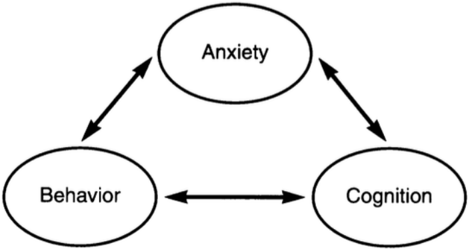
- State anxiety, not trait anxiety, is the immediate reaction associated with cognitive interference; active interference can occur at any stage of learning, and the relations among anxiety, cognition, and behaviour are recursive or cyclical.
- The paper cites Campbell and Ortiz’s (1991) estimate that up to one half of all language students experience debilitating levels of language anxiety, and Gardner et al.’s (1976) finding that language anxiety became a better predictor of achievement as grade level increased from grade 7 to grade 11.
Methods
- Design: theoretical reply and conceptual review, not an empirical study; it responds to Sparks and Ganschow’s LCDH and argues for including affective variables.
- Data or sample: no new sample or data were collected; the paper draws on prior research on anxiety in general and on language anxiety, including cited correlational, factor-analytic, and experimental studies.
- Main analysis: conceptual synthesis using cognitive interference theory, the state/trait anxiety distinction, and a recursive model of anxiety, cognition, and behaviour to critique LCDH’s treatment of affect.
Limitations
- Stated: early empirical studies on anxiety and language learning produced “mixed and confusing” results, and “exactly how anxiety impedes language learning has not been resolved”; the paper also acknowledges that correlational studies are vulnerable to third-variable explanations.
- Evident: as a theoretical reply, the paper presents no new empirical data or sample of its own, so its causal claims rest on synthesis of prior studies, some correlational and some experimental.
- Evident: the paper has no formal limitations section and does not report effect sizes or sample details for its own analyses because it conducts none.
Model-written summary. Check it against the paper before relying on it.
Integrity signals
Registry
Cites
Statistics
Figures
Verification
Claims the paper makes
0 Valid · 5 Not valid · 59 Not checked · 53 Own results and interpretations
In the paper
“it should also be recognised that task performance can provoke anxiety (MacIntyre & Gardner, 1994a).”
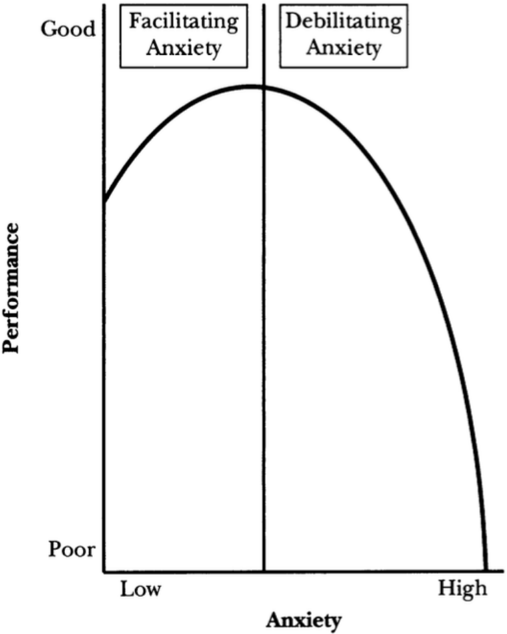
§ HOW DOES ANXIETY AFFECT L2 LEARNING? 1 How Does Anxiety Affect Second Language Learning? A Reply to Sparks And Ganschow > Figure 1
What the sources say
- Not matchedcites MacIntyre & Gardner, 1994a
More than one paper fits this citation.
plainstates a cause- Asserted: passes — The authors put it forward as true.
- Checkable: passes — It can be checked against evidence.
- Load-bearing: passes — The paper’s conclusions depend on it.
- Based: passes — The paper gives a reason why it holds.
- Not matched
In the paper
“When the effects of the video camera had dissipated and no longer lead to state anxiety arousal, performance improved relative to those who were experiencing more anxiety arousal.”
§ HOW DOES ANXIETY AFFECT L2 LEARNING? 1 How Does Anxiety Affect Second Language Learning? A Reply to Sparks And Ganschow > Relations among Anxiety, Cognition, and Behaviour
What the sources say
- Not matchedcites MacIntyre & Gardner, 1994a
More than one paper fits this citation.
plainstates a cause- Asserted: passes — The authors put it forward as true.
- Checkable: passes — It can be checked against evidence.
- Load-bearing: passes — The paper’s conclusions depend on it.
- Based: passes — The paper gives a reason why it holds.
- Not matched
A conclusion the paper draws from its own results — it cites no other source for it, so there is none to check. The quote shows it is in the paper.
In the paper
“The two explanations for individual differences in language achievement do not appear to be antithetical, in spite of the apparent claim to the contrary.”
§ HOW DOES ANXIETY AFFECT L2 LEARNING? 1 How Does Anxiety Affect Second Language Learning? A Reply to Sparks And Ganschow > Relations among Anxiety, Cognition, and Behaviour
hedged- Asserted: passes — The authors put it forward as true.
- Checkable: passes — It can be checked against evidence.
- Load-bearing: passes — The paper’s conclusions depend on it.
- Based: passes — The paper gives a reason why it holds.
None of the sources cited for this claim have been checked yet.
In the paper
“Significant negative correlations between language anxiety and course grades have been reported for languages such as Japanese (Aida, 1994), Spanish (Horwitz, 1986), andFrench (MacIntyre &Gardner, 1991b).”
§ HOW DOES ANXIETY AFFECT L2 LEARNING? 1 How Does Anxiety Affect Second Language Learning? A Reply to Sparks And Ganschow > How Does Anxiety Affect Second Language Learning? A Reply to Sparks and Ganschow
What the sources say
- Not checked yetcites Aida, 1994 matched to “Examination of Horwitz, Horwitz, and Cope's Construct of Foreign Language Anxiety: The Case of Students of Japanese” (1994) source
- Not checked yetcites Horwitz, 1986 matched to “Preliminary Evidence for the Reliability and Validity of a Foreign Language Anxiety Scale” (1986) source
- Not matchedcites MacIntyre & Gardner, 1991b
More than one paper fits this citation.
plainstates an association- Asserted: passes — The authors put it forward as true.
- Checkable: passes — It can be checked against evidence.
- Load-bearing: unclear — It is unclear whether the paper’s conclusions depend on it.
- Based: passes — The paper gives a reason why it holds.
A conclusion the paper draws from its own results — it cites no other source for it, so there is none to check. The quote shows it is in the paper.
In the paper
“In cases such as these, phonetic coding impairment is not the best place to look for the cause of the language learning difficulty.”
§ HOW DOES ANXIETY AFFECT L2 LEARNING? 1 How Does Anxiety Affect Second Language Learning? A Reply to Sparks And Ganschow > "Language Anxiety or Native Language Aptitude Differences"
plain- Asserted: passes — The authors put it forward as true.
- Checkable: unclear — It is unclear whether it could be checked against evidence.
- Load-bearing: passes — The paper’s conclusions depend on it.
- Based: passes — The paper gives a reason why it holds.
60 more claims
Create a free account to see all 117 claims and to verify the 22 references still open.
- Probably not a substantial claim. 35
- It may state two separate claims as one. 20
- The quote only partly states this claim. 1
Claims other papers make about this one
Each is checked against this paper’s own text: does it say what the citing paper says it does?
In the citing paper
“In addition, FLCA is argued to be a separate construct from first language learning deficits and subtle language learning disabilities, as several studies on the topic has found students who experience high levels of anxiety but are still successful language learners (MacIntyre, 1995a(MacIntyre, , 1995b)).”
From The Foreign Language Classroom Anxiety Scale and Academic Achievement: An Overview of the Prevailing Literature and a Meta-analysis (2020) · cites this paper as MacIntyre, 1995a
In the citing paper
“FLCA is defended, with the argument made that FLCA is an independent construct, distinct from aptitude, but which may influence or be influenced by the performance of the language learner.”
From The Foreign Language Classroom Anxiety Scale and Academic Achievement: An Overview of the Prevailing Literature and a Meta-analysis (2020) · cites this paper as MacIntyre, 1995a
Self-check
Percentages, sums and reported differences re-computed from the paper’s own numbers.
Each contradiction between two passages listed here was confirmed by an independent check.
Rated minor: it would not touch a result — a value no result rests on, a p-value that stays on the same side of the significance level, or a conflict that is clerical, resolved elsewhere in the paper, or outside its own findings.
In the paper
§ HOW DOES ANXIETY AFFECT L2 LEARNING? 1 How Does Anxiety Affect Second Language Learning? A Reply to Sparks And Ganschow > How Does Anxiety Affect Second Language Learning? A Reply to Sparks and Ganschow
“Horwitz and Young (1991) noted that "Exactly how anxiety impedes language learning has not been resolved" (p.177).”
§ HOW DOES ANXIETY AFFECT L2 LEARNING? 1 How Does Anxiety Affect Second Language Learning? A Reply to Sparks And Ganschow > References
“Horwitz, E. K., & Young, D. J. (1991). Preface. In E. K. Horwitz & D. J. Young (Eds.), Language anxiety: From theory and research to classroom implications (pp. xii-xiv).”
Rated minor: it would not touch a result — a value no result rests on, a p-value that stays on the same side of the significance level, or a conflict that is clerical, resolved elsewhere in the paper, or outside its own findings.
In the paper
§ HOW DOES ANXIETY AFFECT L2 LEARNING? 1 How Does Anxiety Affect Second Language Learning? A Reply to Sparks And Ganschow > How Does Anxiety Affect Second Language Learning? A Reply to Sparks and Ganschow
“Campbell and Ortiz (1991) considered the levels of language anxiety among university students to be "alarming" (p.159)”
§ HOW DOES ANXIETY AFFECT L2 LEARNING? 1 How Does Anxiety Affect Second Language Learning? A Reply to Sparks And Ganschow > References
“Campbell, C. M., & Ortiz, J. (1991). Helping students overcome foreign language anxiety: A foreign language anxiety workshop. In E. K. Horwitz & D. J. Young (Eds.), Language anxiety: From theory and research to classroom implications (pp. 141-150).”
Rated minor: it would not touch a result — a value no result rests on, a p-value that stays on the same side of the significance level, or a conflict that is clerical, resolved elsewhere in the paper, or outside its own findings.
In the paper
§ HOW DOES ANXIETY AFFECT L2 LEARNING? 1 How Does Anxiety Affect Second Language Learning? A Reply to Sparks And Ganschow > "Language Anxiety or Native Language Aptitude Differences"
“## "Language Anxiety or Native Language Aptitude Differences" The title of this section is taken from the subtitle of Sparks and Ganschow's (1991) article describing the LCDH.”
§ HOW DOES ANXIETY AFFECT L2 LEARNING? 1 How Does Anxiety Affect Second Language Learning? A Reply to Sparks And Ganschow > References
“Sparks, R. L., & Ganschow, L. (1991). Foreign language learning differences: Affective or native language aptitude differences? Modern Language Journal, 75, 3-16.”
Citations
Cites
Foreign Language Classroom Anxiety
HORWITZ, E. K., HORWITZ, M. B., & COPE, J. (1986) · The Modern Language Journal · doi:10.1111/j.1540-4781.1986.tb05256.x · Cited by 9,773
Language Learning Strategies: What Every Teacher Should Know
Horwitz, E. K., & Oxford, R. (1991) · The Modern Language Journal · doi:10.2307/329849 · Cited by 5,941
(1985) · Cited by 4,527
Language learning strategies what every teacher should know
Oxford, R. L. (1990) · Cited by 2,164
The Subtle Effects of Language Anxiety on Cognitive Processing in the Second Language
MacIntyre, P. D., & Gardner, R. C. (1994) · Language Learning · doi:10.1111/j.1467-1770.1994.tb01103.x · Cited by 1,823
Self-citationAIDA, Y. (1994) · The Modern Language Journal · doi:10.1111/j.1540-4781.1994.tb02026.x · Cited by 1,608
Individual Differences in Second Language Learning
Skehan, P. (2014) · Routledge eBooks · doi:10.4324/9781315831664 · Cited by 1,518
Cognitive and Emotional Components of Test Anxiety: A Distinction and Some Initial Data
Liebert, R. M., & Morris, L. W. (1967) · Psychological Reports · doi:10.2466/pr0.1967.20.3.975 · Cited by 1,150
Fiske, S. T., & Taylor, S. E. (1991) · Cited by 1,122
THE EFFECT OF AFFECT ON FOREIGN LANGUAGE LEARNING: A REVIEW OF THE ANXIETY RESEARCH
Scovel, T. (1978) · Language Learning · doi:10.1111/j.1467-1770.1978.tb00309.x · Cited by 1,047
Research works printed but not linked: 10
- Cope-Powell, J. (1991). Foreign language classroom anxiety: Institutional responses. In E. K. Horwitz & D. J. Young (Eds.), Language anxiety: From theory and research to classroom implications (pp. 169-176). Englewood Cliffs, NJ: Prentice Hall.
- Crane, S. (1989). Why poor readers misunderstand spoken sentences. In D. Shankweiler & I. Liberman (Eds.), Phonology and reading disability (pp. 133-165). Ann Arbor, MI: University of Michigan Press.
- Fischer, W. F. (1988). Theories of anxiety (2nd ed.). Lanham, MD: University Press of America.
- Horwitz, E. K., & Young, D. J. (1991). Preface. In E. K. Horwitz & D. J. Young (Eds.), Language anxiety: From theory and research to classroom implications (pp. xii-xiv). Englewood Cliffs, NJ: Prentice Hall.
- Levitt, E. E. (1980). The Psychology of Anxiety. Hillsdale, NJ: Erlbaum.
- Price, M. L. (1991). The subjective experience of foreign language anxiety: Interviews with highly anxious students. In E. K. Horwitz & D. J. Young (Eds.), Language anxiety: From theory and research to classroom implications (pp. 101-108). Englewood Cliffs, NJ: Prentice Hall.
- Sarason, I. G. (1986). Test anxiety, worry, and cognitive interference. In R. Schwarzer (Ed.), Self-related cognition in anxiety and motivation (pp. 19-34). Hillsdale, NJ: Erlbaum.
- Schwarzer, R. (1986). Self-related cognition in anxiety and motivation: An introduction. In R. Schwarzer (Ed.), Self-related cognition in anxiety and motivation (pp. 1-17). Hillsdale, NJ: Erlbaum.
- Spielberger, C. D. (1983). Manual for the state-trait anxiety inventory (form Y). Palo Alto, CA: Consulting Psychologists Press.
- Wine, J. D. (1980). Cognitive-attentional theory of test anxiety. In I. G. Sarason (Ed.), Test anxiety: Theory, research and applications (pp. 349-385). Hillsdale, NJ: Erlbaum.
Cited by
Items 601–700 of 851
Yabancı Dil Kaygısının Bazı Değişkenler Açısından İncelenmesi: Mardin Yeşilli İlçesi Örneklemi
Akif, A. K. T. O., SERİM, A. M., & Bindak, R. (2023) · Gazi Journal of Education Sciences · doi:10.30855/gjes.2023.09.02.004 · Cited by 1
THE APPLICATION OF READING STRATEGY INSTRUCTION AND ITS EFFECTS ON THE PRE-PROFESSIONAL TRAINING
Mera, F., Novillo, C. E. L., Quijije, A. M. C., & Ávila, K. I. C. (2023) · doi:10.59764/ceo.51 · Cited by 1
Akpur, U., & Alcı, B. (2014) · Kalem Uluslararasi Egitim ve Insan Bilimleri Dergisi · doi:10.23863/kalem.2017.39 · Cited by 1
Dias, R. S. (2011) · Revista Desempenho · Cited by 1
Wappa, J. P., & Pembi, C. (2021) · International Journal of Research and Innovation in Social Science · doi:10.47772/ijriss.2021.5122 · Cited by 1
Arbain, M., Ramadani, F., & Novika, H. (2018) · Intensive Journal · doi:10.31602/intensive.v1i2.1526 · Cited by 1
Affective Filter: Mexican English Learners in Chicago
Cabrera-Rivera, L. D. (2023) · Open Journal for Sociological Studies · doi:10.32591/coas.ojss.0701.02011c · Cited by 1
Osman, W. S. W., Senom, F., & Shah, S. S. A. (2024) · International Journal of Modern Education · doi:10.35631/ijmoe.621016 · Cited by 1
Markers of dyslexia in adult Spanish -speakers who report severe difficulty learning English
Ijalba, E. (2008) · CUNY Academic Works (City University of New York) · Cited by 1
Inspiring Change by Strengthening ELT in Escuelas Normales
Juárez, S. I. T. (2025) · Editorial Transdigital eBooks · doi:10.56162/transdigitalb61 · Cited by 1
Språkängsla och språkglädje hos finska universitetsstuderande
Hietamäki, M. (2025) · UTUPub (University of Turku) · Cited by 1
Kruk, M., & Zawodniak, J. (2017) · Applied Linguistics Papers · doi:10.32612/uw.20804814.2017.3.pp.135-149 · Cited by 1
Ayhan, A. (2020) · Bilkent University Institutional Repository (Bilkent University) · Cited by 1
Surya, D. (2017) · Repository Universitas Medan area (yes, our institution host repository self.) · Cited by 1
Corella Benedicto, A. M., Hernández, S. O., & Teruel Melero, M. P. (2018) · LA Referencia (Red Federada de Repositorios Institucionales de Publicaciones Científicas) · Cited by 1
Saloojee, S. (2018) · ResearchSpace (University of KwaZulu-Natal) · Cited by 1
Listening comprehension and anxiety in Chinese university EFL students
Bao, S. (2017) · Journal of Current Science and Technology · doi:10.14456/rjas.2017.8 · Cited by 1
Yabancı Dil Olarak Türkçe Öğretiminde Duyuşsal Faktörlerin Anlama Becerileri İçindeki Yeri
Batmaz, Ö., & Büyükikiz, K. K. (2016) · Aydın TÖMER dil dergisi · doi:10.17932/iau.tomer.2016.019/tomer_v010i2008 · Cited by 1
Reframing Anxiety: How Emotion Regulation Strategies Shape Language Learning
Nakamura, S., & Kenney, J. (2026) · Journal for the Psychology of Language Learning · doi:10.52598/jpllsi/8/2/7 · Cited by 1
Developing English learning program using speech recognition-based feedback.
이경랑 (2018) · Korean Journal of English Language and Linguistics · doi:10.15738/kjell.18.4.201812.486 · Cited by 1
Zong, Y. (2025) · Journal of Language Teaching and Research · doi:10.17507/jltr.1604.03 · Cited by 1
Exploring aspects of EFL Speaking Anxiety from the perspectives of Iraqi medical undergraduates
Al-Tameemi, N. S. N. (2023) · UUM Electronic Theses and Dissertation [eTheses] (Northern University of Malaysia) · Cited by 1
Learner Analysis: Individual and Contextual Factors That Influence Second Language Acquisition
Lozier, C. D. (2016) · Institutional Repositories DataBase (IRDB) · Cited by 1
Öğrenme amaçlı yazma etkinliklerinin güdülenme ve öğrenme stratejilerine etkisi
İncirci, A. (2020) · DSpace - Düzce (Duzce University) · Cited by 1
Xiao, L. (2026) · Warwick Research Archive Portal (University of Warwick) · doi:10.82444/warw.33739195 · Cited by 1
An Investigation Of The Kurdish EFL University Students' Academic Burnout:, Levels And Factors
سعيد, د. ع., & احمد, ا. ع. ا. (2025) · Journal Of Babylon Center for Humanities Studies · doi:10.66026/zrq47453 · Cited by 1
Psychological Barriers and Growth Mindset in Foreign Language Learning
Akın, M. (2025) · Forum for Linguistic Studies · doi:10.30564/fls.v7i12.9455 · Cited by 1
Khan, S. A., & Pianchana, T. (2024) · Journal of Research and Curriculum Development · Cited by 1
Thacker, J. E. (2020) · ScholarsArchive (Brigham Young University) · Cited by 1
Magnan, M., Levasseur, C., Grenier, V., & Darchinian, F. (2018) · Papyrus : Institutional Repository (Université de Montréal) · Cited by 1
Foreign Language Anxiety: The Manifestation of Language Aptitude Differences?
Tóth, Z. (2015) · Anglica Wratislaviensia · Cited by 1
АНКСИОЗНОСТ ВО НАСТАВАТА ПО СТРАНСКИ ЈАЗИК
Todorova, M., & Koceva, V. (2015) · Yearbook - Faculty of Philology · Cited by 1
Leontik, M. (2015) · Yearbook - Faculty of Philology · Cited by 2
Magnan, M., Levasseur, C., & Grenier, V. (2020) · Canadian Modern Language Review/ La Revue canadienne des langues vivantes · doi:10.3138/cmlr-2020-0028 · Cited by 1
Bichon, L. M. (2000) · ScholarsArchive (Brigham Young University) · Cited by 1
Characterizing and dealing with anxiety in the foreign language classroom
Bergara, A. D. (2018) · Communities in ADDI (Universidad del Pais Vasco) · Cited by 1
Liu, Y. (2022) · Papyrus : Institutional Repository (Université de Montréal) · doi:10.71781/5906 · Cited by 1
Impacto da ansiedade reportada face à escrita de composições
Mello, A. S. L. E. (2017) · Portuguese National Funding Agency for Science, Research and Technology (RCAAP Project by FCT) · Cited by 1
Student-Teachers' Metaphorical Perceptions of Dyslexia and Foreign Language Disabilities
Timor, T. (2012) · Electronic journal for inclusive education · Cited by 1
Verachi, D. (2020) · Repositorio de Patentes de la Universidad de Almería (Universidad de Almería) · Cited by 1
Effects Of Bilingualism On Emotional Intelligence & Cognition Of Pakistani ESL Learners
Gul, M. A., Khan, R., Habib, S., & Ahmed, N. (2024) · MIGRATION LETTERS · doi:10.59670/ml.v21is13.11182 · Cited by 1
Using a Complex Technology in a Language Course: Examining Second Life in Terms of Participation
Wang, A. (2019) · Advances in educational technologies and instructional design book series · doi:10.4018/978-1-7998-1282-1.ch016 · Cited by 1
Factoring in previous study of other foreign languages when designing introductory courses
Magnan, S. S., Frantzen, D., & Worth, R. (2004) · ScholarSpace (University of Hawaii at Manoa) · Cited by 1
Rockett, R. L. (2016) · DigitalCommons - Kennesaw State University (Kennesaw State University) · Cited by 1
Ketonen, A. (2023) · UTUPub (University of Turku) · Cited by 1
Püreschitz, K. (2020) · Unipub UB Graz (Universität Graz) · Cited by 1
Teachers’ Anxiety And Self-Efficacy: The Effect On Their English Skills Mastery
Rochmawati, L., Fatmawati, F., & Sukma, M. M. (2023) · Langit Biru Jurnal Ilmiah Aviasi · doi:10.54147/langitbiru.v16i01.643 · Cited by 1
Astuti, N. M., & Rahmah, R. E. (2024) · Linguistics and Education Journal · doi:10.26877/lej.v2i1.18651 · Cited by 1
Language Anxiety among English Major Students in a Less Competitive Context
Tantihachai, K., charoensuk, S., & Chuai-in, P. (2024) · Journal of Communication in Scientific Inquiry (JCSI) · Cited by 1
The impact of language anxiety on academic achievement among ESL learners
Zaman, S. (2017) · BRAC University Institutional Repository (BRAC University) · Cited by 1
Daloiso, M., & Ghirarduzzi, A. (2025) · Italiano LinguaDue · doi:10.54103/2037-3597/29083 · Cited by 1
Dias, R. S., & Dias, C. A. S. (2016) · Olhares Plurais · Cited by 1
Réduction de l’anxiété de compréhension orale
Łuszczyńska, S. (2017) · Romanica Cracoviensia · doi:10.4467/20843917rc.17.002.7684 · Cited by 1
Walker, J., & Poole, F. J. (2019) · Researching and Teaching Chinese as a Foreign Language · doi:10.1558/rtcfl.37076 · Cited by 1
Fagundes, A. G. D. F. (2019) · Revista do Instituto GeoGebra Internacional de São Paulo · doi:10.23925/2237-9657.2019.v8i1p003-015 · Cited by 1
Language Classroom Anxiety: Reading Anxiety and Reading Performance of Japanese EFL Learners
小林, 千. (2016) · Institutional Repositories DataBase (IRDB) · Cited by 1
Jeong, H., & Youngmeen, S. (2022) · Asia-pacific Journal of Convergent Research Interchange · doi:10.47116/apjcri.2022.09.18 · Cited by 1
Study of Student’s Anxiety in Speaking Skill A Case Study in Islamic Criminal Law Student
Ḥamzah, A. (2021) · Darussalam English Journal (DEJ) · doi:10.30739/dej.v1i2.1235 · Cited by 1
Sulyaningsih, I. (2024) · Jurnal Abdimas Kartika Wijayakusuma · doi:10.26874/jakw.v5i1.350 · Cited by 1
Эмпирическое исследование взаимосвязи иноязыковой и личностной тревожности у обучающихся билингвов
Андрюшкина, Ю. С. (2019) · Tver State University Repository (Tver State University) · Cited by 1
An Examination of Foreign Language Anxiety in the EDC Program
Singh, S. (2013) · New directions in teaching and learning English discussion · doi:10.14992/00016150 · Cited by 1
Improving the teaching and learning of ESL in under performing schools of the North-West Province
Mafisa, P. J. (2008) · Boloka Institutional Repository (North-west University) · Cited by 1
Affective Profiles of Vocational School EFL Learners
Kolar, T. (2014) · Repozitorij Filozofskog fakulteta u Zagrebu' at University of Zagreb (University of Zagreb) · Cited by 1
Teitelbaum, T. (1997) · Victoria University Research Repository (Victoria University) · Cited by 1
How to motivate young learners to use English in the Physical Education class
Navarro, D. C. (2014) · Repositori UJI (Universitat Jaume I) · Cited by 1
Susilowatie, P. P. (2019) · Universitas Sanata Dharma Repository (Universitas Sanata Dharma) · Cited by 1
Muñoz, C., & Viviana, N. (2020) · Repositorio Institucional Académico , Sistema de Bibliotecas Universidad Andrés Bello (UNAB) (Universidad Andrés Bello (UNAB)) · Cited by 1
Pulkkinen, E. (2024) · Jyväskylä University Digital Archive (University of Jyväskylä) · Cited by 1
STUDENTS’ READING ANXIETY AT STATE SENIOR HIGH SCHOOL 1 BUNGARAYA
Iin Inda Astuti (2021) · Repository UIN Sultan Syarif Kasim Riau (Universitas Islam Negeri Sultan Syarif Kasim Riau) · Cited by 1
Ansiedad hacia la lectura en inglés como lengua extranjera en el nivel de posgrado
López, W. C. (2020) · HAL · Cited by 1
Yabancı Uyruklu Öğrencilerin Türkçe Öğrenme Kaygılarının İncelenmesi
Kayserili, M. (2024) · İstanbul Eğitim Dergisi · doi:10.71270/istanbulegitim.istj.1553342
Foreign Language Anxiety among Korean Students at Keimyung College University in Daegu, South Korea
Pajado-Jacela, Z. A., Eslabon, R. T., Asistido, R. L., & Kim, M. (2021) · Kalamboan · doi:10.61864/kalamboan.v1i1.8
Xie, Z. (2022) · SSRN Electronic Journal · doi:10.2139/ssrn.4004034
Language Learning Motivation and Its Impact on Speech Act of Refusal
정보현, & 민수정 (2014) · Journal of the Korea English Education Society · doi:10.18649/jkees.2014.13.1.1
Rerkjaraskul, C., & Lynch, R. M. (2020) · Scholar: Human Sciences
이인경, & Kim, H. (2017) · Journal of Education & Culture · doi:10.24159/joec.2017.23.6.433
Effects of Foreign Language Anxiety
Luo, H. (2025) · Springer eBooks · doi:10.1007/978-981-95-0740-5_6
The Influences of EIP on English Abilities and their Resulting Language and Culture Preferences.
윤유진 (2010) · Studies in Linguistics · doi:10.17002/sil..17.201008.161
Vural, H. (2024) · Afyon Kocatepe Üniversitesi Sosyal Bilimler Dergisi · doi:10.32709/akusosbil.1134164
Kim, J.-O. (2017) · The Journal of Studies in Language · doi:10.18627/jslg.33.3.201711.339
History of and Major Developments in FLLA Worldwide
He, D. (2018) · Springer eBooks · doi:10.1007/978-981-10-7662-6_2
Anbuchelvan, S. V., & Mythili, L. D. N. (2021) · Journal of University of Shanghai for Science and Technology · doi:10.51201/jusst/21/11950
IMPACT OF DIALOGUE JOURNALS ON LANGUAGE ANXIETY AND
Köse, E. (2005)
Luo, H. (2025) · Springer eBooks · doi:10.1007/978-981-95-0740-5_1
The co-construction of experience during multicultural group encounters.
Beuster, V. (2007) · University of Surrey Open Research repository
Cambodian Secondary English Private School Students' Attitudes Toward English Public Speaking ClassPreprint
Kroeun, K. (2024) · SSRN Electronic Journal · doi:10.2139/ssrn.4964472
LA RELACIÓN ENTRE LA ANSIEDAD Y ESTILOS DE APRENDIZAJE Y DE ENSEÑANZA EN CLASES DE
Extranjeras, L., & Huser, J. (2011)
Finch, A. E. (2004) · Academic exchange quarterly
A Study on Secondary School Students’ Foreign Language Anxiety: Students’ and Teachers’ Perceptions
ÖZSARI, T., & Büyükkarcı, K. (2022) · İnönü Üniversitesi Eğitim Fakültesi Dergisi · doi:10.17679/inuefd.1026046
STEMvolution: Mastering English Language Confidence With Blended Learning in Education
Ghosh, S. S. (2024) · Advances in educational technologies and instructional design book series · doi:10.4018/979-8-3693-3041-8.ch009
Gymnasieelevers upplevelse av språkängslan under fransklektioner
Arvidsson, K. (2014) · DiVA (Stockholm University) · Cited by 1
Yabancı Dilde Kaygı: Bir Ölçek Geliştirme Çalışması
Akmençe, A. E., & Tuncer, M. (2023) · Elektronik Eğitim Bilimleri Dergisi · doi:10.55605/ejedus.1233586
Kommunikasievrees van hoërskoolleerlinge in 'n parallelmediumskool
Challens, B. H. (2000)
Metadata
- Authors
- MACINTYRE, P. D.
- Affiliations
- Cape Breton University (CA)
- Corresponding author
- MACINTYRE, PETER D.
- ORCID
- MACINTYRE, PETER D.
- Venue
- The Modern Language Journal
- Publisher
- Wiley
- Published
- 1995-03
- Volume
- 79
- Issue
- 1
- Pages
- 90-99
- ISSN
- 0026-7902 (ISSN-L)
- 1540-4781
- OpenAlex
- W1990008549
- Cited by
- 887
- References
- 54
- Citations by year
- 2026: 38 · 2025: 46 · 2024: 50 · 2023: 55 · 2022: 49 · 2021: 51 · 2020: 53 · 2019: 41 · 2018: 52 · 2017: 50 · 2016: 55 · 2015: 49 · 2014: 52 · 2013: 38 · 2012: 38
- FWCI
- 32.58
- Type
- journal article
- Language
- en
- Open access
- green
- hdl.handle.net
- Licence
- Locations
- Modern Language Journal (publishedVersion)
- CBU Scholar (submittedVersion, cc-by-nc-nd)
- Funders
- Cape Breton University
- Social Sciences and Humanities Research Council of Canada
- Topics
- Social Sciences › Arts and Humanities › Language and Linguistics › EFL/ESL Teaching and Learning
- Social Sciences › Psychology › Social Psychology › Communication in Education and Healthcare
- Social Sciences › Psychology › Developmental and Educational Psychology › Second Language Acquisition and Learning
- Keywords
- language anxiety, second language acquisition, language aptitude, individual differences, emotional factors, language achievement, linguistic communication
About these checks
Registry, retraction, Cites and statistics results are computed, not judged, with one exception: a printed reference that no index lists is read once by a model before it counts as a citation error. Claims are extracted by a model and kept only when their quote appears verbatim in the text; each cited source is then checked, with a model’s help, for whether it says what the claim relies on. Those verdicts can be wrong — read the claim’s quote and the cited source before relying on one.
A language model drew the claims from the paper on 2026-11-24, under version 3 of the claim definition (model deepseek-v4.1-flash, prompt extract-v3).
A second model labelled each claim on 2026-11-24 (model jev-1.13-20260917, definition revision gold-guideline-v0.2).
Statistics and arithmetic are recomputed, not judged.
Confidence bands are shown only for fields calibrated on our annotated test set. None is calibrated yet, so no band is shown.
What counts as a claim ›How we measure confidence ›How we check this ›
Are you an author, or do you see a problem with this page? Request a review
Data sources
Bibliographic data: Semantic Scholar, OpenAlex, Crossref.
Contains information from the Semantic Scholar Academic Graph Datasets, made available under the ODC Attribution License (ODC-BY 1.0).
Semantic Scholar’s data is described in: Kinney, R., et al. (2023). The Semantic Scholar Open Data Platform. arXiv:2301.10140.
