

How Does Anxiety Affect Second Language Learning? A Reply to Sparks and Ganschow
Open accessThe DOI matches its Crossref record; 55 of the 55 references it cites were found in a registry or an index; none of the 71 sources its claims cite is checked for support yet.
Abstract
The linguistic coding deficit hypothesis, introduced by Sparks and Ganschow (1991, 1993a, 1993b), postulates that language aptitude is the primary source of individual differences in language achievement. This may be seen to reduce affective variables, such as language anxiety, to the role of unfortunate side effects, devoid of explanatory power. This paper advocates that language anxiety can play a significant causal role in creating individual differences in both language learning and communication. It reviews evidence from investigations of anxiety in general and studies of the role of anxiety in the language learning processes and concludes that the linguistic coding deficit hypothesis makes a significant omission by assigning mere epiphenomenal status to affective variables in general and language anxiety in particular.
Overview
CoChat Summary
TL;DR
MacIntyre argues against Sparks and Ganschow’s linguistic coding deficit hypothesis (LCDH), contending that language anxiety can play a significant causal role in individual differences in second language learning and communication rather than being merely an epiphenomenon of aptitude. He proposes that anxiety creates divided attention and interferes with encoding, storage, and retrieval, making LCDH incomplete without affective variables.
Key findings
- Language anxiety can play a significant causal role in creating individual differences in both language learning and communication; the paper reviews evidence of negative correlations between language anxiety and course grades in Japanese, Spanish, and French, standardized written and oral proficiency tests, slower vocabulary learning, and factor-analytic associations with self-rated and actual proficiency.
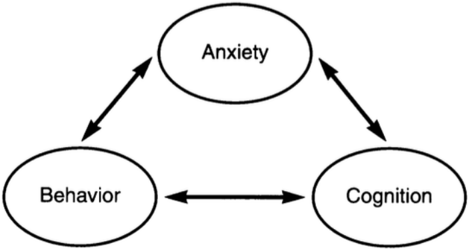
- Anxiety is best understood as a social anxiety with cognitive, affective, and behavioural components; its cognitive dimension (“worry”) competes with task-relevant information for processing space, creating a dual-task or divided-attention situation for anxious learners.
- State anxiety, not trait anxiety, is the immediate reaction associated with cognitive interference; active interference can occur at any stage of learning, and the relations among anxiety, cognition, and behaviour are recursive or cyclical.
- The paper cites Campbell and Ortiz’s (1991) estimate that up to one half of all language students experience debilitating levels of language anxiety, and Gardner et al.’s (1976) finding that language anxiety became a better predictor of achievement as grade level increased from grade 7 to grade 11.
Methods
- Design: theoretical reply and conceptual review, not an empirical study; it responds to Sparks and Ganschow’s LCDH and argues for including affective variables.
- Data or sample: no new sample or data were collected; the paper draws on prior research on anxiety in general and on language anxiety, including cited correlational, factor-analytic, and experimental studies.
- Main analysis: conceptual synthesis using cognitive interference theory, the state/trait anxiety distinction, and a recursive model of anxiety, cognition, and behaviour to critique LCDH’s treatment of affect.
Limitations
- Stated: early empirical studies on anxiety and language learning produced “mixed and confusing” results, and “exactly how anxiety impedes language learning has not been resolved”; the paper also acknowledges that correlational studies are vulnerable to third-variable explanations.
- Evident: as a theoretical reply, the paper presents no new empirical data or sample of its own, so its causal claims rest on synthesis of prior studies, some correlational and some experimental.
- Evident: the paper has no formal limitations section and does not report effect sizes or sample details for its own analyses because it conducts none.
Model-written summary. Check it against the paper before relying on it.
Integrity signals
Registry
Cites
Statistics
Figures
Verification
Claims the paper makes
0 Valid · 5 Not valid · 59 Not checked · 53 Own results and interpretations
In the paper
“it should also be recognised that task performance can provoke anxiety (MacIntyre & Gardner, 1994a).”
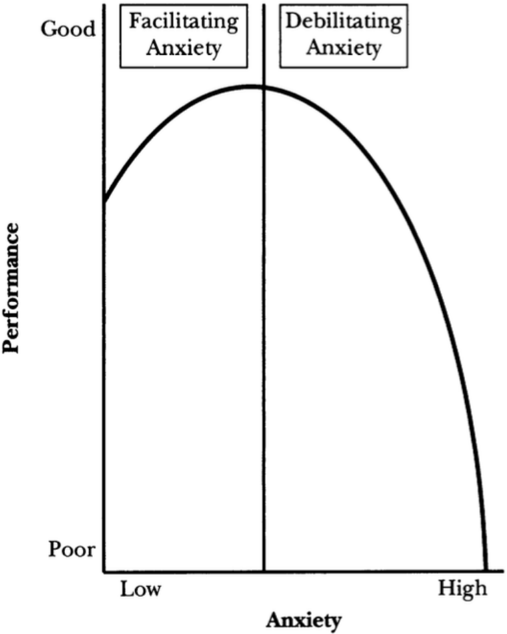
§ HOW DOES ANXIETY AFFECT L2 LEARNING? 1 How Does Anxiety Affect Second Language Learning? A Reply to Sparks And Ganschow > Figure 1
What the sources say
- Not matchedcites MacIntyre & Gardner, 1994a
More than one paper fits this citation.
plainstates a cause- Asserted: passes — The authors put it forward as true.
- Checkable: passes — It can be checked against evidence.
- Load-bearing: passes — The paper’s conclusions depend on it.
- Based: passes — The paper gives a reason why it holds.
- Not matched
In the paper
“When the effects of the video camera had dissipated and no longer lead to state anxiety arousal, performance improved relative to those who were experiencing more anxiety arousal.”
§ HOW DOES ANXIETY AFFECT L2 LEARNING? 1 How Does Anxiety Affect Second Language Learning? A Reply to Sparks And Ganschow > Relations among Anxiety, Cognition, and Behaviour
What the sources say
- Not matchedcites MacIntyre & Gardner, 1994a
More than one paper fits this citation.
plainstates a cause- Asserted: passes — The authors put it forward as true.
- Checkable: passes — It can be checked against evidence.
- Load-bearing: passes — The paper’s conclusions depend on it.
- Based: passes — The paper gives a reason why it holds.
- Not matched
A conclusion the paper draws from its own results — it cites no other source for it, so there is none to check. The quote shows it is in the paper.
In the paper
“The two explanations for individual differences in language achievement do not appear to be antithetical, in spite of the apparent claim to the contrary.”
§ HOW DOES ANXIETY AFFECT L2 LEARNING? 1 How Does Anxiety Affect Second Language Learning? A Reply to Sparks And Ganschow > Relations among Anxiety, Cognition, and Behaviour
hedged- Asserted: passes — The authors put it forward as true.
- Checkable: passes — It can be checked against evidence.
- Load-bearing: passes — The paper’s conclusions depend on it.
- Based: passes — The paper gives a reason why it holds.
None of the sources cited for this claim have been checked yet.
In the paper
“Significant negative correlations between language anxiety and course grades have been reported for languages such as Japanese (Aida, 1994), Spanish (Horwitz, 1986), andFrench (MacIntyre &Gardner, 1991b).”
§ HOW DOES ANXIETY AFFECT L2 LEARNING? 1 How Does Anxiety Affect Second Language Learning? A Reply to Sparks And Ganschow > How Does Anxiety Affect Second Language Learning? A Reply to Sparks and Ganschow
What the sources say
- Not checked yetcites Aida, 1994 matched to “Examination of Horwitz, Horwitz, and Cope's Construct of Foreign Language Anxiety: The Case of Students of Japanese” (1994) source
- Not checked yetcites Horwitz, 1986 matched to “Preliminary Evidence for the Reliability and Validity of a Foreign Language Anxiety Scale” (1986) source
- Not matchedcites MacIntyre & Gardner, 1991b
More than one paper fits this citation.
plainstates an association- Asserted: passes — The authors put it forward as true.
- Checkable: passes — It can be checked against evidence.
- Load-bearing: unclear — It is unclear whether the paper’s conclusions depend on it.
- Based: passes — The paper gives a reason why it holds.
A conclusion the paper draws from its own results — it cites no other source for it, so there is none to check. The quote shows it is in the paper.
In the paper
“In cases such as these, phonetic coding impairment is not the best place to look for the cause of the language learning difficulty.”
§ HOW DOES ANXIETY AFFECT L2 LEARNING? 1 How Does Anxiety Affect Second Language Learning? A Reply to Sparks And Ganschow > "Language Anxiety or Native Language Aptitude Differences"
plain- Asserted: passes — The authors put it forward as true.
- Checkable: unclear — It is unclear whether it could be checked against evidence.
- Load-bearing: passes — The paper’s conclusions depend on it.
- Based: passes — The paper gives a reason why it holds.
60 more claims
Create a free account to see all 117 claims and to verify the 22 references still open.
- Probably not a substantial claim. 35
- It may state two separate claims as one. 20
- The quote only partly states this claim. 1
Claims other papers make about this one
Each is checked against this paper’s own text: does it say what the citing paper says it does?
In the citing paper
“In addition, FLCA is argued to be a separate construct from first language learning deficits and subtle language learning disabilities, as several studies on the topic has found students who experience high levels of anxiety but are still successful language learners (MacIntyre, 1995a(MacIntyre, , 1995b)).”
From The Foreign Language Classroom Anxiety Scale and Academic Achievement: An Overview of the Prevailing Literature and a Meta-analysis (2020) · cites this paper as MacIntyre, 1995a
In the citing paper
“FLCA is defended, with the argument made that FLCA is an independent construct, distinct from aptitude, but which may influence or be influenced by the performance of the language learner.”
From The Foreign Language Classroom Anxiety Scale and Academic Achievement: An Overview of the Prevailing Literature and a Meta-analysis (2020) · cites this paper as MacIntyre, 1995a
Self-check
Percentages, sums and reported differences re-computed from the paper’s own numbers.
Each contradiction between two passages listed here was confirmed by an independent check.
Rated minor: it would not touch a result — a value no result rests on, a p-value that stays on the same side of the significance level, or a conflict that is clerical, resolved elsewhere in the paper, or outside its own findings.
In the paper
§ HOW DOES ANXIETY AFFECT L2 LEARNING? 1 How Does Anxiety Affect Second Language Learning? A Reply to Sparks And Ganschow > How Does Anxiety Affect Second Language Learning? A Reply to Sparks and Ganschow
“Horwitz and Young (1991) noted that "Exactly how anxiety impedes language learning has not been resolved" (p.177).”
§ HOW DOES ANXIETY AFFECT L2 LEARNING? 1 How Does Anxiety Affect Second Language Learning? A Reply to Sparks And Ganschow > References
“Horwitz, E. K., & Young, D. J. (1991). Preface. In E. K. Horwitz & D. J. Young (Eds.), Language anxiety: From theory and research to classroom implications (pp. xii-xiv).”
Rated minor: it would not touch a result — a value no result rests on, a p-value that stays on the same side of the significance level, or a conflict that is clerical, resolved elsewhere in the paper, or outside its own findings.
In the paper
§ HOW DOES ANXIETY AFFECT L2 LEARNING? 1 How Does Anxiety Affect Second Language Learning? A Reply to Sparks And Ganschow > How Does Anxiety Affect Second Language Learning? A Reply to Sparks and Ganschow
“Campbell and Ortiz (1991) considered the levels of language anxiety among university students to be "alarming" (p.159)”
§ HOW DOES ANXIETY AFFECT L2 LEARNING? 1 How Does Anxiety Affect Second Language Learning? A Reply to Sparks And Ganschow > References
“Campbell, C. M., & Ortiz, J. (1991). Helping students overcome foreign language anxiety: A foreign language anxiety workshop. In E. K. Horwitz & D. J. Young (Eds.), Language anxiety: From theory and research to classroom implications (pp. 141-150).”
Rated minor: it would not touch a result — a value no result rests on, a p-value that stays on the same side of the significance level, or a conflict that is clerical, resolved elsewhere in the paper, or outside its own findings.
In the paper
§ HOW DOES ANXIETY AFFECT L2 LEARNING? 1 How Does Anxiety Affect Second Language Learning? A Reply to Sparks And Ganschow > "Language Anxiety or Native Language Aptitude Differences"
“## "Language Anxiety or Native Language Aptitude Differences" The title of this section is taken from the subtitle of Sparks and Ganschow's (1991) article describing the LCDH.”
§ HOW DOES ANXIETY AFFECT L2 LEARNING? 1 How Does Anxiety Affect Second Language Learning? A Reply to Sparks And Ganschow > References
“Sparks, R. L., & Ganschow, L. (1991). Foreign language learning differences: Affective or native language aptitude differences? Modern Language Journal, 75, 3-16.”
Citations
Cites
Foreign Language Classroom Anxiety
HORWITZ, E. K., HORWITZ, M. B., & COPE, J. (1986) · The Modern Language Journal · doi:10.1111/j.1540-4781.1986.tb05256.x · Cited by 9,773
Language Learning Strategies: What Every Teacher Should Know
Horwitz, E. K., & Oxford, R. (1991) · The Modern Language Journal · doi:10.2307/329849 · Cited by 5,941
(1985) · Cited by 4,527
Language learning strategies what every teacher should know
Oxford, R. L. (1990) · Cited by 2,164
The Subtle Effects of Language Anxiety on Cognitive Processing in the Second Language
MacIntyre, P. D., & Gardner, R. C. (1994) · Language Learning · doi:10.1111/j.1467-1770.1994.tb01103.x · Cited by 1,823
Self-citationAIDA, Y. (1994) · The Modern Language Journal · doi:10.1111/j.1540-4781.1994.tb02026.x · Cited by 1,608
Individual Differences in Second Language Learning
Skehan, P. (2014) · Routledge eBooks · doi:10.4324/9781315831664 · Cited by 1,518
Cognitive and Emotional Components of Test Anxiety: A Distinction and Some Initial Data
Liebert, R. M., & Morris, L. W. (1967) · Psychological Reports · doi:10.2466/pr0.1967.20.3.975 · Cited by 1,150
Fiske, S. T., & Taylor, S. E. (1991) · Cited by 1,122
THE EFFECT OF AFFECT ON FOREIGN LANGUAGE LEARNING: A REVIEW OF THE ANXIETY RESEARCH
Scovel, T. (1978) · Language Learning · doi:10.1111/j.1467-1770.1978.tb00309.x · Cited by 1,047
Research works printed but not linked: 10
- Cope-Powell, J. (1991). Foreign language classroom anxiety: Institutional responses. In E. K. Horwitz & D. J. Young (Eds.), Language anxiety: From theory and research to classroom implications (pp. 169-176). Englewood Cliffs, NJ: Prentice Hall.
- Crane, S. (1989). Why poor readers misunderstand spoken sentences. In D. Shankweiler & I. Liberman (Eds.), Phonology and reading disability (pp. 133-165). Ann Arbor, MI: University of Michigan Press.
- Fischer, W. F. (1988). Theories of anxiety (2nd ed.). Lanham, MD: University Press of America.
- Horwitz, E. K., & Young, D. J. (1991). Preface. In E. K. Horwitz & D. J. Young (Eds.), Language anxiety: From theory and research to classroom implications (pp. xii-xiv). Englewood Cliffs, NJ: Prentice Hall.
- Levitt, E. E. (1980). The Psychology of Anxiety. Hillsdale, NJ: Erlbaum.
- Price, M. L. (1991). The subjective experience of foreign language anxiety: Interviews with highly anxious students. In E. K. Horwitz & D. J. Young (Eds.), Language anxiety: From theory and research to classroom implications (pp. 101-108). Englewood Cliffs, NJ: Prentice Hall.
- Sarason, I. G. (1986). Test anxiety, worry, and cognitive interference. In R. Schwarzer (Ed.), Self-related cognition in anxiety and motivation (pp. 19-34). Hillsdale, NJ: Erlbaum.
- Schwarzer, R. (1986). Self-related cognition in anxiety and motivation: An introduction. In R. Schwarzer (Ed.), Self-related cognition in anxiety and motivation (pp. 1-17). Hillsdale, NJ: Erlbaum.
- Spielberger, C. D. (1983). Manual for the state-trait anxiety inventory (form Y). Palo Alto, CA: Consulting Psychologists Press.
- Wine, J. D. (1980). Cognitive-attentional theory of test anxiety. In I. G. Sarason (Ed.), Test anxiety: Theory, research and applications (pp. 349-385). Hillsdale, NJ: Erlbaum.
Cited by
Items 301–400 of 851
Çakar, G. G. (2009) · Bilkent University Institutional Repository (Bilkent University) · Cited by 11
Djigunović, J. M. (2004) · Studia Romanica et Anglica Zagrabiensia : Revue publiée par les Sections romane, italienne et anglaise de la Faculté des Lettres de l’Université de Zagreb · Cited by 11
Anxiety in Oral Performance Tests: a Case Study of Indonesian Learners
Rasmodjo, V. R. (2011) · i-manager’s Journal on English Language Teaching · doi:10.25170/ijelt.v7i2.180 · Cited by 10
English Language Anxiety and Its Effect on Students’ Mathematics Achievement
Alghazo, Y., & Al-Wadi, H. (2019) · International Education Studies · doi:10.5539/ies.v12n12p130 · Cited by 11
The Relationship between Nonverbal Immediacy, Caring and L2 Student Learning (Spanish).
Garrott, C. L. (2002) · Cited by 11
İşcan, A. (2011) · Educational Research Review · doi:10.5897/err.9000345 · Cited by 10
Almasifar, N., & Heidari, F. (2023) · English Teaching & Learning · doi:10.1007/s42321-023-00159-4 · Cited by 10
Jebali, A. (2017) · Alsic · doi:10.4000/alsic.3164 · Cited by 10
A Review on the Effects of Foreign Language Anxiety on Second Language Learning
Zhao, X. (2023) · International Journal of Linguistics Literature & Translation · doi:10.32996/ijllt.2023.6.2.19 · Cited by 10
Yusoff, A., Mohd, N., & Baharuddin, H. (2019) · Jurnal Pendidikan Malaysia · doi:10.17576/jpen-2019-44.02-01 · Cited by 10
Afshar, H. S., & Hamzavi, R. (2014) · DOAJ (DOAJ: Directory of Open Access Journals) · Cited by 10
An investigation of foreign language anxiety on EFL vocational high school students in china
Zhang, H. (2010) · Minds at UW (University of Wisconsin) · Cited by 12
Sources of Writing Anxiety: A Study on French Language Teaching Students
Yetiş, V. A. (2017) · International Education Studies · doi:10.5539/ies.v10n6p72 · Cited by 10
Factores afectivos e desempenho cognitivo na aprendizagem linguística
Figueiredo, S. (2010) · Repositório Institucional da Universidade Autónoma de Lisboa (Universidade Autónoma de Lisboa) · Cited by 11
KAHRAMAN, F. G. (2013) · Bilkent University Institutional Repository (Bilkent University) · Cited by 10
İNÖNÜ ÜNİVERSİTESİ YABANCI DİLLER YÜKSEKOKULU ÖĞRENCİLERİNİN YABANCI DİL KAYGILARI
Genç, G. (2009) · NWSA Education Sciences · Cited by 10
Wehner, A. K. (2014) · Digital Commons - University of South Florida (University of South Florida) · Cited by 10
Pre-service EFL teachers’ foreign language writing anxiety: some associated factors
ZEREY, Ö. G. (2013) · Dil Dergisi · doi:10.1501/dilder_0000000190 · Cited by 10
Cooperative Learning Approach: A Successful Way of Reducing Learning Anxiety in an EFL Class
Wichadee, S. (2010) · JOURNAL OF EDUCATION KHON KAEN UNIVERSITY · Cited by 10
Xiong, Y., Lee, R. K. M., & Sui, Y. (2025) · Journal of Multicultural Counseling and Development · doi:10.1002/jmcd.12317 · Cited by 9
Chanprasert, C., & Wichadee, S. (2015) · Humanities, Arts and Social Sciences Studies · Cited by 9
Corrective Feedback and Affect
Goo, J., & Takeuchi, T. (2021) · Cambridge University Press eBooks · doi:10.1017/9781108589789.034 · Cited by 9
Machine learning model to predict an adult learner’s decision to continue ESOL course
Dahman, M. R., & Dağ, H. (2019) · Education and Information Technologies · doi:10.1007/s10639-019-09884-5 · Cited by 9
Aljasir, N. (2016) · University of Birmingham Institutional Research Archive (University of Birmingham) · Cited by 9
Anxiety, Motivation and Autonomy in Iranian High School Students: A Quantitative Study
Sanadgol, F., & Abdolmanafi-Rokni, S. J. (2015) · Advances in Language and Literary Studies · doi:10.7575/aiac.alls.v.6n.1p.143 · Cited by 10
A Study of Chinese University EFL Learners’ Online English Classroom Anxiety and Listening Anxiety
Chen, Z., & Ren, J. (2021) · International Journal of TESOL Studies · doi:10.46451/ijts.2021.12.06 · Cited by 9
LİSE ÖĞRENCİLERİNİN İNGİLİZCE ÖĞRENİMLERİNİ ETKİLEYEN YABANCI DİL KAYGISI
Doğan, A. (1973) · Dil Dergisi · doi:10.1501/dilder_0000000088 · Cited by 9
Causes of business english speaking anxiety in the Balkans
Čepon, S. (2016) · The Journal of English Studies · doi:10.18172/jes.2957 · Cited by 9
Paridaluddin, N. F. M. S., Zhang, J., & Ruohan, C. (2025) · International Journal of Modern Languages And Applied Linguistics · doi:10.24191/ijmal.v7i3.7480 · Cited by 9
Kaliska, M. (2018) · CeON Repository (Centre for Evaluation in Education and Science) · Cited by 9
University Summer School Students' Foreign Language Anxiety Levels
Yaylı, D. (2012) · Procedia - Social and Behavioral Sciences · doi:10.1016/j.sbspro.2012.05.310 · Cited by 8
Personality Factors and Foreign Language Pronunciation Anxiety: The Effect of Psycho-Social Training
(2018) · European Journal of Contemporary Education · doi:10.13187/ejced.2018.4.728 · Cited by 10
Anxiety and Perceived English and French Language Competence of Education Students
Montgomery, C., & Spalding, T. (2005) · Canadian Journal of Higher Education · doi:10.47678/cjhe.v35i4.183519 · Cited by 8
Does PAL Work? An Exploration of Affect amongst First-year HE in FE Students
Bosmans, D., Young, E., & McLoughlin, R. (2019) · Athens Journal of Education · doi:10.30958/aje.6-1-2 · Cited by 8
Beirne, E. (2020) · Dublin City University Open Access Institutional Repository (Dublin City University) · Cited by 9
El-Koumy, A. S. (2016) · SSRN Electronic Journal · Cited by 8
Sanaei, O. (2016) · Journal of Language Teaching and Research · doi:10.17507/jltr.0705.10 · Cited by 8
Anxiety as a Predictor of Academic Achievement of Students with Learning Difficulties
Abuelfadl, M. A. (2015) · International Journal of Psychology and Behavioral Sciences · Cited by 8
The ‘unforgettable’ experience of foreign language anxiety
Drakulić, M. (2020) · Journal of Education Culture and Society · doi:10.15503/jecs20151.120.128 · Cited by 8
Özerbaş, M. A., Yılmaz, K., BABATÜRK, S., & İNALÖZ, A. B. (2023) · Gazi Üniversitesi Gazi Eğitim Fakültesi Dergisi · doi:10.17152/gefad.1189005 · Cited by 8
Language Anxiety and Achievement among First Year Students of Addis Ababa University, Ethiopia
Taye, B. A. (2018) · African Journal of Teacher Education · doi:10.21083/ajote.v7i2.3920 · Cited by 8
Morena, K. (2018) · Neofilolog · doi:10.14746/n.2016.46.1.03 · Cited by 8
Liu, Q., & Zhao, Y. (2025) · International Conference on Educational Digitalization and Computer Science in the Guangdong-Hong Kong-Macao Greater Bay Area · doi:10.1145/3746469.3746573 · Cited by 8
The transformative potential of action research and ICT in the Second Language (L2) classroom
Farren, M., Crotty, Y., & Kilboy, L. (2015) · International Journal for Transformative Research · doi:10.1515/ijtr-2015-0012 · Cited by 8
Osácar, E. G., Barrigüete, C. D. M., & LAFUENTE MILLAN, E. (2019) · LA Referencia (Red Federada de Repositorios Institucionales de Publicaciones Científicas) · Cited by 8
Student Agency in Translator Training: Setting a Framework for Good Practices
González-Davies, M. (2021) · Research in Language · doi:10.18778/1731-7533.19.2.02 · Cited by 8
Vafaee, P. (2016) · University Libraries (University of Maryland) · doi:10.13016/m2b485 · Cited by 8
Anxiety as a Cause of Poor Language Learning in Pakistan: A Case Study
Khan, B., & Khattak, Z. I. (2011) · Second language learning and teaching · doi:10.1007/978-3-642-20141-7_12 · Cited by 7
Effects of Intensive English-Medium Listening Course on Learners' Anxieties
Kim, E., & CHAKyungWhan (2013) · Korean Journal of English Language and Linguistics · doi:10.15738/kjell.13.2.201306.237 · Cited by 7
Liu, M. (2018) · Cogent Education · doi:10.1080/2331186x.2018.1475917 · Cited by 7
Anxiety factor affecting ESP students’ performative knowledge in learning English language
Nguyen, L. P., Nguyen, D. P. N., Tu, N. V., & Ngo, Q. H. T. (2025) · Discover Education · doi:10.1007/s44217-025-00983-9 · Cited by 7
The Effect of Collaborative Reasoning Discussion on EFL Learners’ Anxiety
Soleimanirad, N., & Shangarffam, N. (2016) · Theory and Practice in Language Studies · doi:10.17507/tpls.0602.15 · Cited by 7
Student perceptions of the integration of faith and learning in a college foreign language course
Tinkey, P. A. (2010) · Cited by 7
Anxiety in Learning English as a Second Language (ESL) Among Tertiary Students
Sidhu, G. K., Lim, P. C., Fook, C. Y., Lee, L. F., Nadzri, F. A., & Azkah, S. H. A. M. (2016) · Springer eBooks · doi:10.1007/978-981-10-1458-1_52 · Cited by 7
Predicting English Test Anxiety: How Memorization and Critical Thinking Function?
Aldhafri, S., ALKHARUSI, H. A., & Ismaili, A. A. (2015) · Theory and Practice in Language Studies · doi:10.17507/tpls.0506.05 · Cited by 7
Jarie, L., Salavera, C., Orozco, A. M., & Supervía, P. U. (2019) · Thélème: Revista Complutense de Estudios Franceses · doi:10.5209/thel.61553 · Cited by 7
A study of the impact of foreign language anxiety on tertiary students' oral performance
Phillips, L. (2005) · The HKU Scholars Hub (University of Hong Kong) · doi:10.5353/th_b3164957 · Cited by 7
Jin, S. (2023) · STEM Journal · doi:10.16875/stem.2023.24.2.31 · Cited by 7
Li, Y. (2016) · ePrints Soton (University of Southampton) · Cited by 8
Intercultural Communication and Foreign Language Anxiety
Moore, K. (2007) · Cited by 6
Foreign language anxiety in language learning autobiographies
Ojansuu, H. (2021) · Jyväskylä University Digital Archive (University of Jyväskylä) · Cited by 6
Bao, T. (2024) · Current Psychology · doi:10.1007/s12144-024-07048-4 · Cited by 6
Luo, H. (2026) · Language Teaching · doi:10.1017/s0261444826101360 · Cited by 6
Chen, P.-H. (2019) · Taiwan journal of TESOL · Cited by 6
Erzhanova, A., Koncha, V., & Kharkhurin, A. V. (2023) · Психологические исследования · doi:10.54359/ps.v16i90.1435 · Cited by 6
STUDENTS’ SPEAKING ANXIETY IN BASIC SPOKEN ENGLISH
Rahmah, M., & Azhimia, F. (2022) · Intensive Journal · doi:10.31602/intensive.v5i1.6552 · Cited by 6
Toit, C. D. (2006) · Boloka Institutional Repository (North-west University) · Cited by 6
Soim, C. (2014) · ePrints - UNY (Yogyakarta State University) · Cited by 7
Kurniadi, R., & Kasyulita, E. (2019) · JEE (Journal of English Education) · doi:10.30606/jee.v5i2.568 · Cited by 6
Language learning anxiety in a group of psychology students at Universidad del Norte
Robles, H. (2022) · Zona Próxima · doi:10.14482/zp.06.108.42 · Cited by 6
斎藤, と., 飯田, 毅., Saito, T., & Iida, T. (2015) · doi:10.15020/00000879 · Cited by 6
Student's Socioaffective Strategy In Reading
Vijaya, R. J. (2012) · Journal of English and Education · doi:10.20885/jee.v6i1.4446 · Cited by 6
Dracopoulos, E., & Pichette, F. (2011) · Studies in Second Language Learning and Teaching · doi:10.14746/ssllt.2011.1.1.6 · Cited by 5
ESL anxiety in Iranian immigrant women
Bigdeli, S. (2007) · Summit (Simon Fraser University) · Cited by 5
Gomes, G. D. S. C. (2022) · Revista Brasileira de Lingüística Aplicada · doi:10.1590/1984-6398202218427 · Cited by 5
Belief Patterns And Anxiety Levels Of Turkish Efl Students In Relation To Level Of Instruction
Okay, A. (2017) · i-manager’s Journal on Educational Psychology · doi:10.26634/jpsy.11.2.13784 · Cited by 5
Second Language Anxiety in Relation to Social Anxiety : A Review of the Literature
飯塚, 恵., & Keiko, I. (2010) · Institutional Repositories DataBase (IRDB) · Cited by 5
Janfaza, A., Rezaei, Y., & Soori, A. (2014) · JOURNAL OF ADVANCES IN LINGUISTICS · doi:10.24297/jal.v4i2.2144 · Cited by 5
Foreign Language Anxiety in Listening and Speaking English in a Thai EFL Classroom
Tantihachai, K. (2016) · Figshare · Cited by 5
Foreign language enjoyment and foreign language classroom anxiety among Chinese learners of German
Chen, Y., Chen, C., & Liu, S. (2023) · Porta Linguarum Revista Interuniversitaria de Didáctica de las Lenguas Extranjeras · doi:10.30827/portalin.viviii.29242 · Cited by 5
Botes, E., Dewaele, J., & Greiff, S. (2025) · Studies in Second Language Learning and Teaching · doi:10.14746/ssllt.50363 · Cited by 4
Hou, Y.-A. (2017) · OALib · doi:10.4236/oalib.1104057 · Cited by 5
Donate, Á. (2021) · Issues in Hispanic and Lusophone linguistics · doi:10.1075/ihll.31.19don · Cited by 5
Kurtoğlu, D., & SABUNCUOĞLU, O. (2015) · EĞİTİM FAKÜLTESİ DERGİSİ · doi:10.17932/iau.efd.2015.013/efd_v07i2004 · Cited by 5
The use of audio technology to support second language learners of te reo Māori
Huia, A. T. (2019) · MAI Journal A New Zealand Journal of Indigenous Scholarship · doi:10.20507/maijournal.2019.8.1.4 · Cited by 5
Xia, T., Tan, M., & Guo, J. (2026) · British Journal of Educational Technology · doi:10.1111/bjet.70072 · Cited by 5
Avatars improve the quality of online learning: The role of attention and positive emotions
Xia, T., Tan, M., & Guo, J. (2024) · Education and Information Technologies · doi:10.1007/s10639-024-12790-0 · Cited by 5
Factors of learners’ foreign language anxiety on second language acquisition
Annur, K. M., & Nasrullah, N. (2023) · English Teaching Journal A Journal of English Literature Language and Education · doi:10.25273/etj.v11i1.15829 · Cited by 5
MIND OVER SPEECH: THE ROLE OF ANXIETY IN EFL STUDENTS’ ORAL PRESENTATION PERFORMANCE
Almagsodi, A. (2025) · International Journal of Research on English Teaching and Applied Linguistics · doi:10.30863/ijretal.v6i2.10522 · Cited by 5
Alleviating Students' Foreign Language Speaking Anxiety through Cooperative Learning
Mon, P. (2019) · International Journal of Trend in Scientific Research and Development · doi:10.5281/zenodo.3590812 · Cited by 5
Learning English in a Multi-User Virtual Environment : Exploring Factors Affecting Participation
Wang, A. (2017) · Publications (Mid Sweden University) · Cited by 5
INCLUSION OF VIRTUAL EXCHANGE IN ESP UNIVERSITY CLASSES – STUDENTS’ PERCEPTIONS
Vojnović, D. V., & Knežević, L. J. (2023) · Методички видици · doi:10.19090/mv.2023.14.143-160 · Cited by 5
Variation of scores in language achievement tests according to gender, item format and skill areas
Engin, A. (2012) · Bilkent University Institutional Repository (Bilkent University) · Cited by 5
Factors Inducing Literature Anxiety for Students Studying Literature in English
Liau, A. W. L., & Teoh, G. B. S. (2021) · International Journal of Learning Teaching and Educational Research · doi:10.26803/ijlter.20.11.11 · Cited by 5
Ansiedad en L2 en un contexto de inmersión tempran= Anxiety L2 in context of early inmmersion /
Pedrosa, M. L. H., & Fernández-Martín, M. P. (2013) · Edupsykhé Revista de Psicología y Educación · doi:10.57087/edupsykhe.v12i2.3879 · Cited by 5
Student Perceptions of Live Versus Recorded Presentations
Hallemans, N., & Copeland, C. (2025) · STEM Journal · doi:10.16875/stem.2025.26.2.28 · Cited by 5
Metadata
- Authors
- MACINTYRE, P. D.
- Affiliations
- Cape Breton University (CA)
- Corresponding author
- MACINTYRE, PETER D.
- ORCID
- MACINTYRE, PETER D.
- Venue
- The Modern Language Journal
- Publisher
- Wiley
- Published
- 1995-03
- Volume
- 79
- Issue
- 1
- Pages
- 90-99
- ISSN
- 0026-7902 (ISSN-L)
- 1540-4781
- OpenAlex
- W1990008549
- Cited by
- 887
- References
- 54
- Citations by year
- 2026: 38 · 2025: 46 · 2024: 50 · 2023: 55 · 2022: 49 · 2021: 51 · 2020: 53 · 2019: 41 · 2018: 52 · 2017: 50 · 2016: 55 · 2015: 49 · 2014: 52 · 2013: 38 · 2012: 38
- FWCI
- 32.58
- Type
- journal article
- Language
- en
- Open access
- green
- hdl.handle.net
- Licence
- Locations
- Modern Language Journal (publishedVersion)
- CBU Scholar (submittedVersion, cc-by-nc-nd)
- Funders
- Cape Breton University
- Social Sciences and Humanities Research Council of Canada
- Topics
- Social Sciences › Arts and Humanities › Language and Linguistics › EFL/ESL Teaching and Learning
- Social Sciences › Psychology › Social Psychology › Communication in Education and Healthcare
- Social Sciences › Psychology › Developmental and Educational Psychology › Second Language Acquisition and Learning
- Keywords
- language anxiety, second language acquisition, language aptitude, individual differences, emotional factors, language achievement, linguistic communication
About these checks
Registry, retraction, Cites and statistics results are computed, not judged, with one exception: a printed reference that no index lists is read once by a model before it counts as a citation error. Claims are extracted by a model and kept only when their quote appears verbatim in the text; each cited source is then checked, with a model’s help, for whether it says what the claim relies on. Those verdicts can be wrong — read the claim’s quote and the cited source before relying on one.
A language model drew the claims from the paper on 2026-11-24, under version 3 of the claim definition (model deepseek-v4.1-flash, prompt extract-v3).
A second model labelled each claim on 2026-11-24 (model jev-1.13-20260917, definition revision gold-guideline-v0.2).
Statistics and arithmetic are recomputed, not judged.
Confidence bands are shown only for fields calibrated on our annotated test set. None is calibrated yet, so no band is shown.
What counts as a claim ›How we measure confidence ›How we check this ›
Are you an author, or do you see a problem with this page? Request a review
Data sources
Bibliographic data: Semantic Scholar, OpenAlex, Crossref.
Contains information from the Semantic Scholar Academic Graph Datasets, made available under the ODC Attribution License (ODC-BY 1.0).
Semantic Scholar’s data is described in: Kinney, R., et al. (2023). The Semantic Scholar Open Data Platform. arXiv:2301.10140.
