

How Does Anxiety Affect Second Language Learning? A Reply to Sparks and Ganschow
Open accessThe DOI matches its Crossref record; 55 of the 55 references it cites were found in a registry or an index; none of the 71 sources its claims cite is checked for support yet.
Abstract
The linguistic coding deficit hypothesis, introduced by Sparks and Ganschow (1991, 1993a, 1993b), postulates that language aptitude is the primary source of individual differences in language achievement. This may be seen to reduce affective variables, such as language anxiety, to the role of unfortunate side effects, devoid of explanatory power. This paper advocates that language anxiety can play a significant causal role in creating individual differences in both language learning and communication. It reviews evidence from investigations of anxiety in general and studies of the role of anxiety in the language learning processes and concludes that the linguistic coding deficit hypothesis makes a significant omission by assigning mere epiphenomenal status to affective variables in general and language anxiety in particular.
Overview
CoChat Summary
TL;DR
MacIntyre argues against Sparks and Ganschow’s linguistic coding deficit hypothesis (LCDH), contending that language anxiety can play a significant causal role in individual differences in second language learning and communication rather than being merely an epiphenomenon of aptitude. He proposes that anxiety creates divided attention and interferes with encoding, storage, and retrieval, making LCDH incomplete without affective variables.
Key findings
- Language anxiety can play a significant causal role in creating individual differences in both language learning and communication; the paper reviews evidence of negative correlations between language anxiety and course grades in Japanese, Spanish, and French, standardized written and oral proficiency tests, slower vocabulary learning, and factor-analytic associations with self-rated and actual proficiency.
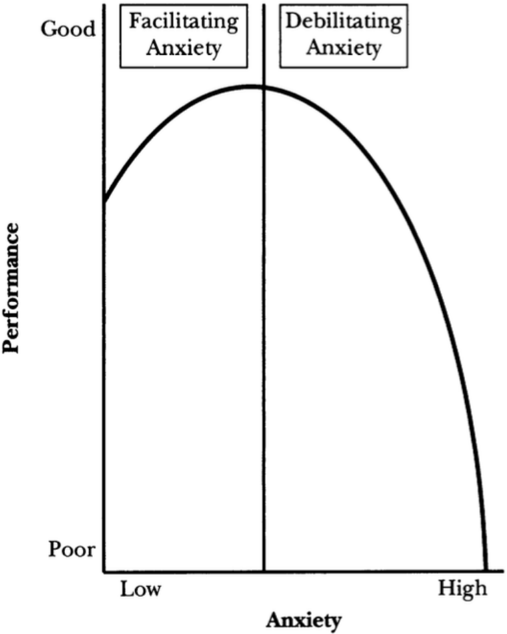
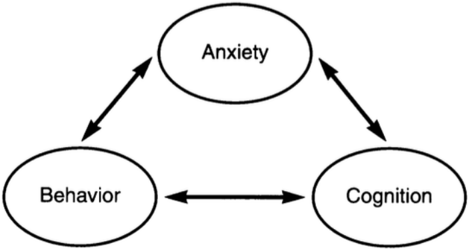
- Anxiety is best understood as a social anxiety with cognitive, affective, and behavioural components; its cognitive dimension (“worry”) competes with task-relevant information for processing space, creating a dual-task or divided-attention situation for anxious learners.
- State anxiety, not trait anxiety, is the immediate reaction associated with cognitive interference; active interference can occur at any stage of learning, and the relations among anxiety, cognition, and behaviour are recursive or cyclical.
- The paper cites Campbell and Ortiz’s (1991) estimate that up to one half of all language students experience debilitating levels of language anxiety, and Gardner et al.’s (1976) finding that language anxiety became a better predictor of achievement as grade level increased from grade 7 to grade 11.
Methods
- Design: theoretical reply and conceptual review, not an empirical study; it responds to Sparks and Ganschow’s LCDH and argues for including affective variables.
- Data or sample: no new sample or data were collected; the paper draws on prior research on anxiety in general and on language anxiety, including cited correlational, factor-analytic, and experimental studies.
- Main analysis: conceptual synthesis using cognitive interference theory, the state/trait anxiety distinction, and a recursive model of anxiety, cognition, and behaviour to critique LCDH’s treatment of affect.
Limitations
- Stated: early empirical studies on anxiety and language learning produced “mixed and confusing” results, and “exactly how anxiety impedes language learning has not been resolved”; the paper also acknowledges that correlational studies are vulnerable to third-variable explanations.
- Evident: as a theoretical reply, the paper presents no new empirical data or sample of its own, so its causal claims rest on synthesis of prior studies, some correlational and some experimental.
- Evident: the paper has no formal limitations section and does not report effect sizes or sample details for its own analyses because it conducts none.
Model-written summary. Check it against the paper before relying on it.
Integrity signals
Registry
Cites
Statistics
Figures
Verification
Claims the paper makes
0 Valid · 5 Not valid · 59 Not checked · 53 Own results and interpretations
In the paper
“it should also be recognised that task performance can provoke anxiety (MacIntyre & Gardner, 1994a).”
§ HOW DOES ANXIETY AFFECT L2 LEARNING? 1 How Does Anxiety Affect Second Language Learning? A Reply to Sparks And Ganschow > Figure 1
What the sources say
- Not matchedcites MacIntyre & Gardner, 1994a
More than one paper fits this citation.
plainstates a cause- Asserted: passes — The authors put it forward as true.
- Checkable: passes — It can be checked against evidence.
- Load-bearing: passes — The paper’s conclusions depend on it.
- Based: passes — The paper gives a reason why it holds.
- Not matched
In the paper
“When the effects of the video camera had dissipated and no longer lead to state anxiety arousal, performance improved relative to those who were experiencing more anxiety arousal.”
§ HOW DOES ANXIETY AFFECT L2 LEARNING? 1 How Does Anxiety Affect Second Language Learning? A Reply to Sparks And Ganschow > Relations among Anxiety, Cognition, and Behaviour
What the sources say
- Not matchedcites MacIntyre & Gardner, 1994a
More than one paper fits this citation.
plainstates a cause- Asserted: passes — The authors put it forward as true.
- Checkable: passes — It can be checked against evidence.
- Load-bearing: passes — The paper’s conclusions depend on it.
- Based: passes — The paper gives a reason why it holds.
- Not matched
A conclusion the paper draws from its own results — it cites no other source for it, so there is none to check. The quote shows it is in the paper.
In the paper
“The two explanations for individual differences in language achievement do not appear to be antithetical, in spite of the apparent claim to the contrary.”
§ HOW DOES ANXIETY AFFECT L2 LEARNING? 1 How Does Anxiety Affect Second Language Learning? A Reply to Sparks And Ganschow > Relations among Anxiety, Cognition, and Behaviour
hedged- Asserted: passes — The authors put it forward as true.
- Checkable: passes — It can be checked against evidence.
- Load-bearing: passes — The paper’s conclusions depend on it.
- Based: passes — The paper gives a reason why it holds.
None of the sources cited for this claim have been checked yet.
In the paper
“Significant negative correlations between language anxiety and course grades have been reported for languages such as Japanese (Aida, 1994), Spanish (Horwitz, 1986), andFrench (MacIntyre &Gardner, 1991b).”
§ HOW DOES ANXIETY AFFECT L2 LEARNING? 1 How Does Anxiety Affect Second Language Learning? A Reply to Sparks And Ganschow > How Does Anxiety Affect Second Language Learning? A Reply to Sparks and Ganschow
What the sources say
- Not checked yetcites Aida, 1994 matched to “Examination of Horwitz, Horwitz, and Cope's Construct of Foreign Language Anxiety: The Case of Students of Japanese” (1994) source
- Not checked yetcites Horwitz, 1986 matched to “Preliminary Evidence for the Reliability and Validity of a Foreign Language Anxiety Scale” (1986) source
- Not matchedcites MacIntyre & Gardner, 1991b
More than one paper fits this citation.
plainstates an association- Asserted: passes — The authors put it forward as true.
- Checkable: passes — It can be checked against evidence.
- Load-bearing: unclear — It is unclear whether the paper’s conclusions depend on it.
- Based: passes — The paper gives a reason why it holds.
A conclusion the paper draws from its own results — it cites no other source for it, so there is none to check. The quote shows it is in the paper.
In the paper
“In cases such as these, phonetic coding impairment is not the best place to look for the cause of the language learning difficulty.”
§ HOW DOES ANXIETY AFFECT L2 LEARNING? 1 How Does Anxiety Affect Second Language Learning? A Reply to Sparks And Ganschow > "Language Anxiety or Native Language Aptitude Differences"
plain- Asserted: passes — The authors put it forward as true.
- Checkable: unclear — It is unclear whether it could be checked against evidence.
- Load-bearing: passes — The paper’s conclusions depend on it.
- Based: passes — The paper gives a reason why it holds.
60 more claims
Create a free account to see all 117 claims and to verify the 22 references still open.
- Probably not a substantial claim. 35
- It may state two separate claims as one. 20
- The quote only partly states this claim. 1
Claims other papers make about this one
Each is checked against this paper’s own text: does it say what the citing paper says it does?
In the citing paper
“In addition, FLCA is argued to be a separate construct from first language learning deficits and subtle language learning disabilities, as several studies on the topic has found students who experience high levels of anxiety but are still successful language learners (MacIntyre, 1995a(MacIntyre, , 1995b)).”
From The Foreign Language Classroom Anxiety Scale and Academic Achievement: An Overview of the Prevailing Literature and a Meta-analysis (2020) · cites this paper as MacIntyre, 1995a
In the citing paper
“FLCA is defended, with the argument made that FLCA is an independent construct, distinct from aptitude, but which may influence or be influenced by the performance of the language learner.”
From The Foreign Language Classroom Anxiety Scale and Academic Achievement: An Overview of the Prevailing Literature and a Meta-analysis (2020) · cites this paper as MacIntyre, 1995a
Self-check
Percentages, sums and reported differences re-computed from the paper’s own numbers.
Each contradiction between two passages listed here was confirmed by an independent check.
Rated minor: it would not touch a result — a value no result rests on, a p-value that stays on the same side of the significance level, or a conflict that is clerical, resolved elsewhere in the paper, or outside its own findings.
In the paper
§ HOW DOES ANXIETY AFFECT L2 LEARNING? 1 How Does Anxiety Affect Second Language Learning? A Reply to Sparks And Ganschow > How Does Anxiety Affect Second Language Learning? A Reply to Sparks and Ganschow
“Horwitz and Young (1991) noted that "Exactly how anxiety impedes language learning has not been resolved" (p.177).”
§ HOW DOES ANXIETY AFFECT L2 LEARNING? 1 How Does Anxiety Affect Second Language Learning? A Reply to Sparks And Ganschow > References
“Horwitz, E. K., & Young, D. J. (1991). Preface. In E. K. Horwitz & D. J. Young (Eds.), Language anxiety: From theory and research to classroom implications (pp. xii-xiv).”
Rated minor: it would not touch a result — a value no result rests on, a p-value that stays on the same side of the significance level, or a conflict that is clerical, resolved elsewhere in the paper, or outside its own findings.
In the paper
§ HOW DOES ANXIETY AFFECT L2 LEARNING? 1 How Does Anxiety Affect Second Language Learning? A Reply to Sparks And Ganschow > How Does Anxiety Affect Second Language Learning? A Reply to Sparks and Ganschow
“Campbell and Ortiz (1991) considered the levels of language anxiety among university students to be "alarming" (p.159)”
§ HOW DOES ANXIETY AFFECT L2 LEARNING? 1 How Does Anxiety Affect Second Language Learning? A Reply to Sparks And Ganschow > References
“Campbell, C. M., & Ortiz, J. (1991). Helping students overcome foreign language anxiety: A foreign language anxiety workshop. In E. K. Horwitz & D. J. Young (Eds.), Language anxiety: From theory and research to classroom implications (pp. 141-150).”
Rated minor: it would not touch a result — a value no result rests on, a p-value that stays on the same side of the significance level, or a conflict that is clerical, resolved elsewhere in the paper, or outside its own findings.
In the paper
§ HOW DOES ANXIETY AFFECT L2 LEARNING? 1 How Does Anxiety Affect Second Language Learning? A Reply to Sparks And Ganschow > "Language Anxiety or Native Language Aptitude Differences"
“## "Language Anxiety or Native Language Aptitude Differences" The title of this section is taken from the subtitle of Sparks and Ganschow's (1991) article describing the LCDH.”
§ HOW DOES ANXIETY AFFECT L2 LEARNING? 1 How Does Anxiety Affect Second Language Learning? A Reply to Sparks And Ganschow > References
“Sparks, R. L., & Ganschow, L. (1991). Foreign language learning differences: Affective or native language aptitude differences? Modern Language Journal, 75, 3-16.”
Citations
Cites
Foreign Language Classroom Anxiety
HORWITZ, E. K., HORWITZ, M. B., & COPE, J. (1986) · The Modern Language Journal · doi:10.1111/j.1540-4781.1986.tb05256.x · Cited by 9,773
Language Learning Strategies: What Every Teacher Should Know
Horwitz, E. K., & Oxford, R. (1991) · The Modern Language Journal · doi:10.2307/329849 · Cited by 5,941
(1985) · Cited by 4,527
Language learning strategies what every teacher should know
Oxford, R. L. (1990) · Cited by 2,164
The Subtle Effects of Language Anxiety on Cognitive Processing in the Second Language
MacIntyre, P. D., & Gardner, R. C. (1994) · Language Learning · doi:10.1111/j.1467-1770.1994.tb01103.x · Cited by 1,823
Self-citationAIDA, Y. (1994) · The Modern Language Journal · doi:10.1111/j.1540-4781.1994.tb02026.x · Cited by 1,608
Individual Differences in Second Language Learning
Skehan, P. (2014) · Routledge eBooks · doi:10.4324/9781315831664 · Cited by 1,518
Cognitive and Emotional Components of Test Anxiety: A Distinction and Some Initial Data
Liebert, R. M., & Morris, L. W. (1967) · Psychological Reports · doi:10.2466/pr0.1967.20.3.975 · Cited by 1,150
Fiske, S. T., & Taylor, S. E. (1991) · Cited by 1,122
THE EFFECT OF AFFECT ON FOREIGN LANGUAGE LEARNING: A REVIEW OF THE ANXIETY RESEARCH
Scovel, T. (1978) · Language Learning · doi:10.1111/j.1467-1770.1978.tb00309.x · Cited by 1,047
Research works printed but not linked: 10
- Cope-Powell, J. (1991). Foreign language classroom anxiety: Institutional responses. In E. K. Horwitz & D. J. Young (Eds.), Language anxiety: From theory and research to classroom implications (pp. 169-176). Englewood Cliffs, NJ: Prentice Hall.
- Crane, S. (1989). Why poor readers misunderstand spoken sentences. In D. Shankweiler & I. Liberman (Eds.), Phonology and reading disability (pp. 133-165). Ann Arbor, MI: University of Michigan Press.
- Fischer, W. F. (1988). Theories of anxiety (2nd ed.). Lanham, MD: University Press of America.
- Horwitz, E. K., & Young, D. J. (1991). Preface. In E. K. Horwitz & D. J. Young (Eds.), Language anxiety: From theory and research to classroom implications (pp. xii-xiv). Englewood Cliffs, NJ: Prentice Hall.
- Levitt, E. E. (1980). The Psychology of Anxiety. Hillsdale, NJ: Erlbaum.
- Price, M. L. (1991). The subjective experience of foreign language anxiety: Interviews with highly anxious students. In E. K. Horwitz & D. J. Young (Eds.), Language anxiety: From theory and research to classroom implications (pp. 101-108). Englewood Cliffs, NJ: Prentice Hall.
- Sarason, I. G. (1986). Test anxiety, worry, and cognitive interference. In R. Schwarzer (Ed.), Self-related cognition in anxiety and motivation (pp. 19-34). Hillsdale, NJ: Erlbaum.
- Schwarzer, R. (1986). Self-related cognition in anxiety and motivation: An introduction. In R. Schwarzer (Ed.), Self-related cognition in anxiety and motivation (pp. 1-17). Hillsdale, NJ: Erlbaum.
- Spielberger, C. D. (1983). Manual for the state-trait anxiety inventory (form Y). Palo Alto, CA: Consulting Psychologists Press.
- Wine, J. D. (1980). Cognitive-attentional theory of test anxiety. In I. G. Sarason (Ed.), Test anxiety: Theory, research and applications (pp. 349-385). Hillsdale, NJ: Erlbaum.
Cited by
Items 701–800 of 851
زهران, ن. م. أ. (2022) · مجلة کلیة التربیة فى العلوم التربویة · doi:10.21608/jfees.2022.242785
L2 Anxiety: Training Effects and Anxiety Sources
Park, G. (2014) · Journal of the Korea English Education Society · doi:10.18649/jkees.2014.13.2.45
Intensive English program leaders' understanding of the study abroad experience
Colabucci, P. (2019) · Digital Repository Service (Northeastern University) · doi:10.17760/d20327462
Affect and Perceptions on a Multilingual Campus: Students’ Perspectives on Second Language Use
Stefanova, M. (2010) · Institutional Repositories DataBase (IRDB) · doi:10.34382/00011734
A Study on the Relationship between the Indirect Strategies and Listening Anxiety
Kang, Y. (2022) · Journal of Humanities and Social Sciences Studies · doi:10.32996/jhsss.2022.4.4.36
Increasing Group Cohesion through the Use of the Learning Circle
Truxal, D. (2014) · New directions in teaching and learning English discussion · doi:10.14992/00016079
An Examination of English Teaching Materials with Focus on the Prosodic and Discourse Features
Jung, E. H. S., & 최사라 (2008) · English Teaching · doi:10.15858/engtea.63.1.200803.181
Objective and subjective variables in two university classes
Valdeón, R. A. (2000) · Revista Alicantina de Estudios Ingleses · doi:10.14198/raei.2000.13.14
Torres, C. J. S., & Torres Ayala, D. A. (2020) · Repositorio Institucional (Pontificia Universidad Javeriana) · doi:10.11144/javeriana.10554.15963
Gatea, H. E., & Yapıcıoğlu, D. K. (2026) · Bartın University Journal of Faculty of Education · doi:10.14686/buefad.1799056
Tercüme Kaygısı Ölçeğinin Geçerlik ve Güvenirlik Çalışması
Tuncer, M., & Çetin, E. Y. (2026) · ASYA STUDIES · doi:10.31455/asya.1833665
He kaupapa whānau ako reo: He tauira nā Te Kura Whānau Reo
Huia, A. T., & Muller, M. (2017) · MAI Journal A New Zealand Journal of Indigenous Scholarship · doi:10.20507/maijournal.2017.6.3.3
Review of Sparks (2025): Second language anxiety: Affective or linguistic variable?
Bao, Z. (2026) · Functions of Language · doi:10.1075/fol.00077.bao
Ortiz, L. R., & Batet, M. (2016) · Dipòsit Digital de Documents de la UAB (Universitat Autònoma de Barcelona)
Tóth, Z. (2026) · European Journal of English Language Teaching · doi:10.46827/ejel.v11i4.6849
Yang, X., Rethinasamy, S., & Ramanair, J. (2026) · Journal of Linguistics and Communication Studies · doi:10.63593/jlcs.2026.03.05
Bojović, M. (2024) · Facta Universitatis Series Linguistics and Literature · doi:10.22190/full240325006n
KOBAYASHI (2023) · Institutional Repositories DataBase (IRDB)
Dynamic roles of anxiety and motivation in second/foreign language acquisition
Liu, M., Lin, C.-H., & Zhang, Y. (2023) · Frontiers research topics · doi:10.3389/978-2-8325-2569-2
Exploring The Factors Influencing Anxiety in ESL Teaching Interns Across Different Education Levels
Galuhwardani, C. (2025) · EDULINK EDUCATION AND LINGUISTICS KNOWLEDGE JOURNAL · doi:10.32503/edulink.v7i1.6804
Jamini, E. (2024) · Yildiz Technical University - AVESIS
An Ecological approach to foreign language anxiety and self-disclosure in a virtual exchange project
Garcia, M. F. (2025) · Tesis Doctorals en Xarxa (Consorci de Serveis Universitaris de Catalunya)
Gómez, J. G. (2026) · Communities in ADDI (University of the Basque Country)
小林, ゆ. (2026) · Institutional Repositories DataBase (IRDB) · doi:10.50889/0002001544
Septiadi, A., & Riskayadi (2026) · IDEAS Journal on English Language Teaching and Learning Linguistics and Literature
Alamer, A., Alrabai, F., & Dale, P. S. (2026) · Modern Language Journal · doi:10.1111/modl.70092
Ahmad, T. B., & Brigui, H. (2025) · Journal of English Language Teaching and Applied Linguistics · doi:10.32996/jeltal.2025.7.4.3
Mule, G., Mali, N., & K., P. C. (2026) · Iconic Research and Engineering Journals · doi:10.64388/irev9i11-1717328
bin Latif, M. T., Yaqoob, A., & Owais, M. (2026) · University of Chitral Journal of Linguistics and Literature
Adam, N. M. (2025) · Journal of Cultural Analysis and Social Change · doi:10.64753/jcasc.v10i4.3505
Pupils' anxiety in English language instruction
Tomlje, T. (2018) · Repository of the University of Ljubljana (University of Ljubljana)
Alqahtani, S. M. A. (2020) · Revista Tempos e Espaços em Educação · doi:10.20952/revtee.v13i32.14858
Yip, Y. C., Saad, N. M., Anthoney, M., Chua, N. A., Ng, S. Y., & Ahmad, A. (2026) · International Journal of Education Psychology and Counseling · doi:10.35631/ijepc.1164058
Lernstörungen im Unterricht des Deutschen als Fremdsprache
DAngelo, A. (2024) · UTUPub (University of Turku)
Métodos estadísticos aplicados a la metodología en lenguas modernas
Sáez, C. H. (2015) · LA Referencia (Red Federada de Repositorios Institucionales de Publicaciones Científicas)
Förekomst av språkångest hos yrkesverksamma logopeder
El-Balmouni, H. (2023) · Lund University Publications Student Papers (Lund University)
İKİNCİ DİL ÖĞRENİMİNDE BİREYSEL VE BAĞLAMSAL ETKENLER
Bican, G. (2021) · Tarih okulu · doi:10.29228/joh.47363
Foreign language anxiety of young learners in EFL and CLIL approaches
Arumí, A. V. (2021) · RIUVic (UVic-UCC)
Kaygı ve Öğrenci Tutumları: Neden Ben Hocam?
Tosun, B. C. (2017) · Atatürk Üniversitesi Sosyal Bilimler Enstitüsü Dergisi
Listening anxiety from Saudi EFL learners' perspectives
Oteir, I. N. (2018) · UUM Electronic Theses and Dissertation [eTheses] (Northern University of Malaysia)
Jusoh, M. K. A., Harun, M. F. A. A. C., Arun, N., Azudin, M. Z. M., Azemi, M. A., Jaafar, M. R., & Sharuddin, A. (2024) · Gading Journal for the Social Sciences · doi:10.24191/gading.v27i0
Complete Issue Volume 11 Issue 1
Journal of the Scholarship of Teaching and Learning, E. (2011) · Indiana Magazine of History (Indiana University)
Erofeeva, D. (2018) · Tampere University Institutional Repository (Tampere University)
Suwanaroa, S. (2011) · Adelaide Research & Scholarship (AR&S) (University of Adelaide)
Alikaj-Fierro, O. (2014) · scholarworks - UTEP (The University of Texas at El Paso)
Engajamento ativo no ensino de línguas : implicações para ansiedade e motivação
Meyer, L. R. (2025) · Lume (Universidade Federal do Rio Grande do Sul)
The Role of Implicit Theories of Intelligence and Need for Cognition in Second Language Acquisition
McIntosh, C. N. (2000) · HARVEST (University of Saskatchewan)
Pellegrinelli, M. (2017) · LA Referencia (Red Federada de Repositorios Institucionales de Publicaciones Científicas)
Beliefs, anxiety, and enjoyment: an exploration of learners of Chinese in UK universities
Lu, Y. (2025) · University of Birmingham Institutional Research Archive (University of Birmingham)
The Agents (Students, Parents and Teachers) of Multilingualism in Oromia, Ethiopia
Wekjira, M. F. (2025) · REAL-PhD (Hungarian Academy of Sciences) · doi:10.18136/pe.2025.950
Implementing a cultural historical activity theory approach to blended language learning
Doinn, O. Ó. (2018) · Dublin City University Open Access Institutional Repository (Dublin City University)
Improving spelling skills in kindergarteners through Jclic activities
Méndez, D. M. C., & Espitia, Y. L. (2012) · Americanae (AECID Library) · doi:10.82992/intellectum/handle.10818.5493
Kalnbērziņa, V. (2002) · Lancaster EPrints (Lancaster University)
Chinese language anxieties and achievement goals
Hsiao, C. H., & Douthit, K. Z. (n.d.) · UR Research (University of Rochester)
Rethinking EFL Reading Comprehension : Towards a Unity of Intellect and Affect
今井, 亮. (2014) · Institutional Repositories DataBase (IRDB)
Learner perceptions of language choice in English as an additional language classrooms
Schindel, A. J. (2011) · Summit (Simon Fraser University)
Guezodje, B. R. J. (2017) · Gutenberg Open Science · doi:10.25358/openscience-3298
A quantitative study of Bjelovar high school learners' anxiety in German language classrooms
Ježovita, M. (2020) · ODRAZ (University of Zagreb Faculty of Humanities and SocialSciences)
Exploring social emotional learning and code- swit chingas an aid in the classrom
Palomera, C. L. (2026) · Repositorio Institucional Académico , Sistema de Bibliotecas Universidad Andrés Bello (UNAB) (Universidad Andrés Bello (UNAB))
Experiences of Successful Latino Community ESL Students
Carrasco, B. P. S. (2012) · John Spoor Broome Library Institutional Repository (California State University)
Niemelä, E. (2014) · Jyväskylä University Digital Archive (University of Jyväskylä)
Mental Contrasting with Implementation Intentions to Lower Test Anxiety
Cakmakci, A. (2020) · ScholarsArchive (Brigham Young University)
Hodjiakbarovna, Y. F. (2025) · Oriental Journal of Education · doi:10.37547/supsci-oje-05-07-29
1970–1980-YILLARDA SURXONDARYO VILOYATIDA XALQ TA’LIMINING HOLATI VA UNING MUAMMOLARI
Umarov, J. S. (2025) · Oriental Journal of History Politics and Law · doi:10.37547/supsci-ojhpl-05-12-146
Fostering Effective French Communication in the Classroom
Brown, L. (2011) · Digital Commons - USU (Utah State University) · doi:10.26076/3aed-b227
Mahmood, R. A. (2022) · Journal of Kurdistani for Strategic Studies · doi:10.54809/jkss.vi7.202
(2018) · Institutional Repository University of Antwerp (University of Antwerp)
Omay, Y. (2022) · Yildiz Technical University - AVESIS
Repurposing the Wug Test: Does It Predict Second-Language Learners' Writing Anxiety and Performance?
Pilotti, M., & El-Moussa, O. J. (2025) · Forum for Linguistic Studies · doi:10.30564/fls.v7i12.11813
Zia, Z. (2016) · UMP Institutional Repository (Universiti Malaysia Pahang)
Oral reading miscues by intermediate Chinese as second language readers
Wang, S., Shen, H., Ke, C., Nishi, Y., Vispoel, W., & Plakans, L. (2022) · doi:10.17077/etd.006433
Level of speaking and oral test-taking anxieties experienced by university students
Nurkarimah, Y. (2014) · Universiti Putra Malaysia Institutional Repository (Universiti Putra Malaysia)
Percezioni sulla relazionalità nell’aula universitaria di Lingua Spagnola
Ghirardi, F. (2026) · Studi di glottodidattica · doi:10.15162/1970-1861/2664
Cardona, M., de Iaco, M., & Luise, M. C. (2026) · Studi di glottodidattica
コロナ禍の体験はどのように生かされたのか : 一般教養英語の場合 : 研究ノート
小林, ゆ., 市川, ゆ., 小田, 登., & Horiguchi, Y. (2023) · Institutional Repositories DataBase (IRDB)
La ansiedad y los aprendices de español como segunda lengua
Feuerstein, A. (2012) · OhioLink ETD Center (Ohio Library and Information Network)
Anxiety in Foreign Language Learners: A Case Study of Kurdish Students
Sofi, M. S. (2016) · Eastern Mediterranean University Institutional Repository (Eastern Mediterranean University)
Ansia da lingua straniera e comunicazione orale
DROGAN, O. (2018) · IRIS Research product catalog (Sapienza University of Rome)
Nehar, A. (2019) · Dépôt Institutionnel de lUniversité de Tlemcen
日本人英語学習者における語彙学習方略の認知と使用の関係性 : 個人差要因を含めて
熊谷, 允., クマガイ, マ., & Masaki, K. (2021) · Institutional Repositories DataBase (IRDB) · doi:10.14992/00020778
Batu, V. (2024) · Bilkent University Institutional Repository (Bilkent University)
Xu, H., & Ye, X. (2026) · World Journal of Education and Humanities · doi:10.22158/wjeh.v8n2p48
Shiozawa, Y., Ikuta, Y., Duvall, C. A., 阿野, 幸., & Piggin, G. (2010) · Institutional Repositories DataBase (IRDB)
Challenges, Opportunities, and Strategies for Japanese Postsecondary Foreign Language Pedagogy
Jones, K. (2005) · Institutional Repositories DataBase (IRDB)
安藤, 津. (2008) · Institutional Repositories DataBase (IRDB)
Анксиозност кај студентите во училницата по странски јазик
Todorova, M., & Koceva, V. (2015) · Goce Delchev University Repository (Goce Delčev University of Štip)
Factors influencing attitude to English at college level
Nhlane, M. A. (1999) · Boloka Institutional Repository (North-west University)
Retour réflexif et qualité de la langue
Deslauriers, K., & Pronovost, M. (2013) · Bibliothèque et Archives nationales du Québec (Québec government)
Strah od stranog jezika u kontekstu formalnog obrazovanja
Gverović, T. (2015) · Repozitorij Filozofskog fakulteta u Zagrebu' at University of Zagreb (University of Zagreb)
Mou, A. T. (2017) · BRAC University Institutional Repository (BRAC University)
Anxiety as an affective factor for adult Korean students learning English as a second language
Murray, B. (2002) · Digital Scholarship - UNLV (University of Nevada Reno) · doi:10.25669/fieq-qy4z
La peur de la production orale chez les étudiants de français et d'anglais au niveau universitaire
Paić, S. (2018) · Repozitorij Filozofskog fakulteta u Zagrebu' at University of Zagreb (University of Zagreb)
Vivash, L. (2015) · Oxford University Research Archive (ORA) (University of Oxford) · doi:10.5287/ora-er8q0dpk7
Nealy, M. (2019) · H2D|Revista de Humanidades Digitais · doi:10.21814/h2d.238
Attanayake, A. U. (2019) · Routledge eBooks · doi:10.4324/9781351129800-6
Factors Affecting English Achievement of Korean Elementary School Students
JieYoungKim (2013) · English21 · doi:10.35771/engdoi.2013.26.4.013
Astourian, S. M. (2018) · Le dépôt institutionnel (Université du Québec à Trois-Rivières)
Metadata
- Authors
- MACINTYRE, P. D.
- Affiliations
- Cape Breton University (CA)
- Corresponding author
- MACINTYRE, PETER D.
- ORCID
- MACINTYRE, PETER D.
- Venue
- The Modern Language Journal
- Publisher
- Wiley
- Published
- 1995-03
- Volume
- 79
- Issue
- 1
- Pages
- 90-99
- ISSN
- 0026-7902 (ISSN-L)
- 1540-4781
- OpenAlex
- W1990008549
- Cited by
- 887
- References
- 54
- Citations by year
- 2026: 38 · 2025: 46 · 2024: 50 · 2023: 55 · 2022: 49 · 2021: 51 · 2020: 53 · 2019: 41 · 2018: 52 · 2017: 50 · 2016: 55 · 2015: 49 · 2014: 52 · 2013: 38 · 2012: 38
- FWCI
- 32.58
- Type
- journal article
- Language
- en
- Open access
- green
- hdl.handle.net
- Licence
- Locations
- Modern Language Journal (publishedVersion)
- CBU Scholar (submittedVersion, cc-by-nc-nd)
- Funders
- Cape Breton University
- Social Sciences and Humanities Research Council of Canada
- Topics
- Social Sciences › Arts and Humanities › Language and Linguistics › EFL/ESL Teaching and Learning
- Social Sciences › Psychology › Social Psychology › Communication in Education and Healthcare
- Social Sciences › Psychology › Developmental and Educational Psychology › Second Language Acquisition and Learning
- Keywords
- language anxiety, second language acquisition, language aptitude, individual differences, emotional factors, language achievement, linguistic communication
About these checks
Registry, retraction, Cites and statistics results are computed, not judged, with one exception: a printed reference that no index lists is read once by a model before it counts as a citation error. Claims are extracted by a model and kept only when their quote appears verbatim in the text; each cited source is then checked, with a model’s help, for whether it says what the claim relies on. Those verdicts can be wrong — read the claim’s quote and the cited source before relying on one.
A language model drew the claims from the paper on 2026-11-24, under version 3 of the claim definition (model deepseek-v4.1-flash, prompt extract-v3).
A second model labelled each claim on 2026-11-24 (model jev-1.13-20260917, definition revision gold-guideline-v0.2).
Statistics and arithmetic are recomputed, not judged.
Confidence bands are shown only for fields calibrated on our annotated test set. None is calibrated yet, so no band is shown.
What counts as a claim ›How we measure confidence ›How we check this ›
Are you an author, or do you see a problem with this page? Request a review
Data sources
Bibliographic data: Semantic Scholar, OpenAlex, Crossref.
Contains information from the Semantic Scholar Academic Graph Datasets, made available under the ODC Attribution License (ODC-BY 1.0).
Semantic Scholar’s data is described in: Kinney, R., et al. (2023). The Semantic Scholar Open Data Platform. arXiv:2301.10140.
