

How Does Anxiety Affect Second Language Learning? A Reply to Sparks and Ganschow
Open accessThe DOI matches its Crossref record; 55 of the 55 references it cites were found in a registry or an index; none of the 71 sources its claims cite is checked for support yet.
Abstract
The linguistic coding deficit hypothesis, introduced by Sparks and Ganschow (1991, 1993a, 1993b), postulates that language aptitude is the primary source of individual differences in language achievement. This may be seen to reduce affective variables, such as language anxiety, to the role of unfortunate side effects, devoid of explanatory power. This paper advocates that language anxiety can play a significant causal role in creating individual differences in both language learning and communication. It reviews evidence from investigations of anxiety in general and studies of the role of anxiety in the language learning processes and concludes that the linguistic coding deficit hypothesis makes a significant omission by assigning mere epiphenomenal status to affective variables in general and language anxiety in particular.
Overview
CoChat Summary
TL;DR
MacIntyre argues against Sparks and Ganschow’s linguistic coding deficit hypothesis (LCDH), contending that language anxiety can play a significant causal role in individual differences in second language learning and communication rather than being merely an epiphenomenon of aptitude. He proposes that anxiety creates divided attention and interferes with encoding, storage, and retrieval, making LCDH incomplete without affective variables.
Key findings
- Language anxiety can play a significant causal role in creating individual differences in both language learning and communication; the paper reviews evidence of negative correlations between language anxiety and course grades in Japanese, Spanish, and French, standardized written and oral proficiency tests, slower vocabulary learning, and factor-analytic associations with self-rated and actual proficiency.
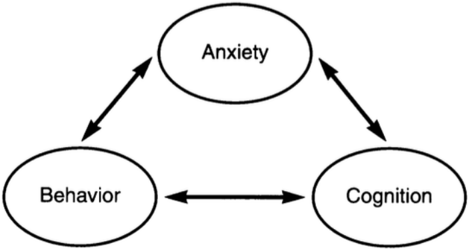
- Anxiety is best understood as a social anxiety with cognitive, affective, and behavioural components; its cognitive dimension (“worry”) competes with task-relevant information for processing space, creating a dual-task or divided-attention situation for anxious learners.
- State anxiety, not trait anxiety, is the immediate reaction associated with cognitive interference; active interference can occur at any stage of learning, and the relations among anxiety, cognition, and behaviour are recursive or cyclical.
- The paper cites Campbell and Ortiz’s (1991) estimate that up to one half of all language students experience debilitating levels of language anxiety, and Gardner et al.’s (1976) finding that language anxiety became a better predictor of achievement as grade level increased from grade 7 to grade 11.
Methods
- Design: theoretical reply and conceptual review, not an empirical study; it responds to Sparks and Ganschow’s LCDH and argues for including affective variables.
- Data or sample: no new sample or data were collected; the paper draws on prior research on anxiety in general and on language anxiety, including cited correlational, factor-analytic, and experimental studies.
- Main analysis: conceptual synthesis using cognitive interference theory, the state/trait anxiety distinction, and a recursive model of anxiety, cognition, and behaviour to critique LCDH’s treatment of affect.
Limitations
- Stated: early empirical studies on anxiety and language learning produced “mixed and confusing” results, and “exactly how anxiety impedes language learning has not been resolved”; the paper also acknowledges that correlational studies are vulnerable to third-variable explanations.
- Evident: as a theoretical reply, the paper presents no new empirical data or sample of its own, so its causal claims rest on synthesis of prior studies, some correlational and some experimental.
- Evident: the paper has no formal limitations section and does not report effect sizes or sample details for its own analyses because it conducts none.
Model-written summary. Check it against the paper before relying on it.
Integrity signals
Registry
Cites
Statistics
Figures
Verification
Claims the paper makes
0 Valid · 5 Not valid · 59 Not checked · 53 Own results and interpretations
In the paper
“it should also be recognised that task performance can provoke anxiety (MacIntyre & Gardner, 1994a).”
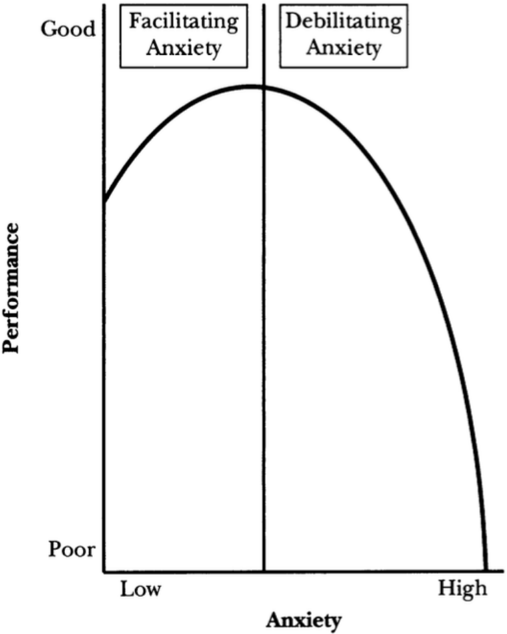
§ HOW DOES ANXIETY AFFECT L2 LEARNING? 1 How Does Anxiety Affect Second Language Learning? A Reply to Sparks And Ganschow > Figure 1
What the sources say
- Not matchedcites MacIntyre & Gardner, 1994a
More than one paper fits this citation.
plainstates a cause- Asserted: passes — The authors put it forward as true.
- Checkable: passes — It can be checked against evidence.
- Load-bearing: passes — The paper’s conclusions depend on it.
- Based: passes — The paper gives a reason why it holds.
- Not matched
In the paper
“When the effects of the video camera had dissipated and no longer lead to state anxiety arousal, performance improved relative to those who were experiencing more anxiety arousal.”
§ HOW DOES ANXIETY AFFECT L2 LEARNING? 1 How Does Anxiety Affect Second Language Learning? A Reply to Sparks And Ganschow > Relations among Anxiety, Cognition, and Behaviour
What the sources say
- Not matchedcites MacIntyre & Gardner, 1994a
More than one paper fits this citation.
plainstates a cause- Asserted: passes — The authors put it forward as true.
- Checkable: passes — It can be checked against evidence.
- Load-bearing: passes — The paper’s conclusions depend on it.
- Based: passes — The paper gives a reason why it holds.
- Not matched
A conclusion the paper draws from its own results — it cites no other source for it, so there is none to check. The quote shows it is in the paper.
In the paper
“The two explanations for individual differences in language achievement do not appear to be antithetical, in spite of the apparent claim to the contrary.”
§ HOW DOES ANXIETY AFFECT L2 LEARNING? 1 How Does Anxiety Affect Second Language Learning? A Reply to Sparks And Ganschow > Relations among Anxiety, Cognition, and Behaviour
hedged- Asserted: passes — The authors put it forward as true.
- Checkable: passes — It can be checked against evidence.
- Load-bearing: passes — The paper’s conclusions depend on it.
- Based: passes — The paper gives a reason why it holds.
None of the sources cited for this claim have been checked yet.
In the paper
“Significant negative correlations between language anxiety and course grades have been reported for languages such as Japanese (Aida, 1994), Spanish (Horwitz, 1986), andFrench (MacIntyre &Gardner, 1991b).”
§ HOW DOES ANXIETY AFFECT L2 LEARNING? 1 How Does Anxiety Affect Second Language Learning? A Reply to Sparks And Ganschow > How Does Anxiety Affect Second Language Learning? A Reply to Sparks and Ganschow
What the sources say
- Not checked yetcites Aida, 1994 matched to “Examination of Horwitz, Horwitz, and Cope's Construct of Foreign Language Anxiety: The Case of Students of Japanese” (1994) source
- Not checked yetcites Horwitz, 1986 matched to “Preliminary Evidence for the Reliability and Validity of a Foreign Language Anxiety Scale” (1986) source
- Not matchedcites MacIntyre & Gardner, 1991b
More than one paper fits this citation.
plainstates an association- Asserted: passes — The authors put it forward as true.
- Checkable: passes — It can be checked against evidence.
- Load-bearing: unclear — It is unclear whether the paper’s conclusions depend on it.
- Based: passes — The paper gives a reason why it holds.
A conclusion the paper draws from its own results — it cites no other source for it, so there is none to check. The quote shows it is in the paper.
In the paper
“In cases such as these, phonetic coding impairment is not the best place to look for the cause of the language learning difficulty.”
§ HOW DOES ANXIETY AFFECT L2 LEARNING? 1 How Does Anxiety Affect Second Language Learning? A Reply to Sparks And Ganschow > "Language Anxiety or Native Language Aptitude Differences"
plain- Asserted: passes — The authors put it forward as true.
- Checkable: unclear — It is unclear whether it could be checked against evidence.
- Load-bearing: passes — The paper’s conclusions depend on it.
- Based: passes — The paper gives a reason why it holds.
60 more claims
Create a free account to see all 117 claims and to verify the 22 references still open.
- Probably not a substantial claim. 35
- It may state two separate claims as one. 20
- The quote only partly states this claim. 1
Claims other papers make about this one
Each is checked against this paper’s own text: does it say what the citing paper says it does?
In the citing paper
“In addition, FLCA is argued to be a separate construct from first language learning deficits and subtle language learning disabilities, as several studies on the topic has found students who experience high levels of anxiety but are still successful language learners (MacIntyre, 1995a(MacIntyre, , 1995b)).”
From The Foreign Language Classroom Anxiety Scale and Academic Achievement: An Overview of the Prevailing Literature and a Meta-analysis (2020) · cites this paper as MacIntyre, 1995a
In the citing paper
“FLCA is defended, with the argument made that FLCA is an independent construct, distinct from aptitude, but which may influence or be influenced by the performance of the language learner.”
From The Foreign Language Classroom Anxiety Scale and Academic Achievement: An Overview of the Prevailing Literature and a Meta-analysis (2020) · cites this paper as MacIntyre, 1995a
Self-check
Percentages, sums and reported differences re-computed from the paper’s own numbers.
Each contradiction between two passages listed here was confirmed by an independent check.
Rated minor: it would not touch a result — a value no result rests on, a p-value that stays on the same side of the significance level, or a conflict that is clerical, resolved elsewhere in the paper, or outside its own findings.
In the paper
§ HOW DOES ANXIETY AFFECT L2 LEARNING? 1 How Does Anxiety Affect Second Language Learning? A Reply to Sparks And Ganschow > How Does Anxiety Affect Second Language Learning? A Reply to Sparks and Ganschow
“Horwitz and Young (1991) noted that "Exactly how anxiety impedes language learning has not been resolved" (p.177).”
§ HOW DOES ANXIETY AFFECT L2 LEARNING? 1 How Does Anxiety Affect Second Language Learning? A Reply to Sparks And Ganschow > References
“Horwitz, E. K., & Young, D. J. (1991). Preface. In E. K. Horwitz & D. J. Young (Eds.), Language anxiety: From theory and research to classroom implications (pp. xii-xiv).”
Rated minor: it would not touch a result — a value no result rests on, a p-value that stays on the same side of the significance level, or a conflict that is clerical, resolved elsewhere in the paper, or outside its own findings.
In the paper
§ HOW DOES ANXIETY AFFECT L2 LEARNING? 1 How Does Anxiety Affect Second Language Learning? A Reply to Sparks And Ganschow > How Does Anxiety Affect Second Language Learning? A Reply to Sparks and Ganschow
“Campbell and Ortiz (1991) considered the levels of language anxiety among university students to be "alarming" (p.159)”
§ HOW DOES ANXIETY AFFECT L2 LEARNING? 1 How Does Anxiety Affect Second Language Learning? A Reply to Sparks And Ganschow > References
“Campbell, C. M., & Ortiz, J. (1991). Helping students overcome foreign language anxiety: A foreign language anxiety workshop. In E. K. Horwitz & D. J. Young (Eds.), Language anxiety: From theory and research to classroom implications (pp. 141-150).”
Rated minor: it would not touch a result — a value no result rests on, a p-value that stays on the same side of the significance level, or a conflict that is clerical, resolved elsewhere in the paper, or outside its own findings.
In the paper
§ HOW DOES ANXIETY AFFECT L2 LEARNING? 1 How Does Anxiety Affect Second Language Learning? A Reply to Sparks And Ganschow > "Language Anxiety or Native Language Aptitude Differences"
“## "Language Anxiety or Native Language Aptitude Differences" The title of this section is taken from the subtitle of Sparks and Ganschow's (1991) article describing the LCDH.”
§ HOW DOES ANXIETY AFFECT L2 LEARNING? 1 How Does Anxiety Affect Second Language Learning? A Reply to Sparks And Ganschow > References
“Sparks, R. L., & Ganschow, L. (1991). Foreign language learning differences: Affective or native language aptitude differences? Modern Language Journal, 75, 3-16.”
Citations
Cites
Foreign Language Classroom Anxiety
HORWITZ, E. K., HORWITZ, M. B., & COPE, J. (1986) · The Modern Language Journal · doi:10.1111/j.1540-4781.1986.tb05256.x · Cited by 9,773
Language Learning Strategies: What Every Teacher Should Know
Horwitz, E. K., & Oxford, R. (1991) · The Modern Language Journal · doi:10.2307/329849 · Cited by 5,941
(1985) · Cited by 4,527
Language learning strategies what every teacher should know
Oxford, R. L. (1990) · Cited by 2,164
The Subtle Effects of Language Anxiety on Cognitive Processing in the Second Language
MacIntyre, P. D., & Gardner, R. C. (1994) · Language Learning · doi:10.1111/j.1467-1770.1994.tb01103.x · Cited by 1,823
Self-citationAIDA, Y. (1994) · The Modern Language Journal · doi:10.1111/j.1540-4781.1994.tb02026.x · Cited by 1,608
Individual Differences in Second Language Learning
Skehan, P. (2014) · Routledge eBooks · doi:10.4324/9781315831664 · Cited by 1,518
Cognitive and Emotional Components of Test Anxiety: A Distinction and Some Initial Data
Liebert, R. M., & Morris, L. W. (1967) · Psychological Reports · doi:10.2466/pr0.1967.20.3.975 · Cited by 1,150
Fiske, S. T., & Taylor, S. E. (1991) · Cited by 1,122
THE EFFECT OF AFFECT ON FOREIGN LANGUAGE LEARNING: A REVIEW OF THE ANXIETY RESEARCH
Scovel, T. (1978) · Language Learning · doi:10.1111/j.1467-1770.1978.tb00309.x · Cited by 1,047
Research works printed but not linked: 10
- Cope-Powell, J. (1991). Foreign language classroom anxiety: Institutional responses. In E. K. Horwitz & D. J. Young (Eds.), Language anxiety: From theory and research to classroom implications (pp. 169-176). Englewood Cliffs, NJ: Prentice Hall.
- Crane, S. (1989). Why poor readers misunderstand spoken sentences. In D. Shankweiler & I. Liberman (Eds.), Phonology and reading disability (pp. 133-165). Ann Arbor, MI: University of Michigan Press.
- Fischer, W. F. (1988). Theories of anxiety (2nd ed.). Lanham, MD: University Press of America.
- Horwitz, E. K., & Young, D. J. (1991). Preface. In E. K. Horwitz & D. J. Young (Eds.), Language anxiety: From theory and research to classroom implications (pp. xii-xiv). Englewood Cliffs, NJ: Prentice Hall.
- Levitt, E. E. (1980). The Psychology of Anxiety. Hillsdale, NJ: Erlbaum.
- Price, M. L. (1991). The subjective experience of foreign language anxiety: Interviews with highly anxious students. In E. K. Horwitz & D. J. Young (Eds.), Language anxiety: From theory and research to classroom implications (pp. 101-108). Englewood Cliffs, NJ: Prentice Hall.
- Sarason, I. G. (1986). Test anxiety, worry, and cognitive interference. In R. Schwarzer (Ed.), Self-related cognition in anxiety and motivation (pp. 19-34). Hillsdale, NJ: Erlbaum.
- Schwarzer, R. (1986). Self-related cognition in anxiety and motivation: An introduction. In R. Schwarzer (Ed.), Self-related cognition in anxiety and motivation (pp. 1-17). Hillsdale, NJ: Erlbaum.
- Spielberger, C. D. (1983). Manual for the state-trait anxiety inventory (form Y). Palo Alto, CA: Consulting Psychologists Press.
- Wine, J. D. (1980). Cognitive-attentional theory of test anxiety. In I. G. Sarason (Ed.), Test anxiety: Theory, research and applications (pp. 349-385). Hillsdale, NJ: Erlbaum.
Cited by
Items 501–600 of 851
Huang, Y.-W. (2014) · Journal of Educational and Developmental Psychology · doi:10.5539/jedp.v4n1p258 · Cited by 2
Mathews, E. (2012) · AeroSafety world./AeroSafety world · Cited by 2
권유진, 김영주, & 남상은 (2010) · KOREAN EDUCATION · doi:10.15734/koed..85.201008.381 · Cited by 2
Min, S., & Lee, Y. (2015) · The Journal of the Korea Contents Association · doi:10.5392/jkca.2015.15.04.545 · Cited by 2
STUDYING ENGLISH SPEAKING ANXIETY AMONG MALE AND FEMALE STUDENTS OF BAMYAN UNIVERSITY
Hamdard, Y., Qasimyar, I., Haidari, H. A., & Islam, A. R. (2024) · Sprin Journal of Arts Humanities and Social Sciences · doi:10.55559/sjahss.v3i7.376 · Cited by 2
Scholz, K. W. (2010) · UWSpace (University of Waterloo) · Cited by 3
JiYeon, J., Seo, S.-J., Han, Y., & Jeong, H. (2020) · Journal of the Korean Chemical Society · doi:10.15207/jkcs.2020.11.1.119 · Cited by 2
COMMUNICATION APPREHENSION AMONG SENIOR ELEMENTARY SCHOOL STUDENTS IN SERBIA
Radić-Bojanić, B. (2024) · Методички видици · doi:10.19090/mv.2024.15.193-210 · Cited by 2
Bui, G. (2026) · RELC Journal · doi:10.1177/00336882261422018 · Cited by 2
Hou, Y.-A. (2017) · Open Journal of Nursing · doi:10.4236/ojn.2017.712102 · Cited by 2
Aziz, S., Ibrahim, R., & Abubaker, B. Q. (2023) · Evaluation Study of Three Diagnostic Methods for Helicobacter pylori Infection · doi:10.24271/garmian.2023.10285 · Cited by 2
A Mexican Project with University Academic At-Risk English as a Foreign Language Students.
Johnson, C. (1997) · Cited by 2
Changes in Anxiety and Motivation in a Content-Based Intensive English Program
Han, H., & Lee, H. (2008) · The Jungang Journal of English Language and Literature · doi:10.18853/jjell.2008.50.4.016 · Cited by 2
A qualitative study of question-posing anxiety in Chinese postgraduates in UK TESOL programs
Eyu, E., Liu, W., & Li, Y. (2025) · Scientific Reports · doi:10.1038/s41598-025-31915-0 · Cited by 2
Sönmez, B. (2020) · Maltepe University - AVESIS · Cited by 2
The Korean Society of Bilingualism, 이선진, Kim, Y., & Lee, S. (2017) · doi:10.17296/korbil.2017..67.63 · Cited by 2
Di, X., & Yin, H. (2025) · Forum for Linguistic Studies · doi:10.30564/fls.v7i2.8188 · Cited by 2
LLM-based Embodied Conversational Agent for Reducing Foreign Language Speaking Anxiety in Social VR
Pan, M., Liu, P., Zhang, J., Cao, R., Ariyawansa, V., Li, Y., Yao, B., Wang, D., Pasquier, P., Kitson, A., et al. (2026) · CHI Conference on Human Factors in Computing Systems · doi:10.1145/3772318.3791068 · Cited by 2
Lee, E. L. (2002) · Cited by 2
An Exploration of SFL Students’ Emotional Intelligence and Foreign Language Anxiety
Kurt, E., & Savuran, Y. (2016) · Anatolian Journal of Education · doi:10.29333/aje.2016.123a · Cited by 2
Anxiety in English Language Learning Among Thai Students
Lum’atuddina, S., & Miftachudin, M. (2021) · Conference on English Language Teaching · doi:10.24090/celti.v1.8 · Cited by 2
İLHAN, H., & TUTKUN, Ö. F. (2020) · the Journal of Academic Social Sciences · doi:10.29228/asos.43540 · Cited by 2
REDUCING STUDENTS’ FOREIGN LANGUAGE ANXIETY IN SPEAKING CLASS THROUGH COOPERATIVE LEARNING
Susidamaiyanti, S. (2018) · Jurnal As-Salam · doi:10.37249/as-salam.v2i2.38 · Cited by 2
Dyslexia and Foreign Language Teaching
Marogna, V. (2013) · Cited by 2
Fu, J., Yan, H., & Zheng, J. J. (2025) · Smart innovation, systems and technologies · doi:10.1007/978-981-97-8760-9_1 · Cited by 2
Language proficiency differences in second language learning anxiety
Rashid, N. A. B. N., & Alias, A. B. (2018) · Jurnal EDUCATIO Jurnal Pendidikan Indonesia · doi:10.29210/120182255 · Cited by 2
Anxiety as a Psychological Barrier to Students’ Speaking Fluency: IELTS as a Case Study
Idrissi, O. (2022) · International Journal of Linguistics Literature & Translation · doi:10.32996/ijllt.2022.5.12.14 · Cited by 2
Mandarin Learning Anxiety and its Associated Factors among form 6 Students in Malaysia
Ling, T. H., Qi, C. P., Yui, L. S., Min, O. Y., & Wei, Y. S. (2023) · International Journal of Academic Research in Business and Social Sciences · doi:10.6007/ijarbss/v13-i5/16708 · Cited by 2
Lanteigne, B., & Sulieman, H. (2021) · Springer eBooks · doi:10.1007/978-981-33-4232-3_11 · Cited by 2
Preparing Students for Learning: The Case for Finance Pre-Courses at Business Schools
Mahrt‐Smith, J. (2015) · Cited by 2
senobari, S. (2023) · theses.fr (ABES) · doi:10.70675/8360e2c6z2bf9z4c6fza1fczdb873e27dd7b · Cited by 2
Bali, A. (2017) · Dépôt Institutionnel de lUniversité de Tlemcen · Cited by 2
GEÇMİŞ ÖĞRENME YAŞANTILARININ ÖĞRENCİLERİN KISITLAYICI DİL ÖĞRENME DAVRANIŞLARINA ETKİSİ
DAĞGÖL, G. D. (2014) · Route Educational and Social Science Journal · doi:10.17121/ressjournal.31 · Cited by 2
Griesser, S. (2022) · Oxford University Research Archive (ORA) (University of Oxford) · doi:10.5287/ora-qqp6oj7op · Cited by 2
Bistline-Bonilla, C. (2020) · DigitalGeorgetown (Georgetown University Library) · Cited by 2
Ding, M. (2023) · Enlighten: Theses (The University of Glasgow) · doi:10.5525/gla.thesis.84029 · Cited by 2
100 Soruda Yabancı Dil Olarak Türkçe Öğretimi
Acemoğlu, A., Oryaşın, U., GÜVEN, A. Z., Okur, A., Demirdöven, G. H., Kaya, F., Demirel, M., ÖZDEN, E., Akkaya, M., ŞENGÜL, L., et al. (2023) · Akademisyen Kitabevi eBooks · doi:10.37609/akya.2610 · Cited by 2
Melchor-Couto, S. (2014) · Investigo repository of University of Vigo (University of Vigo) · doi:10.35869/11093/441 · Cited by 2
Schilling, M. G. V. (2007) · FreiDok plus (Universitätsbibliothek Freiburg) · Cited by 2
Olejarczuk, E. (2015) · Repozytorium Uniwersytetu im. Adama Mickiewicza (Adam Mickiewicz University in Poznań) · Cited by 2
Levitt, F. (2017) · Sussex Research Online (University of Sussex) · Cited by 2
Boonrat, P., Wisessuwan, A., & Tubsree, C. (2012) · HRD Journal · Cited by 2
Teacher’s role in minimizing undergraduate students’ language learning anxiety
Maria, N. R. (2016) · BRAC University Institutional Repository (BRAC University) · Cited by 2
Barın, M. (2018) · Atatürk Üniversitesi Sosyal Bilimler Dergisi · Cited by 2
Amin, E. (2013) · Eastern Mediterranean University Institutional Repository (Eastern Mediterranean University) · Cited by 2
Doğan, Y. (2016) · DSpace - FIRAT (Fırat University) · Cited by 3
A Study On Identifying Causes And Solutions For Reducing Language Learning Anxiety
Pandya, V., & Rao, J. S. (2024) · doi:10.53555/kuey.v30i1.6546 · Cited by 2
The Relationship among EFL Learners’ Anxiety, Motivation, and Achievement
Mahmoodi, M., & Yavuz, M. A. (2025) · Cultural Conflict and Integration · doi:10.55121/cci.v1i1.242 · Cited by 2
PEER INTERACTION AND LEARNING OPPORTUNITIES IN COHESIVE AND LESS COHESIVE L2 CLASSROOMS
Leslie, C. (2015) · Portuguese National Funding Agency for Science, Research and Technology (RCAAP Project by FCT) · doi:10.13140/rg.2.2.33391.38565 · Cited by 2
The Effect of Collaborative Reading on Iraqi EFL Intermediate School Pupils' Reading Comprehension
Obeed, A. I. R. S. (2018) · ALUSTATH JOURNAL FOR HUMAN AND SOCIAL SCIENCES · doi:10.36473/ujhss.v224i1.247 · Cited by 2
Löfvenius, J. (2020) · Hogskolan Ihalmstad (Halmstad University) · Cited by 2
Mendrofa, L., & Yoedo, Y. C. (2025) · Aletheia Christian Educators Journal · doi:10.9744/aletheia.6.1.27-36 · Cited by 2
Reading anxiety among Arabic speaking students.
Kress, M. T. (2015) · SUNY Digital Repository Support (State University of New York System) · Cited by 2
Examining the Reading Anxiety Phenomenon of Arab EFL learners
Batiha, J. M., Noor, N. M., & Mustaffa, R. (2021) · AJELP The Asian Journal of English Language and Pedagogy · doi:10.37134/ajelp.vol9.1.3.2021 · Cited by 2
Canaria, U. D. L. P. D. G., & Suárez, C. C. (2023) · Tejuelo Didáctica de la Lengua y la Literatura Educación · doi:10.17398/1988-8430.38.131 · Cited by 2
Dracopoulos, E. (2012) · R-libre (Université Téluq) · Cited by 2
Language Anxiety among Selected Grade 7 ESL Learners in the Division of Northern Samar, Philippines
Banagbanag, R. A. (2019) · International Journal of Trend in Scientific Research and Development · doi:10.5281/zenodo.3591034 · Cited by 2
Mehmet, A. C. E. T., YÜCEL, A. S., Ersoy, A., & Akkoyunlu, Y. (2012) · International refereed journal of humanities and academic sciences/International refereed journal of humanities and academic siences · doi:10.17368/uhbab.2012018731 · Cited by 2
EFL learners’ anxiety as an affective focus in the study of e-learning
JoohaeKim (2007) · English Language Teaching · doi:10.17936/pkelt.2007.19.2.008 · Cited by 2
Govender, M. (2010) · University of the Western Cape Electronic Theses and Dissertations Repository (University of the Western Cape) · Cited by 2
Rousseau, R. (2014) · Unisa Institutional Repository (University of South Africa) · Cited by 1
Research on the impact of artificial intelligence on EFL learners’ foreign language anxiety
Wang, S., Cui, Y., & Pan, X. (2026) · Frontiers in Psychology · doi:10.3389/fpsyg.2026.1847269 · Cited by 1
Chinese EFL Learners’ Emotion, Engagement and Language Achievement: A Latent Profile AnalysisV
Feng, E. (2022) · Journal of Innovation and Social Science Research · doi:10.53469/jissr.2022.09(01).31 · Cited by 1
y Ocerín, J. M. C., Sáez, C. H., & Amar, R. M. (2016) · Profesorado Revista de Currículum y Formación del Profesorado · doi:10.30827/profesorado.v20i2.10418 · Cited by 1
Strah od čitanja i ovladavanje vještinom čitanja na stranome jeziku
Baranac, S. D. (2020) · doi:10.17234/diss.2020.5569 · Cited by 1
Learner anxiety and EFL learning: A study of tertiary students' and teachers' perceptions in Taiwan
Chuang, C.-H. (2015) · Nottingham ePrints (University of Nottingham) · Cited by 1
Shen, C., Huang, Q., Shentu, C., & Liu, S. (2025) · International Journal of Distance Education Technologies · doi:10.4018/ijdet.385599 · Cited by 1
Alanazi, Z. (2026) · Innovation in Language Learning and Teaching · doi:10.1080/17501229.2026.2679581 · Cited by 1
The Relationships between English Reading Anxiety and Reading Proficiency of Korean College Students
Kim, K.-C., & Hyesook, P. (2014) · Studies in English Language & Literature · doi:10.21559/aellk.2014.40.4.013 · Cited by 2
Türkçe Öğretmeni Adaylarının Dil Bilgisi Kaygısının Çeşitli Değişkenler Açısından İncelenmesi
Taşdemir, F., & ÇELİKPAZU, E. E. (2023) · Korkut Ata Türkiyat Araştırmaları Dergisi · doi:10.51531/korkutataturkiyat.1340968 · Cited by 1
Blachowska-Szmigiel, M. (2020) · Glottodidactica · doi:10.14746/gl.2020.47.1.01 · Cited by 1
Yaman, H., & Can, A. (2015) · International Online Journal of Educational Sciences · doi:10.15345/iojes.2015.02.018 · Cited by 1
Creating a Discourse for Understanding Second Language Acquisition and Anxiety
Bottiger, W., & 김경열 (2013) · The Jungang Journal of English Language and Literature · doi:10.18853/jjell.2013.55.2.016 · Cited by 1
Schmidt-Fajlik, R. (2025) · AsiaCALL Online Journal · doi:10.54855/acoj.251619 · Cited by 1
Valieva, F. I. (2023) · Lecture notes in networks and systems · doi:10.1007/978-3-031-26783-3_25 · Cited by 1
دراسة قلق الكتابة لدى طلاب المرحلة الثانوية في مادة اللغة الإنجليزية بوصفها لغة أجنبية
مطر, م. ق. م., & حمود, م. م. س. ح. (2023) · لارك · doi:10.31185/lark.vol1.iss52.3317 · Cited by 1
High school students' experience with anxiety towards Arabic quizzes and exams
Nicolas, F. (2020) · Digital Repository Service (Northeastern University) · doi:10.17760/d20398301 · Cited by 1
Effect of Gender in SLA, Inspiring Gender Roles SLA Research
Huang, S. (2022) · International Journal of Education and Humanities · doi:10.54097/ijeh.v5i1.1957 · Cited by 1
Anxiety in the noticing and production of L2 forms: a study of beginning learners of Arabic
Nassif, L. (2014) · Texas ScholarWorks (Texas Digital Library) · Cited by 1
Meçe, D., & Gjergo, E. S. (2023) · Journal of Education & Social Policy · doi:10.30845/jesp.v10n2p4 · Cited by 1
Hamza, H. M. (2016) · Eastern Mediterranean University Institutional Repository (Eastern Mediterranean University) · Cited by 1
Listener anxiety and listening strategies on multiple-choice items of EFL learners
Choi, J. Y., & 전유아 (2014) · Journal of the Korea English Education Society · doi:10.18649/jkees.2014.13.4.21 · Cited by 1
Magnan, M., Levasseur, C., Grenier, V., & Darchinian, F. (2019) · Papyrus : Institutional Repository (Université de Montréal) · doi:10.13140/rg.2.2.28224.17929 · Cited by 1
Students' Motivation for Verbal Communication in the Classroom
Johansson, E. (2010) · DiVA (Digitala Vetenskapliga Arkivet) · Cited by 1
Hridoy, M. R. I., & Ahmed, S. M. (2026) · Japanese Studies · doi:10.1080/10371397.2026.2649889 · Cited by 1
Lietuvių kaip svetimosios kalbos nerimas tautinių mažumų mokyklose
Miškinytė, R., & Vilkienė, L. (2023) · Pedagogika · doi:10.15823/p.2023.149.7 · Cited by 1
A descriptive study about language anxiety while learning English as a second language
González-Anaya, A. G. (2023) · Revista de Sociología Contemporánea · doi:10.35429/jocs.2023.28.10.19.25 · Cited by 1
Zulfiqar, I. (2011) · HEC National Digital Library · Cited by 1
Aksın, A., & YAŞAR, T. (2024) · Buca eğitim fakültesi dergisi (Online)/Buca Eğitim Fakültesi dergisi · doi:10.53444/deubefd.1562218 · Cited by 1
Fremdsprachenlernen zwischen Metakognitionen und Emotionen
Nerlicki, K. (2014) · Convivium Germanistisches Jahrbuch Polen · doi:10.18778/2196-8403.2014.11 · Cited by 1
Ferreira, J. G. (2017) · Digital Library of Theses and Dissertations (Universidade de São Paulo) · doi:10.11606/d.8.2017.tde-03022017-125039 · Cited by 1
고영아 (2012) · Journal of the Korea English Education Society · doi:10.18649/jkees.2012.11.1.83 · Cited by 1
Foreign‐Language Teaching for Students With Language‐Learning Problems
sparks, R. L. (2012) · Wiley eBooks · doi:10.1002/9781405198431.wbeal0423 · Cited by 1
Anxiety In Presentational And Interpersonal Oral Tasks Face-To-Face And Online
Leydic, A. (2020) · ISU Red - Research and eData (Illinois State University) · doi:10.30707/etd2020.leydic.a · Cited by 1
Beloved, T. R., & Olakunle, A. M. (2023) · NIU journal of humanities. · doi:10.58709/niujhu.v8i1.1572 · Cited by 1
Moulavinafchi, A. (2026) · Cogent Education · doi:10.1080/2331186x.2026.2713840 · Cited by 1
Baleni, N. P. (2017) · ResearchSpace (University of KwaZulu-Natal) · Cited by 1
A Study on the Relationship between Self-Efficacy Beliefs and Comprehension in English Reading
shim, J.-W., 이희철, & in, S.-H. J. (2016) · The Linguistic Association of Korea Journal · doi:10.24303/lakdoi.2016.24.4.129 · Cited by 1
Metadata
- Authors
- MACINTYRE, P. D.
- Affiliations
- Cape Breton University (CA)
- Corresponding author
- MACINTYRE, PETER D.
- ORCID
- MACINTYRE, PETER D.
- Venue
- The Modern Language Journal
- Publisher
- Wiley
- Published
- 1995-03
- Volume
- 79
- Issue
- 1
- Pages
- 90-99
- ISSN
- 0026-7902 (ISSN-L)
- 1540-4781
- OpenAlex
- W1990008549
- Cited by
- 887
- References
- 54
- Citations by year
- 2026: 38 · 2025: 46 · 2024: 50 · 2023: 55 · 2022: 49 · 2021: 51 · 2020: 53 · 2019: 41 · 2018: 52 · 2017: 50 · 2016: 55 · 2015: 49 · 2014: 52 · 2013: 38 · 2012: 38
- FWCI
- 32.58
- Type
- journal article
- Language
- en
- Open access
- green
- hdl.handle.net
- Licence
- Locations
- Modern Language Journal (publishedVersion)
- CBU Scholar (submittedVersion, cc-by-nc-nd)
- Funders
- Cape Breton University
- Social Sciences and Humanities Research Council of Canada
- Topics
- Social Sciences › Arts and Humanities › Language and Linguistics › EFL/ESL Teaching and Learning
- Social Sciences › Psychology › Social Psychology › Communication in Education and Healthcare
- Social Sciences › Psychology › Developmental and Educational Psychology › Second Language Acquisition and Learning
- Keywords
- language anxiety, second language acquisition, language aptitude, individual differences, emotional factors, language achievement, linguistic communication
About these checks
Registry, retraction, Cites and statistics results are computed, not judged, with one exception: a printed reference that no index lists is read once by a model before it counts as a citation error. Claims are extracted by a model and kept only when their quote appears verbatim in the text; each cited source is then checked, with a model’s help, for whether it says what the claim relies on. Those verdicts can be wrong — read the claim’s quote and the cited source before relying on one.
A language model drew the claims from the paper on 2026-11-24, under version 3 of the claim definition (model deepseek-v4.1-flash, prompt extract-v3).
A second model labelled each claim on 2026-11-24 (model jev-1.13-20260917, definition revision gold-guideline-v0.2).
Statistics and arithmetic are recomputed, not judged.
Confidence bands are shown only for fields calibrated on our annotated test set. None is calibrated yet, so no band is shown.
What counts as a claim ›How we measure confidence ›How we check this ›
Are you an author, or do you see a problem with this page? Request a review
Data sources
Bibliographic data: Semantic Scholar, OpenAlex, Crossref.
Contains information from the Semantic Scholar Academic Graph Datasets, made available under the ODC Attribution License (ODC-BY 1.0).
Semantic Scholar’s data is described in: Kinney, R., et al. (2023). The Semantic Scholar Open Data Platform. arXiv:2301.10140.
