

How Does Anxiety Affect Second Language Learning? A Reply to Sparks and Ganschow
Open accessThe DOI matches its Crossref record; 55 of the 55 references it cites were found in a registry or an index; none of the 71 sources its claims cite is checked for support yet.
Abstract
The linguistic coding deficit hypothesis, introduced by Sparks and Ganschow (1991, 1993a, 1993b), postulates that language aptitude is the primary source of individual differences in language achievement. This may be seen to reduce affective variables, such as language anxiety, to the role of unfortunate side effects, devoid of explanatory power. This paper advocates that language anxiety can play a significant causal role in creating individual differences in both language learning and communication. It reviews evidence from investigations of anxiety in general and studies of the role of anxiety in the language learning processes and concludes that the linguistic coding deficit hypothesis makes a significant omission by assigning mere epiphenomenal status to affective variables in general and language anxiety in particular.
Overview
CoChat Summary
TL;DR
MacIntyre argues against Sparks and Ganschow’s linguistic coding deficit hypothesis (LCDH), contending that language anxiety can play a significant causal role in individual differences in second language learning and communication rather than being merely an epiphenomenon of aptitude. He proposes that anxiety creates divided attention and interferes with encoding, storage, and retrieval, making LCDH incomplete without affective variables.
Key findings
- Language anxiety can play a significant causal role in creating individual differences in both language learning and communication; the paper reviews evidence of negative correlations between language anxiety and course grades in Japanese, Spanish, and French, standardized written and oral proficiency tests, slower vocabulary learning, and factor-analytic associations with self-rated and actual proficiency.
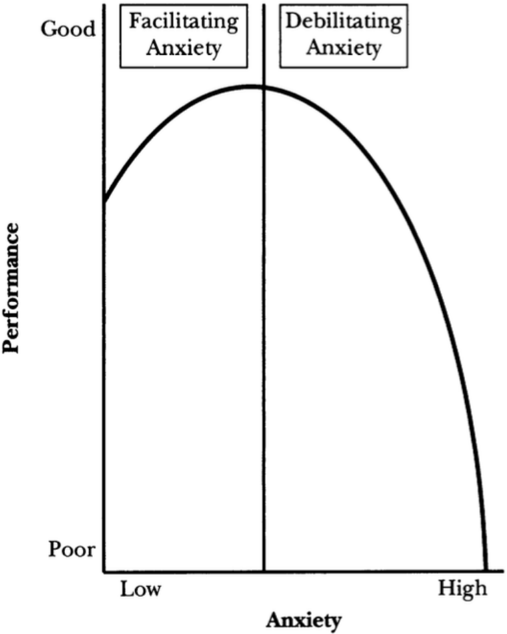
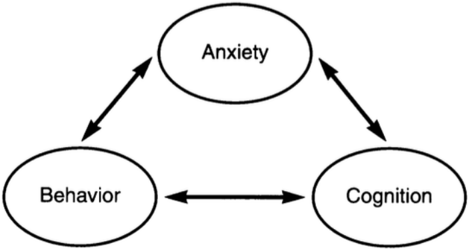
- Anxiety is best understood as a social anxiety with cognitive, affective, and behavioural components; its cognitive dimension (“worry”) competes with task-relevant information for processing space, creating a dual-task or divided-attention situation for anxious learners.
- State anxiety, not trait anxiety, is the immediate reaction associated with cognitive interference; active interference can occur at any stage of learning, and the relations among anxiety, cognition, and behaviour are recursive or cyclical.
- The paper cites Campbell and Ortiz’s (1991) estimate that up to one half of all language students experience debilitating levels of language anxiety, and Gardner et al.’s (1976) finding that language anxiety became a better predictor of achievement as grade level increased from grade 7 to grade 11.
Methods
- Design: theoretical reply and conceptual review, not an empirical study; it responds to Sparks and Ganschow’s LCDH and argues for including affective variables.
- Data or sample: no new sample or data were collected; the paper draws on prior research on anxiety in general and on language anxiety, including cited correlational, factor-analytic, and experimental studies.
- Main analysis: conceptual synthesis using cognitive interference theory, the state/trait anxiety distinction, and a recursive model of anxiety, cognition, and behaviour to critique LCDH’s treatment of affect.
Limitations
- Stated: early empirical studies on anxiety and language learning produced “mixed and confusing” results, and “exactly how anxiety impedes language learning has not been resolved”; the paper also acknowledges that correlational studies are vulnerable to third-variable explanations.
- Evident: as a theoretical reply, the paper presents no new empirical data or sample of its own, so its causal claims rest on synthesis of prior studies, some correlational and some experimental.
- Evident: the paper has no formal limitations section and does not report effect sizes or sample details for its own analyses because it conducts none.
Model-written summary. Check it against the paper before relying on it.
Integrity signals
Registry
Cites
Statistics
Figures
Verification
Claims the paper makes
0 Valid · 5 Not valid · 59 Not checked · 53 Own results and interpretations
In the paper
“it should also be recognised that task performance can provoke anxiety (MacIntyre & Gardner, 1994a).”
§ HOW DOES ANXIETY AFFECT L2 LEARNING? 1 How Does Anxiety Affect Second Language Learning? A Reply to Sparks And Ganschow > Figure 1
What the sources say
- Not matchedcites MacIntyre & Gardner, 1994a
More than one paper fits this citation.
plainstates a cause- Asserted: passes — The authors put it forward as true.
- Checkable: passes — It can be checked against evidence.
- Load-bearing: passes — The paper’s conclusions depend on it.
- Based: passes — The paper gives a reason why it holds.
- Not matched
In the paper
“When the effects of the video camera had dissipated and no longer lead to state anxiety arousal, performance improved relative to those who were experiencing more anxiety arousal.”
§ HOW DOES ANXIETY AFFECT L2 LEARNING? 1 How Does Anxiety Affect Second Language Learning? A Reply to Sparks And Ganschow > Relations among Anxiety, Cognition, and Behaviour
What the sources say
- Not matchedcites MacIntyre & Gardner, 1994a
More than one paper fits this citation.
plainstates a cause- Asserted: passes — The authors put it forward as true.
- Checkable: passes — It can be checked against evidence.
- Load-bearing: passes — The paper’s conclusions depend on it.
- Based: passes — The paper gives a reason why it holds.
- Not matched
A conclusion the paper draws from its own results — it cites no other source for it, so there is none to check. The quote shows it is in the paper.
In the paper
“The two explanations for individual differences in language achievement do not appear to be antithetical, in spite of the apparent claim to the contrary.”
§ HOW DOES ANXIETY AFFECT L2 LEARNING? 1 How Does Anxiety Affect Second Language Learning? A Reply to Sparks And Ganschow > Relations among Anxiety, Cognition, and Behaviour
hedged- Asserted: passes — The authors put it forward as true.
- Checkable: passes — It can be checked against evidence.
- Load-bearing: passes — The paper’s conclusions depend on it.
- Based: passes — The paper gives a reason why it holds.
None of the sources cited for this claim have been checked yet.
In the paper
“Significant negative correlations between language anxiety and course grades have been reported for languages such as Japanese (Aida, 1994), Spanish (Horwitz, 1986), andFrench (MacIntyre &Gardner, 1991b).”
§ HOW DOES ANXIETY AFFECT L2 LEARNING? 1 How Does Anxiety Affect Second Language Learning? A Reply to Sparks And Ganschow > How Does Anxiety Affect Second Language Learning? A Reply to Sparks and Ganschow
What the sources say
- Not checked yetcites Aida, 1994 matched to “Examination of Horwitz, Horwitz, and Cope's Construct of Foreign Language Anxiety: The Case of Students of Japanese” (1994) source
- Not checked yetcites Horwitz, 1986 matched to “Preliminary Evidence for the Reliability and Validity of a Foreign Language Anxiety Scale” (1986) source
- Not matchedcites MacIntyre & Gardner, 1991b
More than one paper fits this citation.
plainstates an association- Asserted: passes — The authors put it forward as true.
- Checkable: passes — It can be checked against evidence.
- Load-bearing: unclear — It is unclear whether the paper’s conclusions depend on it.
- Based: passes — The paper gives a reason why it holds.
A conclusion the paper draws from its own results — it cites no other source for it, so there is none to check. The quote shows it is in the paper.
In the paper
“In cases such as these, phonetic coding impairment is not the best place to look for the cause of the language learning difficulty.”
§ HOW DOES ANXIETY AFFECT L2 LEARNING? 1 How Does Anxiety Affect Second Language Learning? A Reply to Sparks And Ganschow > "Language Anxiety or Native Language Aptitude Differences"
plain- Asserted: passes — The authors put it forward as true.
- Checkable: unclear — It is unclear whether it could be checked against evidence.
- Load-bearing: passes — The paper’s conclusions depend on it.
- Based: passes — The paper gives a reason why it holds.
60 more claims
Create a free account to see all 117 claims and to verify the 22 references still open.
- Probably not a substantial claim. 35
- It may state two separate claims as one. 20
- The quote only partly states this claim. 1
Claims other papers make about this one
Each is checked against this paper’s own text: does it say what the citing paper says it does?
In the citing paper
“In addition, FLCA is argued to be a separate construct from first language learning deficits and subtle language learning disabilities, as several studies on the topic has found students who experience high levels of anxiety but are still successful language learners (MacIntyre, 1995a(MacIntyre, , 1995b)).”
From The Foreign Language Classroom Anxiety Scale and Academic Achievement: An Overview of the Prevailing Literature and a Meta-analysis (2020) · cites this paper as MacIntyre, 1995a
In the citing paper
“FLCA is defended, with the argument made that FLCA is an independent construct, distinct from aptitude, but which may influence or be influenced by the performance of the language learner.”
From The Foreign Language Classroom Anxiety Scale and Academic Achievement: An Overview of the Prevailing Literature and a Meta-analysis (2020) · cites this paper as MacIntyre, 1995a
Self-check
Percentages, sums and reported differences re-computed from the paper’s own numbers.
Each contradiction between two passages listed here was confirmed by an independent check.
Rated minor: it would not touch a result — a value no result rests on, a p-value that stays on the same side of the significance level, or a conflict that is clerical, resolved elsewhere in the paper, or outside its own findings.
In the paper
§ HOW DOES ANXIETY AFFECT L2 LEARNING? 1 How Does Anxiety Affect Second Language Learning? A Reply to Sparks And Ganschow > How Does Anxiety Affect Second Language Learning? A Reply to Sparks and Ganschow
“Horwitz and Young (1991) noted that "Exactly how anxiety impedes language learning has not been resolved" (p.177).”
§ HOW DOES ANXIETY AFFECT L2 LEARNING? 1 How Does Anxiety Affect Second Language Learning? A Reply to Sparks And Ganschow > References
“Horwitz, E. K., & Young, D. J. (1991). Preface. In E. K. Horwitz & D. J. Young (Eds.), Language anxiety: From theory and research to classroom implications (pp. xii-xiv).”
Rated minor: it would not touch a result — a value no result rests on, a p-value that stays on the same side of the significance level, or a conflict that is clerical, resolved elsewhere in the paper, or outside its own findings.
In the paper
§ HOW DOES ANXIETY AFFECT L2 LEARNING? 1 How Does Anxiety Affect Second Language Learning? A Reply to Sparks And Ganschow > How Does Anxiety Affect Second Language Learning? A Reply to Sparks and Ganschow
“Campbell and Ortiz (1991) considered the levels of language anxiety among university students to be "alarming" (p.159)”
§ HOW DOES ANXIETY AFFECT L2 LEARNING? 1 How Does Anxiety Affect Second Language Learning? A Reply to Sparks And Ganschow > References
“Campbell, C. M., & Ortiz, J. (1991). Helping students overcome foreign language anxiety: A foreign language anxiety workshop. In E. K. Horwitz & D. J. Young (Eds.), Language anxiety: From theory and research to classroom implications (pp. 141-150).”
Rated minor: it would not touch a result — a value no result rests on, a p-value that stays on the same side of the significance level, or a conflict that is clerical, resolved elsewhere in the paper, or outside its own findings.
In the paper
§ HOW DOES ANXIETY AFFECT L2 LEARNING? 1 How Does Anxiety Affect Second Language Learning? A Reply to Sparks And Ganschow > "Language Anxiety or Native Language Aptitude Differences"
“## "Language Anxiety or Native Language Aptitude Differences" The title of this section is taken from the subtitle of Sparks and Ganschow's (1991) article describing the LCDH.”
§ HOW DOES ANXIETY AFFECT L2 LEARNING? 1 How Does Anxiety Affect Second Language Learning? A Reply to Sparks And Ganschow > References
“Sparks, R. L., & Ganschow, L. (1991). Foreign language learning differences: Affective or native language aptitude differences? Modern Language Journal, 75, 3-16.”
Citations
Cites
Foreign Language Classroom Anxiety
HORWITZ, E. K., HORWITZ, M. B., & COPE, J. (1986) · The Modern Language Journal · doi:10.1111/j.1540-4781.1986.tb05256.x · Cited by 9,773
Language Learning Strategies: What Every Teacher Should Know
Horwitz, E. K., & Oxford, R. (1991) · The Modern Language Journal · doi:10.2307/329849 · Cited by 5,941
(1985) · Cited by 4,527
Language learning strategies what every teacher should know
Oxford, R. L. (1990) · Cited by 2,164
The Subtle Effects of Language Anxiety on Cognitive Processing in the Second Language
MacIntyre, P. D., & Gardner, R. C. (1994) · Language Learning · doi:10.1111/j.1467-1770.1994.tb01103.x · Cited by 1,823
Self-citationAIDA, Y. (1994) · The Modern Language Journal · doi:10.1111/j.1540-4781.1994.tb02026.x · Cited by 1,608
Individual Differences in Second Language Learning
Skehan, P. (2014) · Routledge eBooks · doi:10.4324/9781315831664 · Cited by 1,518
Cognitive and Emotional Components of Test Anxiety: A Distinction and Some Initial Data
Liebert, R. M., & Morris, L. W. (1967) · Psychological Reports · doi:10.2466/pr0.1967.20.3.975 · Cited by 1,150
Fiske, S. T., & Taylor, S. E. (1991) · Cited by 1,122
THE EFFECT OF AFFECT ON FOREIGN LANGUAGE LEARNING: A REVIEW OF THE ANXIETY RESEARCH
Scovel, T. (1978) · Language Learning · doi:10.1111/j.1467-1770.1978.tb00309.x · Cited by 1,047
Research works printed but not linked: 10
- Cope-Powell, J. (1991). Foreign language classroom anxiety: Institutional responses. In E. K. Horwitz & D. J. Young (Eds.), Language anxiety: From theory and research to classroom implications (pp. 169-176). Englewood Cliffs, NJ: Prentice Hall.
- Crane, S. (1989). Why poor readers misunderstand spoken sentences. In D. Shankweiler & I. Liberman (Eds.), Phonology and reading disability (pp. 133-165). Ann Arbor, MI: University of Michigan Press.
- Fischer, W. F. (1988). Theories of anxiety (2nd ed.). Lanham, MD: University Press of America.
- Horwitz, E. K., & Young, D. J. (1991). Preface. In E. K. Horwitz & D. J. Young (Eds.), Language anxiety: From theory and research to classroom implications (pp. xii-xiv). Englewood Cliffs, NJ: Prentice Hall.
- Levitt, E. E. (1980). The Psychology of Anxiety. Hillsdale, NJ: Erlbaum.
- Price, M. L. (1991). The subjective experience of foreign language anxiety: Interviews with highly anxious students. In E. K. Horwitz & D. J. Young (Eds.), Language anxiety: From theory and research to classroom implications (pp. 101-108). Englewood Cliffs, NJ: Prentice Hall.
- Sarason, I. G. (1986). Test anxiety, worry, and cognitive interference. In R. Schwarzer (Ed.), Self-related cognition in anxiety and motivation (pp. 19-34). Hillsdale, NJ: Erlbaum.
- Schwarzer, R. (1986). Self-related cognition in anxiety and motivation: An introduction. In R. Schwarzer (Ed.), Self-related cognition in anxiety and motivation (pp. 1-17). Hillsdale, NJ: Erlbaum.
- Spielberger, C. D. (1983). Manual for the state-trait anxiety inventory (form Y). Palo Alto, CA: Consulting Psychologists Press.
- Wine, J. D. (1980). Cognitive-attentional theory of test anxiety. In I. G. Sarason (Ed.), Test anxiety: Theory, research and applications (pp. 349-385). Hillsdale, NJ: Erlbaum.
Cited by
Language anxiety and achievement
Horwitz, E. (2001) · Annual Review of Applied Linguistics · doi:10.1017/s0267190501000071 · Cited by 1,573
“MacIntyre (1995a, 1995b) and Horwitz (2000) have responded to the LCDH arguing for the existence of language anxiety independent of first or general language learning disabilities.”
BackgroundLanguage Anxiety: Differentiating Writing and Speaking Components
Cheng, Y., Horwitz, E. K., & Schallert, D. L. (1999) · Language Learning · doi:10.1111/0023-8333.00095 · Cited by 765
Biases in Self‐Ratings of Second Language Proficiency: The Role of Language Anxiety
MacIntyre, P. D., Noels, K. A., & Clément, R. (1997) · Language Learning · doi:10.1111/0023-8333.81997008 · Cited by 715
Self-citationListening Comprehension and Anxiety in the Arabic Language Classroom
ELKHAFAIFI, H. (2005) · The Modern Language Journal · doi:10.1111/j.1540-4781.2005.00275.x · Cited by 646
Towards a Full Model of Second Language Learning: An Empirical Investigation
GARDNER, R. C., TREMBLAY, P. F., & MASGORET, A. (1997) · The Modern Language Journal · doi:10.1111/j.1540-4781.1997.tb05495.x · Cited by 634
Dewaele, J., Petrides, K. V., & Furnham, A. (2008) · Language Learning · doi:10.1111/j.1467-9922.2008.00482.x · Cited by 488
Yan, J. X., & Horwitz, E. K. (2008) · Language Learning · doi:10.1111/j.1467-9922.2007.00437.x · Cited by 409
Levine, G. S. (2003) · The Modern Language Journal · doi:10.1111/1540-4781.00194 · Cited by 397
Students' Perspectives on Foreign Language Anxiety
von Worde, R. (2003) · Inquiry Critical Thinking Across the Disciplines · Cited by 351
Botes, E., Dewaele, J.-M., & Greiff, S. (2020) · Journal for the Psychology of Language Learning · doi:10.52598/jpll/2/1/3 · Cited by 333
Anxiety and Second/Foreign Language Learning Revisited
Zheng, Y. (2008) · Canadian Journal for New Scholars in Education/ Revue canadienne des jeunes chercheures et chercheurs en éducation · Cited by 307
Affect: The Role of Language Anxiety and Other Emotions in Language Learning
MacIntyre, P., & Gregersen, T. (2012) · Psychology for Language Learning · doi:10.1057/9781137032829_8 · Cited by 282
Self-citationEmotions in classroom language learning: What can we learn from achievement emotion research?
Shao, K., Pekrun, R., & Nicholson, L. J. (2019) · System · doi:10.1016/j.system.2019.102121 · Cited by 275
The Relationship between Foreign Language Anxiety and Learning Difficulties
Chen, T., & Chang, G. B. Y. (2004) · Foreign Language Annals · doi:10.1111/j.1944-9720.2004.tb02200.x · Cited by 260
El Shazly, R. (2021) · Expert Systems · doi:10.1111/exsy.12667 · Cited by 259
THE CONSTRUCT VALIDITY OF LANGUAGE APTITUDE: A Meta-Analysis
Li, S. (2016) · Studies in Second Language Acquisition · doi:10.1017/s027226311500042x · Cited by 251
“…with anxiety, which may be attributable to the cognitive interference of anxiety and the possibility that low aptitude causes high anxiety (MacIntyre, 1995 ); and it has a large overlap and yet is not isomorphic with intelligence, which has proven less predictive for language learning…”
BackgroundA Mixed‐Methodology Investigation of the Linguistic and Affective Outcomes of Summer Study Abroad
Allen, H. W., & Herron, C. (2003) · Foreign Language Annals · doi:10.1111/j.1944-9720.2003.tb02120.x · Cited by 243
“A cyclical relationship is seen to function between aptitude, cognition, anxiety, and language learning behavior, whereby aptitude can influence anxiety, anxiety can influence performance, and performance can influence anxiety (MacIntyre, 1995).”
Strategies for coping with language anxiety: the case of students of English in Japan
Kondo, D. S. (2004) · ELT Journal · doi:10.1093/elt/58.3.258 · Cited by 231
Zhang, X. (2013) · System · doi:10.1016/j.system.2013.01.004 · Cited by 224
Gender differences in the Foreign Language Classroom Anxiety Scale
Park, G.-P., & French, B. F. (2013) · System · doi:10.1016/j.system.2013.04.001 · Cited by 207
Future selves, enjoyment and anxiety as predictors of L2 writing achievement
Tahmouresi, S., & Papi, M. (2021) · Journal of Second Language Writing · doi:10.1016/j.jslw.2021.100837 · Cited by 202
A Study of Factors Affecting and Causing Speaking Anxiety
Rajitha, K., & Alamelu, C. (2020) · Procedia Computer Science · doi:10.1016/j.procs.2020.05.154 · Cited by 205
Fostering foreign language learning through technology-enhanced intercultural projects
Chen, J. J., & Yang, S. (2014) · Language learning & technology · doi:10.64152/10125/44354 · Cited by 197
Zheng, Y., & Cheng, L. (2018) · Language Testing in Asia · doi:10.1186/s40468-018-0065-4 · Cited by 190
Effects of technology-enhanced language learning on reducing EFL learners’ public speaking anxiety
Chen, Y.-C. (2024) · Computer Assisted Language Learning · doi:10.1080/09588221.2022.2055083 · Cited by 189
Learning Language under Tension: New Directions from a Qualitative Study
Spielmann, G., & Radnofsky, M. L. (2001) · The Modern Language Journal · doi:10.1111/0026-7902.00108 · Cited by 188
“foreign language anxiety" (MacIntyre & Gardner, 1991b, p. 86). In our view, the inconclusiveness of research in this domain suggests that correlational studies alone will not provide a satisfactory answer and that, in fact, the most accepted working hypotheses themselves may need revising. When Gardner (1985) and Horw…”
BackgroundAnxiety about Foreign Language Learning among High School Women
GANSCHOW, L., & SPARKS, R. (1996) · The Modern Language Journal · doi:10.1111/j.1540-4781.1996.tb01160.x · Cited by 187
An exploration of Chinese EFL students' emotional intelligence and foreign language anxiety
Shao, K., Yu, W., & Ji, Z. (2013) · The Modern Language Journal · doi:10.1111/j.1540-4781.2013.12042.x · Cited by 185
Tse, L. (2000) · The Modern Language Journal · doi:10.1111/0026-7902.00053 · Cited by 182
Golchi, M. M. (2012) · International Journal of English Linguistics · doi:10.5539/ijel.v2n4p115 · Cited by 181
Willingness to communicate: can online chat help?1
Freiermuth, M., & Jarrell, D. (2006) · International Journal of Applied Linguistics · doi:10.1111/j.1473-4192.2006.00113.x · Cited by 176
Theoretical Perspectives on Listening
Lynch, T. (1998) · Annual Review of Applied Linguistics · doi:10.1017/s0267190500003457 · Cited by 163
Tran, T. T. T. (2011) · English Language Teaching · doi:10.5539/elt.v5n1p69 · Cited by 161
Second Language Anxiety and Distance Language Learning
Pichette, F. (2009) · Foreign Language Annals · doi:10.1111/j.1944-9720.2009.01009.x · Cited by 160
“It is said to involve emotional arousal and negative self-related cognition that would interfere with effective language learning (MacIntyre, 1995).”
BackgroundThe Sources of Foreign Language Speaking Anxiety of Iranian English Language Learners
Sadighi, F., & Dastpak, M. (2017) · International Journal of Education and Literacy Studies · doi:10.7575/aiac.ijels.v.5n.4p.111 · Cited by 162
Second language anxiety: Construct, effects, and sources
Papi, M., & Khajavy, G. H. (2023) · Annual Review of Applied Linguistics · doi:10.1017/s0267190523000028 · Cited by 161
Baralt, M., & Gurzynski-Weiss, L. (2011) · Language Teaching Research · doi:10.1177/0265532210388717 · Cited by 157
“MacIntyre (1995) is also one to dispute this claim, reviewing several studies in the field of psychology that investigate the effects of anxiety, as well as studies that have demonstrated empirically that language-learning anxiety can cause differences in the L2 learning process.”
BackgroundWhat are the Main Sources of Turkish EFL Students’ Anxiety in Oral Practice?
Subaşı, G. (2010) · Turkish Online Journal of Qualitative Inquiry · doi:10.17569/tojqi.29608 · Cited by 159
A Strong Inference Approach to Causal Factors in Foreign Language Learning: A Response to MacIntyre
SPARKS, R. L., & GANSCHOW, L. (1995) · The Modern Language Journal · doi:10.1111/j.1540-4781.1995.tb05436.x · Cited by 152
Oflaz, A. (2019) · European Journal of Educational Research · doi:10.12973/eu-jer.8.4.999 · Cited by 149
Hurd, S. (2007) · System · doi:10.1016/j.system.2007.05.001 · Cited by 146
Turkish college students' willingness to communicate in English as a foreign language
Çetinkaya, Y. B. (2005) · OhioLink ETD Center (Ohio Library and Information Network) · Cited by 150
A Model of Foreign Language Anxiety in the Saudi EFL Context
Alrabai, F. (2014) · English Language Teaching · doi:10.5539/elt.v7n7p82 · Cited by 139
Zhou, L., Xi, Y., & Lochtman, K. (2020) · Journal of Multilingual and Multicultural Development · doi:10.1080/01434632.2020.1801697 · Cited by 140
Balemir, S. H. (2009) · Bilkent University Institutional Repository (Bilkent University) · Cited by 139
The Stability of General Foreign Language Classroom Anxiety across English and French
Rodríguez, M., & Abreu, O. (2003) · The Modern Language Journal · doi:10.1111/1540-4781.00195 · Cited by 133
Botes, E., Dewaele, J.-M., & Greiff, S. (2020) · European Journal of Applied Linguistics · doi:10.1515/eujal-2020-0003 · Cited by 126
Anxiety and the True Beginner-False Beginner Dynamic in Beginning French and Spanish Classes
Frantzen, D., & Magnan, S. S. (2005) · Foreign Language Annals · doi:10.1111/j.1944-9720.2005.tb02483.x · Cited by 130
Foreign Language Anxiety and Heritage Students of Spanish: A Quantitative Study
Tallon, M. (2009) · Foreign Language Annals · doi:10.1111/j.1944-9720.2009.01011.x · Cited by 122
Biju, N., Abdelrasheed, N. S. G., Bakiyeva, K., Prasad, K. D. V., & Jember, B. (2024) · Language Testing in Asia · doi:10.1186/s40468-024-00322-z · Cited by 123
Foreign language anxiety levels in Second Life oral interaction
Melchor-Couto, S. (2017) · ReCALL · doi:10.1017/s0958344016000185 · Cited by 117
INDONESIAN EFL STUDENTS’ ANXIETY IN SPEECH PRODUCTION: POSSIBLE CAUSES AND REMEDY
Anandari, C. L. (2015) · TEFLIN Journal - A publication on the teaching and learning of English · doi:10.15639/teflinjournal.v26i1/1-16 · Cited by 115
Foreign Language Listening Anxiety: Its Dimensionality and Group Differences
Kimura, H. (2008) · JALT Journal · doi:10.37546/jaltjj30.2-2 · Cited by 115
Xiao, Y. (2025) · Humanities and Social Sciences Communications · doi:10.1057/s41599-025-04672-8 · Cited by 114
The Hindrance of Doubt: Causes of Language Anxiety
Zhang, R., & Zhong, J. (2012) · International Journal of English Linguistics · doi:10.5539/ijel.v2n3p27 · Cited by 117
The Effects of Foreign Language Anxiety and Test Anxiety on Foreign Language Test Performance
Salehi, M., & Marefat, F. (2014) · Theory and Practice in Language Studies · doi:10.4304/tpls.4.5.931-940 · Cited by 109
FACTORS CONTRIBUTING STUDENTS’ SPEAKING ANXIETY
Suparlan, S. (2021) · Journal of Languages and Language Teaching · doi:10.33394/jollt.v9i2.3321 · Cited by 108
Özdemir, O., & Seçkin, H. (2025) · Social Sciences & Humanities Open · doi:10.1016/j.ssaho.2025.101364 · Cited by 106
Ahmed, N., Pathan, Z. H., & Khan, F. S. (2017) · International Journal of English Linguistics · doi:10.5539/ijel.v7n2p99 · Cited by 105
Fox, J. D., & Cheng, L. (2007) · Assessment in Education Principles Policy and Practice · doi:10.1080/09695940701272773 · Cited by 102
Kim, S. J. (2004) · OhioLink ETD Center (Ohio Library and Information Network) · Cited by 102
Anxiety in reading and listening English as a foreign language in Chinese undergraduate students
Chow, B. W., Chiu, H. T., & Wong, S. W. L. (2017) · Language Teaching Research · doi:10.1177/1362168817702159 · Cited by 101
On Seeing the Forest and the Trees: A Rejoinder to Sparks and Ganschow
MacIntyre, P. D. (1995) · Modern Language Journal · doi:10.1111/j.1540-4781.1995.tb05438.x · Cited by 105
Self-citationChanges in foreign language anxiety: A classroom perspective
Kruk, M. (2017) · International Journal of Applied Linguistics · doi:10.1111/ijal.12182 · Cited by 104
Learning difficulties and foreign language learning: A review of research and instruction
Ganschow, L., & sparks, R. L. (2001) · Language Teaching · doi:10.1017/s0261444800015895 · Cited by 105
Foreign language anxiety and self-perceived English pronunciation competence
Szyszka, M. (2011) · Studies in Second Language Learning and Teaching · doi:10.14746/ssllt.2011.1.2.7 · Cited by 100
Jiang, P., Namaziandost, E., Azizi, Z., & Razmi, M. H. (2022) · Current Psychology · doi:10.1007/s12144-022-04013-x · Cited by 98
Djafri, F., & Wimbarti, S. (2018) · Asian-Pacific Journal of Second and Foreign Language Education · doi:10.1186/s40862-018-0058-y · Cited by 98
Alamer, A., & Lee, J. (2021) · Language Teaching Research · doi:10.1177/13621688211033694 · Cited by 95
The Impact of Student-Centered Instruction on EFL Learners’ Affect and Achievement
Kassem, H. M. (2018) · English Language Teaching · doi:10.5539/elt.v12n1p134 · Cited by 94
The Impacts Of Cooperative Learning On Anxiety And Proficiency In An EFL Class
Suwantarathip, O., & Wichadee, S. (2010) · Journal of College Teaching & Learning (TLC) · doi:10.19030/tlc.v7i11.252 · Cited by 92
Variations in motivation, anxiety and boredom in learning English in Second Life
Kruk, M. (2016) · The EuroCALL Review · doi:10.4995/eurocall.2016.5693 · Cited by 88
“It should also be added that the level of difficulty of a task may affect students who can develop facilitating or debilitating anxiety (MacIntyre, 1995: 92).”
BackgroundReading Anxiety among Second Language Learners
Rajab, A., Zakaria, W. Z. W., Rahman, H. A., Hosni, A. D., & Hassani, S. (2012) · Procedia - Social and Behavioral Sciences · doi:10.1016/j.sbspro.2012.11.279 · Cited by 87
Reducing student teachers' foreign language pronunciation anxiety through psycho-social training
Kráľová, Z., Škorvagová, E., Tirpáková, A., & Markechová, D. (2017) · System · doi:10.1016/j.system.2017.01.001 · Cited by 83
Teaching English though English: Exploring Anxiety in Non-native Pre-service ESL Teachers
Yoon, T. (2012) · Theory and Practice in Language Studies · doi:10.4304/tpls.2.6.1099-1107 · Cited by 84
Affect and Strategy Use in Independent Language Learning
Hurd, S. (2008) · Channel View Publications eBooks · doi:10.2307/jj.27710875.16 · Cited by 82
Specific learning difficulties in second language learning and teaching
Kormos, J. (2020) · Language Teaching · doi:10.1017/s0261444819000442 · Cited by 82
Hauck, M. (2005) · Open Research Online - ORO (The Open University) · Cited by 81
Sparks, R. L., Artzer, M., Ganschow, L., Siebenhar, D., Plageman, M., & Patton, J. (1998) · Language Testing · doi:10.1177/026553229801500203 · Cited by 81
Chu, H.-N. R. (2008) · Texas ScholarWorks (Texas Digital Library) · Cited by 80
A Review of Foreign Language Learners’ Emotions
Yu, Q. (2022) · Frontiers in Psychology · doi:10.3389/fpsyg.2021.827104 · Cited by 83
He, D. (2013) · Educational Studies · doi:10.1080/03055698.2013.764819 · Cited by 79
Learning Styles and Foreign Language Learning Difficulties
Castro, O., & Peck, V. (2005) · Foreign Language Annals · doi:10.1111/j.1944-9720.2005.tb02226.x · Cited by 77
Lian, L. H., & Budin, M. B. (2014) · International Journal of Learning Teaching and Educational Research · Cited by 75
L2 Motivational Self-System and Self-Efficacy: A Quantitative Survey-Based Study
Roshandel, J., Ghonsooly, B., & Ghanizadeh, A. (2018) · International Journal of Instruction · doi:10.12973/iji.2018.11123a · Cited by 76
Speaking Anxiety:More of a Function of Personality than Language Achievement
Wang, T.-J. (2010) · Chinese Journal of Applied Linguistics · Cited by 74
4. Anxiety and L2 Self-Images: The ‘Anxious Self’
Şimşek, E., & Dörnyei, Z. (2017) · New Insights into Language Anxiety · doi:10.21832/9781783097722-005 · Cited by 26
Why do some young learners drop foreign languages? A focus on learner-internal variables
Dewaele, J.-M., & Thirtle, H. (2009) · International Journal of Bilingual Education and Bilingualism · doi:10.1080/13670050802549656 · Cited by 71
Language anxiety in second language writing: Is it really a stumbling block?
Choi, S. (2013) · ScholarSpace (University of Hawaii at Manoa) · Cited by 71
The motivation‐anxiety interface in language learning: A regulatory focus perspective
Jiang, C., & Papi, M. (2021) · International Journal of Applied Linguistics · doi:10.1111/ijal.12375 · Cited by 70
Serraj, S., & Bt. Noordin, N. (2013) · English Language Teaching · doi:10.5539/elt.v6n5p1 · Cited by 70
Foreign language anxiety in in-class speaking activities : two learning contexts in comparison
Occhipinti, A. (2009) · NVA (Nasjonalt vitenarkiv) · Cited by 72
Does personality matter? An international study of sign language interpreter disposition.
Bontempo, K., Napier, J., Hayes, L., & Brashear, V. (2014) · The International Journal of Translation and Interpreting Research · doi:10.12807/ti.106201.2014.a02 · Cited by 70
Hong-Nam, K., & Leavell, A. G. (2007) · Asia Pacific Education Review · doi:10.1007/bf03025834 · Cited by 70
Anxiety and Academic Reading Performance among Malay ESL Learners
Zin, Z. M., & Rafik-Galea, S. (2010) · Journal of Pan-Pacific Association of Applied Linguistics · Cited by 70
Wei, M. (2007) · Teaching English as a Second or Foreign Language--TESL-EJ · Cited by 71
EFL Learners’ Foreign Language Learning Anxiety and Language Performance: A Meta-Analysis Study
Dikmen, M. (2022) · International Journal of Contemporary Educational Research · doi:10.33200/ijcer.908048 · Cited by 70
Rouhani, A. (2008) · Linguistik Online · doi:10.13092/lo.34.526 · Cited by 69
Neural consequences of bilingualism for cortical and subcortical function
Krizman, J., & Marian, V. (2015) · Cambridge University Press eBooks · doi:10.1017/cbo9781107447257.027 · Cited by 60
English Writing Anxiety: Alleviating Strategies
Qashoa, S. H. (2014) · Procedia - Social and Behavioral Sciences · doi:10.1016/j.sbspro.2014.05.288 · Cited by 59
Metadata
- Authors
- MACINTYRE, P. D.
- Affiliations
- Cape Breton University (CA)
- Corresponding author
- MACINTYRE, PETER D.
- ORCID
- MACINTYRE, PETER D.
- Venue
- The Modern Language Journal
- Publisher
- Wiley
- Published
- 1995-03
- Volume
- 79
- Issue
- 1
- Pages
- 90-99
- ISSN
- 0026-7902 (ISSN-L)
- 1540-4781
- OpenAlex
- W1990008549
- Cited by
- 887
- References
- 54
- Citations by year
- 2026: 38 · 2025: 46 · 2024: 50 · 2023: 55 · 2022: 49 · 2021: 51 · 2020: 53 · 2019: 41 · 2018: 52 · 2017: 50 · 2016: 55 · 2015: 49 · 2014: 52 · 2013: 38 · 2012: 38
- FWCI
- 32.58
- Type
- journal article
- Language
- en
- Open access
- green
- hdl.handle.net
- Licence
- Locations
- Modern Language Journal (publishedVersion)
- CBU Scholar (submittedVersion, cc-by-nc-nd)
- Funders
- Cape Breton University
- Social Sciences and Humanities Research Council of Canada
- Topics
- Social Sciences › Arts and Humanities › Language and Linguistics › EFL/ESL Teaching and Learning
- Social Sciences › Psychology › Social Psychology › Communication in Education and Healthcare
- Social Sciences › Psychology › Developmental and Educational Psychology › Second Language Acquisition and Learning
- Keywords
- language anxiety, second language acquisition, language aptitude, individual differences, emotional factors, language achievement, linguistic communication
About these checks
Registry, retraction, Cites and statistics results are computed, not judged, with one exception: a printed reference that no index lists is read once by a model before it counts as a citation error. Claims are extracted by a model and kept only when their quote appears verbatim in the text; each cited source is then checked, with a model’s help, for whether it says what the claim relies on. Those verdicts can be wrong — read the claim’s quote and the cited source before relying on one.
A language model drew the claims from the paper on 2026-11-24, under version 3 of the claim definition (model deepseek-v4.1-flash, prompt extract-v3).
A second model labelled each claim on 2026-11-24 (model jev-1.13-20260917, definition revision gold-guideline-v0.2).
Statistics and arithmetic are recomputed, not judged.
Confidence bands are shown only for fields calibrated on our annotated test set. None is calibrated yet, so no band is shown.
What counts as a claim ›How we measure confidence ›How we check this ›
Are you an author, or do you see a problem with this page? Request a review
Data sources
Bibliographic data: Semantic Scholar, OpenAlex, Crossref.
Contains information from the Semantic Scholar Academic Graph Datasets, made available under the ODC Attribution License (ODC-BY 1.0).
Semantic Scholar’s data is described in: Kinney, R., et al. (2023). The Semantic Scholar Open Data Platform. arXiv:2301.10140.
