

How Does Anxiety Affect Second Language Learning? A Reply to Sparks and Ganschow
Open accessThe DOI matches its Crossref record; 55 of the 55 references it cites were found in a registry or an index; none of the 71 sources its claims cite is checked for support yet.
Abstract
The linguistic coding deficit hypothesis, introduced by Sparks and Ganschow (1991, 1993a, 1993b), postulates that language aptitude is the primary source of individual differences in language achievement. This may be seen to reduce affective variables, such as language anxiety, to the role of unfortunate side effects, devoid of explanatory power. This paper advocates that language anxiety can play a significant causal role in creating individual differences in both language learning and communication. It reviews evidence from investigations of anxiety in general and studies of the role of anxiety in the language learning processes and concludes that the linguistic coding deficit hypothesis makes a significant omission by assigning mere epiphenomenal status to affective variables in general and language anxiety in particular.
Overview
CoChat Summary
TL;DR
MacIntyre argues against Sparks and Ganschow’s linguistic coding deficit hypothesis (LCDH), contending that language anxiety can play a significant causal role in individual differences in second language learning and communication rather than being merely an epiphenomenon of aptitude. He proposes that anxiety creates divided attention and interferes with encoding, storage, and retrieval, making LCDH incomplete without affective variables.
Key findings
- Language anxiety can play a significant causal role in creating individual differences in both language learning and communication; the paper reviews evidence of negative correlations between language anxiety and course grades in Japanese, Spanish, and French, standardized written and oral proficiency tests, slower vocabulary learning, and factor-analytic associations with self-rated and actual proficiency.
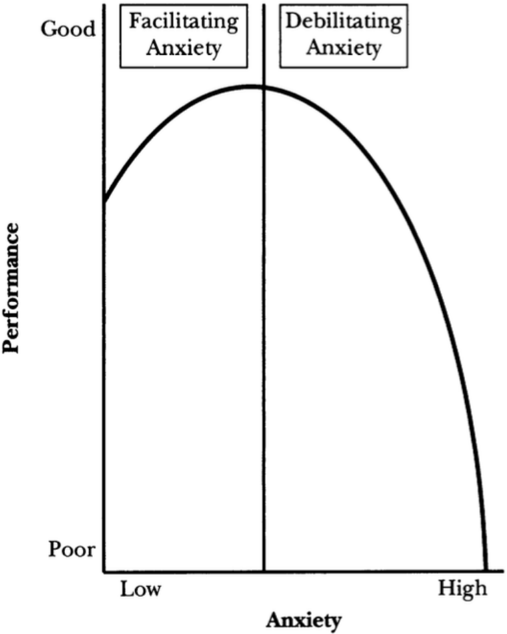
- Anxiety is best understood as a social anxiety with cognitive, affective, and behavioural components; its cognitive dimension (“worry”) competes with task-relevant information for processing space, creating a dual-task or divided-attention situation for anxious learners.
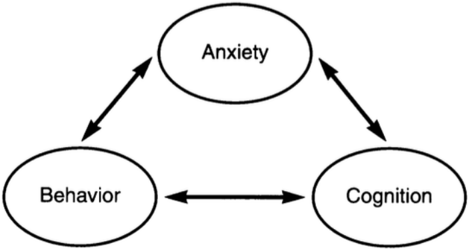
- State anxiety, not trait anxiety, is the immediate reaction associated with cognitive interference; active interference can occur at any stage of learning, and the relations among anxiety, cognition, and behaviour are recursive or cyclical.
- The paper cites Campbell and Ortiz’s (1991) estimate that up to one half of all language students experience debilitating levels of language anxiety, and Gardner et al.’s (1976) finding that language anxiety became a better predictor of achievement as grade level increased from grade 7 to grade 11.
Methods
- Design: theoretical reply and conceptual review, not an empirical study; it responds to Sparks and Ganschow’s LCDH and argues for including affective variables.
- Data or sample: no new sample or data were collected; the paper draws on prior research on anxiety in general and on language anxiety, including cited correlational, factor-analytic, and experimental studies.
- Main analysis: conceptual synthesis using cognitive interference theory, the state/trait anxiety distinction, and a recursive model of anxiety, cognition, and behaviour to critique LCDH’s treatment of affect.
Limitations
- Stated: early empirical studies on anxiety and language learning produced “mixed and confusing” results, and “exactly how anxiety impedes language learning has not been resolved”; the paper also acknowledges that correlational studies are vulnerable to third-variable explanations.
- Evident: as a theoretical reply, the paper presents no new empirical data or sample of its own, so its causal claims rest on synthesis of prior studies, some correlational and some experimental.
- Evident: the paper has no formal limitations section and does not report effect sizes or sample details for its own analyses because it conducts none.
Model-written summary. Check it against the paper before relying on it.
Integrity signals
Registry
Cites
Statistics
Figures
Verification
Claims the paper makes
0 Valid · 5 Not valid · 59 Not checked · 53 Own results and interpretations
In the paper
“it should also be recognised that task performance can provoke anxiety (MacIntyre & Gardner, 1994a).”
§ HOW DOES ANXIETY AFFECT L2 LEARNING? 1 How Does Anxiety Affect Second Language Learning? A Reply to Sparks And Ganschow > Figure 1
What the sources say
- Not matchedcites MacIntyre & Gardner, 1994a
More than one paper fits this citation.
plainstates a cause- Asserted: passes — The authors put it forward as true.
- Checkable: passes — It can be checked against evidence.
- Load-bearing: passes — The paper’s conclusions depend on it.
- Based: passes — The paper gives a reason why it holds.
- Not matched
In the paper
“When the effects of the video camera had dissipated and no longer lead to state anxiety arousal, performance improved relative to those who were experiencing more anxiety arousal.”
§ HOW DOES ANXIETY AFFECT L2 LEARNING? 1 How Does Anxiety Affect Second Language Learning? A Reply to Sparks And Ganschow > Relations among Anxiety, Cognition, and Behaviour
What the sources say
- Not matchedcites MacIntyre & Gardner, 1994a
More than one paper fits this citation.
plainstates a cause- Asserted: passes — The authors put it forward as true.
- Checkable: passes — It can be checked against evidence.
- Load-bearing: passes — The paper’s conclusions depend on it.
- Based: passes — The paper gives a reason why it holds.
- Not matched
A conclusion the paper draws from its own results — it cites no other source for it, so there is none to check. The quote shows it is in the paper.
In the paper
“The two explanations for individual differences in language achievement do not appear to be antithetical, in spite of the apparent claim to the contrary.”
§ HOW DOES ANXIETY AFFECT L2 LEARNING? 1 How Does Anxiety Affect Second Language Learning? A Reply to Sparks And Ganschow > Relations among Anxiety, Cognition, and Behaviour
hedged- Asserted: passes — The authors put it forward as true.
- Checkable: passes — It can be checked against evidence.
- Load-bearing: passes — The paper’s conclusions depend on it.
- Based: passes — The paper gives a reason why it holds.
None of the sources cited for this claim have been checked yet.
In the paper
“Significant negative correlations between language anxiety and course grades have been reported for languages such as Japanese (Aida, 1994), Spanish (Horwitz, 1986), andFrench (MacIntyre &Gardner, 1991b).”
§ HOW DOES ANXIETY AFFECT L2 LEARNING? 1 How Does Anxiety Affect Second Language Learning? A Reply to Sparks And Ganschow > How Does Anxiety Affect Second Language Learning? A Reply to Sparks and Ganschow
What the sources say
- Not checked yetcites Aida, 1994 matched to “Examination of Horwitz, Horwitz, and Cope's Construct of Foreign Language Anxiety: The Case of Students of Japanese” (1994) source
- Not checked yetcites Horwitz, 1986 matched to “Preliminary Evidence for the Reliability and Validity of a Foreign Language Anxiety Scale” (1986) source
- Not matchedcites MacIntyre & Gardner, 1991b
More than one paper fits this citation.
plainstates an association- Asserted: passes — The authors put it forward as true.
- Checkable: passes — It can be checked against evidence.
- Load-bearing: unclear — It is unclear whether the paper’s conclusions depend on it.
- Based: passes — The paper gives a reason why it holds.
A conclusion the paper draws from its own results — it cites no other source for it, so there is none to check. The quote shows it is in the paper.
In the paper
“In cases such as these, phonetic coding impairment is not the best place to look for the cause of the language learning difficulty.”
§ HOW DOES ANXIETY AFFECT L2 LEARNING? 1 How Does Anxiety Affect Second Language Learning? A Reply to Sparks And Ganschow > "Language Anxiety or Native Language Aptitude Differences"
plain- Asserted: passes — The authors put it forward as true.
- Checkable: unclear — It is unclear whether it could be checked against evidence.
- Load-bearing: passes — The paper’s conclusions depend on it.
- Based: passes — The paper gives a reason why it holds.
60 more claims
Create a free account to see all 117 claims and to verify the 22 references still open.
- Probably not a substantial claim. 35
- It may state two separate claims as one. 20
- The quote only partly states this claim. 1
Claims other papers make about this one
Each is checked against this paper’s own text: does it say what the citing paper says it does?
In the citing paper
“In addition, FLCA is argued to be a separate construct from first language learning deficits and subtle language learning disabilities, as several studies on the topic has found students who experience high levels of anxiety but are still successful language learners (MacIntyre, 1995a(MacIntyre, , 1995b)).”
From The Foreign Language Classroom Anxiety Scale and Academic Achievement: An Overview of the Prevailing Literature and a Meta-analysis (2020) · cites this paper as MacIntyre, 1995a
In the citing paper
“FLCA is defended, with the argument made that FLCA is an independent construct, distinct from aptitude, but which may influence or be influenced by the performance of the language learner.”
From The Foreign Language Classroom Anxiety Scale and Academic Achievement: An Overview of the Prevailing Literature and a Meta-analysis (2020) · cites this paper as MacIntyre, 1995a
Self-check
Percentages, sums and reported differences re-computed from the paper’s own numbers.
Each contradiction between two passages listed here was confirmed by an independent check.
Rated minor: it would not touch a result — a value no result rests on, a p-value that stays on the same side of the significance level, or a conflict that is clerical, resolved elsewhere in the paper, or outside its own findings.
In the paper
§ HOW DOES ANXIETY AFFECT L2 LEARNING? 1 How Does Anxiety Affect Second Language Learning? A Reply to Sparks And Ganschow > How Does Anxiety Affect Second Language Learning? A Reply to Sparks and Ganschow
“Horwitz and Young (1991) noted that "Exactly how anxiety impedes language learning has not been resolved" (p.177).”
§ HOW DOES ANXIETY AFFECT L2 LEARNING? 1 How Does Anxiety Affect Second Language Learning? A Reply to Sparks And Ganschow > References
“Horwitz, E. K., & Young, D. J. (1991). Preface. In E. K. Horwitz & D. J. Young (Eds.), Language anxiety: From theory and research to classroom implications (pp. xii-xiv).”
Rated minor: it would not touch a result — a value no result rests on, a p-value that stays on the same side of the significance level, or a conflict that is clerical, resolved elsewhere in the paper, or outside its own findings.
In the paper
§ HOW DOES ANXIETY AFFECT L2 LEARNING? 1 How Does Anxiety Affect Second Language Learning? A Reply to Sparks And Ganschow > How Does Anxiety Affect Second Language Learning? A Reply to Sparks and Ganschow
“Campbell and Ortiz (1991) considered the levels of language anxiety among university students to be "alarming" (p.159)”
§ HOW DOES ANXIETY AFFECT L2 LEARNING? 1 How Does Anxiety Affect Second Language Learning? A Reply to Sparks And Ganschow > References
“Campbell, C. M., & Ortiz, J. (1991). Helping students overcome foreign language anxiety: A foreign language anxiety workshop. In E. K. Horwitz & D. J. Young (Eds.), Language anxiety: From theory and research to classroom implications (pp. 141-150).”
Rated minor: it would not touch a result — a value no result rests on, a p-value that stays on the same side of the significance level, or a conflict that is clerical, resolved elsewhere in the paper, or outside its own findings.
In the paper
§ HOW DOES ANXIETY AFFECT L2 LEARNING? 1 How Does Anxiety Affect Second Language Learning? A Reply to Sparks And Ganschow > "Language Anxiety or Native Language Aptitude Differences"
“## "Language Anxiety or Native Language Aptitude Differences" The title of this section is taken from the subtitle of Sparks and Ganschow's (1991) article describing the LCDH.”
§ HOW DOES ANXIETY AFFECT L2 LEARNING? 1 How Does Anxiety Affect Second Language Learning? A Reply to Sparks And Ganschow > References
“Sparks, R. L., & Ganschow, L. (1991). Foreign language learning differences: Affective or native language aptitude differences? Modern Language Journal, 75, 3-16.”
Citations
Cites
Foreign Language Classroom Anxiety
HORWITZ, E. K., HORWITZ, M. B., & COPE, J. (1986) · The Modern Language Journal · doi:10.1111/j.1540-4781.1986.tb05256.x · Cited by 9,773
Language Learning Strategies: What Every Teacher Should Know
Horwitz, E. K., & Oxford, R. (1991) · The Modern Language Journal · doi:10.2307/329849 · Cited by 5,941
(1985) · Cited by 4,527
Language learning strategies what every teacher should know
Oxford, R. L. (1990) · Cited by 2,164
The Subtle Effects of Language Anxiety on Cognitive Processing in the Second Language
MacIntyre, P. D., & Gardner, R. C. (1994) · Language Learning · doi:10.1111/j.1467-1770.1994.tb01103.x · Cited by 1,823
Self-citationAIDA, Y. (1994) · The Modern Language Journal · doi:10.1111/j.1540-4781.1994.tb02026.x · Cited by 1,608
Individual Differences in Second Language Learning
Skehan, P. (2014) · Routledge eBooks · doi:10.4324/9781315831664 · Cited by 1,518
Cognitive and Emotional Components of Test Anxiety: A Distinction and Some Initial Data
Liebert, R. M., & Morris, L. W. (1967) · Psychological Reports · doi:10.2466/pr0.1967.20.3.975 · Cited by 1,150
Fiske, S. T., & Taylor, S. E. (1991) · Cited by 1,122
THE EFFECT OF AFFECT ON FOREIGN LANGUAGE LEARNING: A REVIEW OF THE ANXIETY RESEARCH
Scovel, T. (1978) · Language Learning · doi:10.1111/j.1467-1770.1978.tb00309.x · Cited by 1,047
Research works printed but not linked: 10
- Cope-Powell, J. (1991). Foreign language classroom anxiety: Institutional responses. In E. K. Horwitz & D. J. Young (Eds.), Language anxiety: From theory and research to classroom implications (pp. 169-176). Englewood Cliffs, NJ: Prentice Hall.
- Crane, S. (1989). Why poor readers misunderstand spoken sentences. In D. Shankweiler & I. Liberman (Eds.), Phonology and reading disability (pp. 133-165). Ann Arbor, MI: University of Michigan Press.
- Fischer, W. F. (1988). Theories of anxiety (2nd ed.). Lanham, MD: University Press of America.
- Horwitz, E. K., & Young, D. J. (1991). Preface. In E. K. Horwitz & D. J. Young (Eds.), Language anxiety: From theory and research to classroom implications (pp. xii-xiv). Englewood Cliffs, NJ: Prentice Hall.
- Levitt, E. E. (1980). The Psychology of Anxiety. Hillsdale, NJ: Erlbaum.
- Price, M. L. (1991). The subjective experience of foreign language anxiety: Interviews with highly anxious students. In E. K. Horwitz & D. J. Young (Eds.), Language anxiety: From theory and research to classroom implications (pp. 101-108). Englewood Cliffs, NJ: Prentice Hall.
- Sarason, I. G. (1986). Test anxiety, worry, and cognitive interference. In R. Schwarzer (Ed.), Self-related cognition in anxiety and motivation (pp. 19-34). Hillsdale, NJ: Erlbaum.
- Schwarzer, R. (1986). Self-related cognition in anxiety and motivation: An introduction. In R. Schwarzer (Ed.), Self-related cognition in anxiety and motivation (pp. 1-17). Hillsdale, NJ: Erlbaum.
- Spielberger, C. D. (1983). Manual for the state-trait anxiety inventory (form Y). Palo Alto, CA: Consulting Psychologists Press.
- Wine, J. D. (1980). Cognitive-attentional theory of test anxiety. In I. G. Sarason (Ed.), Test anxiety: Theory, research and applications (pp. 349-385). Hillsdale, NJ: Erlbaum.
Cited by
Items 401–500 of 851
Speaking and Writing Anxiety and Efficacy Beliefs of ESL Students in Spoken and Written Discourse
Anudin, A. G., Dalisay, R., Jacinto, M. E., Pinay-an, E., & Sy, D. B. F. (2022) · Romblon State University Research Journal · doi:10.58780/rsurj.v4i1.93 · Cited by 5
CAUSES OF FOREIGN LANGUAGE ANXIETY IN ONLINE EDUCATION
Seidikenova, A., & Malshy, M. M. (2022) · Журнал серии «Педагогические науки» · doi:10.48371/phils.2022.66.3.024 · Cited by 5
The experiences of Norwegian students with dyslexia learning English as a foreign language.
Szaszkiewicz, M. (2013) · NVA (Nasjonalt vitenarkiv) · Cited by 5
Triggers for Foreign Language Speaking Anxiety: Perceptions of Saudi EFL College Students
Faqihi, M. A. (2024) · English Language Teaching · doi:10.5539/elt.v17n2p1 · Cited by 4
“Given its pivotal role in language learning, FLA has attracted considerable attention in second language (L2) research (Alnahidh & Altalhab, 2020; Alrabai, 2016; Horwitz et al., 1986; Macintyre, 1995; MacIntyre & Gardner, 1991c; Young, 1991).”
BackgroundAn Investigation in Variables of English Speaking Anxiety Levels of ESL Learners in America
Jo, M. (2010) · Studies in English Language & Literature · doi:10.21559/aellk.2010.36.4.016 · Cited by 4
Testing a model of L2 communication among Iranian EFL learners: A Path Analysis Framework
Fallah, N., & Mashhady, H. (2015) · DOAJ (DOAJ: Directory of Open Access Journals) · Cited by 4
He, L. (2022) · English Language Teaching and Linguistics Studies · doi:10.22158/eltls.v4n4p10 · Cited by 4
Hongnaphadol, W. (2023) · rEFLections · doi:10.61508/refl.v30i2.267213 · Cited by 4
The use of formative assessment in foreign language teaching for motivation and L2 perception
Samper, M. V. (2020) · Dipòsit Digital de la Universitat de Barcelona (Universitat de Barcelona) · Cited by 4
The Korean Society of Bilingualism, Kwon, Y., & Kim, Y. (2011) · doi:10.17296/korbil.2011..45.27 · Cited by 4
Foreign Language Anxiety Among Japanese International Students in the U.S.
Okada, N. J. (2015) · TopSCHOLAR (Western Kentucky University) · Cited by 5
The Changing Nature of Foreign Language Anxiety: The Case of Individual Learners
Kruk, M., & Zawodniak, J. (2021) · Second language learning and teaching · doi:10.1007/978-3-030-75726-7_3 · Cited by 4
A STUDY ON UNIVERSITY NON-ENGLISH MAJOR STUDENTS’ SPEAKING ANXIETY
Phuong, N. T. M. (2024) · European Journal of Foreign Language Teaching · doi:10.46827/ejfl.v8i2.5449 · Cited by 4
EXPLORING ENGLISH LANGUAGE ANXIETY: THE CASE OF PRE-UNIVERSITY STUDENTS FROM MINORITY TRIBES
Alico, J. C., & State, M. (2015) · ELK ASIA PACIFIC JOURNAL OF SOCIAL SCIENCE · doi:10.16962/eapjss/issn.2394-9392/2014/v2i1.01 · Cited by 4
Yang, T.-K. (2005) · Texas ScholarWorks (Texas Digital Library) · Cited by 4
Kharboush, R. M. S. (2017) · دراسات عربية في التربية و علم النفس · doi:10.21608/saep.2017.67826 · Cited by 4
Welesilassie, M. W., & Nikolov, M. (2025) · English Teaching & Learning · doi:10.1007/s42321-024-00199-4 · Cited by 4
Content and Language Integrated Learning (CLIL) in Teaching English to Young Learners
Divljan, S. (2012) · Cited by 4
Taiwanese EFL Nursing Students’ English Learning Beliefs and Anxiety
Hou, Y.-J. (2013) · Mediterranean Journal of Social Sciences · doi:10.5901/mjss.2013.v4n11p671 · Cited by 4
Secondary and High School Students' Speaking Anxiety: A comparative Study
Şahin, D. (2016) · Eastern Mediterranean University Institutional Repository (Eastern Mediterranean University) · doi:10.13140/rg.2.2.27450.91846 · Cited by 4
NON-ENGLISH MAJOR STUDENTS’ FOREIGN LANGUAGE ANXIETY: A STUDY CASE
Rohliah, L., Lestari, P., Ningsih, W., & Hutagalung, G. U. (2023) · Global Expert Jurnal Bahasa dan Sastra · doi:10.36982/jge.v11i1.3201 · Cited by 4
Anxiety in English Language Learning
He, D., & Haji-Othman, N. A. (2024) · Springer texts in education · doi:10.1007/978-3-031-66532-5_14 · Cited by 4
Hakim, L. (2022) · Jurnal Penelitian Pendidikan · doi:10.17509/jpp.v22i2.53722 · Cited by 4
Second Language Anxiety and Task Complexity
Brennan, K. A. (2016) · Dipòsit Digital de la Universitat de Barcelona (Universitat de Barcelona) · Cited by 4
Lou, M.-T. (2014) · ERA: Education and Research Archive (University of Alberta) · doi:10.7939/r3c824m8c · Cited by 4
A Comparison of Demonstration and Tutorials in Photo Editing Instruction
Akbıyık, C. (2012) · Educational Technology & Society · Cited by 4
Influence of Emotion on Second Language Acquisition
Lu, X. (2022) · Advances in Social Science, Education and Humanities Research/Advances in social science, education and humanities research · doi:10.2991/assehr.k.220706.132 · Cited by 4
Trotta, E., Cottini, M., Cannito, L., & Palladino, P. (2024) · RICERCHE DI PSICOLOGIA · doi:10.3280/rip2024oa18584 · Cited by 4
Challenging the French immersion orthodoxy : student stories and counterstories
Quiring, S. G. (2008) · University Library - University of Saskatchewan (University of Saskatchewan) · Cited by 4
Sprechangst internationaler Studierender in der Fremdsprache Deutsch
Иноземцева, Н. Г. (2016) · DuEPublico (University of Duisburg-Essen) · Cited by 4
Language Anxiety Among Adult Learners in Uitm Sarawak
Sahari, S. H., Johari, A., & Morni, A. B. (2016) · European Journal of Language and Literature · doi:10.26417/d0nfa442 · Cited by 4
Akkan, S. Ç. (2022) · Çanakkale Onsekiz Mart University Institutional Repository · Cited by 4
-, A. D. D. G. N., -, A. G. L., -, M. F. P. M., & -, S. P. R. M. (2024) · International Journal For Multidisciplinary Research · doi:10.36948/ijfmr.2024.v06i04.24250 · Cited by 4
A Systematic Review: Strategies to Reduce Writing Apprehension
Palani, K., & Sulaiman, N. A. (2022) · International Journal of Academic Research in Progressive Education and Development · doi:10.6007/ijarped/v11-i3/14938 · Cited by 4
Baranowski, K. (2010) · doi:10.82308/36651 · Cited by 3
Prada, P., & Elisa, C. (2019) · Repository Autonomous University of Manizales (REPO UAM) (Universidad Autonoma de Manizales) · Cited by 4
Capraro, F. P. (2002) · OhioLink ETD Center (Ohio Library and Information Network) · Cited by 4
Jifen, T., J., K. T., Zhaomin, H., & Bai, L. (2024) · US-China Foreign Language · doi:10.17265/1539-8080/2024.06.003 · Cited by 4
Listening and Speaking Anxiety in Croatian EFL Learners
Buben, K. (2018) · Repozitorij Filozofskog fakulteta u Zagrebu' at University of Zagreb (University of Zagreb) · Cited by 4
Language anxiety: teachers' and learners' perspective
Tepeh, I. (2016) · Repozitorij Filozofskog fakulteta u Zagrebu' at University of Zagreb (University of Zagreb) · Cited by 4
Sharmin, S. (2019) · BRAC University Institutional Repository (BRAC University) · Cited by 4
Hamzadayı, E., & Büyükikiz, K. K. (2015) · Türkiye Sosyal Araştırmalar Dergisi · doi:10.20296/tsad.83603 · Cited by 4
Heydarpour, M., Rashtchi, M., & Mohseni, A. (2019) · Archives of Advances in Biosciences · doi:10.22037/jps.v10i1.24111 · Cited by 4
Language Learning: What Factors May Influence It
Yuwinda, Y., & Insani, S. (2018) · Journal of English Language Teaching and Linguistics · doi:10.21462/jeltl.v3i1.87 · Cited by 4
Reducing Anxiety in English Language Classes
Kongi, M. (2015) · DSpace repository (University of Tartu) · Cited by 4
L'appropriation de la parole en langue étrangère.
Oyugi, C. C. (2013) · theses.fr (ABES) · doi:10.70675/05647346z993fz4665z8f9fz508f87effbe0 · Cited by 4
Débora, L. M. (2024) · Dipòsit Digital de la Universitat de Barcelona (Universitat de Barcelona) · Cited by 4
Compulsory English Courses in Higher Education: A Source of Angst or Thrill?
Uzun, K. (2017) · Journal of Language Teaching and Learning · doi:10.66887/jltl.v7i2.44 · Cited by 3
Kazazoğlu, S. (2020) · RumeliDE Dil ve Edebiyat Araştırmaları Dergisi :/RumeliDe Dil ve Edebiyat Araştırmaları Dergisi · doi:10.29000/rumelide.752773 · Cited by 3
Mindfulness: jak oswoić lęk językowy studentów języków obcych i zachęcić ich do uważnego życia?
Blachowska-Szmigiel, M. (2021) · Acta Neophilologica · doi:10.31648/an.6659 · Cited by 3
Service-Learning: Overcoming Fears, Connecting with the Hispanic/Latino Community.
Guglani, L. (2016) · Dimension · Cited by 3
The Relationship between University Students’ Foreign Language Learning Motivation and Anxiety
Yılmaz, K., BABATÜRK, S., & İNALÖZ, A. B. (2023) · e-Kafkas Eğitim Araştırmaları Dergisi · doi:10.30900/kafkasegt.1280048 · Cited by 3
Ji, S., Zou, L., & Li, K. (2026) · Acta Psychologica · doi:10.1016/j.actpsy.2026.106310 · Cited by 3
Ortaokul öğrencilerinin konuşma kaygılarının bazı kişisel değişkenlere göre incelenmesi
Ahmet İhsan, K. A. Y. A., & KOÇOĞLU, A. (2023) · RumeliDE Dil ve Edebiyat Araştırmaları Dergisi :/RumeliDe Dil ve Edebiyat Araştırmaları Dergisi · doi:10.29000/rumelide.1369061 · Cited by 3
Factors Associated with Foreign Language Reading Anxiety in the University Academic Setting
Kim, H.-O. (2012) · English Language and Linguistics · doi:10.17960/ell.2012.18.2.002 · Cited by 3
Anxiety in adult foreign language learning: The case of Ghanaian undergraduate students of Spanish
Lomotey, B. A. (2021) · Legon Journal of the Humanities · doi:10.4314/ljh.v32i1.3 · Cited by 3
Wu, X. (2026) · Acta Psychologica · doi:10.1016/j.actpsy.2026.106429 · Cited by 3
Fox, J. (2017) · ProQuest LLC eBooks · Cited by 3
The Relationship between EFL Learners’ Anxiety and Writing Complexity
Mohebbi, F., Azarnoosh, M., & Rokni, S. J. A. (2016) · International Journal of Foreign Language Teaching and Research · Cited by 3
McNiel-Cho, E. (2013) · USF Scholarship Repository (University of San Francisco) · Cited by 3
Kauzlarić, K. (2019) · Tabula · doi:10.32728/tab.16.2019.7 · Cited by 3
ESL STUDENTS' ANXIETY IN LEARNING AND COMMUNICATING IN THE ENGLISH LANGUAGE
Krishnasamy, J., & Nilai, P. (2015) · Cited by 3
Elgmal, M. E. E. A. (2023) · Maǧallaẗ Kulliyyaẗ Al-Tarbiyyaẗ Bil-Manṣūraẗ · doi:10.21608/maed.2023.328694 · Cited by 3
Unveiling Sociocultural Dynamics & Vygotskian Insights on EFL Learners' Anxiety in Turkey
Hosseini, T. (2024) · Özgür Yayınları eBooks · doi:10.58830/ozgur.pub434 · Cited by 3
Insights extraction on cross-cultural interaction through astronomy online labs using data analytics
Bakri, M., Kamaruddin, N., Hamiz, M., Marlia, P., Nurhasmiza, A. H. S., Shahirah, A. B., Othman, Z., Nilam, N. A. S., Shahir, M. S. O., Nurul, S. A. H., et al. (2019) · Indonesian Journal of Electrical Engineering and Computer Science · doi:10.11591/ijeecs.v16.i1.pp508-515 · Cited by 3
The Effects of Autonomy-based Instruction on Motivation to Learn and Academic Performance
Stone, M. (2018) · Digital Archive @ GSU · doi:10.57709/13471605 · Cited by 3
Anxiety and Interpretation: A Case of Iraqi Students of Translation
Abed, A. Q., & Mohammed, H. E. (2011) · Mustansiriyah Journal of Arts · Cited by 3
Ünver, O., Dinç, H., ÇETİN, E., & Argan, M. (2021) · International Journal of Sport Exercise & Training Sciences · doi:10.18826/useeabd.830125 · Cited by 3
Pyo, S. Y. (2023) · Asia-pacific Journal of Convergent Research Interchange · doi:10.47116/apjcri.2023.04.44 · Cited by 3
Silveira, F. V. D. R. (2021) · Pensares em Revista · doi:10.12957/pr.2021.60525 · Cited by 4
Paridaluddin, N. F. M. S., Ismail, N. A. B. C., Zhang, J., & Ruohan, C. (2023) · Advances in Social Science, Education and Humanities Research/Advances in social science, education and humanities research · doi:10.2991/978-2-38476-120-3_18 · Cited by 3
Smith, G. F. (2020) · ScholarSpace (University of Hawaii at Manoa) · Cited by 3
Darmi, R. (2014) · University of Southern Queensland research data collection · doi:10.26192/q31y0 · Cited by 3
Fenyvesi, K. (2018) · University of Southern Denmark Research Portal (University of Southern Denmark) · Cited by 3
Performing language and identities: Adult immigrant students and the creation of a play
McGovern, K. R. (2016) · ProQuest Demo Repository · Cited by 3
Teaching Complex Sentences in ESL Reading: Structural Analysis
Cai, Y., & Yao, X. (2022) · International Journal of English Linguistics · doi:10.5539/ijel.v12n5p59 · Cited by 3
Oral Testing and Self-Assessment - The Way Forward?
Taeduck, H., & Finch, A. E. (1998) · 응용언어학 · Cited by 3
Bergström, M. (2017) · DiVA (Linnaeus University) · Cited by 5
L'apprendimento della lingua straniera nell'adulto e l'acquisizione della lingua materna nel bambino
Neri, A. (2003) · OpenstarTs (Univeristy of Trieste https://www.units.it/) · Cited by 3
Ismail, A. A., & Mohtar, W. I. W. (2024) · Gading Journal for the Social Sciences · doi:10.24191/gading.v27i0.461 · Cited by 3
Gjerde, E. (2020) · NVA (Nasjonalt vitenarkiv) · Cited by 3
Bases psicolingüísticas determinantes no proceso de aprendizaxe de segundas linguas: estudos de caso
Sanromán, M. M. (2016) · Investigo Institutional repository of UVigo (Universidade de Vigo) · Cited by 3
Huser, J. (2012) · IUScholarWorks (Indiana University) · doi:10.7912/c2/741 · Cited by 3
Fawehinmi, O. O. (2016) · UUM Electronic Theses and Dissertation [eTheses] (Northern University of Malaysia) · Cited by 3
Üniversite öğrencilerinde hayal kurma, kaygı ve erteleme davranışı arasındaki ilişkinin incelenmesi
Yılmaz, H. (2021) · Istanbul Kent University Institutional Repository · Cited by 3
Ni’mah, U. (2020) · Journal of English for Academic and Specific Purposes (JEASP) · doi:10.18860/jeasp.v3i1.9771 · Cited by 3
SOURCES OF FOREIGN LANGUAGE ANXIETY AMONG EFL STUDENT TEACHERS IN LIBYA
WADI, H. A. M., & Mohammadzadeh, B. (2016) · Turkish International Journal of Special Education and Guidance & Counselling (TIJSEG) · Cited by 3
Wati, S., & Afrida, N. (2021) · JURNAL EDUCATION AND DEVELOPMENT · doi:10.37081/ed.v10i1.3240 · Cited by 3
STUDENTS’ EFL ANXIETY IN LEARNING READING IN ACEH, INDONESIA
Afrida, N., & Wati, S. (2022) · Lingua · doi:10.34005/lingua.v18i01.1898 · Cited by 3
Public Speaking Anxiety of Thai Undergraduates Comparing Online Presentation and Onsite Presentation
Mhuentoei, R. (2023) · The New English Teacher · Cited by 3
Khiari, N. E. H. (2018) · The Journal of Studies in Language, Culture and Society · Cited by 3
Participation Style of ESL Learners in Face-to-face and Online Discussions
Chew, S. C., & Ng, L. L. (2014) · Malaysian Journal of ELT Research · Cited by 3
Increasing Japanese university students' intercultural communication competence
Rebstock, J. (2017) · 山口県立大学学術情報 · Cited by 3
Korkatti, A. (2009) · Jyväskylä University Digital Archive (University of Jyväskylä) · Cited by 3
Language Anxiety Among Heritage Speakers of Spanish on the Texas-Mexico Border
Cherry, L. A. (2011) · ScholarsArchive (Brigham Young University) · Cited by 2
THE IMPACT OF A COGNITIVE-AFFECTIVE READING-BASED COURSE ON EQ AND FOREIGN LANGUAGE ANXIETY
Khatib, M., & Rouhani, A. (2007) · Cited by 2
INTERACTION AND ANXIETY IN A TASK-BASED COMPUTER- MEDIATED COMMUNICATION (CMC) CONTEXT
Navarro, G. I. (2013) · CSUN ScholarWorks (California State University, Northridge) · Cited by 2
The influence of using learner’s mother tongue on learner’s affective factors
The Korean Society of Bilingualism, & Jo, Y. K. (2010) · 이중언어학 · doi:10.17296/korbil.2010..44.345 · Cited by 2
Metadata
- Authors
- MACINTYRE, P. D.
- Affiliations
- Cape Breton University (CA)
- Corresponding author
- MACINTYRE, PETER D.
- ORCID
- MACINTYRE, PETER D.
- Venue
- The Modern Language Journal
- Publisher
- Wiley
- Published
- 1995-03
- Volume
- 79
- Issue
- 1
- Pages
- 90-99
- ISSN
- 0026-7902 (ISSN-L)
- 1540-4781
- OpenAlex
- W1990008549
- Cited by
- 887
- References
- 54
- Citations by year
- 2026: 38 · 2025: 46 · 2024: 50 · 2023: 55 · 2022: 49 · 2021: 51 · 2020: 53 · 2019: 41 · 2018: 52 · 2017: 50 · 2016: 55 · 2015: 49 · 2014: 52 · 2013: 38 · 2012: 38
- FWCI
- 32.58
- Type
- journal article
- Language
- en
- Open access
- green
- hdl.handle.net
- Licence
- Locations
- Modern Language Journal (publishedVersion)
- CBU Scholar (submittedVersion, cc-by-nc-nd)
- Funders
- Cape Breton University
- Social Sciences and Humanities Research Council of Canada
- Topics
- Social Sciences › Arts and Humanities › Language and Linguistics › EFL/ESL Teaching and Learning
- Social Sciences › Psychology › Social Psychology › Communication in Education and Healthcare
- Social Sciences › Psychology › Developmental and Educational Psychology › Second Language Acquisition and Learning
- Keywords
- language anxiety, second language acquisition, language aptitude, individual differences, emotional factors, language achievement, linguistic communication
About these checks
Registry, retraction, Cites and statistics results are computed, not judged, with one exception: a printed reference that no index lists is read once by a model before it counts as a citation error. Claims are extracted by a model and kept only when their quote appears verbatim in the text; each cited source is then checked, with a model’s help, for whether it says what the claim relies on. Those verdicts can be wrong — read the claim’s quote and the cited source before relying on one.
A language model drew the claims from the paper on 2026-11-24, under version 3 of the claim definition (model deepseek-v4.1-flash, prompt extract-v3).
A second model labelled each claim on 2026-11-24 (model jev-1.13-20260917, definition revision gold-guideline-v0.2).
Statistics and arithmetic are recomputed, not judged.
Confidence bands are shown only for fields calibrated on our annotated test set. None is calibrated yet, so no band is shown.
What counts as a claim ›How we measure confidence ›How we check this ›
Are you an author, or do you see a problem with this page? Request a review
Data sources
Bibliographic data: Semantic Scholar, OpenAlex, Crossref.
Contains information from the Semantic Scholar Academic Graph Datasets, made available under the ODC Attribution License (ODC-BY 1.0).
Semantic Scholar’s data is described in: Kinney, R., et al. (2023). The Semantic Scholar Open Data Platform. arXiv:2301.10140.
