

How Does Anxiety Affect Second Language Learning? A Reply to Sparks and Ganschow
Open accessThe DOI matches its Crossref record; 55 of the 55 references it cites were found in a registry or an index; none of the 71 sources its claims cite is checked for support yet.
Abstract
The linguistic coding deficit hypothesis, introduced by Sparks and Ganschow (1991, 1993a, 1993b), postulates that language aptitude is the primary source of individual differences in language achievement. This may be seen to reduce affective variables, such as language anxiety, to the role of unfortunate side effects, devoid of explanatory power. This paper advocates that language anxiety can play a significant causal role in creating individual differences in both language learning and communication. It reviews evidence from investigations of anxiety in general and studies of the role of anxiety in the language learning processes and concludes that the linguistic coding deficit hypothesis makes a significant omission by assigning mere epiphenomenal status to affective variables in general and language anxiety in particular.
Overview
CoChat Summary
TL;DR
MacIntyre argues against Sparks and Ganschow’s linguistic coding deficit hypothesis (LCDH), contending that language anxiety can play a significant causal role in individual differences in second language learning and communication rather than being merely an epiphenomenon of aptitude. He proposes that anxiety creates divided attention and interferes with encoding, storage, and retrieval, making LCDH incomplete without affective variables.
Key findings
- Language anxiety can play a significant causal role in creating individual differences in both language learning and communication; the paper reviews evidence of negative correlations between language anxiety and course grades in Japanese, Spanish, and French, standardized written and oral proficiency tests, slower vocabulary learning, and factor-analytic associations with self-rated and actual proficiency.
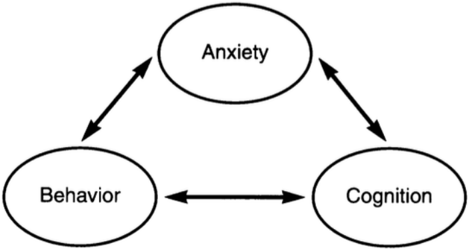
- Anxiety is best understood as a social anxiety with cognitive, affective, and behavioural components; its cognitive dimension (“worry”) competes with task-relevant information for processing space, creating a dual-task or divided-attention situation for anxious learners.
- State anxiety, not trait anxiety, is the immediate reaction associated with cognitive interference; active interference can occur at any stage of learning, and the relations among anxiety, cognition, and behaviour are recursive or cyclical.
- The paper cites Campbell and Ortiz’s (1991) estimate that up to one half of all language students experience debilitating levels of language anxiety, and Gardner et al.’s (1976) finding that language anxiety became a better predictor of achievement as grade level increased from grade 7 to grade 11.
Methods
- Design: theoretical reply and conceptual review, not an empirical study; it responds to Sparks and Ganschow’s LCDH and argues for including affective variables.
- Data or sample: no new sample or data were collected; the paper draws on prior research on anxiety in general and on language anxiety, including cited correlational, factor-analytic, and experimental studies.
- Main analysis: conceptual synthesis using cognitive interference theory, the state/trait anxiety distinction, and a recursive model of anxiety, cognition, and behaviour to critique LCDH’s treatment of affect.
Limitations
- Stated: early empirical studies on anxiety and language learning produced “mixed and confusing” results, and “exactly how anxiety impedes language learning has not been resolved”; the paper also acknowledges that correlational studies are vulnerable to third-variable explanations.
- Evident: as a theoretical reply, the paper presents no new empirical data or sample of its own, so its causal claims rest on synthesis of prior studies, some correlational and some experimental.
- Evident: the paper has no formal limitations section and does not report effect sizes or sample details for its own analyses because it conducts none.
Model-written summary. Check it against the paper before relying on it.
Integrity signals
Registry
Cites
Statistics
Figures
Verification
Claims the paper makes
0 Valid · 5 Not valid · 59 Not checked · 53 Own results and interpretations
In the paper
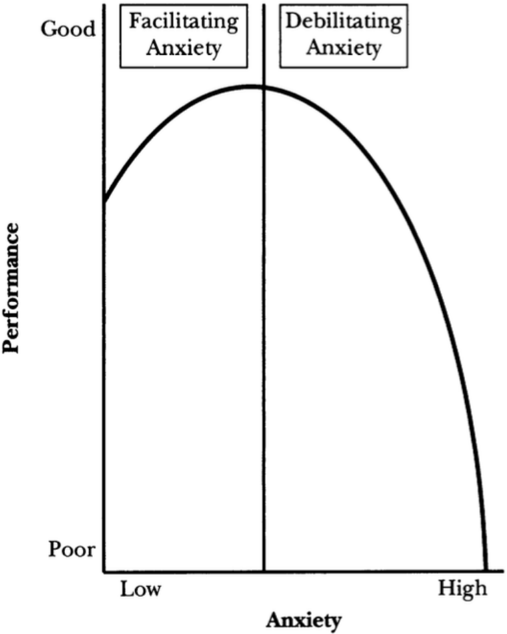
“it should also be recognised that task performance can provoke anxiety (MacIntyre & Gardner, 1994a).”
§ HOW DOES ANXIETY AFFECT L2 LEARNING? 1 How Does Anxiety Affect Second Language Learning? A Reply to Sparks And Ganschow > Figure 1
What the sources say
- Not matchedcites MacIntyre & Gardner, 1994a
More than one paper fits this citation.
plainstates a cause- Asserted: passes — The authors put it forward as true.
- Checkable: passes — It can be checked against evidence.
- Load-bearing: passes — The paper’s conclusions depend on it.
- Based: passes — The paper gives a reason why it holds.
- Not matched
In the paper
“When the effects of the video camera had dissipated and no longer lead to state anxiety arousal, performance improved relative to those who were experiencing more anxiety arousal.”
§ HOW DOES ANXIETY AFFECT L2 LEARNING? 1 How Does Anxiety Affect Second Language Learning? A Reply to Sparks And Ganschow > Relations among Anxiety, Cognition, and Behaviour
What the sources say
- Not matchedcites MacIntyre & Gardner, 1994a
More than one paper fits this citation.
plainstates a cause- Asserted: passes — The authors put it forward as true.
- Checkable: passes — It can be checked against evidence.
- Load-bearing: passes — The paper’s conclusions depend on it.
- Based: passes — The paper gives a reason why it holds.
- Not matched
A conclusion the paper draws from its own results — it cites no other source for it, so there is none to check. The quote shows it is in the paper.
In the paper
“The two explanations for individual differences in language achievement do not appear to be antithetical, in spite of the apparent claim to the contrary.”
§ HOW DOES ANXIETY AFFECT L2 LEARNING? 1 How Does Anxiety Affect Second Language Learning? A Reply to Sparks And Ganschow > Relations among Anxiety, Cognition, and Behaviour
hedged- Asserted: passes — The authors put it forward as true.
- Checkable: passes — It can be checked against evidence.
- Load-bearing: passes — The paper’s conclusions depend on it.
- Based: passes — The paper gives a reason why it holds.
None of the sources cited for this claim have been checked yet.
In the paper
“Significant negative correlations between language anxiety and course grades have been reported for languages such as Japanese (Aida, 1994), Spanish (Horwitz, 1986), andFrench (MacIntyre &Gardner, 1991b).”
§ HOW DOES ANXIETY AFFECT L2 LEARNING? 1 How Does Anxiety Affect Second Language Learning? A Reply to Sparks And Ganschow > How Does Anxiety Affect Second Language Learning? A Reply to Sparks and Ganschow
What the sources say
- Not checked yetcites Aida, 1994 matched to “Examination of Horwitz, Horwitz, and Cope's Construct of Foreign Language Anxiety: The Case of Students of Japanese” (1994) source
- Not checked yetcites Horwitz, 1986 matched to “Preliminary Evidence for the Reliability and Validity of a Foreign Language Anxiety Scale” (1986) source
- Not matchedcites MacIntyre & Gardner, 1991b
More than one paper fits this citation.
plainstates an association- Asserted: passes — The authors put it forward as true.
- Checkable: passes — It can be checked against evidence.
- Load-bearing: unclear — It is unclear whether the paper’s conclusions depend on it.
- Based: passes — The paper gives a reason why it holds.
A conclusion the paper draws from its own results — it cites no other source for it, so there is none to check. The quote shows it is in the paper.
In the paper
“In cases such as these, phonetic coding impairment is not the best place to look for the cause of the language learning difficulty.”
§ HOW DOES ANXIETY AFFECT L2 LEARNING? 1 How Does Anxiety Affect Second Language Learning? A Reply to Sparks And Ganschow > "Language Anxiety or Native Language Aptitude Differences"
plain- Asserted: passes — The authors put it forward as true.
- Checkable: unclear — It is unclear whether it could be checked against evidence.
- Load-bearing: passes — The paper’s conclusions depend on it.
- Based: passes — The paper gives a reason why it holds.
60 more claims
Create a free account to see all 117 claims and to verify the 22 references still open.
- Probably not a substantial claim. 35
- It may state two separate claims as one. 20
- The quote only partly states this claim. 1
Claims other papers make about this one
Each is checked against this paper’s own text: does it say what the citing paper says it does?
In the citing paper
“In addition, FLCA is argued to be a separate construct from first language learning deficits and subtle language learning disabilities, as several studies on the topic has found students who experience high levels of anxiety but are still successful language learners (MacIntyre, 1995a(MacIntyre, , 1995b)).”
From The Foreign Language Classroom Anxiety Scale and Academic Achievement: An Overview of the Prevailing Literature and a Meta-analysis (2020) · cites this paper as MacIntyre, 1995a
In the citing paper
“FLCA is defended, with the argument made that FLCA is an independent construct, distinct from aptitude, but which may influence or be influenced by the performance of the language learner.”
From The Foreign Language Classroom Anxiety Scale and Academic Achievement: An Overview of the Prevailing Literature and a Meta-analysis (2020) · cites this paper as MacIntyre, 1995a
Self-check
Percentages, sums and reported differences re-computed from the paper’s own numbers.
Each contradiction between two passages listed here was confirmed by an independent check.
Rated minor: it would not touch a result — a value no result rests on, a p-value that stays on the same side of the significance level, or a conflict that is clerical, resolved elsewhere in the paper, or outside its own findings.
In the paper
§ HOW DOES ANXIETY AFFECT L2 LEARNING? 1 How Does Anxiety Affect Second Language Learning? A Reply to Sparks And Ganschow > How Does Anxiety Affect Second Language Learning? A Reply to Sparks and Ganschow
“Horwitz and Young (1991) noted that "Exactly how anxiety impedes language learning has not been resolved" (p.177).”
§ HOW DOES ANXIETY AFFECT L2 LEARNING? 1 How Does Anxiety Affect Second Language Learning? A Reply to Sparks And Ganschow > References
“Horwitz, E. K., & Young, D. J. (1991). Preface. In E. K. Horwitz & D. J. Young (Eds.), Language anxiety: From theory and research to classroom implications (pp. xii-xiv).”
Rated minor: it would not touch a result — a value no result rests on, a p-value that stays on the same side of the significance level, or a conflict that is clerical, resolved elsewhere in the paper, or outside its own findings.
In the paper
§ HOW DOES ANXIETY AFFECT L2 LEARNING? 1 How Does Anxiety Affect Second Language Learning? A Reply to Sparks And Ganschow > How Does Anxiety Affect Second Language Learning? A Reply to Sparks and Ganschow
“Campbell and Ortiz (1991) considered the levels of language anxiety among university students to be "alarming" (p.159)”
§ HOW DOES ANXIETY AFFECT L2 LEARNING? 1 How Does Anxiety Affect Second Language Learning? A Reply to Sparks And Ganschow > References
“Campbell, C. M., & Ortiz, J. (1991). Helping students overcome foreign language anxiety: A foreign language anxiety workshop. In E. K. Horwitz & D. J. Young (Eds.), Language anxiety: From theory and research to classroom implications (pp. 141-150).”
Rated minor: it would not touch a result — a value no result rests on, a p-value that stays on the same side of the significance level, or a conflict that is clerical, resolved elsewhere in the paper, or outside its own findings.
In the paper
§ HOW DOES ANXIETY AFFECT L2 LEARNING? 1 How Does Anxiety Affect Second Language Learning? A Reply to Sparks And Ganschow > "Language Anxiety or Native Language Aptitude Differences"
“## "Language Anxiety or Native Language Aptitude Differences" The title of this section is taken from the subtitle of Sparks and Ganschow's (1991) article describing the LCDH.”
§ HOW DOES ANXIETY AFFECT L2 LEARNING? 1 How Does Anxiety Affect Second Language Learning? A Reply to Sparks And Ganschow > References
“Sparks, R. L., & Ganschow, L. (1991). Foreign language learning differences: Affective or native language aptitude differences? Modern Language Journal, 75, 3-16.”
Citations
Cites
Foreign Language Classroom Anxiety
HORWITZ, E. K., HORWITZ, M. B., & COPE, J. (1986) · The Modern Language Journal · doi:10.1111/j.1540-4781.1986.tb05256.x · Cited by 9,773
Language Learning Strategies: What Every Teacher Should Know
Horwitz, E. K., & Oxford, R. (1991) · The Modern Language Journal · doi:10.2307/329849 · Cited by 5,941
(1985) · Cited by 4,527
Language learning strategies what every teacher should know
Oxford, R. L. (1990) · Cited by 2,164
The Subtle Effects of Language Anxiety on Cognitive Processing in the Second Language
MacIntyre, P. D., & Gardner, R. C. (1994) · Language Learning · doi:10.1111/j.1467-1770.1994.tb01103.x · Cited by 1,823
Self-citationAIDA, Y. (1994) · The Modern Language Journal · doi:10.1111/j.1540-4781.1994.tb02026.x · Cited by 1,608
Individual Differences in Second Language Learning
Skehan, P. (2014) · Routledge eBooks · doi:10.4324/9781315831664 · Cited by 1,518
Cognitive and Emotional Components of Test Anxiety: A Distinction and Some Initial Data
Liebert, R. M., & Morris, L. W. (1967) · Psychological Reports · doi:10.2466/pr0.1967.20.3.975 · Cited by 1,150
Fiske, S. T., & Taylor, S. E. (1991) · Cited by 1,122
THE EFFECT OF AFFECT ON FOREIGN LANGUAGE LEARNING: A REVIEW OF THE ANXIETY RESEARCH
Scovel, T. (1978) · Language Learning · doi:10.1111/j.1467-1770.1978.tb00309.x · Cited by 1,047
Research works printed but not linked: 10
- Cope-Powell, J. (1991). Foreign language classroom anxiety: Institutional responses. In E. K. Horwitz & D. J. Young (Eds.), Language anxiety: From theory and research to classroom implications (pp. 169-176). Englewood Cliffs, NJ: Prentice Hall.
- Crane, S. (1989). Why poor readers misunderstand spoken sentences. In D. Shankweiler & I. Liberman (Eds.), Phonology and reading disability (pp. 133-165). Ann Arbor, MI: University of Michigan Press.
- Fischer, W. F. (1988). Theories of anxiety (2nd ed.). Lanham, MD: University Press of America.
- Horwitz, E. K., & Young, D. J. (1991). Preface. In E. K. Horwitz & D. J. Young (Eds.), Language anxiety: From theory and research to classroom implications (pp. xii-xiv). Englewood Cliffs, NJ: Prentice Hall.
- Levitt, E. E. (1980). The Psychology of Anxiety. Hillsdale, NJ: Erlbaum.
- Price, M. L. (1991). The subjective experience of foreign language anxiety: Interviews with highly anxious students. In E. K. Horwitz & D. J. Young (Eds.), Language anxiety: From theory and research to classroom implications (pp. 101-108). Englewood Cliffs, NJ: Prentice Hall.
- Sarason, I. G. (1986). Test anxiety, worry, and cognitive interference. In R. Schwarzer (Ed.), Self-related cognition in anxiety and motivation (pp. 19-34). Hillsdale, NJ: Erlbaum.
- Schwarzer, R. (1986). Self-related cognition in anxiety and motivation: An introduction. In R. Schwarzer (Ed.), Self-related cognition in anxiety and motivation (pp. 1-17). Hillsdale, NJ: Erlbaum.
- Spielberger, C. D. (1983). Manual for the state-trait anxiety inventory (form Y). Palo Alto, CA: Consulting Psychologists Press.
- Wine, J. D. (1980). Cognitive-attentional theory of test anxiety. In I. G. Sarason (Ed.), Test anxiety: Theory, research and applications (pp. 349-385). Hillsdale, NJ: Erlbaum.
Cited by
Items 201–300 of 851
Elyas, T. (2011) · Journal and proceedings of the Royal Society of New South Wales · doi:10.5962/p.361658 · Cited by 22
Zhang, L., & Chen, Y. (2021) · International Conference on Big Data and Education (ICBDE) · doi:10.1145/3451400.3451401 · Cited by 23
Using Think-aloud Protocols to Identify Factors that Cause Foreign Language Reading Anxiety
Güvendir, E. (2014) · The reading matrix · Cited by 23
Chen, Y., & Chew, S. Y. (2021) · Journal of language and Education · doi:10.17323/jle.2021.11878 · Cited by 22
Skinnari, K. (2014) · Jyväskylä University Digital Archive (University of Jyväskylä) · Cited by 22
Jorge, E. (2011) · Indiana Magazine of History (Indiana University) · Cited by 22
Foreign Language Reading Anxiety: Does It Really Exist?.
Subaşı, G. (2014) · Educational Research Review · doi:10.5897/err2014.1984 · Cited by 21
Mathematics and English, Two Languages: Teachers’ Views
Leshem, S., & Markovitz, Z. (2013) · Journal of Education and Learning · doi:10.5539/jel.v2n1p211 · Cited by 21
Grammatical Choice and Affective Experience in a Second-Language Test
Balaskó, M., & Cabanac, M. (1998) · Neuropsychobiology · doi:10.1159/000026504 · Cited by 21
Kim, Y. (2018) · Studies in Linguistics · doi:10.17002/sil..48.201807.277 · Cited by 20
Han, T., Tanrıöver, A. S., & Şahan, Ö. (2016) · International Education Studies · doi:10.5539/ies.v9n3p1 · Cited by 20
Ko, Y. (2010) · Digital Commons - USU (Utah State University) · doi:10.26076/bc71-74c8 · Cited by 20
Olsen, M. F. (2017) · Otago University Research Archive (University of Otago) · Cited by 20
Indonesian students’ strategies to cope with foreign language anxiety
Abdurahman, N. H., & Rizqi, M. A. (2020) · TESOL Journal · doi:10.1002/tesj.571 · Cited by 20
Effiong, M. O. (2013) · ePrints Soton (University of Southampton) · Cited by 20
Yu, Z. (2024) · Academic Journal of Humanities & Social Sciences · doi:10.25236/ajhss.2024.070702 · Cited by 20
CLIL, a competence-based coping strategy against foreign language anxiety in higher education
Medina, E. F. L., & Casado, J. (2024) · Discover Psychology · doi:10.1007/s44202-024-00187-6 · Cited by 22
Students’ Perspectives on Speaking Anxiety in the English Foreign Language Classroom
Khusnia, A. N. (2016) · Ahmad Dahlan Journal of English Studies · doi:10.26555/adjes.v3i2.4988 · Cited by 21
Oral Communication in ESL Through Improvisations, Playwriting And Rehearsals
Gill, C. (2013) · Advances in Language and Literary Studies · doi:10.7575/aiac.alls.v.4n.1p.34 · Cited by 20
Kangasvieri, T. (2022) · Jyväskylä University Digital Archive (University of Jyväskylä) · Cited by 20
Language Anxiety and Motivation to Learn English: A Glimpse into the Form 4 Classroom.
Wong, M. S.-L. (2009) · Cited by 19
The beliefs of first year Japanese university students towards the learning of English
Riley, P. A. (2006) · University of Southern Queensland research data collection · doi:10.26192/9xy12 · Cited by 20
La ansiedad entre estudiantes españoles de inglés como LE de di-ferentes titulaciones universitarias
Castro, P. A., & García, F. G. (2013) · Anales de Psicología · doi:10.6018/analesps.29.2.130791 · Cited by 19
Using Second Life in an English Course: How does the Technology Affect Participation?
Wang, A. (2017) · International Journal of Computer-Assisted Language Learning and Teaching · doi:10.4018/ijcallt.2017010105 · Cited by 19
Chew, S. Y., & Ng, L. L. (2016) · The Asia-Pacific Education Researcher · doi:10.1007/s40299-016-0288-z · Cited by 19
Herwanto, R. (2013) · ePrints - UNY (Yogyakarta State University) · Cited by 19
An investigation into Spanish EFL learners' anxiety
Agudo, J. D. D. M. (2013) · Revista Brasileira de Lingüística Aplicada · doi:10.1590/s1984-63982013005000012 · Cited by 18
Bridging the Gap: Change in Class Environment to Help Learners Lower Affective Filters
Mehmood, T. (2018) · Arab World English Journal · doi:10.2139/ssrn.3258785 · Cited by 18
Shehzadi, K., & Krishnasamy, H. A. I. N. (2018) · Pakistan Journal of Humanities and Social Sciences · doi:10.52131/pjhss.2018.0602.0044 · Cited by 18
Validating the English Learning Anxiety Scale for Primary School Students in Korea
Yim, S. Y., & 유예림 (2011) · English Teaching · doi:10.15858/engtea.66.2.201106.101 · Cited by 19
ÖNEM, E. (2010) · Dil Dergisi · doi:10.1501/dilder_0000000128 · Cited by 21
Impact of dialogue journals on language anxiety and classroom affect
Köse, E. (2005) · Bilkent University Institutional Repository (Bilkent University) · Cited by 18
Alghothani, D. (2010) · OhioLink ETD Center (Ohio Library and Information Network) · Cited by 18
ENGLISH SPEAKING ANXIETY: A STUDY OF UNDERGRADUATES AT LASBELA UNIVERSITY, BALUCHISTAN
Gopang, I. B., Bughio, F. A., Umrani, T., & Lohar, S. A. (2015) · Cited by 17
Mohammadi, M. J., & Mousalou, R. (2012) · Journal of academic and applied studies · Cited by 17
Nassif, L. (2018) · System · doi:10.1016/j.system.2018.12.008 · Cited by 17
Establishing a Valid, Reliable Measure of Writing Apprehension for Japanese Students
(2000) · JALT Journal · doi:10.37546/jaltjj22.1-6 · Cited by 17
Navarro, F. R. (2008) · Gredos (University of Salamanca) · doi:10.14201/gredos.22438 · Cited by 19
Foreign Language Listening Comprehension and Listening Anxiety
Chen, S., Wallace, M. P., Ieng, H. S., Chen, Y., Lam, W. K., & de Oliveira, S. C. (2023) · Teaching English as a Second or Foreign Language--TESL-EJ · doi:10.55593/ej.27106a9 · Cited by 17
Ghanizadeh, A., & Jahedizadeh, S. (2017) · Journal of Applied Research in Higher Education · doi:10.1108/jarhe-05-2017-0060 · Cited by 17
Predicting EFL Learners’ Achievement from Their Two Faces—FLE and FLCA
Yang, B. (2021) · Theory and Practice in Language Studies · doi:10.17507/tpls.1103.07 · Cited by 16
Huia, A. T. (2013) · Open Access Victoria University of Wellington | Te Herenga Waka (Figshare) · doi:10.26686/wgtn.17007616.v1 · Cited by 16
Toghraee, T., & Shahrokhi, M. (2014) · International Journal of Applied Linguistics & English Literature · doi:10.7575/aiac.ijalel.v.3n.2p.131 · Cited by 16
Sanaei, O., Zafarghandi, A. M., & Sabet, M. K. (2015) · Theory and Practice in Language Studies · doi:10.17507/tpls.0507.11 · Cited by 16
Tsang, A., & Yeung, S. S. (2024) · Language Teaching Research · doi:10.1177/13621688241275733 · Cited by 16
Exploring the Factors of Classroom Anxiety in the Context of EFL Arab Students
Batiha, J. M., Noor, N. M., & Mustaffa, R. (2014) · Cited by 16
Students’ Level of Anxiety Towards Learning English as a Foreign Language: Students’ Perspectives
AlNatour, A. S. (2018) · US-China Foreign Language · doi:10.17265/1539-8080/2018.03.001 · Cited by 16
Students' Perspective on Speaking Anxiety and Dynamics in the ESL Classroom
Hadziosmanovic, L. (2012) · DiVA (Digitala Vetenskapliga Arkivet) · Cited by 16
Jalkanen, L., & Ruuska, J. (2007) · Jyväskylä University Digital Archive (University of Jyväskylä) · Cited by 16
Yi-fan, L., & Liang, J. “. (2021) · Journal of research in education · Cited by 16
Dieu, H. N. T., Nhu, N. N. T., & Minh, Q. K. (2024) · Cogent Education · doi:10.1080/2331186x.2024.2317501 · Cited by 15
Foreign language anxiety: Libyan students speaking in English
Aldarasi, R. A. (2020) · Enlighten: Theses (The University of Glasgow) · doi:10.5525/gla.thesis.80275 · Cited by 14
Saudi EFL Students’ Speaking Anxiety from the Perspective of their College Instructors
Faqihi, M. A. H. (2023) · International Journal of Education and Literacy Studies · doi:10.7575/aiac.ijels.v.11n.2p.138 · Cited by 15
Wang, Y.-C. (2010) · White Rose eTheses Online (University of Leeds, The University of Sheffield, University of York) · Cited by 15
Surur, A. N., & Dengela, S. T. (2019) · International Journal of English Literature and Social Sciences · doi:10.22161/ijels.46.14 · Cited by 15
Turner, J. E., & Torres, K. (2019) · Journal of Language Teaching and Learning · doi:10.66887/jltl.v4i1.123 · Cited by 15
Das, C. (2020) · International Journal of English Literature and Social Sciences · doi:10.22161/ijels.51.47 · Cited by 14
Mohammed, R., & Hamad, L. Y. (2021) · ALUSTATH JOURNAL FOR HUMAN AND SOCIAL SCIENCES · doi:10.36473/ujhss.v60i1.1294 · Cited by 14
Zgutowicz, R. (2009) · Digital Commons - Hamline (Hamline University) · Cited by 14
A Study on Anxiety in Chinese EFL University Students
Huang, J., & Junying, Z. (2016) · English Language Teaching · doi:10.5539/elt.v9n9p179 · Cited by 15
Dobson, J. A., & Sojisirikul, P. (2023) · rEFLections · doi:10.61508/refl.v30i2.267505 · Cited by 14
Investigating Online Dialogue Journal Writing Impacts on Low Proficiency Students’ Writing Anxiety
David, A. R., Azman, H., & Ming, T. S. (2018) · International Journal of Language Education and Applied Linguistics · doi:10.15282/ijleal.v8.1051 · Cited by 14
Language Anxiety Variables and Their Negative Effects on SLA: A Psychosocial Reality in Bangladesh
Barua, S. (2022) · International Journal of Research and Innovation in Social Science · doi:10.47772/ijriss.2022.6816 · Cited by 14
University Students' Beliefs and Attitudes Regarding Foreign Language Learning in France
Piquemal, N., & Renaud, R. D. (2006) · TESL Canada Journal · doi:10.18806/tesl.v24i1.31 · Cited by 14
Ito, N. (2008) · ScholarWorks @ The University of New Orleans (The University of New Orleans) · Cited by 17
English Language Learning Anxiety in Online and Face-to-Face Classes
Behforouz, B., Gallema, M. C., Waga, R. M. A., & Weshahi, S. J. S. A. (2022) · The Journal of AsiaTEFL · doi:10.18823/asiatefl.2022.19.2.5.469 · Cited by 13
REDUIRE L’ANXIETE LANGAGIERE EN PRODUCTION ORALE: JEUX DE ROLES EN FLE
TEKİN, S. Ç., & Yetiş, V. A. (2016) · HUMANITAS - Uluslararası Sosyal Bilimler Dergisi · doi:10.20304/husbd.93239 · Cited by 13
Grammar Anxiety Scale: The Validity and Reliability Study
ÇELİKPAZU, E. E., & Taşdemir, F. (2022) · Participatory Educational Research · doi:10.17275/per.22.94.9.4 · Cited by 13
Reyes, D. G. E. (2020) · RIEE | Revista Internacional de Estudios en Educación · doi:10.37354/riee.2020.196 · Cited by 13
Testing a model of teaching for anxiety and success for English language teaching
Önem, E. E., & Ergenç, İ. (2013) · Cambridge Journal of Education · doi:10.1080/0305764x.2013.792786 · Cited by 13
Chen, Y. (2018) · Lecture notes in computer science · doi:10.1007/978-3-319-99737-7_10 · Cited by 14
A Study of the Role of Strategy in Foreign Language Learning
Hou, Y.-A. (2018) · Open Journal of Modern Linguistics · doi:10.4236/ojml.2018.85016 · Cited by 13
Kecemasan Berbicara Bahasa Arab Siswa Program Intensif Bahasa Arab
Basith, A. (2021) · TADRIS AL-ARABIYAT Jurnal Kajian Ilmu Pendidikan Bahasa Arab · doi:10.30739/arabiyat.v1i02.1191 · Cited by 14
Glossophobia: A Cross-Sectional Assessment of Public Speaking Anxiety among Saudi Nursing Students
Rayani, D. F., Sallman, A. M. B., Barayan, R. M., Maghrabi, R. A., Morsy, N., Elsayes, H. A., Mahsoon, A. N., & Sharif, L. (2023) · Nurse Media Journal of Nursing · doi:10.14710/nmjn.v13i2.50028 · Cited by 13
Saying ‘au revoir’ to anxiety in a heartbeat: the benefits of virtual reality for language learning.
Thrasher, T. (2022) · Illinois Digital Environment for Access to Learning and Scholarship (University of Illinois at Urbana-Champaign) · Cited by 13
Tosun, B. C. (2018) · Journal of Language and Linguistic Studies · Cited by 15
Perceptions of the influence of anxiety on students’ performance on English oral examinations
Abad, J. V., Arango, S. O., & Restrepo, M. V. (2021) · Latinoamericana de Estudios Educativos · doi:10.17151/rlee.2021.17.2.8 · Cited by 12
Cha, H. (2006) · DigiNole (Florida State University) · Cited by 12
Listening Text Type as a Variable Affecting Listening Comprehension Anxiety
Kılıç, M., & Uçkun, B. (2012) · English Language Teaching · doi:10.5539/elt.v6n2p55 · Cited by 12
Ketabdar, Z., Yazdani, S., & Yarahmadi, M. (2014) · European Online Journal of Natural and Social Sciences · Cited by 12
An Investigation of Xenoglossophobia among Chinese Postgraduates
Malik, S., Qin, H., Asif, M. U., & Khan, S. M. (2020) · European Online Journal of Natural and Social Sciences · Cited by 12
The Influence of Affective Factors and Cognitive Engagement on Students’ English Proficiency
Yuan, C. (2020) · Journal of Language Teaching and Research · doi:10.17507/jltr.1104.16 · Cited by 12
A Correlational Study: Personality Types and Foreign Language Acquisition in Undergraduate Students.
Capellan, F. (2017) · SEU FIRE Scholars (Southeastern University) · Cited by 12
Malaysian graduates: what and why
Darmi, R., & Albion, P. (2013) · Universiti Putra Malaysia Institutional Repository (Universiti Putra Malaysia) · Cited by 12
Osácar, E. G., & Lafuente Millán, E. (2021) · Revista Electrónica de Lingüística Aplicada · Cited by 13
English Language Speaking Anxiety among Students from Two Public Universities in Sarawak
Lin, S. S. P., Yeo, J. Y., & Lau, K. Y. L. (2020) · International Journal of Service Management and Sustainability · doi:10.24191/ijsms.v5i1.9862 · Cited by 12
Lauta, L. C., & Estremera, M. (2025) · ELE Reviews English Language Education Reviews · doi:10.22515/elereviews.v5i1.11666 · Cited by 12
Busse, V. (2010) · Oxford University Research Archive (ORA) (University of Oxford) · doi:10.5287/ora-dpdww18zm · Cited by 12
Magnan, M., Soares, R. D. O., Russo, K., Levasseur, C., & Dessureault, J. (2022) · Canadian Journal of Education / Revue canadienne de l éducation · doi:10.53967/cje-rce.v45i1.5023 · Cited by 12
Viskari, K. (2005) · Jyväskylä University Digital Archive (University of Jyväskylä) · Cited by 12
Foreign Language Anxiety on the Learner of French as a Third Language in Turkey
Gülmez, R. (2012) · Theory and Practice in Language Studies · doi:10.4304/tpls.2.5.887-894 · Cited by 11
Investigating Second Language Pronunciation Anxiety in the Japanese Context
Kimura, H. (2021) · Second language learning and teaching · doi:10.1007/978-3-030-75726-7_4 · Cited by 11
Al-Mukdad, S. (2021) · Theory and Practice in Language Studies · doi:10.17507/tpls.1105.18 · Cited by 11
Muftah, M. Y. A., & Alhazmi, A. A. (2024) · Humanities and Social Sciences Communications · doi:10.1057/s41599-024-04006-0 · Cited by 11
Sumeera, Khan, M., Ilyas, M., Abro, P., & Ahmed, N. (2024) · Voyage Journal of Educational Studies · doi:10.58622/vjes.v4i1.117 · Cited by 11
Martínez, C. O. (2021) · Revista de Educación de la Universidad de Granada · doi:10.30827/reugra.v28i.18162 · Cited by 11
Thomas, R., & Waugh, C. E. (2020) · Intercultural Education · doi:10.1080/14675986.2019.1702295 · Cited by 11
Abrams, Z. I. (1997) · UA Campus Repository (The University of Arizona) · Cited by 11
MacIntyre, P. D., Panahi, A., & Mohebbi, H. (2025) · Language Teaching Research Quarterly · doi:10.32038/ltrq.2025.48.18 · Cited by 11
Self-citation
Metadata
- Authors
- MACINTYRE, P. D.
- Affiliations
- Cape Breton University (CA)
- Corresponding author
- MACINTYRE, PETER D.
- ORCID
- MACINTYRE, PETER D.
- Venue
- The Modern Language Journal
- Publisher
- Wiley
- Published
- 1995-03
- Volume
- 79
- Issue
- 1
- Pages
- 90-99
- ISSN
- 0026-7902 (ISSN-L)
- 1540-4781
- OpenAlex
- W1990008549
- Cited by
- 887
- References
- 54
- Citations by year
- 2026: 38 · 2025: 46 · 2024: 50 · 2023: 55 · 2022: 49 · 2021: 51 · 2020: 53 · 2019: 41 · 2018: 52 · 2017: 50 · 2016: 55 · 2015: 49 · 2014: 52 · 2013: 38 · 2012: 38
- FWCI
- 32.58
- Type
- journal article
- Language
- en
- Open access
- green
- hdl.handle.net
- Licence
- Locations
- Modern Language Journal (publishedVersion)
- CBU Scholar (submittedVersion, cc-by-nc-nd)
- Funders
- Cape Breton University
- Social Sciences and Humanities Research Council of Canada
- Topics
- Social Sciences › Arts and Humanities › Language and Linguistics › EFL/ESL Teaching and Learning
- Social Sciences › Psychology › Social Psychology › Communication in Education and Healthcare
- Social Sciences › Psychology › Developmental and Educational Psychology › Second Language Acquisition and Learning
- Keywords
- language anxiety, second language acquisition, language aptitude, individual differences, emotional factors, language achievement, linguistic communication
About these checks
Registry, retraction, Cites and statistics results are computed, not judged, with one exception: a printed reference that no index lists is read once by a model before it counts as a citation error. Claims are extracted by a model and kept only when their quote appears verbatim in the text; each cited source is then checked, with a model’s help, for whether it says what the claim relies on. Those verdicts can be wrong — read the claim’s quote and the cited source before relying on one.
A language model drew the claims from the paper on 2026-11-24, under version 3 of the claim definition (model deepseek-v4.1-flash, prompt extract-v3).
A second model labelled each claim on 2026-11-24 (model jev-1.13-20260917, definition revision gold-guideline-v0.2).
Statistics and arithmetic are recomputed, not judged.
Confidence bands are shown only for fields calibrated on our annotated test set. None is calibrated yet, so no band is shown.
What counts as a claim ›How we measure confidence ›How we check this ›
Are you an author, or do you see a problem with this page? Request a review
Data sources
Bibliographic data: Semantic Scholar, OpenAlex, Crossref.
Contains information from the Semantic Scholar Academic Graph Datasets, made available under the ODC Attribution License (ODC-BY 1.0).
Semantic Scholar’s data is described in: Kinney, R., et al. (2023). The Semantic Scholar Open Data Platform. arXiv:2301.10140.
