

Effects of targeted delivery of propionate to the human colon on appetite regulation, body weight maintenance and adiposity in overweight adults
Open accessThe DOI matches its Crossref record; 51 of the 52 references it cites were found in a registry or an index.
Abstract
Objective: The colonic microbiota ferment dietary fibres, producing short chain fatty acids. Recent evidence suggests that the short chain fatty acid propionate may play an important role in appetite regulation. We hypothesised that colonic delivery of propionate would increase peptide YY (PYY) and glucagon like peptide-1 (GLP-1) secretion in humans, and reduce energy intake and weight gain in overweight adults. Design: To investigate whether propionate promotes PYY and GLP-1 secretion, a primary cultured human colonic cell model was developed. To deliver propionate specifically to the colon, we developed a novel inulin-propionate ester. An acute randomised, controlled cross-over study was used to assess the effects of this inulin-propionate ester on energy intake and plasma PYY and GLP-1 concentrations. The long-term effects of inulin-propionate ester on weight gain were subsequently assessed in a randomised, controlled 24-week study involving 60 overweight adults. Results: Propionate significantly stimulated the release of PYY and GLP-1 from human colonic cells. Acute ingestion of 10 g inulin-propionate ester significantly increased postprandial plasma PYY and GLP-1 and reduced energy intake. Over 24 weeks, 10 g/day inulin-propionate ester supplementation significantly reduced weight gain, intra-abdominal adipose tissue distribution, intrahepatocellular lipid content and prevented the deterioration in insulin sensitivity observed in the inulin-control group. Conclusions: These data demonstrate for the first time that increasing colonic propionate prevents weight gain in overweight adult humans. Trial registration number: NCT00750438.
Overview
The claims and statistics of this paper haven’t been checked yet.
Free: it reads the open-access text and checks the first 5 claims that cite a source we can check. Create a free account to check every claim.
Integrity signals
Registry
Cites
Statistics
Figures
Verification
Claims the paper makes
The claims and statistics of this paper haven’t been checked yet.
Free: it reads the open-access text and checks the first 5 claims that cite a source we can check. Create a free account to check every claim.
Claims other papers make about this one
Each is checked against this paper’s own text: does it say what the citing paper says it does?
The source backs part of the claim, not all of it — or backs it for a different population, condition or comparison.
In the citing paper
“Human-based studies corroborate the beneficial effects of SCFAs, including the effects of propionate (a common SCFA produced by human gut microbiota) on enhanced incretin response (including plasma Peptide YY [PYY] and GLP-1 excursions), weight loss, reduced intra-abdominal adipose tissue volume and intra-hepatocellular lipid content and preservation of insulin sensitivity [59].”
From The Health Benefits of Dietary Fibre (2020) · cites this paper as [59]
Experimental — accuracy not yet measuredThe cited source says what the claim attributes to it.
In the citing paper
“Short-chain fatty-acid production is primarily derived from non-digestible-carbohydrate (i.e., dietary fiber) consumption [213] during colonic bacterial fermentation [214].”
From Impact of Protein Intake in Older Adults with Sarcopenia and Obesity: A Gut Microbiota Perspective (2020) · cites this paper as [213]
Self-check
Percentages, sums and reported differences re-computed from the paper’s own numbers.
The self-check needs the paper’s full text.
Citations
Cites
Diet rapidly and reproducibly alters the human gut microbiome
David, L. A., Maurice, C. F., Carmody, R. N., Gootenberg, D. B., Button, J. E., Wolfe, B. E., Ling, A. V., Devlin, A. S., Varma, Y., Fischbach, M. A., et al. (2014) · Nature · doi:10.1038/nature12820 · Cited by 10,100 · cited 1×
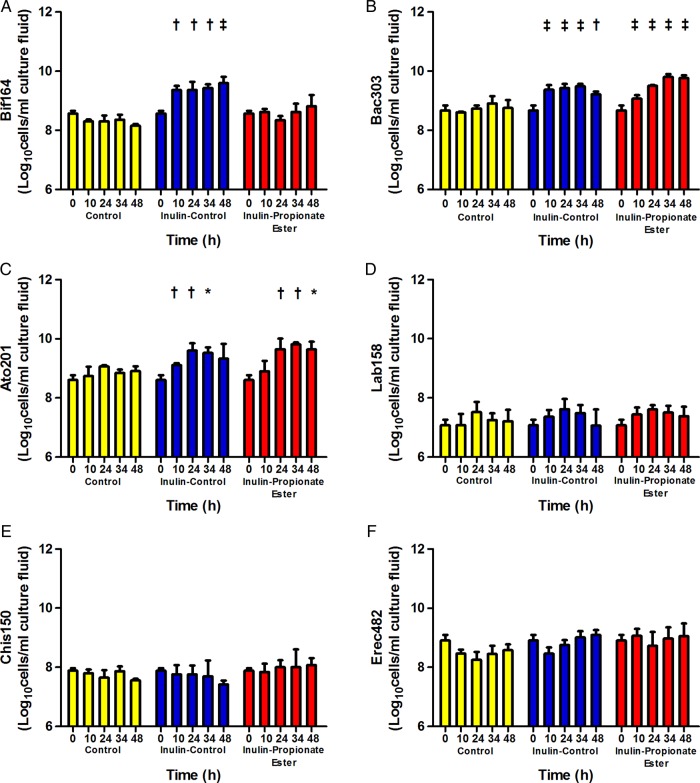
“41 Data from batch culture experiments demonstrated that inulin-control and inulin-propionate ester stimulate changes to the gut microbiota, although only inulin-control had a selective effect on Bi fi dobacterium .”
BackgroundAbdominal obesity and metabolic syndrome
Després, J.-P., & Lemieux, I. (2006) · Nature · doi:10.1038/nature05488 · Cited by 4,354 · cited 1×
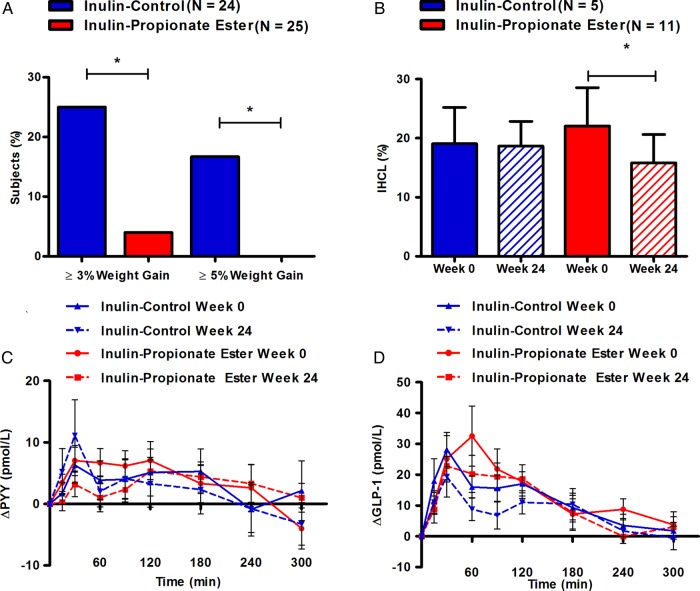
“44 Interestingly, in this long-term study we were unable to detect any change in PYY or GLP-1 release following ingestion of the inulin-propionate ester compared with inulin-control, in contrast to our acute administration studies.”
ResultGut Microbiota from Twins Discordant for Obesity Modulate Metabolism in Mice
Ridaura, V. K., Faith, J. J., Rey, F. E., Cheng, J., Duncan, A. E., Kau, A. L., Griffin, N. W., Lombard, V., Henrissat, B., Bain, J. R., et al. (2013) · Science · doi:10.1126/science.1241214 · Cited by 3,788
Short chain fatty acids in human large intestine, portal, hepatic and venous blood
Cummings, J. H., Pomare, E. W., Branch, W. J., Naylor, C. P., & Macfarlane, G. T. (1987) · Gut · doi:10.1136/gut.28.10.1221 · Cited by 3,119 · cited 1×
“31 To overcome the unpalatably high levels of ferment-able dietary fi bre needed to signi fi cantly increase colonic propionate levels, and the unpredictability in the production of the resulting SCFAs, we have developed a novel delivery system targeting the release of gram quantities of propionate…”
BackgroundChanges in diet and lifestyle and long-term weight gain in women and men
Mozaffarian, D., Hao, T., Rimm, E. B., Willett, W. C., & Hu, F. B. (2011) · New England Journal of Medicine · doi:10.1056/nejmoa1014296 · Cited by 2,527
Brown, A. J., Goldsworthy, S. M., Barnes, A. A., Eilert, M. M., Tcheang, L., Daniels, D., Muir, A. I., Wigglesworth, M. J., Kinghorn, I., Fraser, N. J., et al. (2003) · Journal of Biological Chemistry · doi:10.1074/jbc.m211609200 · Cited by 2,409
Tolhurst, G., Heffron, H., Lam, Y. S., Parker, H. E., Habib, A. M., Diakogiannaki, E., Cameron, J., Grosse, J., Reimann, F., & Gribble, F. M. (2012) · Diabetes · doi:10.2337/db11-1019 · Cited by 2,404 · cited 2×
“21 Of the SCFAs produced by colonic fermentation of dietary fi bre, propionate has the highest af fi nity for FFAR 2.”
BackgroundMethodGut hormone PYY3-36 physiologically inhibits food intake
Batterham, R. L., Cowley, M. A., Small, C. J., Herzog, H., Cohen, M. A., Dakin, C. L., Wren, A. M., Brynes, A. E., Low, M. J., Ghatei, M. A., et al. (2002) · Nature · doi:10.1038/nature00887 · Cited by 2,351
Self-citationFlint, A., Raben, A., Blundell, J., & Astrup, A. (2000) · International Journal of Obesity · doi:10.1038/sj.ijo.0801083 · Cited by 2,238
Self-citationMicrobiota-Generated Metabolites Promote Metabolic Benefits via Gut-Brain Neural Circuits
De Vadder, F., Kovatcheva-Datchary, P., Goncalves, D., Vinera, J., Zitoun, C., Duchampt, A., Bäckhed, F., & Mithieux, G. (2014) · Cell · doi:10.1016/j.cell.2013.12.016 · Cited by 2,200
A role for glucagon-like peptide-1 in the central regulation of feeding
Turton, M. D., O'Shea, D., Gunn, I., Beak, S. A., Edwards, C. M. B., Meeran, K., Choi, S. J., Taylor, G. M., Heath, M. M., Lambert, P. D., et al. (1996) · Nature · doi:10.1038/379069a0 · Cited by 1,950
Self-citationGlucagon-like peptide-1 7–36: a physiological incretin in man
Kreymann, B., Ghatei, M. A., Williams, G., & Bloom, S. R. (1987) · The Lancet · doi:10.1016/s0140-6736(87)91194-9 · Cited by 1,928
Self-citationLe Poul, E., Loison, C., Struyf, S., Springael, J.-Y., Lannoy, V., Decobecq, M.-E., Brezillon, S., Dupriez, V., Vassart, G., Van Damme, J., et al. (2003) · Journal of Biological Chemistry · doi:10.1074/jbc.m301403200 · Cited by 1,651
Inhibition of Food Intake in Obese Subjects by Peptide YY 3–36
Batterham, R. L., Cohen, M. A., Ellis, S. M., Le Roux, C. W., Withers, D. J., Frost, G. S., Ghatei, M. A., & Bloom, S. R. (2003) · New England Journal of Medicine · doi:10.1056/nejmoa030204 · Cited by 1,604 · cited 1×
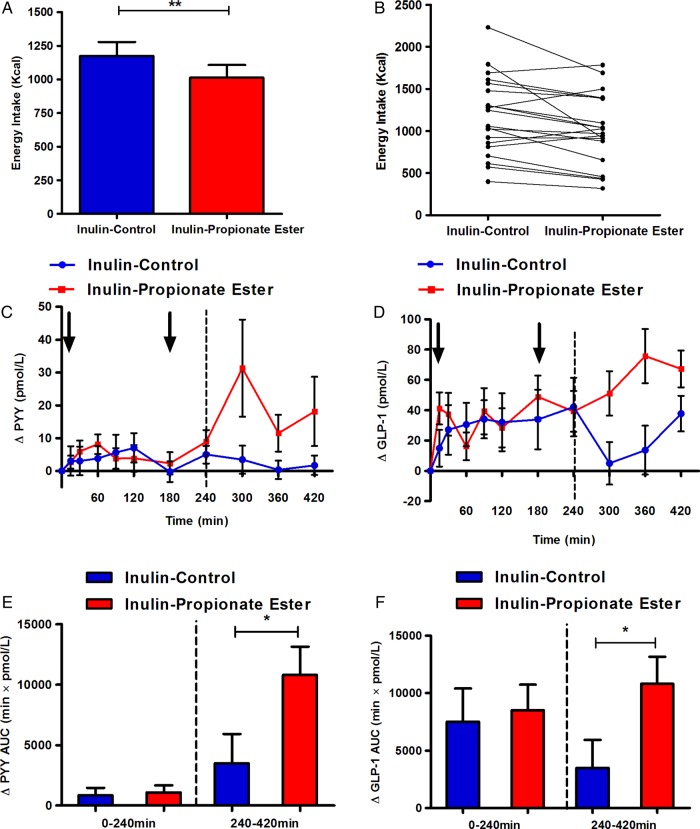
“25 27 In this study, the rise in PYY and GLP-1 was apparent between 240 min and 420 min following oral administration of the inulin-propionate ester, and reached levels similar to those observed following a 1000 kcal meal.”
MethodSelf-citationSzczepaniak, L. S., Nurenberg, P., Leonard, D., Browning, J. D., Reingold, J. S., Grundy, S., Hobbs, H. H., & Dobbins, R. L. (2005) · American Journal of Physiology-Endocrinology and Metabolism · doi:10.1152/ajpendo.00064.2004 · Cited by 1,562
Kimura, I., Ozawa, K., Inoue, D., Imamura, T., Kimura, K., Maeda, T., Terasawa, K., Kashihara, D., Hirano, K., Tani, T., et al. (2013) · Nature Communications · doi:10.1038/ncomms2852 · Cited by 1,512 · cited 1×
“47 Propionate has also been shown to stimulate a gut – brain circuit via FFAR3 in the portal vein wall, leading to the induction of intestinal gluconeogenesis (IGN) gene expression.”
BackgroundKimura, I., Inoue, D., Maeda, T., Hara, T., Ichimura, A., Miyauchi, S., Kobayashi, M., Hirasawa, A., & Tsujimoto, G. (2011) · Proceedings of the National Academy of Sciences · doi:10.1073/pnas.1016088108 · Cited by 1,106 · cited 1×
“46 Furthermore, SCFA activation of FFAR2 has been shown to reduce the sensitivity of murine adipocytes to insulin, leading to reduced lipid clearance by adipocytes and to increased energy expenditure, with preferential oxidation of lipid.”
BackgroundHuman distribution and release of a putative new gut hormone, peptide YY
Adrian, T. E., Ferri, G.-L., Bacarese-Hamilton, A. J., Fuessl, H. S., Polak, J. M., & Bloom, S. R. (1985) · Gastroenterology · doi:10.1016/0016-5085(85)90211-2 · Cited by 1,065
Self-citationDietary Fiber and Weight Regulation
Howarth, N. C., Saltzman, E., & Roberts, S. B. (2009) · Nutrition Reviews · doi:10.1111/j.1753-4887.2001.tb07001.x · Cited by 1,060
Conserved shifts in the gut microbiota due to gastric bypass reduce host weight and adiposity
Liou, A. P., Paziuk, M., Luevano, J.-M., Machineni, S., Turnbaugh, P. J., & Kaplan, L. M. (2013) · Science Translational Medicine · doi:10.1126/scitranslmed.3005687 · Cited by 1,007
The gut microbiota and obesity: from correlation to causality
Zhao, L. (2013) · Nature Reviews Microbiology · doi:10.1038/nrmicro3089 · Cited by 838 · cited 10×
“It has been demonstrated that propionate can stimulate leptin release through activation of FFAR2 on adipocytes, 45 although we did not observe any changes in circulating leptin concentrations following acute or long-term supplementation with inulin-propionate ester.”
BackgroundInfluentialLiu, S., Willett, W. C., Manson, J. E., Hu, F. B., Rosner, B., & Colditz, G. (2003) · The American Journal of Clinical Nutrition · doi:10.1093/ajcn/78.5.920 · Cited by 787
Gut hormones and the regulation of energy homeostasis
Murphy, K. G., & Bloom, S. R. (2006) · Nature · doi:10.1038/nature05484 · Cited by 778 · cited 2×
“1 24 The production of SCFAs by microbial fermentation of dietary fi bre has been linked to positive physiological effects, including improvements in body weight, adiposity and glucose metabolism.”
BackgroundSelf-citationGlucose Sensing in L Cells: A Primary Cell Study
Reimann, F., Habib, A. M., Tolhurst, G., Parker, H. E., Rogers, G. J., & Gribble, F. M. (2008) · Cell Metabolism · doi:10.1016/j.cmet.2008.11.002 · Cited by 733 · cited 1×
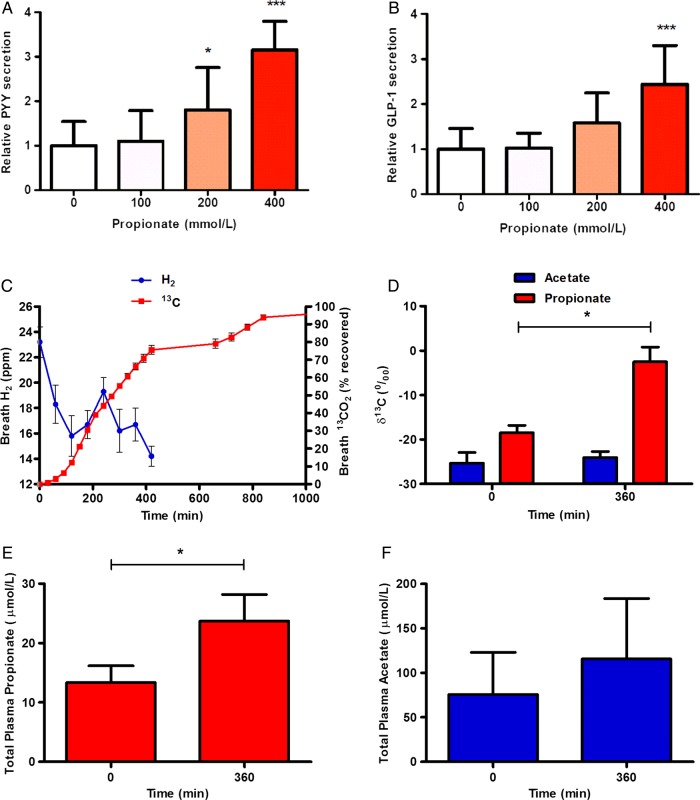
“The effect of propionate on PYY and GLP-1 release from human colonic crypts was determined using a modi fi ed version of an established method 32 (see online supplementary material).”
MethodDietary Fiber, Weight Gain, and Cardiovascular Disease Risk Factors in Young Adults
Ludwig, D. S. (1999) · JAMA · doi:10.1001/jama.282.16.1539 · Cited by 722
Attenuated Peptide YY Release in Obese Subjects Is Associated with Reduced Satiety
le Roux, C. W., Batterham, R. L., Aylwin, S. J. B., Patterson, M., Borg, C. M., Wynne, K. J., Kent, A., Vincent, R. P., Gardiner, J., Ghatei, M. A., et al. (2006) · Endocrinology · doi:10.1210/en.2005-0972 · Cited by 552
Self-citationWanders, A. J., van den Borne, J. J. G. C., de Graaf, C., Hulshof, T., Jonathan, M. C., Kristensen, M., Mars, M., Schols, H. A., & Feskens, E. J. M. (2011) · Obesity Reviews · doi:10.1111/j.1467-789x.2011.00895.x · Cited by 453
The 10-Year Incidence of Overweight and Major Weight Gain in US Adults
Williamson, D. F. (1990) · Archives of Internal Medicine · doi:10.1001/archinte.150.3.665 · Cited by 446
Oligofructose Promotes Satiety in Rats Fed a High‐Fat Diet: Involvement of Glucagon‐Like Peptide‐1
Cani, P. D., Neyrinck, A. M., Maton, N., & Delzenne, N. M. (2005) · Obesity Research · doi:10.1038/oby.2005.117 · Cited by 382 · cited 1×
“14 Feeding rodents a high level of fermentable dietary fi bre protects against high-fat, diet-induced increases in body weight and fat mass. 15 16 17 – 19 However, large amounts of dietary fi bre (>30 g/day) are required for these bene fi cial effects, and compliance with high fi bre diets is poor, due…”
BackgroundOligofructose promotes satiety in healthy human: a pilot study
Cani, P. D., Joly, E., Horsmans, Y., & Delzenne, N. M. (2006) · European Journal of Clinical Nutrition · doi:10.1038/sj.ejcn.1602350 · Cited by 382 · cited 1×
“14 Feeding rodents a high level of fermentable dietary fi bre protects against high-fat, diet-induced increases in body weight and fat mass. 15 16 17 – 19 However, large amounts of dietary fi bre (>30 g/day) are required for these bene fi cial effects, and compliance with high fi bre diets is poor, due…”
BackgroundZaibi, M. S., Stocker, C. J., O'Dowd, J., Davies, A., Bellahcene, M., Cawthorne, M. A., Brown, A. J. H., Smith, D. M., & Arch, J. R. S. (2010) · FEBS Letters · doi:10.1016/j.febslet.2010.04.027 · Cited by 340 · cited 1×
“It has been demonstrated that propionate can stimulate leptin release through activation of FFAR2 on adipocytes, 45 although we did not observe any changes in circulating leptin concentrations following acute or long-term supplementation with inulin-propionate ester.”
BackgroundShort-chain fatty acids modify colonic motility through nerves and polypeptide YY release in the rat
Cherbut, C., Ferrier, L., Rozé, C., Anini, Y., Blottière, H., Lecannu, G., & Galmiche, J.-P. (1998) · American Journal of Physiology-Gastrointestinal and Liver Physiology · doi:10.1152/ajpgi.1998.275.6.g1415 · Cited by 317 · cited 2×
“Intriguingly, Roux-en-Y gastric bypass, which results in weight loss and reduced adiposity, promotes increased levels of propionate in the colon.(5) In keeping with these findings, a significant negative correlation between adiposity and caecal propionate concentrations has also been reported in germfree mice receivin…”
BackgroundHormonal control of salt and water balance in vertebrates
McCormick, S. D., & Bradshaw, D. (2006) · General and Comparative Endocrinology · doi:10.1016/j.ygcen.2005.12.009 · Cited by 308
Effects of inulin-type fructans on lipid metabolism in man and in animal models
Beylot, M. (2005) · British Journal of Nutrition · doi:10.1079/bjn20041339 · Cited by 212
The Missing Risk: MRI and MRS Phenotyping of Abdominal Adiposity and Ectopic Fat
Thomas, E. L., Parkinson, J. R., Frost, G. S., Goldstone, A. P., Doré, C. J., McCarthy, J. P., Collins, A. L., Fitzpatrick, J. A., Durighel, G., Taylor‐Robinson, S. D., et al. (2012) · Obesity · doi:10.1038/oby.2011.142 · Cited by 200
Self-citationThe regulation of food intake by the gut-brain axis: implications for obesity
Hussain, S. S., & Bloom, S. R. (2013) · International Journal of Obesity · doi:10.1038/ijo.2012.93 · Cited by 195 · cited 1×
“1 24 The production of SCFAs by microbial fermentation of dietary fi bre has been linked to positive physiological effects, including improvements in body weight, adiposity and glucose metabolism.”
BackgroundSelf-citationMorrison, D. J., Mackay, W. G., Edwards, C. A., Preston, T., Dodson, B., & Weaver, L. T. (2006) · British Journal of Nutrition · doi:10.1079/bjn20061853 · Cited by 195
Self-citationDaubioul, C., Rousseau, N., Taper, H., Declerck, B., Delzenne, N., Demeure, R., & Gallez, B. (2002) · The Journal of Nutrition · doi:10.1093/jn/132.5.967 · Cited by 178 · cited 1×
“A reduction in IHCL is a reproducible fi nding in rodents fed a high level of fermentable dietary fi bre, 16 43 however the mechanism behind this is not well understood.”
BackgroundThe gut microbiota manages host metabolism
Cani, P. D. (2014) · Nature Reviews Endocrinology · doi:10.1038/nrendo.2013.240 · Cited by 160
Comparison of the postprandial release of peptide YY and proglucagon-derived peptides in the rat
Anini, Y., Fu–Cheng, X., Cuber, J. C., Kervran, A., Chariot, J., & Roz, C. (1999) · Pflügers Archiv - European Journal of Physiology · doi:10.1007/s004240050913 · Cited by 150 · cited 1×
“23 These hormones are released from the gut and are involved in the short-term signal of satiation and satiety to the appetite centres of the brain.”
BackgroundTrends and Dietary Determinants of Overweight and Obesity in a Multiethnic Population
Maskarinec, G., Takata, Y., Pagano, I., Carlin, L., Goodman, M. T., Le Marchand, L., Nomura, A. M. Y., Wilkens, L. R., & Kolonel, L. N. (2006) · Obesity · doi:10.1038/oby.2006.82 · Cited by 104 · cited 4×
“Physical activity was measured at baseline and at week 24 using the short self-administered format of the International Physical Activity Questionnaire (IPAQ) 13 .”
BackgroundMethodInfluentialDaud, N. M., Ismail, N. A., Thomas, E. L., Fitzpatrick, J. A., Bell, J. D., Swann, J. R., Costabile, A., Childs, C. E., Pedersen, C., Goldstone, A. P., et al. (2014) · Obesity · doi:10.1002/oby.20754 · Cited by 99
Self-citationHowarth, N. C., Saltzman, E. J., McCrory, M. A., Greenberg, A. S., Ausman, L. M., Kramer, D. G., Roberts, S. B., & Dwyer, J. T. (2003) · Journal of Nutrition · doi:10.1093/jn/133.10.3141 · Cited by 98
Pedersen, C., Lefevre, S., Peters, V., Patterson, M., Ghatei, M. A., Morgan, L., & Frost, G. S. (2013) · Appetite · doi:10.1016/j.appet.2013.02.017 · Cited by 98 · cited 2×
“40 Recent evidence suggests the colonic microbiota adapt rapidly to a change in substrate availability.”
BackgroundSelf-citationRigaud, D., Ryttig, K. R., Ángel, L., & Apfelbaum, M. (1990) · PubMed · Cited by 87
Anastasovska, J., Arora, T., Canon, G. J. S., Parkinson, J. R. C., Touhy, K., Gibson, G. R., Nadkarni, N. A., So, P., Goldstone, A. P., Thomas, E. L., et al. (2012) · Obesity · doi:10.1038/oby.2012.6 · Cited by 86 · cited 2×
“14 Feeding rodents a high level of fermentable dietary fi bre protects against high-fat, diet-induced increases in body weight and fat mass. 15 16 17 – 19 However, large amounts of dietary fi bre (>30 g/day) are required for these bene fi cial effects, and compliance with high fi bre diets is poor, due…”
BackgroundSelf-citationHeitmann, B. L., & Garby, L. (1999) · International Journal of Obesity · doi:10.1038/sj.ijo.0801035 · Cited by 56 · cited 4×
“3 – 5 A major public health challenge is the development of effective strategies that can prevent the increased prevalence in obesity and the reported average 0.3 – 0.8 kg 6 – 9 Such gradual long-term weight gain can be the result of a small habitual positive energy balance of 50 – 100 kcal/day.”
BackgroundMethodInfluentialPeeters, A., Magliano, D. J., Backholer, K., Zimmet, P., & Shaw, J. E. (2014) · BMJ Open · doi:10.1136/bmjopen-2013-003667 · Cited by 45
Closing the energy gap to prevent weight gain in China
Zhai, F., Wang, H., Wang, Z., Popkin, B. M., & Chen, C. (2008) · Obesity Reviews · doi:10.1111/j.1467-789x.2007.00450.x · Cited by 43 · cited 2×
“10 Interventions that can be safely applied at the population level to reverse this minor energy imbalance and prevent weight gain throughout life would therefore have substantial bene fi ts to public health.”
BackgroundTreatment of obesity: The constraints on success
James, W. P. T. (1984) · Clinics in Endocrinology and Metabolism · doi:10.1016/s0300-595x(84)80042-0 · Cited by 22
Papke (1996) · doi:10.1002/(sici)1099-1255(199611)11:6<619::aid-jae418>3.0.co;2-1
Cited by
From Dietary Fiber to Host Physiology: Short-Chain Fatty Acids as Key Bacterial Metabolites
Koh, A., De Vadder, F., Kovatcheva-Datchary, P., & Bäckhed, F. (2016) · Cell · doi:10.1016/j.cell.2016.05.041 · Cited by 7,070
Cryan, J. F., O'Riordan, K. J., Cowan, C. S. M., Sandhu, K. V., Bastiaanssen, T. F. S., Boehme, M., Codagnone, M. G., Cussotto, S., Fulling, C., Golubeva, A. V., et al. (2019) · Physiological Reviews · doi:10.1152/physrev.00018.2018 · Cited by 5,286
Gut microbiota in human metabolic health and disease
Fan, Y., & Pedersen, O. (2021) · Nature Reviews Microbiology · doi:10.1038/s41579-020-0433-9 · Cited by 4,724
Formation of short chain fatty acids by the gut microbiota and their impact on human metabolism
Morrison, D. J., & Preston, T. (2016) · Gut Microbes · doi:10.1080/19490976.2015.1134082 · Cited by 3,781
“Recent work has also demonstrated that propionate alone is able to reduce visceral fat and liver fat.(47) Increased circulating SCFA are associated with reduced adipocyte lipolysis and adipogenesis.”
BackgroundInfluentialSelf-citationThe role of short-chain fatty acids in microbiota–gut–brain communication
Dalile, B., Van Oudenhove, L., Vervliet, B., & Verbeke, K. (2019) · Nature Reviews Gastroenterology & Hepatology · doi:10.1038/s41575-019-0157-3 · Cited by 3,357
Metadata
- Authors
- Chambers, E. S., Viardot, A., Psichas, A., Morrison, D. J., Murphy, K. G., Zac-Varghese, S. E. K., MacDougall, K., Preston, T., Tedford, C., Finlayson, G. S., Blundell, J. E., Bell, J. D., Thomas, E. L., Mt-Isa, S., Ashby, D., Gibson, G. R., Kolida, S., Dhillo, W. S., Bloom, S. R., Morley, W., Clegg, S., & Frost, G.
- Affiliations
- Hammersmith Hospital (GB)
- Garvan Institute of Medical Research (AU)
- Scottish Universities Environmental Research Centre (GB)
- Section of Investigative Medicine, Imperial College London, Hammersmith Hospital, London, UK
- University of the West of Scotland (GB)
- University of Leeds (GB)
- Imperial Clinical Trials Unit, School of Public Health, Imperial College London, London, UK
- Imperial College London (GB)
- University of Reading (GB)
- Department of Food and Nutritional Sciences, University of Reading, Reading, UK
- Leatherhead Food Research (GB)
- Corresponding author
- Frost, Gary
- ORCID
- Venue
- Gut
- Publisher
- BMJ
- Published
- 2014-12-10
- Volume
- 64
- Issue
- 11
- Pages
- 1744-1754
- ISSN
- 0017-5749 (ISSN-L)
- 1468-3288
- PMC
- PMC4680171
- OpenAlex
- W2106348916
- Cited by
- 1,424
- References
- 52
- Citations by year
- 2026: 125 · 2025: 171 · 2024: 149 · 2023: 144 · 2022: 167 · 2021: 172 · 2020: 138 · 2019: 120 · 2018: 97 · 2017: 54 · 2016: 61 · 2015: 25
- FWCI
- 22.75
- Type
- journal article
- Language
- en
- Open access
- hybrid
- doi.org
- Licence
- cc-by
- Locations
- Gut (publishedVersion, cc-by)
- PubMed Central (publishedVersion, cc-by)
- PubMed (publishedVersion)
- White Rose Research Online (University of Leeds, The University of Sheffield, University of York) (acceptedVersion)
- WestminsterResearch (University of Westminster) (acceptedVersion)
- ENLIGHTEN (Jurnal Bimbingan dan Konseling Islam) (acceptedVersion)
- Funders
- Wellcome Trust
- National Institute for Health and Care Research (FP7-HEALTH-2009-241592, CDF-2009-02-05, NF-SI-0513-10080, NF-SI-0507-10337, NF-SI-0513-10029, 03/DHCS/03/G121/48)
- Imperial College London
- Directorate for Biological Sciences
- Medical Research Council (FP7-HEALTH-2009-241592)
- Biotechnology and Biological Sciences Research Council (BB/H005072/1, 1527476, BB/L004259/1, BB/H004971/1, BB/H004815/1, FP7-HEALTH-2009-241592)
- National Health and Medical Research Council
- NIHR Imperial Biomedical Research Centre
- FP7 Health
- Topics
- Life Sciences › Neuroscience › Endocrine and Autonomic Systems › Regulation of Appetite and Obesity
- Life Sciences › Biochemistry, Genetics and Molecular Biology › Molecular Biology › Gut microbiota and health
- Health Sciences › Nursing › Nutrition and Dietetics › Microbial Metabolites in Food Biotechnology
- Keywords
- propionate, short-chain fatty acids, colonic fermentation, peptide YY, glucagon-like peptide-1, appetite regulation, energy intake, weight gain, overweight adults, intra-abdominal adipose tissue, hepatic steatosis, insulin sensitivity
- MeSH terms
- Body Weight Maintenance, Appetite Regulation, Cells, Cultured, Colon, Double-Blind Method, Female, Humans, Male, Middle Aged, Propionates, Cross-Over Studies, Peptide YY, Adiposity, Overweight, Glucagon-Like Peptide 1
About these checks
Registry, retraction, Cites and statistics results are computed, not judged, with one exception: a printed reference that no index lists is read once by a model before it counts as a citation error. Claims are extracted by a model and kept only when their quote appears verbatim in the text; each cited source is then checked, with a model’s help, for whether it says what the claim relies on. Those verdicts can be wrong — read the claim’s quote and the cited source before relying on one.
Statistics and arithmetic are recomputed, not judged.
Confidence bands are shown only for fields calibrated on our annotated test set. None is calibrated yet, so no band is shown.
What counts as a claim ›How we measure confidence ›How we check this ›
Are you an author, or do you see a problem with this page? Request a review
Data sources
Bibliographic data: Semantic Scholar, OpenAlex, Crossref.
Contains information from the Semantic Scholar Academic Graph Datasets, made available under the ODC Attribution License (ODC-BY 1.0).
Semantic Scholar’s data is described in: Kinney, R., et al. (2023). The Semantic Scholar Open Data Platform. arXiv:2301.10140.
