

Effects of targeted delivery of propionate to the human colon on appetite regulation, body weight maintenance and adiposity in overweight adults
Open accessThe DOI matches its Crossref record; 51 of the 52 references it cites were found in a registry or an index.
Abstract
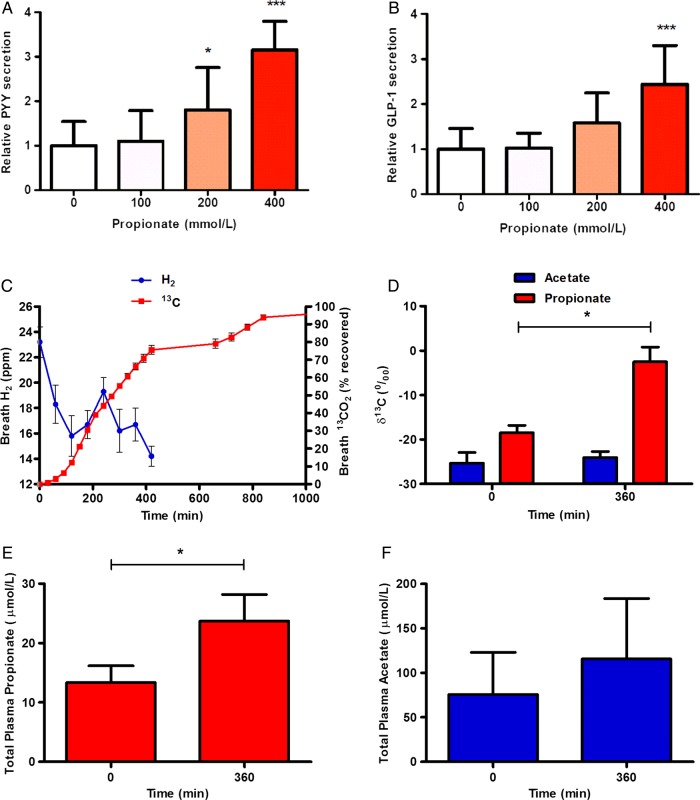
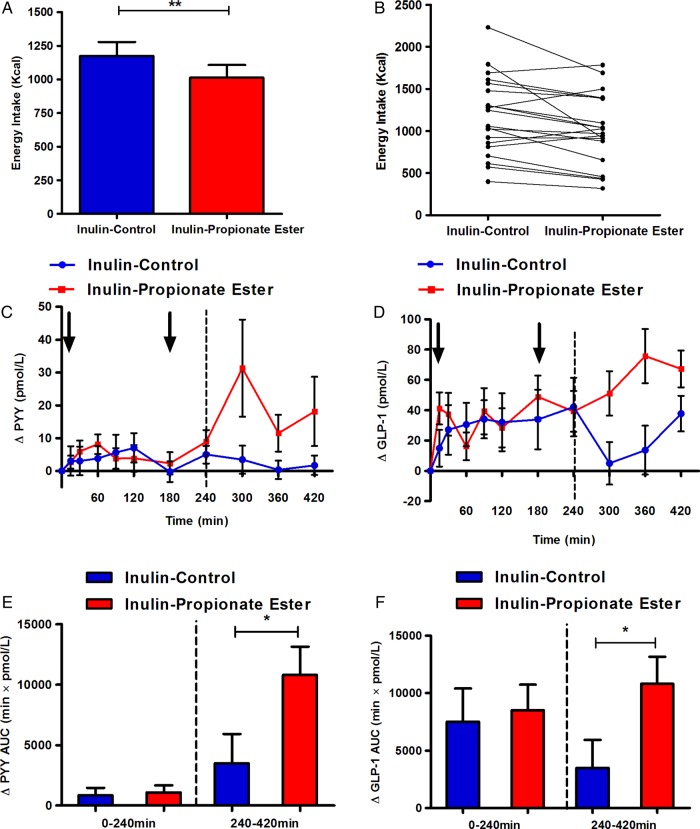
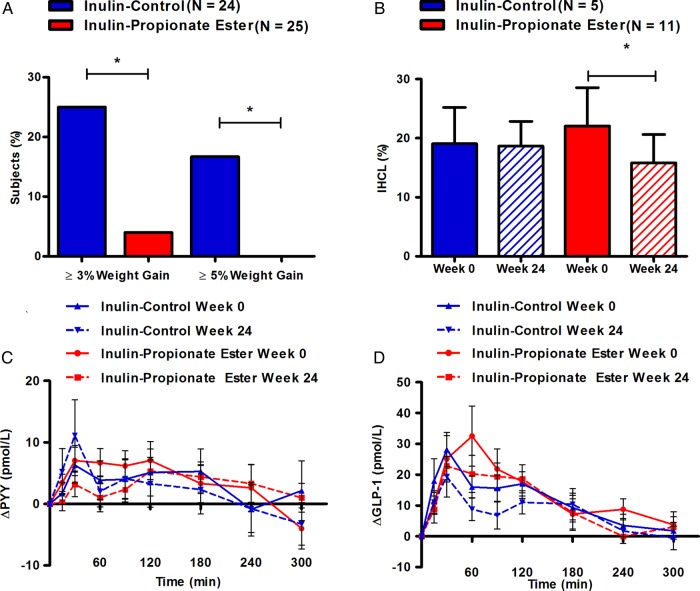
Objective: The colonic microbiota ferment dietary fibres, producing short chain fatty acids. Recent evidence suggests that the short chain fatty acid propionate may play an important role in appetite regulation. We hypothesised that colonic delivery of propionate would increase peptide YY (PYY) and glucagon like peptide-1 (GLP-1) secretion in humans, and reduce energy intake and weight gain in overweight adults. Design: To investigate whether propionate promotes PYY and GLP-1 secretion, a primary cultured human colonic cell model was developed. To deliver propionate specifically to the colon, we developed a novel inulin-propionate ester. An acute randomised, controlled cross-over study was used to assess the effects of this inulin-propionate ester on energy intake and plasma PYY and GLP-1 concentrations. The long-term effects of inulin-propionate ester on weight gain were subsequently assessed in a randomised, controlled 24-week study involving 60 overweight adults. Results: Propionate significantly stimulated the release of PYY and GLP-1 from human colonic cells. Acute ingestion of 10 g inulin-propionate ester significantly increased postprandial plasma PYY and GLP-1 and reduced energy intake. Over 24 weeks, 10 g/day inulin-propionate ester supplementation significantly reduced weight gain, intra-abdominal adipose tissue distribution, intrahepatocellular lipid content and prevented the deterioration in insulin sensitivity observed in the inulin-control group. Conclusions: These data demonstrate for the first time that increasing colonic propionate prevents weight gain in overweight adult humans. Trial registration number: NCT00750438.
Overview
The claims and statistics of this paper haven’t been checked yet.
Free: it reads the open-access text and checks the first 5 claims that cite a source we can check. Create a free account to check every claim.
Integrity signals
Registry
Cites
Statistics
Figures
Verification
Claims the paper makes
The claims and statistics of this paper haven’t been checked yet.
Free: it reads the open-access text and checks the first 5 claims that cite a source we can check. Create a free account to check every claim.
Claims other papers make about this one
Each is checked against this paper’s own text: does it say what the citing paper says it does?
The source backs part of the claim, not all of it — or backs it for a different population, condition or comparison.
In the citing paper
“Human-based studies corroborate the beneficial effects of SCFAs, including the effects of propionate (a common SCFA produced by human gut microbiota) on enhanced incretin response (including plasma Peptide YY [PYY] and GLP-1 excursions), weight loss, reduced intra-abdominal adipose tissue volume and intra-hepatocellular lipid content and preservation of insulin sensitivity [59].”
From The Health Benefits of Dietary Fibre (2020) · cites this paper as [59]
Experimental — accuracy not yet measuredThe cited source says what the claim attributes to it.
In the citing paper
“Short-chain fatty-acid production is primarily derived from non-digestible-carbohydrate (i.e., dietary fiber) consumption [213] during colonic bacterial fermentation [214].”
From Impact of Protein Intake in Older Adults with Sarcopenia and Obesity: A Gut Microbiota Perspective (2020) · cites this paper as [213]
Self-check
Percentages, sums and reported differences re-computed from the paper’s own numbers.
The self-check needs the paper’s full text.
Citations
Cites
Diet rapidly and reproducibly alters the human gut microbiome
David, L. A., Maurice, C. F., Carmody, R. N., Gootenberg, D. B., Button, J. E., Wolfe, B. E., Ling, A. V., Devlin, A. S., Varma, Y., Fischbach, M. A., et al. (2014) · Nature · doi:10.1038/nature12820 · Cited by 10,100 · cited 1×
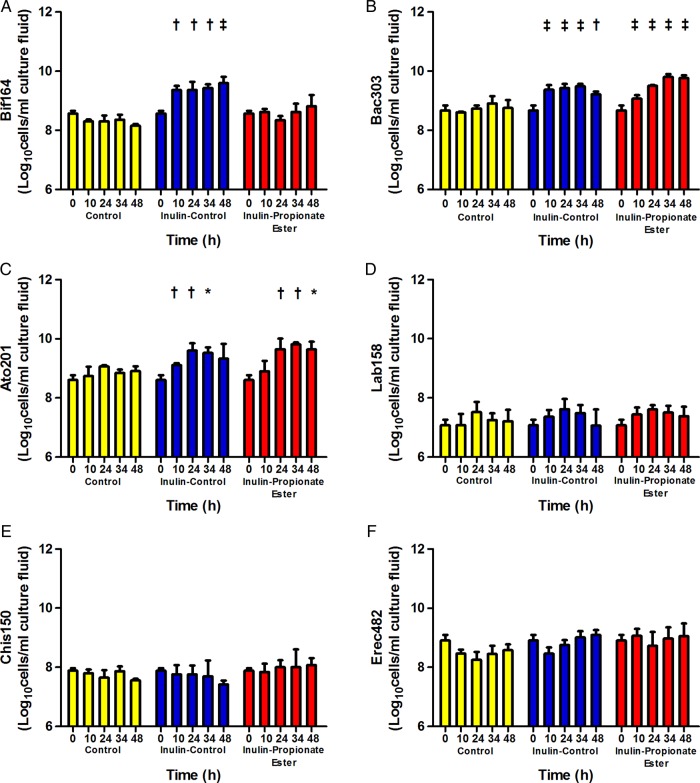
“41 Data from batch culture experiments demonstrated that inulin-control and inulin-propionate ester stimulate changes to the gut microbiota, although only inulin-control had a selective effect on Bi fi dobacterium .”
BackgroundAbdominal obesity and metabolic syndrome
Després, J.-P., & Lemieux, I. (2006) · Nature · doi:10.1038/nature05488 · Cited by 4,354 · cited 1×
“44 Interestingly, in this long-term study we were unable to detect any change in PYY or GLP-1 release following ingestion of the inulin-propionate ester compared with inulin-control, in contrast to our acute administration studies.”
ResultGut Microbiota from Twins Discordant for Obesity Modulate Metabolism in Mice
Ridaura, V. K., Faith, J. J., Rey, F. E., Cheng, J., Duncan, A. E., Kau, A. L., Griffin, N. W., Lombard, V., Henrissat, B., Bain, J. R., et al. (2013) · Science · doi:10.1126/science.1241214 · Cited by 3,788
Short chain fatty acids in human large intestine, portal, hepatic and venous blood
Cummings, J. H., Pomare, E. W., Branch, W. J., Naylor, C. P., & Macfarlane, G. T. (1987) · Gut · doi:10.1136/gut.28.10.1221 · Cited by 3,119 · cited 1×
“31 To overcome the unpalatably high levels of ferment-able dietary fi bre needed to signi fi cantly increase colonic propionate levels, and the unpredictability in the production of the resulting SCFAs, we have developed a novel delivery system targeting the release of gram quantities of propionate…”
BackgroundChanges in diet and lifestyle and long-term weight gain in women and men
Mozaffarian, D., Hao, T., Rimm, E. B., Willett, W. C., & Hu, F. B. (2011) · New England Journal of Medicine · doi:10.1056/nejmoa1014296 · Cited by 2,527
Brown, A. J., Goldsworthy, S. M., Barnes, A. A., Eilert, M. M., Tcheang, L., Daniels, D., Muir, A. I., Wigglesworth, M. J., Kinghorn, I., Fraser, N. J., et al. (2003) · Journal of Biological Chemistry · doi:10.1074/jbc.m211609200 · Cited by 2,409
Tolhurst, G., Heffron, H., Lam, Y. S., Parker, H. E., Habib, A. M., Diakogiannaki, E., Cameron, J., Grosse, J., Reimann, F., & Gribble, F. M. (2012) · Diabetes · doi:10.2337/db11-1019 · Cited by 2,404 · cited 2×
“21 Of the SCFAs produced by colonic fermentation of dietary fi bre, propionate has the highest af fi nity for FFAR 2.”
BackgroundMethodGut hormone PYY3-36 physiologically inhibits food intake
Batterham, R. L., Cowley, M. A., Small, C. J., Herzog, H., Cohen, M. A., Dakin, C. L., Wren, A. M., Brynes, A. E., Low, M. J., Ghatei, M. A., et al. (2002) · Nature · doi:10.1038/nature00887 · Cited by 2,351
Self-citationFlint, A., Raben, A., Blundell, J., & Astrup, A. (2000) · International Journal of Obesity · doi:10.1038/sj.ijo.0801083 · Cited by 2,238
Self-citationMicrobiota-Generated Metabolites Promote Metabolic Benefits via Gut-Brain Neural Circuits
De Vadder, F., Kovatcheva-Datchary, P., Goncalves, D., Vinera, J., Zitoun, C., Duchampt, A., Bäckhed, F., & Mithieux, G. (2014) · Cell · doi:10.1016/j.cell.2013.12.016 · Cited by 2,200
Cited by
From Dietary Fiber to Host Physiology: Short-Chain Fatty Acids as Key Bacterial Metabolites
Koh, A., De Vadder, F., Kovatcheva-Datchary, P., & Bäckhed, F. (2016) · Cell · doi:10.1016/j.cell.2016.05.041 · Cited by 7,070
Cryan, J. F., O'Riordan, K. J., Cowan, C. S. M., Sandhu, K. V., Bastiaanssen, T. F. S., Boehme, M., Codagnone, M. G., Cussotto, S., Fulling, C., Golubeva, A. V., et al. (2019) · Physiological Reviews · doi:10.1152/physrev.00018.2018 · Cited by 5,286
Gut microbiota in human metabolic health and disease
Fan, Y., & Pedersen, O. (2021) · Nature Reviews Microbiology · doi:10.1038/s41579-020-0433-9 · Cited by 4,724
Formation of short chain fatty acids by the gut microbiota and their impact on human metabolism
Morrison, D. J., & Preston, T. (2016) · Gut Microbes · doi:10.1080/19490976.2015.1134082 · Cited by 3,781
“Recent work has also demonstrated that propionate alone is able to reduce visceral fat and liver fat.(47) Increased circulating SCFA are associated with reduced adipocyte lipolysis and adipogenesis.”
BackgroundInfluentialSelf-citationThe role of short-chain fatty acids in microbiota–gut–brain communication
Dalile, B., Van Oudenhove, L., Vervliet, B., & Verbeke, K. (2019) · Nature Reviews Gastroenterology & Hepatology · doi:10.1038/s41575-019-0157-3 · Cited by 3,357
Salminen, S., Collado, M. C., Endo, A., Hill, C., Lebeer, S., Quigley, E. M. M., Sanders, M. E., Shamir, R., Swann, J. R., Szajewska, H., et al. (2021) · Nature Reviews Gastroenterology & Hepatology · doi:10.1038/s41575-021-00440-6 · Cited by 2,488
The Firmicutes/Bacteroidetes Ratio: A Relevant Marker of Gut Dysbiosis in Obese Patients?
Magne, F., Gotteland, M., Gauthier, L., Zazueta, A., Pesoa, S., Navarrete, P., & Balamurugan, R. (2020) · Nutrients · doi:10.3390/nu12051474 · Cited by 2,335
Short-chain fatty acids in control of body weight and insulin sensitivity
Canfora, E. E., Jocken, J. W., & Blaak, E. E. (2015) · Nature Reviews Endocrinology · doi:10.1038/nrendo.2015.128 · Cited by 2,298
Diet–microbiota interactions as moderators of human metabolism
Sonnenburg, J. L., & Bäckhed, F. (2016) · Nature · doi:10.1038/nature18846 · Cited by 2,257
Swanson, K. S., Gibson, G. R., Hutkins, R., Reimer, R. A., Reid, G., Verbeke, K., Scott, K. P., Holscher, H. D., Azad, M. B., Delzenne, N. M., et al. (2020) · Nature Reviews Gastroenterology & Hepatology · doi:10.1038/s41575-020-0344-2 · Cited by 2,196
Self-citationYou are what you eat: Diet, health and the gut microbiota
Zmora, N., Suez, J., & Elinav, E. (2019) · Nature Reviews Gastroenterology & Hepatology · doi:10.1038/s41575-018-0061-2 · Cited by 1,792
Gut microbiota in cardiovascular health and disease
Tang, W. H. W., Kitai, T., & Hazen, S. L. (2017) · Circulation Research · doi:10.1161/circresaha.117.309715 · Cited by 1,670
“ing calorie intake at a buffet meal, resulting in a significant reduction in weight gain after a long-term supplementation.(105)”
BackgroundCausal relationships among the gut microbiome, short-chain fatty acids and metabolic diseases
Sanna, S., van Zuydam, N. R., Mahajan, A., Kurilshikov, A., Vich Vila, A., Võsa, U., Mujagic, Z., Masclee, A. A. M., Jonkers, D. M. A. E., Oosting, M., et al. (2019) · Nature Genetics · doi:10.1038/s41588-019-0350-x · Cited by 1,539
Gut microbial metabolites in obesity, NAFLD and T2DM
Canfora, E. E., Meex, R. C. R., Venema, K., & Blaak, E. E. (2019) · Nature Reviews Endocrinology · doi:10.1038/s41574-019-0156-z · Cited by 1,493
Oliphant, K., & Allen-Vercoe, E. (2019) · Microbiome · doi:10.1186/s40168-019-0704-8 · Cited by 1,327
Short-Chain Fatty-Acid-Producing Bacteria: Key Components of the Human Gut Microbiota
Fusco, W., Lorenzo, M. B., Cintoni, M., Porcari, S., Rinninella, E., Kaitsas, F., Lener, E., Mele, M. C., Gasbarrini, A., Collado, M. C., et al. (2023) · Nutrients · doi:10.3390/nu15092211 · Cited by 1,243
Dietary lipids, gut microbiota and lipid metabolism
Schoeler, M., & Caesar, R. (2019) · Reviews in Endocrine and Metabolic Disorders · doi:10.1007/s11154-019-09512-0 · Cited by 1,163
“Some minor clinical trials have also found beneficial effects of SCFA or fiber supplementation on body weight [56, 65].”
BackgroundInfluentialShort chain fatty acids in human gut and metabolic health
Blaak, E. E., Canfora, E. E., Theis, S., Frost, G., Groen, A. K., Mithieux, G., Nauta, A., Scott, K., Stahl, B., van Harsselaar, J., et al. (2020) · Beneficial Microbes · doi:10.3920/bm2020.0057 · Cited by 1,103
“Chambers et al. (2015) demonstrated that propionate supplementation to human subjects protected against weight gain as part of a habitual diet.”
Self-citationFree Fatty Acid Receptors in Health and Disease
Kimura, I., Ichimura, A., Ohue-Kitano, R., & Igarashi, M. (2020) · Physiological Reviews · doi:10.1152/physrev.00041.2018 · Cited by 1,018
“Because SCFA-rich diets show improved metabolic function in mice and humans, a direct causal relationship between fermentation of dietary fibers and SCFAs has been established (46, 90, 160).”
BackgroundLean, M. E. J., Leslie, W. S., Barnes, A. C., Brosnahan, N., Thom, G., McCombie, L., Peters, C., Zhyzhneuskaya, S., Al-Mrabeh, A., Hollingsworth, K. G., et al. (2019) · The Lancet Diabetes & Endocrinology · doi:10.1016/s2213-8587(19)30068-3 · Cited by 1,017
Microbial Regulation of Host Physiology by Short-chain Fatty Acids
van der Hee, B., & Wells, J. M. (2021) · Trends in Microbiology · doi:10.1016/j.tim.2021.02.001 · Cited by 980
Gut Microbiota and Short Chain Fatty Acids: Implications in Glucose Homeostasis
Portincasa, P., Bonfrate, L., Vacca, M., De Angelis, M., Farella, I., Lanza, E., Khalil, M., Wang, D. Q.-H., Sperandio, M., & Di Ciaula, A. (2022) · International Journal of Molecular Sciences · doi:10.3390/ijms23031105 · Cited by 969
“with increased GLP-1 and PYY and reduced food intake [128,129].”
BackgroundResultNogal, A., Valdes, A. M., & Menni, C. (2021) · Gut Microbes · doi:10.1080/19490976.2021.1897212 · Cited by 917
“Furthermore, apart from the previously commented functions of PYY and GLP1, PYY can also contribute to the glucose clearance in adipose tissue and muscle, and GLP-1 can increase insulin secretion and decrease glucagon secretion by the pancreas, regulating blood glucose levels.(137) At the same time, it seems that SCFA…”
BackgroundDietary gut microbial metabolites, short-chain fatty acids, and host metabolic regulation
Kasubuchi, M., Hasegawa, S., Hiramatsu, T., Ichimura, A., & Kimura, I. (2015) · Nutrients · doi:10.3390/nu7042839 · Cited by 904
“Inulin-propionate ester administrated at 10 g per day over a period of 24 weeks significantly reduced weight gain, intra-abdominal adipose tissue distribution and intrahepatocellular lipid content, and improved insulin resistance in the inulin control group [29].”
BackgroundThe Health Benefits of Dietary Fibre
Barber, T. M., Kabisch, S., Pfeiffer, A. F. H., & Weickert, M. O. (2020) · Nutrients · doi:10.3390/nu12103209 · Cited by 892
“Human-based studies corroborate the beneficial effects of SCFAs, including the effects of propionate (a common SCFA produced by human gut microbiota) on enhanced incretin response (including plasma Peptide YY [PYY] and GLP-1 excursions), weight loss, reduced intra-abdominal adipose tissue volume and intra-hepatocellul…”
BackgroundObesity and type 2 diabetes mellitus: connections in epidemiology, pathogenesis, and treatments
Ruze, R., Liu, T., Zou, X., Song, J., Chen, Y., Xu, R., Yin, X., & Xu, Q. (2023) · Frontiers in Endocrinology · doi:10.3389/fendo.2023.1161521 · Cited by 799
van de Wouw, M., Boehme, M., Lyte, J. M., Wiley, N., Strain, C., O'Sullivan, O., Clarke, G., Stanton, C., Dinan, T. G., & Cryan, J. F. (2018) · The Journal of Physiology · doi:10.1113/jp276431 · Cited by 789
“serotonin) (Chambers et al., 2015; Reigstad et al., 2015), and the induction of vagus nerve signaling (De Vadder et al.”
BackgroundPostbiotics—A Step Beyond Pre- and Probiotics
Żółkiewicz, J., Marzec, A., Ruszczyński, M., & Feleszko, W. (2020) · Nutrients · doi:10.3390/nu12082189 · Cited by 784
The role of short-chain fatty acids in immunity, inflammation and metabolism
Yao, Y., Cai, X., Fei, W., Ye, Y., Zhao, M., & Zheng, C. (2022) · Critical Reviews in Food Science and Nutrition · doi:10.1080/10408398.2020.1854675 · Cited by 756
Short-chain fatty acids in diseases
Zhang, D., Jian, Y.-P., Zhang, Y.-N., Li, Y., Gu, L.-T., Sun, H.-H., Liu, M.-D., Zhou, H.-L., Wang, Y.-S., & Xu, Z.-X. (2023) · Cell Communication and Signaling · doi:10.1186/s12964-023-01219-9 · Cited by 718
“Acute administration of inulin-propionate (which can be metabolised by the microbiota into propionate in the colon) to overweight adults significantly increases postprandial GLP-1 and peptide YY levels through the action of GPR43, promoting glucose decomposition and weight loss [108].”
BackgroundInfluentialShort chain fatty acids: Microbial metabolites for gut-brain axis signalling
O'Riordan, K. J., Collins, M. K., Moloney, G. M., Knox, E. G., Aburto, M. R., Fülling, C., Morley, S. J., Clarke, G., Schellekens, H., & Cryan, J. F. (2022) · Molecular and Cellular Endocrinology · doi:10.1016/j.mce.2022.111572 · Cited by 713
The role of short chain fatty acids in appetite regulation and energy homeostasis
Byrne, C. S., Chambers, E. S., Morrison, D. J., & Frost, G. (2015) · International Journal of Obesity · doi:10.1038/ijo.2015.84 · Cited by 707
Self-citationRole of gut microbiota-generated short-chain fatty acids in metabolic and cardiovascular health
Chambers, E. S., Preston, T., Frost, G., & Morrison, D. J. (2018) · Current Nutrition Reports · doi:10.1007/s13668-018-0248-8 · Cited by 691
Self-citationUnderstanding the glucoregulatory mechanisms of metformin in type 2 diabetes mellitus
Foretz, M., Guigas, B., & Viollet, B. (2019) · Nature Reviews Endocrinology · doi:10.1038/s41574-019-0242-2 · Cited by 686
Gut Microbiota as a Trigger for Metabolic Inflammation in Obesity and Type 2 Diabetes
Scheithauer, T. P. M., Rampanelli, E., Nieuwdorp, M., Vallance, B. A., Verchere, C. B., van Raalte, D. H., & Herrema, H. (2020) · Frontiers in Immunology · doi:10.3389/fimmu.2020.571731 · Cited by 673
“SCFAs have been linked to a several metabolic processes including induction of appetite regulation (275, 276) and improving insulin resistance in muscle and adipose tissue (165, 277, 278).”
BackgroundMetabolites as regulators of insulin sensitivity and metabolism
Yang, Q., Vijayakumar, A., & Kahn, B. B. (2018) · Nature Reviews Molecular Cell Biology · doi:10.1038/s41580-018-0044-8 · Cited by 663
Dietary fibre modulates the gut microbiota
Cronin, P., Joyce, S. A., O’Toole, P. W., & O’Connor, E. M. (2021) · Nutrients · doi:10.3390/nu13051655 · Cited by 658
The gut microbiome and metabolic syndrome
Dabke, K., Hendrick, G., & Devkota, S. (2019) · Journal of Clinical Investigation · doi:10.1172/jci129194 · Cited by 654
Lu, Y., Fan, C., Li, P., Lu, Y., Chang, X., & Qi, K. (2016) · Scientific Reports · doi:10.1038/srep37589 · Cited by 638
Yoon, H. S., Cho, C. H., Yun, M. S., Jang, S. J., You, H. J., Kim, J.-H., Han, D., Cha, K. H., Moon, S. H., Lee, K., et al. (2021) · Nature Microbiology · doi:10.1038/s41564-021-00880-5 · Cited by 602
Fiber-utilizing capacity varies in Prevotella- versus Bacteroides-dominated gut microbiota
Chen, T., Long, W., Zhang, C., Liu, S., Zhao, L., & Hamaker, B. R. (2017) · Scientific Reports · doi:10.1038/s41598-017-02995-4 · Cited by 601
Effect of Diet and Dietary Components on the Composition of the Gut Microbiota
Beam, A., Clinger, E., & Hao, L. (2021) · Nutrients · doi:10.3390/nu13082795 · Cited by 576
“When given long term, it resulted in a significant reduction in weight [73].”
BackgroundMicrobial regulation of organismal energy homeostasis
Cani, P. D., Van Hul, M., Lefort, C., Depommier, C., Rastelli, M., & Everard, A. (2019) · Nature Metabolism · doi:10.1038/s42255-018-0017-4 · Cited by 569
Deehan, E. C., Yang, C., Perez-Muñoz, M. E., Nguyen, N. K., Cheng, C. C., Triador, L., Zhang, Z., Bakal, J. A., & Walter, J. (2020) · Cell Host & Microbe · doi:10.1016/j.chom.2020.01.006 · Cited by 539
Functions of Gut Microbiota Metabolites, Current Status and Future Perspectives
Liu, J., Tan, Y., Cheng, H., Zhang, D., Feng, W., & Peng, C. (2022) · Aging and disease · doi:10.14336/ad.2022.0104 · Cited by 529
“the release of GLP-1, PYY, insulin, and leptin [170,171].”
BackgroundCuevas-Sierra, A., Ramos-Lopez, O., Riezu-Boj, J. I., Milagro, F. I., & Martinez, J. A. (2019) · Advances in Nutrition · doi:10.1093/advances/nmy078 · Cited by 523
“Several mechanisms have been proposed for how SCFAs may participate in development of obesity: 1) SCFAs provide an extra energy source [equivalent to 10% of the daily caloric intake (87)] and contribute to extra fat deposition in the body (23); 2) SCFAs are ligands for G-protein–coupled receptor (GPR) 41 and GPR43, wh…”
BackgroundGill, P. A., van Zelm, M. C., Muir, J. G., & Gibson, P. R. (2018) · Alimentary Pharmacology & Therapeutics · doi:10.1111/apt.14689 · Cited by 520
“thetic process proposed as a more efficient alternative to using starch, with 10 g of propionated inulin estimated to deliver the equivalent amount of propionate to the colon as 90 g of non-starch polysaccharide.(46,193) This dose has also been observed to increase post-prandial plasma PYY and GLP-1, with long-term in…”
BackgroundMethodA Gut Commensal-Produced Metabolite Mediates Colonization Resistance to Salmonella Infection
Jacobson, A., Lam, L., Rajendram, M., Tamburini, F., Honeycutt, J., Pham, T., Van Treuren, W., Pruss, K., Stabler, S. R., Lugo, K., et al. (2018) · Cell Host & Microbe · doi:10.1016/j.chom.2018.07.002 · Cited by 507
“To test whether propionate is sufficient to mediate colonization resistance against Salmonella, 129 mice were administered either an inulin propionate ester solution that has been shown to significantly increase levels of intestinal propionate or an inulin solution as a control (Figure S5E) (Chambers et al., 2015).”
MethodFeeding the microbiota–gut–brain axis: Diet, microbiome, and neuropsychiatry
Sandhu, K. V., Sherwin, E., Schellekens, H., Stanton, C., Dinan, T. G., & Cryan, J. F. (2017) · Translational Research · doi:10.1016/j.trsl.2016.10.002 · Cited by 491
Gut Bacteria and Neurotransmitters
Dicks, L. M. T. (2022) · Microorganisms · doi:10.3390/microorganisms10091838 · Cited by 482
“Propionate administered to patients with obesity enhanced gut hormone secretion, while reducing adiposity and overall weight gain [230].”
BackgroundOhira, H., Tsutsui, W., & Fujioka, Y. (2017) · Journal of Atherosclerosis and Thrombosis · doi:10.5551/jat.rv17006 · Cited by 482
The Gut Microbiota and Autism Spectrum Disorders
Li, Q., Han, Y., Dy, A. B. C., & Hagerman, R. J. (2017) · Frontiers in Cellular Neuroscience · doi:10.3389/fncel.2017.00120 · Cited by 462
“…fermentation of nondigestible carbohydrates (Al-Lahham et al., 2010) and provide benefits to the host, including improvements in glucose and energy homeostasis and reductions in body weight and the risk of colon cancer (Mariadason et al., 2000; De Vadder et al., 2014; Chambers et al., 2015).”
BackgroundMicrobiota-gut-brain axis: Modulator of host metabolism and appetite
van de Wouw, M., Schellekens, H., Dinan, T. G., & Cryan, J. F. (2017) · The Journal of Nutrition · doi:10.3945/jn.116.240481 · Cited by 461
“Nonetheless, SCFA supplementation tends to result in a reduction in body weight in both humans (193) and rodents (194– 196), and ameliorates gut microbial alterations found in mice with diet-induced obesity to a more lean phenotype (196).”
BackgroundSCFAs strongly stimulate PYY production in human enteroendocrine cells
Larraufie, P., Martin-Gallausiaux, C., Lapaque, N., Dore, J., Gribble, F. M., Reimann, F., & Blottiere, H. M. (2018) · Scientific Reports · doi:10.1038/s41598-017-18259-0 · Cited by 450
Chambers, E. S., Byrne, C. S., Morrison, D. J., Murphy, K. G., Preston, T., Tedford, C., Garcia-Perez, I., Fountana, S., Serrano-Contreras, J. I., Holmes, E., et al. (2019) · Gut · doi:10.1136/gutjnl-2019-318424 · Cited by 443
Self-citationBoets, E., Gomand, S. V., Deroover, L., Preston, T., Vermeulen, K., De Preter, V., Hamer, H. M., Van den Mooter, G., De Vuyst, L., Courtin, C. M., et al. (2017) · The Journal of Physiology · doi:10.1113/jp272613 · Cited by 443
Self-citationZhou, D., Pan, Q., Xin, F.-Z., Zhang, R.-N., He, C.-X., Chen, G.-Y., Liu, C., Chen, Y.-W., & Fan, J.-G. (2017) · World Journal of Gastroenterology · doi:10.3748/wjg.v23.i1.60 · Cited by 441
Short-chain fatty acids in control of energy metabolism
Hu, J., Lin, S., Zheng, B., & Cheung, P. C. K. (2018) · Critical Reviews in Food Science and Nutrition · doi:10.1080/10408398.2016.1245650 · Cited by 441
Belzer, C., Chia, L. W., Aalvink, S., Chamlagain, B., Piironen, V., Knol, J., & de Vos, W. M. (2017) · mBio · doi:10.1128/mbio.00770-17 · Cited by 436
“It is known from human studies that propionate delivered to the colon has various beneficial effects, including the regulation of satiety (39).”
An Integrated View of Immunometabolism
Lee, Y. S., Wollam, J., & Olefsky, J. M. (2018) · Cell · doi:10.1016/j.cell.2017.12.025 · Cited by 436
“Treatment of obese mice or humans with SCFAs or GPR41/43 agonists leads to reduced weight gain and adipose mass, as well as increased insulin secretion (Chambers et al., 2015; Gao et al., 2009; Lin et al., 2012; McNelis et al., 2015).”
BackgroundResearch progress in the relationship between type 2 diabetes mellitus and intestinal flora
Ma, Q., Li, Y., Li, P., Wang, M., Wang, J., Tang, Z., Wang, T., Luo, L., Wang, C., Wang, T., et al. (2019) · Biomedicine & Pharmacotherapy · doi:10.1016/j.biopha.2019.109138 · Cited by 430
Gut Microbiota Profiling: Metabolomics Based Approach to Unravel Compounds Affecting Human Health
Vernocchi, P., Del Chierico, F., & Putignani, L. (2016) · Frontiers in Microbiology · doi:10.3389/fmicb.2016.01144 · Cited by 426
“These authors analyzed 1692 metabolites in bacterial extract (Chow et al., 2014).”
BackgroundInfluentialRiva, A., Borgo, F., Lassandro, C., Verduci, E., Morace, G., Borghi, E., & Berry, D. (2017) · Environmental Microbiology · doi:10.1111/1462-2920.13463 · Cited by 426
Role of the gut microbiota in host appetite control: bacterial growth to animal feeding behaviour
Fetissov, S. O. (2017) · Nature Reviews Endocrinology · doi:10.1038/nrendo.2016.150 · Cited by 403
Precision Nutrition and the Microbiome, Part I: Current State of the Science
Mills, S., Stanton, C., Lane, J., Smith, G., & Ross, R. (2019) · Nutrients · doi:10.3390/nu11040923 · Cited by 399
“These SCFAs also stimulate secretion of gut hormones, such as glucagon-like peptide 1 (GLP-1) and plasma peptide YY (PYY) involved in appetite regulation and satiety from enteroendocrine cells [93,94] proposedly through the SCFA receptors GPR41 and GPR43 [95,96], thus playing a role in energy regulation in the body.”
BackgroundYou Are What You Eat—The Relationship between Diet, Microbiota, and Metabolic Disorders—A Review
Moszak, M., Szulińska, M., & Bogdański, P. (2020) · Nutrients · doi:10.3390/nu12041096 · Cited by 397
“For example, in some interventional studies, a positive correlation between SCFA supplementation and weight loss and insulin sensitivity by stimulating PYY and GLP-1 have been observed [169].”
BackgroundNew Horizons for the Study of Dietary Fiber and Health: A Review
Fuller, S., Beck, E., Salman, H., & Tapsell, L. (2016) · Plant Foods for Human Nutrition · doi:10.1007/s11130-016-0529-6 · Cited by 395
Facchin, S., Bertin, L., Bonazzi, E., Lorenzon, G., De Barba, C., Barberio, B., Zingone, F., Maniero, D., Scarpa, M., Ruffolo, C., et al. (2024) · Life · doi:10.3390/life14050559 · Cited by 380
“The study confirmed that increased propionate levels in the colon effectively prevented weight gain in enrolled subjects [102].”
BackgroundPrecup, G., & Vodnar, D.-C. (2019) · British Journal of Nutrition · doi:10.1017/s0007114519000680 · Cited by 378
“cholesterol and decreasing hepatic lipogenesis(52).”
BackgroundThe Role of the Gut Microbiota in the Relationship Between Diet and Human Health
Perler, B. K., Friedman, E. S., & Wu, G. D. (2023) · Annual Review of Physiology · doi:10.1146/annurev-physiol-031522-092054 · Cited by 362
Review of the relationships among polysaccharides, gut microbiota, and human health
Song, Q., Wang, Y., Huang, L., Shen, M., Yu, Y., Yu, Q., Chen, Y., & Xie, J. (2021) · Food Research International · doi:10.1016/j.foodres.2020.109858 · Cited by 357
Portune, K. J., Beaumont, M., Davila, A.-M., Tomé, D., Blachier, F., & Sanz, Y. (2016) · Trends in Food Science & Technology · doi:10.1016/j.tifs.2016.08.011 · Cited by 356
Brunkwall, L., & Orho-Melander, M. (2017) · Diabetologia · doi:10.1007/s00125-017-4278-3 · Cited by 355
“releasing gram quantities of propionate in the proximal colon [36].”
Madison, A., & Kiecolt-Glaser, J. K. (2019) · Current Opinion in Behavioral Sciences · doi:10.1016/j.cobeha.2019.01.011 · Cited by 352
Canfora, E. E., van der Beek, C. M., Jocken, J. W. E., Goossens, G. H., Holst, J. J., Olde Damink, S. W. M., Lenaerts, K., Dejong, C. H. C., & Blaak, E. E. (2017) · Scientific Reports · doi:10.1038/s41598-017-02546-x · Cited by 331
Kim, K. N., Yao, Y., & Ju, S. Y. (2019) · Nutrients · doi:10.3390/nu11102512 · Cited by 327
“SCFAs have also been shown to be involved in appetite regulation in human studies based on the finding that administrating propionate to patients with obesity led to enhanced gut hormone peptide YY and glucagon-like peptide–1 secretion with significantly reduced adiposity and overall weight gain [38].”
BackgroundGut Microbiota: An Important Player in Type 2 Diabetes Mellitus
Zhou, Z., Sun, B., Yu, D., & Zhu, C. (2022) · Frontiers in Cellular and Infection Microbiology · doi:10.3389/fcimb.2022.834485 · Cited by 327
“Likewise, acute supplementation of propionate increased postprandial plasma levels of these two gut hormones in humans, and its long-term supplementation prevented weight gain and worsening insulin sensitivity in overweight adults (Chambers et al., 2015).”
BackgroundThe gut microbiome, diet, and links to cardiometabolic and chronic disorders
Aron-Wisnewsky, J., & Clément, K. (2016) · Nature Reviews Nephrology · doi:10.1038/nrneph.2015.191 · Cited by 325
Benedict, C., Vogel, H., Jonas, W., Woting, A., Blaut, M., Schürmann, A., & Cedernaes, J. (2016) · Molecular Metabolism · doi:10.1016/j.molmet.2016.10.003 · Cited by 324
“As they readily cross the bloodebrain barrier [22], SCFAs seem to be able to modulate behaviors such as appetite, even in humans [66], although the directionality remains to be fully determined [22,23].”
BackgroundMüller, M., Hernández, M. A. G., Goossens, G. H., Reijnders, D., Holst, J. J., Jocken, J. W. E., van Eijk, H., Canfora, E. E., & Blaak, E. E. (2019) · Scientific Reports · doi:10.1038/s41598-019-48775-0 · Cited by 324
The gut microbiota in obesity and weight management: microbes as friends or foe?
Van Hul, M., & Cani, P. D. (2023) · Nature Reviews Endocrinology · doi:10.1038/s41574-022-00794-0 · Cited by 318
Health effects of resistant starch
Lockyer, S., & Nugent, A. P. (2017) · Nutrition Bulletin · doi:10.1111/nbu.12244 · Cited by 312
“Given that this increase in GLP-1 occurred alongside improved glucose disposal and without influencing insulin response, the authors suggest that this improved meal handling in people with type 2 diabetes occurred via insulin-independent effects of GLP1 (Bodinham et al. 2014).”
InfluentialGreen, M., Arora, K., & Prakash, S. (2020) · International Journal of Molecular Sciences · doi:10.3390/ijms21082890 · Cited by 293
From gut microbiota to host appetite: gut microbiota-derived metabolites as key regulators
Han, H., Yi, B., Zhong, R., Wang, M., Zhang, S., Ma, J., Yin, Y., Yin, J., Chen, L., & Zhang, H. (2021) · Microbiome · doi:10.1186/s40168-021-01093-y · Cited by 292
“Intriguingly, acute colonic propionate delivery decreases food intake and stimulates the secretion of PYY and GLP-1, while long-term colonic propionate delivery has little effects on PYY and GLP-1 release in humans [74], which may be associated with propionate resistance.”
BackgroundKim, S., Shin, Y.-C., Kim, T.-Y., Kim, Y., Lee, Y.-S., Lee, S.-H., Kim, M.-N., O, E., Kim, K. S., & Kweon, M.-N. (2021) · Gut Microbes · doi:10.1080/19490976.2021.1892441 · Cited by 291
“For example, propionic acid stimulates the release of peptide YY and glucagon-like peptide-1 in human colonic cells, and thereby reduces energy intake and weight gain.(51) Intriguingly, propionic acid stimulates Muc2 production by IECs by regulating the expression of the prostaglandins.”
BackgroundThe Intestinal Microbiota in Metabolic Disease
Woting, A., & Blaut, M. (2016) · Nutrients · doi:10.3390/nu8040202 · Cited by 284
“When the administration of the inulin-propionate ester (10 g/day) was extended to 24 weeks, weight gain, abdominal adipose tissue and hepatic lipid content were decreased and insulin sensitivity was beneficially influenced compared with the inulin control [76].”
BackgroundMethodZhang, J., Sun, Z., Jiang, S., Bai, X., Ma, C., Peng, Q., Chen, K., Chang, H., Fang, T., & Zhang, H. (2019) · mSystems · doi:10.1128/msystems.00017-19 · Cited by 282
“SCFAs are present on enteroendocrine cells, and propionate can directly activate the release of PYY and GLP-1 from L-cells both in vitro and in vivo in humans (38, 41, 42).”
BackgroundTherapeutic potential of ectopic olfactory and taste receptors
Lee, S.-J., Depoortere, I., & Hatt, H. (2019) · Nature Reviews Drug Discovery · doi:10.1038/s41573-018-0002-3 · Cited by 279
Pingitore, A., Chambers, E. S., Hill, T., Maldonado, I. R., Liu, B., Bewick, G., Morrison, D. J., Preston, T., Wallis, G. A., Tedford, C., et al. (2017) · Diabetes, Obesity and Metabolism · doi:10.1111/dom.12811 · Cited by 278
Self-citationEvaluating Causality of Gut Microbiota in Obesity and Diabetes in Humans
Meijnikman, A. S., Gerdes, V. E., Nieuwdorp, M., & Herrema, H. (2018) · Endocrine Reviews · doi:10.1210/er.2017-00192 · Cited by 278
Jiao, N., Baker, S. S., Nugent, C. A., Tsompana, M., Cai, L., Wang, Y., Buck, M. J., Genco, R. J., Baker, R. D., Zhu, R., et al. (2018) · Physiological Genomics · doi:10.1152/physiolgenomics.00114.2017 · Cited by 275
“Both short-term (8) and even long-term (5) supplementation of prebiotic fiber and direct propionate cause a reduction of body weight gain and increase levels of PYY and GLP-1, which reduce food intake.”
BackgroundCompartmentalised acyl-CoA metabolism and roles in chromatin regulation
Trefely, S., Lovell, C. D., Snyder, N. W., & Wellen, K. E. (2020) · Molecular Metabolism · doi:10.1016/j.molmet.2020.01.005 · Cited by 272
Gut microbiota influence in type 2 diabetes mellitus (T2DM)
Cunningham, A. L., Stephens, J. W., & Harris, D. A. (2021) · Gut Pathogens · doi:10.1186/s13099-021-00446-0 · Cited by 270
Unhealthy gut, unhealthy brain: The role of the intestinal microbiota in neurodegenerative diseases
Spielman, L. J., Gibson, D. L., & Klegeris, A. (2018) · Neurochemistry International · doi:10.1016/j.neuint.2018.08.005 · Cited by 266
MacFabe, D. F. (2015) · Microbial Ecology in Health & Disease · doi:10.3402/mehd.v26.28177 · Cited by 259
“Inulin propionate has recently been suggested as a weight loss agent (32, 33), and aspartame is known to increase PPA levels in rodent gut flora.”
BackgroundMa, Z., Zuo, T., Frey, N., & Rangrez, A. Y. (2024) · Signal Transduction and Targeted Therapy · doi:10.1038/s41392-024-01946-6 · Cited by 259
“144 148 Butyrate controls intestinal hormones, reduces appetite and food intake.”
BackgroundZhang, Z., Tang, H., Chen, P., Xie, H., & Tao, Y. (2019) · Signal Transduction and Targeted Therapy · doi:10.1038/s41392-019-0074-5 · Cited by 251
Leaky Gut: Effect of Dietary Fiber and Fats on Microbiome and Intestinal Barrier
Usuda, H., Okamoto, T., & Wada, K. (2021) · International Journal of Molecular Sciences · doi:10.3390/ijms22147613 · Cited by 250
“The remaining acetate is converted to butyrate and is used by colonocytes [60,61].”
BackgroundCarlson, J., Erickson, J., Hess, J., Gould, T., & Slavin, J. (2017) · Nutrients · doi:10.3390/nu9121361 · Cited by 246
“Propionate may also 304 play an influential role in satiety, although mechanisms still remain unclear [37,38].”
BackgroundDietary Fibers from Fruits and Vegetables and Their Health Benefits via Modulation of Gut Microbiota
Cui, J., Lian, Y., Zhao, C., Du, H., Han, Y., Gao, W., Xiao, H., & Zheng, J. (2019) · Comprehensive Reviews in Food Science and Food Safety · doi:10.1111/1541-4337.12489 · Cited by 241
Metadata
- Authors
- Chambers, E. S., Viardot, A., Psichas, A., Morrison, D. J., Murphy, K. G., Zac-Varghese, S. E. K., MacDougall, K., Preston, T., Tedford, C., Finlayson, G. S., Blundell, J. E., Bell, J. D., Thomas, E. L., Mt-Isa, S., Ashby, D., Gibson, G. R., Kolida, S., Dhillo, W. S., Bloom, S. R., Morley, W., Clegg, S., & Frost, G.
- Affiliations
- Hammersmith Hospital (GB)
- Garvan Institute of Medical Research (AU)
- Scottish Universities Environmental Research Centre (GB)
- Section of Investigative Medicine, Imperial College London, Hammersmith Hospital, London, UK
- University of the West of Scotland (GB)
- University of Leeds (GB)
- Imperial Clinical Trials Unit, School of Public Health, Imperial College London, London, UK
- Imperial College London (GB)
- University of Reading (GB)
- Department of Food and Nutritional Sciences, University of Reading, Reading, UK
- Leatherhead Food Research (GB)
- Corresponding author
- Frost, Gary
- ORCID
- Venue
- Gut
- Publisher
- BMJ
- Published
- 2014-12-10
- Volume
- 64
- Issue
- 11
- Pages
- 1744-1754
- ISSN
- 0017-5749 (ISSN-L)
- 1468-3288
- PMC
- PMC4680171
- OpenAlex
- W2106348916
- Cited by
- 1,424
- References
- 52
- Citations by year
- 2026: 125 · 2025: 171 · 2024: 149 · 2023: 144 · 2022: 167 · 2021: 172 · 2020: 138 · 2019: 120 · 2018: 97 · 2017: 54 · 2016: 61 · 2015: 25
- FWCI
- 22.75
- Type
- journal article
- Language
- en
- Open access
- hybrid
- doi.org
- Licence
- cc-by
- Locations
- Gut (publishedVersion, cc-by)
- PubMed Central (publishedVersion, cc-by)
- PubMed (publishedVersion)
- White Rose Research Online (University of Leeds, The University of Sheffield, University of York) (acceptedVersion)
- WestminsterResearch (University of Westminster) (acceptedVersion)
- ENLIGHTEN (Jurnal Bimbingan dan Konseling Islam) (acceptedVersion)
- Funders
- Wellcome Trust
- National Institute for Health and Care Research (FP7-HEALTH-2009-241592, CDF-2009-02-05, NF-SI-0513-10080, NF-SI-0507-10337, NF-SI-0513-10029, 03/DHCS/03/G121/48)
- Imperial College London
- Directorate for Biological Sciences
- Medical Research Council (FP7-HEALTH-2009-241592)
- Biotechnology and Biological Sciences Research Council (BB/H005072/1, 1527476, BB/L004259/1, BB/H004971/1, BB/H004815/1, FP7-HEALTH-2009-241592)
- National Health and Medical Research Council
- NIHR Imperial Biomedical Research Centre
- FP7 Health
- Topics
- Life Sciences › Neuroscience › Endocrine and Autonomic Systems › Regulation of Appetite and Obesity
- Life Sciences › Biochemistry, Genetics and Molecular Biology › Molecular Biology › Gut microbiota and health
- Health Sciences › Nursing › Nutrition and Dietetics › Microbial Metabolites in Food Biotechnology
- Keywords
- propionate, short-chain fatty acids, colonic fermentation, peptide YY, glucagon-like peptide-1, appetite regulation, energy intake, weight gain, overweight adults, intra-abdominal adipose tissue, hepatic steatosis, insulin sensitivity
- MeSH terms
- Body Weight Maintenance, Appetite Regulation, Cells, Cultured, Colon, Double-Blind Method, Female, Humans, Male, Middle Aged, Propionates, Cross-Over Studies, Peptide YY, Adiposity, Overweight, Glucagon-Like Peptide 1
About these checks
Registry, retraction, Cites and statistics results are computed, not judged, with one exception: a printed reference that no index lists is read once by a model before it counts as a citation error. Claims are extracted by a model and kept only when their quote appears verbatim in the text; each cited source is then checked, with a model’s help, for whether it says what the claim relies on. Those verdicts can be wrong — read the claim’s quote and the cited source before relying on one.
Statistics and arithmetic are recomputed, not judged.
Confidence bands are shown only for fields calibrated on our annotated test set. None is calibrated yet, so no band is shown.
What counts as a claim ›How we measure confidence ›How we check this ›
Are you an author, or do you see a problem with this page? Request a review
Data sources
Bibliographic data: Semantic Scholar, OpenAlex, Crossref.
Contains information from the Semantic Scholar Academic Graph Datasets, made available under the ODC Attribution License (ODC-BY 1.0).
Semantic Scholar’s data is described in: Kinney, R., et al. (2023). The Semantic Scholar Open Data Platform. arXiv:2301.10140.
