

Dietary supplementation with inulin-propionate ester or inulin improves insulin sensitivity in adults with overweight and obesity with distinct effects on the gut microbiota, plasma metabolome and systemic inflammatory responses: a randomised cross-over trial
Open accessThe DOI matches its Crossref record; 50 of the 50 references it cites were found in a registry or an index.
Abstract
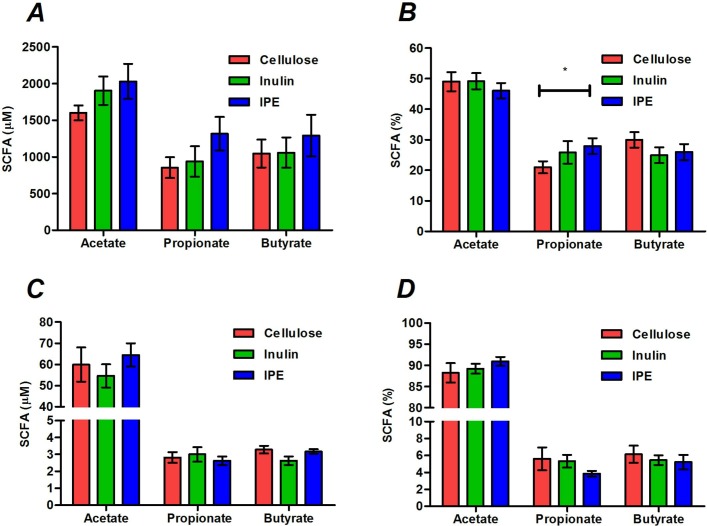
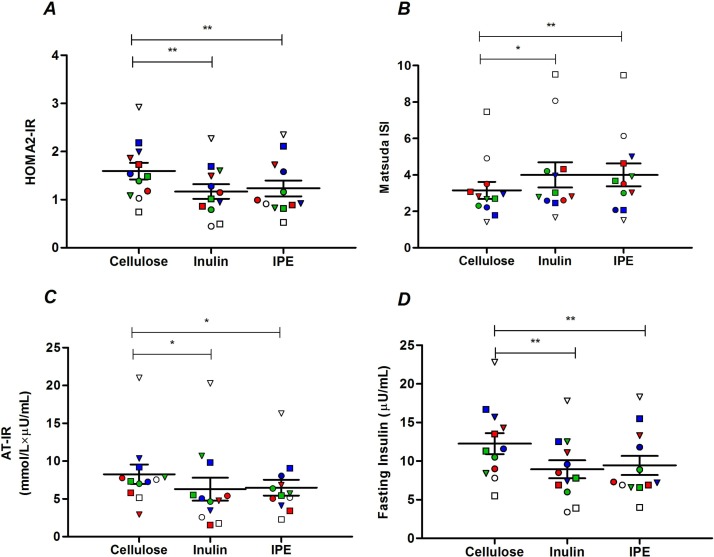
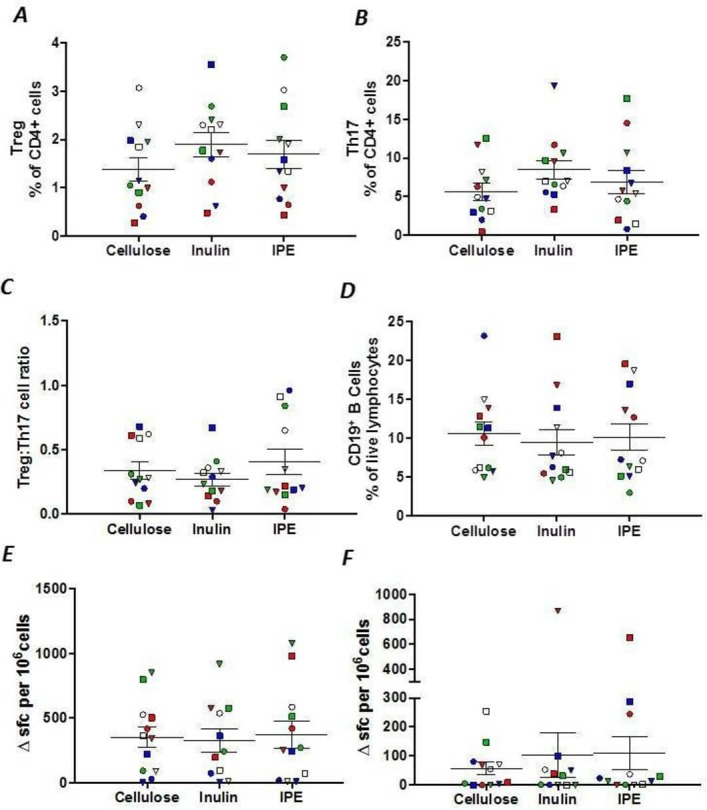
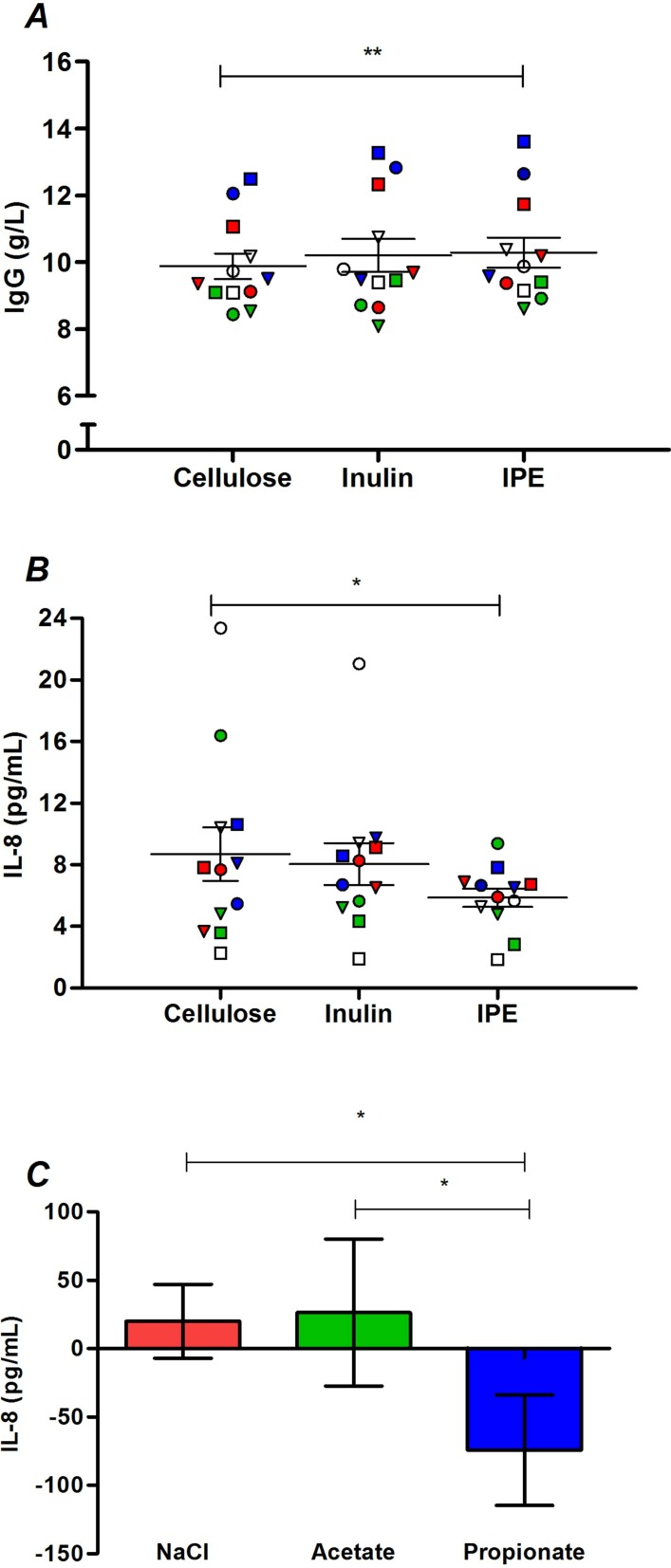
OBJECTIVE: To investigate the underlying mechanisms behind changes in glucose homeostasis with delivery of propionate to the human colon by comprehensive and coordinated analysis of gut bacterial composition, plasma metabolome and immune responses. DESIGN: Twelve non-diabetic adults with overweight and obesity received 20 g/day of inulin-propionate ester (IPE), designed to selectively deliver propionate to the colon, a high-fermentable fibre control (inulin) and a low-fermentable fibre control (cellulose) in a randomised, double-blind, placebo-controlled, cross-over design. Outcome measurements of metabolic responses, inflammatory markers and gut bacterial composition were analysed at the end of each 42-day supplementation period. RESULTS: Both IPE and inulin supplementation improved insulin resistance compared with cellulose supplementation, measured by homeostatic model assessment 2 (mean±SEM 1.23±0.17 IPE vs 1.59±0.17 cellulose, p=0.001; 1.17±0.15 inulin vs 1.59±0.17 cellulose, p=0.009), with no differences between IPE and inulin (p=0.272). Fasting insulin was only associated positively with plasma tyrosine and negatively with plasma glycine following inulin supplementation. IPE supplementation decreased proinflammatory interleukin-8 levels compared with cellulose, while inulin had no impact on the systemic inflammatory markers studied. Inulin promoted changes in gut bacterial populations at the class level (increased Actinobacteria and decreased Clostridia) and order level (decreased Clostridiales) compared with cellulose, with small differences at the species level observed between IPE and cellulose. CONCLUSION: These data demonstrate a distinctive physiological impact of raising colonic propionate delivery in humans, as improvements in insulin sensitivity promoted by IPE and inulin were accompanied with different effects on the plasma metabolome, gut bacterial populations and markers of systemic inflammation.
Overview
The claims and statistics of this paper haven’t been checked yet.
Free: it reads the open-access text and checks the first 5 claims that cite a source we can check. Create a free account to check every claim.
Integrity signals
Registry
Cites
Statistics
Figures
Verification
Claims the paper makes
The claims and statistics of this paper haven’t been checked yet.
Free: it reads the open-access text and checks the first 5 claims that cite a source we can check. Create a free account to check every claim.
Claims other papers make about this one
Each is checked against this paper’s own text: does it say what the citing paper says it does?
The source backs part of the claim, not all of it — or backs it for a different population, condition or comparison.
In the citing paper
“Additionally, higher Bifidobacterium, Lactobacillus, and SCFA production have been observed by high pea-protein intake, which suppresses the secretion of inflammatory cytokines, IL-6 and TNF-α, and improves interleukin-10 (IL-10) expression and glucose homeostasis [187,188,189,190].”
From Impact of Protein Intake in Older Adults with Sarcopenia and Obesity: A Gut Microbiota Perspective (2020) · cites this paper as [190]
Experimental — accuracy not yet measured
Self-check
Percentages, sums and reported differences re-computed from the paper’s own numbers.
The self-check needs the paper’s full text.
Citations
Cites
Diet rapidly and reproducibly alters the human gut microbiome
David, L. A., Maurice, C. F., Carmody, R. N., Gootenberg, D. B., Button, J. E., Wolfe, B. E., Ling, A. V., Devlin, A. S., Varma, Y., Fischbach, M. A., et al. (2014) · Nature · doi:10.1038/nature12820 · Cited by 10,100
The Microbial Metabolites, Short-Chain Fatty Acids, Regulate Colonic T reg Cell Homeostasis
Smith, P. M., Howitt, M. R., Panikov, N., Michaud, M., Gallini, C. A., Bohlooly-Y, M., Glickman, J. N., & Garrett, W. S. (2013) · Science · doi:10.1126/science.1241165 · Cited by 5,413
Metabolites produced by commensal bacteria promote peripheral regulatory T-cell generation
Arpaia, N., Campbell, C., Fan, X., Dikiy, S., van der Veeken, J., deRoos, P., Liu, H., Cross, J. R., Pfeffer, K., Coffer, P. J., et al. (2013) · Nature · doi:10.1038/nature12726 · Cited by 4,838 · cited 1×
“6 (10-38) Data are expressed as mean ± SEM; ranges in parentheses.”
BackgroundRichness of human gut microbiome correlates with metabolic markers
Le Chatelier, E., Nielsen, T., Qin, J., Prifti, E., Hildebrand, F., Falony, G., Almeida, M., Arumugam, M., Batto, J.-M., Kennedy, S., et al. (2013) · Nature · doi:10.1038/nature12506 · Cited by 4,662
Gut Microbiota from Twins Discordant for Obesity Modulate Metabolism in Mice
Ridaura, V. K., Faith, J. J., Rey, F. E., Cheng, J., Duncan, A. E., Kau, A. L., Griffin, N. W., Lombard, V., Henrissat, B., Bain, J. R., et al. (2013) · Science · doi:10.1126/science.1241214 · Cited by 3,788 · cited 1×
“14 15 We have described how inulin-propionate ester (IPE) can target delivery of propionate to the colon, 16 17 and observed that long-term ingestion of 10 g/ day IPE ameliorates body weight gain and the development of abdominal visceral adipose tissue in overweight human adults.”
Gut Microbiota Metabolism of Dietary Fiber Influences Allergic Airway Disease and Hematopoiesis
Trompette, A., Gollwitzer, E. S., Yadava, K., Sichelstiel, A. K., Sprenger, N., Ngom-Bru, C., Blanchard, C., Junt, T., Nicod, L. P., Harris, N. L., et al. (2014) · Nature Medicine · doi:10.1038/nm.3444 · Cited by 2,862
Microbiota and SCFA in lean and overweight healthy subjects
Schwiertz, A., Taras, D., Schäfer, K., Beijer, S., Bos, N. A., Donus, C., & Hardt, P. D. (2010) · Obesity · doi:10.1038/oby.2009.167 · Cited by 2,457
The role of short chain fatty acids in health and disease
Tan, J., McKenzie, C., Potamitis, M., Thorburn, A. N., Mackay, C. R., & Macia, L. (2014) · Advances in immunology · doi:10.1016/b978-0-12-800100-4.00003-9 · Cited by 2,425 · cited 1×
“13 Our previous work has primarily focused on the role of the SCFA propionate, as a number of studies have shown that mice receiving a gut microbial transplant that promotes caecal propionate production have improved body composition and glycaemic control.”
BackgroundMicrobial degradation of complex carbohydrates in the gut
Flint, H. J., Scott, K. P., Duncan, S. H., Louis, P., & Forano, E. (2012) · Gut Microbes · doi:10.4161/gmic.19897 · Cited by 2,331
Short-chain fatty acids in control of body weight and insulin sensitivity
Canfora, E. E., Jocken, J. W., & Blaak, E. E. (2015) · Nature Reviews Endocrinology · doi:10.1038/nrendo.2015.128 · Cited by 2,298
Regulation of short-chain fatty acid production
Macfarlane, S., & Macfarlane, G. T. (2003) · Proceedings of the Nutrition Society · doi:10.1079/pns2002207 · Cited by 1,939
Cani, P. D., Neyrinck, A. M., Fava, F., Knauf, C., Burcelin, R. G., Tuohy, K. M., Gibson, G. R., & Delzenne, N. M. (2007) · Diabetologia · doi:10.1007/s00125-007-0791-0 · Cited by 1,774
Carbohydrate quality and human health: a series of systematic reviews and meta-analyses
Reynolds, A., Mann, J., Cummings, J., Winter, N., Mete, E., & Te Morenga, L. (2019) · The Lancet · doi:10.1016/s0140-6736(18)31809-9 · Cited by 1,630
Chambers, E. S., Viardot, A., Psichas, A., Morrison, D. J., Murphy, K. G., Zac-Varghese, S. E. K., MacDougall, K., Preston, T., Tedford, C., Finlayson, G. S., et al. (2015) · Gut · doi:10.1136/gutjnl-2014-307913 · Cited by 1,424
Self-citationGut Microbiota and Metabolic Endotoxemia in Young Obese Mexican Subjects
Radilla-Vázquez, R. B., Parra-Rojas, I., Martínez-Hernández, N. E., Márquez-Sandoval, Y. F., Illades-Aguiar, B., & Castro-Alarcón, N. (2016) · Obesity Facts · doi:10.1159/000442479 · Cited by 1,196
Conserved shifts in the gut microbiota due to gastric bypass reduce host weight and adiposity
Liou, A. P., Paziuk, M., Luevano, J.-M., Machineni, S., Turnbaugh, P. J., & Kaplan, L. M. (2013) · Science Translational Medicine · doi:10.1126/scitranslmed.3005687 · Cited by 1,007 · cited 1×
“6 (10-38) Data are expressed as mean ± SEM; ranges in parentheses.”
BackgroundDietary fatty acids directly impact central nervous system autoimmunity via the small intestine
Haghikia, A., Jörg, S., Duscha, A., Berg, J., Manzel, A., Waschbisch, A., Hammer, A., Lee, D.-H., May, C., Wilck, N., et al. (2015) · Immunity · doi:10.1016/j.immuni.2015.09.007 · Cited by 927
Fatty acids, obesity, and insulin resistance: Time for a reevaluation
Karpe, F., Dickmann, J. R., & Frayn, K. N. (2011) · Diabetes · doi:10.2337/db11-0425 · Cited by 896
Gut Microbial Metabolites Fuel Host Antibody Responses
Kim, M., Qie, Y., Park, J., & Kim, C. H. (2016) · Cell Host & Microbe · doi:10.1016/j.chom.2016.07.001 · Cited by 893 · cited 2×
“24 To the best of our knowledge, this is the first evidence in vivo in humans that selectively increasing colonic propionate delivery increases circulating IgG levels and it would be of future interest to determine if this effect of IPE on adaptive immunity can decrease susceptibility to pathogen…”
BackgroundPsichas, A., Sleeth, M. L., Murphy, K. G., Brooks, L., Bewick, G. A., Hanyaloglu, A. C., Ghatei, M. A., Bloom, S. R., & Frost, G. (2015) · International Journal of Obesity · doi:10.1038/ijo.2014.153 · Cited by 886
Self-citationDewulf, E. M., Cani, P. D., Claus, S. P., Fuentes, S., Puylaert, P. G., Neyrinck, A. M., Bindels, L. B., de Vos, W. M., Gibson, G. R., Thissen, J.-P., et al. (2013) · Gut · doi:10.1136/gutjnl-2012-303304 · Cited by 825
Stephen, A. M., Champ, M. M.-J., Cloran, S. J., Fleith, M., van Lieshout, L., Mejborn, H., & Burley, V. J. (2017) · Nutrition Research Reviews · doi:10.1017/s095442241700004x · Cited by 798
Liu, S., Willett, W. C., Manson, J. E., Hu, F. B., Rosner, B., & Colditz, G. (2003) · The American Journal of Clinical Nutrition · doi:10.1093/ajcn/78.5.920 · Cited by 787
Dietary Fiber, Weight Gain, and Cardiovascular Disease Risk Factors in Young Adults
Ludwig, D. S. (1999) · JAMA · doi:10.1001/jama.282.16.1539 · Cited by 722
Macrophages, Immunity, and Metabolic Disease
McNelis, J. C., & Olefsky, J. M. (2014) · Immunity · doi:10.1016/j.immuni.2014.05.010 · Cited by 720
Metabolite Profiling Identifies Pathways Associated With Metabolic Risk in Humans
Cheng, S., Rhee, E. P., Larson, M. G., Lewis, G. D., McCabe, E. L., Shen, D., Palma, M. J., Roberts, L. D., Dejam, A., Souza, A. L., et al. (2012) · Circulation · doi:10.1161/circulationaha.111.067827 · Cited by 587
Prebiotic inulin-type fructans induce specific changes in the human gut microbiota
Vandeputte, D., Falony, G., Vieira-Silva, S., Wang, J., Sailer, M., Theis, S., Verbeke, K., & Raes, J. (2017) · Gut · doi:10.1136/gutjnl-2016-313271 · Cited by 554
Zheng, L., Kelly, C. J., Battista, K. D., Schaefer, R., Lanis, J. M., Alexeev, E. E., Wang, R. X., Onyiah, J. C., Kominsky, D. J., & Colgan, S. P. (2017) · The Journal of Immunology · doi:10.4049/jimmunol.1700105 · Cited by 549
Effect of whole grains on insulin sensitivity in overweight hyperinsulinemic adults
Pereira, M. A., Jacobs, D. R., Pins, J. J., Raatz, S. K., Gross, M. D., Slavin, J. L., & Seaquist, E. R. (2002) · The American Journal of Clinical Nutrition · doi:10.1093/ajcn/75.5.848 · Cited by 547
Nicolucci, A. C., Hume, M. P., Martínez, I., Mayengbam, S., Walter, J., & Reimer, R. A. (2017) · Gastroenterology · doi:10.1053/j.gastro.2017.05.055 · Cited by 516
Kim, C.-S., Park, H.-S., Kawada, T., Kim, J.-H., Lim, D., Hubbard, N. E., Kwon, B.-S., Erickson, K. L., & Yu, R. (2006) · International Journal of Obesity · doi:10.1038/sj.ijo.0803259 · Cited by 511
Robertson, M. D., Bickerton, A. S., Dennis, A. L., Vidal, H., & Frayn, K. N. (2005) · The American Journal of Clinical Nutrition · doi:10.1093/ajcn/82.3.559 · Cited by 501
Ge, H., Li, X., Weiszmann, J., Wang, P., Baribault, H., Chen, J.-L., Tian, H., & Li, Y. (2008) · Endocrinology · doi:10.1210/en.2008-0059 · Cited by 475
Molecular Characterisation of the Faecal Microbiota in Patients with Type II Diabetes
Wu, X., Ma, C., Han, L., Nawaz, M., Gao, F., Zhang, X., Yu, P., Zhao, C., Li, L., Zhou, A., et al. (2010) · Current Microbiology · doi:10.1007/s00284-010-9582-9 · Cited by 462
Li, M., van Esch, B. C. A. M., Henricks, P. A. J., Folkerts, G., & Garssen, J. (2018) · Frontiers in Pharmacology · doi:10.3389/fphar.2018.00533 · Cited by 351
Ferrannini, E., Natali, A., Camastra, S., Nannipieri, M., Mari, A., Adam, K.-P., Milburn, M. V., Kastenmüller, G., Adamski, J., Tuomi, T., et al. (2013) · Diabetes · doi:10.2337/db12-0707 · Cited by 349
Stančáková, A., Civelek, M., Saleem, N. K., Soininen, P., Kangas, A. J., Cederberg, H., Paananen, J., Pihlajamäki, J., Bonnycastle, L. L., Morken, M. A., et al. (2012) · Diabetes · doi:10.2337/db11-1378 · Cited by 279
Pingitore, A., Chambers, E. S., Hill, T., Maldonado, I. R., Liu, B., Bewick, G., Morrison, D. J., Preston, T., Wallis, G. A., Tedford, C., et al. (2017) · Diabetes, Obesity and Metabolism · doi:10.1111/dom.12811 · Cited by 278
Self-citationAssociation of Systemic Chemokine Concentrations With Impaired Glucose Tolerance and Type 2 Diabetes
Herder, C., Haastert, B., Müller-Scholze, S., Koenig, W., Thorand, B., Holle, R., Wichmann, H.-E., Scherbaum, W. A., Martin, S., & Kolb, H. (2005) · Diabetes · doi:10.2337/diabetes.54.suppl_2.s11 · Cited by 158
Laparra, J. M., & Sanz, Y. (2010) · Journal of Cellular Biochemistry · doi:10.1002/jcb.22459 · Cited by 131
Novel Protein Glycan Side-Chain Biomarker and Risk of Incident Type 2 Diabetes Mellitus
Akinkuolie, A. O., Pradhan, A. D., Buring, J. E., Ridker, P. M., & Mora, S. (2015) · Arteriosclerosis, Thrombosis, and Vascular Biology · doi:10.1161/atvbaha.115.305635 · Cited by 124
Dietary Fatty Acids Directly Impact Central Nervous System Autoimmunity via the Small Intestine
Haghikia, A., Jörg, S., Duscha, A., Berg, J., Manzel, A., Waschbisch, A., Hammer, A., Lee, D.-H., May, C., Wilck, N., et al. (2016) · Immunity · doi:10.1016/j.immuni.2016.04.006 · Cited by 122
Microbial metabolites control gut inflammatory responses
Arpaia, N., & Rudensky, A. Y. (2014) · Proceedings of the National Academy of Sciences · doi:10.1073/pnas.1323183111 · Cited by 111
Short-Chain Fatty Acids Suppress Inflammatory Reactions in Caco-2 Cells and Mouse Colons
Hung, T. V., & Suzuki, T. (2018) · Journal of Agricultural and Food Chemistry · doi:10.1021/acs.jafc.7b04233 · Cited by 90 · cited 1×
“6 (10-38) Data are expressed as mean ± SEM; ranges in parentheses.”
BackgroundLorenzo, C., Festa, A., Hanley, A. J., Rewers, M., Escalante, A., & Haffner, S. M. (2016) · Diabetes Care · doi:10.2337/dc16-1569 · Cited by 71
Harris, H., Edwards, C., & Morrison, D. (2017) · Nutrients · doi:10.3390/nu9010026 · Cited by 65
Self-citationImpact of carbohydrate substrate complexity on the diversity of the human colonic microbiota
Chung, W. S. F., Walker, A. W., Vermeiren, J., Sheridan, P. O., Bosscher, D., Garcia‐Campayo, V., Parkhill, J., Flint, H. J., & Duncan, S. H. (2018) · FEMS Microbiology Ecology · doi:10.1093/femsec/fiy201 · Cited by 59
Polyviou, T., MacDougall, K., Chambers, E. S., Viardot, A., Psichas, A., Jawaid, S., Harris, H. C., Edwards, C. A., Simpson, L., Murphy, K. G., et al. (2016) · Alimentary Pharmacology & Therapeutics · doi:10.1111/apt.13749 · Cited by 56
Self-citationA Randomised Crossover Trial: The Effect of Inulin on Glucose Homeostasis in Subtypes of Prediabetes
Guess, N. D., Dornhorst, A., Oliver, N., & Frost, G. S. (2016) · Annals of Nutrition and Metabolism · doi:10.1159/000441626 · Cited by 45
Self-citationBuhl, M. R., Bosnjak, E., Vendelbo, M. H., Gjedsted, J., Nielsen, R. R., Krusenstjerna-Hafstrøm, T., Vestergaard, E. T., Jessen, N., Tønnesen, E., Møller, A. B., et al. (2013) · The Journal of Clinical Endocrinology & Metabolism · doi:10.1210/jc.2012-3836 · Cited by 21
Cited by
Gut microbiota-derived metabolites as central regulators in metabolic disorders
Agus, A., Clément, K., & Sokol, H. (2021) · Gut · doi:10.1136/gutjnl-2020-323071 · Cited by 1,347
Gut Microbiota as a Trigger for Metabolic Inflammation in Obesity and Type 2 Diabetes
Scheithauer, T. P. M., Rampanelli, E., Nieuwdorp, M., Vallance, B. A., Verchere, C. B., van Raalte, D. H., & Herrema, H. (2020) · Frontiers in Immunology · doi:10.3389/fimmu.2020.571731 · Cited by 673
Deehan, E. C., Yang, C., Perez-Muñoz, M. E., Nguyen, N. K., Cheng, C. C., Triador, L., Zhang, Z., Bakal, J. A., & Walter, J. (2020) · Cell Host & Microbe · doi:10.1016/j.chom.2020.01.006 · Cited by 539
Influence of Mediterranean Diet on Human Gut Microbiota
Merra, G., Noce, A., Marrone, G., Cintoni, M., Tarsitano, M. G., Capacci, A., & De Lorenzo, A. (2020) · Nutrients · doi:10.3390/nu13010007 · Cited by 417
Trøseid, M., Andersen, G. Ø., Broch, K., & Hov, J. R. (2020) · EBioMedicine · doi:10.1016/j.ebiom.2020.102649 · Cited by 408
Metadata
- Authors
- Chambers, E. S., Byrne, C. S., Morrison, D. J., Murphy, K. G., Preston, T., Tedford, C., Garcia-Perez, I., Fountana, S., Serrano-Contreras, J. I., Holmes, E., Reynolds, C. J., Roberts, J. F., Boyton, R. J., Altmann, D. M., McDonald, J. A. K., Marchesi, J. R., Akbar, A. N., Riddell, N. E., Wallis, G. A., & Frost, G. S.
- Affiliations
- Imperial College London (GB)
- Scottish Universities Environmental Research Centre (GB)
- University of the West of Scotland (GB)
- Computational and Systems Medicine, Imperial College London, London, UK
- University College London (GB)
- University of Surrey (GB)
- University of Birmingham (GB)
- Corresponding author
- Frost, Gary S
- ORCID
- Venue
- Gut
- Publisher
- BMJ
- Published
- 2019-04-10
- Volume
- 68
- Issue
- 8
- Pages
- 1430-1438
- ISSN
- 0017-5749 (ISSN-L)
- 1468-3288
- PMC
- PMC6691855
- OpenAlex
- W2935715550
- Cited by
- 443
- References
- 50
- Citations by year
- 2026: 46 · 2025: 89 · 2024: 57 · 2023: 56 · 2022: 76 · 2021: 53 · 2020: 56 · 2019: 10
- FWCI
- 36.99
- Type
- journal article
- Language
- en
- Open access
- hybrid
- doi.org
- Licence
- cc-by
- Locations
- Gut (publishedVersion, cc-by)
- PubMed Central (publishedVersion, cc-by)
- PubMed (publishedVersion)
- The UWS Academic Portal (University of the West of Scotland) (publishedVersion, cc-by)
- ORCA Online Research @Cardiff (Cardiff University) (acceptedVersion)
- ENLIGHTEN (Jurnal Bimbingan dan Konseling Islam) (acceptedVersion, cc-by-sa)
- Surrey Research Insight Open Access (The University of Surrey) (submittedVersion)
- UCL Discovery (University College London) (submittedVersion)
- HighWire Press Open Archive (submittedVersion)
- University of Birmingham Research Portal (University of Birmingham) (submittedVersion, cc-by)
- Spiral (Imperial College London) (submittedVersion, other-oa)
- Funders
- Biotechnology and Biological Sciences Research Council
- Topics
- Health Sciences › Nursing › Nutrition and Dietetics › Microbial Metabolites in Food Biotechnology
- Life Sciences › Biochemistry, Genetics and Molecular Biology › Molecular Biology › Gut microbiota and health
- Health Sciences › Medicine › Endocrinology, Diabetes and Metabolism › Adipokines, Inflammation, and Metabolic Diseases
- Keywords
- inulin, dietary fiber supplementation, insulin sensitivity, insulin resistance, obesity, overweight, gut microbiota, plasma metabolome, systemic inflammation, interleukin-8, glucose homeostasis, actinobacteria, Clostridiales
- MeSH terms
- Gastrointestinal Microbiome, Adult, Double-Blind Method, Feces, Female, Humans, Inflammation, Insulin, Insulin Resistance, Inulin, Male, Middle Aged, Obesity, Propionates, Body Mass Index, Treatment Outcome, Cross-Over Studies, Dietary Supplements, Overweight, Metabolome
About these checks
Registry, retraction, Cites and statistics results are computed, not judged, with one exception: a printed reference that no index lists is read once by a model before it counts as a citation error. Claims are extracted by a model and kept only when their quote appears verbatim in the text; each cited source is then checked, with a model’s help, for whether it says what the claim relies on. Those verdicts can be wrong — read the claim’s quote and the cited source before relying on one.
Statistics and arithmetic are recomputed, not judged.
Confidence bands are shown only for fields calibrated on our annotated test set. None is calibrated yet, so no band is shown.
What counts as a claim ›How we measure confidence ›How we check this ›
Are you an author, or do you see a problem with this page? Request a review
Data sources
Bibliographic data: Semantic Scholar, OpenAlex, Crossref.
Contains information from the Semantic Scholar Academic Graph Datasets, made available under the ODC Attribution License (ODC-BY 1.0).
Semantic Scholar’s data is described in: Kinney, R., et al. (2023). The Semantic Scholar Open Data Platform. arXiv:2301.10140.
