

Systematic review of the relationships between objectively measured physical activity and health indicators in school-aged children and youth
Open accessThe DOI matches its Crossref record; 186 of the 187 references it cites were found in a registry or an index, and 1 are not checked yet.
Abstract
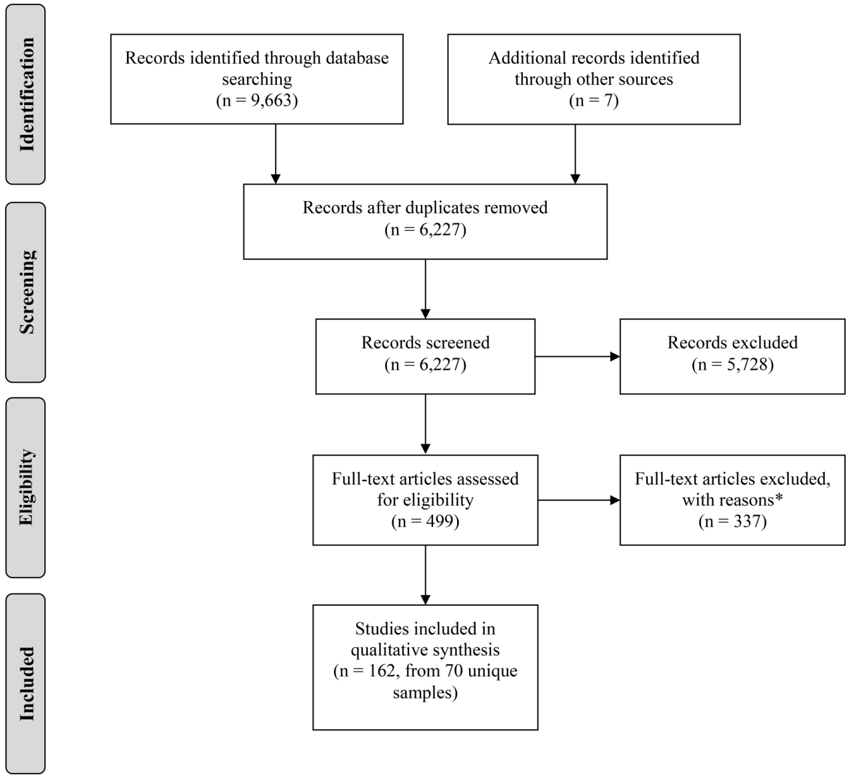
Moderate-to-vigorous physical activity (MVPA) is essential for disease prevention and health promotion. Emerging evidence suggests other intensities of physical activity (PA), including light-intensity activity (LPA), may also be important, but there has been no rigorous evaluation of the evidence. The purpose of this systematic review was to examine the relationships between objectively measured PA (total and all intensities) and health indicators in school-aged children and youth. Online databases were searched for peer-reviewed studies that met the a priori inclusion criteria: population (apparently healthy, aged 5–17 years), intervention/exposure/comparator (volumes, durations, frequencies, intensities, and patterns of objectively measured PA), and outcome (body composition, cardiometabolic biomarkers, physical fitness, behavioural conduct/pro-social behaviour, cognition/academic achievement, quality of life/well-being, harms, bone health, motor skill development, psychological distress, self-esteem). Heterogeneity among studies precluded meta-analyses; narrative synthesis was conducted. A total of 162 studies were included (204 171 participants from 31 countries). Overall, total PA was favourably associated with physical, psychological/social, and cognitive health indicators. Relationships were more consistent and robust for higher (e.g., MVPA) versus lower (e.g., LPA) intensity PA. All patterns of activity (sporadic, bouts, continuous) provided benefit. LPA was favourably associated with cardiometabolic biomarkers; data were scarce for other outcomes. These findings continue to support the importance of at least 60 min/day of MVPA for disease prevention and health promotion in children and youth, but also highlight the potential benefits of LPA and total PA. All intensities of PA should be considered in future work aimed at better elucidating the health benefits of PA in children and youth.
Overview
The claims and statistics of this paper haven’t been checked yet.
Free: it reads the open-access text and checks the first 5 claims that cite a source we can check. Create a free account to check every claim.
Integrity signals
Registry
Cites
Statistics
Figures
Verification
Claims the paper makes
The claims and statistics of this paper haven’t been checked yet.
Free: it reads the open-access text and checks the first 5 claims that cite a source we can check. Create a free account to check every claim.
Claims other papers make about this one
Each is checked against this paper’s own text: does it say what the citing paper says it does?
The source backs part of the claim, not all of it — or backs it for a different population, condition or comparison.
In the citing paper
“Research indicates that those who are physically active show or report better overall physical and mental health, a higher level of fitness and a lower level of obesity than their sedentary or physically inactive counterparts1–4”
From Physical activity and health in Chinese children and adolescents: expert consensus statement (2020) (2020) · cites this paper as [1]
Experimental — accuracy not yet measuredThe source backs part of the claim, not all of it — or backs it for a different population, condition or comparison.
In the citing paper
“The searches looked for journal articles reporting on sleep, sedentary time and physical activity using previously developed and validated searches [12–14, 30].”
From Combinations of physical activity, sedentary time, and sleep duration and their associations with depressive symptoms and other mental health problems in children and adolescents: a systematic review (2020) · cites this paper as [12]
Experimental — accuracy not yet measuredThe source backs part of the claim, not all of it — or backs it for a different population, condition or comparison.
In the citing paper
“Achieving high levels of physical activity, low levels of sedentary behaviour, and getting sufficient sleep have been individually associated with better mental health among children and adolescents [12–14].”
From Combinations of physical activity, sedentary time, and sleep duration and their associations with depressive symptoms and other mental health problems in children and adolescents: a systematic review (2020) · cites this paper as [12]
Experimental — accuracy not yet measuredThe source backs part of the claim, not all of it — or backs it for a different population, condition or comparison.
In the citing paper
“Previous studies looking at the 24-h movement guidelines and health indicators have primarily focused on examining the associations between the combinations of physical activity, sedentary time, and sleep duration with physical health outcomes [12–14].”
From Combinations of physical activity, sedentary time, and sleep duration and their associations with depressive symptoms and other mental health problems in children and adolescents: a systematic review (2020) · cites this paper as [12]
Experimental — accuracy not yet measuredThe source backs part of the claim, not all of it — or backs it for a different population, condition or comparison.
In the citing paper
“Isolated adherence to MVPA, screen time and sleep duration recommendations have been associated with lower adiposity indicators in children and adolescents [3, 5–10].”
From Proportion of children meeting recommendations for 24-hour movement guidelines and associations with adiposity in a 12-country study (2016) · cites this paper as [8]
Experimental — accuracy not yet measured
5 more claims about this paper
Create a free account to see every claim other papers make about this one.
Self-check
Percentages, sums and reported differences re-computed from the paper’s own numbers.
The self-check needs the paper’s full text.
Citations
Cites
The Cochrane Collaboration's tool for assessing risk of bias in randomised trials
Higgins, J. P. T., Altman, D. G., Gotzsche, P. C., Juni, P., Moher, D., Oxman, A. D., Savovic, J., Schulz, K. F., Weeks, L., Sterne, J. A. C., et al. (2011) · BMJ · doi:10.1136/bmj.d5928 · Cited by 33,817
Preferred Reporting Items for Systematic Reviews and Meta-Analyses: The PRISMA Statement
Moher, D., Liberati, A., Tetzlaff, J., & Altman, D. G. (2009) · Journal of Clinical Epidemiology · doi:10.1016/j.jclinepi.2009.06.005 · Cited by 19,575
Physical Activity in the United States Measured by Accelerometer
TROIANO, R. P., BERRIGAN, D., DODD, K. W., MÂSSE, L. C., TILERT, T., & MCDOWELL, M. (2008) · Medicine & Science in Sports & Exercise · doi:10.1249/mss.0b013e31815a51b3 · Cited by 7,638 · cited 2×
“This is unfortunate, as studies from Canada and the United States indicate that children and youth spend 4–6 h/day in LPA (Matthews et al. 2008; Troiano et al. 2008; Colley et al. 2011; Chaput et al. 2014), and emerging research suggests that spending more waking hours in LPA compared with…”
BackgroundJanssen, I., & LeBlanc, A. G. (2010) · International Journal of Behavioral Nutrition and Physical Activity · doi:10.1186/1479-5868-7-40 · Cited by 4,829 · cited 7×
“Physical activity (PA) is vital to the physical, psychological/ social, and cognitive health of school-aged children and youth (Janssen and LeBlanc 2010; Tremblay et al. 2010b).”
BackgroundResultInfluentialSelf-citationUtilization of the PICO framework to improve searching PubMed for clinical questions
Schardt, C., Adams, M. B., Owens, T., Keitz, S., & Fontelo, P. (2007) · BMC Medical Informatics and Decision Making · doi:10.1186/1472-6947-7-16 · Cited by 3,053 · cited 2×
“The participants, interventions, comparisons, outcomes and study design (PICOS) framework (Schardt et al. 2007) was followed to identify key study concepts in the research question a priori and to facilitate the searching process.”
MethodAmount of Time Spent in Sedentary Behaviors in the United States, 2003-2004
Matthews, C. E., Chen, K. Y., Freedson, P. S., Buchowski, M. S., Beech, B. M., Pate, R. R., & Troiano, R. P. (2008) · American Journal of Epidemiology · doi:10.1093/aje/kwm390 · Cited by 2,631 · cited 2×
“This is unfortunate, as studies from Canada and the United States indicate that children and youth spend 4–6 h/day in LPA (Matthews et al. 2008; Troiano et al. 2008; Colley et al. 2011; Chaput et al. 2014), and emerging research suggests that spending more waking hours in LPA compared with…”
BackgroundSelf-citationTremblay, M. S., Carson, V., Chaput, J.-P., Connor Gorber, S., Dinh, T., Duggan, M., Faulkner, G., Gray, C. E., Gruber, R., Janson, K., et al. (2016) · Applied Physiology, Nutrition, and Metabolism · doi:10.1139/apnm-2016-0151 · Cited by 2,024
Self-citationPhysiological and health implications of a sedentary lifestyle
Tremblay, M. S., Colley, R. C., Saunders, T. J., Healy, G. N., & Owen, N. (2010) · Applied Physiology, Nutrition, and Metabolism · doi:10.1139/h10-079 · Cited by 1,426 · cited 9×
“In this regard, the Canadian Physical Activity Guidelines for Children and Youth (Tremblay et al. 2010b, 2011), and many other guidelines around the world (e.g., Australia (Okely et al. 2012), USA (US Department of Health and Human Services 2008), and World Health Organization (WHO 2010)), recommend that children and…”
BackgroundInfluentialSelf-citationComparison of Accelerometer Cut Points for Predicting Activity Intensity in Youth
TROST, S. G., LOPRINZI, P. D., MOORE, R., & PFEIFFER, K. A. (2011) · Medicine & Science in Sports & Exercise · doi:10.1249/mss.0b013e318206476e · Cited by 1,360 · cited 3×
“…Marshall and Ramirez 2011) and the widespread use of subjective assessments of PA (Reilly et al. 2008; Adamo et al. 2009; Janssen and LeBlanc 2010; Trost et al. 2011), which cannot accurately capture LPA (e.g., various incidental activities accumulated throughout the day) (Hamilton et al. 2004;…”
BackgroundGRADE guidelines: 9. Rating up the quality of evidence
Guyatt, G. H., Oxman, A. D., Sultan, S., Glasziou, P., Akl, E. A., Alonso-Coello, P., Atkins, D., Kunz, R., Brozek, J., Montori, V., et al. (2011) · Journal of Clinical Epidemiology · doi:10.1016/j.jclinepi.2011.06.004 · Cited by 1,336 · cited 2×
“If there is no cause to downgrade, the quality of evidence can be upgraded if there is a large effect size, a dose–response gradient, or if all plausible confounders would decrease an apparent treatment effect (Guyatt et al. 2011b).”
BackgroundMethod
Research works printed but not linked: 9
- 2. Aggio, D., Smith, L., and Hamer, M. 2015. Effects of reallocating time in different activity intensities on health and fitness: a cross sectional study. Int. J. Behav. Nutr. Phys. Activ. 12(83). PMID:26104041.
- 22. Colley, R.C., Garriguet, D., Janssen, I., Craig, C.L., Clarke, J., and Tremblay, M.S. 2011. Physical activity of Canadian children and youth: Accelerometer results from the 2007 to 2009 Canadian Health Measures Survey. Statistics Canada cat. no. 82-003-X. Health Rep. 22(1): 1523. PMID:21510586.
- 49. Grydeland, M., Bergh, I.H., Bjelland, M., Lien, N., Andersen, L.F., Ommundsen, Y., et al. 2012. Correlates of weight status among Norwegian 11-year-olds: The HEIA study. BMC Publ. Health, 12(1053). PMID:23216675.
- 53. Guyatt, G., Oxman, A.D., Akl, E.A., Kunz, R., Vist, G., Brozek, J., et al. 2011a. GRADE guidelines: 1. Introduction-GRADE evidence profiles and summary of findings tables. J. Clin. Epidemiol. 64(4): 383-394. PMID:21195583.
- 85. Janz, K.F., Letuchy, E.M., Francis, S.L., Metcalf, K.M., Burns, T.L., and Levy, S.M. 2014a. Objectively measured physical activity predicts hip and spine bone mineral content in children and adolescents ages 5-15 years: Iowa Bone Development Study. Front. Endocrinol. 5: 112. PMID:25076937.
- 128. Nguyen, T.H., Tang, H.K., Kelly, P., van der Ploeg, H.P., and Dibley, M.J. 2010. Association between physical activity and metabolic syndrome: a cross sec- tional survey in adolescents in Ho Chi Minh City, Vietnam. BMC Publ. Health, 10(141). PMID:20236509.
- 129. Okely, A., Salmon, J., Vella, S., Cliff, D., Timperio, A., Tremblay, M., et al. 2012. A systematic review to update the Australian Physical Activity Guidelines for Children and Young People. Report prepared for the Australian Government Department of Health.
- 159. Sigmundova, D., and Sigmund, E. 2012. The effect of physical activity program at school on reducing childhood obesity: a results of four-year longitudinal study. Med. Sport. Bohem. Slov. 21(3): 129-141.
- 175. Tremblay, M.S., Esliger, D.W., Tremblay, A., and Colley, R. 2007. Incidental move- ment, lifestyle-embedded activity and sleep: new frontiers in physical activ- ity assessment. Can. J. Publ. Health, 98(Suppl. 2): 208-217. PMID:18213950.
Cited by
Items 901–1,000 of 1,001
Lätt, E., Mäestu, J., & Jürimäe, J. (2018) · Journal of Physical Activity and Health · doi:10.1123/jpah.2017-0605 · Cited by 13
Thompson, H. R., Singh, B. K., Ibarra-Castro, A., Woodward-Lopez, G. M., & Madsen, K. A. (2019) · Preventive Medicine · doi:10.1016/j.ypmed.2019.01.021 · Cited by 10
Harris, C. P., Berg, A. V., Berdel, D., Bauer, C., Schikowski, T., Koletzko, S., Heinrich, J., Schulz, H., & Standl, M. (2019) · BMC Public Health · doi:10.1186/s12889-019-7113-6 · Cited by 9
“benefits on metabolic function and overall health are undeniable [46].”
BackgroundMiranda, M. M., Fernández, T. N., Guajardo, J. R., Eyraud, P. R., Palma-Leal, X., & Rodríguez‐Rodríguez, F. (2019) · Retos · doi:10.47197/retos.v37i37.72851 · Cited by 10
“Al respecto, un estudio realizado en escolares españoles, define que un 67% de los escolares se desplaza de manera activa, caminando o en bicicleta (Rodríguez-López et al., 2017).”
BackgroundMayorga-Vega, D., Parra-Saldías, M., & Viciana, J. (2019) · Cultura Ciencia y Deporte · doi:10.12800/ccd.v14i42.1337 · Cited by 23
Wiemeyer, J. (2019) · Int. J. Comput. Sci. Sport · doi:10.2478/ijcss-2019-0016 · Cited by 13
“, heart, blood vessels, blood, muscles, bones, and brain, to positive effects on cognition, emotion, volition, and motivation in all age groups (Janssen & LeBlanc, 2010; Poitras et al., 2016; WHO, 2018).”
BackgroundLithopoulos, A., Liu, S., Rhodes, R. E., & Naylor, P. (2020) · Health Psychology and Behavioral Medicine · doi:10.1080/21642850.2020.1750959 · Cited by 9
“…and sweating; Godin & Shephard, 1985) and a diet composed of sufficient amounts of fruits and vegetables are important behaviors for preventing and managing childhood obesity and ensuring optimal health and development (Poitras et al., 2016; Morenga, & Montez, & M, 2017; Wang et al., 2014).”
BackgroundCampbell, E. J., Olstad, D. L., Spence, J. C., Storey, K., & Nykiforuk, C. I. J. (2020) · SSM - Population Health · doi:10.1016/j.ssmph.2020.100612 · Cited by 13
“…top-down policy development/adoption and bottom-up implementation, others have concluded that physical activity policies in Canada are, on the whole, fragmented and poorly coordinated (Loitz, Stearns, Fraser, Storey, & Spence, 2017; Spence, Faulkner, Costas Bradstreet, Duggan, & Tremblay, 2016).”
BackgroundChanges in Lifestyle Habits among Adolescent Girls after FitSpirit Participation
Paiement, K., Drapeau, V., Gilbert, J., Lemoyne, J., Moreau, N., Monthuy‐Blanc, J., Tremblay, J., Marcil, V., & Mathieu, M.-E. (2020) · International Journal of Environmental Research and Public Health · doi:10.3390/ijerph17124388 · Cited by 18
Costa, S., Bianco, A., Polizzi, V., & Alesi, M. (2020) · Journal of Happiness Studies · doi:10.1007/s10902-020-00289-7 · Cited by 18
Skovdahl, P., Olofsson, C. K., & Arvidsson, D. (2021) · Cardiology in the Young · doi:10.1017/s1047951121000627 · Cited by 11
Haegele, J. A., Zhu, X., & Bennett, H. J. (2021) · Disability and health journal · doi:10.1016/j.dhjo.2021.101102 · Cited by 10
Nader, P. A., Gaudet, J., Brunet, J., Gunnell, K. E., Doré, I., Sabiston, C. M., Boudreau, J. G., & Bélanger, M. F. (2021) · Journal of Sports Sciences · doi:10.1080/02640414.2021.1923203 · Cited by 15
“…et al., 2016; Tremblay et al., 2011), including preventing early onset of chronic diseases and increasing life expectancy (Mintjens et al. 2018; Poitras et al., 2016; World Health Organization (WHO), 2017, 2014; Ruiz et al., 2009), low levels of moderate-to-vigorous physical activity (MVPA)…”
Muntaner‐Mas, A., Martínez‐Gómez, D., Castro‐ Piñero, J., Fernandez‐Santos, J. R., Salmon, J., Veiga, Ó. L., & Esteban‐Cornejo, I. (2021) · Scandinavian Journal of Medicine & Science in Sports · doi:10.1111/sms.14036 · Cited by 9
Leão, O. A. D. A., Mielke, G. I., Hallal, P. C., Cairney, J., Mota, J. A. P. S., Domingues, M. R., Murray, J., & Bertoldi, A. D. (2022) · Journal of Physical Activity and Health · doi:10.1123/jpah.2021-0587 · Cited by 10
“The specific aims of this study were to investigate: (1) the individual associations of device-measured physical activity at ages 1, 2, and 4 years with child neurodevelopment at 4 years; (2) the association between trajectories of physical activity from ages 1 to 4 years and neurodevelopment at 4 years; and (3) the p…”
BackgroundZeng, J., Nan, Q., Leitzelar, B. N., Fu, J., Wang, Y., Liang, F., Ding, K., Moore, J. B., Zou, Y., & Li, R. (2022) · Children · doi:10.3390/children9091309 · Cited by 16
“Youths who engage in regular MVPA are more likely to display favorable body composition, cardiorespiratory and musculoskeletal fitness, academic achievement, and cognitive abilities [2,3].”
BackgroundWhere does the time go when children don't sleep? A randomized crossover study
Morrison, S., Haszard, J. J., Galland, B. C., Jackson, R., Meredith-Jones, K. A., Elder, D. E., & Taylor, R. W. (2022) · Obesity · doi:10.1002/oby.23615 · Cited by 11
“Whereas some observational literature has suggested that being tired may reduce physical activity [10, 29], such research cannot answer how time is reallocated from sleep when sleep changes, particularly crosssectional research [30].”
BackgroundSasayama, K., & Adachi, M. (2019) · Journal of Sports Sciences · doi:10.1080/02640414.2019.1705053 · Cited by 12
“Several reviews have reported that physical activity in children is positively associated with physical and mental outcomes (Janssen & Leblanc, 2010; Poitras et al., 2016).”
BackgroundLike Mother, like Son: Physical Activity, Commuting, and Associated Demographic Factors
Brand, C., Reuter, C. P., Dias, A. F., Mota, J. A. P. S., Duncan, M. J., Gaya, A. R., Reis, L. N., Renner, J. D. P., & Villa‐González, E. (2020) · Sustainability · doi:10.3390/su12145631 · Cited by 10
“This includes cardiometabolic and bone health [2,3], as well as positive influences on cognitive functions [4] and symptoms of depression and anxiety [5].”
BackgroundBachner, J., Sturm, D. J., & Demetriou, Y. (2020) · International Journal of Environmental Research and Public Health · doi:10.3390/ijerph18010032 · Cited by 11
“Recent systematic reviews suggest that children who follow these recommendations are at a lower risk of overweight or obesity, type II diabetes mellitus and metabolic syndrome and have higher fitness levels than children who do not meet the MVPA recommendations [3,4].”
BackgroundWiersma, R., Hartman, E., Boezen, H. M., & Corpeleijn, E. (2020) · International Journal of Environmental Research and Public Health · doi:10.3390/ijerph17249526 · Cited by 11
“In cross-sectional studies, however, PA was associated with a high BP in about 50% of the studies [19].”
BackgroundResultInfluentialBarbosa, A. O., Silva, J. M. D. P. F., da Silva, D. J., Cabral, T. G., de Jesus, F. M., Mendonça, G., Filho, A. ́., Moura, I. R. D., Silva, E. C. D. C., Rocha, S. R. D. S., et al. (2022) · European Journal of Sport Science · doi:10.1080/17461391.2022.2098057 · Cited by 14
“Most observational studies on PA and lipid profile in adolescents analyzed MVPA (Poitras et al., 2016; Skrede, Steene-Johannessen, Anderssen, Resaland, & Ekelund, 2019).”
BackgroundResultDanković, G., Stantić, T., Herodek, R., Stamenković, S., Stojiljković, N., Jelenković, B., & Sporiš, G. (2023) · Applied Sciences · doi:10.3390/app13127194 · Cited by 18
Eckelt, M., Hutmacher, D., Steffgen, G., & Bund, A. (2024) · Frontiers in Sports and Active Living · doi:10.3389/fspor.2023.1294927 · Cited by 12
González-Pérez, M., Sánchez‐Oliva, D., Grao‐Cruces, A., Cano-Cañada, E., Martín‐Acosta, F., Muñoz-González, R., Bandera-Campos, F. J., Hermosa, A. R., Vaquero‐Solís, M., Moledo, C. P., et al. (2024) · Frontiers in Public Health · doi:10.3389/fpubh.2023.1329245 · Cited by 20
Yin, L., Li, F., Liu, P., Yin, Z., Yang, Z., Pi, L., & Gao, Z. (2024) · Frontiers in Pediatrics · doi:10.3389/fped.2024.1337158 · Cited by 14
Hao, Y., Zhou, X., Razman, R., Peng, S., & Ahmad, N. S. (2024) · BMC Public Health · doi:10.1186/s12889-024-19842-7 · Cited by 12
Equinet, L. R., Enthoven, C. A., Jansen, P. W., & Rodríguez‐Ayllón, M. (2024) · Journal of science and medicine in sport · doi:10.1016/j.jsams.2024.09.008 · Cited by 16
Longitudinal relationship between adherence to 24-h Movement Guidelines and adiposity among children
Zhao, H., Miao, J., Wang, D., Tan, X. W., & Gao, Y. (2025) · European Journal of Pediatrics · doi:10.1007/s00431-025-06096-7 · Cited by 10
“Adding physical activity (PA) to promote weight loss leads to positive changes in body composition [5].”
Zhang, L., Li, Z., Kong, Z., Sun, Y. L., Lu, Y., & Zhu, W. (2025) · Scientific Reports · doi:10.1038/s41598-025-99046-0 · Cited by 13
“Studies have shown that participation in moderate-intensity physical activity for 60 min or more per day has beneficial effects on the physical fitness of children and adolescents 5 .”
Triantafyllidis, A. K., Alexiadis, A., Soutos, K., Fischer, T., Votis, K., & Tzovaras, D. K. (2021) · Digital · doi:10.3390/digital1020008 · Cited by 13
“During the last years, the development of wearable devices, such as pedometers and wristband activity trackers based on accelerometer recordings, has enabled the reliable assessment of the duration and level of physical activity [7,8].”
Backgroundda Costa, B. G. G., Chaput, J., Lopes, M. V. V., Gaya, A. R., Silva, D. A. S., & da Silva, K. S. (2021) · European Journal of Pediatrics · doi:10.1007/s00431-021-04112-0 · Cited by 13
Self-citationPunamäki, R., Tammilehto, J., Flykt, M. S., Vänskä, M., Tiitinen, A. E., Poikkeus, P., & Lindblom, J. (2022) · Journal of Applied Developmental Psychology · doi:10.1016/j.appdev.2022.101420 · Cited by 11
Bedard, C., King‐Dowling, S., Obeid, J., Timmons, B. W., & Ferro, M. A. (2022) · Health Education & Behavior · doi:10.1177/10901981221100697 · Cited by 10
“Among children with PI, self-perceived social and athletic competence were positive correlates of MVPA, aligning with research observed in children with typical development (Poitras et al., 2016), which suggests that domains of self-concept that are related to sport or PA are often correlated with PA.”
BackgroundResultInfluentialRisky Play and Social Behaviors among Japanese Preschoolers: Direct Observation Method
Imai, N., Shikano, A., Kidokoro, T., & Noi, S. (2022) · International Journal of Environmental Research and Public Health · doi:10.3390/ijerph19137889 · Cited by 12
“Poitras et al. (2016) [52] found that the association between physical activity intensity and prosocial behavior and social behavior was limited, and that the association was weak.”
BackgroundAbilleira, M. P., Ríos-de-Deus, M.-P., Tomé-Lourido, D., Rodicio-García, M.-L., Mosquera-González, M.-J., López‐López, D., & Gómez-Salgado, J. C. (2023) · Healthcare · doi:10.3390/healthcare11060789 · Cited by 17
“These health benefits that derive from the practice of physical activity and sports have also been found in other age groups, such as in children [8], adolescents [9] or the elderly [10].”
BackgroundWells, N. M., Cosco, N., Hales, D. P., Monsur, M., & Moore, R. C. (2023) · International Journal of Environmental Research and Public Health · doi:10.3390/ijerph20115939 · Cited by 12
The Association Between Socioeconomic Status and Use of Time in Australian Children and Adolescents
Olds, T., Singh, B., Miatke, A., Eglitis, E., Maher, C. A., & Dumuid, D. (2023) · Journal of Adolescent Health · doi:10.1016/j.jadohealth.2023.07.007 · Cited by 10
Etaati, B., Jahangiri, A., Fernandez, G., Tsou, M., & Machiani, S. G. (2023) · Sustainability · doi:10.3390/su16010048 · Cited by 14
Adams, B., & Kaur, M. (2024) · Research in Autism · doi:10.1016/j.rasd.2024.102398 · Cited by 11
Stone, M. R., Houser, N. E., Cawley, J., Kolen, A. M., Rainham, D. G. C., Rehman, L. A., Turner, J. C., & Kirk, S. (2019) · Applied Physiology, Nutrition, and Metabolism · doi:10.1139/apnm-2018-0683 · Cited by 14
“…bouts of MVPA have been associated with more favourable health outcomes (adiposity, cardiometabolic health) in school-aged children and youth (Poitras et al. 2016), with 5- and 10-min bouts of MVPA having similar associations with cardiometabolic health (Holman et al. 2011), but there is…”
BackgroundBourke, M., Hilland, T. A., & Craike, M. J. (2019) · Translational Behavioral Medicine · doi:10.1093/tbm/ibz126 · Cited by 10
Guijarro, E., Rocamora, I., González‐Víllora, S., & Arias-Palencia, N. M. (2019) · Journal of Human Sport and Exercise · doi:10.14198/jhse.2020.154.12 · Cited by 12
“Practicing physical activity (PA) regularly is a key health-component in a healthy lifestyle and is associated with numerous long and short-term benefits (Poitras et al., 2016).”
BackgroundAubert, S., Aucouturier, J., Vanhelst, J., Fillon, A., Genin, P. M., Ganière, C., Praznoczy, C., Larras, B., Schipman, J., Duclos, M., et al. (2020) · Journal of Physical Activity and Health · doi:10.1123/jpah.2019-0241 · Cited by 14
Tan, K., Cai, L., Lai, L., Gui, Z., Zeng, X., Lv, Y., Zhang, J., Wang, H., Ma, Y., & Chen, Y. (2020) · International Journal of Environmental Research and Public Health · doi:10.3390/ijerph17165761 · Cited by 10
“A systematic review concluded a negative association between level of physical activity and obesity in children and adolescents [22].”
BackgroundImplementation of physical education policies in elementary and middle schools in Mexico
Olvera, A. G., Pacheco‐Miranda, S., Núñez, E. O., Aguilar-Farías, N., Fernández, I. L., & Jáuregui, A. (2020) · Health Promotion International · doi:10.1093/heapro/daaa068 · Cited by 12
Urrea, A. S., & Rus, T. I. (2020) · Retos · doi:10.47197/retos.v1i40.81106 · Cited by 24
Reading Between the Lines: Gender Stereotypes in Children’s Sport-Based Books
Coletti, J. T., Allan, V., & Martin, L. J. (2021) · Women in Sport and Physical Activity Journal · doi:10.1123/wspaj.2020-0036 · Cited by 14
Skovdahl, P., Olofsson, C. K., Sunnegårdh, J. T., Fridolfsson, J., Börjesson, M., Buratti, S., & Arvidsson, D. (2021) · Pediatric Cardiology · doi:10.1007/s00246-021-02540-1 · Cited by 9
Golsteijn, R. H. J., Gijselaers, H. J. M., Savelberg, H. H. C. M., Singh, A. S., & de Groot, R. H. M. (2021) · International Journal of Environmental Research and Public Health · doi:10.3390/ijerph18063031 · Cited by 11
“Regular participation in PA is associated with better physical, mental and cognitive health in adolescents [17].”
BackgroundD’Agostino, E., Armstrong, S., Alexander, E., Østbye, T., Neshteruk, C. D., & Skinner, A. C. (2021) · Journal of Adolescent Health · doi:10.1016/j.jadohealth.2021.03.028 · Cited by 9
“However, these findings are supported by prior literature showing a similar relationship between youth obesity and physical activity [28,29] and may suggest that active transportation interventions may help to reduce overweight and obesity among youth.”
ResultMooses, K., & Taveter, K. (2021) · Journal of Medical Internet Research · doi:10.2196/24810 · Cited by 11
“Despite the numerous health benefits of physical activity (PA) on mental, social, and physical health [1-3], countries struggle with low levels of PA among children and adolescents [4].”
BackgroundKuhn, A. P., Cockerham, A., O’Reilly, N., Bustad, J. J., Miranda, V., Loboda, T. V., Black, M. M., & Hager, E. R. (2021) · International Journal of Environmental Research and Public Health · doi:10.3390/ijerph18095003 · Cited by 12
“Investment in PA locations is critical to increase PA, which is needed to maintain a healthy weight [71].”
BackgroundArif, A. C., Maksum, A., & Kristiyandaru, A. (2021) · Budapest International Research and Critics in Linguistics and Education (BirLE) Journal · doi:10.33258/birle.v4i2.2082 · Cited by 19
Kolb, S., Burchartz, A., Oriwol, D., Schmidt, S., Wöll, A., & Niessner, C. (2021) · International Journal of Environmental Research and Public Health · doi:10.3390/ijerph182010711 · Cited by 19
“, 2016, [3] 162 PA Health indicators Ramires et al.”
InfluentialWang, Q., Qü, P., Chen, J., Tang, X., Hao, G., & Liang, X. (2021) · Frontiers in Medicine · doi:10.3389/fmed.2021.771902 · Cited by 11
“Although the international guidelines on PA for children and adolescents (age range of 5–17 years) generally recommend an active lifestyle and encourage daily PA participation, including all intensities of PA (32), physical activities of vigorous-intensity are commonly recommended by most guidelines because they are m…”
BackgroundDiloy-Peña, S., Sevil‐Serrano, J., Abós, Á., Sanz-Remacha, M., & García‐González, L. (2021) · Retos · doi:10.47197/retos.v44i0.88787 · Cited by 19
Benzing, V., Gaillard, P., Scheidegger, D., Dössegger, A., Nigg, C. R., & Schmidt, M. (2022) · International Journal of Environmental Research and Public Health · doi:10.3390/ijerph19042231 · Cited by 12
Movia, M., Macher, S., Antony, G., Zeuschner, V., Wamprechtsamer, G., Grazie, J. D., Simi, H., & Fuchs‐Neuhold, B. (2022) · International Journal of Environmental Research and Public Health · doi:10.3390/ijerph19116428 · Cited by 10
“Several studies have shown that daily physical activity, throughout childhood has several positive effects on health: physical, psychological, and social [13].”
BackgroundIntervention effects of a school-based health promotion programme on children’s nutrition behaviour
Kobel, S., Wartha, O., Dreyhaupt, J., Feather, K. E., & Steinacker, J. M. (2022) · Journal of Public Health · doi:10.1007/s10389-022-01726-y · Cited by 14
“For a healthy physical and mental childhood development, not only are sufficient (everyday) physical activity and active leisure activities (Poitras et al. 2016) necessary, but a balanced, wholesome diet is also of crucial importance (Borrmann and Mensink 2015).”
BackgroundThorud, H.-M. S., Mork, R., Bjørset, C. O., Gilson, S. J., Hagen, L. A., Langaas, T., Pedersen, H. R., Svarverud, E., Vikesdal, G. H., & Baraas, R. C. (2022) · BMC Pediatrics · doi:10.1186/s12887-022-03465-1 · Cited by 14
Zhu, Y., Sun, F., Chow, G. C.-C., Tao, S., Cooper, S. B., Zhang, B., & Wong, T. W. L. (2022) · Pediatric Exercise Science · doi:10.1123/pes.2022-0016 · Cited by 11
Descarpentrie, A., Bernard, J. Y., Vandentorren, S., Melchior, M., Galéra, C., Chia, A., Chong, M. F., Charles, M.-A. A., Heude, B., & Lioret, S. (2022) · Paediatric and Perinatal Epidemiology · doi:10.1111/ppe.12926 · Cited by 15
Braksiek, M., Pahmeier, I., Gröben, B., & Lindemann, U. (2022) · Sustainability · doi:10.3390/su141912327 · Cited by 11
Sanz-Martín, D., Ubago-Jiménez, J. L., Tendero, G. R., & Ortega, F. Z. (2022) · International Journal of Environmental Research and Public Health · doi:10.3390/ijerph192316177 · Cited by 12
“Physical activity (PA) can be beneficial for the physical, psychological/social, and cognitive health of children and adolescents [1].”
BackgroundStudy on the Influence of Regular Physical Activity on Children’s Oral Health
Popa, P. Ș., Onișor, D., Nechita, A., Earar, K., & Matei, M. N. (2023) · Children · doi:10.3390/children10060946 · Cited by 10
Brian, A., Taunton, S. A., Shortt, C., Pennell, A., & Sacko, R. S. (2018) · Adapted Physical Activity Quarterly · doi:10.1123/apaq.2017-0191 · Cited by 12
de Vries, P. R., Janssen, M. M. H. P., Spaans, E., de Groot, I. J. M., Janssen, A. J. W. M., Smeitink, J. A. M., & Koene, S. (2019) · Mitochondrion · doi:10.1016/j.mito.2019.04.005 · Cited by 10
Rosen, P., & Hagströmer, M. (2019) · Journal of Physical Activity and Health · doi:10.1123/jpah.2019-0044 · Cited by 10
Miguel, P. A. S., Sevil‐Serrano, J., Sánchez‐Oliva, D., Vaquero‐Solís, M., & Tapia‐Serrano, M. Á. (2021) · Journal of Gender Studies · doi:10.1080/09589236.2021.1937078 · Cited by 10
“Physical activity (PA) has been identified as a health-related behaviour which may have a protective effect on BD (Poitras et al., 2016).”
BackgroundNature and digitalization challenging the traditional playground
Pysander, E.-L. S., Mårtensson, F., Wærn, A., Litsmark, A., Hedblom, M., Raustorp, A., Ghilagaber, G., & Zhu, H. (2023) · Urban forestry & urban greening · doi:10.1016/j.ufug.2023.128148 · Cited by 13
“Physical activity is well known to provide multiple health benefits (Poitras et al., 2016).”
BackgroundKlos, L., Fiedler, J., Nigg, C., Niessner, C., Wäsche, H., & Wöll, A. (2024) · German Journal of Exercise and Sport Research · doi:10.1007/s12662-023-00931-5 · Cited by 10
“Physical activity is important for children’s and adolescents’ physical health and mental well-being (Chaput et al., 2020; Poitras et al., 2016; Rodriguez-Ayl-lon et al., 2019).”
Masini, A., Salussolia, A., Anastasia, A., Grao‐Cruces, A., Soldà, G., Zanutto, G., Riegger, S., Mulato, R., Sánchez‐Oliva, D., Ceciliani, A., et al. (2024) · Journal of Public Health · doi:10.1007/s10389-024-02239-6 · Cited by 15
Xiao, J., Qian, Y., Chen, S., Xu, Y., & Li, B. (2024) · Buildings · doi:10.3390/buildings14061759 · Cited by 13
Relationship between Physical Activity Levels and Academic Performance in Adolescents from Serbia
Ilić, T., Stojanović, S., Rančić, D., Jorgić, B., Stănescu, R., Iordan, D. A., Codreanu, C. M., Stoica, L., & Onu, I. (2024) · Children · doi:10.3390/children11101198 · Cited by 17
“A significant portion of adolescents predominantly engage in light PA [47], yet there is a lack of studies investigating its effect on AP.”
Zeng, N., Jiang, S., Ringer, A., Pacheco, C. R., Zheng, C., & Ye, S. (2024) · Nutrients · doi:10.3390/nu16213678 · Cited by 12
“…a reference librarian and search specialist and were based on previously developed and validated searches exploring the relationships between combinations of 24-hour movement behaviors (i.e., physical activity, sedentary time, and sleep) and health outcomes in children and adolescents [7,19,20,26].”
BackgroundMethodBudhraja, M., Schneider, J., Tinoco, A., Khanna, P., & Matheson, E. L. (2024) · Psychology of sport and exercise · doi:10.1016/j.psychsport.2024.102774 · Cited by 10
Bone Health in Paediatric Inflammatory Bowel Disease
Sen, P., & Uday, S. (2025) · Diagnostics · doi:10.3390/diagnostics15050580 · Cited by 11
“There is a positive effect of vigorous physical exercise on bone mineral density [101,102].”
Lara-Bercial, S., McKenna, J., Hill, M. R., Jowett, G. E., Gledhill, A., Megicks, B. S., Veldhoven, N. S.-V., Navarro, R. M., Balogh, J., & Petrovic, L. (2025) · Youth · doi:10.3390/youth5020051 · Cited by 10
“In addition, sport can be a catalyst for individual and social growth in underserved communities and underdeveloped nations (UNICEF, 2023) due to its mental (Andermo et al., 2020) and physical (Poitras et al., 2016) health benefits.”
Standage, M., Ryan, R. M., & Curran, T. (2025) · Springer eBooks · doi:10.1007/978-3-031-86908-2_2 · Cited by 21
Zhu, Y., Du, Z., Zhang, Y., Li, X., & Meng, J. (2025) · BMC Public Health · doi:10.1186/s12889-025-25370-9 · Cited by 12
“Insufficient PA has been associated with an elevated risk of IP [33], whereas regular engagement in PA is widely recognized as a protective factor for adolescent mental health [34].”
Nagy, L., Horne, M., Faisal, M., Mohammed, M. A., & Barber, S. (2019) · BMC Public Health · doi:10.1186/s12889-019-6456-3 · Cited by 8
Compernolle, S., Mertens, L., Cauwenberg, J. V., Maes, I., & Dyck, D. V. (2022) · PeerJ · doi:10.7717/peerj.13271 · Cited by 9
“Recent systematic reviews and meta-analyses have indicated that LPA was favorably associated with some cardiometabolic risk factors including waist circumference, triglyceride levels, insulin, and the presence of metabolic syndrome in different age groups (Chastin et al., 2019; Amagasa et al., 2018; Poitras et al., 20…”
BackgroundRodríguez‐Rodríguez, F., Solis‐Urra, P., Mota, J. A. P. S., Aranda-Balboa, M. J., Barranco-Ruíz, Y., & Chillón, P. (2022) · Frontiers in Pediatrics · doi:10.3389/fped.2022.812673 · Cited by 8
“Parent’s Active Commuting to Work and Physical Activity To determine the parental mode of commuting to work, two reliable questions (39) were used: (1) “How do you usually get to work?” and (2) “How do you usually get home from work?” The response options for all the questions were walk, bike, car, motorcycle, public…”
BackgroundMethodSleep, Sedentary Time and Physical Activity Levels in Children with Cystic Fibrosis
Bianchim, M. S., McNarry, M. A., BARKER, A. R., Williams, C. A., Denford, S., Holland, A. E., Cox, N. S., Dreger, J., Evans, R., Thia, L. P., et al. (2022) · International Journal of Environmental Research and Public Health · doi:10.3390/ijerph19127133 · Cited by 10
“Therefore, despite the abundant evidence associating LPA with health [44,45], further work investigating the optimal weekly volume, frequency and duration that is associated with such benefits in CF is warranted.”
BackgroundMalheiros, L. E. A., da Costa, B. G. G., Lopes, M. V. V., Felden, É. P. G., & da Silva, K. S. (2022) · Pediatric Exercise Science · doi:10.1123/pes.2021-0177 · Cited by 7
Groß, D., Schröder, I., Wasserfall, N., Eschenbeck, H., & Kohlmann, C. (2022) · Applied Psychology Health and Well-Being · doi:10.1111/aphw.12396 · Cited by 12
Modrzejewska, M., Domaradzki, J., Jedziniak, W., Florkiewicz, B., & Zwierko, T. (2022) · Journal of Clinical Medicine · doi:10.3390/jcm11195672 · Cited by 9
“In line with previous findings [16,18,23,28], we hypothesized that higher PA levels would be associated with lower deficits in functional status, and that myopia would negatively affect children’s functional status in a dynamic balance task [31,33].”
ResultGosálbez-Carpena, P. A., García-Martínez, S., García-Jaén, M., Østerlie, O., & Valero, A. F. (2022) · Journal of Sport and Health Research · doi:10.58727/jshr.94694 · Cited by 26
Robles, A., Zapata‐Lamana, R., Gutierrez, M. A., Cigarroa, I., Nazar, G., Salas-Bravo, C., Sánchez‐López, M., & Reyes‐Molina, D. (2023) · Retos · doi:10.47197/retos.v48.96211 · Cited by 22
Renninger, D., Bachner, J., García‐Massó, X., Molina‐García, J., Reimers, A. K., Marzi, I., Beck, F., & Demetriou, Y. (2023) · Behavioral Sciences · doi:10.3390/bs13030272 · Cited by 11
Hanna, L., Burns, C., O’Neill, C., & Coughlan, E. K. (2023) · International Journal of Environmental Research and Public Health · doi:10.3390/ijerph20136203 · Cited by 12
“Physical Activity (PA) has been shown to positively impact markers of children’s health and wellbeing [1,2].”
BackgroundChristodoulides, E., Tsivitanidou, O., Sofokleous, G., Grečić, D., SINCLAIR, J. K., Dana, A., & Ghorbani, S. (2023) · Youth · doi:10.3390/youth3030053 · Cited by 16
“The importance of physical activities among this group should not be ignored, as engaging in physical activity has been shown to be very important for children’s and young adults’ short-and long-term health [20–30].”
Sanders, M. R., Dittman, C. K., Mallett, C. J., & Rynne, S. B. (2024) · Family Relations · doi:10.1111/fare.12990 · Cited by 9
Li, F., Yin, L., Luo, W., Gao, Z., Ryu, S., Sun, M., Liu, P., & Yang, Z. (2024) · Frontiers in Public Health · doi:10.3389/fpubh.2024.1288262 · Cited by 13
Choi, E. J., Séguin, D., Hmidan, A., & Duerden, E. G. (2024) · Heliyon · doi:10.1016/j.heliyon.2024.e36889 · Cited by 17
“Increased hours of sleep is closely linked to less screen time and better mental health outcomes in children [9].”
BackgroundMayorga-Vega, D., & Viciana, J. (2017) · Kinesiology · doi:10.26582/k.49.2.1 · Cited by 20
Lundberg, K., Tarp, J., Vestergaard, A. H., Jacobsen, N., Thykjær, A. S., Rønne, M. S., Bugge, A., Goldschmidt, E., Pető, T., Wedderkopp, N., et al. (2018) · Scandinavian Journal of Medicine and Science in Sports · doi:10.1111/sms.13204 · Cited by 12
Association between sports practice and physical education classes and lifestyle among adolescents
de Lima, T. R., & Silva, D. A. S. (2019) · Human Movement · doi:10.5114/hm.2019.83996 · Cited by 10
“Considering that participation in physical activities declines considerably with growth, especially from adolescence to adulthood, encouraging the practice of sports among adolescents is important not only owing to its straight health benefits [1], but also because it directly influences the personality of practitione…”
BackgroundInfluentialManyanga, T., Barnes, J. D., Chaput, J., Guerrero, M., Katzmarzyk, P. T., Mire, E. F., Prista, A., & Tremblay, M. S. (2019) · American Journal of Human Biology · doi:10.1002/ajhb.23341 · Cited by 9
“Insufficient physical activity, inadequate sleep duration, and excessive sedentary time (SED) have been linked with a higher risk of childhood obesity and other adverse indicators of health (Carson et al., 2016; Jean-Philippe Chaput et al., 2016; Poitras et al., 2016).”
BackgroundSelf-citation
Metadata
- Authors
- Poitras, V. J., Gray, C. E., Borghese, M. M., Carson, V., Chaput, J.-P., Janssen, I., Katzmarzyk, P. T., Pate, R. R., Connor Gorber, S., Kho, M. E., Sampson, M., & Tremblay, M. S.
- Affiliations
- Children's Hospital of Eastern Ontario (CA)
- Queen's University (CA)
- University of Alberta (CA)
- Pennington Biomedical Research Center (US)
- University of South Carolina (US)
- Office of the Task Force on Preventive Health Care, Public Health Agency of Canada, Ottawa, ON K1A 0K9, Canada.
- McMaster University (CA)
- Corresponding author
- Poitras, Veronica Joan
- Gray, Casey Ellen
- ORCID
- Venue
- Applied Physiology, Nutrition, and Metabolism
- Publisher
- Canadian Science Publishing
- Published
- 2016-06
- Volume
- 41
- Issue
- 6 (Suppl. 3)
- Pages
- S197-S239
- ISSN
- 1715-5312 (ISSN-L)
- 1715-5320
- OpenAlex
- W2444482132
- Cited by
- 2,217
- References
- 182
- Citations by year
- 2026: 155 · 2025: 234 · 2024: 255 · 2023: 260 · 2022: 315 · 2021: 321 · 2020: 258 · 2019: 193 · 2018: 143 · 2017: 63 · 2016: 18
- FWCI
- 16.30
- Type
- journal article
- Language
- en
- Open access
- hybrid
- doi.org
- Licence
- cc-by
- www.nrcresearchpress.com/page/about/CorporateTextAndDataMining (tdm)
- Locations
- Applied Physiology Nutrition and Metabolism (publishedVersion, cc-by)
- PubMed (publishedVersion)
- TSpace (University of Toronto) (acceptedVersion)
- TSpace (University of Toronto) (submittedVersion)
- Scholar Commons (University of South Carolina) (submittedVersion, cc-by)
- Funders
- Public Health Agency of Canada
- Public Health Agency
- Canadian Institutes of Health Research
- Topics
- Health Sciences › Medicine › Public Health, Environmental and Occupational Health › Physical Activity and Health
- Health Sciences › Medicine › Public Health, Environmental and Occupational Health › Obesity, Physical Activity, Diet
- Social Sciences › Life-span and Life-course Studies › Recreational Sport and Physical Activity
- Keywords
- physical activity, moderate-to-vigorous physical activity, light physical activity, school-aged children, adolescents, health indicators, body composition, cardiometabolic biomarkers, physical fitness, prosocial behavior, academic performance, quality of life, bone health, motor skill development, psychological distress, self-esteem, activity patterns, activity bouts, disease prevention
- MeSH terms
- Adolescent, Adolescent Behavior, Body Composition, Cardiovascular Diseases, Child, Child Behavior, Child, Preschool, Cognition, Health Status, Humans, Obesity, Physical Fitness, Quality of Life, Biomarkers, Exercise, Randomized Controlled Trials as Topic, Treatment Outcome, Metabolic Syndrome, Non-Randomized Controlled Trials as Topic
About these checks
Registry, retraction, Cites and statistics results are computed, not judged, with one exception: a printed reference that no index lists is read once by a model before it counts as a citation error. Claims are extracted by a model and kept only when their quote appears verbatim in the text; each cited source is then checked, with a model’s help, for whether it says what the claim relies on. Those verdicts can be wrong — read the claim’s quote and the cited source before relying on one.
Statistics and arithmetic are recomputed, not judged.
Confidence bands are shown only for fields calibrated on our annotated test set. None is calibrated yet, so no band is shown.
What counts as a claim ›How we measure confidence ›How we check this ›
Are you an author, or do you see a problem with this page? Request a review
Data sources
Bibliographic data: Semantic Scholar, OpenAlex, Crossref.
Contains information from the Semantic Scholar Academic Graph Datasets, made available under the ODC Attribution License (ODC-BY 1.0).
Semantic Scholar’s data is described in: Kinney, R., et al. (2023). The Semantic Scholar Open Data Platform. arXiv:2301.10140.
