

Systematic review of the relationships between objectively measured physical activity and health indicators in school-aged children and youth
Open accessThe DOI matches its Crossref record; 186 of the 187 references it cites were found in a registry or an index, and 1 are not checked yet.
Abstract
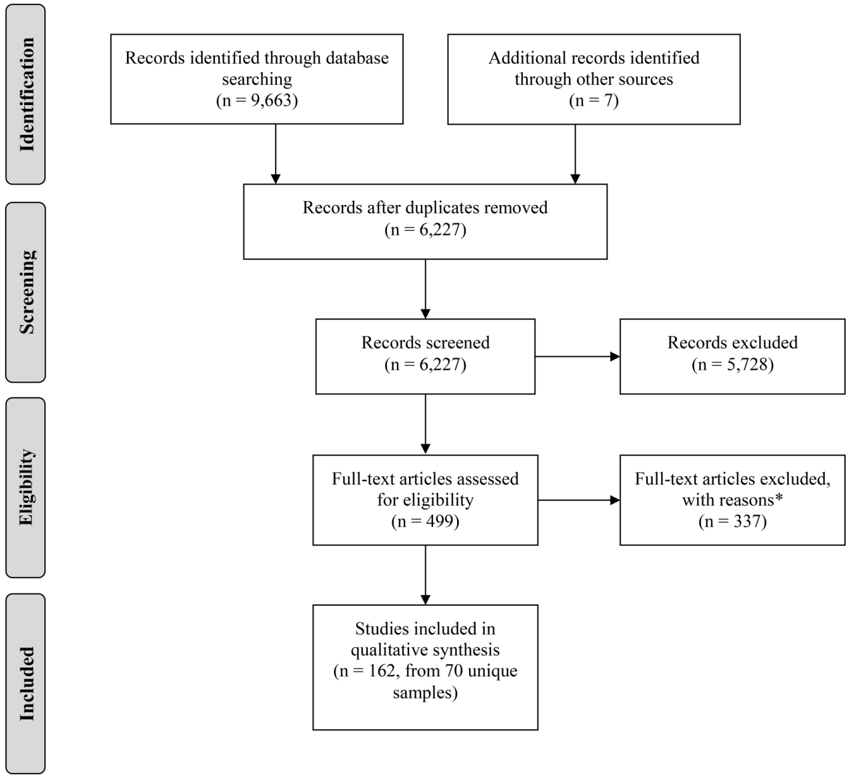
Moderate-to-vigorous physical activity (MVPA) is essential for disease prevention and health promotion. Emerging evidence suggests other intensities of physical activity (PA), including light-intensity activity (LPA), may also be important, but there has been no rigorous evaluation of the evidence. The purpose of this systematic review was to examine the relationships between objectively measured PA (total and all intensities) and health indicators in school-aged children and youth. Online databases were searched for peer-reviewed studies that met the a priori inclusion criteria: population (apparently healthy, aged 5–17 years), intervention/exposure/comparator (volumes, durations, frequencies, intensities, and patterns of objectively measured PA), and outcome (body composition, cardiometabolic biomarkers, physical fitness, behavioural conduct/pro-social behaviour, cognition/academic achievement, quality of life/well-being, harms, bone health, motor skill development, psychological distress, self-esteem). Heterogeneity among studies precluded meta-analyses; narrative synthesis was conducted. A total of 162 studies were included (204 171 participants from 31 countries). Overall, total PA was favourably associated with physical, psychological/social, and cognitive health indicators. Relationships were more consistent and robust for higher (e.g., MVPA) versus lower (e.g., LPA) intensity PA. All patterns of activity (sporadic, bouts, continuous) provided benefit. LPA was favourably associated with cardiometabolic biomarkers; data were scarce for other outcomes. These findings continue to support the importance of at least 60 min/day of MVPA for disease prevention and health promotion in children and youth, but also highlight the potential benefits of LPA and total PA. All intensities of PA should be considered in future work aimed at better elucidating the health benefits of PA in children and youth.
Overview
The claims and statistics of this paper haven’t been checked yet.
Free: it reads the open-access text and checks the first 5 claims that cite a source we can check. Create a free account to check every claim.
Integrity signals
Registry
Cites
Statistics
Figures
Verification
Claims the paper makes
The claims and statistics of this paper haven’t been checked yet.
Free: it reads the open-access text and checks the first 5 claims that cite a source we can check. Create a free account to check every claim.
Claims other papers make about this one
Each is checked against this paper’s own text: does it say what the citing paper says it does?
The source backs part of the claim, not all of it — or backs it for a different population, condition or comparison.
In the citing paper
“Research indicates that those who are physically active show or report better overall physical and mental health, a higher level of fitness and a lower level of obesity than their sedentary or physically inactive counterparts1–4”
From Physical activity and health in Chinese children and adolescents: expert consensus statement (2020) (2020) · cites this paper as [1]
Experimental — accuracy not yet measuredThe source backs part of the claim, not all of it — or backs it for a different population, condition or comparison.
In the citing paper
“The searches looked for journal articles reporting on sleep, sedentary time and physical activity using previously developed and validated searches [12–14, 30].”
From Combinations of physical activity, sedentary time, and sleep duration and their associations with depressive symptoms and other mental health problems in children and adolescents: a systematic review (2020) · cites this paper as [12]
Experimental — accuracy not yet measuredThe source backs part of the claim, not all of it — or backs it for a different population, condition or comparison.
In the citing paper
“Achieving high levels of physical activity, low levels of sedentary behaviour, and getting sufficient sleep have been individually associated with better mental health among children and adolescents [12–14].”
From Combinations of physical activity, sedentary time, and sleep duration and their associations with depressive symptoms and other mental health problems in children and adolescents: a systematic review (2020) · cites this paper as [12]
Experimental — accuracy not yet measuredThe source backs part of the claim, not all of it — or backs it for a different population, condition or comparison.
In the citing paper
“Previous studies looking at the 24-h movement guidelines and health indicators have primarily focused on examining the associations between the combinations of physical activity, sedentary time, and sleep duration with physical health outcomes [12–14].”
From Combinations of physical activity, sedentary time, and sleep duration and their associations with depressive symptoms and other mental health problems in children and adolescents: a systematic review (2020) · cites this paper as [12]
Experimental — accuracy not yet measuredThe source backs part of the claim, not all of it — or backs it for a different population, condition or comparison.
In the citing paper
“Isolated adherence to MVPA, screen time and sleep duration recommendations have been associated with lower adiposity indicators in children and adolescents [3, 5–10].”
From Proportion of children meeting recommendations for 24-hour movement guidelines and associations with adiposity in a 12-country study (2016) · cites this paper as [8]
Experimental — accuracy not yet measured
5 more claims about this paper
Create a free account to see every claim other papers make about this one.
Self-check
Percentages, sums and reported differences re-computed from the paper’s own numbers.
The self-check needs the paper’s full text.
Citations
Cites
The Cochrane Collaboration's tool for assessing risk of bias in randomised trials
Higgins, J. P. T., Altman, D. G., Gotzsche, P. C., Juni, P., Moher, D., Oxman, A. D., Savovic, J., Schulz, K. F., Weeks, L., Sterne, J. A. C., et al. (2011) · BMJ · doi:10.1136/bmj.d5928 · Cited by 33,817
Preferred Reporting Items for Systematic Reviews and Meta-Analyses: The PRISMA Statement
Moher, D., Liberati, A., Tetzlaff, J., & Altman, D. G. (2009) · Journal of Clinical Epidemiology · doi:10.1016/j.jclinepi.2009.06.005 · Cited by 19,575
Physical Activity in the United States Measured by Accelerometer
TROIANO, R. P., BERRIGAN, D., DODD, K. W., MÂSSE, L. C., TILERT, T., & MCDOWELL, M. (2008) · Medicine & Science in Sports & Exercise · doi:10.1249/mss.0b013e31815a51b3 · Cited by 7,638 · cited 2×
“This is unfortunate, as studies from Canada and the United States indicate that children and youth spend 4–6 h/day in LPA (Matthews et al. 2008; Troiano et al. 2008; Colley et al. 2011; Chaput et al. 2014), and emerging research suggests that spending more waking hours in LPA compared with…”
BackgroundJanssen, I., & LeBlanc, A. G. (2010) · International Journal of Behavioral Nutrition and Physical Activity · doi:10.1186/1479-5868-7-40 · Cited by 4,829 · cited 7×
“Physical activity (PA) is vital to the physical, psychological/ social, and cognitive health of school-aged children and youth (Janssen and LeBlanc 2010; Tremblay et al. 2010b).”
BackgroundResultInfluentialSelf-citationUtilization of the PICO framework to improve searching PubMed for clinical questions
Schardt, C., Adams, M. B., Owens, T., Keitz, S., & Fontelo, P. (2007) · BMC Medical Informatics and Decision Making · doi:10.1186/1472-6947-7-16 · Cited by 3,053 · cited 2×
“The participants, interventions, comparisons, outcomes and study design (PICOS) framework (Schardt et al. 2007) was followed to identify key study concepts in the research question a priori and to facilitate the searching process.”
MethodAmount of Time Spent in Sedentary Behaviors in the United States, 2003-2004
Matthews, C. E., Chen, K. Y., Freedson, P. S., Buchowski, M. S., Beech, B. M., Pate, R. R., & Troiano, R. P. (2008) · American Journal of Epidemiology · doi:10.1093/aje/kwm390 · Cited by 2,631 · cited 2×
“This is unfortunate, as studies from Canada and the United States indicate that children and youth spend 4–6 h/day in LPA (Matthews et al. 2008; Troiano et al. 2008; Colley et al. 2011; Chaput et al. 2014), and emerging research suggests that spending more waking hours in LPA compared with…”
BackgroundSelf-citationTremblay, M. S., Carson, V., Chaput, J.-P., Connor Gorber, S., Dinh, T., Duggan, M., Faulkner, G., Gray, C. E., Gruber, R., Janson, K., et al. (2016) · Applied Physiology, Nutrition, and Metabolism · doi:10.1139/apnm-2016-0151 · Cited by 2,024
Self-citationPhysiological and health implications of a sedentary lifestyle
Tremblay, M. S., Colley, R. C., Saunders, T. J., Healy, G. N., & Owen, N. (2010) · Applied Physiology, Nutrition, and Metabolism · doi:10.1139/h10-079 · Cited by 1,426 · cited 9×
“In this regard, the Canadian Physical Activity Guidelines for Children and Youth (Tremblay et al. 2010b, 2011), and many other guidelines around the world (e.g., Australia (Okely et al. 2012), USA (US Department of Health and Human Services 2008), and World Health Organization (WHO 2010)), recommend that children and…”
BackgroundInfluentialSelf-citationComparison of Accelerometer Cut Points for Predicting Activity Intensity in Youth
TROST, S. G., LOPRINZI, P. D., MOORE, R., & PFEIFFER, K. A. (2011) · Medicine & Science in Sports & Exercise · doi:10.1249/mss.0b013e318206476e · Cited by 1,360 · cited 3×
“…Marshall and Ramirez 2011) and the widespread use of subjective assessments of PA (Reilly et al. 2008; Adamo et al. 2009; Janssen and LeBlanc 2010; Trost et al. 2011), which cannot accurately capture LPA (e.g., various incidental activities accumulated throughout the day) (Hamilton et al. 2004;…”
BackgroundGRADE guidelines: 9. Rating up the quality of evidence
Guyatt, G. H., Oxman, A. D., Sultan, S., Glasziou, P., Akl, E. A., Alonso-Coello, P., Atkins, D., Kunz, R., Brozek, J., Montori, V., et al. (2011) · Journal of Clinical Epidemiology · doi:10.1016/j.jclinepi.2011.06.004 · Cited by 1,336 · cited 2×
“If there is no cause to downgrade, the quality of evidence can be upgraded if there is a large effect size, a dose–response gradient, or if all plausible confounders would decrease an apparent treatment effect (Guyatt et al. 2011b).”
BackgroundMethod
Research works printed but not linked: 9
- 2. Aggio, D., Smith, L., and Hamer, M. 2015. Effects of reallocating time in different activity intensities on health and fitness: a cross sectional study. Int. J. Behav. Nutr. Phys. Activ. 12(83). PMID:26104041.
- 22. Colley, R.C., Garriguet, D., Janssen, I., Craig, C.L., Clarke, J., and Tremblay, M.S. 2011. Physical activity of Canadian children and youth: Accelerometer results from the 2007 to 2009 Canadian Health Measures Survey. Statistics Canada cat. no. 82-003-X. Health Rep. 22(1): 1523. PMID:21510586.
- 49. Grydeland, M., Bergh, I.H., Bjelland, M., Lien, N., Andersen, L.F., Ommundsen, Y., et al. 2012. Correlates of weight status among Norwegian 11-year-olds: The HEIA study. BMC Publ. Health, 12(1053). PMID:23216675.
- 53. Guyatt, G., Oxman, A.D., Akl, E.A., Kunz, R., Vist, G., Brozek, J., et al. 2011a. GRADE guidelines: 1. Introduction-GRADE evidence profiles and summary of findings tables. J. Clin. Epidemiol. 64(4): 383-394. PMID:21195583.
- 85. Janz, K.F., Letuchy, E.M., Francis, S.L., Metcalf, K.M., Burns, T.L., and Levy, S.M. 2014a. Objectively measured physical activity predicts hip and spine bone mineral content in children and adolescents ages 5-15 years: Iowa Bone Development Study. Front. Endocrinol. 5: 112. PMID:25076937.
- 128. Nguyen, T.H., Tang, H.K., Kelly, P., van der Ploeg, H.P., and Dibley, M.J. 2010. Association between physical activity and metabolic syndrome: a cross sec- tional survey in adolescents in Ho Chi Minh City, Vietnam. BMC Publ. Health, 10(141). PMID:20236509.
- 129. Okely, A., Salmon, J., Vella, S., Cliff, D., Timperio, A., Tremblay, M., et al. 2012. A systematic review to update the Australian Physical Activity Guidelines for Children and Young People. Report prepared for the Australian Government Department of Health.
- 159. Sigmundova, D., and Sigmund, E. 2012. The effect of physical activity program at school on reducing childhood obesity: a results of four-year longitudinal study. Med. Sport. Bohem. Slov. 21(3): 129-141.
- 175. Tremblay, M.S., Esliger, D.W., Tremblay, A., and Colley, R. 2007. Incidental move- ment, lifestyle-embedded activity and sleep: new frontiers in physical activ- ity assessment. Can. J. Publ. Health, 98(Suppl. 2): 208-217. PMID:18213950.
Cited by
Items 501–600 of 1,001
Ku, B., MacDonald, M., Hatfield, B. E., & Gunter, K. B. (2020) · Disability and health journal · doi:10.1016/j.dhjo.2020.100910 · Cited by 26
Vaquero‐Solís, M., Tapia‐Serrano, M. Á., Alcalá, D. H., Sierra-Díaz, M. J., & Miguel, P. A. S. (2021) · International Journal of Environmental Research and Public Health · doi:10.3390/ijerph18147550 · Cited by 28
“Specifically, they have revealed that school-aged children and youth with high physical activity [6], low screen time [7], and greater sleep duration [8] had better health indicators (e.”
BackgroundFernandes, H. M., Costa, H., Esteves, P., Machado‐Rodrigues, A. M., & Fonseca, T. (2024) · Sports · doi:10.3390/sports12060155 · Cited by 38
“Regular and sufficient physical activity (PA) during adolescence has been consistently associated with important physical, cognitive, psychological, and social benefits [1,2].”
BackgroundAdarve, M. G., Ortega, F. Z., Sánchez, V. G., Ruz, R. P., & Sánchez, A. J. L. (2019) · Retos · doi:10.47197/retos.v36i36.68852 · Cited by 44
Impact on Physical Fitness of the Chinese CHAMPS: A Clustered Randomized Controlled Trial
Zhou, Z., Li, S., Yin, J., Fu, Q., Ren, H., Jin, T., Zhu, J., Howard, J. T., Lan, T., & Yin, Z. (2019) · International Journal of Environmental Research and Public Health · doi:10.3390/ijerph16224412 · Cited by 31
“, MVPA and VPA) by the modification of school policy, an enhanced PE curriculum and a mandatory after-school PA program [27,28].”
MethodAadland, E., Kvalheim, O. M., Hansen, B. H., Kriemler, S., Ried‐Larsen, M., Wedderkopp, N., Sardinha, L. B., Møller, N. C., Hallal, P. C., Anderssen, S. A., et al. (2020) · Preventive Medicine · doi:10.1016/j.ypmed.2020.106266 · Cited by 27
Analysis of Body Perception, Preworkout Meal Habits and Bone Resorption in Child Gymnasts
Amato, A., Proia, P., Caldara, G., Alongi, A., Ferrantelli, V., & Baldassano, S. (2021) · International Journal of Environmental Research and Public Health · doi:10.3390/ijerph18042184 · Cited by 26
“Physical activity may contribute to the formation of children’s personality, to their proper perception, self-esteem and psychological and physical well-being [7,52].”
BackgroundMorgan, P. J., Rayward, A. T., Young, M. D., Pollock, E. R., Eather, N., Barnes, A. T., Kennedy, S.-L., Saunders, K. L., Drew, R. J., & Lubans, D. R. (2021) · Annals of Behavioral Medicine · doi:10.1093/abm/kaab056 · Cited by 27
Pearson, N., Griffiths, P. L., van Sluijs, E. M. F., Atkin, A. J., Khunti, K., & Sherar, L. B. (2022) · BMJ Open · doi:10.1136/bmjopen-2021-051736 · Cited by 29
Sheldrick, M. P. R., Swindell, N. J., Richards, A. B., Fairclough, S. J., & Stratton, G. (2022) · International Journal of Behavioral Nutrition and Physical Activity · doi:10.1186/s12966-022-01346-5 · Cited by 29
“The findings are concerning, given the health benefits of PA [90] and the association between sedentary time, particularly screen-based, and poor health outcomes [2].”
BackgroundZhang, S., Roscoe, C. M. P., & Pringle, A. (2023) · International Journal of Environmental Research and Public Health · doi:10.3390/ijerph20021480 · Cited by 38
Trends in and relations between children’s health-related behaviors pre-, mid- and post-Covid
de Bruijn, A. G. M., Wierike, S. C. M. T., & Mombarg, R. (2023) · European Journal of Public Health · doi:10.1093/eurpub/ckad007 · Cited by 25
Helgadóttir, B., Fröberg, A., Kjellenberg, K., Ekblom, Ö. B., & Nyberg, G. (2023) · BMC Public Health · doi:10.1186/s12889-023-15282-x · Cited by 27
Jeong, A., Ryu, S., Kim, S., Park, H.-K., Hwang, H., & Park, K. (2023) · Korean Journal of Family Medicine · doi:10.4082/kjfm.22.0154 · Cited by 35
Physical Activity Among Adolescent Cancer Survivors: The PACCS Study
Grydeland, M., Bratteteig, M., Rueegg, C. S., Lie, H. C., Thorsen, L., Larsen, E. H., Brügmann-Pieper, S., Torsvik, I. K., Götte, M., Lähteenmäki, P. M., et al. (2023) · PEDIATRICS · doi:10.1542/peds.2023-061778 · Cited by 27
Collaborators, O. B. O. T. I. C. A. D. (., Atkin, A. J., Biddle, S., Broyles, S. T., Chinapaw, M. J. M., Ekelund, U., Esliger, D., Hansen, B. H., Kriemler, S., Puder, J. J., et al. (2017) · International Journal of Behavioral Nutrition and Physical Activity · doi:10.1186/s12966-017-0631-7 · Cited by 24
“[5, 6] Moreover, current understanding of the determinants of physical activity and sedentary behaviour is limited by a reliance on single-country, relatively small studies that lack exposure heterogeneity and the statistical power required to explore interactions amongst factors from different levels of the ecologica…”
BackgroundChamorro-Viña, C., Guilcher, G. M. T., Schulte, F., Vries, A. D., Schwanke, J., & Culos-Reed, S. N. (2017) · Rehabilitation Oncology · doi:10.1097/01.reo.0000000000000051 · Cited by 23
“Implications for nurses, physiotherapists, occupational therapists, kinesiologists, physicians, and cancer foundations are that there is the need (1) for increased efforts to make exercise part of the standard care of treatment as a key factor to promote healthy development and behaviors and decrease cancer treatment…”
BackgroundExploratory Determined Correlates of Physical Activity in Children and Adolescents: The MoMo Study
Schmidt, S., Schneider, J., Reimers, A. K., Niessner, C., & Wöll, A. (2019) · International Journal of Environmental Research and Public Health · doi:10.3390/ijerph16030415 · Cited by 27
“Recent research shows that youths who fulfill these recommendations benefit in many health indicators [5].”
BackgroundParents’ Perspectives Regarding Age Restrictions for Tackling in Youth Football
Chrisman, S. P. D., Whitlock, K. B., Kroshus, E., Schwien, C., Herring, S. A., & Rivara, F. P. (2019) · PEDIATRICS · doi:10.1542/peds.2018-2402 · Cited by 26
The journey to learn: Perspectives on active school travel from exemplar schools in New Zealand
Hawley, G., Witten, K., Hosking, J., Mackie, H. W., & Smith, M. (2019) · Journal of Transport & Health · doi:10.1016/j.jth.2019.100600 · Cited by 27
Jekauc, D., Nigg, C., Niessner, C., Wunsch, K., Nigg, C. R., Krell‐Roesch, J., & Wöll, A. (2019) · Frontiers in Psychology · doi:10.3389/fpsyg.2019.02568 · Cited by 32
Guerra, P. H., Filho, V. C. B., Almeida, A., Silva, L. D. S., Pinto, M. T. V., Leonel, R. M., Ribeiro, E. H. C., & Florindo, A. A. (2020) · Revista Paulista de Pediatria · doi:10.1590/1984-0462/2020/38/2018112 · Cited by 34
López‐Gil, J. F., Brazo‐Sayavera, J., de Campos, W., & Lucas, J. L. Y. (2020) · Children · doi:10.3390/children7120263 · Cited by 28
González, S. A., Barnes, J. D., Abi Nader, P., Susana Andrade Tenesaca, D., Brazo-Sayavera, J., Galaviz, K. I., Herrera-Cuenca, M., Katewongsa, P., López-Taylor, J., Liu, Y., et al. (2018) · Journal of Physical Activity and Health · doi:10.1123/jpah.2018-0391 · Cited by 21
“These teams were in charged with (1) compiling and synthesizing the best available and most recent evidence for their country, and (2) assessing the available evidence for each indicator and assigning the corresponding grade based on the benchmarks and grading rubric established by the AHKGA (Tables 1 and 2).”
MethodSelf-citationTapia‐Serrano, M. Á., López-Gajardo, M. Á., Miguel, P. A. S., González‐Ponce, I., García‐Calvo, T., González, J. J. P., & Marcos, F. M. L. (2023) · Scandinavian Journal of Medicine and Science in Sports · doi:10.1111/sms.14436 · Cited by 29
Kolovelonis, A., Syrmpas, I., Marcuzzi, A., Khudair, M., Ng, K., Tempest, G. D., Perić, R., Bartos̆, F., Maier, M., Brandes, M., et al. (2024) · BMC Public Health · doi:10.1186/s12889-024-19136-y · Cited by 29
“Conversely, physical inactivity is associated with an increased prevalence of obesity and cardiovascular diseases [1, 4].”
BackgroundAssessment and development of physical education teachers’ physical literacy: A systematic review
Yin, H., Dev, R. D. O., Soh, K. G., Li, F., & Lian, M. (2024) · PLoS ONE · doi:10.1371/journal.pone.0307505 · Cited by 49
Wang, J., Sheng-yong, W., Chen, X., Xu, B., Wang, J., Yang, Y., Ruan, W., Gao, P., Li, X., Xie, T., et al. (2024) · BMC Public Health · doi:10.1186/s12889-024-19795-x · Cited by 36
“During childhood and adolescence, particularly throughout school years, PA is positively correlated with PF metrics [13, 14], demonstrating benefits such as reduced cardiometabolic risk, decreased fat accumulation, and enhanced muscular and skeletal health.”
BackgroundTaylor, N., Pringle, A., & Roscoe, C. M. P. (2024) · Children · doi:10.3390/children11121491 · Cited by 52
Bourke, M., Harrison, Z., Fortnum, K., Thomas, G., O’Flaherty, M., Mulcahy, S., Gomersall, S. R., Alsop, T., Trost, S. G., Koplin, J. J., et al. (2025) · Obesity Reviews · doi:10.1111/obr.13884 · Cited by 29
“13,14 Indeed, there is strong evidence of an inverse association between physical activity and sleep duration with adiposity in children and adolescents, 15 – 17 although the association with sleep may be U-shaped.”
Longitudinal Changes in Sitting Patterns, Physical Activity, and Health Outcomes in Adolescents
Ayala, A. M. C., Salmon, J., Dunstan, D. W., Arundell, L., Parker, K. E., & Timperio, A. F. (2018) · Children · doi:10.3390/children6010002 · Cited by 28
“Conversely, there is consistent longitudinal evidence of inverse relationships between accelerometer-assessed MVPA and health outcomes in school-aged children and adolescents [29].”
BackgroundSchönbach, D. M. I., Altenburg, T. M., Chinapaw, M. J. M., Marques, A., & Demetriou, Y. (2019) · Systematic Reviews · doi:10.1186/s13643-019-1216-0 · Cited by 24
Rögnvaldsdóttir, V., Brychta, R. J., Hrafnkelsdóttir, S. M., Chen, K. Y., Arngrímsson, S. Á., Jóhannsson, E., & Guðmundsdóttir, S. L. (2020) · PLoS ONE · doi:10.1371/journal.pone.0229114 · Cited by 23
“The positive influence of physical activity and the metabolic health of adolescents is well documented [45].”
BackgroundToledo-Vargas, M., Perez-Contreras, P., Chandía-Poblete, D., & Aguilar-Farías, N. (2020) · Journal of Physical Activity and Health · doi:10.1123/jpah.2019-0672 · Cited by 24
“28 The participants answered the following questions: (1) During the past week, what time have you usually turned out the light and gone to sleep on school days? (2) During the past week, at what time have you usually woken up in the morning on school days? (3) During the past week, what time have you usually turned o…”
BackgroundMethodInfluentialHarvey, J., Emm-Collison, L., & Sebire, S. J. (2020) · Wellcome Open Research · doi:10.12688/wellcomeopenres.16391.1 · Cited by 23
“Analysis was led by JH and supported by LEC and SJS and followed five steps; (1) Immersion: through transcription, repeated reading and comparison to original audio to capture emotions.”
MethodBourke, M., Hilland, T. A., & Craike, M. J. (2021) · Journal of Behavioral Medicine · doi:10.1007/s10865-020-00197-4 · Cited by 26
Sarmiento, O. L., Rubio, M. A., King, A. C., SERRANO, N. H., Hino, A. A. F., Hunter, R. F., Aguilar-Farías, N., Parra, D. C., Salvo, D., Jáuregui, A., et al. (2021) · Obesity Reviews · doi:10.1111/obr.13236 · Cited by 27
“K E YWORD S built environment, Latin American youth, Latino children and adolescents, physical activity 1 | INTRODUCTION Physical activity (PA) plays a fundamental role in children and adolescents' lives, contributing to the prevention of overweight and obesity as well as cognitive, social, and emotional development a…”
BackgroundWeaver, R. G., Tassitano, R. M., Tenório, M. C. M., Brazendale, K., & Beets, M. W. (2021) · Journal of Physical Activity and Health · doi:10.1123/jpah.2021-0254 · Cited by 29
Atividade física para crianças e jovens: Guia de Atividade Física para a População Brasileira
Dumith, S. C., Filho, A. ́., Cureau, F. V., Júnior, J. C. D. F., Mello, J. B., da Silva, M. P., Matias, T. S., Lopes, W. A., Magalhães, L. L., & Hallal, P. C. (2021) · Revista Brasileira de Atividade Física & Saúde · doi:10.12820/rbafs.26e0214 · Cited by 24
Hollman, H., Updegraff, J. A., Lipkus, I. M., & Rhodes, R. E. (2022) · International Journal of Behavioral Nutrition and Physical Activity · doi:10.1186/s12966-022-01245-9 · Cited by 28
“Background Regular physical activity (PA) can prevent and treat numerous noncommunicable diseases and improve mental health and quality of life of people of all ages [1, 2].”
BackgroundJia, G., Wu, C.-C., & Su, C.-H. (2022) · Nutrition & Metabolism · doi:10.1186/s12986-022-00673-5 · Cited by 24
“Another previous study highlighted the health benefits of physical activity against MetS in pediatric populations [27].”
BackgroundFairclough, S. J., Hurter, L., Dumuid, D., Gába, A., Rowlands, A. V., Cruz, B. D. P., Cox, A., Crotti, M., Foweather, L., Graves, L., et al. (2022) · International Journal of Environmental Research and Public Health · doi:10.3390/ijerph19148778 · Cited by 26
“These results support ours and demonstrate how the commonly reported finding that MVPA has the strongest influence on adiposity-related indicators relative to other physical behaviours actually masks the potentially more important contribution of higher intensity activities, while simultaneously amplifying the influen…”
BackgroundInfluentialKuzik, N., Spence, J. C., Arkko, K., Blye, C.-J., Davie, J., Duddridge, R., Ekeli, T., English, A. R., Etruw, E., Hunter, S., et al. (2022) · Journal of Activity Sedentary and Sleep Behaviors · doi:10.1186/s44167-022-00002-4 · Cited by 25
Self-citationDumuid, D., Olds, T., Wake, M. A., Rasmussen, C. L., Pedišić, Ž., Hughes, J. H., Foster, D. J. R., Walmsley, R., Atkin, A. J., Straker, L. M., et al. (2022) · PLoS ONE · doi:10.1371/journal.pone.0272343 · Cited by 24
Nezondet, C., Gandrieau, J., Bourrelier, J., Nguyen, P., & Zunquin, G. (2023) · Children · doi:10.3390/children10060956 · Cited by 33
“PI is one of the main environmental determinants favoring the development of this pathology [12].”
BackgroundLifestyle behaviors clusters in a nationwide sample of Spanish children and adolescents: PASOS study
Zapico, A. G., Aparicio‐Ugarriza, R., Quesada, C., Gómez, S. F., Wärnberǵ, J., Medrano, M., Gusi, N., Aznar, S., Cascales, E. M., Valeiro, M. G., et al. (2023) · Pediatric Research · doi:10.1038/s41390-023-02710-2 · Cited by 30
“According to our results, health policies should be focused principally on promoting PA, MD, and sleep recommendations and reducing screen time for preserving youth health.”
BackgroundPatel, J., Katapally, T. R., Khadilkar, A. V., & Bhawra, J. (2023) · Health & Place · doi:10.1016/j.healthplace.2023.103167 · Cited by 23
Zhong, Q., Li, B., Jiang, B., & Dong, T. (2024) · Journal of Cleaner Production · doi:10.1016/j.jclepro.2024.142882 · Cited by 26
Denize, K. M., Acharya, N., Prince, S. A., da Silva, D. F., Dingwall‐Harvey, A. L. J., Ferraro, Z. M., & Adamo, K. B. (2018) · PeerJ · doi:10.7717/peerj.5407 · Cited by 24
“The Tool was modified for use in the evaluation of bias in prospective and retrospective study designs (Poitras et al., 2016).”
MethodQuan, M., Pope, Z., & Gao, Z. (2018) · Journal of Clinical Medicine · doi:10.3390/jcm7100302 · Cited by 24
“Increased physical activity (PA) and reduced sedentary behavior among children and adolescents have been positively associated with improvements in physiological and cognitive outcomes, such as body composition, cardiorespiratory fitness, bone health, cognition, and academic achievement [1].”
BackgroundBrusseau, T. A., & Burns, R. D. (2018) · Research Quarterly for Exercise and Sport · doi:10.1080/02701367.2018.1519521 · Cited by 25
“related fitness are well established (Poitras et al., 2016).”
Guagliano, J. M., Brown, H. E., Coombes, E. G., Hughes, C. H., Jones, A., Morton, K., Wilson, E., & van Sluijs, E. M. F. (2019) · Pilot and Feasibility Studies · doi:10.1186/s40814-019-0408-7 · Cited by 24
The Triaxial Physical Activity Signature Associated with Metabolic Health in Children
Aadland, E., Kvalheim, O. M., Anderssen, S. A., Resaland, G. K., & Andersen, L. B. (2019) · Medicine & Science in Sports & Exercise · doi:10.1249/mss.0000000000002021 · Cited by 26
“Copyright © 2019 by the American College of Sports Medicine our findings strongly support previous calls for studies that include the full PA intensity spectrum (3,4,6) and also further suggest future studies should rely on triaxial accelerometry.”
BackgroundMethodFröberg, A., Lindroos, A. K., Ekblom, Ö. B., & Nyberg, G. (2020) · Acta Paediatrica · doi:10.1111/apa.15187 · Cited by 35
Rhodes, R. E., Quinlan, A., Naylor, P., Warburton, D. E. R., & Blanchard, C. M. (2021) · Journal of Sports Sciences · doi:10.1080/02640414.2021.1877460 · Cited by 25
“Engaging in regular physical activity (PA) during childhood is associated with better physical and mental health profiles (Ahn et al., 2018; Poitras et al., 2016), yet few are active enough to optimize these health outcomes (Guthold et al., 2019).”
BackgroundLeung, K. Y. K., Astroza, S., Loo, B. P. Y., & Bhat, C. R. (2019) · Journal of Transport Geography · doi:10.1016/j.jtrangeo.2018.12.015 · Cited by 23
Kemp, B. J., Parrish, A.-M., & Cliff, D. P. (2020) · International Journal of Behavioral Nutrition and Physical Activity · doi:10.1186/s12966-019-0908-0 · Cited by 20
“Background Participation in physical activity (PA) is favourably associated with a range of health outcomes for children and youth [1].”
BackgroundDoes Recreational Soccer Change Metabolic Syndrome Status in Obese Adolescents? A Pilot Study
Vasconcellos, F. V. D. A., da Cunha, F. A., Gonet, D. T., & Farinatti, P. (2020) · Research Quarterly for Exercise and Sport · doi:10.1080/02701367.2019.1711007 · Cited by 28
Antczak, D., Sanders, T., Cruz, B. D. P., Parker, P. D., & Lonsdale, C. (2020) · SLEEP · doi:10.1093/sleep/zsaa219 · Cited by 23
Schlund, A., Reimers, A. K., Bucksch, J., Linder, S., & Demetriou, Y. (2021) · German Journal of Exercise and Sport Research · doi:10.1007/s12662-021-00724-8 · Cited by 25
Canadian 24-h Movement Guidelines, Life Stress, and Self-Esteem Among Adolescents
Sampasa‐Kanyinga, H., Lien, A., Hamilton, H. A., & Chaput, J. (2022) · Frontiers in Public Health · doi:10.3389/fpubh.2022.702162 · Cited by 29
“Nevertheless, meeting the physical activity and screen time recommendations should not be neglected because of their proven multiple health benefits among children and youth (21, 72).”
BackgroundSelf-citationConsensus statement on Singapore integrated 24-hour activity guide for children and adolescents
Loo, B. K. G., Tan, B., Chia, M., Chan, P. C., Sirisena, D., bin Zainuddin, M. A., Oh, J. Y., Teoh, O. H., Tan, T. S. Z., Lim, M. C. M., et al. (2022) · Annals of the Academy of Medicine Singapore · doi:10.47102/annals-acadmedsg.202141 · Cited by 20
Tapia‐Serrano, M. Á., Sánchez‐Oliva, D., Sevil‐Serrano, J., Marques, A., & Miguel, P. A. S. (2022) · Scientific Reports · doi:10.1038/s41598-022-21096-5 · Cited by 25
Haugland, E. S., Nilsen, A. K. O., Okely, A. D., Aadland, K. N., & Aadland, E. (2023) · Journal of Sports Sciences · doi:10.1080/02640414.2023.2232219 · Cited by 32
Telford, D. M., Meiring, R. M., & Gusso, S. (2023) · Frontiers in Sports and Active Living · doi:10.3389/fspor.2023.1282482 · Cited by 25
Cardiorespiratory and Muscular Fitness in Children and Adolescents with Obesity
Dykstra, B. J., Griffith, G., Renfrow, M. S., Mahon, A. D., & Harber, M. P. (2024) · Current Cardiology Reports · doi:10.1007/s11886-024-02036-3 · Cited by 26
“Specifically, over-all physical activity by itself, or in combination with good sleep habits and reduced sedentary behavior, during childhood is associated with lower adiposity, better cardiovascular and metabolic health, and more favorable physical fitness measures [83, 84].”
Clustering of Health Behaviors and Cardiorespiratory Fitness Among U.S. Adolescents
Hartz, J. C., Yingling, L., Ayers, C. R., Adu‐Brimpong, J., Rivers, J. P., Ahuja, C., & Powell‐Wiley, T. M. (2018) · Journal of Adolescent Health · doi:10.1016/j.jadohealth.2017.11.298 · Cited by 27
Physical Activity, Sedentary Behaviour and Mental Health in Young People: A Review of Reviews
Rodríguez‐Ayllón, M., Estévez‐López, F., Cadenas‐Sánchez, C., Gracia‐Marco, L., Lubans, D. R., Ortega, F. B., & Esteban‐Cornejo, I. (2019) · Springer eBooks · doi:10.1007/978-3-030-25816-0_3 · Cited by 25
Maitland, N., Williams, M., Jalaludin, B. B., Allender, S. E., Strugnell, C., Brown, A. D., Hayward, J., Crooks, N., Tredoux, J., Li, V., et al. (2019) · BMC Public Health · doi:10.1186/s12889-019-7936-1 · Cited by 20
Rodríguez‐Rodríguez, F., Huertas‐Delgado, F. J., Barranco-Ruíz, Y., Aranda-Balboa, M. J., & Chillón, P. (2020) · International Journal of Environmental Research and Public Health · doi:10.3390/ijerph17186864 · Cited by 23
“Regular physical activity (PA) has been associated with numerous health benefits at all stages of life, especially in youth [1,2].”
BackgroundÁvila‐García, M., Esojo-Rivas, M., Villa‐González, E., Tercedor, P., & Huertas‐Delgado, F. J. (2021) · International Journal of Environmental Research and Public Health · doi:10.3390/ijerph18052702 · Cited by 28
“In addition, only one study analyzed light PA [20], despite it being the predominant level of intensity during the day [22], as well as it contributing to children’s health as demonstrated by improvements in metabolic biomarkers [23].”
BackgroundFillon, A., Genin, P. M., Larras, B., Vanhelst, J., Luiggi, M., Aubert, S., Verdot, C., Rey, O., Lhuisset, L., Bois, J. E., et al. (2021) · Journal of Physical Activity and Health · doi:10.1123/jpah.2021-0025 · Cited by 26
Ostermeier, E., Tucker, P., Clark, A., Seabrook, J. A., & Gilliland, J. (2021) · International Journal of Environmental Research and Public Health · doi:10.3390/ijerph182312352 · Cited by 25
Perceptions of Inclusivity: The Canadian 24-Hour Movement Guidelines for Children and Youth
Handler, L., Tennant, E. M., Faulkner, G., & Latimer‐Cheung, A. E. (2018) · Adapted Physical Activity Quarterly · doi:10.1123/apaq.2017-0190 · Cited by 24
Physical activity and sedentary behaviors among Chinese children: recent trends and correlatesPreprint
Yang, X., Leung, A. W. Y., Jago, R., Yu, S., & Zhao, W. H. (2020) · PubMed · doi:10.3967/bes2021.059 · Cited by 26
Rico-González, M., Ardigò, L. P., Ramírez-Arroyo, A. P., & Gómez‐Carmona, C. D. (2024) · Journal of Functional Morphology and Kinesiology · doi:10.3390/jfmk9020095 · Cited by 35
“Additionally, Poitras et al. [12] examined the relationship between physical activity, sedentary behavior, and physical fitness in preschoolers, emphasizing the importance of considering multiple anthropometric and behavioral factors in promoting healthy development.”
BackgroundResultObjectively Assessed Physical Activity of Preschool-Aged Children from Urban Areas
Herbert, J., Matłosz, P., Lenik, J., Szybisty, A., Baran, J., Przednówek, K. H., & Wyszyńska, J. (2020) · International Journal of Environmental Research and Public Health · doi:10.3390/ijerph17041375 · Cited by 26
Cassar, S., Salmon, J., Timperio, A. F., Koch, S., & Koorts, H. (2020) · Health Education · doi:10.1108/he-05-2020-0031 · Cited by 26
Kobel, S., Dreyhaupt, J., Wartha, O., Kettner, S., Hoffmann, B., & Steinacker, J. M. (2020) · International Journal of Environmental Research and Public Health · doi:10.3390/ijerph17239029 · Cited by 21
Tanaka, C., Kyan, A., Takakura, M., Olds, T., Schranz, N. K., & Tanaka, S. (2021) · Journal of Physical Activity and Health · doi:10.1123/jpah.2019-0671 · Cited by 21
de Morais, L. M. S., Paravidino, V. B., Mediano, M. F. F., Benthroldo, R. S., Gonçalves, T. R., Sgambato, M. R., de Souza, B. D. S. N., Eliseu, V., Marques, E. S., Pereira, R. A., et al. (2021) · European Journal of Public Health · doi:10.1093/eurpub/ckab025 · Cited by 23
Prathap, S., Nagel, B. J., & Herting, M. M. (2021) · Scientific Reports · doi:10.1038/s41598-021-88452-9 · Cited by 24
Pompano, L. M., Luna, S., Udipi, S. A., Ghugre, P. S., Przybyszewski, E. M., & Haas, J. D. (2021) · British Journal Of Nutrition · doi:10.1017/s000711452100180x · Cited by 21
“insulin resistance, and HDL cholesterol in children and adolescents[27].”
BackgroundMata, C., Onofre, M., Costa, J., Ramos, M., Marques, A., & Martins, J. (2021) · Sustainability · doi:10.3390/su132313051 · Cited by 23
Reimers, A. K., Marzi, I., Beck, F., Engels, E. S., Renninger, D., Buttazzoni, A. N., Krieger, C., & Demetriou, Y. (2022) · BMJ Open · doi:10.1136/bmjopen-2021-056383 · Cited by 21
Emotional intelligence and motor competence in children, adolescents, and young adults
Orangi, B. M., Lenoir, M., Yaali, R., Ghorbanzadeh, B., O’Brien-Smith, J., Galle, J., & Meester, A. D. (2022) · European Journal of Developmental Psychology · doi:10.1080/17405629.2022.2034614 · Cited by 24
“An active lifestyle is accompanied by health benefits, such as a healthy weight status and a decreased risk of cardio-vascular diseases (Poitras et al., 2016; Richards et al., 2016; Warburton & Bredin, 2017).”
BackgroundVabø, K. B., Aadland, K. N., Howard, S. J., & Aadland, E. (2022) · Frontiers in Psychology · doi:10.3389/fpsyg.2022.842271 · Cited by 23
Zhao, M., Liu, S., Han, X., Li, Z., Liu, B., Chen, J., & Li, X. (2022) · BioMed Research International · doi:10.1155/2022/7464815 · Cited by 37
“The health bene fi ts of meeting MVPA and MSE exercises during adolescence are well known such as aerobic fi tness[4], muscular fi tness[5, 6], skeletal health[4, 7], mental health[8, 9], and metabolic function[10].”
Nyström, C. D., Carlander, A., Cassel, S., Rosell, M., Höök, M. J., & Löf, M. (2022) · Acta Paediatrica · doi:10.1111/apa.16594 · Cited by 33
“́ Due to a possible ceiling effect and anchors in relation to the visual scale, we conducted an experiment in 2019 where participants were randomly assigned to one of the three sub- sample groups answering either (1) the original 180 min slider from 2018, (2) an extended 240 min slider question, or (3) Key notes”
MethodBreau, B., Brandes, M., Veidebaum, T., Tornaritis, M. J., Moreno, L. A., Molnár, D., Lissner, L., Eiben, G., Lauria, F., Kaprio, J. A., et al. (2022) · International Journal of Behavioral Nutrition and Physical Activity · doi:10.1186/s12966-022-01383-0 · Cited by 29
“Research supports these recommendations; meeting these guidelines has been shown to be positively associated with lower adiposity, cardiometabolic disease risk and increased physical fitness in children [1].”
BackgroundInfluentialKuzik, N., Cameron, C. A., Carson, V., Chaput, J., Colley, R. C., Doiron, J., Faulkner, G., Janssen, I., Saunders, T. J., Spence, J. C., et al. (2023) · Frontiers in Public Health · doi:10.3389/fpubh.2023.1172168 · Cited by 19
“, adiposity, cardiometabolic biomarkers, physical fitness, bone health, quality of life/well-being, motor skill development, psychological distress, pro-social behavior) (1).”
BackgroundMethodSelf-citationMasini, A., Marini, S., Ceciliani, A., Barone, G., Lanari, M., Gori, D., Bragonzoni, L., Toselli, S., Stagni, R., Bisi, M. C., et al. (2023) · Journal of Public Health · doi:10.1093/pubmed/fdad102 · Cited by 33
Wade, L., Smith, J. J., Duncan, M. J., & Lubans, D. R. (2017) · Mental health and physical activity · doi:10.1016/j.mhpa.2017.12.006 · Cited by 24
Borghese, M. M., & Janssen, I. (2018) · BMC Public Health · doi:10.1186/s12889-018-5268-1 · Cited by 19
“Background Physical activity is an important health determinant in children [1].”
BackgroundSelf-citationEffects of a Sports-Oriented Primary School on Students’ Physical Literacy and Cognitive Performance
Demetriou, Y., Bachner, J., Reimers, A. K., & Göhner, W. (2018) · Journal of Functional Morphology and Kinesiology · doi:10.3390/jfmk3030037 · Cited by 27
“Systematic reviews show that regular physical activity is associated with positive health effects in children and adolescents [2].”
BackgroundPhysical Activity and Health-Related Fitness of Adolescents within the Juvenile Justice System
Brusseau, T. A., Burns, R. D., & Hannon, J. C. (2018) · BioMed Research International · doi:10.1155/2018/9710714 · Cited by 25
Mayorga-Vega, D., Parra-Saldías, M., & Viciana, J. (2020) · Retos · doi:10.47197/retos.v37i37.69238 · Cited by 35
“Nuevas tendencias en Educación Física, Deporte y Recreación Introducción Un nivel adecuado de actividad física (AF) regular se considera esencial para la buena salud, crecimiento y desarrollo óptimo de los niños y jóvenes (Poitras et al., 2016).”
BackgroundVisser, E. L., Mazzoli, E., Hinkley, T., Lander, N., Utesch, T., & Barnett, L. M. (2019) · Journal of science and medicine in sport · doi:10.1016/j.jsams.2019.09.005 · Cited by 27
Examining weather-related factors on physical activity levels of children from rural communities
Button, B. L. G., Shah, T. I., Clark, A. F., Wilk, P., & Gilliland, J. (2020) · Canadian Journal of Public Health · doi:10.17269/s41997-020-00324-3 · Cited by 20
“Research demonstrates that high levels of physical activity (PA) are associated with both short- and long-term health benefits (Poitras et al. 2016).”
BackgroundLópez‐Gil, J. F., Brazo‐Sayavera, J., García‐Hermoso, A., de Camargo, É. M., & Lucas, J. L. Y. (2020) · Childhood Obesity · doi:10.1089/chi.2020.0185 · Cited by 26
Metadata
- Authors
- Poitras, V. J., Gray, C. E., Borghese, M. M., Carson, V., Chaput, J.-P., Janssen, I., Katzmarzyk, P. T., Pate, R. R., Connor Gorber, S., Kho, M. E., Sampson, M., & Tremblay, M. S.
- Affiliations
- Children's Hospital of Eastern Ontario (CA)
- Queen's University (CA)
- University of Alberta (CA)
- Pennington Biomedical Research Center (US)
- University of South Carolina (US)
- Office of the Task Force on Preventive Health Care, Public Health Agency of Canada, Ottawa, ON K1A 0K9, Canada.
- McMaster University (CA)
- Corresponding author
- Poitras, Veronica Joan
- Gray, Casey Ellen
- ORCID
- Venue
- Applied Physiology, Nutrition, and Metabolism
- Publisher
- Canadian Science Publishing
- Published
- 2016-06
- Volume
- 41
- Issue
- 6 (Suppl. 3)
- Pages
- S197-S239
- ISSN
- 1715-5312 (ISSN-L)
- 1715-5320
- OpenAlex
- W2444482132
- Cited by
- 2,217
- References
- 182
- Citations by year
- 2026: 155 · 2025: 234 · 2024: 255 · 2023: 260 · 2022: 315 · 2021: 321 · 2020: 258 · 2019: 193 · 2018: 143 · 2017: 63 · 2016: 18
- FWCI
- 16.30
- Type
- journal article
- Language
- en
- Open access
- hybrid
- doi.org
- Licence
- cc-by
- www.nrcresearchpress.com/page/about/CorporateTextAndDataMining (tdm)
- Locations
- Applied Physiology Nutrition and Metabolism (publishedVersion, cc-by)
- PubMed (publishedVersion)
- TSpace (University of Toronto) (acceptedVersion)
- TSpace (University of Toronto) (submittedVersion)
- Scholar Commons (University of South Carolina) (submittedVersion, cc-by)
- Funders
- Public Health Agency of Canada
- Public Health Agency
- Canadian Institutes of Health Research
- Topics
- Health Sciences › Medicine › Public Health, Environmental and Occupational Health › Physical Activity and Health
- Health Sciences › Medicine › Public Health, Environmental and Occupational Health › Obesity, Physical Activity, Diet
- Social Sciences › Life-span and Life-course Studies › Recreational Sport and Physical Activity
- Keywords
- physical activity, moderate-to-vigorous physical activity, light physical activity, school-aged children, adolescents, health indicators, body composition, cardiometabolic biomarkers, physical fitness, prosocial behavior, academic performance, quality of life, bone health, motor skill development, psychological distress, self-esteem, activity patterns, activity bouts, disease prevention
- MeSH terms
- Adolescent, Adolescent Behavior, Body Composition, Cardiovascular Diseases, Child, Child Behavior, Child, Preschool, Cognition, Health Status, Humans, Obesity, Physical Fitness, Quality of Life, Biomarkers, Exercise, Randomized Controlled Trials as Topic, Treatment Outcome, Metabolic Syndrome, Non-Randomized Controlled Trials as Topic
About these checks
Registry, retraction, Cites and statistics results are computed, not judged, with one exception: a printed reference that no index lists is read once by a model before it counts as a citation error. Claims are extracted by a model and kept only when their quote appears verbatim in the text; each cited source is then checked, with a model’s help, for whether it says what the claim relies on. Those verdicts can be wrong — read the claim’s quote and the cited source before relying on one.
Statistics and arithmetic are recomputed, not judged.
Confidence bands are shown only for fields calibrated on our annotated test set. None is calibrated yet, so no band is shown.
What counts as a claim ›How we measure confidence ›How we check this ›
Are you an author, or do you see a problem with this page? Request a review
Data sources
Bibliographic data: Semantic Scholar, OpenAlex, Crossref.
Contains information from the Semantic Scholar Academic Graph Datasets, made available under the ODC Attribution License (ODC-BY 1.0).
Semantic Scholar’s data is described in: Kinney, R., et al. (2023). The Semantic Scholar Open Data Platform. arXiv:2301.10140.
