

Systematic review of the relationships between objectively measured physical activity and health indicators in school-aged children and youth
Open accessThe DOI matches its Crossref record; 186 of the 187 references it cites were found in a registry or an index, and 1 are not checked yet.
Abstract
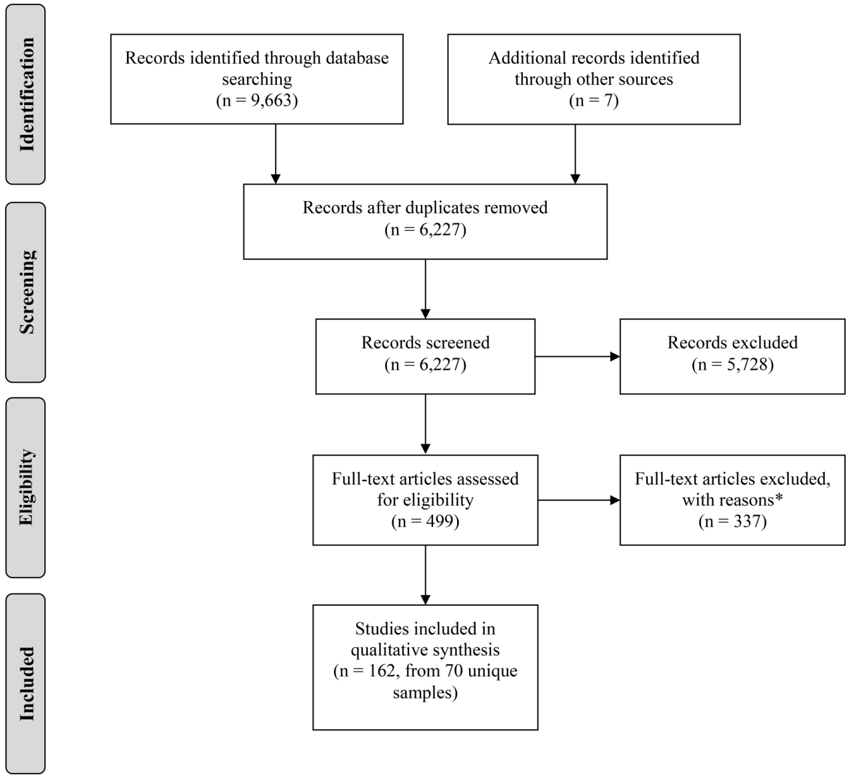
Moderate-to-vigorous physical activity (MVPA) is essential for disease prevention and health promotion. Emerging evidence suggests other intensities of physical activity (PA), including light-intensity activity (LPA), may also be important, but there has been no rigorous evaluation of the evidence. The purpose of this systematic review was to examine the relationships between objectively measured PA (total and all intensities) and health indicators in school-aged children and youth. Online databases were searched for peer-reviewed studies that met the a priori inclusion criteria: population (apparently healthy, aged 5–17 years), intervention/exposure/comparator (volumes, durations, frequencies, intensities, and patterns of objectively measured PA), and outcome (body composition, cardiometabolic biomarkers, physical fitness, behavioural conduct/pro-social behaviour, cognition/academic achievement, quality of life/well-being, harms, bone health, motor skill development, psychological distress, self-esteem). Heterogeneity among studies precluded meta-analyses; narrative synthesis was conducted. A total of 162 studies were included (204 171 participants from 31 countries). Overall, total PA was favourably associated with physical, psychological/social, and cognitive health indicators. Relationships were more consistent and robust for higher (e.g., MVPA) versus lower (e.g., LPA) intensity PA. All patterns of activity (sporadic, bouts, continuous) provided benefit. LPA was favourably associated with cardiometabolic biomarkers; data were scarce for other outcomes. These findings continue to support the importance of at least 60 min/day of MVPA for disease prevention and health promotion in children and youth, but also highlight the potential benefits of LPA and total PA. All intensities of PA should be considered in future work aimed at better elucidating the health benefits of PA in children and youth.
Overview
The claims and statistics of this paper haven’t been checked yet.
Free: it reads the open-access text and checks the first 5 claims that cite a source we can check. Create a free account to check every claim.
Integrity signals
Registry
Cites
Statistics
Figures
Verification
Claims the paper makes
The claims and statistics of this paper haven’t been checked yet.
Free: it reads the open-access text and checks the first 5 claims that cite a source we can check. Create a free account to check every claim.
Claims other papers make about this one
Each is checked against this paper’s own text: does it say what the citing paper says it does?
The source backs part of the claim, not all of it — or backs it for a different population, condition or comparison.
In the citing paper
“Research indicates that those who are physically active show or report better overall physical and mental health, a higher level of fitness and a lower level of obesity than their sedentary or physically inactive counterparts1–4”
From Physical activity and health in Chinese children and adolescents: expert consensus statement (2020) (2020) · cites this paper as [1]
Experimental — accuracy not yet measuredThe source backs part of the claim, not all of it — or backs it for a different population, condition or comparison.
In the citing paper
“The searches looked for journal articles reporting on sleep, sedentary time and physical activity using previously developed and validated searches [12–14, 30].”
From Combinations of physical activity, sedentary time, and sleep duration and their associations with depressive symptoms and other mental health problems in children and adolescents: a systematic review (2020) · cites this paper as [12]
Experimental — accuracy not yet measuredThe source backs part of the claim, not all of it — or backs it for a different population, condition or comparison.
In the citing paper
“Achieving high levels of physical activity, low levels of sedentary behaviour, and getting sufficient sleep have been individually associated with better mental health among children and adolescents [12–14].”
From Combinations of physical activity, sedentary time, and sleep duration and their associations with depressive symptoms and other mental health problems in children and adolescents: a systematic review (2020) · cites this paper as [12]
Experimental — accuracy not yet measuredThe source backs part of the claim, not all of it — or backs it for a different population, condition or comparison.
In the citing paper
“Previous studies looking at the 24-h movement guidelines and health indicators have primarily focused on examining the associations between the combinations of physical activity, sedentary time, and sleep duration with physical health outcomes [12–14].”
From Combinations of physical activity, sedentary time, and sleep duration and their associations with depressive symptoms and other mental health problems in children and adolescents: a systematic review (2020) · cites this paper as [12]
Experimental — accuracy not yet measuredThe source backs part of the claim, not all of it — or backs it for a different population, condition or comparison.
In the citing paper
“Isolated adherence to MVPA, screen time and sleep duration recommendations have been associated with lower adiposity indicators in children and adolescents [3, 5–10].”
From Proportion of children meeting recommendations for 24-hour movement guidelines and associations with adiposity in a 12-country study (2016) · cites this paper as [8]
Experimental — accuracy not yet measured
5 more claims about this paper
Create a free account to see every claim other papers make about this one.
Self-check
Percentages, sums and reported differences re-computed from the paper’s own numbers.
The self-check needs the paper’s full text.
Citations
Cites
The Cochrane Collaboration's tool for assessing risk of bias in randomised trials
Higgins, J. P. T., Altman, D. G., Gotzsche, P. C., Juni, P., Moher, D., Oxman, A. D., Savovic, J., Schulz, K. F., Weeks, L., Sterne, J. A. C., et al. (2011) · BMJ · doi:10.1136/bmj.d5928 · Cited by 33,817
Preferred Reporting Items for Systematic Reviews and Meta-Analyses: The PRISMA Statement
Moher, D., Liberati, A., Tetzlaff, J., & Altman, D. G. (2009) · Journal of Clinical Epidemiology · doi:10.1016/j.jclinepi.2009.06.005 · Cited by 19,575
Physical Activity in the United States Measured by Accelerometer
TROIANO, R. P., BERRIGAN, D., DODD, K. W., MÂSSE, L. C., TILERT, T., & MCDOWELL, M. (2008) · Medicine & Science in Sports & Exercise · doi:10.1249/mss.0b013e31815a51b3 · Cited by 7,638 · cited 2×
“This is unfortunate, as studies from Canada and the United States indicate that children and youth spend 4–6 h/day in LPA (Matthews et al. 2008; Troiano et al. 2008; Colley et al. 2011; Chaput et al. 2014), and emerging research suggests that spending more waking hours in LPA compared with…”
BackgroundJanssen, I., & LeBlanc, A. G. (2010) · International Journal of Behavioral Nutrition and Physical Activity · doi:10.1186/1479-5868-7-40 · Cited by 4,829 · cited 7×
“Physical activity (PA) is vital to the physical, psychological/ social, and cognitive health of school-aged children and youth (Janssen and LeBlanc 2010; Tremblay et al. 2010b).”
BackgroundResultInfluentialSelf-citationUtilization of the PICO framework to improve searching PubMed for clinical questions
Schardt, C., Adams, M. B., Owens, T., Keitz, S., & Fontelo, P. (2007) · BMC Medical Informatics and Decision Making · doi:10.1186/1472-6947-7-16 · Cited by 3,053 · cited 2×
“The participants, interventions, comparisons, outcomes and study design (PICOS) framework (Schardt et al. 2007) was followed to identify key study concepts in the research question a priori and to facilitate the searching process.”
MethodAmount of Time Spent in Sedentary Behaviors in the United States, 2003-2004
Matthews, C. E., Chen, K. Y., Freedson, P. S., Buchowski, M. S., Beech, B. M., Pate, R. R., & Troiano, R. P. (2008) · American Journal of Epidemiology · doi:10.1093/aje/kwm390 · Cited by 2,631 · cited 2×
“This is unfortunate, as studies from Canada and the United States indicate that children and youth spend 4–6 h/day in LPA (Matthews et al. 2008; Troiano et al. 2008; Colley et al. 2011; Chaput et al. 2014), and emerging research suggests that spending more waking hours in LPA compared with…”
BackgroundSelf-citationTremblay, M. S., Carson, V., Chaput, J.-P., Connor Gorber, S., Dinh, T., Duggan, M., Faulkner, G., Gray, C. E., Gruber, R., Janson, K., et al. (2016) · Applied Physiology, Nutrition, and Metabolism · doi:10.1139/apnm-2016-0151 · Cited by 2,024
Self-citationPhysiological and health implications of a sedentary lifestyle
Tremblay, M. S., Colley, R. C., Saunders, T. J., Healy, G. N., & Owen, N. (2010) · Applied Physiology, Nutrition, and Metabolism · doi:10.1139/h10-079 · Cited by 1,426 · cited 9×
“In this regard, the Canadian Physical Activity Guidelines for Children and Youth (Tremblay et al. 2010b, 2011), and many other guidelines around the world (e.g., Australia (Okely et al. 2012), USA (US Department of Health and Human Services 2008), and World Health Organization (WHO 2010)), recommend that children and…”
BackgroundInfluentialSelf-citationComparison of Accelerometer Cut Points for Predicting Activity Intensity in Youth
TROST, S. G., LOPRINZI, P. D., MOORE, R., & PFEIFFER, K. A. (2011) · Medicine & Science in Sports & Exercise · doi:10.1249/mss.0b013e318206476e · Cited by 1,360 · cited 3×
“…Marshall and Ramirez 2011) and the widespread use of subjective assessments of PA (Reilly et al. 2008; Adamo et al. 2009; Janssen and LeBlanc 2010; Trost et al. 2011), which cannot accurately capture LPA (e.g., various incidental activities accumulated throughout the day) (Hamilton et al. 2004;…”
BackgroundGRADE guidelines: 9. Rating up the quality of evidence
Guyatt, G. H., Oxman, A. D., Sultan, S., Glasziou, P., Akl, E. A., Alonso-Coello, P., Atkins, D., Kunz, R., Brozek, J., Montori, V., et al. (2011) · Journal of Clinical Epidemiology · doi:10.1016/j.jclinepi.2011.06.004 · Cited by 1,336 · cited 2×
“If there is no cause to downgrade, the quality of evidence can be upgraded if there is a large effect size, a dose–response gradient, or if all plausible confounders would decrease an apparent treatment effect (Guyatt et al. 2011b).”
BackgroundMethod
Research works printed but not linked: 9
- 2. Aggio, D., Smith, L., and Hamer, M. 2015. Effects of reallocating time in different activity intensities on health and fitness: a cross sectional study. Int. J. Behav. Nutr. Phys. Activ. 12(83). PMID:26104041.
- 22. Colley, R.C., Garriguet, D., Janssen, I., Craig, C.L., Clarke, J., and Tremblay, M.S. 2011. Physical activity of Canadian children and youth: Accelerometer results from the 2007 to 2009 Canadian Health Measures Survey. Statistics Canada cat. no. 82-003-X. Health Rep. 22(1): 1523. PMID:21510586.
- 49. Grydeland, M., Bergh, I.H., Bjelland, M., Lien, N., Andersen, L.F., Ommundsen, Y., et al. 2012. Correlates of weight status among Norwegian 11-year-olds: The HEIA study. BMC Publ. Health, 12(1053). PMID:23216675.
- 53. Guyatt, G., Oxman, A.D., Akl, E.A., Kunz, R., Vist, G., Brozek, J., et al. 2011a. GRADE guidelines: 1. Introduction-GRADE evidence profiles and summary of findings tables. J. Clin. Epidemiol. 64(4): 383-394. PMID:21195583.
- 85. Janz, K.F., Letuchy, E.M., Francis, S.L., Metcalf, K.M., Burns, T.L., and Levy, S.M. 2014a. Objectively measured physical activity predicts hip and spine bone mineral content in children and adolescents ages 5-15 years: Iowa Bone Development Study. Front. Endocrinol. 5: 112. PMID:25076937.
- 128. Nguyen, T.H., Tang, H.K., Kelly, P., van der Ploeg, H.P., and Dibley, M.J. 2010. Association between physical activity and metabolic syndrome: a cross sec- tional survey in adolescents in Ho Chi Minh City, Vietnam. BMC Publ. Health, 10(141). PMID:20236509.
- 129. Okely, A., Salmon, J., Vella, S., Cliff, D., Timperio, A., Tremblay, M., et al. 2012. A systematic review to update the Australian Physical Activity Guidelines for Children and Young People. Report prepared for the Australian Government Department of Health.
- 159. Sigmundova, D., and Sigmund, E. 2012. The effect of physical activity program at school on reducing childhood obesity: a results of four-year longitudinal study. Med. Sport. Bohem. Slov. 21(3): 129-141.
- 175. Tremblay, M.S., Esliger, D.W., Tremblay, A., and Colley, R. 2007. Incidental move- ment, lifestyle-embedded activity and sleep: new frontiers in physical activ- ity assessment. Can. J. Publ. Health, 98(Suppl. 2): 208-217. PMID:18213950.
Cited by
Items 201–300 of 1,001
Social-Ecological Correlates of Children’s Independent Mobility: A Systematic Review
Riazi, N. A., Wunderlich, K. B., Yun, L., Paterson, D. C., & Faulkner, G. (2022) · International Journal of Environmental Research and Public Health · doi:10.3390/ijerph19031604 · Cited by 65
“Physical activity (PA) is associated with a number of benefits including improved cognitive functioning, physical, psychological, and social health [1,2].”
BackgroundAssociations between children’s physical literacy and well-being: is physical activity a mediator?
Melby, P. S., Nielsen, G., Brønd, J. C., Tremblay, M. S., Bentsen, P., & Elsborg, P. (2022) · BMC Public Health · doi:10.1186/s12889-022-13517-x · Cited by 76
“A review focusing on objectively measured levels of PA and the relation to different aspects of well-being in children and youth found some support for beneficial associations between MVPA and health indicators such as quality of life, pro-social behaviour, and psychological distress [71].”
BackgroundSelf-citationDemetriou, Y., Gillison, F., & McKenzie, T. L. (2017) · Advances in Physical Education · doi:10.4236/ape.2017.72017 · Cited by 66
“Physical activity in childhood and adolescence is associated with improved physical and psychological health (Poitras et al., 2016).”
BackgroundToward Active Living: Comprehensive School Physical Activity Program Research and Implications
Chen, S., & Gu, X. (2017) · Quest · doi:10.1080/00336297.2017.1365002 · Cited by 58
“Physical activity (PA) promotion has been a popular topic in public health and education in the past 3 decades due to its association with health, physical fitness, and academic achievement (Donnelly et al., 2016; Poitras et al., 2016).”
BackgroundLee, E., Spence, J. C., Tremblay, M. S., & Carson, V. (2018) · Mental health and physical activity · doi:10.1016/j.mhpa.2018.02.001 · Cited by 61
Self-citationChen, S., Liu, Y., Hong, J.-T., Tang, Y., Cao, Z., Zhuang, J., Zhu, Z., & Chen, P. (2018) · BMC Public Health · doi:10.1186/s12889-018-6167-1 · Cited by 62
“gain diverse health benefits from sufficient PA [2] and limited SED [3].”
BackgroundEffects of Aerobic Exercise during Pregnancy on 1-Month Infant Neuromotor Skills
McMillan, A. G., May, L. E., GAINES, G. G., Isler, C. M., & Kuehn, D. (2019) · Medicine & Science in Sports & Exercise · doi:10.1249/mss.0000000000001958 · Cited by 69
“Thus, exercise during pregnancy may be the earliest intervention to help reduce the prevalence of commonmorbidities among children and adolescents and improve the quality of life (15,48).”
BackgroundCHASTIN, S. F. M., McGregor, D. E., Biddle, S., Cardon, G., Chaput, J., Dall, P., Dempsey, P. C., DiPietro, L., Ekelund, U., Katzmarzyk, P. T., et al. (2021) · Journal of Physical Activity and Health · doi:10.1123/jpah.2020-0635 · Cited by 64
Self-citation24-hour movement behavior adherence and associations with health outcomes: an umbrella review
Kracht, C. L., Burkart, S. A., Groves, C. I., Balbim, G. M., Pfledderer, C. D., Porter, C. D., Laurent, C. W. S., Johnson, E. K., & Brown, D. M. Y. (2024) · Journal of Activity Sedentary and Sleep Behaviors · doi:10.1186/s44167-024-00064-6 · Cited by 63
“Notably, these multi-behavior results align with the original guidelines created based on single behavior investigations [1–3 , 5 ].”
BackgroundResultBerglind, D., Ljung, R., Tynelius, P., & Brooke, H. L. (2018) · Pediatric Obesity · doi:10.1111/ijpo.12265 · Cited by 61
“Physical activity (PA) provides substantial health benefits for children and may reduce chronic disease incidence (1).”
BackgroundPublic health importance of light intensity physical activity
Ross, R., Janssen, I., & Tremblay, M. S. (2024) · Journal of sport and health science/Journal of Sport and Health Science · doi:10.1016/j.jshs.2024.01.010 · Cited by 55
Self-citationAssociation between 24-hour movement behaviors and health-related quality of life in children
Xiong, X., Dalziel, K., Carvalho, N., Xu, R., & Huang, L. (2021) · Quality of Life Research · doi:10.1007/s11136-021-02901-6 · Cited by 53
Dong, X., Ding, L., Zhang, R., Ding, M., Wang, B., & Yi, X. (2021) · Frontiers in Pediatrics · doi:10.3389/fped.2021.722079 · Cited by 69
Mavilidi, M. F., Pesce, C., Benzing, V., Schmidt, M., PAAS, F. G. W. C., Okely, A. D., & Vazou, S. (2022) · Educational Research Review · doi:10.1016/j.edurev.2022.100478 · Cited by 76
Physical Activity in the COVID-19 Era and Its Impact on Adolescents’ Well-Being
Bozzola, E., Barni, S., Ficari, A., & Villani, A. (2023) · International Journal of Environmental Research and Public Health · doi:10.3390/ijerph20043275 · Cited by 63
“PA may support both physical and mental well-being in adolescents [3,4].”
BackgroundFamily Physical Activity Planning and Child Physical Activity Outcomes: A Randomized Trial
Rhodes, R. E., Blanchard, C. M., Quinlan, A., Naylor, P., & Warburton, D. E. R. (2019) · American Journal of Preventive Medicine · doi:10.1016/j.amepre.2019.03.007 · Cited by 56
Active commuting to and from school among 106,605 adolescents in 27 Asia-Pacific countries
Uddin, R., Mandic, S., & Khan, A. (2019) · Journal of Transport & Health · doi:10.1016/j.jth.2019.100637 · Cited by 61
Cox, A., Fairclough, S. J., Kosteli, M., & Noonan, R. J. (2019) · Sports Medicine · doi:10.1007/s40279-019-01215-5 · Cited by 72
“A recent systematic review confirmed the associated health benefits of meeting the recommended MVPA guideline [5].”
BackgroundNilsen, A. K. O., Anderssen, S. A., Resaland, G. K., Johannessen, K., Ylvisåker, E., & Aadland, E. (2019) · Preventive Medicine Reports · doi:10.1016/j.pmedr.2019.100837 · Cited by 64
A Study of Preservice Physical Education Teachers’ Content Knowledge of Health-Related Fitness
Santiago, J. A., & Morrow, J. R. (2020) · Journal of Teaching in Physical Education · doi:10.1123/jtpe.2019-0138 · Cited by 56
Shen, H., Yan, J. H., Hong, J.-T., Clark, C. C. T., Yang, X.-N., Liu, Y., & Chen, S. (2020) · International Journal of Environmental Research and Public Health · doi:10.3390/ijerph17093066 · Cited by 56
Meyer, S., Grob, A., & Gerber, M. (2021) · Psychology of sport and exercise · doi:10.1016/j.psychsport.2021.102004 · Cited by 75
In Search of Consistent Predictors of Children’s Physical Activity
Best, K., Ball, K., Zarnowiecki, D. M., Stanley, R. M., & Dollman, J. (2017) · International Journal of Environmental Research and Public Health · doi:10.3390/ijerph14101258 · Cited by 68
“The cardiovascular, skeletal, psychological and social benefits of regular physical activity for children and adolescents are supported by an abundant and growing literature [1].”
BackgroundMacdonald, K., Milne, N., Orr, R. M., & Pope, R. (2020) · BMC Pediatrics · doi:10.1186/s12887-020-1967-8 · Cited by 77
Patte, K. A., Faulkner, G., Qian, W., Duncan, M. J., & Leatherdale, S. T. (2020) · BMC Public Health · doi:10.1186/s12889-020-08887-z · Cited by 53
García‐González, L., Abós, Á., Diloy-Peña, S., Gil-Arias, A., & Sevil‐Serrano, J. (2020) · Sustainability · doi:10.3390/su12156170 · Cited by 94
“Despite the benefits of physical activity (PA) [1], less than a quarter of young people met the PA recommendations of the World Health Organization [2].”
BackgroundRosa, C. C., Tebar, W. R., Oliveira, C. B., Farah, B. Q., Casonatto, J., Saraiva, B. T. C., & Christófaro, D. G. D. (2021) · Sports Medicine - Open · doi:10.1186/s40798-021-00376-w · Cited by 73
Physical education in a post-COVID world: A blended-gamified approach
Blain, D., Standage, M., & Curran, T. (2022) · European Physical Education Review · doi:10.1177/1356336x221080372 · Cited by 74
“…immediately beneficial for physical and mental health, participation in PA when young also has potential longer-term benefits via the tracking of PA behaviour to later life and by being protective against future co-morbidities (Janssen and LeBlanc, 2010; Poitras et al., 2016; Telema et al., 2014).”
BackgroundBremer, E., Graham, J. D., & Cairney, J. (2020) · International Journal of Environmental Research and Public Health · doi:10.3390/ijerph17093129 · Cited by 69
Changes in Physical Activity Patterns from Childhood to Adolescence: Genobox Longitudinal Study
Llorente‐Cantarero, F. J., Aguilar-Gómez, F. J., Anguita‐Ruiz, A., Rupérez, A. I., Vázquez‐Cobela, R., Flores‐Rojas, K., Aguilera, C. M., González‐Gil, E. M., Gil‐Campos, M., Bueno, G., et al. (2020) · International Journal of Environmental Research and Public Health · doi:10.3390/ijerph17197227 · Cited by 55
“Although the reduction of MVPA has always received attention, the latest research has focused also on the importance of LPA decline [9,15].”
BackgroundActive commuting to school among 36,781 Spanish children and adolescents: A temporal trend study
Gálvez‐Fernández, P., Herrador‐Colmenero, M., Esteban‐Cornejo, I., Castro‐Piñero, J., Molina‐García, J., Queralt, A., Aznar, S., Sos, A. A., González‐Cutre, D., Conti, J. V., et al. (2021) · Scandinavian Journal of Medicine and Science in Sports · doi:10.1111/sms.13917 · Cited by 64
“A growing body of evidence demonstrates that regular physical activity has multiple health bene ts for children and adolescents (1).”
BackgroundBjørnarå, H. B., Westergren, T., Sejersted, E., Torstveit, M. K., Hansen, B. H., Berntsen, S., & Bere, E. T. (2021) · Preventive Medicine Reports · doi:10.1016/j.pmedr.2021.101425 · Cited by 70
Active Video Games Improve Muscular Fitness and Motor Skills in Children with Overweight or Obesity
Comeras-Chueca, C., Villalba-Heredia, L., Pérez-Lasierra, J. L., Marín-Puyalto, J., Lozano‐Berges, G., Matute-Llorente, Á., Vicente‐Rodríguez, G., González‐Agüero, A., & Casajús, J. A. (2022) · International Journal of Environmental Research and Public Health · doi:10.3390/ijerph19052642 · Cited by 72
“A systematic review supported that PA was favorably associated with muscular fitness, as well as cardio-metabolic biomarkers, cardiorespiratory fitness, motor competence, bone health, and quality of life [14].”
BackgroundBeck, F., Engel, F. A., & Reimers, A. K. (2022) · Children · doi:10.3390/children9030351 · Cited by 56
“As a result of regular PA, physical tness in children increases and is associated with improvements in cardiovascular [2] and cardiometabolic [1,2] health.”
BackgroundFung, H., Yeo, B. T. T., Chen, C., Lo, J. C.-Y., Chee, M. W. L., & Ong, J. L. (2022) · Journal of Adolescent Health · doi:10.1016/j.jadohealth.2022.10.019 · Cited by 55
Developing young men’s wellbeing through community and school-based programs: A systematic review
Gwyther, K., Swann, R., Casey, K., Purcell, R., & Rice, S. (2019) · PLoS ONE · doi:10.1371/journal.pone.0216955 · Cited by 67
“Moreover, the body-image and physical activity interventions found improvements in self-esteem, negative affect, quality of life enjoyment, and psychological wellbeing, all of which are constructs that have been repeatedly linked with positive body-image and physical activity [83, 84].”
BackgroundAadland, E., Kvalheim, O. M., Anderssen, S. A., Resaland, G. K., & Andersen, L. B. (2019) · International Journal of Behavioral Nutrition and Physical Activity · doi:10.1186/s12966-019-0836-z · Cited by 54
Vedøy, I. B., Anderssen, S. A., Tjomsland, H. E., Skulberg, K. R., & Thurston, M. N. (2020) · Mental health and physical activity · doi:10.1016/j.mhpa.2020.100322 · Cited by 67
“, 2009), although the associations are usually weak and inconsistent across studies (Mountjoy et al., 2011; Poitras et al., 2016).”
BackgroundResultCorder, K. L., Sharp, S. J., Jong, S. T., Foubister, C., Brown, H. E., Wells, E. K., Armitage, S. M., Croxson, C. H. D., Vignoles, A. F., Wilkinson, P. O., et al. (2020) · PLoS Medicine · doi:10.1371/journal.pmed.1003210 · Cited by 57
“Not only is inactivity increasingly linked to poor health in childhood [3], it may have long-lasting negative implications for health and educational achievement in adulthood [4,5].”
BackgroundA Usability Study of Physiological Measurement in School Using Wearable Sensors
Thammasan, N., Stuldreher, I. V., Schreuders, E., Giletta, M., & Brouwer, A.-M. (2020) · Sensors · doi:10.3390/s20185380 · Cited by 65
“Future work may also include this type of class, as physical activities are also associated with psychological/social and cognitive health indicators in school-aged children and youth [70], where EDA should be recorded from two hands of the participants to allow the investigation of motion artifacts in real-life recor…”
BackgroundTaylor, S. L., Noonan, R. J., Knowles, Z. R., Owen, M. B., McGrane, B., Curry, W. B., & Fairclough, S. J. (2018) · International Journal of Environmental Research and Public Health · doi:10.3390/ijerph15051011 · Cited by 47
“Participation in physical activity (PA) during childhood years has a favourable relationship with adiposity, cardiometabolic biomarkers such as cholesterol and blood pressure, physical fitness, and bone health [3].”
Insulin-resistance in paediatric age: Its magnitude and implications
Al‐Beltagi, M., Bediwy, A. S., & Saeed, N. K. (2022) · World Journal of Diabetes · doi:10.4239/wjd.v13.i4.282 · Cited by 72
Wang, M., Mou, X., Li, T., Zhang, Q., Xie, Y., Tao, S., Wan, Y., Tao, F., & Wu, X. (2023) · JMIR Public Health and Surveillance · doi:10.2196/46289 · Cited by 55
“Achieving good diet habits, not smoking, having adequate physical activity, and sleeping for an appropriate length of time have been individually associated with better mental health among adolescents [34-37].”
BackgroundWen, C. K. F., Liao, Y., Maher, J. P., Huh, J., Belcher, B. R., Dzubur, E., & Dunton, G. F. (2018) · Health Psychology · doi:10.1037/hea0000639 · Cited by 52
“…both sporadic MVPA (<5 consecutive minutes of MVPA) and longer bouts (10 + consecutive minutes of MVPA) have similar health benefits for youth (Holman et al., 2011; Poitras et al., 2016), results of this study could be used to expand the current literature on the emotional health benefits of MVPA.”
Aadland, E., Andersen, L. B., Anderssen, S. A., Resaland, G. K., & Kvalheim, O. M. (2019) · Journal of Sports Sciences · doi:10.1080/02640414.2019.1693320 · Cited by 55
“…increases susceptibility to residual confounding, and ignores the possible influence of other PA intensities on health outcomes (i.e., light (LPA), moderate (MPA), vigorous (VPA), and very vigorous intensity PA) (Janssen & LeBlanc, 2010; Poitras et al., 2016; van der Ploeg & Hillsdon, 2017).”
BackgroundResultInfluentialShi, Y., Huang, Y., Sit, C. H. P., & Wong, S. H. (2020) · Journal of Physical Activity and Health · doi:10.1123/jpah.2019-0230 · Cited by 53
Szpunar, M., Vanderloo, L. M., Bruijns, B. A., Truelove, S., Burke, S. M., Gilliland, J., Irwin, J. D., & Tucker, P. (2021) · BMC Public Health · doi:10.1186/s12889-021-12344-w · Cited by 59
“unstructured play often leads to higher levels of moderate-to-vigorous-intensity physical activity (MVPA), which is associated with numerous health benefits [2, 3].”
BackgroundHouser, N. E., Cawley, J., Kolen, A. M., Rainham, D. G. C., Rehman, L. A., Turner, J. C., Kirk, S., & Stone, M. R. (2019) · Methods and Protocols · doi:10.3390/mps2020027 · Cited by 67
Tilga, H., Kalajas-Tilga, H., Hein, V., Raudsepp, L., & Koka, A. (2021) · Education Sciences · doi:10.3390/educsci11090457 · Cited by 64
“, “a person’s subjective evaluations of the influences of their current health status, health care, and health promoting activities on their ability to achieve and maintain a level of overall functioning that allows them to pursue valued life goals and that is reflected in their general wellbeing”, [1]) have been endo…”
BackgroundWhat is driving gender inequalities in physical activity among adolescents?
Guthold, R., Willumsen, J. F., & Bull, F. (2022) · Journal of sport and health science/Journal of Sport and Health Science · doi:10.1016/j.jshs.2022.02.003 · Cited by 48
“For children and adolescents they include improved cardiorespiratory and muscular fitness, improved bone and cardiometabolic health, better cognitive outcomes, and reduced adiposity and symptoms of depression.(3) 5 This evidence underpins the World Health Organization guidelines on PA and sedentary behavior.”
BackgroundRamires, V. V., dos Santos, P. C., Filho, V. C. B., Bandeira, A. D. S., Tenório, M. C. M., de Camargo, É. M., Ravagnani, F. C. D. P., Sandreschi, P. F., de Oliveira, V. J. M., Hallal, P. C., et al. (2023) · Journal of Physical Activity and Health · doi:10.1123/jpah.2022-0395 · Cited by 93
Cruz, B. D. P., Gant, N., del Pozo-Cruz, J., & Maddison, R. (2017) · PLoS ONE · doi:10.1371/journal.pone.0184472 · Cited by 53
Nilsen, A. K. O., Anderssen, S. A., Loftesnes, J. M., Johannessen, K., Ylvisåker, E., & Aadland, E. (2019) · Journal of Sports Sciences · doi:10.1080/02640414.2019.1694128 · Cited by 57
“In addition to inconclusive results among studies, the interpretation and comparison of findings regarding possible PA intensity-specific influences across studies are hampered by great variability in accelerometer cut points used (Cain, Sallis, Conway, Van Dyck, & Calhoon, 2013; Poitras et al., 2016), which leads to…”
BackgroundMethodResultVasilopoulos, F., & Ellefson, M. R. (2021) · PLoS ONE · doi:10.1371/journal.pone.0250984 · Cited by 71
Villa‐González, E., Barranco-Ruíz, Y., García‐Hermoso, A., & Faigenbaum, A. D. (2022) · European Journal of Sport Science · doi:10.1080/17461391.2022.2029578 · Cited by 63
“Public health professionals as well as pediatric researchers have identified schools as a strategic place to promote PA as an ongoing lifestyle choice (World Health Organization, 2020; Collins, Fawkner, Booth, & Duncan, 2018; Poitras et al., 2016; Tercedor et al., 2017).”
BackgroundLynch, J., O’Donoghue, G., & Peiris, C. L. (2022) · International Journal of Environmental Research and Public Health · doi:10.3390/ijerph19137775 · Cited by 44
Causes and characteristics of injury in paediatric major trauma and trends over time
Beck, B., Teague, W. J., Cameron, P. A., & Gabbe, B. J. (2018) · Archives of Disease in Childhood · doi:10.1136/archdischild-2018-315565 · Cited by 48
Aparicio‐Ugarriza, R., Mielgo‐Ayuso, J., Ruiz, E., Ávila, J. M. B., Bartrina, J. A., Gil, Á., Anta, R. M. O., Serra‐Majem, L., Varela‐Moreiras, G., & González‐Gross, M. (2020) · International Journal of Environmental Research and Public Health · doi:10.3390/ijerph17020668 · Cited by 53
“Despite all the well-established health benefits associated with regular PA [3,4], 55.”
BackgroundGába, A., Dygrýn, J., Štefelová, N., Rubín, L., Hron, K., Jakubec, L., & Pedišić, Ž. (2020) · International Journal of Behavioral Nutrition and Physical Activity · doi:10.1186/s12966-020-01004-8 · Cited by 46
Tapia‐Serrano, M. Á., García‐Hermoso, A., Sevil‐Serrano, J., Sánchez‐Oliva, D., & Miguel, P. A. S. (2021) · Journal of science and medicine in sport · doi:10.1016/j.jsams.2021.09.005 · Cited by 55
Chong, K. H., Parrish, A., Cliff, D. P., Dumuid, D., & Okely, A. D. (2021) · International Journal of Environmental Research and Public Health · doi:10.3390/ijerph18115995 · Cited by 50
“Physical activity (PA) [6], sedentary behaviour [7], and sleep [8], collectively known as 24-h movement behaviours [9], have been shown to be independently associated with various psychosocial health outcomes (e.”
BackgroundRodrigo-Sanjoaquín, J., Corral-Abós, A., Solana, A. A., Casterad, J. Z., Lhuisset, L., & Bois, J. E. (2022) · Public Health · doi:10.1016/j.puhe.2022.10.004 · Cited by 58
López‐Gil, J. F., Tapia‐Serrano, M. Á., Sevil‐Serrano, J., Miguel, P. A. S., & García‐Hermoso, A. (2023) · Obesity · doi:10.1002/oby.23848 · Cited by 51
“In this sense, high physical activity levels, low screen time, and adequate sleep duration have been independently associated with reduced obesity-related indicators in previous systematic reviews and meta-analyses [18 – 22].”
BackgroundMeredith-Jones, K. A., Galland, B. C., Haszard, J. J., Gray, A. R., Sayers, R., Hanna, M., Taylor, B. J., & Taylor, R. W. (2019) · International Journal of Obesity · doi:10.1038/s41366-019-0432-y · Cited by 49
“These numbers were generally low (<20% at age 2 and <45% at age 5), which is of concern given the potential long-term health impacts of excessive screen-based sedentary behaviours early in life [27].”
BackgroundDuncan, S., Stewart, T. I., McPhee, J., Borotkanics, R., Prendergast, K. B., Zinn, C., Meredith-Jones, K., Taylor, R. W., McLachlan, C., & Schofield, G. (2019) · International Journal of Behavioral Nutrition and Physical Activity · doi:10.1186/s12966-019-0840-3 · Cited by 52
Chen, S., & Yan, J. H. (2020) · Children · doi:10.3390/children7020013 · Cited by 48
“Studies have demonstrated that physical activity (PA) [1,2], screen time (ST) [3,4], and sleep (SLP) [5] are linked with health outcomes in young people.”
BackgroundTapia‐Serrano, M. Á., Sevil‐Serrano, J., & Miguel, P. A. S. (2021) · Children · doi:10.3390/children8020095 · Cited by 55
Leppänen, M. H., Haapala, E. A., Väistö, J., Ekelund, U., Brage, S., Kilpeläinen, T. O., & Lakka, T. A. (2021) · Scandinavian Journal of Medicine and Science in Sports · doi:10.1111/sms.14081 · Cited by 53
“Funding information Ministry of Education and Culture of Finland, Ministry of Social Affairs and Health of Finland, Research Committee of the Kuopio University Hospital Catchment Area (State Research Funding), Finnish Innovation Fund Sitra, Social Insurance Institution of Finland, Finnish Cultural Foundation, Foundati…”
BackgroundMethodInfluentialGiraudet, C., Liu, K., McElligott, A. G., & Cobb, M. (2022) · PeerJ · doi:10.7717/peerj.14532 · Cited by 55
“Regular physical activity is vital for the development and growth of children (World Health Organization, 2019), with strong evidence supporting numerous health benefits for children and adolescents (Poitras et al., 2016).”
BackgroundDyk, T. R. V., Krietsch, K. N., Saelens, B. E., Whitacre, C., McAlister, S., & Beebe, D. W. (2018) · Sleep Medicine · doi:10.1016/j.sleep.2018.03.007 · Cited by 44
Predicting parental support and parental perceptions of child and youth movement behaviors
Rhodes, R. E., Stearns, J. A., Berry, T. R., Faulkner, G., Latimer‐Cheung, A. E., O’Reilly, N., Tremblay, M. S., Vanderloo, L. M., & Spence, J. C. (2018) · Psychology of sport and exercise · doi:10.1016/j.psychsport.2018.11.016 · Cited by 50
“Adhering to these new guidelines is associated with better body composition, cardiorespiratory and musculoskeletal fitness, academic achievement and cognition, emotional regulation, pro-social behaviors, cardiovascular and metabolic health, and overall quality of life (Carson, Hunter, et al., 2016; Carson, Tremblay, e…”
Self-citationSampasa‐Kanyinga, H., Colman, I., Goldfield, G. S., Janssen, I., Wang, J., Hamilton, H. A., & Chaput, J. (2020) · Child Abuse & Neglect · doi:10.1016/j.chiabu.2020.104638 · Cited by 50
Self-citationDumuid, D., Wake, M. A., Burgner, D. P., Tremblay, M. S., Okely, A. D., Edwards, B., Dwyer, T., & Olds, T. (2021) · PLoS ONE · doi:10.1371/journal.pone.0245501 · Cited by 47
“From these models, it is clear that more time in moderate-to-vigorous physical activity (MVPA) and less time sedentary are consistently associated with better fitness and adiposity [1, 4].”
BackgroundSelf-citationHaapala, E. A., Väistö, J., Ihalainen, J. K., González, C. T., Leppänen, M. H., Veijalainen, A., Sallinen, T., Eloranta, A., Ekelund, U., Schwab, U., et al. (2021) · European Journal of Sport Science · doi:10.1080/17461391.2021.1892830 · Cited by 49
“In contrast to the results of some previous studies in children (Poitras et al., 2016), we found inverse associations of PA with hs-CRP, leptin, IL-6 and direct associations of ST with hs-CRP, leptin, and IL-6 in children.”
BackgroundResultInfluentialZimmermann, J., Tilga, H., Bachner, J., & Demetriou, Y. (2021) · International Journal of Environmental Research and Public Health · doi:10.3390/ijerph18083987 · Cited by 57
“The health benefits of regular physical activity (PA) for children and adolescents, such as lower risk of being overweight or obesity, type II diabetes mellitus and metabolic syndrome, are widely known [1,2].”
BackgroundChaput, J., Barnes, J. D., Tremblay, M. S., Fogelholm, M., Hu, G., Lambert, E. V., Maher, C. A., Maia, J. A. R., Olds, T., Onywera, V. O., et al. (2018) · Obesity Science & Practice · doi:10.1002/osp4.271 · Cited by 46
“Moderate-to-vigorous physical activity is associated with improved health outcomes in children, including adiposity (25).”
BackgroundSelf-citationSeljebotn, P. H., Skage, I., Riskedal, A., Olsen, M., Kvalø, S. E., & Dyrstad, S. M. (2018) · Preventive Medicine Reports · doi:10.1016/j.pmedr.2018.12.009 · Cited by 63
“A systematic review stated that all patterns of PA (sporadic, bouts, continuous) provided beneficial health indicators in school-aged children, and that all intensities of PA should be considered in future work aimed at better elucidating the health benefits of PA in children and youth (Poitras et al., 2016).”
BackgroundWeinberg, D., Stevens, G. W. J. M., Bucksch, J., Inchley, J., & de Looze, M. E. (2019) · BMC Public Health · doi:10.1186/s12889-019-6908-9 · Cited by 51
Results from the Healthy Active Kids South Africa 2018 Report Card
Draper, C. E., Tomaz, S. A., Harbron, J., Kruger, H. S., Micklesfield, L. K., Monyeki, M. A., Lambert, E. V., & HAKSA, A. M. O. T. (2019) · South African Journal of Child Health · doi:10.7196/sajch.2019.v13i3.1640 · Cited by 49
“Physical activity (PA) is beneficial for the physical and mental health of children and adolescents (0 - 17 years old), [1,2] while higher levels of sedentary behaviour (particularly screen time) are associated with unfavourable health outcomes.”
BackgroundZiegeldorf, A., Schoene, D., Fatum, A., Brauer, K., & Wulff, H. (2024) · BMC Public Health · doi:10.1186/s12889-024-19174-6 · Cited by 41
“There is a large body of evidence demonstrating the relevance of sufficient physical activity (PA) participation for children’s health and development [1–4].”
BackgroundSleep is Inversely Associated with Sedentary Time among Youth with Obesity
Schroeder, K., Kubik, M., Sirard, J. R., Lee, J., & Fulkerson, J. A. (2020) · American Journal of Health Behavior · doi:10.5993/ajhb.44.6.2 · Cited by 44
Results from the Australian 2022 Report Card on physical activity for children and young people
Hesketh, K. D., Booth, V., Cleland, V. J., Gomersall, S. R., Olds, T., Reece, L. J., Ridgers, N. D., Straker, L. M., Stylianou, M., Tomkinson, G. R., et al. (2022) · Journal of Exercise Science & Fitness · doi:10.1016/j.jesf.2022.10.006 · Cited by 42
“0 and sitting within four categories: (1) Physical activity behaviours (Overall Physical Activity Levels, Organised Sport and Physical Activity Participation, Active Play, Active Transport, Screen Time); (2) Physical activity traits (Physical Fitness); (3) Settings and sources of influence (Family and Peers, School, C…”
BackgroundMethodWarda, D. G., Nwakibu, U., & Nourbakhsh, A. (2023) · Healthcare · doi:10.3390/healthcare11060819 · Cited by 64
Sports Contribute to Total Moderate to Vigorous Physical Activity in School Children
Sprengeler, O., Buck, C., Hebestreit, A., Wirsik, N., & Ahrens, W. (2019) · Medicine & Science in Sports & Exercise · doi:10.1249/mss.0000000000001948 · Cited by 53
Association between 24‐hour movement guidelines and physical fitness in children
Tanaka, C., Tremblay, M. S., Okuda, M., & Tanaka, S. (2020) · Pediatrics International · doi:10.1111/ped.14322 · Cited by 47
Self-citationBourke, M., Hilland, T. A., & Craike, M. J. (2020) · Psychology of sport and exercise · doi:10.1016/j.psychsport.2020.101825 · Cited by 57
Lu, S., Cheval, B., Yu, Q., Hossain, M. M., Chen, S., Taylor, A., Bao, R., Doig, S. R., Li, J., Wang, T., et al. (2021) · Healthcare · doi:10.3390/healthcare9111532 · Cited by 47
Hall, J., Bingham, D. D., Seims, A., Dogra, S. A., Burkhardt, J., Nobles, J., McKenna, J., Bryant, M., Barber, S., & Daly-Smith, A. (2021) · BMC Public Health · doi:10.1186/s12889-021-12255-w · Cited by 48
Sampasa-Kanyinga, H., Chaput, J.-P., Goldfield, G. S., Janssen, I., Wang, J., Hamilton, H. A., Ferro, M. A., & Colman, I. (2021) · The Canadian Journal of Psychiatry · doi:10.1177/0706743720970863 · Cited by 39
“Regardless, physical activity should not be neglected, as it has proven to offer a variety of benefits on adolescent physical, mental, and social health.(38) Furthermore, previous evidence has shown that physical activity may prevent depression and/or alleviate its symptoms in children and adolescents.”
BackgroundSelf-citationPsychological and Behavioral Correlates of Early Adolescents’ Physical Literacy
Blain, D., Curran, T., & Standage, M. (2020) · Journal of Teaching in Physical Education · doi:10.1123/jtpe.2019-0131 · Cited by 53
Abadi, M. R. H., Zheng, Y., Wharton, T., Dell, C. A., Vatanparast, H., Johnston, J. D., & Kontulainen, S. A. (2021) · Review Journal of Autism and Developmental Disorders · doi:10.1007/s40489-021-00262-x · Cited by 47
Larsen, E. H., Mellblom, A. V., Larsen, M. H., Ruud, E., Thorsen, L., Petersen, N. N., Larsen, H. B., Fridh, M. K., & Lie, H. C. (2022) · Pediatric Blood & Cancer · doi:10.1002/pbc.30056 · Cited by 45
Ayala, A. M. C., Parker, K. E., Mazzoli, E., Lander, N., Ridgers, N. D., Timperio, A. F., Lubans, D. R., Abbott, G., Koorts, H., & Salmon, J. (2024) · Sports Medicine - Open · doi:10.1186/s40798-024-00688-7 · Cited by 62
“Adequate physical activity has a multitude of benefits for adolescents including a reduced risk of developing adverse psychological [1] and physical health conditions [2].”
BackgroundBeltran‐Valls, M. R., Janssen, X., Farooq, A., Adamson, A., Pearce, M. S., Reilly, J. K., Basterfield, L., & Reilly, J. J. (2018) · Journal of science and medicine in sport · doi:10.1016/j.jsams.2018.10.010 · Cited by 46
Mavilidi, M. F., Lubans, D. R., Morgan, P. J., Miller, A. A., Eather, N., Karayanidis, F., Lonsdale, C., Noetel, M., Shaw, K. M., & Riley, N. (2019) · BMC Public Health · doi:10.1186/s12889-019-6635-2 · Cited by 62
Aadland, E., Andersen, L. B., Resaland, G. K., & Kvalheim, O. M. (2019) · Metabolites · doi:10.3390/metabo9070129 · Cited by 45
“Most studies investigating associations between PA and cardiometabolic health have targeted selected parts of this spectrum [1], partly because they rely on statistical methods that cannot handle multicollinear data.”
BackgroundMethodVerswijveren, S. J. J. M., Lamb, K. E., Fernández, J. A. M., WINKLER, E. A. H., Leech, R. M., Timperio, A. F., Salmon, J., Daly, R. M., Cerin, E., Dunstan, D. W., et al. (2021) · Journal of sport and health science/Journal of Sport and Health Science · doi:10.1016/j.jshs.2021.03.004 · Cited by 47
Ridgers, N. D., Timperio, A. F., Ball, K., Lai, S. K., Brown, H. L., Macfarlane, S., & Salmon, J. (2021) · International Journal of Behavioral Nutrition and Physical Activity · doi:10.1186/s12966-021-01110-1 · Cited by 44
“Background It has been well documented that higher levels of physical activity benefit adolescents’ physical, social, and mental health [1, 2].”
BackgroundMediators between physical activity and academic achievement: A systematic review
Visier‐Alfonso, M. E., Sánchez‐López, M., Álvarez‐Bueno, C., Hermosa, A. R., Nieto, M., & Martínez‐Vizcaíno, V. (2021) · Scandinavian Journal of Medicine and Science in Sports · doi:10.1111/sms.14107 · Cited by 61
“terms: (1) “physical activity”, “exercise”, “physical education”, “sport”; (2) “academic”, “academic achievement”, “academic performance”, “academic grades”, “academic success”; (3) “children”, “childhood”, “pre- schooler”, “schoolchildren”, “kid”, “adolescent”, “preadolescent”; or (4) “mediators”, “mediate”, “mediati…”
Manyanga, T., Barnes, J. D., Abdeta, C., Adeniyi, A. F., Bhawra, J., Draper, C. E., Katapally, T. R., Khan, A., Lambert, E., Makaza, D., et al. (2018) · Journal of Physical Activity and Health · doi:10.1123/jpah.2018-0370 · Cited by 38
Metadata
- Authors
- Poitras, V. J., Gray, C. E., Borghese, M. M., Carson, V., Chaput, J.-P., Janssen, I., Katzmarzyk, P. T., Pate, R. R., Connor Gorber, S., Kho, M. E., Sampson, M., & Tremblay, M. S.
- Affiliations
- Children's Hospital of Eastern Ontario (CA)
- Queen's University (CA)
- University of Alberta (CA)
- Pennington Biomedical Research Center (US)
- University of South Carolina (US)
- Office of the Task Force on Preventive Health Care, Public Health Agency of Canada, Ottawa, ON K1A 0K9, Canada.
- McMaster University (CA)
- Corresponding author
- Poitras, Veronica Joan
- Gray, Casey Ellen
- ORCID
- Venue
- Applied Physiology, Nutrition, and Metabolism
- Publisher
- Canadian Science Publishing
- Published
- 2016-06
- Volume
- 41
- Issue
- 6 (Suppl. 3)
- Pages
- S197-S239
- ISSN
- 1715-5312 (ISSN-L)
- 1715-5320
- OpenAlex
- W2444482132
- Cited by
- 2,217
- References
- 182
- Citations by year
- 2026: 155 · 2025: 234 · 2024: 255 · 2023: 260 · 2022: 315 · 2021: 321 · 2020: 258 · 2019: 193 · 2018: 143 · 2017: 63 · 2016: 18
- FWCI
- 16.30
- Type
- journal article
- Language
- en
- Open access
- hybrid
- doi.org
- Licence
- cc-by
- www.nrcresearchpress.com/page/about/CorporateTextAndDataMining (tdm)
- Locations
- Applied Physiology Nutrition and Metabolism (publishedVersion, cc-by)
- PubMed (publishedVersion)
- TSpace (University of Toronto) (acceptedVersion)
- TSpace (University of Toronto) (submittedVersion)
- Scholar Commons (University of South Carolina) (submittedVersion, cc-by)
- Funders
- Public Health Agency of Canada
- Public Health Agency
- Canadian Institutes of Health Research
- Topics
- Health Sciences › Medicine › Public Health, Environmental and Occupational Health › Physical Activity and Health
- Health Sciences › Medicine › Public Health, Environmental and Occupational Health › Obesity, Physical Activity, Diet
- Social Sciences › Life-span and Life-course Studies › Recreational Sport and Physical Activity
- Keywords
- physical activity, moderate-to-vigorous physical activity, light physical activity, school-aged children, adolescents, health indicators, body composition, cardiometabolic biomarkers, physical fitness, prosocial behavior, academic performance, quality of life, bone health, motor skill development, psychological distress, self-esteem, activity patterns, activity bouts, disease prevention
- MeSH terms
- Adolescent, Adolescent Behavior, Body Composition, Cardiovascular Diseases, Child, Child Behavior, Child, Preschool, Cognition, Health Status, Humans, Obesity, Physical Fitness, Quality of Life, Biomarkers, Exercise, Randomized Controlled Trials as Topic, Treatment Outcome, Metabolic Syndrome, Non-Randomized Controlled Trials as Topic
About these checks
Registry, retraction, Cites and statistics results are computed, not judged, with one exception: a printed reference that no index lists is read once by a model before it counts as a citation error. Claims are extracted by a model and kept only when their quote appears verbatim in the text; each cited source is then checked, with a model’s help, for whether it says what the claim relies on. Those verdicts can be wrong — read the claim’s quote and the cited source before relying on one.
Statistics and arithmetic are recomputed, not judged.
Confidence bands are shown only for fields calibrated on our annotated test set. None is calibrated yet, so no band is shown.
What counts as a claim ›How we measure confidence ›How we check this ›
Are you an author, or do you see a problem with this page? Request a review
Data sources
Bibliographic data: Semantic Scholar, OpenAlex, Crossref.
Contains information from the Semantic Scholar Academic Graph Datasets, made available under the ODC Attribution License (ODC-BY 1.0).
Semantic Scholar’s data is described in: Kinney, R., et al. (2023). The Semantic Scholar Open Data Platform. arXiv:2301.10140.
