

Systematic review of the relationships between objectively measured physical activity and health indicators in school-aged children and youth
Open accessThe DOI matches its Crossref record; 186 of the 187 references it cites were found in a registry or an index, and 1 are not checked yet.
Abstract
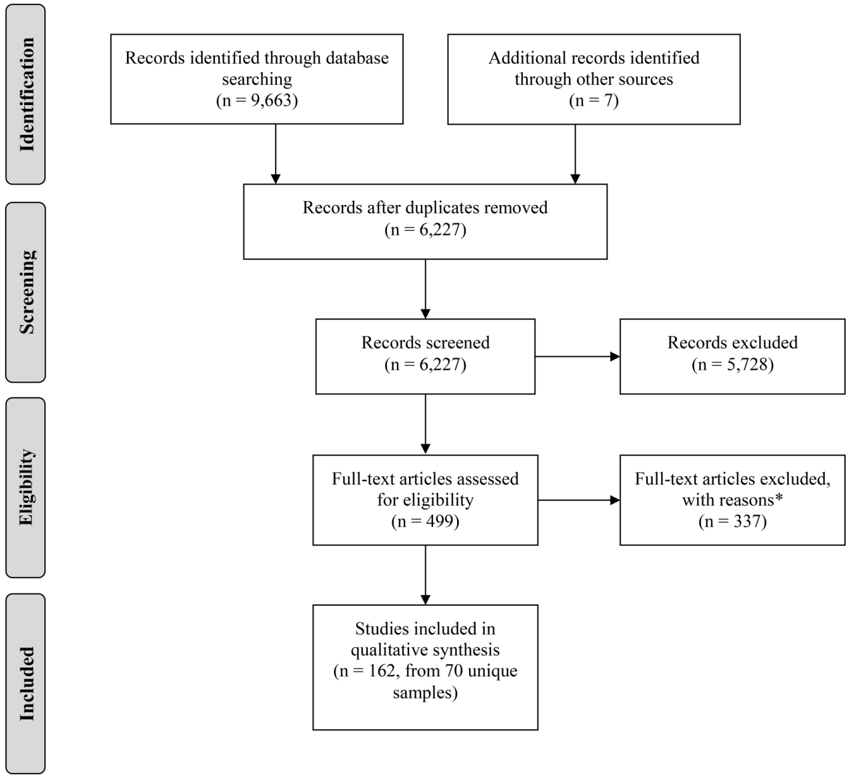
Moderate-to-vigorous physical activity (MVPA) is essential for disease prevention and health promotion. Emerging evidence suggests other intensities of physical activity (PA), including light-intensity activity (LPA), may also be important, but there has been no rigorous evaluation of the evidence. The purpose of this systematic review was to examine the relationships between objectively measured PA (total and all intensities) and health indicators in school-aged children and youth. Online databases were searched for peer-reviewed studies that met the a priori inclusion criteria: population (apparently healthy, aged 5–17 years), intervention/exposure/comparator (volumes, durations, frequencies, intensities, and patterns of objectively measured PA), and outcome (body composition, cardiometabolic biomarkers, physical fitness, behavioural conduct/pro-social behaviour, cognition/academic achievement, quality of life/well-being, harms, bone health, motor skill development, psychological distress, self-esteem). Heterogeneity among studies precluded meta-analyses; narrative synthesis was conducted. A total of 162 studies were included (204 171 participants from 31 countries). Overall, total PA was favourably associated with physical, psychological/social, and cognitive health indicators. Relationships were more consistent and robust for higher (e.g., MVPA) versus lower (e.g., LPA) intensity PA. All patterns of activity (sporadic, bouts, continuous) provided benefit. LPA was favourably associated with cardiometabolic biomarkers; data were scarce for other outcomes. These findings continue to support the importance of at least 60 min/day of MVPA for disease prevention and health promotion in children and youth, but also highlight the potential benefits of LPA and total PA. All intensities of PA should be considered in future work aimed at better elucidating the health benefits of PA in children and youth.
Overview
The claims and statistics of this paper haven’t been checked yet.
Free: it reads the open-access text and checks the first 5 claims that cite a source we can check. Create a free account to check every claim.
Integrity signals
Registry
Cites
Statistics
Figures
Verification
Claims the paper makes
The claims and statistics of this paper haven’t been checked yet.
Free: it reads the open-access text and checks the first 5 claims that cite a source we can check. Create a free account to check every claim.
Claims other papers make about this one
Each is checked against this paper’s own text: does it say what the citing paper says it does?
The source backs part of the claim, not all of it — or backs it for a different population, condition or comparison.
In the citing paper
“Research indicates that those who are physically active show or report better overall physical and mental health, a higher level of fitness and a lower level of obesity than their sedentary or physically inactive counterparts1–4”
From Physical activity and health in Chinese children and adolescents: expert consensus statement (2020) (2020) · cites this paper as [1]
Experimental — accuracy not yet measuredThe source backs part of the claim, not all of it — or backs it for a different population, condition or comparison.
In the citing paper
“The searches looked for journal articles reporting on sleep, sedentary time and physical activity using previously developed and validated searches [12–14, 30].”
From Combinations of physical activity, sedentary time, and sleep duration and their associations with depressive symptoms and other mental health problems in children and adolescents: a systematic review (2020) · cites this paper as [12]
Experimental — accuracy not yet measuredThe source backs part of the claim, not all of it — or backs it for a different population, condition or comparison.
In the citing paper
“Achieving high levels of physical activity, low levels of sedentary behaviour, and getting sufficient sleep have been individually associated with better mental health among children and adolescents [12–14].”
From Combinations of physical activity, sedentary time, and sleep duration and their associations with depressive symptoms and other mental health problems in children and adolescents: a systematic review (2020) · cites this paper as [12]
Experimental — accuracy not yet measuredThe source backs part of the claim, not all of it — or backs it for a different population, condition or comparison.
In the citing paper
“Previous studies looking at the 24-h movement guidelines and health indicators have primarily focused on examining the associations between the combinations of physical activity, sedentary time, and sleep duration with physical health outcomes [12–14].”
From Combinations of physical activity, sedentary time, and sleep duration and their associations with depressive symptoms and other mental health problems in children and adolescents: a systematic review (2020) · cites this paper as [12]
Experimental — accuracy not yet measuredThe source backs part of the claim, not all of it — or backs it for a different population, condition or comparison.
In the citing paper
“Isolated adherence to MVPA, screen time and sleep duration recommendations have been associated with lower adiposity indicators in children and adolescents [3, 5–10].”
From Proportion of children meeting recommendations for 24-hour movement guidelines and associations with adiposity in a 12-country study (2016) · cites this paper as [8]
Experimental — accuracy not yet measured
5 more claims about this paper
Create a free account to see every claim other papers make about this one.
Self-check
Percentages, sums and reported differences re-computed from the paper’s own numbers.
The self-check needs the paper’s full text.
Citations
Cites
The Cochrane Collaboration's tool for assessing risk of bias in randomised trials
Higgins, J. P. T., Altman, D. G., Gotzsche, P. C., Juni, P., Moher, D., Oxman, A. D., Savovic, J., Schulz, K. F., Weeks, L., Sterne, J. A. C., et al. (2011) · BMJ · doi:10.1136/bmj.d5928 · Cited by 33,817
Preferred Reporting Items for Systematic Reviews and Meta-Analyses: The PRISMA Statement
Moher, D., Liberati, A., Tetzlaff, J., & Altman, D. G. (2009) · Journal of Clinical Epidemiology · doi:10.1016/j.jclinepi.2009.06.005 · Cited by 19,575
Physical Activity in the United States Measured by Accelerometer
TROIANO, R. P., BERRIGAN, D., DODD, K. W., MÂSSE, L. C., TILERT, T., & MCDOWELL, M. (2008) · Medicine & Science in Sports & Exercise · doi:10.1249/mss.0b013e31815a51b3 · Cited by 7,638 · cited 2×
“This is unfortunate, as studies from Canada and the United States indicate that children and youth spend 4–6 h/day in LPA (Matthews et al. 2008; Troiano et al. 2008; Colley et al. 2011; Chaput et al. 2014), and emerging research suggests that spending more waking hours in LPA compared with…”
BackgroundJanssen, I., & LeBlanc, A. G. (2010) · International Journal of Behavioral Nutrition and Physical Activity · doi:10.1186/1479-5868-7-40 · Cited by 4,829 · cited 7×
“Physical activity (PA) is vital to the physical, psychological/ social, and cognitive health of school-aged children and youth (Janssen and LeBlanc 2010; Tremblay et al. 2010b).”
BackgroundResultInfluentialSelf-citationUtilization of the PICO framework to improve searching PubMed for clinical questions
Schardt, C., Adams, M. B., Owens, T., Keitz, S., & Fontelo, P. (2007) · BMC Medical Informatics and Decision Making · doi:10.1186/1472-6947-7-16 · Cited by 3,053 · cited 2×
“The participants, interventions, comparisons, outcomes and study design (PICOS) framework (Schardt et al. 2007) was followed to identify key study concepts in the research question a priori and to facilitate the searching process.”
MethodAmount of Time Spent in Sedentary Behaviors in the United States, 2003-2004
Matthews, C. E., Chen, K. Y., Freedson, P. S., Buchowski, M. S., Beech, B. M., Pate, R. R., & Troiano, R. P. (2008) · American Journal of Epidemiology · doi:10.1093/aje/kwm390 · Cited by 2,631 · cited 2×
“This is unfortunate, as studies from Canada and the United States indicate that children and youth spend 4–6 h/day in LPA (Matthews et al. 2008; Troiano et al. 2008; Colley et al. 2011; Chaput et al. 2014), and emerging research suggests that spending more waking hours in LPA compared with…”
BackgroundSelf-citationTremblay, M. S., Carson, V., Chaput, J.-P., Connor Gorber, S., Dinh, T., Duggan, M., Faulkner, G., Gray, C. E., Gruber, R., Janson, K., et al. (2016) · Applied Physiology, Nutrition, and Metabolism · doi:10.1139/apnm-2016-0151 · Cited by 2,024
Self-citationPhysiological and health implications of a sedentary lifestyle
Tremblay, M. S., Colley, R. C., Saunders, T. J., Healy, G. N., & Owen, N. (2010) · Applied Physiology, Nutrition, and Metabolism · doi:10.1139/h10-079 · Cited by 1,426 · cited 9×
“In this regard, the Canadian Physical Activity Guidelines for Children and Youth (Tremblay et al. 2010b, 2011), and many other guidelines around the world (e.g., Australia (Okely et al. 2012), USA (US Department of Health and Human Services 2008), and World Health Organization (WHO 2010)), recommend that children and…”
BackgroundInfluentialSelf-citationComparison of Accelerometer Cut Points for Predicting Activity Intensity in Youth
TROST, S. G., LOPRINZI, P. D., MOORE, R., & PFEIFFER, K. A. (2011) · Medicine & Science in Sports & Exercise · doi:10.1249/mss.0b013e318206476e · Cited by 1,360 · cited 3×
“…Marshall and Ramirez 2011) and the widespread use of subjective assessments of PA (Reilly et al. 2008; Adamo et al. 2009; Janssen and LeBlanc 2010; Trost et al. 2011), which cannot accurately capture LPA (e.g., various incidental activities accumulated throughout the day) (Hamilton et al. 2004;…”
BackgroundGRADE guidelines: 9. Rating up the quality of evidence
Guyatt, G. H., Oxman, A. D., Sultan, S., Glasziou, P., Akl, E. A., Alonso-Coello, P., Atkins, D., Kunz, R., Brozek, J., Montori, V., et al. (2011) · Journal of Clinical Epidemiology · doi:10.1016/j.jclinepi.2011.06.004 · Cited by 1,336 · cited 2×
“If there is no cause to downgrade, the quality of evidence can be upgraded if there is a large effect size, a dose–response gradient, or if all plausible confounders would decrease an apparent treatment effect (Guyatt et al. 2011b).”
BackgroundMethod
Research works printed but not linked: 9
- 2. Aggio, D., Smith, L., and Hamer, M. 2015. Effects of reallocating time in different activity intensities on health and fitness: a cross sectional study. Int. J. Behav. Nutr. Phys. Activ. 12(83). PMID:26104041.
- 22. Colley, R.C., Garriguet, D., Janssen, I., Craig, C.L., Clarke, J., and Tremblay, M.S. 2011. Physical activity of Canadian children and youth: Accelerometer results from the 2007 to 2009 Canadian Health Measures Survey. Statistics Canada cat. no. 82-003-X. Health Rep. 22(1): 1523. PMID:21510586.
- 49. Grydeland, M., Bergh, I.H., Bjelland, M., Lien, N., Andersen, L.F., Ommundsen, Y., et al. 2012. Correlates of weight status among Norwegian 11-year-olds: The HEIA study. BMC Publ. Health, 12(1053). PMID:23216675.
- 53. Guyatt, G., Oxman, A.D., Akl, E.A., Kunz, R., Vist, G., Brozek, J., et al. 2011a. GRADE guidelines: 1. Introduction-GRADE evidence profiles and summary of findings tables. J. Clin. Epidemiol. 64(4): 383-394. PMID:21195583.
- 85. Janz, K.F., Letuchy, E.M., Francis, S.L., Metcalf, K.M., Burns, T.L., and Levy, S.M. 2014a. Objectively measured physical activity predicts hip and spine bone mineral content in children and adolescents ages 5-15 years: Iowa Bone Development Study. Front. Endocrinol. 5: 112. PMID:25076937.
- 128. Nguyen, T.H., Tang, H.K., Kelly, P., van der Ploeg, H.P., and Dibley, M.J. 2010. Association between physical activity and metabolic syndrome: a cross sec- tional survey in adolescents in Ho Chi Minh City, Vietnam. BMC Publ. Health, 10(141). PMID:20236509.
- 129. Okely, A., Salmon, J., Vella, S., Cliff, D., Timperio, A., Tremblay, M., et al. 2012. A systematic review to update the Australian Physical Activity Guidelines for Children and Young People. Report prepared for the Australian Government Department of Health.
- 159. Sigmundova, D., and Sigmund, E. 2012. The effect of physical activity program at school on reducing childhood obesity: a results of four-year longitudinal study. Med. Sport. Bohem. Slov. 21(3): 129-141.
- 175. Tremblay, M.S., Esliger, D.W., Tremblay, A., and Colley, R. 2007. Incidental move- ment, lifestyle-embedded activity and sleep: new frontiers in physical activ- ity assessment. Can. J. Publ. Health, 98(Suppl. 2): 208-217. PMID:18213950.
Cited by
World Health Organization 2020 guidelines on physical activity and sedentary behaviour
Bull, F. C., Al-Ansari, S. S., Biddle, S., Borodulin, K., Buman, M. P., Cardon, G., Carty, C., Chaput, J.-P., Chastin, S., Chou, R., et al. (2020) · British Journal of Sports Medicine · doi:10.1136/bjsports-2020-102955 · Cited by 11,657
“For these guidelines on children and adolescents, systematic reviews undertaken by Poitras et al , 8 Carson et al 9 and Okely et al 10 were used and updated.”
MethodSelf-citationTremblay, M. S., Carson, V., Chaput, J.-P., Connor Gorber, S., Dinh, T., Duggan, M., Faulkner, G., Gray, C. E., Gruber, R., Janson, K., et al. (2016) · Applied Physiology, Nutrition, and Metabolism · doi:10.1139/apnm-2016-0151 · Cited by 2,024
Self-citationBiddle, S. J. H., Ciaccioni, S., Thomas, G., & Vergeer, I. (2019) · Psychology of Sport and Exercise · doi:10.1016/j.psychsport.2018.08.011 · Cited by 1,454
Carson, V., Hunter, S., Kuzik, N., Gray, C. E., Poitras, V. J., Chaput, J.-P., Saunders, T. J., Katzmarzyk, P. T., Okely, A. D., Connor Gorber, S., et al. (2016) · Applied Physiology, Nutrition, and Metabolism · doi:10.1139/apnm-2015-0630 · Cited by 1,380
Self-citationRodriguez-Ayllon, M., Cadenas-Sánchez, C., Estévez-López, F., Muñoz, N. E., Mora-Gonzalez, J., Migueles, J. H., Molina-García, P., Henriksson, H., Mena-Molina, A., Martínez-Vizcaíno, V., et al. (2019) · Sports Medicine · doi:10.1007/s40279-019-01099-5 · Cited by 1,360
Chaput, J.-P., Willumsen, J., Bull, F., Chou, R., Ekelund, U., Firth, J., Jago, R., Ortega, F. B., & Katzmarzyk, P. T. (2020) · International Journal of Behavioral Nutrition and Physical Activity · doi:10.1186/s12966-020-01037-z · Cited by 1,277
“For both physical activity and sedentary behaviour, the summary of evidence below refers to the overall body of evidence from existing [16, 18, 19, 21] and the 21 new systematic reviews.”
BackgroundMethodSelf-citationPhysical Activity, Cognition, and Brain Outcomes: A Review of the 2018 Physical Activity Guidelines
ERICKSON, K. I., HILLMAN, C., STILLMAN, C. M., BALLARD, R. M., BLOODGOOD, B., CONROY, D. E., MACKO, R., MARQUEZ, D. X., PETRUZZELLO, S. J., & POWELL, K. E. (2019) · Medicine & Science in Sports & Exercise · doi:10.1249/mss.0000000000001936 · Cited by 1,214
Handbook of Religion and Health
Koenig, H. G., VanderWeele, T., & Peteet, J. R. (2024) · doi:10.1093/oso/9780190088859.001.0001 · Cited by 1,139
Aubert, S., Barnes, J. D., Abdeta, C., Abi Nader, P., Adeniyi, A. F., Aguilar-Farias, N., Andrade Tenesaca, D. S., Bhawra, J., Brazo-Sayavera, J., Cardon, G., et al. (2018) · Journal of Physical Activity and Health · doi:10.1123/jpah.2018-0472 · Cited by 799
Self-citationCarson, V., Lee, E.-Y., Hewitt, L., Jennings, C., Hunter, S., Kuzik, N., Stearns, J. A., Unrau, S. P., Poitras, V. J., Gray, C., et al. (2017) · BMC Public Health · doi:10.1186/s12889-017-4860-0 · Cited by 783
“Setting minimum sample size inclusion criteria a priori is consistent with a similar systematic review in school-aged children and youth [2]; however, more lenient cut-offs were chosen a priori in the present review because it was anticipated the volume of research was lower in the early years age group.”
BackgroundSelf-citationSchmidt, S. C. E., Anedda, B., Burchartz, A., Eichsteller, A., Kolb, S., Nigg, C., Niessner, C., Oriwol, D., Worth, A., & Woll, A. (2020) · Scientific Reports · doi:10.1038/s41598-020-78438-4 · Cited by 719
Witchel, S. F., Oberfield, S. E., & Peña, A. S. (2019) · Journal of the Endocrine Society · doi:10.1210/js.2019-00078 · Cited by 653
“Importantly, moderate to vigorous physical activity for at least 60 minutes per day is associated with better physical and psychosocial health in children and adolescents [169].”
BackgroundTremblay, M. S., Chaput, J.-P., Adamo, K. B., Aubert, S., Barnes, J. D., Choquette, L., Duggan, M., Faulkner, G., Goldfield, G. S., Gray, C. E., et al. (2017) · BMC Public Health · doi:10.1186/s12889-017-4859-6 · Cited by 637
Self-citationRollo, S., Antsygina, O., & Tremblay, M. S. (2020) · Journal of Sport and Health Science · doi:10.1016/j.jshs.2020.07.004 · Cited by 611
“Our findings corroborate those of previous literature, which demonstrate the benefits of high PA, low screen time, and sufficient sleep, both separately and in combinations, for pediatric health.(1,3,5,12) It is clear from the evidence that children and youth who meet the benchmarks for PA, screen time, and sleep reco…”
ResultSelf-citationA systematic review of physical activity and quality of life and well-being
Marquez, D. X., Aguiñaga, S., Vásquez, P. M., Conroy, D. E., Erickson, K. I., Hillman, C., Stillman, C. M., Ballard, R. M., Sheppard, B. B., Petruzzello, S. J., et al. (2020) · Translational Behavioral Medicine · doi:10.1093/tbm/ibz198 · Cited by 612
“’s review of apparently healthy children and youth (including those with overweight and obesity) with a mean age of 5–17 years found available studies to be of poor quality with no consistent findings but did find that total PA (steps per day) was positively correlated with QoL [77].”
Saunders, T. J., Gray, C. E., Poitras, V. J., Chaput, J.-P., Janssen, I., Katzmarzyk, P. T., Olds, T., Connor Gorber, S., Kho, M. E., Sampson, M., et al. (2016) · Applied Physiology, Nutrition, and Metabolism · doi:10.1139/apnm-2015-0626 · Cited by 589
“Articles identified as potentially relevant during the screening process of the other 3 systematic reviews (Carson et al. 2016; Chaput et al. 2016; Poitras et al. 2016) were also added to the database for de-duplication.”
BackgroundMethodInfluentialSelf-citationTremblay, M. S., Barnes, J. D., González, S. A., Katzmarzyk, P. T., Onywera, V. O., Reilly, J. J., Tomkinson, G. R., & _, _. (2016) · Journal of Physical Activity and Health · doi:10.1123/jpah.2016-0594 · Cited by 451
Self-citationNeil-Sztramko, S. E., Caldwell, H., & Dobbins, M. (2021) · Cochrane Database of Systematic Reviews · doi:10.1002/14651858.cd007651.pub3 · Cited by 449
Aubert, S., Barnes, J. D., Demchenko, I., Hawthorne, M., Abdeta, C., Abi Nader, P., Adsuar Sala, J. C., Aguilar-Farias, N., Aznar, S., Bakalár, P., et al. (2022) · Journal of Physical Activity and Health · doi:10.1123/jpah.2022-0456 · Cited by 439
“This approach permitted to the 3 autonomous communities/regions to (1) become aware of the lack of highquality studies in this region evaluating PA and its associated factors, (2) to know the current status of the 10 common PA indicators, and (3) to compare these results with those from other autonomous communities in…”
BackgroundMethodResultInfluentialSelf-citationAshdown-Franks, G., Firth, J., Carney, R., Carvalho, A. F., Hallgren, M., Koyanagi, A., Rosenbaum, S., Schuch, F. B., Smith, L., Solmi, M., et al. (2020) · Sports Medicine · doi:10.1007/s40279-019-01187-6 · Cited by 460
Sampasa-Kanyinga, H., Colman, I., Goldfield, G. S., Janssen, I., Wang, J., Podinic, I., Tremblay, M. S., Saunders, T. J., Sampson, M., & Chaput, J.-P. (2020) · International Journal of Behavioral Nutrition and Physical Activity · doi:10.1186/s12966-020-00976-x · Cited by 430
Self-citationEffects of Exercise on Brain and Cognition Across Age Groups and Health States
Stillman, C. M., Esteban-Cornejo, I., Brown, B., Bender, C. M., & Erickson, K. I. (2020) · Trends in Neurosciences · doi:10.1016/j.tins.2020.04.010 · Cited by 423
On behalf of the Determinants of Diet and Physical Activity knowledge hub (DEDIPAC); International Children’s Accelerometry Database (ICAD) Collaborators, I. C. A. H. C., Steene-Johannessen, J., Hansen, B. H., Dalene, K. E., Kolle, E., Northstone, K., Møller, N. C., Grøntved, A., Wedderkopp, N., Kriemler, S., et al. (2020) · International Journal of Behavioral Nutrition and Physical Activity · doi:10.1186/s12966-020-00930-x · Cited by 415
Carson, V., Tremblay, M. S., Chaput, J.-P., & Chastin, S. F. M. (2016) · Applied Physiology, Nutrition, and Metabolism · doi:10.1139/apnm-2016-0026 · Cited by 414
Self-citationDiPietro, L., Al-Ansari, S. S., Biddle, S. J. H., Borodulin, K., Bull, F. C., Buman, M. P., Cardon, G., Carty, C., Chaput, J.-P., Chastin, S., et al. (2020) · International Journal of Behavioral Nutrition and Physical Activity · doi:10.1186/s12966-020-01042-2 · Cited by 387
Self-citationPoitras, V. J., Gray, C. E., Janssen, X., Aubert, S., Carson, V., Faulkner, G., Goldfield, G. S., Reilly, J. J., Sampson, M., & Tremblay, M. S. (2017) · BMC Public Health · doi:10.1186/s12889-017-4849-8 · Cited by 380
“The review team decided a priori not to downgrade for risk of bias if the only potential sources of bias identified were use of a convenience sample or lack of exposure/outcome blinding, as in previous movement behaviour systematic reviews [25, 30].”
MethodSelf-citationDumuid, D., Pedišić, Ž., Stanford, T. E., Martín-Fernández, J.-A., Hron, K., Maher, C. A., Lewis, L. K., & Olds, T. (2019) · Statistical Methods in Medical Research · doi:10.1177/0962280217737805 · Cited by 367
for the ISCOLE Research Group, Roman-Viñas, B., Chaput, J.-P., Katzmarzyk, P. T., Fogelholm, M., Lambert, E. V., Maher, C., Maia, J., Olds, T., Onywera, V., et al. (2016) · International Journal of Behavioral Nutrition and Physical Activity · doi:10.1186/s12966-016-0449-8 · Cited by 368
“In addition to not meeting the minimum amount of recommended physical activity, the majority of the sample engaged in recreational screen time for more than 2 hours per day, behaviors most frequently related to negative health outcomes [8, 9].”
BackgroundSelf-citationDale, L. P., Vanderloo, L., Moore, S., & Faulkner, G. (2019) · Mental Health and Physical Activity · doi:10.1016/j.mhpa.2018.12.001 · Cited by 366
How Sedentary Are University Students? A Systematic Review and Meta-Analysis
Castro, O., Bennie, J., Vergeer, I., Bosselut, G., & Biddle, S. J. H. (2020) · Prevention Science · doi:10.1007/s11121-020-01093-8 · Cited by 339
Tremblay, M. S., Carson, V., & Chaput, J.-P. (2016) · Applied Physiology, Nutrition, and Metabolism · doi:10.1139/apnm-2016-0203 · Cited by 337
Self-citationTapia-Serrano, M. A., Sevil-Serrano, J., Sánchez-Miguel, P. A., López-Gil, J. F., Tremblay, M. S., & García-Hermoso, A. (2022) · Journal of Sport and Health Science · doi:10.1016/j.jshs.2022.01.005 · Cited by 333
Self-citationRhodes, R. E., Guerrero, M. D., Vanderloo, L. M., Barbeau, K., Birken, C. S., Chaput, J.-P., Faulkner, G., Janssen, I., Madigan, S., Mâsse, L. C., et al. (2020) · International Journal of Behavioral Nutrition and Physical Activity · doi:10.1186/s12966-020-00973-0 · Cited by 334
Self-citationCassar, S., Salmon, J., Timperio, A., Naylor, P.-J., van Nassau, F., Contardo Ayala, A. M., & Koorts, H. (2019) · International Journal of Behavioral Nutrition and Physical Activity · doi:10.1186/s12966-019-0876-4 · Cited by 304
Health associations with meeting new 24-hour movement guidelines for Canadian children and youth
Carson, V., Chaput, J.-P., Janssen, I., & Tremblay, M. S. (2017) · Preventive Medicine · doi:10.1016/j.ypmed.2016.12.005 · Cited by 285
“These new guidelines were informed by evidence from four systematic reviews (Carson et al., 2016a; Chaput et al., 2016; Poitras et al., 2016; Saunders et al., 2016), novel compositional data analyses (Carson et al.”
BackgroundSelf-citationSelf-determination theory in physical education: A systematic review of qualitative studies
White, R. L., Bennie, A., Vasconcellos, D., Cinelli, R., Hilland, T., Owen, K. B., & Lonsdale, C. (2021) · Teaching and Teacher Education · doi:10.1016/j.tate.2020.103247 · Cited by 276
Cliff, D. P., McNeill, J., Vella, S. A., Howard, S. J., Santos, R., Batterham, M., Melhuish, E., Okely, A. D., & de Rosnay, M. (2017) · BMC Public Health · doi:10.1186/s12889-017-4858-7 · Cited by 269
Aubert, S., Brazo-Sayavera, J., González, S. A., Janssen, I., Manyanga, T., Oyeyemi, A. L., Picard, P., Sherar, L. B., Turner, E., & Tremblay, M. S. (2021) · International Journal of Behavioral Nutrition and Physical Activity · doi:10.1186/s12966-021-01155-2 · Cited by 259
Self-citationKuzik, N., Poitras, V. J., Tremblay, M. S., Lee, E.-Y., Hunter, S., & Carson, V. (2017) · BMC Public Health · doi:10.1186/s12889-017-4851-1 · Cited by 246
“significant improvements in fundamental movement skills were observed in the intervention group compared to the control group at 6-month follow-up [25].”
BackgroundResultSelf-citationMarker, A. M., Steele, R. G., & Noser, A. E. (2018) · Health Psychology · doi:10.1037/hea0000653 · Cited by 242
Exergaming for Children and Adolescents: Strengths, Weaknesses, Opportunities and Threats
Benzing, V., & Schmidt, M. (2018) · Journal of Clinical Medicine · doi:10.3390/jcm7110422 · Cited by 238
“Physical inactivity is a major health factor in children and adults due to the many harmful effects on both physical [3] and mental health [4].”
BackgroundUrban blue space and health and wellbeing in Hong Kong: Results from a survey of older adults
Garrett, J. K., White, M. P., Huang, J., Ng, S., Hui, Z., Leung, C., Tse, L. A., Fung, F., Elliott, L. R., Depledge, M. H., et al. (2019) · Health & Place · doi:10.1016/j.healthplace.2018.11.003 · Cited by 235
Physical activity and health in Chinese children and adolescents: expert consensus statement (2020)
Chen, P., Wang, D., Shen, H., Yu, L., Gao, Q., Mao, L., Jiang, F., Luo, Y., Xie, M., Zhang, Y., et al. (2020) · British Journal of Sports Medicine · doi:10.1136/bjsports-2020-102261 · Cited by 225
Prince, S. A., Elliott, C. G., Scott, K., Visintini, S., & Reed, J. L. (2019) · International Journal of Behavioral Nutrition and Physical Activity · doi:10.1186/s12966-019-0790-9 · Cited by 212
Fühner, T., Kliegl, R., Arntz, F., Kriemler, S., & Granacher, U. (2021) · Sports Medicine · doi:10.1007/s40279-020-01373-x · Cited by 201
Canada’s Physical Literacy Consensus Statement: process and outcome
Tremblay, M. S., Costas-Bradstreet, C., Barnes, J. D., Bartlett, B., Dampier, D., Lalonde, C., Leidl, R., Longmuir, P., McKee, M., Patton, R., et al. (2018) · BMC Public Health · doi:10.1186/s12889-018-5903-x · Cited by 200
Self-citationWhat Predicts the Physical Activity Intention–Behavior Gap? A Systematic Review
Rhodes, R. E., Cox, A., & Sayar, R. (2022) · Annals of Behavioral Medicine · doi:10.1093/abm/kaab044 · Cited by 197
Lang, J. J., Belanger, K., Poitras, V., Janssen, I., Tomkinson, G. R., & Tremblay, M. S. (2018) · Journal of science and medicine in sport · doi:10.1016/j.jsams.2017.08.002 · Cited by 194
Self-citationPhysical Activity and Academic Achievement: An Umbrella Review
Barbosa, A., Whiting, S., Simmonds, P., Scotini Moreno, R., Mendes, R., & Breda, J. (2020) · International Journal of Environmental Research and Public Health · doi:10.3390/ijerph17165972 · Cited by 189
“Poitras et al., 2016 [51] PA resulted in mixed-effects (small or null) on AA according tothe study design.”
BackgroundMethodResultInfluentialDavenport, M. H., Marchand, A.-A., Mottola, M. F., Poitras, V. J., Gray, C. E., Jaramillo Garcia, A., Barrowman, N., Sobierajski, F., James, M., Meah, V. L., et al. (2019) · British Journal of Sports Medicine · doi:10.1136/bjsports-2018-099400 · Cited by 189
Self-citationPhysical Literacy, Physical Activity, and Health Indicators in School-Age Children
Caldwell, H. A. T., Di Cristofaro, N. A., Cairney, J., Bray, S. R., MacDonald, M. J., & Timmons, B. W. (2020) · International Journal of Environmental Research and Public Health · doi:10.3390/ijerph17155367 · Cited by 187
“In childhood, increased physical activity participation is associated with numerous health benefits, including decreased adiposity, reductions in cardiometabolic disease risk, increases in aerobic fitness and muscular strength, and higher quality of life [4].”
BackgroundU.S. Children Meeting Physical Activity, Screen Time, and Sleep Guidelines
Friel, C. P., Duran, A. T., Shechter, A., & Diaz, K. M. (2020) · American Journal of Preventive Medicine · doi:10.1016/j.amepre.2020.05.007 · Cited by 178
Hrafnkelsdottir, S. M., Brychta, R. J., Rognvaldsdottir, V., Gestsdottir, S., Chen, K. Y., Johannsson, E., Guðmundsdottir, S. L., & Arngrimsson, S. A. (2018) · PLOS ONE · doi:10.1371/journal.pone.0196286 · Cited by 159
Fairclough, S. J., Dumuid, D., Taylor, S., Curry, W., McGrane, B., Stratton, G., Maher, C., & Olds, T. (2017) · International Journal of Behavioral Nutrition and Physical Activity · doi:10.1186/s12966-017-0521-z · Cited by 167
“It is suggested that differences in accelerometer LPA cutpoints contribute to these inconsistent results [65] and that focusing on the upper end of the LPA intensity range may be more important when attempting to understand relationships between LPA and health indicators in youth [3].”
ResultRuchat, S.-M., Mottola, M. F., Skow, R. J., Nagpal, T. S., Meah, V. L., James, M., Riske, L., Sobierajski, F., Kathol, A. J., Marchand, A.-A., et al. (2018) · British Journal of Sports Medicine · doi:10.1136/bjsports-2018-099399 · Cited by 166
Self-citationComplementary and Alternative Medicines Used by Patients With Inflammatory Bowel Diseases
Cheifetz, A. S., Gianotti, R., Luber, R., & Gibson, P. R. (2017) · Gastroenterology · doi:10.1053/j.gastro.2016.10.004 · Cited by 161
Correlates of sedentary behaviour in adults: a systematic review
Prince, S. A., Reed, J. L., McFetridge, C., Tremblay, M. S., & Reid, R. D. (2017) · Obesity Reviews · doi:10.1111/obr.12529 · Cited by 160
“The risk of bias of the individual studies was assessed using a standard (intervention studies) (27) and modified version (observational studies) (28) of the Cochrane Collaboration’s Tool for Assessing Risk of Bias for consistent comparison between studies.”
MethodSelf-citationPrince, S. A., Rasmussen, C. L., Biswas, A., Holtermann, A., Aulakh, T., Merucci, K., & Coenen, P. (2021) · International Journal of Behavioral Nutrition and Physical Activity · doi:10.1186/s12966-021-01166-z · Cited by 160
“The risk of bias of studies was assessed using a standard (interventional studies) [24] and modified version (observational studies) [25] of the Cochrane Collaboration’s Tool for Assessing Risk of Bias for consistent comparisons across studies of different designs.”
MethodCollaborators, O. B. O. T. I. C. A. D. (., Tarp, J., Child, A., White, T., Westgate, K., Bugge, A., Grøntved, A., Wedderkopp, N., Andersen, L. B., Cardon, G., et al. (2018) · International Journal of Obesity · doi:10.1038/s41366-018-0152-8 · Cited by 157
Physical Activity and Health in Children Younger than 6 Years: A Systematic Review
Pate, R. R., Hillman, C. H., Janz, K. F., Katzmarzyk, P. T., Powell, K. E., Torres, A. D., & Whitt‐Glover, M. C. (2019) · Medicine & Science in Sports & Exercise · doi:10.1249/mss.0000000000001940 · Cited by 197
Self-citationRethinking the sleep-health link
Matricciani, L., Bin, Y. S., Lallukka, T., Kronholm, E., Wake, M., Paquet, C., Dumuid, D., & Olds, T. (2018) · Sleep Health · doi:10.1016/j.sleh.2018.05.004 · Cited by 146
Skrede, T., Steene‐Johannessen, J., Anderssen, S. A., Resaland, G. K., & Ekelund, U. (2019) · Obesity Reviews · doi:10.1111/obr.12758 · Cited by 147
“Therefore, as long as youth spend a sufficient amount of time in MVPA, the pattern of MVPA (12) and accumulation of sedentary time are not detrimental for cardiometabolic health (11,39).”
BackgroundChen, S., Liu, Y., Tremblay, M. S., Hong, J.-T., Tang, Y., Cao, Z., Zhuang, J., Zhu, Z., Wu, X., Wang, L., et al. (2020) · Journal of sport and health science/Journal of Sport and Health Science · doi:10.1016/j.jshs.2020.07.002 · Cited by 162
Self-citationGender differences in the distribution of children’s physical activity: evidence from nine countries
Kretschmer, L., Salalι, G. D., Andersen, L. B., Hallal, P. C., Northstone, K., Sardinha, L. B., Dyble, M., Bann, D., Collaborators, I. C. A. D. (., Andersen, L. B., et al. (2023) · International Journal of Behavioral Nutrition and Physical Activity · doi:10.1186/s12966-023-01496-0 · Cited by 198
“Low levels of activity in childhood have been linked to a series of unfavourable outcomes: higher incidence of infectious [2] and chronic disease [3–8], poorer mental health outcomes [3, 9], lower cognitive function and school performance [9, 10], and delayed physical development [3, 7, 8, 10–15].”
BackgroundSelf-citationTomkinson, G. R., Lang, J. J., Blanchard, J., Léger, L., & Tremblay, M. S. (2019) · Pediatric Exercise Science · doi:10.1123/pes.2018-0179 · Cited by 157
Self-citationJanssen, I., Roberts, K. C., & Thompson, W. (2017) · Applied Physiology, Nutrition, and Metabolism · doi:10.1139/apnm-2016-0681 · Cited by 137
Self-citationThe Impact of Diet and Physical Activity on Bone Health in Children and Adolescents
Proia, P., Amato, A., Drid, P., Korovljev, D., Vasto, S., & Baldassano, S. (2021) · Frontiers in Endocrinology · doi:10.3389/fendo.2021.704647 · Cited by 179
“Also, participation in unstructured weight-bearing physical activity had strong and consistent positive effects on bone development (71, 74), further confirming that the high level of physical activity intensity is associated with higher modification in bone parameters during childhood (75, 76).”
BackgroundKapsal, N. J., Dicke, T., Morin, A. J. S., Vasconcellos, D., Maïano, C., Lee, J. J., & Lonsdale, C. (2019) · Journal of Physical Activity and Health · doi:10.1123/jpah.2018-0675 · Cited by 170
Text Neck Syndrome in Children and Adolescents
David, D., Giannini, C., Chiarelli, F., & Mohn, A. (2021) · International Journal of Environmental Research and Public Health · doi:10.3390/ijerph18041565 · Cited by 218
“Various indicators of psycho-physical well-being in children have been negatively associated with insufficient physical activity [80,81], and excessive sedentary time [82,83], particularly in front of the screen [84].”
BackgroundBehavioral Correlates of Muscular Fitness in Children and Adolescents: A Systematic Review
Smith, J. J., Eather, N., Weaver, R. G., Riley, N., Beets, M. W., & Lubans, D. R. (2019) · Sports Medicine · doi:10.1007/s40279-019-01089-7 · Cited by 151
Zhang, X., Zhu, W., Kang, S., Qiu, L., Lu, Z., & Sun, Y. (2020) · International Journal of Environmental Research and Public Health · doi:10.3390/ijerph17207666 · Cited by 124
Dumuid, D., Stanford, T. E., Pedišić, Ž., Maher, C., Lewis, L. K., Martín-Fernández, J.-A., Katzmarzyk, P. T., Chaput, J.-P., Fogelholm, M., Standage, M., et al. (2018) · BMC Public Health · doi:10.1186/s12889-018-5207-1 · Cited by 121
“, body fat%); conversely, greater sedentary time has been associated with higher adiposity [1-3].”
BackgroundSelf-citationThe impact of the coronavirus disease 2019 pandemic on physical activity in U.S. children
Tulchin‐Francis, K., Stevens, W., Gu, X., Zhang, T., Roberts, H., Keller, J., Dempsey, D., Borchard, J., Jeans, K. A., & VanPelt, J. M. (2021) · Journal of sport and health science/Journal of Sport and Health Science · doi:10.1016/j.jshs.2021.02.005 · Cited by 154
Phillips, S. M., Summerbell, C., Hobbs, M., Hesketh, K. R., Saxena, S. K., Muir, C., & Hillier-Brown, F. C. (2021) · International Journal of Behavioral Nutrition and Physical Activity · doi:10.1186/s12966-021-01132-9 · Cited by 155
Parrish, A., Tremblay, M. S., Carson, S., Veldman, S. L. C., Cliff, D. P., Vella, S. A., Chong, K. H., Nácher, M., Cruz, B. D. P., Ellis, Y., et al. (2020) · International Journal of Behavioral Nutrition and Physical Activity · doi:10.1186/s12966-020-0914-2 · Cited by 148
Self-citationGuan, H., Zhang, Z., Wang, B., Okely, A. D., Tong, M., Wu, J., & Zhang, T. (2020) · BMC Pediatrics · doi:10.1186/s12887-020-1969-6 · Cited by 131
Wunsch, K., Nigg, C., Niessner, C., Schmidt, S. C. E., Oriwol, D., Hanssen-Doose, A., Burchartz, A., Eichsteller, A., Kolb, S., Worth, A., et al. (2021) · Children · doi:10.3390/children8020098 · Cited by 115
Associations between physical activity intensity and well-being in adolescents
Costigan, S. A., Lubans, D. R., Lonsdale, C., Sanders, T., & Cruz, B. D. P. (2019) · Preventive Medicine · doi:10.1016/j.ypmed.2019.05.009 · Cited by 144
Invernizzi, P. L., Crotti, M., Bosio, A., Cavaggioni, L., Alberti, G., & Scurati, R. (2019) · Sustainability · doi:10.3390/su11020405 · Cited by 153
“In particular, MTA fosters the relationships among the cognitive, motor, and psycho-social functions of the individual, integrating the own motor background with new responses and adaptations [76].”
BackgroundChesham, R. A., Booth, J. N., Sweeney, E. L., Ryde, G. C., Gorely, T., Brooks, N. E., & Moran, C. N. (2018) · BMC Medicine · doi:10.1186/s12916-018-1049-z · Cited by 136
“Whilst published evidence shows a positive health relationship between physical activity, particularly MVPA, and these outcomes [24], it is unknown whether 15 min of exercise, particularly with no expectation of intensity, will provide such benefits.”
BackgroundTremblay, M. S., Longmuir, P. E., Barnes, J. D., Belanger, K., Anderson, K. D., Bruner, B., Copeland, J. L., Nyström, C. D., Gregg, M. J., Hall, N., et al. (2018) · BMC Public Health · doi:10.1186/s12889-018-5891-x · Cited by 145
Self-citationPhysical activity and sedentary time in relation to academic achievement in children
Haapala, E. A., Väistö, J., Lintu, N., Westgate, K., Ekelund, U., Poikkeus, A.-M., Brage, S., & Lakka, T. A. (2017) · Journal of Science and Medicine in Sport · doi:10.1016/j.jsams.2016.11.003 · Cited by 105
Correlates of sedentary behaviour in university students: A systematic review
Castro, Ó., Bennie, J. A., Vergeer, I., Bosselut, G., & Biddle, S. (2018) · Preventive Medicine · doi:10.1016/j.ypmed.2018.09.016 · Cited by 144
Tassitano, R. M., Weaver, R. G., Tenório, M. C. M., Brazendale, K., & Beets, M. W. (2020) · International Journal of Behavioral Nutrition and Physical Activity · doi:10.1186/s12966-020-01054-y · Cited by 122
Ludwig, K., Arthur, R., Sculthorpe, N., Fountain, H., & Buchan, D. S. (2018) · JMIR mHealth and uHealth · doi:10.2196/10799 · Cited by 106
“Conversely, increased PA improves adiposity, blood lipid profile, blood pressure, insulin resistance, aerobic fitness, and bone health [12] while also reducing premature all-cause mortality [13].”
Santos, R., Zhang, Z., Pereira, J. R., Sousa‐Sá, E., Cliff, D. P., & Okely, A. D. (2017) · BMC Public Health · doi:10.1186/s12889-017-4857-8 · Cited by 122
McCormack, G. R., Doyle-Baker, P. K., Petersen, J. A., & Ghoneim, D. (2020) · Preventive Medicine Reports · doi:10.1016/j.pmedr.2020.101275 · Cited by 103
“Higher levels of PA and fitness in children are also associated with improved cognitive function and academic performance (Donnelly et al., 2016; Biddle and Asare, 2011; Poitras et al., 2016).”
Bermejo‐Cantarero, A., Álvarez‐Bueno, C., Martínez‐Vizcaíno, V., Redondo‐Tébar, A., Pozuelo‐Carrascosa, D. P., & Sánchez‐López, M. (2021) · Health and Quality of Life Outcomes · doi:10.1186/s12955-021-01766-0 · Cited by 134
“It is known that PA of different intensities, mainly vigorous [58, 59], can improve fitness in children and adolescents, and thus fitness could be a mediator between PA and HRQoL.”
BackgroundPhysical Activity Maintenance: A Critical Narrative Review and Directions for Future Research
Rhodes, R. E., & Sui, W. (2021) · Frontiers in Psychology · doi:10.3389/fpsyg.2021.725671 · Cited by 132
Nilsen, A. K. O., Anderssen, S. A., Johannessen, K., Aadland, K. N., Ylvisåker, E., Loftesnes, J. M., & Aadland, E. (2020) · International Journal of Behavioral Nutrition and Physical Activity · doi:10.1186/s12966-019-0902-6 · Cited by 115
Neshteruk, C. D., Nezami, B. T., Nino-Tapias, G., Davison, K. K., & Ward, D. S. (2017) · Preventive Medicine · doi:10.1016/j.ypmed.2017.06.027 · Cited by 123
“Using the total score, a quality indicator of low (1-5), fair (6-9) or high (10-14) was assigned to each study.”
MethodPhysical Education Classes, Physical Activity, and Sedentary Behavior in Children
Silva, D. A. S., Chaput, J., Katzmarzyk, P. T., Fogelholm, M., Hu, G., Maher, C. A., Olds, T., Onywera, V. O., Sarmiento, O. L., Standage, M., et al. (2017) · Medicine & Science in Sports & Exercise · doi:10.1249/mss.0000000000001524 · Cited by 128
Self-citationRenninger, M., Hansen, B. H., Steene‐Johannessen, J., Kriemler, S., Froberg, K., Northstone, K., Sardinha, L., Anderssen, S. A., Andersen, L. B., Ekelund, U., et al. (2020) · Pediatric Obesity · doi:10.1111/ijpo.12578 · Cited by 101
“Existing evidence in children and adolescents indicates a beneficial association between objectively measured physical activity and several cardio‐metabolic biomarkers as well as adiposity.(10) The association between sedentary time and cardio‐metabolic health remains inconsistent.”
BackgroundSchmidt, M., Benzing, V., Wallman-Jones, A., Mavilidi, M.-F., Lubans, D. R., & Paas, F. (2019) · Psychology of Sport and Exercise · doi:10.1016/j.psychsport.2018.12.017 · Cited by 99
“for children’s physical (Poitras et al., 2016) and mental health (Lubans et al.”
BackgroundKemp, B. J., Cliff, D. P., Chong, K. H., & Parrish, A. (2018) · Journal of science and medicine in sport · doi:10.1016/j.jsams.2018.12.012 · Cited by 109
Uddin, R., Salmon, J., Islam, S. M. S., & Khan, A. (2020) · Scientific Reports · doi:10.1038/s41598-020-79100-9 · Cited by 121
A grounded theory of how social support influences physical activity in adolescent girls
Laird, Y., Fawkner, S. G., & Niven, A. G. (2018) · International Journal of Qualitative Studies on Health and Well-Being · doi:10.1080/17482631.2018.1435099 · Cited by 133
“The health benefits of regular physical activity (PA) for young people are well-documented (Janssen & LeBlanc, 2010; Poitras et al., 2016), yet an estimated 80% of adolescents aged 13– 15 years worldwide fail to reach minimum PA guidelines of 60 minutes of moderate-to-vigorous PA (MVPA) per day…”
BackgroundThe multivariate physical activity signature associated with metabolic health in children
Aadland, E., Kvalheim, O. M., Anderssen, S. A., Resaland, G. K., & Andersen, L. B. (2018) · International Journal of Behavioral Nutrition and Physical Activity · doi:10.1186/s12966-018-0707-z · Cited by 108
Children Present a Window of Opportunity for Promoting Health
Fernández‐Jiménez, R., Al‐Kazaz, M., Jaslow, R., Carvajal, I., & Fuster, V. (2018) · Journal of the American College of Cardiology · doi:10.1016/j.jacc.2018.10.031 · Cited by 115
Khan, S. R., Uddin, R., Mandic, S., & Khan, A. (2020) · International Journal of Environmental Research and Public Health · doi:10.3390/ijerph17124435 · Cited by 115
“Physical activity (PA) is essential for the well-being of adolescents and is associated with physical fitness, bone health, and cardio-metabolic biomarkers such as cholesterol, blood pressure, insulin and glucose levels [1].”
Background
Metadata
- Authors
- Poitras, V. J., Gray, C. E., Borghese, M. M., Carson, V., Chaput, J.-P., Janssen, I., Katzmarzyk, P. T., Pate, R. R., Connor Gorber, S., Kho, M. E., Sampson, M., & Tremblay, M. S.
- Affiliations
- Children's Hospital of Eastern Ontario (CA)
- Queen's University (CA)
- University of Alberta (CA)
- Pennington Biomedical Research Center (US)
- University of South Carolina (US)
- Office of the Task Force on Preventive Health Care, Public Health Agency of Canada, Ottawa, ON K1A 0K9, Canada.
- McMaster University (CA)
- Corresponding author
- Poitras, Veronica Joan
- Gray, Casey Ellen
- ORCID
- Venue
- Applied Physiology, Nutrition, and Metabolism
- Publisher
- Canadian Science Publishing
- Published
- 2016-06
- Volume
- 41
- Issue
- 6 (Suppl. 3)
- Pages
- S197-S239
- ISSN
- 1715-5312 (ISSN-L)
- 1715-5320
- OpenAlex
- W2444482132
- Cited by
- 2,217
- References
- 182
- Citations by year
- 2026: 155 · 2025: 234 · 2024: 255 · 2023: 260 · 2022: 315 · 2021: 321 · 2020: 258 · 2019: 193 · 2018: 143 · 2017: 63 · 2016: 18
- FWCI
- 16.30
- Type
- journal article
- Language
- en
- Open access
- hybrid
- doi.org
- Licence
- cc-by
- www.nrcresearchpress.com/page/about/CorporateTextAndDataMining (tdm)
- Locations
- Applied Physiology Nutrition and Metabolism (publishedVersion, cc-by)
- PubMed (publishedVersion)
- TSpace (University of Toronto) (acceptedVersion)
- TSpace (University of Toronto) (submittedVersion)
- Scholar Commons (University of South Carolina) (submittedVersion, cc-by)
- Funders
- Public Health Agency of Canada
- Public Health Agency
- Canadian Institutes of Health Research
- Topics
- Health Sciences › Medicine › Public Health, Environmental and Occupational Health › Physical Activity and Health
- Health Sciences › Medicine › Public Health, Environmental and Occupational Health › Obesity, Physical Activity, Diet
- Social Sciences › Life-span and Life-course Studies › Recreational Sport and Physical Activity
- Keywords
- physical activity, moderate-to-vigorous physical activity, light physical activity, school-aged children, adolescents, health indicators, body composition, cardiometabolic biomarkers, physical fitness, prosocial behavior, academic performance, quality of life, bone health, motor skill development, psychological distress, self-esteem, activity patterns, activity bouts, disease prevention
- MeSH terms
- Adolescent, Adolescent Behavior, Body Composition, Cardiovascular Diseases, Child, Child Behavior, Child, Preschool, Cognition, Health Status, Humans, Obesity, Physical Fitness, Quality of Life, Biomarkers, Exercise, Randomized Controlled Trials as Topic, Treatment Outcome, Metabolic Syndrome, Non-Randomized Controlled Trials as Topic
About these checks
Registry, retraction, Cites and statistics results are computed, not judged, with one exception: a printed reference that no index lists is read once by a model before it counts as a citation error. Claims are extracted by a model and kept only when their quote appears verbatim in the text; each cited source is then checked, with a model’s help, for whether it says what the claim relies on. Those verdicts can be wrong — read the claim’s quote and the cited source before relying on one.
Statistics and arithmetic are recomputed, not judged.
Confidence bands are shown only for fields calibrated on our annotated test set. None is calibrated yet, so no band is shown.
What counts as a claim ›How we measure confidence ›How we check this ›
Are you an author, or do you see a problem with this page? Request a review
Data sources
Bibliographic data: Semantic Scholar, OpenAlex, Crossref.
Contains information from the Semantic Scholar Academic Graph Datasets, made available under the ODC Attribution License (ODC-BY 1.0).
Semantic Scholar’s data is described in: Kinney, R., et al. (2023). The Semantic Scholar Open Data Platform. arXiv:2301.10140.
