

Systematic review of the relationships between objectively measured physical activity and health indicators in school-aged children and youth
Open accessThe DOI matches its Crossref record; 186 of the 187 references it cites were found in a registry or an index, and 1 are not checked yet.
Abstract
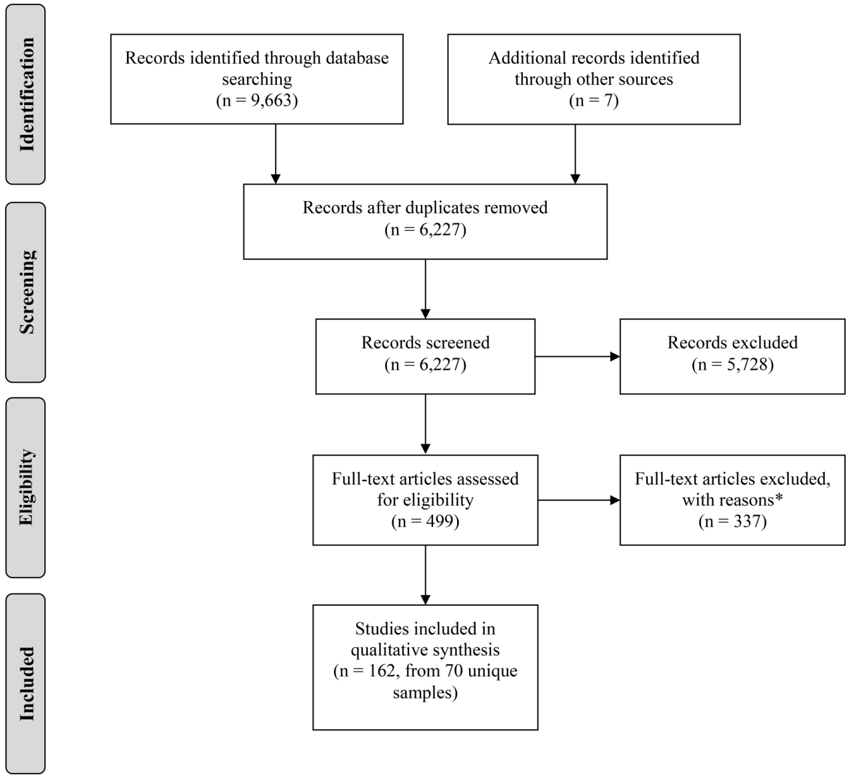
Moderate-to-vigorous physical activity (MVPA) is essential for disease prevention and health promotion. Emerging evidence suggests other intensities of physical activity (PA), including light-intensity activity (LPA), may also be important, but there has been no rigorous evaluation of the evidence. The purpose of this systematic review was to examine the relationships between objectively measured PA (total and all intensities) and health indicators in school-aged children and youth. Online databases were searched for peer-reviewed studies that met the a priori inclusion criteria: population (apparently healthy, aged 5–17 years), intervention/exposure/comparator (volumes, durations, frequencies, intensities, and patterns of objectively measured PA), and outcome (body composition, cardiometabolic biomarkers, physical fitness, behavioural conduct/pro-social behaviour, cognition/academic achievement, quality of life/well-being, harms, bone health, motor skill development, psychological distress, self-esteem). Heterogeneity among studies precluded meta-analyses; narrative synthesis was conducted. A total of 162 studies were included (204 171 participants from 31 countries). Overall, total PA was favourably associated with physical, psychological/social, and cognitive health indicators. Relationships were more consistent and robust for higher (e.g., MVPA) versus lower (e.g., LPA) intensity PA. All patterns of activity (sporadic, bouts, continuous) provided benefit. LPA was favourably associated with cardiometabolic biomarkers; data were scarce for other outcomes. These findings continue to support the importance of at least 60 min/day of MVPA for disease prevention and health promotion in children and youth, but also highlight the potential benefits of LPA and total PA. All intensities of PA should be considered in future work aimed at better elucidating the health benefits of PA in children and youth.
Overview
The claims and statistics of this paper haven’t been checked yet.
Free: it reads the open-access text and checks the first 5 claims that cite a source we can check. Create a free account to check every claim.
Integrity signals
Registry
Cites
Statistics
Figures
Verification
Claims the paper makes
The claims and statistics of this paper haven’t been checked yet.
Free: it reads the open-access text and checks the first 5 claims that cite a source we can check. Create a free account to check every claim.
Claims other papers make about this one
Each is checked against this paper’s own text: does it say what the citing paper says it does?
The source backs part of the claim, not all of it — or backs it for a different population, condition or comparison.
In the citing paper
“Research indicates that those who are physically active show or report better overall physical and mental health, a higher level of fitness and a lower level of obesity than their sedentary or physically inactive counterparts1–4”
From Physical activity and health in Chinese children and adolescents: expert consensus statement (2020) (2020) · cites this paper as [1]
Experimental — accuracy not yet measuredThe source backs part of the claim, not all of it — or backs it for a different population, condition or comparison.
In the citing paper
“The searches looked for journal articles reporting on sleep, sedentary time and physical activity using previously developed and validated searches [12–14, 30].”
From Combinations of physical activity, sedentary time, and sleep duration and their associations with depressive symptoms and other mental health problems in children and adolescents: a systematic review (2020) · cites this paper as [12]
Experimental — accuracy not yet measuredThe source backs part of the claim, not all of it — or backs it for a different population, condition or comparison.
In the citing paper
“Achieving high levels of physical activity, low levels of sedentary behaviour, and getting sufficient sleep have been individually associated with better mental health among children and adolescents [12–14].”
From Combinations of physical activity, sedentary time, and sleep duration and their associations with depressive symptoms and other mental health problems in children and adolescents: a systematic review (2020) · cites this paper as [12]
Experimental — accuracy not yet measuredThe source backs part of the claim, not all of it — or backs it for a different population, condition or comparison.
In the citing paper
“Previous studies looking at the 24-h movement guidelines and health indicators have primarily focused on examining the associations between the combinations of physical activity, sedentary time, and sleep duration with physical health outcomes [12–14].”
From Combinations of physical activity, sedentary time, and sleep duration and their associations with depressive symptoms and other mental health problems in children and adolescents: a systematic review (2020) · cites this paper as [12]
Experimental — accuracy not yet measuredThe source backs part of the claim, not all of it — or backs it for a different population, condition or comparison.
In the citing paper
“Isolated adherence to MVPA, screen time and sleep duration recommendations have been associated with lower adiposity indicators in children and adolescents [3, 5–10].”
From Proportion of children meeting recommendations for 24-hour movement guidelines and associations with adiposity in a 12-country study (2016) · cites this paper as [8]
Experimental — accuracy not yet measured
5 more claims about this paper
Create a free account to see every claim other papers make about this one.
Self-check
Percentages, sums and reported differences re-computed from the paper’s own numbers.
The self-check needs the paper’s full text.
Citations
Cites
The Cochrane Collaboration's tool for assessing risk of bias in randomised trials
Higgins, J. P. T., Altman, D. G., Gotzsche, P. C., Juni, P., Moher, D., Oxman, A. D., Savovic, J., Schulz, K. F., Weeks, L., Sterne, J. A. C., et al. (2011) · BMJ · doi:10.1136/bmj.d5928 · Cited by 33,817
Preferred Reporting Items for Systematic Reviews and Meta-Analyses: The PRISMA Statement
Moher, D., Liberati, A., Tetzlaff, J., & Altman, D. G. (2009) · Journal of Clinical Epidemiology · doi:10.1016/j.jclinepi.2009.06.005 · Cited by 19,575
Physical Activity in the United States Measured by Accelerometer
TROIANO, R. P., BERRIGAN, D., DODD, K. W., MÂSSE, L. C., TILERT, T., & MCDOWELL, M. (2008) · Medicine & Science in Sports & Exercise · doi:10.1249/mss.0b013e31815a51b3 · Cited by 7,638 · cited 2×
“This is unfortunate, as studies from Canada and the United States indicate that children and youth spend 4–6 h/day in LPA (Matthews et al. 2008; Troiano et al. 2008; Colley et al. 2011; Chaput et al. 2014), and emerging research suggests that spending more waking hours in LPA compared with…”
BackgroundJanssen, I., & LeBlanc, A. G. (2010) · International Journal of Behavioral Nutrition and Physical Activity · doi:10.1186/1479-5868-7-40 · Cited by 4,829 · cited 7×
“Physical activity (PA) is vital to the physical, psychological/ social, and cognitive health of school-aged children and youth (Janssen and LeBlanc 2010; Tremblay et al. 2010b).”
BackgroundResultInfluentialSelf-citationUtilization of the PICO framework to improve searching PubMed for clinical questions
Schardt, C., Adams, M. B., Owens, T., Keitz, S., & Fontelo, P. (2007) · BMC Medical Informatics and Decision Making · doi:10.1186/1472-6947-7-16 · Cited by 3,053 · cited 2×
“The participants, interventions, comparisons, outcomes and study design (PICOS) framework (Schardt et al. 2007) was followed to identify key study concepts in the research question a priori and to facilitate the searching process.”
MethodAmount of Time Spent in Sedentary Behaviors in the United States, 2003-2004
Matthews, C. E., Chen, K. Y., Freedson, P. S., Buchowski, M. S., Beech, B. M., Pate, R. R., & Troiano, R. P. (2008) · American Journal of Epidemiology · doi:10.1093/aje/kwm390 · Cited by 2,631 · cited 2×
“This is unfortunate, as studies from Canada and the United States indicate that children and youth spend 4–6 h/day in LPA (Matthews et al. 2008; Troiano et al. 2008; Colley et al. 2011; Chaput et al. 2014), and emerging research suggests that spending more waking hours in LPA compared with…”
BackgroundSelf-citationTremblay, M. S., Carson, V., Chaput, J.-P., Connor Gorber, S., Dinh, T., Duggan, M., Faulkner, G., Gray, C. E., Gruber, R., Janson, K., et al. (2016) · Applied Physiology, Nutrition, and Metabolism · doi:10.1139/apnm-2016-0151 · Cited by 2,024
Self-citationPhysiological and health implications of a sedentary lifestyle
Tremblay, M. S., Colley, R. C., Saunders, T. J., Healy, G. N., & Owen, N. (2010) · Applied Physiology, Nutrition, and Metabolism · doi:10.1139/h10-079 · Cited by 1,426 · cited 9×
“In this regard, the Canadian Physical Activity Guidelines for Children and Youth (Tremblay et al. 2010b, 2011), and many other guidelines around the world (e.g., Australia (Okely et al. 2012), USA (US Department of Health and Human Services 2008), and World Health Organization (WHO 2010)), recommend that children and…”
BackgroundInfluentialSelf-citationComparison of Accelerometer Cut Points for Predicting Activity Intensity in Youth
TROST, S. G., LOPRINZI, P. D., MOORE, R., & PFEIFFER, K. A. (2011) · Medicine & Science in Sports & Exercise · doi:10.1249/mss.0b013e318206476e · Cited by 1,360 · cited 3×
“…Marshall and Ramirez 2011) and the widespread use of subjective assessments of PA (Reilly et al. 2008; Adamo et al. 2009; Janssen and LeBlanc 2010; Trost et al. 2011), which cannot accurately capture LPA (e.g., various incidental activities accumulated throughout the day) (Hamilton et al. 2004;…”
BackgroundGRADE guidelines: 9. Rating up the quality of evidence
Guyatt, G. H., Oxman, A. D., Sultan, S., Glasziou, P., Akl, E. A., Alonso-Coello, P., Atkins, D., Kunz, R., Brozek, J., Montori, V., et al. (2011) · Journal of Clinical Epidemiology · doi:10.1016/j.jclinepi.2011.06.004 · Cited by 1,336 · cited 2×
“If there is no cause to downgrade, the quality of evidence can be upgraded if there is a large effect size, a dose–response gradient, or if all plausible confounders would decrease an apparent treatment effect (Guyatt et al. 2011b).”
BackgroundMethod
Research works printed but not linked: 9
- 2. Aggio, D., Smith, L., and Hamer, M. 2015. Effects of reallocating time in different activity intensities on health and fitness: a cross sectional study. Int. J. Behav. Nutr. Phys. Activ. 12(83). PMID:26104041.
- 22. Colley, R.C., Garriguet, D., Janssen, I., Craig, C.L., Clarke, J., and Tremblay, M.S. 2011. Physical activity of Canadian children and youth: Accelerometer results from the 2007 to 2009 Canadian Health Measures Survey. Statistics Canada cat. no. 82-003-X. Health Rep. 22(1): 1523. PMID:21510586.
- 49. Grydeland, M., Bergh, I.H., Bjelland, M., Lien, N., Andersen, L.F., Ommundsen, Y., et al. 2012. Correlates of weight status among Norwegian 11-year-olds: The HEIA study. BMC Publ. Health, 12(1053). PMID:23216675.
- 53. Guyatt, G., Oxman, A.D., Akl, E.A., Kunz, R., Vist, G., Brozek, J., et al. 2011a. GRADE guidelines: 1. Introduction-GRADE evidence profiles and summary of findings tables. J. Clin. Epidemiol. 64(4): 383-394. PMID:21195583.
- 85. Janz, K.F., Letuchy, E.M., Francis, S.L., Metcalf, K.M., Burns, T.L., and Levy, S.M. 2014a. Objectively measured physical activity predicts hip and spine bone mineral content in children and adolescents ages 5-15 years: Iowa Bone Development Study. Front. Endocrinol. 5: 112. PMID:25076937.
- 128. Nguyen, T.H., Tang, H.K., Kelly, P., van der Ploeg, H.P., and Dibley, M.J. 2010. Association between physical activity and metabolic syndrome: a cross sec- tional survey in adolescents in Ho Chi Minh City, Vietnam. BMC Publ. Health, 10(141). PMID:20236509.
- 129. Okely, A., Salmon, J., Vella, S., Cliff, D., Timperio, A., Tremblay, M., et al. 2012. A systematic review to update the Australian Physical Activity Guidelines for Children and Young People. Report prepared for the Australian Government Department of Health.
- 159. Sigmundova, D., and Sigmund, E. 2012. The effect of physical activity program at school on reducing childhood obesity: a results of four-year longitudinal study. Med. Sport. Bohem. Slov. 21(3): 129-141.
- 175. Tremblay, M.S., Esliger, D.W., Tremblay, A., and Colley, R. 2007. Incidental move- ment, lifestyle-embedded activity and sleep: new frontiers in physical activ- ity assessment. Can. J. Publ. Health, 98(Suppl. 2): 208-217. PMID:18213950.
Cited by
Items 301–400 of 1,001
Jerebine, A., Davies, K. F., Lander, N., Eyre, E. L. J., Duncan, M. J., & Barnett, L. M. (2022) · International Journal of Behavioral Nutrition and Physical Activity · doi:10.1186/s12966-022-01344-7 · Cited by 56
Larouche, R., Kleinfeld, M., Charles-Rodriguez, U., Hatten, C., Hecker, V., Scott, D. R. M., Brown, L. M., Onyeso, O. K., Sadia, F., & Shimamura, H. (2023) · International Journal of Environmental Research and Public Health · doi:10.3390/ijerph20021328 · Cited by 54
“Conversely, connection to nature and OT are both associated with PA [5–8,91], suggesting that increasing outdoor activities could improve individual health [1,2] while helping to address the United Nations’ Sustainable Development Goals [17,92].”
BackgroundResults From Spain’s 2016 Report Card on Physical Activity for Children and Youth
Roman-Viñas, B., Marin, J., Sánchez-López, M., Aznar, S., Leis, R., Aparicio-Ugarriza, R., Schroder, H., Ortiz-Moncada, R., Vicente, G., González-Gross, M., et al. (2016) · Journal of Physical Activity and Health · doi:10.1123/jpah.2016-0308 · Cited by 38
Kulinna, P. H., Stylianou, M., Dyson, B. P., Banville, D., Dryden, C., & Colby, R. (2018) · BioMed Research International · doi:10.1155/2018/8790283 · Cited by 51
Koka, A., Tilga, H., Kalajas-Tilga, H., Hein, V., & Raudsepp, L. (2019) · International Journal of Environmental Research and Public Health · doi:10.3390/ijerph16152709 · Cited by 49
May, T., Dudley, A. L., Charles, J., Kennedy, K. J., Mantilla, A., McGillivray, J., Wheeler, K., Elston, H., & Rinehart, N. (2020) · BMC Public Health · doi:10.1186/s12889-020-8355-z · Cited by 38
Zhang, Z., Li, H. J., Slapšinskaitė, A., Zhang, T., Zhang, L., & Gui, C. Y. (2020) · Public Health · doi:10.1016/j.puhe.2020.07.001 · Cited by 46
Application of the trans-contextual model to predict change in leisure time physical activity
Kalajas-Tilga, H., Hein, V., Koka, A., Tilga, H., Raudsepp, L., & Hagger, M. S. (2021) · Psychology and Health · doi:10.1080/08870446.2020.1869741 · Cited by 53
“Epidemiological research has consistently demonstrated associations between physical activity and several adaptive psychological, cognitive, and physical health outcomes in children and adolescents (Poitras et al., 2016).”
BackgroundYu, J. J., Capio, C. M., Abernethy, B., & Sit, C. H. P. (2021) · Research in Developmental Disabilities · doi:10.1016/j.ridd.2021.104070 · Cited by 50
Hansen, J., Hanewinkel, R., & Galimov, A. (2022) · European Journal of Pediatrics · doi:10.1007/s00431-022-04401-2 · Cited by 47
Bentsen, P., Mygind, L., Elsborg, P., Nielsen, G., & Mygind, E. (2021) · Scandinavian Journal of Public Health · doi:10.1177/1403494821993715 · Cited by 57
“[3] Poitras VJ, gray Ce, Borghese MM, et al.”
BackgroundChillón, P., Gálvez‐Fernández, P., Huertas‐Delgado, F. J., Herrador‐Colmenero, M., Barranco-Ruíz, Y., Villa‐González, E., Aranda-Balboa, M. J., Saucedo‐Araujo, R. G., Campos-Garzón, P., Molina-Soberanes, D., et al. (2021) · International Journal of Environmental Research and Public Health · doi:10.3390/ijerph18042066 · Cited by 41
“, 60 min of daily moderate-to-vigorous PA [MVPA]) have been welldocumented in the scientific literature [1].”
BackgroundAssociation between the 24-hour movement guidelines and executive function among Chinese children
Zeng, X., Cai, L., Yang, W., Tan, W., Huang, Y., & Chen, Y. (2022) · BMC Public Health · doi:10.1186/s12889-022-13420-5 · Cited by 40
Coyne, P., Vandenborn, E., Santarossa, S., Milne, M. M., Milne, K. J., & Woodruff, S. J. (2019) · Applied Physiology, Nutrition, and Metabolism · doi:10.1139/apnm-2018-0495 · Cited by 45
Fairclough, S. J., Christian, D. L., Saint‐Maurice, P. F., Hibbing, P. R., Noonan, R. J., Welk, G. J., Dixon, P. M., & Boddy, L. M. (2019) · International Journal of Environmental Research and Public Health · doi:10.3390/ijerph16193711 · Cited by 48
“Physical inactivity and sedentary behaviour (SB) are increasingly prevalent among children and young people [1] and are associated with undesirable health and wellbeing outcomes [2,3].”
BackgroundResistance Exercise for the Prevention and Treatment of Pediatric Dynapenia
Faigenbaum, A. D., Rebullido, T. R., Peña, J., & Chulvi‐Medrano, I. (2019) · Journal of Science in Sport and Exercise · doi:10.1007/s42978-019-00038-0 · Cited by 46
Rhodes, R. E., Zhang, R., & Zhang, C. (2020) · Annals of Behavioral Medicine · doi:10.1093/abm/kaz068 · Cited by 46
Haszard, J. J., Meredith-Jones, K., Farmer, V., Williams, S., Galland, B. C., & Taylor, R. W. (2020) · Journal for the Measurement of Physical Behaviour · doi:10.1123/jmpb.2019-0048 · Cited by 41
“…sedentary behavior Evidence suggests that both physical activity and sleep are beneficial for the healthy development of children (Chaput et al., 2016; Matricciani, Paquet, Galland, Short, & Olds, 2019; Poitras et al., 2016) whereas sedentary behavior may be detrimental (Carson et al., 2016).”
BackgroundExploring activity compensation amongst youth and adults: a systematic review
Swelam, B. A., Verswijveren, S. J. J. M., Salmon, J., Arundell, L., & Ridgers, N. D. (2022) · International Journal of Behavioral Nutrition and Physical Activity · doi:10.1186/s12966-022-01264-6 · Cited by 47
“Introduction Regular engagement in physical activity confers physical and mental health benefits in both youth (5–18 years old) and adult populations, including favourable cardiometabolic biomarkers, improved cognition and well-being [1, 2], and among adults, lower risk of all-cause mortality [3, 4].”
BackgroundHuffman, L. E., Wilson, D. K., Horn, M. L. V., & Pate, R. R. (2018) · Annals of Behavioral Medicine · doi:10.1007/s12160-017-9919-8 · Cited by 48
Self-citationLudyga, S., Herrmann, C., Mücke, M., Andrä, C., Brand, S., Pühse, U., & Gerber, M. (2018) · Neural Plasticity · doi:10.1155/2018/9628787 · Cited by 41
on behalf of MOVI group, Sánchez‐López, M., Hermosa, A. R., Redondo‐Tébar, A., Visier‐Alfonso, M. E., Jiménez‐López, E., Martínez-Andrés, M., Solera-Martínez, M., Soriano‐Cano, A., & Martínez‐Vizcaíno, V. (2019) · BMC Public Health · doi:10.1186/s12889-019-6742-0 · Cited by 45
de Moraes, A. C. F., Vilanova‐Campelo, R. C., Torres‐Leal, F. L., & Carvalho, H. B. (2019) · Medicina · doi:10.3390/medicina55060286 · Cited by 42
“The involvement of adolescents in physical activities can transform the prognosis of this health indicator [55] because the evolution of physical fitness can be perceived during the activities of daily living [3].”
BackgroundAadland, E., Tjomsland, H. E., Johannessen, K., Nilsen, A. K. O., Resaland, G. K., Glosvik, Ø., Lykkebø, O., Stokke, R., Andersen, L. B., Anderssen, S. A., et al. (2020) · Frontiers in Psychology · doi:10.3389/fpsyg.2020.01382 · Cited by 49
Ezzat, A. M., BRUSSONI, M. J., Mâsse, L. C., & Emery, C. A. (2021) · The American Journal of Sports Medicine · doi:10.1177/03635465211002530 · Cited by 38
“In youth, PA is instrumental in stimulating cardiac health, bone and musculoskeletal development, and psychological well-being.(24,33) Sports are a primary source of PA engagement for youth.”
BackgroundVillafaina, S., Tapia‐Serrano, M. Á., Vaquero‐Solís, M., Llamas, J. L. L., & Miguel, P. A. S. (2021) · Behavioral Sciences · doi:10.3390/bs11090121 · Cited by 48
“Furthermore, adolescence plays a relevant role in satisfaction with life [5] and mental well-being [6].”
BackgroundSoares, R. A. S., Brasil, I. A., Monteiro, W., & Farinatti, P. (2022) · Journal of Bodywork and Movement Therapies · doi:10.1016/j.jbmt.2022.09.004 · Cited by 56
Definitions and assessments of physical literacy among children and youth: a scoping review
Grauduszus, M., Wessely, S., Klaudius, M., & Joisten, C. (2023) · BMC Public Health · doi:10.1186/s12889-023-16680-x · Cited by 66
Riazi, N. A., Ramanathan, S., O’Neill, M., Tremblay, M. S., & Faulkner, G. (2017) · BMC Public Health · doi:10.1186/s12889-017-4853-z · Cited by 40
“Although the benefits of physical activity for school-aged children have been well established [5], there has been less focus on the 0–4 age range.”
BackgroundSelf-citationSheldrick, M. P. R., Maitland, C., Mackintosh, K. A., Rosenberg, M., Griffiths, L. J., Fry, R. J., & Stratton, G. (2019) · International Journal of Environmental Research and Public Health · doi:10.3390/ijerph16214178 · Cited by 42
“The importance of physical activity (PA) for children’s physiological and psychological health has been well documented [1], yet few meet current moderate-to-vigorous physical activity (MVPA) recommendations [2].”
BackgroundWarner, M., Robinson, J., Heal, B., Lloyd, J., Mandigo, J., Lennox, B., & Huyer, L. D. (2020) · Prospects · doi:10.1007/s11125-020-09519-5 · Cited by 47
Lifestyle habits and depressive symptoms in Norwegian adolescents: a national cross-sectional study
Kleppang, A. L., Haugland, S. H., Bakken, A., & Stea, T. H. (2021) · BMC Public Health · doi:10.1186/s12889-021-10846-1 · Cited by 35
“Furthermore, systematic reviews have concluded that decreased sedentary behaviour and increased physical activity levels are associated with reducing depression and, to a certain extent, psychological distress in children and adolescents [14, 15].”
BackgroundVaquero‐Solís, M., Tapia‐Serrano, M. Á., Alcalá, D. H., Sierra-Díaz, M. J., & Miguel, P. A. S. (2021) · International Journal of Environmental Research and Public Health · doi:10.3390/ijerph18137185 · Cited by 57
“In this regard, physical activity carried out in the school context plays an important role in the physical and psychological well-being of children and adolescents [7], contributing to both the improvement of body composition and physical condition [8], such as improving those constructs related to psychosocial well-…”
BackgroundAndriyani, F. D., Biddle, S., & Cocker, K. A. D. (2021) · BMC Public Health · doi:10.1186/s12889-021-11931-1 · Cited by 49
“bolic biomarkers, physical fitness, bone health, cognitive function and academic achievement [1, 3].”
BackgroundPhysical activity and active recreation before and during COVID-19: The Our Life at Home study
Arundell, L., Salmon, J., Timperio, A. F., Sahlqvist, S., Uddin, R., Veitch, J., Ridgers, N. D., Brown, H. L., & Parker, K. E. (2021) · Journal of science and medicine in sport · doi:10.1016/j.jsams.2021.10.004 · Cited by 43
Tapia‐Serrano, M. Á., López‐Gil, J. F., Sevil‐Serrano, J., García‐Hermoso, A., & Miguel, P. A. S. (2023) · Scandinavian Journal of Medicine and Science in Sports · doi:10.1111/sms.14357 · Cited by 35
Physical activity and prevention of chronic disease in Chinese youth: a public health approach
Li, F., Mao, L., & Chen, P. (2019) · Journal of Sport and Health Science · doi:10.1016/j.jshs.2019.06.008 · Cited by 34
Agbaje, A. O. (2023) · The Journal of Clinical Endocrinology & Metabolism · doi:10.1210/clinem/dgad354 · Cited by 36
School-based promotion of physical literacy: a scoping review
Grauduszus, M., Koch, L., Wessely, S., & Joisten, C. (2024) · Frontiers in Public Health · doi:10.3389/fpubh.2024.1322075 · Cited by 88
Zheng, C., Huang, Y., & Wong, S. H. (2019) · Applied Physiology, Nutrition, and Metabolism · doi:10.1139/apnm-2019-0309 · Cited by 37
A comparison of activity levels of girls in single-gender and mixed-gender physical education
Wallace, L., Buchan, D. S., & Sculthorpe, N. F. (2019) · European Physical Education Review · doi:10.1177/1356336x19849456 · Cited by 52
“Participation in physical activity has key benefits for children’s physical and mental health through weight management, improved mood, and stress control (Janssen and Le Blanc, 2010; Poitres et al., 2016; Strong et al., 2005).”
BackgroundIntensity and Duration of Physical Activity and Cardiorespiratory Fitness
Burden, S. J., Weedon, B. D., Turner, A., Whaymand, L., Meaney, A., Dawes, H., & Jones, A. (2022) · PEDIATRICS · doi:10.1542/peds.2021-056003 · Cited by 43
Teslo, S. B., Thurston, M. N., Lerum, Ø., Mandelid, M. B., Jenssen, E. S., Resaland, G. K., & Tjomsland, H. E. (2023) · Teaching and Teacher Education · doi:10.1016/j.tate.2023.104113 · Cited by 47
Latimer‐Cheung, A. E., Copeland, J. L., Fowles, J. R., Zehr, L., Duggan, M., & Tremblay, M. S. (2016) · Applied Physiology, Nutrition, and Metabolism · doi:10.1139/apnm-2016-0086 · Cited by 43
Self-citationVitali, F., Robazza, C., Bortoli, L., Bertinato, L., Schena, F. F., & Lanza, M. (2019) · PeerJ · doi:10.7717/peerj.6436 · Cited by 46
“The physical and psychological health benefits of regular physical activity (PA) in youth are well-documented (Janssen & LeBlanc, 2010; Poitras et al., 2016).”
BackgroundMazzoli, E., Teo, W., Salmon, J., Pesce, C., He, J. L., Ben‐Soussan, T. D., & Barnett, L. M. (2019) · International Journal of Environmental Research and Public Health · doi:10.3390/ijerph16091482 · Cited by 43
Mooses, K., & Kull, M. (2019) · European Journal of Sport Science · doi:10.1080/17461391.2019.1645887 · Cited by 56
Giuriato, M., Kawczyński, A., Mroczek, D., Lovecchio, N., & Nevill, A. M. (2021) · PLoS ONE · doi:10.1371/journal.pone.0249626 · Cited by 37
“Youth athletes, for example, gain psychological skills essential for participation in individual sports [4].”
BackgroundHa, A. S. C., Lonsdale, C., Lubans, D. R., Ng, F. F., & Ng, J. Y. Y. (2021) · International Journal of Behavioral Nutrition and Physical Activity · doi:10.1186/s12966-021-01160-5 · Cited by 43
Morrison, S. A., Meh, K., Sember, V., Starc, G., & Jurak, G. (2021) · Frontiers in Public Health · doi:10.3389/fpubh.2021.785679 · Cited by 41
Julian, V., Haschke, F., Fearnbach, N., Gomahr, J., Pixner, T., Furthner, D., Weghuber, D., & Thivel, D. (2022) · Current Obesity Reports · doi:10.1007/s13679-021-00467-5 · Cited by 41
Kolovelonis, A., & Γούδας, Μ. (2023) · European Journal of Investigation in Health Psychology and Education · doi:10.3390/ejihpe13050060 · Cited by 60
“Participating in regular physical activity is related to important health-related benefits, including physical, mental, and socio-emotional health [1,2] and academic performance [3].”
BackgroundColedam, D. H. C., & Ferraiol, P. F. (2017) · Sao Paulo Medical Journal · doi:10.1590/1516-3180.2017.0111260617 · Cited by 39
Lopes, L., Mota, J. A. P. S., Moreira, C. M. M., Abreu, S., Agostinis‐Sobrinho, C., Oliveira‐Santos, J., Oliveira, A., Okely, A. D., & Santos, R. (2018) · Journal of Sports Sciences · doi:10.1080/02640414.2018.1497424 · Cited by 47
Janssen, X., Basterfield, L., Parkinson, K. N., Pearce, M. S., Reilly, J. K., Adamson, A., & Reilly, J. J. (2018) · International Journal of Obesity · doi:10.1038/s41366-018-0188-9 · Cited by 41
de Moraes, Í. A. P., da Silva, T. D., Massetti, T., de Menezes, L. D. C., Ribeiro, V. F., Tropiano, L. M. D. C. C., Barnabé, V., Hoshi, R. A., Monteiro, C. B. D. M., & Fernandes, M. (2019) · Cardiology in the Young · doi:10.1017/s1047951119001793 · Cited by 41
Rhodes, R. E., Baranova, M. A., Christian, H. E., & Westgarth, C. (2020) · British Journal of Sports Medicine · doi:10.1136/bjsports-2019-101156 · Cited by 35
Gallant, F., Thibault, V., Hébert, J. J., Gunnell, K. E., & Bélanger, M. F. (2020) · International Journal of Behavioral Nutrition and Physical Activity · doi:10.1186/s12966-020-00964-1 · Cited by 34
Physical Activity Among Immigrant Children: A Systematic Review
Lacoste, Y., Dancause, K. N., Gosselin-Gagné, J., & Gadais, T. (2020) · Journal of Physical Activity and Health · doi:10.1123/jpah.2019-0272 · Cited by 39
Veitch, J., Ball, K., Rivera, E., Loh, V. H. Y., Deforche, B. I., & Timperio, A. F. (2021) · International Journal of Behavioral Nutrition and Physical Activity · doi:10.1186/s12966-021-01203-x · Cited by 40
Liu, S., Yu, Q., Hossain, M. M., Doig, S. R., Bao, R., Zhao, Y., Yan, J. H., Luo, X., Yang, J., Kramer, A. F., et al. (2021) · International Journal of Mental Health Promotion · doi:10.32604/ijmhp.2021.017660 · Cited by 42
Obesity in children and adolescents: Overview of the diagnosis and management
Tung, J. Y., Poon, G. W.-K., Du, J., & Wong, K. K. Y. (2023) · Chronic Diseases and Translational Medicine · doi:10.1002/cdt3.58 · Cited by 42
“In addition to contributing to energy deficit and weight control, it also gives rise to additional health benefits, including improvement in cardiometabolic parameters, improved body composition, physical fitness, and overall psychological well‐being.(45,46) A systematic review comparing the effects of a diet‐only int…”
BackgroundBao, R., Qin, H., Memon, A. R., Chen, S., López‐Gil, J. F., Liu, S., Zou, L., & Cai, Y. (2024) · European Journal of Pediatrics · doi:10.1007/s00431-024-05461-2 · Cited by 42
A FUNDAMENTAL APPROACH FOR TREATING PEDIATRIC DYNAPENIA IN KIDS
Faigenbaum, A. D., & Bruno, L. E. (2017) · ACSMʼs Health & Fitness Journal · doi:10.1249/fit.0000000000000312 · Cited by 41
“Due to the extensive health- and fitness-related benefits associated with regular physical activity in youth (23), as well as the harmful effects of excessive sedentary behaviors such as television viewing (2), innovative ideas, creative programs and sustained efforts are needed to spark an ongoing interest in active…”
BackgroundDutil, C., Tremblay, M. S., Longmuir, P. E., Barnes, J. D., Belanger, K., & Chaput, J. (2018) · BMC Public Health · doi:10.1186/s12889-018-5895-6 · Cited by 35
Self-citationExploring Gender Differences within Forest Schools as a Physical Activity Intervention
Trapasso, E., Knowles, Z. R., Boddy, L. M., Newson, L., Sayers, J., & Austin, C. (2018) · Children · doi:10.3390/children5100138 · Cited by 42
KWAN, M. Y. W., Graham, J. D., Healey, C., Paolucci, N., & Brown, D. M. Y. (2020) · International Journal of Environmental Research and Public Health · doi:10.3390/ijerph17165832 · Cited by 42
“It is well established that there are many positive physical and psychosocial health benefits associated with regular engagement in physical activity (PA) behaviors [1,2].”
BackgroundLevels of Physical Activity and Mental Health in Adolescents in Ireland
Molcho, M., Gavin, A., & Goodwin, D. (2021) · International Journal of Environmental Research and Public Health · doi:10.3390/ijerph18041713 · Cited by 58
“However, while we know that MVPA is associated with better life satisfaction and fewer negative mental health symptoms [1,2,49], less is known about the impact of VPA in mental health [2,50] or about the differential impact of VPA, over and above that of MVPA.”
BackgroundFitzGerald, T. L., Cameron, K. L., Albesher, R. A., Mentiplay, B. F., Lee, K. J., Clark, R. A., Cheong, J. L. Y., Doyle, L. W., McGinley, J. L., & Spittle, A. J. (2021) · Physical Therapy · doi:10.1093/ptj/pzab037 · Cited by 39
Comeras-Chueca, C., Marín-Puyalto, J., Matute-Llorente, Á., Vicente‐Rodríguez, G., Casajús, J. A., & González‐Agüero, A. (2021) · International Journal of Environmental Research and Public Health · doi:10.3390/ijerph18136965 · Cited by 66
“This exercise deficit disorder often leads to an excessive increase in body fat and a low fitness level [11].”
BackgroundTibbitts, B., Willis, K., Reid, T., Sebire, S. J., Campbell, R. M., Kipping, R., Kandiyali, R., & Jago, R. (2021) · International Journal of Environmental Research and Public Health · doi:10.3390/ijerph18147628 · Cited by 39
Brown, M. C., Podmore, M., Araújo‐Soares, V., Skinner, R., & Sharp, L. (2022) · Health Psychology Review · doi:10.1080/17437199.2022.2032795 · Cited by 39
“In adults, PA has been negatively correlated with the risk of cardiovascular mortality (Cheng et al., 2018) and, in children, is strongly related to indicators of physical health, including cardio-metabolic markers such as cholesterol and blood pressure (Poitras et al., 2016).”
BackgroundLiu, J., Zeng, M., Wang, D., Zhang, Y., Shang, B., & Ma, X. (2022) · Frontiers in Psychology · doi:10.3389/fpsyg.2021.695241 · Cited by 45
Oliveira, T., Pizarro, A. I. N., Costa, M., Fernandes, L. M., Silva, G., Mota, J. A. P. S., & Ribeiro, J. C. (2017) · Annals of Human Biology · doi:10.1080/03014460.2017.1308010 · Cited by 45
“An abundance of proof supports the importance of children and adolescents meeting PA guidelines of 60minutes of MVPA per day (Poitras et al., 2016).”
BackgroundMooses, K., Oja, M., Reisberg, S., Vilo, J., & Kull, M. (2018) · BMC Public Health · doi:10.1186/s12889-018-5752-7 · Cited by 42
Olsen, N. J., Østergaard, J. N., Bjerregaard, L. G., Høy, T. V., Kierkegaard, L., Michaelsen, K. F., Sørensen, T. I. A., Grønbæk, M. K., Bruun, J. M., & Heitmann, B. L. (2024) · Obesity Reviews · doi:10.1111/obr.13641 · Cited by 30
“…grows through childhood and adolescence (and eventually, into adulthood), unhealthy dietary intake, 40,41 meal habits, 42,43 physical activity, 44 sleep duration, 45 sleep timing, 46 sleep quality, 47 and mental health in both children and parents 48 – 50 have been identified as risk factors…”
BackgroundHulst, R. Y., Gorter, J. W., Obeid, J., Voorman, J. M., van Rijssen, I. M., Gerritsen, A., Visser‐Meily, J. M. A., Pillen, S., & Verschuren, O. W. (2022) · Developmental Medicine & Child Neurology · doi:10.1111/dmcn.15338 · Cited by 44
Lankhorst, K., Takken, T., Zwinkels, M., van Gaalen, L., Velde, S. J. T., BACKX, F. J. G., Verschuren, O. W., Wittink, H. M., & de Groot, J. F. (2019) · The Journal of Strength and Conditioning Research · doi:10.1519/jsc.0000000000003098 · Cited by 33
“In contrast to the current finding, studies in healthy youth have shown only small correlations between V̇O2peak and MVPA (3,38).”
ResultDemetriou, Y., Vondung, C., Bucksch, J., Schlund, A., Schulze, C., Knapp, G., Coen, S. E., Puil, L. J., Phillips, S. P., & Reimers, A. K. (2019) · Systematic Reviews · doi:10.1186/s13643-019-0963-2 · Cited by 38
“These low levels of PA and high levels of SB are detrimental for health in this young age group [5, 6].”
BackgroundCardiorespiratory Fitness, Physical Activity, and Insulin Resistance in Children
Haapala, E. A., Wiklund, P., Lintu, N., Tompuri, T., Väistö, J., Finni, T. J., Tarkka, I. M., KEMPPAINEN, T., BARKER, A. R., Ekelund, U., et al. (2019) · Medicine & Science in Sports & Exercise · doi:10.1249/mss.0000000000002216 · Cited by 37
Kemp, B. J., Parrish, A., Batterham, M. J., & Cliff, D. P. (2020) · Journal of Physical Activity and Health · doi:10.1123/jpah.2018-0705 · Cited by 32
“The present study aimed to investigate two research questions: (1) How does the duration of overall 66 PA, non-organized PA, organized PA, active transport and active chores/work change between late 67 childhood (10-11 years), early adolescence (12-13 years) and mid-adolescence (14-15 years)?; and (2) 68 Are these cha…”
BackgroundChemtob, K., Reid, R. E. R., Guimarães, R. D. F., Henderson, M., Mathieu, M.-E., Barnett, T. A., Tremblay, A., & Hulst, A. V. (2020) · Pediatric Obesity · doi:10.1111/ijpo.12730 · Cited by 36
Essiet, I. A., Lander, N., Salmon, J., Duncan, M. J., Eyre, E. L. J., Ma, J., & Barnett, L. M. (2021) · International Journal of Behavioral Nutrition and Physical Activity · doi:10.1186/s12966-021-01162-3 · Cited by 39
Physical activity: associations with health and summary of guidelines
Borodulin, K., & Anderssen, S. A. (2023) · Food & Nutrition Research · doi:10.29219/fnr.v67.9719 · Cited by 51
“Adiposity, overweight and obesity Physical activity is associated with maintenance of healthy weight and attenuation of weight gain in adults (2930–31) and with reduction of excessive increase in body weight and adiposity in children (9, 32, 33).”
BackgroundTanaka, C., Okuda, M., Tanaka, M., Inoue, S., & Tanaka, S. (2018) · International Journal of Environmental Research and Public Health · doi:10.3390/ijerph15091995 · Cited by 33
Effect of 12-Week Swimming Training on Body Composition in Young Women
Charmas, M., & Gromisz, W. (2019) · International Journal of Environmental Research and Public Health · doi:10.3390/ijerph16030346 · Cited by 43
“Moderate, but systematic physical activity can permanently prevent disadvantageous developments in the human body [18,19].”
BackgroundYan, W., Wang, Y., Yuan, Y., Farid, M., Zhang, P., & Peng, K. (2024) · Journal of Youth and Adolescence · doi:10.1007/s10964-024-02011-9 · Cited by 35
“…be performed at moderate to vigorous level of intensity, with greater bene fi ts seen with higher intensity activities (Janssen & LeBlanc, 2010; Nakagawa et al., 2020; Tao et al., 2007), and more consistent and robust relationship for higher intensity than lower intensity (Poitras et al., 2016).”
Aceves-Martins, M., Llauradó, E., Tarro, L., Moriña, D., Papell-Garcia, I., Prades-Tena, J., Kettner-Høeberg, H., Puiggròs, F., Arola, L., Davies, A., et al. (2017) · Childhood Obesity · doi:10.1089/chi.2016.0216 · Cited by 29
“54–56 Furthermore, maintaining the internationally recommended amount of PA (hours and intensity) from youth into adult-hood can enable the long-term maintenance of lower rates of cardiovascular disease morbidity and mortality.”
RetractedMohammadi, S., Jalaludin, M. Y., Su, T. T., Dahlui, M., Mohamed, M. N. A., & Majid, H. A. (2019) · BMC Public Health · doi:10.1186/s12889-019-6557-z · Cited by 31
Hnatiuk, J. A., Lamb, K. E., Ridgers, N. D., Salmon, J., & Hesketh, K. D. (2019) · International Journal of Behavioral Nutrition and Physical Activity · doi:10.1186/s12966-019-0805-6 · Cited by 38
Lifestyle behaviors predict adolescents bullying victimization in low and middle-income countries
Alfonso‐Rosa, R. M., García‐Hermoso, A., Sanders, T., Parker, P. D., Oriol, X., Arnott, H., & Cruz, B. D. P. (2020) · Journal of Affective Disorders · doi:10.1016/j.jad.2020.04.065 · Cited by 34
Big Data Analysis of Sports and Physical Activities among Korean Adolescents
Park, S., ahn, H.-K., Kim, D.-K., & So, W.-Y. (2020) · International Journal of Environmental Research and Public Health · doi:10.3390/ijerph17155577 · Cited by 34
Zhan, X., Clark, C. C. T., Bao, R., Duncan, M. J., Hong, J.-T., & Chen, S. (2021) · Jornal de Pediatria · doi:10.1016/j.jped.2020.11.009 · Cited by 39
Graham, J. D., Bremer, E., Fenesi, B., & Cairney, J. (2021) · Frontiers in Pediatrics · doi:10.3389/fped.2021.688251 · Cited by 48
“Specifically, we wanted to investigate (1) whether the academic physical activity break conditions (n = 37) and the sedentary control conditions (n = 67) differed on executive functioning after excluding the 12 participants from the traditional physical activity conditions, (2) whether the two physical activity break…”
BackgroundJulian, V., Bergsten, P., Forslund, A. H., Ahlström, H. K., Ciba, I., Dahlbom, M., Furthner, D., Gomahr, J., Kullberg, J., Maruszczak, K., et al. (2022) · Pediatric Obesity · doi:10.1111/ijpo.12897 · Cited by 36
Liu, X., Johnson, S. B., Lynch, K. F., Cordan, K., Pate, R. R., Butterworth, M. D., Lernmark, Å., Hagopian, W., Rewers, M. J., McIndoe, R., et al. (2023) · Diabetes Care · doi:10.2337/dc23-0036 · Cited by 34
Self-citationNg, K., Tynjälä, J., Sigmundová, D., Augustine, L., Sentenac, M., Rintala, P., & Inchley, J. (2017) · Adapted Physical Activity Quarterly · doi:10.1123/apaq.2016-0138 · Cited by 34
“Physical activity patterns of239 adolescents with long term illnesses or disabilities in Finnish general education.240 European Journal of Adapted Physical Activity2014, 7, 58–72.241 Poitras, V. J., Gray, C. E., Borghese, M. M., Carson, V., Chaput, J., Janssen, I., … Tremblay,242 M. S. (2016).”
BackgroundInfluentialMarín-Puyalto, J., Mäestu, J., Gómez‐Cabello, A., Lätt, E., Remmel, L., Purge, P., Vicente‐Rodríguez, G., & Jürimäe, J. (2018) · Bone · doi:10.1016/j.bone.2018.10.019 · Cited by 33
“There are several reviews that show strong and consistent positive effects on bone development of sports practice [12,13], exercise interventions [14,15] and even participation in unstructured weight-bearing PA [16,17] during childhood and adolescence.”
BackgroundAre preschool children active enough in Shanghai: an accelerometer-based cross-sectional study
Quan, M., Zhang, H., Zhang, J., Zhou, T., Zhang, J., Zhao, G., Fang, H., Sun, S., Wang, R., & Chen, P. (2019) · BMJ Open · doi:10.1136/bmjopen-2018-024090 · Cited by 32
“IntrODuCtIOn Engaging in physical activity (PA) plays an important role in promoting physical, psychological and cognitive health.(1) Moreover, establishing robust PA habits in childhood has positive long-term effects on lifestyle that persist into adulthood,(2) including reducing the risk of chronic diseases, such as…”
Ayala, A. M. C., Salmon, J., Dunstan, D. W., Arundell, L., & Timperio, A. F. (2020) · Journal of sport and health science/Journal of Sport and Health Science · doi:10.1016/j.jshs.2020.04.002 · Cited by 35
Metadata
- Authors
- Poitras, V. J., Gray, C. E., Borghese, M. M., Carson, V., Chaput, J.-P., Janssen, I., Katzmarzyk, P. T., Pate, R. R., Connor Gorber, S., Kho, M. E., Sampson, M., & Tremblay, M. S.
- Affiliations
- Children's Hospital of Eastern Ontario (CA)
- Queen's University (CA)
- University of Alberta (CA)
- Pennington Biomedical Research Center (US)
- University of South Carolina (US)
- Office of the Task Force on Preventive Health Care, Public Health Agency of Canada, Ottawa, ON K1A 0K9, Canada.
- McMaster University (CA)
- Corresponding author
- Poitras, Veronica Joan
- Gray, Casey Ellen
- ORCID
- Venue
- Applied Physiology, Nutrition, and Metabolism
- Publisher
- Canadian Science Publishing
- Published
- 2016-06
- Volume
- 41
- Issue
- 6 (Suppl. 3)
- Pages
- S197-S239
- ISSN
- 1715-5312 (ISSN-L)
- 1715-5320
- OpenAlex
- W2444482132
- Cited by
- 2,217
- References
- 182
- Citations by year
- 2026: 155 · 2025: 234 · 2024: 255 · 2023: 260 · 2022: 315 · 2021: 321 · 2020: 258 · 2019: 193 · 2018: 143 · 2017: 63 · 2016: 18
- FWCI
- 16.30
- Type
- journal article
- Language
- en
- Open access
- hybrid
- doi.org
- Licence
- cc-by
- www.nrcresearchpress.com/page/about/CorporateTextAndDataMining (tdm)
- Locations
- Applied Physiology Nutrition and Metabolism (publishedVersion, cc-by)
- PubMed (publishedVersion)
- TSpace (University of Toronto) (acceptedVersion)
- TSpace (University of Toronto) (submittedVersion)
- Scholar Commons (University of South Carolina) (submittedVersion, cc-by)
- Funders
- Public Health Agency of Canada
- Public Health Agency
- Canadian Institutes of Health Research
- Topics
- Health Sciences › Medicine › Public Health, Environmental and Occupational Health › Physical Activity and Health
- Health Sciences › Medicine › Public Health, Environmental and Occupational Health › Obesity, Physical Activity, Diet
- Social Sciences › Life-span and Life-course Studies › Recreational Sport and Physical Activity
- Keywords
- physical activity, moderate-to-vigorous physical activity, light physical activity, school-aged children, adolescents, health indicators, body composition, cardiometabolic biomarkers, physical fitness, prosocial behavior, academic performance, quality of life, bone health, motor skill development, psychological distress, self-esteem, activity patterns, activity bouts, disease prevention
- MeSH terms
- Adolescent, Adolescent Behavior, Body Composition, Cardiovascular Diseases, Child, Child Behavior, Child, Preschool, Cognition, Health Status, Humans, Obesity, Physical Fitness, Quality of Life, Biomarkers, Exercise, Randomized Controlled Trials as Topic, Treatment Outcome, Metabolic Syndrome, Non-Randomized Controlled Trials as Topic
About these checks
Registry, retraction, Cites and statistics results are computed, not judged, with one exception: a printed reference that no index lists is read once by a model before it counts as a citation error. Claims are extracted by a model and kept only when their quote appears verbatim in the text; each cited source is then checked, with a model’s help, for whether it says what the claim relies on. Those verdicts can be wrong — read the claim’s quote and the cited source before relying on one.
Statistics and arithmetic are recomputed, not judged.
Confidence bands are shown only for fields calibrated on our annotated test set. None is calibrated yet, so no band is shown.
What counts as a claim ›How we measure confidence ›How we check this ›
Are you an author, or do you see a problem with this page? Request a review
Data sources
Bibliographic data: Semantic Scholar, OpenAlex, Crossref.
Contains information from the Semantic Scholar Academic Graph Datasets, made available under the ODC Attribution License (ODC-BY 1.0).
Semantic Scholar’s data is described in: Kinney, R., et al. (2023). The Semantic Scholar Open Data Platform. arXiv:2301.10140.
