

Systematic review of the relationships between objectively measured physical activity and health indicators in school-aged children and youth
Open accessThe DOI matches its Crossref record; 186 of the 187 references it cites were found in a registry or an index, and 1 are not checked yet.
Abstract
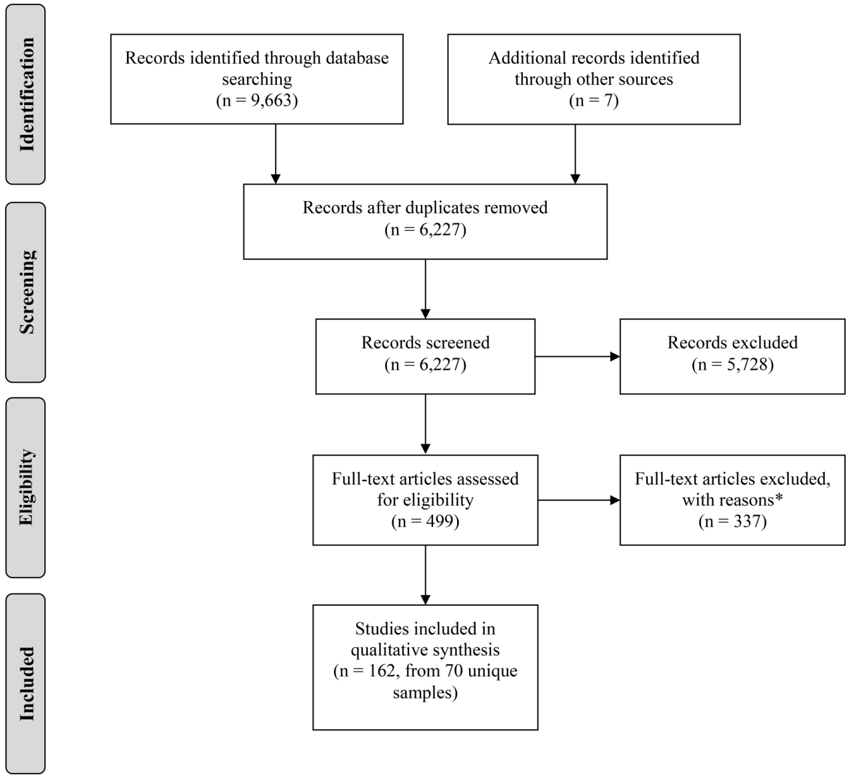
Moderate-to-vigorous physical activity (MVPA) is essential for disease prevention and health promotion. Emerging evidence suggests other intensities of physical activity (PA), including light-intensity activity (LPA), may also be important, but there has been no rigorous evaluation of the evidence. The purpose of this systematic review was to examine the relationships between objectively measured PA (total and all intensities) and health indicators in school-aged children and youth. Online databases were searched for peer-reviewed studies that met the a priori inclusion criteria: population (apparently healthy, aged 5–17 years), intervention/exposure/comparator (volumes, durations, frequencies, intensities, and patterns of objectively measured PA), and outcome (body composition, cardiometabolic biomarkers, physical fitness, behavioural conduct/pro-social behaviour, cognition/academic achievement, quality of life/well-being, harms, bone health, motor skill development, psychological distress, self-esteem). Heterogeneity among studies precluded meta-analyses; narrative synthesis was conducted. A total of 162 studies were included (204 171 participants from 31 countries). Overall, total PA was favourably associated with physical, psychological/social, and cognitive health indicators. Relationships were more consistent and robust for higher (e.g., MVPA) versus lower (e.g., LPA) intensity PA. All patterns of activity (sporadic, bouts, continuous) provided benefit. LPA was favourably associated with cardiometabolic biomarkers; data were scarce for other outcomes. These findings continue to support the importance of at least 60 min/day of MVPA for disease prevention and health promotion in children and youth, but also highlight the potential benefits of LPA and total PA. All intensities of PA should be considered in future work aimed at better elucidating the health benefits of PA in children and youth.
Overview
The claims and statistics of this paper haven’t been checked yet.
Free: it reads the open-access text and checks the first 5 claims that cite a source we can check. Create a free account to check every claim.
Integrity signals
Registry
Cites
Statistics
Figures
Verification
Claims the paper makes
The claims and statistics of this paper haven’t been checked yet.
Free: it reads the open-access text and checks the first 5 claims that cite a source we can check. Create a free account to check every claim.
Claims other papers make about this one
Each is checked against this paper’s own text: does it say what the citing paper says it does?
The source backs part of the claim, not all of it — or backs it for a different population, condition or comparison.
In the citing paper
“Research indicates that those who are physically active show or report better overall physical and mental health, a higher level of fitness and a lower level of obesity than their sedentary or physically inactive counterparts1–4”
From Physical activity and health in Chinese children and adolescents: expert consensus statement (2020) (2020) · cites this paper as [1]
Experimental — accuracy not yet measuredThe source backs part of the claim, not all of it — or backs it for a different population, condition or comparison.
In the citing paper
“The searches looked for journal articles reporting on sleep, sedentary time and physical activity using previously developed and validated searches [12–14, 30].”
From Combinations of physical activity, sedentary time, and sleep duration and their associations with depressive symptoms and other mental health problems in children and adolescents: a systematic review (2020) · cites this paper as [12]
Experimental — accuracy not yet measuredThe source backs part of the claim, not all of it — or backs it for a different population, condition or comparison.
In the citing paper
“Achieving high levels of physical activity, low levels of sedentary behaviour, and getting sufficient sleep have been individually associated with better mental health among children and adolescents [12–14].”
From Combinations of physical activity, sedentary time, and sleep duration and their associations with depressive symptoms and other mental health problems in children and adolescents: a systematic review (2020) · cites this paper as [12]
Experimental — accuracy not yet measuredThe source backs part of the claim, not all of it — or backs it for a different population, condition or comparison.
In the citing paper
“Previous studies looking at the 24-h movement guidelines and health indicators have primarily focused on examining the associations between the combinations of physical activity, sedentary time, and sleep duration with physical health outcomes [12–14].”
From Combinations of physical activity, sedentary time, and sleep duration and their associations with depressive symptoms and other mental health problems in children and adolescents: a systematic review (2020) · cites this paper as [12]
Experimental — accuracy not yet measuredThe source backs part of the claim, not all of it — or backs it for a different population, condition or comparison.
In the citing paper
“Isolated adherence to MVPA, screen time and sleep duration recommendations have been associated with lower adiposity indicators in children and adolescents [3, 5–10].”
From Proportion of children meeting recommendations for 24-hour movement guidelines and associations with adiposity in a 12-country study (2016) · cites this paper as [8]
Experimental — accuracy not yet measured
5 more claims about this paper
Create a free account to see every claim other papers make about this one.
Self-check
Percentages, sums and reported differences re-computed from the paper’s own numbers.
The self-check needs the paper’s full text.
Citations
Cites
The Cochrane Collaboration's tool for assessing risk of bias in randomised trials
Higgins, J. P. T., Altman, D. G., Gotzsche, P. C., Juni, P., Moher, D., Oxman, A. D., Savovic, J., Schulz, K. F., Weeks, L., Sterne, J. A. C., et al. (2011) · BMJ · doi:10.1136/bmj.d5928 · Cited by 33,817
Preferred Reporting Items for Systematic Reviews and Meta-Analyses: The PRISMA Statement
Moher, D., Liberati, A., Tetzlaff, J., & Altman, D. G. (2009) · Journal of Clinical Epidemiology · doi:10.1016/j.jclinepi.2009.06.005 · Cited by 19,575
Physical Activity in the United States Measured by Accelerometer
TROIANO, R. P., BERRIGAN, D., DODD, K. W., MÂSSE, L. C., TILERT, T., & MCDOWELL, M. (2008) · Medicine & Science in Sports & Exercise · doi:10.1249/mss.0b013e31815a51b3 · Cited by 7,638 · cited 2×
“This is unfortunate, as studies from Canada and the United States indicate that children and youth spend 4–6 h/day in LPA (Matthews et al. 2008; Troiano et al. 2008; Colley et al. 2011; Chaput et al. 2014), and emerging research suggests that spending more waking hours in LPA compared with…”
BackgroundJanssen, I., & LeBlanc, A. G. (2010) · International Journal of Behavioral Nutrition and Physical Activity · doi:10.1186/1479-5868-7-40 · Cited by 4,829 · cited 7×
“Physical activity (PA) is vital to the physical, psychological/ social, and cognitive health of school-aged children and youth (Janssen and LeBlanc 2010; Tremblay et al. 2010b).”
BackgroundResultInfluentialSelf-citationUtilization of the PICO framework to improve searching PubMed for clinical questions
Schardt, C., Adams, M. B., Owens, T., Keitz, S., & Fontelo, P. (2007) · BMC Medical Informatics and Decision Making · doi:10.1186/1472-6947-7-16 · Cited by 3,053 · cited 2×
“The participants, interventions, comparisons, outcomes and study design (PICOS) framework (Schardt et al. 2007) was followed to identify key study concepts in the research question a priori and to facilitate the searching process.”
MethodAmount of Time Spent in Sedentary Behaviors in the United States, 2003-2004
Matthews, C. E., Chen, K. Y., Freedson, P. S., Buchowski, M. S., Beech, B. M., Pate, R. R., & Troiano, R. P. (2008) · American Journal of Epidemiology · doi:10.1093/aje/kwm390 · Cited by 2,631 · cited 2×
“This is unfortunate, as studies from Canada and the United States indicate that children and youth spend 4–6 h/day in LPA (Matthews et al. 2008; Troiano et al. 2008; Colley et al. 2011; Chaput et al. 2014), and emerging research suggests that spending more waking hours in LPA compared with…”
BackgroundSelf-citationTremblay, M. S., Carson, V., Chaput, J.-P., Connor Gorber, S., Dinh, T., Duggan, M., Faulkner, G., Gray, C. E., Gruber, R., Janson, K., et al. (2016) · Applied Physiology, Nutrition, and Metabolism · doi:10.1139/apnm-2016-0151 · Cited by 2,024
Self-citationPhysiological and health implications of a sedentary lifestyle
Tremblay, M. S., Colley, R. C., Saunders, T. J., Healy, G. N., & Owen, N. (2010) · Applied Physiology, Nutrition, and Metabolism · doi:10.1139/h10-079 · Cited by 1,426 · cited 9×
“In this regard, the Canadian Physical Activity Guidelines for Children and Youth (Tremblay et al. 2010b, 2011), and many other guidelines around the world (e.g., Australia (Okely et al. 2012), USA (US Department of Health and Human Services 2008), and World Health Organization (WHO 2010)), recommend that children and…”
BackgroundInfluentialSelf-citationComparison of Accelerometer Cut Points for Predicting Activity Intensity in Youth
TROST, S. G., LOPRINZI, P. D., MOORE, R., & PFEIFFER, K. A. (2011) · Medicine & Science in Sports & Exercise · doi:10.1249/mss.0b013e318206476e · Cited by 1,360 · cited 3×
“…Marshall and Ramirez 2011) and the widespread use of subjective assessments of PA (Reilly et al. 2008; Adamo et al. 2009; Janssen and LeBlanc 2010; Trost et al. 2011), which cannot accurately capture LPA (e.g., various incidental activities accumulated throughout the day) (Hamilton et al. 2004;…”
BackgroundGRADE guidelines: 9. Rating up the quality of evidence
Guyatt, G. H., Oxman, A. D., Sultan, S., Glasziou, P., Akl, E. A., Alonso-Coello, P., Atkins, D., Kunz, R., Brozek, J., Montori, V., et al. (2011) · Journal of Clinical Epidemiology · doi:10.1016/j.jclinepi.2011.06.004 · Cited by 1,336 · cited 2×
“If there is no cause to downgrade, the quality of evidence can be upgraded if there is a large effect size, a dose–response gradient, or if all plausible confounders would decrease an apparent treatment effect (Guyatt et al. 2011b).”
BackgroundMethod
Research works printed but not linked: 9
- 2. Aggio, D., Smith, L., and Hamer, M. 2015. Effects of reallocating time in different activity intensities on health and fitness: a cross sectional study. Int. J. Behav. Nutr. Phys. Activ. 12(83). PMID:26104041.
- 22. Colley, R.C., Garriguet, D., Janssen, I., Craig, C.L., Clarke, J., and Tremblay, M.S. 2011. Physical activity of Canadian children and youth: Accelerometer results from the 2007 to 2009 Canadian Health Measures Survey. Statistics Canada cat. no. 82-003-X. Health Rep. 22(1): 1523. PMID:21510586.
- 49. Grydeland, M., Bergh, I.H., Bjelland, M., Lien, N., Andersen, L.F., Ommundsen, Y., et al. 2012. Correlates of weight status among Norwegian 11-year-olds: The HEIA study. BMC Publ. Health, 12(1053). PMID:23216675.
- 53. Guyatt, G., Oxman, A.D., Akl, E.A., Kunz, R., Vist, G., Brozek, J., et al. 2011a. GRADE guidelines: 1. Introduction-GRADE evidence profiles and summary of findings tables. J. Clin. Epidemiol. 64(4): 383-394. PMID:21195583.
- 85. Janz, K.F., Letuchy, E.M., Francis, S.L., Metcalf, K.M., Burns, T.L., and Levy, S.M. 2014a. Objectively measured physical activity predicts hip and spine bone mineral content in children and adolescents ages 5-15 years: Iowa Bone Development Study. Front. Endocrinol. 5: 112. PMID:25076937.
- 128. Nguyen, T.H., Tang, H.K., Kelly, P., van der Ploeg, H.P., and Dibley, M.J. 2010. Association between physical activity and metabolic syndrome: a cross sec- tional survey in adolescents in Ho Chi Minh City, Vietnam. BMC Publ. Health, 10(141). PMID:20236509.
- 129. Okely, A., Salmon, J., Vella, S., Cliff, D., Timperio, A., Tremblay, M., et al. 2012. A systematic review to update the Australian Physical Activity Guidelines for Children and Young People. Report prepared for the Australian Government Department of Health.
- 159. Sigmundova, D., and Sigmund, E. 2012. The effect of physical activity program at school on reducing childhood obesity: a results of four-year longitudinal study. Med. Sport. Bohem. Slov. 21(3): 129-141.
- 175. Tremblay, M.S., Esliger, D.W., Tremblay, A., and Colley, R. 2007. Incidental move- ment, lifestyle-embedded activity and sleep: new frontiers in physical activ- ity assessment. Can. J. Publ. Health, 98(Suppl. 2): 208-217. PMID:18213950.
Cited by
Items 701–800 of 1,001
Crotti, M., Rudd, J. R., Roberts, S. J., Davies, K. F., O’Callaghan, L., Utesch, T., & Foweather, L. (2022) · PLoS ONE · doi:10.1371/journal.pone.0272339 · Cited by 27
Renninger, D., Kelso, A., Reimers, A. K., Marzi, I., Beck, F., Engels, E. S., Standage, M., & Demetriou, Y. (2022) · Transportation Research Part F Traffic Psychology and Behaviour · doi:10.1016/j.trf.2022.09.015 · Cited by 20
Phan, T.-L. T., Tucker, J. M., Siegel, R., Christison, A. L., Stratbucker, W., Werk, L. N., Hossain, J., Datto, G. A., Gentile, D. A., & Stubblefield, S. (2018) · Childhood Obesity · doi:10.1089/chi.2018.0156 · Cited by 18
“In 60–64 However, while there is an important association between race and neurocognition with adiposity, our study clearly demonstrates an association between the number of hours youth spend gaming and adiposity severity, independent of race and academic performance.”
Vigorous physical activity patterns affect bone growth during early puberty in boys
Marín-Puyalto, J., Mäestu, J., Gómez‐Cabello, A., Lätt, E., Remmel, L., Purge, P., Casajús, J. A., Vicente‐Rodríguez, G., & Jürimäe, J. (2018) · Osteoporosis International · doi:10.1007/s00198-018-4731-2 · Cited by 20
Raustorp, A., Spenner, N., Agnes, W., & Fröberg, A. (2019) · Acta Paediatrica · doi:10.1111/apa.15041 · Cited by 21
Physical activity levels and sedentary time during school hours of 6th-grade girls in Germany
Sturm, D. J., Kelso, A., Kobel, S., & Demetriou, Y. (2020) · Journal of Public Health · doi:10.1007/s10389-019-01190-1 · Cited by 18
“Physical activity (PA) contributes to the development of the muscoskeletal and cardiovascular system, to neuromuscular control, and to the maintenance of healthy body weight and body composition (Poitras et al. 2016; WHO 2011).”
BackgroundKruse, F., Büchel, S., & Brühwiler, C. (2024) · Frontiers in Psychology · doi:10.3389/fpsyg.2024.1393966 · Cited by 30
Bourke, M., Wang, H., Wicks, H., Barnett, L., Cairney, J., & Fortnum, K. (2025) · Sports Medicine · doi:10.1007/s40279-025-02233-2 · Cited by 33
“Regular engagement in physical activity is associated with a range of physical, mental, social and cognitive health benefits in children and adolescents [1, 2].”
Exploring the impact of the ‘new’ ParticipACTION: overview and introduction of the special issue
Faulkner, G., Yun, L., Tremblay, M. S., & Spence, J. C. (2018) · Health Promotion and Chronic Disease Prevention in Canada · doi:10.24095/hpcdp.38.4.01 · Cited by 17
Self-citationInfluence of Organized vs Non Organized Physical Activity on School Adaptation Behavior
Moșoi, A. A., Beckmann, J., Mirifar, A., Martinent, G., & Balint, L. (2020) · Frontiers in Psychology · doi:10.3389/fpsyg.2020.550952 · Cited by 20
Kemp, B. J., Parrish, A., Batterham, M. J., & Cliff, D. P. (2022) · International Journal of Behavioral Nutrition and Physical Activity · doi:10.1186/s12966-022-01311-2 · Cited by 18
“Background Regular participation in physical activity (PA) has been linked with many health benefits for children and adolescents [1].”
BackgroundPhysical activity and its correlates in people with cystic fibrosis: a systematic review
Kinaupenne, M., Craemer, M. D., Schaballie, H., Vandekerckhove, K., Biervliet, S. V., & Demeyer, H. (2022) · European Respiratory Review · doi:10.1183/16000617.0010-2022 · Cited by 21
“Consequently, these higher intensities have an important long-term protective effect on health [15, 16].”
BackgroundSociodemographic differences in 24-hour time-use behaviours in New Zealand children
Hedayatrad, L., Stewart, T. I., Paine, S., Marks, E. J., Walker, C. G., & Duncan, S. (2022) · International Journal of Behavioral Nutrition and Physical Activity · doi:10.1186/s12966-022-01358-1 · Cited by 20
“Background There has been growing evidence that time-use behaviours comprised of physical activity [1], sedentary behaviour (including screen-based activities) [2] and sleep [3] are linked with physical and mental health outcomes in school-aged children and youth.”
BackgroundYman, J., Helgadóttir, B., Kjellenberg, K., & Nyberg, G. (2022) · Acta Paediatrica · doi:10.1111/apa.16556 · Cited by 29
Karchynskaya, V., Kopčáková, J., Gecková, A. M., Katrušín, B., Reijneveld, S. A., & de Winter, A. F. (2024) · PLoS ONE · doi:10.1371/journal.pone.0296736 · Cited by 23
Tafuri, F., Martínez-Roig, R., Susanto, N., Setyawan, H., & Latino, F. (2024) · Retos · doi:10.47197/retos.v58.106154 · Cited by 29
Hu, D., Zhou, S., Crowley‐McHattan, Z. J., & Liu, Z. (2024) · Frontiers in Public Health · doi:10.3389/fpubh.2024.1421843 · Cited by 26
Lu, Z., Guo, J., Liu, C., Wu, J., Zhao, C., Wang, F., Bao, Y., Zhang, H., Li, X., Li, X., et al. (2024) · BMC Public Health · doi:10.1186/s12889-024-20290-6 · Cited by 19
“Yet studies that investigate the association of SB, sleep, and LPA with physical fitness among children are scarce and findings are mixed [8, 9, 16–18], which may be attributed to data analyses challenges [19].”
BackgroundMethodZakrzewski-Fruer, J. K., Wells, E. K., Crawford, N. S., Afeef, S., & Tolfrey, K. (2018) · Journal of Nutrition · doi:10.1093/jn/nxx055 · Cited by 24
Aerobic fitness thresholds to define poor cardiometabolic health in children and youth
Aadland, E., Anderssen, S. A., Andersen, L. B., Resaland, G. K., Kolle, E., & Steene‐Johannessen, J. (2018) · Scandinavian Journal of Medicine and Science in Sports · doi:10.1111/sms.13330 · Cited by 15
Wisnieski, L. C., Dalimonte‐Merckling, D. M., & Robbins, L. B. (2019) · Childhood Obesity · doi:10.1089/chi.2018.0360 · Cited by 19
Maurer, A., Deckert, S., Levenig, C. G., Schörkmaier, T., Stangier, C., Attenberger, U. I., Hasenbring, M. I., & Boecker, H. (2020) · International Journal of Environmental Research and Public Health · doi:10.3390/ijerph17186801 · Cited by 19
“, from childhood [3] to older adults [4,5].”
BackgroundThe multivariate physical activity signature associated with body mass index in young children
Aadland, E., Holmøy, O. K., & Nilsen, A. K. O. (2021) · Preventive Medicine · doi:10.1016/j.ypmed.2021.106437 · Cited by 17
24-h Movement Guidelines and Substance Use among Adolescents: A School-Based Cross-Sectional Study
Sampasa‐Kanyinga, H., Colman, I., Goldfield, G. S., Janssen, I., Wang, J., Hamilton, H. A., & Chaput, J. (2021) · International Journal of Environmental Research and Public Health · doi:10.3390/ijerph18063309 · Cited by 16
Self-citationKwiecień-Jaguś, K., Mędrzycka-Dąbrowska, W. A., Kopeć, M., Piotrkowska, R., Czyż-Szypenbejl, K., Hansdorfer-Korzon, R., Lemska, M. E., & Jarzynkowski, P. (2021) · BMC Sports Science Medicine and Rehabilitation · doi:10.1186/s13102-021-00346-5 · Cited by 28
Caldwell, H. A. T., Proudfoot, N. A., Cristofaro, N. A. D., Cairney, J., Bray, S. R., & Timmons, B. W. (2022) · Journal of Physical Activity and Health · doi:10.1123/jpah.2021-0635 · Cited by 22
Olds, T., Sanders, I., Maher, C. A., Fraysse, F., Bell, L., & Leslie, E. R. (2017) · Child Care Health and Development · doi:10.1111/cch.12497 · Cited by 17
Sellberg, F., Willmer, M., Tynelius, P., & Berglind, D. (2017) · BMC Surgery · doi:10.1186/s12893-017-0318-7 · Cited by 15
“Physical activity (PA) provides numerous physiologic and psychological health benefits for both adults [1] and children [2].”
BackgroundKerfeld, C. I., Jirikowic, T., Allyn, K. J., & Maitland, M. E. (2018) · Prosthetics and Orthotics International · doi:10.1177/0309364618767139 · Cited by 18
Rajala, K., Kankaanpää, A., Laine, K., Itkonen, H., Goodman, E., & Tammelin, T. (2018) · Journal of Sports Sciences · doi:10.1080/02640414.2018.1485227 · Cited by 22
“Previous research has demonstrated the beneficial effects of PA on obesity, musculoskeletal health, several cardio-metabolic risk factors and physical fitness (Jansen & Leblanc, 2010; Poitras et al., 2016; Santos et al., 2014; Strong et al., 2005).”
BackgroundRuedl, G., Ewald, P., Niedermeier, M., Kirschner, W., Kopp, M., Drenowatz, C. J., & Greier, K. (2018) · Scandinavian Journal of Medicine and Science in Sports · doi:10.1111/sms.13316 · Cited by 23
School Lunch Timing and Children's Physical Activity During Recess: An Exploratory Study
McLoughlin, G. M., Edwards, C. G., Jones, A., Chojnacki, M. R., Baumgartner, N. W., Walk, A. D., Woods, A. M., Graber, K. C., & Khan, N. A. (2019) · Journal of Nutrition Education and Behavior · doi:10.1016/j.jneb.2019.01.006 · Cited by 15
Macdonald, K., Milne, N., Pope, R., & Orr, R. M. (2020) · Early Childhood Education Journal · doi:10.1007/s10643-020-01076-y · Cited by 20
Goldfield, G. S., Cameron, J. D., Sigal, R. J., Kenny, G. P., Holčík, M., Prud’homme, D., Guérin, E., Alberga, A. S., D’Angiulli, A., Tremblay, M. S., et al. (2021) · Applied Physiology, Nutrition, and Metabolism · doi:10.1139/apnm-2020-0756 · Cited by 18
Self-citationKatona, Z. B., Takács, J., Kerner, L., Alföldi, Z., Soós, I., Gyömörei, T., Podstawski, R., & Ihász, F. (2021) · International Journal of Environmental Research and Public Health · doi:10.3390/ijerph182413024 · Cited by 19
“The benefits of physical activity, time spent in a sedentary position and adherence to sleep recommendations are independently important components [10,11] of maintaining optimal health [12,13].”
BackgroundXing, R., Rachele, J. N., Matolić, T., Loh, V. H. Y., Cerin, E., Jiao, J., Huang, Y., & Pedišić, Ž. (2025) · International Journal of Behavioral Nutrition and Physical Activity · doi:10.1186/s12966-025-01733-8 · Cited by 19
“The benefits of physical activity for the health and well-being of children and adolescents are well established [1, 2].”
Li, X., Xiang, S., Dong, J., Zhong, Y., Zhao, S., Xiao, Z., & Li, L. (2020) · BioMed Research International · doi:10.1155/2020/9259742 · Cited by 23
He, G., Huang, Y., Salmon, J., & Wong, S. H. (2021) · BMC Public Health · doi:10.1186/s12889-021-10530-4 · Cited by 19
Physical activity accumulation along the intensity spectrum differs between children and adults
Rantalainen, T., Ridgers, N. D., Gao, Y., Belavý, D. L., Haapala, E. A., & Finni, T. J. (2021) · European Journal of Applied Physiology · doi:10.1007/s00421-021-04731-3 · Cited by 17
Fuentealba-Urra, S., Rubio, A., González‐Carrasco, M., Oyanedel, J. C., & Céspedes, C. (2021) · International Journal of Environmental Research and Public Health · doi:10.3390/ijerph182111190 · Cited by 17
Gosselin, V., & Laberge, S. (2022) · BMC Public Health · doi:10.1186/s12889-022-12797-7 · Cited by 18
“Yet, regular PA supports physical, cognitive, and psychological/ social health among school-aged children [3].”
BackgroundLane, C., Nathan, N., Reeves, P., Sutherland, R., Wolfenden, L., Shoesmith, A., & Hall, A. E. (2022) · Implementation Science · doi:10.1186/s13012-022-01215-6 · Cited by 17
“Specifically, increased policy compliance by schools in this study has the potential to improve child physical activity [12, 35, 68] and consequently positively impact on their physical, physiological and cognitive health [1].”
BackgroundZhang, X., Jiang, C., Zhang, X., & Chi, X. (2022) · Frontiers in Psychology · doi:10.3389/fpsyg.2022.933877 · Cited by 23
Fillon, A., Pereira, B., Vanhelst, J., Baran, J., Masurier, J., Guirado, T., Boirie, Y., Duclos, M., Julian, V., & Thivel, D. (2022) · International Journal of Environmental Research and Public Health · doi:10.3390/ijerph192113782 · Cited by 20
Scoping review of children’s and youth’s outdoor play publications in Canada
de Lannoy, L., Barbeau, K., Seguin, N., & Tremblay, M. S. (2023) · Health Promotion and Chronic Disease Prevention in Canada · doi:10.24095/hpcdp.43.1.01 · Cited by 18
Self-citationCampos-Garzón, P., Saucedo‐Araujo, R. G., Sevil‐Serrano, J., Migueles, J. H., Barranco-Ruíz, Y., & Chillón, P. (2023) · Transport Reviews · doi:10.1080/01441647.2023.2175276 · Cited by 17
“Engaging in regular physical activity (PA) provides many physical, social, and psychological benefits (Poitras et al., 2016).”
BackgroundLlanos-Muñoz, R., Vaquero‐Solís, M., López-Gajardo, M. Á., Miguel, P. A. S., Tapia‐Serrano, M. Á., & Marcos, F. M. L. (2023) · Children · doi:10.3390/children10030504 · Cited by 27
Physical Activity in Youth with Down Syndrome and Its Relationship with Adiposity
Xanthopoulos, M. S., Walega, R., Xiao, R., Pipan, M. E., Cochrane, C. I., Zemel, B. S., Kelly, A. T., & Magge, S. N. (2023) · Journal of Developmental & Behavioral Pediatrics · doi:10.1097/dbp.0000000000001192 · Cited by 17
“An emerging body of literature has focused on light physical activity (LPA) because the majority of PA in youth is spent in LPA.(12) LPA is a key variant in total energy expenditure and represents a potentially modifiable target for reducing adiposity.”
BackgroundInfluentialMoore, R. W., Edmondson, L., Gregory, M., Griffiths, K., & Freeman, E. (2023) · Frontiers in Public Health · doi:10.3389/fpubh.2023.1235086 · Cited by 21
“There is a growing body of evidence advocating the benefits of physical activity (PA) in enhancing physical and emotional health (1), cognitive health (2) and academic attainment (3, 4) among adolescents.”
BackgroundChen, S., Liang, K., López‐Gil, J. F., Drenowatz, C. J., & Tremblay, M. S. (2024) · European Journal of Sport Science · doi:10.1002/ejsc.12034 · Cited by 20
“As such, the health benefits of sufficient PA (Poitras et al., 2016) and appropriate sleep (Chaput et al., 2016) are prone to be neglected.”
BackgroundSelf-citationDevelopmental trends in young children’s device-measured physical activity and sedentary behaviour
Christian, H. E., Adams, E., Moore, H. L., Nathan, A., Murray, K., Schipperijn, J., & Trost, S. G. (2024) · International Journal of Behavioral Nutrition and Physical Activity · doi:10.1186/s12966-024-01645-z · Cited by 25
“Physical activity benefits children’s physical and mental health by supporting their motor skill development, musculoskeletal, cardiometabolic and psychological health, and preventing overweight and obesity [1–4].”
BackgroundResultEstimating sleep efficiency in 10- to- 13-year-olds using a waist-worn accelerometer
Borghese, M., Lin, Y., Chaput, J., & Janssen, I. (2017) · Sleep Health · doi:10.1016/j.sleh.2017.09.006 · Cited by 18
Self-citationCasado-Robles, C., Mayorga-Vega, D., Guijarro-Romero, S., & Viciana, J. (2020) · RICYDE Revista Internacional de Ciencias del Deporte · doi:10.5232/ricyde2020.06005 · Cited by 24
Gomes, T. N., Katzmarzyk, P. T., Pereira, S., Thuany, M., Standage, M., & Maia, J. A. R. (2020) · International Journal of Environmental Research and Public Health · doi:10.3390/ijerph17165837 · Cited by 14
“It is now evident that children who are more engaged in MVPA tend to be healthier, with a better metabolic profile than those who are less active [1]; yet, what it is not clear is how this relationship stands when considering different patterns.”
BackgroundInfluentialSelf-citationAssociation Between Physical Activity Intensity Levels and Arterial Stiffness in Healthy Children
Heil, L., Oberhoffer, R., & Böhm, B. (2020) · Journal of Physical Activity and Health · doi:10.1123/jpah.2019-0594 · Cited by 19
Longitudinal patterns of lifestyle behaviours in adolescence: a latent transition analysis
Dakin, M., Manneville, F., Langlois, J., Legrand, K., Lecomte, E., Briançon, S., & Omorou, A. Y. (2020) · British Journal Of Nutrition · doi:10.1017/s0007114520004316 · Cited by 17
“High level of physical activity (PA) (regardless of the dietary pattern) is associated with better physical, psychological and cognitive health among children and adolescents (6) and low PA and a predominantly sedentary lifestyle with deleterious health effects (7,8) .”
Slaton, A., Kowalski, A. J., Zemanick, A., Kuhn, A. P., Hager, E., & Black, M. (2020) · International Journal of Environmental Research and Public Health · doi:10.3390/ijerph17228546 · Cited by 10
Vanderloo, L. M., Maguire, J. L., Keown‐Stoneman, C. D. G., Parkin, P. C., Borkhoff, C. M., Tremblay, M. S., Anderson, L. N., Birken, C. S., & _, _. (2021) · Pediatric Exercise Science · doi:10.1123/pes.2020-0249 · Cited by 17
“Children and youth who adhere to these new guidelines have healthier body composition, cardiorespiratory and musculoskeletal fitness, academic achievement and cognition, emotional regulation, prosocial behaviors, cardiovascular and metabolic health, and overall quality of life (11,13,16,41,46).”
Self-citationPereira, L. J., Vieira, F. G. K., Belchor, A. L. L., Cezimbra, V. G., Alves, C. A. S., Matsuo, L. H., Spanholi, M. W., Teodoroski, A. C. C., Roberto, D. M. T., de Souza, L. D., et al. (2022) · Annals of Epidemiology · doi:10.1016/j.annepidem.2022.10.017 · Cited by 22
Potter, M., Spence, J. C., Boulé, N. G., Stearns, J. A., & Carson, V. (2017) · Applied Physiology, Nutrition, and Metabolism · doi:10.1139/apnm-2016-0419 · Cited by 18
“Eighteen out of 29 observational studies, which were all cross-sectional, looked at total PA using both pedometers (n=4) and accelerometers (n=14) and all reported associations between an aerobic fitness measure and total PA (Poitras et al. 2016).”
BackgroundInfluentialSelf-citationQuality of life in primary school children: The Health Oriented Pedagogical Project (HOPP)
Ringdal, K., Ringdal, G. I., Olsen, H. K., Mamen, A., & Fredriksen, P. M. (2018) · Scandinavian Journal of Public Health · doi:10.1177/1403494818767821 · Cited by 14
Associations between physical activity and core affects within and across days: a daily diary study
Ivarsson, A., Stenling, A., Josefsson, K. W., Höglind, S., & Lindwall, M. (2020) · Psychology and Health · doi:10.1080/08870446.2020.1745801 · Cited by 17
Mayorga-Vega, D., Casado-Robles, C., Viciana, J., & Fernández, I. L. (2019) · PubMed Central · Cited by 23
Xiao, M., Zuo, M., Liu, X., Wang, K., & Luo, H. (2025) · Behavioral Sciences · doi:10.3390/bs15020172 · Cited by 14
Brouwer, S. I., Stolk, R. P., & Corpeleijn, E. (2019) · BMC Pediatrics · doi:10.1186/s12887-019-1784-0 · Cited by 20
Correlates of Active Commuting to School among Portuguese Adolescents: An Ecological Model Approach
Loureiro, N., Loureiro, V., Grao‐Cruces, A., Martins, J., & de Matos, M. G. (2022) · International Journal of Environmental Research and Public Health · doi:10.3390/ijerph19052733 · Cited by 16
“Several studies have provided compelling evidence that regular PA produces health benefits, such as mental health benefits [2], reduction in cardiovascular risk factors [3], physical fitness and well-being [4], and social health benefits [5].”
BackgroundCatch me if you can! How French adolescents seize social occasions and opportunities to be active
Derigny, T., Schnitzler, C., Remmers, T., van Kann, D., Gandrieau, J., Seye, N., Baquet, G., & Potdevin, F. (2022) · BMC Public Health · doi:10.1186/s12889-022-13746-0 · Cited by 18
“energy expenditure” [2], is considered the cornerstone for maintaining and developing healthy lifestyle habits in adolescents [3].”
BackgroundAdebusoye, B., Leonardi‐Bee, J., Phalkey, R. K., & Chattopadhyay, K. (2022) · Health Science Reports · doi:10.1002/hsr2.997 · Cited by 15
“It positively impacts students' academic achievements and overall quality of life.(2,3) Physical activity also assists in their social development by providing opportunities for self‐expression, improving self‐confidence, social interactions, and integration.”
BackgroundSales, D. R. L., da Silva, J. P., Bergamo, R. R., de Oliveira, L. C., Ferrari, G., & Matsudo, V. K. R. (2023) · Scientific Reports · doi:10.1038/s41598-023-33732-9 · Cited by 25
Greenwalt, D., Phillips, S. A., Ozemek, C., Arena, R. A., & Sabbahi, A. (2023) · Current Problems in Cardiology · doi:10.1016/j.cpcardiol.2023.101871 · Cited by 23
The Goldilocks Day for healthy adiposity measures among children and adolescents
Rasmussen, C. L., Gába, A., Stanford, T., Dygrýn, J., Dumuid, D., Janda, D., & Hron, K. (2023) · Frontiers in Public Health · doi:10.3389/fpubh.2023.1158634 · Cited by 12
Ljungmann, C. K., Christensen, J. H., Johnsen, H. R., Klinker, C. D., & Pawlowski, C. S. (2023) · Sport in Society · doi:10.1080/17430437.2023.2286013 · Cited by 20
“Physical activity (PA) is important for adolescents’ physical, cognitive and mental health (Biddle et al. 2019; Rodriguez-Ayllon et al. 2019), and has been shown to reduce future risk of developing non communicable diseases (Hallal et al. 2012; Poitras et al. 2016).”
BackgroundMarrero-Rivera, J. P., Sobkowiak, O., Sgourakis, A., Bagnato, S. J., Kline, C. E., Gordon, B. D. H., & Ross, S. E. T. (2024) · Children · doi:10.3390/children11030363 · Cited by 20
“…activity and/or physical fitness and cognitive and academic outcomes for school-aged Latino children, as it is understood that the intensity of physical activity has a significant and positive relationship with various health and developmental indicators in school-aged children and youth [77].”
The Physical Activity Environment and Academic Achievement in Massachusetts Schoolchildren
Amin, S. A., Wright, C. M., Boulos, R., Chomitz, V. R., Chui, K. K. H., Economos, C. D., & Sacheck, J. M. (2017) · Journal of School Health · doi:10.1111/josh.12569 · Cited by 15
“Mixed-effects logistic regression models were used to examine the associations between: (1) PAE score and students scoring ‘‘advanced/proficient’’ on 2014 MCAS Math, and (2) PAE score and students scoring ‘‘advanced/proficient’’ on 2014 MCAS ELA.”
BackgroundMethodPreschool children’s physical activity and cardiovascular disease risk: A systematic review
Bell, L. A., Fletcher, E. A., Timperio, A. F., Vuillermin, P., & Hesketh, K. D. (2018) · Journal of science and medicine in sport · doi:10.1016/j.jsams.2018.11.021 · Cited by 14
Callender, L., Borghese, M. M., & Janssen, I. (2019) · Journal of sport and health science/Journal of Sport and Health Science · doi:10.1016/j.jshs.2019.06.006 · Cited by 17
“Finally, to identify outdoor active play we started by identifying all epochs where 1 of the following conditions was met: (1) sleep, (2) indoors (based on geographic information system (GIS) data linked with GPS data), (3) school curriculum (but not recess time) or day camp, (4) active or passive travel, (5) organize…”
MethodSelf-citationCarral, J. M. C., Burgo, H., & Sande, E. (2019) · Journal of Physical Therapy Science · doi:10.1589/jpts.31.556 · Cited by 16
Kidokoro, T., Fuku, N., Yanagiya, T., Takeshita, T., Takaragawa, M., Annear, M. J., Tian, X., Waiganjo, L. B., Bogonko, L. F., Isika, J. K., et al. (2020) · International Journal of Environmental Research and Public Health · doi:10.3390/ijerph17124254 · Cited by 15
“In addition to the well-established benefits from MVPA [1,2], the additional benefits of VPA among school-aged children are reported, which may have greater beneficial effects on health outcomes in much less time [40,41].”
BackgroundGrant, S. J., Beauchamp, M. R., Blanchard, C. M., Carson, V., Gardner, B., Warburton, D. E. R., & Rhodes, R. E. (2020) · BMC Public Health · doi:10.1186/s12889-020-09465-z · Cited by 17
Self-citationSzpunar, M., Johnson, A. M., Driediger, M. V., Burke, S. M., Irwin, J. D., Shelley, J., Timmons, B. W., Vanderloo, L. M., & Tucker, P. (2021) · Health Education & Behavior · doi:10.1177/1090198121996285 · Cited by 13
“Physical activity, particularly time spent in moderate-tovigorous intensity physical activity (MVPA) among young children, plays an important role in supporting health and development (Carson et al., 2017; Poitras et al., 2016; Saunders et al., 2016).”
BackgroundCox, A., Fairclough, S. J., & Noonan, R. J. (2021) · International Journal of Environmental Research and Public Health · doi:10.3390/ijerph18094923 · Cited by 15
Sasayama, K., Watanabe, M., & Ogawa, T. (2021) · Journal of Transport & Health · doi:10.1016/j.jth.2021.101077 · Cited by 15
Materová, E., Pelclová, J., Gába, A., & Frömel, K. (2022) · BMC Public Health · doi:10.1186/s12889-022-12766-0 · Cited by 13
“Conversely, insufficient PA accompanied by high levels of sedentary behaviour (SB) has a negative influence on health [3] and together they are considered as the key drivers of noncommunicable diseases [4] with a possible transfer to adulthood [5].”
BackgroundCaldwell, H. A. T., Miller, M. B., Tweedie, C., Zahavich, J. B. L., Cockett, E., & Rehman, L. A. (2022) · International Journal of Environmental Research and Public Health · doi:10.3390/ijerph19042401 · Cited by 17
“Physical activity participation is associated with multiple physical, mental, and social health benefits in children and youth, and higher fitness or physical activity participation is associated with better cognitive and improved mental health in children and adolescents [5,6].”
BackgroundCena, H., Vandoni, M., Magenes, V. C., Napoli, I. D., Marin, L., Baldassarre, P., Luzzi, A., Pasquale, F. D., Zuccotti, G., & Calcaterra, V. (2022) · International Journal of Environmental Research and Public Health · doi:10.3390/ijerph19148300 · Cited by 19
Bardid, F., Tomaz, S. A., Johnstone, A., Robertson, J., Craig, L. C. A., & Reilly, J. J. (2022) · Journal of Exercise Science & Fitness · doi:10.1016/j.jesf.2022.07.002 · Cited by 16
Bratteteig, M., Anderssen, S. A., Rueegg, C. S., Ruud, E., Torsvik, I. K., Kriemler, S., & Grydeland, M. (2022) · Frontiers in Pediatrics · doi:10.3389/fped.2022.977365 · Cited by 15
Vigorous physical activity and self-rated health during adolescence: A cross-sectional survey
YongKang, W., She, W., Chi, G., & Wang, J. (2022) · Frontiers in Public Health · doi:10.3389/fpubh.2022.961361 · Cited by 16
Piccinno, A., & Colella, D. (2016) · Sport Sciences for Health · doi:10.1007/s11332-016-0326-5 · Cited by 16
“In young people, several studies have shown the effect of VPA on health indicator [2, 23], but also MPA has a positive effect [2, 44–46].”
BackgroundResultDifferent healthy habits between northern and southern Spanish school children
Alsina, D. A., Knox, E. C. L., Zabala, M., Ortega, F. Z., Dalmau, J. M., & Muros, J. J. (2017) · Journal of Public Health · doi:10.1007/s10389-017-0823-2 · Cited by 15
“In the case of physical activity (PA), previous research has associated it with physical, psychological, social and cognitive health indicators in youth, especially when PA is performed at a moderate or vigorous intensity (Poitras et al. 2016).”
BackgroundNavti, L. K., Atanga, M. B. S., & Niba, L. L. (2017) · BMC Obesity · doi:10.1186/s40608-017-0171-3 · Cited by 16
“Physical activity influences energy balance and has been shown to be beneficial to the health of school-age children [8, 9], with the likelihood of the children becoming more active in adulthood [10].”
BackgroundObjectively measured active transportation to school and other destinations among 10–13 year olds
Williams, G. C., Borghese, M. M., & Janssen, I. (2018) · International Journal of Behavioral Nutrition and Physical Activity · doi:10.1186/s12966-017-0634-4 · Cited by 16
Self-citationResults from Lithuania’s 2018 Report Card on Physical Activity for Children and Youth
Šukys, S., Emeljanovas, A., Gruodytė-Račienė, R., Miežienė, B., Trinkūnienė, L., Rutkauskaitė, R., & Tremblay, M. S. (2019) · International Journal of Environmental Research and Public Health · doi:10.3390/ijerph16234710 · Cited by 14
“Among school-aged children in particular, physical activity is related to many health benefits in the physical, psychological, social [5], and cognitive domains [5–7].”
BackgroundSelf-citationKemp, B. J., Cliff, D. P., Kariippanon, K. E., Crowe, R. K., & Parrish, A. (2020) · Sport Education and Society · doi:10.1080/13573322.2020.1822795 · Cited by 18
Afrin, S., Mullens, A. B., Chakrabarty, S., Bhoumik, L., & Biddle, S. (2021) · Preventive Medicine Reports · doi:10.1016/j.pmedr.2021.101607 · Cited by 21
CaiHong, H., Memon, A. R., Liang, C., Hong, J.-T., Lin, Y., & Chen, S. (2021) · Frontiers in Public Health · doi:10.3389/fpubh.2021.719742 · Cited by 21
“Consistent with the Canadian 24-h Movement Guidelines (10), limited ST was considered to be daily screen time of participants—including time watching TV/movies, playing computer games, and using electronic screen-based devices—of <2 h per day.”
BackgroundMethodGitimoghaddam, M., Vanderloo, L. M., Hung, R., Ryce, A., McKellin, W. H., Miller, A. R., & Collet, J. (2021) · Brain Sciences · doi:10.3390/brainsci11020195 · Cited by 23
“Physical activity provides numerous health benefits for children [7,8].”
BackgroundRenninger, D., Sturm, D. J., Marques, A., Peralta, M., Popovic, S. R., Gardašević, J., Mašanović, B., & Demetriou, Y. (2021) · Sustainability · doi:10.3390/su13136992 · Cited by 16
“Overall, evidence shows consistent positive effects of total PA on adiposity, multiple cardio metabolic biomarkers, physical fitness and bone health [2].”
BackgroundCasado-Robles, C., Viciana, J., Guijarro-Romero, S., & Mayorga-Vega, D. (2021) · Journal of Teaching in Physical Education · doi:10.1123/jtpe.2020-0132 · Cited by 15
Gerber, M., Ayekoé, S. A., Beckmann, J., Bonfoh, B., Kouassi, K. B., Gba, B. C., Traoré, G. S., Coulibaly, J. T., Dao, D., du Randt, R., et al. (2021) · Frontiers in Public Health · doi:10.3389/fpubh.2021.671782 · Cited by 14
Metadata
- Authors
- Poitras, V. J., Gray, C. E., Borghese, M. M., Carson, V., Chaput, J.-P., Janssen, I., Katzmarzyk, P. T., Pate, R. R., Connor Gorber, S., Kho, M. E., Sampson, M., & Tremblay, M. S.
- Affiliations
- Children's Hospital of Eastern Ontario (CA)
- Queen's University (CA)
- University of Alberta (CA)
- Pennington Biomedical Research Center (US)
- University of South Carolina (US)
- Office of the Task Force on Preventive Health Care, Public Health Agency of Canada, Ottawa, ON K1A 0K9, Canada.
- McMaster University (CA)
- Corresponding author
- Poitras, Veronica Joan
- Gray, Casey Ellen
- ORCID
- Venue
- Applied Physiology, Nutrition, and Metabolism
- Publisher
- Canadian Science Publishing
- Published
- 2016-06
- Volume
- 41
- Issue
- 6 (Suppl. 3)
- Pages
- S197-S239
- ISSN
- 1715-5312 (ISSN-L)
- 1715-5320
- OpenAlex
- W2444482132
- Cited by
- 2,217
- References
- 182
- Citations by year
- 2026: 155 · 2025: 234 · 2024: 255 · 2023: 260 · 2022: 315 · 2021: 321 · 2020: 258 · 2019: 193 · 2018: 143 · 2017: 63 · 2016: 18
- FWCI
- 16.30
- Type
- journal article
- Language
- en
- Open access
- hybrid
- doi.org
- Licence
- cc-by
- www.nrcresearchpress.com/page/about/CorporateTextAndDataMining (tdm)
- Locations
- Applied Physiology Nutrition and Metabolism (publishedVersion, cc-by)
- PubMed (publishedVersion)
- TSpace (University of Toronto) (acceptedVersion)
- TSpace (University of Toronto) (submittedVersion)
- Scholar Commons (University of South Carolina) (submittedVersion, cc-by)
- Funders
- Public Health Agency of Canada
- Public Health Agency
- Canadian Institutes of Health Research
- Topics
- Health Sciences › Medicine › Public Health, Environmental and Occupational Health › Physical Activity and Health
- Health Sciences › Medicine › Public Health, Environmental and Occupational Health › Obesity, Physical Activity, Diet
- Social Sciences › Life-span and Life-course Studies › Recreational Sport and Physical Activity
- Keywords
- physical activity, moderate-to-vigorous physical activity, light physical activity, school-aged children, adolescents, health indicators, body composition, cardiometabolic biomarkers, physical fitness, prosocial behavior, academic performance, quality of life, bone health, motor skill development, psychological distress, self-esteem, activity patterns, activity bouts, disease prevention
- MeSH terms
- Adolescent, Adolescent Behavior, Body Composition, Cardiovascular Diseases, Child, Child Behavior, Child, Preschool, Cognition, Health Status, Humans, Obesity, Physical Fitness, Quality of Life, Biomarkers, Exercise, Randomized Controlled Trials as Topic, Treatment Outcome, Metabolic Syndrome, Non-Randomized Controlled Trials as Topic
About these checks
Registry, retraction, Cites and statistics results are computed, not judged, with one exception: a printed reference that no index lists is read once by a model before it counts as a citation error. Claims are extracted by a model and kept only when their quote appears verbatim in the text; each cited source is then checked, with a model’s help, for whether it says what the claim relies on. Those verdicts can be wrong — read the claim’s quote and the cited source before relying on one.
Statistics and arithmetic are recomputed, not judged.
Confidence bands are shown only for fields calibrated on our annotated test set. None is calibrated yet, so no band is shown.
What counts as a claim ›How we measure confidence ›How we check this ›
Are you an author, or do you see a problem with this page? Request a review
Data sources
Bibliographic data: Semantic Scholar, OpenAlex, Crossref.
Contains information from the Semantic Scholar Academic Graph Datasets, made available under the ODC Attribution License (ODC-BY 1.0).
Semantic Scholar’s data is described in: Kinney, R., et al. (2023). The Semantic Scholar Open Data Platform. arXiv:2301.10140.
