

Systematic review of the relationships between objectively measured physical activity and health indicators in school-aged children and youth
Open accessThe DOI matches its Crossref record; 186 of the 187 references it cites were found in a registry or an index, and 1 are not checked yet.
Abstract
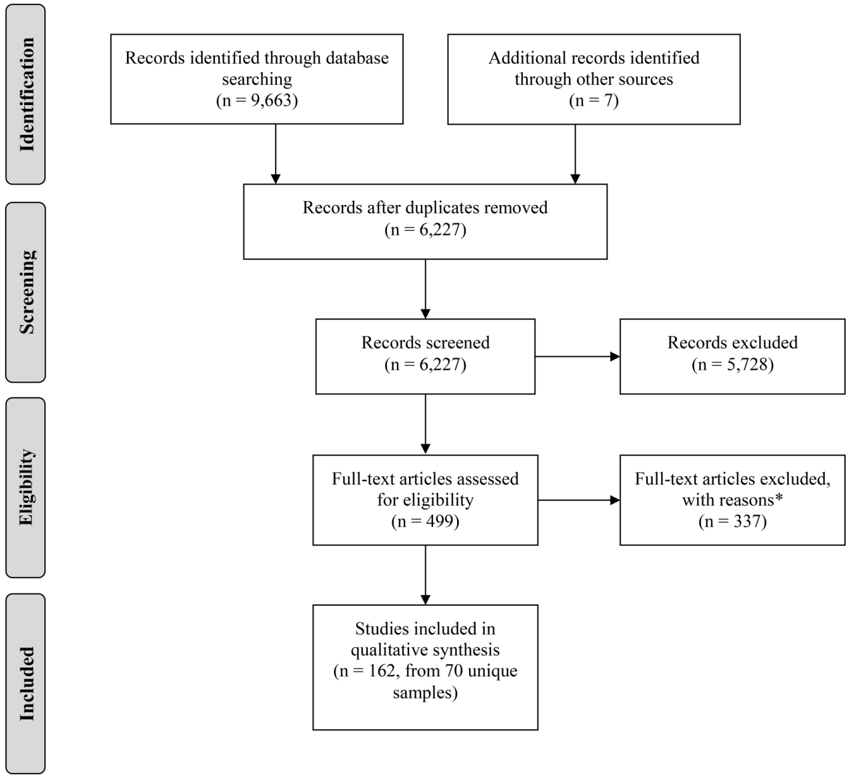
Moderate-to-vigorous physical activity (MVPA) is essential for disease prevention and health promotion. Emerging evidence suggests other intensities of physical activity (PA), including light-intensity activity (LPA), may also be important, but there has been no rigorous evaluation of the evidence. The purpose of this systematic review was to examine the relationships between objectively measured PA (total and all intensities) and health indicators in school-aged children and youth. Online databases were searched for peer-reviewed studies that met the a priori inclusion criteria: population (apparently healthy, aged 5–17 years), intervention/exposure/comparator (volumes, durations, frequencies, intensities, and patterns of objectively measured PA), and outcome (body composition, cardiometabolic biomarkers, physical fitness, behavioural conduct/pro-social behaviour, cognition/academic achievement, quality of life/well-being, harms, bone health, motor skill development, psychological distress, self-esteem). Heterogeneity among studies precluded meta-analyses; narrative synthesis was conducted. A total of 162 studies were included (204 171 participants from 31 countries). Overall, total PA was favourably associated with physical, psychological/social, and cognitive health indicators. Relationships were more consistent and robust for higher (e.g., MVPA) versus lower (e.g., LPA) intensity PA. All patterns of activity (sporadic, bouts, continuous) provided benefit. LPA was favourably associated with cardiometabolic biomarkers; data were scarce for other outcomes. These findings continue to support the importance of at least 60 min/day of MVPA for disease prevention and health promotion in children and youth, but also highlight the potential benefits of LPA and total PA. All intensities of PA should be considered in future work aimed at better elucidating the health benefits of PA in children and youth.
Overview
The claims and statistics of this paper haven’t been checked yet.
Free: it reads the open-access text and checks the first 5 claims that cite a source we can check. Create a free account to check every claim.
Integrity signals
Registry
Cites
Statistics
Figures
Verification
Claims the paper makes
The claims and statistics of this paper haven’t been checked yet.
Free: it reads the open-access text and checks the first 5 claims that cite a source we can check. Create a free account to check every claim.
Claims other papers make about this one
Each is checked against this paper’s own text: does it say what the citing paper says it does?
The source backs part of the claim, not all of it — or backs it for a different population, condition or comparison.
In the citing paper
“Research indicates that those who are physically active show or report better overall physical and mental health, a higher level of fitness and a lower level of obesity than their sedentary or physically inactive counterparts1–4”
From Physical activity and health in Chinese children and adolescents: expert consensus statement (2020) (2020) · cites this paper as [1]
Experimental — accuracy not yet measuredThe source backs part of the claim, not all of it — or backs it for a different population, condition or comparison.
In the citing paper
“The searches looked for journal articles reporting on sleep, sedentary time and physical activity using previously developed and validated searches [12–14, 30].”
From Combinations of physical activity, sedentary time, and sleep duration and their associations with depressive symptoms and other mental health problems in children and adolescents: a systematic review (2020) · cites this paper as [12]
Experimental — accuracy not yet measuredThe source backs part of the claim, not all of it — or backs it for a different population, condition or comparison.
In the citing paper
“Achieving high levels of physical activity, low levels of sedentary behaviour, and getting sufficient sleep have been individually associated with better mental health among children and adolescents [12–14].”
From Combinations of physical activity, sedentary time, and sleep duration and their associations with depressive symptoms and other mental health problems in children and adolescents: a systematic review (2020) · cites this paper as [12]
Experimental — accuracy not yet measuredThe source backs part of the claim, not all of it — or backs it for a different population, condition or comparison.
In the citing paper
“Previous studies looking at the 24-h movement guidelines and health indicators have primarily focused on examining the associations between the combinations of physical activity, sedentary time, and sleep duration with physical health outcomes [12–14].”
From Combinations of physical activity, sedentary time, and sleep duration and their associations with depressive symptoms and other mental health problems in children and adolescents: a systematic review (2020) · cites this paper as [12]
Experimental — accuracy not yet measuredThe source backs part of the claim, not all of it — or backs it for a different population, condition or comparison.
In the citing paper
“Isolated adherence to MVPA, screen time and sleep duration recommendations have been associated with lower adiposity indicators in children and adolescents [3, 5–10].”
From Proportion of children meeting recommendations for 24-hour movement guidelines and associations with adiposity in a 12-country study (2016) · cites this paper as [8]
Experimental — accuracy not yet measured
5 more claims about this paper
Create a free account to see every claim other papers make about this one.
Self-check
Percentages, sums and reported differences re-computed from the paper’s own numbers.
The self-check needs the paper’s full text.
Citations
Cites
The Cochrane Collaboration's tool for assessing risk of bias in randomised trials
Higgins, J. P. T., Altman, D. G., Gotzsche, P. C., Juni, P., Moher, D., Oxman, A. D., Savovic, J., Schulz, K. F., Weeks, L., Sterne, J. A. C., et al. (2011) · BMJ · doi:10.1136/bmj.d5928 · Cited by 33,817
Preferred Reporting Items for Systematic Reviews and Meta-Analyses: The PRISMA Statement
Moher, D., Liberati, A., Tetzlaff, J., & Altman, D. G. (2009) · Journal of Clinical Epidemiology · doi:10.1016/j.jclinepi.2009.06.005 · Cited by 19,575
Physical Activity in the United States Measured by Accelerometer
TROIANO, R. P., BERRIGAN, D., DODD, K. W., MÂSSE, L. C., TILERT, T., & MCDOWELL, M. (2008) · Medicine & Science in Sports & Exercise · doi:10.1249/mss.0b013e31815a51b3 · Cited by 7,638 · cited 2×
“This is unfortunate, as studies from Canada and the United States indicate that children and youth spend 4–6 h/day in LPA (Matthews et al. 2008; Troiano et al. 2008; Colley et al. 2011; Chaput et al. 2014), and emerging research suggests that spending more waking hours in LPA compared with…”
BackgroundJanssen, I., & LeBlanc, A. G. (2010) · International Journal of Behavioral Nutrition and Physical Activity · doi:10.1186/1479-5868-7-40 · Cited by 4,829 · cited 7×
“Physical activity (PA) is vital to the physical, psychological/ social, and cognitive health of school-aged children and youth (Janssen and LeBlanc 2010; Tremblay et al. 2010b).”
BackgroundResultInfluentialSelf-citationUtilization of the PICO framework to improve searching PubMed for clinical questions
Schardt, C., Adams, M. B., Owens, T., Keitz, S., & Fontelo, P. (2007) · BMC Medical Informatics and Decision Making · doi:10.1186/1472-6947-7-16 · Cited by 3,053 · cited 2×
“The participants, interventions, comparisons, outcomes and study design (PICOS) framework (Schardt et al. 2007) was followed to identify key study concepts in the research question a priori and to facilitate the searching process.”
MethodAmount of Time Spent in Sedentary Behaviors in the United States, 2003-2004
Matthews, C. E., Chen, K. Y., Freedson, P. S., Buchowski, M. S., Beech, B. M., Pate, R. R., & Troiano, R. P. (2008) · American Journal of Epidemiology · doi:10.1093/aje/kwm390 · Cited by 2,631 · cited 2×
“This is unfortunate, as studies from Canada and the United States indicate that children and youth spend 4–6 h/day in LPA (Matthews et al. 2008; Troiano et al. 2008; Colley et al. 2011; Chaput et al. 2014), and emerging research suggests that spending more waking hours in LPA compared with…”
BackgroundSelf-citationTremblay, M. S., Carson, V., Chaput, J.-P., Connor Gorber, S., Dinh, T., Duggan, M., Faulkner, G., Gray, C. E., Gruber, R., Janson, K., et al. (2016) · Applied Physiology, Nutrition, and Metabolism · doi:10.1139/apnm-2016-0151 · Cited by 2,024
Self-citationPhysiological and health implications of a sedentary lifestyle
Tremblay, M. S., Colley, R. C., Saunders, T. J., Healy, G. N., & Owen, N. (2010) · Applied Physiology, Nutrition, and Metabolism · doi:10.1139/h10-079 · Cited by 1,426 · cited 9×
“In this regard, the Canadian Physical Activity Guidelines for Children and Youth (Tremblay et al. 2010b, 2011), and many other guidelines around the world (e.g., Australia (Okely et al. 2012), USA (US Department of Health and Human Services 2008), and World Health Organization (WHO 2010)), recommend that children and…”
BackgroundInfluentialSelf-citationComparison of Accelerometer Cut Points for Predicting Activity Intensity in Youth
TROST, S. G., LOPRINZI, P. D., MOORE, R., & PFEIFFER, K. A. (2011) · Medicine & Science in Sports & Exercise · doi:10.1249/mss.0b013e318206476e · Cited by 1,360 · cited 3×
“…Marshall and Ramirez 2011) and the widespread use of subjective assessments of PA (Reilly et al. 2008; Adamo et al. 2009; Janssen and LeBlanc 2010; Trost et al. 2011), which cannot accurately capture LPA (e.g., various incidental activities accumulated throughout the day) (Hamilton et al. 2004;…”
BackgroundGRADE guidelines: 9. Rating up the quality of evidence
Guyatt, G. H., Oxman, A. D., Sultan, S., Glasziou, P., Akl, E. A., Alonso-Coello, P., Atkins, D., Kunz, R., Brozek, J., Montori, V., et al. (2011) · Journal of Clinical Epidemiology · doi:10.1016/j.jclinepi.2011.06.004 · Cited by 1,336 · cited 2×
“If there is no cause to downgrade, the quality of evidence can be upgraded if there is a large effect size, a dose–response gradient, or if all plausible confounders would decrease an apparent treatment effect (Guyatt et al. 2011b).”
BackgroundMethod
Research works printed but not linked: 9
- 2. Aggio, D., Smith, L., and Hamer, M. 2015. Effects of reallocating time in different activity intensities on health and fitness: a cross sectional study. Int. J. Behav. Nutr. Phys. Activ. 12(83). PMID:26104041.
- 22. Colley, R.C., Garriguet, D., Janssen, I., Craig, C.L., Clarke, J., and Tremblay, M.S. 2011. Physical activity of Canadian children and youth: Accelerometer results from the 2007 to 2009 Canadian Health Measures Survey. Statistics Canada cat. no. 82-003-X. Health Rep. 22(1): 1523. PMID:21510586.
- 49. Grydeland, M., Bergh, I.H., Bjelland, M., Lien, N., Andersen, L.F., Ommundsen, Y., et al. 2012. Correlates of weight status among Norwegian 11-year-olds: The HEIA study. BMC Publ. Health, 12(1053). PMID:23216675.
- 53. Guyatt, G., Oxman, A.D., Akl, E.A., Kunz, R., Vist, G., Brozek, J., et al. 2011a. GRADE guidelines: 1. Introduction-GRADE evidence profiles and summary of findings tables. J. Clin. Epidemiol. 64(4): 383-394. PMID:21195583.
- 85. Janz, K.F., Letuchy, E.M., Francis, S.L., Metcalf, K.M., Burns, T.L., and Levy, S.M. 2014a. Objectively measured physical activity predicts hip and spine bone mineral content in children and adolescents ages 5-15 years: Iowa Bone Development Study. Front. Endocrinol. 5: 112. PMID:25076937.
- 128. Nguyen, T.H., Tang, H.K., Kelly, P., van der Ploeg, H.P., and Dibley, M.J. 2010. Association between physical activity and metabolic syndrome: a cross sec- tional survey in adolescents in Ho Chi Minh City, Vietnam. BMC Publ. Health, 10(141). PMID:20236509.
- 129. Okely, A., Salmon, J., Vella, S., Cliff, D., Timperio, A., Tremblay, M., et al. 2012. A systematic review to update the Australian Physical Activity Guidelines for Children and Young People. Report prepared for the Australian Government Department of Health.
- 159. Sigmundova, D., and Sigmund, E. 2012. The effect of physical activity program at school on reducing childhood obesity: a results of four-year longitudinal study. Med. Sport. Bohem. Slov. 21(3): 129-141.
- 175. Tremblay, M.S., Esliger, D.W., Tremblay, A., and Colley, R. 2007. Incidental move- ment, lifestyle-embedded activity and sleep: new frontiers in physical activ- ity assessment. Can. J. Publ. Health, 98(Suppl. 2): 208-217. PMID:18213950.
Cited by
Items 801–900 of 1,001
Todendi, P. F., Salla, R. F., Shivappa, N., Hébert, J. R., Ritter, J. D. A., Cureau, F. V., & Schaan, B. D. (2021) · British Journal Of Nutrition · doi:10.1017/s0007114521003767 · Cited by 15
“For example, in ERICA, boys were more physically active than girls, and physical activity is a well-known behaviour associated with adopting a healthier diet and, consequently, having a better cardiome-tabolic profile (43) .”
Association between tennis training experience and executive function in children aged 8–12
Xu, Y., Zhang, W., Zhang, H., Wang, L., Luo, Y., & Ni, G. (2022) · Frontiers in Human Neuroscience · doi:10.3389/fnhum.2022.924809 · Cited by 20
“Recent evidence showed that there was a positive association between regular physical activity and brain functions (Ludyga et al., 2016; Poitras et al., 2016; Chen et al., 2020).”
BackgroundLoh, V. H. Y., Sahlqvist, S., Veitch, J., Thornton, L. E., Salmon, J., Cerin, E., Schipperijn, J., & Timperio, A. F. (2022) · BMC Public Health · doi:10.1186/s12889-022-13947-7 · Cited by 12
“Background It is well established that regular physical activity during adolescence has significant short- and long-term health benefits [1, 2].”
BackgroundHao, Y., & Razman, R. (2022) · Journal of Intellectual Disabilities · doi:10.1177/17446295221130913 · Cited by 12
Applying the COM-B model to understand wearable activity tracker use in children and adolescents
Creaser, A. V., Clemes, S. A., Bingham, D. D., & Costa, S. (2022) · Journal of Public Health · doi:10.1007/s10389-022-01763-7 · Cited by 12
“Physical activity (PA) during childhood and adolescence is associated with health benefits such as lower risks of obesity and improved well-being (da Silva et al. 2019; Mark and Janssen 2011; Poitras et al. 2016; Talarico and Janssen 2018).”
BackgroundCompensation of overall physical activity in (pre)adolescent girls – the CReActivity project
Beck, F., Dettweiler, U., Sturm, D. J., Demetriou, Y., & Reimers, A. K. (2022) · Archives of Public Health · doi:10.1186/s13690-022-01002-1 · Cited by 14
“cardiovascular [3] and cardio metabolic [2, 3] health.”
BackgroundSwain, T. A., McNarry, M. A., & Mackintosh, K. A. (2024) · JMIR Formative Research · doi:10.2196/56784 · Cited by 18
“While there is a vast array of evidence supporting the need to be physically active for overall health and well-being [4-6], research has also demonstrated the physiological and cognitive benefits associated with improved motor competence [7].”
BackgroundZia, M. Q., Ramish, M. S., Mushtaq, I., Fasih, S. T., & Naveed, M. (2024) · Leadership & Organization Development Journal · doi:10.1108/lodj-11-2023-0635 · Cited by 29
Silva, D. A. S., Aubert, S., Manyanga, T., Lee, E., Salvo, D., & Tremblay, M. S. (2024) · Journal of Physical Activity and Health · doi:10.1123/jpah.2024-0442 · Cited by 16
Self-citationPérez-Ramírez, J. A., González-Férnandez, F. T., & Villa‐González, E. (2024) · Applied Sciences · doi:10.3390/app14209200 · Cited by 30
Haapala, E. A., Gao, Y., Vanhala, A., Rantalainen, T., & Finni, T. J. (2020) · Scientific Reports · doi:10.1038/s41598-020-67983-7 · Cited by 17
Huang, T. M., Zhao, G., Tan, H., Hua, W., Fu, J., Sun, S., Lv, W., He, Z., Hu, Q., & Quan, M. (2021) · Frontiers in Pediatrics · doi:10.3389/fped.2021.720830 · Cited by 19
“Daily steps is an excellent indicator of health-related outcomes [53, 54].”
BackgroundGil‐Espinosa, F. J., Merino-Marbán, R., & Mayorga-Vega, D. (2020) · Cultura Ciencia y Deporte · doi:10.12800/ccd.v15i46.1597 · Cited by 27
López, I. R., Martín‐Matillas, M., Delgado‐Fernández, M., Delgado‐Rico, E., Folgoso, C. C., & Verdejo‐García, A. (2021) · SPORT TK-Revista EuroAmericana de Ciencias del Deporte · doi:10.6018/sportk.461551 · Cited by 30
Haapala, E. A., Gao, Y., Hartikainen, J., Rantalainen, T., & Finni, T. J. (2021) · Scientific Reports · doi:10.1038/s41598-021-92040-2 · Cited by 15
“0 cm, (2) hop for height on one foot at a time, over a pile of soft mattresses (width 60 cm; depth 20 cm; height 5 cm each) with increasing height after each successful attempt, (3) jump sideways from side to side over a thin wooden lath (60 × 4 × 2 cm) on the jumping base (100 × 60 cm), and (4) move sideways with woo…”
BackgroundMercê, C., Branco, M., Catela, D. P. R., Lopes, F., Rodrigues, L. P., & Cordovil, R. (2021) · Children · doi:10.3390/children8060487 · Cited by 13
“Hulteen’s model [9], such as the levels of balance and coordination [6], the cardiorespiratory and muscular fitness [5], and the perceived competence [30].”
BackgroundMethodSolberg, R. B., Steene‐Johannessen, J., Fagerland, M. W., Anderssen, S. A., Berntsen, S., Resaland, G. K., van Sluijs, E. M. F., Ekelund, U., & Kolle, E. (2021) · Preventive Medicine Reports · doi:10.1016/j.pmedr.2021.101648 · Cited by 23
“Physical activity (PA) and aerobic fitness is associated with several health benefits in youths (Poitras et al., 2016; Raghuveer et al., 2020).”
BackgroundHall, A. E., Wolfenden, L., Shoesmith, A., McCarthy, N., Wiggers, J. H., Bauman, A. E., Rissel, C. E., Sutherland, R., Lecathelinais, C., Brown, H., et al. (2021) · Journal of science and medicine in sport · doi:10.1016/j.jsams.2021.12.005 · Cited by 14
Motor outcomes in young children pre‐and one‐year post‐liver transplant
Patterson, C. F., So, S., Rogers, A., & Ng, V. L. (2021) · Pediatric Transplantation · doi:10.1111/petr.14200 · Cited by 12
Scott-Andrews, K. Q., Miller, A. L., Templin, T. J., Hasson, R. E., & Robinson, L. E. (2022) · Frontiers in Public Health · doi:10.3389/fpubh.2021.720083 · Cited by 12
“It is well-established that there is a positive and favorable association between physical activity and numerous health indicators in children and adults (1, 2).”
BackgroundDelfa-de-la-Morena, J. M., Bores‐García, D., Solera-Alfonso, A., & Romero‐Parra, N. (2022) · Frontiers in Psychology · doi:10.3389/fpsyg.2022.910930 · Cited by 22
“A growing body of evidence shows the benefits of regular physical activity (PA) (Poitras et al., 2016; Biddle et al., 2019) and the negative effects of sedentary lifestyles.”
BackgroundAdolescents’ Perceived Barriers to Physical Activity during the COVID-19 Pandemic
Mata, C., Onofre, M., & Martins, J. (2022) · Children · doi:10.3390/children9111726 · Cited by 19
“In adolescents, regular engagement in PA provides physical, psychological, social, and cognitive health benefits [3,4].”
BackgroundDahlstrand, J., Fridolfsson, J., Arvidsson, D., Börjesson, M., Friberg, P., & Chen, Y. (2023) · Journal of Adolescent Health · doi:10.1016/j.jadohealth.2023.03.006 · Cited by 14
Stenman, M., Pesola, A. J., Laukkanen, A., & Haapala, E. A. (2018) · Human Movement · doi:10.1515/humo-2017-0019 · Cited by 10
“Inadequate levels of PA have been related to an increased risk of cardiovascular diseases and type 2 diabetes already in childhood [3].”
Stearns, J. A., Carson, V., Spence, J. C., Faulkner, G., & Leatherdale, S. T. (2017) · BMC Pediatrics · doi:10.1186/s12887-017-0913-x · Cited by 17
“Extensive research demonstrates how low PA and excessive screen time are risk factors for overweight/obesity [1, 4].”
BackgroundSelf-citationTaylor, S. L., Noonan, R. J., Knowles, Z. R., Owen, M. B., & Fairclough, S. J. (2018) · BMC Public Health · doi:10.1186/s12889-018-6272-1 · Cited by 21
Macgregor, A. P., Borghese, M. M., & Janssen, I. (2019) · Applied Physiology, Nutrition, and Metabolism · doi:10.1139/apnm-2018-0323 · Cited by 14
“Physical activity positively influences the physical and mental health of children (Janssen and Leblanc 2010; Poitras et al. 2016).”
BackgroundSelf-citationNie, M., Fan, C., Sun, R.-Z., Wang, J., Feng, Q., Zhang, Y., Yao, Z., & Wang, M. (2019) · International Journal of Environmental Research and Public Health · doi:10.3390/ijerph16050686 · Cited by 12
“Regular physical activity (PA) has been demonstrated to affect weight control [1], musculoskeletal health, cardiovascular risks [2], motor skill development [3], cognitive ability [4], academic performance [5,6], and self-esteem [7].”
BackgroundJones, P. R., Rajalahti, T., Resaland, G. K., Aadland, E., Steene‐Johannessen, J., Anderssen, S. A., Bathen, T. F., Andreassen, T., Kvalheim, O. M., & Ekelund, U. (2019) · Atherosclerosis · doi:10.1016/j.atherosclerosis.2019.05.023 · Cited by 16
Nakabazzi, B., Wachira, L.-J. M., Oyeyemi, A. L., Ssenyonga, R., & Onywera, V. O. (2020) · PLoS ONE · doi:10.1371/journal.pone.0235211 · Cited by 16
“In line with our results, literature shows that a typical physical activity pattern for children comprise of>40% sedentary time [63,64], a substantial amount of time in LPA [3,16,38,63] and<5% of wake time in MVPA [2].”
BackgroundResultInfluentialDreiskämper, D., Utesch, T., Henning, L., Ferrari, N., Gräf, C., Tietjens, M., & Naul, R. (2020) · Forum Kinder- und Jugendsport · doi:10.1007/s43594-020-00003-8 · Cited by 14
“…in fast allen Messzeitpunkten negativ mit dermotorischen Leistung zusammen, was zum einen zur empirischen Befundlage passt (Albrecht et al. 2016; Poitras et al. 2016), zum anderen die Notwendigkeit einer hinreichendenmotorischenLeistungsfähigkeit – und deren Förderung – im Kindesalter…”
BackgroundInfluentialPhysical Activity and Fatigue in Children With Intestinal Failure on Parenteral Nutrition
So, S., Patterson, C. F., Betts, Z., Belza, C., Avitzur, Y., & Wales, P. W. (2021) · Journal of Pediatric Gastroenterology and Nutrition · doi:10.1097/mpg.0000000000003138 · Cited by 13
“While being physically active, children learn fundamental motor skills and enhance their health-related physical fitness, which is associated with improved health (28,29).”
BackgroundValencia‐Peris, A., Lizandra, J., Moya-Mata, I., Gonzalvo, F. G., Castillo, S., & Escribano, A. (2021) · International Journal of Environmental Research and Public Health · doi:10.3390/ijerph18105375 · Cited by 12
“Inactivity also tends to increase during adolescence which, added to the long periods of sedentary time, is related not only to general metabolic, cardiovascular and psychological problems [20,21], but to the progress of both functional and physical impairments in the CF population [22].”
BackgroundHohmann, A., Yuan, X., Schmitt, M., Zhang, H., Pietzonka, M., & Siener, M. (2021) · Children · doi:10.3390/children8050391 · Cited by 13
The association of obesity with thyroid carcinoma risk
Ma, X., Ma, C., Hou, L., & Fu, S. (2022) · Cancer Medicine · doi:10.1002/cam4.4498 · Cited by 11
Hwang, Y., Boyd, M., Naylor, P., Rhodes, R. E., Liu, S., Moldenhauer, R., Li, J., Wright, C., Buckler, E. J., & Carson, V. (2023) · Children · doi:10.3390/children10040720 · Cited by 11
“Evidence consistently suggests that physical activity is positively associated with physical, psychosocial, and cognitive health in pediatric age groups [1,2].”
BackgroundSelf-citationMayorga-Vega, D., Casado-Robles, C., Guijarro-Romero, S., & Viciana, J. (2023) · Frontiers in Public Health · doi:10.3389/fpubh.2023.1211237 · Cited by 15
“The results showed that the comparability of the daily step scores estimated by the Garmin Vivofit Jr 2 and Xiaomi Mi Band 5 were acceptable/excellent (e.g., scores inside the 90% CI of the equivalence test, MAPE = 0.1%, and 95% IC of the ICC = 0.70).”
BackgroundMethodInfluentialKoenig, H. G., VanderWeele, T. J., & Peteet, J. R. (2023) · Oxford University Press eBooks · doi:10.1093/oso/9780190088859.003.0001 · Cited by 12
Alkalash, S. H., Alshamrani, F. A., Alharthi, S. A., Alzubaidi, M. A. A., Alqarehi, R. M., Bazaid, A. A., & Asiri, B. A. M. (2023) · Cureus · doi:10.7759/cureus.49464 · Cited by 21
Association between Physical Activity, Diet Quality and Leisure Activities of Young Poles
Sajdakowska, M., Gutkowska, K., Kosicka-Gębska, M., Gębski, J., & Gantner, A. (2023) · Nutrients · doi:10.3390/nu15245121 · Cited by 16
Bucksch, J., Möckel, J., Kaman, A., & Sudeck, G. (2024) · PubMed Central · doi:10.25646/11874 · Cited by 11
“Even children’s and adolescents’ physical and mental health benefits from physical and sporting activities [1, 2].”
BackgroundPhysical activity has decreased in Finnish children and adolescents from 2016 to 2022
Husu, P., Tokola, K., Vähä‐Ypyä, H., Sievänen, H. T., Kokko, S. P., Villberg, J. J., & Vasankari, T. J. (2024) · BMC Public Health · doi:10.1186/s12889-024-18854-7 · Cited by 32
“At least moderate-to-vigorous intensity PA (MVPA) shows more consistent and robust relationships with health indicators than lower intensity PA [4].”
BackgroundGreco, F., Quinzi, F., Papaianni, M. C., Cosco, L. F., Segura‐Garcìa, C., & Emerenziani, G. P. (2024) · Heliyon · doi:10.1016/j.heliyon.2024.e32129 · Cited by 13
“Scientific evidence highlighted the benefits of PA in children and adolescent ’ s health [12,13].”
Background24-H movement behaviours research in Chinese population: A scoping review
Huang, J., Memon, A. R., Bao, R., Fan, H., Wang, L., Liu, Y., Chen, S., & Li, C. (2024) · Journal of Exercise Science & Fitness · doi:10.1016/j.jesf.2024.07.005 · Cited by 12
Rhodes, R. E., Banik, A., Szczuka, Z., Aulbach, M. B., DeSmet, A., Durand, H., Gatting, L., Green, J., Hillison, E. Z., Masaryk, R., et al. (2024) · Journal of Physical Activity and Health · doi:10.1123/jpah.2024-0113 · Cited by 16
Gao, M., Cheng, X., Bao, Y., & Zhou, X. (2024) · Environment and Planning B Urban Analytics and City Science · doi:10.1177/23998083241304258 · Cited by 15
“Physical activity (PA) is crucial for children ’ s health and well-being (Poitras et al., 2016), with its absence emerging as a global health threat (Organization, 2003).”
Brennan, C., Streight, E., Cheng, S., & Rhodes, R. E. (2025) · International Journal of Behavioral Nutrition and Physical Activity · doi:10.1186/s12966-025-01778-9 · Cited by 26
Montgomery, S. C., Donnelly, M., Badham, J., Kee, F., Dunne, L., & Hunter, R. F. (2021) · BMC Public Health · doi:10.1186/s12889-020-10081-0 · Cited by 17
Yang, X., Leung, W. Y., Chen, Y. S., Ouyang, Y. F., & Zhao, W. H. (2021) · PubMed · doi:10.3967/bes2021.083 · Cited by 13
Chong, K. H., Dumuid, D., Cliff, D. P., Parrish, A., & Okely, A. D. (2022) · Journal of Physical Activity and Health · doi:10.1123/jpah.2021-0630 · Cited by 13
Herbert, J., Matłosz, P., Martínez‐Rodríguez, A., Przednówek, K., Asif, M., & Wyszyńska, J. (2022) · International Journal of Environmental Research and Public Health · doi:10.3390/ijerph19094999 · Cited by 14
“However, it is important to remember that all levels of PA, LPA (light-intensity PA), MPA (moderateintensity PA), and VPA (vigorous-intensity PA) are important [16].”
BackgroundArbour‐Nicitopoulos, K. P., Bremer, E., Leo, J., & Wright, F. V. (2022) · Leisure/Loisir · doi:10.1080/14927713.2022.2085157 · Cited by 13
“All youth need to be regularly engaged in physical activity (PA) to optimize their physical, psychosocial, cognitive, and emotional health and development (Biddle et al., 2019; Poitras et al., 2016).”
BackgroundCardiorespiratory Fitness, Obesity and Physical Activity in Schoolchildren: The Effect of Mediation
González-Gálvez, N., Ribeiro, J. C., & Mota, J. A. P. S. (2022) · International Journal of Environmental Research and Public Health · doi:10.3390/ijerph192316262 · Cited by 15
“[33] conducted a systematic review to evaluate the relationship between the PA level and health indicators in children and adolescents aged 5–17 years old.”
BackgroundResultThe impact of weather on time allocation to physical activity and sleep of child-parent dyads
Nguyen, H. T., Christian, H. E., Le, H., Connelly, L. B., Zubrick, S. R., & Mitrou, F. (2023) · The Science of The Total Environment · doi:10.1016/j.scitotenv.2023.163249 · Cited by 20
Bratteteig, M., Rueegg, C. S., Raastad, T., Grydeland, M., Torsvik, I. K., Schindera, C., Ruud, E., & Anderssen, S. A. (2024) · Journal of Adolescent and Young Adult Oncology · doi:10.1089/jayao.2023.0063 · Cited by 15
Movement behaviors and cardiometabolic risk in schoolchildren
la Cruz, L. L., Martínez‐Vizcaíno, V., García-Prieto, J. C., Arias-Palencia, N. M., Díez‐Fernández, A., Tobarra, M. M., & Notario‐Pacheco, B. (2018) · PLoS ONE · doi:10.1371/journal.pone.0207300 · Cited by 15
Coupling our plough of thoughtful moving to the star of children’s right to play
Pesce, C., Faigenbaum, A. D., Γούδας, Μ., & Tomporowski, P. D. (2017) · Routledge eBooks · doi:10.4324/9781315305790-15 · Cited by 15
Blomqvist, M., Mononen, K., Tolvanen, A. J., & Konttinen, N. (2019) · Scandinavian Journal of Medicine and Science in Sports · doi:10.1111/sms.13500 · Cited by 18
Jochimek, M., & Łada‐Maśko, A. (2019) · Health Psychology Report · doi:10.5114/hpr.2019.86698 · Cited by 13
Are primary school children attending full-day school still engaged in sports clubs?
Spengler, S., Kuritz, A., Rabel, M., & Mess, F. (2019) · PLoS ONE · doi:10.1371/journal.pone.0225220 · Cited by 18
“Already in childhood, physical activity is a key factor for health [1, 2].”
BackgroundAadland, E., Andersen, L. B., Migueles, J. H., Ortega, F. B., & Kvalheim, O. M. (2020) · Journal of Sports Sciences · doi:10.1080/02640414.2020.1796462 · Cited by 14
Competing tensions: Active transport to school, school choice and policy making
Sandretto, S., Hopkins, D., Wilson, G. A., & Mandic, S. (2020) · Journal of Transport & Health · doi:10.1016/j.jth.2020.100908 · Cited by 13
Blanchette, S., Larouche, R., Tremblay, M. S., Faulkner, G., Riazi, N. A., & Trudeau, F. (2020) · Applied Physiology, Nutrition, and Metabolism · doi:10.1139/apnm-2020-0277 · Cited by 14
Self-citationSuárez-Villadat, B., Villagra, A., Veiga, Ó. L., Cabanas‐Sánchez, V., Izquierdo‐Gómez, R., & on behalf of the UP&DOWN Study Group (2021) · International Journal of Environmental Research and Public Health · doi:10.3390/ijerph18115521 · Cited by 14
“It is considered to be the cornerstone for the maintenance and development of healthy lifestyle habits in the adolescent population [2].”
BackgroundAbdelkarim, O., Fritsch, J., Jekauc, D., & Bös, K. (2021) · International Journal of Environmental Research and Public Health · doi:10.3390/ijerph18168341 · Cited by 11
“A low level of PF and insufficient physical activity are associated with greater somatic and psychological problems [1,2].”
BackgroundAndriyani, F. D., Biddle, S., Priambadha, A. A., Thomas, G., & Cocker, K. A. D. (2022) · Journal of Exercise Science & Fitness · doi:10.1016/j.jesf.2022.02.002 · Cited by 25
Physical activity among young children with disabilities: a systematic review protocol
Vanderloo, L. M., Taylor, L. G., Yates, J., Bassett-Gunter, R. L., Stanley, M., & Tucker, P. (2022) · BMJ Open · doi:10.1136/bmjopen-2021-060140 · Cited by 14
Guerra, A. M., Montes, F., Useche, A. F., Jaramillo, A. M., González, S. A., Meisel, J. D., Obando, C., Cardozo, V., Hunter, R. F., & Sarmiento, O. L. (2020) · International Journal of Environmental Research and Public Health · doi:10.3390/ijerph17165796 · Cited by 15
Knowles, G. (2017) · Social Psychiatry and Psychiatric Epidemiology · doi:10.1007/s00127-017-1399-4 · Cited by 10
“These studies have produced inconsistent findings, with reports of null, positive, and inverse associations between PA and depressive symptoms [3, 4].”
BackgroundPhysical literacy in children and youth
Kozera, T. R. (2017) · Mspace (University of Manitoba) · Cited by 18
Rivera-Ochoa, M., Arroyo-Bello, M., Mañas, A., Quesada, C., Vizmanos-Lamotte, B., González‐Gross, M., & Guadalupe‐Grau, A. (2021) · International Journal of Environmental Research and Public Health · doi:10.3390/ijerph182212215 · Cited by 13
“MVPA was analyzed because of its robust association with physical, social, and mental health outcomes in adolescents [29,30].”
BackgroundAssociation of physical activity with metabolic profile from adolescence to adulthood
Lehtovirta, M., Wu, F., Rovio, S., Heinonen, O. J., Laitinen, T. T., Niinikoski, H., Lagström, H., Viikari, J. S. A., Rönnemaa, T., Jula, A., et al. (2022) · Scandinavian Journal of Medicine and Science in Sports · doi:10.1111/sms.14261 · Cited by 12
Beck, F., Schmidt, S., Wöll, A., & Reimers, A. K. (2022) · Journal of Behavioral Medicine · doi:10.1007/s10865-022-00382-7 · Cited by 12
Swelam, B. A., Salmon, J., Arundell, L., Timperio, A. F., Moriarty, A. L., & Ridgers, N. D. (2022) · Journal of Sports Sciences · doi:10.1080/02640414.2022.2151751 · Cited by 11
“Physical activity is beneficial for physical and cognitive health and well-being in children (Poitras et al., 2016).”
BackgroundWoodforde, J., Gomersall, S. R., Timperio, A. F., Loh, V. H. Y., Browning, H., Perales, F., Salmon, J., & Stylianou, M. (2023) · Journal for the Measurement of Physical Behaviour · doi:10.1123/jmpb.2022-0051 · Cited by 10
“There are numerous health benefits for children and adolescents who engage in sufficient physical activity (PA; Cesa et al., 2014; McMahon et al., 2017; Poitras et al., 2016).”
BackgroundMäestu, E., Kull, M., Mäestu, J., Pihu, M., Kais, K., Riso, E., Koka, A., Tilga, H., & Jürimäe, J. (2023) · Children · doi:10.3390/children10081369 · Cited by 24
“Additionally, physical activity has a positive impact on children’s mental health [12–14], learning, academic performance [2,13,15–17], and overall quality of life [2,18,19].”
BackgroundMasini, A., Longo, G., Ricci, M., Scheier, L. M., Sansavini, A., Ceciliani, A., & Dallolio, L. (2024) · Children · doi:10.3390/children11020155 · Cited by 17
“A compilation of evidence accumulated from systematic reviews [1,2] and published guidelines [3] all reinforce the value of physical activity (PA) for children in terms of both current and future health.”
BackgroundCampos-Garzón, P., Stewart, T. I., Palma-Leal, X., Molina‐García, J., Herrador‐Colmenero, M., Schipperijn, J., Chillón, P., & Barranco-Ruíz, Y. (2024) · Health & Place · doi:10.1016/j.healthplace.2024.103211 · Cited by 13
Mazzoli, E., Xu, J., & Barnett, L. M. (2024) · Physical Education and Sport Pedagogy · doi:10.1080/17408989.2024.2335143 · Cited by 19
“Physical activity in childhood is associated with favourable health-related outcomes (Poitras et al. 2016), increased wellbeing (Biddle et al. 2019), and improved cognitive functions (Alvarez-Bueno et al. 2017; Pesce et al. 2023).”
Janda, D., Gába, A., Hron, K., Arundell, L., & Ayala, A. M. C. (2024) · BMC Public Health · doi:10.1186/s12889-024-19075-8 · Cited by 12
“Regular PA, particularly in the moderate-to-vigorous intensity range, has consistently been shown to be protective against obesity and promote better physical and psychosocial health outcomes [12, 13].”
BackgroundHealth effects of children’s summer holiday programs: a systematic review and meta-analysis
Eglitis, E., Singh, B., Olds, T., Virgara, R., Machell, A., Richardson, M., Brannelly, K., Grant, A., Gray, J., Wilkinson, T., et al. (2024) · International Journal of Behavioral Nutrition and Physical Activity · doi:10.1186/s12966-024-01658-8 · Cited by 14
Vorlíček, M., Prycl, D., Heidler, J., Herrador‐Colmenero, M., Nábělková, J., Mitáš, J., Hinckson, E. A., Mandic, S., & Frömel, K. (2024) · Smart Learning Environments · doi:10.1186/s40561-024-00355-0 · Cited by 21
Dong, M., Niu, M., Jiang, Z., Choi, Y., & Li, N. (2025) · Frontiers in Psychology · doi:10.3389/fpsyg.2024.1539415 · Cited by 14
da Silva, A. F., Martins, P. C., Santiago, L. N., & Silva, D. A. S. (2025) · Children · doi:10.3390/children12030260 · Cited by 17
“The selection of databases was strategically planned to ensure the comprehensiveness and represen-tativeness of the available scientific literature on the topic, considering those commonly used in other reviews on the same subject [3–6, 8, 31 ].”
Pérez-Ramírez, J. A., Santos, M. P., Mota, J. A. P. S., González-Férnandez, F. T., & Villa‐González, E. (2025) · Frontiers in Psychology · doi:10.3389/fpsyg.2025.1568129 · Cited by 25
Adolescents, menstruation, and physical activity: insights from a global scoping review
Harvey, J., Western, M. J., Townsend, N. P., Francombe-Webb, J., Sebire, S. J., Malkowski, O. S., Remskar, M., Burfitt, E., & Solomon-Moore, E. (2025) · BMC Women s Health · doi:10.1186/s12905-025-03825-w · Cited by 25
“Physical activity (PA) is associated with many physical and psychological health benefits in adolescents [1, 2].”
McWhannell, N., Foweather, L., Graves, L., Henaghan, J., Ridgers, N. D., & Stratton, G. (2018) · International Journal of Environmental Research and Public Health · doi:10.3390/ijerph15040582 · Cited by 13
Guijarro-Romero, S., Mayorga-Vega, D., Viciana, J., Casado-Robles, C., Gråstén, A., & Jaakkola, T. T. (2020) · RICYDE Revista Internacional de Ciencias del Deporte · doi:10.5232/ricyde2020.05907 · Cited by 15
“More specifically, there is consistent evidence on favourable relationships between moderate-to-vigorous PA (MVPA) with adiposity, cardiometabolic biomarkers, physical fitness, bone health, cognition and academic performance within youth (Esteban-Cornejo, Tejero-Gonzalez, Sallis, & Veiga, 2015; Poitras et al., 2016).”
BackgroundInfluentialLouro, A., Franco, P., & da Costa, E. M. (2021) · Sustainability · doi:10.3390/su131810104 · Cited by 18
School environment and physical activity in adolescents from São Paulo city
Ferrari, G., Rezende, L. F. M., Florindo, A. A., Mielke, G. I., & Peres, M. F. T. (2021) · Scientific Reports · doi:10.1038/s41598-021-97671-z · Cited by 17
Ylvisåker, E., Nilsen, A. K. O., Johannessen, K., & Aadland, E. (2021) · Journal of Sports Sciences · doi:10.1080/02640414.2021.1976490 · Cited by 13
“Physical activity (PA) should be promoted from a young age to lay the foundation for a physically active lifestyle and to ensure optimal health and development in children (Jones et al., 2013; Poitras et al., 2016; Veldman et al., 2021).”
BackgroundPhysical activity and adiposity in preschool children: The Barwon Infant Study
Bell, L. A., Vuillermin, P., Timperio, A. F., Ponsonby, A., Tang, M. L. K., Hesketh, K. D., & the BIS Investigator Group (2021) · Pediatric Obesity · doi:10.1111/ijpo.12853 · Cited by 10
Hjort, R. L.-N., & Agergaard, S. (2022) · International Journal of Environmental Research and Public Health · doi:10.3390/ijerph19031235 · Cited by 14
Kovacevic, D., Bray, S. R., Brown, D. M. Y., & KWAN, M. Y. W. (2022) · Frontiers in Sports and Active Living · doi:10.3389/fspor.2022.895097 · Cited by 9
Prieto-Botella, D., Valera‐Gran, D., Santa‐Marina, L., Babarro, I., Subiza‐Pérez, M., Casas, M., Guxens, M., Cárdenas-Fuentes, G., Heude, B., Bernard, J. Y., et al. (2022) · International Journal of Environmental Research and Public Health · doi:10.3390/ijerph19159178 · Cited by 13
de Bruijn, A. G. M., Meijer, A., Königs, M., Oosterlaan, J., Smith, J., & Hartman, E. (2023) · Psychology of sport and exercise · doi:10.1016/j.psychsport.2023.102390 · Cited by 16
Walking alone or walking together: A spatial evaluation of children’s travel behavior to school
Rybarczyk, G., Torun, A. Ö., Yeşiltepe, D., & Argın, G. (2023) · Environment and Planning B Urban Analytics and City Science · doi:10.1177/23998083231161612 · Cited by 15
“When children incorporate PA into their life, physiological health, cardiovascular fi tness, and cognitive ability increase (Poitras et al., 2016).”
BackgroundSuchert, V., Hanewinkel, R., Neumann, C., & Hansen, J. (2023) · Children · doi:10.3390/children10081392 · Cited by 13
“Regular physical activity (PA) is linked to several positive health outcomes, including improved cardiovascular health, better mental health, and a reduced risk of chronic disease [2].”
BackgroundHuang, Z., Li, S., Lu, F., Tian, K., & Peng, L. (2023) · Preventive Medicine Reports · doi:10.1016/j.pmedr.2023.102460 · Cited by 15
“The risks associated with these are evident even during adolescence (Timpka et al., 2014; Poitras et al., 2016; Henriksson et al., 2019a; Henriksson et al., 2019b).”
BackgroundGubelmann, C., Marques-Vidal, P. M., Bringolf‐Isler, B., Suggs, L. S., Vollenweider, P., & Kayser, B. (2017) · Preventive Medicine Reports · doi:10.1016/j.pmedr.2017.12.004 · Cited by 11
“The beneficial effects of regular physical activity (PA) in youth are well established (Poitras et al., 2016).”
Background
Metadata
- Authors
- Poitras, V. J., Gray, C. E., Borghese, M. M., Carson, V., Chaput, J.-P., Janssen, I., Katzmarzyk, P. T., Pate, R. R., Connor Gorber, S., Kho, M. E., Sampson, M., & Tremblay, M. S.
- Affiliations
- Children's Hospital of Eastern Ontario (CA)
- Queen's University (CA)
- University of Alberta (CA)
- Pennington Biomedical Research Center (US)
- University of South Carolina (US)
- Office of the Task Force on Preventive Health Care, Public Health Agency of Canada, Ottawa, ON K1A 0K9, Canada.
- McMaster University (CA)
- Corresponding author
- Poitras, Veronica Joan
- Gray, Casey Ellen
- ORCID
- Venue
- Applied Physiology, Nutrition, and Metabolism
- Publisher
- Canadian Science Publishing
- Published
- 2016-06
- Volume
- 41
- Issue
- 6 (Suppl. 3)
- Pages
- S197-S239
- ISSN
- 1715-5312 (ISSN-L)
- 1715-5320
- OpenAlex
- W2444482132
- Cited by
- 2,217
- References
- 182
- Citations by year
- 2026: 155 · 2025: 234 · 2024: 255 · 2023: 260 · 2022: 315 · 2021: 321 · 2020: 258 · 2019: 193 · 2018: 143 · 2017: 63 · 2016: 18
- FWCI
- 16.30
- Type
- journal article
- Language
- en
- Open access
- hybrid
- doi.org
- Licence
- cc-by
- www.nrcresearchpress.com/page/about/CorporateTextAndDataMining (tdm)
- Locations
- Applied Physiology Nutrition and Metabolism (publishedVersion, cc-by)
- PubMed (publishedVersion)
- TSpace (University of Toronto) (acceptedVersion)
- TSpace (University of Toronto) (submittedVersion)
- Scholar Commons (University of South Carolina) (submittedVersion, cc-by)
- Funders
- Public Health Agency of Canada
- Public Health Agency
- Canadian Institutes of Health Research
- Topics
- Health Sciences › Medicine › Public Health, Environmental and Occupational Health › Physical Activity and Health
- Health Sciences › Medicine › Public Health, Environmental and Occupational Health › Obesity, Physical Activity, Diet
- Social Sciences › Life-span and Life-course Studies › Recreational Sport and Physical Activity
- Keywords
- physical activity, moderate-to-vigorous physical activity, light physical activity, school-aged children, adolescents, health indicators, body composition, cardiometabolic biomarkers, physical fitness, prosocial behavior, academic performance, quality of life, bone health, motor skill development, psychological distress, self-esteem, activity patterns, activity bouts, disease prevention
- MeSH terms
- Adolescent, Adolescent Behavior, Body Composition, Cardiovascular Diseases, Child, Child Behavior, Child, Preschool, Cognition, Health Status, Humans, Obesity, Physical Fitness, Quality of Life, Biomarkers, Exercise, Randomized Controlled Trials as Topic, Treatment Outcome, Metabolic Syndrome, Non-Randomized Controlled Trials as Topic
About these checks
Registry, retraction, Cites and statistics results are computed, not judged, with one exception: a printed reference that no index lists is read once by a model before it counts as a citation error. Claims are extracted by a model and kept only when their quote appears verbatim in the text; each cited source is then checked, with a model’s help, for whether it says what the claim relies on. Those verdicts can be wrong — read the claim’s quote and the cited source before relying on one.
Statistics and arithmetic are recomputed, not judged.
Confidence bands are shown only for fields calibrated on our annotated test set. None is calibrated yet, so no band is shown.
What counts as a claim ›How we measure confidence ›How we check this ›
Are you an author, or do you see a problem with this page? Request a review
Data sources
Bibliographic data: Semantic Scholar, OpenAlex, Crossref.
Contains information from the Semantic Scholar Academic Graph Datasets, made available under the ODC Attribution License (ODC-BY 1.0).
Semantic Scholar’s data is described in: Kinney, R., et al. (2023). The Semantic Scholar Open Data Platform. arXiv:2301.10140.
