

Systematic review of the relationships between objectively measured physical activity and health indicators in school-aged children and youth
Open accessThe DOI matches its Crossref record; 186 of the 187 references it cites were found in a registry or an index, and 1 are not checked yet.
Abstract
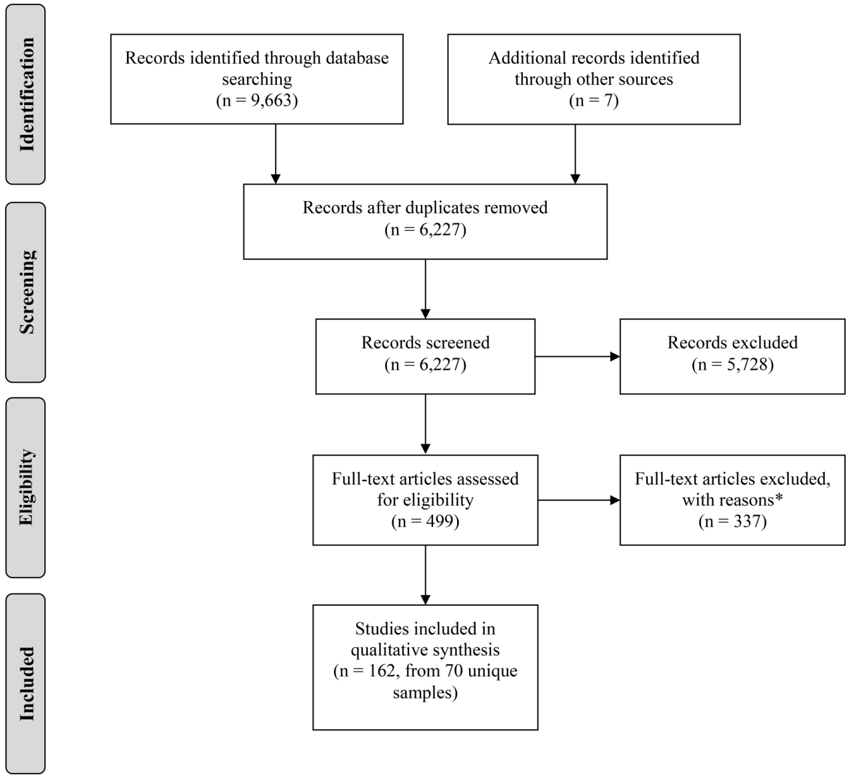
Moderate-to-vigorous physical activity (MVPA) is essential for disease prevention and health promotion. Emerging evidence suggests other intensities of physical activity (PA), including light-intensity activity (LPA), may also be important, but there has been no rigorous evaluation of the evidence. The purpose of this systematic review was to examine the relationships between objectively measured PA (total and all intensities) and health indicators in school-aged children and youth. Online databases were searched for peer-reviewed studies that met the a priori inclusion criteria: population (apparently healthy, aged 5–17 years), intervention/exposure/comparator (volumes, durations, frequencies, intensities, and patterns of objectively measured PA), and outcome (body composition, cardiometabolic biomarkers, physical fitness, behavioural conduct/pro-social behaviour, cognition/academic achievement, quality of life/well-being, harms, bone health, motor skill development, psychological distress, self-esteem). Heterogeneity among studies precluded meta-analyses; narrative synthesis was conducted. A total of 162 studies were included (204 171 participants from 31 countries). Overall, total PA was favourably associated with physical, psychological/social, and cognitive health indicators. Relationships were more consistent and robust for higher (e.g., MVPA) versus lower (e.g., LPA) intensity PA. All patterns of activity (sporadic, bouts, continuous) provided benefit. LPA was favourably associated with cardiometabolic biomarkers; data were scarce for other outcomes. These findings continue to support the importance of at least 60 min/day of MVPA for disease prevention and health promotion in children and youth, but also highlight the potential benefits of LPA and total PA. All intensities of PA should be considered in future work aimed at better elucidating the health benefits of PA in children and youth.
Overview
The claims and statistics of this paper haven’t been checked yet.
Free: it reads the open-access text and checks the first 5 claims that cite a source we can check. Create a free account to check every claim.
Integrity signals
Registry
Cites
Statistics
Figures
Verification
Claims the paper makes
The claims and statistics of this paper haven’t been checked yet.
Free: it reads the open-access text and checks the first 5 claims that cite a source we can check. Create a free account to check every claim.
Claims other papers make about this one
Each is checked against this paper’s own text: does it say what the citing paper says it does?
The source backs part of the claim, not all of it — or backs it for a different population, condition or comparison.
In the citing paper
“Research indicates that those who are physically active show or report better overall physical and mental health, a higher level of fitness and a lower level of obesity than their sedentary or physically inactive counterparts1–4”
From Physical activity and health in Chinese children and adolescents: expert consensus statement (2020) (2020) · cites this paper as [1]
Experimental — accuracy not yet measuredThe source backs part of the claim, not all of it — or backs it for a different population, condition or comparison.
In the citing paper
“The searches looked for journal articles reporting on sleep, sedentary time and physical activity using previously developed and validated searches [12–14, 30].”
From Combinations of physical activity, sedentary time, and sleep duration and their associations with depressive symptoms and other mental health problems in children and adolescents: a systematic review (2020) · cites this paper as [12]
Experimental — accuracy not yet measuredThe source backs part of the claim, not all of it — or backs it for a different population, condition or comparison.
In the citing paper
“Achieving high levels of physical activity, low levels of sedentary behaviour, and getting sufficient sleep have been individually associated with better mental health among children and adolescents [12–14].”
From Combinations of physical activity, sedentary time, and sleep duration and their associations with depressive symptoms and other mental health problems in children and adolescents: a systematic review (2020) · cites this paper as [12]
Experimental — accuracy not yet measuredThe source backs part of the claim, not all of it — or backs it for a different population, condition or comparison.
In the citing paper
“Previous studies looking at the 24-h movement guidelines and health indicators have primarily focused on examining the associations between the combinations of physical activity, sedentary time, and sleep duration with physical health outcomes [12–14].”
From Combinations of physical activity, sedentary time, and sleep duration and their associations with depressive symptoms and other mental health problems in children and adolescents: a systematic review (2020) · cites this paper as [12]
Experimental — accuracy not yet measuredThe source backs part of the claim, not all of it — or backs it for a different population, condition or comparison.
In the citing paper
“Isolated adherence to MVPA, screen time and sleep duration recommendations have been associated with lower adiposity indicators in children and adolescents [3, 5–10].”
From Proportion of children meeting recommendations for 24-hour movement guidelines and associations with adiposity in a 12-country study (2016) · cites this paper as [8]
Experimental — accuracy not yet measured
5 more claims about this paper
Create a free account to see every claim other papers make about this one.
Self-check
Percentages, sums and reported differences re-computed from the paper’s own numbers.
The self-check needs the paper’s full text.
Citations
Cites
The Cochrane Collaboration's tool for assessing risk of bias in randomised trials
Higgins, J. P. T., Altman, D. G., Gotzsche, P. C., Juni, P., Moher, D., Oxman, A. D., Savovic, J., Schulz, K. F., Weeks, L., Sterne, J. A. C., et al. (2011) · BMJ · doi:10.1136/bmj.d5928 · Cited by 33,817
Preferred Reporting Items for Systematic Reviews and Meta-Analyses: The PRISMA Statement
Moher, D., Liberati, A., Tetzlaff, J., & Altman, D. G. (2009) · Journal of Clinical Epidemiology · doi:10.1016/j.jclinepi.2009.06.005 · Cited by 19,575
Physical Activity in the United States Measured by Accelerometer
TROIANO, R. P., BERRIGAN, D., DODD, K. W., MÂSSE, L. C., TILERT, T., & MCDOWELL, M. (2008) · Medicine & Science in Sports & Exercise · doi:10.1249/mss.0b013e31815a51b3 · Cited by 7,638 · cited 2×
“This is unfortunate, as studies from Canada and the United States indicate that children and youth spend 4–6 h/day in LPA (Matthews et al. 2008; Troiano et al. 2008; Colley et al. 2011; Chaput et al. 2014), and emerging research suggests that spending more waking hours in LPA compared with…”
BackgroundJanssen, I., & LeBlanc, A. G. (2010) · International Journal of Behavioral Nutrition and Physical Activity · doi:10.1186/1479-5868-7-40 · Cited by 4,829 · cited 7×
“Physical activity (PA) is vital to the physical, psychological/ social, and cognitive health of school-aged children and youth (Janssen and LeBlanc 2010; Tremblay et al. 2010b).”
BackgroundResultInfluentialSelf-citationUtilization of the PICO framework to improve searching PubMed for clinical questions
Schardt, C., Adams, M. B., Owens, T., Keitz, S., & Fontelo, P. (2007) · BMC Medical Informatics and Decision Making · doi:10.1186/1472-6947-7-16 · Cited by 3,053 · cited 2×
“The participants, interventions, comparisons, outcomes and study design (PICOS) framework (Schardt et al. 2007) was followed to identify key study concepts in the research question a priori and to facilitate the searching process.”
MethodAmount of Time Spent in Sedentary Behaviors in the United States, 2003-2004
Matthews, C. E., Chen, K. Y., Freedson, P. S., Buchowski, M. S., Beech, B. M., Pate, R. R., & Troiano, R. P. (2008) · American Journal of Epidemiology · doi:10.1093/aje/kwm390 · Cited by 2,631 · cited 2×
“This is unfortunate, as studies from Canada and the United States indicate that children and youth spend 4–6 h/day in LPA (Matthews et al. 2008; Troiano et al. 2008; Colley et al. 2011; Chaput et al. 2014), and emerging research suggests that spending more waking hours in LPA compared with…”
BackgroundSelf-citationTremblay, M. S., Carson, V., Chaput, J.-P., Connor Gorber, S., Dinh, T., Duggan, M., Faulkner, G., Gray, C. E., Gruber, R., Janson, K., et al. (2016) · Applied Physiology, Nutrition, and Metabolism · doi:10.1139/apnm-2016-0151 · Cited by 2,024
Self-citationPhysiological and health implications of a sedentary lifestyle
Tremblay, M. S., Colley, R. C., Saunders, T. J., Healy, G. N., & Owen, N. (2010) · Applied Physiology, Nutrition, and Metabolism · doi:10.1139/h10-079 · Cited by 1,426 · cited 9×
“In this regard, the Canadian Physical Activity Guidelines for Children and Youth (Tremblay et al. 2010b, 2011), and many other guidelines around the world (e.g., Australia (Okely et al. 2012), USA (US Department of Health and Human Services 2008), and World Health Organization (WHO 2010)), recommend that children and…”
BackgroundInfluentialSelf-citationComparison of Accelerometer Cut Points for Predicting Activity Intensity in Youth
TROST, S. G., LOPRINZI, P. D., MOORE, R., & PFEIFFER, K. A. (2011) · Medicine & Science in Sports & Exercise · doi:10.1249/mss.0b013e318206476e · Cited by 1,360 · cited 3×
“…Marshall and Ramirez 2011) and the widespread use of subjective assessments of PA (Reilly et al. 2008; Adamo et al. 2009; Janssen and LeBlanc 2010; Trost et al. 2011), which cannot accurately capture LPA (e.g., various incidental activities accumulated throughout the day) (Hamilton et al. 2004;…”
BackgroundGRADE guidelines: 9. Rating up the quality of evidence
Guyatt, G. H., Oxman, A. D., Sultan, S., Glasziou, P., Akl, E. A., Alonso-Coello, P., Atkins, D., Kunz, R., Brozek, J., Montori, V., et al. (2011) · Journal of Clinical Epidemiology · doi:10.1016/j.jclinepi.2011.06.004 · Cited by 1,336 · cited 2×
“If there is no cause to downgrade, the quality of evidence can be upgraded if there is a large effect size, a dose–response gradient, or if all plausible confounders would decrease an apparent treatment effect (Guyatt et al. 2011b).”
BackgroundMethod
Research works printed but not linked: 9
- 2. Aggio, D., Smith, L., and Hamer, M. 2015. Effects of reallocating time in different activity intensities on health and fitness: a cross sectional study. Int. J. Behav. Nutr. Phys. Activ. 12(83). PMID:26104041.
- 22. Colley, R.C., Garriguet, D., Janssen, I., Craig, C.L., Clarke, J., and Tremblay, M.S. 2011. Physical activity of Canadian children and youth: Accelerometer results from the 2007 to 2009 Canadian Health Measures Survey. Statistics Canada cat. no. 82-003-X. Health Rep. 22(1): 1523. PMID:21510586.
- 49. Grydeland, M., Bergh, I.H., Bjelland, M., Lien, N., Andersen, L.F., Ommundsen, Y., et al. 2012. Correlates of weight status among Norwegian 11-year-olds: The HEIA study. BMC Publ. Health, 12(1053). PMID:23216675.
- 53. Guyatt, G., Oxman, A.D., Akl, E.A., Kunz, R., Vist, G., Brozek, J., et al. 2011a. GRADE guidelines: 1. Introduction-GRADE evidence profiles and summary of findings tables. J. Clin. Epidemiol. 64(4): 383-394. PMID:21195583.
- 85. Janz, K.F., Letuchy, E.M., Francis, S.L., Metcalf, K.M., Burns, T.L., and Levy, S.M. 2014a. Objectively measured physical activity predicts hip and spine bone mineral content in children and adolescents ages 5-15 years: Iowa Bone Development Study. Front. Endocrinol. 5: 112. PMID:25076937.
- 128. Nguyen, T.H., Tang, H.K., Kelly, P., van der Ploeg, H.P., and Dibley, M.J. 2010. Association between physical activity and metabolic syndrome: a cross sec- tional survey in adolescents in Ho Chi Minh City, Vietnam. BMC Publ. Health, 10(141). PMID:20236509.
- 129. Okely, A., Salmon, J., Vella, S., Cliff, D., Timperio, A., Tremblay, M., et al. 2012. A systematic review to update the Australian Physical Activity Guidelines for Children and Young People. Report prepared for the Australian Government Department of Health.
- 159. Sigmundova, D., and Sigmund, E. 2012. The effect of physical activity program at school on reducing childhood obesity: a results of four-year longitudinal study. Med. Sport. Bohem. Slov. 21(3): 129-141.
- 175. Tremblay, M.S., Esliger, D.W., Tremblay, A., and Colley, R. 2007. Incidental move- ment, lifestyle-embedded activity and sleep: new frontiers in physical activ- ity assessment. Can. J. Publ. Health, 98(Suppl. 2): 208-217. PMID:18213950.
Cited by
Items 101–200 of 1,001
Creaser, A. V., Clemes, S. A., Costa, S., Hall, J., Ridgers, N. D., Barber, S., & Bingham, D. D. (2021) · International Journal of Environmental Research and Public Health · doi:10.3390/ijerph18126211 · Cited by 115
Aubert, S., Barnes, J. D., Aguilar-Farías, N., Cardon, G., Chang, C., Nyström, C. D., Demetriou, Y., Edwards, L. C., Emeljanovas, A., Gába, A., et al. (2018) · Journal of Physical Activity and Health · doi:10.1123/jpah.2018-0431 · Cited by 105
Self-citationJelleyman, C., McPhee, J., BRUSSONI, M. J., Bundy, A. C., & Duncan, S. (2019) · International Journal of Environmental Research and Public Health · doi:10.3390/ijerph16020262 · Cited by 115
“Physical activity is essential for both physiological and psychological healthy development in children [1,2].”
BackgroundTalarico, R., & Janssen, I. (2018) · International Journal of Obesity · doi:10.1038/s41366-018-0053-x · Cited by 103
“The evidence on the associations between total SB time with obesity among children are mixed [1, 2].”
BackgroundSelf-citationLee, E., Hesketh, K. D., Hunter, S., Kuzik, N., Rhodes, R. E., Rinaldi, C. M., Spence, J. C., & Carson, V. (2017) · BMC Public Health · doi:10.1186/s12889-017-4855-x · Cited by 110
“These findings are in contrast to more conclusive results on the relationship between movement behaviours and adiposity in older age groups [48, 63, 64].”
BackgroundResultSelf-citationCorrelates of Parental Support of Child and Youth Physical Activity: a Systematic Review
Rhodes, R. E., Perdew, M., & Malli, S. (2020) · International Journal of Behavioral Medicine · doi:10.1007/s12529-020-09909-1 · Cited by 112
Exercise in patients with inflammatory bowel diseases: current perspectives
Engels, M. F. M., Cross, R. K., & Long, M. D. (2017) · Clinical and Experimental Gastroenterology · doi:10.2147/ceg.s120816 · Cited by 104
“Health benefits of exercise In healthy populations, exercise has been associated with favorable physical, psychological/social, and cognitive health indicators.(15) Exercise is well known to decrease all-cause mortality independent of body mass index (BMI), likely through a reduction in cardiovascular disease and canc…”
BackgroundThivel, D., Tremblay, M. S., Katzmarzyk, P. T., Fogelholm, M., Hu, G., Maher, C., Maia, J., Olds, T., Sarmiento, O. L., Standage, M., et al. (2019) · Preventive Medicine · doi:10.1016/j.ypmed.2018.10.025 · Cited by 86
“High physical activity, low screen time, and sufficient amounts of sleep (defined in this paper as “movement behaviors”) are all important for overall health in children (1-3).”
BackgroundSelf-citationCarson, V., Lee, E., Hesketh, K. D., Hunter, S., Kuzik, N., Predy, M., Rhodes, R. E., Rinaldi, C. M., Spence, J. C., & Hinkley, T. (2019) · BMC Public Health · doi:10.1186/s12889-018-6381-x · Cited by 109
Self-citationRhodes, R. E., Spence, J. C., Berry, T. R., Faulkner, G., Latimer‐Cheung, A. E., O’Reilly, N., Tremblay, M. S., & Vanderloo, L. M. (2019) · BMC Public Health · doi:10.1186/s12889-019-7744-7 · Cited by 96
Self-citationPhysical activity, screen time and subjective well-being among children
García‐Hermoso, A., Hormazábal‐Aguayo, I., Fernández‐Vergara, O., Olivares, P. R., & Oriol, X. (2020) · International Journal of Clinical and Health Psychology · doi:10.1016/j.ijchp.2020.03.001 · Cited by 107
Carson, V., Tremblay, M. S., Chaput, J., McGregor, D., & CHASTIN, S. F. M. (2019) · PLoS ONE · doi:10.1371/journal.pone.0220009 · Cited by 95
Self-citationLevels of Physical Activity during School Hours in Children and Adolescents: A Systematic Review
Grao‐Cruces, A., Velázquez-Romero, M. J., & Rodríguez‐Rodríguez, F. (2020) · International Journal of Environmental Research and Public Health · doi:10.3390/ijerph17134773 · Cited by 114
“High levels of physical activity (PA) in children and adolescents are recognized as an indicator of subsequent physical, social and mental health [1].”
BackgroundVeldman, S. L. C., Chinapaw, M. J. M., & Altenburg, T. M. (2021) · International Journal of Behavioral Nutrition and Physical Activity · doi:10.1186/s12966-020-01072-w · Cited by 115
“Background The beneficial impact of physical activity on physical, social and cognitive health indicators is well-known in school-aged children [1, 2].”
BackgroundAdherence to the 24-Hour Movement Guidelines among 10- to 17-year-old Canadians
Janssen, I., Roberts, K. C., & Thompson, W. (2017) · Health Promotion and Chronic Disease Prevention in Canada · doi:10.24095/hpcdp.37.11.01 · Cited by 84
Self-citationSports participation and psychosocial health: a longitudinal observational study in children
Moeijes, J., van Busschbach, J. T., Bosscher, R. J., & Twisk, J. W. R. (2018) · BMC Public Health · doi:10.1186/s12889-018-5624-1 · Cited by 83
“Although the time spent in sports participation is probably more strongly associated with psychosocial health than membership in a sports club and frequency of sports participation [64], we did not take the duration of sports participation into account in our analyses.”
BackgroundEl-Ammari, A., Kazdouh, H. E., Bouftini, S., Samira, E. F., & Achhab, Y. E. (2019) · Environmental Health and Preventive Medicine · doi:10.1186/s12199-019-0775-y · Cited by 106
Casado-Robles, C., Viciana, J., Guijarro-Romero, S., & Mayorga-Vega, D. (2022) · Sports Medicine - Open · doi:10.1186/s40798-021-00407-6 · Cited by 108
“, light-to-vigorous PA) and daily total steps have also been demonstrated to be potential health indicators [6].”
BackgroundVäistö, J., Haapala, E. A., Viitasalo, A., Schnurr, T. M., Kilpeläinen, T. O., Karjalainen, P., Westgate, K. L., Lakka, H., Laaksonen, D. E., Ekelund, U., et al. (2018) · Scandinavian Journal of Medicine and Science in Sports · doi:10.1111/sms.13315 · Cited by 106
Bacevičienė, M., Jankauskienė, R., & Emeljanovas, A. (2019) · BMC Public Health · doi:10.1186/s12889-019-7311-2 · Cited by 105
Narayanan, A., Desai, F., Stewart, T. I., Duncan, S., & Mackay, L. M. (2020) · Journal of Physical Activity and Health · doi:10.1123/jpah.2019-0088 · Cited by 98
Martial arts, combat sports, and mental health in adults: A systematic review
Ciaccioni, S., Castro, Ó., Bahrami, F., Tomporowski, P. D., Capranica, L., Biddle, S., Vergeer, I., & Pesce, C. (2023) · Psychology of sport and exercise · doi:10.1016/j.psychsport.2023.102556 · Cited by 137
Taylor, R. W., Haszard, J. J., Meredith-Jones, K. A., Galland, B. C., Heath, A. M., Lawrence, J., Gray, A. R., Sayers, R., Hanna, M., & Taylor, B. J. (2018) · International Journal of Behavioral Nutrition and Physical Activity · doi:10.1186/s12966-018-0753-6 · Cited by 93
Healy, S., Aigner, C. J., Haegele, J. A., & Patterson, F. (2019) · Autism Research · doi:10.1002/aur.2095 · Cited by 88
del Pozo-Cruz, B., Perales, F., Parker, P. D., Lonsdale, C., Noetel, M., Hesketh, K. D., & Sanders, T. (2019) · International Journal of Behavioral Nutrition and Physical Activity · doi:10.1186/s12966-019-0816-3 · Cited by 95
Kuzik, N., da Costa, B. G. G., Hwang, Y., Verswijveren, S. J. J. M., Rollo, S., Tremblay, M. S., Bélanger, S. A., Carson, V., Davis, M. J., Hornby, S., et al. (2022) · International Journal of Behavioral Nutrition and Physical Activity · doi:10.1186/s12966-022-01258-4 · Cited by 118
“This time displacement would ironically be counter-productive, based on the benefits to cognitive indicators from physical activity and adequate sleep for school-aged children [153, 154].”
BackgroundSelf-citationInsulin Resistance, Prediabetes, Metabolic Syndrome: What Should Every Pediatrician Know?
Ighbariya, A., & Weiss, R. (2018) · Journal of Clinical Research in Pediatric Endocrinology · doi:10.4274/jcrpe.2017.s005 · Cited by 99
“Thus, physical activity may not necessarily lead to weight loss but will have beneficial metabolic effects and should thus be encouraged (46).”
BackgroundCollaborators, T. I. C. A. D. (., Hansen, B. H., Anderssen, S. A., Andersen, L. B., Hildebrand, M., Kolle, E., Steene-Johannessen, J., Kriemler, S., Page, A. S., Puder, J. J., et al. (2018) · Sports Medicine · doi:10.1007/s40279-018-0909-1 · Cited by 77
“They might be chance findings or more likely due to misclassification of LPA and sedentary time [27, 28].”
BackgroundThe Relationship between Lifestyle Factors and Obesity Indices among Adolescents in Qatar
Kerkadi, A., Sadig, A. H., Bawadi, H. A., Thani, A. A. M. A., Al-Chetachi, W., Akram, H., Al-Hazzaa, H. M., & Musaiger, A. O. (2019) · International Journal of Environmental Research and Public Health · doi:10.3390/ijerph16224428 · Cited by 113
Dallolio, L., Marini, S., Masini, A., Toselli, S., Stagni, R., Bisi, M. C., Gori, D., Tessari, A., Sansavini, A., Lanari, M., et al. (2022) · BMC Public Health · doi:10.1186/s12889-021-12483-0 · Cited by 90
“Background The benefits of physical activity (PA) for children’s health and well-being are well-known [1, 2].”
BackgroundVerswijveren, S. J. J. M., Lamb, K. E., Bell, L. A., Timperio, A. F., Salmon, J., & Ridgers, N. D. (2018) · PLoS ONE · doi:10.1371/journal.pone.0201947 · Cited by 89
“Previous reviews focusing on activity and health in this age group have also noted concerns about high ROB [11, 15, 18].”
BackgroundInfluentialPearson, N., Sherar, L. B., & Hamer, M. (2019) · JAMA Pediatrics · doi:10.1001/jamapediatrics.2019.2822 · Cited by 76
Mayorga-Vega, D., Baena, A. C. M., & Viciana, J. (2018) · Journal of Sports Sciences · doi:10.1080/02640414.2018.1425967 · Cited by 94
“Recently, light and total PA has also been recognized as a potential marker of health among adolescents (Poitras et al., 2016), being the step output in gaining increased credibility as an indicator of daily total PA (Craig, Cameron, Griffiths, & Tudor-Locke, 2010).”
BackgroundInfluentialvan den Berg, V., Saliasi, E., de Groot, R. H. M., Chinapaw, M. J. M., & Singh, A. S. (2019) · Frontiers in Psychology · doi:10.3389/fpsyg.2019.00174 · Cited by 110
Adetunji, M. C., Atanda, O., & Ezekiel, C. N. (2017) · Children · doi:10.3390/children4070058 · Cited by 84
Pediatric Inactivity Triad: A Risky PIT
Faigenbaum, A. D., Rebullido, T. R., & MacDonald, J. P. (2018) · Current Sports Medicine Reports · doi:10.1249/jsr.0000000000000450 · Cited by 94
“Unsurprisingly, a corollary of these contemporary trends is the increasing prevalence of physical, psychosocial, and cognitive health issues in school-age youth (2).”
BackgroundHinkley, T., & McCann, J. R. (2018) · BMC Public Health · doi:10.1186/s12889-018-6199-6 · Cited by 106
Brown, D. M. Y., Dudley, D. A., & Cairney, J. (2020) · Journal of science and medicine in sport · doi:10.1016/j.jsams.2020.05.007 · Cited by 97
López-Gil, J. F., Tremblay, M. S., & Brazo-Sayavera, J. (2021) · Children · doi:10.3390/children8020083 · Cited by 74
Self-citationLee, E., Hesketh, K. D., Rhodes, R. E., Rinaldi, C. M., Spence, J. C., & Carson, V. (2018) · International Journal of Behavioral Nutrition and Physical Activity · doi:10.1186/s12966-018-0649-5 · Cited by 93
Self-citationWiersma, R., Haverkamp, B. F., van Beek, J. H., Riemersma, A. M. J., Boezen, H. M., Smidt, N., Corpeleijn, E., & Hartman, E. (2019) · Obesity Reviews · doi:10.1111/obr.12936 · Cited by 80
“The most persistent associations between PA and health indicators were found for higher PA intensities.(75) We found that associations between PA and adiposity were highly dependent on the PA intensity.”
Sleep and health-related physical fitness in children and adolescents: a systematic review
Fonseca, A. P. L. M., de Azevedo, C. V. M., & Santos, R. (2021) · Sleep Science · doi:10.5935/1984-0063.20200125 · Cited by 95
“This is also in line with a previous systematic review by Poitras et al. (2016) 61 , with evidence suggesting that moderate-intensity physical activity may be sufficient for improving or maintaining cardiorespiratory fitness in children and adolescents.”
ResultColombo-Dougovito, A. M., & Block, M. E. (2019) · Review Journal of Autism and Developmental Disorders · doi:10.1007/s40489-019-00161-2 · Cited by 91
Martínez-Andrés, M., Gutiérrez, R. B., Rodríguez‐Martin, B., Pardo‐Guijarro, M. J., Garrido‐Miguel, M., & Martínez‐Vizcaíno, V. (2020) · International Journal of Environmental Research and Public Health · doi:10.3390/ijerph17093033 · Cited by 103
“Physical activity during childhood and adolescence has been associated with physical, psychological and social benefits [1,2].”
BackgroundAdherence to 24-hour movement guidelines and academic performance in adolescents
Lien, A., Sampasa-Kanyinga, H., Colman, I., Hamilton, H. A., & Chaput, J.-P. (2020) · Public Health · doi:10.1016/j.puhe.2020.03.011 · Cited by 71
Self-citationManz, K., Mensink, G., Finger, J. D., Haftenberger, M., Brettschneider, A.-K., Barbosa, C. L., Krug, S., & Schienkiewitz, A. (2019) · Nutrients · doi:10.3390/nu11051060 · Cited by 96
“Higher levels of physical activity are associated with better physical, psychological, and cognitive health of children and adolescents [3], whereas a predominantly sedentary lifestyle is associated with less favourable levels of cardiometabolic risk factors [4].”
BackgroundMoeijes, J., van Busschbach, J. T., Bosscher, R. J., & Twisk, J. W. R. (2019) · Quality of Life Research · doi:10.1007/s11136-019-02219-4 · Cited by 92
“Although the time spent in sports participation also seems to be relevant for HRQoL [80], the duration of sports participation was not taken into account in our analyses.”
BackgroundNyberg, G., Kjellenberg, K., Fröberg, A., & Lindroos, A. K. (2020) · Acta Paediatrica · doi:10.1111/apa.15251 · Cited by 99
Pesce, C., Masci, I., Marchetti, R., Vannozzi, G., & Schmidt, M. (2017) · Journal of Motor Learning and Development · doi:10.1123/jmld.2016-0081 · Cited by 90
Wiium, N., & Säfvenbom, R. (2019) · International Journal of Environmental Research and Public Health · doi:10.3390/ijerph16040585 · Cited by 101
“Among young people in particular, PA has been associated with several positive outcomes including physical [4,5], psychological [5–7] and social outcomes [8,9].”
BackgroundHaible, S., Volk, C., Demetriou, Y., Höner, O., Thiel, A., & Sudeck, G. (2019) · International Journal of Environmental Research and Public Health · doi:10.3390/ijerph17010039 · Cited by 79
“For adolescents, habitual physical activity (PA) is considered to be an important source of physical, psychological, cognitive, and social health benefits [1,2].”
BackgroundAadland, E., Andersen, L. B., Anderssen, S. A., Resaland, G. K., & Kvalheim, O. M. (2018) · Preventive Medicine · doi:10.1016/j.ypmed.2018.08.001 · Cited by 76
McCrorie, P., Mitchell, R., Macdonald, L., Jones, A., Coombes, E. G., Schipperijn, J., & Ellaway, A. (2020) · BMC Public Health · doi:10.1186/s12889-020-8311-y · Cited by 95
Vogel, M., Meigen, C., Sobek, C., Ober, P., Igel, U., Körner, A., Kiess, W., & Poulain, T. (2021) · JCPP Advances · doi:10.1111/jcv2.12004 · Cited by 68
“Physical activity is crucial for the physiological, psychological, and social health of children and adolescents (Poitras et al., 2016).”
BackgroundReilly, J. J., Hughes, A. R., Janssen, X., Hesketh, K. R., Livingstone, S., Hill, C. M., Kipping, R., Draper, C. E., Okely, A. D., & Martin, A. (2019) · Journal of Physical Activity and Health · doi:10.1123/jpah.2019-0139 · Cited by 77
Łaszkiewicz, E., & Sikorska, D. (2020) · Environmental Science & Policy · doi:10.1016/j.envsci.2020.05.009 · Cited by 73
Clausen, N. G., Kähler, S., & Hansen, T. G. (2018) · British Journal of Anaesthesia · doi:10.1016/j.bja.2017.11.107 · Cited by 71
Results from the China 2018 report card on physical activity for children and youth
Liu, Y., Tang, Y., Cao, Z.-B., Zhuang, J., Zhu, Z., Wu, X.-P., Wang, L.-J., Cai, Y.-J., Zhang, J.-L., & Chen, P.-J. (2019) · Journal of Exercise Science & Fitness · doi:10.1016/j.jesf.2018.10.002 · Cited by 66
the SOPHYA Study Group, Bringolf‐Isler, B., Schindler, C., Kayser, B., Suggs, L. S., & Probst-Hensch, N. M. (2018) · BMC Public Health · doi:10.1186/s12889-018-5949-9 · Cited by 78
International school-related sedentary behaviour recommendations for children and youth
Saunders, T. J., Rollo, S., Kuzik, N., Demchenko, I., Bélanger, S. A., Brisson‐Boivin, K., Carson, V., da Costa, B. G. G., Davis, M. J., Hornby, S., et al. (2022) · International Journal of Behavioral Nutrition and Physical Activity · doi:10.1186/s12966-022-01259-3 · Cited by 91
Self-citationManyanga, T., Barnes, J. D., Chaput, J., Katzmarzyk, P. T., Prista, A., & Tremblay, M. S. (2019) · International Journal of Behavioral Nutrition and Physical Activity · doi:10.1186/s12966-019-0861-y · Cited by 81
Self-citationKim, H., Ma, J., Harada, K., Lee, S., & Gu, Y. (2020) · International Journal of Environmental Research and Public Health · doi:10.3390/ijerph17249320 · Cited by 71
“According to systematic reviews of preschool children, regular PA is associated with improved motor skills, cognitive development, psychosocial development, and cardiac metabolic health [3,4].”
BackgroundLoo, B. K. G., Okely, A. D., Pulungan, A. B., & Jalaludin, M. Y. (2021) · British Journal of Sports Medicine · doi:10.1136/bjsports-2021-104527 · Cited by 74
Goldilocks Days: optimising children’s time use for health and well-being
Dumuid, D., Olds, T., Lange, K., Edwards, B., Lycett, K., Burgner, D. P., Simm, P. J., Dwyer, T., Le, H., & Wake, M. A. (2021) · Journal of Epidemiology & Community Health · doi:10.1136/jech-2021-216686 · Cited by 71
Reimers, A. K., Schmidt, S., Demetriou, Y., Marzi, I., & Wöll, A. (2019) · PLoS ONE · doi:10.1371/journal.pone.0223928 · Cited by 81
Brown, D. M. Y., Arbour‐Nicitopoulos, K. P., Ginis, K. A. M., Latimer‐Cheung, A. E., & Bassett-Gunter, R. L. (2020) · Autism · doi:10.1177/1362361320922658 · Cited by 78
“Regular PA participation can provide a wide range of physical and mental health benefits that extend beyond the primary condition-specific symptoms children and youth with ASD experience (Biddle et al., 2019; Poitras et al., 2016; Wong et al., 2015).”
BackgroundVeitch, J., Flowers, E. P., Ball, K., Deforche, B. I., & Timperio, A. F. (2020) · International Journal of Environmental Research and Public Health · doi:10.3390/ijerph17134625 · Cited by 70
“Increasing children’s physical activity levels is a priority for public health [39].”
BackgroundCain, K. L., Salmon, J., Conway, T. L., Cerin, E., Hinckson, E. A., Mitáš, J., Schipperijn, J., Frank, L. D., Anjana, R. M., Barnett, A. H., et al. (2021) · BMJ Open · doi:10.1136/bmjopen-2020-046636 · Cited by 69
Physical activity among Norwegian preschoolers varies by sex, age, and season
Nilsen, A. K. O., Anderssen, S. A., Ylvisåker, E., Johannessen, K., & Aadland, E. (2019) · Scandinavian Journal of Medicine and Science in Sports · doi:10.1111/sms.13405 · Cited by 76
24-Hour Movement Behaviors and Internalizing and Externalizing Behaviors Among Youth
Sampasa‐Kanyinga, H., Colman, I., Goldfield, G. S., Janssen, I., Wang, J., Tremblay, M. S., Barnes, J. D., Walsh, J. J., & Chaput, J. (2020) · Journal of Adolescent Health · doi:10.1016/j.jadohealth.2020.09.003 · Cited by 75
“Physical inactivity is associated with an increased likelihood of having several internalizing and externalizing behaviours [5] and the benefits of regular physical activity on children mental health are well known [6].”
BackgroundSelf-citationPrince, S. A., Lancione, S., Lang, J. J., Amankwah, N., de Groh, M., Garcia, A. J., Merucci, K., & Geneau, R. (2022) · Health & Place · doi:10.1016/j.healthplace.2022.102828 · Cited by 75
Testing the association between physical activity and executive function skills in early childhood
Willoughby, M. T., Wylie, A. C., & Catellier, D. (2018) · Early Childhood Research Quarterly · doi:10.1016/j.ecresq.2018.03.004 · Cited by 73
Chong, K. H., Parrish, A., Cliff, D. P., Kemp, B. J., Zhang, Z., & Okely, A. D. (2019) · Journal of science and medicine in sport · doi:10.1016/j.jsams.2019.12.002 · Cited by 68
Jerebine, A., Davies, K. F., Lander, N., Eyre, E. L. J., Duncan, M. J., & Barnett, L. M. (2022) · International Journal of Behavioral Nutrition and Physical Activity · doi:10.1186/s12966-022-01305-0 · Cited by 82
Steene‐Johannessen, J., Anderssen, S. A., Kolle, E., Hansen, B. H., Bratteteig, M., Dalhaug, E. M., Andersen, L. B., Nystad, W., Ekelund, U., & Dalene, K. E. (2021) · International Journal of Behavioral Nutrition and Physical Activity · doi:10.1186/s12966-021-01120-z · Cited by 73
“Introduction Sufficient levels of physical activity (PA) are associated with several health benefits in children and adolescents [1, 2], and current evidence calls for children and adolescents (6–17 years) to do an average of ≥60 min of daily moderatetovigorous intensity PA (MVPA) in order to achieve these benefits [3…”
BackgroundCurran, F., Davis, M. E., Murphy, K., Tersigni, N., King, A., Ngo, N., & O’Donoghue, G. (2023) · Obesity Reviews · doi:10.1111/obr.13615 · Cited by 86
“The modified version was utilized in previous systematic reviews.(13,22,32) Observational studies (prospective cohorts, cross-sectional, and qualitative) were assessed for potential sources of bias, including selection bias (sampling method), performance bias (measurement of physical activity and sedentary behavior),…”
Duncan, S., Stewart, T. I., Mackay, L. M., Neville, J., Narayanan, A., Walker, C. G., Berry, S., & Morton, S. (2018) · International Journal of Environmental Research and Public Health · doi:10.3390/ijerph15071296 · Cited by 72
The Association of the Body Composition of Children with 24-Hour Activity Composition
Dumuid, D., Wake, M. A., Clifford, S. A., Burgner, D. P., Carlin, J. B., Mensah, F. K., Fraysse, F., Lycett, K., Baur, L. A., & Olds, T. (2019) · The Journal of Pediatrics · doi:10.1016/j.jpeds.2018.12.030 · Cited by 64
KWAN, M. Y. W., Graham, J. D., Bedard, C., Bremer, E., Healey, C., & Cairney, J. (2019) · SAGE Open · doi:10.1177/2158244019850248 · Cited by 71
Schönbach, D. M. I., Altenburg, T. M., Marques, A., Chinapaw, M. J. M., & Demetriou, Y. (2020) · International Journal of Behavioral Nutrition and Physical Activity · doi:10.1186/s12966-020-01035-1 · Cited by 75
“Most young people in Europe do not achieve the recommended daily accumulation of 60 min (min) in moderate-to-vigorous intensity physical activity (MVPA) [2] of the World Health Organization (WHO) [3], in spite of the well-known health benefits [4].”
BackgroundChan, J. S. Y., Deng, K., & Yan, J. H. (2020) · Autism · doi:10.1177/1362361320977645 · Cited by 68
“Children can maintain bodyweight, promote bone health, increase cardiovascular capacity, and prevent various chronic diseases (such as coronary heart diseases and diabetes) through physical activity (Poitras et al., 2016).”
BackgroundA cross-sectional study of the relationship between parents’ and children’s physical activity
Stearns, J. A., Rhodes, R. E., Ball, G. D. C., Boulé, N. G., Veugelers, P. J., Cutumisu, N., & Spence, J. C. (2016) · BMC Public Health · doi:10.1186/s12889-016-3793-3 · Cited by 74
“Total PA performed throughout the day, as well as higher intensity activity, are important for the health of young people [20], and thus it is important to understand the correlates and determinants of both of these outcomes.”
BackgroundActivity-related behavior typologies in youth: a systematic review
Parker, K. E., Salmon, J., Costigan, S. A., Villanueva, K., Brown, H. L., & Timperio, A. F. (2019) · International Journal of Behavioral Nutrition and Physical Activity · doi:10.1186/s12966-019-0804-7 · Cited by 66
Männikkö, N., Ruotsalainen, H., Miettunen, J., Marttila-Tornio, K., & Kääriäinen, M. (2020) · Heliyon · doi:10.1016/j.heliyon.2020.e03415 · Cited by 58
Academic performance and lifestyle behaviors in Australian school children: a cluster analysis
Dumuid, D., Olds, T., Martín-Fernández, J.-A., Lewis, L. K., Cassidy, L., & Maher, C. (2017) · Health Education & Behavior · doi:10.1177/1090198117699508 · Cited by 58
Rubín, L., Gába, A., Dygrýn, J., Jakubec, L., Materová, E., & Vencálek, O. (2020) · BMC Public Health · doi:10.1186/s12889-020-09802-2 · Cited by 64
Physical Activity and Trajectories of Cardiovascular Health Indicators During Early Childhood
Proudfoot, N. A., King‐Dowling, S., Cairney, J., Bray, S. R., MacDonald, M. J., & Timmons, B. W. (2019) · PEDIATRICS · doi:10.1542/peds.2018-2242 · Cited by 67
Differences in parental perceptions of walking and cycling to high school according to distance
Mandic, S., Hopkins, D., Bengoechea, E. G., Flaherty, C., Coppell, K. J., Moore, A., Williams, J., & Spence, J. C. (2020) · Transportation Research Part F Traffic Psychology and Behaviour · doi:10.1016/j.trf.2020.04.013 · Cited by 68
Prince, S. A., Butler, G., Rao, D. P., & Thompson, W. (2019) · Health Promotion and Chronic Disease Prevention in Canada · doi:10.24095/hpcdp.39.3.01 · Cited by 71
Saliva as a non-invasive tool for assessment of metabolic and inflammatory biomarkers in children
Tvarijonaviciute, A., Martínez-Lozano, N., Ríos, R., de Teruel, M. C. M., Garaulet, M., & Cerón, J. M. C. (2019) · Clinical Nutrition · doi:10.1016/j.clnu.2019.10.034 · Cited by 63
Lemos, L., Clark, C. C. T., Brand, C., Pessoa, M. L. F., Gaya, A. R., Mota, J. A. P. S., Duncan, M. J., & Martins, C. (2021) · Scandinavian Journal of Medicine and Science in Sports · doi:10.1111/sms.13938 · Cited by 60
Taylor, A., Kong, C., Zhang, Z., Herold, F., Ludyga, S., Healy, S., Gerber, M., Cheval, B., Pontifex, M. B., Kramer, A. F., et al. (2023) · Child and Adolescent Psychiatry and Mental Health · doi:10.1186/s13034-023-00588-w · Cited by 67
“60 minutes per day), even if it was accumulated in small bouts over the day [87].”
BackgroundSelf-citationFang, Y., Ma, Y., Mo, D., Zhang, S., Xiang, M., & Zhang, Z. (2019) · BMC Public Health · doi:10.1186/s12889-019-6992-x · Cited by 56
Influence of a Physical Exercise Program in the Anxiety and Depression in Children with Obesity
Romero-Pérez, E. M., Gonzalez-Bernal, J. J., Cámara, R. S., González‐Santos, J., Tánori-Tapia, J. M., Rodríguez-Fernández, P., Barrios, M. J., Márquez, S., & Fernández, J. A. D. P. (2020) · International Journal of Environmental Research and Public Health · doi:10.3390/ijerph17134655 · Cited by 66
Parental support for physical activity and children’s physical activities: a cross-sectional study
Hosokawa, R., Fujimoto, M., & Katsura, T. (2023) · BMC Sports Science Medicine and Rehabilitation · doi:10.1186/s13102-023-00700-9 · Cited by 88
“Background Regular physical activity (PA) is essential for health maintenance [1, 2] and is especially vital in early childhood, as it enables cognitive, physical, emotional, social, and motor learning while contributing to the well-being and healthy development of children [3, 4].”
BackgroundRuiz-Hermosa, A., Álvarez-Bueno, C., Cavero-Redondo, I., Martínez-Vizcaíno, V., Redondo-Tébar, A., & Sánchez-López, M. (2019) · International Journal of Environmental Research and Public Health · doi:10.3390/ijerph16101839 · Cited by 54
“It is widely documented that physical activity (PA) has a positive impact on diminishing the risk of some cardiometabolic diseases such as obesity, diabetes, or coronary disease, and mortality [1,2].”
BackgroundKim, H., Ma, J., Sunkyoung, L., & Ying, G. (2021) · Scientific Reports · doi:10.1038/s41598-021-01803-4 · Cited by 60
Faulkner, G., White, L., Riazi, N., Latimer-Cheung, A. E., & Tremblay, M. S. (2016) · Applied Physiology, Nutrition, and Metabolism · doi:10.1139/apnm-2016-0100 · Cited by 54
Self-citationAppelqvist‐Schmidlechner, K., Vaara, J. P., HÄKKINEN, A. H., Vasankari, T. J., Mäkinen, J., Mäntysaari, M., & Kyröläinen, H. (2017) · American Journal of Health Promotion · doi:10.1177/0890117117746336 · Cited by 75
Khan, A., Mandic, S., & Uddin, R. (2020) · Journal of science and medicine in sport · doi:10.1016/j.jsams.2020.12.002 · Cited by 63
Metadata
- Authors
- Poitras, V. J., Gray, C. E., Borghese, M. M., Carson, V., Chaput, J.-P., Janssen, I., Katzmarzyk, P. T., Pate, R. R., Connor Gorber, S., Kho, M. E., Sampson, M., & Tremblay, M. S.
- Affiliations
- Children's Hospital of Eastern Ontario (CA)
- Queen's University (CA)
- University of Alberta (CA)
- Pennington Biomedical Research Center (US)
- University of South Carolina (US)
- Office of the Task Force on Preventive Health Care, Public Health Agency of Canada, Ottawa, ON K1A 0K9, Canada.
- McMaster University (CA)
- Corresponding author
- Poitras, Veronica Joan
- Gray, Casey Ellen
- ORCID
- Venue
- Applied Physiology, Nutrition, and Metabolism
- Publisher
- Canadian Science Publishing
- Published
- 2016-06
- Volume
- 41
- Issue
- 6 (Suppl. 3)
- Pages
- S197-S239
- ISSN
- 1715-5312 (ISSN-L)
- 1715-5320
- OpenAlex
- W2444482132
- Cited by
- 2,217
- References
- 182
- Citations by year
- 2026: 155 · 2025: 234 · 2024: 255 · 2023: 260 · 2022: 315 · 2021: 321 · 2020: 258 · 2019: 193 · 2018: 143 · 2017: 63 · 2016: 18
- FWCI
- 16.30
- Type
- journal article
- Language
- en
- Open access
- hybrid
- doi.org
- Licence
- cc-by
- www.nrcresearchpress.com/page/about/CorporateTextAndDataMining (tdm)
- Locations
- Applied Physiology Nutrition and Metabolism (publishedVersion, cc-by)
- PubMed (publishedVersion)
- TSpace (University of Toronto) (acceptedVersion)
- TSpace (University of Toronto) (submittedVersion)
- Scholar Commons (University of South Carolina) (submittedVersion, cc-by)
- Funders
- Public Health Agency of Canada
- Public Health Agency
- Canadian Institutes of Health Research
- Topics
- Health Sciences › Medicine › Public Health, Environmental and Occupational Health › Physical Activity and Health
- Health Sciences › Medicine › Public Health, Environmental and Occupational Health › Obesity, Physical Activity, Diet
- Social Sciences › Life-span and Life-course Studies › Recreational Sport and Physical Activity
- Keywords
- physical activity, moderate-to-vigorous physical activity, light physical activity, school-aged children, adolescents, health indicators, body composition, cardiometabolic biomarkers, physical fitness, prosocial behavior, academic performance, quality of life, bone health, motor skill development, psychological distress, self-esteem, activity patterns, activity bouts, disease prevention
- MeSH terms
- Adolescent, Adolescent Behavior, Body Composition, Cardiovascular Diseases, Child, Child Behavior, Child, Preschool, Cognition, Health Status, Humans, Obesity, Physical Fitness, Quality of Life, Biomarkers, Exercise, Randomized Controlled Trials as Topic, Treatment Outcome, Metabolic Syndrome, Non-Randomized Controlled Trials as Topic
About these checks
Registry, retraction, Cites and statistics results are computed, not judged, with one exception: a printed reference that no index lists is read once by a model before it counts as a citation error. Claims are extracted by a model and kept only when their quote appears verbatim in the text; each cited source is then checked, with a model’s help, for whether it says what the claim relies on. Those verdicts can be wrong — read the claim’s quote and the cited source before relying on one.
Statistics and arithmetic are recomputed, not judged.
Confidence bands are shown only for fields calibrated on our annotated test set. None is calibrated yet, so no band is shown.
What counts as a claim ›How we measure confidence ›How we check this ›
Are you an author, or do you see a problem with this page? Request a review
Data sources
Bibliographic data: Semantic Scholar, OpenAlex, Crossref.
Contains information from the Semantic Scholar Academic Graph Datasets, made available under the ODC Attribution License (ODC-BY 1.0).
Semantic Scholar’s data is described in: Kinney, R., et al. (2023). The Semantic Scholar Open Data Platform. arXiv:2301.10140.
