

Community-guided, autism-adapted group cognitive behavioral therapy for depression in autistic youth (CBT-DAY): Preliminary feasibility, acceptability, and efficacy
Open accessThe DOI matches its Crossref record; 62 of the 64 references it cites were found in a registry or an index, and 1 are not checked yet; 13 of the 43 sources its claims cite were checked for support.
Abstract
This study examined the preliminary feasibility, acceptability, and efficacy of an autism-adapted cognitive behavioral therapy for depression in autistic youth, CBT-DAY. Twenty-four autistic youth (11–17 years old) participated in the pilot non-randomized trial including 5 cisgender females, 14 cisgender males, and 5 non-binary youth. Youth participated in 12 weeks of, CBT-DAY and youth depressive symptoms (i.e., primary clinical outcome) and emotional reactivity and self-esteem (i.e., intervention mechanisms) were assessed through self-report and caregiver report at four timepoints: baseline (week 0), midpoint (week 6), post-treatment (week 12), and follow-up (week 24). Results suggested that CBT-DAY may be feasible (16.67% attrition) in an outpatient setting and acceptable to adolescents and their caregivers. Bayesian linear mixed-effects models showed that CBT-DAY may be efficacious in targeting emotional reactivity [βT1-T3 = −2.53, CrI95% (−4.62, −0.58), Pd = 0.995, d = −0.35] and self-esteem [βT1-T3 = −3.57, CrI95% (−5.17, −2.00), Pd > 0.999, d = −0.47], as well as youth depressive symptom severity [β = −2.72, CrI95% (−3.85, −1.63), Pd > 0.999]. Treatment gains were maintained at follow-up. A cognitive behavioral group therapy designed for and with autistic people demonstrates promise in targeting emotional reactivity and self-esteem to improve depressive symptom severity in youth. Findings can be leveraged to implement larger, more controlled trials of CBT-DAY. The trial was registered at Clinicaltrials.gov (Identifier: NCT05430022; https://beta.clinicaltrials.gov/study/NCT05430022). Lay Abstract: Depression in youth is a significant public health problem worldwide, particularly for autistic youth who are over twice as likely to experience depression than their non-autistic peers. Although pathways to depression are complex, emotional reactivity and negative self-esteem are two risk factors for depression in autistic and non-autistic youth. Although autistic youth are more likely to experience depression than their non-autistic peers, psychotherapy options for autistic youth are very limited; community guidance in the development and testing of psychotherapy programs is a promising approach in autism. Therefore, in this study, we designed an autism-adapted CBT-DAY, in collaboration with autistic community members. Specifically, CBT-DAY combined neurodiversity-affirming and cognitive behavioral approaches to target emotional reactivity and self-esteem in youth to improve depressive symptom severity in a group setting across 12 weeks. We examined the preliminary feasibility, acceptability, and efficacy of CBT-DAY in a pilot non-randomized trial. In addition, we implemented a rigorous protocol for assessing, monitoring, and addressing potential harms in this intervention. Results from 24 autistic youth (11–17 years old) suggest that CBT-DAY may be feasible to use in an outpatient clinical setting and generally acceptable to youth and their caregivers. Participation in CBT-DAY may be associated with significant improvements in youth emotional reactivity and self-esteem, as well as depressive symptom severity per self-report only. Exploratory analyses showed that participation in CBT-DAY may also be associated with significant improvements in internalizing symptoms. Findings demonstrate the potential promise of neurodiversity-affirming and cognitive behavioral approaches to treating depressive symptoms in some autistic youth. © The Author(s) 2023.
Verified 2026-11-22 · 1 reference not checked yet
Overview
CoChat Summary
TL;DR
CBT-DAY was a 12-week, community-guided, autism-adapted group CBT pilot for depressed autistic youth, and it was reported to be feasible, generally acceptable, and potentially efficacious. In 24 youth aged 11–17, the study found 16.67% attrition, significant improvements in self-reported depressive symptoms, emotional reactivity, self-esteem, and internalizing symptoms, but the design was non-randomized and underpowered.
Key findings
- Feasibility was supported by 20/24 participants completing CBT-DAY, which the paper reports as 16.67% attrition; among completers, 30.00% attended all 12 sessions, 20.00% attended 11, 35.00% attended 10, and 15.00% attended 9.
- Youth depressive symptoms improved overall: the model showed a significant time effect [β = −2.72, CrI95% (−3.85, −1.63), Pd > 0.999], and self-rated depressive symptoms improved by a moderate amount from T1 to T3 [β = −7.36, d = −0.64]; parent-rated depressive symptoms improved less and were not statistically significant [β = −3.36, d = −0.29].
- Exploratory internalizing symptoms also improved by a moderate amount over T1 to T3 [β = −5.42, d = −0.47].
- Intervention targets improved over the full intervention: emotional reactivity decreased [βT1-T3 = −2.53, d = −0.35] and self-esteem improved [βT1-T3 = −3.57, d = −0.47].
Methods
- Pilot non-randomized trial of CBT-DAY in autistic youth aged 11–17 with elevated depressive symptoms, recruited from the Vanderbilt Psychiatry Autism Research Team outpatient clinic.
- Sample: 24 autistic youth; 5 cisgender females, 14 cisgender males, 5 non-binary youth; 83.33% White and 16.67% Black; 58.33% were taking psychotropic medication.
- Main analyses used Bayesian linear mixed-effects models for RCADS depression and internalizing T-scores across four timepoints (T1–T4), plus mixed-effects models for emotion dysregulation and self-esteem; missing data were handled with 10-fold multiple imputations.
Limitations
- The paper explicitly states the study was limited by a small sample, lack of randomization, and no control group; it also notes that participant, family, and group leaders were not blinded.
- The sample was predominantly White, financially resourced, and without intellectual disability, so findings cannot be generalized to all autistic youth; the authors say the protocol likely needs further modification for youth with intellectual disability.
- Evident from the text: adolescent attitudes toward autistic identity were not measured, treatment fidelity and weekly homework completion were not systematically monitored, and the study did not record the number of families who expressed interest in the groups.
Model-written summary. Check it against the paper before relying on it.
Integrity signals
Registry
Cites
Statistics
Figures
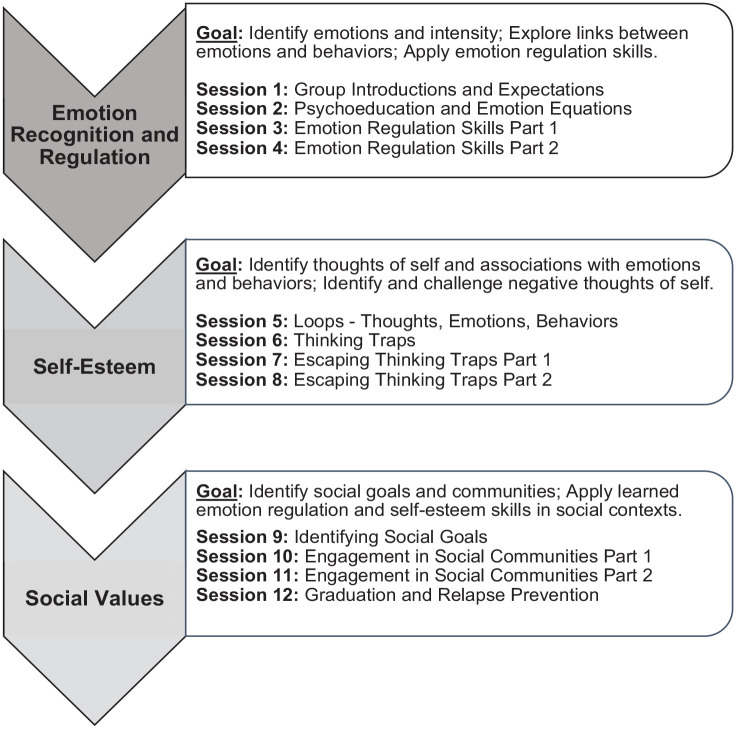
Verification
Claims the paper makes
12 Valid · 2 Not valid · 17 Not checked · 104 Own results and interpretations
The cited sources support only part of this claim — read each source’s verdict below.
In the paper
“Interventions targeting depression in autistic youth are limited”
- Also stated in: § Cognitive behavioral therapy for depression in youth · plain
“In a review of depression treatments for autistic people, only 20 psychosocial treatments met the inclusion criteria for the review, with just 12 studies targeting depressive symptoms (Linden et al., 2023; Menezes et al., 2020).”
§ Community-guided, autism-adapted group cognitive behavioral therapy for depression in autistic youth (CBT-DAY): Preliminary feasibility, acceptability, and efficacy > Abstract This study examined the preliminary feasibility, acceptability, and efficacy of an autism-adapted cognitive behavioral therapy for depression in autistic youth, CBT-DAY. Twenty-four autistic youth (11–17 years old) participated in the pilot non-randomized trial including 5 cisgender females, 14 cisgender males, and 5 non-binary youth. Youth participated in 12 weeks of, CBT-DAY and youth depressive symptoms (i.e., primary clinical outcome) and emotional reactivity and self-esteem (i.e., intervention mechanisms) were assessed through self-report and caregiver report at four timepoints: baseline (week 0), midpoint (week 6), post-treatment (week 12), and follow-up (week 24). Results suggested that CBT-DAY may be feasible (16.67% attrition) in an outpatient setting and acceptable to adolescents and their caregivers. Bayesian linear mixed-effects models showed that CBT-DAY may be efficacious in targeting emotional reactivity [βT1-T3 = −2.53, CrI95% (−4.62, −0.58), Pd = 0.995, d = −0.35] and self-esteem [βT1-T3 = −3.57, CrI95% (−5.17, −2.00), Pd > 0.999, d = −0.47], as well as youth depressive symptom severity [β = −2.72, CrI95% (−3.85, −1.63), Pd > 0.999]. Treatment gains were maintained at follow-up. A cognitive behavioral group therapy designed for and with autistic people demonstrates promise in targeting emotional reactivity and self-esteem to improve depressive symptom severity in youth. Findings can be leveraged to implement larger, more controlled trials of CBT-DAY. The trial was registered at Clinicaltrials.gov (Identifier: NCT05430022; https://beta.clinicaltrials.gov/study/NCT05430022). > Lay Abstract Depression in youth is a significant public health problem worldwide, particularly for autistic youth who are over twice as likely to experience depression than their non-autistic peers. Although pathways to depression are complex, emotional reactivity and negative self-esteem are two risk factors for depression in autistic and non-autistic youth. Although autistic youth are more likely to experience depression than their non-autistic peers, psychotherapy options for autistic youth are very limited; community guidance in the development and testing of psychotherapy programs is a promising approach in autism. Therefore, in this study, we designed an autism-adapted CBT-DAY, in collaboration with autistic community members. Specifically, CBT-DAY combined neurodiversity-affirming and cognitive behavioral approaches to target emotional reactivity and self-esteem in youth to improve depressive symptom severity in a group setting across 12 weeks. We examined the preliminary feasibility, acceptability, and efficacy of CBT-DAY in a pilot non-randomized trial. In addition, we implemented a rigorous protocol for assessing, monitoring, and addressing potential harms in this intervention. Results from 24 autistic youth (11–17 years old) suggest that CBT-DAY may be feasible to use in an outpatient clinical setting and generally acceptable to youth and their caregivers. Participation in CBT-DAY may be associated with significant improvements in youth emotional reactivity and self-esteem, as well as depressive symptom severity per self-report only. Exploratory analyses showed that participation in CBT-DAY may also be associated with significant improvements in internalizing symptoms. Findings demonstrate the potential promise of neurodiversity-affirming and cognitive behavioral approaches to treating depressive symptoms in some autistic youth. Adolescent depression is a prevalent public health problem in the United States (Avenevoli et al., 2015), particularly among autistic youth who experience depression at rates nearly twice that of their non-autistic peers (Hudson et al., 2019; Schwartzman & Corbett, 2020). Interventions targeting depression in autistic youth are limited, which is concerning as untreated depression is associated with adverse outcomes (e.g., poor physical health, suicidal thoughts and behaviors (STBs), and caregiver stress; Cadman et al., 2021; Hawton et al., 2013) and diminished quality of life (Clayborne et al., 2019; Lawson et al., 2020). Autism-adapted interventions outperform standard approaches for anxiety (Johnson et al., 2023; White et al.,2013, 2009; Wood et al., 2020, 2021) and obsessive-compulsive disorder (Kose et al., 2018; Vause et al., 2017) in youth, which suggests that autism-adapted interventions may be efficacious for depression in this population.
What the sources say
- Partly supportedcites Linden et al., 2023 matched to “Benefits and harms of interventions to improve anxiety, depression, and other mental health outcomes for autistic people: A systematic review and network meta-analysis of randomised controlled trials” (2023) sourceExperimental — accuracy not yet measured
The Discussion (Summary; page not provided) says evidence for behavioural interventions for depression is limited, and the Results (Effect estimates, Depression in children; page not provided) say uncertainty prevents recommending one intervention over another. That supports a shortage of established treatments for autistic youth, but not the broader implication that few interventions targeting depression exist; the Introduction lists several types. (LLM, conf=0.82)
- Not checked — no full text of the sourcecites Menezes et al., 2020 matched to “Treatment of Depression in Individuals with Autism Spectrum Disorder: A Systematic Review” (2020) source
plain- Asserted: passes — The authors put it forward as true.
- Checkable: passes — It can be checked against evidence.
- Load-bearing: passes — The paper’s conclusions depend on it.
- Based: passes — The paper gives a reason why it holds.
- Also stated in: § Cognitive behavioral therapy for depression in youth · plain
The cited sources support only part of this claim — read each source’s verdict below.
In the paper
“The RCADS-P/C has been validated for use with autistic youth (Kaat & Lecavalier, 2015; Khalfe et al., 2023).”
§ Community-guided, autism-adapted group cognitive behavioral therapy for depression in autistic youth (CBT-DAY): Preliminary feasibility, acceptability, and efficacy > Methods > Measures
What the sources say
- Not checked — no full text of the sourcecites Kaat & Lecavalier, 2015 matched to “Reliability and Validity of Parent- and Child-Rated Anxiety Measures in Autism Spectrum Disorder” (2015) source
- Partly supportedcites Khalfe et al., 2023 matched to “Psychometric properties of the revised children’s anxiety and depression scale (RCADS) for autistic youth without co-occurring intellectual disability” (2023) sourceExperimental — accuracy not yet measured
The Abstract reports support for the RCADS-Parent and RCADS-Child as reliable, valid measures of internalizing symptoms in autistic youth. The study, however, examined treatment-seeking youth aged 6–14 with anxiety or obsessive-compulsive symptoms and without co-occurring intellectual disability; it does not establish validity for autistic youth generally. (LLM, conf=0.84)
plain- Asserted: passes — The authors put it forward as true.
- Checkable: passes — It can be checked against evidence.
- Load-bearing: passes — The paper’s conclusions depend on it.
- Based: passes — The paper gives a reason why it holds.
The cited sources support only part of this claim — read each source’s verdict below.
In the paper
“Autistic people experience marginalization and dehumanization across societal levels (e.g., family, school, and community; Botha & Frost, 2020; Cooper et al., 2017; Han et al., 2022; Turnock et al., 2022)”
§ Community-guided, autism-adapted group cognitive behavioral therapy for depression in autistic youth (CBT-DAY): Preliminary feasibility, acceptability, and efficacy > Intervention targets: Emotion dysregulation and negative self-esteem Although pathways to depression in youth are complex, emotion dysregulation and negative self-esteem are important risk factors for both autistic (Conner et al., 2022) and non-autistic youth (Dale et al., 2019). Emotion dysregulation, defined as difficulties in altering one’s emotions in a goal-directed manner (Aldao et al., 2010), is a transdiagnostic risk factor for depression in autistic and non-autistic people (Cai et al., 2018). Interventions targeting emotion dysregulation in autistic people have reported success in improving emotion regulation (ER) and depressive symptoms severity (Conner et al., 2019), which points to the potential of ER-focused interventions in alleviating depressive symptoms in autism. Negative self-esteem, a broad construct that includes pessimistic beliefs and attitudes of self and self-concept (Cast & Burke, 2002), is another transdiagnostic risk factor for depression and adverse mental health outcomes in autistic and non-autistic people (McCauley et al., 2019; van der Cruijsen & Boyer, 2021). Autistic people experience marginalization and dehumanization across societal levels (e.g., family, school, and community; Botha & Frost, 2020; Cooper et al., 2017; Han et al., 2022; Turnock et al., 2022), which can be internalized about one’s autistic identity. Relatedly, autistic youth are more likely to endorse depressive symptoms related to interpersonal problems than their non-autistic peers (Schwartzman et al., 2022). Taken together, this evidence suggests that self-esteem and autistic identity are interconnected and may be influenced by social experiences that can lead to depression and other adverse mental health outcomes.
What the sources say
- Partly supportedcites Botha & Frost, 2020 matched to “Extending the minority stress model to understand mental health problems experienced by the autistic population” (2020) sourceExperimental — accuracy not yet measured
The available passage labeled “118 Field Citation Ratio” reports everyday discrimination and internalized stigma among autistic people, supporting the marginalization part of the claim. It does not describe dehumanization or establish that these experiences occur across family, school, and community settings. (LLM, conf=0.78)
- Not checked — no full text of the sourcecites Cooper et al., 2017 matched to “Social identity, self‐esteem, and mental health in autism” (2017) source
- Not checked — no full text of the sourcecites Han et al., 2022 matched to “A systematic review on autistic people's experiences of stigma and coping strategies” (2022) source
plain- Asserted: passes — The authors put it forward as true.
- Checkable: passes — It can be checked against evidence.
- Load-bearing: passes — The paper’s conclusions depend on it.
- Based: passes — The paper gives a reason why it holds.
- Partly supported
The cited sources support only part of this claim — read each source’s verdict below.
In the paper
“Emotion dysregulation, defined as difficulties in altering one’s emotions in a goal-directed manner (Aldao et al., 2010), is a transdiagnostic risk factor for depression in autistic and non-autistic people (Cai et al., 2018).”
§ Community-guided, autism-adapted group cognitive behavioral therapy for depression in autistic youth (CBT-DAY): Preliminary feasibility, acceptability, and efficacy > Intervention targets: Emotion dysregulation and negative self-esteem Although pathways to depression in youth are complex, emotion dysregulation and negative self-esteem are important risk factors for both autistic (Conner et al., 2022) and non-autistic youth (Dale et al., 2019). Emotion dysregulation, defined as difficulties in altering one’s emotions in a goal-directed manner (Aldao et al., 2010), is a transdiagnostic risk factor for depression in autistic and non-autistic people (Cai et al., 2018). Interventions targeting emotion dysregulation in autistic people have reported success in improving emotion regulation (ER) and depressive symptoms severity (Conner et al., 2019), which points to the potential of ER-focused interventions in alleviating depressive symptoms in autism. Negative self-esteem, a broad construct that includes pessimistic beliefs and attitudes of self and self-concept (Cast & Burke, 2002), is another transdiagnostic risk factor for depression and adverse mental health outcomes in autistic and non-autistic people (McCauley et al., 2019; van der Cruijsen & Boyer, 2021). Autistic people experience marginalization and dehumanization across societal levels (e.g., family, school, and community; Botha & Frost, 2020; Cooper et al., 2017; Han et al., 2022; Turnock et al., 2022), which can be internalized about one’s autistic identity. Relatedly, autistic youth are more likely to endorse depressive symptoms related to interpersonal problems than their non-autistic peers (Schwartzman et al., 2022). Taken together, this evidence suggests that self-esteem and autistic identity are interconnected and may be influenced by social experiences that can lead to depression and other adverse mental health outcomes.
What the sources say
- Partly supportedcites Cai et al., 2018 matched to “Emotion regulation in autism spectrum disorder: Where we are and where we need to go” (2018) sourceExperimental — accuracy not yet measured
The paper’s discussion of emotion regulation in the general population links maladaptive strategies with depression, and its Summary links emotion dysregulation in autistic people with psychopathology. But the Summary says further work is needed to confirm whether the same strategies play a similar role in autistic people; the paper does not establish emotion dysregulation as a shared risk factor for depression in both groups. (LLM, conf=0.85)
plainstates an association- Asserted: passes — The authors put it forward as true.
- Checkable: passes — It can be checked against evidence.
- Load-bearing: passes — The paper’s conclusions depend on it.
- Based: passes — The paper gives a reason why it holds.
- Partly supported
The cited sources support only part of this claim — read each source’s verdict below.
In the paper
“Fourth, caregiver-report and self-report measures were used to assess target mechanisms and clinical outcomes and may be subject to bias (Mazefsky et al., 2018).”
§ Community-guided, autism-adapted group cognitive behavioral therapy for depression in autistic youth (CBT-DAY): Preliminary feasibility, acceptability, and efficacy > Discussion > Limitations There are several limitations to this study that warrant a discussion. First, findings are limited by a small sample and lack of randomization with a control group to robustly investigate the feasibility, acceptability, and efficacy of CBT-DAY compared to treatment as usual or other interventions. The lack of randomization in particular stopped us from being able to determine the degree to which reductions in depressive symptoms from this study were due to the CBT-DAY intervention as opposed to non-specific factors such as regression to the mean, expectancy effects, and spontaneous remission of depression over time (see also Curie et al., 2023). In addition, as with many pilot non-randomized psychotherapy trials, participants, families, and group leaders were not blind to study conditions. Future studies that randomize individuals to multiple interventions may consider utilizing centralized clinician raters who are blind to group allocation as a way of minimizing the influence of “unblinded” participants on the primary outcome. Second, the sample included predominantly White, financially-resourced autistic youth without intellectual disability, and thus, findings cannot be generalized to all autistic youth. In particular, CBT-DAY was not intended for autistic youth with intellectual disabilities, and the intervention protocol likely requires further modification before it can be successfully leveraged with much of that population. A third limitation is that adolescent attitudes toward autistic identity were not measured in this study, thereby limiting our ability to draw conclusions about relationships between autistic identity, self-esteem, and depressive symptoms. Fourth, caregiver-report and self-report measures were used to assess target mechanisms and clinical outcomes and may be subject to bias (Mazefsky et al., 2018). Future studies could employ multimethod approaches (e.g., clinical interviews, neurophysiological measures) to enhance the measurement of intervention mechanisms and outcomes. In particular, the use of a clinician-administered primary outcome, such as the Kiddie Schedule for Affective Disorders and Schizophrenia (K-SADS; Kaufman et al., 1997) Depression Rating Scale, which can be completed separately with parents and children to ascertain rater-specific changes in depression symptoms over time, represents a very promising future direction for this and other psychotherapeutic trials. Fifth, given the pilot nature of the study, we did not examine the potential effects of previous therapy and/or co-occurring psychiatric conditions on the feasibility and efficacy of CBT-DAY; these are important considerations for future, large-scale trials. Sixth, though autistic adults and caregivers were actively involved in the design of CBT-DAY and throughout the study, autistic youth were not involved; this is a clear area for adaptation in future trials of CBT-DAY. Seventh, we did not record the number of families who expressed interest in the CBT-DAY groups, which would provide important information on patient interest, access, and other indicators of feasibility. As a final limitation, treatment fidelity and weekly homework completion were not systematically monitored in this pilot trial, and these remain important aspects to add to future large-scale studies.
What the sources say
- Partly supportedcites Mazefsky et al., 2018 matched to “The emotion dysregulation inventory: Psychometric properties and item response theory calibration in an autism spectrum disorder sample” (2018) sourceExperimental — accuracy not yet measured
The Introduction (Development of the Emotion Dysregulation Inventory) identifies the EDI as a caregiver-report measure, and the Methods (Procedures) say caregivers completed it during the study. The paper discusses limits on self-report for people with significant intellectual disability, but these passages do not establish that caregiver- and self-report measures were both used to assess target mechanisms and clinical outcomes or that those measures were subject to bias. Page numbers are unavailable in our copy. (LLM, conf=0.82)
hedgedstates a possible cause- Asserted: passes — The authors put it forward as true.
- Checkable: passes — It can be checked against evidence.
- Load-bearing: unclear — It is unclear whether the paper’s conclusions depend on it.
- Based: passes — The paper gives a reason why it holds.
- Partly supported
69 more claims · 1 with their cited sources checked
Create a free account to see all 135 claims and every source verdict.
- Probably not a substantial claim. 29
- It may state two separate claims as one. 38
Claims other papers make about this one
Each is checked against this paper’s own text: does it say what the citing paper says it does?
In the citing paper
“These align more closely with the principles of neurodiversity, as interventions for comorbidities address mental disorders associated with autism, rather than the enduring traits of a developmental condition that are integral to autistic identity (Schwartzman et al., 2023).”
From Rethinking psychological interventions in autism: Toward a neurodiversity‐affirming approach. (2025) · cites this paper as Schwartzman et al., 2023
Citations
Cites
Harris, P. A., Taylor, R., Thielke, R., Payne, J., Gonzalez, N., & Conde, J. G. (2009) · Journal of Biomedical Informatics · doi:10.1016/j.jbi.2008.08.010 · Cited by 51,384 · cited 1×
“During the intake visit, study staff provided families with an overview of the intervention (e.g., time commitment, schedule, skills taught), completed a semi-structured interview with families, and administered caregiver report and youth self-report questionnaires on REDCap (Harris et al., 2009).”
MethodKAUFMAN, J., BIRMAHER, B., BRENT, D., RAO, U., FLYNN, C., MORECI, P., WILLIAMSON, D., & RYAN, N. (1997) · Journal of the American Academy of Child & Adolescent Psychiatry · doi:10.1097/00004583-199707000-00021 · Cited by 10,148 · cited 1×
“In particular, the use of a clini-cian-administered primary outcome, such as the Kiddie Schedule for Affective Disorders and Schizophrenia (K-SADS; Kaufman et al., 1997) Depression Rating Scale, which can be completed separately with parents and children to ascertain rater-specific changes in…”
Methodbrms : An R Package for Bayesian Multilevel Models Using Stan
Bürkner, P.-C. (2017) · Journal of Statistical Software · doi:10.18637/jss.v080.i01 · Cited by 9,476 · cited 1×
“Models were fit using Markov chain Monte Carlo (MCMC) estimation, as implemented in the brms R package (Bürkner, 2017a, 2017b).”
MethodJacobson, N. S., & Truax, P. (1991) · Journal of Consulting and Clinical Psychology · doi:10.1037/0022-006x.59.1.12 · Cited by 7,770 · cited 1×
“To further examine individual-level change in depressive symptoms over the course of the intervention, we calculated the Reliable Change Index (RCI; Jacobson & Truax, 1991) for each individual at T2, T3, and T4.”
MethodEmotion-regulation strategies across psychopathology: A meta-analytic review
Aldao, A., Nolen-Hoeksema, S., & Schweizer, S. (2010) · Clinical Psychology Review · doi:10.1016/j.cpr.2009.11.004 · Cited by 6,686 · cited 1×
“Emotion dysregulation, defined as difficulties in altering one’s emotions in a goal-directed manner (Aldao et al., 2010), is a transdiag-nostic risk factor for depression in autistic and non-autistic people (Cai et al., 2018).”
BackgroundMissForest—Non-parametric missing value imputation for mixed-type data
Stekhoven, D. J., & Bühlmann, P. (2012) · Bioinformatics · doi:10.1093/bioinformatics/btr597 · Cited by 6,156 · cited 1×
“Missing data were accommodated using 10-fold multiple imputations based on random forests from the missForest R package (Stekhoven & Stekhoven, 2013; Stekhoven & Bühlmann, 2012).”
MethodPosner, K., Brown, G. K., Stanley, B., Brent, D. A., Yershova, K. V., Oquendo, M. A., Currier, G. W., Melvin, G. A., Greenhill, L., Shen, S., et al. (2011) · American Journal of Psychiatry · doi:10.1176/appi.ajp.2011.10111704 · Cited by 5,157 · cited 7×
“For harm assessment , youth, caregivers, and clinicians routinely measured the severity of adolescent depressive symptoms and STBs/ NSSI throughout the 12-week program using scores from the RCADS-C/P and C-SSRS.”
MethodInfluentialNew Effect Size Rules of Thumb
Sawilowsky, S. S. (2009) · Journal of Modern Applied Statistical Methods · doi:10.22237/jmasm/1257035100 · Cited by 3,254 · cited 2×
“Based on current research findings in the applied literature (Sawilowsky, 2009), the following effect sizes were defined as: In the case that the timepoint × rater interaction was not significant, we examined the marginal treatment effect of CBT-DAY on RCADS-C/P scores (pooled across participants…”
Advanced Bayesian Multilevel Modeling with the R Package brms
Bürkner, P.-C. (2018) · The R Journal · doi:10.32614/rj-2018-017 · Cited by 3,015 · cited 1×
“Models were fit using Markov chain Monte Carlo (MCMC) estimation, as implemented in the brms R package (Bürkner, 2017a, 2017b).”
Methodeffectsize: Estimation of Effect Size Indices and Standardized Parameters
Ben-Shachar, M., Lüdecke, D., & Makowski, D. (2020) · Journal of Open Source Software · doi:10.21105/joss.02815 · Cited by 2,063 · cited 1×
“…intervention mechanisms and primary and exploratory clinical outcomes were estimated by calculating the individual contrast of interest in raw scale units (the unstandardized mean difference) and dividing it by pre-intervention (T1) standard deviation of the full sample (Ben-Shachar et al., 2020).”
MethodThe Use of Psychological Testing for Treatment Planning and Outcomes Assessment
(2004) · doi:10.4324/9781410610614 · Cited by 1,503
Risk factors for suicide in individuals with depression: a systematic review
Hawton, K., Casañas i Comabella, C., Haw, C., & Saunders, K. (2013) · Journal of Affective Disorders · doi:10.1016/j.jad.2013.01.004 · Cited by 1,469 · cited 2×
“…limited, which is concerning as untreated depression is associated with adverse outcomes (e.g., poor physical health, suicidal thoughts and behaviors (STBs), and caregiver stress; Cadman et al., 2021; Hawton et al., 2013) and diminished quality of life (Clayborne et al., 2019; Lawson et al., 2020).”
BackgroundAvenevoli, S., Swendsen, J., He, J.-P., Burstein, M., & Merikangas, K. R. (2015) · Journal of the American Academy of Child & Adolescent Psychiatry · doi:10.1016/j.jaac.2014.10.010 · Cited by 1,202 · cited 2×
“As youth continue to encounter barriers to accessing therapy in the United States (U.S. Surgeon General, 2021), particularly autistic youth (Maddox et al., 2020), group therapy may be an important service line to increase access.”
BackgroundIndices of Effect Existence and Significance in the Bayesian Framework
Makowski, D., Ben-Shachar, M. S., Chen, S. H. A., & Lüdecke, D. (2019) · Frontiers in Psychology · doi:10.3389/fpsyg.2019.02767 · Cited by 983 · cited 1×
“…the probability of direction ( P d , i.e., the posterior probability that the true parameter value has the same sign as its point estimate; Makowski et al., 2019) was computed for all parameters, with values of P d > 0.975 indicating “statistical significance” at a level comparable to…”
MethodInfluentialConstantino, J. N. (2013) · Encyclopedia of Autism Spectrum Disorders · doi:10.1007/978-1-4419-1698-3_296 · Cited by 908
Psychometric properties of the revised child anxiety and depression scale in a clinical sample
Chorpita, B. F., Moffitt, C. E., & Gray, J. (2005) · Behaviour Research and Therapy · doi:10.1016/j.brat.2004.02.004 · Cited by 905 · cited 2×
“Child versions (RCADS-P and RCADS-C, respectively; Chorpita et al., 2005) is a caregiver-and self-report questionnaire that assesses the severity of youth internalizing symptoms (e.g., low mood, loss of interest in activities, worries, nervousness in social situations, etc.).”
BackgroundSystematic Review and Meta-Analysis: Adolescent Depression and Long-Term Psychosocial Outcomes
Clayborne, Z. M., Varin, M., & Colman, I. (2019) · Journal of the American Academy of Child & Adolescent Psychiatry · doi:10.1016/j.jaac.2018.07.896 · Cited by 787 · cited 1×
“…limited, which is concerning as untreated depression is associated with adverse outcomes (e.g., poor physical health, suicidal thoughts and behaviors (STBs), and caregiver stress; Cadman et al., 2021; Hawton et al., 2013) and diminished quality of life (Clayborne et al., 2019; Lawson et al., 2020).”
BackgroundCast, A. D., & Burke, P. J. (2002) · Social Forces · doi:10.1353/sof.2002.0003 · Cited by 759 · cited 1×
“Negative self-esteem, a broad construct that includes pessimistic beliefs and attitudes of self and self-concept (Cast & Burke, 2002), is another transdiagnostic risk factor for depression and adverse mental health outcomes in autistic and non-autistic people (McCauley et al., 2019; van der…”
BackgroundBotha, M., & Frost, D. M. (2020) · Society and Mental Health · doi:10.1177/2156869318804297 · Cited by 651 · cited 2×
“Spontaneous feedback from families about the importance of a neurodiversity-affirming approach in CBT-DAY reiterates the importance of promoting autistic identity (Botha & Frost, 2020; Cage & Troxell-Whitman, 2020; Chapman & Botha, 2023).”
BackgroundCognitive therapy: A 30-year retrospective.
Beck, A. T. (1991) · American Psychologist · doi:10.1037//0003-066x.46.4.368 · Cited by 607 · cited 1×
“Intervention efforts for depression in autistic youth may be guided by a larger body of research on non-autistic youth: Cognitive behavioral therapy (CBT; Beck, 1991) is a leading intervention that is supported by a robust evidence base.”
BackgroundParent—Child Relationships During Adolescence
Laursen, B., & Collins, W. A. (2009) · Handbook of Adolescent Psychology · doi:10.1002/9780470479193.adlpsy002002 · Cited by 599 · cited 1×
“As caregiver–child relationships affect both adolescent (Laursen & Collins, 2009) and caregiver (Ferenc et al., 2023) mental health outcomes, opportunities to explore autistic identity with caregivers may be an important next step in this line of research for youth and caregivers alike.”
BackgroundA meta-analytic review on treatment dropout in child and adolescent outpatient mental health care
de Haan, A. M., Boon, A. E., de Jong, J. T. V. M., Hoeve, M., & Vermeiren, R. R. J. M. (2013) · Clinical Psychology Review · doi:10.1016/j.cpr.2013.04.005 · Cited by 479 · cited 1×
“We hypothesized that CBT-DAY would be: (1) feasible, as measured by attrition (at/below 28%; De Haan et al., 2013) and session attendance (attendance at least two-thirds of sessions; Haan et al., 2013), (2) acceptable to families, as assessed by satisfaction ratings following the intervention, (3)…”
BackgroundPrevalence of Depressive Disorders in Individuals with Autism Spectrum Disorder: A Meta-Analysis
Hudson, C. C., Hall, L., & Harkness, K. L. (2019) · Journal of Abnormal Child Psychology · doi:10.1007/s10802-018-0402-1 · Cited by 411 · cited 1×
“Adolescent depression is a prevalent public health problem in the United States (Avenevoli et al., 2015), particularly among autistic youth who experience depression at rates nearly twice that of their non-autistic peers (Hudson et al., 2019; Schwartzman & Corbett, 2020).”
BackgroundUnderstanding Stigma in Autism: A Narrative Review and Theoretical Model
Turnock, A., Langley, K., & Jones, C. R. G. (2022) · Autism in Adulthood · doi:10.1089/aut.2021.0005 · Cited by 407 · cited 1×
“Autistic people experience marginalization and dehumanization across societal levels (e.g., family, school, and community; Botha & Frost, 2020; Cooper et al., 2017; Han et al., 2022; Turnock et al., 2022), which can be internalized about one’s autistic identity.”
BackgroundDale, L. P., Vanderloo, L., Moore, S., & Faulkner, G. (2019) · Mental Health and Physical Activity · doi:10.1016/j.mhpa.2018.12.001 · Cited by 366
Social identity, self‐esteem, and mental health in autism
Cooper, K., Smith, L. G. E., & Russell, A. (2017) · European Journal of Social Psychology · doi:10.1002/ejsp.2297 · Cited by 354 · cited 1×
“Autistic people experience marginalization and dehumanization across societal levels (e.g., family, school, and community; Botha & Frost, 2020; Cooper et al., 2017; Han et al., 2022; Turnock et al., 2022), which can be internalized about one’s autistic identity.”
BackgroundEmotion regulation in autism spectrum disorder: Where we are and where we need to go
Cai, R. Y., Richdale, A. L., Uljarević, M., Dissanayake, C., & Samson, A. C. (2018) · Autism Research · doi:10.1002/aur.1968 · Cited by 347 · cited 1×
“Emotion dysregulation, defined as difficulties in altering one’s emotions in a goal-directed manner (Aldao et al., 2010), is a transdiag-nostic risk factor for depression in autistic and non-autistic people (Cai et al., 2018).”
BackgroundOud, M., de Winter, L., Vermeulen-Smit, E., Bodden, D., Nauta, M., Stone, L., van den Heuvel, M., Taher, R. A., de Graaf, I., Kendall, T., et al. (2019) · European Psychiatry · doi:10.1016/j.eurpsy.2018.12.008 · Cited by 319 · cited 1×
“A recent systematic review and meta-analysis of 31 randomized controlled trials indicates that CBT is effective for the treatment of depression and prevention of relapse in non-autistic children and adolescents (Oud et al., 2019).”
White, S. W., Ollendick, T., Albano, A. M., Oswald, D., Johnson, C., Southam-Gerow, M. A., Kim, I., & Scahill, L. (2013) · Journal of Autism and Developmental Disorders · doi:10.1007/s10803-012-1577-x · Cited by 313
Wood, J. J., Kendall, P. C., Wood, K. S., Kerns, C. M., Seltzer, M., Small, B. J., Lewin, A. B., & Storch, E. A. (2020) · JAMA Psychiatry · doi:10.1001/jamapsychiatry.2019.4160 · Cited by 268 · cited 1×
“Autism-adapted interventions outperform standard approaches for anxiety (Johnson et al., 2023; White et al.,2013, 2009; Wood et al., 2020, 2021) and obsessive-compulsive disorder (Kose et al., 2018; Vause et al., 2017) in youth, which suggests that autism-adapted interventions may be efficacious…”
BackgroundA systematic review on autistic people's experiences of stigma and coping strategies
Han, E., Scior, K., Avramides, K., & Crane, L. (2022) · Autism Research · doi:10.1002/aur.2652 · Cited by 233 · cited 1×
“Autistic people experience marginalization and dehumanization across societal levels (e.g., family, school, and community; Botha & Frost, 2020; Cooper et al., 2017; Han et al., 2022; Turnock et al., 2022), which can be internalized about one’s autistic identity.”
BackgroundNeurodivergence-informed therapy
Chapman, R., & Botha, M. (2023) · Developmental Medicine & Child Neurology · doi:10.1111/dmcn.15384 · Cited by 212 · cited 2×
“Spontaneous feedback from families about the importance of a neurodiversity-affirming approach in CBT-DAY reiterates the importance of promoting autistic identity (Botha & Frost, 2020; Cage & Troxell-Whitman, 2020; Chapman & Botha, 2023).”
BackgroundMaddox, B. B., Crabbe, S., Beidas, R. S., Brookman-Frazee, L., Cannuscio, C. C., Miller, J. S., Nicolaidis, C., & Mandell, D. S. (2020) · Autism · doi:10.1177/1362361319882227 · Cited by 203 · cited 1×
“As youth continue to encounter barriers to accessing therapy in the United States (U.S. Surgeon General, 2021), particularly autistic youth (Maddox et al., 2020), group therapy may be an important service line to increase access.”
BackgroundMazefsky, C. A., Yu, L., White, S. W., Siegel, M., & Pilkonis, P. A. (2018) · Autism Research · doi:10.1002/aur.1947 · Cited by 169 · cited 2×
“Two measures were administered at all timepoints to assess changes in the intervention mechanisms of emotional reactivity and self-esteem: the Emotion Dysregulation Inventory-Reactivity Short Form (EDI Reactivity; Mazefsky et al., 2018) and the Rosenberg Self-Esteem Scale (RSES; Rosenberg, 1965).”
MethodModelling monotonic effects of ordinal predictors in Bayesian regression models
Bürkner, P., & Charpentier, E. (2020) · British Journal of Mathematical and Statistical Psychology · doi:10.1111/bmsp.12195 · Cited by 160 · cited 1×
“Timepoint was modeled as an ordinal predictor (Bürkner & Charpentier, 2020) in all models.”
MethodConner, C. M., White, S. W., Beck, K. B., Golt, J., Smith, I. C., & Mazefsky, C. A. (2019) · Autism · doi:10.1177/1362361318810709 · Cited by 150 · cited 1×
“Interventions targeting emotion dysregulation in autistic people have reported success in improving emotion regulation (ER) and depressive symptoms severity (Conner et al., 2019), which points to the potential of ER-focused interventions in alleviating depressive symptoms in autism.”
BackgroundLawson, L. P., Richdale, A. L., Haschek, A., Flower, R. L., Vartuli, J., Arnold, S. R., & Trollor, J. N. (2020) · Autism · doi:10.1177/1362361320908107 · Cited by 138 · cited 1×
“…limited, which is concerning as untreated depression is associated with adverse outcomes (e.g., poor physical health, suicidal thoughts and behaviors (STBs), and caregiver stress; Cadman et al., 2021; Hawton et al., 2013) and diminished quality of life (Clayborne et al., 2019; Lawson et al., 2020).”
BackgroundWhite, S. W., Ollendick, T., Scahill, L., Oswald, D., & Albano, A. M. (2009) · Journal of Autism and Developmental Disorders · doi:10.1007/s10803-009-0801-9 · Cited by 129 · cited 1×
“Autism-adapted interventions outperform standard approaches for anxiety (Johnson et al., 2023; White et al.,2013, 2009; Wood et al., 2020, 2021) and obsessive-compulsive disorder (Kose et al., 2018; Vause et al., 2017) in youth, which suggests that autism-adapted interventions may be efficacious…”
BackgroundMcGillivray, J. A., & Evert, H. T. (2014) · Journal of Autism and Developmental Disorders · doi:10.1007/s10803-014-2087-9 · Cited by 105 · cited 5×
“Of those studies, only two studies tested the efficacy of group CBT in treating depressive symptoms in autistic youth and adults (McGillivray & Evert, 2014; Santomauro et al., 2016).”
BackgroundMethodInfluentialAdverse event reporting in intervention research for young autistic children
Bottema-Beutel, K., Crowley, S., Sandbank, M., & Woynaroski, T. G. (2021) · Autism · doi:10.1177/1362361320965331 · Cited by 84
Reliability and Validity of Parent- and Child-Rated Anxiety Measures in Autism Spectrum Disorder
Kaat, A. J., & Lecavalier, L. (2015) · Journal of Autism and Developmental Disorders · doi:10.1007/s10803-015-2481-y · Cited by 83 · cited 1×
“The RCADS-P/C has been validated for use with autistic youth (Kaat & Lecavalier, 2015; Khalfe et al., 2023).”
MethodLinden, A., Best, L., Elise, F., Roberts, D., Branagan, A., Tay, Y. B. E., Crane, L., Cusack, J., Davidson, B., Davidson, I., et al. (2023) · Autism · doi:10.1177/13623613221117931 · Cited by 78 · cited 1×
“In a review of depression treatments for autistic people, only 20 psychosocial treatments met the inclusion criteria for the review, with just 12 studies targeting depressive symptoms (Linden et al., 2023; Menezes et al., 2020).”
MethodKeles, S., & Idsoe, T. (2018) · Journal of Adolescence · doi:10.1016/j.adolescence.2018.05.011 · Cited by 76 · cited 1×
“Evidence also supports the use of group-based formats to deliver CBT as a treatment for depression in non-autistic youth (Keles & Idsoe, 2018).”
ResultUnderstanding the Relationships Between Autistic Identity, Disclosure, and Camouflaging
Cage, E., & Troxell-Whitman, Z. (2020) · Autism in Adulthood · doi:10.1089/aut.2020.0016 · Cited by 74 · cited 1×
“Spontaneous feedback from families about the importance of a neurodiversity-affirming approach in CBT-DAY reiterates the importance of promoting autistic identity (Botha & Frost, 2020; Cage & Troxell-Whitman, 2020; Chapman & Botha, 2023).”
BackgroundKlatte, R., Strauss, B., Flückiger, C., Färber, F., & Rosendahl, J. (2023) · Psychotherapy · doi:10.1037/pst0000359 · Cited by 73 · cited 2×
“Multiple methods were used to assess, address, record, and report harms experienced by participants during the study and aligned with established recommendations (Klatte et al., 2023).”
MethodDepression in adolescents with ASD: a pilot RCT of a group intervention
Santomauro, D., Sheffield, J., & Sofronoff, K. (2016) · Journal of Autism and Developmental Disorders · doi:10.1007/s10803-015-2605-4 · Cited by 69 · cited 3×
“Of those studies, only two studies tested the efficacy of group CBT in treating depressive symptoms in autistic youth and adults (McGillivray & Evert, 2014; Santomauro et al., 2016).”
BackgroundMethodSelf-Esteem, Internalizing Symptoms, and Theory of Mind in Youth With Autism Spectrum Disorder
McCauley, J. B., Harris, M. A., Zajic, M. C., Swain-Lerro, L. E., Oswald, T., McIntyre, N., Trzesniewski, K., Mundy, P., & Solomon, M. (2019) · Journal of Clinical Child & Adolescent Psychology · doi:10.1080/15374416.2017.1381912 · Cited by 66
Explicit and implicit self-esteem in youth with autism spectrum disorders
van der Cruijsen, R., & Boyer, B. E. (2021) · Autism · doi:10.1177/1362361320961006 · Cited by 66 · cited 1×
“…a broad construct that includes pessimistic beliefs and attitudes of self and self-concept (Cast & Burke, 2002), is another transdiagnostic risk factor for depression and adverse mental health outcomes in autistic and non-autistic people (McCauley et al., 2019; van der Cruijsen & Boyer, 2021).”
BackgroundKose, L. K., Fox, L., & Storch, E. A. (2018) · Journal of Developmental and Physical Disabilities · doi:10.1007/s10882-017-9559-8 · Cited by 65 · cited 1×
“…standard approaches for anxiety (Johnson et al., 2023; White et al.,2013, 2009; Wood et al., 2020, 2021) and obsessive-compulsive disorder (Kose et al., 2018; Vause et al., 2017) in youth, which suggests that autism-adapted interventions may be efficacious for depression in this…”
BackgroundWhen autism researchers disregard harms: A commentary
Dawson, M., & Fletcher-Watson, S. (2022) · Autism · doi:10.1177/13623613211031403 · Cited by 61
Treatment of Depression in Individuals with Autism Spectrum Disorder: A Systematic Review
Menezes, M., Harkins, C., Robinson, M. F., & Mazurek, M. O. (2020) · Research in Autism Spectrum Disorders · doi:10.1016/j.rasd.2020.101639 · Cited by 55 · cited 1×
“In a review of depression treatments for autistic people, only 20 psychosocial treatments met the inclusion criteria for the review, with just 12 studies targeting depressive symptoms (Linden et al., 2023; Menezes et al., 2020).”
MethodSchwartzman, J. M., & Corbett, B. A. (2020) · Research in Autism Spectrum Disorders · doi:10.1016/j.rasd.2020.101613 · Cited by 53 · cited 1×
“Adolescent depression is a prevalent public health problem in the United States (Avenevoli et al., 2015), particularly among autistic youth who experience depression at rates nearly twice that of their non-autistic peers (Hudson et al., 2019; Schwartzman & Corbett, 2020).”
BackgroundSelf-citationSchwartzman, J. M., Muscatello, R. A., & Corbett, B. A. (2023) · Autism · doi:10.1177/13623613231162154 · Cited by 50
Self-citationWood, J. J., Wood, K. S., Cho, A. C., Rosenau, K. A., Guevara, M. V. C., Galán, C. A., Bazzano, A., Zeldin, A. S., & Hellemann, G. S. (2021) · Journal of Consulting and Clinical Psychology · doi:10.1037/ccp0000621 · Cited by 48 · cited 1×
“Autism-adapted interventions outperform standard approaches for anxiety (Johnson et al., 2023; White et al.,2013, 2009; Wood et al., 2020, 2021) and obsessive-compulsive disorder (Kose et al., 2018; Vause et al., 2017) in youth, which suggests that autism-adapted interventions may be efficacious…”
BackgroundSchwartzman, J. M., Williams, Z. J., & Corbett, B. A. (2022) · Autism · doi:10.1177/13623613211025895 · Cited by 48 · cited 1×
“Relatedly, autistic youth are more likely to endorse depressive symptoms related to interpersonal problems than their non-autistic peers (Schwartzman et al., 2022).”
BackgroundSelf-citationVause, T. C., Neil, N. M., Jaksic, H., Jackiewicz, G., & Feldman, M. A. (2015) · Focus on Autism and Other Developmental Disabilities · doi:10.1177/1088357615588517 · Cited by 35 · cited 1×
“…standard approaches for anxiety (Johnson et al., 2023; White et al.,2013, 2009; Wood et al., 2020, 2021) and obsessive-compulsive disorder (Kose et al., 2018; Vause et al., 2017) in youth, which suggests that autism-adapted interventions may be efficacious for depression in this population.”
BackgroundFerenc, K., Byrka, K., & Król, M. E. (2022) · Autism · doi:10.1177/13623613221081185 · Cited by 31 · cited 1×
“As caregiver–child relationships affect both adolescent (Laursen & Collins, 2009) and caregiver (Ferenc et al., 2023) mental health outcomes, opportunities to explore autistic identity with caregivers may be an important next step in this line of research for youth and caregivers alike.”
BackgroundConner, C. M., Kim, P. S., White, S. W., & Mazefsky, C. A. (2022) · Research in Developmental Disabilities · doi:10.1016/j.ridd.2022.104332 · Cited by 22 · cited 1×
“Although pathways to depression in youth are complex, emotion dysregulation and negative self-esteem are important risk factors for both autistic (Conner et al., 2022) and non-autistic youth (Dale et al., 2019).”
BackgroundPlacebo effects in children with autism spectrum disorder
Curie, A., Oberlander, T. F., & Jensen, K. B. (2023) · Developmental Medicine & Child Neurology · doi:10.1111/dmcn.15574 · Cited by 16 · cited 1×
“…being able to determine the degree to which reductions in depressive symptoms from this study were due to the CBT-DAY intervention as opposed to non-specific factors such as regression to the mean, expectancy effects, and spontaneous remission of depression over time (see also Curie et al., 2023).”
BackgroundAcceptance and commitment therapy
Klimczak, K. S., & Levin, M. E. (2023) · Elsevier eBooks · doi:10.1016/b978-0-323-91497-0.00121-1 · Cited by 15
Khalfe, N., Goetz, A. R., Trent, E. S., Guzick, A. G., Smarason, O., Kook, M., Olsen, S., Ramirez, A. C., Weinzimmer, S. A., Berry, L., et al. (2023) · Journal of Mood and Anxiety Disorders · doi:10.1016/j.xjmad.2023.100017 · Cited by 13 · cited 2×
“…coefficient alpha values from a prior study validating the RCADS-C/P in autistic youth receiving psychotherapy (RCADS-C: α = 0.82; RCADS-P: α = 0.67; Khalfe et al., 2023), and model-based difference scores based on individual-level expected values of the posterior predictive distribution at…”
MethodInfluentialCadman, T., Kwong, A. S. F., Moran, P., O’Mahen, H., Culpin, I., Lawlor, D. A., & Pearson, R. M. (2021) · JCPP Advances · doi:10.1002/jcv2.12028 · Cited by 8 · cited 1×
“…limited, which is concerning as untreated depression is associated with adverse outcomes (e.g., poor physical health, suicidal thoughts and behaviors (STBs), and caregiver stress; Cadman et al., 2021; Hawton et al., 2013) and diminished quality of life (Clayborne et al., 2019; Lawson et al., 2020).”
BackgroundCognitive-behavioral therapy for children with autism and anxiety
Johnson, A. R., Wolpe, S., Tien, I. S., Muscatello, V. S., & Wood, J. J. (2023) · Elsevier eBooks · doi:10.1016/b978-0-323-85757-4.00007-9 · Cited by 6
Research works printed but not linked: 2
- U.S. Surgeon General. (2021, December 7). U.S. surgeon general issues advisory on youth mental health crisis further exposed by COVID-pandemic19. United States Department of Health and Human Services.
- Williams K. N. Crandal B. R. (2015). Modular CBT for children and adolescents with depression. New Harbinger Publications.
Cited by
Rethinking psychological interventions in autism: Toward a neurodiversity‐affirming approach.
Graf‐Kurtulus, S., & Gelo, O. C. G. (2025) · Counselling and Psychotherapy Research · doi:10.1002/capr.12874 · Cited by 34
Lin, Y., Jia, G., Zhao, Z., Li, M., & Cao, G. (2024) · Frontiers in Psychology · doi:10.3389/fpsyg.2024.1308804 · Cited by 37
Communication in Autistic Adults: An Action-Focused Review
de Marchena, A. B., Cuneo, N., Gürbüz, E., Brown, M., Trujillo, J. P., & Bergstrom, J. (2025) · Current Psychiatry Reports · doi:10.1007/s11920-025-01616-6 · Cited by 26
“Scaling these interventions and reforming systemic shortcomings are critical to mitigating the heightened suicide risk faced by autistic people and improving their mental health outcomes [85, 86].”
Menezes, M., Burroughs, C., Pappagianopoulos, J., Sadikova, E., Fuhrmann, E., Bohac, G., Cross, R., Witte, L., Brinkmann, G., Lemley, R., et al. (2024) · Autism · doi:10.1177/13623613241252470 · Cited by 9
“Their community-guided single-arm trial of group-based CBT targeted emotion dysregulation and negative self-esteem to reduce depression symptoms in autistic 11-to 17-year-olds (Schwartzman et al., 2023).”
McKeon, H. E., Cotton, L., Aldridge, R., Cape, A., Clout, M., Cooper, K., Dagnan, D., Dawn, E., Frost, J., Georgakopoulou, A., et al. (2024) · BMJ Open · doi:10.1136/bmjopen-2024-084729 · Cited by 5
Metadata
- Authors
- Schwartzman, J. M., Roth, M. C., Paterson, A. V., Jacobs, A. X., & Williams, Z. J.
- Affiliations
- Vanderbilt University (US)
- Williams Baptist University, USA
- Independent Researcher and Community Member, USA
- Corresponding author
- Schwartzman, Jessica M
- Venue
- Autism
- Publisher
- SAGE Publications
- Published
- 2023-11-27
- Volume
- 28
- Issue
- 8
- Pages
- 1902-1918
- ISSN
- 1362-3613 (ISSN-L)
- 1461-7005
- PMC
- PMC11128473
- OpenAlex
- W4389051556
- Cited by
- 24
- References
- 64
- Citations by year
- 2026: 13 · 2025: 3 · 2024: 8
- FWCI
- 3.58
- Type
- journal article
- Language
- en
- Open access
- hybrid
- doi.org
- Licence
- Locations
- Autism (publishedVersion, cc-by-nc)
- PubMed Central (publishedVersion, cc-by-nc)
- PubMed (publishedVersion)
- Funders
- Vanderbilt Institute for Clinical and Translational Research (VR60225)
- National Institute of General Medical Sciences (T32-GM007347)
- National Center for Advancing Translational Sciences (CTSA UL1TR000445)
- National Institute for Mental Health (K23-MH131852)
- National Institute on Deafness and Other Communication Disorders (F30-DC019510)
- Topics
- Life Sciences › Neuroscience › Cognitive Neuroscience › Autism Spectrum Disorder Research
- Social Sciences › Psychology › Clinical Psychology › Psychological Treatments and Assessments
- Social Sciences › Psychology › Experimental and Cognitive Psychology › Anxiety, Depression, Psychometrics, Treatment, Cognitive Processes
- Keywords
- adolescent depression, cognitive behavioral therapy, group therapy, emotional reactivity, self-esteem, depressive symptoms, treatment feasibility, treatment acceptability
- MeSH terms
- Adolescent, Autistic Disorder, Child, Depression, Feasibility Studies, Female, Humans, Male, Patient Acceptance of Health Care, Pilot Projects, Psychotherapy, Group, Self Concept, Cognitive Behavioral Therapy, Treatment Outcome
About these checks
Registry, retraction, Cites and statistics results are computed, not judged, with one exception: a printed reference that no index lists is read once by a model before it counts as a citation error. Claims are extracted by a model and kept only when their quote appears verbatim in the text; each cited source is then checked, with a model’s help, for whether it says what the claim relies on. Those verdicts can be wrong — read the claim’s quote and the cited source before relying on one.
The claim verdicts this report counts are experimental: their accuracy is not yet measured.
A language model drew the claims from the paper on 2026-10-11, under version 3 of the claim definition (model deepseek-v4.1-flash, prompt extract-v3).
A second model labelled each claim on 2026-10-11 (model jev-1.13-20260917, definition revision gold-guideline-v0.2).
Cited sources are checked with a language model’s help (gpt-6-sol).
Statistics and arithmetic are recomputed, not judged.
Confidence bands are shown only for fields calibrated on our annotated test set. None is calibrated yet, so no band is shown.
What counts as a claim ›How we measure confidence ›How we check this ›
Are you an author, or do you see a problem with this page? Request a review
Data sources
Bibliographic data: Semantic Scholar, OpenAlex, Crossref.
Contains information from the Semantic Scholar Academic Graph Datasets, made available under the ODC Attribution License (ODC-BY 1.0).
Semantic Scholar’s data is described in: Kinney, R., et al. (2023). The Semantic Scholar Open Data Platform. arXiv:2301.10140.
