

Systematic review of reviews of intervention components associated with increased effectiveness in dietary and physical activity interventions
Open accessThe DOI matches its Crossref record; 79 of the 82 references it cites were found in a registry or an index.
Abstract
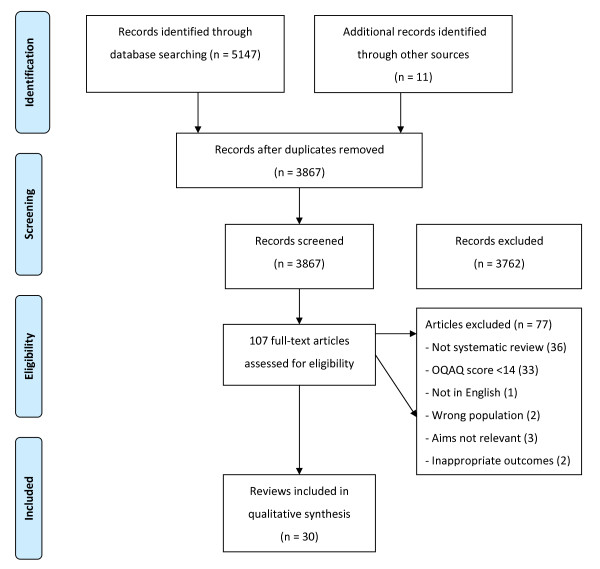
BACKGROUND: To develop more efficient programmes for promoting dietary and/or physical activity change (in order to prevent type 2 diabetes) it is critical to ensure that the intervention components and characteristics most strongly associated with effectiveness are included. The aim of this systematic review of reviews was to identify intervention components that are associated with increased change in diet and/or physical activity in individuals at risk of type 2 diabetes. METHODS: MEDLINE, EMBASE, CINAHL, PsycInfo, and the Cochrane Library were searched for systematic reviews of interventions targeting diet and/or physical activity in adults at risk of developing type 2 diabetes from 1998 to 2008. Two reviewers independently selected reviews and rated methodological quality. Individual analyses from reviews relating effectiveness to intervention components were extracted, graded for evidence quality and summarised. RESULTS: Of 3856 identified articles, 30 met the inclusion criteria and 129 analyses related intervention components to effectiveness. These included causal analyses (based on randomisation of participants to different intervention conditions) and associative analyses (e.g. meta-regression). Overall, interventions produced clinically meaningful weight loss (3-5 kg at 12 months; 2-3 kg at 36 months) and increased physical activity (30-60 mins/week of moderate activity at 12-18 months). Based on causal analyses, intervention effectiveness was increased by engaging social support, targeting both diet and physical activity, and using well-defined/established behaviour change techniques. Increased effectiveness was also associated with increased contact frequency and using a specific cluster of "self-regulatory" behaviour change techniques (e.g. goal-setting, self-monitoring). No clear relationships were found between effectiveness and intervention setting, delivery mode, study population or delivery provider. Evidence on long-term effectiveness suggested the need for greater consideration of behaviour maintenance strategies. CONCLUSIONS: This comprehensive review of reviews identifies specific components which are associated with increased effectiveness in interventions to promote change in diet and/or physical activity. To maximise the efficiency of programmes for diabetes prevention, practitioners and commissioning organisations should consider including these components.
Overview
The claims and statistics of this paper haven’t been checked yet.
Free: it reads the open-access text and checks the first 5 claims that cite a source we can check. Create a free account to check every claim.
Integrity signals
Registry
Cites
Statistics
Figures
Verification
Claims the paper makes
The claims and statistics of this paper haven’t been checked yet.
Free: it reads the open-access text and checks the first 5 claims that cite a source we can check. Create a free account to check every claim.
Claims other papers make about this one
Each is checked against this paper’s own text: does it say what the citing paper says it does?
The cited source says what the claim attributes to it.
In the citing paper
“The addition of behavioural interventions as a third component is believed to increase the effectiveness of dietary and physical interventions (Greaves et al., 2011;Teede et al., 2018).”
From Improvements in PCOS characteristics and phenotype severity during a randomized controlled lifestyle intervention (2021) · cites this paper as Greaves et al., 2011
In the citing paper
“Several studies have shown that targeting dietary self-monitoring, providing social support, and emphasizing both dietary changes and physical activity are key components to successful face-to-face behavioral weight-loss programs [43].”
From Tweets, Apps, and Pods: Results of the 6-Month Mobile Pounds Off Digitally (Mobile POD) Randomized Weight-Loss Intervention Among Adults (2011) · cites this paper as [43]
Self-check
Percentages, sums and reported differences re-computed from the paper’s own numbers.
The self-check needs the paper’s full text.
Citations
Cites
1 retracted
Psychological interventions for overweight or obesity
Shaw, K. A., O'Rourke, P., Del Mar, C., & Kenardy, J. (2005) · Cochrane Database of Systematic Reviews · doi:10.1002/14651858.cd003818.pub2 · Cited by 442 · cited 9×
“5 kg at a median 6 months of follow up[54].”
BackgroundMethodInfluentialRetractedThe theory of planned behavior
Ajzen, I. (1991) · Organizational Behavior and Human Decision Processes · doi:10.1016/0749-5978(91)90020-t · Cited by 134,657 · cited 2×
“Social Cognitive Theory,[60] Theory of Planned Behaviour[ 61 ]) were no more effective in producing changes in either weight or in combined dietary and physical activity outcomes than interventions with no stated theoretical basis[38].”
BackgroundMethodReduction in the incidence of type 2 diabetes with lifestyle intervention or metformin
(2002) · New England Journal of Medicine · doi:10.1056/nejmoa012512 · Cited by 19,011 · cited 5×
“Large randomised controlled trials (RCTs) have shown that relatively modest changes in lifestyle (increasing fibre (≥15 g/1000 kcal), reducing total fat (< 30% of energy consumed) and saturated fat (< 10% of energy consumed), engaging in moderate physical activity (≥30 mins/day), weight reduction (5%)) can reduce the…”
BackgroundMethodInfluentialTuomilehto, J., Lindström, J., Eriksson, J. G., Valle, T. T., Hämäläinen, H., Ilanne-Parikka, P., Keinänen-Kiukaanniemi, S., Laakso, M., Louheranta, A., Rastas, M., et al. (2001) · New England Journal of Medicine · doi:10.1056/nejm200105033441801 · Cited by 10,873 · cited 2×
“Our recommendations go considerably beyond the data on basic effectiveness presented in trials and systematic reviews of diabetes prevention programmes to date[3-8].”
Background‘Small Changes' to Diet and Physical Activity Behaviors for Weight Management
Hills, A. P., Byrne, N. M., Lindstrom, R., & Hill, J. O. (2013) · Obesity Facts · doi:10.1159/000345030 · Cited by 9,493
Motivational interviewing: preparing people for change.
Miller, W. R., & Rollnick, S. (2002) · Guilford Press eBooks · Cited by 7,915
The cochrane database of systematic reviews
Geddes, J. (1996) · Journal of Psychosomatic Research · doi:10.1016/s0022-3999(96)90063-x · Cited by 5,989
Cochrane Database of Systematic Reviews
(2008) · Encyclopedia of Public Health · doi:10.1007/978-1-4020-5614-7_436 · Cited by 4,527
Kirk, J., MacDonald, A., Lavender, P., Dean, J., & Rubin, G. (2017) · Biomedicine Hub · doi:10.1159/000480347 · Cited by 3,887
A taxonomy of behavior change techniques used in interventions
Abraham, C., & Michie, S. (2008) · Health Psychology · doi:10.1037/0278-6133.27.3.379 · Cited by 2,525
Self-citation
Research works printed but not linked: 5
- Scottish Intercollegiate Guidelines Network (SIGN) Management of Diabetes: A national clinical guideline. SIGN Publication Number 55 2001 Edinburgh: SIGN
- Dombrowski SU Sniehotta FF Avenell A Johnston M MacLennan G Araujo-Soares V Effects of specific behaviour change techniques on behaviour and weight change: A systematic review Health Psychology Review in press 20607139
- Bandura A Social foundations of thought and action: A social cognitive theory 1986 Englewood Cliffs, NJ: Prentice-Hall
- National Institute for Health and Clinical Excellence Obesity guidance on the prevention, identification, assessment and management of overweight and obesity in adults and children. London 2006 22497033
- Smith J Deno S Pronk N Reinhardt L Behavioural therapy programs for weight loss in adults: ICSI Technology Assessment Report 2005 Minnesota: Institute for Clinical Systems Improvement
Cited by
Items 401–500 of 1,000
Gillison, F., Greaves, C., Stathi, A., Ramsay, R., Bennett, P., Taylor, G., Francis, M., & Chandler, R. (2012) · British Journal of Health Psychology · doi:10.1111/j.2044-8287.2011.02040.x · Cited by 32
Self-citationThe feasibility of a Paleolithic diet for low-income consumers
Metzgar, M., Rideout, T. C., Fontes‐Villalba, M., & Kuipers, R. S. (2011) · Nutrition Research · doi:10.1016/j.nutres.2011.05.008 · Cited by 32
“Social support is one of the key factors in the effectiveness of any diet intervention [53].”
BackgroundFarrand, P., Pentecost, C., Greaves, C., Taylor, R. S., Warren, F., Green, C., Hillsdon, M., Evans, P., Welsman, J., & Taylor, A. H. (2014) · Trials · doi:10.1186/1745-6215-15-196 · Cited by 28
Self-citationLuten, K. A., Reijneveld, S. A., Dijkstra, A., & de Winter, A. F. (2015) · Health Education Research · doi:10.1093/her/cyv064 · Cited by 31
“It has been suggested that such support increases intervention effectiveness [9, 20].”
BackgroundPreventing Diabetes: Early Versus Late Preventive Interventions
Tuomilehto, J. O., & Schwarz, P. E. H. (2016) · Diabetes Care · doi:10.2337/dcs15-3000 · Cited by 35
Self-citationRealist-informed review of motivational interviewing for adolescent health behaviors.
Mutschler, C., Naccarato, E., Rouse, J., Davey, C., & McShane, K. (2018) · Systematic Reviews · doi:10.1186/s13643-018-0767-9 · Cited by 30
“Greaves and colleagues [93] conducted a systematic review of reviews in order to assess the intervention components associated with positive dietary and physical activity outcomes.”
BackgroundMoney, A., MacKenzie, A., Parchment, A., Norman, G., Harris, D., Ahmed, S., McGarrigle, L., Hawley-Hague, H., & Todd, C. J. (2025) · BMC Geriatrics · doi:10.1186/s12877-025-05768-1 · Cited by 34
“…in frailty status was not observed when the intervention was physical activity advice only (e.g. recommending recommending local physical activity options and exercise classes), this has been shown in other studies looking at factors influencing engagement with physical activity [69–71].”
Peacock, O. J., Western, M. J., Batterham, A. M., Stathi, A., Standage, M., Tapp, A., Bennett, P., & Thompson, D. (2015) · Trials · doi:10.1186/s13063-015-0892-x · Cited by 30
“feedback and self-monitoring in combination with specific goal setting are acknowledged as key constituents of successful behavioural interventions [14–16].”
BackgroundChanging Behavior Using the Reflective-Impulsive Model
Deutsch, R., & Strack, F. (2020) · Cambridge University Press eBooks · doi:10.1017/9781108677318.012 · Cited by 37
Annesi, J. J. (2020) · The Permanente Journal · doi:10.7812/tpp/19.235 · Cited by 33
Meyer-Schwickerath, C., Morawietz, C., Baumann, F. T., Huber, G., & Wiskemann, J. (2021) · Disability and Rehabilitation · doi:10.1080/09638288.2021.1938247 · Cited by 32
Nutrition‐Related Mobile Application for Daily Dietary Self‐Monitoring
Ulfa, M., Setyonugroho, W., Lestari, T. P., Widiasih, E., & Quoc, A. N. (2022) · Journal of Nutrition and Metabolism · doi:10.1155/2022/2476367 · Cited by 36
“Some researchers found that individual dietary self-monitoring has been regarded as one of the most effective techniques for maintaining body weight [11, 17, 18].”
MacPherson, M., Dineen, T. E., Cranston, K. D., & Jung, M. E. (2020) · Canadian Journal of Diabetes · doi:10.1016/j.jcjd.2020.09.011 · Cited by 32
Lifestyle Medicine for Obesity in the Era of Highly Effective Anti-Obesity Treatment
Sannidhi, D., Abeles, R., Andrew, W., Bonnet, J. P., Vitale, K., Niranjan, V., Gulati, M., Pauly, K., Moran, R., Alexander, L., et al. (2025) · Nutrients · doi:10.3390/nu17142382 · Cited by 29
Intermittent fasting: What questions should we be asking?
Liu, K., Liu, B., & Heilbronn, L. K. (2020) · Physiology & Behavior · doi:10.1016/j.physbeh.2020.112827 · Cited by 32
Associations Between Commercial App Use and Physical Activity: Cross-Sectional Study
Petersen, J. M., Kemps, E., Lewis, L. K., & Prichard, I. J. (2020) · Journal of Medical Internet Research · doi:10.2196/17152 · Cited by 33
Western, M. J., Peacock, O. J., Stathi, A., & Thompson, D. (2015) · PLoS ONE · doi:10.1371/journal.pone.0126156 · Cited by 33
“311 312 Many theoretical frameworks applaud the role of feedback, self-monitoring and goal313 setting as key constituents for successful and sustained lifestyle modifications 314 [2,3,25].”
BackgroundNyman, S. R., Hayward, C. J., Ingram, W. M., Thomas, P., Thomas, S., Vassallo, M., Raftery, J. P., Allen, H., & Barrado‐Martín, Y. (2018) · BMC Geriatrics · doi:10.1186/s12877-018-0935-8 · Cited by 32
Jeggle-Engbert, L.-M., Baker, S. R., & Schwendicke, F. (2018) · Journal of Dentistry · doi:10.1016/j.jdent.2018.12.010 · Cited by 32
Ismail, K., Stahl, D. R., Bayley, A., Twist, K., Stewart, K., Ridge, K., Britneff, E., Ashworth, M. J., de Zoysa, N., Rundle, J., et al. (2019) · Health Technology Assessment · doi:10.3310/hta23690 · Cited by 33
Gellert, P. R., Ziegelmann, J. P., Krupka, S., Knoll, N., & Schwarzer, R. (2013) · International Journal of Behavioral Medicine · doi:10.1007/s12529-013-9330-1 · Cited by 32
“[21], analyses provided mixed evidence as to whether targeting interventions at people who are more sedentary was associated with larger increases in the amount of physical activity (two analyses of medium quality: one positive, one negative), three low-quality analyses (two negative, one trend).”
BackgroundInterventions for promoting habitual exercise in people living with and beyond cancer.
Bourke, L., Homer, K., Thaha, M. A., Steed, L., Rosario, D. J., Robb, K. A., Saxton, J., & Taylor, S. J. (2012) · Cochrane Database of Systematic Reviews · doi:10.1002/14651858.cd010192 · Cited by 30
Howlett, N., Trivedi, D. P., Troop, N. A., & Chater, A. (2015) · BMJ Open · doi:10.1136/bmjopen-2015-008573 · Cited by 34
“When BCTs have been analysed, non-randomised designs have been included, older and less exhaustive taxonomies have been applied, and studies that did not measure outcomes for at least 6 months post-intervention have been included.(16) 26 Other reviews have included inactive participants as part of highly heterogeneous…”
Pascale, M., Murray, N. J., Bachmann, M. O., Barton, G., Clark, A., Howe, A. C., Greaves, C. J., & Sampson, M. (2017) · BMC Public Health · doi:10.1186/s12889-016-3929-5 · Cited by 31
Self-citationDeveloping Behavior Change Interventions
Hankonen, N. E., & Hardeman, W. (2020) · Cambridge University Press eBooks · doi:10.1017/9781108677318.021 · Cited by 38
Self-citationChanging Behavior Using the Common-Sense Model of Self-Regulation
Cameron, L. D., Fleszar‐Pavlović, S. E., & Khachikian, T. (2020) · Cambridge University Press eBooks · doi:10.1017/9781108677318.005 · Cited by 32
Gokal, K., Amos-Hirst, R. J., Moakes, C. A., Sanders, J. P., Esliger, D., Sherar, L. B., Ives, N. J., Biddle, S., Edwardson, C. L., Yates, T. E., et al. (2022) · BMC Public Health · doi:10.1186/s12889-022-13050-x · Cited by 29
“Advising the public to ‘move more’, without providing methods or strategies to help them achieve participation in physical activity is unlikely to lead to sustained health behaviour change [9].”
BackgroundSelf-citationEmilson, C., Åsenlöf, P., Pettersson, S., Bergman, S., Sandborgh, M., Martin, C., & Demmelmaier, I. (2016) · BMC Musculoskeletal Disorders · doi:10.1186/s12891-016-1173-x · Cited by 29
“, goal setting and selfmonitoring of behavior, are the most salient for influencing and maintaining health behaviors [23, 26, 27].”
BackgroundPapadaki, A., Thanasoulias, A., Pound, R., Sebire, S. J., & Jago, R. (2016) · Journal of Nutrition Education and Behavior · doi:10.1016/j.jneb.2016.08.003 · Cited by 28
“dietary and psychosocial feedback, based on set goals and established behaviour change theories, is suggested to enhance competencies, self-efficacy and motivation to change dietary behaviours.(11,28,29) Self-monitoring was perceived as the least judgemental method to review goals, as participants perceived that they…”
BackgroundKeogh, A., Matthews, J. J., & Hurley, D. A. (2018) · British Journal of Health Psychology · doi:10.1111/bjhp.12323 · Cited by 29
“…van Genugten, van Buuren, Verheijden, & van Emeplen, 2014; French, Olander, Chisholm, & McSharry, 2014; Galea, Weinman, White, & Bearne, 2013; Greaves et al., 2011; Howlett, Trivedi, Troop, & Chater, 2016; Michie, Whittington, Abraham, McAteer, & Gupta, 2009; O’Brien et al., 2015; Olander et…”
Lewis, Z. H., Swartz, M. C., Martínez, E., & Lyons, E. (2019) · JMIR Aging · doi:10.2196/12496 · Cited by 28
Wooldridge, J. S., Ranby, K. W., Roberts, S., & Huebschmann, A. G. (2019) · The Science of Diabetes Self-Management and Care · doi:10.1177/0145721719881722 · Cited by 32
Alonso, W., Kupzyk, K. A., NORMAN, J. F., Bills, S. E., Bosak, K., Dunn, S. L., Deka, P., & Pozehl, B. (2021) · Annals of Behavioral Medicine · doi:10.1093/abm/kaab002 · Cited by 27
“Social support has been shown to increase the efficacy of exercise interventions across chronic illness populations [29].”
BackgroundMethodHealthy eating strategies for socioeconomically disadvantaged populations: a meta-ethnography
Gillies, C., Super, S., Molder, H. T., de Graaf, C., & Wagemakers, A. (2021) · International Journal of Qualitative Studies on Health and Well-Being · doi:10.1080/17482631.2021.1942416 · Cited by 32
“…as being important for HE strategies in the general population, including identifying the needs of individuals, engaging social support, and using participatory models for planning and implementation (Greaves et al., 2011; Horodyska, Luszczynska, Van Den Berg, et al., 2015; Sahay et al., 2006).”
MethodA scoping review of interventions to improve strength training participation
Ma, J. K., Leese, J., Therrien, S., Hoens, A. M., Tsui, K., & LI, L. C. (2022) · PLoS ONE · doi:10.1371/journal.pone.0263218 · Cited by 30
“behaviour, self-monitoring of behaviour, social support [practical], instructions on how to perform a behaviour, behavioural practice/rehearsal, graded tasks) [31, 32, 81].”
BackgroundAlley, S., Schöeppe, S., To, Q. G., Parkinson, L., van Uffelen, J. G. Z., Hunt, S., Duncan, M. J., Schneiders, A. G., & Vandelanotte, C. (2023) · International Journal of Behavioral Nutrition and Physical Activity · doi:10.1186/s12966-023-01406-4 · Cited by 32
“The advice was informed by the theory of planned behaviour [22] and the social cognitive theory [23] and includes evidence-based behaviour change techniques such as self-monitoring, goal setting, action planning, habit formation and relapse prevention [24, 25].”
MethodWunsch, K., Fiedler, J., Hubenschmid, S., Reiterer, H., Renner, B., & Wöll, A. (2024) · JMIR mhealth and uhealth · doi:10.2196/51201 · Cited by 31
Moss, E. L., Tobin, L. N., Campbell, T. S., & von Ranson, K. M. (2017) · Trials · doi:10.1186/s13063-017-2094-1 · Cited by 31
“dietary improvements and increases in levels of physical activity [10].”
BackgroundBoekhout, J. M., Berendsen, B., Peels, D. A., Bolman, C. A. W., & Lechner, L. (2018) · International Journal of Environmental Research and Public Health · doi:10.3390/ijerph15020346 · Cited by 32
“The decrease in PA in the within groups analyses between three months and six months in this study is in line with other interventions aimed at PA, where generally effectiveness on the longer term decreases [62].”
ResultSarfati, D., McLeod, M., Stanley, J., Signal, V., Stairmand, J., Krebs, J. D., Dowell, A. C., Leung, W. C. Y., Davies, C., & Grainger, R. (2018) · Trials · doi:10.1186/s13063-018-2528-4 · Cited by 29
“We will focus on weight in kilograms as this is the most common outcome in systematic [31, 32] and Cochrane reviews, [33, 34] but for completeness we will also report differences in units of Body Mass Index (BMI).”
BackgroundLeirós‐Rodríguez, R., Soto-Rodríguez, A., Pérez-Ribao, I., & Soidán, J. L. G. (2018) · Rehabilitation Research and Practice · doi:10.1155/2018/5230971 · Cited by 35
How Users Experience and Use an eHealth Intervention Based on Self-Regulation: Mixed-Methods Study
Poppe, L., der Mispel, C. V., Crombez, G., Bourdeaudhuij, I. D., Schroé, H., & Verloigne, M. (2018) · Journal of Medical Internet Research · doi:10.2196/10412 · Cited by 30
Hansen, S., Huttunen‐Lenz, M., Sluik, D., Brand-Miller, J. C., Drummen, M., Fogelholm, M., Handjieva‐Darlenska, T., Macdonald, I. A., Martínez, J. A., Larsen, T. M., et al. (2018) · International Journal of Behavioral Medicine · doi:10.1007/s12529-018-9744-x · Cited by 34
“Dietary and physical activity interventions mobilizing social support have resulted in more weight loss than interventions without a social support component [34].”
Backgroundvan Beurden, S. B., Smith, J. R., Lawrence, N., Abraham, C., & Greaves, C. J. (2019) · JMIR Formative Research · doi:10.2196/11586 · Cited by 28
Self-citationDesign, Implementation, and Evaluation of Behavior Change Interventions: A Ten-Task Guide
Abraham, C., & Denford, S. (2020) · Cambridge University Press eBooks · doi:10.1017/9781108677318.019 · Cited by 36
Self-citationPeacock, O. J., Western, M. J., Batterham, A. M., Chowdhury, E. A., Stathi, A., Standage, M., Tapp, A., Bennett, P., & Thompson, D. (2020) · International Journal of Behavioral Nutrition and Physical Activity · doi:10.1186/s12966-020-00998-5 · Cited by 32
“Technology-assisted approaches can support more sophisticated, flexible and personalised delivery models [4–6] and can integrate key behavioural strategies associated with greater intervention effectiveness for modifying physical activity, including self-monitoring and feedback on behaviour [7, 8].”
BackgroundBean, C. N., Dineen, T. E., & Jung, M. E. (2020) · Canadian Journal of Diabetes · doi:10.1016/j.jcjd.2020.09.001 · Cited by 28
Sazlina, S.-G., Browning, C. J., & Yasin, S. (2013) · Frontiers in Public Health · doi:10.3389/fpubh.2013.00071 · Cited by 30
Celis-Morales, C., Livingstone, K. M., Petermann-Rocha, F., Navas-Carretero, S., San-Cristobal, R., O'Donovan, C. B., Moschonis, G., Manios, Y., Traczyk, I., Drevon, C. A., et al. (2019) · American Journal of Preventive Medicine · doi:10.1016/j.amepre.2019.03.024 · Cited by 26
Calvert, H. G., Lane, H., Bejarano, C. M., Snow, K., Hoppe, K., Alfonsin, N., Turner, L. R., & Carlson, J. (2018) · Translational Behavioral Medicine · doi:10.1093/tbm/iby134 · Cited by 29
“Since goal setting and monitoring in particular have been among the most consistently effective tools in behavior change interventions [40, 41], future CBPA efforts should aim to better incorporate and test these tools.”
BackgroundGrey, E., Thompson, D., & Gillison, F. (2019) · International Journal of Behavioral Medicine · doi:10.1007/s12529-019-09821-3 · Cited by 27
“In terms of minutes spent active, the intervention produced a similar relative increase to that found in a systematic review of reviews, which included interventions targeting physical activity and/or diet, delivered face-to-face by trained providers (increase of 30–60 min per week; [21]).”
ResultCarbonneau, É., Lamarche, B., Robitaille, J., Provencher, V., Desroches, S., Vohl, M., Bégin, C., Bélanger, M. F., Couillard, C., Pelletier, L. G., et al. (2019) · Nutrients · doi:10.3390/nu11123030 · Cited by 35
“Social support, has also been investigated in weight loss situations [16], and has been found to contribute to effective weight loss interventions [17].”
BackgroundElliot, D. L., Lindemulder, S., Goldberg, L., Stadler, D. D., & Smith, J. L. (2012) · Pediatric Blood & Cancer · doi:10.1002/pbc.24372 · Cited by 29
“In addition, pressure to lose weight may lead to smoking and disordered eating habits [67], and a link between smoking and disordered eating habits has been observed among teen survivors [68].”
BackgroundValve, P., Lehtinen‐Jacks, S., Eriksson, T., Lehtinen, M., Lindfors, P. L., Saha, M., Rimpelä, A., & Anglé, S. (2013) · BMC Public Health · doi:10.1186/1471-2458-13-1044 · Cited by 29
“The effectiveness of lifestyle interventions in helping people to achieve dietary change or weight loss seems to depend on the intensity of the intervention [20].”
BackgroundMethodResultInfluentialPlaete, J., Bourdeaudhuij, I. D., Verloigne, M., Oenema, A., & Crombez, G. (2015) · JMIR Research Protocols · doi:10.2196/resprot.4835 · Cited by 31
The systematic identification of content and delivery style of an exercise intervention
Beck, F., Gillison, F., Koseva, M. D., Standage, M., Brodrick, J. L., Graham, C. S., & Young, H. (2015) · Psychology and Health · doi:10.1080/08870446.2015.1132718 · Cited by 29
“While such professional discretion may be appropriate to some degree given support for the tailoring of interventions (Greaves et al., 2011), the advisors in the present study were not trained in behaviour change theory and practice so would be unlikely to tailor according to theoretical constructs (e.”
BackgroundMoore, S. E., McMullan, M., McEvoy, C. T., McKinley, M. C., & Woodside, J. V. (2018) · Public Health Nutrition · doi:10.1017/s1368980018003294 · Cited by 27
“been associated with improved dietary behaviour in other systematic reviews((77)) and may be useful to incorporate into future PSI to successfully facilitate dietary behaviour”
Linke, S., DUNSIGER, S. I., Gans, K. M., Hartman, S. J., Pekmezi, D., Larsen, B. A., Mendoza-Vasconez, A. S., & Marcus, B. H. (2019) · Journal of Medical Internet Research · doi:10.2196/13063 · Cited by 27
“Interventions designed to promote PA have had mixed success, and even those that have resulted in overall increases in PA have shown a range of adherence to behavior change among individuals [3].”
Perceived Barriers and Potential Solutions to Engagement in the National Diabetes Prevention Program
Ritchie, N. D., Phimphasone‐Brady, P., Sauder, K. A., & Amura, C. R. (2021) · ADCES in Practice · doi:10.1177/2633559x20966275 · Cited by 29
Manini, T. M., LaMonte, M. J., Seguin‐Fowler, R. A., Manson, J. E., Hingle, M. D., García, L., Stefanick, M. L., Rodríguez, B. L., Sims, S. T., Song, Y., et al. (2013) · Obesity · doi:10.1002/oby.20620 · Cited by 26
“Physical activity habits have long been noted as important contributors to reduced risk of diabetes (34).”
BackgroundPoppe, L., Plaete, J., Huys, N., Verloigne, M., Deveugele, M., Bourdeaudhuij, I. D., & Crombez, G. (2018) · International Journal of Environmental Research and Public Health · doi:10.3390/ijerph15071475 · Cited by 26
“Thus, GPs may increase the effects of eHealth interventions by providing support and discussing the computer-tailored advice of patients [16,19,20].”
BackgroundDyadic Behavior Change Interventions
Scholz, U., Berli, C., Lüscher, J., & Knoll, N. (2020) · Cambridge University Press eBooks · doi:10.1017/9781108677318.043 · Cited by 29
Simpson, S. A., Matthews, L., Pugmire, J., McConnachie, A., McIntosh, E., Coulman, E., Hughes, K., Kelson, M. J., Morgan‐Trimmer, S., Murphy, S., et al. (2020) · Pilot and Feasibility Studies · doi:10.1186/s40814-020-00656-4 · Cited by 30
“This is despite existing evidence indicating the positive role of family and friends in promoting effective behaviour change rather than anonymous online contacts [6, 7].”
BackgroundTime-Restricted Feeding Studies and Possible Human Benefit
Boyd, P., O’Connor, S. G., Heckman‐Stoddard, B. M., & Sauter, E. R. (2022) · JNCI Cancer Spectrum · doi:10.1093/jncics/pkac032 · Cited by 27
Maintenance of lifestyle changes: 3-Year results of the Groningen Overweight and Lifestyle study
Driehuis, F., Barte, J. C. M., ter Bogt, N. C. W., Beltman, F. W., Smit, A. J., van der Meer, K., & Bemelmans, W. J. E. (2012) · Patient Education and Counseling · doi:10.1016/j.pec.2012.03.017 · Cited by 33
“The authors attributed the relapses to reduced contact intensity, which was also indicated in other studies showing that a higher amount and frequency of personal contacts and prolonged duration of interventions results in improved maintenance of dietary changes [15,42].”
BackgroundResultDevelopment of a diabetes prevention program for Surinamese South Asians in the Netherlands
Nicolaou, M., Vlaar, E. M., van Valkengoed, I. G. M., Middelkoop, B. J., Stronks, K., & Nierkens, V. (2013) · Health Promotion International · doi:10.1093/heapro/dat018 · Cited by 30
“It was originally developed to treat substance abuse but has been shown to be effective in weight loss, modifying health behaviors and diabetes management (Campbell et al., 1994; Greaves et al., 2008, 2011; Armstrong et al., 2011).”
BackgroundElison, S., Jones, A., Ward, J., Davies, G., & Dugdale, S. (2017) · Addictive Behaviors · doi:10.1016/j.addbeh.2017.05.028 · Cited by 25
“, 2015), dietary behaviours (Annesi & Mareno, 2014), physical activity (Greaves et al., 2011) and smoking (Umaru et al.”
BackgroundSupport needs of patients with obesity in primary care: a practice-list survey
Evans, E. H., Sainsbury, K., Kwaśnicka, D., Bolster, A., Araújo‐Soares, V., & Sniehotta, F. F. (2018) · BMC Family Practice · doi:10.1186/s12875-017-0703-4 · Cited by 30
“programme [32], using Orlistat [33], and goal setting and self-monitoring [34, 35] were used less frequently.”
MethodRandomized trial of planning tools to reduce unhealthy snacking: Implications for health literacy
Ayre, J., Bonner, C., Cvejic, E., & McCaffery, K. J. (2019) · PLoS ONE · doi:10.1371/journal.pone.0209863 · Cited by 27
Rothman, A. J., Klein, W. M. P., & Sheeran, P. (2020) · Cambridge University Press eBooks · doi:10.1017/9781108677318.020 · Cited by 30
The influence of success experience on self-efficacy when providing feedback through technology
Achterkamp, R., Hermens, H. J., & Vollenbroek-Hutten, M. M. R. (2015) · Computers in Human Behavior · doi:10.1016/j.chb.2015.06.029 · Cited by 32
Individualising Chronic Care Management by Analysing Patients’ Needs – A Mixed Method Approach
Timpel, P., Lang, C., Wens, J., Contel, J., Gilis‐Januszewska, A., Kemple, K., & Schwarz, P. (2017) · International Journal of Integrated Care · doi:10.5334/ijic.3067 · Cited by 28
“This is also true for behaviour change [63].”
BackgroundSelf-citationTimlin, D., Giannantoni, B., McCormack, J. M., Polito, A., Ciarapica, D., Azzini, E., Giles, M., & Simpson, E. E. A. (2021) · BMC Public Health · doi:10.1186/s12889-021-10307-9 · Cited by 31
Overwijk, A., Hilgenkamp, T. I. M., van der Schans, C. P., van der Putten, A. A. J., & Waninge, A. (2021) · Journal of Policy and Practice in Intellectual Disabilities · doi:10.1111/jppi.12383 · Cited by 24
“Behavior change techniques (BCTs) can facilitate improving lifestyles in the general population (Bird et al., 2013; Greaves et al., 2011; Michie et al., 2005) and can also be suitable for adults with mild ID to do so (Willems, Waninge, De Jong, Hilgenkamp, & Van der Schans, 2019).”
BackgroundCross, R., Greaves, C. J., Withall, J., Rejeski, W. J., & Stathi, A. (2022) · BMC Public Health · doi:10.1186/s12889-022-13496-z · Cited by 27
Self-citationHeuel, L., Otto, A.-K., & Wollesen, B. (2023) · German Journal of Exercise and Sport Research · doi:10.1007/s12662-023-00922-6 · Cited by 28
“This is linked to the finding that increased intervention effectiveness is associated with higher intervention duration (Greaves et al., 2011).”
Plow, M., Moore, S. M., Husni, M. E., & Kirwan, J. P. (2014) · Obesity Reviews · doi:10.1111/obr.12223 · Cited by 29
“A systematic review of weight loss interventions in the general population indicates that a greater number of contacts are associated with better outcomes, but the identification of an optimal, cost-effective number of contacts remains elusive (91).”
BackgroundCrank, H., Carter, A., Humphreys, L. J., Snowdon, N., Daley, A., Woodroofe, M. N., Sharrack, B., Petty, J., & Saxton, J. (2017) · Archives of Physical Medicine and Rehabilitation · doi:10.1016/j.apmr.2017.05.022 · Cited by 24
Westland, H., Koop, Y., Schröder, C. D., Schuurmans, M. J., Slabbers, P., Trappenburg, J. C. A., & Vervoort, S. C. J. M. (2018) · BMC Family Practice · doi:10.1186/s12875-018-0888-1 · Cited by 28
Coaction Between Physical Activity and Fruit and Vegetable Intake in Racially Diverse, Obese Adults
Heredia, N. I., Fernández, M. E., van den Berg, A. E., Durand, C. P., Kohl, H. W., Reininger, B. M., Hwang, K. O., & McNeill, L. H. (2019) · American Journal of Health Promotion · doi:10.1177/0890117119884479 · Cited by 26
Duarte, C., Gilbert, P., Stalker, C., Catarino, F., Basran, J. K., Scott, S., Horgan, G. W., & Stubbs, R. J. (2019) · Journal of Health Psychology · doi:10.1177/1359105319890019 · Cited by 28
“Social support is also provided to members via: group discussion to enable members to learn new strategies to support their weight loss efforts, GL support in motivation and self-efficacy for exercise and improved dietary choice, and online and social media forums (Greaves et al., 2011).”
Backgroundvan Beurden, S. B., Simmons, S. I., Tang, J. C. H., Mewse, A. J., Abraham, C., & Greaves, C. J. (2018) · BMC Obesity · doi:10.1186/s40608-018-0184-6 · Cited by 26
“Technological advances have enabled the delivery of behaviour change techniques that map on to theoretically derived behavioural determinants, which were previously limited to face-to-face delivery such as prompting goal setting, instructing progress monitoring, and providing timely goal-related feedback [20] and are…”
BackgroundSelf-citationYoshida, F., Miyagi, Y., Kishimoto, J., Morioka, T., Murakami, N., Hashiguchi, K., Samura, K., Sakae, N., Yamasaki, R., Kawaguchi, M., et al. (2009) · Stereotactic and Functional Neurosurgery · doi:10.1159/000195719 · Cited by 23
Jansen, S. C., Haveman‐Nies, A., Duijzer, G., ter Beek, J., Hiddink, G. J., & Feskens, E. J. M. (2013) · BMC Public Health · doi:10.1186/1471-2458-13-457 · Cited by 25
Duijzer, G., Haveman‐Nies, A., Jansen, S. C., ter Beek, J., Hiddink, G. J., & Feskens, E. J. M. (2014) · BMC Public Health · doi:10.1186/1471-2458-14-602 · Cited by 27
“Therefore, studies need to include a process evaluation to establish the validity of the hypothesised causal processes for behaviour change and taxonomies can be used to describe behaviour change techniques used to modify these processes [13].”
BackgroundDegroote, L., Plaete, J., Bourdeaudhuij, I. D., Verloigne, M., Stappen, V. V., Meester, A. D., Poppe, L., der Mispel, C. V., & Crombez, G. (2018) · International Journal of Environmental Research and Public Health · doi:10.3390/ijerph15020228 · Cited by 25
“This can be achieved by adopting self-regulation techniques such as goal setting and self-monitoring [11,12].”
BackgroundEvaluation of a Blended Physical Activity Intervention for Older Adults: Mixed Methods Study
Mehra, S., van den Helder, J., Visser, B., Engelbert, R., Weijs, P. J. M., & Kröse, B. (2020) · Journal of Medical Internet Research · doi:10.2196/16380 · Cited by 24
Imagery, Visualization, and Mental Simulation Interventions
Hagger, M. S., & Conroy, D. (2020) · Cambridge University Press eBooks · doi:10.1017/9781108677318.033 · Cited by 25
Stead, M., Craigie, A. M., Macleod, M., McKell, J., Caswell, S., Steele, R. J., & Anderson, A. S. (2015) · International Journal of Behavioral Nutrition and Physical Activity · doi:10.1186/s12966-015-0240-2 · Cited by 31
“BeWEL used intervention techniques which are associated with greater effectiveness, such as goal-setting, self-monitoring, and providing feedback [35].”
BackgroundMethodChanging Behavior Using Social Identity Processes
Reynolds, K. J., Branscombe, N. R., Subašić, E., & Willis, L. (2020) · Cambridge University Press eBooks · doi:10.1017/9781108677318.016 · Cited by 24
Nathan, N., Murawski, B., Hope, K. G., Young, S., Sutherland, R., Hodder, R. K., Booth, D., Toomey, E. C., Yoong, S. L., Reilly, K., et al. (2020) · International Journal of Environmental Research and Public Health · doi:10.3390/ijerph17144998 · Cited by 23
“, follow-up long enough for outcomes to occur) was amended from 6 months to 3 months, as this was deemed sufficient for changes in diet or PA to occur [32,33].”
BackgroundEngagement Features in Physical Activity Smartphone Apps: Focus Group Study With Sedentary People
D’Αddario, M., Baretta, D., Zanatta, F., Greco, A., & Steca, P. (2020) · JMIR mhealth and uhealth · doi:10.2196/20460 · Cited by 26
“Furthermore, they deserve to be considered as the core component of physical activity apps, as they have already been expected to increase engagement [17,18], be appreciated by users [37], and be associated with physical activity intervention effectiveness [5,38].”
BackgroundFritz, M. K., & Fromell, H. (2021) · Health Policy and Planning · doi:10.1093/heapol/czab138 · Cited by 25
“The finding is also in line with the results from earlier meta-analyses and studies assessing the impact of interventions intended to address nutrition and physical activity (Anderson et al., 2009; Greaves et al., 2011).”
Learning in a Virtual Environment to Improve Type 2 Diabetes Outcomes: Randomized Controlled Trial
Johnson, C., Melkus, G. D., Reagan, L., Pan, W., Amarasekara, S., Pereira, K. C., Hassell, N., Nowlin, S. Y., & Vorderstrasse, A. A. (2023) · JMIR Formative Research · doi:10.2196/40359 · Cited by 24
“Diabetes self-management interventions have shown improvements in diabetes knowledge, self-management behaviors, and glycemic targets; however, the interventions and their effects have been relatively short-lived [7,8].”
BackgroundAlley, S., Jennings, C. A., Plotnikoff, R. C., & Vandelanotte, C. (2014) · BMC Public Health · doi:10.1186/1471-2458-14-738 · Cited by 26
“Reviews have shown that successful web-based physical activity interventions have included personalised advice through coaching or computer-tailoring, numerous participant contacts, social support elements, and theoretically-based behaviour change techniques [13,16,17].”
BackgroundWeymann, N., Härter, M. C., Petrak, & Dirmaier, J. (2013) · Patient Preference and Adherence · doi:10.2147/ppa.s46924 · Cited by 24
Holland, B. J. V., de Boer, M. R., Brouwer, S., Soer, R., & Reneman, M. F. (2012) · BMC Public Health · doi:10.1186/1471-2458-12-1003 · Cited by 22
Psychosocial predictors of weight loss by race and sex
Jerome, G. J., Myers, V. H., Young, D. R., Matthews‐Ewald, M. R., Coughlin, J. W., Wingo, B. C., Ard, J. D., Champagne, C. M., Funk, K., Stevens, V. J., et al. (2015) · Clinical Obesity · doi:10.1111/cob.12120 · Cited by 22
“There is both theoretical support and clinical evidence suggesting that psychosocial variables, such as social support and selfefficacy, mediate behaviour change associated with weight management (17,18).”
BackgroundMethodBaird, J., Barker, M. E., Harvey, N. C., Lawrence, W. T., Vogel, C., Jarman, M., Begum, R., Tinati, T., Mahon, P. A., Strömmer, S., et al. (2016) · Trials · doi:10.1186/s13063-016-1603-y · Cited by 23
“Low levels of self-efficacy are a barrier to healthful eating among women from disadvantaged backgrounds [13], and many studies have demonstrated a relationship between higher levels of self-efficacy and better dietary behaviours [14].”
BackgroundHoedjes, M., de Kruif, A. J. T. C. M., Mols, F., Bours, M. J. L., Beijer, S., Winkels, R. M., Westerman, M. J., Seidell, J. C., & Kampman, E. (2017) · PLoS ONE · doi:10.1371/journal.pone.0189178 · Cited by 23
“These BCT’s have all been associated with significant intervention effects [41, 42].”
Background
Metadata
- Authors
- The IMAGE Study Group, Greaves, C. J., Sheppard, K. E., Abraham, C., Hardeman, W., Roden, M., Evans, P. H., & Schwarz, P.
- Affiliations
- University of Exeter (GB)
- University of Sussex (GB)
- University of Cambridge (GB)
- Deutsches Diabetes-Zentrum e.V. (DE)
- Technische Universität Dresden (DE)
- Corresponding author
- Greaves, Colin J
- Venue
- BMC Public Health
- Published
- 2011-02-18
- Volume
- 11
- Issue
- 1
- Pages
- 119-119
- ISSN
- 1471-2458 (ISSN-L)
- PMC
- PMC3048531
- OpenAlex
- W1986234805
- Semantic Scholar
- ae3ceecabd2574191054e1c9fad7edb78e2c791f
- Cited by
- 1,163
- References
- 82
- Citations by year
- 2026: 35 · 2025: 50 · 2024: 60 · 2023: 55 · 2022: 79 · 2021: 89 · 2020: 158 · 2019: 93 · 2018: 108 · 2017: 81 · 2016: 80 · 2015: 90 · 2014: 72 · 2013: 59 · 2012: 41
- FWCI
- 10.24
- Type
- journal article
- Language
- en
- Open access
- gold
- doi.org
- Licence
- cc-by
- creativecommons.org/licenses/by/2.0 (tdm)
- Locations
- BMC Public Health (publishedVersion, cc-by)
- PubMed Central (publishedVersion, cc-by)
- PubMed (publishedVersion)
- DOAJ (DOAJ: Directory of Open Access Journals) (submittedVersion)
- Figshare (submittedVersion, cc-by)
- Figshare (submittedVersion)
- Minerva Access (University of Melbourne) (submittedVersion, cc-by)
- Open Research Exeter (University of Exeter) (submittedVersion, cc-by)
- University of Birmingham Research Portal (University of Birmingham) (submittedVersion)
- UEA Digital Repository (University of East Anglia) (submittedVersion)
- Apollo (University of Cambridge) (submittedVersion, cc-by)
- Funders
- National Institute for Health and Care Research (PDA/02/06/031)
- European Commission
- Topics
- Social Sciences › Psychology › Applied Psychology › Behavioral Health and Interventions
- Health Sciences › Medicine › Public Health, Environmental and Occupational Health › Physical Activity and Health
- Health Sciences › Medicine › Endocrinology, Diabetes and Metabolism › Diabetes Management and Education
- Keywords
- type 2 diabetes prevention, dietary intervention, physical activity interventions, intervention components, behaviour change techniques, social support, weight loss, self-regulation, goal setting, self-monitoring, behavior maintenance, intervention effectiveness
- MeSH terms
- Diabetes Mellitus, Type 2, Diet, Health Promotion, Humans, Motivation, Exercise, Risk Reduction Behavior
About these checks
Registry, retraction, Cites and statistics results are computed, not judged, with one exception: a printed reference that no index lists is read once by a model before it counts as a citation error. Claims are extracted by a model and kept only when their quote appears verbatim in the text; each cited source is then checked, with a model’s help, for whether it says what the claim relies on. Those verdicts can be wrong — read the claim’s quote and the cited source before relying on one.
Statistics and arithmetic are recomputed, not judged.
Confidence bands are shown only for fields calibrated on our annotated test set. None is calibrated yet, so no band is shown.
What counts as a claim ›How we measure confidence ›How we check this ›
Are you an author, or do you see a problem with this page? Request a review
Data sources
Bibliographic data: Semantic Scholar, OpenAlex, Crossref.
Contains information from the Semantic Scholar Academic Graph Datasets, made available under the ODC Attribution License (ODC-BY 1.0).
Semantic Scholar’s data is described in: Kinney, R., et al. (2023). The Semantic Scholar Open Data Platform. arXiv:2301.10140.
