

Systematic review of reviews of intervention components associated with increased effectiveness in dietary and physical activity interventions
Open accessThe DOI matches its Crossref record; 79 of the 82 references it cites were found in a registry or an index.
Abstract
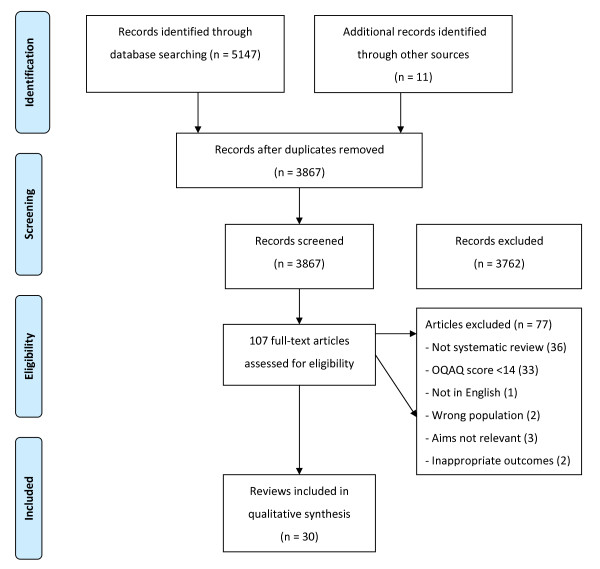
BACKGROUND: To develop more efficient programmes for promoting dietary and/or physical activity change (in order to prevent type 2 diabetes) it is critical to ensure that the intervention components and characteristics most strongly associated with effectiveness are included. The aim of this systematic review of reviews was to identify intervention components that are associated with increased change in diet and/or physical activity in individuals at risk of type 2 diabetes. METHODS: MEDLINE, EMBASE, CINAHL, PsycInfo, and the Cochrane Library were searched for systematic reviews of interventions targeting diet and/or physical activity in adults at risk of developing type 2 diabetes from 1998 to 2008. Two reviewers independently selected reviews and rated methodological quality. Individual analyses from reviews relating effectiveness to intervention components were extracted, graded for evidence quality and summarised. RESULTS: Of 3856 identified articles, 30 met the inclusion criteria and 129 analyses related intervention components to effectiveness. These included causal analyses (based on randomisation of participants to different intervention conditions) and associative analyses (e.g. meta-regression). Overall, interventions produced clinically meaningful weight loss (3-5 kg at 12 months; 2-3 kg at 36 months) and increased physical activity (30-60 mins/week of moderate activity at 12-18 months). Based on causal analyses, intervention effectiveness was increased by engaging social support, targeting both diet and physical activity, and using well-defined/established behaviour change techniques. Increased effectiveness was also associated with increased contact frequency and using a specific cluster of "self-regulatory" behaviour change techniques (e.g. goal-setting, self-monitoring). No clear relationships were found between effectiveness and intervention setting, delivery mode, study population or delivery provider. Evidence on long-term effectiveness suggested the need for greater consideration of behaviour maintenance strategies. CONCLUSIONS: This comprehensive review of reviews identifies specific components which are associated with increased effectiveness in interventions to promote change in diet and/or physical activity. To maximise the efficiency of programmes for diabetes prevention, practitioners and commissioning organisations should consider including these components.
Overview
The claims and statistics of this paper haven’t been checked yet.
Free: it reads the open-access text and checks the first 5 claims that cite a source we can check. Create a free account to check every claim.
Integrity signals
Registry
Cites
Statistics
Figures
Verification
Claims the paper makes
The claims and statistics of this paper haven’t been checked yet.
Free: it reads the open-access text and checks the first 5 claims that cite a source we can check. Create a free account to check every claim.
Claims other papers make about this one
Each is checked against this paper’s own text: does it say what the citing paper says it does?
The cited source says what the claim attributes to it.
In the citing paper
“The addition of behavioural interventions as a third component is believed to increase the effectiveness of dietary and physical interventions (Greaves et al., 2011;Teede et al., 2018).”
From Improvements in PCOS characteristics and phenotype severity during a randomized controlled lifestyle intervention (2021) · cites this paper as Greaves et al., 2011
In the citing paper
“Several studies have shown that targeting dietary self-monitoring, providing social support, and emphasizing both dietary changes and physical activity are key components to successful face-to-face behavioral weight-loss programs [43].”
From Tweets, Apps, and Pods: Results of the 6-Month Mobile Pounds Off Digitally (Mobile POD) Randomized Weight-Loss Intervention Among Adults (2011) · cites this paper as [43]
Self-check
Percentages, sums and reported differences re-computed from the paper’s own numbers.
The self-check needs the paper’s full text.
Citations
Cites
1 retracted
Psychological interventions for overweight or obesity
Shaw, K. A., O'Rourke, P., Del Mar, C., & Kenardy, J. (2005) · Cochrane Database of Systematic Reviews · doi:10.1002/14651858.cd003818.pub2 · Cited by 442 · cited 9×
“5 kg at a median 6 months of follow up[54].”
BackgroundMethodInfluentialRetractedThe theory of planned behavior
Ajzen, I. (1991) · Organizational Behavior and Human Decision Processes · doi:10.1016/0749-5978(91)90020-t · Cited by 134,657 · cited 2×
“Social Cognitive Theory,[60] Theory of Planned Behaviour[ 61 ]) were no more effective in producing changes in either weight or in combined dietary and physical activity outcomes than interventions with no stated theoretical basis[38].”
BackgroundMethodReduction in the incidence of type 2 diabetes with lifestyle intervention or metformin
(2002) · New England Journal of Medicine · doi:10.1056/nejmoa012512 · Cited by 19,011 · cited 5×
“Large randomised controlled trials (RCTs) have shown that relatively modest changes in lifestyle (increasing fibre (≥15 g/1000 kcal), reducing total fat (< 30% of energy consumed) and saturated fat (< 10% of energy consumed), engaging in moderate physical activity (≥30 mins/day), weight reduction (5%)) can reduce the…”
BackgroundMethodInfluentialTuomilehto, J., Lindström, J., Eriksson, J. G., Valle, T. T., Hämäläinen, H., Ilanne-Parikka, P., Keinänen-Kiukaanniemi, S., Laakso, M., Louheranta, A., Rastas, M., et al. (2001) · New England Journal of Medicine · doi:10.1056/nejm200105033441801 · Cited by 10,873 · cited 2×
“Our recommendations go considerably beyond the data on basic effectiveness presented in trials and systematic reviews of diabetes prevention programmes to date[3-8].”
Background‘Small Changes' to Diet and Physical Activity Behaviors for Weight Management
Hills, A. P., Byrne, N. M., Lindstrom, R., & Hill, J. O. (2013) · Obesity Facts · doi:10.1159/000345030 · Cited by 9,493
Motivational interviewing: preparing people for change.
Miller, W. R., & Rollnick, S. (2002) · Guilford Press eBooks · Cited by 7,915
The cochrane database of systematic reviews
Geddes, J. (1996) · Journal of Psychosomatic Research · doi:10.1016/s0022-3999(96)90063-x · Cited by 5,989
Cochrane Database of Systematic Reviews
(2008) · Encyclopedia of Public Health · doi:10.1007/978-1-4020-5614-7_436 · Cited by 4,527
Kirk, J., MacDonald, A., Lavender, P., Dean, J., & Rubin, G. (2017) · Biomedicine Hub · doi:10.1159/000480347 · Cited by 3,887
A taxonomy of behavior change techniques used in interventions
Abraham, C., & Michie, S. (2008) · Health Psychology · doi:10.1037/0278-6133.27.3.379 · Cited by 2,525
Self-citation
Research works printed but not linked: 5
- Scottish Intercollegiate Guidelines Network (SIGN) Management of Diabetes: A national clinical guideline. SIGN Publication Number 55 2001 Edinburgh: SIGN
- Dombrowski SU Sniehotta FF Avenell A Johnston M MacLennan G Araujo-Soares V Effects of specific behaviour change techniques on behaviour and weight change: A systematic review Health Psychology Review in press 20607139
- Bandura A Social foundations of thought and action: A social cognitive theory 1986 Englewood Cliffs, NJ: Prentice-Hall
- National Institute for Health and Clinical Excellence Obesity guidance on the prevention, identification, assessment and management of overweight and obesity in adults and children. London 2006 22497033
- Smith J Deno S Pronk N Reinhardt L Behavioural therapy programs for weight loss in adults: ICSI Technology Assessment Report 2005 Minnesota: Institute for Clinical Systems Improvement
Cited by
Items 701–800 of 1,000
Loria‐Kohen, V., Gómez‐Candela, C., Fernández-Fernández, C., Pérez-Torres, A., Puig, J. G., & Bermejo, L. M. (2011) · Clinical Nutrition · doi:10.1016/j.clnu.2011.12.002 · Cited by 13
Hollis, J., Williams, L. T., Morgan, P. J., & Collins, C. E. (2015) · Nutrition & Dietetics · doi:10.1111/1747-0080.12215 · Cited by 12
Implementation Science and Translation in Behavior Change
Łuszczyńska, A., Łobczowska, K., & Horodyska, K. (2020) · Cambridge University Press eBooks · doi:10.1017/9781108677318.023 · Cited by 13
Role of Primary Health Care in Physical Activity Promotion
Vuori, M. (2013) · German Journal of Sports Medicine · doi:10.5960/dzsm.2012.073 · Cited by 11
Dyck, D. V., D’Haese, S., Plaete, J., Bourdeaudhuij, I. D., Deforche, B. I., & Cardon, G. (2018) · Health & Social Care in the Community · doi:10.1111/hsc.12679 · Cited by 10
Supporting Self-Management of Healthy Behaviors in Chronic Kidney Disease and Hypertension
Schrauben, S. J., Park, D., Amaral, S. G., Purcell, A., Zhang, S., Kearney, M. D., Bilger, A., Feldman, H. I., & Dember, L. M. (2024) · Clinical Journal of the American Society of Nephrology · doi:10.2215/cjn.0000000000000492 · Cited by 9
Futami, K., Terada, T., & Tsukamoto, M. (2021) · Sensors · doi:10.3390/s21238016 · Cited by 11
Overwijk, A., Hilgenkamp, T. I. M., van der Schans, C. P., van der Putten, A. A. J., & Waninge, A. (2022) · Intellectual and developmental disabilities · doi:10.1352/1934-9556-60.2.163 · Cited by 13
Pellegrini, C. A., Brown, D., DeVivo, K. E., Lee, J. J., & Wilcox, S. (2022) · PM&R · doi:10.1002/pmrj.12895 · Cited by 9
Adkins, J. R., Mulé, C. M., Linder, D. E., Must, A., Cash, S. B., & Folta, S. C. (2023) · Frontiers in Pediatrics · doi:10.3389/fped.2023.1153124 · Cited by 10
Petrella, R. J., Gill, D. P., Silva, N. C. B. S., Riggin, B., Blunt, W. M., Kfrerer, M., Majoni, M., Marsh, J. D., Irwin, J. D., Stranges, S., et al. (2024) · EClinicalMedicine · doi:10.1016/j.eclinm.2024.102911 · Cited by 10
How Will the New Global Polycystic Ovary Syndrome Guideline Change Our Clinical Practice?
Jacob, S., & Balen, A. H. (2019) · Clinical Medicine Insights Reproductive Health · doi:10.1177/1179558119849605 · Cited by 11
Sommer, J., Dyczmons, J., Grobosch, S., Gontscharuk, V., Vomhof, M., Roden, M., & Icks, A. (2020) · BMJ Open · doi:10.1136/bmjopen-2020-036995 · Cited by 12
Self-citationBatool, T., Ross, V., Brijs, K., Neven, A., Smeets, C. J. P. P., Scherrenberg, M., Dendale, P., Vanrompay, Y., Janssens, D., & Wets, G. (2022) · Transportation Research Part F Traffic Psychology and Behaviour · doi:10.1016/j.trf.2022.08.005 · Cited by 9
Kelly, J. T., Reidlinger, D. P., Hoffmann, T., & Campbell, K. L. (2015) · Systematic Reviews · doi:10.1186/s13643-015-0170-8 · Cited by 9
“To improve compliance, regular contact with treating clinicians and an emphasis on self-monitoring have been suggested as central to the success of a complex dietary intervention [23, 24].”
BackgroundSalisbury, C., O’Cathain, A., Thomas, C., Edwards, L., Montgomery, A. A., Hollinghurst, S. P., Large, S., Nicholl, J. P., Pope, C. J., Rogers, A. E., et al. (2017) · Programme Grants for Applied Research · doi:10.3310/pgfar05010 · Cited by 9
“problem solving, cognitive restructuring and goal-setting.(271,272) The content and language of the original interventions were modified when appropriate to make them consistent with UK treatment guidelines and the NHS environment and to incorporate additional components written by the NHS Direct Clinical Content Team…”
BackgroundMethodPeiris, C. L., Taylor, N. F., Hull, S., Anderson, A., Belski, R., Fourlanos, S., & Shields, N. (2018) · Metabolic Syndrome and Related Disorders · doi:10.1089/met.2017.0127 · Cited by 9
Nessen, T., Opava, C. H., & Demmelmaier, I. (2018) · International Journal of Behavioral Medicine · doi:10.1007/s12529-018-9716-1 · Cited by 9
Monroe, C. M., Geraci, M., Larsen, C. A., & West, D. S. (2019) · Obesity Science & Practice · doi:10.1002/osp4.352 · Cited by 9
Strobl, H. (2019) · German Journal of Exercise and Sport Research · doi:10.1007/s12662-019-00631-z · Cited by 9
“Therefore, the results of this review support other findings that consideration of an explicitly stated theoretical basis for the promotion of PA is not mandatory (Greaves et al., 2011), if integration of well-defined and evidence-based BCTs is ensured.”
BackgroundResultde Ridder, D. T. D., Gillebaart, M., & Friese, M. (2020) · Cambridge University Press eBooks · doi:10.1017/9781108677318.040 · Cited by 11
Lappan, S. N., Carolan, M., Parra‐Cardona, J. R., & Weatherspoon, L. (2020) · The Journal of Primary Prevention · doi:10.1007/s10935-020-00612-1 · Cited by 12
Ouyang, L., Hungenberg, E., & Gray, D. P. (2018) · Journal of Global Sport Management · doi:10.1080/24704067.2018.1457971 · Cited by 10
“Such social arenas have proven to be effective in general fitness realms (Conroy, Yang, & Maher, 2014; Graeaves et al., 2016) and can be administered via fitness technologies and/ or mobile applications directly from the martial arts school or third party provider.”
BackgroundBourbeau, J., Sedeno, M., Li, P. Z., Troosters, T., Hamilton, A., De Sousa, D., Maltais, F., Erzen, D., & Lavoie, K. L. (2021) · ERJ Open Research · doi:10.1183/23120541.00533-2020 · Cited by 8
Mindful eating for overweight and obese women in Brazil: An exploratory mixed-methods pilot study.
Salvo, V., Sanudo, A., Kristeller, J., Schveitzer, M. C., Martins, P., Favarato, M. L., & Demarzo, M. (2022) · Nutrition and Health · doi:10.1177/02601060211052794 · Cited by 8
“Weight loss in programs focused on diet and exercise is limited, and according to the review by Greaves et al. (2011), is typically 3–5 kg in 12 months.”
BackgroundAminde, J. A., Burton, N. W., Thng, C., & Clanchy, K. (2024) · Preventive Medicine · doi:10.1016/j.ypmed.2024.108144 · Cited by 11
Pathophysiology, life style intervention and complications of Type-2 diabetes: A review
Basak, M., & Laskar, M. A. (2024) · Journal of Applied Pharmaceutical Research · doi:10.69857/joapr.v12i3.482 · Cited by 12
“…in the gut microbiota contributes to systemic inflammation and insulin resistance, suggesting potential therapeutic targets for modifying gut flora to improve metabolic outcomes. of initial body weight and reductions in HbA1c levels of 0.5% to 1.5% in individuals with Type 2 diabetes [24].”
BackgroundInfluentialAzupogo, F., Koyratty, N., Smith, T. J., Hinnouho, G., Tharaney, M., Bliznashka, L., Amunga, D. A., Angeles‐Agdeppa, I., Goyena, E. A., Grant, F. K. E., et al. (2025) · Food and Nutrition Bulletin · doi:10.1177/03795721251314141 · Cited by 12
“26,27 Shorter-duration interventions, particularly those employing high-intensity or innovative approaches, can yield meaningful evidence and measurable impacts.”
Design and Implementation of Behavioral Informatics Interventions
Laranjo, L., Lau, A. Y. S., & Coiera, E. W. (2017) · Health informatics · doi:10.1007/978-3-319-51732-2_2 · Cited by 8
Recommender System for Responsive Engagement of Senior Adults in Daily Activities
Kulev, I., Valk, C. A. L., Lü, Y., & Pu, P. (2020) · Journal of Population Ageing · doi:10.1007/s12062-020-09263-w · Cited by 10
Evaluation of Behavior Change Interventions
Matthews, L., & Simpson, S. A. (2020) · Cambridge University Press eBooks · doi:10.1017/9781108677318.022 · Cited by 10
Alghafri, T. S., Al-Harthi, S., Al-Farsi, Y. M., Craigie, A. M., Bannerman, E., & Anderson, A. S. (2021) · Sultan Qaboos University medical journal · doi:10.18295/squmj.2021.21.01.006 · Cited by 11
Khalil, N. M. A., Mydin, F. H. M., & Moy, F. M. (2023) · PLoS ONE · doi:10.1371/journal.pone.0292390 · Cited by 8
“Several reviews have attempted to determine the BCS in diet apps to various degrees [4, 33, 34].”
Grannell, A., Hallson, H., Gunlaugsson, B., & Jónsson, H. (2023) · Frontiers in Digital Health · doi:10.3389/fdgth.2023.1250979 · Cited by 10
Kuznetsov, L. V., Simmons, R. K., Sutton, S. R., Kinmonth, A. L., Griffin, S. J., & Hardeman, W. (2013) · International Journal of Behavioral Nutrition and Physical Activity · doi:10.1186/1479-5868-10-118 · Cited by 13
Self-citationWardian, J., True, M. W., Sauerwein, T. J., Watson, N. A., & Hoover, A. M. (2017) · Military Medicine · doi:10.1093/milmed/usx058 · Cited by 8
Gallé, F., Krakauer, J. C., Krakauer, N. Y., Valerio, G., & Liguori, G. (2019) · International Journal of Environmental Research and Public Health · doi:10.3390/ijerph16050701 · Cited by 8
Krops, L. A., Geertzen, J. H. B., Horemans, H. L. D., Bussmann, J. B. J., Dijkstra, P. U., & Dekker, R. (2020) · Disability and Rehabilitation · doi:10.1080/09638288.2020.1717650 · Cited by 9
Epton, T., & Armitage, C. J. (2020) · Cambridge University Press eBooks · doi:10.1017/9781108677318.038 · Cited by 8
Overwijk, A., van der Putten, A. A. J., van der Schans, C. P., Willems, M., Hilgenkamp, T. I. M., & Waninge, A. (2020) · Journal of Applied Research in Intellectual Disabilities · doi:10.1111/jar.12845 · Cited by 8
“A healthy lifestyle can help to prevent diseases and problems related to physical inactivity such as obesity and also the occurrence of behavioural problems or decreased mental well-being (Heller et al., 2011; Koritsas & Iacono, 2016; Warburton et al., 2006).”
BackgroundNeshteruk, C. D., Willis, E. A., Smith, F., Vaughn, A., Grummon, A. H., Vu, M. B., Ward, D. S., & Linnan, L. A. (2021) · Translational Behavioral Medicine · doi:10.1093/tbm/ibab034 · Cited by 8
“Social support has been shown to be an important driver of physical activity in adults [28], and a key behavior change strategy associated with effective diet and physical interventions [29].”
BackgroundSupporting people to implement a reduced carbohydrate diet: a qualitative study in family practice
Cupit, C., & Redman, E. (2021) · BMJ Nutrition Prevention & Health · doi:10.1136/bmjnph-2021-000240 · Cited by 9
Simmons, L. A., Phipps, J. E., Overstreet, C., Smith, P. M., Bechard, E. M., Liu, S., Walker, C. K., & Noonan, D. (2021) · Contemporary Clinical Trials · doi:10.1016/j.cct.2021.106627 · Cited by 8
“(29, 30) While the literature supports the need for high-dose interventions to achieve positive behavioral change,(81) such approaches frequently require signi cant human resources to deliver these interventions, which limits generalizability in real world settings.”
BackgroundKutob, R. M., Siwik, V. P., Aickin, M. G., & Ritenbaugh, C. (2014) · The Science of Diabetes Self-Management and Care · doi:10.1177/0145721714520722 · Cited by 9
“Social support, in general, is positively linked to general health status and successful lifestyle change.(29,30) Family support has been associated with better glycemic control in patients with diabetes.”
BackgroundLong-Term Body Weight Maintenance among StrongWomen–Healthy Hearts Program Participants
Seguin‐Fowler, R. A., Folta, S. C., Nelson, M. E., Hanson, K. L., & LaCroix, A. Z. (2017) · Journal of Environmental and Public Health · doi:10.1155/2017/4372048 · Cited by 10
Raphaelis, S., Kobleder, A., Mayer, H., & Senn, B. (2017) · BMC Nursing · doi:10.1186/s12912-017-0237-z · Cited by 11
“, [27, 37, 38]) and literature-based conceptualizations (e.”
Juicy June: a mass-participation snack-swap challenge—results from a mixed methods feasibility study
Juszczyk, D., & Gillison, F. (2018) · Pilot and Feasibility Studies · doi:10.1186/s40814-018-0310-8 · Cited by 8
Fischer, X., Donath, L., Zwygart, K., Gerber, M., Faude, O., & Zahner, L. (2019) · International Journal of Environmental Research and Public Health · doi:10.3390/ijerph16030331 · Cited by 9
England, C. Y., & Andrews, R. C. (2020) · Diabetic Medicine · doi:10.1111/dme.14217 · Cited by 9
Kim, J., Kim, J., Williams, R. D., & Han, A. (2020) · American Journal of Health Promotion · doi:10.1177/0890117120961321 · Cited by 8
Towards a balanced and active lifestyle
Achterkamp, R. (2019) · doi:10.3990/1.9789463236560 · Cited by 9
Nonalcoholic fatty liver disease risk in polycystic ovary syndrome patients
Fernández‐Alonso, A. M., Chedraui, P. A., & Pérez-López, F. R. (2024) · Gynecological Endocrinology · doi:10.1080/09513590.2024.2359031 · Cited by 8
Woodford, J., Farrand, P., Richards, D., & Llewellyn, D. J. (2013) · Systematic Reviews · doi:10.1186/2046-4053-2-9 · Cited by 7
Fedewa, A. L., Mayo, M. R., Ahn, S., & Erwin, H. E. (2020) · Journal of Applied School Psychology · doi:10.1080/15377903.2020.1858380 · Cited by 7
“Prior research has demonstrated the importance of setting goals throughout the intervention to ensure children are meeting their target heart rate zones (Greaves et al., 2011).”
BackgroundTao, X., Zhang, H., Lai, L., Cheng, J., Zhao, S., Cao, P., Xue, R., Zheng, Q., Huang, J., & He, Y. (2022) · Geriatric Nursing · doi:10.1016/j.gerinurse.2022.07.021 · Cited by 7
Alley, S., Plotnikoff, R. C., Duncan, M. J., Short, C. E., Mummery, K. W., To, Q. G., Schöeppe, S., Rebar, A. L., & Vandelanotte, C. (2022) · Journal of Health Psychology · doi:10.1177/13591053221137184 · Cited by 7
“, self-monitoring, goal setting) improves engagement and effectiveness (Greaves et al., 2011; Murray et al., 2017).”
BackgroundGrimshaw, S. L., Taylor, N. F., Conyers, R. K., & Shields, N. (2023) · Brazilian Journal of Physical Therapy · doi:10.1016/j.bjpt.2023.100577 · Cited by 9
“41 By employing these strategies, CanMOVE gave control and accountability back to children/adolescents and provided a tangible avenue to monitor improvement.”
MethodAkgül, H., Birtane, M., & Tonga, E. (2025) · Musculoskeletal Care · doi:10.1002/msc.70085 · Cited by 8
Lyons, H. E., Peel, A., Gonzalez, M. B., Deluao, J. C., Olatunji, O., Nikitaras, V., & McPherson, N. O. (2025) · Nature Reviews Urology · doi:10.1038/s41585-025-01047-1 · Cited by 9
Navas‐Carretero, S., San-Cristóbal, R., Avellaneda, A., Planes, J., Zulet, M. Á., & Martínez, J. A. (2014) · Journal of Functional Foods · doi:10.1016/j.jff.2014.12.005 · Cited by 8
Birnie, K., Thomas, L., Fleming, C., Phillips, S. M., Sterne, J. A. C., Donovan, J., & Craig, J. (2016) · BMC Research Notes · doi:10.1186/s13104-016-1901-1 · Cited by 8
“It has also been shown that dietary interventions can be enhanced: adding physical activity, particularly supervised physical activity, to dietary interventions increases weight loss by 2–3 kg [20, 23] at 1 year of follow up; adding established behaviour change techniques including motivational interviewing to weight…”
BackgroundDagger, R. M., Davies, I. G., Mackintosh, K. A., Stone, G., George, K., Fairclough, S. J., & Boddy, L. M. (2016) · Pediatric Exercise Science · doi:10.1123/pes.2015-0200 · Cited by 8
Economic and Behavioral Economic Approaches to Behavior Change
Brown, P. M., Cameron, L. D., Wilkinson, M., & Taylor, D. (2020) · Cambridge University Press eBooks · doi:10.1017/9781108677318.042 · Cited by 10
Jennings, C. A., Patterson, E., Curtis, R., Mazzacano, A., & Maher, C. A. (2021) · Nutrients · doi:10.3390/nu13114040 · Cited by 7
The association between obesity-related legislation in the United States and adolescents’ weight
Kobes, A., Kretschmer, T., & Timmerman, M. (2021) · Health Policy OPEN · doi:10.1016/j.hpopen.2021.100056 · Cited by 7
“This is somewhat surprising, as combined interventions tend to be more effective than single‐focus interventions [32,33].”
BackgroundCasanova, N., Beaulieu, K., Oustric, P., O’Connor, D., Gibbons, C., Blundell, J. E., Finlayson, G., & Hopkins, M. (2022) · British Journal Of Nutrition · doi:10.1017/s000711452200023x · Cited by 9
“to identify predictors of WL and WL maintenance, inconsistent findings are reported and potential predictors of WL often have limited explanatory value [2, 3].”
BackgroundDakin, C. A., Finlayson, G., Horgan, G. W., Palmeira, A. L., Heitmann, B. L., Larsen, S. C., Sniehotta, F. F., & Stubbs, R. J. (2023) · Appetite · doi:10.1016/j.appet.2023.106980 · Cited by 8
Withers, T. M., Greaves, C. J., Bown, M. J., & Saratzis, A. N. (2024) · Pilot and Feasibility Studies · doi:10.1186/s40814-024-01445-z · Cited by 7
“This included updating a prior review on this topic [17] as part of a commissioned “state-of-the-art” review [18].”
BackgroundMethodSelf-citationvan Vliet, M. H. M., Versluis, A., Chavannes, N. H., Scheltinga, B. L., Albers, N., Penfornis, K. M., Baccinelli, W., & Meijer, E. (2024) · Digital Health · doi:10.1177/20552076241300020 · Cited by 8
“1,7 Traditional face-to-face interventions have proven to be successful in health promotion, 7 – 9 but often face challenges like low user engagement, 10 logistic and time constraints, cost-effectiveness problems 9 and low accessibility.”
Noordman, J. (2013) · Data Archiving and Networked Services (DANS) · Cited by 8
Nyman, S. R. (2019) · Journal of Aging and Physical Activity · doi:10.1123/japa.2018-0301 · Cited by 9
Webber, M., Joubert, J., Fendt-Newlin, M., Devassy, S. M., Scaria, L., Benny, A. M., & Joubert, L. (2020) · International Journal of Environmental Research and Public Health · doi:10.3390/ijerph17228636 · Cited by 8
Collombon, E. H. G. M., Bolman, C. A. W., Peels, D. A., de Bruijn, G., de Groot, R. H. M., & Lechner, L. (2022) · JMIR Research Protocols · doi:10.2196/31677 · Cited by 8
“It has been shown that such interventions are promising in increasing PA levels, especially when they are based on solid theory and use behavior change techniques that are evidence-based [7-9].”
A six-month multicomponent intervention improves Down syndrome adolescents’ physical fitness
Pessoa, M. L. F., Bandeira, P. F. R., Silva, E. F. L., Macêdo, D. S., & Martins, C. M. L. (2022) · Science & Sports · doi:10.1016/j.scispo.2022.02.005 · Cited by 7
Planning Interventions to Change Behavior
Abraham, C., & Denford, S. (2016) · Elsevier eBooks · doi:10.1016/b978-0-12-802690-8.00002-5 · Cited by 8
Self-citationTiitinen, S., Ilomäki, S., Laitinen, J. H., Korkiakangas, E. E., Hannonen, H., & Ruusuvuori, J. (2019) · Patient Education and Counseling · doi:10.1016/j.pec.2019.08.015 · Cited by 9
“Similar inconsistencies were observable in relation to the effectiveness of social support [20,24,29-30].”
BackgroundChanging Behavior Using Integrative Self-Control Theory
Hofmann, W., Dohle, S., & Diel, K. (2020) · Cambridge University Press eBooks · doi:10.1017/9781108677318.011 · Cited by 8
Wilson, J. E., Blizzard, L., Gall, S., Magnussen, C. G., Oddy, W. H., Dwyer, T., Venn, A., & Smith, K. J. (2021) · Social Psychiatry and Psychiatric Epidemiology · doi:10.1007/s00127-021-02086-w · Cited by 8
Pellegrini, C. A., Lee, J. J., DeVivo, K. E., Harpine, C. E., Gaizo, D. J. D., & Wilcox, S. (2021) · Contemporary Clinical Trials Communications · doi:10.1016/j.conctc.2021.100810 · Cited by 8
Time-restricted eating and cancer: lessons learned and considerations for a path forward
Shams‐White, M., Goldbaum, A. A., Agurs‐Collins, T., Czajkowski, S. M., Herrick, K., Nebeling, L. C., Reedy, J., Riscuta, G., Ross, S., & Sauter, E. R. (2024) · JNCI Journal of the National Cancer Institute · doi:10.1093/jnci/djae331 · Cited by 7
Changing Behavior Using Control Theory
Mansell, W. (2020) · Cambridge University Press eBooks · doi:10.1017/9781108677318.009 · Cited by 13
Minian, N., Lingam, M., Moineddin, R., Thorpe, K. E., Veldhuizen, S., Dragonetti, R., Zawertailo, L. A., Taylor, V. H., Hahn, M., deRuiter, W. K., et al. (2022) · Journal of Medical Internet Research · doi:10.2196/37900 · Cited by 7
“Behavioral interventions by health care practitioners addressing these risk factors are potentially cost-effective [10,11].”
Ayre, E., Lee, J. J., Frie, K., Aveyard, P. N., & Albury, C. (2023) · Health Psychology and Behavioral Medicine · doi:10.1080/21642850.2023.2213751 · Cited by 7
“Systematic reviews showmixed evidence about whether BCTs affect weight loss (Hartmann-Boyce et al., 2014; Michie et al., 2009), as well as which BCTs work best at motivating weight loss behaviours (Greaves et al., 2011).”
BackgroundAshley, K., Tang, M. Y., Flynn, D., Cooper, M., Errington, L., & Avery, L. (2023) · Health Psychology Review · doi:10.1080/17437199.2023.2238811 · Cited by 6
“Intervention fi delity has been highlighted as a crucial moderator contributing to the variation in the reported e ff ectiveness of behavioural interventions targeting physical activity behaviour (Bellg et al., 2004; Greaves et al., 2011).”
BackgroundRole of pharmacists in the management of patients with obesity
Jovanović, M., Kovačević, M., & Ćulafić, M. (2024) · Arhiv za farmaciju · doi:10.5937/arhfarm74-50561 · Cited by 6
Chapman, J., Miatke, A., Dumuid, D., Migueles, J. H., Suetani, S., Korman, N., Trott, M., Byrne, J. H., Siskind, D. J., Johnston, D. J. G., et al. (2024) · Mental health and physical activity · doi:10.1016/j.mhpa.2024.100652 · Cited by 8
Mishra, S. S., Bentley‐Hewitt, K. L., Lubransky, A. C., Venn, B. J., HEDDERLEY, D. I., Dinnan, H., Martell, S., Haszard, J. J., & Monro, J. A. (2022) · Recent Progress in Nutrition · doi:10.21926/rpn.2201006 · Cited by 7
“From a public health perspective, it’s also necessary that the intervention is acceptable for people to adopt as a lifelong dietary habit [12].”
BackgroundSlater, S., Lambkin, D., Schumacher, T. L., Williams, A., & Baillie, J. M. (2022) · Journal of Primary Health Care · doi:10.1071/hc21065 · Cited by 6
Social Relationships and Promoting Physical Activity Among Older People
Whaley, D. E. (2018) · Springer eBooks · doi:10.1007/978-3-319-71291-8_16 · Cited by 7
Wen, X., Wang, Y., Shi, H., Wang, M., & Lu, P. (2020) · Western Journal of Nursing Research · doi:10.1177/0193945920905090 · Cited by 7
“To promote dietary behavior changes in CKD patients, intervention strategies based on a theoretical framework, and involving multiple behavioral change techniques have received more attention (Greaves et al., 2011; Lara et al., 2014; Michie et al., 2009).”
BackgroundConner, M. T., Williams, D. M., & Rhodes, R. E. (2020) · Cambridge University Press eBooks · doi:10.1017/9781108677318.034 · Cited by 8
Way, K. L., Terada, T., O’Neill, C. D., Vidal‐Almela, S., Keech, A., & Reed, J. L. (2021) · ACSMʼs Health & Fitness Journal · doi:10.1249/fit.0000000000000705 · Cited by 7
Identifying and managing psoriasis-associated comorbidities: the IMPACT research programme
Cordingley, L., Nelson, P. A., Davies, L. M., Ashcroft, D. M., Bundy, C., Chew-Graham, C. A., Chisholm, A., Elvidge, J., Hamilton, M., Hilton, R., et al. (2022) · Programme Grants for Applied Research · doi:10.3310/lvuq5853 · Cited by 9
Mitchell, N. S., Furniss, A., Helmkamp, L. J., & Pelt, R. E. V. (2017) · Journal of Women s Health · doi:10.1089/jwh.2016.6264 · Cited by 7
Realist-informed review of motivational interviewing for adolescent health behaviors
Mutschler, C., Naccarato, E., Rouse, J., Davey, C. J., & McShane, K. (2023) · doi:10.32920/14636187 · Cited by 6
Identifying app components that promote physical activity: a group concept mapping study
Braun, M., Carlier, S., Backere, F. D., Velde, M. V. D., Turck, F. D., Crombez, G., & Paepe, A. L. D. (2024) · PeerJ · doi:10.7717/peerj.17100 · Cited by 5
Teixeira, L. F., Monteiro, D., Matos, R. M. N., Antunes, R., & Jacinto, M. (2025) · Obesities · doi:10.3390/obesities5040068 · Cited by 6
The Transcultural Diabetes Nutrition Algorithm
Hegazi, R. A. F., Devitt, A. A., & Mechanick, J. I. (2014) · Elsevier eBooks · doi:10.1016/b978-0-12-800093-9.00022-3 · Cited by 6
Self-regulation as a Mediator of Mindfulness and Physical Activity: A Narrative Review
Boyle, A., & Mosewich, A. D. (2021) · Spectrum · doi:10.29173/spectrum125 · Cited by 5
“In line with this assertion, a 2011 review identified self-regulation skills as an important factor in health behaviour change and maintenance (Greaves et al., 2011).”
ResultPetrella, R. J., Gill, D. P., Kfrerer, M., Riggin, B., Majoni, M., Blunt, W. M., Bliss, B., Silva, N. C. B. S., Aspinall, P., Adekoya, P., et al. (2023) · Contemporary Clinical Trials · doi:10.1016/j.cct.2023.107178 · Cited by 5
Metadata
- Authors
- The IMAGE Study Group, Greaves, C. J., Sheppard, K. E., Abraham, C., Hardeman, W., Roden, M., Evans, P. H., & Schwarz, P.
- Affiliations
- University of Exeter (GB)
- University of Sussex (GB)
- University of Cambridge (GB)
- Deutsches Diabetes-Zentrum e.V. (DE)
- Technische Universität Dresden (DE)
- Corresponding author
- Greaves, Colin J
- Venue
- BMC Public Health
- Published
- 2011-02-18
- Volume
- 11
- Issue
- 1
- Pages
- 119-119
- ISSN
- 1471-2458 (ISSN-L)
- PMC
- PMC3048531
- OpenAlex
- W1986234805
- Semantic Scholar
- ae3ceecabd2574191054e1c9fad7edb78e2c791f
- Cited by
- 1,163
- References
- 82
- Citations by year
- 2026: 35 · 2025: 50 · 2024: 60 · 2023: 55 · 2022: 79 · 2021: 89 · 2020: 158 · 2019: 93 · 2018: 108 · 2017: 81 · 2016: 80 · 2015: 90 · 2014: 72 · 2013: 59 · 2012: 41
- FWCI
- 10.24
- Type
- journal article
- Language
- en
- Open access
- gold
- doi.org
- Licence
- cc-by
- creativecommons.org/licenses/by/2.0 (tdm)
- Locations
- BMC Public Health (publishedVersion, cc-by)
- PubMed Central (publishedVersion, cc-by)
- PubMed (publishedVersion)
- DOAJ (DOAJ: Directory of Open Access Journals) (submittedVersion)
- Figshare (submittedVersion, cc-by)
- Figshare (submittedVersion)
- Minerva Access (University of Melbourne) (submittedVersion, cc-by)
- Open Research Exeter (University of Exeter) (submittedVersion, cc-by)
- University of Birmingham Research Portal (University of Birmingham) (submittedVersion)
- UEA Digital Repository (University of East Anglia) (submittedVersion)
- Apollo (University of Cambridge) (submittedVersion, cc-by)
- Funders
- National Institute for Health and Care Research (PDA/02/06/031)
- European Commission
- Topics
- Social Sciences › Psychology › Applied Psychology › Behavioral Health and Interventions
- Health Sciences › Medicine › Public Health, Environmental and Occupational Health › Physical Activity and Health
- Health Sciences › Medicine › Endocrinology, Diabetes and Metabolism › Diabetes Management and Education
- Keywords
- type 2 diabetes prevention, dietary intervention, physical activity interventions, intervention components, behaviour change techniques, social support, weight loss, self-regulation, goal setting, self-monitoring, behavior maintenance, intervention effectiveness
- MeSH terms
- Diabetes Mellitus, Type 2, Diet, Health Promotion, Humans, Motivation, Exercise, Risk Reduction Behavior
About these checks
Registry, retraction, Cites and statistics results are computed, not judged, with one exception: a printed reference that no index lists is read once by a model before it counts as a citation error. Claims are extracted by a model and kept only when their quote appears verbatim in the text; each cited source is then checked, with a model’s help, for whether it says what the claim relies on. Those verdicts can be wrong — read the claim’s quote and the cited source before relying on one.
Statistics and arithmetic are recomputed, not judged.
Confidence bands are shown only for fields calibrated on our annotated test set. None is calibrated yet, so no band is shown.
What counts as a claim ›How we measure confidence ›How we check this ›
Are you an author, or do you see a problem with this page? Request a review
Data sources
Bibliographic data: Semantic Scholar, OpenAlex, Crossref.
Contains information from the Semantic Scholar Academic Graph Datasets, made available under the ODC Attribution License (ODC-BY 1.0).
Semantic Scholar’s data is described in: Kinney, R., et al. (2023). The Semantic Scholar Open Data Platform. arXiv:2301.10140.
