

Systematic review of reviews of intervention components associated with increased effectiveness in dietary and physical activity interventions
Open accessThe DOI matches its Crossref record; 79 of the 82 references it cites were found in a registry or an index.
Abstract
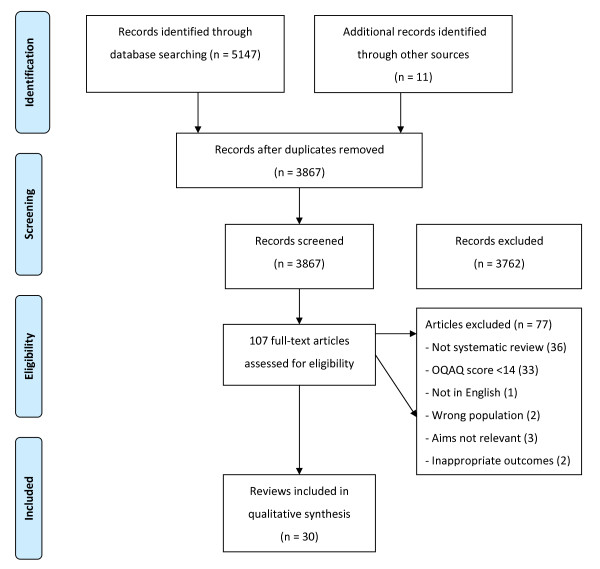
BACKGROUND: To develop more efficient programmes for promoting dietary and/or physical activity change (in order to prevent type 2 diabetes) it is critical to ensure that the intervention components and characteristics most strongly associated with effectiveness are included. The aim of this systematic review of reviews was to identify intervention components that are associated with increased change in diet and/or physical activity in individuals at risk of type 2 diabetes. METHODS: MEDLINE, EMBASE, CINAHL, PsycInfo, and the Cochrane Library were searched for systematic reviews of interventions targeting diet and/or physical activity in adults at risk of developing type 2 diabetes from 1998 to 2008. Two reviewers independently selected reviews and rated methodological quality. Individual analyses from reviews relating effectiveness to intervention components were extracted, graded for evidence quality and summarised. RESULTS: Of 3856 identified articles, 30 met the inclusion criteria and 129 analyses related intervention components to effectiveness. These included causal analyses (based on randomisation of participants to different intervention conditions) and associative analyses (e.g. meta-regression). Overall, interventions produced clinically meaningful weight loss (3-5 kg at 12 months; 2-3 kg at 36 months) and increased physical activity (30-60 mins/week of moderate activity at 12-18 months). Based on causal analyses, intervention effectiveness was increased by engaging social support, targeting both diet and physical activity, and using well-defined/established behaviour change techniques. Increased effectiveness was also associated with increased contact frequency and using a specific cluster of "self-regulatory" behaviour change techniques (e.g. goal-setting, self-monitoring). No clear relationships were found between effectiveness and intervention setting, delivery mode, study population or delivery provider. Evidence on long-term effectiveness suggested the need for greater consideration of behaviour maintenance strategies. CONCLUSIONS: This comprehensive review of reviews identifies specific components which are associated with increased effectiveness in interventions to promote change in diet and/or physical activity. To maximise the efficiency of programmes for diabetes prevention, practitioners and commissioning organisations should consider including these components.
Overview
The claims and statistics of this paper haven’t been checked yet.
Free: it reads the open-access text and checks the first 5 claims that cite a source we can check. Create a free account to check every claim.
Integrity signals
Registry
Cites
Statistics
Figures
Verification
Claims the paper makes
The claims and statistics of this paper haven’t been checked yet.
Free: it reads the open-access text and checks the first 5 claims that cite a source we can check. Create a free account to check every claim.
Claims other papers make about this one
Each is checked against this paper’s own text: does it say what the citing paper says it does?
The cited source says what the claim attributes to it.
In the citing paper
“The addition of behavioural interventions as a third component is believed to increase the effectiveness of dietary and physical interventions (Greaves et al., 2011;Teede et al., 2018).”
From Improvements in PCOS characteristics and phenotype severity during a randomized controlled lifestyle intervention (2021) · cites this paper as Greaves et al., 2011
In the citing paper
“Several studies have shown that targeting dietary self-monitoring, providing social support, and emphasizing both dietary changes and physical activity are key components to successful face-to-face behavioral weight-loss programs [43].”
From Tweets, Apps, and Pods: Results of the 6-Month Mobile Pounds Off Digitally (Mobile POD) Randomized Weight-Loss Intervention Among Adults (2011) · cites this paper as [43]
Self-check
Percentages, sums and reported differences re-computed from the paper’s own numbers.
The self-check needs the paper’s full text.
Citations
Cites
1 retracted
Psychological interventions for overweight or obesity
Shaw, K. A., O'Rourke, P., Del Mar, C., & Kenardy, J. (2005) · Cochrane Database of Systematic Reviews · doi:10.1002/14651858.cd003818.pub2 · Cited by 442 · cited 9×
“5 kg at a median 6 months of follow up[54].”
BackgroundMethodInfluentialRetractedThe theory of planned behavior
Ajzen, I. (1991) · Organizational Behavior and Human Decision Processes · doi:10.1016/0749-5978(91)90020-t · Cited by 134,657 · cited 2×
“Social Cognitive Theory,[60] Theory of Planned Behaviour[ 61 ]) were no more effective in producing changes in either weight or in combined dietary and physical activity outcomes than interventions with no stated theoretical basis[38].”
BackgroundMethodReduction in the incidence of type 2 diabetes with lifestyle intervention or metformin
(2002) · New England Journal of Medicine · doi:10.1056/nejmoa012512 · Cited by 19,011 · cited 5×
“Large randomised controlled trials (RCTs) have shown that relatively modest changes in lifestyle (increasing fibre (≥15 g/1000 kcal), reducing total fat (< 30% of energy consumed) and saturated fat (< 10% of energy consumed), engaging in moderate physical activity (≥30 mins/day), weight reduction (5%)) can reduce the…”
BackgroundMethodInfluentialTuomilehto, J., Lindström, J., Eriksson, J. G., Valle, T. T., Hämäläinen, H., Ilanne-Parikka, P., Keinänen-Kiukaanniemi, S., Laakso, M., Louheranta, A., Rastas, M., et al. (2001) · New England Journal of Medicine · doi:10.1056/nejm200105033441801 · Cited by 10,873 · cited 2×
“Our recommendations go considerably beyond the data on basic effectiveness presented in trials and systematic reviews of diabetes prevention programmes to date[3-8].”
Background‘Small Changes' to Diet and Physical Activity Behaviors for Weight Management
Hills, A. P., Byrne, N. M., Lindstrom, R., & Hill, J. O. (2013) · Obesity Facts · doi:10.1159/000345030 · Cited by 9,493
Motivational interviewing: preparing people for change.
Miller, W. R., & Rollnick, S. (2002) · Guilford Press eBooks · Cited by 7,915
The cochrane database of systematic reviews
Geddes, J. (1996) · Journal of Psychosomatic Research · doi:10.1016/s0022-3999(96)90063-x · Cited by 5,989
Cochrane Database of Systematic Reviews
(2008) · Encyclopedia of Public Health · doi:10.1007/978-1-4020-5614-7_436 · Cited by 4,527
Kirk, J., MacDonald, A., Lavender, P., Dean, J., & Rubin, G. (2017) · Biomedicine Hub · doi:10.1159/000480347 · Cited by 3,887
A taxonomy of behavior change techniques used in interventions
Abraham, C., & Michie, S. (2008) · Health Psychology · doi:10.1037/0278-6133.27.3.379 · Cited by 2,525
Self-citation
Research works printed but not linked: 5
- Scottish Intercollegiate Guidelines Network (SIGN) Management of Diabetes: A national clinical guideline. SIGN Publication Number 55 2001 Edinburgh: SIGN
- Dombrowski SU Sniehotta FF Avenell A Johnston M MacLennan G Araujo-Soares V Effects of specific behaviour change techniques on behaviour and weight change: A systematic review Health Psychology Review in press 20607139
- Bandura A Social foundations of thought and action: A social cognitive theory 1986 Englewood Cliffs, NJ: Prentice-Hall
- National Institute for Health and Clinical Excellence Obesity guidance on the prevention, identification, assessment and management of overweight and obesity in adults and children. London 2006 22497033
- Smith J Deno S Pronk N Reinhardt L Behavioural therapy programs for weight loss in adults: ICSI Technology Assessment Report 2005 Minnesota: Institute for Clinical Systems Improvement
Cited by
Items 101–200 of 1,000
Kazemi, M., McBreairty, L. E., Chizen, D. R., Pierson, R. A., Chilibeck, P. D., & Zello, G. A. (2018) · Nutrients · doi:10.3390/nu10101387 · Cited by 118
Facilitating Participation in Health-Enhancing Physical Activity: A Qualitative Study of parkrun
Stevinson, C. D., Wiltshire, G., & Hickson, M. (2014) · International Journal of Behavioral Medicine · doi:10.1007/s12529-014-9431-5 · Cited by 131
Hingle, M. D., & Patrick, H. (2016) · Journal of Nutrition Education and Behavior · doi:10.1016/j.jneb.2015.12.009 · Cited by 135
“Determine whether these elements or techniques are evident, keeping in mind that some elements and techniques are stronger predictors of behavior change than others (eg, self-monitoring, goal setting, and social support).(20) Furthermore, there may be techniques and approaches to behavior change that are effective in…”
Dance for Health: An Intergenerational Program to Increase Access to Physical Activity
Schroeder, K., Ratcliffe, S. J., Pérez, A., Earley, D., Bowman, C., & Lipman, T. H. (2017) · Journal of Pediatric Nursing · doi:10.1016/j.pedn.2017.07.004 · Cited by 126
“Dance forHealth did not lead to changes in adiposity that have been shown in other studies (Murrock & Gary, 2010; Murrock et al., 2009), though this was not surprising since this program was of low frequency, moderate intensity, and short duration (Greaves et al., 2011).”
BackgroundResultUse of Mobile Phone App Interventions to Promote Weight Loss: Meta-Analysis
Islam, M. M., Poly, T. N., Walther, B. A., & (Jack) Li, Y.-C. (2020) · JMIR mHealth and uHealth · doi:10.2196/17039 · Cited by 114
Technology-based interventions in the treatment of overweight and obesity: A systematic review
Raaijmakers, L. C. H., Pouwels, S., Berghuis, K. A., & Nienhuijs, S. W. (2015) · Appetite · doi:10.1016/j.appet.2015.07.008 · Cited by 126
Changing Behavior Using the Health Action Process Approach
Schwarzer, R., & Hamilton, K. (2020) · The Handbook of Behavior Change · doi:10.1017/9781108677318.007 · Cited by 102
Duckworth, A. L., & Gross, J. J. (2020) · Organizational Behavior and Human Decision Processes · doi:10.1016/j.obhdp.2020.09.002 · Cited by 124
“Self-monitoring has also been shown to reduce problematic drinking (Helzer, Badger, Rose, Mongeon, & Searles, 2002) and to promote physical activity (Greaves et al., 2011; Kang, Marshall, Barreira, & Lee, 2009; Turner-McGrievy et al., 2013).”
BackgroundSodium Restriction in Patients With CKD: A Randomized Controlled Trial of Self-management Support
Meuleman, Y., Hoekstra, T., Dekker, F. W., Navis, G. J., Vogt, L., van der Boog, P. J. M., Bos, W. J. W., van Montfrans, G. A., van Dijk, S., van Dijk, S., et al. (2016) · American Journal of Kidney Diseases · doi:10.1053/j.ajkd.2016.08.042 · Cited by 118
Morgan, H., Hoddinott, P., Thomson, G., Crossland, N., Farrar, S., Yi, D., Hislop, J., Moran, V. H., MacLennan, G., Dombrowski, S. U., et al. (2015) · Health Technology Assessment · doi:10.3310/hta19300 · Cited by 106
Fogelholm, M., Larsen, T., Westerterp-Plantenga, M., Macdonald, I., Martinez, J., Boyadjieva, N., Poppitt, S., Schlicht, W., Stratton, G., Sundvall, J., et al. (2017) · Nutrients · doi:10.3390/nu9060632 · Cited by 104
Jasmin, K., & Ginis, K. A. M. (2018) · Psychology of sport and exercise · doi:10.1016/j.psychsport.2018.01.006 · Cited by 116
Alley, S., Schoeppe, S., Guertler, D., Jennings, C., Duncan, M. J., & Vandelanotte, C. (2016) · BMJ Open · doi:10.1136/bmjopen-2016-011243 · Cited by 106
Sorkin, D. H., Mavandadi, S., Rook, K. S., Biegler, K. A., Kilgore, D., Dow, E., & Ngo-Metzger, Q. (2014) · Health Psychology · doi:10.1037/hea0000063 · Cited by 98
“…2013), a growing number of researchers recognize that behavior change often occurs in a context that emphasizes the importance of social support (Greaves et al., 2011), including the involvement of informal social network members (for reviews, see Hogan, Linden, & Najarian, 2002; Martire,…”
West, E., Lindberg, R., Ball, K., & McNaughton, S. A. (2020) · Nutrients · doi:10.3390/nu12082197 · Cited by 121
“Overall, these findings support the current public health research that food literacy interventions can play a small, but important role in the adoption of healthier food behaviours [70].”
BackgroundSpanos, D., Melville, C. A., & Hankey, C. R. (2013) · Nutrition Journal · doi:10.1186/1475-2891-12-132 · Cited by 95
O'Connor, S. G., Boyd, P., Bailey, C. P., Shams-White, M. M., Agurs-Collins, T., Hall, K., Reedy, J., Sauter, E. R., & Czajkowski, S. M. (2021) · Advances in Nutrition · doi:10.1093/advances/nmaa168 · Cited by 97
“Social support is associated with adherence to weightloss interventions (54), and evidence suggests that dietary behaviors and BMI can be transmissible among individuals who share a social network (55–57).”
BackgroundWyke, S., Hunt, K., Gray, C. M., Fenwick, E., Bunn, C., Donnan, P. T., Rauchhaus, P., Mutrie, N., Anderson, A. S., Boyer, N., et al. (2015) · Public Health Research · doi:10.3310/phr03020 · Cited by 99
Blake, C. E., Frongillo, E. A., Warren, A., Constantinides, S. V., Rampalli, K. K., & Bhandari, S. (2021) · Global Food Security · doi:10.1016/j.gfs.2021.100503 · Cited by 97
van Genugten, L., Dusseldorp, E., Webb, T. L., & van Empelen, P. (2016) · Journal of Medical Internet Research · doi:10.2196/jmir.4218 · Cited by 91
“For example, previous studies have shown that self-monitoring of behavioral outcomes is moderately-to-strongly related to behavior change [3,18,47-50].”
ResultAntecedents and consequences of monitoring domestic electricity consumption
Webb, T. L., Benn, Y., & Chang, B. P. I. (2014) · Journal of Environmental Psychology · doi:10.1016/j.jenvp.2014.07.001 · Cited by 89
“Although a number of reviews point to the efficacy of self-monitoring in shaping behavior change (see Bravata et al., 2007; Dombrowski et al., 2012; Greaves et al., 2011; Harkin et al., under review; Michie, et al., 2009; 2012), few studies have identified the factors that influence why people choose to monitor their…”
BackgroundTechniques for modifying impulsive processes associated with unhealthy eating: A systematic review.
van Beurden, S. B., Greaves, C. J., Smith, J. R., & Abraham, C. (2016) · Health Psychology · doi:10.1037/hea0000337 · Cited by 96
Self-citationHollis, J. L., Sutherland, R., Campbell, L., Morgan, P. J., Lubans, D. R., Nathan, N., Wolfenden, L., Okely, A. D., Davies, L., Williams, A., et al. (2016) · International Journal of Obesity · doi:10.1038/ijo.2016.107 · Cited by 89
Muellmann, S., Steenbock, B., Cocker, K. A. D., Craemer, M. D., Hayes, C. B., O'Shea, M. P., Horodyska, K., Bell, J., Łuszczyńska, A., Roos, G., et al. (2017) · BMC Public Health · doi:10.1186/s12889-017-4929-9 · Cited by 98
Database combinations to retrieve systematic reviews in overviews of reviews: a methodological study
Goossen, K., Hess, S., Lunny, C., & Pieper, D. (2020) · BMC Medical Research Methodology · doi:10.1186/s12874-020-00983-3 · Cited by 85
Flynn, A. C., Dalrymple, K., Barr, S., Poston, L., Goff, L. M., Rogozińska, E., van Poppel, M. N. M., Rayanagoudar, G., Yeo, S., Barakat Carballo, R., et al. (2016) · Nutrition Reviews · doi:10.1093/nutrit/nuw005 · Cited by 94
Streber, R., Peters, S., & Pfeifer, K. (2016) · Archives of Physical Medicine and Rehabilitation · doi:10.1016/j.apmr.2015.11.020 · Cited by 104
Action control in dyads: A randomized controlled trial to promote physical activity in everyday life
Berli, C., Stadler, G., Inauen, J., & Scholz, U. (2016) · Social Science & Medicine · doi:10.1016/j.socscimed.2016.07.003 · Cited by 94
“This improvement lies above what has previously been found as a modest effect for changes in physical activity in a review of meta-analyses (OR between 1.2 and 1.3 for achieving a healthy activity target; Greaves et al., 2011).”
ResultInfluentialCorbett, T., Singh, K., Payne, L., Bradbury, K., Foster, C., Watson, E., Richardson, A., Little, P., & Yardley, L. (2018) · Psycho-Oncology · doi:10.1002/pon.4566 · Cited by 86
Salisbury, C., Thomas, C., O'Cathain, A., Rogers, A., Pope, C., Yardley, L., Hollinghurst, S., Fahey, T., Lewis, G., Large, S., et al. (2015) · BMJ Open · doi:10.1136/bmjopen-2014-006448 · Cited by 80
Sheeran, P., Abraham, C., Jones, K., Villegas, M. E., Avishai, A., Symes, Y. R., Ellinger, H., Miles, E., Gates, K. M., Wright, C. E., et al. (2019) · Health Psychology · doi:10.1037/hea0000712 · Cited by 90
“…possible to reliably identify and categorize change techniques from intervention descriptions, and Michie et al. (2009) showed that meta-regression can identify techniques that are associated with greater effectiveness of interventions to promote physical activity (see also, Greaves et al., 2011).”
BackgroundSelf-citationMarley, J., Tully, M. A., Porter-Armstrong, A., Bunting, B., O’Hanlon, J., Atkins, L., Howes, S., & McDonough, S. M. (2017) · BMC Musculoskeletal Disorders · doi:10.1186/s12891-017-1836-2 · Cited by 87
ICTs and development in developing countries: A systematic review of reviews
Lwoga, E. T., & Sangeda, R. Z. (2018) · The Electronic Journal of Information Systems in Developing Countries · doi:10.1002/isd2.12060 · Cited by 97
“The findings of quality, bias, and OQAQ are presented in Appendix C.”
MethodInfluentialGlasgow, R. E., Fisher, L., Strycker, L. A., Hessler, D., Toobert, D. J., King, D. K., & Jacobs, T. (2014) · Translational Behavioral Medicine · doi:10.1007/s13142-013-0232-1 · Cited by 87
“For example, adaptively designed interventions [7–10] have been used in studies of mammography adherence, in which intervention components and intensity change are linked specifically with patient and care system response [11, 12].”
MethodEffect of isolation techniques on the characteristics of pigeon pea (Cajanus cajan) protein isolates
Adenekan, M. K., Fadimu, G. J., Odunmbaku, L. A., & Oke, E. K. (2017) · Food Science & Nutrition · doi:10.1002/fsn3.539 · Cited by 95
“The protein isolate is the purest form of protein which makes a great dietary supplement, and it is beneficial for physical strength performance and weight management (Kate, 2011).”
BackgroundUpdate on Energy Homeostasis and Insufficient Sleep
Penev, P. D. (2012) · The Journal of Clinical Endocrinology & Metabolism · doi:10.1210/jc.2012-1067 · Cited by 85
Michie, S., Johnston, M., Rothman, A. J., de Bruin, M., Kelly, M. P., Carey, R., Bohlen, L. C., Groarke, H., Anderson, N., & Zink, S. (2021) · Health Services and Delivery Research · doi:10.3310/hsdr09010 · Cited by 105
Gray, C. M., Hunt, K., Mutrie, N., Anderson, A. S., Treweek, S., & Wyke, S. (2013) · International Journal of Behavioral Nutrition and Physical Activity · doi:10.1186/1479-5868-10-121 · Cited by 83
“, self monitoring of weight and physical activity, specific goal setting, implementation intentions, feedback on behaviour) [39] and promoted peer and other forms of social support [39,40].”
BackgroundTong, H. L., & Laranjo, L. (2018) · npj Digital Medicine · doi:10.1038/s41746-018-0051-3 · Cited by 100
Chen, J.-L., Guedes, C. M., Cooper, B. A., & Lung, A. E. (2017) · Interactive Journal of Medical Research · doi:10.2196/ijmr.7860 · Cited by 84
“Several strategies that promote self-monitoring and setting realistic goals have been found to improve obesity-related health behaviors (eg, physical activity, sedentary activity, and dietary intake) and prevention of obesity [13-15].”
Lugones-Sanchez, C., Recio-Rodriguez, J. I., Agudo-Conde, C., Repiso-Gento, I., G Adalia, E., Ramirez-Manent, J. I., Sanchez-Calavera, M. A., Rodriguez-Sanchez, E., Gomez-Marcos, M. A., Garcia-Ortiz, L., et al. (2022) · Journal of Medical Internet Research · doi:10.2196/30416 · Cited by 85
“Despite the heterogeneity found in these types of interventions, some systematic reviews [23,49] suggest that the combination of mHealth tools could be useful for changing lifestyles to healthier ones, but its effect on weight loss remains unclear.”
Using Mobile Applications to Increase Physical Activity: A Systematic Review
Pradal-Cano, L., Lozano-Ruiz, C., Rodríguez, J., Saigí-Rubió, F., Bach-Faig, A., Esquius, L., Medina, F. X., & Aguilar, A. (2020) · International Journal of Environmental Research and Public Health · doi:10.3390/ijerph17218238 · Cited by 94
Teasdale, S. B., Machaczek, K. K., Marx, W., Eaton, M., Chapman, J., Milton, A. C., Oyeyemi, A. L., Pelupessy, D. C., Schuch, F. B., Gatera, G., et al. (2025) · The Lancet Psychiatry · doi:10.1016/s2215-0366(25)00170-1 · Cited by 101
Moran, L. J., Tassone, E. C., Boyle, J., Brennan, L., Harrison, C. L., Hirschberg, A. L., Lim, S., Marsh, K., Misso, M. L., Redman, L., et al. (2020) · Obesity Reviews · doi:10.1111/obr.13046 · Cited by 84
The effectiveness of dietary workplace interventions: a systematic review of systematic reviews
Schliemann, D., & Woodside, J. V. (2019) · Public Health Nutrition · doi:10.1017/s1368980018003750 · Cited by 91
“behaviour change techniques increased intervention effectiveness in type 2 diabetes patients((37)).”
BackgroundWilliams, T. L., Ma, J. K., & Ginis, K. A. M. (2017) · Health Psychology Review · doi:10.1080/17437199.2017.1299027 · Cited by 87
“Our findings align with quantitative syntheses showing the importance of these types of interventions for producing significant increases in PA behavior change (e.g., Kahn et al., 2002; Greaves et al., 2011).”
Self-Directed Interventions to Promote Weight Loss: A Systematic Review of Reviews
Tang, J., Abraham, C., Greaves, C., & Yates, T. (2014) · Journal of Medical Internet Research · doi:10.2196/jmir.2857 · Cited by 78
Self-citationHale, K., Capra, S., & Bauer, J. (2015) · JMIR mHealth and uHealth · doi:10.2196/mhealth.4532 · Cited by 79
“Studies have found conventional interventions are most effective when delivered using a patient-centered approach, over long periods, with short follow-up, and regular reinforcement [2].”
Teasdale, N., Elhussein, A., Butcher, F., Piernas, C., Cowburn, G., Hartmann-Boyce, J., Saksena, R., & Scarborough, P. (2018) · The American Journal of Clinical Nutrition · doi:10.1093/ajcn/nqx048 · Cited by 79
Caird, J., Sutcliffe, K., Kwan, I., Dickson, K., & Thomas, J. (2015) · Evidence & Policy · doi:10.1332/174426514x13988609036850 · Cited by 81
Changing Behavior Using Social Cognitive Theory
Łuszczyńska, A., & Schwarzer, R. (2020) · Cambridge University Press eBooks · doi:10.1017/9781108677318.003 · Cited by 105
Penn, L., Rodrigues, A., Haste, A., Marques, M. M., Budig, K., Sainsbury, K., Bell, R., Araújo-Soares, V., White, M., Summerbell, C., et al. (2018) · BMJ Open · doi:10.1136/bmjopen-2017-019467 · Cited by 77
“However, a review of reviews found increased effectiveness of physical activity and dietary interventions in people at risk of T2D to be associated with a cluster of behaviour change techniques rather than a particular theory.(49) The HAPA model is included in the NHS DPP change theory, although it is not clear how it…”
Flynn, A. C., Seed, P. T., Patel, N., Barr, S., Bell, R., Briley, A. L., Godfrey, K. M., Nelson, S. M., Oteng‐Ntim, E., Robinson, S. M., et al. (2016) · International Journal of Behavioral Nutrition and Physical Activity · doi:10.1186/s12966-016-0450-2 · Cited by 89
“This is of some importance as it is well recognized that diet and/or physical activity changes at least in the non-pregnant population are difficult to maintain [45].”
BackgroundLifestyle Health Behaviors of Nurses and Midwives: The ‘Fit for the Future’ Study
Perry, L., Xu, X., Gallagher, R. D., Nicholls, R., Sibbritt, D. W., & Duffield, C. M. (2018) · International Journal of Environmental Research and Public Health · doi:10.3390/ijerph15050945 · Cited by 80
Gasana, J., O’Keeffe, T., Withers, T. M., & Greaves, C. J. (2023) · BMC Public Health · doi:10.1186/s12889-023-16541-7 · Cited by 85
“The effectiveness of interventions to increase physical activity has been reported in numerous studies involving a range of delivery modes, including face to face counselling, group based intervention, internet-based programmes and delivered in both primary care and the community [11, 12].”
Self-citationDiabetes prevention: global health policy and perspectives from the ground
Bergman, M., Buysschaert, M., Schwarz, P. E. H., Albright, A. L., Narayan, K. M. V., & Yach, D. (2012) · Diabetes Management · doi:10.2217/dmt.12.34 · Cited by 91
Self-citationApproaches for synthesising complex mental health interventions in meta-analysis
Caldwell, D. M., & Welton, N. J. (2016) · Evidence Based Mental Health · doi:10.1136/eb-2015-102275 · Cited by 75
“Component based systematic reviews are becoming increasingly common as analysts realise the importance of identifying and investigating heterogeneity, regardless of its inevitability [35, 36].”
Background(2020) · doi:10.1186/s12889-020-09700-7 · Cited by 77
He, J., Sun, S., Zickgraf, H. F., Ellis, J. M., & Fan, X. (2019) · Assessment · doi:10.1177/1073191119864642 · Cited by 84
“However, considering the complex causes of obesity (Wright & Aronne, 2012), interventions targeting expression of appetitive traits might be used together with other interventions (e.g., dietary and physical activity interventions; Greaves et al., 2011).”
MethodSystematic review of conservation interventions to promote voluntary behavior change
Thomas‐Walters, L., McCallum, J., Montgomery, R., Petros, C., Wan, A. K. Y., & Veríssimo, D. (2022) · Conservation Biology · doi:10.1111/cobi.14000 · Cited by 86
“The weight of evidence shows that long campaigns with frequent contact time lead to positive outcomes, such as greater weight loss or a reduction in risky sexual behaviors (Chandra-Mouli et al., 2015; Greenhow, 2011; Robin et al., 2004).”
BackgroundTong, H. L., Coiera, E., & Laranjo, L. (2018) · Journal of Medical Internet Research · doi:10.2196/11439 · Cited by 68
“For physical activity promotion, some behavior change techniques seem to be particularly relevant such as self-monitoring of behavior, goal setting, and social support [11,12].”
Mair, J. L., Hayes, L. D., Campbell, A. K., Buchan, D. S., Easton, C., & Sculthorpe, N. F. (2022) · JMIR Formative Research · doi:10.2196/34662 · Cited by 90
Effect of muscle fatigue and physical activity level in motor control of the gait of young adults
Barbieri, F. A., dos Santos, P. C. R., Vitório, R., van Dieën, J. H., & Gobbi, L. T. B. (2013) · Gait & Posture · doi:10.1016/j.gaitpost.2013.03.006 · Cited by 85
“The active group was composed of individuals who performed physical activity for more than three months for at least three times a week and at least 1 h/day and the inactive group was composed of individuals who had not performed regular physical activity in at least the last 3 months [11,12].”
BackgroundSystematic Review of Home-based Exercise Programmes for Individuals with Intermittent Claudication
Al-Jundi, W., Madbak, K., Beard, J. D., Nawaz, S., & Tew, G. A. (2013) · European Journal of Vascular and Endovascular Surgery · doi:10.1016/j.ejvs.2013.09.004 · Cited by 82
Stacey, F. G., James, E. L., Chapman, K., & Lubans, D. R. (2016) · International Journal of Behavioral Nutrition and Physical Activity · doi:10.1186/s12966-016-0372-z · Cited by 74
“There is some consistent evidence for specific behavior change constructs (eg self-regulatory behaviors) [54, 73, 74], and these specific behavior change constructs offer a promising way to develop potential future models of behavior change that should be tested in RCTs.”
BackgroundThe contributions of behaviour change science towards dental public health practice: a new paradigm
Asimakopoulou, K., & Newton, J. T. (2015) · Community Dentistry and Oral Epidemiology · doi:10.1111/cdoe.12131 · Cited by 74
Social support for physical activity—role of Facebook with and without structured intervention
Cavallo, D. N., Tate, D. F., Ward, D. S., DeVellis, R. F., Thayer, L. M., & Ammerman, A. S. (2014) · Translational Behavioral Medicine · doi:10.1007/s13142-014-0269-9 · Cited by 65
Gardner, B., Rebar, A. L., & Lally, P. J. (2020) · Cambridge University Press eBooks · doi:10.1017/9781108677318.041 · Cited by 82
Preventing Weight Gain in Women in Rural Communities: A Cluster Randomised Controlled Trial
Lombard, C., Harrison, C., Kozica, S., Zoungas, S., Ranasinha, S., & Teede, H. (2016) · PLOS Medicine · doi:10.1371/journal.pmed.1001941 · Cited by 71
“Behavioural strategies were informed by established practices [16].”
BackgroundMethodClark, R. E., McArthur, C., Παπαϊωάννου, Α., Cheung, A. M., Laprade, J., Lee, L., Jain, R., & Giangregorio, L. (2017) · Osteoporosis International · doi:10.1007/s00198-017-3975-6 · Cited by 74
Nyman, S. R., Adamczewska, N., & Howlett, N. (2018) · British Journal of Health Psychology · doi:10.1111/bjhp.12279 · Cited by 64
“…self-regulatory BCTs such as goal setting and self-monitoring to be particularly effective in increasing physical activity among the general adult population and adults at risk of developing type 2 diabetes (Greaves et al., 2011; McEwan et al., 2016; Michie et al., 2009; Williams & French, 2011).”
BackgroundBarker, H., Shaw, P. J., Richards, B., Clegg, Z., & Smith, D. M. (2021) · Sustainability · doi:10.3390/su131911099 · Cited by 85
“Self-monitoring and other self-regulatory techniques (goal-setting, prompting, selfmonitoring, providing feedback on performance, goal review) are consistently reported as effective behaviour change tools [42,43].”
BackgroundRossen, J., Yngve, A., Hagströmer, M., Brismar, K., Ainsworth, B. E., Iskull, C., Möller, P., & Johansson, U. (2015) · BMC Public Health · doi:10.1186/s12889-015-1941-9 · Cited by 82
“More evidence is also needed on maintenance strategies for long-term effectiveness [33, 44].”
BackgroundMatthews, L., Kirk, A., MacMillan, F., & Mutrie, N. (2014) · Translational Behavioral Medicine · doi:10.1007/s13142-013-0235-y · Cited by 68
Williamson, W., Kluzek, S., Roberts, N. W., Richards, J. A., Arden, N., Leeson, P., Newton, J. L., & Foster, C. E. (2015) · BMJ Open · doi:10.1136/bmjopen-2015-007642 · Cited by 76
“Four (36%) trials discussed intervention design with context to Bandura’s Social Cognitive Theory.(53) 54 Two trials reported cardiopulmonary fitness, two reported accelerometer data, six trials used self-report measures of physical activity while one trial reported both accelerometer and self-report data.”
BackgroundInfluentialvan Genugten, L., Dusseldorp, E., Massey, E. K., & van Empelen, P. (2016) · Health Psychology Review · doi:10.1080/17437199.2016.1252934 · Cited by 79
“, 2012) and changing health related behaviour (Bravata et al., 2007; de Bruin et al., 2012; Dombrowski et al., 2012; Greaves et al., 2011; Michie et al., 2009; Webb et al., 2010).”
Kunstler, B., Cook, J. L., Freene, N., Finch, C. F., Kemp, J. L., O’Halloran, P., & Gaida, J. E. (2017) · Clinical Journal of Sport Medicine · doi:10.1097/jsm.0000000000000447 · Cited by 81
Obesity and its cardiovascular effects
Ortega‐Loubon, C., Fernández‐Molina, M., Singh, G., & Correa, R. (2019) · Diabetes/Metabolism Research and Reviews · doi:10.1002/dmrr.3135 · Cited by 65
Matthews, L., Pugmire, J., Moore, L., Kelson, M. J., McConnachie, A., McIntosh, E., Morgan‐Trimmer, S., Murphy, S., Hughes, K., Coulman, E., et al. (2017) · BMJ Open · doi:10.1136/bmjopen-2017-017159 · Cited by 71
Mork, P. J., Bach, K., & SelfBACK Consortium (2018) · JMIR Research Protocols · doi:10.2196/resprot.9379 · Cited by 67
“Furthermore, empowering patients toward “self-regulatory” behavior by personal goal setting and self-monitoring increases the adherence and effectiveness of an intervention [64].”
Viester, L., Verhagen, E. A. L. M., Bongers, P. M., & van der Beek, A. J. (2017) · American Journal of Health Promotion · doi:10.1177/0890117117694450 · Cited by 80
Donnachie, C., Wyke, S., Mutrie, N., & Hunt, K. (2017) · International Journal of Behavioral Nutrition and Physical Activity · doi:10.1186/s12966-017-0505-z · Cited by 78
Munson, S. A., Krupka, E., Richardson, C., & Resnick, P. (2015) · Proceedings of the 33rd Annual ACM Conference on Human Factors in Computing Systems · doi:10.1145/2702123.2702524 · Cited by 61
Simons, D., Bourdeaudhuij, I. D., Clarys, P., Cocker, K. A. D., Vandelanotte, C., & Deforche, B. I. (2018) · JMIR mhealth and uhealth · doi:10.2196/mhealth.8287 · Cited by 76
“Multiple self-regulation techniques were selected (self-monitoring, goal-setting, feedback on behavior, review of behavior goals, instruction on how to perform the behavior) as it has been shown that these techniques are important to target the selected determinants to increase PA in interventions [63-66].”
MethodChanging Behavior Using Self-Determination Theory
Hagger, M. S., Hankonen, N. E., Chatzisarantis, N. L. D., & Ryan, R. M. (2020) · Cambridge University Press eBooks · doi:10.1017/9781108677318.008 · Cited by 87
Interventions for improving modifiable risk factor control in the secondary prevention of stroke
Lager, K. E., Mistri, A. K., Khunti, K., Haunton, V. J., Sett, A. K., & Wilson, A. (2014) · Cochrane Database of Systematic Reviews · doi:10.1002/14651858.cd009103.pub2 · Cited by 78
An umbrella review of garlic intake and risk of cardiovascular disease
Schwingshackl, L., Missbach, B., & HOFFMANN, G. E. (2015) · Phytomedicine · doi:10.1016/j.phymed.2015.10.015 · Cited by 73
“Review quality was rated using a modified version of the Overview of Quality Assessment Questionnaire (OQAQ) including a bias tool ( Oxman and Guyatt, 1991 ) (Supplemental material, Table S1) as described recently ( Greaves et al. 2011 ).”
MethodSelf-Help for Weight Loss in Overweight and Obese Adults: Systematic Review and Meta-Analysis
Hartmann-Boyce, J., Jebb, S. A., Fletcher, B. R., & Aveyard, P. (2015) · American Journal of Public Health · doi:10.2105/ajph.2014.302389 · Cited by 66
Blood Sugar Regulation for Cardiovascular Health Promotion and Disease Prevention
Schwarz, P. E. H., Timpel, P., Harst, L., Greaves, C. J., Ali, M. K., Lambert, J., Weber, M. B., Almedawar, M. M., & Morawietz, H. (2018) · Journal of the American College of Cardiology · doi:10.1016/j.jacc.2018.07.081 · Cited by 60
Self-citationMoses, R. G., Casey, S., Quinn, E. G., Cleary, J. M., Tapsell, L. C., Milosavljevic, M., Petocz, P., & Brand-Miller, J. C. (2013) · American Journal of Clinical Nutrition · doi:10.3945/ajcn.113.074138 · Cited by 78
Duijzer, G., Haveman‐Nies, A., Jansen, S. C., ter Beek, J., van Bruggen, R., Willink, M. G. J., Hiddink, G. J., & Feskens, E. J. M. (2017) · Nutrition and Diabetes · doi:10.1038/nutd.2017.21 · Cited by 73
“27 Specialist professionals are more speci-fi cally educated for, and more experienced in, delivering nutritional or physical activity advice, and this may have contributed to intervention effectiveness.”
InfluentialWillems, M., Waninge, A., Hilgenkamp, T. I. M., van Empelen, P., Krijnen, W. P., van der Schans, C. P., & Melville, C. A. (2018) · Journal of Applied Research in Intellectual Disabilities · doi:10.1111/jar.12463 · Cited by 70
Simpson, S. A., Matthews, L., Pugmire, J., McConnachie, A., McIntosh, E., Coulman, E., Hughes, K., Kelson, M. J., Morgan‐Trimmer, S., Murphy, S., et al. (2020) · Public Health Research · doi:10.3310/phr08030 · Cited by 66
Bilgin, A., & Özdemir, L. (2021) · Cancer Nursing · doi:10.1097/ncc.0000000000001014 · Cited by 70
“According to the related literature, the study results are related to the sociodemographic characteristics of the participants and the intervention contents rather than the sample size.(43,44) Considering the sociodemographic characteristics of the participants, the present meta-analysis indicated that the level of pr…”
ResultSalisbury, C., O’Cathain, A., Thomas, C., Edwards, L., Gaunt, D., Dixon, P., Hollinghurst, S., Nicholl, J., Large, S., Yardley, L., et al. (2016) · BMJ · doi:10.1136/bmj.i2647 · Cited by 64
Simpson, S. A., McNamara, R., Shaw, C., Kelson, M., Moriarty, Y., Randell, E., Cohen, D., Alam, M. F., Copeland, L., Duncan, D., et al. (2015) · Health Technology Assessment · doi:10.3310/hta19500 · Cited by 58
“This makes it difficult to draw conclusions about what works in WLM.”
BackgroundMethodInfluentialMarquardt, M. K., Oettingen, G., Gollwitzer, P. M., Sheeran, P., & Liepert, J. (2017) · Rehabilitation Psychology · doi:10.1037/rep0000104 · Cited by 51
“However, the interventions included in these reviews were highly intensive lasting an average of 30.76 weeks (Franz et al., 2007) and involving a median of ten 60-min sessions (Greaves et al., 2011).”
InfluentialFiller, A., Kowatsch, T., Haug, S., Wahle, F., Staake, T., & Fleisch, E. (2015) · 2015 Wireless Telecommunications Symposium (WTS) · doi:10.1109/wts.2015.7117255 · Cited by 63
“Finally, several platforms provide anonymous diary services for data collection purposes [e.g. 21] and thus, lack personal communication which in turn is highly valued by patients [22] and related to increased effectiveness of interventions [23].”
BackgroundCoupe, N., Peters, S., Rhodes, S., & Cotterill, S. (2019) · BMC Public Health · doi:10.1186/s12889-019-7185-3 · Cited by 65
Stathi, A., Withall, J., Thompson, J. L., Davis, M. G., Gray, S. F., de Koning, J. L., Parkhurst, G. P., Lloyd, L., Greaves, C. J., Laventure, R., et al. (2019) · The Gerontologist · doi:10.1093/geront/gnz003 · Cited by 63
“We employed the Process Model of Lifestyle Behaviour Change (PMLBC; Greaves, 2012) which was developed from a wide-ranging systematic review of evidence of components associated with success in interventions to change diet and/or PA (Greaves et al., 2011).”
MethodSelf-citation
Metadata
- Authors
- The IMAGE Study Group, Greaves, C. J., Sheppard, K. E., Abraham, C., Hardeman, W., Roden, M., Evans, P. H., & Schwarz, P.
- Affiliations
- University of Exeter (GB)
- University of Sussex (GB)
- University of Cambridge (GB)
- Deutsches Diabetes-Zentrum e.V. (DE)
- Technische Universität Dresden (DE)
- Corresponding author
- Greaves, Colin J
- Venue
- BMC Public Health
- Published
- 2011-02-18
- Volume
- 11
- Issue
- 1
- Pages
- 119-119
- ISSN
- 1471-2458 (ISSN-L)
- PMC
- PMC3048531
- OpenAlex
- W1986234805
- Semantic Scholar
- ae3ceecabd2574191054e1c9fad7edb78e2c791f
- Cited by
- 1,163
- References
- 82
- Citations by year
- 2026: 35 · 2025: 50 · 2024: 60 · 2023: 55 · 2022: 79 · 2021: 89 · 2020: 158 · 2019: 93 · 2018: 108 · 2017: 81 · 2016: 80 · 2015: 90 · 2014: 72 · 2013: 59 · 2012: 41
- FWCI
- 10.24
- Type
- journal article
- Language
- en
- Open access
- gold
- doi.org
- Licence
- cc-by
- creativecommons.org/licenses/by/2.0 (tdm)
- Locations
- BMC Public Health (publishedVersion, cc-by)
- PubMed Central (publishedVersion, cc-by)
- PubMed (publishedVersion)
- DOAJ (DOAJ: Directory of Open Access Journals) (submittedVersion)
- Figshare (submittedVersion, cc-by)
- Figshare (submittedVersion)
- Minerva Access (University of Melbourne) (submittedVersion, cc-by)
- Open Research Exeter (University of Exeter) (submittedVersion, cc-by)
- University of Birmingham Research Portal (University of Birmingham) (submittedVersion)
- UEA Digital Repository (University of East Anglia) (submittedVersion)
- Apollo (University of Cambridge) (submittedVersion, cc-by)
- Funders
- National Institute for Health and Care Research (PDA/02/06/031)
- European Commission
- Topics
- Social Sciences › Psychology › Applied Psychology › Behavioral Health and Interventions
- Health Sciences › Medicine › Public Health, Environmental and Occupational Health › Physical Activity and Health
- Health Sciences › Medicine › Endocrinology, Diabetes and Metabolism › Diabetes Management and Education
- Keywords
- type 2 diabetes prevention, dietary intervention, physical activity interventions, intervention components, behaviour change techniques, social support, weight loss, self-regulation, goal setting, self-monitoring, behavior maintenance, intervention effectiveness
- MeSH terms
- Diabetes Mellitus, Type 2, Diet, Health Promotion, Humans, Motivation, Exercise, Risk Reduction Behavior
About these checks
Registry, retraction, Cites and statistics results are computed, not judged, with one exception: a printed reference that no index lists is read once by a model before it counts as a citation error. Claims are extracted by a model and kept only when their quote appears verbatim in the text; each cited source is then checked, with a model’s help, for whether it says what the claim relies on. Those verdicts can be wrong — read the claim’s quote and the cited source before relying on one.
Statistics and arithmetic are recomputed, not judged.
Confidence bands are shown only for fields calibrated on our annotated test set. None is calibrated yet, so no band is shown.
What counts as a claim ›How we measure confidence ›How we check this ›
Are you an author, or do you see a problem with this page? Request a review
Data sources
Bibliographic data: Semantic Scholar, OpenAlex, Crossref.
Contains information from the Semantic Scholar Academic Graph Datasets, made available under the ODC Attribution License (ODC-BY 1.0).
Semantic Scholar’s data is described in: Kinney, R., et al. (2023). The Semantic Scholar Open Data Platform. arXiv:2301.10140.
