

Systematic review of reviews of intervention components associated with increased effectiveness in dietary and physical activity interventions
Open accessThe DOI matches its Crossref record; 79 of the 82 references it cites were found in a registry or an index.
Abstract
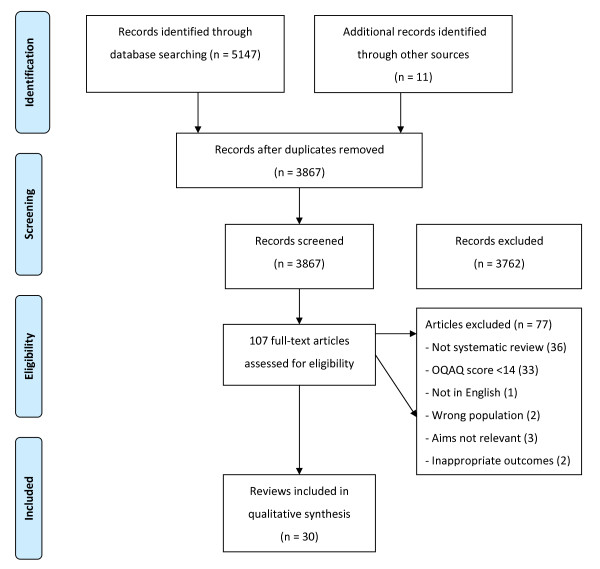
BACKGROUND: To develop more efficient programmes for promoting dietary and/or physical activity change (in order to prevent type 2 diabetes) it is critical to ensure that the intervention components and characteristics most strongly associated with effectiveness are included. The aim of this systematic review of reviews was to identify intervention components that are associated with increased change in diet and/or physical activity in individuals at risk of type 2 diabetes. METHODS: MEDLINE, EMBASE, CINAHL, PsycInfo, and the Cochrane Library were searched for systematic reviews of interventions targeting diet and/or physical activity in adults at risk of developing type 2 diabetes from 1998 to 2008. Two reviewers independently selected reviews and rated methodological quality. Individual analyses from reviews relating effectiveness to intervention components were extracted, graded for evidence quality and summarised. RESULTS: Of 3856 identified articles, 30 met the inclusion criteria and 129 analyses related intervention components to effectiveness. These included causal analyses (based on randomisation of participants to different intervention conditions) and associative analyses (e.g. meta-regression). Overall, interventions produced clinically meaningful weight loss (3-5 kg at 12 months; 2-3 kg at 36 months) and increased physical activity (30-60 mins/week of moderate activity at 12-18 months). Based on causal analyses, intervention effectiveness was increased by engaging social support, targeting both diet and physical activity, and using well-defined/established behaviour change techniques. Increased effectiveness was also associated with increased contact frequency and using a specific cluster of "self-regulatory" behaviour change techniques (e.g. goal-setting, self-monitoring). No clear relationships were found between effectiveness and intervention setting, delivery mode, study population or delivery provider. Evidence on long-term effectiveness suggested the need for greater consideration of behaviour maintenance strategies. CONCLUSIONS: This comprehensive review of reviews identifies specific components which are associated with increased effectiveness in interventions to promote change in diet and/or physical activity. To maximise the efficiency of programmes for diabetes prevention, practitioners and commissioning organisations should consider including these components.
Overview
The claims and statistics of this paper haven’t been checked yet.
Free: it reads the open-access text and checks the first 5 claims that cite a source we can check. Create a free account to check every claim.
Integrity signals
Registry
Cites
Statistics
Figures
Verification
Claims the paper makes
The claims and statistics of this paper haven’t been checked yet.
Free: it reads the open-access text and checks the first 5 claims that cite a source we can check. Create a free account to check every claim.
Claims other papers make about this one
Each is checked against this paper’s own text: does it say what the citing paper says it does?
The cited source says what the claim attributes to it.
In the citing paper
“The addition of behavioural interventions as a third component is believed to increase the effectiveness of dietary and physical interventions (Greaves et al., 2011;Teede et al., 2018).”
From Improvements in PCOS characteristics and phenotype severity during a randomized controlled lifestyle intervention (2021) · cites this paper as Greaves et al., 2011
In the citing paper
“Several studies have shown that targeting dietary self-monitoring, providing social support, and emphasizing both dietary changes and physical activity are key components to successful face-to-face behavioral weight-loss programs [43].”
From Tweets, Apps, and Pods: Results of the 6-Month Mobile Pounds Off Digitally (Mobile POD) Randomized Weight-Loss Intervention Among Adults (2011) · cites this paper as [43]
Self-check
Percentages, sums and reported differences re-computed from the paper’s own numbers.
The self-check needs the paper’s full text.
Citations
Cites
1 retracted
Psychological interventions for overweight or obesity
Shaw, K. A., O'Rourke, P., Del Mar, C., & Kenardy, J. (2005) · Cochrane Database of Systematic Reviews · doi:10.1002/14651858.cd003818.pub2 · Cited by 442 · cited 9×
“5 kg at a median 6 months of follow up[54].”
BackgroundMethodInfluentialRetractedThe theory of planned behavior
Ajzen, I. (1991) · Organizational Behavior and Human Decision Processes · doi:10.1016/0749-5978(91)90020-t · Cited by 90,587 · cited 2×
“Social Cognitive Theory,[60] Theory of Planned Behaviour[ 61 ]) were no more effective in producing changes in either weight or in combined dietary and physical activity outcomes than interventions with no stated theoretical basis[38].”
BackgroundMethodReduction in the incidence of type 2 diabetes with lifestyle intervention or metformin
(2002) · New England Journal of Medicine · doi:10.1056/nejmoa012512 · Cited by 19,011 · cited 5×
“Large randomised controlled trials (RCTs) have shown that relatively modest changes in lifestyle (increasing fibre (≥15 g/1000 kcal), reducing total fat (< 30% of energy consumed) and saturated fat (< 10% of energy consumed), engaging in moderate physical activity (≥30 mins/day), weight reduction (5%)) can reduce the…”
BackgroundMethodInfluentialTuomilehto, J., Lindström, J., Eriksson, J. G., Valle, T. T., Hämäläinen, H., Ilanne-Parikka, P., Keinänen-Kiukaanniemi, S., Laakso, M., Louheranta, A., Rastas, M., et al. (2001) · New England Journal of Medicine · doi:10.1056/nejm200105033441801 · Cited by 10,873 · cited 2×
“Our recommendations go considerably beyond the data on basic effectiveness presented in trials and systematic reviews of diabetes prevention programmes to date[3-8].”
Background‘Small Changes' to Diet and Physical Activity Behaviors for Weight Management
Hills, A. P., Byrne, N. M., Lindstrom, R., & Hill, J. O. (2013) · Obesity Facts · doi:10.1159/000345030 · Cited by 9,493
Motivational interviewing: preparing people for change.
Miller, W. R., & Rollnick, S. (2002) · Guilford Press eBooks · Cited by 7,865
The cochrane database of systematic reviews
Geddes, J. (1996) · Journal of Psychosomatic Research · doi:10.1016/s0022-3999(96)90063-x · Cited by 5,989
Cochrane Database of Systematic Reviews
(2008) · Encyclopedia of Public Health · doi:10.1007/978-1-4020-5614-7_436 · Cited by 4,527
Kirk, J., MacDonald, A., Lavender, P., Dean, J., & Rubin, G. (2017) · Biomedicine Hub · doi:10.1159/000480347 · Cited by 3,887
A taxonomy of behavior change techniques used in interventions
Abraham, C., & Michie, S. (2008) · Health Psychology · doi:10.1037/0278-6133.27.3.379 · Cited by 2,525
Self-citation
Research works printed but not linked: 5
- Scottish Intercollegiate Guidelines Network (SIGN) Management of Diabetes: A national clinical guideline. SIGN Publication Number 55 2001 Edinburgh: SIGN
- Dombrowski SU Sniehotta FF Avenell A Johnston M MacLennan G Araujo-Soares V Effects of specific behaviour change techniques on behaviour and weight change: A systematic review Health Psychology Review in press 20607139
- Bandura A Social foundations of thought and action: A social cognitive theory 1986 Englewood Cliffs, NJ: Prentice-Hall
- National Institute for Health and Clinical Excellence Obesity guidance on the prevention, identification, assessment and management of overweight and obesity in adults and children. London 2006 22497033
- Smith J Deno S Pronk N Reinhardt L Behavioural therapy programs for weight loss in adults: ICSI Technology Assessment Report 2005 Minnesota: Institute for Clinical Systems Improvement
Cited by
Physical activity/exercise and diabetes: A position statement of the American Diabetes Association
Colberg, S. R., Sigal, R. J., Yardley, J. E., Riddell, M. C., Dunstan, D. W., Dempsey, P. C., Horton, E. S., Castorino, K., & Tate, D. F. (2016) · Diabetes Care · doi:10.2337/dc16-1728 · Cited by 2,991
“viewing is not significantly better than usual care (176), andother intervention factors associated with weight loss, such as number and duration of contacts, have been inconsistent or not associated with greater participation (177).”
BackgroundRisk Factors Contributing to Type 2 Diabetes and Recent Advances in the Treatment and Prevention
Wu, Y., Ding, Y., Tanaka, Y., & Zhang, W. (2014) · International Journal of Medical Sciences · doi:10.7150/ijms.10001 · Cited by 1,279
“Examples for the stimulus control are encouraging people to avoid cues for snacks storage [193] and to engage in social support [194, 195].”
BackgroundRebar, A. L., Stanton, R., Geard, D., Short, C., Duncan, M. J., & Vandelanotte, C. (2015) · Health Psychology Review · doi:10.1080/17437199.2015.1022901 · Cited by 1,323
Schoeppe, S., Alley, S., Van Lippevelde, W., Bray, N. A., Williams, S. L., Duncan, M. J., & Vandelanotte, C. (2016) · International Journal of Behavioral Nutrition and Physical Activity · doi:10.1186/s12966-016-0454-y · Cited by 949
Physical activity: Health impact, prevalence, correlates and interventions
Rhodes, R. E., Janssen, I., Bredin, S. S. D., Warburton, D. E. R., & Bauman, A. (2017) · Psychology & Health · doi:10.1080/08870446.2017.1325486 · Cited by 778
“This moderating effect was also found in two of two reviews that examined co-occurrence clusters of selected behavioural techniques (Greaves et al., 2011; Michie, Abraham, Whittington, McAteer, & Gupta, 2009).”
ResultMobile Text Messaging for Health: A Systematic Review of Reviews
Hall, A. K., Cole-Lewis, H., & Bernhardt, J. M. (2015) · Annual Review of Public Health · doi:10.1146/annurev-publhealth-031914-122855 · Cited by 815
“An additional 10 review studies were excluded due to low quality scores on the OQAQ(2, 3, 7, 8, 24, 26, 30, 44, 48, 50).”
BackgroundMethodInfluentialSamdal, G. B., Eide, G. E., Barth, T., Williams, G., & Meland, E. (2017) · International Journal of Behavioral Nutrition and Physical Activity · doi:10.1186/s12966-017-0494-y · Cited by 788
“In line with earlier studies [16, 88], we found no evidence that the mode of intervention delivery was associated with intervention effects.”
BackgroundResultGillison, F. B., Rouse, P., Standage, M., Sebire, S. J., & Ryan, R. M. (2019) · Health Psychology Review · doi:10.1080/17437199.2018.1534071 · Cited by 543
“…predicting behavioural outcomes that show consistent support for some specific content techniques (e.g., Michie et al., 2011; Greaves, Shephard, Abraham et al, 2011), which may very likely contribute to participants’ feelings of competence (e.g., Williams & French, 2011) and be a means of…”
BackgroundDoes monitoring goal progress promote goal attainment? A meta-analysis of the experimental evidence.
Harkin, B., Webb, T. L., Chang, B. P. I., Prestwich, A., Conner, M., Kellar, I., Benn, Y., & Sheeran, P. (2016) · Psychological Bulletin · doi:10.1037/bul0000025 · Cited by 564
“…reviews have found that interventions that incorporated additional BCTs alongside monitoring goal progress tended to have larger effects than interventions that prompted progress monitoring alone (e.g., Dombrowski et al., 2012; Febbraro & Clum, 1998; Greaves et al., 2011; Michie et al., 2009).”
BackgroundResultLyons, E. J., Lewis, Z. H., Mayrsohn, B. G., & Rowland, J. L. (2014) · Journal of Medical Internet Research · doi:10.2196/jmir.3469 · Cited by 547
“[28,37,38] Prompt practice 8.1 [29,36,37,39] Prompt self-monitoring of behavior 2.3 [29,36-39] Goal-setting/intention formation 1.1 [38,39] Barrier identification/problem solving 1.2 [29] Provide feedback on performance 2.2 [29] Prompt review of behavioral goals 1.5 [27] Provide information on…”
InfluentialDunkley, A. J., Bodicoat, D. H., Greaves, C. J., Russell, C., Yates, T., Davies, M. J., & Khunti, K. (2014) · Diabetes Care · doi:10.2337/dc13-2195 · Cited by 542
“These recommendations come from systematic reviews of the wider literature on supporting changes in diet and physical activity in a range of populations (25,26).”
BackgroundSelf-citationLandsberg, L., Aronne, L. J., Beilin, L. J., Burke, V., Igel, L. I., Lloyd‐Jones, D., & Sowers, J. (2013) · The Journal of Clinical Hypertension · doi:10.1111/jch.12049 · Cited by 528
An official European Respiratory Society statement on physical activity in COPD
Watz, H., Pitta, F., Rochester, C. L., Garcia-Aymerich, J., ZuWallack, R., Troosters, T., Vaes, A. W., Puhan, M. A., Jehn, M., Polkey, M. I., et al. (2014) · European Respiratory Journal · doi:10.1183/09031936.00046814 · Cited by 526
Edwards, E. A., Lumsden, J., Rivas, C., Steed, L., Edwards, L. A., Thiyagarajan, A., Sohanpal, R., Caton, H., Griffiths, C. J., Munafò, M. R., et al. (2016) · BMJ Open · doi:10.1136/bmjopen-2016-012447 · Cited by 446
Health Behavior Change: Moving from Observation to Intervention
Sheeran, P., Klein, W. M. P., & Rothman, A. J. (2017) · Annual Review of Psychology · doi:10.1146/annurev-psych-010416-044007 · Cited by 438
Michie, S., Carey, R. N., Johnston, M., Rothman, A. J., de Bruin, M., Kelly, M. P., & Connell, L. E. (2018) · Annals of Behavioral Medicine · doi:10.1007/s12160-016-9816-6 · Cited by 475
“Behavioural interventions have the potential to transform the health of populations, often at an extremely low cost [7, 8].”
Sullivan, A. N., & Lachman, M. E. (2017) · Frontiers in Public Health · doi:10.3389/fpubh.2016.00289 · Cited by 458
“Specifically, self-regulatory behavior change techniques such as goal setting, self-monitoring, and social support were associated with better outcomes (32).”
BackgroundHowlett, N., Trivedi, D., Troop, N. A., & Chater, A. M. (2019) · Translational Behavioral Medicine · doi:10.1093/tbm/iby010 · Cited by 448
“analysed BCTs using older less comprehensive taxonomies [18,21].”
MethodStacey, F. G., James, E. L., Chapman, K., Courneya, K. S., & Lubans, D. R. (2015) · Journal of Cancer Survivorship · doi:10.1007/s11764-014-0413-z · Cited by 411
“Recent reviews identified that self-efficacy, self-monitoring of behavior, prompting intention formation, planning, specific goal setting and review, and feedback on performance were associated with increased effectiveness in PA and diet behavior change [80, 81, 87].”
BackgroundResultInfluentialThe Handbook of Behavior Change
(2020) · Cambridge University Press eBooks · doi:10.1017/9781108677318 · Cited by 407
Zubala, A., MacGillivray, S., Frost, H., Kroll, T., Skelton, D. A., Gavine, A., Gray, N. M., Toma, M., & Morris, J. (2017) · PLOS ONE · doi:10.1371/journal.pone.0180902 · Cited by 411
“While other systematic reviews of interventions to promote PA directed at adults generally report positive effects of BCTs [19,20,67,75,76], it appears that techniques successful with younger populations are not necessarily transferable to older adults.”
BackgroundResultInfluentialGuidelines for Preventive Activities in General Practice
Ackermann, E. W., Harris, M., Alexander, K. L., Arcus, M., Bailey, L., Bennett, J. W., Mar, C. D., Emery, J. D., Ewald, B. D., Ewald, D. P., et al. (2012) · e-publications@bond (Bond University) · Cited by 430
Prince, S. A., Saunders, T. J., Gresty, K., & Reid, R. D. (2014) · Obesity Reviews · doi:10.1111/obr.12215 · Cited by 382
Lifestyle and the Prevention of Type 2 Diabetes: A Status Report
Galaviz, K. I., Narayan, K. M. V., Lobelo, F., & Weber, M. B. (2018) · American Journal of Lifestyle Medicine · doi:10.1177/1559827615619159 · Cited by 305
Healthy diet: Health impact, prevalence, correlates, and interventions
de Ridder, D., Kroese, F., Evers, C., Adriaanse, M., & Gillebaart, M. (2017) · Psychology & Health · doi:10.1080/08870446.2017.1316849 · Cited by 319
“A review of reviews concluded that weight loss programmes that engaged social support were indeed more successful (Greaves et al., 2011).”
BackgroundPhysical Activity Promotion in the Health Care System
Vuori, I. M., Lavie, C. J., & Blair, S. N. (2013) · Mayo Clinic Proceedings · doi:10.1016/j.mayocp.2013.08.020 · Cited by 323
“In agreement with previous research, there was no evidence that the mode of delivery of the intervention is necessarily important for effectiveness(65) or that more contacts lead to more favorable intervention effects.(64,65) However, in line with other studies, tailoring the intervention to participants with, eg, per…”
ResultCradock, K. A., ÓLaighin, G., Finucane, F. M., Gainforth, H. L., Quinlan, L. R., & Ginis, K. A. M. (2017) · International Journal of Behavioral Nutrition and Physical Activity · doi:10.1186/s12966-016-0436-0 · Cited by 343
“0 kg [13] and 3 to 5 kg [52] in those at risk of type 2 diabetes but greater than reviews of diet only: low-carbohydrate (0.”
BackgroundWallis, J. A., Webster, K. E., Levinger, P., & Taylor, N. F. (2013) · Osteoarthritis and Cartilage · doi:10.1016/j.joca.2013.08.003 · Cited by 328
Psychological interventions for coronary heart disease: Cochrane systematic review and meta-analysis
Richards, S. H., Anderson, L., Jenkinson, C. E., Whalley, B., Rees, K., Davies, P., Bennett, P., Liu, Z., West, R., Thompson, D. R., et al. (2018) · European Journal of Preventive Cardiology · doi:10.1177/2047487317739978 · Cited by 319
Leggio, M., Lombardi, M., Caldarone, E., Severi, P., D'Emidio, S., Armeni, M., Bravi, V., Bendini, M. G., & Mazza, A. (2017) · Hypertension Research · doi:10.1038/hr.2017.75 · Cited by 309
Schwingshackl, L., & Hoffmann, G. (2012) · Nutrients · doi:10.3390/nu4121989 · Cited by 294
Greaves, C., Gillison, F., Stathi, A., Bennett, P., Reddy, P., Dunbar, J., Perry, R., Messom, D., Chandler, R., Francis, M., et al. (2015) · International Journal of Behavioral Nutrition and Physical Activity · doi:10.1186/s12966-014-0159-z · Cited by 299
Self-citationMayne, S. L., Auchincloss, A. H., & Michael, Y. L. (2015) · Obesity Reviews · doi:10.1111/obr.12269 · Cited by 288
Landsberg, L., Aronne, L. J., Beilin, L. J., Burke, V., Igel, L. I., Lloyd‐Jones, D., & Sowers, J. (2013) · Obesity · doi:10.1002/oby.20181 · Cited by 284
“Social and professional support, goal-setting, self-monitoring, stimulus control, changing the environment and problem solving, daily self-weighing, and prevention of relapse are strategies that have had some success in improving adherence to weight loss programs (154-156).”
Weed, M., Coren, E., Fiore, J., Wellard, I., Chatziefstathiou, D., Mansfield, L., & Dowse, S. (2015) · European Sport Management Quarterly · doi:10.1080/16184742.2014.998695 · Cited by 253
“As is often the case with systematic reviews in physical activity and health (e.g., Greaves et al., 2011), some of the included sources are themselves reviews, and the inclusion of such reviews is an efficient way to access a wider range of evidence (Mulrow, 1994) as long as care is taken,…”
BackgroundHobbs, N., Godfrey, A., Lara, J., Errington, L., Meyer, T. D., Rochester, L., White, M., Mathers, J. C., & Sniehotta, F. F. (2013) · BMC Medicine · doi:10.1186/1741-7015-11-75 · Cited by 266
Changing Behavior Using the Theory of Planned Behavior
Ajzen, I., & Schmidt, P. (2020) · The Handbook of Behavior Change · doi:10.1017/9781108677318.002 · Cited by 266
Interventions for promoting habitual exercise in people living with and beyond cancer
Bourke, L., Homer, K. E., Thaha, M. A., Steed, L., Rosario, D. J., Robb, K. A., Saxton, J. M., & Taylor, S. J. (2013) · Cochrane Database of Systematic Reviews · doi:10.1002/14651858.cd010192.pub2 · Cited by 248
Turner-McGrievy, G., & Tate, D. (2011) · Journal of Medical Internet Research · doi:10.2196/jmir.1841 · Cited by 263
Hennessy, E. A., Johnson, B. T., Acabchuk, R. L., McCloskey, K., & Stewart-James, J. (2020) · Health Psychology Review · doi:10.1080/17437199.2019.1679654 · Cited by 239
“, 2016), dietary and physical activity interventions (Brand et al., 2014; Greaves et al., 2011), or the association between interventions and environmental and genomic factors that influence smoking cessation (de Viron, Malats, Van der Heyden, Van Oyen, & Brand, 2013).”
BackgroundHynynen, S.-T., van Stralen, M. M., Sniehotta, F. F., Araújo-Soares, V., Hardeman, W., Chinapaw, M. J. M., Vasankari, T., & Hankonen, N. (2016) · International Review of Sport and Exercise Psychology · doi:10.1080/1750984x.2015.1081706 · Cited by 253
“Finally, in line with previous evidence (Greaves et al., 2011), there was no clear association between mode of intervention delivery and effectiveness.”
BackgroundResultInfluentialSelf-citationPractical clinical interventions for diet, physical activity, and weight control in cancer survivors
Demark‐Wahnefried, W., Rogers, L. Q., Alfano, C. M., Thomson, C. A., Courneya, K. S., Meyerhardt, J. A., Stout, N. L., Kvale, E., Ganzer, H., & Ligibel, J. A. (2015) · CA: A Cancer Journal for Clinicians · doi:10.3322/caac.21265 · Cited by 251
Williams, R. L., Wood, L. G., Collins, C. E., & Callister, R. (2015) · Obesity Reviews · doi:10.1111/obr.12241 · Cited by 235
“It has previously been reported that the effectiveness of interventions producing a clinically significant weight loss were improved by the inclusion of both diet and PA (93).”
BackgroundMoffatt, S., Steer, M., Lawson, S., Penn, L., & O’Brien, N. (2017) · BMJ Open · doi:10.1136/bmjopen-2016-015203 · Cited by 233
Walking Exercise for Chronic Musculoskeletal Pain: Systematic Review and Meta-Analysis
O'Connor, S. R., Tully, M. A., Ryan, B., Bleakley, C. M., Baxter, G. D., Bradley, J. M., & McDonough, S. M. (2015) · Archives of Physical Medicine and Rehabilitation · doi:10.1016/j.apmr.2014.12.003 · Cited by 234
Baird, J., Jacob, C., Barker, M., Fall, C., Hanson, M., Harvey, N., Inskip, H., Kumaran, K., & Cooper, C. (2017) · Healthcare · doi:10.3390/healthcare5010014 · Cited by 199
“Many studies have demonstrated a relationship between higher levels of self-efficacy and better dietary behaviors [50].”
BackgroundPhysical activity barriers and facilitators among working mothers and fathers
Mailey, E. L., Huberty, J., Dinkel, D., & McAuley, E. (2014) · BMC Public Health · doi:10.1186/1471-2458-14-657 · Cited by 183
Bond, D. S., Thomas, J. G., Raynor, H. A., Moon, J., Sieling, J., Trautvetter, J., Leblond, T., & Wing, R. R. (2014) · PLoS ONE · doi:10.1371/journal.pone.0100821 · Cited by 201
A Review of Interventions that Promote Eating by Internal Cues.
Schaefer, J. T., & Magnuson, A. B. (2014) · Journal of the Academy of Nutrition and Dietetics · doi:10.1016/j.jand.2013.12.024 · Cited by 227
Greaves, C., Poltawski, L., Garside, R., & Briscoe, S. (2017) · Health Psychology Review · doi:10.1080/17437199.2017.1299583 · Cited by 181
“However, although a number of effective interventions and key intervention components for weight loss have been identified (Adams et al., 2012; Greaves et al., 2011; Padwal & Majumdar, 2007), weight regain is common (Dansinger, Tatsioni, Wong, Chung, & Balk, 2007; Dombrowski, Knittle, Avenell,…”
BackgroundSelf-citationA systematic scoping review of adherence to reporting guidelines in health care literature
Thabane, L., Samaan, Mbuagbaw, L., Kosa, S., Debono, B., Dillenburg, Zhang, Fruci, V., Dennis, & Bawor (2013) · Journal of Multidisciplinary Healthcare · doi:10.2147/jmdh.s43952 · Cited by 192
What Predicts the Physical Activity Intention–Behavior Gap? A Systematic Review
Rhodes, R. E., Cox, A., & Sayar, R. (2022) · Annals of Behavioral Medicine · doi:10.1093/abm/kaab044 · Cited by 197
Chaudhry, U. A. R., Wahlich, C., Fortescue, R., Cook, D. G., Knightly, R., & Harris, T. (2020) · International Journal of Behavioral Nutrition and Physical Activity · doi:10.1186/s12966-020-01020-8 · Cited by 193
“PA interventions can help tackle this global burden, with those employing behaviour change techniques being more effective [2].”
BackgroundBehavior change techniques used to promote walking and cycling: A systematic review.
Bird, E. L., iConnect Consortium, Baker, G., Mutrie, N., Ogilvie, D., Sahlqvist, S., & Powell, J. (2013) · Health Psychology · doi:10.1037/a0032078 · Cited by 178
“However, a recent systematic review of intervention components identified from dietary and physical activity interventions found no association between intervention characteristics and intervention effectiveness (Greaves et al., 2011).”
Desroches, S., Lapointe, A., Ratté, S., Gravel, K., Légaré, F., & Turcotte, S. (2013) · Cochrane Database of Systematic Reviews · doi:10.1002/14651858.cd008722.pub2 · Cited by 187
Van Rhoon, L., Byrne, M., Morrissey, E., Murphy, J., & McSharry, J. (2020) · DIGITAL HEALTH · doi:10.1177/2055207620914427 · Cited by 182
“Nevertheless, as action planning was identified more frequently in effective than non-effective interventions in both the short and long term, this technique may still be a valuable inclusion in technology-driven DPIs.”
BackgroundInfluentialA serial qualitative interview study of infant feeding experiences: idealism meets realism
Hoddinott, P., Craig, L. C. A., Britten, J., & McInnes, R. M. (2012) · BMJ Open · doi:10.1136/bmjopen-2011-000504 · Cited by 182
Skou, S. T., Pedersen, B. K., Abbott, J. H., Patterson, B., & Barton, C. (2018) · Journal of Orthopaedic & Sports Physical Therapy · doi:10.2519/jospt.2018.7877 · Cited by 165
Wharton, C. M., Johnston, C. S., Cunningham, B. K., & Sterner, D. (2014) · Journal of Nutrition Education and Behavior · doi:10.1016/j.jneb.2014.04.291 · Cited by 181
Miller, C. K., Kristeller, J. L., Headings, A., Nagaraja, H., & Miser, W. F. (2012) · Journal of the Academy of Nutrition and Dietetics · doi:10.1016/j.jand.2012.07.036 · Cited by 179
Buckingham, S. A., Williams, A. J., Morrissey, K., Price, L., & Harrison, J. (2019) · DIGITAL HEALTH · doi:10.1177/2055207619839883 · Cited by 178
“There is also evidence that including established BCTs is associated with greater intervention effectiveness.(25) Despite this, previous reviews have concluded that many mHealth interventions lack an explicit theoretical basis,(19,20) and it remains unclear which components are most effective and accepted.”
BackgroundGoff, A. J., Silva, D. D. O., Merolli, M., Bell, E. C., Crossley, K. M., & Barton, C. J. (2021) · Journal of physiotherapy · doi:10.1016/j.jphys.2021.06.011 · Cited by 214
Smith, K. E., Mason, T. B., Johnson, J. S., Lavender, J. M., & Wonderlich, S. A. (2018) · International Journal of Eating Disorders · doi:10.1002/eat.22929 · Cited by 170
“This methodology has been applied in several other fields and across healthcare interventions (e.g., de Vet, de Ridder, & de Wit, 2010; Greaves et al., 2011; Lamming et al., 2017; Lemmens, Oenema, Knut, & Brug, 2008; Maniglio, 2009) to synthesize evidence, resolve inconsistencies in findings, and evaluate methodologic…”
Mair, J. L., Salamanca-Sanabria, A., Augsburger, M., Frese, B. F., Abend, S., Jakob, R., Kowatsch, T., & Haug, S. (2023) · Annals of Behavioral Medicine · doi:10.1093/abm/kaad041 · Cited by 140
“These techniques, which derive from control theory, have previously been found to increase the effectiveness of physical activity and healthy eating interventions delivered within community, primary care, and workplace settings [118, 119].”
BackgroundThe Role of Diet and Nutrient Composition in Nonalcoholic Fatty Liver Disease
McCarthy, E. M., & Rinella, M. E. (2012) · Journal of the Academy of Nutrition and Dietetics · doi:10.1016/j.jada.2011.10.007 · Cited by 162
Lentferink, A. J., Oldenhuis, H. K., de Groot, M., Polstra, L., Velthuijsen, H., & van Gemert-Pijnen, J. E. (2017) · Journal of Medical Internet Research · doi:10.2196/jmir.7288 · Cited by 162
“Second, social influence and support are often components of traditional health behavior change models recognized in earlier research as effective for changing behavior [83-85].”
Borek, A. J., Abraham, C., Greaves, C. J., & Tarrant, M. (2018) · Applied Psychology: Health and Well-Being · doi:10.1111/aphw.12121 · Cited by 154
Self-citationA Social Identity Approach to Understanding and Promoting Physical Activity
Stevens, M., Rees, T., Coffee, P., Steffens, N. K., Haslam, S. A., & Polman, R. (2017) · Sports Medicine · doi:10.1007/s40279-017-0720-4 · Cited by 121
Harrison, C. L., Lombard, C. B., Strauss, B. J., & Teede, H. J. (2013) · Obesity · doi:10.1002/oby.20163 · Cited by 153
Examining the theory‐effectiveness hypothesis: A systematic review of systematic reviews
Dalgetty, R., Miller, C. B., & Dombrowski, S. U. (2019) · British Journal of Health Psychology · doi:10.1111/bjhp.12356 · Cited by 161
Interventions for improving modifiable risk factor control in the secondary prevention of stroke
Bridgwood, B., Lager, K. E., Mistri, A. K., Khunti, K., Wilson, A. D., & Modi, P. (2018) · Cochrane Database of Systematic Reviews · doi:10.1002/14651858.cd009103.pub3 · Cited by 149
Gray, C. M., Hunt, K., Mutrie, N., Anderson, A. S., Leishman, J., Dalgarno, L., & Wyke, S. (2013) · BMC Public Health · doi:10.1186/1471-2458-13-232 · Cited by 154
“FFIT has been carefully developed to reflect: current best-practice weight management guidance [40,41]; an acceptable and valued delivery setting; and behaviour change techniques that are effective for weight loss, physical activity and healthy eating [56,57].”
BackgroundInfluentialTurner-McGrievy, G. M., & Tate, D. F. (2013) · Translational Behavioral Medicine · doi:10.1007/s13142-012-0183-y · Cited by 143
“Social support has also been shown to be a potentially beneficial component of a weight loss program [6, 7].”
BackgroundSlawson, D. L., Fitzgerald, N., & Morgan, K. T. (2013) · Journal of the Academy of Nutrition and Dietetics · doi:10.1016/j.jand.2013.05.005 · Cited by 153
How can weight‐loss app designers' best engage and support users? A qualitative investigation
Tang, J., Abraham, C., Stamp, E., & Greaves, C. (2015) · British Journal of Health Psychology · doi:10.1111/bjhp.12114 · Cited by 152
“Moreover, specific change strategies that maximize changes to diet and/or physical activity have been identified (Greaves et al. , 2011).”
BackgroundMethodSelf-citationGillison, F., Stathi, A., Reddy, P., Perry, R., Taylor, G., Bennett, P., Dunbar, J., & Greaves, C. (2015) · International Journal of Behavioral Nutrition and Physical Activity · doi:10.1186/s12966-014-0160-6 · Cited by 144
“We drew on published behavior change taxonomies [24] and their supporting research [26] to populate the intervention content.”
BackgroundMethodResultSelf-citationHankonen, N., Sutton, S., Prevost, A. T., Simmons, R. K., Griffin, S. J., Kinmonth, A. L., & Hardeman, W. (2015) · Annals of Behavioral Medicine · doi:10.1007/s12160-014-9624-9 · Cited by 143
“change interventions among adults, which identified techniques related to goal management [2, 3, 5, 6, 8] and social support [2, 3, 7, 8] as promising.”
BackgroundSelf-citationCulturally responsive approaches to health promotion for Native Hawaiians and Pacific Islanders
Kaholokula, J. K., Ing, C. T., Look, M. A., Delafield, R., & Sinclair, K. (2018) · Annals of Human Biology · doi:10.1080/03014460.2018.1465593 · Cited by 128
“Again, the finding of attending and receiving all lessons as prescribed in increasing weight loss success speaks to the importance of dose effects in behavioural interventions (Greaves et al., 2011).”
BackgroundPsychological interventions for coronary heart disease: Cochrane systematic review and meta-analysis
Whalley, B., Thompson, D. R., & Taylor, R. S. (2014) · International Journal of Behavioral Medicine · doi:10.1007/s12529-012-9282-x · Cited by 149
“Finally, although evidence among cardiac patients is limited, behavior change interventions in healthy populations have been observed to generate large effects on modifiable risk factors for CHD and are becoming increasingly sophisticated in their translation of theoretical research [13].”
BackgroundChanging Behavior Using the Model of Action Phases
Keller, L., Gollwitzer, P. M., & Sheeran, P. (2020) · The Handbook of Behavior Change · doi:10.1017/9781108677318.006 · Cited by 147
A checklist to improve reporting of group-based behaviour-change interventions
Borek, A. J., Abraham, C., Smith, J. R., Greaves, C. J., & Tarrant, M. (2015) · BMC Public Health · doi:10.1186/s12889-015-2300-6 · Cited by 135
“(9) Mechanism-based change techniques used in interventions must be specified to ensure adequate replication [7, 45, 54–56].”
BackgroundMethodSelf-citationSchroé, H., Van Dyck, D., De Paepe, A., Poppe, L., Loh, W. W., Verloigne, M., Loeys, T., De Bourdeaudhuij, I., & Crombez, G. (2020) · International Journal of Behavioral Nutrition and Physical Activity · doi:10.1186/s12966-020-01001-x · Cited by 142
‘The Ostrich Problem’: Motivated Avoidance or Rejection of Information About Goal Progress
Webb, T. L., Chang, B. P. I., & Benn, Y. (2013) · Social and Personality Psychology Compass · doi:10.1111/spc3.12071 · Cited by 135
“In addition, reviews of self-monitoring tend to focus on the effects of interventions (e.g., Bravata et al., 2007; Dombrowski et al., 2012; Greaves et al., 2011; Michie et al., 2009) rather than the extent to which people experience problems with monitoring, with attendant implications of this for goal-striving succes…”
BackgroundO’Brien, N., McDonald, S., Araújo-Soares, V., Lara, J., Errington, L., Godfrey, A., Meyer, T. D., Rochester, L., Mathers, J. C., White, M., et al. (2015) · Health Psychology Review · doi:10.1080/17437199.2015.1012177 · Cited by 133
Mutisya, M., Kandala, N., Ngware, M., & Kabiru, C. W. (2015) · BMC Public Health · doi:10.1186/s12889-015-2403-0 · Cited by 161
MORO, T., TINSLEY, G., PACELLI, F. Q., MARCOLIN, G., BIANCO, A., & PAOLI, A. (2021) · Medicine & Science in Sports & Exercise · doi:10.1249/mss.0000000000002738 · Cited by 134
Promoting Physical Activity Among University Students: A Systematic Review of Controlled Trials
Maselli, M., Ward, P. B., Gobbi, E., & Carraro, A. (2018) · American Journal of Health Promotion · doi:10.1177/0890117117753798 · Cited by 135
Jekauc, D., Voelkle, M. C., Wagner, M. O., Mess, F., Reiner, M., & Renner, B. (2015) · Frontiers in Psychology · doi:10.3389/fpsyg.2015.00121 · Cited by 144
“However, as the end of the semester approaches and the exam stress increases, the intermittent exercisers fail to exercise continuously. The difference between these two behavior patterns were explained in terms of three theories: for the TPB, it could be shown that the regular participation pattern was associated wit…”
ResultSchoenthaler, A. M., Lancaster, K. J., Chaplin, W., Butler, M., Forsyth, J., & Ogedegbe, G. (2018) · Circulation: Cardiovascular Quality and Outcomes · doi:10.1161/circoutcomes.118.004691 · Cited by 125
Nonpharmacological interventions for the prevention of type 2 diabetes mellitus
Schwarz, P. E. H., Greaves, C. J., Lindström, J., Yates, T. E., & Davies, M. J. (2012) · Nature Reviews Endocrinology · doi:10.1038/nrendo.2011.232 · Cited by 140
Self-citationGuo, J., Chen, J.-L., Whittemore, R., & Whitaker, E. (2016) · Journal of Women's Health · doi:10.1089/jwh.2015.5262 · Cited by 119
“37,38 It has been documented that physical activity can boost the metabolic rate, 39 and dietary change is critical in weight management.”
Johnson, M., Jones, R., Freeman, C., Woods, H. B., Gillett, M., Goyder, E., & Payne, N. (2013) · Diabetic Medicine · doi:10.1111/dme.12018 · Cited by 123
Lambert, J. D., Greaves, C. J., Farrand, P. A., Cross, R., Haase, A. M., & Taylor, A. H. (2017) · BMC Public Health · doi:10.1186/s12889-017-4778-6 · Cited by 141
Self-citationHorodyska, K., Luszczynska, A., van den Berg, M., Hendriksen, M., Roos, G., De Bourdeaudhuij, I., & Brug, J. (2015) · BMC Public Health · doi:10.1186/s12889-015-1354-9 · Cited by 122
“Setting characteristics well defined Systematic reviews: [23-25,31,32,34,39,50,52,55,56,58,59,64,65,68,98,103,110]; Stakeholders’ documents: [44,46,70]; Position reviews: [8,79,87].”
BackgroundMethodInfluentialA Comprehensive Lifestyle Peer Group–Based Intervention on Cardiovascular Risk Factors
Gómez-Pardo, E., Fernández-Alvira, J. M., Vilanova, M., Haro, D., Martinez, R. L., Carvajal, I., Carral, V., Rodríguez, C., de Miguel, M., Bodega, P., et al. (2015) · Journal of the American College of Cardiology · doi:10.1016/j.jacc.2015.10.033 · Cited by 134
“Participants displaying high adherence to interventions tend to be more motivated and ready to change compared with nonadherent participants (44).”
BackgroundFakih El Khoury, C., Karavetian, M., Halfens, R. J. G., Crutzen, R., Khoja, L., & Schols, J. M. G. A. (2019) · Journal of the Academy of Nutrition and Dietetics · doi:10.1016/j.jand.2018.11.010 · Cited by 117
Timlin, D., McCormack, J. M., & Simpson, E. E. A. (2020) · Public Health Nutrition · doi:10.1017/s1368980020001445 · Cited by 143
“Research found that behaviour regulation was associated with changes in dietary outcomes(48) and that self-monitoring specifically showed a positive change in diet(49).”
BackgroundSargent, G. M., Forrest, L. E., & Parker, R. (2012) · Obesity Reviews · doi:10.1111/j.1467-789x.2012.01029.x · Cited by 136
Hartman, S. J., Nelson, S. H., & Weiner, L. S. (2018) · JMIR mHealth and uHealth · doi:10.2196/mhealth.8503 · Cited by 114
“…of self-monitoring is to increase self-awareness of target behaviors and outcomes, which has been shown to promote a range of healthy behaviors including smoking cessation [5], healthy eating and physical activity [6-8], weight management [9,10], and reducing excessive alcohol consumption [11].”
BackgroundFinne, E., Glausch, M., Exner, A.-K., Sauzet, O., Stölzel, F., & Seidel, N. (2018) · Cancer Management and Research · doi:10.2147/cmar.s170064 · Cited by 124
“31,34,38 Of these only Self-monitoring showed a marginally significant effect in our study, while no effects were found for other self-regulatory BCTs.”
Influential
Metadata
- Authors
- The IMAGE Study Group, Greaves, C. J., Sheppard, K. E., Abraham, C., Hardeman, W., Roden, M., Evans, P. H., & Schwarz, P.
- Affiliations
- University of Exeter (GB)
- University of Sussex (GB)
- University of Cambridge (GB)
- Deutsches Diabetes-Zentrum e.V. (DE)
- Technische Universität Dresden (DE)
- Corresponding author
- Greaves, Colin J
- Venue
- BMC Public Health
- Published
- 2011-02-18
- Volume
- 11
- Issue
- 1
- Pages
- 119-119
- ISSN
- 1471-2458 (ISSN-L)
- PMC
- PMC3048531
- OpenAlex
- W1986234805
- Cited by
- 1,163
- References
- 82
- Citations by year
- 2026: 35 · 2025: 50 · 2024: 60 · 2023: 55 · 2022: 79 · 2021: 89 · 2020: 158 · 2019: 93 · 2018: 108 · 2017: 81 · 2016: 80 · 2015: 90 · 2014: 72 · 2013: 59 · 2012: 41
- FWCI
- 10.24
- Type
- journal article
- Language
- en
- Open access
- gold
- doi.org
- Licence
- cc-by
- creativecommons.org/licenses/by/2.0 (tdm)
- Locations
- BMC Public Health (publishedVersion, cc-by)
- PubMed Central (publishedVersion, cc-by)
- PubMed (publishedVersion)
- DOAJ (DOAJ: Directory of Open Access Journals) (submittedVersion)
- Figshare (submittedVersion, cc-by)
- Figshare (submittedVersion)
- Minerva Access (University of Melbourne) (submittedVersion, cc-by)
- Open Research Exeter (University of Exeter) (submittedVersion, cc-by)
- University of Birmingham Research Portal (University of Birmingham) (submittedVersion)
- UEA Digital Repository (University of East Anglia) (submittedVersion)
- Apollo (University of Cambridge) (submittedVersion, cc-by)
- Funders
- National Institute for Health and Care Research (PDA/02/06/031)
- European Commission
- Topics
- Social Sciences › Psychology › Applied Psychology › Behavioral Health and Interventions
- Health Sciences › Medicine › Public Health, Environmental and Occupational Health › Physical Activity and Health
- Health Sciences › Medicine › Endocrinology, Diabetes and Metabolism › Diabetes Management and Education
- Keywords
- type 2 diabetes prevention, dietary intervention, physical activity interventions, intervention components, behaviour change techniques, social support, weight loss, self-regulation, goal setting, self-monitoring, behavior maintenance, intervention effectiveness
- MeSH terms
- Diabetes Mellitus, Type 2, Diet, Health Promotion, Humans, Motivation, Exercise, Risk Reduction Behavior
About these checks
Registry, retraction, Cites and statistics results are computed, not judged, with one exception: a printed reference that no index lists is read once by a model before it counts as a citation error. Claims are extracted by a model and kept only when their quote appears verbatim in the text; each cited source is then checked, with a model’s help, for whether it says what the claim relies on. Those verdicts can be wrong — read the claim’s quote and the cited source before relying on one.
Statistics and arithmetic are recomputed, not judged.
Confidence bands are shown only for fields calibrated on our annotated test set. None is calibrated yet, so no band is shown.
What counts as a claim ›How we measure confidence ›How we check this ›
Are you an author, or do you see a problem with this page? Request a review
Data sources
Bibliographic data: Semantic Scholar, OpenAlex, Crossref.
Contains information from the Semantic Scholar Academic Graph Datasets, made available under the ODC Attribution License (ODC-BY 1.0).
Semantic Scholar’s data is described in: Kinney, R., et al. (2023). The Semantic Scholar Open Data Platform. arXiv:2301.10140.
