

Systematic review of reviews of intervention components associated with increased effectiveness in dietary and physical activity interventions
Open accessThe DOI matches its Crossref record; 79 of the 82 references it cites were found in a registry or an index.
Abstract
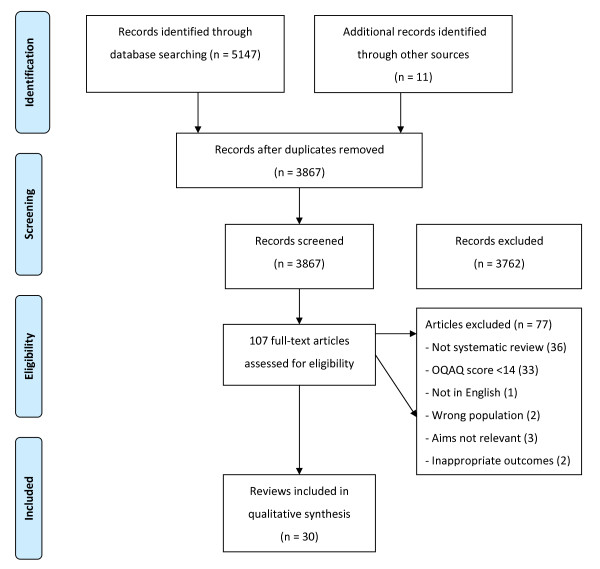
BACKGROUND: To develop more efficient programmes for promoting dietary and/or physical activity change (in order to prevent type 2 diabetes) it is critical to ensure that the intervention components and characteristics most strongly associated with effectiveness are included. The aim of this systematic review of reviews was to identify intervention components that are associated with increased change in diet and/or physical activity in individuals at risk of type 2 diabetes. METHODS: MEDLINE, EMBASE, CINAHL, PsycInfo, and the Cochrane Library were searched for systematic reviews of interventions targeting diet and/or physical activity in adults at risk of developing type 2 diabetes from 1998 to 2008. Two reviewers independently selected reviews and rated methodological quality. Individual analyses from reviews relating effectiveness to intervention components were extracted, graded for evidence quality and summarised. RESULTS: Of 3856 identified articles, 30 met the inclusion criteria and 129 analyses related intervention components to effectiveness. These included causal analyses (based on randomisation of participants to different intervention conditions) and associative analyses (e.g. meta-regression). Overall, interventions produced clinically meaningful weight loss (3-5 kg at 12 months; 2-3 kg at 36 months) and increased physical activity (30-60 mins/week of moderate activity at 12-18 months). Based on causal analyses, intervention effectiveness was increased by engaging social support, targeting both diet and physical activity, and using well-defined/established behaviour change techniques. Increased effectiveness was also associated with increased contact frequency and using a specific cluster of "self-regulatory" behaviour change techniques (e.g. goal-setting, self-monitoring). No clear relationships were found between effectiveness and intervention setting, delivery mode, study population or delivery provider. Evidence on long-term effectiveness suggested the need for greater consideration of behaviour maintenance strategies. CONCLUSIONS: This comprehensive review of reviews identifies specific components which are associated with increased effectiveness in interventions to promote change in diet and/or physical activity. To maximise the efficiency of programmes for diabetes prevention, practitioners and commissioning organisations should consider including these components.
Overview
The claims and statistics of this paper haven’t been checked yet.
Free: it reads the open-access text and checks the first 5 claims that cite a source we can check. Create a free account to check every claim.
Integrity signals
Registry
Cites
Statistics
Figures
Verification
Claims the paper makes
The claims and statistics of this paper haven’t been checked yet.
Free: it reads the open-access text and checks the first 5 claims that cite a source we can check. Create a free account to check every claim.
Claims other papers make about this one
Each is checked against this paper’s own text: does it say what the citing paper says it does?
The cited source says what the claim attributes to it.
In the citing paper
“The addition of behavioural interventions as a third component is believed to increase the effectiveness of dietary and physical interventions (Greaves et al., 2011;Teede et al., 2018).”
From Improvements in PCOS characteristics and phenotype severity during a randomized controlled lifestyle intervention (2021) · cites this paper as Greaves et al., 2011
In the citing paper
“Several studies have shown that targeting dietary self-monitoring, providing social support, and emphasizing both dietary changes and physical activity are key components to successful face-to-face behavioral weight-loss programs [43].”
From Tweets, Apps, and Pods: Results of the 6-Month Mobile Pounds Off Digitally (Mobile POD) Randomized Weight-Loss Intervention Among Adults (2011) · cites this paper as [43]
Self-check
Percentages, sums and reported differences re-computed from the paper’s own numbers.
The self-check needs the paper’s full text.
Citations
Cites
1 retracted
Psychological interventions for overweight or obesity
Shaw, K. A., O'Rourke, P., Del Mar, C., & Kenardy, J. (2005) · Cochrane Database of Systematic Reviews · doi:10.1002/14651858.cd003818.pub2 · Cited by 442 · cited 9×
“5 kg at a median 6 months of follow up[54].”
BackgroundMethodInfluentialRetractedThe theory of planned behavior
Ajzen, I. (1991) · Organizational Behavior and Human Decision Processes · doi:10.1016/0749-5978(91)90020-t · Cited by 134,657 · cited 2×
“Social Cognitive Theory,[60] Theory of Planned Behaviour[ 61 ]) were no more effective in producing changes in either weight or in combined dietary and physical activity outcomes than interventions with no stated theoretical basis[38].”
BackgroundMethodReduction in the incidence of type 2 diabetes with lifestyle intervention or metformin
(2002) · New England Journal of Medicine · doi:10.1056/nejmoa012512 · Cited by 19,011 · cited 5×
“Large randomised controlled trials (RCTs) have shown that relatively modest changes in lifestyle (increasing fibre (≥15 g/1000 kcal), reducing total fat (< 30% of energy consumed) and saturated fat (< 10% of energy consumed), engaging in moderate physical activity (≥30 mins/day), weight reduction (5%)) can reduce the…”
BackgroundMethodInfluentialTuomilehto, J., Lindström, J., Eriksson, J. G., Valle, T. T., Hämäläinen, H., Ilanne-Parikka, P., Keinänen-Kiukaanniemi, S., Laakso, M., Louheranta, A., Rastas, M., et al. (2001) · New England Journal of Medicine · doi:10.1056/nejm200105033441801 · Cited by 10,873 · cited 2×
“Our recommendations go considerably beyond the data on basic effectiveness presented in trials and systematic reviews of diabetes prevention programmes to date[3-8].”
Background‘Small Changes' to Diet and Physical Activity Behaviors for Weight Management
Hills, A. P., Byrne, N. M., Lindstrom, R., & Hill, J. O. (2013) · Obesity Facts · doi:10.1159/000345030 · Cited by 9,493
Motivational interviewing: preparing people for change.
Miller, W. R., & Rollnick, S. (2002) · Guilford Press eBooks · Cited by 7,915
The cochrane database of systematic reviews
Geddes, J. (1996) · Journal of Psychosomatic Research · doi:10.1016/s0022-3999(96)90063-x · Cited by 5,989
Cochrane Database of Systematic Reviews
(2008) · Encyclopedia of Public Health · doi:10.1007/978-1-4020-5614-7_436 · Cited by 4,527
Kirk, J., MacDonald, A., Lavender, P., Dean, J., & Rubin, G. (2017) · Biomedicine Hub · doi:10.1159/000480347 · Cited by 3,887
A taxonomy of behavior change techniques used in interventions
Abraham, C., & Michie, S. (2008) · Health Psychology · doi:10.1037/0278-6133.27.3.379 · Cited by 2,525
Self-citation
Research works printed but not linked: 5
- Scottish Intercollegiate Guidelines Network (SIGN) Management of Diabetes: A national clinical guideline. SIGN Publication Number 55 2001 Edinburgh: SIGN
- Dombrowski SU Sniehotta FF Avenell A Johnston M MacLennan G Araujo-Soares V Effects of specific behaviour change techniques on behaviour and weight change: A systematic review Health Psychology Review in press 20607139
- Bandura A Social foundations of thought and action: A social cognitive theory 1986 Englewood Cliffs, NJ: Prentice-Hall
- National Institute for Health and Clinical Excellence Obesity guidance on the prevention, identification, assessment and management of overweight and obesity in adults and children. London 2006 22497033
- Smith J Deno S Pronk N Reinhardt L Behavioural therapy programs for weight loss in adults: ICSI Technology Assessment Report 2005 Minnesota: Institute for Clinical Systems Improvement
Cited by
Items 301–400 of 1,000
Zwickert, K., Rieger, E., Swinbourne, J. M., Manns, C., McAulay, C., Gibson, A. A., Sainsbury, A., & Caterson, I. D. (2016) · Obesity Research & Clinical Practice · doi:10.1016/j.orcp.2016.01.001 · Cited by 45
“It is therefore imporant to explore low-cost intervention formats that inimise the need for ongoing face-to-face contact nd associated costs, whilst improving long-term eight outcomes [6,7].”
BackgroundTong, H. L., Coiera, E., Tong, W., Wang, Y., Quiroz, J. C., Martin, P., & Laranjo, L. (2019) · JMIR mHealth and uHealth · doi:10.2196/12181 · Cited by 40
“In addition to social aspects, many studies have also highlighted the importance of other behavior change techniques, such as self-monitoring or goal setting, in physical activity [23,24].”
BackgroundNour, M. M., Chen, J., & Allman-Farinelli, M. A. (2019) · JMIR Formative Research · doi:10.2196/13324 · Cited by 41
“The behavior change techniques (BCTs) of goal setting, self-monitoring, and the provision of feedback are successful strategies to maintain motivation and improve self-efficacy for practicing healthful lifestyle behaviors [14,39-42].”
BackgroundInfluentialBorek, A., Abraham, C., Greaves, C. J., Tarrant, M., Garner, N. J., & Pascale, M. (2019) · British Journal of Health Psychology · doi:10.1111/bjhp.12379 · Cited by 45
Self-citationAn intervention designed to investigate habit formation in a novel health behaviour
Mergelsberg, E. L. P., Mullan, B. A., Allom, V., & Scott, A. J. (2020) · Psychology and Health · doi:10.1080/08870446.2020.1779272 · Cited by 44
“This is in contrast to the systematic review of Greaves et al. (2011) who found that self-monitoring behaviour was associated with effective behaviour change and maintenance.”
ResultChanging Behavior Using Integrated Theories
Hagger, M. S., & Hamilton, K. (2020) · Cambridge University Press eBooks · doi:10.1017/9781108677318.015 · Cited by 51
Abbott, S., Smith, E., Tighe, B., & Lycett, D. (2020) · Journal of Human Nutrition and Dietetics · doi:10.1111/jhn.12853 · Cited by 47
Changing Hearts and Minds in the Equestrian World One Behaviour at a Time
Wolframm, I., Douglas, J. E., & Pearson, G. (2023) · Animals · doi:10.3390/ani13040748 · Cited by 51
“, providing advice or educational measures) are less effective than those that include motivational components such as goal setting [52–55]), self-monitoring [53–55], the provision of feedback on performance [53,56], or motivational interviewing [55,57].”
BackgroundBlackshaw, L. C. D., Chhour, I., Stepto, N. K., & Lim, S. S. (2019) · Medical Sciences · doi:10.3390/medsci7070076 · Cited by 40
Calvert, S., Dempsey, R. C., & Povey, R. (2019) · Obesity Reviews · doi:10.1111/obr.12797 · Cited by 40
Avery, L., Charman, S. J., Taylor, L., Flynn, D., Mosely, K., Speight, J., Lievesley, M. A., Taylor, R., Sniehotta, F. F., & Trenell, M. I. (2015) · Implementation Science · doi:10.1186/s13012-016-0459-6 · Cited by 44
“Two published reviews reported that inclusion of self-regulatory techniques such as self-monitoring in PA behaviour change interventions improved effectiveness [25, 26].”
BackgroundVaughan, C., Collins, R. L., Ghosh‐Dastidar, M., Beckman, R., & Dubowitz, T. (2017) · Preventive Medicine · doi:10.1016/j.ypmed.2017.03.015 · Cited by 41
“Additional influences on diet identified in previous research include self-efficacy (Steptoe et al., 2004), social support (Greaves et al., 2011; Steptoe et al., 2004), and positive outcome expectancies for healthy diet (Steptoe et al., 2004), as well as the taste of food, cost, and limited dietary…”
BackgroundOpen-Access Physical Activity Programs for Older Adults: A Pragmatic and Systematic Review
Balis, L. E., Strayer, T. E., Ramalingam, N., Wilson, M. L., & Harden, S. M. (2018) · The Gerontologist · doi:10.1093/geront/gnx195 · Cited by 43
Liu, S., & Willoughby, J. F. (2018) · Journal of Health Communication · doi:10.1080/10810730.2018.1455768 · Cited by 38
“Another systematic review identified self-monitoring as an efficacious component in interventions promoting diet and physical activity changes (Greaves et al., 2011).”
BackgroundBeck, A. M., Eyler, A. A., Hipp, J. A., King, A. C., Tabak, R. G., Yan, Y., Reis, R. S., Duncan, D. D., Gilbert, A. S., SERRANO, N. H., et al. (2019) · BMC Public Health · doi:10.1186/s12889-019-6443-8 · Cited by 45
“Substantial evidence supports these theories, which have moderate effect sizes to improve PA [75, 77, 84, 85].”
BackgroundIsmail, K., Bayley, A., Twist, K., Stewart, K., Ridge, K., Britneff, E., Greenough, A., Ashworth, M. J., Rundle, J., Cook, D. G., et al. (2019) · Heart · doi:10.1136/heartjnl-2019-315656 · Cited by 45
Williamson, W., Lewandowski, A. J., Huckstep, O. J., Lapidaire, W., Ooms, A., Tan, C., Mohamed, A. B., Alsharqi, M., Bertagnolli, M., Woodward, W. J., et al. (2022) · EClinicalMedicine · doi:10.1016/j.eclinm.2022.101445 · Cited by 41
Reilly, C., Sails, J., Stavropoulos‐Kalinoglou, A., Birch, R. J., McKenna, J., Clifton, I., Peckham, D. G., Birch, K. M., & Price, O. J. (2023) · European Respiratory Review · doi:10.1183/16000617.0109-2022 · Cited by 41
Staite, E., Bayley, A., Al-Ozairi, E., Stewart, K., Hopkins, D., Rundle, J., Basudev, N., Mohamedali, Z., & Ismail, K. (2020) · JMIR mHealth and uHealth · doi:10.2196/15448 · Cited by 39
Dietz de Loos, A. L. P., Jiskoot, G., Timman, R., Beerthuizen, A., Busschbach, J. J. V., & Laven, J. S. E. (2021) · Reproductive BioMedicine Online · doi:10.1016/j.rbmo.2021.05.008 · Cited by 39
Promoting physical activity in rheumatoid arthritis: a narrative review of behaviour change theories
Larkin, L., Kennedy, N., & Gallagher, S. M. (2015) · Disability and Rehabilitation · doi:10.3109/09638288.2015.1019011 · Cited by 47
“Additionally, the use of well-established behaviour change techniques is important in the effectiveness of interventions to increase physical activity [59].”
MethodPaul, L., Brewster, S. A., Wyke, S., McFadyen, A. K., Sattar, N. A., Gill, J. M. R., Dybus, A., & Gray, C. M. (2017) · Journal of Rehabilitation and Assistive Technologies Engineering · doi:10.1177/2055668317696236 · Cited by 42
McKeon, G., Papadopoulos, E., Firth, J., Joshi, R., Teasdale, S. B., Newby, J. M., & Rosenbaum, S. (2022) · Internet Interventions · doi:10.1016/j.invent.2022.100497 · Cited by 48
“This is an important feature of social media given that previous research has established that interpersonal communications and social support are linked to intervention effectiveness and health behaviour change (Cohen, 1988; Greaves et al., 2011).”
BackgroundNelson, P. A., Keyworth, C., Chisholm, A., Pearce, C. J., Griffiths, C. E. M., Cordingley, L., Bundy, C., & the Identification and Management of Psoriasis‐Associated Co‐morbidiTy (IMPACT) Team (2014) · British Journal of Dermatology · doi:10.1111/bjd.13231 · Cited by 43
Alley, S., van Uffelen, J. G. Z., Schöeppe, S., Parkinson, L., Hunt, S., Power, D., Waterman, N., Waterman, C., To, Q. G., Duncan, M. J., et al. (2022) · Journal of Medical Internet Research · doi:10.2196/31352 · Cited by 38
“The advice is based on the theory of planned behavior [32] and the social cognitive theory [33] and includes evidence-based behavior change techniques [34,35].”
Effects of a Mobile App to Promote Social Participation on Older Adults: Randomized Controlled Trial
Kawaguchi, K., Nakagomi, A., Ide, K., & Kondo, K. (2024) · Journal of Medical Internet Research · doi:10.2196/64196 · Cited by 47
Coaching to develop leadership of healthcare managers: a mixed-methods systematic review
Hu, S., Valimaki, M. A., Liu, S., Li, X., Batool, S., Huang, W., Liu, X., Guo, W., Chen, W., Chen, J., et al. (2024) · BMC Medical Education · doi:10.1186/s12909-024-06081-y · Cited by 42
“A systematic review by Greaves et al. [16] specifically highlighted that, to be effective, intervention components such as mechanism and delivery should be clear.”
Development of a Healthy Lifestyle Mobile App for Overweight Pregnant Women: Qualitative Study
Lau, Y., Cheng, L. J., Chi, C., Tsai, C., Ong, K. W., Ho‐Lim, S. S. T., Wang, W., & Tan, K. (2018) · JMIR mhealth and uhealth · doi:10.2196/mhealth.9718 · Cited by 43
“Social networking among peer support is vital in promoting healthy behavior [41].”
BackgroundTarrant, M., Haslam, C., Carter, M., Calitri, R., & Haslam, S. A. (2020) · Cambridge University Press eBooks · doi:10.1017/9781108677318.044 · Cited by 43
Lu, S.-C., Porter, I. H., Valderas, J. M., Harrison, C. J., & Sidey-Gibbons, C. J. (2023) · Journal of Patient-Reported Outcomes · doi:10.1186/s41687-023-00578-8 · Cited by 44
Do Trained Practice Nurses Apply Motivational Interviewing Techniques in Primary Care Consultations?
Noordman (2012) · Journal of Clinical Medicine Research · doi:10.4021/jocmr1120w · Cited by 45
“However, there are other behavior change approaches that show similar positive health outcomes [24, 25].”
BackgroundInfluentialLeveraging Multi-Modal Sensing for Mobile Health: A Case Review in Chronic Pain
Aung, M. S. H., Alquaddoomi, F., Hsieh, C.-K., Rabbi, M., Yang, L., Pollak, J. P., Estrin, D., & Choudhury, T. (2016) · IEEE Journal of Selected Topics in Signal Processing · doi:10.1109/jstsp.2016.2565381 · Cited by 37
“The continued monitoring of physical activities away from clinical settings is essential for understanding progress in pain reduction, management, and healing, whether it be in the context of post-treatment follow up, or long term physiotherapy [19]–[21].”
Wills, J., & Kelly, M. (2016) · Nurse Education Today · doi:10.1016/j.nedt.2016.10.011 · Cited by 37
Self‐management support in routine primary care by nurses
Westland, H., Schröder, C. D., de Wit, J., Frings, J., Trappenburg, J. C. A., & Schuurmans, M. J. (2017) · British Journal of Health Psychology · doi:10.1111/bjhp.12276 · Cited by 41
“…et al., 2011; Hankonen et al., 2015), action planning (Williams & French, 2011), problem-solving (French, Olander, Chisholm, & Mc Sharry, 2014; Greaves et al., 2011), self-monitoring (Greaves et al., 2011; Michie, Abraham, Whittington, McAteer, & Gupta, 2009), social support (Greaves et al.,…”
BackgroundInfluentialLooijmans, A., Jörg, F., Bruggeman, R., Schoevers, R. A., & Corpeleijn, E. (2019) · BMC Psychiatry · doi:10.1186/s12888-019-2310-5 · Cited by 34
“Mental health (MH) nurses using the web tool were also trained in motivational interviewing and the stages-of-change model to be able to promote behaviour change in SMI patients [12, 20].”
MethodGrimshaw, S. L., Taylor, N. F., Mechinaud, F. M., Conyers, R. K., & Shields, N. (2020) · Pediatric Blood & Cancer · doi:10.1002/pbc.28264 · Cited by 40
Whittal, A., Atkins, L., & Herber, O. R. (2020) · Translational Behavioral Medicine · doi:10.1093/tbm/ibaa116 · Cited by 41
Heizmann, A.-N., Chapelle, C., Laporte, S., Roche, F., Hupin, D., & Hello, C. L. (2023) · BMJ Open · doi:10.1136/bmjopen-2022-069966 · Cited by 41
Modes of delivery in preventive intervention studies: a rapid review
Beall, R. F., Baskerville, N. B., Golfam, M., Saeed, S., & Little, J. (2014) · European Journal of Clinical Investigation · doi:10.1111/eci.12279 · Cited by 42
Álvarez-Mon, M. Á., Llavero-Valero, M., Asúnsolo, Á., Zaragozá, C., Ortega, M. A., Fraile‐Μartinez, O., Quintero, J., & Álvarez‐Mon, M. (2021) · Journal of Medical Internet Research · doi:10.2196/24336 · Cited by 40
“Furthermore, it has been shown that social support is a potential beneficial component of weight loss programs [5,6].”
Moredich, C. A., & Kessler, T. A. (2013) · Journal of Midwifery & Women s Health · doi:10.1111/jmwh.12061 · Cited by 41
Work Characteristics as Predictors of Correctional Supervisors’ Health Outcomes
Buden, J. C., Dugan, A. G., Namazi, S., Huedo-Medina, T. B., Cherniack, M. G., & Faghri, P. D. (2016) · Journal of Occupational and Environmental Medicine · doi:10.1097/jom.0000000000000843 · Cited by 40
“This conflicts prior research demonstrating relationships among coworker 18,101-103 and supervisor support, 104 to higher fruit and vegetable intake and inversely associated with obesity.”
Marley, J., Tully, M. A., Porter-Armstrong, A. P., Bunting, B. P., O’Hanlon, J., & McDonough, S. (2014) · Systematic Reviews · doi:10.1186/2046-4053-3-106 · Cited by 44
Budd, E. L., McQueen, A., Eyler, A. A., Haire-Joshu, D. L., Auslander, W., & Brownson, R. C. (2018) · Preventive Medicine · doi:10.1016/j.ypmed.2018.02.015 · Cited by 43
Beeken, R. J., Croker, H. A., Heinrich, M., Smith, L., Williams, K., Hackshaw, A. K., Hines, J. E. W., Machesney, M., Madhavan, K., Cavanagh, S., et al. (2016) · BMJ Open · doi:10.1136/bmjopen-2016-011646 · Cited by 35
“The booklet also uses evidence-based behaviour change techniques; goal setting, planning, self-monitoring and the use of rewards.(36) 37 ‘Healthy Life Action Plan’ sheets (see online supplementary material 2) encourage participants to set goals for the recommended behaviours, to plan how they will fit the new action i…”
MethodUijtdewilligen, L., Waters, C. N., Aw, S., Wong, M. L., Sia, A., Ramiah, A., Wong, M. T. K., & Müller‐Riemenschneider, F. (2019) · PLoS ONE · doi:10.1371/journal.pone.0218247 · Cited by 36
McGowan, L. J., McCrum, L.-A., Watson, S., Cardwell, C. R., McGuinness, B., Rutherford, H., Paice, V., Moore, C., Brocklehurst, P. R., Woodside, J. V., et al. (2019) · Critical Reviews in Food Science and Nutrition · doi:10.1080/10408398.2019.1630600 · Cited by 41
Borek, A., Wanat, M., Sallis, A., Ashiru-Oredope, D. A. I., Atkins, L., Beech, E., Hopkins, S., Jones, L. F., McNulty, C. A. M., Shaw, K., et al. (2019) · Antibiotics · doi:10.3390/antibiotics8040207 · Cited by 38
Kinnear, F. J., Wainwright, E. M., Bourne, J. E., Lithander, F. E., Hamilton-Shield, J. P., & Searle, A. (2020) · BMC Health Services Research · doi:10.1186/s12913-019-4869-4 · Cited by 40
Clark, I. N., Baker, F. A., Peiris, C. L., Shoebridge, G., & Taylor, N. F. (2016) · Clinical Rehabilitation · doi:10.1177/0269215516640864 · Cited by 35
“3) Gender, n males (%) 21 (75) 23 (82) 21 (78) 21 (81) Cardiac condition, n (%) STEMI 8 (29) 4 (14) 8 (30) 4 (15) NSTEMI 4 (14) 6 (21) 4 (15) 6 (23) Conduction disorders 3 (11) 2 (7) 3 (11) 2 (8) Unstable angina 10 (36) 13 (46) 10 (37) 11 (42) HF/CHF/cardiomyopathy 2 (7) 2 (7) 1 (4) 2 (8) Valve disease/aortic stenosis…”
Withall, J., Thompson, J. L., Fox, K. R., Davis, M., Gray, S. F., de Koning, J. L., Lloyd, L., Parkhurst, G. P., & Stathi, A. (2016) · The Gerontologist · doi:10.1093/geront/gnw148 · Cited by 39
“The literature indicates that interventions with high contact frequency increase the likelihood of behavior change (Greaves et al., 2011).”
BackgroundTelemonitoring of home exercise cycle training in patients with COPD
Franke, K.-J., Domanski, U., Schroeder, M., Jansen, V., Artmann, F., Weber, U., Ettler, R., & Nilius, G. (2016) · International Journal of COPD · doi:10.2147/copd.s114181 · Cited by 37
“Motivational interviewing techniques are helpful to bring about behavioral changes in COPD patients.(41) Hereby, telephone counseling of outpatient COPD patients is not a new method to improve their adherence to therapy.”
Attitudes and Barriers to Healthy Diet and Physical Activity: A Latent Profile Analysis
Vaughan, C., Ghosh‐Dastidar, M., & Dubowitz, T. (2017) · Health Education & Behavior · doi:10.1177/1090198117722818 · Cited by 39
“…attitudes class, which had lower social support for exercise, might benefit more from interventions that mobilize social support, which increase PA (Greaves et al., 2011; Olander et al., 2013), and from interventions that increase self-efficacy to overcome exercise barriers, which was particularly…”
InfluentialBurchett, H., Sutcliffe, K., Meléndez‐Torres, G. J., Rees, R. W., & Thomas, J. (2017) · Preventive Medicine · doi:10.1016/j.ypmed.2017.08.025 · Cited by 49
“( L u c a s e t a l ., 2014 ; A r a i e t a l ., 2015 ) “ M E N D ” Whilst our fi ndings must be considered developmental rather than conclusive, as we cannot be certain that we have been able to identify all critical features of child WMPs, concurrence with the broad recommendations of the NICE guidance (National Inst…”
Gray, C. M., Wyke, S., Zhang, R., Anderson, A. S., Barry, S., Brennan, G., Briggs, A. H., Boyer, N., Bunn, C., Donnachie, C., et al. (2018) · Public Health Research · doi:10.3310/phr06090 · Cited by 37
Thielen, S. C., Reusch, J. E. B., & Regensteiner, J. G. (2023) · Frontiers in Clinical Diabetes and Healthcare · doi:10.3389/fcdhc.2023.1218692 · Cited by 41
“0kg of weight loss at 12 months compared to those without social support (73).”
BackgroundVermunt, P. W. A., Milder, I. E. J., Wielaard, F., Baan, C. A., Schelfhout, J. D. M., Westert, G. P., & van Oers, H. (2013) · BMC Family Practice · doi:10.1186/1471-2296-14-78 · Cited by 37
“In other studies, self-monitoring was also found to contribute to lifestyle change [14,20,26].”
BackgroundVlaar, E. M., van Valkengoed, I. G., Nierkens, V., Nicolaou, M., Middelkoop, B. J., & Stronks, K. (2012) · BMC Public Health · doi:10.1186/1471-2458-12-371 · Cited by 34
“The combination of diet and PA is often used in intensive lifestyle programs and appears to be more effective in preventing DM than diet or PA alone [8,9,39].”
BackgroundIs Physical Exercise a Core Therapeutical Element for Most Patients With Type 2 Diabetes?
Feo, P. D., & Schwarz, P. E. H. (2013) · Diabetes Care · doi:10.2337/dcs13-2024 · Cited by 36
“Action plans, as part of a behavioral strategy, can help patients reach goals and find ways to stimulate success and reduce relapse (50).”
BackgroundSelf-citationPsychology and Diabetes Care: A Practical Guide
Barnard, K. D., & Lloyd, C. E. (2012) · Springer eBooks · doi:10.1007/978-0-85729-573-6 · Cited by 38
Sharp, P., & Caperchione, C. (2016) · Journal of American College Health · doi:10.1080/07448481.2016.1217538 · Cited by 32
“By encouraging an individual to monitor their rates of physical activity and be aware of recommended guidelines, a greater increase in that particular behavior has resulted.(17) Self-monitoring is a common component among physical activity interventions,(17) including those targeted at young adults.”
BackgroundRodrigues, A., Haste, A., Penn, L., Bell, R., Summerbell, C., White, M., Adamson, A., & Sniehotta, F. F. (2020) · BMC Health Services Research · doi:10.1186/s12913-020-05160-2 · Cited by 35
Liu, J. Y. W., Kwan, R. Y. C., Yin, Y., Lee, P. H., Siu, J. Y., & Bai, X. (2021) · International Journal of Environmental Research and Public Health · doi:10.3390/ijerph181910344 · Cited by 38
Plaete, J., Bourdeaudhuij, I. D., Verloigne, M., & Crombez, G. (2015) · Patient Education and Counseling · doi:10.1016/j.pec.2015.07.014 · Cited by 42
“Computer-tailored interventions are promising to change health behaviour in a large part of the population at a relatively low cost[8-10].”
BackgroundKandula, N. R., Patel, Y., Dave, S. S., Seguil, P., Kumar, S., Baker, D. W., Spring, B. J., & Siddique, J. (2013) · Contemporary Clinical Trials · doi:10.1016/j.cct.2013.09.007 · Cited by 35
“P A A uthor M anuscript include non-English speakers and underserved Asian Americans [13, 18, 22, 23, 47].”
BackgroundInfluentialKolehmainen, N., Ramsay, C. R., McKee, L., Missiuna, C. A., Owen, C., & Francis, J. (2015) · Physical Therapy · doi:10.2522/ptj.20140404 · Cited by 42
Haghighi, M. M., Mavros, Y., & Singh, M. A. F. (2018) · Journal of Physical Activity and Health · doi:10.1123/jpah.2017-0589 · Cited by 38
Exercise in type 2 diabetes: to resist or to endure?
Roden, M. (2012) · Diabetologia · doi:10.1007/s00125-012-2513-5 · Cited by 39
“Although interventions to increase physical activity raised self-reported physical activity, equivalent to 150–210 min/ week of walking, only a few trials reported successful outcomes at more than 12 months [1].”
BackgroundSelf-citationWeight management strategies for patients with PCOS: current perspectives
Ozgen Saydam, B., & Yildiz, B. O. (2021) · Expert Review of Endocrinology & Metabolism · doi:10.1080/17446651.2021.1896966 · Cited by 33
“Behavioral and cognitive behavioral interventions were proposed to have additional beneficial effects in overweight and obese patients in general population especially in adults with increased risk of diabetes and cardiovascular disease [29,52].”
BackgroundReid, D. W., Yamabayashi, Goodridge, D. M., Chung, Hunt, M. A., Marciniuk, Brooks, Chen, Camp, & Hoens, A. M. (2012) · International Journal of COPD · doi:10.2147/copd.s29750 · Cited by 37
Motivational interviewing: relevance in the treatment of rheumatoid arthritis?
Georgopoulou, S., Prothero, L., Lempp, H. K., Galloway, J. B., & Sturt, J. A. (2015) · Rheumatology · doi:10.1093/rheumatology/kev379 · Cited by 35
“Great variability in measuring adherence limited conclusions Greaves et al. (2011) [37] To review evidence on interventions promoting dietary and/or physical activity change in producing weight and behaviour changes in adults with a risk of developing type 2 diabetes Systematic review of reviews 30 systematic reviews…”
BackgroundInfluentialSelf-directed interventions to promote weight loss: a systematic review and meta-analysis
Tang, J. C. H., Abraham, C., Greaves, C. J., & Nikolaou, V. (2016) · Health Psychology Review · doi:10.1080/17437199.2016.1172979 · Cited by 32
“The use of self-regulatory prompts and social support provision are associated with weight-loss effectiveness in face-to-face weight-loss programmes (Greaves et al., 2011) but it is unclear if they have a similar effect in self-directed interventions.”
BackgroundSelf-citationWarren, E. A., Bevilacqua, L., Opondo, C., Allen, E., Mathiot, A., West, G., Jamal, F., Viner, R., & Bonell, C. P. (2019) · British Educational Research Journal · doi:10.1002/berj.3547 · Cited by 35
Changing Behavior Using the Transtheoretical Model
DiClemente, C. C., & Graydon, M. M. (2020) · Cambridge University Press eBooks · doi:10.1017/9781108677318.010 · Cited by 38
Changing Behavior Using the Health Belief Model and Protection Motivation Theory
Orbell, S., Zahid, H., & Henderson, C. J. (2020) · Cambridge University Press eBooks · doi:10.1017/9781108677318.004 · Cited by 40
MacPherson, M., Cranston, K. D., Locke, S., Bourne, J. E., & Jung, M. E. (2021) · Translational Behavioral Medicine · doi:10.1093/tbm/ibab058 · Cited by 33
Wheatley, C. M., Shea, M. G., Parks, J. K., Scales, R., Goodman, B. P., Butterfield, R. J., & Johnson, B. D. (2023) · Clinical Autonomic Research · doi:10.1007/s10286-023-00970-w · Cited by 37
Kahlert, D., Unyi-Reicherz, A., Stratton, G., Larsen, T. M., Fogelholm, M., Raben, A., & Schlicht, W. M. (2016) · Frontiers in Psychology · doi:10.3389/fpsyg.2016.01136 · Cited by 36
“The selection was based on evidence from systematic or meta-analytic reviews (Michie et al., 2009a; Greaves et al., 2011; Williams and French, 2011; Olander et al., 2013) by examining the reported effect sizes (e.g., d, rg).”
BackgroundGill, D. P., Blunt, W. M., Cruz, A. D., Riggin, B., Hunt, K., Zou, G., Sibbald, S. L., Danylchuk, K. E., Zwarenstein, M., Gray, C. M., et al. (2016) · BMC Public Health · doi:10.1186/s12889-016-3730-5 · Cited by 34
“Coaches promote peer and other forms of social support as these have been shown effective in preventing relapse [53].”
BackgroundO’Toole, S., Newton, T., Moazzez, R., Hasan, A. A.-H., & Bartlett, D. W. (2018) · Scientific Reports · doi:10.1038/s41598-018-26418-0 · Cited by 36
Danker, J., Dreyfus, S. J., Strnadová, I., & Pilkinton, M. (2023) · Journal of Applied Research in Intellectual Disabilities · doi:10.1111/jar.13133 · Cited by 33
Jensen, M. T., Nielsen, S. S., Jessen-Winge, C., Madsen, C. M. T., Thilsing, T., Sønderlund, A. L., & Christensen, J. R. (2024) · International Journal of Obesity · doi:10.1038/s41366-024-01468-9 · Cited by 34
Are Heart Failure and Coronary Artery Bypass Surgery Patients Meeting Physical Activity Guidelines?
Yates, B. C., Pozehl, B., Kupzyk, K. A., Epstein, C. M., & Deka, P. (2016) · Rehabilitation Nursing · doi:10.1002/rnj.257 · Cited by 35
“…empirical support in promoting PA in a rehabilitation setting were behavioral strategies of self-monitoring, setting specific goals, identifying barriers, feedback on performance, and developing plans for relapse prevention (Ferrier, Blanchard, Vallis, &Giacomantonio, 2011; Greaves et al., 2011).”
BackgroundMailey, E. L., & Hsu, W. (2017) · Journal of Health Psychology · doi:10.1177/1359105316687627 · Cited by 35
Hayba, N., Partridge, S. R., Nour, M. M., Grech, A. L., & Allman-Farinelli, M. A. (2017) · Obesity Reviews · doi:10.1111/obr.12641 · Cited by 35
“goal setting), elements that are considered to positively impact outcomes (77).”
BackgroundPoppe, L., der Mispel, C. V., Bourdeaudhuij, I. D., Verloigne, M., Shadid, S., & Crombez, G. (2017) · PLoS ONE · doi:10.1371/journal.pone.0190020 · Cited by 38
Singh, V., Jhingan, A. K., Dahiya, S., & Kumari, G. (2018) · Current Research in Nutrition and Food Science Journal · doi:10.12944/crnfsj.6.1.07 · Cited by 43
Mitchell, D. C., Andrews, T., & Schenker, M. B. (2015) · Journal of Occupational and Environmental Medicine · doi:10.1097/jom.0000000000000535 · Cited by 34
“Evidence points to a combination of dietary changes and increases in physical activity as the most effective means of reducing the risk of DM II and its associated complications.(14,15)”
BackgroundCollege Students' Perceptions of Fast Food Restaurant Menu Items on Health
Stockton, S., & Baker, D. (2013) · American Journal of Health Education · doi:10.1080/19325037.2013.764242 · Cited by 32
Penn, L., Ryan, V., & White, M. (2013) · BMJ Open · doi:10.1136/bmjopen-2013-003585 · Cited by 36
Tomasone, J. R., Arbour‐Nicitopoulos, K. P., Latimer‐Cheung, A. E., & Ginis, K. A. M. (2016) · Disability and Rehabilitation · doi:10.1080/09638288.2016.1261415 · Cited by 37
“, behavior change techniques) and outcomes in controlled efficacy studies [32,33], additional research is needed to understand how intervention content and quality influence the effectiveness of LTPA-enhancing interventions in an applied setting.”
BackgroundSutcliffe, K., Meléndez‐Torres, G. J., Burchett, H., Richardson, M. A., Rees, R. W., & Thomas, J. (2018) · Health Expectations · doi:10.1111/hex.12657 · Cited by 38
School‐level factors associated with obesity: A systematic review of longitudinal studies
Gray, H. L., Buro, A. W., Ikan, J. B., Wang, W., & Stern, M. (2019) · Obesity Reviews · doi:10.1111/obr.12852 · Cited by 36
Shore, C. B., Hubbard, G., Gorely, T., Polson, R., Hunter, A., & Galloway, S. D. (2019) · Journal of Physical Activity and Health · doi:10.1123/jpah.2018-0341 · Cited by 31
Smith, J. R., Greaves, C. J., Thompson, J. L., Taylor, R. S., Jones, M., Armstrong, R., Moorlock, S. J., Griffin, A., Solomon-Moore, E., Biddle, M. S. Y., et al. (2019) · International Journal of Behavioral Nutrition and Physical Activity · doi:10.1186/s12966-019-0877-3 · Cited by 32
“Allowing for 15% drop-out at 6 months based on our previous community-based weight loss studies [38, 40, 41], we sought to recruit 156 participants per arm.”
MethodSelf-citationChanging Behavior by Changing Environments
Marteau, T. M., Fletcher, P. C., Hollands, G. J., & Munafo, M. R. (2020) · Cambridge University Press eBooks · doi:10.1017/9781108677318.014 · Cited by 35
From Cancer Rehabilitation to Recreation: A Coordinated Approach to Increasing Physical Activity
Dennett, A. M., Peiris, C. L., Shields, N., & Taylor, N. F. (2020) · Physical Therapy · doi:10.1093/ptj/pzaa135 · Cited by 32
Acceptance and Commitment Therapy on physical activity: A systematic review
Manchón, J., Quiles, M. J., Zarceño, E. L., & López-Roig, S. (2020) · Journal of Contextual Behavioral Science · doi:10.1016/j.jcbs.2020.07.008 · Cited by 35
Laranjo, L., Quiroz, J. C., Tong, H. L., Bazalar, M. A., & Coiera, E. W. (2020) · Journal of Medical Internet Research · doi:10.2196/19991 · Cited by 33
“These mobile technologies enable the automation of effective behavior change techniques—weight and physical activity self-monitoring and feedback [9-12]—showing potential in weight management and physical activity interventions [13,14].”
A personalized mobile app for physical activity: An experimental mixed-methods study
Tong, H. L., Quiroz, J. C., Kocaballi, A. B., Ijaz, K., Coiera, E. W., Chow, C. K., & Laranjo, L. (2022) · Digital Health · doi:10.1177/20552076221115017 · Cited by 39
Metadata
- Authors
- The IMAGE Study Group, Greaves, C. J., Sheppard, K. E., Abraham, C., Hardeman, W., Roden, M., Evans, P. H., & Schwarz, P.
- Affiliations
- University of Exeter (GB)
- University of Sussex (GB)
- University of Cambridge (GB)
- Deutsches Diabetes-Zentrum e.V. (DE)
- Technische Universität Dresden (DE)
- Corresponding author
- Greaves, Colin J
- Venue
- BMC Public Health
- Published
- 2011-02-18
- Volume
- 11
- Issue
- 1
- Pages
- 119-119
- ISSN
- 1471-2458 (ISSN-L)
- PMC
- PMC3048531
- OpenAlex
- W1986234805
- Semantic Scholar
- ae3ceecabd2574191054e1c9fad7edb78e2c791f
- Cited by
- 1,163
- References
- 82
- Citations by year
- 2026: 35 · 2025: 50 · 2024: 60 · 2023: 55 · 2022: 79 · 2021: 89 · 2020: 158 · 2019: 93 · 2018: 108 · 2017: 81 · 2016: 80 · 2015: 90 · 2014: 72 · 2013: 59 · 2012: 41
- FWCI
- 10.24
- Type
- journal article
- Language
- en
- Open access
- gold
- doi.org
- Licence
- cc-by
- creativecommons.org/licenses/by/2.0 (tdm)
- Locations
- BMC Public Health (publishedVersion, cc-by)
- PubMed Central (publishedVersion, cc-by)
- PubMed (publishedVersion)
- DOAJ (DOAJ: Directory of Open Access Journals) (submittedVersion)
- Figshare (submittedVersion, cc-by)
- Figshare (submittedVersion)
- Minerva Access (University of Melbourne) (submittedVersion, cc-by)
- Open Research Exeter (University of Exeter) (submittedVersion, cc-by)
- University of Birmingham Research Portal (University of Birmingham) (submittedVersion)
- UEA Digital Repository (University of East Anglia) (submittedVersion)
- Apollo (University of Cambridge) (submittedVersion, cc-by)
- Funders
- National Institute for Health and Care Research (PDA/02/06/031)
- European Commission
- Topics
- Social Sciences › Psychology › Applied Psychology › Behavioral Health and Interventions
- Health Sciences › Medicine › Public Health, Environmental and Occupational Health › Physical Activity and Health
- Health Sciences › Medicine › Endocrinology, Diabetes and Metabolism › Diabetes Management and Education
- Keywords
- type 2 diabetes prevention, dietary intervention, physical activity interventions, intervention components, behaviour change techniques, social support, weight loss, self-regulation, goal setting, self-monitoring, behavior maintenance, intervention effectiveness
- MeSH terms
- Diabetes Mellitus, Type 2, Diet, Health Promotion, Humans, Motivation, Exercise, Risk Reduction Behavior
About these checks
Registry, retraction, Cites and statistics results are computed, not judged, with one exception: a printed reference that no index lists is read once by a model before it counts as a citation error. Claims are extracted by a model and kept only when their quote appears verbatim in the text; each cited source is then checked, with a model’s help, for whether it says what the claim relies on. Those verdicts can be wrong — read the claim’s quote and the cited source before relying on one.
Statistics and arithmetic are recomputed, not judged.
Confidence bands are shown only for fields calibrated on our annotated test set. None is calibrated yet, so no band is shown.
What counts as a claim ›How we measure confidence ›How we check this ›
Are you an author, or do you see a problem with this page? Request a review
Data sources
Bibliographic data: Semantic Scholar, OpenAlex, Crossref.
Contains information from the Semantic Scholar Academic Graph Datasets, made available under the ODC Attribution License (ODC-BY 1.0).
Semantic Scholar’s data is described in: Kinney, R., et al. (2023). The Semantic Scholar Open Data Platform. arXiv:2301.10140.
