

Systematic review of reviews of intervention components associated with increased effectiveness in dietary and physical activity interventions
Open accessThe DOI matches its Crossref record; 79 of the 82 references it cites were found in a registry or an index.
Abstract
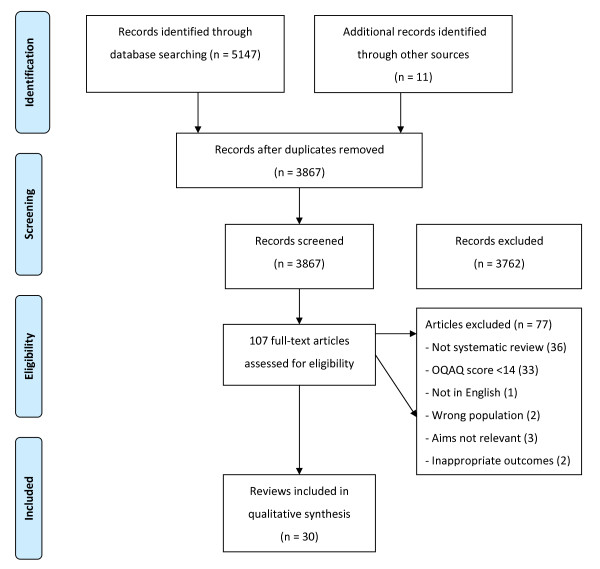
BACKGROUND: To develop more efficient programmes for promoting dietary and/or physical activity change (in order to prevent type 2 diabetes) it is critical to ensure that the intervention components and characteristics most strongly associated with effectiveness are included. The aim of this systematic review of reviews was to identify intervention components that are associated with increased change in diet and/or physical activity in individuals at risk of type 2 diabetes. METHODS: MEDLINE, EMBASE, CINAHL, PsycInfo, and the Cochrane Library were searched for systematic reviews of interventions targeting diet and/or physical activity in adults at risk of developing type 2 diabetes from 1998 to 2008. Two reviewers independently selected reviews and rated methodological quality. Individual analyses from reviews relating effectiveness to intervention components were extracted, graded for evidence quality and summarised. RESULTS: Of 3856 identified articles, 30 met the inclusion criteria and 129 analyses related intervention components to effectiveness. These included causal analyses (based on randomisation of participants to different intervention conditions) and associative analyses (e.g. meta-regression). Overall, interventions produced clinically meaningful weight loss (3-5 kg at 12 months; 2-3 kg at 36 months) and increased physical activity (30-60 mins/week of moderate activity at 12-18 months). Based on causal analyses, intervention effectiveness was increased by engaging social support, targeting both diet and physical activity, and using well-defined/established behaviour change techniques. Increased effectiveness was also associated with increased contact frequency and using a specific cluster of "self-regulatory" behaviour change techniques (e.g. goal-setting, self-monitoring). No clear relationships were found between effectiveness and intervention setting, delivery mode, study population or delivery provider. Evidence on long-term effectiveness suggested the need for greater consideration of behaviour maintenance strategies. CONCLUSIONS: This comprehensive review of reviews identifies specific components which are associated with increased effectiveness in interventions to promote change in diet and/or physical activity. To maximise the efficiency of programmes for diabetes prevention, practitioners and commissioning organisations should consider including these components.
Overview
The claims and statistics of this paper haven’t been checked yet.
Free: it reads the open-access text and checks the first 5 claims that cite a source we can check. Create a free account to check every claim.
Integrity signals
Registry
Cites
Statistics
Figures
Verification
Claims the paper makes
The claims and statistics of this paper haven’t been checked yet.
Free: it reads the open-access text and checks the first 5 claims that cite a source we can check. Create a free account to check every claim.
Claims other papers make about this one
Each is checked against this paper’s own text: does it say what the citing paper says it does?
The cited source says what the claim attributes to it.
In the citing paper
“The addition of behavioural interventions as a third component is believed to increase the effectiveness of dietary and physical interventions (Greaves et al., 2011;Teede et al., 2018).”
From Improvements in PCOS characteristics and phenotype severity during a randomized controlled lifestyle intervention (2021) · cites this paper as Greaves et al., 2011
In the citing paper
“Several studies have shown that targeting dietary self-monitoring, providing social support, and emphasizing both dietary changes and physical activity are key components to successful face-to-face behavioral weight-loss programs [43].”
From Tweets, Apps, and Pods: Results of the 6-Month Mobile Pounds Off Digitally (Mobile POD) Randomized Weight-Loss Intervention Among Adults (2011) · cites this paper as [43]
Self-check
Percentages, sums and reported differences re-computed from the paper’s own numbers.
The self-check needs the paper’s full text.
Citations
Cites
1 retracted
Psychological interventions for overweight or obesity
Shaw, K. A., O'Rourke, P., Del Mar, C., & Kenardy, J. (2005) · Cochrane Database of Systematic Reviews · doi:10.1002/14651858.cd003818.pub2 · Cited by 442 · cited 9×
“5 kg at a median 6 months of follow up[54].”
BackgroundMethodInfluentialRetractedThe theory of planned behavior
Ajzen, I. (1991) · Organizational Behavior and Human Decision Processes · doi:10.1016/0749-5978(91)90020-t · Cited by 134,657 · cited 2×
“Social Cognitive Theory,[60] Theory of Planned Behaviour[ 61 ]) were no more effective in producing changes in either weight or in combined dietary and physical activity outcomes than interventions with no stated theoretical basis[38].”
BackgroundMethodReduction in the incidence of type 2 diabetes with lifestyle intervention or metformin
(2002) · New England Journal of Medicine · doi:10.1056/nejmoa012512 · Cited by 19,011 · cited 5×
“Large randomised controlled trials (RCTs) have shown that relatively modest changes in lifestyle (increasing fibre (≥15 g/1000 kcal), reducing total fat (< 30% of energy consumed) and saturated fat (< 10% of energy consumed), engaging in moderate physical activity (≥30 mins/day), weight reduction (5%)) can reduce the…”
BackgroundMethodInfluentialTuomilehto, J., Lindström, J., Eriksson, J. G., Valle, T. T., Hämäläinen, H., Ilanne-Parikka, P., Keinänen-Kiukaanniemi, S., Laakso, M., Louheranta, A., Rastas, M., et al. (2001) · New England Journal of Medicine · doi:10.1056/nejm200105033441801 · Cited by 10,873 · cited 2×
“Our recommendations go considerably beyond the data on basic effectiveness presented in trials and systematic reviews of diabetes prevention programmes to date[3-8].”
Background‘Small Changes' to Diet and Physical Activity Behaviors for Weight Management
Hills, A. P., Byrne, N. M., Lindstrom, R., & Hill, J. O. (2013) · Obesity Facts · doi:10.1159/000345030 · Cited by 9,493
Motivational interviewing: preparing people for change.
Miller, W. R., & Rollnick, S. (2002) · Guilford Press eBooks · Cited by 7,915
The cochrane database of systematic reviews
Geddes, J. (1996) · Journal of Psychosomatic Research · doi:10.1016/s0022-3999(96)90063-x · Cited by 5,989
Cochrane Database of Systematic Reviews
(2008) · Encyclopedia of Public Health · doi:10.1007/978-1-4020-5614-7_436 · Cited by 4,527
Kirk, J., MacDonald, A., Lavender, P., Dean, J., & Rubin, G. (2017) · Biomedicine Hub · doi:10.1159/000480347 · Cited by 3,887
A taxonomy of behavior change techniques used in interventions
Abraham, C., & Michie, S. (2008) · Health Psychology · doi:10.1037/0278-6133.27.3.379 · Cited by 2,525
Self-citation
Research works printed but not linked: 5
- Scottish Intercollegiate Guidelines Network (SIGN) Management of Diabetes: A national clinical guideline. SIGN Publication Number 55 2001 Edinburgh: SIGN
- Dombrowski SU Sniehotta FF Avenell A Johnston M MacLennan G Araujo-Soares V Effects of specific behaviour change techniques on behaviour and weight change: A systematic review Health Psychology Review in press 20607139
- Bandura A Social foundations of thought and action: A social cognitive theory 1986 Englewood Cliffs, NJ: Prentice-Hall
- National Institute for Health and Clinical Excellence Obesity guidance on the prevention, identification, assessment and management of overweight and obesity in adults and children. London 2006 22497033
- Smith J Deno S Pronk N Reinhardt L Behavioural therapy programs for weight loss in adults: ICSI Technology Assessment Report 2005 Minnesota: Institute for Clinical Systems Improvement
Cited by
Items 801–900 of 1,000
Smith, E., Hubbard, S., Freeman, S. C., March, D. S., Wells, M., Saeedi, E., Haddon, L., Khunti, K., & Gray, L. J. (2024) · Diabetes & Metabolic Syndrome Clinical Research & Reviews · doi:10.1016/j.dsx.2024.103136 · Cited by 8
Lambert, J. D., Dean, S. G., Terry, R. H., Charles, N., Greaves, C. J., Campbell, J. L., & Taylor, A. H. (2024) · BMJ Open · doi:10.1136/bmjopen-2023-080472 · Cited by 6
Self-citationChukwuemeka, U. M., Nnalue, A. D., Obiekwe, S. J., Maruf, F. A., Anakor, A. C., Moses, M. O., Amaechi, C., Okonkwo, U. P., & Amaechi, I. A. (2025) · BMC Digital Health · doi:10.1186/s44247-025-00159-3 · Cited by 6
A vision for chronic disease prevention and intervention research: Report from a workshop
Ashbury, F. D., Little, J., Ioannidis, J. P. A., Kreiger, N., Palmer, L. J., Relton, C., & Taylor, P. (2014) · Canadian Journal of Public Health · doi:10.17269/cjph.105.4039 · Cited by 5
Turner‐McGrievy, G. M., Wang, X., Popkin, B. M., & Tate, D. F. (2016) · Obesity Science & Practice · doi:10.1002/osp4.64 · Cited by 5
“5% weight loss by 1 year) (21), but large variations in weight loss among participants usually remain unexplained.”
BackgroundPot, G. K., de Jong, H. B. T., Battjes‐Fries, M. C. E., Patijn, O. N., Pijl, H., & Voshol, P. J. (2021) · Journal of Human Nutrition and Dietetics · doi:10.1111/jhn.12976 · Cited by 5
Xu, R., DiVito, J., Bannor, R., Schroeder, M. W., & Pagoto, S. (2022) · JMIR Formative Research · doi:10.2196/38068 · Cited by 5
“This is also encouraging because goal setting [40] and frequent self-weighing [41] are key behavioral weight loss strategies.”
BackgroundSuriyawong, W., & Pipatpiboon, N. (2022) · Chiang Mai University Journal of Natural Sciences · doi:10.12982/cmujns.2022.040 · Cited by 5
Zaremba, S., Stead, M., McKell, J., O’Carroll, R. E., Mutrie, N., Treweek, S. P., Anderson, A. S., & the ActWELL team (2022) · Journal of Human Nutrition and Dietetics · doi:10.1111/jhn.13062 · Cited by 7
“The importance of self-monitoring in behaviour change programmes has been widely described (13,14) , and has been demonstrated to be linked with greater success in diet and physical activity interventions, in line with the principles of control theory (15,16) .”
BackgroundComponents in downstream health promotions to reduce sugar intake among adults: a systematic review
Hilmy, S. H. A., Nordin, N., Yusof, M. Y. P. M., Soh, T. Y. T., & Yusof, N. (2024) · Nutrition Journal · doi:10.1186/s12937-023-00884-3 · Cited by 6
“Support from friends and family was reported as an enabler for sustaining food security or protecting from the worst aspects of food insecurity [172].”
BackgroundInfluence of a 6-month modified or traditional Daniel Fast on measures of health in men and women
Bloomer, R. J. (2015) · Journal of Nutritional Biology · doi:10.18314/jnb.v1i1.30 · Cited by 5
Fletcher, A., Willmott, M., Langford, R. M., White, J., Poole, R., BROWN, R. M. A., Young, H., Moore, G. F., Murphy, S., Townson, J. K., et al. (2017) · Public Health Research · doi:10.3310/phr05080 · Cited by 6
“Systematic reviews also consistently find that ‘multilevel’ interventions, which address both individual and environmental determinants of behaviour simultaneously, are most effective for improving young people’s health outcomes.(20,23,25,26) These interventions, which include ‘higher-level’ environmental components,…”
BackgroundHong, Y. A., Forjuoh, S. N., Ory, M. G., Reis, M. D., & Sang, H. (2017) · JMIR Research Protocols · doi:10.2196/resprot.8220 · Cited by 5
“They typically (1) incorporate the patient as an active participant in goal setting and tracking, (2) are based on behavioral and socioecological theory, (3) emphasize problem solving and the use of social support, and (4) provide both proactive and follow-up support [3,10,24].”
Falcone, M., Loughead, J., & Lerman, C. E. (2019) · Springer eBooks · doi:10.1007/978-3-030-20992-6_4 · Cited by 5
Kuriakose, L., Kuczynska, P., Timpel, P., Yakub, F., Bayley, A., & Nadal, I. P. (2020) · Health & Social Care in the Community · doi:10.1111/hsc.12933 · Cited by 5
Hamamatsu, Y., Ide, H., Kakinuma, M., & Furui, Y. (2020) · JMIR mhealth and uhealth · doi:10.2196/16159 · Cited by 7
“Accordingly, we expect that being a part of a team can improve the individual physical activity of team members through supportive interactions that encourage healthy behaviors [17,18].”
Addressing Underserved Populations and Disparities in Behavior Change
Schüz, B., & Hooper, M. W. (2020) · Cambridge University Press eBooks · doi:10.1017/9781108677318.027 · Cited by 8
Brauer, P. M., Royall, D., Li, A., Rodrigues, A., Green, J., Macklin, S., Craig, A., Chan, M., Pasanen, J., Brunelle, L., et al. (2022) · BMC Nutrition · doi:10.1186/s40795-022-00540-9 · Cited by 6
Rigby, R. R., MITCHELL, L. J., Hamilton, K., Ball, L., & Williams, L. T. (2022) · Journal of Nutrition Education and Behavior · doi:10.1016/j.jneb.2022.02.009 · Cited by 7
Zuo, M., Zuo, N., Lin, J., Zhuo, J., Jing, X., & Tang, J. (2022) · Computational and Mathematical Methods in Medicine · doi:10.1155/2022/1047959 · Cited by 5
“This was in agreement with the results of metaanalyses and systematic reviews showing that physical activity, adherence, communication, and other numerous symptoms were effectively improved by MI-based interventions [40, 41].”
ResultRetractedAagaard‐Hansen, J. (2014) · Journal of Diabetes & Metabolism · doi:10.4172/2155-6156.1000375 · Cited by 5
Diabetesscreening und -vorsorge
Schwarz, P. E. H. (2015) · Der Internist · doi:10.1007/s00108-015-3737-5 · Cited by 8
Self-citationNutrition and Quality of Life for Patients with Chronic Disease
Patelarou, E., & Giakoumidakis, K. (2025) · Nutrients · doi:10.3390/nu17132170 · Cited by 7
Dietary Health Communication and Conversation Analysis: A Scoping Review
Meyer, H. M., Ekberg, K., Healy, G. N., Stockbridge, G., & Gomersall, S. R. (2024) · Health Communication · doi:10.1080/10410236.2024.2414154 · Cited by 4
“Health behavior change communication practices such as shared decision-making and motivational interviewing are known to contribute to the efficacy of dietary lifestyle interventions (Greaves et al., 2011).”
Peng, S., Yuan, F., Yang, H., Li, M., & Yang, X. (2025) · Behavioral Sciences · doi:10.3390/bs15111448 · Cited by 4
“Previous meta-analyses have consistently shown that interventions integrating self-regulatory BCTs, such as goal setting, feedback, and graded tasks, are more effective in promoting PA among clinical populations (Greaves et al., 2011; Michie et al., 2009; Olander et al., 2013; Samdal et al., 2017).”
Changing Behavior in the Digital Age
Kavanagh, D. J. (2020) · Cambridge University Press eBooks · doi:10.1017/9781108677318.029 · Cited by 20
Saat, J. J. E. H., Naumann, E., Fransen, G. A. J., Voss, L., van der Velden, K., & Assendelft, W. J. (2023) · International Journal of Environmental Research and Public Health · doi:10.3390/ijerph20032156 · Cited by 4
“Because the CLI focuses on a combination of three aspects, and because a multidisciplinary approach with multiple health care providers (HCPs) could add to the effectiveness of an intervention [12,13], a CLI is usually carried out by a multidisciplinary team of HCPs.”
Hoekstra, T., Dam, M., Klaassen, G., Bos, W. J. W., van der Boog, P. J. M., Vogt, L., van Jaarsveld, B. C., van Dijk, S., Navis, G. J., Meuleman, Y., et al. (2023) · International Journal of Behavioral Medicine · doi:10.1007/s12529-023-10240-8 · Cited by 6
“…only can self-monitoring provide the much-needed feedback (e.g. on sodium intake, but also on blood pressure, diet, and progress over time) but it can also trigger people to (re)focus their attention towards their lifestyle goals and guide selection of adequate coping strategies [21, 23, 30–32].”
InfluentialKlos, L., Stratton, G., Mackintosh, K. A., McNarry, M. A., Fogelholm, M., Drummen, M., Macdonald, I. A., Martínez, J. A., Navas‐Carretero, S., Handjieva‐Darlenska, T., et al. (2024) · PLoS ONE · doi:10.1371/journal.pone.0300646 · Cited by 4
“Frequency of contact is associated with increased effectiveness of PA interventions [45].”
BackgroundLaw, L., Heerey, J., Devlin, B. L., Brukner, P. D., Livera, A. M. D., Kemp, J. L., Attanayake, A., Skou, S. T., Bricca, A., & Culvenor, A. G. (2025) · BMJ Nutrition Prevention & Health · doi:10.1136/bmjnph-2025-001257 · Cited by 5
“Provenance and peer review Not commissioned; externally peer reviewed by Federica Amati, Imperial College London, UK and Dr. Girish Chandra Bhatt, All India Institute of Medical Sciences(AIIMS), Bhopal, India.”
Lee, I., Kang, M., Choi, J. H., Lim, H., & Chon, S. (2025) · Diabetes & Metabolism Journal · doi:10.4093/dmj.2025.0675 · Cited by 6
Epidemiology and prevalence of urinary schistosomiasis in pre-school children in Lagos, Nigeria
Adewole, S. O., & Fafure, T. H. (2013) · International Journal of Medicine and Medical Sciences · doi:10.5897/ijmms09.197 · Cited by 5
Motivational interviewing in obesity reduction
Szczekala, K., Ślusarska, B. J., & Goś, A. (2017) · Medical Studies · doi:10.5114/ms.2017.66962 · Cited by 6
Black, S. C. (2017) · Journal of the Australian and New Zealand Student Services Association · doi:10.30688/janzssa.2017.13 · Cited by 4
“Modes of intervention delivery a) Tailored interventions Apart from the type of intervention used, numerous meta-analyses report that individually tailored interventions that are designed and administered by health professionals are more successful than self-help for targeting physical inactivity (Fjeldsoe et al., 201…”
BackgroundMethodInfluentialHawa, F. N., & Gunaratnam, N. T. (2019) · Clinical Gastroenterology and Hepatology · doi:10.1016/j.cgh.2019.02.036 · Cited by 4
Skagseth, M., Fimland, M. S., Nilsen, T. I. L., & Aasdahl, L. (2019) · Scandinavian Journal of Medicine and Science in Sports · doi:10.1111/sms.13577 · Cited by 4
Chang, C., Wong, J., Kamari, A. I., Cheah, S. C. H., Chan, M. A. W. K., & Zainuldin, R. (2021) · Proceedings of Singapore Healthcare · doi:10.1177/20101058211066418 · Cited by 4
Yamatsu, K., & Narazaki, K. (2022) · International Journal of Environmental Research and Public Health · doi:10.3390/ijerph19084922 · Cited by 4
“Therefore, the number and timing of the BCI were designed such that events such as Christmas and New Year would not prevent continued behavior modification [8].”
MethodEnhancing the appropriateness of eyecare delivery: the iCaretrack approach
Gyawali, R., Toomey, M., Stapleton, F. J., Keay, L. J., & Jalbert, I. (2023) · Clinical and Experimental Optometry · doi:10.1080/08164622.2023.2178286 · Cited by 4
“12 Implementation science, a field of research that can be applied to improving the adoption and maintenance of evidence-based practices in routine care, arose to overcome the trial-and-error approach commonly used in designing research translation strategies.”
BackgroundAnthropometric Trajectories and Dietary Compliance During a Personalized Ketogenic Program
García-Gorrita, C., Soriano, J. M., Merino-Torres, J. F., & Onofre, N. S. (2025) · Nutrients · doi:10.3390/nu17091475 · Cited by 4
Diciolla, N. S., Yuste-Sánchez, M. J., Torres-Lacomba, M., Paixão, C., & Marques, A. S. P. D. D. (2025) · Annals of Behavioral Medicine · doi:10.1093/abm/kaaf044 · Cited by 7
Playful home training for falls prevention
Jessen, J. D., & Lund, H. H. (2015) · IEEE International Conference on Advanced Intelligent Mechatronics (AIM) · doi:10.1109/aim.2015.7222550 · Cited by 4
“Indeed, notwithstanding the beneficial effects of exercise [8], adherence to lifestyle prescriptions and other more behaviorally demanding regimens including exercise is very low [9], [10], and the effective long-term interventions are labor-intensive and expensive [11], [12].”
BackgroundEffects of a Self-Directed Nutrition Intervention Among Adults With Chronic Health Conditions
Baruth, M., Wilcox, S., Jake‐Schoffman, D. E., Schlaff, R. A., & Goldufsky, T. M. (2017) · Health Education & Behavior · doi:10.1177/1090198117709317 · Cited by 6
“Maintenance of behavior change, including dietary behaviors, is challenging, and it is unclear how to best achieve it (Greaves et al., 2011).”
BackgroundRudolf, K., Dejonghe, L. A. L., Froböse, I., Lammer, F., Rückel, L.-M., Tetz, J., & Schaller, A. (2019) · International Journal of Environmental Research and Public Health · doi:10.3390/ijerph16050813 · Cited by 5
PSYCHOLOGICAL INTERVENTIONS FOR WEIGHT MANAGEMENT
Stults‐Kolehmainen, M., Malcolm, L. R., DiLoreto, J., Gunnet-Shoval, K. E., & Rathbun, E. I. (2015) · ACSMʼs Health & Fitness Journal · doi:10.1249/fit.0000000000000150 · Cited by 4
“At the very least, exercise professionals should be mindful to consider behavioral elements into their interventions, such as social support, goal setting, self-monitoring, and other self-regulatory techniques, all of which have been proven to be effective (7).”
BackgroundSunscreen use: a theory-based interventional study using HAPA
Panahi, H., Keikavoosi-Arani, L., & Salehi, L. (2020) · Health Education · doi:10.1108/he-03-2020-0013 · Cited by 6
Persuasive AI Voice-Assisted Technologies to Motivate and Encourage Physical Activity
Schooley, B. L., Akgun, D., Duhoon, P., & Hikmet, N. (2021) · Transactions on computational science and computational intelligence · doi:10.1007/978-3-030-71051-4_29 · Cited by 5
Subgroups in Late Adulthood Are Associated With Cognition and Wellbeing Later in Life
Radhoe, T. A., van Rentergem, J. A. A., Kok, A. A. L., Huisman, M. A., & Geurts, H. M. (2021) · Frontiers in Psychology · doi:10.3389/fpsyg.2021.780575 · Cited by 4
Hingle, M. D., Blew, R. M., James, K., Mockbee, J., Palmer, K. N. B., Roe, D. J., Saboda, K., Shaibi, G. Q., Whitlatch, S., & Marrero, D. G. (2021) · Journal of Primary Care & Community Health · doi:10.1177/21501327211057643 · Cited by 4
Adherence to lifestyle modification in patients with nonalcoholic fatty liver disease
Andreev, K. A., Skirdenko, Y. P., Николаев, Н. А., Livzan, M. A., Горбенко, А. В., Fedorin, M. M., & Сергеевна, К. Т. (2022) · Bulletin of Siberian Medicine · doi:10.20538/1682-0363-2021-4-112-122 · Cited by 6
“difications and diet emphasizes the role of psychotherapy support in the treatment of NAFLD [44].”
BackgroundBaumbach, L., König, H., & Hajek, A. (2022) · BMC Public Health · doi:10.1186/s12889-022-12982-8 · Cited by 5
“Interventions that include social support have been evaluated to their impact on increasing PA [6].”
BackgroundFrank, H. E., Munro, P. E., Clark, I. N., & Lee, A. L. (2022) · Cardiopulmonary Physical Therapy Journal · doi:10.1097/cpt.0000000000000204 · Cited by 4
Hung, J., Brugaletta, S., & Spratt, J. (2022) · European Heart Journal Supplements · doi:10.1093/eurheartjsupp/suac055 · Cited by 4
“‘Self-monitoring’ aspects such as prompting, monitoring, personalized messages, and goal setting are automatically performed by the software, and consistently work to build on the core ‘self-determination’ of the individual which is crucial for maintenance of change.(18,19)”
MethodDevelopment and evaluation of complex multicomponent interventions in public health
Campbell, R. M., & Bonell, C. P. (2015) · doi:10.1093/med/9780199661756.003.0128 · Cited by 5
Promoting Changes in Obesogenic Behaviors: Does Coworker Social Support Play a Role?
Tamers, S. L., Thompson, B., Cheadle, A. D., Zheng, Y., Bishop, S. K., & Beresford, S. A. A. (2014) · American Journal of Health Promotion · doi:10.4278/ajhp.130709-arb-352 · Cited by 6
Supporting Health Behavior Change in General Practice
Greaves, C. J. (2011) · Springer eBooks · doi:10.1007/978-0-85729-573-6_7 · Cited by 4
“There is clear evidence that people who monitor their weight or their physical activity are more successful at making and sustaining changes in diet and physical activity [ 1 ] .”
BackgroundSelf-citationLaitinen, J. H., Korkiakangas, E. E., Mäkiniemi, J. P., Tiitinen, S., Tikka, P., B, H. O.-K. A., Simunaniemi, A., Ahola, S., Jaako, J., Kekkonen, M., et al. (2020) · BMC Public Health · doi:10.1186/s12889-020-8449-7 · Cited by 7
Morshedzadeh, N., Behrouz, V., & Ahmadi, A. R. (2025) · Scientific Reports · doi:10.1038/s41598-025-24046-z · Cited by 3
“Notably, these studies also highlight the protective role of physical activity in attenuating dietary inflammation, suggesting that lifestyle interventions should be multidimensional 50 .”
Peprah, E. B., Jahan, Y., Danso‐Appiah, A., Abdul-Samed, A.-B., Mirzoev, T. N., Antwi, E., Balabanova, D., & Agyepong, I. A. (2024) · Systematic Reviews · doi:10.1186/s13643-024-02555-8 · Cited by 3
A Process Evaluation of an Outreach Physical Activity Program in an Inner-City Primary School
Stathi, A., & Sebire, S. J. (2011) · Journal of Physical Activity and Health · doi:10.1123/jpah.8.s2.s239 · Cited by 4
Digital Technology for Person-Centered Care
Glare, P. A., Liliana, L. D. S., Kirisci, L., & Ashton-James, C. E. (2023) · Springer eBooks · doi:10.1007/978-3-031-17650-0_15 · Cited by 5
Health promoting lifestyle in educational setting: an intervention study in the universities
Rahayu, N. I., Muktiarni, M., Suherman, A., & Ismail, A. (2024) · Journal of Education and Learning (EduLearn) · doi:10.11591/edulearn.v18i4.21141 · Cited by 4
“Especially in the last two decades, there has been a rapid increase in evaluating and designing research related to health promotion through physical activity tests [18], [19].”
BackgroundIMAGE guidelines: potential impact for diabetes primary preventive care in the EU
Schwarz, P. E. H. (2011) · Diabetes Management · doi:10.2217/dmt.10.25 · Cited by 3
Self-citationA Multidisciplinary Approach to Promoting Physical Activity Among Older People
Nyman, S. R. (2018) · Springer eBooks · doi:10.1007/978-3-319-71291-8_1 · Cited by 5
LaChausse, R. G., & Sandoval, E. (2018) · Health Promotion Practice · doi:10.1177/1524839918786234 · Cited by 3
“The relevant literature has consistently supported the use of well-planned, theory-based programs that provide opportunities for participants to learn and practice skills needed to make behavioral changes and affect environmental change (Centers for Disease Control and Prevention, 2015; Dudley, Cotton & Peralta, 2015;…”
BackgroundEspinosa, R. A., Salinero-González, L., Castilla-Martínez, M., Quintanilla, C. C., Ibañez-Meléndez, R., & Yang, C. H. (2018) · REVISTA ESPAÑOLA DE COMUNICACIÓN EN SALUD · doi:10.20318/recs.2018.4493 · Cited by 3
Lock, M., Post, D., Dollman, J., & Parfitt, G. (2020) · Frontiers in Psychology · doi:10.3389/fpsyg.2020.518413 · Cited by 5
Basen‐Engquist, K., Raber, M. R., Strong, L. L., Schembre, S. M., Li, L., Arun, B. K., Lu, K. H., You, N., Vilar, E., Lynch, P. M., et al. (2021) · Contemporary Clinical Trials · doi:10.1016/j.cct.2021.106662 · Cited by 5
González-Mares, M. O., Aradillas-García, C., Mireles, L. E. M., Monsiváis-Nava, C. D., Bernal-Medina, J. E., Morales, J. M. V., Portales‐Pérez, D. P., & Cubillas-Tejeda, A. C. (2022) · Evaluation and Program Planning · doi:10.1016/j.evalprogplan.2022.102075 · Cited by 5
A Proposed Pediatric Clinical Cardiovascular Health Reference Standard
Petito, L. C., McCabe, M. E., Pool, L. R., Krefman, A. E., Perak, A. M., Marino, B. S., Juonala, M., Kähönen, M. A. P., Lehtimäki, T. J., Bazzano, L., et al. (2023) · American Journal of Preventive Medicine · doi:10.1016/j.amepre.2023.09.019 · Cited by 3
López-Sánchez, M., Salazar, Y. D. J. M., Cuenca, J., Ortega, J., & Aguirre, R. D. R. (2023) · International Journal of Food Sciences and Nutrition · doi:10.1080/09637486.2023.2280503 · Cited by 3
“However, a positive change in people’s irresponsible behaviour will help prevent NCDs and optimise public spending on health (Greaves et al. 2011; Unwin et al. 2017; Schermuly et al. 2021).”
Höld, E., Chmelar, S., Aubram, T., Leitner, G., Nehrer, S., Neubauer, O., Wagner, K., & Wondrasch, B. (2024) · Trials · doi:10.1186/s13063-024-08048-2 · Cited by 3
“Through the monthly performed 24-h dietary recalls (see {12}) and the subsequent individual nutritional counselling, the participants in the intervention group are encouraged to continue implementing the recommendations of the Austrian OA Cuisine after the end of the group phase [60].”
MethodBąk‐Sosnowska, M., Pawlak, A., & Skrzypulec‐Plinta, V. (2013) · Health Psychology Research · doi:10.4081/hpr.2013.e10 · Cited by 3
Schwarz, P. E. H. (2013) · Springer eBooks · doi:10.1007/978-3-642-29908-7_4 · Cited by 3
Self-citationCresci, B., Pala, L., Poggiali, R., Guarnieri, C., Mannucci, E., Bigiarini, M., & Rotella, C. M. (2014) · Eating and Weight Disorders - Studies on Anorexia Bulimia and Obesity · doi:10.1007/s40519-014-0126-3 · Cited by 3
Diets for weight loss and prevention of negative health outcomes.
Allan, G. M., Ivers, N. M., & Sharma, A. M. (2011) · Europe PMC (PubMed Central) · Cited by 3
O’Donoghue, G., Kennedy, A., Andersen, G. S., Durkan, E., Thybo, T., Sinnott, M., Nolan, J. J., & O’Gorman, D. J. (2015) · Trials · doi:10.1186/s13063-015-1042-1 · Cited by 3
“what is important to the individual and do not work in the majority of cases [23].”
Participant compliance to a six‐month traditional and modified Daniel Fast
Bloomer, R. J., & Toline, A. (2014) · DOAJ (DOAJ: Directory of Open Access Journals) · doi:10.22038/jfh.2014.3293 · Cited by 3
Behandlung der Adipositas bei Diabetes mellitus
Kulzer, B. (2015) · Springer eBooks · doi:10.1007/978-3-642-54573-3_72 · Cited by 3
Narrative review of pedagogical interventions on nutrition knowledge and weight prejudice
Werkhoven, T., Cotton, W. G., & Dudley, D. A. (2016) · Cogent Education · doi:10.1080/2331186x.2016.1251118 · Cited by 3
“A meta regression analysis was completed by Greaves et al. (2011) into studies that had used the Social Cognitive Theory in planning interventions on obese people with the aim of achieving weightloss, improving diets and increasing levels of physical activity.”
BackgroundMethodInfluentialKwon, S., & Park, H. (2019) · Journal of Health Informatics and Statistics · doi:10.21032/jhis.2019.44.2.125 · Cited by 3
“자기통제의 행위변화는 건강관리자와의 접촉횟수를 높일 때 효과적 이므로[23] 본 연구 결과는 일회성 당뇨병교육에 국한된 건강보건정책”
The role of social support in adult women´s weight loss: A Literature review
Jaikel, T. M. (2019) · RESPYN Revista de Salud Pública y Nutrición · doi:10.29105/respyn18.3-4 · Cited by 3
“Theoretically, social support may play a central role during weight loss processes (Greaves et al., 2011; Verheijden, Bakx, van Weel, Koelen, & van Staveren, 2005).”
BackgroundIntervention development for exercise promotion at active charity events in the UK
Jones, B. A., Munir, F., Harris, P. S., Bhatnagar, P., & Stevinson, C. D. (2020) · Health Promotion International · doi:10.1093/heapro/daaa012 · Cited by 3
Implementing and Scaling up Telemedicine Initiatives: Beyond User-Centeredness
Otto, L. (2019) · IEEE/ACS International Conference on Computer Systems and Applications (AICCSA) · doi:10.1109/aiccsa47632.2019.9035232 · Cited by 5
“The OQAQ helps to assess the scientific quality of reviews by rating different related aspects with zero, one or two points [15].”
BackgroundMarrero, D. G., Blew, R. M., Palmer, K. N. B., James, K., Roe, D. J., & Hingle, M. D. (2021) · BMC Public Health · doi:10.1186/s12889-021-10392-w · Cited by 3
“All activities incorporate evidence-based behavior change techniques and behavioral targets [39, 40].”
BackgroundAirway clearance techniques, pulmonary rehabilitation and physical activity
Herrero‐Cortina, B., Lee, A. L., O'Neill, B. M., & Bradley, J. M. (2018) · European Respiratory Society eBooks · doi:10.1183/2312508x.10017017 · Cited by 3
Arora, M., & de Oliveira, C. Q. (2022) · Elsevier eBooks · doi:10.1016/b978-0-323-82486-6.00019-8 · Cited by 3
Bouchaud, C. C., Chriqui, J. R., Slim, M., Gouin, J., Plourde, H., & Cohen, T. R. (2023) · Current Developments in Nutrition · doi:10.1016/j.cdnut.2023.101975 · Cited by 7
Money, A., Harris, D., Hawley-Hague, H., McDermott, J., Vardy, E. R. L. C., & Todd, C. J. (2023) · BMC Geriatrics · doi:10.1186/s12877-023-04202-8 · Cited by 3
“Such interventions that are underpinned by behaviour change theory are also recognised as being effective by both practitioners and older people in this study [58, 59].”
BackgroundSalmela, S. M. (2012) · Jyväskylä University Digital Archive (University of Jyväskylä) · Cited by 15
Sharp, P. (2013) · cIRcle (University of British Columbia) · doi:10.14288/1.0074281 · Cited by 4
Coercion versus self-selection when treating issues of overfatness: A narrative review
Clark, J. E., & Sirois, E. (2023) · Health Education Journal · doi:10.1177/00178969231171886 · Cited by 5
“Summarising what has been documented in several systematic reviews (Clark, 2015, 2016; Greaves et al., 2011; Schwingshackl et al., 2013; Thomas et al., 2008), where exercise intervention used endurance activities as the principal programme format.”
BackgroundInfluentialLifestyle Interventions for the Prevention of Type 2 Diabetes Mellitus
Schwarz, P. E. H., & Timpel, P. (2016) · Bulletin of the Karaganda University “Biology medicine geography Series” · doi:10.31489/2016bmg4/72-98 · Cited by 2
“This behavior change model then was further developed by a working group derived from the IMAGE project [23, 146].”
Self-citationJohnson, C. C., & Ezouah, P. (2025) · JMIR Formative Research · doi:10.2196/41221 · Cited by 4
Forcier, C., Constant, A., Grisard, F., Clair, E., Val‐Laillet, D., Thibault, R., & Moirand, R. (2024) · Journal of Primary Care & Community Health · doi:10.1177/21501319241303604 · Cited by 2
Hollman, H., Sui, W., Zhang, H., & Rhodes, R. E. (2025) · JMIR Formative Research · doi:10.2196/59477 · Cited by 2
Wen, A., Wu, K., & Ji, M. (2025) · Journal of Clinical Nursing · doi:10.1111/jocn.17782 · Cited by 2
Willems, I., Verbestel, V., Altenburg, T. M., Dumuid, D., Calders, P., & Craemer, M. D. (2025) · BMC Public Health · doi:10.1186/s12889-025-23223-z · Cited by 2
“…brackets the intrapersonal level whereas other factors regarding the different socio-ecological levels (e.g. universal biking system, PA facilities in the neighborhood, PA equipment at the workplace) are partially within the control of other stakeholders such as employers or policy makers [26, 27].”
Traviss‐Turner, G., Beeken, R. J., Jones, G., Bailey, L., Bowes, E., Burke, T., Machaczek, K. K., Pickering, K., Copeland, R. J., Cooper, C. L., et al. (2025) · Mental health and physical activity · doi:10.1016/j.mhpa.2025.100713 · Cited by 3
Metadata
- Authors
- The IMAGE Study Group, Greaves, C. J., Sheppard, K. E., Abraham, C., Hardeman, W., Roden, M., Evans, P. H., & Schwarz, P.
- Affiliations
- University of Exeter (GB)
- University of Sussex (GB)
- University of Cambridge (GB)
- Deutsches Diabetes-Zentrum e.V. (DE)
- Technische Universität Dresden (DE)
- Corresponding author
- Greaves, Colin J
- Venue
- BMC Public Health
- Published
- 2011-02-18
- Volume
- 11
- Issue
- 1
- Pages
- 119-119
- ISSN
- 1471-2458 (ISSN-L)
- PMC
- PMC3048531
- OpenAlex
- W1986234805
- Semantic Scholar
- ae3ceecabd2574191054e1c9fad7edb78e2c791f
- Cited by
- 1,163
- References
- 82
- Citations by year
- 2026: 35 · 2025: 50 · 2024: 60 · 2023: 55 · 2022: 79 · 2021: 89 · 2020: 158 · 2019: 93 · 2018: 108 · 2017: 81 · 2016: 80 · 2015: 90 · 2014: 72 · 2013: 59 · 2012: 41
- FWCI
- 10.24
- Type
- journal article
- Language
- en
- Open access
- gold
- doi.org
- Licence
- cc-by
- creativecommons.org/licenses/by/2.0 (tdm)
- Locations
- BMC Public Health (publishedVersion, cc-by)
- PubMed Central (publishedVersion, cc-by)
- PubMed (publishedVersion)
- DOAJ (DOAJ: Directory of Open Access Journals) (submittedVersion)
- Figshare (submittedVersion, cc-by)
- Figshare (submittedVersion)
- Minerva Access (University of Melbourne) (submittedVersion, cc-by)
- Open Research Exeter (University of Exeter) (submittedVersion, cc-by)
- University of Birmingham Research Portal (University of Birmingham) (submittedVersion)
- UEA Digital Repository (University of East Anglia) (submittedVersion)
- Apollo (University of Cambridge) (submittedVersion, cc-by)
- Funders
- National Institute for Health and Care Research (PDA/02/06/031)
- European Commission
- Topics
- Social Sciences › Psychology › Applied Psychology › Behavioral Health and Interventions
- Health Sciences › Medicine › Public Health, Environmental and Occupational Health › Physical Activity and Health
- Health Sciences › Medicine › Endocrinology, Diabetes and Metabolism › Diabetes Management and Education
- Keywords
- type 2 diabetes prevention, dietary intervention, physical activity interventions, intervention components, behaviour change techniques, social support, weight loss, self-regulation, goal setting, self-monitoring, behavior maintenance, intervention effectiveness
- MeSH terms
- Diabetes Mellitus, Type 2, Diet, Health Promotion, Humans, Motivation, Exercise, Risk Reduction Behavior
About these checks
Registry, retraction, Cites and statistics results are computed, not judged, with one exception: a printed reference that no index lists is read once by a model before it counts as a citation error. Claims are extracted by a model and kept only when their quote appears verbatim in the text; each cited source is then checked, with a model’s help, for whether it says what the claim relies on. Those verdicts can be wrong — read the claim’s quote and the cited source before relying on one.
Statistics and arithmetic are recomputed, not judged.
Confidence bands are shown only for fields calibrated on our annotated test set. None is calibrated yet, so no band is shown.
What counts as a claim ›How we measure confidence ›How we check this ›
Are you an author, or do you see a problem with this page? Request a review
Data sources
Bibliographic data: Semantic Scholar, OpenAlex, Crossref.
Contains information from the Semantic Scholar Academic Graph Datasets, made available under the ODC Attribution License (ODC-BY 1.0).
Semantic Scholar’s data is described in: Kinney, R., et al. (2023). The Semantic Scholar Open Data Platform. arXiv:2301.10140.
