

Systematic review of reviews of intervention components associated with increased effectiveness in dietary and physical activity interventions
Open accessThe DOI matches its Crossref record; 79 of the 82 references it cites were found in a registry or an index.
Abstract
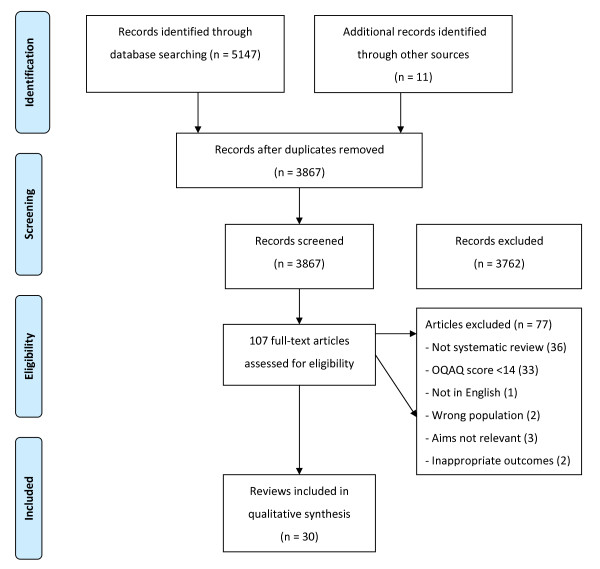
BACKGROUND: To develop more efficient programmes for promoting dietary and/or physical activity change (in order to prevent type 2 diabetes) it is critical to ensure that the intervention components and characteristics most strongly associated with effectiveness are included. The aim of this systematic review of reviews was to identify intervention components that are associated with increased change in diet and/or physical activity in individuals at risk of type 2 diabetes. METHODS: MEDLINE, EMBASE, CINAHL, PsycInfo, and the Cochrane Library were searched for systematic reviews of interventions targeting diet and/or physical activity in adults at risk of developing type 2 diabetes from 1998 to 2008. Two reviewers independently selected reviews and rated methodological quality. Individual analyses from reviews relating effectiveness to intervention components were extracted, graded for evidence quality and summarised. RESULTS: Of 3856 identified articles, 30 met the inclusion criteria and 129 analyses related intervention components to effectiveness. These included causal analyses (based on randomisation of participants to different intervention conditions) and associative analyses (e.g. meta-regression). Overall, interventions produced clinically meaningful weight loss (3-5 kg at 12 months; 2-3 kg at 36 months) and increased physical activity (30-60 mins/week of moderate activity at 12-18 months). Based on causal analyses, intervention effectiveness was increased by engaging social support, targeting both diet and physical activity, and using well-defined/established behaviour change techniques. Increased effectiveness was also associated with increased contact frequency and using a specific cluster of "self-regulatory" behaviour change techniques (e.g. goal-setting, self-monitoring). No clear relationships were found between effectiveness and intervention setting, delivery mode, study population or delivery provider. Evidence on long-term effectiveness suggested the need for greater consideration of behaviour maintenance strategies. CONCLUSIONS: This comprehensive review of reviews identifies specific components which are associated with increased effectiveness in interventions to promote change in diet and/or physical activity. To maximise the efficiency of programmes for diabetes prevention, practitioners and commissioning organisations should consider including these components.
Overview
The claims and statistics of this paper haven’t been checked yet.
Free: it reads the open-access text and checks the first 5 claims that cite a source we can check. Create a free account to check every claim.
Integrity signals
Registry
Cites
Statistics
Figures
Verification
Claims the paper makes
The claims and statistics of this paper haven’t been checked yet.
Free: it reads the open-access text and checks the first 5 claims that cite a source we can check. Create a free account to check every claim.
Claims other papers make about this one
Each is checked against this paper’s own text: does it say what the citing paper says it does?
The cited source says what the claim attributes to it.
In the citing paper
“The addition of behavioural interventions as a third component is believed to increase the effectiveness of dietary and physical interventions (Greaves et al., 2011;Teede et al., 2018).”
From Improvements in PCOS characteristics and phenotype severity during a randomized controlled lifestyle intervention (2021) · cites this paper as Greaves et al., 2011
In the citing paper
“Several studies have shown that targeting dietary self-monitoring, providing social support, and emphasizing both dietary changes and physical activity are key components to successful face-to-face behavioral weight-loss programs [43].”
From Tweets, Apps, and Pods: Results of the 6-Month Mobile Pounds Off Digitally (Mobile POD) Randomized Weight-Loss Intervention Among Adults (2011) · cites this paper as [43]
Self-check
Percentages, sums and reported differences re-computed from the paper’s own numbers.
The self-check needs the paper’s full text.
Citations
Cites
1 retracted
Psychological interventions for overweight or obesity
Shaw, K. A., O'Rourke, P., Del Mar, C., & Kenardy, J. (2005) · Cochrane Database of Systematic Reviews · doi:10.1002/14651858.cd003818.pub2 · Cited by 442 · cited 9×
“5 kg at a median 6 months of follow up[54].”
BackgroundMethodInfluentialRetractedThe theory of planned behavior
Ajzen, I. (1991) · Organizational Behavior and Human Decision Processes · doi:10.1016/0749-5978(91)90020-t · Cited by 134,657 · cited 2×
“Social Cognitive Theory,[60] Theory of Planned Behaviour[ 61 ]) were no more effective in producing changes in either weight or in combined dietary and physical activity outcomes than interventions with no stated theoretical basis[38].”
BackgroundMethodReduction in the incidence of type 2 diabetes with lifestyle intervention or metformin
(2002) · New England Journal of Medicine · doi:10.1056/nejmoa012512 · Cited by 19,011 · cited 5×
“Large randomised controlled trials (RCTs) have shown that relatively modest changes in lifestyle (increasing fibre (≥15 g/1000 kcal), reducing total fat (< 30% of energy consumed) and saturated fat (< 10% of energy consumed), engaging in moderate physical activity (≥30 mins/day), weight reduction (5%)) can reduce the…”
BackgroundMethodInfluentialTuomilehto, J., Lindström, J., Eriksson, J. G., Valle, T. T., Hämäläinen, H., Ilanne-Parikka, P., Keinänen-Kiukaanniemi, S., Laakso, M., Louheranta, A., Rastas, M., et al. (2001) · New England Journal of Medicine · doi:10.1056/nejm200105033441801 · Cited by 10,873 · cited 2×
“Our recommendations go considerably beyond the data on basic effectiveness presented in trials and systematic reviews of diabetes prevention programmes to date[3-8].”
Background‘Small Changes' to Diet and Physical Activity Behaviors for Weight Management
Hills, A. P., Byrne, N. M., Lindstrom, R., & Hill, J. O. (2013) · Obesity Facts · doi:10.1159/000345030 · Cited by 9,493
Motivational interviewing: preparing people for change.
Miller, W. R., & Rollnick, S. (2002) · Guilford Press eBooks · Cited by 7,915
The cochrane database of systematic reviews
Geddes, J. (1996) · Journal of Psychosomatic Research · doi:10.1016/s0022-3999(96)90063-x · Cited by 5,989
Cochrane Database of Systematic Reviews
(2008) · Encyclopedia of Public Health · doi:10.1007/978-1-4020-5614-7_436 · Cited by 4,527
Kirk, J., MacDonald, A., Lavender, P., Dean, J., & Rubin, G. (2017) · Biomedicine Hub · doi:10.1159/000480347 · Cited by 3,887
A taxonomy of behavior change techniques used in interventions
Abraham, C., & Michie, S. (2008) · Health Psychology · doi:10.1037/0278-6133.27.3.379 · Cited by 2,525
Self-citation
Research works printed but not linked: 5
- Scottish Intercollegiate Guidelines Network (SIGN) Management of Diabetes: A national clinical guideline. SIGN Publication Number 55 2001 Edinburgh: SIGN
- Dombrowski SU Sniehotta FF Avenell A Johnston M MacLennan G Araujo-Soares V Effects of specific behaviour change techniques on behaviour and weight change: A systematic review Health Psychology Review in press 20607139
- Bandura A Social foundations of thought and action: A social cognitive theory 1986 Englewood Cliffs, NJ: Prentice-Hall
- National Institute for Health and Clinical Excellence Obesity guidance on the prevention, identification, assessment and management of overweight and obesity in adults and children. London 2006 22497033
- Smith J Deno S Pronk N Reinhardt L Behavioural therapy programs for weight loss in adults: ICSI Technology Assessment Report 2005 Minnesota: Institute for Clinical Systems Improvement
Cited by
Items 201–300 of 1,000
Hoedjes, M., van Stralen, M. M., Joe, S. T. A., Rookus, M., van Leeuwen, F., Michie, S., Seidell, J. C., & Kampman, E. (2017) · Journal of Cancer Survivorship · doi:10.1007/s11764-016-0594-8 · Cited by 58
“Findings from other reviews on the relation between the use of a theoretical framework and intervention effectiveness have been conflicting [29, 89, 92].”
BackgroundResultImplementing Exercise in Healthcare Settings: The Potential of Implementation Science
Czosnek, L., Rankin, N. M., Zopf, E. M., Richards, J. A., Rosenbaum, S., & Cormie, P. (2019) · Sports Medicine · doi:10.1007/s40279-019-01228-0 · Cited by 65
McSpadden, K. E., Patrick, H., Oh, A., Yaroch, A. L., Dwyer, L. A., & Nebeling, L. C. (2015) · Appetite · doi:10.1016/j.appet.2015.08.031 · Cited by 67
“In a recent systematic review, socially supportive intervention components were found to contribute to effective interventions for weight loss (Greaves et al., 2011), and the presence of supportive others may be particularly helpful when they are also efficacious in the context of weight loss…”
BackgroundA Review about the Effect of Life style Modification on Diabetes and Quality of Life
Shrestha, P., & Ghimire, L. (2012) · Global Journal of Health Science · doi:10.5539/gjhs.v4n6p185 · Cited by 70
“Intervention is more effective with social support, follow-up, using self–setting behaviour change and self-monitoring (Greaves et al., 2011).”
BackgroundResultHerber, O. R., Atkins, L., Störk, S., & Wilm, S. (2018) · BMJ Open · doi:10.1136/bmjopen-2018-025907 · Cited by 64
“In more detail, evidence of grade A (high quality) exists that interventions using established, well-defined behaviour change techniques (ie, the ‘active ingredient’ of an intervention) are most effective.(21) Yet, a review of self-management interventions promoting self-care of patients with HF came to the conclusion…”
BackgroundHardcastle, S. J., Castuera, R. J., Maxwell‐Smith, C., Bulsara, M. K., & Hince, D. (2020) · PLoS ONE · doi:10.1371/journal.pone.0240967 · Cited by 62
“Self-monitoring is an evidence-based behaviour change technique that has demonstrated success in the promotion of healthy eating and physical activity [15, 16] in addition to weight management [17].”
BackgroundImproving heart health among Black/African American women using civic engagement: a pilot study
Brown, A. G. M., Hudson, L. B., Chui, K., Metayer, N., Lebron-Torres, N., Seguin, R. A., & Folta, S. C. (2017) · BMC Public Health · doi:10.1186/s12889-016-3964-2 · Cited by 53
The Impact of COVID-19 on Pediatric Adherence and Self-Management
Plevinsky, J. M., Young, M. A., Carmody, J. K., Durkin, L. K., Gamwell, K. L., Klages, K. L., Ghosh, S., & Hommel, K. A. (2020) · Journal of Pediatric Psychology · doi:10.1093/jpepsy/jsaa079 · Cited by 62
“Daily monitoring can improve adherence (Greaves et al., 2011) and facilitate caregiver monitoring and implementation of behavioral strategies to promote adherence (e.”
BackgroundWallis, J. A., Webster, K. E., Levinger, P., Singh, P. J., Fong, C., & Taylor, N. F. (2016) · Osteoarthritis and Cartilage · doi:10.1016/j.joca.2016.12.017 · Cited by 77
Lau, Y., Klainin‐Yobas, P., Htun, T. P., Wong, S. N., Tan, K. L., Ho‐Lim, S. T., Chi, C., Tsai, C., Ong, K. W., Shorey, S., et al. (2017) · Obesity Reviews · doi:10.1111/obr.12557 · Cited by 54
“The group-based approach indicates that a social support network is essential for promoting behavioural change (54).”
BackgroundWarner, L. M., & French, D. (2020) · Cambridge University Press eBooks · doi:10.1017/9781108677318.032 · Cited by 79
A qualitative exploration of facilitators and barriers of adherence to time-restricted eating
O’Connor, S. G., Boyd, P., Bailey, C. P., Nebeling, L. C., Reedy, J., Czajkowski, S. M., & Shams‐White, M. (2022) · Appetite · doi:10.1016/j.appet.2022.106266 · Cited by 61
Browne, S., Minozzi, S., Bellisario, C., Sweeney, M. R., & Susta, D. (2018) · European Journal of Clinical Nutrition · doi:10.1038/s41430-018-0327-3 · Cited by 65
“report two lowquality associative analyses from one review that found a positive relationship between the number of contacts and self-reported dietary change at 12 months of follow-up among groups at high risk of CVD and type 2 diabetes mellitus (T2DM) [4].”
BackgroundInfluentialChanging Behavior Using Ecological Models
Salmon, J., Hesketh, K. D., Arundell, L., Downing, K. L., & Biddle, S. (2020) · Cambridge University Press eBooks · doi:10.1017/9781108677318.017 · Cited by 90
Simons, D., De Bourdeaudhuij, I., Clarys, P., De Cocker, K., Vandelanotte, C., & Deforche, B. (2018) · JMIR mHealth and uHealth · doi:10.2196/10003 · Cited by 56
“The use of multiple intervention strategies has been previously recommended to achieve long-term health behavior changes [87,88].”
Ball, L., LEVERITT, M. D., Cass, S., & Chaboyer, W. P. (2015) · Family Practice · doi:10.1093/fampra/cmv067 · Cited by 67
“(20), identified intervention components associated with improved dietary behaviours and/or physical activity in individuals at risk of Type 2 diabetes.”
BackgroundRevenäs, Å., Opava, C. H., Martin, C., Demmelmaier, I., Keller, C., & Åsenlöf, P. (2015) · JMIR Research Protocols · doi:10.2196/resprot.3795 · Cited by 53
“Health care-delivered Internet programs/interventions targeting PA behavior have been reported effective in adult populations as well as in populations with different diseases and disabilities [15,32,36].”
Quested, E., Ntoumanis, N., Thøgersen‐Ntoumani, C., Hagger, M. S., & Hancox, J. E. (2016) · International Review of Sport and Exercise Psychology · doi:10.1080/1750984x.2016.1217342 · Cited by 61
Pot, G. K., Battjes-Fries, M. C., Patijn, O. N., Pijl, H., Witkamp, R. F., de Visser, M., van der Zijl, N., de Vries, M., & Voshol, P. J. (2019) · BMJ Nutrition, Prevention & Health · doi:10.1136/bmjnph-2018-000012 · Cited by 51
“Above all, an important principle of the group programme was that participants as well as their partners were encouraged to support each other, and share their experiences, which has been shown to improve the effectiveness of lifestyle intervention programmes.(30) To this end, social media like Facebook and WhatsApp w…”
BackgroundMethodInfluentialA “No-Code” App Design Platform for Mobile Health Research: Development and Usability Study
Liu, S., La, H., Willms, A., & Rhodes, R. E. (2022) · JMIR Formative Research · doi:10.2196/38737 · Cited by 61
“Some efficacious apps incorporated BCTs such as motivational messages, rewards, gamification in the form of exergames, social support through interaction with peers, and friendly team challenges [7].”
BackgroundInfluentialSpringvloet, L., Lechner, L., de Vries, H., Candel, M. J., & Oenema, A. (2015) · Journal of Medical Internet Research · doi:10.2196/jmir.3837 · Cited by 54
“Although self-regulation processes are suggested to be important to target in interventions [22,23], the results of this study showed that, compared to generic nutrition information, ES of targeting self-regulation processes in addition to individual cognitions were still mostly small.”
Oliveira, C. B., Franco, M. R., Maher, C. G., Lin, C. C., Morelhao, P. K., Araújo, A. C., Filho, R. F. N., & Pinto, R. Z. (2016) · Arthritis Care & Research · doi:10.1002/acr.22919 · Cited by 59
Taylor, A. H., Thompson, T. P., Greaves, C. J., Taylor, R. S., Green, C., Warren, F. C., Kandiyali, R., Aveyard, P., Ayres, R., Byng, R., et al. (2014) · Health Technology Assessment · doi:10.3310/hta18040 · Cited by 49
Self-citationVermunt, P. W. A., Milder, I. E. J., Wielaard, F., de Vries, J. H. M., Baan, C. A., van Oers, J. A. M., & Westert, G. P. (2012) · Diabetic Medicine · doi:10.1111/j.1464-5491.2012.03648.x · Cited by 51
Baretta, D., Bondaronek, P., Direito, A., & Steca, P. (2019) · Digital Health · doi:10.1177/2055207619862706 · Cited by 61
“In the absence of high-quality evidence of effectiveness, previous studies attempted to assess the quality of the apps by focusing on adherence to theory, most commonly the presence of behaviour change theory, operationalised as the inclusion of behaviour change techniques (BCTs).8 Results evidenced that the most comm…”
BackgroundInfluentialBehavior Change Techniques in Wrist-Worn Wearables to Promote Physical Activity: Content Analysis
Düking, P., Tafler, M., Wallmann-Sperlich, B., Sperlich, B., & Kleih, S. C. (2020) · JMIR mhealth and uhealth · doi:10.2196/20820 · Cited by 57
“— 11 11 16 17 12 Incorporated BCTs with proven effectiveness [17-23], n”
BackgroundMethodBaretta, D., Perski, O., & Steca, P. (2019) · JMIR mHealth and uHealth · doi:10.2196/11636 · Cited by 52
“A range of different behavior change interventions to increase PA have been found to be effective [4] and there is evidence supporting their cost-effectiveness [5].”
BackgroundResultEffect of Current Dietary Recommendations on Weight Loss and Cardiovascular Risk Factors
Jenkins, D. J. A., Boucher, B. A., Ashbury, F. D., Sloan, M., Brown, P., El-Sohemy, A., Hanley, A. J., Willett, W., Paquette, M., de Souza, R. J., et al. (2017) · Journal of the American College of Cardiology · doi:10.1016/j.jacc.2016.10.089 · Cited by 52
Psychosocial interventions for the diabetic patient
Harvey, J. (2015) · Diabetes, Metabolic Syndrome and Obesity: Targets and Therapy · doi:10.2147/dmso.s44352 · Cited by 52
“Family therapy, defined as intervention where any family member is actively involved in the treatment program, has been used in patients of all ages with T1DM and T2DM.”
BackgroundInfluentialBorek, A. J., McDonald, B., Fredlund, M., Bjornstad, G., Logan, S., & Morris, C. (2018) · BMC Public Health · doi:10.1186/s12889-018-5168-4 · Cited by 52
Hansmann, R., & Binder, C. R. (2020) · Sustainability · doi:10.3390/su12208547 · Cited by 57
“Experiential, constructivist, or project-based learning activities that actively engage learners in a supportive social context in which they experience autonomy and social recognition for their own competence and actions seem particularly suitable to synergistically promoting environmental attitudes and knowledge [12…”
BackgroundVertical Transmission of SARS-CoV-2: A Systematic Review of Systematic Reviews
Musa, S. S., Bello, U. M., Zhao, S., Abdullahi, Z., Lawan, M. A., & He, D. (2021) · Viruses · doi:10.3390/v13091877 · Cited by 56
“SRs scoring 14 points or above are regarded as having higher quality, whereas scores of less than 14 points are rated as low quality [27,28].”
BackgroundHallsworth, K., Avery, L., & Trenell, M. I. (2016) · Current Gastroenterology Reports · doi:10.1007/s11894-016-0485-1 · Cited by 51
van Nassau, F., van der Ploeg, H. P., Abrahamsen, F. E., Andersen, E., Anderson, A. S., Bosmans, J. E., Bunn, C., Chalmers, M., Clissmann, C., Gill, J. M. R., et al. (2016) · BMC Public Health · doi:10.1186/s12889-016-3255-y · Cited by 57
“Throughout the program, long-term social support [27] is promoted within the group by encouraging positive interactions to build relationships during the 12 weekly sessions and by encouraging the men to use social media (i.”
BackgroundEdwards, E. A., Caton, H., Lumsden, J., Rivas, C. A., Steed, L., Pirunsarn, Y., Jumbe, S. E., Newby, C., Shenvi, A., Mazumdar, S., et al. (2018) · JMIR Serious Games · doi:10.2196/10252 · Cited by 58
Motivational and behaviour change approaches for improving diabetes management
Swanson, V., & Maltinsky, W. (2019) · Practical Diabetes · doi:10.1002/pdi.2229 · Cited by 63
Willmott, T. J., & Rundle-Thiele, S. R. (2021) · BMC Public Health · doi:10.1186/s12889-021-10541-1 · Cited by 56
“Evidence for an association between theory use and increased intervention effectiveness remains mixed [15, 30, 31].”
BackgroundChang, Y., Du, T., Zhuang, X., & Ma, G. (2024) · iScience · doi:10.1016/j.isci.2024.109000 · Cited by 56
Prevalence of Behavior Changing Strategies in Fitness Video Games: Theory-Based Content Analysis
Lyons, E. J., & Hatkevich, C. (2013) · Journal of Medical Internet Research · doi:10.2196/jmir.2403 · Cited by 46
“These tools typically use strategies that are hallmarks of successful weight loss interventions such as modeling and goal-setting [22-26].”
BackgroundVandelanotte, C., Kirwan, M., Rebar, A., Alley, S., Short, C., Fallon, L., Buzza, G., Schoeppe, S., Maher, C., & Duncan, M. J. (2014) · International Journal of Behavioral Nutrition and Physical Activity · doi:10.1186/s12966-014-0105-0 · Cited by 48
“Data extraction Data extraction concerned two main areas: (1) website features that have shown to be conducive for behavior change in interventions studies aiming to increase physical activity [34,35], and (2) interactive features that allow users to generate and share information and that can be grouped as social med…”
BackgroundMcEvoy, C. T., Moore, S. E., Appleton, K. M., Cupples, M., Erwin, C. M., Kee, F., Prior, L., Young, I. S., McKinley, M. C., & Woodside, J. V. (2018) · BMC Public Health · doi:10.1186/s12889-018-6108-z · Cited by 56
Behavior Change Techniques Incorporated in Fitness Trackers: Content Analysis
Chia, G. L. C., Anderson, A., & McLean, L. A. (2019) · JMIR mHealth and uHealth · doi:10.2196/12768 · Cited by 50
“This combination of self-management–related BCTs has also been posited to contribute to maintenance of behavior change [49,50].”
Thorsteinsen, K., Vittersø, J., & Svendsen, G. B. (2014) · International Journal of Telemedicine and Applications · doi:10.1155/2014/746232 · Cited by 50
“This gave participants an opportunity to monitor their own level of physical activity in relation to the guidelines (selfmonitoring) and set specific goals [43, 44].”
BackgroundBrickwood, K.-J., Ahuja, K., Watson, G., O’Brien, J., & Williams, A. D. (2021) · JMIR mhealth and uhealth · doi:10.2196/18686 · Cited by 53
“Traditionally, structured lifestyle interventions use education sessions, behavior change techniques (BCTs), and self-monitoring [4].”
Alsaleh, E., Windle, R. J., & Blake, H. (2016) · BMC Public Health · doi:10.1186/s12889-016-3313-5 · Cited by 56
“Although the optimal frequency of follow-ups for PA behavioural interventions is unclear [60] it has been documented that frequent or intense contact between the participants and the health care providers increases the efficacy of PA interventions [16].”
BackgroundRaber, M. R., Liao, Y., Rara, A., Schembre, S. M., Krause, K. J., Strong, L., Daniel, C. R., & Basen-Engquist, K. (2021) · Public Health Nutrition · doi:10.1017/s136898002100358x · Cited by 57
“goal setting and individual self-regulation skills(6,7).”
Psychosocial factors associated with diet quality in a working adult population
Ferranti, E. P., Dunbar, S. B., Higgins, M. K., Dai, J., Ziegler, T. R., Frediani, J. K., Reilly, C. M., & Brigham, K. L. (2013) · Research in Nursing & Health · doi:10.1002/nur.21532 · Cited by 64
Lee, K. S., Lee, Y., Back, J. H., Son, S. J., Choi, S. H., Chung, Y.-K., Lim, K.-Y., Noh, J. S., Koh, S. H., Oh, B. H., et al. (2014) · Psychotherapy and Psychosomatics · doi:10.1159/000360820 · Cited by 45
Willems, M., Hilgenkamp, T. I. M., Havik, E., Waninge, A., & Melville, C. A. (2016) · Research in Developmental Disabilities · doi:10.1016/j.ridd.2016.10.008 · Cited by 53
Gray, C. M., Wyke, S., Zhang, R., Anderson, A. S., Barry, S., Boyer, N., Brennan, G., Briggs, A. H., Bunn, C., Donnachie, C., et al. (2018) · International Journal of Behavioral Nutrition and Physical Activity · doi:10.1186/s12966-018-0683-3 · Cited by 54
Schwartz, J., Rhodes, R. E., Bredin, S. S. D., OH, P. I., & Warburton, D. E. R. (2019) · Journal of Clinical Medicine · doi:10.3390/jcm8030295 · Cited by 52
“There are also a number of recent publications that highlight behavioral techniques to promote physical activity [12,41].”
BackgroundWhat’s new since Hippocrates? Preventing type 2 diabetes by physical exercise and diet
Hawley, J. A., & Gibala, M. J. (2012) · Diabetologia · doi:10.1007/s00125-012-2460-1 · Cited by 60
“Interventions to promote changes in diet and/or physical activity in adults with an increased risk of type 2 diabetes are more likely to be effective if they target both these lifestyle factors, involve the planned use of established behavioural change techniques and have a clear plan for supporting maintenance of beh…”
BackgroundWahle, F., Bollhalder, L., Kowatsch, T., & Fleisch, E. (2017) · Journal of Medical Internet Research · doi:10.2196/jmir.7381 · Cited by 48
“Only a small number of included studies made use of self-monitoring components, such as symptom tracking and tracking reminders, yet they are seen as key features of psychotherapy in particular [40,96], and in behavior-change interventions in general [12,115-118].”
BackgroundTaylor, A. H., Taylor, R. S., Ingram, W. M., Anokye, N., Dean, S. G., Jolly, K. B., Mutrie, N., Lambert, J. D., Yardley, L., Greaves, C. J., et al. (2020) · Health Technology Assessment · doi:10.3310/hta24630 · Cited by 55
“3 (1) 1 (2) Costs of health and social service use 1352 (2180) 1487 (1691) Cost to participants at 12 months (£) Total costs to participants 298 (1252) 255 (347) Travel cost to visit the exercise specialist 13 (23) 14 (29) Time cost in consultation with exercise specialist 43 (64) 42 (66) Fees paid for child/dependant…”
BackgroundSelf-citationThe Role of eHealth in Optimizing Preventive Care in the Primary Care Setting
Carey, M. L., Noble, N., Mansfield, E. L., Waller, A. E., Henskens, F. A., & Sanson‐Fisher, R. (2015) · Journal of Medical Internet Research · doi:10.2196/jmir.3817 · Cited by 57
Butryn, M. L., Arigo, D., Raggio, G. A., Colasanti, M., & Forman, E. M. (2016) · Journal of Health Psychology · doi:10.1177/1359105314558895 · Cited by 46
“Self-monitoring and social connectivity are two elements of lifestyle modification programs that appear especially powerful for initiating and maintaining behavior change (Greaves et al., 2011; Webb et al., 2010).”
BackgroundResultBaird, J., Jarman, M., Lawrence, W. T., Black, C., Davies, J., Tinati, T., Begum, R., Mortimore, A., Robinson, S. M., Margetts, B., et al. (2014) · BMJ Open · doi:10.1136/bmjopen-2014-005290 · Cited by 55
Belmon, L. S., Middelweerd, A., Velde, S. J. T., & Brug, J. (2015) · JMIR mhealth and uhealth · doi:10.2196/mhealth.4383 · Cited by 51
“Potentially effective BCTs to enhance self-efficacy and social support for physical activity were selected from the BCT taxonomy of Michie et al [22] and recent literature on potential effective BCTs [23-26 , 44-46 44-46 ].”
Embedding Physical Activity in the Heart of the NHS: The Need for a Whole-System Approach
Speake, H., Copeland, R. J., Till, S. H., Breckon, J. D., Haake, S. J., & Hart, O. (2016) · Sports Medicine · doi:10.1007/s40279-016-0488-y · Cited by 50
“Policies and interventions have tended to focus on individual psychological and cognitive–behavioural approaches, such as improving motivation [10, 11] to promote PA.”
Food Insecurity and Obesity: Exploring the Role of Social Support
Ashe, K. M., & Lapane, K. L. (2018) · Journal of Women s Health · doi:10.1089/jwh.2017.6454 · Cited by 54
“21 It is unknown whether social support modifies the association of food insecurity on obesity.”
Greaney, M. L., Puleo, E., Sprunck‐Harrild, K., Haines, J., Houghton, S. C., & Emmons, K. M. (2017) · Health Education & Behavior · doi:10.1177/1090198117712333 · Cited by 50
“, 2007; Thomson, Zoellner, & Tussing-Humphreys, 2014), and increased physical activity (Anderson-Bill et al., 2011; Greaves et al., 2011; Kahn et al., 2002).”
Hawkes, R. E., Cameron, E., Bower, P., & French, D. (2020) · Diabetic Medicine · doi:10.1111/dme.14201 · Cited by 48
Sharp, P., Spence, J. C., Bottorff, J. L., Oliffe, J. L., Hunt, K., Vis‐Dunbar, M., & Caperchione, C. M. (2020) · British Journal of Sports Medicine · doi:10.1136/bjsports-2019-100912 · Cited by 48
“In light of previous research exploring the effects of physical activity interventions,(42) as well”
BackgroundTaylor, N. F., Harding, K. E., Dennett, A. M., Febrey, S., Warmoth, K., Hall, A., Prendergast, L. A., & Goodwin, V. A. (2021) · Age and Ageing · doi:10.1093/ageing/afab154 · Cited by 54
“Behavioural strategies associated with increased physical activity across a broad range of health settings include use of goal setting, self-monitoring, providing feedback on performance and goal review [23].”
Withall, J., Haase, A. M., Walsh, N. E., Young, A., & Cramp, F. L. (2015) · Physiotherapy · doi:10.1016/j.physio.2015.07.002 · Cited by 52
“Expert input and peer support were highly valued 266 and have been widely shown to positively influence PA intervention effectiveness (34).”
BackgroundInfluentialStathi, A., Withall, J., Greaves, C. J., Thompson, J. L., Taylor, G. T., Medina‐Lara, A., Green, C., Bilzon, J., Gray, S. F., Johansen‐Berg, H., et al. (2018) · Trials · doi:10.1186/s13063-018-2603-x · Cited by 49
“Behavioural management will focus on self-regulation using goal setting, self-monitoring, reviewing of goals and problem-solving [19, 20].”
BackgroundMethodSelf-citationNutraceuticals: Reviewing their Role in Chronic Disease Prevention and Management
Bergamin, A., Mantzioris, E., Cross, G., Deo, P., Garg, S., & Hill, A. M. (2019) · Pharmaceutical Medicine · doi:10.1007/s40290-019-00289-w · Cited by 54
Bougioukas, K. I., Vounzoulaki, E., Mantsiou, C. D., Papanastasiou, G. D., Savvides, E. D., Ntzani, E. E., & Haidich, A.-B. (2021) · Journal of Clinical Epidemiology · doi:10.1016/j.jclinepi.2021.03.019 · Cited by 46
Tsipa, A., O’Connor, D. B., Branley-Bell, D., Day, F., Hall, L. H., Sykes-Muskett, B., Wilding, S., Taylor, N., & Conner, M. (2021) · Health Psychology Review · doi:10.1080/17437199.2020.1760726 · Cited by 46
“…been explicitly explored in reviews of CRC screening, although this has been examined in other areas such as physical activity (Beall et al., 2014; Foster et al., 2013), cardiovascular medication adherence (Cutrona et al., 2010), and obesity prevention (Greaves et al., 2011; Kozica et al., 2015).”
Parchment, A., Lawrence, W. T., Perry, R. E., Rahman, E., Townsend, N. P., Wainwright, E. M., & Wainwright, D. W. (2021) · Journal of Public Health · doi:10.1007/s10389-021-01653-4 · Cited by 47
“This suggests that the intervention had a protective effect on this intermediate outcome, which is evidenced as being associated with better dietary quality and higher physical activity levels (Greaves et al. 2011; Ashford et al. 2010).”
BackgroundBuyle, M., Jung, Y., Pavlou, M., Costafreda, S. G., & Bamiou, D. (2022) · Frontiers in Neurology · doi:10.3389/fneur.2022.903673 · Cited by 54
“This theoretical framework is consistent, parsimonious and evidence-based (38).”
BackgroundBurton, A., Osborn, D., Atkins, L., Michie, S., Gray, B. V., Stevenson, F. A., Gilbert, H. M., & Walters, K. R. (2015) · PLoS ONE · doi:10.1371/journal.pone.0136603 · Cited by 48
Arrogi, A., Schotte, A., Bogaerts, A., Boen, F., & Seghers, J. (2017) · BMC Public Health · doi:10.1186/s12889-016-3965-1 · Cited by 50
Supporting Engagement, Adherence, and Behavior Change in Online Dietary Interventions
Young, C., Campolonghi, S., Ponsonby, S., Dawson, S. L., O'Neil, A. E., KAY‐LAMBKIN, F. J., McNaughton, S. A., Berk, M., & Jacka, F. N. (2019) · Journal of Nutrition Education and Behavior · doi:10.1016/j.jneb.2019.03.006 · Cited by 48
Planning and Implementation Intention Interventions
Rhodes, R. E., Grant, S. J., & de Bruijn, G. (2020) · Cambridge University Press eBooks · doi:10.1017/9781108677318.039 · Cited by 49
Changing Behavior Using Habit Theory
Orbell, S., & Verplanken, B. (2020) · Cambridge University Press eBooks · doi:10.1017/9781108677318.013 · Cited by 66
Barberán-García, A., Cano, I., Bongers, B. C., Seyfried, S., Ganslandt, T., Herrle, F., & Martínez‐Palli, G. (2021) · Frontiers in Oncology · doi:10.3389/fonc.2021.662013 · Cited by 47
“In this regard, core components to be included in successful behavioral interventions (i.e. physical activity and nutrition) have been reported in several meta-analyses and guidelines (50 – 55).”
BackgroundBartels, E. M., Christensen, R., Christensen, P., Henriksen, M., Bennett, A., Gudbergsen, H., Boesen, M., & Bliddal, H. (2014) · Osteoarthritis and Cartilage · doi:10.1016/j.joca.2014.07.027 · Cited by 48
Do we need anti‐obesity drugs?
Hainer, V., & Hainerová, I. A. (2012) · Diabetes/Metabolism Research and Reviews · doi:10.1002/dmrr.2349 · Cited by 51
Barriers to healthy lifestyle behaviors in Australian nursing students: A qualitative study
Thwaite, T. L., Heidke, P., Williams, S. L., Vandelanotte, C., Rebar, A. L., & Khalesi, S. (2020) · Nursing and Health Sciences · doi:10.1111/nhs.12749 · Cited by 52
Changing Behavior: A Theory- and Evidence-Based Approach
Hagger, M. S., Cameron, L. D., Hamilton, K., Hankonen, N. E., & Lintunen, T. (2020) · Cambridge University Press eBooks · doi:10.1017/9781108677318.001 · Cited by 63
Lindström, J., Aittola, K., Pölönen, A., Hemiö, K., Ahonen, K., Karhunen, L. J., Männikkö, R., Siljamäki-Ojansuu, U., Tilles‐Tirkkonen, T., Virtanen, E., et al. (2021) · International Journal of Environmental Research and Public Health · doi:10.3390/ijerph18052362 · Cited by 52
Ang, S. M., Chen, J., Liew, J. H., Johal, J., Dan, Y. Y., Allman-Farinelli, M. A., & Lim, S. L. (2021) · Journal of Medical Internet Research · doi:10.2196/28185 · Cited by 48
“This could be attributed to the provision of social support, accountability, and increased opportunities for patients to be reviewed beyond the confines of the app [51], thus underscoring the importance of additional components to raise contact frequency, enhance self-monitoring, and maximize outcomes.”
BackgroundTreatment Beliefs and Preferences for Psychological Therapies for Weight Management
Moffitt, R., Haynes, A., & Mohr, P. (2015) · Journal of Clinical Psychology · doi:10.1002/jclp.22157 · Cited by 42
“…supported in a recent systematic review investigating intervention components associated with weight losses in dietary and physical activity interventions, which revealed inconsistent findings regarding the association between intervention delivery modality and effectiveness (Greaves et al., 2011).”
BackgroundResultArigo, D. (2015) · Health Psychology and Behavioral Medicine · doi:10.1080/21642850.2015.1118350 · Cited by 47
“…women will combine evidence-based behavioral approaches to promoting PA (e.g. self-monitoring, progressive goal setting, planning/time management; Greaves et al., 2011) with innovative methods of delivery and intervention, and will carefully consider ways to use social processes relevant to…”
BackgroundLock, M., Post, D., Dollman, J., & Parfitt, G. (2020) · Health Psychology Review · doi:10.1080/17437199.2020.1718528 · Cited by 44
“In workplace-specific settings, To et al. (2013) found that 54% of included studies stated a theoretical basis for the intervention (primarily Transtheoretical Model, Social Cognitive Theory, Theory of Planned Behaviour or a combination of these), however, the authors made no assessment regarding the relative efficacy…”
BackgroundInfluentialPot, G. K., Battjes‐Fries, M. C. E., Patijn, O. N., van der Zijl, N. J., Pijl, H., & Voshol, P. J. (2020) · BMJ Nutrition Prevention & Health · doi:10.1136/bmjnph-2020-000081 · Cited by 53
Lim, S. Y., Lee, K. W., Seow, W.-L., Mohamed, N. A., Devaraj, N. K., & Nordin, S. A. (2021) · Foods · doi:10.3390/foods10081861 · Cited by 50
Lifestyle interventions for cardiometabolic health
Rutters, F., den Braver, N. R., Lakerveld, J., Mackenbach, J. D., van der Ploeg, H. P., Griffin, S. J., Elders, P. J. M., & Beulens, J. W. J. (2024) · Nature Medicine · doi:10.1038/s41591-024-03373-0 · Cited by 50
“Finally, little information on implementation fidelity of CLIs is reported across studies 69 .”
InfluentialWarner, L. M., Wolff, J. K., Ziegelmann, J. P., Schwarzer, R., & Wurm, S. (2016) · Psychology and Health · doi:10.1080/08870446.2016.1185523 · Cited by 44
“…there was strong empirical evidence for using self-regulatory techniques, such as goal setting, reviewing of goals, planning cues to action and especially self-monitoring, to increase the effectiveness of PA programmes (Greaves et al., 2011; Michie et al., 2009; Williams & French, 2011).”
BackgroundMethodResultInfluentialMAP-IT: A Practical Tool for Planning Complex Behavior Modification Interventions
Hansen, S., Kanning, M. K., Lauer, R., Steinacker, J. M., & Schlicht, W. M. (2017) · Health Promotion Practice · doi:10.1177/1524839917710454 · Cited by 51
“698 HEALTH PROMOTION PRACTICE / September 2017 change techniques (BCTs) help reach the objectives and aims of an intervention (Greaves et al., 2011). Michie et al. (2013) have published one of the most elaborate taxonomies for systematizing BCTs.”
BackgroundMalkawi, A. M., Meertens, R. M., Kremers, S., & Sleddens, E. F. C. (2018) · Military Medical Research · doi:10.1186/s40779-018-0190-5 · Cited by 43
“Recommendations for implementing military weight management interventions are consistent with other settings [13].”
BackgroundInfluentialRajani, N. B., Weth, D., Mastellos, N., & Filippidis, F. T. (2019) · BMJ Open · doi:10.1136/bmjopen-2018-027883 · Cited by 51
Attitudes and Persuasive Communication Interventions
Hamilton, K., & Johnson, B. T. (2020) · Cambridge University Press eBooks · doi:10.1017/9781108677318.031 · Cited by 61
Gjestvang, C., Abrahamsen, F. E., Stensrud, T., & Haakstad, L. A. H. (2021) · Frontiers in Psychology · doi:10.3389/fpsyg.2021.638928 · Cited by 44
van Dillen, S. M. E., Noordman, J., van Dulmen, S., & Hiddink, G. J. (2013) · European Journal of Clinical Nutrition · doi:10.1038/ejcn.2013.219 · Cited by 49
Strnadová, I., Danker, J., Dowse, L., & Tso, M. (2023) · International Journal of Inclusive Education · doi:10.1080/13603116.2023.2221239 · Cited by 49
“Review articles that met the inclusion criteria (32 articles) were further assessed for methodological quality using a modi fi ed version of the Overview of Quality Assessment Questionnaire (OQAQ) that encompassed nine questions as outlined in Table S5 (Greaves et al. 2011).”
Páez, A., Nunan, D., McCulloch, P. G., & Beard, D. J. (2024) · Journal of Clinical Epidemiology · doi:10.1016/j.jclinepi.2024.111610 · Cited by 44
Griva, K., Yoong, R. K. L., Mooppil, N., Rajeswari, M., Khoo, E., Lee, V. Y. W., Kang, A. W. C., Osborne, R. H., Brini, S., & Newman, S. P. (2020) · British Journal of Health Psychology · doi:10.1111/bjhp.12413 · Cited by 43
Nelson, P. A., Kane, K., Chisholm, A., Pearce, C. J., Keyworth, C., Rutter, M. K., Chew-Graham, C. A., Griffiths, C. E. M., Cordingley, L., & the IMPACT Team (Identification and Management of Psoriasis‐Associated Co‐morbidiTy) (2015) · Health Expectations · doi:10.1111/hex.12404 · Cited by 45
Metadata
- Authors
- The IMAGE Study Group, Greaves, C. J., Sheppard, K. E., Abraham, C., Hardeman, W., Roden, M., Evans, P. H., & Schwarz, P.
- Affiliations
- University of Exeter (GB)
- University of Sussex (GB)
- University of Cambridge (GB)
- Deutsches Diabetes-Zentrum e.V. (DE)
- Technische Universität Dresden (DE)
- Corresponding author
- Greaves, Colin J
- Venue
- BMC Public Health
- Published
- 2011-02-18
- Volume
- 11
- Issue
- 1
- Pages
- 119-119
- ISSN
- 1471-2458 (ISSN-L)
- PMC
- PMC3048531
- OpenAlex
- W1986234805
- Semantic Scholar
- ae3ceecabd2574191054e1c9fad7edb78e2c791f
- Cited by
- 1,163
- References
- 82
- Citations by year
- 2026: 35 · 2025: 50 · 2024: 60 · 2023: 55 · 2022: 79 · 2021: 89 · 2020: 158 · 2019: 93 · 2018: 108 · 2017: 81 · 2016: 80 · 2015: 90 · 2014: 72 · 2013: 59 · 2012: 41
- FWCI
- 10.24
- Type
- journal article
- Language
- en
- Open access
- gold
- doi.org
- Licence
- cc-by
- creativecommons.org/licenses/by/2.0 (tdm)
- Locations
- BMC Public Health (publishedVersion, cc-by)
- PubMed Central (publishedVersion, cc-by)
- PubMed (publishedVersion)
- DOAJ (DOAJ: Directory of Open Access Journals) (submittedVersion)
- Figshare (submittedVersion, cc-by)
- Figshare (submittedVersion)
- Minerva Access (University of Melbourne) (submittedVersion, cc-by)
- Open Research Exeter (University of Exeter) (submittedVersion, cc-by)
- University of Birmingham Research Portal (University of Birmingham) (submittedVersion)
- UEA Digital Repository (University of East Anglia) (submittedVersion)
- Apollo (University of Cambridge) (submittedVersion, cc-by)
- Funders
- National Institute for Health and Care Research (PDA/02/06/031)
- European Commission
- Topics
- Social Sciences › Psychology › Applied Psychology › Behavioral Health and Interventions
- Health Sciences › Medicine › Public Health, Environmental and Occupational Health › Physical Activity and Health
- Health Sciences › Medicine › Endocrinology, Diabetes and Metabolism › Diabetes Management and Education
- Keywords
- type 2 diabetes prevention, dietary intervention, physical activity interventions, intervention components, behaviour change techniques, social support, weight loss, self-regulation, goal setting, self-monitoring, behavior maintenance, intervention effectiveness
- MeSH terms
- Diabetes Mellitus, Type 2, Diet, Health Promotion, Humans, Motivation, Exercise, Risk Reduction Behavior
About these checks
Registry, retraction, Cites and statistics results are computed, not judged, with one exception: a printed reference that no index lists is read once by a model before it counts as a citation error. Claims are extracted by a model and kept only when their quote appears verbatim in the text; each cited source is then checked, with a model’s help, for whether it says what the claim relies on. Those verdicts can be wrong — read the claim’s quote and the cited source before relying on one.
Statistics and arithmetic are recomputed, not judged.
Confidence bands are shown only for fields calibrated on our annotated test set. None is calibrated yet, so no band is shown.
What counts as a claim ›How we measure confidence ›How we check this ›
Are you an author, or do you see a problem with this page? Request a review
Data sources
Bibliographic data: Semantic Scholar, OpenAlex, Crossref.
Contains information from the Semantic Scholar Academic Graph Datasets, made available under the ODC Attribution License (ODC-BY 1.0).
Semantic Scholar’s data is described in: Kinney, R., et al. (2023). The Semantic Scholar Open Data Platform. arXiv:2301.10140.
