

Systematic review of reviews of intervention components associated with increased effectiveness in dietary and physical activity interventions
Open accessThe DOI matches its Crossref record; 79 of the 82 references it cites were found in a registry or an index.
Abstract
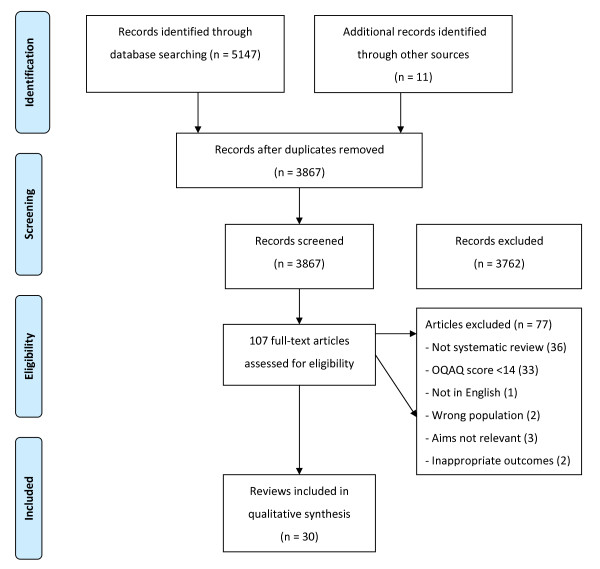
BACKGROUND: To develop more efficient programmes for promoting dietary and/or physical activity change (in order to prevent type 2 diabetes) it is critical to ensure that the intervention components and characteristics most strongly associated with effectiveness are included. The aim of this systematic review of reviews was to identify intervention components that are associated with increased change in diet and/or physical activity in individuals at risk of type 2 diabetes. METHODS: MEDLINE, EMBASE, CINAHL, PsycInfo, and the Cochrane Library were searched for systematic reviews of interventions targeting diet and/or physical activity in adults at risk of developing type 2 diabetes from 1998 to 2008. Two reviewers independently selected reviews and rated methodological quality. Individual analyses from reviews relating effectiveness to intervention components were extracted, graded for evidence quality and summarised. RESULTS: Of 3856 identified articles, 30 met the inclusion criteria and 129 analyses related intervention components to effectiveness. These included causal analyses (based on randomisation of participants to different intervention conditions) and associative analyses (e.g. meta-regression). Overall, interventions produced clinically meaningful weight loss (3-5 kg at 12 months; 2-3 kg at 36 months) and increased physical activity (30-60 mins/week of moderate activity at 12-18 months). Based on causal analyses, intervention effectiveness was increased by engaging social support, targeting both diet and physical activity, and using well-defined/established behaviour change techniques. Increased effectiveness was also associated with increased contact frequency and using a specific cluster of "self-regulatory" behaviour change techniques (e.g. goal-setting, self-monitoring). No clear relationships were found between effectiveness and intervention setting, delivery mode, study population or delivery provider. Evidence on long-term effectiveness suggested the need for greater consideration of behaviour maintenance strategies. CONCLUSIONS: This comprehensive review of reviews identifies specific components which are associated with increased effectiveness in interventions to promote change in diet and/or physical activity. To maximise the efficiency of programmes for diabetes prevention, practitioners and commissioning organisations should consider including these components.
Overview
The claims and statistics of this paper haven’t been checked yet.
Free: it reads the open-access text and checks the first 5 claims that cite a source we can check. Create a free account to check every claim.
Integrity signals
Registry
Cites
Statistics
Figures
Verification
Claims the paper makes
The claims and statistics of this paper haven’t been checked yet.
Free: it reads the open-access text and checks the first 5 claims that cite a source we can check. Create a free account to check every claim.
Claims other papers make about this one
Each is checked against this paper’s own text: does it say what the citing paper says it does?
The cited source says what the claim attributes to it.
In the citing paper
“The addition of behavioural interventions as a third component is believed to increase the effectiveness of dietary and physical interventions (Greaves et al., 2011;Teede et al., 2018).”
From Improvements in PCOS characteristics and phenotype severity during a randomized controlled lifestyle intervention (2021) · cites this paper as Greaves et al., 2011
In the citing paper
“Several studies have shown that targeting dietary self-monitoring, providing social support, and emphasizing both dietary changes and physical activity are key components to successful face-to-face behavioral weight-loss programs [43].”
From Tweets, Apps, and Pods: Results of the 6-Month Mobile Pounds Off Digitally (Mobile POD) Randomized Weight-Loss Intervention Among Adults (2011) · cites this paper as [43]
Self-check
Percentages, sums and reported differences re-computed from the paper’s own numbers.
The self-check needs the paper’s full text.
Citations
Cites
1 retracted
Psychological interventions for overweight or obesity
Shaw, K. A., O'Rourke, P., Del Mar, C., & Kenardy, J. (2005) · Cochrane Database of Systematic Reviews · doi:10.1002/14651858.cd003818.pub2 · Cited by 442 · cited 9×
“5 kg at a median 6 months of follow up[54].”
BackgroundMethodInfluentialRetractedThe theory of planned behavior
Ajzen, I. (1991) · Organizational Behavior and Human Decision Processes · doi:10.1016/0749-5978(91)90020-t · Cited by 134,657 · cited 2×
“Social Cognitive Theory,[60] Theory of Planned Behaviour[ 61 ]) were no more effective in producing changes in either weight or in combined dietary and physical activity outcomes than interventions with no stated theoretical basis[38].”
BackgroundMethodReduction in the incidence of type 2 diabetes with lifestyle intervention or metformin
(2002) · New England Journal of Medicine · doi:10.1056/nejmoa012512 · Cited by 19,011 · cited 5×
“Large randomised controlled trials (RCTs) have shown that relatively modest changes in lifestyle (increasing fibre (≥15 g/1000 kcal), reducing total fat (< 30% of energy consumed) and saturated fat (< 10% of energy consumed), engaging in moderate physical activity (≥30 mins/day), weight reduction (5%)) can reduce the…”
BackgroundMethodInfluentialTuomilehto, J., Lindström, J., Eriksson, J. G., Valle, T. T., Hämäläinen, H., Ilanne-Parikka, P., Keinänen-Kiukaanniemi, S., Laakso, M., Louheranta, A., Rastas, M., et al. (2001) · New England Journal of Medicine · doi:10.1056/nejm200105033441801 · Cited by 10,873 · cited 2×
“Our recommendations go considerably beyond the data on basic effectiveness presented in trials and systematic reviews of diabetes prevention programmes to date[3-8].”
Background‘Small Changes' to Diet and Physical Activity Behaviors for Weight Management
Hills, A. P., Byrne, N. M., Lindstrom, R., & Hill, J. O. (2013) · Obesity Facts · doi:10.1159/000345030 · Cited by 9,493
Motivational interviewing: preparing people for change.
Miller, W. R., & Rollnick, S. (2002) · Guilford Press eBooks · Cited by 7,915
The cochrane database of systematic reviews
Geddes, J. (1996) · Journal of Psychosomatic Research · doi:10.1016/s0022-3999(96)90063-x · Cited by 5,989
Cochrane Database of Systematic Reviews
(2008) · Encyclopedia of Public Health · doi:10.1007/978-1-4020-5614-7_436 · Cited by 4,527
Kirk, J., MacDonald, A., Lavender, P., Dean, J., & Rubin, G. (2017) · Biomedicine Hub · doi:10.1159/000480347 · Cited by 3,887
A taxonomy of behavior change techniques used in interventions
Abraham, C., & Michie, S. (2008) · Health Psychology · doi:10.1037/0278-6133.27.3.379 · Cited by 2,525
Self-citation
Research works printed but not linked: 5
- Scottish Intercollegiate Guidelines Network (SIGN) Management of Diabetes: A national clinical guideline. SIGN Publication Number 55 2001 Edinburgh: SIGN
- Dombrowski SU Sniehotta FF Avenell A Johnston M MacLennan G Araujo-Soares V Effects of specific behaviour change techniques on behaviour and weight change: A systematic review Health Psychology Review in press 20607139
- Bandura A Social foundations of thought and action: A social cognitive theory 1986 Englewood Cliffs, NJ: Prentice-Hall
- National Institute for Health and Clinical Excellence Obesity guidance on the prevention, identification, assessment and management of overweight and obesity in adults and children. London 2006 22497033
- Smith J Deno S Pronk N Reinhardt L Behavioural therapy programs for weight loss in adults: ICSI Technology Assessment Report 2005 Minnesota: Institute for Clinical Systems Improvement
Cited by
Items 601–700 of 1,000
O’Brien, L., & Forster, J. (2020) · Urban forestry & urban greening · doi:10.1016/j.ufug.2020.126844 · Cited by 16
Evidence-based recommendations to assist adults with depression to become lifelong movers
Fortier, M., McFadden, T., & Faulkner, G. (2020) · Health Promotion and Chronic Disease Prevention in Canada · doi:10.24095/hpcdp.40.10.01 · Cited by 17
Williamson, T. M., Moran, C., McLennan, A., Seidel, S., Ma, P. P., Koerner, M.-L., & Campbell, T. S. (2020) · Progress in Cardiovascular Diseases · doi:10.1016/j.pcad.2020.12.007 · Cited by 20
Steele, C. C., Steele, T. J., Rosenkranz, S. K., Lee, J., & Ade, C. J. (2021) · Supportive Care in Cancer · doi:10.1007/s00520-020-05940-w · Cited by 18
“egies that providers could implement to promote behavior change [40], although they are used infrequently [41].”
BackgroundAyre, J., Bonner, C., Muscat, D. M., Bramwell, S., McClelland, S., Jayaballa, R., MABERLY, G. F., & McCaffery, K. J. (2021) · Psychology and Health · doi:10.1080/08870446.2021.1909023 · Cited by 15
Wilson, J. J., Kirk, A. F., Hayes, K., Bradbury, I., McDonough, S., Tully, M. A., O'Neill, B. M., & Bradley, J. M. (2015) · Respiratory Care · doi:10.4187/respcare.04154 · Cited by 16
A Review of Android Apps for Smoking Cessation
Bennett, M. E., Toffey, K., Dickerson, F., Himelhoch, S. S., Katsafanas, E., & Savage, C. L. G. (2014) · The Journal of Smoking Cessation · doi:10.1017/jsc.2014.1 · Cited by 15
A review of literature on diabetes self-management: Scope for research and practice in India
Sridharan, S. G., Chittem, M., & Muppavaram, N. (2016) · Journal of Social Health and Diabetes · doi:10.4103/2321-0656.187987 · Cited by 17
“Third, sociocultural norms about exercise influence patients’ participation in physical activity, with patients reporting negative attitudes toward exercise and/or social stigma being main reasons for the lack of exercise adherence.([30]) Finally, research indicates that having an external locus of control (i.”
BackgroundNur Emilia, A., Yaacob, L. H., & Kadir, A. A. (2018) · Bangladesh Journal of Medical Science · doi:10.3329/bjms.v17i1.35280 · Cited by 16
Effect of Yoga Based Lifestyle Intervention on Coronary Artery Disease Patients
Chhajer, B., Singh, V., Kumari, G., & Lohmor, M. (2018) · Biomedical & Pharmacology Journal · doi:10.13005/bpj/1489 · Cited by 17
Richardson, E. V., Barstow, E. A., Fifolt, M. M., & Motl, R. W. (2018) · Qualitative Health Research · doi:10.1177/1049732318819453 · Cited by 15
“To maintain exercise behavior, behavior change techniques further must be implemented (Greaves et al., 2011).”
BackgroundPotthoff, S., Presseau, J., Sniehotta, F. F., Breckons, M., Rylance, A., & Avery, L. (2019) · BMC Medical Informatics and Decision Making · doi:10.1186/s12911-019-0744-9 · Cited by 18
“This intervention draws upon evidence-based behavioural science to provide a mode of targeting risk perception and supporting goal setting, action planning and coping planning of people with type 2 diabetes [38 – 40].”
do Prado, L. S., Carpentier, C., Préau, M., Schott, A., & Dima, A. L. (2019) · JMIR mhealth and uhealth · doi:10.2196/13494 · Cited by 18
“Goal management BCTs (ie, goal setting and goal review ) were found to be effective in physical activity and dietary behavior change interventions [38-41].”
Freene, N., Davey, R., & McPhail, S. (2019) · BMC Sports Science Medicine and Rehabilitation · doi:10.1186/s13102-019-0118-8 · Cited by 19
McGirr, C., Rooney, C., Gallagher, D., Dombrowski, S. U., Anderson, A. S., Cardwell, C. R., Free, C., Hoddinott, P., Holmes, V. A., McIntosh, E., et al. (2020) · Public Health Research · doi:10.3310/phr08040 · Cited by 17
Promoting sustainability behaviours through forestry
O’Brien, L., Morris, J. B., Marzano, M., & Dandy, N. (2016) · Forestry An International Journal of Forest Research · doi:10.1093/forestry/cpw030 · Cited by 19
“However, a review of the evidence suggests that social actors such as families, community structures and social networks can play critical roles in behavioural change, and thus affecting these can have significant benefits in terms of achieving the desired behavioural change outcomes (Greaves et al., 2011; Jepson et a…”
BackgroundWieland, M. L., Njeru, J. W., Okamoto, J. M., Novotny, P. J., Breen-Lyles, M. K., Goodson, M., Porraz Capetillo, G. D., Molina, L. E., & Sia, I. G. (2020) · Journal of Behavioral Medicine · doi:10.1007/s10865-019-00131-3 · Cited by 14
Mazéas, A., Chalabaëv, A., Blond, M., Mourgues, C., Pereira, B., & Duclos, M. (2025) · Journal of Medical Internet Research · doi:10.2196/78376 · Cited by 15
“Moreover, only a low percentage of patients maintain their physical activity (PA) at the end of these programs [6-8].”
Hietbrink, E. A. G., Middelweerd, A., van Empelen, P., Preuhs, K., Konijnendijk, A., Nijeweme-d’Hollosy, W. O., Schrijver, L. K., Laverman, G. D., & Vollenbroek-Hutten, M. M. R. (2023) · JMIR Human Factors · doi:10.2196/40017 · Cited by 17
Holm, T. F., Udsen, F. W., Giese, I. E., Færch, K., Jensen, M. H., von Scholten, B. J., & Hangaard, S. (2024) · Journal of Diabetes Science and Technology · doi:10.1177/19322968241292646 · Cited by 20
Russell, E., Kirk, A. F., Dunlop, M. D., Hodgson, W., Patience, M., & Egan, K. J. (2025) · Journal of Medical Internet Research · doi:10.2196/66294 · Cited by 15
Hollis, J., Williams, L. T., Young, M. D., Pollard, K. T., Collins, C. E., & Morgan, P. J. (2014) · Appetite · doi:10.1016/j.appet.2014.07.020 · Cited by 17
“In the last few decades, there has been a strong interest in effective weight gain prevention 64 strategies to combat rising obesity prevalence.[1-7] Not surprisingly, the worldwide weight 65 gain trend correlates with decreasing levels of adherence to population diet and physical 66 activity recommendations.”
Zhang, J., Jemmott, J. B., O’Leary, A., Stevens, R. C., Jemmott, L. S., Icard, L. D., Hsu, J., & Rutledge, S. E. (2016) · Annals of Behavioral Medicine · doi:10.1007/s12160-016-9832-6 · Cited by 14
“Although considerable research has revealed that physical-activity interventions can be efficacious [8, 9], most of the research involved white and female participants [10].”
Donnachie, C., Wyke, S., & Hunt, K. (2018) · BMC Public Health · doi:10.1186/s12889-018-5179-1 · Cited by 15
Lawlor, E. R., Cupples, M., Donnelly, M., & Tully, M. A. (2019) · Journal of Public Health · doi:10.1093/pubmed/fdz167 · Cited by 16
McCormack, G. R., Petersen, J. A., Ghoneim, D., Blackstaffe, A., Naish, C., & Doyle–Baker, P. K. (2022) · JMIR Formative Research · doi:10.2196/37348 · Cited by 15
“However, physical activity interventions offer individuals opportunities to initiate, maintain, and modify their physical activity routines [6,7].”
BackgroundGrimshaw, S. L., Taylor, N. F., Conyers, R. K., & Shields, N. (2022) · Frontiers in Pediatrics · doi:10.3389/fped.2022.980890 · Cited by 15
Hill, E. B., Grainger, E. M., Young, G. S., Clinton, S. K., & Spees, C. (2022) · Nutrients · doi:10.3390/nu14224751 · Cited by 15
Zuo, M., Zhu, W., Lin, J., Zhuo, J., He, X., Jing, X., Tang, J., & Deng, R. (2022) · BMC Nursing · doi:10.1186/s12912-022-01126-3 · Cited by 16
“This is consistent with systematic reviews and meta-analyses, which indicate that MI-based interventions were effective for increasing physical activity and improving adherence and communication, finally relieving numerous symptoms [44, 45].”
ResultSanders, J. P., Gokal, K., Thomas, J. J. C., Rawstorn, J. C., Sherar, L. B., Maddison, R., Greaves, C. J., Esliger, D., Daley, A., & Snacktivity Investigators (2023) · JMIR Formative Research · doi:10.2196/41114 · Cited by 16
“The last two decades have seen a rapid increase in well-designed and robustly evaluated physical activity trials [4,5].”
BackgroundSelf-citationBehavioral Interventions to Promote Diabetes Self-Management
Wagner, J. A. (2011) · Diabetes Spectrum · doi:10.2337/diaspect.24.2.61 · Cited by 14
Commentary: Diagnostic Validity and Clinical Utility of HbA1c Tests for Type 2 Diabetes Mellitus
Owora, A. H. (2016) · Current Diabetes Reviews · doi:10.2174/1573399812666161129154559 · Cited by 15
“edu nutritional interventions augmented with physical activity and better lifestyle choices), [9] a substantial proportion of individuals with T2DM often receive late (or delayed) diagnoses [10].”
BackgroundWhiston, A., Kidwell, K., O’Reilly, S., Walsh, C., Walsh, J. C., Glynn, L. G., Robinson, K., & Hayes, S. (2024) · BMC Medical Research Methodology · doi:10.1186/s12874-024-02439-4 · Cited by 13
Nayak, S. S., Amini‐Salehi, E., Ulrich, M. T., Sahli, Y., Fleischman, M., Patel, M., Naeiji, M., Maghsoodifar, H., Douki, S. A. H. S., Alotaibi, A., et al. (2025) · Annals of Medicine and Surgery · doi:10.1097/ms9.0000000000003034 · Cited by 14
“The third most cited paper was a study by Greaves et al , published in BMC Public Health in 2011 [ 38 ] .”
A qualitative analysis of the role of emotions in different patterns of long-term weight loss
Ingels, J. S., & Zizzi, S. (2018) · Psychology and Health · doi:10.1080/08870446.2018.1453511 · Cited by 14
“The moderate group aimed to capture participants who had achieved weight loss that is a common goal weight management programmes (Greaves et al., 2011).”
InfluentialmHealth prompts within diabetes prevention programs: a scoping review
MacPherson, M., Merry, K. J., Locke, S., & Jung, M. E. (2022) · mHealth · doi:10.21037/mhealth-21-22 · Cited by 13
“, goal setting, self-monitoring, action planning, problem solving) have been recommended as effective components to improve intervention efficacy (25,31).”
BackgroundSaxton, J., Pickering, K., Wane, S., Humphreys, H., Crank, H., Anderson, A. S., Cain, H. J., Cohen, J., Copeland, R. J., Gray, J., et al. (2022) · BMC Cancer · doi:10.1186/s12885-022-10287-y · Cited by 15
“Establishing a structure for frequent contact and social support is consistent with best-evidence strategies for promoting changes in dietary and physical activity behaviours in the general population [15] and in people living with and beyond cancer [16].”
BackgroundLiu, K., Choi, T. S. T., Zhao, L., Teong, X. T., Hutchison, A. T., & Heilbronn, L. K. (2023) · Nutrition & Dietetics · doi:10.1111/1747-0080.12855 · Cited by 16
Yusufov, M., Paiva, A. L., Redding, C. A., Lipschitz, J. M., Gökbayrak, N. S., Greene, G. W., Rossi, J. S., Blissmer, B. J., Velicer, W. F., & Prochaska, J. O. (2015) · Health Promotion Practice · doi:10.1177/1524839915606423 · Cited by 16
McMahon, N. E., Visram, S., & Connell, L. (2016) · BMC Public Health · doi:10.1186/s12889-016-3063-4 · Cited by 17
“A systematic review of reviews by Greaves and colleagues [11] investigated the components of dietary and physical activity interventions that were associated with increased effectiveness.”
Backgroundter Braak, U. B. J. M., Hinnen, C., de Jong, M. M. C., & van de Laar, A. W. J. M. (2017) · Obesity Surgery · doi:10.1007/s11695-017-2852-x · Cited by 15
Changes in Sitting Time and Sitting Fragmentation after a Workplace Sedentary Behaviour Intervention
Hutchinson, J., Headley, S., Matthews, T., Spicer, G., Dempsey, K., Wooley, S., & Janssen, X. (2018) · International Journal of Environmental Research and Public Health · doi:10.3390/ijerph15061148 · Cited by 14
“In addition, individualized consultation approaches have shown to be an effective way to target these concepts and result in successful behaviour change in physical activity and dietary studies [20,21].”
BackgroundMiddelweerd, A., Velde, S. J. T., Mollee, J. S., Klein, M. C. A., & Brug, J. (2018) · JMIR Research Protocols · doi:10.2196/resprot.7169 · Cited by 13
“Social cognitive theory (SCT) was adopted as a basis for the theoretical framework as it is one of the most prominent behavior change theories used to inform interventions targeting health behavior change [10,47,48], and a recent meta-analysis reported that SCT concepts may explain 31% of variance in PA [10].”
MethodDawson, S. L., Craig, J. M., Clarke, G. A., Mohebbi, M., Dawson, P., Tang, M. L. K., & Jacka, F. N. (2019) · JMIR Research Protocols · doi:10.2196/14771 · Cited by 13
“Behavior change is an effective method for supporting dietary adherence in community-based interventions [37-39], including among pregnant populations [40].”
InfluentialTreatment of urinary incontinence in overweight women by a multidisciplinary lifestyle intervention
Fjerbæk, A., Søndergaard, L., Andreasen, J., & Glavind, K. (2019) · Archives of Gynecology and Obstetrics · doi:10.1007/s00404-019-05371-x · Cited by 13
Holm, N. J., Møller, T., Adamsen, L., Dalsgaard, L. T., Biering‐Sørensen, F., & Schou, L. (2019) · BMJ Open · doi:10.1136/bmjopen-2019-030310 · Cited by 13
Autonomy-Supportive Interventions
Reeve, J., & Cheon, S. H. (2020) · Cambridge University Press eBooks · doi:10.1017/9781108677318.035 · Cited by 15
Critical and Qualitative Approaches to Behavior Change
Chamberlain, K., & Lyons, A. C. (2020) · Cambridge University Press eBooks · doi:10.1017/9781108677318.030 · Cited by 16
King, A. C., Campero, M. I., Sheats, J. L., Castro, C. M., Espinosa, P. R., Garcia, D. M., Hauser, M. E., Done, M. E., Patel, M. L., Parikh, N. M., et al. (2020) · Contemporary Clinical Trials · doi:10.1016/j.cct.2020.106084 · Cited by 14
Jancey, J. M., Lee, A. H., James, A. P., Howat, P. A., Hills, A. P., Anderson, A. S., Tran, V. D., & Blackford, K. (2020) · Australian and New Zealand Journal of Public Health · doi:10.1111/1753-6405.13036 · Cited by 15
Haynes, A. S., Sherrington, C., Wallbank, G., Wickham, J. B., Tong, A., Kirkham, C., Manning, S., Ramsay, E., & Tiedemann, A. (2021) · PLoS ONE · doi:10.1371/journal.pone.0259873 · Cited by 13
Perichart‐Perera, O., Balas-Nakash, M., Muñoz‐Manrique, C., Legorreta-Legorreta, J., Rodríguez-Cano, A. M., Mier‐Cabrera, J., & Aguilera-Pérez, J. R. (2014) · Menopause The Journal of The North American Menopause Society · doi:10.1097/gme.0000000000000160 · Cited by 14
“Goal setting is one of the selfregulatory strategies that have been proved effective in dietary and physical activity interventions.(41) This strategy implies focusing on small changes before advancing to more challenging behaviors.”
BackgroundUsing smartwatches to facilitate a group dynamics-based statewide physical activity intervention
Esakia, A., McCrickard, D. S., Harden, S. M., Horning, M., & Ramalingam, N. (2020) · International Journal of Human-Computer Studies · doi:10.1016/j.ijhcs.2020.102501 · Cited by 13
Maheta, B. J., Singh, N. K., Lorenz, K., Fereydooni, S., Dy, S. M., Wong, H.-N., Bergman, J., Leppert, J. T., & Giannitrapani, K. F. (2023) · PLoS ONE · doi:10.1371/journal.pone.0294599 · Cited by 13
Behavioral Frameworks and Translational Applications of Culinary Medicine and Culinary Nutrition
Krenek, A. M., Mobley, A. R., Andrade, J., Dahl, W. J., & Mathews, A. (2024) · Journal of Nutrition Education and Behavior · doi:10.1016/j.jneb.2024.07.001 · Cited by 13
The importance of physical activity
Langer, D., Demeyer, H., Troosters, T., & Gosselink, R. (2015) · European Respiratory Society eBooks · doi:10.1183/2312508x.10019914 · Cited by 12
“Key components that increase the effectiveness of behavioural interventions targeting physical activity in populations other than COPD have already been summarised in several meta-analyses and international guidelines [87, 89–94].”
BackgroundMethodInfluentialHassett, L. M., Tiedemann, A., Hinman, R. S., Crotty, M., Hoffmann, T., Harvey, L. A., Taylor, N. F., Greaves, C. J., Treacy, D., Jennings, M. D., et al. (2020) · BMJ Open · doi:10.1136/bmjopen-2019-034696 · Cited by 13
Self-citationRatz, T., & Lippke, S. (2021) · Elsevier eBooks · doi:10.1016/b978-0-12-818697-8.00068-6 · Cited by 15
Skarin, F., Wästlund, E., & Gustafsson, H. (2021) · Frontiers in Psychology · doi:10.3389/fpsyg.2021.688192 · Cited by 15
“Regardless, maintaining change is complex and previous reviews on maintained intervention-induced behavior change (Avenell et al., 2004; Curioni and Lourenço, 2005; Greaves et al., 2011) have shown that the best maintained weight loss results come from interventions focusing on physical activity and healthy eating in…”
BackgroundUnpacking the Drivers of Dissatisfaction and Satisfaction in a Fitness Mobile Application
Kim, M., & Lee, S.-M. (2023) · Behavioral Sciences · doi:10.3390/bs13090782 · Cited by 16
Siwik, V. P., Kutob, R. M., Ritenbaugh, C., Aickin, M. G., & Gordon, J. S. (2012) · The Science of Diabetes Self-Management and Care · doi:10.1177/0145721712461533 · Cited by 12
“Most research suggests that social support is positively linked to general health status and lifestyle change.(31,32) However, to date, no studies have examined the impact of social support on maintaining lifestyle change in a group office visit setting.”
BackgroundAvery, L., Sniehotta, F. F., Denton, S. J., Steen, N., McColl, E., Taylor, R., & Trenell, M. I. (2014) · Trials · doi:10.1186/1745-6215-15-46 · Cited by 14
Brust-Renck, P. G., Reyna, V. F., Wilhelms, E. A., Wolfe, C. R., Widmer, C. L., Cedillos, E. M., & Morant, A. K. (2016) · Behavior Research Methods · doi:10.3758/s13428-016-0794-1 · Cited by 15
“Behavioral intentions have been found to be a predictor of behavior (for a review, see Greaves et al., 2011; Webb & Sheeran, 2006).”
BackgroundEvaluation of a Worksite-Based Small Group Team Challenge to Increase Physical Activity
Tullar, J. M., Walker, T. J., Page, T. F., Taylor, W. C., Román, R., & Amick, B. C. (2018) · American Journal of Health Promotion · doi:10.1177/0890117118784229 · Cited by 12
“As with previous workplace physical activity interventions, the team-challenge intervention had positive results.(28,29) However, the intervention duration evaluated was shorter than many studies (6 weeks vs the average of *12 weeks(5)).”
Piloting a New Approach to the Treatment of Obesity Using Dexamphetamine
Poulton, A. S., Hibbert, E., Champion, B. L., Cook, T. L., Alais, D., & Coulshed, D. S. (2015) · Frontiers in Endocrinology · doi:10.3389/fendo.2015.00014 · Cited by 13
“Greaves’ group found that weight loss of 3–5 kg was reported after lifestyle interventions over 12 months’ duration and 2–3 kg after 36 months’ duration (27).”
BackgroundMüller, G., Weser, G., & Schwarz, P. E. H. (2013) · Journal of Endocrinological Investigation · doi:10.1007/bf03347104 · Cited by 12
Self-citationRitchie, N. D., Carroll, J. K., Holtrop, J. S., & Havranek, E. P. (2018) · Translational Behavioral Medicine · doi:10.1093/tbm/ibx021 · Cited by 12
The Science of Behavior Change: The Road Ahead
Hagger, M. S., Cameron, L. D., Hamilton, K., Hankonen, N. E., & Lintunen, T. (2020) · Cambridge University Press eBooks · doi:10.1017/9781108677318.046 · Cited by 16
Physical Activity and Health Promotion
Heath, G. W., & Liguori, G. A. (2015) · Elsevier eBooks · doi:10.1016/b978-0-08-097086-8.14116-9 · Cited by 15
Morrow, A., Walker, K., Calder-MacPhee, N., & Özakinci, G. (2022) · Journal of Behavioral Medicine · doi:10.1007/s10865-021-00279-x · Cited by 15
Berglund, A., Klompstra, L. V., Orädd, H., Fallström, J., Strömberg, A., Jaarsma, T., & Berglund, E. (2024) · JMIR Serious Games · doi:10.2196/50066 · Cited by 12
“Furthermore, smartphones provide connectivity, enabling users to get social support that can impact individual motivation positively and consequently improve goal attainment [26,29,30].”
El uso de podómetros para incrementar la actividad física en población adulta: una revisión
Miragall, M., Domínguez, A., Cebolla, A., & Baños, R. (2015) · Clínica y Salud · doi:10.1016/j.clysa.2015.06.002 · Cited by 15
Maximizing User Engagement with Behavior Change Interventions
Yardley, L., Morrison, L. G., Müller, I., & Bradbury, K. J. (2020) · Cambridge University Press eBooks · doi:10.1017/9781108677318.025 · Cited by 13
A Randomized mHealth Trial to Promote Vegetable Intake Through Counting and Goal Setting
Bhurosy, T., Middlestadt, S. E., Lin, H., Thiagarajah, K., & Fly, A. D. (2020) · Journal of Nutrition Education and Behavior · doi:10.1016/j.jneb.2020.08.009 · Cited by 11
Chen, M., Ukke, G. G., Moran, L., Sood, S., Bennett, C., Khomami, M. B., Absetz, P., Teede, H. J., Harrison, C. L., & Lim, S. S. (2021) · Nutrients · doi:10.3390/nu13114118 · Cited by 15
Hobby, J., Crowley, J., Barnes, K. A., MITCHELL, L. J., Parkinson, J. E., & Ball, L. (2022) · BMJ Open · doi:10.1136/bmjopen-2021-058955 · Cited by 11
Jones, K., Naisby, J., Baker, K., & Tew, G. A. (2023) · Crohn s & Colitis 360 · doi:10.1093/crocol/otad019 · Cited by 11
“46,47 Strategies to engage these support structures should be built into future programs.”
BackgroundElectronic Documentation of Lifestyle Counseling and Glycemic Control in Patients With Diabetes
Hosomura, N., Goldberg, S. I., Shubina, M., Zhang, M. F., & Turchin, A. (2015) · Diabetes Care · doi:10.2337/dc14-2016 · Cited by 13
Navas‐Carretero, S., Holst, C., Saris, W. H. M., van Baak, M. A., Jebb, S. A., Kafatos, A., Papadaki, A., Pfeiffer, A. F. H., Handjieva‐Darlenska, T., Hlavatý, P., et al. (2015) · Journal of the American College of Nutrition · doi:10.1080/07315724.2014.948642 · Cited by 13
“A number of strategies to combat excessive body weight and obesity comorbidities are being devised to reduce total food/calorie intake and to increase energy expenditure, or both simultaneously [12,24].”
BackgroundCastro, Y., Basen‐Engquist, K., Fernández, M. E., Strong, L. L., Eakin, E., Resnicow, K., Li, Y., & Wetter, D. W. (2013) · BMC Public Health · doi:10.1186/1471-2458-13-237 · Cited by 12
Caperon, L., Sykes‐Muskett, B., Clancy, F., Newell, J. N., King, R., & Prestwich, A. (2018) · Health Psychology Review · doi:10.1080/17437199.2018.1481763 · Cited by 13
“Some elements have been shown previously to be associated with the magnitude of health behaviour intervention effects such as the length or intensity of the intervention (e.g., Greaves et al., 2011), who delivers the intervention and the mode of delivery (e.g., Prestwich et al., 2017).”
BackgroundMotivational Interviewing Interventions
Berman, A. H., Beckman, M., & Lindqvist, H. (2020) · Cambridge University Press eBooks · doi:10.1017/9781108677318.045 · Cited by 14
Social support, relationships, and physical activity
WILSON, K. S. (2021) · Society for Transparency, Openness, and Replication in Kinesiology eBooks · doi:10.51224/b1010 · Cited by 12
“In another review of interventions that included both diet and physical activity for those at risk of type 2 diabetes, the inclusion of social support was one of the strategies that improved the effectiveness of interventions (Greaves et al., 2011).”
BackgroundMacPherson, M., Cranston, K. D., Johnston, C., Locke, S., & Jung, M. E. (2021) · JMIR Formative Research · doi:10.2196/28163 · Cited by 12
“This study aims to outline the evaluation and refinement of a bank of SMS text messages designed for individuals at risk for T2D who have taken part in the Small Steps for Big Changes (SSBC) diabetes prevention program [37,38].”
MethodInfluentialSui, W., Morava, A., Tsang, J. M. F., Sui, A., & Rhodes, R. E. (2022) · Journal of Health Psychology · doi:10.1177/13591053221074584 · Cited by 11
Detection and Early Lifestyle Intervention in Those at Risk of Type 2 Diabetes
Edwardson, C. L., Gray, L. J., Yates, T. E., Barber, S. R., Khunti, K., & Davies, M. J. (2014) · EMJ Diabetes · doi:10.33590/emjdiabet/10313999 · Cited by 14
Ingram, W. M., Webb, D., Taylor, R. S., Anokye, N., Yardley, L., Jolly, K. B., Mutrie, N., Campbell, J. L., Dean, S. G., Greaves, C. J., et al. (2018) · BMJ Open · doi:10.1136/bmjopen-2018-022382 · Cited by 13
“22 The LifeGuide platform provides a researcher-led tool to develop interventions drawn from theory and evidence of effective techniques 23 24 and provides the opportunity to understand engagement and utility of different behaviour change components.”
Self-citationDasgupta, K., Jarvandi, S., De Civita, M., Pillay, S., Hajna, S., Gougeon, R., Bader, A., & Da Costa, D. (2014) · PLoS ONE · doi:10.1371/journal.pone.0114620 · Cited by 10
“[32] This finding lends support to the importance of including theory- driven behaviour change techniques to maximize the effectiveness of diabetes prevention programs [15, 32].”
Renaghan, E., Wishon, M. J., Wittels, H. L., Feigenbaum, L. A., Bellamy, K., Hatfield, M. C., Girardi, J., Lee, S. J., McDonald, S. M., & Wittels, S. H. (2023) · Frontiers in Sports and Active Living · doi:10.3389/fspor.2023.1267631 · Cited by 10
“Research shows that interventions of increased complexity demanding many resources and time, are prone to reduced compliance, minimized effects, and eventual withdrawal (47, 48).”
BackgroundYin, Y., Liu, J. Y. W., Fan, T. M., Leung, K. M., Ng, M. W., Tsang, T. Y., Wong, K. P., & Valimaki, M. A. (2021) · Frontiers in Nutrition · doi:10.3389/fnut.2021.619903 · Cited by 10
“One published systematic review found that the effectiveness of intervention increased when a specific cluster of self-regulatory techniques was also employed, including goalsetting and self-monitoring (46).”
BackgroundShand, C., Crozier, S., Vassilev, I., Penn-Newman, D., Dhuria, P., Cooper, C. C., Rogers, A. E., Baird, J., & Vogel, C. (2021) · Social Science & Medicine · doi:10.1016/j.socscimed.2021.114228 · Cited by 13
Assessing Walking Programs in Fibromyalgia: A Concordance Study between Measures
López-Roig, S., Écija, C., Peñacoba, C., Ivorra, S., Nardi-Rodríguez, A., Lecuona, O. Z., & Pastor-Mira, M. D. L. Á. (2022) · International Journal of Environmental Research and Public Health · doi:10.3390/ijerph19052995 · Cited by 11
Annesi, J. J. (2022) · Research Quarterly for Exercise and Sport · doi:10.1080/02701367.2022.2057904 · Cited by 11
Kearsey, J. L., West, E., Vairinhos, N., Constable, N., Chu, A., Douglas, N., & Charlton, K. E. (2023) · Journal of Human Nutrition and Dietetics · doi:10.1111/jhn.13264 · Cited by 13
Rieger, E., Treasure, J. L., Swinbourne, J. M., Adam, B. N., Manns, C., & Caterson, I. D. (2013) · Clinical Obesity · doi:10.1111/cob.12042 · Cited by 11
“Suggesting the utility of a social support approach in obesity, there is some evidence to suggest that social support is an important aid for weight maintenance (20–23) and it has been consistently shown that social support predicts successful engagement in weight control behaviours (24,25).”
BackgroundSupporting behaviour change in older people with type 2 diabetes
Tomlin, A., & Asimakopoulou, K. G. (2014) · British Journal of Community Nursing · doi:10.12968/bjcn.2014.19.1.22 · Cited by 10
Evaluation of a Person-Centered, Theory-Based Intervention to Promote Health Behaviors
Worawong, C., Borden, M. J., Cooper, K. M., Pérez, Ó. A., & Lauver, D. (2017) · Nursing Research · doi:10.1097/nnr.0000000000000254 · Cited by 10
“Patient-centered interventions can be motivational and efficacious for improving diet, activity, and clinical status in the longer term (Greaves et al., 2011; Teixeira et al., 2012).”
BackgroundMethodInfluentialClarkson, P., Vassilev, I., Rogers, A. E., Brooks, C., Wilson, N., Lawson, J., & Adams, J. (2020) · JMIR Formative Research · doi:10.2196/18565 · Cited by 11
Mirzayi, C. A., Ferris, E., Özcebe, H., Swierad, E., Arslan, Ü., Ünlü, H. K., Araz, Ö. M., Yardim, M. S., Üner, S., Bilir, N., et al. (2021) · BMJ Open · doi:10.1136/bmjopen-2020-046317 · Cited by 9
Developing a Diet and Physical Activity Intervention for Hispanic/Latina Breast Cancer Survivors
Contento, I. R., Paul, R., Marín‐Chollom, A. M., Gaffney, A. O., Sepulveda, J., Dominguez, N., Gray, H. L., Haase, A. M., Hershman, D. L., Koch, P. A., et al. (2022) · Cancer Control · doi:10.1177/10732748221133987 · Cited by 12
“Systematic reviews have found goal-setting, along with attendant self-monitoring, to be one of the most effective components associated with increased physical activity and improved diets.(22,47,58) Consequently in this program, participants are taught goal setting skills for specific behaviors or actions and are prov…”
Background
Metadata
- Authors
- The IMAGE Study Group, Greaves, C. J., Sheppard, K. E., Abraham, C., Hardeman, W., Roden, M., Evans, P. H., & Schwarz, P.
- Affiliations
- University of Exeter (GB)
- University of Sussex (GB)
- University of Cambridge (GB)
- Deutsches Diabetes-Zentrum e.V. (DE)
- Technische Universität Dresden (DE)
- Corresponding author
- Greaves, Colin J
- Venue
- BMC Public Health
- Published
- 2011-02-18
- Volume
- 11
- Issue
- 1
- Pages
- 119-119
- ISSN
- 1471-2458 (ISSN-L)
- PMC
- PMC3048531
- OpenAlex
- W1986234805
- Semantic Scholar
- ae3ceecabd2574191054e1c9fad7edb78e2c791f
- Cited by
- 1,163
- References
- 82
- Citations by year
- 2026: 35 · 2025: 50 · 2024: 60 · 2023: 55 · 2022: 79 · 2021: 89 · 2020: 158 · 2019: 93 · 2018: 108 · 2017: 81 · 2016: 80 · 2015: 90 · 2014: 72 · 2013: 59 · 2012: 41
- FWCI
- 10.24
- Type
- journal article
- Language
- en
- Open access
- gold
- doi.org
- Licence
- cc-by
- creativecommons.org/licenses/by/2.0 (tdm)
- Locations
- BMC Public Health (publishedVersion, cc-by)
- PubMed Central (publishedVersion, cc-by)
- PubMed (publishedVersion)
- DOAJ (DOAJ: Directory of Open Access Journals) (submittedVersion)
- Figshare (submittedVersion, cc-by)
- Figshare (submittedVersion)
- Minerva Access (University of Melbourne) (submittedVersion, cc-by)
- Open Research Exeter (University of Exeter) (submittedVersion, cc-by)
- University of Birmingham Research Portal (University of Birmingham) (submittedVersion)
- UEA Digital Repository (University of East Anglia) (submittedVersion)
- Apollo (University of Cambridge) (submittedVersion, cc-by)
- Funders
- National Institute for Health and Care Research (PDA/02/06/031)
- European Commission
- Topics
- Social Sciences › Psychology › Applied Psychology › Behavioral Health and Interventions
- Health Sciences › Medicine › Public Health, Environmental and Occupational Health › Physical Activity and Health
- Health Sciences › Medicine › Endocrinology, Diabetes and Metabolism › Diabetes Management and Education
- Keywords
- type 2 diabetes prevention, dietary intervention, physical activity interventions, intervention components, behaviour change techniques, social support, weight loss, self-regulation, goal setting, self-monitoring, behavior maintenance, intervention effectiveness
- MeSH terms
- Diabetes Mellitus, Type 2, Diet, Health Promotion, Humans, Motivation, Exercise, Risk Reduction Behavior
About these checks
Registry, retraction, Cites and statistics results are computed, not judged, with one exception: a printed reference that no index lists is read once by a model before it counts as a citation error. Claims are extracted by a model and kept only when their quote appears verbatim in the text; each cited source is then checked, with a model’s help, for whether it says what the claim relies on. Those verdicts can be wrong — read the claim’s quote and the cited source before relying on one.
Statistics and arithmetic are recomputed, not judged.
Confidence bands are shown only for fields calibrated on our annotated test set. None is calibrated yet, so no band is shown.
What counts as a claim ›How we measure confidence ›How we check this ›
Are you an author, or do you see a problem with this page? Request a review
Data sources
Bibliographic data: Semantic Scholar, OpenAlex, Crossref.
Contains information from the Semantic Scholar Academic Graph Datasets, made available under the ODC Attribution License (ODC-BY 1.0).
Semantic Scholar’s data is described in: Kinney, R., et al. (2023). The Semantic Scholar Open Data Platform. arXiv:2301.10140.
