

Systematic review of reviews of intervention components associated with increased effectiveness in dietary and physical activity interventions
Open accessThe DOI matches its Crossref record; 79 of the 82 references it cites were found in a registry or an index.
Abstract
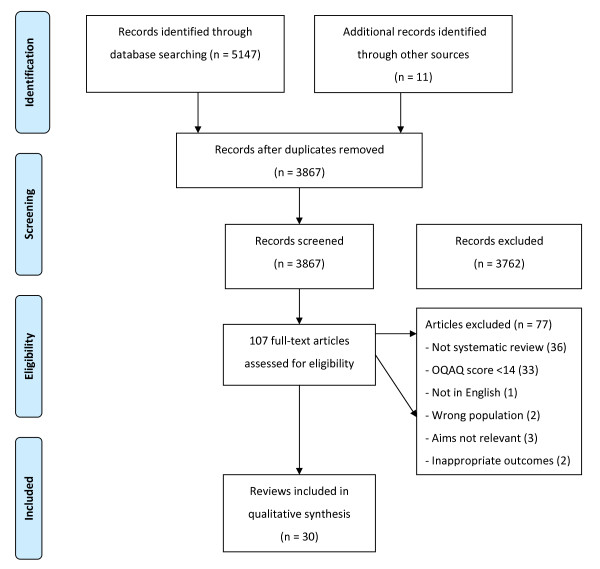
BACKGROUND: To develop more efficient programmes for promoting dietary and/or physical activity change (in order to prevent type 2 diabetes) it is critical to ensure that the intervention components and characteristics most strongly associated with effectiveness are included. The aim of this systematic review of reviews was to identify intervention components that are associated with increased change in diet and/or physical activity in individuals at risk of type 2 diabetes. METHODS: MEDLINE, EMBASE, CINAHL, PsycInfo, and the Cochrane Library were searched for systematic reviews of interventions targeting diet and/or physical activity in adults at risk of developing type 2 diabetes from 1998 to 2008. Two reviewers independently selected reviews and rated methodological quality. Individual analyses from reviews relating effectiveness to intervention components were extracted, graded for evidence quality and summarised. RESULTS: Of 3856 identified articles, 30 met the inclusion criteria and 129 analyses related intervention components to effectiveness. These included causal analyses (based on randomisation of participants to different intervention conditions) and associative analyses (e.g. meta-regression). Overall, interventions produced clinically meaningful weight loss (3-5 kg at 12 months; 2-3 kg at 36 months) and increased physical activity (30-60 mins/week of moderate activity at 12-18 months). Based on causal analyses, intervention effectiveness was increased by engaging social support, targeting both diet and physical activity, and using well-defined/established behaviour change techniques. Increased effectiveness was also associated with increased contact frequency and using a specific cluster of "self-regulatory" behaviour change techniques (e.g. goal-setting, self-monitoring). No clear relationships were found between effectiveness and intervention setting, delivery mode, study population or delivery provider. Evidence on long-term effectiveness suggested the need for greater consideration of behaviour maintenance strategies. CONCLUSIONS: This comprehensive review of reviews identifies specific components which are associated with increased effectiveness in interventions to promote change in diet and/or physical activity. To maximise the efficiency of programmes for diabetes prevention, practitioners and commissioning organisations should consider including these components.
Overview
The claims and statistics of this paper haven’t been checked yet.
Free: it reads the open-access text and checks the first 5 claims that cite a source we can check. Create a free account to check every claim.
Integrity signals
Registry
Cites
Statistics
Figures
Verification
Claims the paper makes
The claims and statistics of this paper haven’t been checked yet.
Free: it reads the open-access text and checks the first 5 claims that cite a source we can check. Create a free account to check every claim.
Claims other papers make about this one
Each is checked against this paper’s own text: does it say what the citing paper says it does?
The cited source says what the claim attributes to it.
In the citing paper
“The addition of behavioural interventions as a third component is believed to increase the effectiveness of dietary and physical interventions (Greaves et al., 2011;Teede et al., 2018).”
From Improvements in PCOS characteristics and phenotype severity during a randomized controlled lifestyle intervention (2021) · cites this paper as Greaves et al., 2011
In the citing paper
“Several studies have shown that targeting dietary self-monitoring, providing social support, and emphasizing both dietary changes and physical activity are key components to successful face-to-face behavioral weight-loss programs [43].”
From Tweets, Apps, and Pods: Results of the 6-Month Mobile Pounds Off Digitally (Mobile POD) Randomized Weight-Loss Intervention Among Adults (2011) · cites this paper as [43]
Self-check
Percentages, sums and reported differences re-computed from the paper’s own numbers.
The self-check needs the paper’s full text.
Citations
Cites
1 retracted
Psychological interventions for overweight or obesity
Shaw, K. A., O'Rourke, P., Del Mar, C., & Kenardy, J. (2005) · Cochrane Database of Systematic Reviews · doi:10.1002/14651858.cd003818.pub2 · Cited by 442 · cited 9×
“5 kg at a median 6 months of follow up[54].”
BackgroundMethodInfluentialRetractedThe theory of planned behavior
Ajzen, I. (1991) · Organizational Behavior and Human Decision Processes · doi:10.1016/0749-5978(91)90020-t · Cited by 134,657 · cited 2×
“Social Cognitive Theory,[60] Theory of Planned Behaviour[ 61 ]) were no more effective in producing changes in either weight or in combined dietary and physical activity outcomes than interventions with no stated theoretical basis[38].”
BackgroundMethodReduction in the incidence of type 2 diabetes with lifestyle intervention or metformin
(2002) · New England Journal of Medicine · doi:10.1056/nejmoa012512 · Cited by 19,011 · cited 5×
“Large randomised controlled trials (RCTs) have shown that relatively modest changes in lifestyle (increasing fibre (≥15 g/1000 kcal), reducing total fat (< 30% of energy consumed) and saturated fat (< 10% of energy consumed), engaging in moderate physical activity (≥30 mins/day), weight reduction (5%)) can reduce the…”
BackgroundMethodInfluentialTuomilehto, J., Lindström, J., Eriksson, J. G., Valle, T. T., Hämäläinen, H., Ilanne-Parikka, P., Keinänen-Kiukaanniemi, S., Laakso, M., Louheranta, A., Rastas, M., et al. (2001) · New England Journal of Medicine · doi:10.1056/nejm200105033441801 · Cited by 10,873 · cited 2×
“Our recommendations go considerably beyond the data on basic effectiveness presented in trials and systematic reviews of diabetes prevention programmes to date[3-8].”
Background‘Small Changes' to Diet and Physical Activity Behaviors for Weight Management
Hills, A. P., Byrne, N. M., Lindstrom, R., & Hill, J. O. (2013) · Obesity Facts · doi:10.1159/000345030 · Cited by 9,493
Motivational interviewing: preparing people for change.
Miller, W. R., & Rollnick, S. (2002) · Guilford Press eBooks · Cited by 7,915
The cochrane database of systematic reviews
Geddes, J. (1996) · Journal of Psychosomatic Research · doi:10.1016/s0022-3999(96)90063-x · Cited by 5,989
Cochrane Database of Systematic Reviews
(2008) · Encyclopedia of Public Health · doi:10.1007/978-1-4020-5614-7_436 · Cited by 4,527
Kirk, J., MacDonald, A., Lavender, P., Dean, J., & Rubin, G. (2017) · Biomedicine Hub · doi:10.1159/000480347 · Cited by 3,887
A taxonomy of behavior change techniques used in interventions
Abraham, C., & Michie, S. (2008) · Health Psychology · doi:10.1037/0278-6133.27.3.379 · Cited by 2,525
Self-citation
Research works printed but not linked: 5
- Scottish Intercollegiate Guidelines Network (SIGN) Management of Diabetes: A national clinical guideline. SIGN Publication Number 55 2001 Edinburgh: SIGN
- Dombrowski SU Sniehotta FF Avenell A Johnston M MacLennan G Araujo-Soares V Effects of specific behaviour change techniques on behaviour and weight change: A systematic review Health Psychology Review in press 20607139
- Bandura A Social foundations of thought and action: A social cognitive theory 1986 Englewood Cliffs, NJ: Prentice-Hall
- National Institute for Health and Clinical Excellence Obesity guidance on the prevention, identification, assessment and management of overweight and obesity in adults and children. London 2006 22497033
- Smith J Deno S Pronk N Reinhardt L Behavioural therapy programs for weight loss in adults: ICSI Technology Assessment Report 2005 Minnesota: Institute for Clinical Systems Improvement
Cited by
Items 501–600 of 1,000
Gallé, F., Onofrio, V. D., Miele, A., Belfiore, P., & Liguori, G. (2018) · European Journal of Public Health · doi:10.1093/eurpub/cky140 · Cited by 28
Timpel, P., Lang, C., Wens, J., Contel, J. C., Schwarz, P. E. H., & On behalf of the MANAGE CARE Study Group (2020) · International Journal of Integrated Care · doi:10.5334/ijic.4646 · Cited by 29
Self-citationvan Dongen, E. J. I., Duijzer, G., Jansen, S. C., ter Beek, J., Huijg, J. M., Leerlooijer, J. N., Hiddink, G. J., Feskens, E. J. M., & Haveman‐Nies, A. (2016) · Public Health Nutrition · doi:10.1017/s1368980016001282 · Cited by 23
“individual or mixed), delivery provider or study population((18,19)).”
BackgroundInfluentialO'Hara, B. J., Gale, J., McGill, B., Bauman, A. E., Hebden, L., Allman-Farinelli, M. A., Maxwell, M., & Phongsavan, P. (2016) · American Journal of Health Promotion · doi:10.1177/0890117116660776 · Cited by 22
“However, interventions for physical activity and healthy eating show greater behavior change effect when associated with elements of self-regulation including goal setting, self-monitoring, feedback on performance, and goal review.(21,22) It is likely that a telephone-based health-coaching service provides an opportun…”
BackgroundDawson, S. L., Mohebbi, M., Craig, J. M., Dawson, P., Clarke, G. A., Tang, M. L. K., & Jacka, F. N. (2020) · Public Health Nutrition · doi:10.1017/s1368980020003511 · Cited by 22
“The intervention composed of three sessions, an educational dietary workshop delivered by a nutritionist ( SD ), offered between gestation weeks 26 – 29 and two scripted dietary support calls in gestation weeks 31 and 36.”
Chen, C.-P., Peng, Y., Weng, H., Fan, J., Guo, S., Yen, H.-Y., Tseng, Y.-F., & Chen, M. (2012) · International Journal of Nursing Studies · doi:10.1016/j.ijnurstu.2012.09.001 · Cited by 23
“According to systematic reviews (Greaves et al., 2011), most of the lifestyle intervention components comprised diet and physical activity, with measurement outcomes being weight loss and physical activity behavior changes.”
BackgroundTelevised obesity-prevention advertising across US media markets: exposure and content, 2010–2011
Kornfield, R., Szczypka, G., Powell, L. M., & Emery, S. (2014) · Public Health Nutrition · doi:10.1017/s1368980014001335 · Cited by 23
“For example, obesity-prevention campaigns may be more effective when they provide concrete behavioural recommendations and when they advocate both dietary change and physical activity((24)).”
BackgroundMandic, D., Bjegovic-Mikanovic, V. M., Vuković, D., Djikanović, B., Stamenković, Ž., & Lalic, N. M. (2020) · PeerJ · doi:10.7717/peerj.9495 · Cited by 24
“Also, programs with pre-arranged frequent contacts are far more successful than interventions offering one contact only (Greaves et al., 2011).”
BackgroundEl-Haddad, N., Spooner, C., Faruqi, N., Denney‐Wilson, E., & Harris, M. (2016) · BMC Obesity · doi:10.1186/s40608-016-0097-1 · Cited by 22
“The NHMRC Guidelines strongly recommend a multicomponent intervention that incorporates reduced energy intake, increased physical activity and measures to support behaviour change [3, 5].”
BackgroundPetersen, J. M., Kemps, E., Lewis, L. K., & Prichard, I. J. (2020) · Psychology of sport and exercise · doi:10.1016/j.psychsport.2020.101719 · Cited by 24
Exercise Recommendations and Practical Considerations for Asthma Management—An EAACI Position Paper
Price, O. J., Papadopoulos, N. G., Antolín‐Amérigo, D., Backer, V., Bougault, V., Giacco, S. R. D., Gawlik, R., Eguíluz‐Gracia, I., Heffler, E. M., Janson, C., et al. (2025) · Allergy · doi:10.1111/all.16573 · Cited by 22
“…the development and wide-spread availability of modern technology (i.e., wearable activity monitors, smartphones with in-built pedometers and fitness tracking apps) provide an opportunity for remote assessment with real-time feedback—thus supporting self-regulatory and goal-directed behaviour [79].”
Engagement of Stakeholders in the Design, Evaluation, and Implementation of Complex Interventions
Hudson, J. L., Moon, Z., Hughes, L. D., & Moss-Morris, R. E. (2020) · Cambridge University Press eBooks · doi:10.1017/9781108677318.024 · Cited by 29
French, D., Banafa, R., Williams, S. L., Taylor, C., & BROWN, L. J. E. (2020) · Applied Psychology Health and Well-Being · doi:10.1111/aphw.12243 · Cited by 20
“results were found in a systematic review of reviews examining BCT effectiveness in dietary and physical activity interventions, with techniques such as action planning and self-monitoring highlighted as being particularly effective (Greaves et al., 2011).”
BackgroundChang, L., Chattopadhyay, K., Li, J., Xu, M., & Li, L. (2021) · JMIR mhealth and uhealth · doi:10.2196/19239 · Cited by 20
Seguin‐Fowler, R. A., Hanson, K. L., Villarreal, D. L., Rethorst, C. D., Ayine, P., Folta, S. C., Maddock, J. E., Patterson, M. S., Marshall, G. A., Volpe, L. C., et al. (2022) · BMC Public Health · doi:10.1186/s12889-022-13653-4 · Cited by 23
Morencos, E., Romero, B. M., Peinado, A. B., González‐Gross, M., Fernández, C., Gómez‐Candela, C., & Benito, P. J. (2012) · PubMed · doi:10.3305/nh.2012.27.6.6057 · Cited by 27
“When analyzing previous interventions developed to promote changes in diet and/or physical activity in adults it seems to be clear that the key elements to successful behavioral change are frequent contact and support.(36,37) Menstruation and ApoE were measured as confounding variables.”
MethodStrategies for practitioners to support patients in plant-based eating.
Karlsen, M. C., & Pollard, K. J. (2017) · PubMed Central · doi:10.11909/j.issn.1671-5411.2017.05.006 · Cited by 22
Carroll, S. J., Niyonsenga, T., Coffee, N. T., Taylor, A. W., & Daniel, M. (2017) · International Journal of Environmental Research and Public Health · doi:10.3390/ijerph14090953 · Cited by 21
“improve individual-level physical activity have achieved some levels of positive behavior change, the durability of such changes has been questioned [4].”
BackgroundThe ESMO study group, Meuleman, Y., Hoekstra, T., Dekker, F. W., van der Boog, P. J. M., & van Dijk, S. (2017) · International Journal of Behavioral Medicine · doi:10.1007/s12529-017-9668-x · Cited by 23
“Fourth, self-monitoring has been identified as a key element for successful behavior change [33, 35], and stimulating patients to engage in self-monitoring (e.”
BackgroundSelf-citationGneezy, U., Kajackaite, A., & Meier, S. (2020) · Cambridge University Press eBooks · doi:10.1017/9781108677318.036 · Cited by 28
Ruiter, R. A. C., Crutzen, R., de Leeuw, E., & Kok, G. (2020) · Cambridge University Press eBooks · doi:10.1017/9781108677318.018 · Cited by 22
Salemonsen, E., Førland, G., Hansen, B. S., & Holm, A. L. (2020) · Health Expectations · doi:10.1111/hex.13129 · Cited by 23
Collaborative, T. P. T. (2021) · Colorectal Disease · doi:10.1111/codi.15805 · Cited by 22
“, via ‘booster’ sessions) is more successful in achieving sustained physicalactivity behaviour change than withdrawal of follow- up support [33,34].”
BackgroundSkouteris, H., Morris, H., Nagle, C., & Nankervis, A. (2014) · Current Diabetes Reports · doi:10.1007/s11892-014-0480-6 · Cited by 18
Plaete, J., Crombez, G., der Mispel, C. V., Verloigne, M., Stappen, V. V., & Bourdeaudhuij, I. D. (2016) · Journal of Medical Internet Research · doi:10.2196/jmir.5252 · Cited by 25
“The systematic review of Greaves et al [14] showed that increased effectiveness of dietary and physical activity interventions was also associated with using self-regulation behavior change techniques, increased contact frequency, engaging social support, targeting both diet and physical activity,…”
Schwarzer, R., Warner, L. M., Fleig, L., Gholami, M., Salvatore, S., Cianferotti, L., Ntzani, E., Román‐Viñas, B., Trichopoulou, A., & Brandi, M. L. (2017) · British Journal of Health Psychology · doi:10.1111/bjhp.12288 · Cited by 20
“Self-monitoring appears to be essential in the adoption and early maintenance of health behaviours (Greaves et al., 2011).”
BackgroundBorek, A., Smith, J. R., Greaves, C. J., Gillison, F., Tarrant, M., Morgan‐Trimmer, S., McCabe, R., & Abraham, C. (2019) · Efficacy and Mechanism Evaluation · doi:10.3310/eme06030 · Cited by 24
Self-citationJayedi, A., Soltani, S., Emadi, A., Najafi, A., & Zargar, M. S. (2024) · American Journal of Clinical Nutrition · doi:10.1016/j.ajcnut.2024.08.031 · Cited by 21
Mohamed, R., Kelly, K. M., Nili, M., & Kelley, G. A. (2022) · Journal of the American Pharmacists Association · doi:10.1016/j.japh.2022.04.004 · Cited by 20
Blicher-Hansen, J., Chilcot, J., & Gardner, B. (2022) · Psychology and Health · doi:10.1080/08870446.2022.2063863 · Cited by 26
“Goal setting has been seen as a core correlate of successful PA adoption in non-clinical and clinical populations (Greaves et al., 2011).”
BackgroundEshete, A., Mohammed, S., Shine, S., Eshetie, Y., Assefa, Y. A., & Tadesse, N. S. (2023) · BMC Public Health · doi:10.1186/s12889-023-15642-7 · Cited by 22
“Therefore, health care providers and health educators should carefully consider including the above elements of intervention programs in interventions to maximize the effectiveness of interventions that promote changes in physical activity [42, 43].”
BackgroundAchterkamp, R., Weering, M. D.-V., Evering, R., Tabak, M., Timmerman, J. G., Hermens, H. J., & Vollenbroek-Hutten, M. M. R. (2016) · Health Informatics Journal · doi:10.1177/1460458216653242 · Cited by 21
Duijzer, G., Bukman, A. J., Meints-Groenveld, A., Haveman‐Nies, A., Jansen, S. C., Heinrich, J., Hiddink, G. J., Feskens, E. J. M., & de Wit, G. A. (2019) · BMC Health Services Research · doi:10.1186/s12913-019-4529-8 · Cited by 19
Babatunde, O. A., Adams, S. A., Truman, S. C., Sercy, E., Murphy, A. E., Khan, S., Hurley, T. G., Wirth, M. D., Choi, S. K., Johnson, H., et al. (2020) · Women & Health · doi:10.1080/03630242.2020.1746950 · Cited by 19
“A frequent problem among diet and PA interventions is sustainability, with behavioral changes during the study period often not translating into long-term successes (Greaves et al. 2011).”
BackgroundRayward, A. T., Vandelanotte, C., Itallie, A. K. V., & Duncan, M. J. (2021) · Journal of Medical Internet Research · doi:10.2196/22151 · Cited by 19
Stubbs, R. J., Duarte, C., O’Driscoll, R., Turicchi, J., Kwaśnicka, D., Sniehotta, F. F., Marques, M. M., Horgan, G. W., Larsen, S. C., Palmeira, A. L., et al. (2021) · Obesity Facts · doi:10.1159/000513042 · Cited by 20
Patomella, A., Farías, L., Eriksson, C., Guidetti, S. G. E., & Asaba, E. (2021) · Healthcare · doi:10.3390/healthcare9080968 · Cited by 22
“It has been indicated that mHealth can lead to a greater effect in comparison to information only [52,53].”
BackgroundPromoting a healthy lifestyle: Towards an improved personalized feedback approach
Achterkamp, R., Cabrita, M., den Akker, H. O., Hermens, H. J., & Vollenbroek-Hutten, M. M. R. (2013) · IEEE International Conference on e-Health Networking, Applications and Services (Healthcom) · doi:10.1109/healthcom.2013.6720772 · Cited by 22
Lawlor, E. R., Cupples, M., Donnelly, M., & Tully, M. A. (2019) · Trials · doi:10.1186/s13063-019-3312-9 · Cited by 26
Timm, A., Nielsen, K. K., Joenck, L., Jensen, N. H., Jensen, D. M., Norgaard, O., & Maindal, H. T. (2021) · Obesity Reviews · doi:10.1111/obr.13359 · Cited by 19
“did not identify any specific setting as more feasible than others for effective behavior change components for at-risk adults of type 2 diabetes.(73) According to social cognitive theory, home-based activities may activate self-efficacy by enabling practicing behaviors under stress-free conditions.”
BackgroundShi, B., Li, G., Wu, S., Ge, H., Zhang, X., Chen, S., Pan, Y., & He, Q. (2024) · Journal of Medical Internet Research · doi:10.2196/58174 · Cited by 26
“This hints that future interventions regarding MHBC interventions could use multiple intervention strategies to reduce sedentary time [90].”
Malden, S., Jepson, R. G., Laird, Y., & McAteer, J. (2019) · Journal of Social Distress and the Homeless · doi:10.1080/10530789.2019.1623365 · Cited by 20
“…interventions on this population is needed, as the potential for such initiatives to improve health and wellbeing has been demonstrated with other population groups (Ekeland, Heian, Hagen, Abbott, & Nordheim, 2004; Greaves et al., 2011; Pfeiffer, Heisler, Piette, Rogers, & Valenstein, 2011).”
BackgroundMabweazara, S. Z., Leach, L. L., & Ley, C. (2019) · BMC Public Health · doi:10.1186/s12889-019-7091-8 · Cited by 20
“As such, health practitioners should utilise a methodical approach in the intervention design process [25].”
BackgroundHome Visit Intervention Promotes Lifestyle Changes: Results of an RCT in Mexican Americans
Vidoni, M. L., Lee, M., Mitchell-Bennett, L. A., & Reininger, B. M. (2019) · American Journal of Preventive Medicine · doi:10.1016/j.amepre.2019.06.020 · Cited by 18
“This finding is similar to other literature indicating that after the intervention is removed from participants, the effects decline.(32,33) In the qualitative analysis on this sample, interactions with the CHWs promoted positive lifestyle behavioral change because of the professionalism and strong relationships.”
ResultRoh, H. W., Hong, C. H., Lim, H. K., Chang, K. J., Kim, H., Kim, N., Choi, J. W., Lee, K. S., Cho, S.-M., Park, B., et al. (2019) · Journal of Affective Disorders · doi:10.1016/j.jad.2019.12.013 · Cited by 19
Shajrawi, A. M., Granat, M. H., Jones, I. D., & Astin, F. (2020) · Journal of Nursing Research · doi:10.1097/jnr.0000000000000408 · Cited by 24
“However, it has been shown that, even when interventions targeting behavioral change are introduced, obtaining meaningful and sustained changes in PA level is difficult (Greaves et al., 2011).”
Backgroundvan Dongen, E. J. I., Doets, E. L., de Groot, C. P. G. M., Dorhout, B. G., & Haveman‐Nies, A. (2020) · The Gerontologist · doi:10.1093/geront/gnaa027 · Cited by 21
Fecher‐Jones, I., Grimmett, C., Edwards, M., Knight, J., Smith, J., Leach, H., Moyses, H. E., Jack, S., Grocott, M. P. W., & Levett, D. Z. H. (2021) · Anaesthesia · doi:10.1111/anae.15393 · Cited by 18
“Like other papers more than half of post-operative respondents intended to change their behaviour, which is the first step in doing so [24-26].”
BackgroundEvaluating the Impact of Goal Setting on Improving Diet Quality in Chronic Kidney Disease
Chan, C. H., Conley, M. M., Reeves, M. M., Campbell, K. L., & Kelly, J. T. (2021) · Frontiers in Nutrition · doi:10.3389/fnut.2021.627753 · Cited by 18
Annesi, J. J., & Walsh, S. (2021) · Scandinavian Journal of Psychology · doi:10.1111/sjop.12741 · Cited by 18
Evans, T. S., Dhir, P., Radley, D., Duarte, C., Keyworth, C., Homer, C. V., Hill, A. J., Hawkes, R. E., Matu, J., McKenna, J., et al. (2022) · Diabetic Medicine · doi:10.1111/dme.15022 · Cited by 19
The barrier-belief approach in the counseling of physical activity
Bouma, A. J., van Wilgen, P., & Dijkstra, A. (2014) · Patient Education and Counseling · doi:10.1016/j.pec.2014.10.003 · Cited by 22
Leirós‐Rodríguez, R., Romo-Pérez, V., Pérez-Ribao, I., & Soidán, J. L. G. (2018) · Journal of Women & Aging · doi:10.1080/08952841.2018.1510242 · Cited by 20
“In response to this evidence, many physical activity programs are encouraged by various institutions, and public health professionals have spent time researching in this field (Greaves et al., 2011; Kohl et al., 2012; Rondanelli et al., 2016).”
BackgroundWilliamson, W., Huckstep, O. J., Frangou, E., Mohamed, A. B., Tan, C., Alsharqi, M., Bertagnolli, M., Lapidaire, W., Newton, J. L., Hanssen, H., et al. (2018) · BMC Cardiovascular Disorders · doi:10.1186/s12872-018-0944-8 · Cited by 21
Interventions to modify physical activity in patients with COPD: where do we go from here?
Langer, D., & Demeyer, H. (2016) · European Respiratory Journal · doi:10.1183/13993003.00762-2016 · Cited by 19
Maltinsky, W., & Swanson, V. (2020) · Patient Education and Counseling · doi:10.1016/j.pec.2020.04.013 · Cited by 19
Ash, S. L., Contento, I. R., Olfert, M. D., & Koch, P. A. (2022) · Journal of Nutrition Education and Behavior · doi:10.1016/j.jneb.2022.07.010 · Cited by 20
Bélanger‐Gravel, A., Janezic, I., Desroches, S., Paquette, M.-C., Therrien, F., Barnett, T. A., Lavoie, K., & Gauvin, L. I. (2023) · BMC Health Services Research · doi:10.1186/s12913-023-09455-y · Cited by 17
Technology-Supported Behavior Change—Applying Design Thinking to mHealth Application Development
Schweitzer, R., Schlögl, S., & Schweitzer, M. (2024) · European Journal of Investigation in Health Psychology and Education · doi:10.3390/ejihpe14030039 · Cited by 27
“Especially for long-term health behavior change, multi-component interventions have been shown to be superior to stand-alone interventions [25,93].”
Insights for Exercise Adherence From a Minimal Planning Intervention to Increase Physical Activity
Chapman, J., Campbell, M., & Wilson, C. J. (2015) · Health Education & Behavior · doi:10.1177/1090198115577374 · Cited by 17
“Many interventions to promote exercise to date have used intensive, closely supervised programs that demonstrate short-term effects but poor maintenance when support is withdrawn (Fjeldsoe, Neuhaus, Winkler, & Eakin, 2011; Greaves et al., 2011; Linke, Gallo, & Norman, 2011).”
BackgroundConsumer Perspectives on Involving Family and Significant Others in a Healthy Lifestyle Intervention
Aschbrenner, K. A., Bartels, S. J., Mueser, K. T., Carpenter-Song, E. A., & Kinney, A. (2012) · Health & Social Work · doi:10.1093/hsw/hls032 · Cited by 17
Willems, M., Waninge, A., de Jong, J., Hilgenkamp, T. I. M., & van der Schans, C. P. (2018) · Journal of Applied Research in Intellectual Disabilities · doi:10.1111/jar.12548 · Cited by 17
Westland, H., Sluiter, J., Dorsthorst, S. T., Schröder, C. D., Trappenburg, J. C. A., Vervoort, S. C. J. M., & Schuurmans, M. J. (2019) · PLoS ONE · doi:10.1371/journal.pone.0212169 · Cited by 18
Emm-Collison, L., Jago, R., Salway, R., Thompson, J. L., & Sebire, S. J. (2019) · Psychology of sport and exercise · doi:10.1016/j.psychsport.2019.04.007 · Cited by 24
“Evidence suggests that, for adults, increasing daily MVPA by 5–10min can have clinically meaningful health benefits (Dohrn, Kwak, Oja, Sjostrom & Hagstromer, 2018; Greaves et al., 2011).”
BackgroundStubbs, R. J., Duarte, C., O’Driscoll, R., Turicchi, J., & Michałowska, J. (2019) · Proceedings of The Nutrition Society · doi:10.1017/s0029665119001083 · Cited by 17
Dickinson, W. P., Nease, D. E., Rhyne, R. L., Knierim, K. E., Fernald, D. H., de la Cerda, D. R., & Dickinson, L. M. (2020) · The Journal of the American Board of Family Medicine · doi:10.3122/jabfm.2020.05.190395 · Cited by 20
van den Helder, J., Verlaan, S., Tieland, M., Scholten, J., Mehra, S., Visser, B., Kröse, B., Engelbert, R., & Weijs, P. J. M. (2021) · Nutrients · doi:10.3390/nu13020502 · Cited by 19
“There is sufficient evidence available that dietary counselling changes eating behavior [5] and may therefore be an interesting strategy to increase protein intake.”
Predictors of long-term change of a physical activity promotion programme in primary care
Sánchez, Á., Grandes, G., Sánchez-Pinilla, R. O., Torcal, J., & Montoya, I. (2014) · BMC Public Health · doi:10.1186/1471-2458-14-108 · Cited by 17
Rautio, N., Jokelainen, J. J., Oksa, H. H., Saaristo, T., Peltonen, M., NISKANEN, L. K., Saltevo, J. T., Korpi-Hyövälti, E., Uusitupa, M. I. J., Tuomilehto, J., et al. (2012) · Primary care diabetes · doi:10.1016/j.pcd.2012.07.002 · Cited by 21
“The results are in line with earlier studies in which the effectiveness was similar in different types of interventions [16,19,30].”
ResultBrawley, L. R., Gierc, M. S. H., & Locke, S. (2013) · Kinesiology Review · doi:10.1123/krj.2.1.4 · Cited by 21
Bayley, A., de Zoysa, N., Cook, D. G., Whincup, P. H., Stahl, D. R., Twist, K., Ridge, K., McCrone, P., Treasure, J. L., Ashworth, M. J., et al. (2015) · Trials · doi:10.1186/s13063-015-0593-5 · Cited by 19
“Evaluating interventions in the context of a taxonomy of behaviour change techniques and an intervention map offer a framework that is easier to teach, test, replicate and translate [28-30].”
BackgroundFølling, I. S., Solbjør, M., Midthjell, K., Kulseng, B. E., & Helvik, A. (2016) · BMC Public Health · doi:10.1186/s12889-016-3559-y · Cited by 18
Gagnon, J.-C., Fortier, M., McFadden, T., & Plante, Y. (2018) · Psychology of sport and exercise · doi:10.1016/j.psychsport.2018.02.002 · Cited by 17
“, goal-setting, self-monitoring) have been repeatedly associated with increased physical activity in several systematic reviews and meta-analyses (Greaves et al., 2011; Samdal, Eide, Barth, Williams, & Meland, 2017).”
BackgroundDaniel, M., Carroll, S. J., Niyonsenga, T., Piggott, E. J., Taylor, A. W., & Coffee, N. T. (2018) · Geographical Research · doi:10.1111/1745-5871.12318 · Cited by 18
Facchinetti, F., Vijai, V., Petrella, E., Zoccoli, S. G., Pignatti, L., Cerbo, L. D., & Neri, I. (2019) · American Journal of Obstetrics & Gynecology MFM · doi:10.1016/j.ajogmf.2019.100030 · Cited by 15
van Maarschalkerweerd, P. E. A., Rademakers, J. J. D. J. M., & Rijken, M. (2017) · Psycho-Oncology · doi:10.1002/pon.4400 · Cited by 17
Bondaronek, P., Slee, A. E., Hamilton, F. L., & Murray, E. (2019) · BMJ Open · doi:10.1136/bmjopen-2018-027536 · Cited by 17
Functional Capacity of Tai Chi-Practicing Elderly People
Niño, A., Villa, G., & Collado, P. S. (2022) · International Journal of Environmental Research and Public Health · doi:10.3390/ijerph19042178 · Cited by 20
Cha, J.-Y., Kim, S.-Y., Lim, Y.-W., Choi, K.-H., & Shin, I. (2024) · Journal of Clinical Psychology in Medical Settings · doi:10.1007/s10880-023-10000-6 · Cited by 19
“The treatment effects may differ depending on the techniques or combinations of techniques used, even as some specific techniques may be key components of the intervention (Greaves et al., 2011; Hartmann-Boyce et al., 2014).”
Rotella, F., Cresci, B., Monami, M., Aletti, V., Andreoli, V., Ambrosio, M. L., Ricca, V., Dicembrini, I., & Mannucci, E. (2012) · Acta Diabetologica · doi:10.1007/s00592-012-0403-4 · Cited by 18
Annesi, J. J. (2018) · Psychological Reports · doi:10.1177/0033294118795883 · Cited by 17
“Although considered “state-of-the-science” (Wing & Hill, 2001), cognitive-behavioral treatment outcomes have also generally been inadequate (Greaves et al., 2011; Loveman et al., 2011; Teixeira et al., 2015), with regain of weight consistently beginning between six and nine months after treatment start (Jeffery et al.”
BackgroundLau, E. Y., & Faulkner, G. (2019) · Canadian Journal of Public Health · doi:10.17269/s41997-018-0170-2 · Cited by 18
Carroll, S. J., Dale, M. J., Taylor, A. W., & Daniel, M. (2020) · International Journal of Environmental Research and Public Health · doi:10.3390/ijerph17030870 · Cited by 16
“Such strategies have had limited success, with the durability of any resultant behavioural changes in doubt [4].”
BackgroundJessen-Winge, C., Ilvig, P. M., Fritz, H., Brandt, C. J., Lee, K., & Christensen, J. R. (2021) · BMC Public Health · doi:10.1186/s12889-020-09850-8 · Cited by 16
Evidence-Based Digital Tools for Weight Loss Maintenance: The NoHoW Project
Stubbs, R. J., Duarte, C., Palmeira, A. L., Sniehotta, F. F., Horgan, G. W., Larsen, S. C., Marques, M. M., Evans, E. H., Ermes, M., Harjumaa, M., et al. (2021) · Obesity Facts · doi:10.1159/000515663 · Cited by 19
Balis, L. E., & Harden, S. M. (2021) · Journal of Physical Activity and Health · doi:10.1123/jpah.2021-0034 · Cited by 16
Baumeister, H. (2014) · Psychologische Rundschau · doi:10.1026/0033-3042/a000217 · Cited by 19
Effect of an intensive metabolic control lifestyle intervention in type-2 diabetes patients
Gamiochipi-Cano, M., Cruz, M., Kumate, J., & Wacher, N. H. (2016) · Patient Education and Counseling · doi:10.1016/j.pec.2016.01.017 · Cited by 19
on behalf of the ActWELL team, Conway, E., Wyke, S., Sugden, J., Mutrie, N., & Anderson, A. S. (2016) · BMC Public Health · doi:10.1186/s12889-016-3445-7 · Cited by 17
“It is likely that both (group and individual) approaches are plausible for recruitment and engagement but ways to facilitate social support (which is associated with improved behaviour change adherence [24]) within one to one programmes should be explored.”
BackgroundRieger, E., Treasure, J. L., Murray, K., & Caterson, I. D. (2017) · Behaviour Research and Therapy · doi:10.1016/j.brat.2017.04.012 · Cited by 20
Can professional football clubs deliver a weight management programme for women: a feasibility study
Bunn, C., Donnachie, C., Wyke, S., Hunt, K., Brennan, G., Lennox, J., MacLean, A., & Gray, C. M. (2018) · BMC Public Health · doi:10.1186/s12889-018-6255-2 · Cited by 16
Sypes, E. E., Newton, G. S., & Lewis, Z. H. (2019) · Journal of Physical Activity and Health · doi:10.1123/jpah.2017-0660 · Cited by 17
Seguin‐Fowler, R. A., Graham, M. L., Eldridge, G. D., Nelson, M. E., Strogatz, D. S., Folta, S. C., & Paul, L. C. (2019) · Contemporary Clinical Trials · doi:10.1016/j.cct.2019.05.005 · Cited by 16
“Within the individual sphere, self-monitoring is an important aspect of changing diet and physical activity patterns [27] and weight loss or maintenance [28], and recent technology adds greatly to the ease and precision of self-monitoring.”
BackgroundAppleton, K. M., Passmore, D., Burn, I., Pidgeon, H., Nation, P., Boobyer, C., & Jiang, N. (2019) · JMIR mhealth and uhealth · doi:10.2196/14380 · Cited by 19
“Other apps and interventions aiming to improve FV intakes and dietary quality also use similar behavior change techniques [35-40], and self-monitoring and goal-setting have previously been suggested as particularly important techniques by professionals [54-56] and by consumers [35,39].”
InfluentialKasila, K., Vainio, S., Punna, M., Lappalainen, P., Lappalainen, R. I., Kaipainen, K., & Kettunen, T. (2020) · Primary Health Care Research & Development · doi:10.1017/s146342362000016x · Cited by 22
“…and self-regulatory skills and techniques, such as goal setting, action planning, and self-monitoring, are associated with successful lifestyle changes, weight outcomes, and weight management (Greaves et al., 2011; 2017; Gupta et al., 2014; Teixeira et al., 2015; Burgess et al., 2017b).”
BackgroundWebb, T. L., & de Bruin, M. (2020) · Cambridge University Press eBooks · doi:10.1017/9781108677318.037 · Cited by 17
Hawkins, L. K., Burns, L., Swancutt, D. R., Moghadam, S., Pinkney, J. H., Tarrant, M., & The PROGROUP Programme Team (2024) · Obesity Reviews · doi:10.1111/obr.13798 · Cited by 19
“Finally, previous reviews have tended to focus on interventions that are designed for people at lower levels of overweight 22,23 (e.g., BMI 25 – 30) and less is known about the effective components in interventions which target individuals with BMIs over 30 and those with more complex and severe obesity (defined as a…”
InfluentialKeyworth, C., Nelson, P. A., Chisholm, A., Griffiths, C. E. M., Cordingley, L., Bundy, C., & The Identification and Management of Psoriasis‐Associated Co‐morbidiTy (IMPACT) team (2014) · British Journal of Dermatology · doi:10.1111/bjd.13067 · Cited by 17
Zoughbie, D. E., Rushakoff, J. A., Watson, K. T., Bui, N., Ireifij, A., Farraj, R., & Ding, E. L. (2018) · Preventive Medicine Reports · doi:10.1016/j.pmedr.2018.12.002 · Cited by 16
Booth, J. E., Benham, J. L., Schinbein, L. E., McGinley, S. K., Rabi, D. M., & Sigal, R. J. (2020) · Canadian Journal of Diabetes · doi:10.1016/j.jcjd.2020.03.012 · Cited by 15
Metadata
- Authors
- The IMAGE Study Group, Greaves, C. J., Sheppard, K. E., Abraham, C., Hardeman, W., Roden, M., Evans, P. H., & Schwarz, P.
- Affiliations
- University of Exeter (GB)
- University of Sussex (GB)
- University of Cambridge (GB)
- Deutsches Diabetes-Zentrum e.V. (DE)
- Technische Universität Dresden (DE)
- Corresponding author
- Greaves, Colin J
- Venue
- BMC Public Health
- Published
- 2011-02-18
- Volume
- 11
- Issue
- 1
- Pages
- 119-119
- ISSN
- 1471-2458 (ISSN-L)
- PMC
- PMC3048531
- OpenAlex
- W1986234805
- Semantic Scholar
- ae3ceecabd2574191054e1c9fad7edb78e2c791f
- Cited by
- 1,163
- References
- 82
- Citations by year
- 2026: 35 · 2025: 50 · 2024: 60 · 2023: 55 · 2022: 79 · 2021: 89 · 2020: 158 · 2019: 93 · 2018: 108 · 2017: 81 · 2016: 80 · 2015: 90 · 2014: 72 · 2013: 59 · 2012: 41
- FWCI
- 10.24
- Type
- journal article
- Language
- en
- Open access
- gold
- doi.org
- Licence
- cc-by
- creativecommons.org/licenses/by/2.0 (tdm)
- Locations
- BMC Public Health (publishedVersion, cc-by)
- PubMed Central (publishedVersion, cc-by)
- PubMed (publishedVersion)
- DOAJ (DOAJ: Directory of Open Access Journals) (submittedVersion)
- Figshare (submittedVersion, cc-by)
- Figshare (submittedVersion)
- Minerva Access (University of Melbourne) (submittedVersion, cc-by)
- Open Research Exeter (University of Exeter) (submittedVersion, cc-by)
- University of Birmingham Research Portal (University of Birmingham) (submittedVersion)
- UEA Digital Repository (University of East Anglia) (submittedVersion)
- Apollo (University of Cambridge) (submittedVersion, cc-by)
- Funders
- National Institute for Health and Care Research (PDA/02/06/031)
- European Commission
- Topics
- Social Sciences › Psychology › Applied Psychology › Behavioral Health and Interventions
- Health Sciences › Medicine › Public Health, Environmental and Occupational Health › Physical Activity and Health
- Health Sciences › Medicine › Endocrinology, Diabetes and Metabolism › Diabetes Management and Education
- Keywords
- type 2 diabetes prevention, dietary intervention, physical activity interventions, intervention components, behaviour change techniques, social support, weight loss, self-regulation, goal setting, self-monitoring, behavior maintenance, intervention effectiveness
- MeSH terms
- Diabetes Mellitus, Type 2, Diet, Health Promotion, Humans, Motivation, Exercise, Risk Reduction Behavior
About these checks
Registry, retraction, Cites and statistics results are computed, not judged, with one exception: a printed reference that no index lists is read once by a model before it counts as a citation error. Claims are extracted by a model and kept only when their quote appears verbatim in the text; each cited source is then checked, with a model’s help, for whether it says what the claim relies on. Those verdicts can be wrong — read the claim’s quote and the cited source before relying on one.
Statistics and arithmetic are recomputed, not judged.
Confidence bands are shown only for fields calibrated on our annotated test set. None is calibrated yet, so no band is shown.
What counts as a claim ›How we measure confidence ›How we check this ›
Are you an author, or do you see a problem with this page? Request a review
Data sources
Bibliographic data: Semantic Scholar, OpenAlex, Crossref.
Contains information from the Semantic Scholar Academic Graph Datasets, made available under the ODC Attribution License (ODC-BY 1.0).
Semantic Scholar’s data is described in: Kinney, R., et al. (2023). The Semantic Scholar Open Data Platform. arXiv:2301.10140.
