

Diet induced thermogenesis
Open accessThe DOI matches its Crossref record; 34 of the 35 references it cites were found in a registry or an index, and 1 are not checked yet.
Abstract
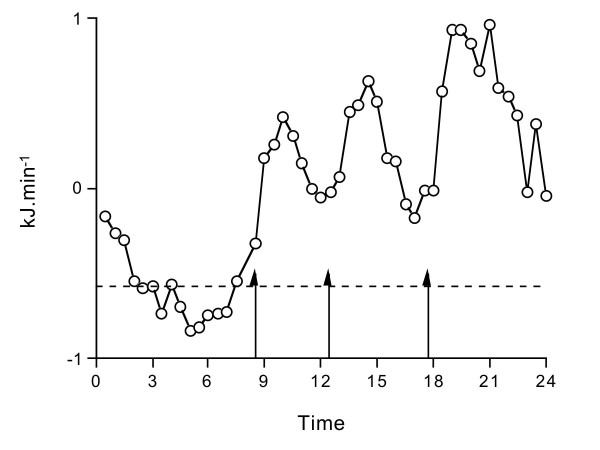
Objective: Daily energy expenditure consists of three components: basal metabolic rate, diet-induced thermogenesis and the energy cost of physical activity. Here, data on diet-induced thermogenesis are reviewed in relation to measuring conditions and characteristics of the diet. Methods: Measuring conditions include nutritional status of the subject, physical activity and duration of the observation. Diet characteristics are energy content and macronutrient composition. Results: Most studies measure diet-induced thermogenesis as the increase in energy expenditure above basal metabolic rate. Generally, the hierarchy in macronutrient oxidation in the postprandial state is reflected similarly in diet-induced thermogenesis, with the sequence alcohol, protein, carbohydrate, and fat. A mixed diet consumed at energy balance results in a diet induced energy expenditure of 5 to 15 % of daily energy expenditure. Values are higher at a relatively high protein and alcohol consumption and lower at a high fat consumption. Protein induced thermogenesis has an important effect on satiety. In conclusion, the main determinants of diet-induced thermogenesis are the energy content and the protein- and alcohol fraction of the diet. Protein plays a key role in body weight regulation through satiety related to diet-induced thermogenesis.
Overview
The claims and statistics of this paper haven’t been checked yet.
Free: it reads the open-access text and checks the first 5 claims that cite a source we can check. Create a free account to check every claim.
Integrity signals
Registry
Cites
Statistics
Figures
Verification
Claims the paper makes
The claims and statistics of this paper haven’t been checked yet.
Free: it reads the open-access text and checks the first 5 claims that cite a source we can check. Create a free account to check every claim.
Claims other papers make about this one
Each is checked against this paper’s own text: does it say what the citing paper says it does?
The source backs part of the claim, not all of it — or backs it for a different population, condition or comparison.
In the citing paper
“The thermic effect of food, which is called diet-induced thermogenesis, is increased energy expenditure that results from nutrient processing; these values are highest for protein.”
From Optimal Diet Strategies for Weight Loss and Weight Loss Maintenance (2021) · cites this paper as [48]
Experimental — accuracy not yet measuredThe cited source says what the claim attributes to it.
In the citing paper
“A fraction (∼10%) of the TDEE can be explained by the thermic effect of food (TEF) (Westerterp, 2004).”
From Effect of Exercise Training on Fat Loss—Energetic Perspectives and the Role of Improved Adipose Tissue Function and Body Fat Distribution (2021) · cites this paper as Westerterp, 2004
Self-check
Percentages, sums and reported differences re-computed from the paper’s own numbers.
The self-check needs the paper’s full text.
Citations
Cites
Determinants of 24-hour energy expenditure in man. Methods and results using a respiratory chamber.
Ravussin, E., Lillioja, S., Anderson, T. E., Christin, L., & Bogardus, C. (1986) · Journal of Clinical Investigation · doi:10.1172/jci112749 · Cited by 1,166 · cited 1×
“Reported within-subject variability in DIT, determined with a respiration chamber, is 43 to 48% [5,9].”
Raben, A., Agerholm-Larsen, L., Flint, A., Holst, J. J., & Astrup, A. (2003) · The American Journal of Clinical Nutrition · doi:10.1093/ajcn/77.1.91 · Cited by 365 · cited 3×
“0 % of the energy content of the meal [12].”
InfluentialWesterterp-Plantenga, M., Rolland, V, Wilson, S., & Westerterp, K. (1999) · European Journal of Clinical Nutrition · doi:10.1038/sj.ejcn.1600782 · Cited by 361 · cited 1×
“Satiety scores were higher during meals with a high-protein/high-carbohydrate diet, as well as over 24 h, than with a high-fat diet [22].”
Self-citationMeasuring the thermic effect of food
Reed, G., & Hill, J. (1996) · The American Journal of Clinical Nutrition · doi:10.1093/ajcn/63.2.164 · Cited by 253 · cited 2×
“Reed GW, Hill JO: Measuring the thermic effect of food.”
Diet induced thermogenesis measured over 24h in a respiration chamber: effect of diet composition
Westerterp, K., Wilson, S., & Rolland, V (1999) · International Journal of Obesity · doi:10.1038/sj.ijo.0800810 · Cited by 251 · cited 4×
“The use of a respiration chamber to measure DIT has the advantage of reproducing more physiological conditions over a longer period of time while regular meals are consumed throughout the day [5,6].”
InfluentialSelf-citationHealth issues related to alcohol consumption
Macdonald, I. A., & Europe, I. (1999) · Medical Entomology and Zoology · Cited by 229
Piers, L., Walker, K., Stoney, R., Soares, M., & O'Dea, K. (2002) · International Journal of Obesity · doi:10.1038/sj.ijo.0801993 · Cited by 187
Johnston, C. S., Day, C. S., & Swan, P. D. (2002) · Journal of the American College of Nutrition · doi:10.1080/07315724.2002.10719194 · Cited by 181 · cited 1×
“Postprandial thermogenesis was increased 100% on a high-protein/low-fat diet versus a high-carbohydrate/lowfat diet in healthy subjects [23].”
Thermic effect of food and sympathetic nervous system activity in humans
Tappy, L. (1996) · Reproduction Nutrition Development · doi:10.1051/rnd:19960405 · Cited by 177 · cited 1×
“The intestinal absorption of nutrients, the initial steps of their metabolism and the storage of the absorbed but not immediately oxidized nutrients [15].”
Resting metabolic rate and diet-induced thermogenesis: a methodological reappraisal
Weststrate, J. (1993) · American Journal of Clinical Nutrition · doi:10.1093/ajcn/58.5.592 · Cited by 174 · cited 1×
“Results Reported intra-individual variability in DIT, determined with ventilated-hood systems, is 6 to 30% [7,8].”
Cited by
Brown and beige fat: Development, function and therapeutic potential
Harms, M., & Seale, P. (2013) · Nature Medicine · doi:10.1038/nm.3361 · Cited by 2,328
Specific dynamic action: a review of the postprandial metabolic response
Secor, S. M. (2009) · Journal of Comparative Physiology B · doi:10.1007/s00360-008-0283-7 · Cited by 690
Dietary protein, weight loss, and weight maintenance
Westerterp-Plantenga, M. S., Nieuwenhuizen, A., Tomé, D., Soenen, S., & Westerterp, K. R. (2009) · Annual Review of Nutrition · doi:10.1146/annurev-nutr-080508-141056 · Cited by 570
Self-citationImpact of Heat Stress on Poultry Health and Performances, and Potential Mitigation Strategies
Wasti, S., Sah, N., & Mishra, B. (2020) · Animals · doi:10.3390/ani10081266 · Cited by 455
Behavioral thermoregulation in mammals: a review
Terrien, J. (2011) · Frontiers in Bioscience · doi:10.2741/3797 · Cited by 402
Obesity energetics: body weight regulation and the effects of diet composition
Hall, K. D., & Guo, J. (2017) · Gastroenterology · doi:10.1053/j.gastro.2017.01.052 · Cited by 367
Satiation, satiety and their effects on eating behaviour
Benelam, B. (2009) · Nutrition Bulletin · doi:10.1111/j.1467-3010.2009.01753.x · Cited by 340
Westerterp, K. R. (2013) · Frontiers in Physiology · doi:10.3389/fphys.2013.00090 · Cited by 321
Self-citationShe, P., Reid, T. M., Bronson, S. K., Vary, T. C., Hajnal, A., Lynch, C. J., & Hutson, S. M. (2007) · Cell Metabolism · doi:10.1016/j.cmet.2007.08.003 · Cited by 360
Daily physical activity assessment with accelerometers: new insights and validation studies
Plasqui, G., Bonomi, A. G., & Westerterp, K. R. (2013) · Obesity Reviews · doi:10.1111/obr.12021 · Cited by 315
Self-citationValidity of physical activity monitors during daily life in patients with COPD
Rabinovich, R. A., Louvaris, Z., Raste, Y., Langer, D., Van Remoortel, H., Giavedoni, S., Burtin, C., Regueiro, E. M. G., Vogiatzis, I., Hopkinson, N. S., et al. (2013) · European Respiratory Journal · doi:10.1183/09031936.00134312 · Cited by 293
Self-citationMacronutrient balance and micronutrient amounts through growth and development
Savarino, G., Corsello, A., & Corsello, G. (2021) · Italian Journal of Pediatrics · doi:10.1186/s13052-021-01061-0 · Cited by 231
International society of sports nutrition position stand: diets and body composition
Aragon, A. A., Schoenfeld, B. J., Wildman, R., Kleiner, S., VanDusseldorp, T., Taylor, L., Earnest, C. P., Arciero, P. J., Wilborn, C., Kalman, D. S., et al. (2017) · Journal of the International Society of Sports Nutrition · doi:10.1186/s12970-017-0174-y · Cited by 301
Control of energy expenditure in humans
Westerterp, K. R. (2017) · European Journal of Clinical Nutrition · doi:10.1038/ejcn.2016.237 · Cited by 254
Self-citationA high-protein diet for reducing body fat: mechanisms and possible caveats
Pesta, D. H., & Samuel, V. T. (2014) · Nutrition & Metabolism · doi:10.1186/1743-7075-11-53 · Cited by 276
Cocate, P. G., Pereira, L. G., Marins, J. C., Cecon, P. R., Bressan, J., & Alfenas, R. C. (2011) · Nutrition Journal · doi:10.1186/1475-2891-10-1 · Cited by 269
“According to Westerterp (2004) [44], carbohydrates are responsible for 5-10% of the energy expenditure from DIT.”
BackgroundButler, A. A., & Kozak, L. P. (2010) · Diabetes · doi:10.2337/db09-1471 · Cited by 263
Occupational heat strain in outdoor workers: A comprehensive review and meta-analysis
Ioannou, L. G., Foster, J., Morris, N. B., Piil, J. F., Havenith, G., Mekjavic, I. B., Kenny, G. P., Nybo, L., & Flouris, A. D. (2022) · Temperature · doi:10.1080/23328940.2022.2030634 · Cited by 208
Chowdhury, E. A., Richardson, J. D., Holman, G. D., Tsintzas, K., Thompson, D., & Betts, J. A. (2016) · The American Journal of Clinical Nutrition · doi:10.3945/ajcn.115.122044 · Cited by 255
Regulation of energy balance by a gut–brain axis and involvement of the gut microbiota
Bauer, P. V., Hamr, S. C., & Duca, F. A. (2016) · Cellular and Molecular Life Sciences · doi:10.1007/s00018-015-2083-z · Cited by 216
“Energy expenditure consists of three components: basal metabolic rate, thermogenesis, and the energy cost of physical activity [119].”
BackgroundOxytocin Reduces Reward-Driven Food Intake in Humans
Ott, V., Finlayson, G., Lehnert, H., Heitmann, B., Heinrichs, M., Born, J., & Hallschmid, M. (2013) · Diabetes · doi:10.2337/db13-0663 · Cited by 226
Betts, J. A., Richardson, J. D., Chowdhury, E. A., Holman, G. D., Tsintzas, K., & Thompson, D. (2014) · The American Journal of Clinical Nutrition · doi:10.3945/ajcn.114.083402 · Cited by 209
High-intensity sweeteners and energy balance.
Swithers, S. E., Martin, A. A., & Davidson, T. L. (2010) · Physiology & Behavior · doi:10.1016/j.physbeh.2009.12.021 · Cited by 206
Marrelli, M., Amodeo, V., Statti, G., & Conforti, F. (2018) · Molecules · doi:10.3390/molecules24010119 · Cited by 188
“This important homeostatic mechanism restricts weight gain in response to caloric excess contributing to the relative stability of body weight [95,96].”
BackgroundKoceva, A., Herman, R., Janež, A., Rakuša, M., & Jensterle, M. (2024) · International Journal of Molecular Sciences · doi:10.3390/ijms25137342 · Cited by 217
Optimal Diet Strategies for Weight Loss and Weight Loss Maintenance
Kim, J. Y. (2021) · Journal of Obesity & Metabolic Syndrome · doi:10.7570/jomes20065 · Cited by 193
Ambrosini, G. L., Emmett, P. M., Northstone, K., Howe, L. D., Tilling, K., & Jebb, S. A. (2012) · International Journal of Obesity · doi:10.1038/ijo.2012.127 · Cited by 174
Oussaada, S. M., van Galen, K. A., Cooiman, M. I., Kleinendorst, L., Hazebroek, E. J., van Haelst, M. M., ter Horst, K. W., & Serlie, M. J. (2019) · Metabolism · doi:10.1016/j.metabol.2018.12.012 · Cited by 180
Gluconeogenesis and energy expenditure after a high-protein, carbohydrate-free diet
Veldhorst, M. A., Westerterp-Plantenga, M. S., & Westerterp, K. R. (2009) · The American Journal of Clinical Nutrition · doi:10.3945/ajcn.2009.27834 · Cited by 170
Self-citationWhite, T., Westgate, K., Hollidge, S., Venables, M., Olivier, P., Wareham, N., & Brage, S. (2019) · International Journal of Obesity · doi:10.1038/s41366-019-0352-x · Cited by 157
Brage, S., Westgate, K., Franks, P. W., Stegle, O., Wright, A., Ekelund, U., & Wareham, N. J. (2015) · PLOS ONE · doi:10.1371/journal.pone.0137206 · Cited by 151
Beaulieu, K., Hopkins, M., Blundell, J., & Finlayson, G. (2018) · Physiology & Behavior · doi:10.1016/j.physbeh.2017.12.032 · Cited by 118
“While TEF was estimated at 10% as a generalisation for healthy individuals consuming a mixed diet, it is important to consider that TEF varies according to the energy content and macronutrient composition of food [11] and is perhaps reduced with obesity [12], but further well-designed studies are required to confirm t…”
Key determinants of energy expenditure in cancer and implications for clinical practice
Purcell, S. A., Elliott, S. A., Baracos, V. E., Chu, Q. S.-C., & Prado, C. M. M. (2016) · European Journal of Clinical Nutrition · doi:10.1038/ejcn.2016.96 · Cited by 140
Sarcolipin: A Key Thermogenic and Metabolic Regulator in Skeletal Muscle
Pant, M., Bal, N. C., & Periasamy, M. (2016) · Trends in Endocrinology & Metabolism · doi:10.1016/j.tem.2016.08.006 · Cited by 132
Energy compensation and adiposity in humans
Careau, V., Halsey, L. G., Pontzer, H., Ainslie, P. N., Andersen, L. F., Anderson, L. J., Arab, L., Baddou, I., Bedu-Addo, K., Blaak, E. E., et al. (2021) · Current Biology · doi:10.1016/j.cub.2021.08.016 · Cited by 131
Dietary Options for Rodents in the Study of Obesity
Bastías-Pérez, M., Serra, D., & Herrero, L. (2020) · Nutrients · doi:10.3390/nu12113234 · Cited by 147
“It is expressed as a percentage of the increase in energy expenditure above the reference level due to the energy content of the food eaten and it is usually expressed as a percentage [146].”
BackgroundSupermarket Shopping and Nutritional Outcomes: A Panel Data Analysis for Urban Kenya
Demmler, K. M., Ecker, O., & Qaim, M. (2018) · World Development · doi:10.1016/j.worlddev.2017.07.018 · Cited by 116
Walhin, J., Richardson, J. D., Betts, J. A., & Thompson, D. (2013) · The Journal of Physiology · doi:10.1113/jphysiol.2013.262709 · Cited by 129
A simple model predicting individual weight change in humans
Thomas, D. M., Martin, C. K., Heymsfield, S., Redman, L. M., Schoeller, D. A., & Levine, J. A. (2011) · Journal of Biological Dynamics · doi:10.1080/17513758.2010.508541 · Cited by 126
Central control of thermogenesis
Clapham, J. C. (2011) · Neuropharmacology · doi:10.1016/j.neuropharm.2011.10.014 · Cited by 141
Changes in physical activity over the lifespan: impact on body composition and sarcopenic obesity
Westerterp, K. R. (2018) · Obesity Reviews · doi:10.1111/obr.12781 · Cited by 118
“ergy expenditure for the average diet, when intake matches expenditure (12).”
BackgroundSelf-citationProtein-polyphenol particles for delivering structural and health functionality
Foegeding, E. A., Plundrich, N. J., Schneider, M., Campbell, C. L., & Lila, M. A. (2017) · Food Hydrocolloids · doi:10.1016/j.foodhyd.2017.05.024 · Cited by 130
MicroRNAs in adipogenesis and as therapeutic targets for obesity
Alexander, R., Lodish, H. F., & Sun, L. (2011) · Expert Opinion on Therapeutic Targets · doi:10.1517/14728222.2011.561317 · Cited by 125
Templeman, I., Smith, H. A., Chowdhury, E., Chen, Y.-C., Carroll, H., Johnson-Bonson, D., Hengist, A., Smith, R., Creighton, J., Clayton, D., et al. (2021) · Science Translational Medicine · doi:10.1126/scitranslmed.abd8034 · Cited by 113
Kolnes, K. J., Petersen, M. H., Lien-Iversen, T., Højlund, K., & Jensen, J. (2021) · Frontiers in Physiology · doi:10.3389/fphys.2021.737709 · Cited by 112
Campbell, C. L., Wagoner, T. B., & Foegeding, E. A. (2016) · Food Structure · doi:10.1016/j.foostr.2016.08.002 · Cited by 117
Thyroid Hormone Action and Energy Expenditure
Yavuz, S., Salgado Nunez del Prado, S., & Celi, F. S. (2019) · Journal of the Endocrine Society · doi:10.1210/js.2018-00423 · Cited by 95
“The thermic effect of food is considered an energy metabolism homeostatic short loop directed to dissipate acute calorie loads, that generally ranges between 8% and 15% of energy intake, and the variance has been associated with nutrient composition and energy content of consumed foods [12].”
BackgroundA review on possible therapeutic targets to contain obesity: The role of phytochemicals
Meriga, B., Ganjayi, M. S., Ghali, E. N. H. K., Naidu, P. B., Mopuri, R., & Dasari, S. (2015) · Obesity Research & Clinical Practice · doi:10.1016/j.orcp.2015.12.004 · Cited by 114
Bais, S., Singh, G. S., & Sharma, R. (2014) · Advances in Biology · doi:10.1155/2014/162914 · Cited by 157
Bonomi, A. G., Plasqui, G., Goris, A. H. C., & Westerterp, K. R. (2010) · Obesity · doi:10.1038/oby.2010.34 · Cited by 100
Self-citationRugeles, S.-J., Rueda, J.-D., Díaz, C.-E., & Rosselli, D. (2013) · Indian Journal of Critical Care Medicine · doi:10.4103/0972-5229.123438 · Cited by 101
Ketogenic diets, physical activity and body composition: a review
Ashtary-Larky, D., Bagheri, R., Bavi, H., Baker, J. S., Moro, T., Mancin, L., & Paoli, A. (2022) · British Journal of Nutrition · doi:10.1017/s0007114521002609 · Cited by 100
Coe, S., Clegg, M., Armengol-Bellapart, M., & Ryan, L. (2013) · Nutrition Research · doi:10.1016/j.nutres.2013.08.002 · Cited by 106
“Calories in, calories out” and macronutrient intake: the hope, hype, and science of calories
Howell, S., & Kones, R. (2017) · American Journal of Physiology-Endocrinology and Metabolism · doi:10.1152/ajpendo.00156.2017 · Cited by 79
Is breakfast the most important meal of the day?
Betts, J. A., Chowdhury, E. A., Gonzalez, J. T., Richardson, J. D., Tsintzas, K., & Thompson, D. (2016) · Proceedings of The Nutrition Society · doi:10.1017/s0029665116000318 · Cited by 103
Bowen, J., Brindal, E., James-Martin, G., & Noakes, M. (2018) · Nutrients · doi:10.3390/nu10091145 · Cited by 82
“Also meal regularity appears to be associated with greater thermic effect of food which may favor negative energy balance [26] and lower kilojoule intakes also have lower thermogenic effects [27].”
BackgroundReytor-González, C., Simancas-Racines, D., Román-Galeano, N. M., Annunziata, G., Galasso, M., Zambrano-Villacres, R., Verde, L., Muscogiuri, G., Frias-Toral, E., & Barrea, L. (2025) · Nutrients · doi:10.3390/nu17132135 · Cited by 88
“Components of total daily energy expenditure, including basal metabolic rate (BMR), diet-induced thermogenesis (DIT), and activity energy expenditure (AEE), are influenced by circadian rhythms [108–110].”
Chen, K. Y., Smith, S. R., Ravussin, É., Krakoff, J. A., Plasqui, G., Tanaka, S., Murgatroyd, P. R., Brychta, R. J., Bock, C., Carnero, E. Á., et al. (2020) · Obesity · doi:10.1002/oby.22928 · Cited by 85
Modeling Metabolic Adaptations and Energy Regulation in Humans
Hall, K. D. (2012) · Annual Review of Nutrition · doi:10.1146/annurev-nutr-071811-150705 · Cited by 81
Quatela, A., Callister, R., Patterson, A., & MacDonald-Wicks, L. (2016) · Nutrients · doi:10.3390/nu8110670 · Cited by 72
Casanova, N., Beaulieu, K., Finlayson, G., & Hopkins, M. (2019) · Proceedings of the Nutrition Society · doi:10.1017/s0029665118002811 · Cited by 71
“The thermic effect of feeding, representing the energy expended above RMR due to the energy cost of digestion and storage of food((74)), represents 10–15 % of an individual’s total EE((55)).”
BackgroundBody mass regulation at altitude
Westerterp, K. R., & Kayser, B. (2005) · European Journal of Gastroenterology & Hepatology · doi:10.1097/00042737-200601000-00001 · Cited by 82
Self-citationA Brief Review of Higher Dietary Protein Diets in Weight Loss: A Focus on Athletes
Phillips, S. M. (2014) · Sports Medicine · doi:10.1007/s40279-014-0254-y · Cited by 81
Blouet, C., & Schwartz, G. J. (2012) · PLoS ONE · doi:10.1371/journal.pone.0051898 · Cited by 81
Schmidt, J. B., Pedersen, S. D., Gregersen, N. T., Vestergaard, L., Nielsen, M. S., Ritz, C., Madsbad, S., Worm, D., Hansen, D. L., Clausen, T. R., et al. (2015) · International Journal of Obesity · doi:10.1038/ijo.2015.162 · Cited by 86
Moe, R. O., Stubsjøen, S. M., Bohlin, J., Flø, A. S., & Bakken, M. (2012) · Physiology & Behavior · doi:10.1016/j.physbeh.2012.03.032 · Cited by 88
“Increased thermogenesis has been found in rats fed highly palatable diets [38], and it is very likely that the large amounts of mealworms ingested resulted in an increased heat production [39].”
BackgroundAlhussain, M. H., Macdonald, I. A., & Taylor, M. A. (2016) · American Journal of Clinical Nutrition · doi:10.3945/ajcn.115.125401 · Cited by 91
A mathematical model of weight change with adaptation
(2009) · Mathematical Biosciences and Engineering · doi:10.3934/mbe.2009.6.873 · Cited by 80
Digesting the complex metabolic effects of diet on the host and microbiome
Carmody, R. N., Varady, K. A., & Turnbaugh, P. J. (2024) · Cell · doi:10.1016/j.cell.2024.06.032 · Cited by 80
Mobbs, C. V., Isoda, F., Makimura, H., Mastaitis, J. W., Mizuno, T. M., Shu, I.-W., Yen, K., & Yang, X.-J. (2005) · Physiology & Behavior · doi:10.1016/j.physbeh.2005.04.005 · Cited by 81
Pichon, L., Potier, M., Tome, D., Mikogami, T., Laplaize, B., Martin-Rouas, C., & Fromentin, G. (2008) · British Journal of Nutrition · doi:10.1017/s0007114507831709 · Cited by 70
Exercise-induced energy expenditure: Implications for exercise prescription and obesity
Colley, R. C., Hills, A. P., King, N. A., & Byrne, N. M. (2010) · Patient Education and Counseling · doi:10.1016/j.pec.2010.03.001 · Cited by 87
Effects of Supplemental Energy on Protein Balance during 4-d Arctic Military Training
MARGOLIS, L. M., MURPHY, N. E., MARTINI, S., GUNDERSEN, Y., CASTELLANI, J. W., KARL, J. P., CARRIGAN, C. T., TEIEN, H.-K., MADSLIEN, E.-H., MONTAIN, S. J., et al. (2016) · Medicine & Science in Sports & Exercise · doi:10.1249/mss.0000000000000944 · Cited by 68
Fundamental links between genes and elements: evolutionary implications of ecological stoichiometry
Jeyasingh, P. D., & Weider, L. J. (2007) · Molecular Ecology · doi:10.1111/j.1365-294x.2007.03558.x · Cited by 81
Nonequilibrium thermodynamics and energy efficiency in weight loss diets
Feinman, R. D., & Fine, E. J. (2007) · Theoretical Biology and Medical Modelling · doi:10.1186/1742-4682-4-27 · Cited by 67
Wu, T., Liu, Q., Li, Y., Li, H., Chen, L., Yang, X., Tang, Q., Pu, S., Kuang, J., Li, R., et al. (2021) · The Journal of Experimental Medicine · doi:10.1084/jem.20201203 · Cited by 74
“A study of 17 women and 20 men found up-regulated energy expenditure after a meal (Westerterp, 2004).”
BackgroundBarr, S., & Wright, J. (2010) · Food & Nutrition Research · doi:10.3402/fnr.v54i0.5144 · Cited by 71
Ang, Q. Y., Goh, H. J., Cao, Y., Li, Y., Chan, S.-P., Swain, J. L., Henry, C. J., & Leow, M. K.-S. (2017) · The Journal of Physiological Sciences · doi:10.1007/s12576-016-0472-1 · Cited by 64
D’Amico, E., Grosso, G., Nieves, J. W., Zanghì, A., Factor-Litvak, P. R., & Mitsumoto, H. (2021) · Nutrients · doi:10.3390/nu13072273 · Cited by 71
Swennen, Q., Janssens, G., Collin, A., Bihan-Duval, É. L., Verbeke, K., Decuypere, E. M. P., & Buyse, J. (2006) · Poultry Science · doi:10.1093/ps/85.4.731 · Cited by 68
The effect of milk proteins on appetite regulation and diet-induced thermogenesis
Lorenzen, J. K., Frederiksen, R., Hoppe, C., Hvid, R., & Astrup, A. V. (2012) · European Journal of Clinical Nutrition · doi:10.1038/ejcn.2011.221 · Cited by 77
Integrating Competing Demands of Osmoregulatory and Thermoregulatory Homeostasis
McKinley, M. J., Martelli, D., Pennington, G. L., Trevaks, D., & McAllen, R. M. (2018) · Physiology · doi:10.1152/physiol.00037.2017 · Cited by 70
Lassitude: The emotion of being sick
Schrock, J. M., Snodgrass, J. J., & Sugiyama, L. S. (2019) · Evolution and Human Behavior · doi:10.1016/j.evolhumbehav.2019.09.002 · Cited by 67
“The costs of excessive ROS and RNS production may help explain why human TEE tends to remain within a relatively narrow range for a given body size and does not tend to scale upwards in environments with greater food availability and higher rates of overnutrition (Dugas et al., 2011; Pontzer et al., 2016, 2015).”
BackgroundInfluentialEffects of Intermittent Fasting on Cardiometabolic Health: An Energy Metabolism Perspective
Dote‐Montero, M., Sánchez‐Delgado, G., & Ravussin, É. (2022) · Nutrients · doi:10.3390/nu14030489 · Cited by 75
Energy Requirements of US Army Special Operation Forces During Military Training
Margolis, L. M., Crombie, A. P., McClung, H. L., McGraw, S. M., Rood, J. C., Montain, S. M., & Young, A. (2014) · Nutrients · doi:10.3390/nu6051945 · Cited by 72
Efficiency of Intermittent Exercise on Adiposity and Fatty Liver in Rats Fed With High‐fat Diet
Sene‐Fiorese, M., Duarte, F. O., Scarmagnani, F. R. R., Cheik, N. C., Manzoni, M. S. J., Nonaka, K. O., Rossi, E. A., Duarte, A. C. G. D. O., & Dâmaso, A. R. (2008) · Obesity · doi:10.1038/oby.2008.339 · Cited by 75
Plasticity in metabolic allometry: the role of dietary stoichiometry
Jeyasingh, P. D. (2007) · Ecology Letters · doi:10.1111/j.1461-0248.2007.01023.x · Cited by 68
Beale, P. K., Marsh, K. J., Foley, W. J., & Moore, B. D. (2017) · Biological reviews/Biological reviews of the Cambridge Philosophical Society · doi:10.1111/brv.12364 · Cited by 67
Asparagine reinforces mTORC1 signaling to boost thermogenesis and glycolysis in adipose tissues
Xu, Y., Shi, T., Cui, X., Yan, L., Wang, Q., Xu, X., Zhao, Q., Xu, X., Tang, Q., Tang, H., et al. (2021) · The EMBO Journal · doi:10.15252/embj.2021108069 · Cited by 60
“Dietary proteins induce higher ratings of thermogenesis than equica-loric amounts of carbohydrates or fat (Westerterp, 2004).”
Klaus, S. (2005) · Journal of Nutrition · doi:10.1093/jn/135.8.1854 · Cited by 63
Madzima, T. A., Panton, L. B., Fretti, S. K., Kinsey, A. W., & Ormsbee, M. J. (2014) · British Journal of Nutrition · doi:10.1017/s000711451300192x · Cited by 58
Nicholls, E., Rossi, M., & Niven, J. E. (2021) · Journal of Experimental Biology · doi:10.1242/jeb.242393 · Cited by 59
Thondre, P. S., Shafat, A., & Clegg, M. E. (2013) · British Journal Of Nutrition · doi:10.1017/s0007114513001682 · Cited by 57
Walker, S. E., & Baum, J. (2021) · Nutrition Reviews · doi:10.1093/nutrit/nuab019 · Cited by 61
Skeletal muscle mitochondrial uncoupling, adaptive thermogenesis and energy expenditure
van den Berg, S. A., Lichtenbelt, W. D. V. M., van Dijk, K. W., & Schrauwen, P. (2011) · Current Opinion in Clinical Nutrition & Metabolic Care · doi:10.1097/mco.0b013e3283455d7a · Cited by 63
Alsaif, M., Elliot, S., Mackenzie, M. L., Prado, C. M. M., Field, C. J., & Haqq, A. M. (2017) · Advances in Nutrition · doi:10.3945/an.117.016253 · Cited by 60
“It has been documented that protein plays an important role in body weight regulation through satiety related to DIT (27).”
BackgroundPrediction equation for estimating total daily energy requirements of special operations personnel
Barringer, N., Pasiakos, S. M., McClung, H. L., Crombie, A. P., & Margolis, L. M. (2018) · Journal of the International Society of Sports Nutrition · doi:10.1186/s12970-018-0219-x · Cited by 58
Hengist, A., Davies, R. G., Walhin, J., Buniam, J., Merrell, L. H., Rogers, L. M., Bradshaw, L., Moreno‐Cabañas, A., Rogers, P. J., Brunstrom, J. M., et al. (2024) · Cell Reports Medicine · doi:10.1016/j.xcrm.2024.101667 · Cited by 67
The effect of breakfast on appetite regulation, energy balance and exercise performance
Clayton, D. J., & James, L. J. (2015) · Proceedings of The Nutrition Society · doi:10.1017/s0029665115004243 · Cited by 66
Cooking and the Human Commitment to a High-quality Diet
Carmody, R. N., & Wrangham, R. W. (2009) · Cold Spring Harbor Symposia on Quantitative Biology · doi:10.1101/sqb.2009.74.019 · Cited by 60
“In humans on a Western balanced diet, DIT ac - counts for ~10% of the total energy budget, a proportion similar to that of locomotion (Westerterp 2004).”
Background
Metadata
- Authors
- Westerterp, K. R.
- Affiliations
- Maastricht University (NL)
- Corresponding author
- Westerterp, Klaas R
- ORCID
- Westerterp, Klaas R
- Venue
- Nutrition & Metabolism
- Published
- 2004-08-18
- Volume
- 1
- Issue
- 1
- Pages
- 5-5
- ISSN
- 1743-7075 (ISSN-L)
- PMC
- PMC524030
- OpenAlex
- W2169310913
- Cited by
- 570
- References
- 33
- Citations by year
- 2026: 41 · 2025: 36 · 2024: 37 · 2023: 34 · 2022: 31 · 2021: 46 · 2020: 35 · 2019: 31 · 2018: 32 · 2017: 35 · 2016: 32 · 2015: 18 · 2014: 24 · 2013: 30 · 2012: 24
- FWCI
- 3.72
- Type
- journal article
- Language
- en
- Open access
- gold
- doi.org
- Licence
- cc-by
- Locations
- Nutrition & Metabolism (publishedVersion, cc-by)
- PubMed Central (publishedVersion, cc-by)
- PubMed (publishedVersion)
- Research Publications (Maastricht University) (submittedVersion, cc-by)
- DOAJ (DOAJ: Directory of Open Access Journals) (submittedVersion, cc-by-sa)
- Research Publications (Maastricht University) (submittedVersion, other-oa)
- Topics
- Life Sciences › Neuroscience › Endocrine and Autonomic Systems › Regulation of Appetite and Obesity
- Health Sciences › Medicine › Physiology (medical) › Adipose Tissue and Metabolism
- Health Sciences › Nursing › Nutrition and Dietetics › Muscle metabolism and nutrition
- Keywords
- diet-induced thermogenesis, daily energy expenditure, basal metabolic rate, macronutrient oxidation, satiety, body weight regulation, macronutrient composition
About these checks
Registry, retraction, Cites and statistics results are computed, not judged, with one exception: a printed reference that no index lists is read once by a model before it counts as a citation error. Claims are extracted by a model and kept only when their quote appears verbatim in the text; each cited source is then checked, with a model’s help, for whether it says what the claim relies on. Those verdicts can be wrong — read the claim’s quote and the cited source before relying on one.
Statistics and arithmetic are recomputed, not judged.
Confidence bands are shown only for fields calibrated on our annotated test set. None is calibrated yet, so no band is shown.
What counts as a claim ›How we measure confidence ›How we check this ›
Are you an author, or do you see a problem with this page? Request a review
Data sources
Bibliographic data: Semantic Scholar, OpenAlex, Crossref.
Contains information from the Semantic Scholar Academic Graph Datasets, made available under the ODC Attribution License (ODC-BY 1.0).
Semantic Scholar’s data is described in: Kinney, R., et al. (2023). The Semantic Scholar Open Data Platform. arXiv:2301.10140.
