

Luminal and mucosal-associated intestinal microbiota in patients with diarrhea-predominant irritable bowel syndrome
Open accessThe DOI matches its Crossref record; 30 of the 30 references it cites were found in a registry or an index.
Abstract
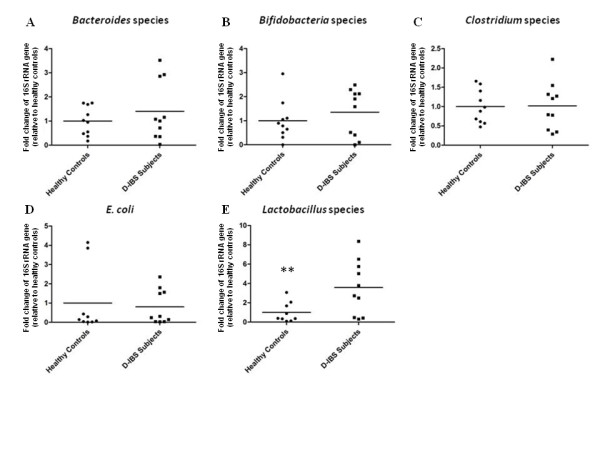
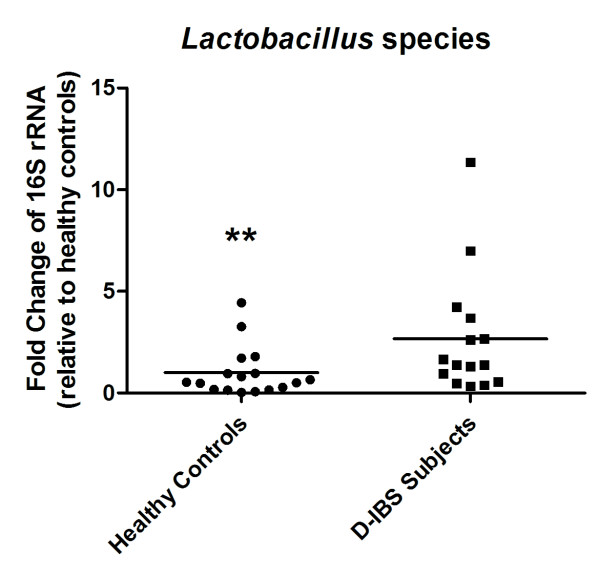
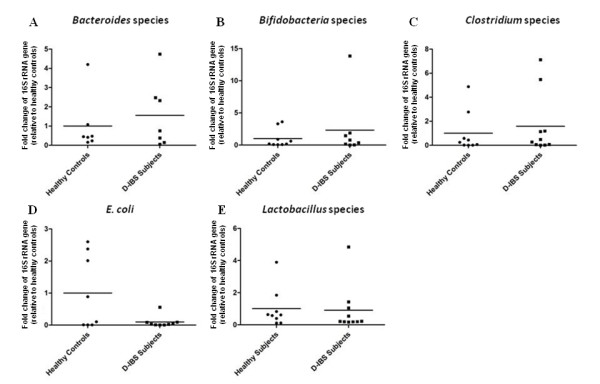
Background: Recent studies have suggested a role for an altered intestinal microbiota in the pathophysiology of irritable bowel syndrome (IBS). However, no consensus has been reached regarding the association between specific enteric bacterial groups and IBS. The aim of this study was to investigate the fecal and mucosal-associated microbiota using two independent techniques in intestinal samples from diarrhea-predominant IBS (D-IBS) and healthy controls. Methods: Fecal and colonic mucosal biopsy samples were obtained from 10 D-IBS patients and 10 healthy controls. Colonic tissue was collected during a un-sedated un-prepped flexible sigmoidoscopy. Fecal and tissue samples were processed immediately upon collection for culture under aerobic and anaerobic conditions or frozen for further molecular analysis. DNA was extracted from all frozen samples and used to enumerate specific bacterial groups using quantitative real-time PCR (qPCR). Results: Culture analysis of intestinal samples demonstrated a significant reduction in the concentration of aerobic bacteria in fecal samples from D-IBS patients when compared to healthy controls (1.4 × 10 7 vs. 8.4 × 10 8 CFUs/g feces, P = 0.002). qPCR analysis demonstrated a significant 3.6 fold increase (P = 0.02) in concentrations of fecal Lactobacillus species between D-IBS patients and healthy controls. Conclusions: Our culture and molecular data indicate that quantitative differences exist in specific bacterial groups in the microbiota between D-IBS and healthy subjects.
Overview
The claims and statistics of this paper haven’t been checked yet.
Free: it reads the open-access text and checks the first 5 claims that cite a source we can check. Create a free account to check every claim.
Integrity signals
Registry
Cites
Statistics
Figures
Verification
Claims the paper makes
The claims and statistics of this paper haven’t been checked yet.
Free: it reads the open-access text and checks the first 5 claims that cite a source we can check. Create a free account to check every claim.
Claims other papers make about this one
Each is checked against this paper’s own text: does it say what the citing paper says it does?
The source backs part of the claim, not all of it — or backs it for a different population, condition or comparison.
In the citing paper
“Limited data also suggest differences in mucosa-associated microbiota (32, 33, 86, 129), reduced stability over time (106, 107), rDNA, and differences between IBS subtypes (81, 104, 129, 142).”
From Intestinal microbiota and immune function in the pathogenesis of irritable bowel syndrome (2013) · cites this paper as [32]
Experimental — accuracy not yet measuredIn the citing paper
“While most studies used faecal material, this does differ somewhat from the bacteria adherent to the mucosa, which are likely to interact most strongly with the host.28”
From Intestinal microbiota in functional bowel disorders: a Rome foundation report (2013) · cites this paper as [28]
Self-check
Percentages, sums and reported differences re-computed from the paper’s own numbers.
The self-check needs the paper’s full text.
Citations
Cites
Longstreth, G. F., Thompson, W. G., Chey, W. D., Houghton, L. A., Mearin, F., & Spiller, R. C. (2006) · Gastroenterology · doi:10.1053/j.gastro.2005.11.061 · Cited by 4,856
The functional gastrointestinal disorders and the Rome III process
Drossman, D. A. (2006) · Gastroenterology · doi:10.1053/j.gastro.2006.03.008 · Cited by 2,416
Rinttila, T., Kassinen, A., Malinen, E., Krogius, L., & Palva, A. (2004) · Journal of Applied Microbiology · doi:10.1111/j.1365-2672.2004.02409.x · Cited by 1,017
Kassinen, A., Krogius-Kurikka, L., Mäkivuokko, H., Rinttilä, T., Paulin, L., Corander, J., Malinen, E., Apajalahti, J., & Palva, A. (2007) · Gastroenterology · doi:10.1053/j.gastro.2007.04.005 · Cited by 1,002 · cited 2×
“Nevertheless, many of the studies that sought to characterize the intestinal microbiota in IBS investigated mixed populations of IBS patients[12,13,18], or focused on a single intestinal niche[12,13,15-21].”
BackgroundSwidsinski, A., Weber, J., Loening-Baucke, V., Hale, L. P., & Lochs, H. (2005) · Journal of Clinical Microbiology · doi:10.1128/jcm.43.7.3380-3389.2005 · Cited by 894 · cited 3×
“Nevertheless, many of the studies that sought to characterize the intestinal microbiota in IBS investigated mixed populations of IBS patients[12,13,18], or focused on a single intestinal niche[12,13,15-21].”
BackgroundZoetendal, E. G., von Wright, A., Vilpponen-Salmela, T., Ben-Amor, K., Akkermans, A. D. L., & de Vos, W. M. (2002) · Applied and Environmental Microbiology · doi:10.1128/aem.68.7.3401-3407.2002 · Cited by 868 · cited 1×
“As the luminal and mucosal-associated microbiota differs in composition[22], it is important to investigate and compare the microbiota of both of these niches.”
BackgroundEradication of Small Intestinal Bacterial Overgrowth Reduces Symptoms of Irritable Bowel Syndrome
Pimentel, M., Chow, E. J., & Lin, H. C. (2000) · American Journal of Gastroenterology · doi:10.1111/j.1572-0241.2000.03368.x · Cited by 780 · cited 1×
“Additionally, antibiotic treatment of small intestinal bacterial overgrowth (SIBO) is associated with a resolution of IBS symptoms[9-11].”
BackgroundBartosch, S., Fite, A., Macfarlane, G. T., & McMurdo, M. E. T. (2004) · Applied and Environmental Microbiology · doi:10.1128/aem.70.6.3575-3581.2004 · Cited by 762
Malinen, E., Rinttila, T., Kajander, K., Matto, J., Kassinen, A., Krogius, L., Saarela, M., Korpela, R., & Palva, A. (2005) · The American Journal of Gastroenterology · doi:10.1111/j.1572-0241.2005.40312.x · Cited by 699 · cited 5×
“In addition, the differences in the reported results may relate to the differences in the study population since the reported decrease in Lactobacillus species was observed when comparing D-IBS and C-IBS, but not compared to healthy controls[16].”
BackgroundResultInfluentialPimentel, M. (2003) · The American Journal of Gastroenterology · doi:10.1016/s0002-9270(02)05902-6 · Cited by 669
Cited by
Rinninella, E., Raoul, P., Cintoni, M., Franceschi, F., Miggiano, G. A. D., Gasbarrini, A., & Mele, M. C. (2019) · Microorganisms · doi:10.3390/microorganisms7010014 · Cited by 3,462
Probiotics and prebiotics in intestinal health and disease: from biology to the clinic
Sanders, M. E., Merenstein, D. J., Reid, G., Gibson, G. R., & Rastall, R. A. (2019) · Nature Reviews Gastroenterology & Hepatology · doi:10.1038/s41575-019-0173-3 · Cited by 2,059
Dysbiosis of the gut microbiota in disease
Carding, S., Verbeke, K., Vipond, D. T., Corfe, B. M., & Owen, L. J. (2015) · Microbial Ecology in Health & Disease · doi:10.3402/mehd.v26.26191 · Cited by 1,710
“In IBS, changes in microbiota composition have been described in the different subtypes of disease compared to healthy individuals (38, 39) although the changes are not uniform (40).”
BackgroundIntestinal microbiota in functional bowel disorders: a Rome foundation report
Simrén, M., Barbara, G., Flint, H. J., Spiegel, B. M. R., Spiller, R. C., Vanner, S., Verdu, E. F., Whorwell, P. J., & Zoetendal, E. G. (2013) · Gut · doi:10.1136/gutjnl-2012-302167 · Cited by 939
“While most studies used faecal material, this does differ somewhat from the bacteria adherent to the mucosa, which are likely to interact most strongly with the host.(28) Babies are born with sterile intestines but are rapidly colonised by bacteria from their immediate environment, most importantly their mother ’s vag…”
BackgroundMucin glycan foraging in the human gut microbiome
Tailford, L. E., Crost, E. H., Kavanaugh, D., & Juge, N. (2015) · Frontiers in Genetics · doi:10.3389/fgene.2015.00081 · Cited by 839
“The microbiota composition varies longitudinally along the GI tract but also transversally from the mucosa to the lumen (Zoetendal et al., 2002; Eckburg et al., 2005; Carroll et al., 2010).”
BackgroundResultIntestinal microbiota in human health and disease: the impact of probiotics
Gerritsen, J., Smidt, H., Rijkers, G. T., & de Vos, W. M. (2011) · Genes & Nutrition · doi:10.1007/s12263-011-0229-7 · Cited by 724
“…Healthy individuals qPCR Lyra et al. (2009)* Colonic biopsies Faeces 10 IBS patients (only IBS-D) 10 Healthy individuals Conventional culturing qPCR Carroll et al. (2010) Colonic biopsies Faeces 47 IBS patients 33 Healthy individuals DGGE Codling et al. (2010) Duodenal biopsies Faeces 37 IBS…”
BackgroundInfluentialMicrobiome and Human Health: Current Understanding, Engineering, and Enabling Technologies
Aggarwal, N., Kitano, S., Puah, G. R. Y., Kittelmann, S., Hwang, I. Y., & Chang, M. W. (2023) · Chemical Reviews · doi:10.1021/acs.chemrev.2c00431 · Cited by 508
Brain gut microbiome interactions and functional bowel disorders
Mayer, E. A., Savidge, T., & Shulman, R. J. (2014) · Gastroenterology · doi:10.1053/j.gastro.2014.02.037 · Cited by 496
Current Sampling Methods for Gut Microbiota: A Call for More Precise Devices
Tang, Q., Jin, G., Wang, G., Liu, T., Liu, X., Wang, B., & Cao, H. (2020) · Frontiers in Cellular and Infection Microbiology · doi:10.3389/fcimb.2020.00151 · Cited by 455
Carroll, I. M., Ringel‐Kulka, T., Siddle, J. P., & Ringel, Y. (2012) · Neurogastroenterology & Motility · doi:10.1111/j.1365-2982.2012.01891.x · Cited by 425
“Previous studies have investigated the intestinal microbiota in patients with IBS and reported various alterations in specific bacterial groups[46-50], changes in fingerprint patterns[23, 49, 51-54], and global compositional differences in the microbiota based on clone libraries[55, 56].”
BackgroundSelf-citationGalley, J. D., Nelson, M. C., Yu, Z., Dowd, S. E., Walter, J., Kumar, P. S., Lyte, M., & Bailey, M. T. (2014) · BMC Microbiology · doi:10.1186/1471-2180-14-189 · Cited by 400
Parthasarathy, G., Chen, J., Chen, X., Chia, N., O'Connor, H. M., Wolf, P. G., Gaskins, H. R., & Bharucha, A. E. (2016) · Gastroenterology · doi:10.1053/j.gastro.2015.10.005 · Cited by 396
Irritable bowel syndrome: A microbiome-gut-brain axis disorder?
Kennedy, P. J. (2014) · World Journal of Gastroenterology · doi:10.3748/wjg.v20.i39.14105 · Cited by 331
Chong, P. P., Chin, V. K., Looi, C. Y., Wong, W. F., Madhavan, P., & Yong, V. C. (2019) · Frontiers in Microbiology · doi:10.3389/fmicb.2019.01136 · Cited by 328
Gut microbiota role in irritable bowel syndrome: New therapeutic strategies
Distrutti, E., Monaldi, L., Ricci, P., & Fiorucci, S. (2016) · World Journal of Gastroenterology · doi:10.3748/wjg.v22.i7.2219 · Cited by 320
Lembo, A., Pimentel, M., Rao, S. S., Schoenfeld, P., Cash, B., Weinstock, L. B., Paterson, C., Bortey, E., & Forbes, W. P. (2016) · Gastroenterology · doi:10.1053/j.gastro.2016.08.003 · Cited by 310
Carroll, I. M., Ringel-Kulka, T., Keku, T. O., Chang, Y.-H., Packey, C. D., Sartor, R. B., & Ringel, Y. (2011) · American Journal of Physiology-Gastrointestinal and Liver Physiology · doi:10.1152/ajpgi.00154.2011 · Cited by 292
Self-citationLiu, H.-N., Wu, H., Chen, Y.-Z., Chen, Y.-J., Shen, X.-Z., & Liu, T.-T. (2017) · Digestive and Liver Disease · doi:10.1016/j.dld.2017.01.142 · Cited by 254
Carroll, I. M., Ringel-Kulka, T., Siddle, J. P., Klaenhammer, T. R., & Ringel, Y. (2012) · PLoS ONE · doi:10.1371/journal.pone.0046953 · Cited by 246
Self-citationWang, L., Alammar, N., Singh, R., Nanavati, J., Song, Y., Chaudhary, R., & Mullin, G. E. (2020) · Journal of the Academy of Nutrition and Dietetics · doi:10.1016/j.jand.2019.05.015 · Cited by 209
Virulence genes are a signature of the microbiome in the colorectal tumor microenvironment
Burns, M. B., Lynch, J., Starr, T. K., Knights, D., & Blekhman, R. (2015) · Genome Medicine · doi:10.1186/s13073-015-0177-8 · Cited by 231
Ringel-Kulka, T., Cheng, J., Ringel, Y., Salojärvi, J., Carroll, I., Palva, A., de Vos, W. M., & Satokari, R. (2013) · PLoS ONE · doi:10.1371/journal.pone.0064315 · Cited by 230
“[1,2,3,4,5,6,7,8,9] and non- GI[10,11,12,13,14,15] disease conditions both in children and adults.”
BackgroundSelf-citationGlycobiome: Bacteria and mucus at the epithelial interface
Ouwerkerk, J. P., de Vos, W. M., & Belzer, C. (2013) · Best Practice & Research Clinical Gastroenterology · doi:10.1016/j.bpg.2013.03.001 · Cited by 226
“Only a handful of studies determined the mucosal microbiota in IBS patients [118–122], because the mucosal microbiota differs from the faecal microbiota and is in close contact proximity to the host its effect could be disproportional compared to the luminal bacteria.”
BackgroundA Review of Microbiota and Irritable Bowel Syndrome: Future in Therapies
Rodiño-Janeiro, B. K., Vicario, M., Alonso-Cotoner, C., Pascua-García, R., & Santos, J. (2018) · Advances in Therapy · doi:10.1007/s12325-018-0673-5 · Cited by 214
The intestinal microbiota: its role in health and disease
Biedermann, L., & Rogler, G. (2015) · European Journal of Pediatrics · doi:10.1007/s00431-014-2476-2 · Cited by 211
“Further studies confirmed variations of microbial alterations in IBS patients compared to controls [29, 35, 150, 156], also observable in childhood IBS [165] suggesting—besides a new therapeutic target—also a diagnostic potential of distinctive microbial fingerprints to accurately identify IBS and differentiate this c…”
Rigsbee, L., Agans, R., Shankar, V., Kenche, H., Khamis, H. J., Michail, S., & Paliy, O. (2012) · American Journal of Gastroenterology · doi:10.1038/ajg.2012.287 · Cited by 207
Ringel, Y., Maharshak, N., Ringel-Kulka, T., Wolber, E. A., Sartor, R. B., & Carroll, I. M. (2015) · Gut Microbes · doi:10.1080/19490976.2015.1044711 · Cited by 204
Self-citationDiversity, compositional and functional differences between gut microbiota of children and adults
Radjabzadeh, D., Boer, C. G., Beth, S. A., van der Wal, P., Kiefte-De Jong, J. C., Jansen, M. A. E., Konstantinov, S. R., Peppelenbosch, M. P., Hays, J. P., Jaddoe, V. W. V., et al. (2020) · Scientific Reports · doi:10.1038/s41598-020-57734-z · Cited by 184
Crosstalk at the mucosal border: importance of the gut microenvironment in IBS
Öhman, L., Törnblom, H., & Simrén, M. (2015) · Nature Reviews Gastroenterology & Hepatology · doi:10.1038/nrgastro.2014.200 · Cited by 181
Review article: the future of microbiome‐based therapeutics
Gulliver, E. L., Young, R. B., Chonwerawong, M., D'Adamo, G. L., Thomason, T., Widdop, J. T., Rutten, E. L., Rossetto Marcelino, V., Bryant, R. V., Costello, S. P., et al. (2022) · Alimentary Pharmacology & Therapeutics · doi:10.1111/apt.17049 · Cited by 180
Kim, S.-E., Choi, S. C., Park, K. S., Park, M. I., Shin, J. E., Lee, T. H., Jung, K. W., Koo, H. S., & Myung, S.-J. (2015) · Journal of Neurogastroenterology and Motility · doi:10.5056/jnm14048 · Cited by 180
“(Table 1).(16) Quantitative RT-PCR assays were conducted in 96-well plates using a ABI PRISM7000 system (Applied Biosystems).”
MethodYoon, J. S., Sohn, W., Lee, O. Y., Lee, S. P., Lee, K. N., Jun, D. W., Lee, H. L., Yoon, B. C., Choi, H. S., Chung, W., et al. (2014) · Journal of Gastroenterology and Hepatology · doi:10.1111/jgh.12322 · Cited by 164
The microbiota-gut-brain axis in functional gastrointestinal disorders
De Palma, G., Collins, S. M., & Bercik, P. (2014) · Gut Microbes · doi:10.4161/gmic.29417 · Cited by 157
Rangel, I., Sundin, J., Fuentes, S., Repsilber, D., de Vos, W. M., & Brummer, R. J. (2015) · Alimentary Pharmacology & Therapeutics · doi:10.1111/apt.13399 · Cited by 151
Shukla, R., Ghoshal, U., Dhole, T. N., & Ghoshal, U. C. (2015) · Digestive Diseases and Sciences · doi:10.1007/s10620-015-3607-y · Cited by 168
The gut microbiome: what the oncologist ought to know
Lee, K. A., Luong, M. K., Shaw, H., Nathan, P., Bataille, V., & Spector, T. D. (2021) · British Journal of Cancer · doi:10.1038/s41416-021-01467-x · Cited by 143
“However, there is increasing evidence to suggest that there may be significant variations in microbial composition between the gut mucosa and faeces [12].”
BackgroundSaturated long-chain fatty acid-producing bacteria contribute to enhanced colonic motility in rats
Zhao, L., Huang, Y., Lu, L., Yang, W., Huang, T., Lin, Z., Lin, C., Kwan, H., Wong, H. L. X., Chen, Y., et al. (2018) · Microbiome · doi:10.1186/s40168-018-0492-6 · Cited by 144
The Gut Microbiota and Irritable Bowel Syndrome: Friend or Foe?
Ghoshal, U. C., Shukla, R., Ghoshal, U., Gwee, K.-A., Ng, S. C., & Quigley, E. M. M. (2012) · International Journal of Inflammation · doi:10.1155/2012/151085 · Cited by 144
“For example, a significantly increased quantity of aerobic bacteria and Lactobacillus was noted in IBS-D in feces but not in mucosal samples [19].”
BackgroundBody Mass Index and Sex Affect Diverse Microbial Niches within the Gut
Borgo, F., Garbossa, S., Riva, A., Severgnini, M., Luigiano, C., Benetti, A., Pontiroli, A. E., Morace, G., & Borghi, E. (2018) · Frontiers in Microbiology · doi:10.3389/fmicb.2018.00213 · Cited by 144
“This strategy has already been used by other authors studying MAM and LAM communities (Carroll et al., 2010; Chen et al., 2012).”
MethodResultInfluentialGut Microbiota as Potential Orchestrators of Irritable Bowel Syndrome
M.P. Bennet, S., Ohman, L., & Simren, M. (2015) · Gut and Liver · doi:10.5009/gnl14344 · Cited by 141
Green Tea Liquid Consumption Alters the Human Intestinal and Oral Microbiome
Yuan, X., Long, Y., Ji, Z., Gao, J., Fu, T., Yan, M., Zhang, L., Su, H., Zhang, W., Wen, X., et al. (2018) · Molecular Nutrition & Food Research · doi:10.1002/mnfr.201800178 · Cited by 141
The Role of Antibiotics in Gut Microbiota Modulation: The Eubiotic Effects of Rifaximin
Ponziani, F. R., Scaldaferri, F., Petito, V., Sterbini, F. P., Pecere, S., Lopetuso, L. R., Palladini, A., Gerardi, V., Masucci, L., Pompili, M., et al. (2016) · Digestive Diseases · doi:10.1159/000443361 · Cited by 151
Clinical Consequences of Diet-Induced Dysbiosis
Chan, Y. K., Estaki, M., & Gibson, D. L. (2013) · Annals of Nutrition and Metabolism · doi:10.1159/000354902 · Cited by 130
Fukui, H., Xu, X., & Miwa, H. (2018) · Journal of Neurogastroenterology and Motility · doi:10.5056/jnm18071 · Cited by 128
Staudacher, H. M., & Whelan, K. (2016) · Proceedings of the Nutrition Society · doi:10.1017/s0029665116000021 · Cited by 125
Altomare, A., Rosa, C. D., Imperia, E., Emerenziani, S., Cicala, M., & Guarino, M. P. L. (2021) · Nutrients · doi:10.3390/nu13051506 · Cited by 158
Intestinal Microbiota and its Role in Irritable Bowel Syndrome (IBS)
Öhman, L., & Simrén, M. (2013) · Current Gastroenterology Reports · doi:10.1007/s11894-013-0323-7 · Cited by 141
Intestinal microbiota and immune function in the pathogenesis of irritable bowel syndrome
Ringel, Y., & Maharshak, N. (2013) · American Journal of Physiology-Gastrointestinal and Liver Physiology · doi:10.1152/ajpgi.00207.2012 · Cited by 115
“Limited data also suggest differences in mucosa-associated microbiota (32, 33, 86, 129), reduced stability over time (106, 107), rDNA, and differences between IBS subtypes (81, 104, 129, 142).”
BackgroundSelf-citationRecent developments in the pathophysiology of irritable bowel syndrome
El-Salhy, M. (2015) · World Journal of Gastroenterology · doi:10.3748/wjg.v21.i25.7621 · Cited by 111
Durbán, A., Abellán, J. J., Jiménez‐Hernández, N., Salgado, P., Ponce, M., Ponce, J., Garrigues, V., Latorre, A., & Moya, A. (2012) · Environmental Microbiology Reports · doi:10.1111/j.1758-2229.2012.00327.x · Cited by 110
Maharshak, N., Ringel, Y., Katibian, D., Lundqvist, A., Sartor, R. B., Carroll, I. M., & Ringel‐Kulka, T. (2018) · Digestive Diseases and Sciences · doi:10.1007/s10620-018-5086-4 · Cited by 119
Self-citationLiu, H., Zeng, X., Zhang, G., Hou, C., Li, N., Yu, H., Shang, L., Zhang, X., Trevisi, P., Yang, F., et al. (2019) · BMC Biology · doi:10.1186/s12915-019-0729-2 · Cited by 133
Walujkar, S. A., Dhotre, D. P., Marathe, N. P., Lawate, P. S., Bharadwaj, R. S., & Shouche, Y. S. (2014) · Gut Pathogens · doi:10.1186/1757-4749-6-22 · Cited by 105
“From this age, every individual develops a unique and complex gut microbiota which remains stable throughout adulthood [2,14,16-19].”
Characterization of the intestinal microbiota and its interaction with probiotics and health impacts
de Almada, C. N., de Almada, C. N., Martinez, R. C. R., & Sant’Ana, A. S. (2015) · Applied Microbiology and Biotechnology · doi:10.1007/s00253-015-6582-5 · Cited by 120
Gargari, G., Taverniti, V., Gardana, C., Cremon, C., Canducci, F., Pagano, I., Barbaro, M. R., Bellacosa, L., Castellazzi, A. M., Valsecchi, C., et al. (2018) · Environmental Microbiology · doi:10.1111/1462-2920.14271 · Cited by 100
Nanoparticles in the Food Industry and Their Impact on Human Gut Microbiome and Diseases
Ghebretatios, M., Schaly, S., & Prakash, S. (2021) · International Journal of Molecular Sciences · doi:10.3390/ijms22041942 · Cited by 110
“For example, one study analyzed intestinal samples of individuals with IBS and found them to have reduced aerobic bacteria compared to healthy controls [40].”
BackgroundChung, C.-S., Chang, P.-F., Liao, C.-H., Lee, T.-H., Chen, Y., Lee, Y.-C., Wu, M.-S., Wang, H.-P., & Ni, Y.-H. (2016) · Scandinavian Journal of Gastroenterology · doi:10.3109/00365521.2015.1116107 · Cited by 101
Relationship between mucosa-associated gut microbiota and human diseases
Juge, N. (2022) · Biochemical Society Transactions · doi:10.1042/bst20201201 · Cited by 105
Microbiome-Driven Therapeutics: From Gut Health to Precision Medicine
Yaqub, M. O., Jain, A., Joseph, C. E., & Edison, L. K. (2025) · Gastrointestinal Disorders · doi:10.3390/gidisord7010007 · Cited by 116
Pharmacologic and Complementary and Alternative Medicine Therapies for Irritable Bowel Syndrome
Chey, W. D., Maneerattaporn, M., & Saad, R. (2011) · Gut and Liver · doi:10.5009/gnl.2011.5.3.253 · Cited by 89
“The greatest attention has been placed on the possible role of small intestinal bacterial overgrowth (SIBO) in the pathogenesis of IBS symptoms, particularly bloating and diarrhea.34,35 Further, early studies utilizing gene cloning and sequencing techniques as well as polymerase chain reaction have demonstrated differ…”
BackgroundInfluentialYasukawa, Z., Inoue, R., Ozeki, M., Okubo, T., Takagi, T., Honda, A., & Naito, Y. (2019) · Nutrients · doi:10.3390/nu11092170 · Cited by 89
Quigley, E. M. M. (2016) · Therapeutic Advances in Gastroenterology · doi:10.1177/1756283x15621230 · Cited by 85
A systematic literature review of the effect of anthocyanins on gut microbiota populations
Igwe, E. O., Charlton, K. E., Probst, Y., Kent, K., & Netzel, M. E. (2018) · Journal of Human Nutrition and Dietetics · doi:10.1111/jhn.12582 · Cited by 93
“Another study compared healthy subjects with IBS subjects, observing that there was a reduction in bacterial abundance and diversity in mucosal samples compared to stool samples from the same participants ((40)).”
ResultFidelle, M., Yonekura, S., Picard, M., Cogdill, A., Hollebecque, A., Roberti, M. P., & Zitvogel, L. (2020) · Frontiers in Immunology · doi:10.3389/fimmu.2020.600886 · Cited by 81
Zeber-Lubecka, N., Kulecka, M., Ambrozkiewicz, F., Paziewska, A., Goryca, K., Karczmarski, J., Rubel, T., Wojtowicz, W., Mlynarz, P., Marczak, L., et al. (2016) · Gut Microbes · doi:10.1080/19490976.2016.1215805 · Cited by 78
Gut-microbiota derived bioactive metabolites and their functions in host physiology
Debnath, N., Kumar, R., Kumar, A., Mehta, P. K., & Yadav, A. K. (2021) · Biotechnology and Genetic Engineering Reviews · doi:10.1080/02648725.2021.1989847 · Cited by 77
“Irritable bowel syndrome (IBS), coeliac disease, colorectal cancer and several other gastro-intestinal (GI) tract related disorders are also associated with microbial dysbiosis (Carroll et al., 2010; Krogius-Kurikka et al., 2009; De Palma et al., 2010; Shen et al., 2010).”
BackgroundDifferences in microbial signatures between rectal mucosal biopsies and rectal swabs
Araújo-Pérez, F., McCoy, A. N., Okechukwu, C., Carroll, I. M., Smith, K. M., Jeremiah, K., Sandler, R. S., Asher, G. N., & Keku, T. O. (2012) · Gut Microbes · doi:10.4161/gmic.22157 · Cited by 76
“Clostridium spp, Bifidobacteria spp, Bacteroides spp, Lactobacillus spp and E. coli,4 bacterial groups that have been shown to be predominant members of the human gut microbiota as described by previous studies1,4,12 were quantified using primers for PCR amplification of the 16S rRNA (rRNA) gene specific for each bact…”
MethodResultInfluentialSelf-citationUnraveling the Role of the Human Gut Microbiome in Health and Diseases
Khalil, M., Ciaula, A. D., Mahdi, L., Jaber, N., Palo, D. M. D., Graziani, A., Baffy, G., & Portincasa, P. (2024) · Microorganisms · doi:10.3390/microorganisms12112333 · Cited by 114
“…IBS, as compared to healthy controls, can show a significant reduction in the concentration of Lactobacillus species within the Firmicutes phyla [410], as well as an increased ratio of phyla Firmicutes to Bacteroidetes [411–413] and decreased density of genera Lactobacilli and Faecalibacterium…”
Flak, M. B., Colas, R. A., Muñoz-Atienza, E., Curtis, M. A., Dalli, J., & Pitzalis, C. (2019) · JCI Insight · doi:10.1172/jci.insight.125191 · Cited by 81
“Next, tissues were digested in 1 mg/mL collagenase type VIII (MilliporeSigma) and 10 μ g/mL DNase I (MilliporeSigma) in complete RPMI by shaking at 37°C for 35 minutes and passed through 100-μ m strainers and single cells centrifuged.”
InfluentialGut Microbiota‐Bile Acid Crosstalk in Diarrhea‐Irritable Bowel Syndrome
Zhan, K., Zheng, H., Jian-qing, L., Wu, H., Qin, S., Luo, L., & Huang, S. (2020) · BioMed Research International · doi:10.1155/2020/3828249 · Cited by 79
Westfall, S., Carracci, F., Estill, M., Zhao, D., Wu, Q.-L., Shen, L., Simon, J., & Pasinetti, G. M. (2021) · Scientific Reports · doi:10.1038/s41598-020-79947-y · Cited by 70
Zhong, W., Lu, X., Shi, H., Zhao, G., Song, Y., Wang, Y., Zhang, J., Jin, Y., & Wang, S. (2017) · Journal of Clinical Gastroenterology · doi:10.1097/mcg.0000000000000961 · Cited by 84
Crosstalk Between the Gut Microbiota and the Brain: An Update on Neuroimaging Findings
Liu, P., Peng, G., Zhang, N., Wang, B., & Luo, B. (2019) · Frontiers in Neurology · doi:10.3389/fneur.2019.00883 · Cited by 80
Food Additives, Gut Microbiota, and Irritable Bowel Syndrome: A Hidden Track
Rinninella, E., Cintoni, M., Raoul, P. C., Gasbarrini, A., & Mele, M. C. (2020) · International Journal of Environmental Research and Public Health · doi:10.3390/ijerph17238816 · Cited by 89
Bonfrate, L., Tack, J., Grattagliano, I., Cuomo, R., & Portincasa, P. (2013) · Scandinavian Journal of Gastroenterology · doi:10.3109/00365521.2013.799220 · Cited by 67
“investigated the fecal and mucosal-associated microbiota in intestinal samples from IBS-D and control subjects using two independent techniques (culture on selective and non-selective media and qPCR) [97].”
BackgroundMethodSundin, J., Rangel, I., Kumawat, A. K., Hultgren-Hörnquist, E., & Brummer, R. J. (2014) · Scandinavian Journal of Gastroenterology · doi:10.3109/00365521.2014.926982 · Cited by 62
Ekmekçiu, I., von Klitzing, E., Fiebiger, U., Neumann, C., Bächer, P., Scheffold, A., Bereswill, S., & Heimesaat, M. M. (2017) · Frontiers in Cellular and Infection Microbiology · doi:10.3389/fcimb.2017.00167 · Cited by 65
“…conditions including intestinal disorders such as inflammatory bowel diseases (IBD; Baumgart and Carding, 2007), irritable bowel syndrome (IBS; Carroll et al., 2010), and coeliac disease (De Palma et al., 2010), as well as extra-intestinal pathologies such as allergy and asthma (Noverr and…”
BackgroundAltered Tissue Metabolites Correlate with Microbial Dysbiosis in Colorectal Adenomas
Nugent, J. L., McCoy, A. N., Addamo, C. J., Jia, W., Sandler, R. S., & Keku, T. O. (2014) · Journal of Proteome Research · doi:10.1021/pr4009783 · Cited by 58
Ringel-Kulka, T., Benson, A. K., Carroll, I. M., Kim, J., Legge, R. M., & Ringel, Y. (2016) · American Journal of Physiology-Gastrointestinal and Liver Physiology · doi:10.1152/ajpgi.00044.2015 · Cited by 53
Self-citationGhaffari, P., Shoaie, S., & Nielsen, L. K. (2022) · Journal of Translational Medicine · doi:10.1186/s12967-022-03365-z · Cited by 63
Searching for a Consensus Among Inflammatory Bowel Disease Studies: A Systematic Meta-Analysis
Abdel-Rahman, L. I. H., & Morgan, X. C. (2022) · Inflammatory Bowel Diseases · doi:10.1093/ibd/izac194 · Cited by 59
Pimentel, M., Cash, B. D., Lembo, A., Wolf, R. A., Israel, R. J., & Schoenfeld, P. (2017) · Digestive Diseases and Sciences · doi:10.1007/s10620-017-4598-7 · Cited by 51
Cognitive behavioral approach to understanding irritable bowel syndrome
Hauser, G., Pletikosić, S., & Tkalčić, M. (2014) · World Journal of Gastroenterology · doi:10.3748/wjg.v20.i22.6744 · Cited by 61
Mari, A., Baker, F. A., Mahamid, M., Sbeit, W., & Khoury, T. (2020) · Journal of Clinical Medicine · doi:10.3390/jcm9030685 · Cited by 62
The Role of the Gut Microbiota in Health, Diet, and Disease with a Focus on Obesity
Feei, Z., & Lee, Y. Y. (2025) · Foods · doi:10.3390/foods14030492 · Cited by 72
“In addition, emerging evidence has reported significant differences in gut microbiota composition between faeces and mucosa because components from faeces do not necessarily reflect the direct interaction with mucosa [6].”
Chen, Y., Xiao, S., Gong, Z., Zhu, X., Yang, Q., Li, Y., Gao, S., Dong, Y. J., Shi, Z., Wang, Y., et al. (2017) · Frontiers in Microbiology · doi:10.3389/fmicb.2017.02307 · Cited by 50
“Accumulative evidence indicates that the gut microbiota are crucial for regulating the intestinal function and inflammation observed in IBS (Carroll et al., 2010).”
BackgroundClinical practice guidelines for irritable bowel syndrome in Korea, 2017 revised edition
Song, K. H., Jung, H.-K., Kim, H. J., Koo, H. S., Kwon, Y. H., Shin, H. D., Lim, H. C., Shin, J. E., Kim, S. E., Cho, D. H., et al. (2018) · Journal of Neurogastroenterology and Motility · doi:10.5056/jnm17145 · Cited by 47
BaiCD gene cluster abundance is negatively correlated with Clostridium difficile infection
Solbach, P., Chhatwal, P., Woltemate, S., Tacconelli, E., Buhl, M., Gerhard, M., Thoeringer, C. K., Vehreschild, M. J. G. T., Jazmati, N., Rupp, J., et al. (2018) · PLOS ONE · doi:10.1371/journal.pone.0196977 · Cited by 46
The Rationale and Clinical Effectiveness of Probiotics in Irritable Bowel Syndrome
Ringel, Y., & Ringel-Kulka, T. (2011) · Journal of Clinical Gastroenterology · doi:10.1097/mcg.0b013e31822d32d3 · Cited by 44
Self-citationHung, L. Y., Parathan, P., Boonma, P., Wu, Q., Wang, Y., Haag, A., Luna, R. A., Bornstein, J. C., Savidge, T. C., & Foong, J. P. P. (2020) · American Journal of Physiology-Gastrointestinal and Liver Physiology · doi:10.1152/ajpgi.00088.2020 · Cited by 43
Jiang, Z., Alexander, A., Shi, K., Valilis, E., Hu, S., Li, B., & DuPont, H. L. (2017) · Anaerobe · doi:10.1016/j.anaerobe.2017.08.003 · Cited by 50
Hossain, M. S., Dai, J., & Qiu, D. (2021) · Aquaculture Research · doi:10.1111/are.15178 · Cited by 44
Joo, M.-K., Lee, J.-W., Woo, J., Kim, H. J., Kim, D., & Choi, J. (2024) · Gut Microbes · doi:10.1080/19490976.2024.2319844 · Cited by 47
Intestinal Microbiota in Elderly Inpatients with Clostridioides difficile Infection
Vakili, B., Fateh, A., Aghdaei, H. A., Sotoodehnejadnematalahi, F., & Siadat, S. D. (2020) · Infection and Drug Resistance · doi:10.2147/idr.s262019 · Cited by 40
Schmulson, M., Bielsa, M. V., Carmona-Sánchez, R., Hernández, A., López-Colombo, A., Vidal, Y. L., Peláez-Luna, M., Remes-Troche, J. M., Tamayo, J. L., & Valdovinos, M. A. (2014) · Revista de Gastroenterología de México (English Edition) · doi:10.1016/j.rgmxen.2014.01.001 · Cited by 38
“The microbiota was analyzed with molecular methods in the majority of the studies, whereas just fecal culture was used in 2,(39,40) and both methodologies were used in 4 studies.(42,48,51,58) Even though the majority of the studies analyzed the composition of the microbiota in samples of fecal matter, the microbial co…”
Diagnosis of Irritable Bowel Syndrome: Role of Potential Biomarkers
Plavšić, I., Hauser, G., Tkalčić, M., Pletikosić, S., & Salkić, N. (2015) · Gastroenterology Research and Practice · doi:10.1155/2015/490183 · Cited by 37
“Altered fecal microbiota is described in a subset of patients with IBS compared with healthy controls [24, 25].”
BackgroundHe, X., Cui, L., Wang, X., Yan, Z., Li, C., Gong, S.-D., Zheng, Y., Luo, Z., & Wang, Y. (2017) · Oncotarget · doi:10.18632/oncotarget.23045 · Cited by 37
“Recent studies have suggested a role for an altered intestinal microbiota in the pathophysiology of IBS [17, 18].”
BackgroundLi, G., Yang, M. J., Jin, Y. T., Li, Y., Qian, W., Xiong, H., Song, J., & Hou, X. (2018) · Journal of Gastroenterology and Hepatology · doi:10.1111/jgh.14059 · Cited by 55
Rifaximin for Irritable Bowel Syndrome: A Meta-Analysis of Randomized Placebo-Controlled Trials
Li, J., Zhu, W., Liu, W., Wu, Y., & Wu, B. (2016) · Medicine · doi:10.1097/md.0000000000002534 · Cited by 35
Olteanu, G., Pană, M.-A., Busnatu, Ș., Lupuliasa, D., Neacșu, S. M., Mititelu, M., Musuc, A. M., Ioniță-Mîndrican, C.-B., & Boroghină, S. C. (2024) · International Journal of Molecular Sciences · doi:10.3390/ijms25105561 · Cited by 39
Metadata
- Authors
- Carroll, I. M., Chang, Y.-H., Park, J., Sartor, R. B., & Ringel, Y.
- Affiliations
- University of North Carolina at Chapel Hill (US)
- Korea Research Institute of Bioscience and Biotechnology (KR)
- Corresponding author
- Ringel, Yehuda
- Venue
- Gut Pathogens
- Published
- 2010-12
- Volume
- 2
- Issue
- 1
- Pages
- 19-19
- ISSN
- 1757-4749 (ISSN-L)
- PMC
- PMC3018384
- OpenAlex
- W2128764897
- Cited by
- 203
- References
- 30
- Citations by year
- 2026: 3 · 2025: 11 · 2024: 19 · 2023: 7 · 2022: 16 · 2021: 18 · 2020: 17 · 2019: 11 · 2018: 17 · 2017: 12 · 2016: 12 · 2015: 18 · 2014: 17 · 2013: 9 · 2012: 10
- FWCI
- 3.26
- Type
- journal article
- Language
- en
- Open access
- gold
- doi.org
- Licence
- cc-by
- creativecommons.org/licenses/by/2.0 (tdm)
- creativecommons.org/licenses/by/2.0 (vor, 8 d)
- Locations
- Gut Pathogens (publishedVersion, cc-by)
- PubMed Central (publishedVersion, cc-by)
- PubMed (publishedVersion)
- Carolina Digital Repository (University of North Carolina at Chapel Hill) (submittedVersion)
- DOAJ (DOAJ: Directory of Open Access Journals) (submittedVersion, cc-by-sa)
- KRIBB Repository (submittedVersion)
- UNC Libraries
- Topics
- Life Sciences › Biochemistry, Genetics and Molecular Biology › Molecular Biology › Gut microbiota and health
- Health Sciences › Medicine › Gastroenterology › Gastrointestinal motility and disorders
- Health Sciences › Medicine › Gastroenterology › Microscopic Colitis
- Keywords
- diarrhea-predominant irritable bowel syndrome, gut microbiota, fecal microbiota, colonic mucosa, Lactobacillus, aerobic bacteria, bacterial culture, quantitative real-time PCR, flexible sigmoidoscopy
About these checks
Registry, retraction, Cites and statistics results are computed, not judged, with one exception: a printed reference that no index lists is read once by a model before it counts as a citation error. Claims are extracted by a model and kept only when their quote appears verbatim in the text; each cited source is then checked, with a model’s help, for whether it says what the claim relies on. Those verdicts can be wrong — read the claim’s quote and the cited source before relying on one.
Statistics and arithmetic are recomputed, not judged.
Confidence bands are shown only for fields calibrated on our annotated test set. None is calibrated yet, so no band is shown.
What counts as a claim ›How we measure confidence ›How we check this ›
Are you an author, or do you see a problem with this page? Request a review
Data sources
Bibliographic data: Semantic Scholar, OpenAlex, Crossref.
Contains information from the Semantic Scholar Academic Graph Datasets, made available under the ODC Attribution License (ODC-BY 1.0).
Semantic Scholar’s data is described in: Kinney, R., et al. (2023). The Semantic Scholar Open Data Platform. arXiv:2301.10140.
