

DNA methylation age of human tissues and cell types
Open accessThe DOI matches its Crossref record; 90 of the 91 references it cites were found in a registry or an index.
Abstract
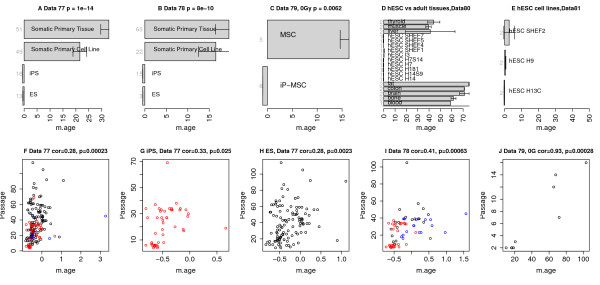
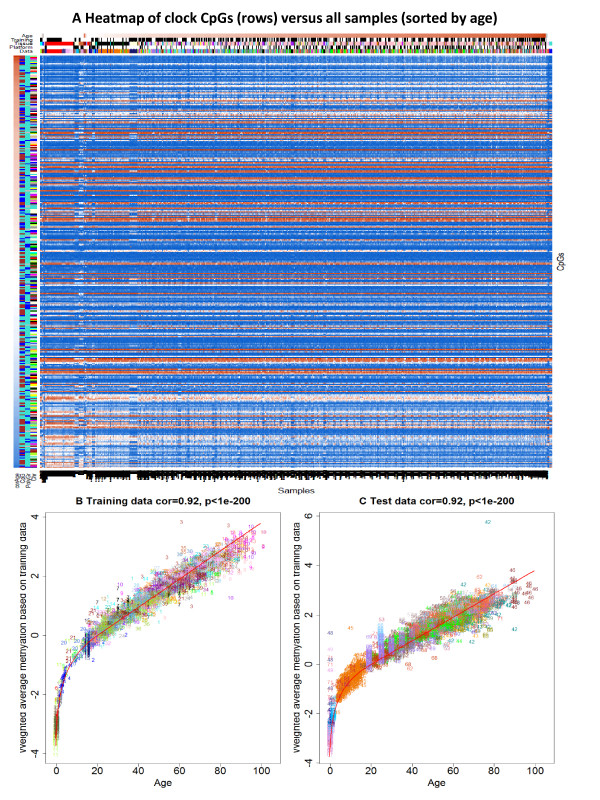
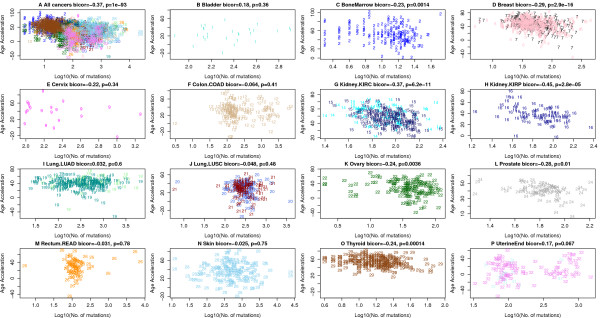
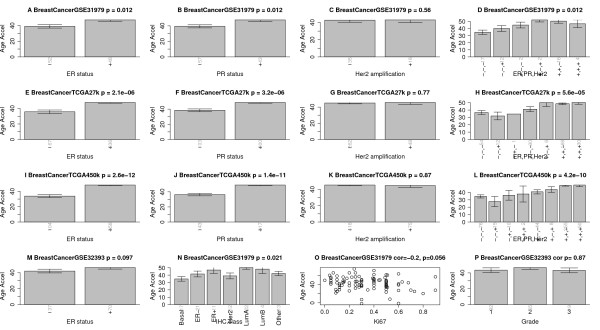
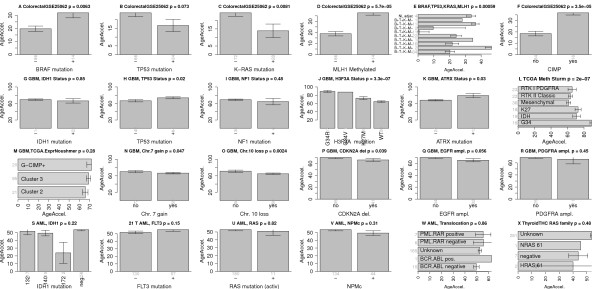
Background: It is not yet known whether DNA methylation levels can be used to accurately predict age across a broad spectrum of human tissues and cell types, nor whether the resulting age prediction is a biologically meaningful measure. Results: I developed a multi-tissue predictor of age that allows one to estimate the DNA methylation age of most tissues and cell types. The predictor, which is freely available, was developed using 8,000 samples from 82 Illumina DNA methylation array datasets, encompassing 51 healthy tissues and cell types. I found that DNA methylation age has the following properties: first, it is close to zero for embryonic and induced pluripotent stem cells; second, it correlates with cell passage number; third, it gives rise to a highly heritable measure of age acceleration; and, fourth, it is applicable to chimpanzee tissues. Analysis of 6,000 cancer samples from 32 datasets showed that all of the considered 20 cancer types exhibit significant age acceleration, with an average of 36 years. Low age-acceleration of cancer tissue is associated with a high number of somatic mutations and TP53 mutations, while mutations in steroid receptors greatly accelerate DNA methylation age in breast cancer. Finally, I characterize the 353 CpG sites that together form an aging clock in terms of chromatin states and tissue variance. Conclusions: I propose that DNA methylation age measures the cumulative effect of an epigenetic maintenance system. This novel epigenetic clock can be used to address a host of questions in developmental biology, cancer and aging research.
Overview
The claims and statistics of this paper haven’t been checked yet.
Free: it reads the open-access text and checks the first 5 claims that cite a source we can check. Create a free account to check every claim.
Integrity signals
Registry
Cites
Statistics
Figures
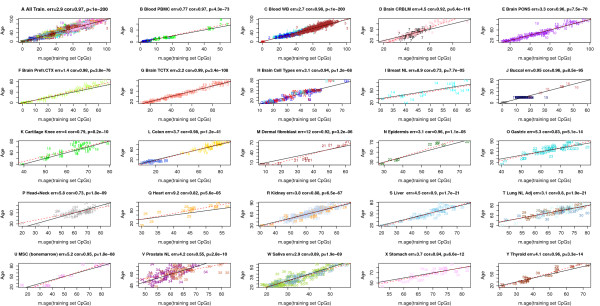
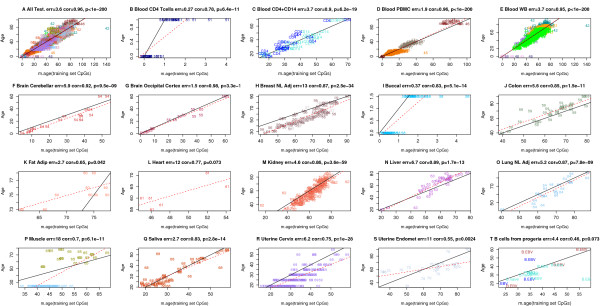
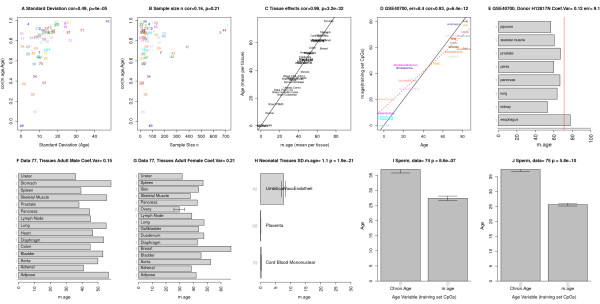
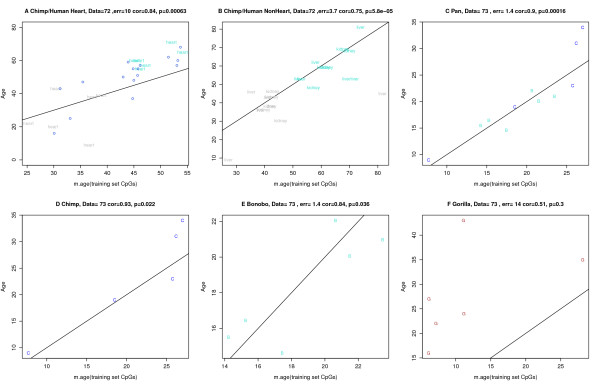
Verification
Claims the paper makes
The claims and statistics of this paper haven’t been checked yet.
Free: it reads the open-access text and checks the first 5 claims that cite a source we can check. Create a free account to check every claim.
Claims other papers make about this one
Each is checked against this paper’s own text: does it say what the citing paper says it does?
The source backs part of the claim, not all of it — or backs it for a different population, condition or comparison.
In the citing paper
“Epigenetic clocks serve as a biomarker of biological age in mammals (Hannum et al., 2013; Horvath, 2013; Petkovich et al., 2017; Weidner et al., 2014).”
From Loss of epigenetic information as a cause of mammalian aging (2023) · cites this paper as Horvath, 2013
Experimental — accuracy not yet measuredThe source backs part of the claim, not all of it — or backs it for a different population, condition or comparison.
In the citing paper
“During ageing, for reasons that are unclear, these patterns change in ways that can be used to calculate DNA methylation (DNAm) age, a representation of biological age that can predict future health and lifespan4.”
From Reprogramming to recover youthful epigenetic information and restore vision (2020) · cites this paper as [4]
Experimental — accuracy not yet measuredThe source backs part of the claim, not all of it — or backs it for a different population, condition or comparison.
In the citing paper
“That said, we do not wish to imply that DNA methylation is the only epigenetic mark involved in this process. It likely involves other transcription factors and epigenetic modifications, such as the PRC2 complex and H3K27me3, both of which are involved in maintaining stem cell plasticity and are associated with DNAm clock sites4,49,50.”
From Reprogramming to recover youthful epigenetic information and restore vision (2020) · cites this paper as [4]
Experimental — accuracy not yet measuredThe source backs part of the claim, not all of it — or backs it for a different population, condition or comparison.
In the citing paper
“Many of the 353 CpGs investigated are located close to poised promoters of bivalent genes (marked by H3K4me3 and H3K27me3), or to active promoters 126 , suggesting that ageing may correlate with reduced plasticity in the expression of some bivalent genes, which might resolve into repressed or active states, and with active genes changing their expression levels.”
From Advances in epigenetics link genetics to the environment and disease (2019) · cites this paper as [126]
Experimental — accuracy not yet measuredThe source backs part of the claim, not all of it — or backs it for a different population, condition or comparison.
In the citing paper
“One especially interesting aspect of DNA methylation clocks is their ability to accurately predict age across a wide range of different tissue types, regardless of the tissue type they were trained on, suggesting that they measure ageing signals that are shared between cell types43,44.”
From Measuring biological age using omics data (2022) · cites this paper as [44]
Experimental — accuracy not yet measured
23 more claims about this paper
Create a free account to see every claim other papers make about this one.
Self-check
Percentages, sums and reported differences re-computed from the paper’s own numbers.
The self-check needs the paper’s full text.
Citations
Cites
Regularization Paths for Generalized Linear Models via Coordinate Descent
Friedman, J., Hastie, T., & Tibshirani, R. (2010) · Journal of Statistical Software · doi:10.18637/jss.v033.i01 · Cited by 19,927
Embryonic Stem Cell Lines Derived from Human Blastocysts
Thomson, J. A., Itskovitz-Eldor, J., Shapiro, S. S., Waknitz, M. A., Swiergiel, J. J., Marshall, V. S., & Jones, J. M. (1998) · Science · doi:10.1126/science.282.5391.1145 · Cited by 15,926 · cited 1×
“Further, DNAm age and cell passage number are highly correlated in ES cells (Figure 5H,J), which are also immortal [38].”
BackgroundA bivalent chromatin structure marks key developmental genes in embryonic stem cells
Bernstein, B. E., Mikkelsen, T. S., Xie, X., Kamal, M., Huebert, D. J., Cuff, J., Fry, B., Meissner, A., Wernig, M., Plath, K., et al. (2006) · Cell · doi:10.1016/j.cell.2006.02.041 · Cited by 5,361
Genome-wide methylation profiles reveal quantitative views of human aging rates
Hannum, G., Guinney, J., Zhao, L., Zhang, L., Hughes, G., Sadda, S., Klotzle, B., Bibikova, M., Fan, J.-B., Gao, Y., et al. (2013) · Molecular Cell · doi:10.1016/j.molcel.2012.10.016 · Cited by 4,270 · cited 3×
“particular, cancer tissues were excluded from this first large data set since it is well known that cancer has a profound effect on DNA methylation levels [6,7,24-26].”
BackgroundMapping and analysis of chromatin state dynamics in nine human cell types
Ernst, J., Kheradpour, P., Mikkelsen, T. S., Shoresh, N., Ward, L. D., Epstein, C. B., Zhang, X., Wang, L., Issner, R., Coyne, M., et al. (2011) · Nature · doi:10.1038/nature09906 · Cited by 2,898
Driver mutations in histone H3.3 and chromatin remodelling genes in paediatric glioblastoma
Schwartzentruber, J., Korshunov, A., Liu, X.-Y., Jones, D. T. W., Pfaff, E., Jacob, K., Sturm, D., Fontebasso, A. M., Quang, D.-A. K., Tönjes, M., et al. (2012) · Nature · doi:10.1038/nature10833 · Cited by 2,631
Control of Developmental Regulators by Polycomb in Human Embryonic Stem Cells
Lee, T. I., Jenner, R. G., Boyer, L. A., Guenther, M. G., Levine, S. S., Kumar, R. M., Chevalier, B., Johnstone, S. E., Cole, M. F., Isono, K.-I., et al. (2006) · Cell · doi:10.1016/j.cell.2006.02.043 · Cited by 2,268
The NIH Roadmap Epigenomics Mapping Consortium
Bernstein, B. E., Stamatoyannopoulos, J. A., Costello, J. F., Ren, B., Milosavljevic, A., Meissner, A., Kellis, M., Marra, M. A., Beaudet, A. L., Ecker, J. R., et al. (2010) · Nature Biotechnology · doi:10.1038/nbt1010-1045 · Cited by 1,892 · cited 1×
“The epigenomic landscape varies markedly across tissue types [16-18] and many age-related changes depend on tissue type [8,19].”
BackgroundSturm, D., Witt, H., Hovestadt, V., Khuong-Quang, D.-A., Jones, D. T. W., Konermann, C., Pfaff, E., Tönjes, M., Sill, M., Bender, S., et al. (2012) · Cancer Cell · doi:10.1016/j.ccr.2012.08.024 · Cited by 1,828
Teschendorff, A. E., Marabita, F., Lechner, M., Bartlett, T., Tegner, J., Gomez-Cabrero, D., & Beck, S. (2013) · Bioinformatics · doi:10.1093/bioinformatics/bts680 · Cited by 1,683
Cited by
Items 801–900 of 1,133
Biological Age is a predictor of mortality in Ischemic Stroke
Soriano‐Tárraga, C., Steinhauer, E. G., Mola-Caminal, M., Ois, Á., Rodríguez-Campello, A., Cuadrado‐Godia, E., Fernández‐Cadenas, I., Cullell, N., Roquer, J., & Jiménez-Conde, J. (2018) · Scientific Reports · doi:10.1038/s41598-018-22579-0 · Cited by 90
Denzel, M. S., Lapierre, L. R., & Mack, H. I. D. (2019) · Mechanisms of Ageing and Development · doi:10.1016/j.mad.2018.08.001 · Cited by 81
“CpG methylation patterns change as humans age and have been proposed as a reliable biomarker of aging (Horvath, 2013).”
5-hydroxymethylcytosine is highly dynamic across human fetal brain development
Spiers, H., Hannon, E., Schalkwyk, L. C., Bray, N. J., & Mill, J. (2017) · BMC Genomics · doi:10.1186/s12864-017-4091-x · Cited by 80
“Of note, however, all samples were classified as being human prefrontal cortex using an online tissue prediction algorithm developed by Steven Horvath that uses DNA methylation data to infer tissue type (https://labs.genetics.ucla.edu/horvath/dna-mage/) [41].”
MethodSpecial Report: The Biology of Inequalities in Health: The Lifepath Consortium
Vineis, P., Avendano-Pabon, M., Barros, H., Bartley, M., Carmeli, C., Carra, L., Chadeau-Hyam, M., Costa, G., Delpierre, C., D'Errico, A., et al. (2020) · Frontiers in Public Health · doi:10.3389/fpubh.2020.00118 · Cited by 80
“This suggests that these clocks (and inferred AA) are capturing different aspects of age acceleration, and that Horvath-AA focuses more on features of aging that are not directly linked to established risk factors.”
InfluentialDemidenko, O., Barardo, D., Budovskii, V., Finnemore, R., Palmer, F. R., Kennedy, B. K., & Budovskaya, Y. V. (2021) · Aging · doi:10.18632/aging.203736 · Cited by 80
“…drift, or progressive stochastic changes in DNA methylation patterns between individuals that occurs with increasing age [11], and (2) the epigenetic clock – a DNA methylation-derived measure that is highly correlated with chronological age and proposed to measure biological age [9, 12, 13].”
An epigenome-wide association study meta-analysis of educational attainment
BIOS Consortium, Karlsson Linnér, R., Marioni, R. E., Rietveld, C. A., Simpkin, A. J., Davies, N. M., Watanabe, K., Armstrong, N. J., Auro, K., Baumbach, C., et al. (2017) · Molecular Psychiatry · doi:10.1038/mp.2017.210 · Cited by 80
Self-citationFranceschi, C., Garagnani, P., Gensous, N., Bacalini, M. G., Conte, M., & Salvioli, S. (2019) · Aging Cell · doi:10.1111/acel.12903 · Cited by 81
“One of the most popular and widely used epigenetic biomarkers of age, Horvath's epigenetic clock (Horvath, 2013), has been applied to four independent sets of specimens from DS per- sons, including whole blood, total peripheral blood leukocytes (PBL), buccal epithelial cells, and brain postmortem…”
MethodA review of epigenetic changes in asthma: methylation and acetylation
Sheikhpour, M., Maleki, M., Vargoorani, M. E., & Amiri, V. (2021) · Clinical Epigenetics · doi:10.1186/s13148-021-01049-x · Cited by 90
“According to Hovath and Steve [59], there is a logarithmic association between chronological age and methylation age by 20 years of age but a linear relation after that.”
BackgroundMethodInfluentialRanking Biomarkers of Aging by Citation Profiling and Effort Scoring
Hartmann, A., Hartmann, C., Secci, R., Hermann, A., Fuellen, G., & Walter, M. (2021) · Frontiers in Genetics · doi:10.3389/fgene.2021.686320 · Cited by 80
“The Horvath clock is specifically designed to be used across multiple tissues, whereby it captures 353 CpG sites on a Illumina 27k array (Horvath, 2013; Bell et al., 2019).”
BackgroundEckhardt, C. M., & Wu, H. (2021) · Current Environmental Health Reports · doi:10.1007/s40572-021-00328-2 · Cited by 94
Fong, S., Pabis, K., Latumalea, D., Dugersuren, N., Unfried, M., Tolwinski, N., Kennedy, B., & Gruber, J. (2024) · Nature Aging · doi:10.1038/s43587-024-00646-8 · Cited by 76
“4h), and they approach 13,16 .”
Anti-Aging Strategies Based on Cellular Reprogramming
Ocampo, A., Reddy, P., & Belmonte, J. C. I. (2016) · Trends in Molecular Medicine · doi:10.1016/j.molmed.2016.06.005 · Cited by 87
Bayesian association scan reveals loci associated with human lifespan and linked biomarkers
McDaid, A. F., Joshi, P. K., Porcu, E., Komljenovic, A., Li, H., Sorrentino, V., Litovchenko, M., Bevers, R. P. J., Rüeger, S., Reymond, A., et al. (2017) · Nature Communications · doi:10.1038/ncomms15842 · Cited by 79
Transgenerational effects of early environmental insults on aging and disease incidence
Ambeskovic, M., Roseboom, T. J., & Metz, G. A. S. (2017) · Neuroscience & Biobehavioral Reviews · doi:10.1016/j.neubiorev.2017.08.002 · Cited by 87
“Steve Horvath’s epigenetic clock predicts age using 353 CpG sites which combined form an aging clock in regards to chromatin states and tissue variance (Horvath, 2013; Gibbs, 2014).”
Monocytes present age-related changes in phospholipid concentration and decreased energy metabolism
Saare, M., Tserel, L., Haljasmägi, L., Taalberg, E., Peet, N., Eimre, M., Vetik, R., Kingo, K., Saks, K., Tamm, R., et al. (2020) · Aging Cell · doi:10.1111/acel.13127 · Cited by 79
“…es Young Old (a) (d) D N A m et hy la tio n di ffe re nc e es tim at e (C D 14 d at a se t) DNA methylation difference estimate (Horvath, 2013) EDARADD PGLYRP2 SELP SSRP1 VGF NHLRC1 B3GALT6 NDUFS5 ABTB1 ITGA2B ABHD14A FXN GPR25 PDE4C BCMO1 FLJ33790…”
BackgroundInfluentialCommon features of chromatin in aging and cancer: cause or coincidence?
Zane, L., Sharma, V., & Misteli, T. (2014) · Trends in Cell Biology · doi:10.1016/j.tcb.2014.07.001 · Cited by 79
“CGIs methylation patterns are altered in a predictable fashion during aging and analysis of the methylation status of 353 defined CGIs is sufficient to accurately determine tissue age [33].”
BackgroundDNA methylation signatures reflect aging in patients with nonalcoholic steatohepatitis
Loomba, R., Gindin, Y., Jiang, Z., Lawitz, E., Caldwell, S., Djedjos, C. S., Xu, R., Chung, C., Myers, R. P., Subramanian, G. M., et al. (2018) · JCI Insight · doi:10.1172/jci.insight.96685 · Cited by 76
“One of these algorithms, the so-called “Horvath clock,” was derived from methylation levels of 353 discrete CpG dinucleotide sites (5).”
BackgroundKaliman, P. (2018) · Current Opinion in Psychology · doi:10.1016/j.copsyc.2018.11.010 · Cited by 97
DNA Methylation in Epidermal Differentiation, Aging, and Cancer
Köhler, F., & Rodríguez‐Paredes, M. (2019) · Journal of Investigative Dermatology · doi:10.1016/j.jid.2019.05.011 · Cited by 88
“…of predictors allowed a reasonably precise estimation of a DNA methylation age for a wide range of human tissues, including keratinocytes (median error, 3.6 years) and whole skin (median error, 10.0 years), but lacked tissue specificity (Hannum et al., 2013; Horvath, 2013; Horvath et al., 2018).”
BackgroundInfluentialBeemelmanns, A., Ribas, L., Anastasiadi, D., Moraleda-Prados, J., Zanuzzo, F. S., Rise, M. L., & Gamperl, A. K. (2021) · Frontiers in Marine Science · doi:10.3389/fmars.2020.604878 · Cited by 91
“Epimarkers have also been used to construct clocks capable of accurately estimating age in humans (Horvath, 2013) and in other vertebrates, including fish (Polanowski et al., 2014; De Paoli-Iseppi et al., 2019; Anastasiadi and Piferrer, 2020).”
MethodEpigenetic and Transcriptional Networks Underlying Atrial Fibrillation
van Ouwerkerk, A. F., Hall, A. W., Kadow, Z. A., Lazarevic, S., Reyat, J. S., Tucker, N. R., Nadadur, R. D., Bosada, F. M., Bianchi, V., Ellinor, P. T., et al. (2020) · Circulation Research · doi:10.1161/circresaha.120.316574 · Cited by 85
Integrated Multi-Omics for Novel Aging Biomarkers and Antiaging Targets
Wu, L., Xie, X., Liang, T., Ma, J., Yang, L., Yang, J., Li, L., Xi, Y., Li, H., Zhang, J., et al. (2021) · Biomolecules · doi:10.3390/biom12010039 · Cited by 92
Human age reversal: Fact or fiction?
Johnson, A. A., English, B. W., Shokhirev, M. N., Sinclair, D. A., & Cuellar, T. L. (2022) · Aging Cell · doi:10.1111/acel.13664 · Cited by 90
“Many models exist for mapping inputs into an age readout, including random forest (Schultz et al., 2020), elastic net (Horvath, 2013), and least absolute shrinkage and selection operator (LASSO) (Lehallier et al., 2020).”
BackgroundDu, M., Gu, D., Xin, J., Peters, U., Song, M., Cai, G., Li, S., Ben, S., Meng, Y., Chu, H., et al. (2023) · Cell Reports Medicine · doi:10.1016/j.xcrm.2023.100974 · Cited by 95
“edu/).(56) Briefly, DNA methylation profiles originating from tumors and NATs were reduced to datasets with 28,587 CpGs, which were then analyzed based on DNA”
MethodHänzelmann, S., Beier, F., Gusmao, E. G., Koch, C. M., Hummel, S., Charapitsa, I., Joussen, S., Benes, V., Brümmendorf, T. H., Reid, G., et al. (2015) · Clinical Epigenetics · doi:10.1186/s13148-015-0057-5 · Cited by 78
“In addition, age-associated DNAm changes, which are highly reproducible when using the IlluminaBeadChip platform [21,34,35], revealed much lower reproducibility in MethylCap-seq data [36].”
BackgroundMethodIschemic stroke patients are biologically older than their chronological age
Soriano‐Tárraga, C., Steinhauer, E. G., Mola-Caminal, M., Vivanco‐Hidalgo, R. M., Ois, Á., Rodríguez-Campello, A., Cuadrado‐Godia, E., Sayols-Baixeras, S., Elosúa, R., Roquer, J., et al. (2016) · Aging · doi:10.18632/aging.101028 · Cited by 87
“Horvath developed a multi-tissue age predictor using DNA methylation data from multiple studies [10].”
BackgroundMethodInfluentialThe environment as a determinant of successful aging or frailty
Ciaula, A. D., & Portincasa, P. (2020) · Mechanisms of Ageing and Development · doi:10.1016/j.mad.2020.111244 · Cited by 95
TET1-mediated DNA hydroxymethylation regulates adult remyelination in mice
Moyon, S., Frawley, R., Maréchal, D., Huang, D., Marshall-Phelps, K. L., Kegel, L., Bøstrand, S. M. K., Sadowski, B., Jiang, Y., Lyons, D. A., et al. (2021) · Nature Communications · doi:10.1038/s41467-021-23735-3 · Cited by 89
Radiation dose rate effects: what is new and what is needed?
Lowe, D., Roy, L., Tabocchini, M. A., Rühm, W., Wakeford, R., Woloschak, G. E., & Laurier, D. (2022) · Radiation and Environmental Biophysics · doi:10.1007/s00411-022-00996-0 · Cited by 107
“Second, the development of an epigenetic clock to measure biological age using changes in DNA methylation (Horvath 2013) has demonstrated that cells cultured while being exposed to dose rates between 1 mGy/h and 50 mGy/h do not show any difference in epigenetic age (Kabacik et al.”
MethodQiu, W., Chen, H., Kaeberlein, M. R., & Lee, S. (2023) · The Lancet Healthy Longevity · doi:10.1016/s2666-7568(23)00189-7 · Cited by 92
The role of the dynamic epigenetic landscape in senescence: orchestrating SASP expression
Dasgupta, N., Arnold, R., Equey, A., Gandhi, A., & Adams, P. D. (2024) · npj Aging · doi:10.1038/s41514-024-00172-2 · Cited by 101
“Hannumetal.and other researchers developed a widely used biomarker of aging by leveraging age-associated alterations in the mammalian DNA methylome 124,125 .”
BackgroundBiological age is better than chronological as predictor of 3-month outcome in ischemic stroke
Soriano‐Tárraga, C., Mola-Caminal, M., Steinhauer, E. G., Ois, Á., Rodríguez-Campello, A., Cuadrado‐Godia, E., Gómez-González, A., Vivanco‐Hidalgo, R. M., Fernández‐Cadenas, I., Cullell, N., et al. (2017) · Neurology · doi:10.1212/wnl.0000000000004261 · Cited by 84
Biosocial health geography: New ‘exposomic’ geographies of health and place
Prior, L., Manley, D., & Sabel, C. E. (2018) · Progress in Human Geography · doi:10.1177/0309132518772644 · Cited by 91
“Measures of biological age, such as DNA methylation age – a measure of the cumulative effects of epigenetic processes (Horvath, 2013) – can be used to explore accelerated ageing which may reflect increased exposure to negative experiences.”
Serpeloni, F., Radtke, K. M., Hecker, T., Sill, J., Vukojevic, V., Assis, S. G. D., Schauer, M., Elbert, T., & Nätt, D. (2019) · Frontiers in Genetics · doi:10.3389/fgene.2019.00269 · Cited by 77
“Like the epigenetic clock (Horvath, 2013), the methylome switch relies on broad epigenome signatures, making it less affected by populational structure and measurement artifacts, such as fluctuations in cell-type heterogeneity.”
BackgroundEpigenetic clock analysis in long-term meditators
Chaix, R., Alvarez-López, M. J., Fagny, M., Lemee, L., Regnault, B., Davidson, R. J., Lutz, A., & Kaliman, P. (2017) · Psychoneuroendocrinology · doi:10.1016/j.psyneuen.2017.08.016 · Cited by 77
“1A), confirming the accuracy of the epigenetic clock model (Horvath, 2013).”
BackgroundMethodInfluentialModeling late-onset Alzheimer’s disease neuropathology via direct neuronal reprogramming
Sun, Z., Kwon, J.-S., Ren, Y., Chen, S., Walker, C. K., Lu, X., Cates, K., Karahan, H., Sviben, S., Fitzpatrick, J. A. J., et al. (2024) · Science · doi:10.1126/science.adl2992 · Cited by 96
“However, induction of pluripotency in iPSCs resets the age signatures of the donor cells to a fetal stage (7–9).”
Current perspectives on the cellular and molecular features of epigenetic ageing
Raj, K., & Horvath, S. (2020) · Experimental Biology and Medicine · doi:10.1177/1535370220918329 · Cited by 77
“5 years).(1) This is profound as it demonstrates that the epigenetic clock, which captures at least some degree of biological ageing, begins ticking very early on before birth.”
BackgroundMethodInfluentialSelf-citationCiccarone, F., Malavolta, M., Calabrese, R., Guastafierro, T., Bacalini, M. G., Reale, A., Franceschi, C., Capri, M., Hervonen, A., Hurme, M., et al. (2016) · Aging Cell · doi:10.1111/acel.12485 · Cited by 75
“On the other hand, the weak association of DNMTs expression with age severely limits the possibility of predicting age by measuring DNMTs transcripts in PBMCs in contrast to that shown for the methylation status of specific genomic loci (Horvath, 2013).”
DNA methylation as a genomic marker of exposure to chemical and environmental agents
Meehan, R. R., Thomson, J. P., Lentini, A., Nestor, C. E., & Pennings, S. (2018) · Current Opinion in Chemical Biology · doi:10.1016/j.cbpa.2018.02.006 · Cited by 76
Wang, K., Wu, D., Zhang, H., Das, A., Basu, M., Malin, J., Cao, K., & Hannenhalli, S. (2018) · Scientific Reports · doi:10.1038/s41598-018-29086-2 · Cited by 75
Human Age Prediction Based on DNA Methylation Using a Gradient Boosting Regressor
Li, X., Li, W., & Xu, Y. (2018) · Genes · doi:10.3390/genes9090424 · Cited by 77
“reported that the predicted age in cancer was poorly correlated with patient ages [20].”
BackgroundResultInfluentialWesterman, K. E., Sebastiani, P., Jacques, P. F., Liu, S., DeMeo, D. L., & Ordovás, J. M. (2019) · Clinical Epigenetics · doi:10.1186/s13148-019-0705-2 · Cited by 91
Transgenerational epigenetic inheritance: from phenomena to molecular mechanisms
Liberman, N., Wang, S. Y., & Greer, E. L. (2019) · Current Opinion in Neurobiology · doi:10.1016/j.conb.2019.09.012 · Cited by 85
“5mC is a stable but dynamic [52–54] transcriptionally repressive epigenetic mark that regulates development [55,56], differentiation [57,58], aging [59] and disease [60,61].”
BackgroundDNA methylation profile is a quantitative measure of biological aging in children
Wu, X., Chen, W., Lin, F., Huang, Q., Zhong, J., Gao, H., Song, Y., & Liang, H. (2019) · Aging · doi:10.18632/aging.102399 · Cited by 77
“EDARADD was introduced in the previous paragraph, and has appeared in most of the relevant studies [15, 16].”
BackgroundMethodInfluentialBarratclough, A., Wells, R. S., Schwacke, L. H., Rowles, T. K., Gomez, F. M., Fauquier, D. A., Sweeney, J. C., Townsend, F. I., Hansen, L. J., Zolman, E. S., et al. (2019) · Frontiers in Veterinary Science · doi:10.3389/fvets.2019.00444 · Cited by 95
“The NMMF are expanding on this even further in line with recent human advancements to provide an indication of biological age (138).”
Lundgren, S., Kuitunen, S., Pietiläinen, K. H., Hurme, M., Kähönen, M. A. P., Männistö, S., Perola, M., Lehtimäki, T. J., Raitakari, O. T., Kaprio, J. A., et al. (2022) · Journal of Internal Medicine · doi:10.1111/joim.13528 · Cited by 91
Psychological and biological mechanisms linking trauma with cardiovascular disease risk
Sumner, J. A., Cleveland, S., Chen, T., & Gradus, J. L. (2023) · Translational Psychiatry · doi:10.1038/s41398-023-02330-8 · Cited by 104
“Calculation of various DNAm age estimates and composite biomarker estimates is facilitated by the availability of online calculators and statistical packages [183, 187].”
BackgroundSex differences in frailty among older adults
Zeidan, R. S., McElroy, T., Rathor, L., Martenson, M. S., Lin, Y., & Mankowski, R. T. (2023) · Experimental Gerontology · doi:10.1016/j.exger.2023.112333 · Cited by 87
“…to estimate biological age based on an individual's DNA methylation patterns have been used as a biomarker for aging and are predictive of longevity (Bocklandt et al., 2011; Hannum et al., 2013; Horvath, 2013; Horvath and Raj, 2018; Levine et al., 2018; Li et al., 2020; Christensen et al., 2009).”
Distinguishing between driver and passenger mechanisms of aging
de Magalhães, J. P. (2024) · Nature Genetics · doi:10.1038/s41588-023-01627-0 · Cited by 84
“This largescale profiling of aging has led to breakthroughs, such as the discovery of epigenetic clocks that can be used to quantify aging 8,9 , even if their underlying biology remains a subject of debate.”
Nwanaji‐Enwerem, J. C., Dai, L., Colicino, E., Oulhote, Y., Di, Q., Kloog, I., Just, A. C., Hou, L., Vokonas, P., Baccarelli, A., et al. (2017) · Environment International · doi:10.1016/j.envint.2016.12.024 · Cited by 81
“, Environ Int (2017), h constructed using many datasets of multiple tissue types and the Hannum DNAm-age was based only on blood from one dataset (Horvath, 2013; Hannum et al., 2013).”
BackgroundMethodInfluentialAccelerated DNA Methylation Age: Associations With Posttraumatic Stress Disorder and Mortality
Wolf, E. J., Logue, M. W., Stoop, T. B., Schichman, S. A., Stone, A., Sadeh, N., Hayes, J. P., & Miller, M. W. (2018) · Psychosomatic Medicine · doi:10.1097/psy.0000000000000506 · Cited by 75
Epigenomic drivers of immune dysfunction in aging
Keenan, C. R., & Allan, R. S. (2019) · Aging Cell · doi:10.1111/acel.12878 · Cited by 76
“made from heterogeneous tissues such as lung, liver, and brain tissue as well as whole blood and peripheral blood mononuclear cells, and isolated CD4 T cells, monocytes, and B cells (Horvath, 2013).”
BackgroundMethodInfluentialSehl, M. E., Carroll, J., Horvath, S., & Bower, J. E. (2020) · npj Breast Cancer · doi:10.1038/s41523-020-0161-3 · Cited by 79
Self-citationEpigenetic dysregulation of protocadherins in human disease
El Hajj, N., Dittrich, M., & Haaf, T. (2017) · Seminars in Cell & Developmental Biology · doi:10.1016/j.semcdb.2017.07.007 · Cited by 76
Epigenetic mechanisms of neurodegenerative diseases and acute brain injury
Bertogliat, M. J., Morris-Blanco, K. C., & Vemuganti, R. (2019) · Neurochemistry International · doi:10.1016/j.neuint.2019.104642 · Cited by 87
Molecules of Silence: Effects of Meditation on Gene Expression and Epigenetics
Venditti, S., Verdone, L., Reale, A., Vetriani, V., Caserta, M., & Zampieri, M. (2020) · Frontiers in Psychology · doi:10.3389/fpsyg.2020.01767 · Cited by 91
Evaluating causality of cellular senescence in non-alcoholic fatty liver disease
Meijnikman, A. S., Herrema, H., Scheithauer, T. P. M., Kroon, J., Nieuwdorp, M., & Groen, A. K. (2021) · JHEP Reports · doi:10.1016/j.jhepr.2021.100301 · Cited by 75
“tissues including the liver has been confirmed in multiple studies.(122,125,126) Moreover, the intrinsic rate of the epigenetic clock can be altered by metabolic diseases.”
BackgroundMethodExercise is associated with younger methylome and transcriptome profiles in human skeletal muscle
Voisin, S. A. C., Seale, K., Jacques, M., Landen, S., Harvey, N. R., Haupt, L. M., Griffiths, L. R., Ashton, K. J., Coffey, V. G., Thompson, J. M., et al. (2023) · Aging Cell · doi:10.1111/acel.13859 · Cited by 85
“There are only two clocks currently available that could be applied to muscle DNAm data, namely the Horvath pan-tissue clock (Horvath, 2013) and the MEAT clock we recently developed for human muscle (Voisin et al., 2020; all other clocks were developed for non-muscle tissue).”
MethodErgothioneine and its congeners: anti-ageing mechanisms and pharmacophore biosynthesis
Chen, L., Zhang, L., Ye, X., Deng, Z., & Zhao, C. (2023) · Protein & Cell · doi:10.1093/procel/pwad048 · Cited by 82
“C5 methylation of cytosine in DNA CpG dinucleotides (5mC) is the most abundant type of DNA epigenetic marker, and its pattern is altered with age (Horvath, 2013; Horvath and Raj, 2018).”
BackgroundDissecting the Molecular Mechanisms of Neurodegenerative Diseases through Network Biology
Santiago, J. A., Bottero, V., & Potashkin, J. A. (2017) · Frontiers in Aging Neuroscience · doi:10.3389/fnagi.2017.00166 · Cited by 86
“DNA methylation has been proposed as a biomarker for aging in cells, tissues and organs (Horvath, 2013).”
BackgroundEpigenetic age acceleration is associated with allergy and asthma in children in Project Viva
Peng, C., Cárdenas, A., Rifas‐Shiman, S. L., Hivert, M., Gold, D. R., Platts‐Mills, T. A. E., Lin, X., Oken, E., Ávila, L., Celedon, J. C., et al. (2019) · Journal of Allergy and Clinical Immunology · doi:10.1016/j.jaci.2019.01.034 · Cited by 83
The Model of the Conserved Epigenetic Regulation of Sex
Piferrer, F., Anastasiadi, D., Valdivieso, A., Sánchez-Baizán, N., Moraleda-Prados, J., & Ribas, L. (2019) · Frontiers in Genetics · doi:10.3389/fgene.2019.00857 · Cited by 90
“Thus, after the discovery of an epigenetic clock in humans, i.e., a panel of DNA methylation biomarkers as diagnostic of biological age (Horvath, 2013), epigenetic clocks have been constructed in other vertebrates, such as mice, Mus muculus (Han et al., 2018), chimpanzees, Pan troglodytes (Horvath,…”
BackgroundReece, A. S., & Hulse, G. K. (2016) · Mutation research. Fundamental and molecular mechanisms of mutagenesis · doi:10.1016/j.mrfmmm.2016.05.002 · Cited by 81
“Normal developmental [181] and ageing changes [182,183], cellular lineage specification amongst different tissues [181], single cell memory formation [62,183–185] and complex disease origins have been attributed in large part to epigenetic changes [186].”
Forensic DNA methylation profiling from minimal traces: How low can we go?
Naue, J., Hoefsloot, H. C. J., Kloosterman, A., & Verschure, P. J. (2017) · Forensic Science International Genetics · doi:10.1016/j.fsigen.2017.11.004 · Cited by 79
Yang, N., & Sen, P. (2018) · Aging · doi:10.18632/aging.101617 · Cited by 75
“Regression modeling of the methylation status of a set of CpGs has inspired the development of an “epigenetic clock”, serving as a robust biomarker of biological aging [88-90].”
BackgroundMethodMapping of γ/δ T cells Reveals Vδ2 T cells Resistance to Senescence
Xu, W., Monaco, G., Wong, E., Tan, W. L. W., Kared, H., Simoni, Y., Tan, S. W., How, W., Tan, C. T. Y., Lee, B. T. K., et al. (2018) · EBioMedicine · doi:10.1016/j.ebiom.2018.11.053 · Cited by 84
A genomic predictor of lifespan in vertebrates
Mayne, B. T., Berry, O., Davies, C. R., Farley, J. H., & Jarman, S. (2019) · Scientific Reports · doi:10.1038/s41598-019-54447-w · Cited by 87
Dysfunctional epigenetic aging of the normal colon and colorectal cancer risk
Wang, T., Maden, S. K., Luebeck, E. G., Li, C. I., Newcomb, P. A., Ulrich, C. M., Joo, J.-H. E., Buchanan, D. D., Milne, R. L., Southey, M. C., et al. (2020) · Clinical Epigenetics · doi:10.1186/s13148-019-0801-3 · Cited by 86
The Aging Metabolome—Biomarkers to Hub Metabolites
Sharma, R., & Ramanathan, A. (2020) · PROTEOMICS · doi:10.1002/pmic.201800407 · Cited by 76
Castration delays epigenetic aging and feminizes DNA methylation at androgen-regulated loci
Sugrue, V. J., Zoller, J. A., Narayan, P., Lu, A. T., Ortega-Recalde, O. J., Grant, M. J., Bawden, C. S., Rudiger, S. R., Haghani, A., Bond, D. M., et al. (2021) · eLife · doi:10.7554/elife.64932 · Cited by 75
“96, irrespective of tissue or cell type (Horvath, 2013).”
BackgroundMethodResultInfluentialSelf-citationDammering, F., Martins, J., Dittrich, K., Czamara, D., Rex-Haffner, M., Overfeld, J., de Punder, K., Buss, C., Entringer, S., Winter, S. M., et al. (2021) · Neurobiology of Stress · doi:10.1016/j.ynstr.2021.100394 · Cited by 74
“ation at specific cytosine-guanine dinucleotide sites (CpGs), resulting in estimates of epigenetic age (Hannum et al., 2013; Horvath, 2013).”
BackgroundAnalysis of Epigenetic Age Acceleration and Healthy Longevity Among Older US Women
Jain, P., Binder, A. M., Chen, B., Parada, H., Gallo, L. C., Alcaraz, J., Horvath, S., Bhatti, P., Whitsel, E. A., Jordahl, K., et al. (2022) · JAMA Network Open · doi:10.1001/jamanetworkopen.2022.23285 · Cited by 73
Self-citationAssociation of Adverse Childhood Experiences With Accelerated Epigenetic Aging in Midlife
Kim, K., Yaffe, K. S., Rehkopf, D. H., Zheng, Y., Nannini, D. R., Perak, A. M., Nagata, J. M., Miller, G. E., Zhang, K., Lloyd‐Jones, D. M., et al. (2023) · JAMA Network Open · doi:10.1001/jamanetworkopen.2023.17987 · Cited by 91
Proteomic aging clock ( PAC ) predicts age‐related outcomes in middle‐aged and older adults
Kuo, C., Chen, Z., Liu, P., Pilling, L. C., Atkins, J. L., Fortinsky, R. H., Kuchel, G. A., & Diniz, B. S. (2024) · Aging Cell · doi:10.1111/acel.14195 · Cited by 84
“First-generation epigenetic clocks (Hannum et al., 2013 ; Horvath, 2013; Levine, 2013 , p.201) were initially developed using chronological age as a surrogate of BA.”
BackgroundFranzen, J., Zirkel, A., Blake, J., Rath, B., Benes, V., Papantonis, A., & Wagner, W. (2017) · Aging Cell · doi:10.1111/acel.12544 · Cited by 74
“It may even be speculated, that similar mechanisms evoke age-associated DNAm changes that are utilized for epigenetic aging clocks (Hannum et al., 2013; Horvath, 2013; Weidner et al., 2014)—albeit age-associated and senescence-associated DNAm changes are generally quite different (Bork et al.”
BackgroundDNA methylation age is elevated in breast tissue of healthy women
Sehl, M. E., Henry, J. E., Storniolo, A. M., Ganz, P. A., & Horvath, S. (2017) · Breast Cancer Research and Treatment · doi:10.1007/s10549-017-4218-4 · Cited by 75
“4h) but can even be observed for CpGs located inside of CpG islands (p = 9 9 10-12, Fig.”
MethodSelf-citationThe Impact of Air Pollution on Our Epigenome: How Far Is the Evidence? (A Systematic Review)
Alfano, R., Herceg, Z., Nawrot, T. S., Chadeau‐Hyam, M., Ghantous, A., & Plusquin, M. (2018) · Current Environmental Health Reports · doi:10.1007/s40572-018-0218-8 · Cited by 80
Zimmermann, M. T., Oberg, A. L., Grill, D. E., Ovsyannikova, I. G., Haralambieva, I. H., Kennedy, R. B., & Poland, G. A. (2016) · PLOS ONE · doi:10.1371/journal.pone.0152034 · Cited by 74
Shift work, DNA methylation and epigenetic age
White, A. J., Kresovich, J. K., Xu, Z., Sandler, D. P., & Taylor, J. A. (2019) · International Journal of Epidemiology · doi:10.1093/ije/dyz027 · Cited by 81
“For the age acceleration analysis, we first calculated DNAm age using R code provided from the manuscripts of the clock developers.(12,13,18) For each of the three epigenetic clocks (i.”
BackgroundMethodAn overview of DNA methylation-derived trait score methods and applications
Nabais, M. F., Gadd, D. A., Hannon, E. J., Mill, J. S., McRae, A. F., & Wray, N. R. (2023) · Genome biology · doi:10.1186/s13059-023-02855-7 · Cited by 83
“DNAm age predictors were originally derived from multi-ancestry samples [113, 114], and this may be why these MPS are accurate across ancestries [93, 98].”
Organ-specific biological clocks: Ageotyping for personalized anti-aging medicine
Prattichizzo, F., Frigé, C., Pellegrini, V., Scisciola, L., Santoro, A., Monti, D., Rippo, M. R., Ivanchenko, M., Olivieri, F., & Franceschi, C. (2024) · Ageing Research Reviews · doi:10.1016/j.arr.2024.102253 · Cited by 86
“Most of these approaches, including the Hannum ’ s and the Horvath ’ s clocks, used chronological age as the output to build the clock (Hannum et al., 2013 ; Horvath, 2013 ; Weidner et al., 2014 ; Lin et al., 2016).”
Muthamil, S., Kim, H., Jang, H., Lyu, J., Shin, U. C., Go, Y., Park, S., Lee, H. G., & Park, J. H. (2024) · Advanced Biology · doi:10.1002/adbi.202400079 · Cited by 99
DNA methylation profiling in human Huntington's disease brain
Souza, R. A. G. D., Islam, S. A., McEwen, L. M., Mathelier, A., Hill, A. M., Mah, S. M., Wasserman, W. W., Kobor, M. S., & Leavitt, B. R. (2016) · Human Molecular Genetics · doi:10.1093/hmg/ddw076 · Cited by 82
Hamano, Y., Manabe, S., Morimoto, C., Fujimoto, S., Ozeki, M., & Tamaki, K. (2016) · Legal Medicine · doi:10.1016/j.legalmed.2016.05.001 · Cited by 78
del Real, Á., Pérez-Campo, F. M., Fernández, A. F., Sañudo, C., Ibarbia, C. G., Pérez‐Núñez, M. I., Criekinge, W. V., Braspenning, M., Alonso, M. A., Fraga, M. F., et al. (2016) · Epigenetics · doi:10.1080/15592294.2016.1271854 · Cited by 74
“The epigenetic age was calculated from the methylation level of a set of 353 CpGs, which has been shown to change with aging in a wide variety of tissues.(33) The relationship of the epigenetic age and the chronological age was explored by linear regression analysis.”
MethodMorin, A. M., Gatev, E., McEwen, L. M., MacIsaac, J. L., Lin, D. T. S., Koen, N., Czamara, D., Räikkönen, K., Zar, H. J., Koenen, K. C., et al. (2017) · Clinical Epigenetics · doi:10.1186/s13148-017-0370-2 · Cited by 85
“Epigenetic age was determined using two epigenetic clocks, one which outputs chronological age and is designed for adults, and the other which outputs gestational age and is designed for newborns [19, 20].”
MethodClonal dynamics of haematopoiesis across the human lifespan
Mitchell, E., Chapman, M. S., Williams, N., Dawson, K., Mende, N., Calderbank, E. F., Jung, H., Mitchell, T., Coorens, T., Spencer, D., et al. (2021) · bioRxiv (Cold Spring Harbor Laboratory) · doi:10.1101/2021.08.16.456475 · Cited by 74
Marycz, K., Kornicka, K., Marędziak, M., Golonka, P., & Nicpoń, J. (2016) · Journal of Cellular and Molecular Medicine · doi:10.1111/jcmm.12932 · Cited by 78
Naue, J., Sänger, T., Hoefsloot, H. C. J., Lutz‐Bonengel, S., Kloosterman, A., & Verschure, P. J. (2018) · Forensic Science International Genetics · doi:10.1016/j.fsigen.2018.07.007 · Cited by 79
Nicaise, A. M., Willis, C. M., Crocker, S. J., & Pluchino, S. (2020) · Frontiers in Aging Neuroscience · doi:10.3389/fnagi.2020.00247 · Cited by 73
“The specific methylation sites correlate to 0 years of age in ESCs, are reflected in somatic cells as the age of the donor but become largely erased upon iPSC reprogramming (Horvath et al., 2012; Horvath, 2013; Sheng et al., 2018).”
BackgroundRots, D., Chater‐Diehl, E., Dingemans, A. J. M., Goodman, S. J., Siu, M. T., Cytrynbaum, C. S., Choufani, S., Hoang, N., Walker, S., Awamleh, Z., et al. (2021) · The American Journal of Human Genetics · doi:10.1016/j.ajhg.2021.04.008 · Cited by 89
Hallmarks of Aging in Macrophages: Consequences to Skin Inflammaging
Guimarães, G. R., Almeida, P. P., Santos, L. D. O., Rodrigues, L. P., Carvalho, J. L., & Boroni, M. (2021) · Cells · doi:10.3390/cells10061323 · Cited by 84
“Molecular clocks have been developed in order to calculate the “biological age” of biological samples using methylome data [50,51], including a skin-specific Molecular Clock [51].”
MethodCárdenas, A., Ecker, S., Fadadu, R. P., Huen, K., Orozco, A., McEwen, L. M., Engelbrecht, H.-R., Gladish, N., Kobor, M. S., Rosero‐Bixby, L., et al. (2022) · Scientific Reports · doi:10.1038/s41598-022-08160-w · Cited by 83
Biomarkers selection and mathematical modeling in biological age estimation
Bafei, S. E. C., & Shen, C. (2023) · npj Aging · doi:10.1038/s41514-023-00110-8 · Cited by 104
The long and winding road of reprogramming-induced rejuvenation
Yücel, A. D., & Gladyshev, V. N. (2024) · Nature Communications · doi:10.1038/s41467-024-46020-5 · Cited by 92
“The frailty index score of untreated wild-type mice was 7.5 points, while partially reprogrammed TRE-OSK mice exhibited the frailty index score of 6, suggesting that the therapy may be bene fi cial for both healthspan and lifespan 16 .”
BackgroundInfluentialPatrick, R., Naval-Sánchez, M., Deshpande, N., Huang, Y., Zhang, J., Chen, X., Yang, Y., Tiwari, K., Esmaeili, M., Tran, M., et al. (2024) · Cell Metabolism · doi:10.1016/j.cmet.2024.06.006 · Cited by 82
Paternal age effects on spermFOXK1andKCNA7methylation and transmission into the next generation
Atsem, S., Reichenbach, J., Potabattula, R., Dittrich, M. T., Nava, C., Depienne, C., Böhm, L., Rost, S., Hahn, T., Schorsch, M., et al. (2016) · Human Molecular Genetics · doi:10.1093/hmg/ddw328 · Cited by 91
DNA methylation in demyelinated multiple sclerosis hippocampus
Chomyk, A. M., Volsko, C. M., Tripathi, A. K., Deckard, S. A., Trapp, B. D., Fox, R. J., & Dutta, R. (2017) · Scientific Reports · doi:10.1038/s41598-017-08623-5 · Cited by 76
What are parental condition‐transfer effects and how can they be detected?
Bonduriansky, R., & Crean, A. J. (2017) · Methods in Ecology and Evolution · doi:10.1111/2041-210x.12848 · Cited by 91
“…wide DNA methylation states is strongly age- dependent, with deleterious changes accompanying (and perhaps causing) senescence (“epigenetic clock”: Horvath, 2013), stress may accelerate the clock (Horvath et al., 2016; Simons et al., 2016; Zannas et al., 2015), and some of these epigenetic…”
BackgroundA generalized theory of age-dependent carcinogenesis
Rozhok, A., & DeGregori, J. (2019) · eLife · doi:10.7554/elife.39950 · Cited by 73
Metadata
- Authors
- Horvath, S.
- Affiliations
- University of California, Los Angeles (US)
- Corresponding author
- Horvath, Steve
- ORCID
- Horvath, Steve
- Venue
- Genome Biology
- Published
- 2013-12-10
- Volume
- 14
- Issue
- 10
- Pages
- R115-R115
- ISSN
- 1465-6906 (ISSN-L)
- 1474-760X
- PMC
- PMC4015143
- OpenAlex
- W1974047233
- Semantic Scholar
- b7ad028fbe0b464636066e95bcef3c1478de5398
- Cited by
- 7,075
- References
- 91
- Citations by year
- 2026: 814 · 2025: 882 · 2024: 857 · 2023: 759 · 2022: 725 · 2021: 729 · 2020: 626 · 2019: 464 · 2018: 405 · 2017: 336 · 2016: 224 · 2015: 176 · 2014: 70 · 2013: 3
- FWCI
- 70.57
- Type
- journal article
- Language
- en
- Update notices
- Open access
- gold
- doi.org
- Licence
- cc-by
- creativecommons.org/licenses/by/2.0/ (tdm)
- creativecommons.org/licenses/by/2.0/ (vor)
- Locations
- Genome biology (publishedVersion, cc-by)
- Europe PMC (PubMed Central) (publishedVersion, cc-by)
- PubMed Central (publishedVersion, cc-by)
- PubMed (publishedVersion)
- eScholarship (California Digital Library) (submittedVersion)
- Funders
- University of Southern California
- National Institute on Aging (R01AG042511)
- Topics
- Life Sciences › Biochemistry, Genetics and Molecular Biology › Molecular Biology › Epigenetics and DNA Methylation
- Life Sciences › Biochemistry, Genetics and Molecular Biology › Aging › Genetics, Aging, and Longevity in Model Organisms
- Life Sciences › Biochemistry, Genetics and Molecular Biology › Molecular Biology › Genomics and Chromatin Dynamics
- Keywords
- DNA methylation age, epigenetic clocks, accelerated aging, cancer, somatic mutations, TP53 mutation, breast cancer, chromatin state, CpG sites, embryonic stem cells, induced pluripotent stem cells, subculture, aging
- MeSH terms
- Age Factors, Aging, Animals, Blood Cells, Brain, Pan troglodytes, Chromatin, Gene Expression Regulation, Humans, Models, Biological, Mutation, Neoplasms, Organ Specificity, Progeria, Receptors, Steroid, Stem Cells, Reproducibility of Results, Cellular Senescence, CpG Islands, DNA Methylation, Databases, Nucleic Acid, Epigenesis, Genetic, Cell Line, Tumor
About these checks
Registry, retraction, Cites and statistics results are computed, not judged, with one exception: a printed reference that no index lists is read once by a model before it counts as a citation error. Claims are extracted by a model and kept only when their quote appears verbatim in the text; each cited source is then checked, with a model’s help, for whether it says what the claim relies on. Those verdicts can be wrong — read the claim’s quote and the cited source before relying on one.
Statistics and arithmetic are recomputed, not judged.
Confidence bands are shown only for fields calibrated on our annotated test set. None is calibrated yet, so no band is shown.
What counts as a claim ›How we measure confidence ›How we check this ›
Are you an author, or do you see a problem with this page? Request a review
Data sources
Bibliographic data: Semantic Scholar, OpenAlex, Crossref.
Contains information from the Semantic Scholar Academic Graph Datasets, made available under the ODC Attribution License (ODC-BY 1.0).
Semantic Scholar’s data is described in: Kinney, R., et al. (2023). The Semantic Scholar Open Data Platform. arXiv:2301.10140.
