

DNA methylation age of human tissues and cell types
Open accessThe DOI matches its Crossref record; 90 of the 91 references it cites were found in a registry or an index.
Abstract
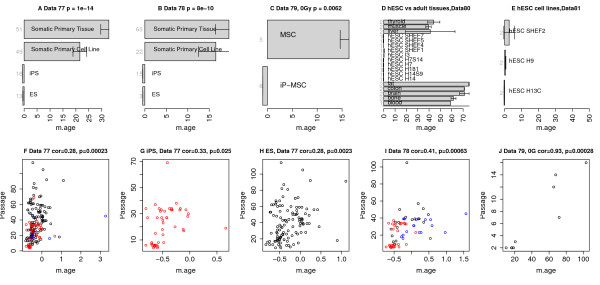
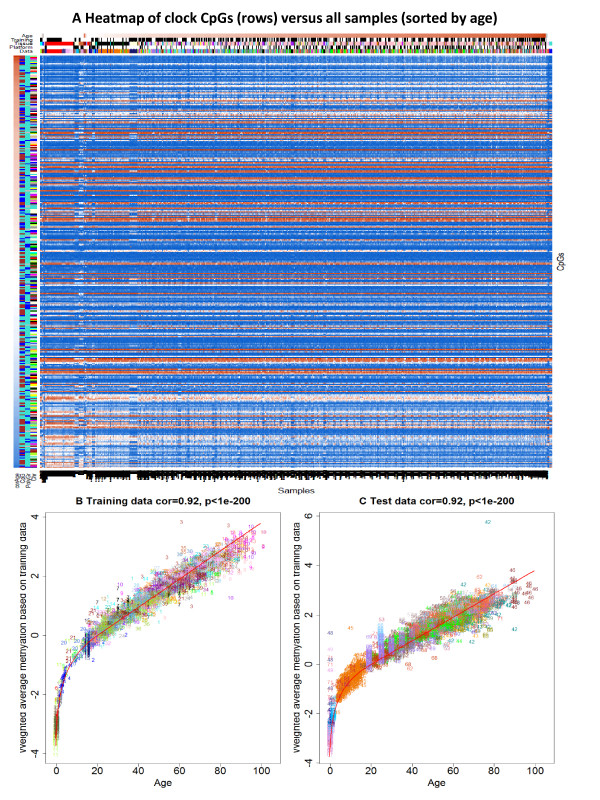
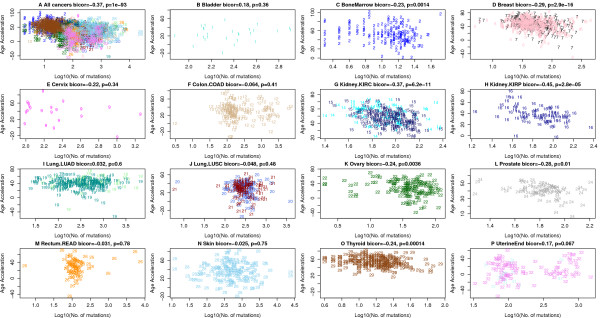
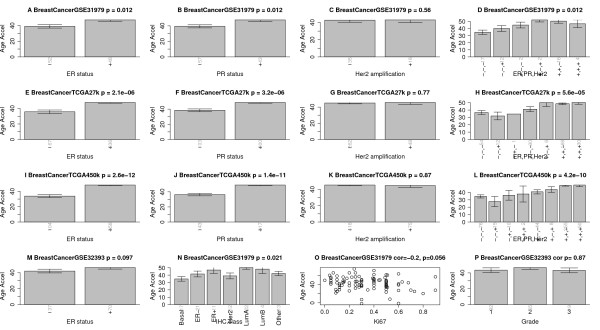
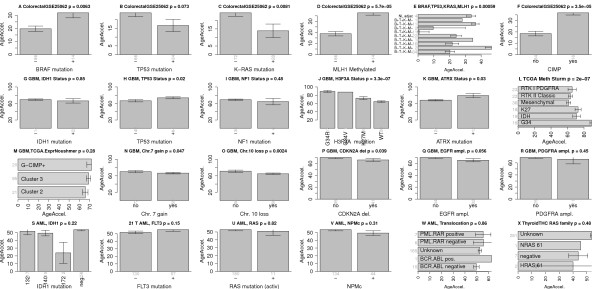
Background: It is not yet known whether DNA methylation levels can be used to accurately predict age across a broad spectrum of human tissues and cell types, nor whether the resulting age prediction is a biologically meaningful measure. Results: I developed a multi-tissue predictor of age that allows one to estimate the DNA methylation age of most tissues and cell types. The predictor, which is freely available, was developed using 8,000 samples from 82 Illumina DNA methylation array datasets, encompassing 51 healthy tissues and cell types. I found that DNA methylation age has the following properties: first, it is close to zero for embryonic and induced pluripotent stem cells; second, it correlates with cell passage number; third, it gives rise to a highly heritable measure of age acceleration; and, fourth, it is applicable to chimpanzee tissues. Analysis of 6,000 cancer samples from 32 datasets showed that all of the considered 20 cancer types exhibit significant age acceleration, with an average of 36 years. Low age-acceleration of cancer tissue is associated with a high number of somatic mutations and TP53 mutations, while mutations in steroid receptors greatly accelerate DNA methylation age in breast cancer. Finally, I characterize the 353 CpG sites that together form an aging clock in terms of chromatin states and tissue variance. Conclusions: I propose that DNA methylation age measures the cumulative effect of an epigenetic maintenance system. This novel epigenetic clock can be used to address a host of questions in developmental biology, cancer and aging research.
Overview
The claims and statistics of this paper haven’t been checked yet.
Free: it reads the open-access text and checks the first 5 claims that cite a source we can check. Create a free account to check every claim.
Integrity signals
Registry
Cites
Statistics
Figures
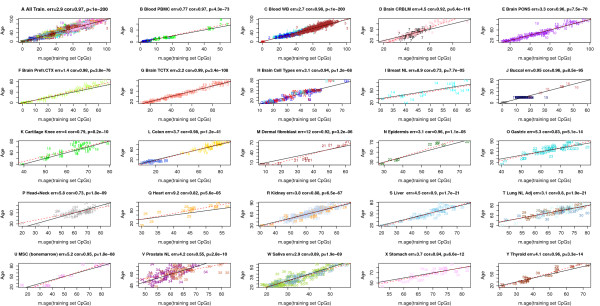
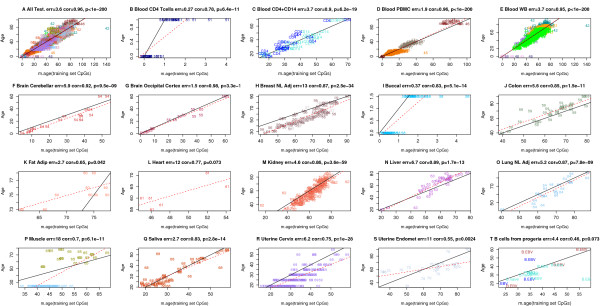
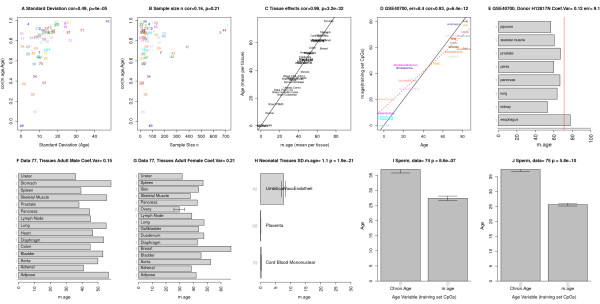
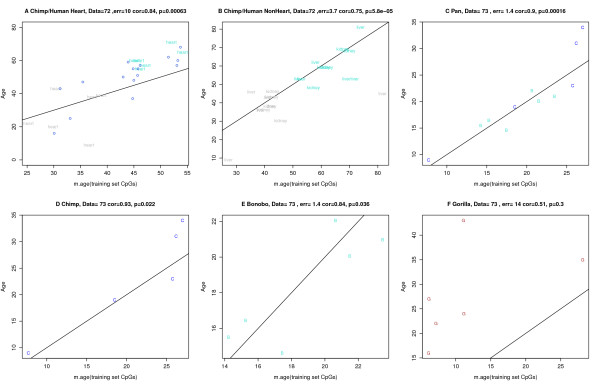
Verification
Claims the paper makes
The claims and statistics of this paper haven’t been checked yet.
Free: it reads the open-access text and checks the first 5 claims that cite a source we can check. Create a free account to check every claim.
Claims other papers make about this one
Each is checked against this paper’s own text: does it say what the citing paper says it does?
The source backs part of the claim, not all of it — or backs it for a different population, condition or comparison.
In the citing paper
“Epigenetic clocks serve as a biomarker of biological age in mammals (Hannum et al., 2013; Horvath, 2013; Petkovich et al., 2017; Weidner et al., 2014).”
From Loss of epigenetic information as a cause of mammalian aging (2023) · cites this paper as Horvath, 2013
Experimental — accuracy not yet measuredThe source backs part of the claim, not all of it — or backs it for a different population, condition or comparison.
In the citing paper
“During ageing, for reasons that are unclear, these patterns change in ways that can be used to calculate DNA methylation (DNAm) age, a representation of biological age that can predict future health and lifespan4.”
From Reprogramming to recover youthful epigenetic information and restore vision (2020) · cites this paper as [4]
Experimental — accuracy not yet measuredThe source backs part of the claim, not all of it — or backs it for a different population, condition or comparison.
In the citing paper
“That said, we do not wish to imply that DNA methylation is the only epigenetic mark involved in this process. It likely involves other transcription factors and epigenetic modifications, such as the PRC2 complex and H3K27me3, both of which are involved in maintaining stem cell plasticity and are associated with DNAm clock sites4,49,50.”
From Reprogramming to recover youthful epigenetic information and restore vision (2020) · cites this paper as [4]
Experimental — accuracy not yet measuredThe source backs part of the claim, not all of it — or backs it for a different population, condition or comparison.
In the citing paper
“Many of the 353 CpGs investigated are located close to poised promoters of bivalent genes (marked by H3K4me3 and H3K27me3), or to active promoters 126 , suggesting that ageing may correlate with reduced plasticity in the expression of some bivalent genes, which might resolve into repressed or active states, and with active genes changing their expression levels.”
From Advances in epigenetics link genetics to the environment and disease (2019) · cites this paper as [126]
Experimental — accuracy not yet measuredThe source backs part of the claim, not all of it — or backs it for a different population, condition or comparison.
In the citing paper
“One especially interesting aspect of DNA methylation clocks is their ability to accurately predict age across a wide range of different tissue types, regardless of the tissue type they were trained on, suggesting that they measure ageing signals that are shared between cell types43,44.”
From Measuring biological age using omics data (2022) · cites this paper as [44]
Experimental — accuracy not yet measured
23 more claims about this paper
Create a free account to see every claim other papers make about this one.
Self-check
Percentages, sums and reported differences re-computed from the paper’s own numbers.
The self-check needs the paper’s full text.
Citations
Cites
Regularization Paths for Generalized Linear Models via Coordinate Descent
Friedman, J., Hastie, T., & Tibshirani, R. (2010) · Journal of Statistical Software · doi:10.18637/jss.v033.i01 · Cited by 19,927
Embryonic Stem Cell Lines Derived from Human Blastocysts
Thomson, J. A., Itskovitz-Eldor, J., Shapiro, S. S., Waknitz, M. A., Swiergiel, J. J., Marshall, V. S., & Jones, J. M. (1998) · Science · doi:10.1126/science.282.5391.1145 · Cited by 15,926 · cited 1×
“Further, DNAm age and cell passage number are highly correlated in ES cells (Figure 5H,J), which are also immortal [38].”
BackgroundA bivalent chromatin structure marks key developmental genes in embryonic stem cells
Bernstein, B. E., Mikkelsen, T. S., Xie, X., Kamal, M., Huebert, D. J., Cuff, J., Fry, B., Meissner, A., Wernig, M., Plath, K., et al. (2006) · Cell · doi:10.1016/j.cell.2006.02.041 · Cited by 5,361
Genome-wide methylation profiles reveal quantitative views of human aging rates
Hannum, G., Guinney, J., Zhao, L., Zhang, L., Hughes, G., Sadda, S., Klotzle, B., Bibikova, M., Fan, J.-B., Gao, Y., et al. (2013) · Molecular Cell · doi:10.1016/j.molcel.2012.10.016 · Cited by 4,270 · cited 3×
“particular, cancer tissues were excluded from this first large data set since it is well known that cancer has a profound effect on DNA methylation levels [6,7,24-26].”
BackgroundMapping and analysis of chromatin state dynamics in nine human cell types
Ernst, J., Kheradpour, P., Mikkelsen, T. S., Shoresh, N., Ward, L. D., Epstein, C. B., Zhang, X., Wang, L., Issner, R., Coyne, M., et al. (2011) · Nature · doi:10.1038/nature09906 · Cited by 2,898
Driver mutations in histone H3.3 and chromatin remodelling genes in paediatric glioblastoma
Schwartzentruber, J., Korshunov, A., Liu, X.-Y., Jones, D. T. W., Pfaff, E., Jacob, K., Sturm, D., Fontebasso, A. M., Quang, D.-A. K., Tönjes, M., et al. (2012) · Nature · doi:10.1038/nature10833 · Cited by 2,631
Control of Developmental Regulators by Polycomb in Human Embryonic Stem Cells
Lee, T. I., Jenner, R. G., Boyer, L. A., Guenther, M. G., Levine, S. S., Kumar, R. M., Chevalier, B., Johnstone, S. E., Cole, M. F., Isono, K.-I., et al. (2006) · Cell · doi:10.1016/j.cell.2006.02.043 · Cited by 2,268
The NIH Roadmap Epigenomics Mapping Consortium
Bernstein, B. E., Stamatoyannopoulos, J. A., Costello, J. F., Ren, B., Milosavljevic, A., Meissner, A., Kellis, M., Marra, M. A., Beaudet, A. L., Ecker, J. R., et al. (2010) · Nature Biotechnology · doi:10.1038/nbt1010-1045 · Cited by 1,892 · cited 1×
“The epigenomic landscape varies markedly across tissue types [16-18] and many age-related changes depend on tissue type [8,19].”
BackgroundSturm, D., Witt, H., Hovestadt, V., Khuong-Quang, D.-A., Jones, D. T. W., Konermann, C., Pfaff, E., Tönjes, M., Sill, M., Bender, S., et al. (2012) · Cancer Cell · doi:10.1016/j.ccr.2012.08.024 · Cited by 1,828
Teschendorff, A. E., Marabita, F., Lechner, M., Bartlett, T., Tegner, J., Gomez-Cabrero, D., & Beck, S. (2013) · Bioinformatics · doi:10.1093/bioinformatics/bts680 · Cited by 1,683
Cited by
Items 1,101–1,133 of 1,133
Paine, P. T., Rechsteiner, C., Morandini, F., Desdín-Micó, G., Mrabti, C., Parras, A., Haghani, A., Brooke, R., Horvath, S., Seluanov, A., et al. (2024) · Frontiers in Aging · doi:10.3389/fragi.2023.1323194 · Cited by 13
“Furthermore, cellular reprogramming has been observed to reverse epigenetic age in mouse and human cell types but the effects on an accelerated aging model with a DNA repair defect are unknown (Horvath, 2013; Olova et al., 2019).”
BackgroundSelf-citationGoudsmit, J. (2016) · European Journal of Epidemiology · doi:10.1007/s10654-016-0144-8 · Cited by 13
“from the University of California, Los Angeles (UCLA) recently conducted another study of biological brain age, determined not by the Klemera–Doubal algorithm based on simple blood chemistry, viral antibody in serum or plasma and a few clinical tests, but using the socalled ‘epigenetic clock’ designed and built by Ste…”
MethodDNA-Methylation Changes in Replicative Senescence and Aging: Two Sides of the Same Coin?
Wagner, W., Fernandez-Rebollo, E., & Frobel, J. (2016) · Epigenomics · doi:10.2217/epi.15.100 · Cited by 13
Brinkley, T. E., Justice, J. N., Basu, S., Bauer, S. R., Loh, K. P., Mukli, P., Ng, T. K. S., Turney, I. C., Ferrucci, L., Cummings, S. R., et al. (2022) · GeroScience · doi:10.1007/s11357-022-00661-w · Cited by 13
“To date, more than a dozen epigenetic clocks have been developed including the Horvath 1 and Horvath 2 [11], the Hannum [12], and the Lin [13] clocks.”
Paine, P. T., Rechsteiner, C., Morandini, F., Desdin Mico, G., Mrabti, C., Parras, A., Haghani, A., Brooke, R., Horvath, S., Seluanov, A., et al. (2023) · doi:10.1101/2023.05.12.540500 · Cited by 13
Self-citationLatendresse, S. J., Musci, R., & Maher, B. S. (2018) · Prevention Science · doi:10.1007/s11121-017-0785-1 · Cited by 12
“2014), life experiences, differential tissue and cell types, and chronological age (Horvath 2013).”
DNA Methylation Age Acceleration Is Not Associated with Age of Onset in Parkinson's Disease
Gaare, J. J., Brügger, K., Nido, G. S., & Tzoulis, C. (2023) · Movement Disorders · doi:10.1002/mds.29574 · Cited by 12
“IEAA is based on the Horvath measure of DNAm age 3 and is designed to be independent of age-related changes in blood cell counts, 3,19 whereas EEAA is based on the Hannum measure of DNAm age 2 and incorporates measures of three blood cell counts (naive cytotoxic T cells, exhausted cytotoxic T…”
MethodGuo, Y., Ma, G., Wang, Y., Lin, T., Hu, Y., & Zang, T. (2024) · Aging Cell · doi:10.1111/acel.14271 · Cited by 12
“HannumAge (Hannum et al., 2013 ) and Intrinsic HorvathAge (Horvath, 2013 ) are “first-generation” epigenetic clocks.”
Qiao, X., Straight, B., Ngo, D., Hilton, C. E., Owuor Olungah, C., Naugle, A., Lalancette, C., & Needham, B. L. (2024) · Nature Communications · doi:10.1038/s41467-024-48426-7 · Cited by 10
“Horvath ’ s clock is drawn from a variety of tissues from individuals representing a broad age range (0 – 100 years), and is accurate in young children 23 , although racialized group membership for the training data was only partially reported (non-Hispanic White; Taiwanese) 24 .”
Kanney, N., Patki, A., Chandler-Laney, P., Garvey, W. T., & Hidalgo, B. A. (2022) · Metabolites · doi:10.3390/metabo12121226 · Cited by 10
“, San Diego, CA, USA) that are not on the Infinium MethylationEPIC 850K BeadChip microarray were included in the final file based on the online calculator tutorial [26].”
MethodAssessing the utility of epigenetic clocks for health prediction in South Korean
Kim, D. J., Kang, J. H., Kim, J.-W., Kim, S. B., Lee, Y. K., Cheon, M. J., & Lee, B.-C. (2024) · Frontiers in Aging · doi:10.3389/fragi.2024.1493406 · Cited by 10
“First-generation epigenetic clocks, exempli fi ed by Horvath ’ s clock and Hannum ’ s clock (Horvath, 2013; Hannum et al., 2013), were trained on chronological age and used to estimate chronological age (Horvath, 2013; Hannum et al., 2013; Bernabeu et al., 2023; Zhang et al., 2019).”
War Exposure and DNA Methylation in Syrian Refugee Children and Adolescents
Smeeth, D., Ecker, S., Chervova, O., McEwen, F., Karam, E., Beck, S., & Pluess, M. (2025) · JAMA Psychiatry · doi:10.1001/jamapsychiatry.2024.3714 · Cited by 10
England-Mason, G., Merrill, S. M., Liu, J., Martin, J. W., MacDonald, A. M., Kinniburgh, D. W., Gladish, N., MacIsaac, J. L., Giesbrecht, G. F., Letourneau, N., et al. (2024) · Epigenomes · doi:10.3390/epigenomes8030031 · Cited by 10
“There are complex age-related changes in DNA methylation, and most epigenetic clocks were developed and have been used with adult populations [29–32].”
Age-associated DNA methylation changes in Xenopus frogs
Morselli, M., Bennett, R., Shaidani, N.-I., Horb, M., Peshkin, L., & Pellegrini, M. (2023) · Epigenetics · doi:10.1080/15592294.2023.2201517 · Cited by 10
“Since the development of the first epigenetic clock in humans [17], DNA methylation age predictors have also been expanded to numerous other species, including mammals (e.”
BackgroundDivergent age-related methylation patterns in long and short-lived mammals
Haghani, A., Wang, N., Lu, A. T., Mozhui, K., Mammalian Methylation Consortium, Raj, K., Yang, X. W., & Horvath, S. (2022) · doi:10.1101/2022.01.16.476530 · Cited by 9
Self-citationChildhood poverty, immune cell aging, and African Americans' insulin resistance: A prospective study
Barton, A. W., Yu, T., Gong, Q., Miller, G. E., Chen, E., & Brody, G. H. (2022) · Child Development · doi:10.1111/cdev.13795 · Cited by 8
“Derived from the DNA methylation of cells, cellular (or epigenetic) aging reflects the disparity between an individual’s biological age and that individual’s chronological age (Horvath, 2013; Horvath et al., 2014).”
Biological Age is a Universal Marker of Aging, Stress, and Frailty
Pyrkov, T. V., & Fedichev, P. O. (2019) · Healthy Ageing and Longevity · doi:10.1007/978-3-030-24970-0_3 · Cited by 8
Rejuvenation Strategy for Inducing and Enhancing Autoimmune Response to Eliminate Senescent Cells
Wang, X., Zhang, C., Su, J., Ren, S., Wang, X., Zhang, Y., Yuan, Z., He, X., Wu, X., Li, M., et al. (2025) · Aging and disease · doi:10.14336/ad.2024.0579 · Cited by 8
“The methylation patterns of specific sites, referred to as "epigenetic clocks," are closely associated with biological age and serve as indicators of aging [26].”
Arpawong, T. E., Hernandez, B., Potter, C., Leigh, R. J., Klopack, E. T., Hill, C., Fiorito, G., Smyth, L. J., O’Halloran, A. M., McGuinness, B., et al. (2025) · GeroScience · doi:10.1007/s11357-025-01832-1 · Cited by 8
A Minimal Model Explains Aging Regimes and Guides Intervention Strategies
Fedichev, P., & Gruber, J. (2025) · doi:10.1101/2025.08.25.671954 · Cited by 7
Avchaciov, K., Antoch, M. P., Andrianova, E. L., Tarkhov, A. E., Menshikov, L. I., Burmistrova, O., Gudkov, A. V., & Fedichev, P. O. (2020) · doi:10.1101/2020.01.23.917286 · Cited by 6
The ability of nutrition to mitigate epigenetic drift: a novel look at regulating gene expression
D. PALMER, R., PAPA, V., & VACCAREZZA, M. (2021) · Journal of Nutritional Science and Vitaminology · doi:10.3177/jnsv.67.359 · Cited by 3
Grandparent Caregiving and Epigenetic Aging among Midlife and Older Adults in the United States
Bhat, A. C., Trexberg, K. M., Apsley, A. T., Almeida, D. M., & Shalev, I. (2026) · The journals of gerontology. Series B, Psychological sciences and social sciences · doi:10.1093/geronb/gbaf255 · Cited by 2
“…in this study): two first-generation clocks trained to predict chronological age (Horvath pan-tissue and Hannum clocks; Hannum et al., 2013; Horvath, 2013); two second-generation clocks trained to estimate biological age and predict health span and mortality (PhenoAge and GrimAge; Levine…”
Does Late-Life Depression Accelerate Aging?
Lavretsky, H. (2023) · The American Journal of Geriatric Psychiatry · doi:10.1016/j.jagp.2023.01.002 · Cited by 2
Three Tiers to biological escape velocity: The quest to outwit aging
Palmer, R. D. (2022) · AGING MEDICINE · doi:10.1002/agm2.12231 · Cited by 2
Multi-omics characterization of partial chemical reprogramming reveals evidence of cell rejuvenation
Mitchell, W., Goeminne, L. J. E., Tyshkovskiy, A., Zhang, S., Chen, J. Y., Paulo, J. A., Pierce, K. A., Choy, A. H., Clish, C. B., Gygi, S. P., et al. (2023) · doi:10.1101/2023.06.30.546730 · Cited by 2
“…epigenetic clocks that use mean methylation levels of CpG sites that change during aging 8 , transcriptomic clocks that rely on age-associated changes in gene expression 9,10 , telomere clocks that rely on age-dependent attrition 11 , and various proteomic, metabolomic, and glycomic clocks 12-15 .”
Bruellman, R., Evans, D., Smolen, A., Evans, L. M., & Reynolds, C. A. (2026) · Epigenetics · doi:10.1080/15592294.2026.2653960 · Cited by 1
“Similar correlation patterns were observed for recent multi-tissue clocks (all first-generation, excluding [49]), where MZ pairs ( � r s ; SAdj : wt = 0.49, se = 0.15, p < 0.002, 95%CI = 0.19,0.79) and DZ pairs ( � r s ; SAdj : wt = 0.45, se = 0.09, p < 0.001, 95%CI = 0.26,0.63) were moderately…”
InfluentialBruellman, R., Evans, D., Smolen, A., Evans, L. M., & Reynolds, C. A. (2025) · doi:10.1101/2025.09.16.673560 · Cited by 1
Bilbao, I., Recalde, M., Daian, F., Herranz, J. M., Elizalde, M., Iñarrairaegui, M., Canale, M., Fernández-Barrena, M. G., Casadei-Gardini, A., Sangro, B., et al. (2024) · Journal of Physiology and Biochemistry · doi:10.1007/s13105-024-01045-8
“Moreover, none of these 1061 CpGs were part of the 353 CpG sites constituting the aging clock [21], ruling out the possibility of an age-related methylation effect in the identified CpGs.”
Edwards, T., Long, Q., & Shen, L. (2026) · doi:10.64898/2026.10.17.759869
“Following Horvath’s quality-control approach [2], samples were additionally excluded if their mean inter-array correlation, defined as the average correlation with the remaining samples in the dataset, was ≤ 0 .”
Hierarchical endpoints and win statistics for geromedicine trials
Abdellatif, M., Kim, Y., & Kroemer, G. (2026) · Nature Aging · doi:10.1038/s43587-026-01158-3
“The most studied are epigenetic (DNA methylation) clocks 22–24 , but other examples include plasma proteomics 25,26 , metabolomics 27 , as well as clinical imaging and blood tests 28–31 , among others 32,33 .”
Multi-omics characterization of partial chemical reprogramming reveals evidence of cell rejuvenation
Mitchell, W., Goeminne, L. J. E., Tyshkovskiy, A., Zhang, S., Chen, J. Y., Paulo, J. A., Pierce, K. A., Choy, A. H., Clish, C. B., Gygi, S. P., et al. (2024) · doi:10.7554/elife.90579.2
Zhihui, W., Yan, L., Xiao, C., & Lian, J. (2026) · Calcified Tissue International · doi:10.1007/s00223-026-01631-6
“First-generation clocks, including the Hor - vath multi-tissue clock and the Hannum blood-based clock, were trained to predict chronological age [6, 7 ].”
Metadata
- Authors
- Horvath, S.
- Affiliations
- University of California, Los Angeles (US)
- Corresponding author
- Horvath, Steve
- ORCID
- Horvath, Steve
- Venue
- Genome Biology
- Published
- 2013-12-10
- Volume
- 14
- Issue
- 10
- Pages
- R115-R115
- ISSN
- 1465-6906 (ISSN-L)
- 1474-760X
- PMC
- PMC4015143
- OpenAlex
- W1974047233
- Semantic Scholar
- b7ad028fbe0b464636066e95bcef3c1478de5398
- Cited by
- 7,075
- References
- 91
- Citations by year
- 2026: 814 · 2025: 882 · 2024: 857 · 2023: 759 · 2022: 725 · 2021: 729 · 2020: 626 · 2019: 464 · 2018: 405 · 2017: 336 · 2016: 224 · 2015: 176 · 2014: 70 · 2013: 3
- FWCI
- 70.57
- Type
- journal article
- Language
- en
- Update notices
- Open access
- gold
- doi.org
- Licence
- cc-by
- creativecommons.org/licenses/by/2.0/ (tdm)
- creativecommons.org/licenses/by/2.0/ (vor)
- Locations
- Genome biology (publishedVersion, cc-by)
- Europe PMC (PubMed Central) (publishedVersion, cc-by)
- PubMed Central (publishedVersion, cc-by)
- PubMed (publishedVersion)
- eScholarship (California Digital Library) (submittedVersion)
- Funders
- University of Southern California
- National Institute on Aging (R01AG042511)
- Topics
- Life Sciences › Biochemistry, Genetics and Molecular Biology › Molecular Biology › Epigenetics and DNA Methylation
- Life Sciences › Biochemistry, Genetics and Molecular Biology › Aging › Genetics, Aging, and Longevity in Model Organisms
- Life Sciences › Biochemistry, Genetics and Molecular Biology › Molecular Biology › Genomics and Chromatin Dynamics
- Keywords
- DNA methylation age, epigenetic clocks, accelerated aging, cancer, somatic mutations, TP53 mutation, breast cancer, chromatin state, CpG sites, embryonic stem cells, induced pluripotent stem cells, subculture, aging
- MeSH terms
- Age Factors, Aging, Animals, Blood Cells, Brain, Pan troglodytes, Chromatin, Gene Expression Regulation, Humans, Models, Biological, Mutation, Neoplasms, Organ Specificity, Progeria, Receptors, Steroid, Stem Cells, Reproducibility of Results, Cellular Senescence, CpG Islands, DNA Methylation, Databases, Nucleic Acid, Epigenesis, Genetic, Cell Line, Tumor
About these checks
Registry, retraction, Cites and statistics results are computed, not judged, with one exception: a printed reference that no index lists is read once by a model before it counts as a citation error. Claims are extracted by a model and kept only when their quote appears verbatim in the text; each cited source is then checked, with a model’s help, for whether it says what the claim relies on. Those verdicts can be wrong — read the claim’s quote and the cited source before relying on one.
Statistics and arithmetic are recomputed, not judged.
Confidence bands are shown only for fields calibrated on our annotated test set. None is calibrated yet, so no band is shown.
What counts as a claim ›How we measure confidence ›How we check this ›
Are you an author, or do you see a problem with this page? Request a review
Data sources
Bibliographic data: Semantic Scholar, OpenAlex, Crossref.
Contains information from the Semantic Scholar Academic Graph Datasets, made available under the ODC Attribution License (ODC-BY 1.0).
Semantic Scholar’s data is described in: Kinney, R., et al. (2023). The Semantic Scholar Open Data Platform. arXiv:2301.10140.
