

DNA methylation age of human tissues and cell types
Open accessThe DOI matches its Crossref record; 90 of the 91 references it cites were found in a registry or an index.
Abstract
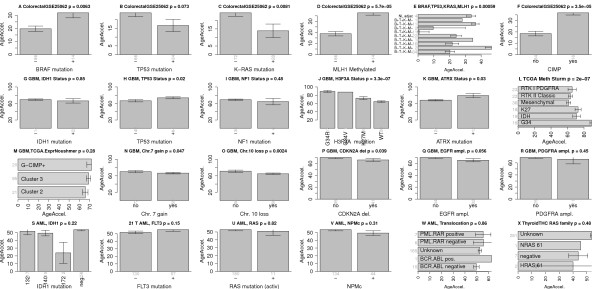
Background: It is not yet known whether DNA methylation levels can be used to accurately predict age across a broad spectrum of human tissues and cell types, nor whether the resulting age prediction is a biologically meaningful measure. Results: I developed a multi-tissue predictor of age that allows one to estimate the DNA methylation age of most tissues and cell types. The predictor, which is freely available, was developed using 8,000 samples from 82 Illumina DNA methylation array datasets, encompassing 51 healthy tissues and cell types. I found that DNA methylation age has the following properties: first, it is close to zero for embryonic and induced pluripotent stem cells; second, it correlates with cell passage number; third, it gives rise to a highly heritable measure of age acceleration; and, fourth, it is applicable to chimpanzee tissues. Analysis of 6,000 cancer samples from 32 datasets showed that all of the considered 20 cancer types exhibit significant age acceleration, with an average of 36 years. Low age-acceleration of cancer tissue is associated with a high number of somatic mutations and TP53 mutations, while mutations in steroid receptors greatly accelerate DNA methylation age in breast cancer. Finally, I characterize the 353 CpG sites that together form an aging clock in terms of chromatin states and tissue variance. Conclusions: I propose that DNA methylation age measures the cumulative effect of an epigenetic maintenance system. This novel epigenetic clock can be used to address a host of questions in developmental biology, cancer and aging research.
Overview
The claims and statistics of this paper haven’t been checked yet.
Free: it reads the open-access text and checks the first 5 claims that cite a source we can check. Create a free account to check every claim.
Integrity signals
Registry
Cites
Statistics
Figures
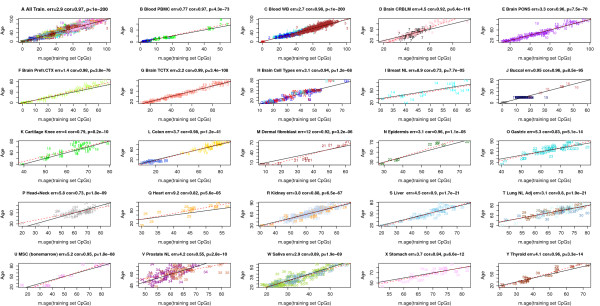
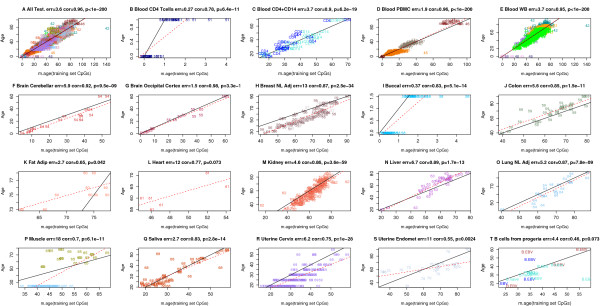
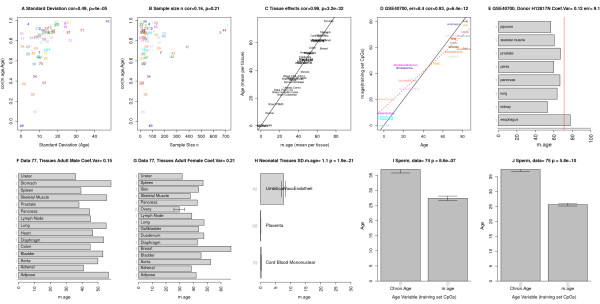
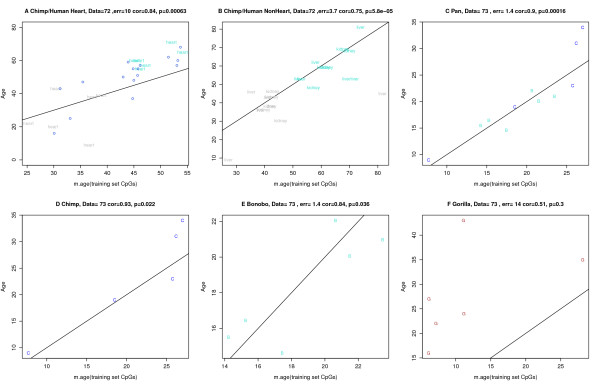
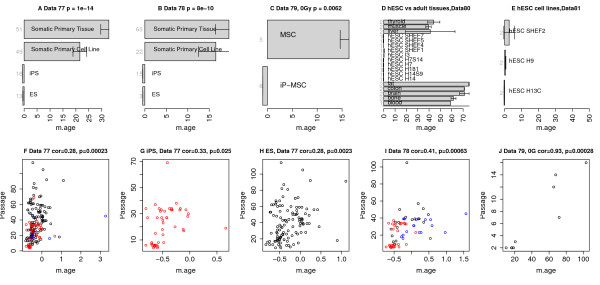
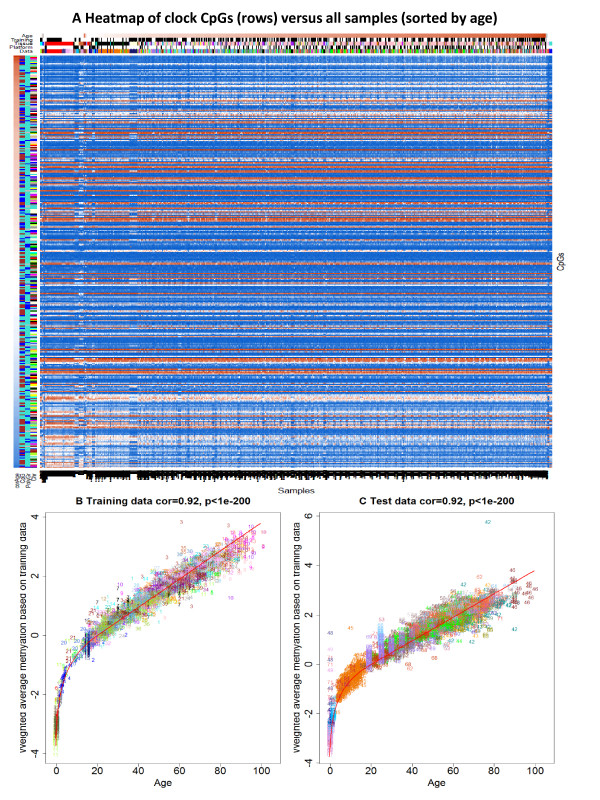
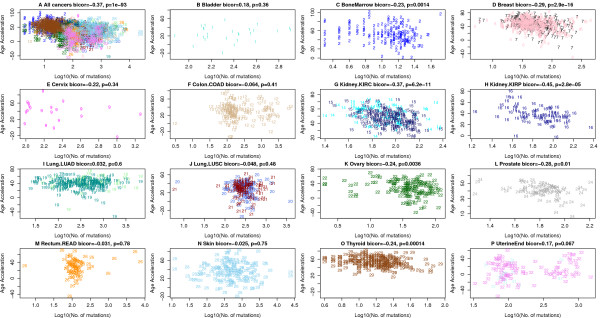
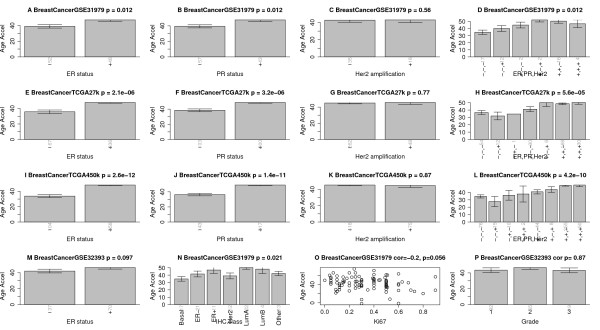
Verification
Claims the paper makes
The claims and statistics of this paper haven’t been checked yet.
Free: it reads the open-access text and checks the first 5 claims that cite a source we can check. Create a free account to check every claim.
Claims other papers make about this one
Each is checked against this paper’s own text: does it say what the citing paper says it does?
The source backs part of the claim, not all of it — or backs it for a different population, condition or comparison.
In the citing paper
“Epigenetic clocks serve as a biomarker of biological age in mammals (Hannum et al., 2013; Horvath, 2013; Petkovich et al., 2017; Weidner et al., 2014).”
From Loss of epigenetic information as a cause of mammalian aging (2023) · cites this paper as Horvath, 2013
Experimental — accuracy not yet measuredThe source backs part of the claim, not all of it — or backs it for a different population, condition or comparison.
In the citing paper
“During ageing, for reasons that are unclear, these patterns change in ways that can be used to calculate DNA methylation (DNAm) age, a representation of biological age that can predict future health and lifespan4.”
From Reprogramming to recover youthful epigenetic information and restore vision (2020) · cites this paper as [4]
Experimental — accuracy not yet measuredThe source backs part of the claim, not all of it — or backs it for a different population, condition or comparison.
In the citing paper
“That said, we do not wish to imply that DNA methylation is the only epigenetic mark involved in this process. It likely involves other transcription factors and epigenetic modifications, such as the PRC2 complex and H3K27me3, both of which are involved in maintaining stem cell plasticity and are associated with DNAm clock sites4,49,50.”
From Reprogramming to recover youthful epigenetic information and restore vision (2020) · cites this paper as [4]
Experimental — accuracy not yet measuredThe source backs part of the claim, not all of it — or backs it for a different population, condition or comparison.
In the citing paper
“Many of the 353 CpGs investigated are located close to poised promoters of bivalent genes (marked by H3K4me3 and H3K27me3), or to active promoters 126 , suggesting that ageing may correlate with reduced plasticity in the expression of some bivalent genes, which might resolve into repressed or active states, and with active genes changing their expression levels.”
From Advances in epigenetics link genetics to the environment and disease (2019) · cites this paper as [126]
Experimental — accuracy not yet measuredThe source backs part of the claim, not all of it — or backs it for a different population, condition or comparison.
In the citing paper
“One especially interesting aspect of DNA methylation clocks is their ability to accurately predict age across a wide range of different tissue types, regardless of the tissue type they were trained on, suggesting that they measure ageing signals that are shared between cell types43,44.”
From Measuring biological age using omics data (2022) · cites this paper as [44]
Experimental — accuracy not yet measured
23 more claims about this paper
Create a free account to see every claim other papers make about this one.
Self-check
Percentages, sums and reported differences re-computed from the paper’s own numbers.
The self-check needs the paper’s full text.
Citations
Cites
Regularization Paths for Generalized Linear Models via Coordinate Descent
Friedman, J., Hastie, T., & Tibshirani, R. (2010) · Journal of Statistical Software · doi:10.18637/jss.v033.i01 · Cited by 19,927
Embryonic Stem Cell Lines Derived from Human Blastocysts
Thomson, J. A., Itskovitz-Eldor, J., Shapiro, S. S., Waknitz, M. A., Swiergiel, J. J., Marshall, V. S., & Jones, J. M. (1998) · Science · doi:10.1126/science.282.5391.1145 · Cited by 15,926 · cited 1×
“Further, DNAm age and cell passage number are highly correlated in ES cells (Figure 5H,J), which are also immortal [38].”
BackgroundA bivalent chromatin structure marks key developmental genes in embryonic stem cells
Bernstein, B. E., Mikkelsen, T. S., Xie, X., Kamal, M., Huebert, D. J., Cuff, J., Fry, B., Meissner, A., Wernig, M., Plath, K., et al. (2006) · Cell · doi:10.1016/j.cell.2006.02.041 · Cited by 5,361
Genome-wide methylation profiles reveal quantitative views of human aging rates
Hannum, G., Guinney, J., Zhao, L., Zhang, L., Hughes, G., Sadda, S., Klotzle, B., Bibikova, M., Fan, J.-B., Gao, Y., et al. (2013) · Molecular Cell · doi:10.1016/j.molcel.2012.10.016 · Cited by 4,270 · cited 3×
“particular, cancer tissues were excluded from this first large data set since it is well known that cancer has a profound effect on DNA methylation levels [6,7,24-26].”
BackgroundMapping and analysis of chromatin state dynamics in nine human cell types
Ernst, J., Kheradpour, P., Mikkelsen, T. S., Shoresh, N., Ward, L. D., Epstein, C. B., Zhang, X., Wang, L., Issner, R., Coyne, M., et al. (2011) · Nature · doi:10.1038/nature09906 · Cited by 2,898
Driver mutations in histone H3.3 and chromatin remodelling genes in paediatric glioblastoma
Schwartzentruber, J., Korshunov, A., Liu, X.-Y., Jones, D. T. W., Pfaff, E., Jacob, K., Sturm, D., Fontebasso, A. M., Quang, D.-A. K., Tönjes, M., et al. (2012) · Nature · doi:10.1038/nature10833 · Cited by 2,631
Control of Developmental Regulators by Polycomb in Human Embryonic Stem Cells
Lee, T. I., Jenner, R. G., Boyer, L. A., Guenther, M. G., Levine, S. S., Kumar, R. M., Chevalier, B., Johnstone, S. E., Cole, M. F., Isono, K.-I., et al. (2006) · Cell · doi:10.1016/j.cell.2006.02.043 · Cited by 2,268
The NIH Roadmap Epigenomics Mapping Consortium
Bernstein, B. E., Stamatoyannopoulos, J. A., Costello, J. F., Ren, B., Milosavljevic, A., Meissner, A., Kellis, M., Marra, M. A., Beaudet, A. L., Ecker, J. R., et al. (2010) · Nature Biotechnology · doi:10.1038/nbt1010-1045 · Cited by 1,892 · cited 1×
“The epigenomic landscape varies markedly across tissue types [16-18] and many age-related changes depend on tissue type [8,19].”
BackgroundSturm, D., Witt, H., Hovestadt, V., Khuong-Quang, D.-A., Jones, D. T. W., Konermann, C., Pfaff, E., Tönjes, M., Sill, M., Bender, S., et al. (2012) · Cancer Cell · doi:10.1016/j.ccr.2012.08.024 · Cited by 1,828
Teschendorff, A. E., Marabita, F., Lechner, M., Bartlett, T., Tegner, J., Gomez-Cabrero, D., & Beck, S. (2013) · Bioinformatics · doi:10.1093/bioinformatics/bts680 · Cited by 1,683
Cited by
Items 701–800 of 1,133
The epigenetic alterations of endogenous retroelements in aging
Cardelli, M. (2018) · Mechanisms of Ageing and Development · doi:10.1016/j.mad.2018.02.002 · Cited by 91
Chervova, O., Panteleeva, K., Chernysheva, E., Widayati, T. A., Baronik, Ž. F., Hrbková, N., Schneider, J. L., Bobak, M., Beck, S., & Voloshin, V. (2024) · Ageing Research Reviews · doi:10.1016/j.arr.2024.102552 · Cited by 91
“On the other hand, the existence of multi-tissue clocks, such as the Horvath clock (Horvath, 2013) or Altu-mAge (de de de Lima Camillo et al., 2022), trained across various tissues and cell types, demonstrates an effort to create more universally applicable ageing biomarkers.”
BackgroundQuantitative measures of healthy aging and biological age
Kim, S., & Jazwinski, S. M. (2015) · Healthy Aging Research · doi:10.12715/har.2015.4.26 · Cited by 105
“The effort to uncover biomarkers of aging has also encompassed the epigenetic level in the form of DNA methylation marks of human cells and tissues [26].”
BackgroundMachine learning approaches to the social determinants of health in the health and retirement study
Seligman, B. J., Tuljapurkar, S. D., & Rehkopf, D. H. (2017) · SSM - Population Health · doi:10.1016/j.ssmph.2017.11.008 · Cited by 106
“Python, 2013; Schaul et al., 2010).”
BackgroundMethodInfluentialEpigenetics and Regulation of Oxidative Stress in Diabetic Retinopathy
Duraisamy, A. J., Mishra, M., Kowluru, A., & Kowluru, R. A. (2018) · Investigative Ophthalmology & Visual Science · doi:10.1167/iovs.18-24548 · Cited by 95
“Site-specific hypermethylation are observed predominantly in promoter regions,(38,39) and methylation marks are also considered to predict the age of the organism.(37,40) Our data show that in the early stages of diabetic retinopathy (6 hours of high glucose exposure), although Tet2 is not affected, Dnmt1 is repressed…”
BackgroundSleep and biological aging: A short review
Carroll, J., & Prather, A. A. (2021) · Current Opinion in Endocrine and Metabolic Research · doi:10.1016/j.coemr.2021.03.021 · Cited by 101
Grodstein, F., Lemos, B., Yu, L., Klein, H., Iatrou, A., Buchman, A. S., Shireby, G. L., Mill, J. S., Schneider, J. A., Jager, P. L. D., et al. (2021) · Neurobiology of Disease · doi:10.1016/j.nbd.2021.105428 · Cited by 102
“Most of these epigenetic clocks were designed in participants with a wide range of ages, and limited representation of the oldest ages (Hannum et al., 2013; Horvath, 2013; Levine et al., 2018; Lu et al., 2019).”
InfluentialMcCrory, C., Fiorito, G., O’Halloran, A. M., Polidoro, S., Vineis, P., & Kenny, R. A. (2022) · Psychoneuroendocrinology · doi:10.1016/j.psyneuen.2021.105643 · Cited by 87
Biological ageing with HIV infection: evaluating the geroscience hypothesis
Montano, M. A., Oursler, K. K., Xu, K., Sun, Y. V., & Marconi, V. C. (2022) · The Lancet Healthy Longevity · doi:10.1016/s2666-7568(21)00278-6 · Cited by 110
Cell division drives DNA methylation loss in late-replicating domains in primary human cells
Endicott, J. L., Nolte, P. A., Shen, H., & Laird, P. W. (2022) · Nature Communications · doi:10.1038/s41467-022-34268-8 · Cited by 108
Modeling biological age using blood biomarkers and physical measurements in Chinese adults
Chen, L., Zhang, Y., Yu, C., Guo, Y., Sun, D., Pang, Y., Pei, P., Yang, L., Millwood, I. Y., Walters, R. G., et al. (2023) · EBioMedicine · doi:10.1016/j.ebiom.2023.104458 · Cited by 105
Decoding aging clocks: New insights from metabolomics
Huang, H., Chen, Y., Xu, W., Cao, L., Qian, K., Bischof, E. Y., Kennedy, B. K., & Pu, J. (2024) · Cell Metabolism · doi:10.1016/j.cmet.2024.11.007 · Cited by 102
Epigenetic dysregulation in the developing Down syndrome cortex
El Hajj, N., Dittrich, M., Böck, J., Kraus, T. F. J., Nanda, I., Müller, T., Seidmann, L., Tralau, T., Galetzka, D., Schneider, E., et al. (2016) · Epigenetics · doi:10.1080/15592294.2016.1192736 · Cited by 89
“DNA methylation age was calculated, as described previously.(38) A measure of age acceleration was defined as the residual of a linear model regressing DNA methylation age on chronological age in controls.”
MethodTrends in DNA Methylation with Age Replicate Across Diverse Human Populations
Gopalan, S., Carja, O., Fagny, M., Patin, E., Myrick, J. W., McEwen, L. M., Mah, S. M., Kobor, M. S., Froment, A., Feldman, M. W., et al. (2017) · Genetics · doi:10.1534/genetics.116.195594 · Cited by 90
Forensic DNA methylation profiling from evidence material for investigative leads
Lee, H. Y., Lee, S. D., & Shin, K.-J. (2016) · BMB Reports · doi:10.5483/bmbrep.2016.49.7.070 · Cited by 89
“Several studies have reported age-predictive models that could be applied across a broad spectrum of tissues as well as those based on the use of blood or saliva with considerable prediction accuracy (<5 years) (10-13).”
BackgroundInfluentialProteomics and metabolomics in ageing research: from biomarkers to systems biology
Hoffman, J. M., Lyu, Y., Pletcher, S. D., & Promislow, D. (2017) · Essays in Biochemistry · doi:10.1042/ebc20160083 · Cited by 97
“As suggested by Horvath’s recent efforts to use methylation markers as a biological clock [38], we hypothesize that high-dimensional protein and/or metabolite profiles might emerge as ideal biomarkers of ageing, as they represent the ‘endophenotypes’ between phenotype and genotype.”
BackgroundDorajoo, R., Chang, X., Gurung, R. L., Li, Z., Wang, L., Wang, R., Beckman, K. B., Adams‐Haduch, J. M., Yiamunaa, M., Liu, S., et al. (2019) · Nature Communications · doi:10.1038/s41467-019-10443-2 · Cited by 90
The “Virtual Digital Twins” Concept in Precision Nutrition
Gkouskou, K. K., Vlastos, I. M., Καρκαλούσος, Π., Chaniotis, D. I., Sanoudou, D., & Eliopoulos, A. G. (2020) · Advances in Nutrition · doi:10.1093/advances/nmaa089 · Cited by 98
“Proc Natl Acad Sci 2010;107(33):14691–6.”
Genetic variation at 16q24.2 is associated with small vessel stroke
Traylor, M., Malik, R., Nalls, M. A., Cotlarciuc, I., Radmanesh, F., Thorleifsson, G., Hanscombe, K. B., Langefeld, C., Saleheen, D., Rost, N. S., et al. (2017) · Annals of Neurology · doi:10.1002/ana.24840 · Cited by 88
“Substantial inter-individual variation exists with respect to age and tissue type.(46) However, an important emerging mechanism influencing methylation is local sequence content.”
BackgroundOpportunities for organoids as new models of aging
Hu, J. L., Todhunter, M. E., LaBarge, M. A., & Gartner, Z. J. (2018) · Journal of Cell Biology · doi:10.1083/jcb.201709054 · Cited by 87
“Develop aging-relevant experimental readouts Epigenetic clock (Hannum et al., 2013; Horvath, 2013) Unclear which signs of aging are most important”
Rodríguez‐Paredes, M., Bormann, F., Raddatz, G., Gutekunst, J., Lucena-Porcel, C., Köhler, F., Wurzer, E., Schmidt, K., Gallinat, S., Wenck, H., et al. (2018) · Nature Communications · doi:10.1038/s41467-018-03025-1 · Cited by 108
Targeting metabolic pathways for extension of lifespan and healthspan across multiple species
Parkhitko, A. A., Filine, E., Mohr, S. E., Moskalev, A., & Perrimon, N. (2020) · Ageing Research Reviews · doi:10.1016/j.arr.2020.101188 · Cited by 94
“Would it be possible to create universal cross-species ‘metabolic clocks’? A set of CpG sites, the so-called ‘epigenetic clocks’, have been developed to predict chronological and biological age in humans (Horvath, 2013) and is currently used for an early prediction of the effects of specific manipulations on lifespan.”
BackgroundWang, C., Ni, W., Yao, Y., Just, A. C., Heiss, J. A., Wei, Y., Gao, X., Coull, B. A., Kosheleva, A., Baccarelli, A., et al. (2020) · EBioMedicine · doi:10.1016/j.ebiom.2020.103151 · Cited by 94
“Most recently, Horvath et al. showed that PhenoAgeAccel, and GrimAgeAccel had strong predictive power for all-cause death, coronary heart disease, and cancer [13].”
BackgroundDNA methylation changes during long-term in vitro cell culture are caused by epigenetic drift
Franzen, J., Georgomanolis, T., Selich, A., Kuo, C.-C., Stöger, R., Brant, L., Mulabdić, M. S., Fernandez-Rebollo, E., Grezella, C., Ostrowska, A., et al. (2021) · Communications Biology · doi:10.1038/s42003-021-02116-y · Cited by 87
Noble, A. J., Nowak, J. K., Adams, A. T., Uhlig, H. H., & Satsangi, J. J. (2023) · Gastroenterology · doi:10.1053/j.gastro.2023.03.238 · Cited by 102
Systemic inflammation and biological aging in the Health and Retirement Study
Meier, H. C. S., Mitchell, C. M., Karadimas, T., & Faul, J. D. (2023) · GeroScience · doi:10.1007/s11357-023-00880-9 · Cited by 100
Epigenetic and Transcriptional Variability Shape Phenotypic Plasticity
Ecker, S., Pancaldi, V., Valencia, A., Beck, S., & Paul, D. S. (2018) · BioEssays · doi:10.1002/bies.201700148 · Cited by 87
Organophosphate pesticide exposure and differential genome-wide DNA methylation
Paul, K. C., Chuang, Y., Cockburn, M., Bronstein, J. M., Horvath, S., & Ritz, B. R. (2018) · The Science of The Total Environment · doi:10.1016/j.scitotenv.2018.07.143 · Cited by 94
“Abundance measures of cell types were estimated with the Houseman algorithm in the minfi R package and the epigenetic clock software (Horvath, 2013; Houseman et al., 2012; Jaffe and Irizarry, 2014).”
MethodSelf-citationDNA double strand break repair, aging and the chromatin connection
Gorbunova, V., & Seluanov, A. (2016) · Mutation Research - Fundamental and Molecular Mechanisms of Mutagenesis · doi:10.1016/j.mrfmmm.2016.02.004 · Cited by 87
“Recently, a signature of 353 methylation sites was identified as a “methylation aging clock” that accurately predicts age across multiple human tissues [52].”
BackgroundNutrition and longevity—From mechanisms to uncertainties
Ekmekcioglu, C. (2020) · Critical Reviews in Food Science and Nutrition · doi:10.1080/10408398.2019.1676698 · Cited by 87
Bilateral Oophorectomy and Accelerated Aging: Cause or Effect?
Rocca, W. A., Gazzuola Rocca, L., Smith, C. Y., Grossardt, B. R., Faubion, S. S., Shuster, L. T., Kirkland, J. L., Stewart, E. A., & Miller, V. M. (2017) · The Journals of Gerontology: Series A · doi:10.1093/gerona/glx026 · Cited by 87
DNA methylation reprograms cardiac metabolic gene expression in end-stage human heart failure
Pepin, M. E., Drakos, S. G., Ha, C., Tristani‐Firouzi, M., Selzman, C. H., Fang, J. C., Wende, A. R., & Wever‐Pinzon, O. (2019) · American Journal of Physiology-Heart and Circulatory Physiology · doi:10.1152/ajpheart.00016.2019 · Cited by 95
Effect of tobacco smoking on the epigenetic age of human respiratory organs
Wu, X., Huang, Q., Javed, R., Zhong, J., Gao, H., & Liang, H. (2019) · Clinical Epigenetics · doi:10.1186/s13148-019-0777-z · Cited by 93
“This is probably because they were developed from whole blood datasets, yet the “epigenetic clock” was developed from the multi-tissue datasets [12] which was more suitable for this study.”
BackgroundMethodInfluentialDNA methylation in human sperm: a systematic review
Åsenius, F., Danson, A. F., & Marzi, S. J. (2020) · Human Reproduction Update · doi:10.1093/humupd/dmaa025 · Cited by 91
Linking environmental risk factors with epigenetic mechanisms in Parkinson’s disease
Tsalenchuk, M., Gentleman, S., & Marzi, S. J. (2023) · npj Parkinson s Disease · doi:10.1038/s41531-023-00568-z · Cited by 105
Richardson, R. B., Allan, D. S., & Le, Y. (2014) · Experimental Gerontology · doi:10.1016/j.exger.2014.03.015 · Cited by 87
“In light of this, epigenetic inheritance plays an important role in the ageing process by bringing about temporal changes in gene activity, such as those due tomethylation ageing (Horvath, 2013).”
Kozlenkov, A., Jaffe, A., Timashpolsky, A., Apontes, P., Rudchenko, S., Barbu, M., Byne, W., Hurd, Y., Horvath, S., & Dracheva, S. (2017) · Genes · doi:10.3390/genes8060152 · Cited by 86
“It has been suggested that epigenetic age acceleration (that measures deviations between DNAm age and chronological age) captures aspects of the biological age of the brain tissue [43].”
BackgroundMethodSelf-citationRusso, G., Landi, R., Pezone, A., Morano, A., Zuchegna, C., Romano, A., Muller, M. T., Gottesman, M. E., Porcellini, A., & Avvedimento, E. V. (2016) · Scientific Reports · doi:10.1038/srep33222 · Cited by 86
Inferring chronological age from DNA methylation patterns of human teeth
Giuliani, C., Cilli, E., Bacalini, M. G., Pirazzini, C., Sazzini, M., Gruppioni, G., Franceschi, C., Garagnani, P., & Luiselli, D. (2015) · American Journal of Physical Anthropology · doi:10.1002/ajpa.22921 · Cited by 102
Sharp, G. C., Arathimos, R., Reese, S. E., Page, C. M., Felix, J. F., Küpers, L. K., Rifas‐Shiman, S. L., Liu, C., The Cohorts for Heart and Aging Research in Genomic Epidemiology plus (CHARGE +) methylation alcohol working group, Burrows, K., et al. (2017) · Epigenomics · doi:10.2217/epi-2017-0095 · Cited by 92
Accelerated hippocampal biological aging in bipolar disorder
Fries, G. R., Bauer, I. E., Scaini, G., Valvassori, S. S., Walss‐Bass, C., Soares, J. C., & Quevedo, J. (2019) · Bipolar Disorders · doi:10.1111/bdi.12876 · Cited by 88
Aging Biomarkers: From Functional Tests to Multi‐Omics Approaches
Kudryashova, K. S., Burka, K., Kulaga, A. Y., Vorobyeva, N. S., & Kennedy, B. K. (2020) · PROTEOMICS · doi:10.1002/pmic.201900408 · Cited by 86
RNAAgeCalc: A multi-tissue transcriptional age calculator
Ren, X., & Kuan, P. F. (2020) · PLoS ONE · doi:10.1371/journal.pone.0237006 · Cited by 98
Aging biomarkers and the brain
Higgins‐Chen, A., Thrush, K., & Levine, M. E. (2021) · Seminars in Cell and Developmental Biology · doi:10.1016/j.semcdb.2021.01.003 · Cited by 95
Berstein, F. M., McCartney, D. L., Lu, A. T., Tsilidis, K. K., Bouras, E., Haycock, P., Burrows, K., Phipps, A. I., Buchanan, D. D., Cheng, I. C., et al. (2022) · eLife · doi:10.7554/elife.75374 · Cited by 104
“…to examine the genetically predicted effects of epigenetic age acceleration (as measured by HannumAge Hannum et al., 2013 , Horvath Intrinsic Age Horvath, 2013 , PhenoAge Levine et al., 2018 and GrimAge Lu et al., 2019a ) on multiple cancers (i.e., breast, prostate, colorectal, ovarian and lung…”
InfluentialSelf-citationCrimmins, E. M., Klopack, E. T., & Kim, J. K. (2024) · Epigenomics · doi:10.1080/17501911.2024.2373682 · Cited by 98
Ryan, J., Chaudieu, I., Ancelin, M.-L., & Saffery, R. (2016) · Epigenomics · doi:10.2217/epi-2016-0083 · Cited by 85
mTORC Inhibitors as Broad-Spectrum Therapeutics for Age-Related Diseases
Walters, H. E., & Cox, L. S. (2018) · International Journal of Molecular Sciences · doi:10.3390/ijms19082325 · Cited by 85
“Senescent cells exhibit chronically elevated levels of DNA damage response proteins including 53BP1 and γH2AX indicating poor DNA repair capacity, while there is also marked restructuring of the epigenome, such that CpG methylation patterns can be used as an epigenetic clock to determine biological age [6].”
BackgroundTools and Strategies for Analysis of Genome-Wide and Gene-Specific DNA Methylation Patterns
Chatterjee, A., Rodger, E. J., Morison, I. M., Eccles, M. R., & Stockwell, P. A. (2016) · Methods in molecular biology · doi:10.1007/978-1-4939-6685-1_15 · Cited by 104
Principles and Challenges of Applying Epigenetic Epidemiology to Psychology
Jones, M. J., Moore, S. R., & Kobor, M. S. (2018) · Annual Review of Psychology · doi:10.1146/annurev-psych-122414-033653 · Cited by 84
Genomic DNA methylation distinguishes subtypes of human focal cortical dysplasia
Kobow, K., Ziemann, M., Kaipananickal, H., Khurana, I., Mühlebner, A., Feucht, M., Hainfellner, J. A., Czech, T., Aronica, E., Pieper, T., et al. (2019) · Epilepsia · doi:10.1111/epi.14934 · Cited by 93
Understanding the Relevance of DNA Methylation Changes in Immune Differentiation and Disease
de la Calle‐Fabregat, C., Morante-Palacios, O., & Ballestar, E. (2020) · Genes · doi:10.3390/genes11010110 · Cited by 95
Lamin A involvement in ageing processes
Cenni, V., Capanni, C., Mattioli, E., Schena, E., Squarzoni, S., Bacalini, M. G., Garagnani, P., Salvioli, S., Franceschi, C., & Lattanzi, G. (2020) · Ageing Research Reviews · doi:10.1016/j.arr.2020.101073 · Cited by 95
The Epigenetic Link between Polyphenols, Aging and Age-Related Diseases
Arora, I., Sharma, M., Sun, L. Y., & Tollefsbol, T. O. (2020) · Genes · doi:10.3390/genes11091094 · Cited by 92
Cellular allostatic load is linked to increased energy expenditure and accelerated biological aging
Bobba‐Alves, N., Sturm, G., Lin, J., Ware, S. A., Karan, K. R., Monzel, A. S., Bris, C., Procaccio, V., Lenaers, G., Higgins‐Chen, A., et al. (2023) · Psychoneuroendocrinology · doi:10.1016/j.psyneuen.2023.106322 · Cited by 99
“Chronological age can also be predicted with high accuracy through DNA methylation-based algorithms, known as epigenetic clocks (Lu et al., 2019b; Horvath, 2013; Horvath et al., 2018; Hannum et al., 2013; Levine et al., 2018).”
Self-citationSex differences in biological aging and the association with clinical measures in older adults
Phyo, A. Z. Z., Fransquet, P., Wrigglesworth, J., Woods, R. L., Espinoza, S. E., & Ryan, J. L. (2023) · GeroScience · doi:10.1007/s11357-023-00941-z · Cited by 99
“The first-generation epigenetic clocks were generated to predict chronological age [5, 6] whereas the second-generation clocks, like GrimAge [8, 11], go beyond just estimating chronological age and additionally aim to predict the risk of developing health outcomes.”
BackgroundMethodResultInfluentialThe role of epigenomics in personalized medicine
Kronfol, M. M., Dozmorov, M. G., Huang, R., Slattum, P. W., & McClay, J. L. (2017) · Expert Review of Precision Medicine and Drug Development · doi:10.1080/23808993.2017.1284557 · Cited by 91
“Aging epigenetic signatures, also known as the ‘epigenetic clock’, appear to transcend tissue barriers [106], but the extent to which a blood DNA methylation mark is informative about a disease of, for example, the lung or heart remains an open question.”
BackgroundATF3 drives senescence by reconstructing accessible chromatin profiles
Zhang, C., Zhang, X., Huang, L., Guan, Y., Huang, X., Tian, X., Zhang, L., & Tao, W. (2021) · Aging Cell · doi:10.1111/acel.13315 · Cited by 84
“DNA methylation patterns can be used to estimate the state of cellular senescence which is referred as DNA methylation clock(Field et al., 2018; Franzen et al., 2017; Horvath, 2013).”
BackgroundA midlife crisis for the mitochondrial free radical theory of aging
Stuart, J. A., Maddalena, L. A., Merilovich, M., & Robb, E. L. (2014) · Longevity & Healthspan · doi:10.1186/2046-2395-3-4 · Cited by 84
“While it is surely difficult to quantify relative rates of tissue aging within an organism, a recent epigenetic method for doing just this [21] suggests that heart tissue is actually typified by a particularly slow aging rate.”
BackgroundPerinatally acquired HIV infection accelerates epigenetic aging in South African adolescents
Horvath, S., Stein, D. J., Phillips, N., Heany, S. J., Kobor, M. S., Lin, D. T. S., Myer, L., Zar, H. J., Levine, A. J., & Hoare, J. (2018) · AIDS · doi:10.1097/qad.0000000000001854 · Cited by 83
“AgeAccelerationResidual is attractive because it is less confounded by changes in blood cell composition, it applies to all tissue samples, and it is particularly accurate in adolescents, and we previously used it in our study of HIVþ adults [10,15].”
InfluentialSelf-citationAccelerated epigenetic age and cognitive decline among urban-dwelling adults
Beydoun, M. A., Shaked, D., Tajuddin, S. M., Weiss, J., Evans, M. K., & Zonderman, A. B. (2019) · Neurology · doi:10.1212/wnl.0000000000008756 · Cited by 90
DNA methylation and brain structure and function across the life course: A systematic review
Wheater, E. N. W., Stoye, D. Q., Cox, S. R., Wardlaw, J. M., Drake, A. J., Bastin, M. E., & Boardman, J. P. (2020) · Neuroscience & Biobehavioral Reviews · doi:10.1016/j.neubiorev.2020.03.007 · Cited by 82
“The same descriptive standards should be applied to comparator groups to ensure clinical validity, and attention should be given to matching comparator groups for ethnicity and age because both affect DNAm (Fraser et al., 2012; Heyn et al., 2013; Horvath, 2013; Talens et al., 2010).”
Ouidir, M., Mendola, P., Buck Louis, G. M., Kannan, K., Zhang, C., & Tekola-Ayele, F. (2020) · Clinical Epigenetics · doi:10.1186/s13148-020-00894-6 · Cited by 83
Epigenetic Clock: DNA Methylation in Aging
Jiang, S., & Guo, Y. (2020) · Stem Cells International · doi:10.1155/2020/1047896 · Cited by 98
“Interestingly, Horvath also showed that the estimated DNA methylation age of embryonic stem cells was nearly zero and increased with cell passaging, indicating that DNA methylation age is consistent with biological age at the cellular level [31].”
BackgroundClinical value of DNA methylation markers in autoimmune rheumatic diseases
Ballestar, E., Sawalha, A. H., & Lu, Q. (2020) · Nature Reviews Rheumatology · doi:10.1038/s41584-020-0470-9 · Cited by 90
BiSulfite Bolt: A bisulfite sequencing analysis platform
Farrell, C. P., Thompson, M. J., Tosevska, A., Oyetunde, A., & Pellegrini, M. A. (2021) · GigaScience · doi:10.1093/gigascience/giab033 · Cited by 99
“…of cytosine by the addition of a methyl group to the fifth carbon of the cyclic backbone, is a widely studied epigenetic mark associated with gene regulation(Zemach et al., 2010; Ziller et al., 2013) and numerous biological processes (Horvath, 2013; Orozco et al., 2018; Smith & Meissner, 2013).”
BackgroundInfluence of the Mediterranean Diet on Healthy Aging
Andreo-López, M. C., Contreras-Bolívar, V., Muñoz‐Torres, M., García-Fontana, B., & García‐Fontana, C. (2023) · International Journal of Molecular Sciences · doi:10.3390/ijms24054491 · Cited by 108
“mDNA is used as a clock for the calculation of biological age [102].”
MethodNature of epigenetic aging from a single-cell perspective
Tarkhov, A. E., Lindstrom-Vautrin, T., Zhang, S., Ying, K., Moqri, M., Zhang, B., Tyshkovskiy, A., Levy, O., & Gladyshev, V. N. (2024) · Nature Aging · doi:10.1038/s43587-024-00616-0 · Cited by 83
“(1) x(t) = p m p m +p d + (q − p m p m +p d ) exp(− (p m + p d )t).”
Murabito, J. M., Zhao, Q., Larson, M. G., Rong, J., Lin, H., Benjamin, E. J., Levy, D., & Lunetta, K. L. (2018) · The Journals of Gerontology: Series A · doi:10.1093/gerona/glx144 · Cited by 82
“Therefore, we examined two epigenetic measures we reported previously (12): (a) intrinsic epigenetic age (IEAA) is the residual obtained from a multivariate regression of the Horvath epigenetic age estimate (353 CpGs) on CA and measures of blood cell counts (9) and is constructed to be independent of blood cell count…”
Kujala, U. M. (2018) · British Journal of Sports Medicine · doi:10.1136/bjsports-2017-098639 · Cited by 83
The biology of frailty in humans and animals: Understanding frailty and promoting translation
Bisset, E. S., & Howlett, S. E. (2019) · Aging Medicine · doi:10.1002/agm2.12058 · Cited by 90
Nannini, D. R., Joyce, B. T., Zheng, Y., Gao, T., Liu, L., Yoon, G., Huan, T., Ma, J., Jacobs, D. R., Wilkins, J. T., et al. (2019) · Clinical Epigenetics · doi:10.1186/s13148-019-0767-1 · Cited by 87
“The first method, developed by Horvath, uses DNA methylation levels at 353 CpG sites [15].”
MethodSelf-citationZaghlool, S. B., Kühnel, B., Elhadad, M. A., Kader, S. A., Halama, A., Thareja, G., Engelke, R., Sarwath, H., Al‐Dous, E., Mohamoud, Y. A., et al. (2020) · Nature Communications · doi:10.1038/s41467-019-13831-w · Cited by 83
Queen, N. J., Hassan, Q. N., & Cao, L. (2020) · Frontiers in Neuroscience · doi:10.3389/fnins.2020.00605 · Cited by 83
“Recent work has suggested that biological aging proceeds under the control of a so-called “epigenetic clock”; in this model, DNA methylation levels are used as a correlative biomarker of aging (Horvath, 2013; Horvath and Raj, 2018).”
BackgroundDNA methylation study of Huntington’s disease and motor progression in patients and in animal models
Lu, A. T.-H., Narayan, P. J., Grant, M. J., Langfelder, P., Wang, N., Kwak, S., Wilkinson, H. A., Chen, R. Z., Chen, J., Bawden, C. S., et al. (2020) · Nature Communications · doi:10.1038/s41467-020-18255-5 · Cited by 111
“of individuals Manifest HD 393 204 298 79 37 Pre-manifest 223 153 0 0 0 Control 294 0 78 21 27 Age HDGEC 49 [18, 76] 45 [18, 76] 53 [19, 84] 52 [19, 82] 43 [31, 58] Control 51 [18, 76] – 49 [20, 84] 52 [20, 82] 41 [31, 55] CAG length HDGEC 43 [36, 51] 44 [37, 59] 45 [39, 67] 45 [39, 66] 44 [41, 50] Controls 20 [16, 35…”
Self-citationBiomarkers of aging in frailty and age-associated disorders: State of the art and future perspective
Salvioli, S., Basile, M. S., Bencivenga, L., Carrino, S., Conte, M., Damanti, S., LORENZO, R. D., Fiorenzato, E., Gialluisi, A., Ingannato, A., et al. (2023) · Ageing Research Reviews · doi:10.1016/j.arr.2023.102044 · Cited by 98
“…the last years (Bürkle et al., 2015; Moreno-Villanueva and Bürkle, 2019), and many have been identified and validated, including epigenetic clocks (Horvath, 2013b; Hannum, Gensous et al., 2013, 2022; Belsky et al., 2022), N-glycome changes (Vanhooren et al., 2007; Vanhooren et al., 2010; Paton et…”
LINE-1 retrotransposons drive human neuronal transcriptome complexity and functional diversification
Garza, R., Atacho, D. A. M., Adami, A., Gerdes, P., Vinod, M., Hsieh, P., Karlsson, O., Horváth, V., Johansson, P. A., Pandiloski, N., et al. (2023) · Science Advances · doi:10.1126/sciadv.adh9543 · Cited by 91
“It is well established that DNA methylation patterns change with age and there are emerging studies linking age-related epigenetic changes to activation of TE expression ( 55 – 57 ).”
Lidzbarsky, G., Gutman, D., Shekhidem, H. A., Sharvit, L., & Atzmon, G. (2018) · Frontiers in Medicine · doi:10.3389/fmed.2018.00104 · Cited by 83
“This clock was able to detect the age of the sample using only 353 CpGs (148).”
BackgroundMethodInfluentialLiu, Z., Chen, B. H., Assimes, T. L., Ferrucci, L., Horvath, S., & Levine, M. E. (2019) · Psychoneuroendocrinology · doi:10.1016/j.psyneuen.2019.01.028 · Cited by 81
“As a result, a number of “epigenetic clocks” have been developed (e.g., see (Hannum et al., 2013; Horvath, 2013)).”
BackgroundSelf-citationEpigenetics of prenatal stress in humans: the current research landscape
Dieckmann, L., & Czamara, D. (2024) · Clinical Epigenetics · doi:10.1186/s13148-024-01635-9 · Cited by 83
“Since the development of the first epigenetic clocks in 2013 [32, 39], measurements of epigenetic aging constitute another method to investigate relationships between environmental influences and epigenetics (see Table 3).”
Quantifying the stochastic component of epigenetic aging
Tong, H., Dwaraka, V. B., Chen, Q., Luo, Q., Lasky-Su, J. A., Smith, R., & Teschendorff, A. E. (2024) · Nature Aging · doi:10.1038/s43587-024-00600-8 · Cited by 83
“…displaying abnormally large deviations from their true ages were hypothesized to age faster or slower, yielding molecular estimates of biological age 14 , with subsequent studies confirming that DNAm-based biological age estimates can be informative of future disease risk and mortality 19,20 .”
Prevalent mesenchymal drift in aging and disease is reversed by partial reprogramming
Lu, J. Y., Tu, W. B., Li, R., Weng, M., Sanketi, B. D., Yuan, B., Reddy, P., Rodriguez Esteban, C., & Izpisua Belmonte, J. C. (2025) · Cell · doi:10.1016/j.cell.2025.07.031 · Cited by 83
Human neuronal maturation comes of age: cellular mechanisms and species differences
Wallace, J. L., & Pollen, A. A. (2024) · Nature Reviews Neuroscience · doi:10.1038/s41583-023-00760-3 · Cited by 82
“DNA methylation patterns can predict age from fetal to adult stages across human tissues 64,65 .”
Everson, T. M., Marsit, C. J., Michael O’Shea, T., Burt, A., Hermetz, K., Carter, B. S., Helderman, J., Hofheimer, J. A., McGowan, E. C., Neal, C. R., et al. (2019) · Scientific Reports · doi:10.1038/s41598-019-42654-4 · Cited by 82
Epigenetics and DNA methylomic profiling in Alzheimer's disease and other neurodegenerative diseases
Roubroeks, J. A. Y., Smith, R. G., van den Hove, D. L. A., & Lunnon, K. (2017) · Journal of Neurochemistry · doi:10.1111/jnc.14148 · Cited by 82
“Similar to the cellular proportion corrections that can be performed in brain EWAS data, cell-specific DNA methylation markers in the blood can be used to identify cell-type proportions within samples (Houseman et al. 2012; Horvath 2013).”
BackgroundSex differences in the associations of placental epigenetic aging with fetal growth
Tekola-Ayele, F., Workalemahu, T., Gorfu, G., Shrestha, D., Tycko, B., Wapner, R., Zhang, C., & Louis, G. M. B. (2019) · Aging · doi:10.18632/aging.102124 · Cited by 81
DNA methylation age and physical and cognitive ageing
Maddock, J., Castillo-Fernandez, J., Wong, A., Cooper, R., Richards, M., Ong, K. K., Ploubidis, G. B., Goodman, A., Kuh, D., Bell, J. T., et al. (2019) · The Journals of Gerontology: Series A · doi:10.1093/gerona/glz246 · Cited by 82
“The first generation of these biomarkers were developed to predict CA and include the blood-based Hannum and the multi-tissue Horvath algorithms, which show a high correlation with and small deviation from CA (12,13).”
MethodSoda, K. (2022) · Cells · doi:10.3390/cells11010164 · Cited by 112
Frailty biomarkers under the perspective of geroscience: A narrative review
Gonçalves, R. S. D. S. A., Maciel, Á. C. C., Rolland, Y., Vellas, B. J., & Barreto, P. D. S. (2022) · Ageing Research Reviews · doi:10.1016/j.arr.2022.101737 · Cited by 97
Aging, exceptional longevity and comparisons of the Hannum and Horvath epigenetic clocks
Armstrong, N. J., Mather, K. A., Thalamuthu, A., Wright, M. J., Trollor, J. N., Ames, D., Brodaty, H., Schofield, P. R., Sachdev, P. S., & Kwok, J. B. (2017) · Epigenomics · doi:10.2217/epi-2016-0179 · Cited by 82
Dozmorov, M. G. (2015) · Epigenetics · doi:10.1080/15592294.2015.1040619 · Cited by 80
Johnson, K. C., Houseman, E. A., King, J. E., & Christensen, B. C. (2017) · Breast Cancer Research · doi:10.1186/s13058-017-0873-y · Cited by 83
The impact of age beyond ploidy: outcome data from 8175 euploid single embryo transfers
Reig, A., Franasiak, J. M., Scott, R. T., & Seli, E. U. (2020) · Journal of Assisted Reproduction and Genetics · doi:10.1007/s10815-020-01739-0 · Cited by 92
Evaluating the impact of age on immune checkpoint therapy biomarkers
Erbe, R., Wang, Z., Wu, S. K., Xiu, J., Zaidi, N., La, J., Tuck, D. P., Fillmore, N. R., Giraldo, N. A., Topper, M. J., et al. (2021) · Cell Reports · doi:10.1016/j.celrep.2021.109599 · Cited by 85
“…together, these results suggest that age-related methylation changes, as have been reported to occur in normal aging and oncogenesis (Easwaran and Baylin, 2019; Easwaran et al., 2012; Horvath, 2013), may drive some of the observed age-related expression-related changes in ICB therapy biomarkers.”
DNA methylation clocks for dogs and humans
Horvath, S., Lu, A. T.-H., Haghani, A., Zoller, J. A., Li, C. Z., Lim, A. R., Brooke, R. T., Raj, K., Armero, A. S., Dreger, D. L., et al. (2022) · Proceedings of the National Academy of Sciences · doi:10.1073/pnas.2120887119 · Cited by 91
“The human-dog clocks for chronological age used log linear transformations that are similar to those employed for the HUMAN pan tissue (Horvath 2013) (27).”
MethodSelf-citationKerkhof, J., Rastin, C., Levy, M. A., Relator, R., McConkey, H., Demain, L. A. M., Domínguez‐Garrido, E., Kaat, L. D., Douzgou, S., DuPont, B. R., et al. (2024) · Genetics in Medicine · doi:10.1016/j.gim.2024.101075 · Cited by 91
Aging-associated DNA methylation changes in middle-aged individuals: the Young Finns study
Kananen, L., Marttila, S., Nevalainen, T., Jylhävä, J., Mononen, N., Kähönen, M., Raitakari, O. T., Lehtimäki, T., & Hurme, M. (2016) · BMC Genomics · doi:10.1186/s12864-016-2421-z · Cited by 81
“The results from the YFS were interpreted by considering that rates of aging-associated DNAmet changes fluctuate, especially during the growth period before adulthood and at the end of the lifespan [11, 20].”
BackgroundGenetic and Epigenetic Regulation of Aortic Aneurysms
Kim, H. W., & Stansfield, B. K. (2017) · BioMed Research International · doi:10.1155/2017/7268521 · Cited by 88
“One investigator proposes that DNA methylation measures the cumulative effect of the epigenetic maintenance system and may predict many age-related diseases [149].”
BackgroundDavis, E. G., Humphreys, K. L., McEwen, L. M., Sacchet, M. D., Camacho, M. C., MacIsaac, J. L., Lin, D. T. S., Kobor, M. S., & Gotlib, I. H. (2017) · Translational Psychiatry · doi:10.1038/tp.2017.188 · Cited by 81
Epigenetics applied to psychiatry: Clinical opportunities and future challenges
Kular, L., & Kular, S. (2018) · Psychiatry and Clinical Neurosciences · doi:10.1111/pcn.12634 · Cited by 79
Metadata
- Authors
- Horvath, S.
- Affiliations
- University of California, Los Angeles (US)
- Corresponding author
- Horvath, Steve
- ORCID
- Horvath, Steve
- Venue
- Genome Biology
- Published
- 2013-12-10
- Volume
- 14
- Issue
- 10
- Pages
- R115-R115
- ISSN
- 1465-6906 (ISSN-L)
- 1474-760X
- PMC
- PMC4015143
- OpenAlex
- W1974047233
- Semantic Scholar
- b7ad028fbe0b464636066e95bcef3c1478de5398
- Cited by
- 7,075
- References
- 91
- Citations by year
- 2026: 814 · 2025: 882 · 2024: 857 · 2023: 759 · 2022: 725 · 2021: 729 · 2020: 626 · 2019: 464 · 2018: 405 · 2017: 336 · 2016: 224 · 2015: 176 · 2014: 70 · 2013: 3
- FWCI
- 70.57
- Type
- journal article
- Language
- en
- Update notices
- Open access
- gold
- doi.org
- Licence
- cc-by
- creativecommons.org/licenses/by/2.0/ (tdm)
- creativecommons.org/licenses/by/2.0/ (vor)
- Locations
- Genome biology (publishedVersion, cc-by)
- Europe PMC (PubMed Central) (publishedVersion, cc-by)
- PubMed Central (publishedVersion, cc-by)
- PubMed (publishedVersion)
- eScholarship (California Digital Library) (submittedVersion)
- Funders
- University of Southern California
- National Institute on Aging (R01AG042511)
- Topics
- Life Sciences › Biochemistry, Genetics and Molecular Biology › Molecular Biology › Epigenetics and DNA Methylation
- Life Sciences › Biochemistry, Genetics and Molecular Biology › Aging › Genetics, Aging, and Longevity in Model Organisms
- Life Sciences › Biochemistry, Genetics and Molecular Biology › Molecular Biology › Genomics and Chromatin Dynamics
- Keywords
- DNA methylation age, epigenetic clocks, accelerated aging, cancer, somatic mutations, TP53 mutation, breast cancer, chromatin state, CpG sites, embryonic stem cells, induced pluripotent stem cells, subculture, aging
- MeSH terms
- Age Factors, Aging, Animals, Blood Cells, Brain, Pan troglodytes, Chromatin, Gene Expression Regulation, Humans, Models, Biological, Mutation, Neoplasms, Organ Specificity, Progeria, Receptors, Steroid, Stem Cells, Reproducibility of Results, Cellular Senescence, CpG Islands, DNA Methylation, Databases, Nucleic Acid, Epigenesis, Genetic, Cell Line, Tumor
About these checks
Registry, retraction, Cites and statistics results are computed, not judged, with one exception: a printed reference that no index lists is read once by a model before it counts as a citation error. Claims are extracted by a model and kept only when their quote appears verbatim in the text; each cited source is then checked, with a model’s help, for whether it says what the claim relies on. Those verdicts can be wrong — read the claim’s quote and the cited source before relying on one.
Statistics and arithmetic are recomputed, not judged.
Confidence bands are shown only for fields calibrated on our annotated test set. None is calibrated yet, so no band is shown.
What counts as a claim ›How we measure confidence ›How we check this ›
Are you an author, or do you see a problem with this page? Request a review
Data sources
Bibliographic data: Semantic Scholar, OpenAlex, Crossref.
Contains information from the Semantic Scholar Academic Graph Datasets, made available under the ODC Attribution License (ODC-BY 1.0).
Semantic Scholar’s data is described in: Kinney, R., et al. (2023). The Semantic Scholar Open Data Platform. arXiv:2301.10140.
