

DNA methylation age of human tissues and cell types
Open accessThe DOI matches its Crossref record; 90 of the 91 references it cites were found in a registry or an index.
Abstract
Background: It is not yet known whether DNA methylation levels can be used to accurately predict age across a broad spectrum of human tissues and cell types, nor whether the resulting age prediction is a biologically meaningful measure. Results: I developed a multi-tissue predictor of age that allows one to estimate the DNA methylation age of most tissues and cell types. The predictor, which is freely available, was developed using 8,000 samples from 82 Illumina DNA methylation array datasets, encompassing 51 healthy tissues and cell types. I found that DNA methylation age has the following properties: first, it is close to zero for embryonic and induced pluripotent stem cells; second, it correlates with cell passage number; third, it gives rise to a highly heritable measure of age acceleration; and, fourth, it is applicable to chimpanzee tissues. Analysis of 6,000 cancer samples from 32 datasets showed that all of the considered 20 cancer types exhibit significant age acceleration, with an average of 36 years. Low age-acceleration of cancer tissue is associated with a high number of somatic mutations and TP53 mutations, while mutations in steroid receptors greatly accelerate DNA methylation age in breast cancer. Finally, I characterize the 353 CpG sites that together form an aging clock in terms of chromatin states and tissue variance. Conclusions: I propose that DNA methylation age measures the cumulative effect of an epigenetic maintenance system. This novel epigenetic clock can be used to address a host of questions in developmental biology, cancer and aging research.
Overview
The claims and statistics of this paper haven’t been checked yet.
Free: it reads the open-access text and checks the first 5 claims that cite a source we can check. Create a free account to check every claim.
Integrity signals
Registry
Cites
Statistics
Figures
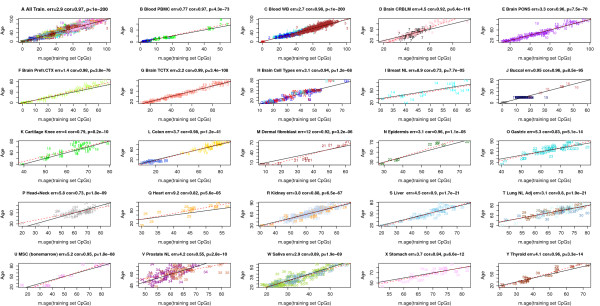
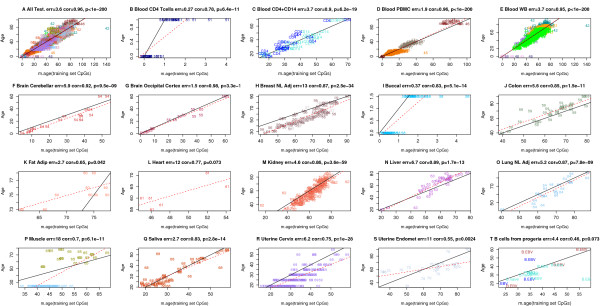
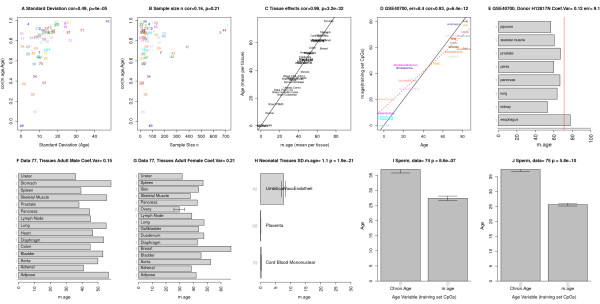
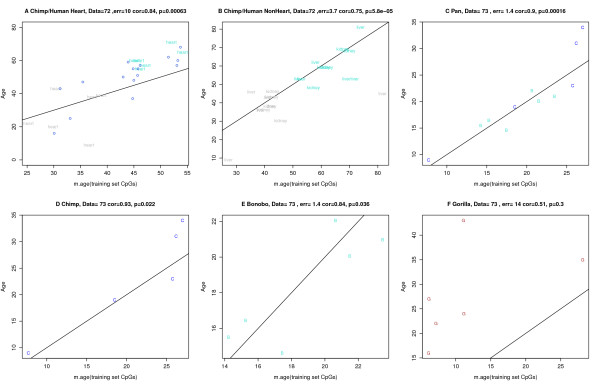
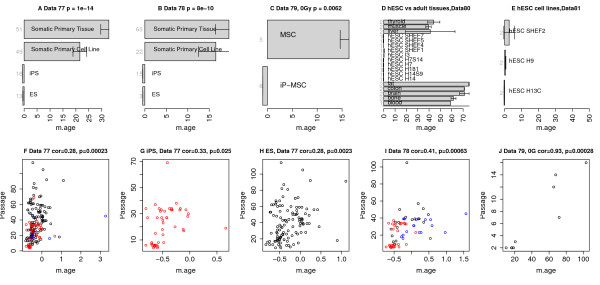
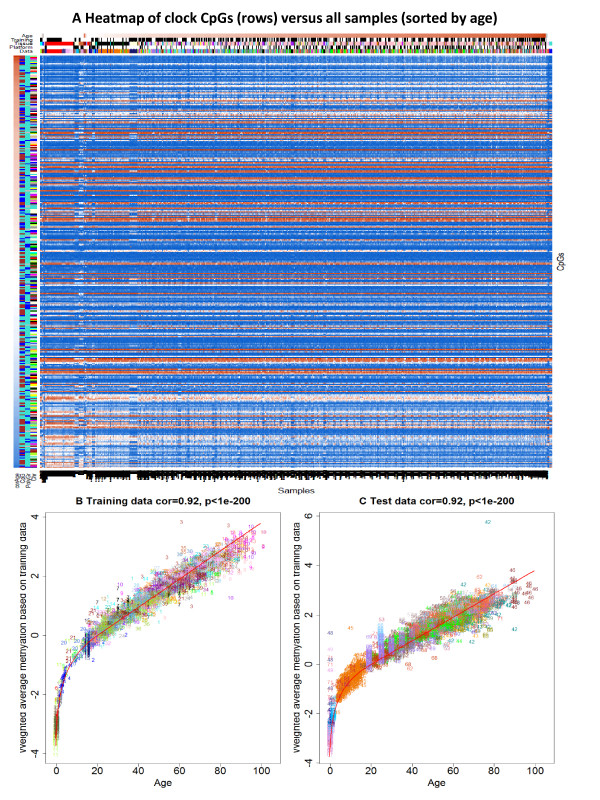
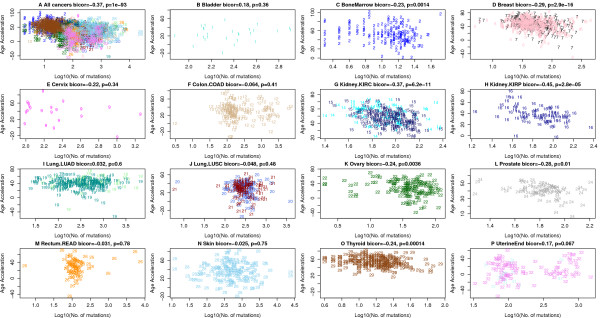
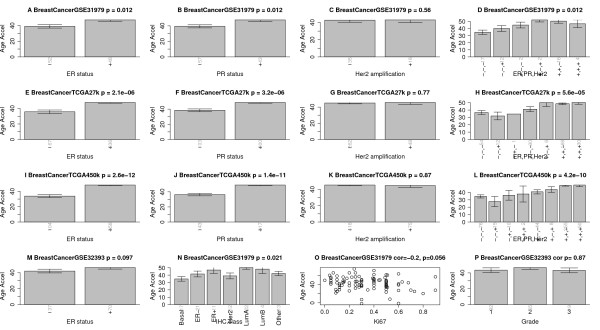
Verification
Claims the paper makes
The claims and statistics of this paper haven’t been checked yet.
Free: it reads the open-access text and checks the first 5 claims that cite a source we can check. Create a free account to check every claim.
Claims other papers make about this one
Each is checked against this paper’s own text: does it say what the citing paper says it does?
The source backs part of the claim, not all of it — or backs it for a different population, condition or comparison.
In the citing paper
“Epigenetic clocks serve as a biomarker of biological age in mammals (Hannum et al., 2013; Horvath, 2013; Petkovich et al., 2017; Weidner et al., 2014).”
From Loss of epigenetic information as a cause of mammalian aging (2023) · cites this paper as Horvath, 2013
Experimental — accuracy not yet measuredThe source backs part of the claim, not all of it — or backs it for a different population, condition or comparison.
In the citing paper
“During ageing, for reasons that are unclear, these patterns change in ways that can be used to calculate DNA methylation (DNAm) age, a representation of biological age that can predict future health and lifespan4.”
From Reprogramming to recover youthful epigenetic information and restore vision (2020) · cites this paper as [4]
Experimental — accuracy not yet measuredThe source backs part of the claim, not all of it — or backs it for a different population, condition or comparison.
In the citing paper
“That said, we do not wish to imply that DNA methylation is the only epigenetic mark involved in this process. It likely involves other transcription factors and epigenetic modifications, such as the PRC2 complex and H3K27me3, both of which are involved in maintaining stem cell plasticity and are associated with DNAm clock sites4,49,50.”
From Reprogramming to recover youthful epigenetic information and restore vision (2020) · cites this paper as [4]
Experimental — accuracy not yet measuredThe source backs part of the claim, not all of it — or backs it for a different population, condition or comparison.
In the citing paper
“Many of the 353 CpGs investigated are located close to poised promoters of bivalent genes (marked by H3K4me3 and H3K27me3), or to active promoters 126 , suggesting that ageing may correlate with reduced plasticity in the expression of some bivalent genes, which might resolve into repressed or active states, and with active genes changing their expression levels.”
From Advances in epigenetics link genetics to the environment and disease (2019) · cites this paper as [126]
Experimental — accuracy not yet measuredThe source backs part of the claim, not all of it — or backs it for a different population, condition or comparison.
In the citing paper
“One especially interesting aspect of DNA methylation clocks is their ability to accurately predict age across a wide range of different tissue types, regardless of the tissue type they were trained on, suggesting that they measure ageing signals that are shared between cell types43,44.”
From Measuring biological age using omics data (2022) · cites this paper as [44]
Experimental — accuracy not yet measured
23 more claims about this paper
Create a free account to see every claim other papers make about this one.
Self-check
Percentages, sums and reported differences re-computed from the paper’s own numbers.
The self-check needs the paper’s full text.
Citations
Cites
Regularization Paths for Generalized Linear Models via Coordinate Descent
Friedman, J., Hastie, T., & Tibshirani, R. (2010) · Journal of Statistical Software · doi:10.18637/jss.v033.i01 · Cited by 19,927
Embryonic Stem Cell Lines Derived from Human Blastocysts
Thomson, J. A., Itskovitz-Eldor, J., Shapiro, S. S., Waknitz, M. A., Swiergiel, J. J., Marshall, V. S., & Jones, J. M. (1998) · Science · doi:10.1126/science.282.5391.1145 · Cited by 15,926 · cited 1×
“Further, DNAm age and cell passage number are highly correlated in ES cells (Figure 5H,J), which are also immortal [38].”
BackgroundA bivalent chromatin structure marks key developmental genes in embryonic stem cells
Bernstein, B. E., Mikkelsen, T. S., Xie, X., Kamal, M., Huebert, D. J., Cuff, J., Fry, B., Meissner, A., Wernig, M., Plath, K., et al. (2006) · Cell · doi:10.1016/j.cell.2006.02.041 · Cited by 5,361
Genome-wide methylation profiles reveal quantitative views of human aging rates
Hannum, G., Guinney, J., Zhao, L., Zhang, L., Hughes, G., Sadda, S., Klotzle, B., Bibikova, M., Fan, J.-B., Gao, Y., et al. (2013) · Molecular Cell · doi:10.1016/j.molcel.2012.10.016 · Cited by 4,270 · cited 3×
“particular, cancer tissues were excluded from this first large data set since it is well known that cancer has a profound effect on DNA methylation levels [6,7,24-26].”
BackgroundMapping and analysis of chromatin state dynamics in nine human cell types
Ernst, J., Kheradpour, P., Mikkelsen, T. S., Shoresh, N., Ward, L. D., Epstein, C. B., Zhang, X., Wang, L., Issner, R., Coyne, M., et al. (2011) · Nature · doi:10.1038/nature09906 · Cited by 2,898
Driver mutations in histone H3.3 and chromatin remodelling genes in paediatric glioblastoma
Schwartzentruber, J., Korshunov, A., Liu, X.-Y., Jones, D. T. W., Pfaff, E., Jacob, K., Sturm, D., Fontebasso, A. M., Quang, D.-A. K., Tönjes, M., et al. (2012) · Nature · doi:10.1038/nature10833 · Cited by 2,631
Control of Developmental Regulators by Polycomb in Human Embryonic Stem Cells
Lee, T. I., Jenner, R. G., Boyer, L. A., Guenther, M. G., Levine, S. S., Kumar, R. M., Chevalier, B., Johnstone, S. E., Cole, M. F., Isono, K.-I., et al. (2006) · Cell · doi:10.1016/j.cell.2006.02.043 · Cited by 2,268
The NIH Roadmap Epigenomics Mapping Consortium
Bernstein, B. E., Stamatoyannopoulos, J. A., Costello, J. F., Ren, B., Milosavljevic, A., Meissner, A., Kellis, M., Marra, M. A., Beaudet, A. L., Ecker, J. R., et al. (2010) · Nature Biotechnology · doi:10.1038/nbt1010-1045 · Cited by 1,892 · cited 1×
“The epigenomic landscape varies markedly across tissue types [16-18] and many age-related changes depend on tissue type [8,19].”
BackgroundSturm, D., Witt, H., Hovestadt, V., Khuong-Quang, D.-A., Jones, D. T. W., Konermann, C., Pfaff, E., Tönjes, M., Sill, M., Bender, S., et al. (2012) · Cancer Cell · doi:10.1016/j.ccr.2012.08.024 · Cited by 1,828
Teschendorff, A. E., Marabita, F., Lechner, M., Bartlett, T., Tegner, J., Gomez-Cabrero, D., & Beck, S. (2013) · Bioinformatics · doi:10.1093/bioinformatics/bts680 · Cited by 1,683
Cited by
Hallmarks of aging: An expanding universe
López-Otín, C., Blasco, M. A., Partridge, L., Serrano, M., & Kroemer, G. (2023) · Cell · doi:10.1016/j.cell.2022.11.001 · Cited by 6,549
An epigenetic biomarker of aging for lifespan and healthspan
Levine, M. E., Lu, A. T., Quach, A., Chen, B. H., Assimes, T. L., Bandinelli, S., Hou, L., Baccarelli, A. A., Stewart, J. D., Li, Y., et al. (2018) · Aging · doi:10.18632/aging.101414 · Cited by 3,675
“The blood-based algorithm by Hannum[10] and the multi-tissue algorithm by Horvath[14] produce age estimates (DNAm age) that correlate with chronological age well above r=0.90 for full age range samples.”
BackgroundMethodInfluentialSelf-citationInflammaging: a new immune–metabolic viewpoint for age-related diseases
Franceschi, C., Garagnani, P., Parini, P., Giuliani, C., & Santoro, A. (2018) · Nature Reviews Endocrinology · doi:10.1038/s41574-018-0059-4 · Cited by 3,586
DNA methylation-based biomarkers and the epigenetic clock theory of ageing
Horvath, S., & Raj, K. (2018) · Nature Reviews Genetics · doi:10.1038/s41576-018-0004-3 · Cited by 3,095
Self-citationMulti-omics approaches to disease
Hasin, Y., Seldin, M., & Lusis, A. (2017) · Genome Biology · doi:10.1186/s13059-017-1215-1 · Cited by 2,953
“For example, differentially methylated regions of DNA can be used as indicators of disease status for metabolic syndrome [124, 125], cardiovascular disease [126], cancer [127], and many other pathophysiologic states [128].”
BackgroundDNA methylation GrimAge strongly predicts lifespan and healthspan
Lu, A. T., Quach, A., Wilson, J. G., Reiner, A. P., Aviv, A., Raj, K., Hou, L., Baccarelli, A. A., Li, Y., Stewart, J. D., et al. (2019) · Aging · doi:10.18632/aging.101684 · Cited by 2,540
“DNAm-based age (epigenetic age) estimators, include the pan tissue epigenetic clock by Horvath 2013 [1], based on 353 CpGs, and an estimator developed by Hannum 2013 [2], based on 71 CpGs in leukocytes.”
MethodSelf-citationSenescence in Health and Disease
He, S., & Sharpless, N. E. (2017) · Cell · doi:10.1016/j.cell.2017.05.015 · Cited by 1,766
Aging and aging-related diseases: from molecular mechanisms to interventions and treatments
Guo, J., Huang, X., Dou, L., Yan, M., Shen, T., Tang, W., & Li, J. (2022) · Signal Transduction and Targeted Therapy · doi:10.1038/s41392-022-01251-0 · Cited by 1,718
“This clock measures our biological age and predicts our lifespan.(71) In 2018, Levine developed a second epigenetic clock, the “DNAm PhenoAge”.”
BackgroundAdvances in epigenetics link genetics to the environment and disease
Cavalli, G., & Heard, E. (2019) · Nature · doi:10.1038/s41586-019-1411-0 · Cited by 1,509
Facing up to the global challenges of ageing
Partridge, L., Deelen, J., & Slagboom, P. E. (2018) · Nature · doi:10.1038/s41586-018-0457-8 · Cited by 1,475
From discoveries in ageing research to therapeutics for healthy ageing
Campisi, J., Kapahi, P., Lithgow, G. J., Melov, S., Newman, J. C., & Verdin, E. (2019) · Nature · doi:10.1038/s41586-019-1365-2 · Cited by 1,389
Autophagy in healthy aging and disease
Aman, Y., Schmauck-Medina, T., Hansen, M., Morimoto, R. I., Simon, A. K., Bjedov, I., Palikaras, K., Simonsen, A., Johansen, T., Tavernarakis, N., et al. (2021) · Nature Aging · doi:10.1038/s43587-021-00098-4 · Cited by 1,313
DNA methylation age of blood predicts all-cause mortality in later life
Marioni, R. E., Shah, S., McRae, A. F., Chen, B. H., Colicino, E., Harris, S. E., Gibson, J., Henders, A. K., Redmond, P., Cox, S. R., et al. (2015) · Genome Biology · doi:10.1186/s13059-015-0584-6 · Cited by 1,261
“In both studies, the difference between methylation-predicted age and chronological age (that is, Δ age ) was put forth as an index of disproportionate ‘ biological ’ aging and was hypothesized to be associated with risk for age-related diseases and mortality [10,11].”
InfluentialSelf-citationJylhävä, J., Pedersen, N. L., & Hägg, S. (2017) · EBioMedicine · doi:10.1016/j.ebiom.2017.03.046 · Cited by 1,240
“9 years, respectively) in their corresponding validation cohorts (Hannum et al., 2013; Horvath, 2013).”
BackgroundResultInfluentialStatistical predictions with glmnet
Engebretsen, S., & Bohlin, J. (2019) · Clinical Epigenetics · doi:10.1186/s13148-019-0730-1 · Cited by 1,198
Ageing, neurodegeneration and brain rejuvenation
Wyss-Coray, T. (2016) · Nature · doi:10.1038/nature20411 · Cited by 1,147
Targeting the cancer epigenome for therapy
Jones, P. A., Issa, J.-P. J., & Baylin, S. (2016) · Nature Reviews Genetics · doi:10.1038/nrg.2016.93 · Cited by 1,128
Why does COVID-19 disproportionately affect older people?
Mueller, A. L., McNamara, M. S., & Sinclair, D. A. (2020) · Aging · doi:10.18632/aging.103344 · Cited by 1,128
DNA methylation-based measures of biological age: meta-analysis predicting time to death
Chen, B. H., Marioni, R. E., Colicino, E., Peters, M. J., Ward-Caviness, C. K., Tsai, P.-C., Roetker, N. S., Just, A. C., Demerath, E. W., Guan, W., et al. (2016) · Aging · doi:10.18632/aging.101020 · Cited by 1,126
“First, we used the approach by Horvath (2013) based on 353 CpGs, as described in [3] and Methods.”
MethodResultInfluentialSelf-citationDunedinPACE, a DNA methylation biomarker of the pace of aging
Belsky, D. W., Caspi, A., Corcoran, D. L., Sugden, K., Poulton, R., Arseneault, L., Baccarelli, A., Chamarti, K., Gao, X., Hannon, E., et al. (2022) · eLife · doi:10.7554/elife.73420 · Cited by 1,083
“We compared DunedinPACE with the epigenetic clocks proposed by Hannum et al., 2013; Horvath, 2013; Levine et al., 2018; Lu et al., 2019, with measurements of biological age derived from physiological data and with participants’ subjective perceptions of their own health status in data from the UK-…”
InfluentialClock-like mutational processes in human somatic cells
Alexandrov, L. B., Jones, P. H., Wedge, D. C., Sale, J. E., Campbell, P. J., Nik-Zainal, S., & Stratton, M. R. (2015) · Nature Genetics · doi:10.1038/ng.3441 · Cited by 1,058
DNA methylation aging clocks: challenges and recommendations
Bell, C. G., Lowe, R., Adams, P. D., Baccarelli, A. A., Beck, S., Bell, J. T., Christensen, B. C., Gladyshev, V. N., Heijmans, B. T., Horvath, S., et al. (2019) · Genome Biology · doi:10.1186/s13059-019-1824-y · Cited by 1,025
“The Horvath clock initially demonstrated a strong correlation with age in our closest relatives: the chimpanzees and bonobos [24].”
InfluentialSelf-citationMolecular and cellular mechanisms underlying the pathogenesis of Alzheimer’s disease
Guo, T., Zhang, D., Zeng, Y., Huang, T. Y., Xu, H., & Zhao, Y. (2020) · Molecular Neurodegeneration · doi:10.1186/s13024-020-00391-7 · Cited by 994
“DNA methylation is associated with development and aging, and can be used as an epigenetic clock to predict the age of various cell and tissue types [510].”
BackgroundEpigenetic mechanisms of longevity and aging
Sen, P., Shah, P. P., Nativio, R., & Berger, S. L. (2016) · Cell · doi:10.1016/j.cell.2016.07.050 · Cited by 956
The Continuum of Aging and Age-Related Diseases: Common Mechanisms but Different Rates
Franceschi, C., Garagnani, P., Morsiani, C., Conte, M., Santoro, A., Grignolio, A., Monti, D., Capri, M., & Salvioli, S. (2018) · Frontiers in Medicine · doi:10.3389/fmed.2018.00061 · Cited by 945
“Of all the different clocks, three have been tested thoroughly as possible markers of biological age: the one developed by Horvath (230), the one by Hannum et al.”
MethodInfluentialDNA methylation and healthy human aging
Jones, M. J., Goodman, S. J., & Kobor, M. S. (2015) · Aging Cell · doi:10.1111/acel.12349 · Cited by 928
“When tracked in a large population, the distribution of DNA methylation levels suggests that these sites change rapidly with age until adulthood, at which point the rate of change slows considerably (Horvath, 2013; Lister et al., 2013).”
BackgroundMethodInfluentialChromatin-state discovery and genome annotation with ChromHMM
Ernst, J., & Kellis, M. (2017) · Nature Protocols · doi:10.1038/nprot.2017.124 · Cited by 910
“ChromHMM has also been used for studying chroma-tin-state variation across individuals 36 , chromatin-state changes across different Drosophila species 37 , and aging 38,39 , among many other applications.”
MethodEpigenetic modulators, modifiers and mediators in cancer aetiology and progression
Feinberg, A. P., Koldobskiy, M. A., & Göndör, A. (2016) · Nature Reviews Genetics · doi:10.1038/nrg.2016.13 · Cited by 841
Pal, S., & Tyler, J. K. (2016) · Science Advances · doi:10.1126/sciadv.1600584 · Cited by 860
Cole, J. H., Ritchie, S. J., Bastin, M. E., Valdés Hernández, M. C., Muñoz Maniega, S., Royle, N., Corley, J., Pattie, A., Harris, S. E., Zhang, Q., et al. (2018) · Molecular Psychiatry · doi:10.1038/mp.2017.62 · Cited by 831
Reprogramming to recover youthful epigenetic information and restore vision
Lu, Y., Brommer, B., Tian, X., Krishnan, A., Meer, M., Wang, C., Vera, D. L., Zeng, Q., Yu, D., Bonkowski, M. S., et al. (2020) · Nature · doi:10.1038/s41586-020-2975-4 · Cited by 820
Self-citationHorvath, S., Oshima, J., Martin, G. M., Lu, A. T., Quach, A., Cohen, H., Felton, S., Matsuyama, M., Lowe, D., Kabacik, S., et al. (2018) · Aging · doi:10.18632/aging.101508 · Cited by 815
“The rows correspond to 3 different age estimators: (A,B,C) the novel skin & blood clock (D,E,F), the pan‐tissue clock (Horvath 2013) [6], (G,H,I) Hannum clock 9].”
BackgroundMethodInfluentialSelf-citationEpigenetic clock analysis of diet, exercise, education, and lifestyle factors
Quach, A., Levine, M. E., Tanaka, T., Lu, A. T., Chen, B. H., Ferrucci, L., Ritz, B., Bandinelli, S., Neuhouser, M. L., Beasley, J. M., et al. (2017) · Aging · doi:10.18632/aging.101168 · Cited by 801
“As a result, several highly accurate epigenetic biomarkers of chronological age have been proposed [35-39].”
InfluentialSelf-citationMeasuring biological aging in humans: a quest
Ferrucci, L., Gonzalez‐Freire, M., Fabbri, E., Simonsick, E., Tanaka, T., Moore, Z., Salimi, S., Sierra, F., & de Cabo, R. (2020) · Aging Cell · doi:10.1111/acel.13080 · Cited by 781
“Their discovery has been confirmed by many studies across tissues, individuals, and populations, in addition to examining gestational age, and in longitudinal analyses (Horvath, 2013; Knight et al., 2016; Maierhofer et al., 2017; Quach et al., 2017; Sehl, Henry, Storniolo, Ganz, & Horvath, 2017).”
BackgroundZhou, W., Laird, P. W., & Shen, H. (2016) · Nucleic Acids Research · doi:10.1093/nar/gkw967 · Cited by 760
Obesity accelerates epigenetic aging of human liver
Horvath, S., Erhart, W., Brosch, M., Ammerpohl, O., von Schönfels, W., Ahrens, M., Heits, N., Bell, J. T., Tsai, P.-C., Spector, T. D., et al. (2014) · Proceedings of the National Academy of Sciences · doi:10.1073/pnas.1412759111 · Cited by 766
“Because DNAm age has a strong linear relationship with chronological age throughout tissues (11), we were able to define age acceleration as the residual resulting from a linear model that regressed DNAm age on chronological age.”
BackgroundInfluentialSelf-citationLiu, Z., Kuo, P.-L., Horvath, S., Crimmins, E., Ferrucci, L., & Levine, M. (2018) · PLOS Medicine · doi:10.1371/journal.pmed.1002718 · Cited by 754
Self-citationAn epigenetic clock analysis of race/ethnicity, sex, and coronary heart disease
Horvath, S., Gurven, M., Levine, M. E., Trumble, B. C., Kaplan, H., Allayee, H., Ritz, B. R., Chen, B., Lu, A. T., Rickabaugh, T. M., et al. (2016) · Genome Biology · doi:10.1186/s13059-016-1030-0 · Cited by 733
“Predicted age, referred to as DNAm age, correlates with chronological age in sorted cell types (CD4+ T cells, monocytes, B cells, glial cells, neurons), tissues, and organs, including: whole blood, brain, breast, kidney, liver, lung, saliva [20].”
BackgroundMethodInfluentialSelf-citationThe transcriptional landscape of age in human peripheral blood
Peters, M. J., Joehanes, R., Pilling, L. C., Schurmann, C., Conneely, K. N., Powell, J., Reinmaa, E., Sutphin, G. L., Zhernakova, A., Schramm, K., et al. (2015) · Nature Communications · doi:10.1038/ncomms9570 · Cited by 725
Biomarkers of aging for the identification and evaluation of longevity interventions
Moqri, M., Herzog, C., Poganik, J. R., Justice, J., Belsky, D. W., Higgins-Chen, A., Moskalev, A., Fuellen, G., Cohen, A. A., Bautmans, I., et al. (2023) · Cell · doi:10.1016/j.cell.2023.08.003 · Cited by 736
Self-citationGenetic Drivers of Epigenetic and Transcriptional Variation in Human Immune Cells
Chen, L., Ge, B., Casale, F. P., Vasquez, L., Kwan, T., Garrido-Martín, D., Watt, S., Yan, Y., Kundu, K., Ecker, S., et al. (2016) · Cell · doi:10.1016/j.cell.2016.10.026 · Cited by 679
“…Stegle et al., 2012 https://github.com/PMBio/peer/wiki DNA Methylation Age Calculator Horvath, 2013 https://dnamage.genetics.ucla.edu/ LIMIX Casale et al., 2015; Lippert et al., 2014 https://github.com/PMBio/limix association testing…”
InfluentialEpigenetic regulation of aging: implications for interventions of aging and diseases
Wang, K., Liu, H., Hu, Q., Wang, L., Liu, J., Zheng, Z., Zhang, W., Ren, J., Zhu, F., & Liu, G.-H. (2022) · Signal Transduction and Targeted Therapy · doi:10.1038/s41392-022-01211-8 · Cited by 663
“With increasing epigenetic evidence related to aging, in 2013, the concept of the “epigenetic clock” was proposed to link DNA methylation with biological age.(16) In addition, RNA modifications and ncRNA regulation have recently been demonstrated to be involved in the regulation of aging.”
BackgroundBelsky, D. W., Caspi, A., Arseneault, L., Baccarelli, A., Corcoran, D. L., Gao, X., Hannon, E., Harrington, H. L., Rasmussen, L. J., Houts, R., et al. (2020) · eLife · doi:10.7554/elife.54870 · Cited by 652
“DunedinPoAm was less-well correlated with acceleration measured from the Horvath clock (r=0.06).”
InfluentialLoss of epigenetic information as a cause of mammalian aging
Yang, J.-H., Hayano, M., Griffin, P. T., Amorim, J. A., Bonkowski, M. S., Apostolides, J. K., Salfati, E. L., Blanchette, M., Munding, E. M., Bhakta, M., et al. (2023) · Cell · doi:10.1016/j.cell.2022.12.027 · Cited by 643
Principles of DNA methylation and their implications for biology and medicine
Dor, Y., & Cedar, H. (2018) · The Lancet · doi:10.1016/s0140-6736(18)31268-6 · Cited by 640
Organ aging signatures in the plasma proteome track health and disease
Oh, H. S.-H., Rutledge, J., Nachun, D., Pálovics, R., Abiose, O., Moran-Losada, P., Channappa, D., Urey, D. Y., Kim, K., Sung, Y. J., et al. (2023) · Nature · doi:10.1038/s41586-023-06802-1 · Cited by 634
DNA Methylation Clocks in Aging: Categories, Causes, and Consequences
Field, A. E., Robertson, N. A., Wang, T., Havas, A., Ideker, T., & Adams, P. D. (2018) · Molecular Cell · doi:10.1016/j.molcel.2018.08.008 · Cited by 621
“…and ultimately selects a set of CpG dinucleotides, from 3–353 CpGs in the human clocks (Bocklandt et al., 2011; Garagnani et al., 2012; Hannum et al., 2013; Horvath, 2013; Weidner et al., 2014) and 90–329 CpGs for the mouse clocks (Petkovich et al., 2017; Stubbs et al., 2017; Wang et al., 2017).”
InfluentialHeterogeneous aging across multiple organ systems and prediction of chronic disease and mortality
Tian, Y. E., Cropley, V., Maier, A. B., Lautenschlager, N. T., Breakspear, M., & Zalesky, A. (2023) · Nature Medicine · doi:10.1038/s41591-023-02296-6 · Cited by 618
Ten Years of BrainAGE as a Neuroimaging Biomarker of Brain Aging: What Insights Have We Gained?
Franke, K., & Gaser, C. (2019) · Frontiers in Neurology · doi:10.3389/fneur.2019.00789 · Cited by 604
Epigenetic regulation of ageing: linking environmental inputs to genomic stability
Benayoun, B. A., Pollina, E. A., & Brunet, A. (2015) · Nature Reviews Molecular Cell Biology · doi:10.1038/nrm4048 · Cited by 610
Oblak, L., van der Zaag, J., Higgins-Chen, A. T., Levine, M. E., & Boks, M. P. (2021) · Ageing Research Reviews · doi:10.1016/j.arr.2021.101348 · Cited by 595
“It is also notable that DNA methylation is profoundly altered in cancer cells (Fraga et al., 2007; Fraga and Esteller, 2007; Horvath, 2013).”
InfluentialSexual-dimorphism in human immune system aging
Márquez, E. J., Chung, C.-H., Marches, R., Rossi, R. J., Nehar-Belaid, D., Eroglu, A., Mellert, D. J., Kuchel, G. A., Banchereau, J., & Ucar, D. (2020) · Nature Communications · doi:10.1038/s41467-020-14396-9 · Cited by 584
Perna, L., Zhang, Y., Mons, U., Holleczek, B., Saum, K.-U., & Brenner, H. (2016) · Clinical Epigenetics · doi:10.1186/s13148-016-0228-z · Cited by 572
“Several models, also called “epigenetic clock,” have been developed, predicting chronological age from DNA methylation (DNAmage) with high accuracy [4, 5].”
Sayed, N., Huang, Y., Nguyen, K., Krejciova-Rajaniemi, Z., Grawe, A. P., Gao, T., Tibshirani, R., Hastie, T., Alpert, A., Cui, L., et al. (2021) · Nature Aging · doi:10.1038/s43587-021-00082-y · Cited by 572
Measuring biological age using omics data
Rutledge, J., Oh, H., & Wyss-Coray, T. (2022) · Nature Reviews Genetics · doi:10.1038/s41576-022-00511-7 · Cited by 570
“It has been widely hypothesized that this estimated age can serve as a measure of an individual’s biological age, and that the difference between estimated and actual chronological age, called ‘Δ age’ or ‘ age gap ’, reflects variation in their past rate of ageing 43,44 (Fig.”
BackgroundMethodInfluentialPlasma proteomic signature of age in healthy humans
Tanaka, T., Biancotto, A., Moaddel, R., Moore, A. Z., Gonzalez‐Freire, M., Aon, M. A., Candia, J., Zhang, P., Cheung, F., Fantoni, G., et al. (2018) · Aging Cell · doi:10.1111/acel.12799 · Cited by 562
“DNA methylation and gene expression have been used to develop molecular markers or signatures associated with chronological age (Bocklandt et al., 2011; Hannum et al., 2013; Horvath, 2013; Lin et al., 2016; Weidner et al., 2014).”
MethodMarioni, R. E., Shah, S., McRae, A. F., Ritchie, S. J., Muniz-Terrera, G., Harris, S. E., Gibson, J., Redmond, P., Cox, S. R., Pattie, A., et al. (2015) · International Journal of Epidemiology · doi:10.1093/ije/dyu277 · Cited by 560
“Methylation age (epigenetic clock) estimates were calculated based on the algorithm of Horvath.6 The estimated age was calculated online (http://labs.genetics.ucla.edu/ horvath/dnamage/), where background-corrected beta values were pre-processed using the calculator’s internal normalization method.”
Self-citationHIV-1 infection accelerates age according to the epigenetic clock
Horvath, S., & Levine, A. J. (2015) · Journal of Infectious Diseases · doi:10.1093/infdis/jiv277 · Cited by 556
“eral recent studies support measuring accelerated aging effects by using DNA methylation levels [24, 25].”
BackgroundMethodInfluentialSelf-citationJung, M., & Pfeifer, G. P. (2015) · BMC Biology · doi:10.1186/s12915-015-0118-4 · Cited by 535
“Not only are agedependent methylation patterns surprisingly predictive for age within a range of two to four years [17], but such signatures could also be observed in aging mice and in”
BackgroundMolecular and physiological manifestations and measurement of aging in humans
Khan, S. S., Singer, B. D., & Vaughan, D. E. (2017) · Aging Cell · doi:10.1111/acel.12601 · Cited by 530
“based epigenetic analyses using a variety of cell types and tissues have identified an ‘epigenetic clock’ that is closely correlated with healthy aging (Horvath, 2013).”
BackgroundA clinically meaningful metric of immune age derived from high-dimensional longitudinal monitoring
Alpert, A., Pickman, Y., Leipold, M., Rosenberg-Hasson, Y., Ji, X., Gaujoux, R., Rabani, H., Starosvetsky, E., Kveler, K., Schaffert, S., et al. (2019) · Nature Medicine · doi:10.1038/s41591-019-0381-y · Cited by 513
Menopause accelerates biological aging
Levine, M. E., Lu, A. T., Chen, B. H., Hernandez, D. G., Singleton, A. B., Ferrucci, L., Bandinelli, S., Salfati, E., Manson, J. E., Quach, A., et al. (2016) · Proceedings of the National Academy of Sciences · doi:10.1073/pnas.1604558113 · Cited by 502
“We used the DNAm age based biomarker of aging from (15) because a) its accurate measurement of age across tissues is unprecedented (and it applies to both blood and buccal epithelium), b) it is”
BackgroundMethodInfluentialSelf-citationBiological Versus Chronological Aging
Hamczyk, M. R., Nevado, R. M., Barettino, A., Fuster, V., & Andrés, V. (2020) · Journal of the American College of Cardiology · doi:10.1016/j.jacc.2019.11.062 · Cited by 489
“Hannum et al. (10) and Horvath (11) described 2 widely used DNA methylation age predictors (DNAmAges, also called epigenetic clocks) based on 71 and 353 CpGs, respectively.”
BackgroundInfluentialHiggins-Chen, A. T., Thrush, K. L., Wang, Y., Minteer, C. J., Kuo, P.-L., Wang, M., Niimi, P., Sturm, G., Lin, J., Moore, A. Z., et al. (2022) · Nature Aging · doi:10.1038/s43587-022-00248-2 · Cited by 502
“The widely used Horvath1 multi-tissue clock 14 showed a median deviation of 1.8 years between replicates, and a maximum of 4.8 years.”
BackgroundMethodInfluentialThe aging lung: Physiology, disease, and immunity
Schneider, J. L., Rowe, J. H., Garcia-de-Alba, C., Kim, C. F., Sharpe, A. H., & Haigis, M. C. (2021) · Cell · doi:10.1016/j.cell.2021.03.005 · Cited by 500
“, 2016), epigenetic (Horvath, 2013), and clinical (Clegg et al.”
Booth, L. N., & Brunet, A. (2016) · Molecular Cell · doi:10.1016/j.molcel.2016.05.013 · Cited by 499
“Intriguingly, DNA methylation patterns can serve as a biomarker for human chronological age (Horvath, 2013), and perhaps even biological age (i.e., how youthful or decrepit an individual actually is at a particular age).”
BackgroundAccelerated epigenetic aging in Down syndrome
Horvath, S., Garagnani, P., Bacalini, M. G., Pirazzini, C., Salvioli, S., Gentilini, D., Di Blasio, A. M., Giuliani, C., Tung, S., Vinters, H. V., et al. (2015) · Aging Cell · doi:10.1111/acel.12325 · Cited by 488
“Here, we study a new type of molecular marker of aging, our recently developed ‘epigenetic clock’, which is based on DNA methylation (DNAm) levels (Horvath, 2013).”
BackgroundSelf-citationZhang, Q., Vallerga, C. L., Walker, R. M., Lin, T., Henders, A. K., Montgomery, G. W., He, J., Fan, D., Fowdar, J., Kennedy, M., et al. (2019) · Genome Medicine · doi:10.1186/s13073-019-0667-1 · Cited by 487
Epigenetic regulation in metabolic diseases: mechanisms and advances in clinical study
Wu, Y.-L., Lin, Z.-J., Li, C.-C., Lin, X., Shan, S.-K., Guo, B., Zheng, M.-H., Li, F., Yuan, L.-Q., & Li, Z.-H. (2023) · Signal Transduction and Targeted Therapy · doi:10.1038/s41392-023-01333-7 · Cited by 476
“The concept of the ‘epigenetic clock’ was proposed for the first time in 2013, and the epigenetics of ageing has attracted increased attention since that time.(351) As a complex process, ageing is related to a decline in physiological functions and usually leads to the elevated prevalence of chronic metabolic diseases…”
BackgroundROS: Basic Concepts, Sources, Cellular Signaling, and its Implications in Aging Pathways
de Almeida, A. J. P. O., de Oliveira, J. C. P. L., da Silva Pontes, L. V., de Souza Júnior, J. F., Gonçalves, T. A. F., Dantas, S. H., de Almeida Feitosa, M. S., Silva, A. O., & de Medeiros, I. A. (2022) · Oxidative Medicine and Cellular Longevity · doi:10.1155/2022/1225578 · Cited by 474
“DNA methylation was the fi rst epigenetic modi fi cation discovered, and it is the best and most mechanistically understood [225].”
Endothelial dysfunction and angiogenesis impairment in the ageing vasculature
Ungvari, Z., Tarantini, S., Kiss, T., Wren, J. D., Giles, C. B., Griffin, C. T., Murfee, W. L., Pacher, P., & Csiszar, A. (2018) · Nature Reviews Cardiology · doi:10.1038/s41569-018-0030-z · Cited by 473
Reversal of epigenetic aging and immunosenescent trends in humans.
Fahy, G. M., Brooke, R. T., Watson, J. P., Good, Z., Vasanawala, S. S., Maecker, H., Leipold, M. D., Lin, D. T. S., Kobor, M. S., & Horvath, S. (2019) · Aging Cell · doi:10.1111/acel.13028 · Cited by 477
Self-citationZannas, A. S., Arloth, J., Carrillo-Roa, T., Iurato, S., Röh, S., Ressler, K. J., Nemeroff, C. B., Smith, A. K., Bradley, B., Heim, C., et al. (2015) · Genome Biology · doi:10.1186/s13059-015-0828-5 · Cited by 469
“The present study sought to determine the effect of life stressors on epigenetic aging, as measured with the epigenetic clock [27] in peripheral blood samples.”
BackgroundMethodInfluentialMcCrory, C., Fiorito, G., Hernandez, B., Polidoro, S., O’Halloran, A. M., Hever, A., Ni Cheallaigh, C., Lu, A. T., Horvath, S., Vineis, P., et al. (2021) · The Journals of Gerontology: Series A · doi:10.1093/gerona/glaa286 · Cited by 464
“The most commonly used of what is now referred to as the first-generation clocks are Hannum’s blood-specific clock (3), and Horvath’s pan-tissue clock (4), which are based on levels of DNAm at 71 and 353 CpG sites, respectively.”
BackgroundSelf-citationThe ageing epigenome and its rejuvenation
Zhang, W., Qu, J., Liu, G.-H., & Belmonte, J. C. I. (2020) · Nature Reviews Molecular Cell Biology · doi:10.1038/s41580-019-0204-5 · Cited by 458
Levine, M. E., Lu, A. T., Bennett, D. A., & Horvath, S. (2015) · Aging · doi:10.18632/aging.100864 · Cited by 455
“In particular, the epigenetic clock based on 353 Cytosine phosphate Guanine (CpG) markers was developed to measure the age (known as "DNA methylation age" or "epigenetic age") of human tissues, organs and cell types—including brain, breast, kidney, liver, lung, blood [11], and even applies to prenatal brain samples [3…”
BackgroundMethodResultSelf-citationBrain age and other bodily ‘ages’: implications for neuropsychiatry
Cole, J. H., Marioni, R. E., Harris, S. E., & Deary, I. J. (2019) · Molecular Psychiatry · doi:10.1038/s41380-018-0098-1 · Cited by 440
“DNA methylation can be studied using DNA derived from any type of nuclear cell, and whereas the majority of extant research has used blood samples, DNA methylation age is not necessarily consistent across tissue types within an individual [11].”
BackgroundInfluentialDNA methylation-based estimator of telomere length
Lu, A. T., Seeboth, A., Tsai, P.-C., Sun, D., Quach, A., Reiner, A. P., Kooperberg, C., Ferrucci, L., Hou, L., Baccarelli, A. A., et al. (2019) · Aging · doi:10.18632/aging.102173 · Cited by 440
“…between DNAmTLadjAge and four “ageindependent” measures of epigenetic age acceleration derived from (1) the pan-tissue epigenetic clock by Horvath (2013) [12] (2) the blood-based clock by Hannum et al. (2013) [11], (3) the DNAm PhenoAge estimator by Levine et al. (2018) [15], and (4)…”
MethodSelf-citationIncreased epigenetic age and granulocyte counts in the blood of Parkinson's disease patients
Horvath, S., & Ritz, B. R. (2015) · Aging · doi:10.18632/aging.100859 · Cited by 436
“First, we calculated the epigenetic age measure from Hannum et al (2013) [13] based on 71 CpGs.”
BackgroundMethodSelf-citationCan physical activity ameliorate immunosenescence and thereby reduce age-related multi-morbidity?
Duggal, N. A., Niemiro, G., Harridge, S. D. R., Simpson, R. J., & Lord, J. M. (2019) · Nature Reviews Immunology · doi:10.1038/s41577-019-0177-9 · Cited by 436
Colich, N. L., Rosen, M. L., Williams, E. S., & McLaughlin, K. A. (2020) · Psychological Bulletin · doi:10.1037/bul0000270 · Cited by 433
Aging Hallmarks and the Role of Oxidative Stress
Maldonado, E., Morales-Pison, S., Urbina, F., & Solari, A. (2023) · Antioxidants · doi:10.3390/antiox12030651 · Cited by 425
“A significant breakthrough in biological measurements of age came with the development of a well-known epigenetic clock based on a correlation between the chronological age and methylation status of selected CpG loci [26].”
BackgroundInfluentialBelsky, D. W., Moffitt, T. E., Cohen, A. A., Corcoran, D. L., Levine, M. E., Prinz, J. A., Schaefer, J., Sugden, K., Williams, B., Poulton, R., et al. (2017) · American Journal of Epidemiology · doi:10.1093/aje/kwx346 · Cited by 416
Single-cell epigenomics: Recording the past and predicting the future
Kelsey, G., Stegle, O., & Reik, W. (2017) · Science · doi:10.1126/science.aan6826 · Cited by 415
Cai, Y., Song, W., Li, J., Jing, Y., Liang, C., Zhang, L., Zhang, X., Zhang, W., Liu, B., An, Y., et al. (2022) · Science China Life Sciences · doi:10.1007/s11427-022-2161-3 · Cited by 408
Vaccination in the elderly: The challenge of immune changes with aging
Ciabattini, A., Nardini, C., Santoro, F., Garagnani, P., Franceschi, C., & Medaglini, D. (2018) · Seminars in Immunology · doi:10.1016/j.smim.2018.10.010 · Cited by 411
Kwon, D., & Belsky, D. W. (2021) · GeroScience · doi:10.1007/s11357-021-00480-5 · Cited by 410
“Among those showing most promise are a family of algorithms applied to DNA methylation data that estimate a person’s biological age or mortality risk [11-18].”
BackgroundPersonal aging markers and ageotypes revealed by deep longitudinal profiling
Ahadi, S., Zhou, W., Schüssler-Fiorenza Rose, S. M., Sailani, M. R., Contrepois, K., Avina, M., Ashland, M., Brunet, A., & Snyder, M. (2020) · Nature Medicine · doi:10.1038/s41591-019-0719-5 · Cited by 408
DNA methylation in human diseases
Jin, Z., & Liu, Y. (2018) · Genes & Diseases · doi:10.1016/j.gendis.2018.01.002 · Cited by 403
“In recent years, work from Steve Horvath’s group showed that measuring DNA methylation levels at 353 CpG sites can be a good estimator of the biological age of a tissue, cell type, organ, or even individuals.(89,90) This type of DNA clock is known as an epigenetic or DNA methylation clock, and has proved to be a good…”
BackgroundEpigenetics across the human lifespan
Kanherkar, R. R., Bhatia-Dey, N., & Csoka, A. B. (2014) · Frontiers in Cell and Developmental Biology · doi:10.3389/fcell.2014.00049 · Cited by 407
DNA methylation loss in late-replicating domains is linked to mitotic cell division
Zhou, W., Dinh, H. Q., Ramjan, Z., Weisenberger, D. J., Nicolet, C. M., Shen, H., Laird, P. W., & Berman, B. P. (2018) · Nature Genetics · doi:10.1038/s41588-018-0073-4 · Cited by 405
Soto-Perez-de-Celis, E., Li, D., Yuan, Y., Lau, Y. M., & Hurria, A. (2018) · The Lancet Oncology · doi:10.1016/s1470-2045(18)30348-6 · Cited by 400
Biomarkers of cellular senescence and skin aging
Wang, A. S., & Dreesen, O. (2018) · Frontiers in Genetics · doi:10.3389/fgene.2018.00247 · Cited by 404
“These altered DNA methylation signatures can distinguish cells based on their developmental potential and may be used to predict chronological and biological age (Horvath, 2013; Raddatz et al., 2013).”
BackgroundGenetic and environmental influences interact with age and sex in shaping the human methylome
van Dongen, J., Nivard, M. G., Willemsen, G., Hottenga, J.-J., Helmer, Q., Dolan, C. V., Ehli, E. A., Davies, G. E., van Iterson, M., Breeze, C. E., et al. (2016) · Nature Communications · doi:10.1038/ncomms11115 · Cited by 402
Zhu, X., Chen, Z., Shen, W., Huang, G., Sedivy, J. M., Wang, H., & Ju, Z. (2021) · Signal Transduction and Targeted Therapy · doi:10.1038/s41392-021-00646-9 · Cited by 393
Universal DNA methylation age across mammalian tissues
Lu, A. T., Fei, Z., Haghani, A., Robeck, T. R., Zoller, J. A., Li, C. Z., Lowe, R., Yan, Q., Zhang, J., Vu, H., et al. (2023) · Nature Aging · doi:10.1038/s43587-023-00462-6 · Cited by 386
“03 years old), (4) Tet gene-KO study with all samples at age 0.”
BackgroundMethodInfluentialUsing DNA methylation profiling to evaluate biological age and longevity interventions
Petkovich, D. A., Podolskiy, D. I., Lobanov, A. V., Lee, S.-G., Miller, R. A., & Gladyshev, V. N. (2017) · Cell Metabolism · doi:10.1016/j.cmet.2017.03.016 · Cited by 398
“This revealed a global pattern of hypomethylation slowly developing with age, akin to that observed in humans (Hannum et al., 2013; Horvath, 2013).”
BackgroundResultInfluentialFrom geroscience to precision geromedicine: Understanding and managing aging
Kroemer, G., Maier, A. B., Cuervo, A. M., Gladyshev, V. N., Ferrucci, L., Gorbunova, V., Kennedy, B. K., Rando, T. A., Seluanov, A., Sierra, F., et al. (2025) · Cell · doi:10.1016/j.cell.2025.03.011 · Cited by 395
Li, X., Ploner, A., Wang, Y., Magnusson, P. K., Reynolds, C., Finkel, D., Pedersen, N. L., Jylhävä, J., & Hägg, S. (2020) · eLife · doi:10.7554/elife.51507 · Cited by 390
“These DNAmAges were initially trained to capture methylome differences associated with various aging-related phenotypes, namely CA for Horvath and Hannum, Phenotypic Age for PhenoAge, and mortality risk for GrimAge (Hannum et al., 2013; Horvath, 2013; Levine et al., 2018; Lu et al., 2019).”
BackgroundMethodInfluentialMulti-tissue DNA methylation age predictor in mouse
BI Ageing Clock Team, Stubbs, T. M., Bonder, M. J., Stark, A.-K., Krueger, F., von Meyenn, F., Stegle, O., & Reik, W. (2017) · Genome Biology · doi:10.1186/s13059-017-1203-5 · Cited by 384
“our mouse epigenetic clock; similarly in humans, breast tissue is found to have accelerated epigenetic ageing [6].”
BackgroundMethodInfluential
Metadata
- Authors
- Horvath, S.
- Affiliations
- University of California, Los Angeles (US)
- Corresponding author
- Horvath, Steve
- ORCID
- Horvath, Steve
- Venue
- Genome Biology
- Published
- 2013-12-10
- Volume
- 14
- Issue
- 10
- Pages
- R115-R115
- ISSN
- 1465-6906 (ISSN-L)
- 1474-760X
- PMC
- PMC4015143
- OpenAlex
- W1974047233
- Cited by
- 7,075
- References
- 91
- Citations by year
- 2026: 814 · 2025: 882 · 2024: 857 · 2023: 759 · 2022: 725 · 2021: 729 · 2020: 626 · 2019: 464 · 2018: 405 · 2017: 336 · 2016: 224 · 2015: 176 · 2014: 70 · 2013: 3
- FWCI
- 70.57
- Type
- journal article
- Language
- en
- Update notices
- Open access
- gold
- doi.org
- Licence
- cc-by
- creativecommons.org/licenses/by/2.0/ (tdm)
- creativecommons.org/licenses/by/2.0/ (vor)
- Locations
- Genome biology (publishedVersion, cc-by)
- Europe PMC (PubMed Central) (publishedVersion, cc-by)
- PubMed Central (publishedVersion, cc-by)
- PubMed (publishedVersion)
- eScholarship (California Digital Library) (submittedVersion)
- Funders
- University of Southern California
- National Institute on Aging (R01AG042511)
- Topics
- Life Sciences › Biochemistry, Genetics and Molecular Biology › Molecular Biology › Epigenetics and DNA Methylation
- Life Sciences › Biochemistry, Genetics and Molecular Biology › Aging › Genetics, Aging, and Longevity in Model Organisms
- Life Sciences › Biochemistry, Genetics and Molecular Biology › Molecular Biology › Genomics and Chromatin Dynamics
- Keywords
- DNA methylation age, epigenetic clocks, accelerated aging, cancer, somatic mutations, TP53 mutation, breast cancer, chromatin state, CpG sites, embryonic stem cells, induced pluripotent stem cells, subculture, aging
- MeSH terms
- Age Factors, Aging, Animals, Blood Cells, Brain, Pan troglodytes, Chromatin, Gene Expression Regulation, Humans, Models, Biological, Mutation, Neoplasms, Organ Specificity, Progeria, Receptors, Steroid, Stem Cells, Reproducibility of Results, Cellular Senescence, CpG Islands, DNA Methylation, Databases, Nucleic Acid, Epigenesis, Genetic, Cell Line, Tumor
About these checks
Registry, retraction, Cites and statistics results are computed, not judged, with one exception: a printed reference that no index lists is read once by a model before it counts as a citation error. Claims are extracted by a model and kept only when their quote appears verbatim in the text; each cited source is then checked, with a model’s help, for whether it says what the claim relies on. Those verdicts can be wrong — read the claim’s quote and the cited source before relying on one.
Statistics and arithmetic are recomputed, not judged.
Confidence bands are shown only for fields calibrated on our annotated test set. None is calibrated yet, so no band is shown.
What counts as a claim ›How we measure confidence ›How we check this ›
Are you an author, or do you see a problem with this page? Request a review
Data sources
Bibliographic data: Semantic Scholar, OpenAlex, Crossref.
Contains information from the Semantic Scholar Academic Graph Datasets, made available under the ODC Attribution License (ODC-BY 1.0).
Semantic Scholar’s data is described in: Kinney, R., et al. (2023). The Semantic Scholar Open Data Platform. arXiv:2301.10140.
