

DNA methylation age of human tissues and cell types
Open accessThe DOI matches its Crossref record; 90 of the 91 references it cites were found in a registry or an index.
Abstract
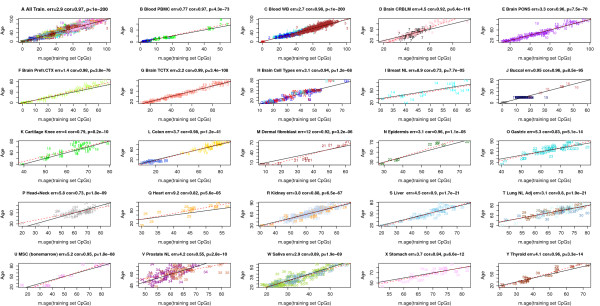
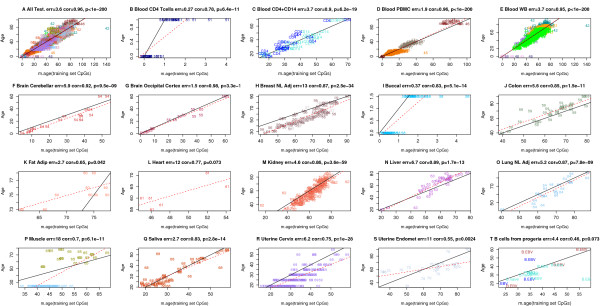
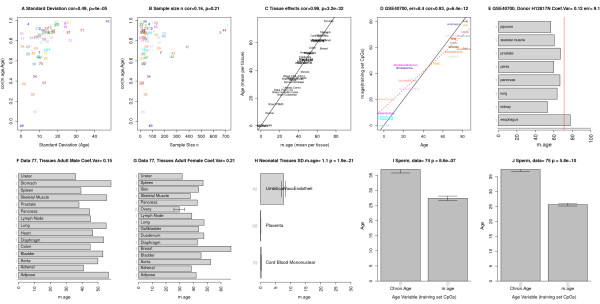
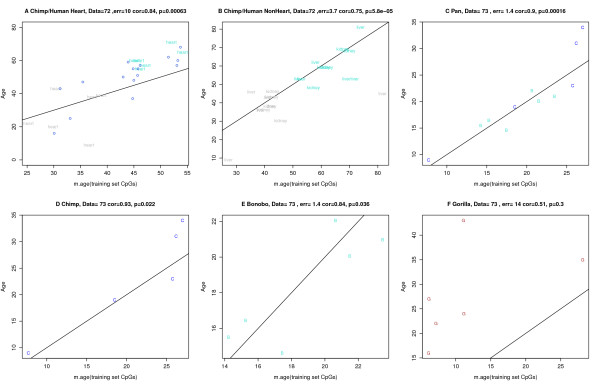
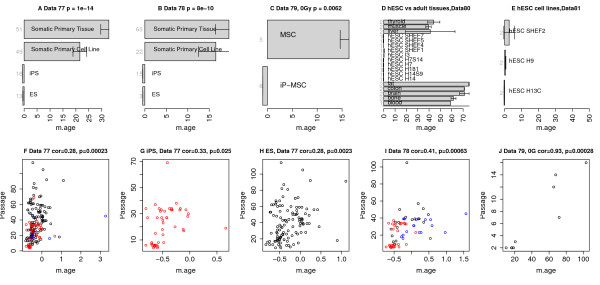
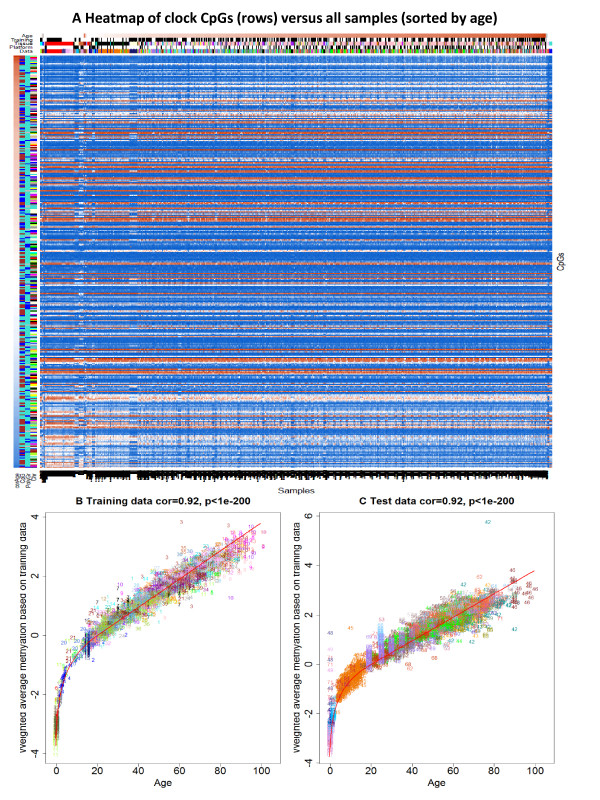
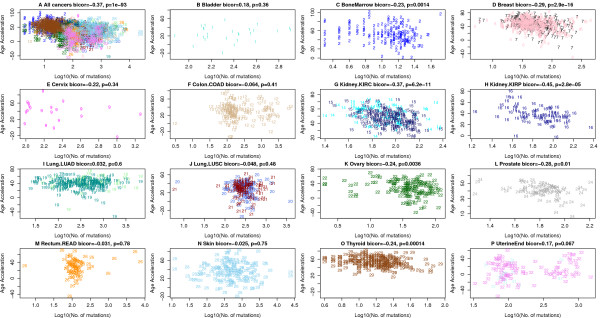
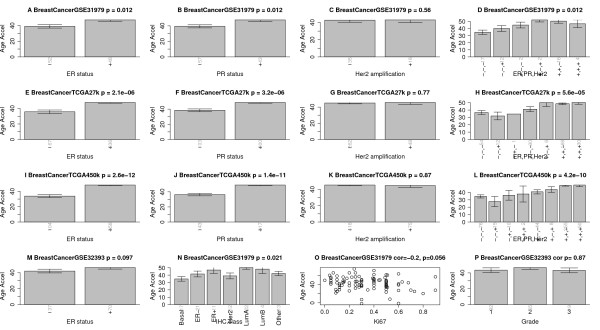
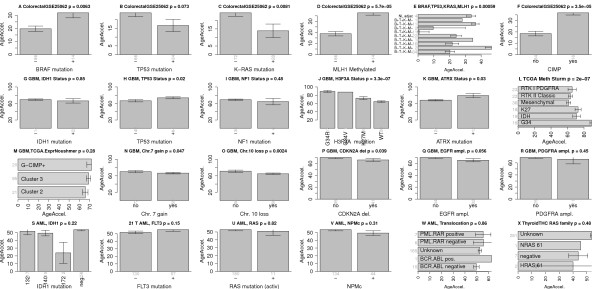
Background: It is not yet known whether DNA methylation levels can be used to accurately predict age across a broad spectrum of human tissues and cell types, nor whether the resulting age prediction is a biologically meaningful measure. Results: I developed a multi-tissue predictor of age that allows one to estimate the DNA methylation age of most tissues and cell types. The predictor, which is freely available, was developed using 8,000 samples from 82 Illumina DNA methylation array datasets, encompassing 51 healthy tissues and cell types. I found that DNA methylation age has the following properties: first, it is close to zero for embryonic and induced pluripotent stem cells; second, it correlates with cell passage number; third, it gives rise to a highly heritable measure of age acceleration; and, fourth, it is applicable to chimpanzee tissues. Analysis of 6,000 cancer samples from 32 datasets showed that all of the considered 20 cancer types exhibit significant age acceleration, with an average of 36 years. Low age-acceleration of cancer tissue is associated with a high number of somatic mutations and TP53 mutations, while mutations in steroid receptors greatly accelerate DNA methylation age in breast cancer. Finally, I characterize the 353 CpG sites that together form an aging clock in terms of chromatin states and tissue variance. Conclusions: I propose that DNA methylation age measures the cumulative effect of an epigenetic maintenance system. This novel epigenetic clock can be used to address a host of questions in developmental biology, cancer and aging research.
Overview
The claims and statistics of this paper haven’t been checked yet.
Free: it reads the open-access text and checks the first 5 claims that cite a source we can check. Create a free account to check every claim.
Integrity signals
Registry
Cites
Statistics
Figures
Verification
Claims the paper makes
The claims and statistics of this paper haven’t been checked yet.
Free: it reads the open-access text and checks the first 5 claims that cite a source we can check. Create a free account to check every claim.
Claims other papers make about this one
Each is checked against this paper’s own text: does it say what the citing paper says it does?
The source backs part of the claim, not all of it — or backs it for a different population, condition or comparison.
In the citing paper
“Epigenetic clocks serve as a biomarker of biological age in mammals (Hannum et al., 2013; Horvath, 2013; Petkovich et al., 2017; Weidner et al., 2014).”
From Loss of epigenetic information as a cause of mammalian aging (2023) · cites this paper as Horvath, 2013
Experimental — accuracy not yet measuredThe source backs part of the claim, not all of it — or backs it for a different population, condition or comparison.
In the citing paper
“During ageing, for reasons that are unclear, these patterns change in ways that can be used to calculate DNA methylation (DNAm) age, a representation of biological age that can predict future health and lifespan4.”
From Reprogramming to recover youthful epigenetic information and restore vision (2020) · cites this paper as [4]
Experimental — accuracy not yet measuredThe source backs part of the claim, not all of it — or backs it for a different population, condition or comparison.
In the citing paper
“That said, we do not wish to imply that DNA methylation is the only epigenetic mark involved in this process. It likely involves other transcription factors and epigenetic modifications, such as the PRC2 complex and H3K27me3, both of which are involved in maintaining stem cell plasticity and are associated with DNAm clock sites4,49,50.”
From Reprogramming to recover youthful epigenetic information and restore vision (2020) · cites this paper as [4]
Experimental — accuracy not yet measuredThe source backs part of the claim, not all of it — or backs it for a different population, condition or comparison.
In the citing paper
“Many of the 353 CpGs investigated are located close to poised promoters of bivalent genes (marked by H3K4me3 and H3K27me3), or to active promoters 126 , suggesting that ageing may correlate with reduced plasticity in the expression of some bivalent genes, which might resolve into repressed or active states, and with active genes changing their expression levels.”
From Advances in epigenetics link genetics to the environment and disease (2019) · cites this paper as [126]
Experimental — accuracy not yet measuredThe source backs part of the claim, not all of it — or backs it for a different population, condition or comparison.
In the citing paper
“One especially interesting aspect of DNA methylation clocks is their ability to accurately predict age across a wide range of different tissue types, regardless of the tissue type they were trained on, suggesting that they measure ageing signals that are shared between cell types43,44.”
From Measuring biological age using omics data (2022) · cites this paper as [44]
Experimental — accuracy not yet measured
23 more claims about this paper
Create a free account to see every claim other papers make about this one.
Self-check
Percentages, sums and reported differences re-computed from the paper’s own numbers.
The self-check needs the paper’s full text.
Citations
Cites
Regularization Paths for Generalized Linear Models via Coordinate Descent
Friedman, J., Hastie, T., & Tibshirani, R. (2010) · Journal of Statistical Software · doi:10.18637/jss.v033.i01 · Cited by 19,927
Embryonic Stem Cell Lines Derived from Human Blastocysts
Thomson, J. A., Itskovitz-Eldor, J., Shapiro, S. S., Waknitz, M. A., Swiergiel, J. J., Marshall, V. S., & Jones, J. M. (1998) · Science · doi:10.1126/science.282.5391.1145 · Cited by 15,926 · cited 1×
“Further, DNAm age and cell passage number are highly correlated in ES cells (Figure 5H,J), which are also immortal [38].”
BackgroundA bivalent chromatin structure marks key developmental genes in embryonic stem cells
Bernstein, B. E., Mikkelsen, T. S., Xie, X., Kamal, M., Huebert, D. J., Cuff, J., Fry, B., Meissner, A., Wernig, M., Plath, K., et al. (2006) · Cell · doi:10.1016/j.cell.2006.02.041 · Cited by 5,361
Genome-wide methylation profiles reveal quantitative views of human aging rates
Hannum, G., Guinney, J., Zhao, L., Zhang, L., Hughes, G., Sadda, S., Klotzle, B., Bibikova, M., Fan, J.-B., Gao, Y., et al. (2013) · Molecular Cell · doi:10.1016/j.molcel.2012.10.016 · Cited by 4,270 · cited 3×
“particular, cancer tissues were excluded from this first large data set since it is well known that cancer has a profound effect on DNA methylation levels [6,7,24-26].”
BackgroundMapping and analysis of chromatin state dynamics in nine human cell types
Ernst, J., Kheradpour, P., Mikkelsen, T. S., Shoresh, N., Ward, L. D., Epstein, C. B., Zhang, X., Wang, L., Issner, R., Coyne, M., et al. (2011) · Nature · doi:10.1038/nature09906 · Cited by 2,898
Driver mutations in histone H3.3 and chromatin remodelling genes in paediatric glioblastoma
Schwartzentruber, J., Korshunov, A., Liu, X.-Y., Jones, D. T. W., Pfaff, E., Jacob, K., Sturm, D., Fontebasso, A. M., Quang, D.-A. K., Tönjes, M., et al. (2012) · Nature · doi:10.1038/nature10833 · Cited by 2,631
Control of Developmental Regulators by Polycomb in Human Embryonic Stem Cells
Lee, T. I., Jenner, R. G., Boyer, L. A., Guenther, M. G., Levine, S. S., Kumar, R. M., Chevalier, B., Johnstone, S. E., Cole, M. F., Isono, K.-I., et al. (2006) · Cell · doi:10.1016/j.cell.2006.02.043 · Cited by 2,268
The NIH Roadmap Epigenomics Mapping Consortium
Bernstein, B. E., Stamatoyannopoulos, J. A., Costello, J. F., Ren, B., Milosavljevic, A., Meissner, A., Kellis, M., Marra, M. A., Beaudet, A. L., Ecker, J. R., et al. (2010) · Nature Biotechnology · doi:10.1038/nbt1010-1045 · Cited by 1,892 · cited 1×
“The epigenomic landscape varies markedly across tissue types [16-18] and many age-related changes depend on tissue type [8,19].”
BackgroundSturm, D., Witt, H., Hovestadt, V., Khuong-Quang, D.-A., Jones, D. T. W., Konermann, C., Pfaff, E., Tönjes, M., Sill, M., Bender, S., et al. (2012) · Cancer Cell · doi:10.1016/j.ccr.2012.08.024 · Cited by 1,828
Teschendorff, A. E., Marabita, F., Lechner, M., Bartlett, T., Tegner, J., Gomez-Cabrero, D., & Beck, S. (2013) · Bioinformatics · doi:10.1093/bioinformatics/bts680 · Cited by 1,683
Cited by
Items 101–200 of 1,133
Li, X., Ploner, A., Wang, Y., Magnusson, P. K., Reynolds, C., Finkel, D., Pedersen, N. L., Jylhävä, J., & Hägg, S. (2020) · eLife · doi:10.7554/elife.51507 · Cited by 390
“These DNAmAges were initially trained to capture methylome differences associated with various aging-related phenotypes, namely CA for Horvath and Hannum, Phenotypic Age for PhenoAge, and mortality risk for GrimAge (Hannum et al., 2013; Horvath, 2013; Levine et al., 2018; Lu et al., 2019).”
BackgroundMethodInfluentialMulti-tissue DNA methylation age predictor in mouse
BI Ageing Clock Team, Stubbs, T. M., Bonder, M. J., Stark, A.-K., Krueger, F., von Meyenn, F., Stegle, O., & Reik, W. (2017) · Genome Biology · doi:10.1186/s13059-017-1203-5 · Cited by 384
“our mouse epigenetic clock; similarly in humans, breast tissue is found to have accelerated epigenetic ageing [6].”
BackgroundMethodInfluentialDNA methylation signatures in peripheral blood strongly predict all-cause mortality
Zhang, Y., Wilson, R., Heiss, J., Breitling, L. P., Saum, K.-U., Schöttker, B., Holleczek, B., Waldenberger, M., Peters, A., & Brenner, H. (2017) · Nature Communications · doi:10.1038/ncomms14617 · Cited by 382
Decoding SARS-CoV-2 hijacking of host mitochondria in COVID-19 pathogenesis
Singh, K. K., Chaubey, G., Chen, J. Y., & Suravajhala, P. (2020) · American Journal of Physiology-Cell Physiology · doi:10.1152/ajpcell.00224.2020 · Cited by 382
“Other hallmarks of aging, such as changes in epigenetic patterns, exhibiting different expressions in older men than agematched women (4, 30), may underlie factors involved in sex-specific mortality.”
BackgroundThe epigenetics of aging and neurodegeneration
Lardenoije, R., Iatrou, A., Kenis, G., Kompotis, K., Steinbusch, H. W. M., Mastroeni, D., Coleman, P., Lemere, C. A., Hof, P. R., van den Hove, D. L. A., et al. (2015) · Progress in Neurobiology · doi:10.1016/j.pneurobio.2015.05.002 · Cited by 381
“A very recent EWAS in blood from PD patients, using a discovery and replication cohort, identified additional differentially methylated genes, with the most reliable differentially methylated CpGs being located in the Fanconi anemia, complementation group C (FANCC) and tankyrase, telomeric repeat binding factor 1 (TRF…”
BackgroundMethodInfluentialAging Biomarker Consortium, Bao, H., Cao, J., Chen, M., Chen, M., Chen, W., Chen, X., Chen, Y., Chen, Y., Chen, Y., et al. (2023) · Science China Life Sciences · doi:10.1007/s11427-023-2305-0 · Cited by 376
Chronic kidney disease and premature ageing
Kooman, J. P., Kotanko, P., Schols, A. M. W. J., Shiels, P. G., & Stenvinkel, P. (2014) · Nature Reviews Nephrology · doi:10.1038/nrneph.2014.185 · Cited by 376
Hallmarks of environmental insults
Peters, A., Nawrot, T. S., & Baccarelli, A. A. (2021) · Cell · doi:10.1016/j.cell.2021.01.043 · Cited by 373
Mechanisms of sex differences in Alzheimer’s disease
Lopez-Lee, C., Torres, E. R. S., Carling, G., & Gan, L. (2024) · Neuron · doi:10.1016/j.neuron.2024.01.024 · Cited by 376
RnBeads 2.0: comprehensive analysis of DNA methylation data
Müller, F., Scherer, M., Assenov, Y., Lutsik, P., Walter, J., Lengauer, T., & Bock, C. (2019) · Genome Biology · doi:10.1186/s13059-019-1664-9 · Cited by 376
DNA hypermethylation in disease: mechanisms and clinical relevance
Ehrlich, M. (2019) · Epigenetics · doi:10.1080/15592294.2019.1638701 · Cited by 373
“This methylation clock is associated with diet and obesity, smoking, alcohol use, prolonged psychological stress, social class, an increased risk of breast cancer, and physical and mental fitness, but not with the number of cell divisions [160,162].”
BackgroundBiological aging processes underlying cognitive decline and neurodegenerative disease
Gonzales, M. M., Garbarino, V. R., Pollet, E., Palavicini, J. P., Kellogg, D. L., Kraig, E., & Orr, M. E. (2022) · Journal of Clinical Investigation · doi:10.1172/jci158453 · Cited by 367
The Biology of Aging and Cancer: A Brief Overview of Shared and Divergent Molecular Hallmarks
Aunan, J. R., Cho, W. C., & Søreide, K. (2017) · Aging and disease · doi:10.14336/ad.2017.0103 · Cited by 373
“"Epigenetic age" are robust estimators of chronological age described by Horvath [53] and Hannum [54] and is Aging and Disease • Volume 8, Number 5, October 2017 633 based on levels of methylation on a defined number of CpG dinucleotide markers [52].”
BackgroundFransquet, P. D., Wrigglesworth, J., Woods, R. L., Ernst, M. E., & Ryan, J. (2019) · Clinical Epigenetics · doi:10.1186/s13148-019-0656-7 · Cited by 369
The role of DNA methylation in epigenetics of aging
Unnikrishnan, A., Freeman, W. M., Jackson, J., Wren, J. D., Porter, H., & Richardson, A. (2019) · Pharmacology & Therapeutics · doi:10.1016/j.pharmthera.2018.11.001 · Cited by 366
“The most widely used epigenetic clock was developed by Horvath (2013).”
BackgroundMethodInfluentialArgentieri, M. A., Xiao, S., Bennett, D., Winchester, L., Nevado-Holgado, A. J., Ghose, U., Albukhari, A., Yao, P., Mazidi, M., Lv, J., et al. (2024) · Nature Medicine · doi:10.1038/s41591-024-03164-7 · Cited by 347
Deep biomarkers of human aging: Application of deep neural networks to biomarker development
Putin, E., Mamoshina, P., Aliper, A., Korzinkin, M., Moskalev, A., Kolosov, A., Ostrovskiy, A., Cantor, C., Vijg, J., & Zhavoronkov, A. (2016) · Aging · doi:10.18632/aging.100968 · Cited by 362
“Methylation-based markers such as epigenetic aging clocks (Horvath [6] and Hannum [7]) are currently the most accurate, while transcriptomics [8,9] and metabolomics [10] have shown to be less so.”
BackgroundMitochondria and Epigenetics – Crosstalk in Homeostasis and Stress
Matilainen, O., Quirós, P. M., & Auwerx, J. (2017) · Trends in Cell Biology · doi:10.1016/j.tcb.2017.02.004 · Cited by 364
Long-term maturation of human cortical organoids matches key early postnatal transitions
Gordon, A., Yoon, S.-J., Tran, S. S., Makinson, C. D., Park, J. Y., Andersen, J., Valencia, A. M., Horvath, S., Xiao, X., Huguenard, J. R., et al. (2021) · Nature Neuroscience · doi:10.1038/s41593-021-00802-y · Cited by 357
Self-citationNeurodegenerative Diseases: Expanding the Prion Concept
Walker, L. C., & Jucker, M. (2015) · Annual Review of Neuroscience · doi:10.1146/annurev-neuro-071714-033828 · Cited by 361
“A uthor M anuscript A uthor M anuscript A uthor M anuscript A uthor M anuscript contribute, such as age-related changes in DNA (CpG) methylation (Horvath 2013).”
BackgroundFitzgerald, K. N., Hodges, R., Hanes, D., Stack, E., Cheishvili, D., Szyf, M., Henkel, J., Twedt, M. W., Giannopoulou, D., Herdell, J., et al. (2021) · Aging · doi:10.18632/aging.202913 · Cited by 361
“Saliva can be considered a good source of high-quality DNA, containing both white blood cells and buccal cells, and is a suitable tissue type to be assessed for the DNAmAge clock [10, 11].”
BackgroundBenayoun, B. A., Pollina, E. A., Singh, P. P., Mahmoudi, S., Harel, I., Casey, K. M., Dulken, B. W., Kundaje, A., & Brunet, A. (2019) · Genome Research · doi:10.1101/gr.240093.118 · Cited by 360
Justice, J. N., Ferrucci, L., Newman, A. B., Aroda, V. R., Bahnson, J. L., Divers, J., Espeland, M. A., Marcovina, S., Pollak, M. N., Kritchevsky, S. B., et al. (2018) · GeroScience · doi:10.1007/s11357-018-0042-y · Cited by 359
Development of a forensically useful age prediction method based on DNA methylation analysis
Zbieć-Piekarska, R., Spólnicka, M., Kupiec, T., Parys-Proszek, A., Makowska, Ż., Pałeczka, A., Kucharczyk, K., Płoski, R., & Branicki, W. (2015) · Forensic Science International: Genetics · doi:10.1016/j.fsigen.2015.05.001 · Cited by 354
“More accurate age prediction in adolescents and children has also been reported by Horvath [26].”
BackgroundInfluentialZannas, A. S., Jia, M., Hafner, K., Baumert, J., Wiechmann, T., Pape, J. C., Arloth, J., Ködel, M., Martinelli, S., Roitman, M., et al. (2019) · Proceedings of the National Academy of Sciences · doi:10.1073/pnas.1816847116 · Cited by 352
“DNA methylation at cytosine– guanine dinucleotides (CpGs) can change with age (24), an effect moderated in part by environmental factors (29), including psychosocial stress (23).”
Demerath, E. W., Guan, W., Grove, M. L., Aslibekyan, S., Mendelson, M., Zhou, Y.-H., Hedman, Å. K., Sandling, J. K., Li, L.-A., Irvin, M. R., et al. (2015) · Human Molecular Genetics · doi:10.1093/hmg/ddv161 · Cited by 355
“It has been shown that different tissues including brain, lung, thyroid, saliva and whole blood exhibit highly concordant age associations (60) and that smoking is associated with consistent AHRR methylation profiles in both lymphoblasts and pulmonarymacrophages (61).”
BackgroundThe epidemiology of amyotrophic lateral sclerosis
(2016) · Handbook of Clinical Neurology · doi:10.1016/b978-0-12-802973-2.00013-6 · Cited by 353
“Further, DNA methylation levels are known to change with age (Horvath, 2013; Hannum et al., 2013; Marioni et al., 2015).”
BackgroundHannon, E., Dempster, E., Viana, J., Burrage, J., Smith, A. R., Macdonald, R., St Clair, D., Mustard, C., Breen, G., Therman, S., et al. (2016) · Genome Biology · doi:10.1186/s13059-016-1041-x · Cited by 349
“edu/) [21]; (5) multidimensional scaling of sites on X and Y chromosomes separately to confirm reported gender; (6) comparison of genotype data for up to 65 single nucleotide polymorphism (SNP) probes on 450 K array; and (7) use of the pfilter() function from wateRmelon package [52] to exclude samples with >1 % of pro…”
Epigenetic clock: A promising biomarker and practical tool in aging
Duan, R., Fu, Q., Sun, Y., & Li, Q. (2022) · Ageing Research Reviews · doi:10.1016/j.arr.2022.101743 · Cited by 342
Guidance for DNA methylation studies: statistical insights from the Illumina EPIC array
Mansell, G., Gorrie-Stone, T. J., Bao, Y., Kumari, M., Schalkwyk, L. S., Mill, J., & Hannon, E. (2019) · BMC Genomics · doi:10.1186/s12864-019-5761-7 · Cited by 340
“First, outlier samples were identified using principal component analysis and mahalanobis distance equivalents, second, successful bisulphite conversion was confirmed using control probes, third the ages of the samples were estimated using the Horvath Epigenetic Clock algorithm [50] and compared to reported age at sam…”
MethodStress-Related Biosocial Mechanisms of Discrimination and African American Health Inequities
Goosby, B. J., Cheadle, J. E., & Mitchell, C. (2018) · Annual Review of Sociology · doi:10.1146/annurev-soc-060116-053403 · Cited by 340
When stem cells grow old: phenotypes and mechanisms of stem cell aging
Schultz, M. B., & Sinclair, D. A. (2016) · Development · doi:10.1242/dev.130633 · Cited by 331
Correlation of an epigenetic mitotic clock with cancer risk
Yang, Z., Wong, A., Kuh, D., Paul, D. S., Rakyan, V. K., Leslie, R. D., Zheng, S. C., Widschwendter, M., Beck, S., & Teschendorff, A. E. (2016) · Genome Biology · doi:10.1186/s13059-016-1064-3 · Cited by 325
“As a negative control, the corresponding correlation between Horvath’s measure of age acceleration [25] and TNSC was either not significant (P = 0.”
BackgroundDNA Methylation Biomarkers in Aging and Age-Related Diseases
Salameh, Y., Bejaoui, Y., & El Hajj, N. (2020) · Frontiers in Genetics · doi:10.3389/fgene.2020.00171 · Cited by 317
“Interestingly, the clock starts ticking early during development where fetal tissues as well as embryonic and induced pluripotent stem cells reveal a DNA methylation age (DNAm age) between −1 and 0 years (Horvath, 2013; Spiers et al., 2015).”
BackgroundDecreased epigenetic age of PBMCs from Italian semi-supercentenarians and their offspring
Horvath, S., Pirazzini, C., Bacalini, M. G., Gentilini, D., Di Blasio, A. M., Delledonne, M., Mari, D., Arosio, B., Monti, D., Passarino, G., et al. (2015) · Aging · doi:10.18632/aging.100861 · Cited by 316
“Several recent studies propose biomarkers of ageing based DNA methylation levels [44-49].”
BackgroundMethodInfluentialSelf-citationSumner, J. A., Colich, N. L., Uddin, M., Armstrong, D., & McLaughlin, K. A. (2019) · Biological Psychiatry · doi:10.1016/j.biopsych.2018.09.008 · Cited by 315
“Although DNAm age is heritable, it is sensitive to environmental influences (20,27), and advanced epigenetic aging has been associated with ELA in adults (28–31).”
Psychological Stress and Mitochondria: A Conceptual Framework
Picard, M., & McEwen, B. S. (2018) · Psychosomatic Medicine · doi:10.1097/psy.0000000000000544 · Cited by 307
DNA methylation age of blood predicts future onset of lung cancer in the women's health initiative
Levine, M. E., Hosgood, H. D., Chen, B., Absher, D., Assimes, T., & Horvath, S. (2015) · Aging · doi:10.18632/aging.100809 · Cited by 311
“We used the 353 CpGs and coefficient values reported in [11] to define DNAm age.”
BackgroundMethodInfluentialSelf-citationHallmarks of Aging in the Liver
Hunt, N. J., Kang, S. W. (., Lockwood, G. P., Le Couteur, D. G., & Cogger, V. C. (2019) · Computational and Structural Biotechnology Journal · doi:10.1016/j.csbj.2019.07.021 · Cited by 306
“Regarding associations between rodent models and humans, similar patterns of DNA methylation, histone modifications, CpG methylation, telomere shortening, and cellular senescence have been shown in aging human liver tissue [79,140,149,150].”
BackgroundSarkar, T. J., Quarta, M., Mukherjee, S., Colville, A., Paine, P., Doan, L., Tran, C. M., Chu, C. R., Horvath, S., Qi, L. S., et al. (2020) · Nature Communications · doi:10.1038/s41467-020-15174-3 · Cited by 308
Self-citationGross, A. M., Jaeger, P. A., Kreisberg, J. F., Licon, K., Jepsen, K. L., Khosroheidari, M., Morsey, B. M., Swindells, S., Shen, H., Ng, C. T., et al. (2016) · Molecular Cell · doi:10.1016/j.molcel.2016.03.019 · Cited by 306
“, 2012) and others (Horvath, 2013; Weidner et al., 2014) have built models capable of predicting a person’s age usingDNAmethylation patterns across a large number of CpG sites.”
InfluentialDNA methylation age is associated with mortality in a longitudinal Danish twin study
Christiansen, L., Lenart, A., Tan, Q., Vaupel, J. W., Aviv, A., McGue, M., & Christensen, K. (2016) · Aging Cell · doi:10.1111/acel.12421 · Cited by 295
“, 2011), or samples across multiple tissues (Koch & Wagner, 2011; Horvath, 2013).”
MethodInterconnections between Inflammageing and Immunosenescence during Ageing
Teissier, T., Boulanger, E., & Cox, L. S. (2022) · Cells · doi:10.3390/cells11030359 · Cited by 301
“Senescent cells further show local DNA methylation changes [19,20] and global chromatin rearrangements [21], leading to altered gene expression patterns and the secretion of a panoply of chemokines, cytokines, and tissue remodelling enzymes.”
BackgroundJenkins, T. G., Aston, K. I., Pflueger, C., Cairns, B. R., & Carrell, D. T. (2014) · PLoS Genetics · doi:10.1371/journal.pgen.1004458 · Cited by 298
“Recent literature suggests age-associated global hypomethylation with regional (gene associated) hypermethylation in somatic tissue [20,21].”
BackgroundStatistical and integrative system-level analysis of DNA methylation data
Teschendorff, A. E., & Relton, C. L. (2018) · Nature Reviews Genetics · doi:10.1038/nrg.2017.86 · Cited by 296
Frailty is associated with the epigenetic clock but not with telomere length in a German cohort
Breitling, L. P., Saum, K.-U., Perna, L., Schöttker, B., Holleczek, B., & Brenner, H. (2016) · Clinical Epigenetics · doi:10.1186/s13148-016-0186-5 · Cited by 296
“Conclusions Confirming speculations by Horvath, the present findings suggest that epigenetic aging contains information complementary to that of the telomere clock [2].”
InfluentialVineis, P., Robinson, O., Chadeau-Hyam, M., Dehghan, A., Mudway, I., & Dagnino, S. (2020) · Environment International · doi:10.1016/j.envint.2020.105887 · Cited by 290
“Levine EAA strongly outperforms previous measures with regard to prediction of a variety of aging outcomes, including all-cause mortality, cancers, disease-free survival and physical functioning.”
BackgroundWang, T., Tsui, B., Kreisberg, J. F., Robertson, N. A., Gross, A. M., Yu, M. K., Carter, H., Brown-Borg, H. M., Adams, P. D., & Ideker, T. (2017) · Genome Biology · doi:10.1186/s13059-017-1186-2 · Cited by 293
“The data were then beta-mixture quantile normalized [48] using a gold reference distribution following the procedure provided by Horvath [2].”
BackgroundMethodInfluentialGenome-wide association studies identify 137 genetic loci for DNA methylation biomarkers of aging
McCartney, D. L., Min, J. L., Richmond, R. C., Lu, A. T., Sobczyk, M. K., Davies, G., Broer, L., Guo, X., Jeong, A., Jung, J., et al. (2021) · Genome Biology · doi:10.1186/s13059-021-02398-9 · Cited by 292
“The first generation of epigenetic aging clocks used penalized regression models to predict chronological age on the basis of DNA methylation data, e.g., the widely used clocks from Hannum (2013) and Horvath (2013) apply to blood and 51 human tissues/ cell types, respectively [12 – 14].”
MethodSelf-citationHuman gut microbiome aging clock based on taxonomic profiling and deep learning
Galkin, F., Mamoshina, P., Aliper, A., Lane, E., Moskalev, V., Gladyshev, V. N., & Zhavoronkov, A. (2020) · iScience · doi:10.1016/j.isci.2020.101199 · Cited by 292
An epigenetic clock for gestational age at birth based on blood methylation data
Knight, A. K., Craig, J. M., Theda, C., Bækvad-Hansen, M., Bybjerg-Grauholm, J., Hansen, C. S., Hollegaard, M. V., Hougaard, D. M., Mortensen, P. B., Weinsheimer, S. M., et al. (2016) · Genome Biology · doi:10.1186/s13059-016-1068-z · Cited by 290
“The training coefficient values and CpG probes selected from this regression were used to fit a linear model to generate predicted values of GA, based on a modified version of the R code in the DNAm age tutorial published by Horvath [13].”
BackgroundMethodInfluentialSelf-citationDNA Methylation Biomarkers: Cancer and Beyond
Mikeska, T., & Craig, J. (2014) · Genes · doi:10.3390/genes5030821 · Cited by 288
Epigenetic Modifications in Cardiovascular Aging and Diseases
Zhang, W., Song, M., Qu, J., & Liu, G.-H. (2018) · Circulation Research · doi:10.1161/circresaha.118.312497 · Cited by 286
Miller, M. W., & Sadeh, N. (2014) · Molecular Psychiatry · doi:10.1038/mp.2014.111 · Cited by 288
Small nucleoli are a cellular hallmark of longevity
Tiku, V., Jain, C., Raz, Y., Nakamura, S., Heestand, B., Liu, W., Späth, M., Suchiman, H. E. D., Müller, R.-U., Slagboom, P. E., et al. (2017) · Nature Communications · doi:10.1038/ncomms16083 · Cited by 287
Methylomic trajectories across human fetal brain development
Spiers, H., Hannon, E., Schalkwyk, L. C., Smith, R., Wong, C. C. Y., O’Donovan, M. C., Bray, N. J., & Mill, J. (2015) · Genome Research · doi:10.1101/gr.180273.114 · Cited by 287
“It is, however, noteworthy that a recent ‘‘epigenetic clock’’ algorithm developed by Steve Horvath (Horvath 2013), based on DNA methylation values at 353 CpG sites shown to be associated with postpartum age, accurately predicts that each of our samples is prenatal, with a significant positive correlation (r = 0.15, P…”
BackgroundInfluentialEWAS Atlas: a curated knowledgebase of epigenome-wide association studies
Li, M., Zou, D., Li, Z., Gao, R., Sang, J., Zhang, Y., Li, R., Xia, L., Zhang, T., Niu, G., et al. (2019) · Nucleic Acids Research · doi:10.1093/nar/gky1027 · Cited by 285
Marioni, R. E., Harris, S. E., Shah, S., McRae, A. F., von Zglinicki, T., Martin-Ruiz, C., Wray, N. R., Visscher, P. M., & Deary, I. J. (2016) · International Journal of Epidemiology · doi:10.1093/ije/dyw041 · Cited by 285
“There were consistent sex differences, with men having a faster running clock.(3,15) Previous research using LBC1936 data has also shown cross-sectional associations between epigenetic clock estimates and cognitive ability and physical fitness (grip strength and lung function, but not walking speed).”
BackgroundResultRole of Epigenetics in Biology and Human Diseases.
Moosavi, A., & Ardekani, A. M. (2016) · PubMed · doi:10.22045/ibj.2016.01 · Cited by 273
“Studies of 353 epigenetic markers (DNA methylation of CpG dinucleotide) in DNA have made it possible to predict the ageing of tissues [47] .”
BackgroundEpigenetic changes during aging and their reprogramming potential
Kane, A. E., & Sinclair, D. A. (2019) · Critical Reviews in Biochemistry and Molecular Biology · doi:10.1080/10409238.2019.1570075 · Cited by 283
“Additionally, the Horvath methylation clock age is reset in iPSCs to that of embryonic stem cells (Horvath 2013).”
BackgroundInfluentialHallmarks of cardiovascular ageing
Abdellatif, M., Rainer, P. P., Sedej, S., & Kroemer, G. (2023) · Nature Reviews Cardiology · doi:10.1038/s41569-023-00881-3 · Cited by 274
Bekaert, B., Kamalandua, A., Zapico, S. C., Van de Voorde, W., & Decorte, R. (2015) · Epigenetics · doi:10.1080/15592294.2015.1080413 · Cited by 276
“Using Illumina BeadArray metadata from previous publications Steve Horvath designed a panel of 353 CpG sites as a multi-tissue predictor of age.(11) A study by Hannum and colleagues showed that with 71 markers, the prediction error could be lowered to 3.”
MethodEpigenomics, gestational programming and risk of metabolic syndrome
Desai, M., Jellyman, J. K., & Ross, M. G. (2015) · International Journal of Obesity · doi:10.1038/ijo.2015.13 · Cited by 278
The PedBE clock accurately estimates DNA methylation age in pediatric buccal cells
McEwen, L. M., O’Donnell, K. J., McGill, M. G., Edgar, R. D., Jones, M. J., MacIsaac, J. L., Lin, D. T. S., Ramadori, K., Morin, A., Gladish, N., et al. (2020) · Proceedings of the National Academy of Sciences · doi:10.1073/pnas.1820843116 · Cited by 274
“met hod to adjust for t he microarray probe-type design differences (1, 31).”
BackgroundMethodInfluentialSelf-citationAging Hallmarks and Progression and Age-Related Diseases: A Landscape View of Research Advancement
Tenchov, R., Sasso, J. M., Wang, X., & Zhou, Q. A. (2024) · ACS Chemical Neuroscience · doi:10.1021/acschemneuro.3c00531 · Cited by 276
Parkhitko, A. A., Jouandin, P., Mohr, S. E., & Perrimon, N. (2019) · Aging Cell · doi:10.1111/acel.13034 · Cited by 275
Self-control forecasts better psychosocial outcomes but faster epigenetic aging in low-SES youth
Miller, G. E., Yu, T., Chen, E., & Brody, G. H. (2015) · Proceedings of the National Academy of Sciences · doi:10.1073/pnas.1505063112 · Cited by 276
Molecular mechanisms of environmental exposures and human disease
Wu, H., Eckhardt, C. M., & Baccarelli, A. A. (2023) · Nature Reviews Genetics · doi:10.1038/s41576-022-00569-3 · Cited by 273
Making sense of the ageing methylome
Seale, K., Horvath, S., Teschendorff, A., Eynon, N., & Voisin, S. (2022) · Nature Reviews Genetics · doi:10.1038/s41576-022-00477-6 · Cited by 274
Self-citationSalas, L. A., Zhang, Z., Koestler, D. C., Butler, R. A., Hansen, H. M., Molinaro, A. M., Wiencke, J. K., Kelsey, K. T., & Christensen, B. C. (2022) · Nature Communications · doi:10.1038/s41467-021-27864-7 · Cited by 271
“Some algorithms include other rarer cell subpopulations [e.g., plasmablasts, exhausted CD8( + ) T cells] as linearly related scores, but they do not represent the sample ’ s cell-type proportions 15 .”
BackgroundCellular and epigenetic drivers of stem cell ageing
Ermolaeva, M., Neri, F., Ori, A., & Rudolph, K. L. (2018) · Nature Reviews Molecular Cell Biology · doi:10.1038/s41580-018-0020-3 · Cited by 272
Clinical and Biological Subtypes of B-cell Lymphoma Revealed by Microenvironmental Signatures
Kotlov, N., Bagaev, A., Revuelta, M. V., Phillip, J. M., Cacciapuoti, M. T., Antysheva, Z., Svekolkin, V., Tikhonova, E., Miheecheva, N., Kuzkina, N., et al. (2021) · Cancer Discovery · doi:10.1158/2159-8290.cd-20-0839 · Cited by 267
“001) and with the epigenetic age(41,42) of the 367 lymphoma (Fig.”
BackgroundCaloric restriction delays age-related methylation drift
Maegawa, S., Lu, Y., Tahara, T., Lee, J. T., Madzo, J., Liang, S., Jelinek, J., Colman, R. J., & Issa, J.-P. J. (2017) · Nature Communications · doi:10.1038/s41467-017-00607-3 · Cited by 270
Reinisch, A., Etchart, N., Thomas, D., Hofmann, N. A., Fruehwirth, M., Sinha, S., Chan, C. K., Senarath-Yapa, K., Seo, E.-Y., Wearda, T., et al. (2015) · Blood · doi:10.1182/blood-2014-04-572255 · Cited by 270
“0001) (supplemental Figure 2A).(33) These data revealed latent changes in developmental transcription factors and DNA methylation in MSC populations that are not apparent with cell surface marker studies but are consistent with developmental fates observed in vivo.”
BackgroundSparse PCA corrects for cell type heterogeneity in epigenome-wide association studies
Rahmani, E., Zaitlen, N., Baran, Y., Eng, C., Hu, D., Galanter, J., Oh, S., Burchard, E. G., Eskin, E., Zou, J., et al. (2016) · Nature Methods · doi:10.1038/nmeth.3809 · Cited by 268
The last two decades of life course epidemiology, and its relevance for research on ageing
Ben-Shlomo, Y., Cooper, R., & Kuh, D. (2016) · International Journal of Epidemiology · doi:10.1093/ije/dyw096 · Cited by 263
Senescence in COPD and Its Comorbidities
Barnes, P. J. (2017) · Annual Review of Physiology · doi:10.1146/annurev-physiol-022516-034314 · Cited by 266
Fiorito, G., Polidoro, S., Dugué, P.-A., Kivimaki, M., Ponzi, E., Matullo, G., Guarrera, S., Assumma, M. B., Georgiadis, P., Kyrtopoulos, S. A., et al. (2017) · Scientific Reports · doi:10.1038/s41598-017-16391-5 · Cited by 260
BECon: a tool for interpreting DNA methylation findings from blood in the context of brain
Edgar, R. D., Jones, M. J., Meaney, M. J., Turecki, G., & Kobor, M. S. (2017) · Translational Psychiatry · doi:10.1038/tp.2017.171 · Cited by 261
Epigenetic aging in major depressive disorder
Han, L. K. M., Aghajani, M., Clark, S. L., Chan, R. F., Hattab, M. W., Shabalin, A. A., Zhao, M., Kumar, G., Xie, L. Y., Jansen, R., et al. (2018) · American Journal of Psychiatry · doi:10.1176/appi.ajp.2018.17060595 · Cited by 260
“Chronological age can be accurately predicted from methylation data and yields estimates of DNA methylation age (DNAmAge)(9;10).”
BackgroundObesity May Accelerate the Aging Process
Salvestrini, V., Sell, C., & Lorenzini, A. (2019) · Frontiers in Endocrinology · doi:10.3389/fendo.2019.00266 · Cited by 260
“These sites were identified as having an altered methylation pattern during aging and these changes have been proposed to represent an “epigenetic clock,” that may be tied to the aging process (34).”
BackgroundThe Ageing Brain: Molecular and Cellular Basis of Neurodegeneration
Azam, S., Haque, M. E., Balakrishnan, R., Kim, I.-S., & Choi, D.-K. (2021) · Frontiers in Cell and Developmental Biology · doi:10.3389/fcell.2021.683459 · Cited by 255
“DNA methylation is an epigenetic mark that involves DNA methyltraferase-mediated transfer of methyl group to the C-5 position of the cytosine ring of DNA (Jin et al., 2011; Horvath, 2013).”
BackgroundThe Genetics of Aging: A Vertebrate Perspective
Singh, P. P., Demmitt, B. A., Nath, R. D., & Brunet, A. (2019) · Cell · doi:10.1016/j.cell.2019.02.038 · Cited by 259
“Interestingly, an epigenetic clock (based on DNA methylation) has been developed in humans to accurately predict chronological age, and deviation from chronological age can be used as a biomarker for biological age in humans (Horvath, 2013; Horvath and Raj, 2018).”
BackgroundEpigenetics as a mediator of plasticity in cancer
Feinberg, A. P., & Levchenko, A. (2023) · Science · doi:10.1126/science.aaw3835 · Cited by 256
“This increasing entropy of the epigenetic landscape is distinct from the recurrent changes in DNA methylation serving as a basis for the epigenetic clocks (99).”
BackgroundEpigenetic prediction of complex traits and death
McCartney, D. L., Hillary, R. F., Stevenson, A. J., Ritchie, S. J., Walker, R. M., Zhang, Q., Morris, S. W., Bermingham, M. L., Campbell, A., Murray, A. D., et al. (2018) · Genome Biology · doi:10.1186/s13059-018-1514-1 · Cited by 255
Ventham, N. T., Kennedy, N. A., Adams, A. T., Kalla, R., Heath, S., O'Leary, K. R., Drummond, H., IBD BIOM consortium, Lauc, G., Campbell, H., et al. (2016) · Nature Communications · doi:10.1038/ncomms13507 · Cited by 255
Mertens, J., Reid, D., Lau, S., Kim, Y., & Gage, F. H. (2018) · Annual Review of Genetics · doi:10.1146/annurev-genet-120417-031534 · Cited by 255
“Age-dependent epigenetic changes (also referred to as epigenetic drift) are among the best-studied features of aging research (46, 129, 161).”
BackgroundInfluentialHuman trials exploring anti-aging medicines
Guarente, L., Sinclair, D. A., & Kroemer, G. (2024) · Cell Metabolism · doi:10.1016/j.cmet.2023.12.007 · Cited by 244
Reconfiguration of DNA methylation in aging
Zampieri, M., Ciccarone, F., Calabrese, R., Franceschi, C., Bürkle, A., & Caiafa, P. (2015) · Mechanisms of Ageing and Development · doi:10.1016/j.mad.2015.02.002 · Cited by 254
“Consistently, pioneering studes revealed that methylation changes of certain genes can serve o detect different rates of human aging (Bocklandt et al., 2011; aragnani et al., 2012; Hannum et al., 2013; Horvath, 2013).”
BackgroundGladyshev, V. N. (2016) · Aging Cell · doi:10.1111/acel.12480 · Cited by 251
“…age-related parameters simultaneously, for example, genomewide epigenetic changes, mutations, nontargeted metabolite profiling and gene expression (Hannum et al., 2013; Horvath, 2013; Avanesov et al., 2014; Hoffman et al., 2014), offer the best predictive models of the progression through aging.”
BackgroundBrowder, K. C., Reddy, P., Yamamoto, M., Haghani, A., Guillen, I. G., Sahu, S., Wang, C., Luque, Y., Prieto, J., Shi, L., et al. (2022) · Nature Aging · doi:10.1038/s43587-022-00183-2 · Cited by 253
Self-citationThe hallmarks of fibroblast ageing
Tigges, J., Krutmann, J., Fritsche, E., Haendeler, J., Schaal, H., Fischer, J. W., Kalfalah, F., Reinke, H., Reifenberger, G., Stühler, K., et al. (2014) · Mechanisms of Ageing and Development · doi:10.1016/j.mad.2014.03.004 · Cited by 250
“…of age-related changes in DNA methylation in 51 healthy tissues and cell models as well as 6000 cancer samples of human and chimpanzee origin (Horvath, 2013) revealed that DNA methylation is closely correlated with chronological age and reliably reflects heritable and cancer-related ageing…”
BackgroundDNA methylation in mammalian development and disease
Smith, Z. D., Hetzel, S., & Meissner, A. (2025) · Nature Reviews Genetics · doi:10.1038/s41576-024-00760-8 · Cited by 249
“Many of these errors have been found to track with mitotic divisions, leading to so-called ‘ageing clocks’ that predict an organism’s chronological age with reasonable precision 224 .”
Nyberg, L., & Pudas, S. (2019) · Annual Review of Psychology · doi:10.1146/annurev-psych-010418-103052 · Cited by 248
Inflammageing and metaflammation: The yin and yang of type 2 diabetes
Prattichizzo, F., De Nigris, V., Spiga, R., Mancuso, E., La Sala, L., Antonicelli, R., Testa, R., Procopio, A. D., Olivieri, F., & Ceriello, A. (2018) · Ageing Research Reviews · doi:10.1016/j.arr.2017.10.003 · Cited by 249
“A consistent percentage of the genes co-located with these CpG sites is inflammatory molecules regulating immune-cell function (Horvath, 2013).”
DNA methylation levels at individual age-associated CpG sites can be indicative for life expectancy
Lin, Q., Weidner, C. I., Costa, I. G., Marioni, R. E., Ferreira, M. R. P., Deary, I. J., & Wagner, W. (2016) · Aging · doi:10.18632/aging.100908 · Cited by 244
“and the average absolute difference of DNAm-predicted and chronological age (∆age) can be less than five years [6-8].”
BackgroundMethodArtificial intelligence for aging and longevity research: Recent advances and perspectives
Zhavoronkov, A., Mamoshina, P., Vanhaelen, Q., Scheibye-Knudsen, M., Moskalev, A., & Aliper, A. (2019) · Ageing Research Reviews · doi:10.1016/j.arr.2018.11.003 · Cited by 246
“marks elicit an age-associated pattern which has been used earlier to design several epigenetic clocks of biological age (Hannum et al., 2013; Horvath, 2013).”
Simpkin, A. J., Hemani, G., Suderman, M., Gaunt, T. R., Lyttleton, O., Mcardle, W. L., Ring, S. M., Sharp, G. C., Tilling, K., Horvath, S., et al. (2016) · Human Molecular Genetics · doi:10.1093/hmg/ddv456 · Cited by 246
“Indeed, the epigenetic clock has been found to be more accurate in children, the younger the subjects, the more accurate the epigenetic age (1,12).”
BackgroundMethodInfluentialSelf-citationVictor, M. B., Richner, M., Olsen, H. E., Lee, S. W., Monteys, A. M., Ma, C., Huh, C. J., Zhang, B., Davidson, B. L., Yang, X. W., et al. (2018) · Nature Neuroscience · doi:10.1038/s41593-018-0075-7 · Cited by 246
Biological age is increased by stress and restored upon recovery
Poganik, J. R., Zhang, B., Baht, G. S., Tyshkovskiy, A., Deik, A., Kerepesi, C., Yim, S. H., Lu, A. T., Haghani, A., Gong, T., et al. (2023) · Cell Metabolism · doi:10.1016/j.cmet.2023.03.015 · Cited by 246
Self-citation
Metadata
- Authors
- Horvath, S.
- Affiliations
- University of California, Los Angeles (US)
- Corresponding author
- Horvath, Steve
- ORCID
- Horvath, Steve
- Venue
- Genome Biology
- Published
- 2013-12-10
- Volume
- 14
- Issue
- 10
- Pages
- R115-R115
- ISSN
- 1465-6906 (ISSN-L)
- 1474-760X
- PMC
- PMC4015143
- OpenAlex
- W1974047233
- Semantic Scholar
- b7ad028fbe0b464636066e95bcef3c1478de5398
- Cited by
- 7,075
- References
- 91
- Citations by year
- 2026: 814 · 2025: 882 · 2024: 857 · 2023: 759 · 2022: 725 · 2021: 729 · 2020: 626 · 2019: 464 · 2018: 405 · 2017: 336 · 2016: 224 · 2015: 176 · 2014: 70 · 2013: 3
- FWCI
- 70.57
- Type
- journal article
- Language
- en
- Update notices
- Open access
- gold
- doi.org
- Licence
- cc-by
- creativecommons.org/licenses/by/2.0/ (tdm)
- creativecommons.org/licenses/by/2.0/ (vor)
- Locations
- Genome biology (publishedVersion, cc-by)
- Europe PMC (PubMed Central) (publishedVersion, cc-by)
- PubMed Central (publishedVersion, cc-by)
- PubMed (publishedVersion)
- eScholarship (California Digital Library) (submittedVersion)
- Funders
- University of Southern California
- National Institute on Aging (R01AG042511)
- Topics
- Life Sciences › Biochemistry, Genetics and Molecular Biology › Molecular Biology › Epigenetics and DNA Methylation
- Life Sciences › Biochemistry, Genetics and Molecular Biology › Aging › Genetics, Aging, and Longevity in Model Organisms
- Life Sciences › Biochemistry, Genetics and Molecular Biology › Molecular Biology › Genomics and Chromatin Dynamics
- Keywords
- DNA methylation age, epigenetic clocks, accelerated aging, cancer, somatic mutations, TP53 mutation, breast cancer, chromatin state, CpG sites, embryonic stem cells, induced pluripotent stem cells, subculture, aging
- MeSH terms
- Age Factors, Aging, Animals, Blood Cells, Brain, Pan troglodytes, Chromatin, Gene Expression Regulation, Humans, Models, Biological, Mutation, Neoplasms, Organ Specificity, Progeria, Receptors, Steroid, Stem Cells, Reproducibility of Results, Cellular Senescence, CpG Islands, DNA Methylation, Databases, Nucleic Acid, Epigenesis, Genetic, Cell Line, Tumor
About these checks
Registry, retraction, Cites and statistics results are computed, not judged, with one exception: a printed reference that no index lists is read once by a model before it counts as a citation error. Claims are extracted by a model and kept only when their quote appears verbatim in the text; each cited source is then checked, with a model’s help, for whether it says what the claim relies on. Those verdicts can be wrong — read the claim’s quote and the cited source before relying on one.
Statistics and arithmetic are recomputed, not judged.
Confidence bands are shown only for fields calibrated on our annotated test set. None is calibrated yet, so no band is shown.
What counts as a claim ›How we measure confidence ›How we check this ›
Are you an author, or do you see a problem with this page? Request a review
Data sources
Bibliographic data: Semantic Scholar, OpenAlex, Crossref.
Contains information from the Semantic Scholar Academic Graph Datasets, made available under the ODC Attribution License (ODC-BY 1.0).
Semantic Scholar’s data is described in: Kinney, R., et al. (2023). The Semantic Scholar Open Data Platform. arXiv:2301.10140.
