

HH-suite3 for fast remote homology detection and deep protein annotation
Open accessPublished version of a preprint
The DOI matches its Crossref record; 38 of the 38 references it cites were found in a registry or an index.
Abstract
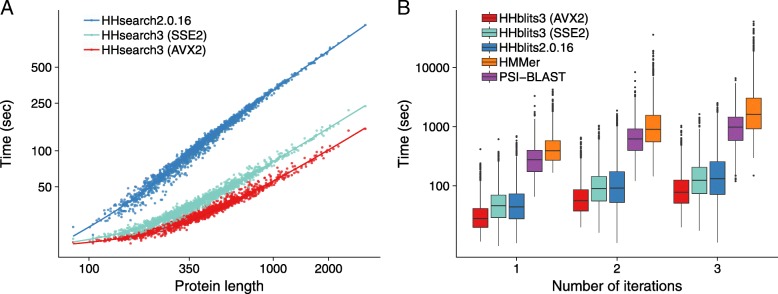
Background: HH-suite is a widely used open source software suite for sensitive sequence similarity searches and protein fold recognition. It is based on pairwise alignment of profile Hidden Markov models (HMMs), which represent multiple sequence alignments of homologous proteins. Results: We developed a single-instruction multiple-data (SIMD) vectorized implementation of the Viterbi algorithm for profile HMM alignment and introduced various other speed-ups. These accelerated the search methods HHsearch by a factor 4 and HHblits by a factor 2 over the previous version 2.0.16. HHblits3 is ∼10× faster than PSI-BLAST and ∼20× faster than HMMER3. Jobs to perform HHsearch and HHblits searches with many query profile HMMs can be parallelized over cores and over cluster servers using OpenMP and message passing interface (MPI). The free, open-source, GPLv3-licensed software is available at https://github.com/soedinglab/hh-suite . Conclusion: The added functionalities and increased speed of HHsearch and HHblits should facilitate their use in large-scale protein structure and function prediction, e.g. in metagenomics and genomics projects.
Overview
The claims and statistics of this paper haven’t been checked yet.
Free: it reads the open-access text and checks the first 5 claims that cite a source we can check. Create a free account to check every claim.
Integrity signals
Registry
Cites
Statistics
Figures
Verification
Claims the paper makes
The claims and statistics of this paper haven’t been checked yet.
Free: it reads the open-access text and checks the first 5 claims that cite a source we can check. Create a free account to check every claim.
Claims other papers make about this one
Each is checked against this paper’s own text: does it say what the citing paper says it does?
The cited source says what the claim attributes to it.
In the citing paper
“Although some advanced sequence-based methods can already assist in this task39–41, the availability of predicted structures may help identify meaningful evolutionary relationships.”
From Clustering predicted structures at the scale of the known protein universe (2023) · cites this paper as [39]
The cited source says what the claim attributes to it.
In the citing paper
“Amino acid sequence analysis27 also detects the previously observed lipase sequence motifs HG and GXSXG (where X is a wildcard) from Mycoplasma mycoides subsp. mycoides LC.70”
From Toward the Complete Functional Characterization of a Minimal Bacterial Proteome (2022) · cites this paper as [27]
The check wasn’t confident either way, so it gives no verdict — never disputed.
In the citing paper
“Two methods were used to identify non-interacting proteins, first a set of proteins with no reported interaction signal in Yeast Two-Hybrid Experiments41 and secondly complexes whose individual proteins were found in different APMS benchmark complexes42. This dataset contains in total 3989 non-interacting pairs.”
From Improved prediction of protein-protein interactions using AlphaFold2 (2021) · cites this paper as [41]
Experimental — accuracy not yet measuredThe check wasn’t confident either way, so it gives no verdict — never disputed.
In the citing paper
“Fortunately, the Continuous Automated Model Evaluation (CAMEO) experiment (7) tests structure prediction servers blindly on protein structures as they are submitted to the PDB.”
From Accurate prediction of protein structures and interactions using a 3-track network (2021) · cites this paper as [7]
Experimental — accuracy not yet measured
Self-check
Percentages, sums and reported differences re-computed from the paper’s own numbers.
The self-check needs the paper’s full text.
Citations
Cites
Gapped BLAST and PSI-BLAST: a new generation of protein database search programs
Altschul, S. (1997) · Nucleic Acids Research · doi:10.1093/nar/25.17.3389 · Cited by 73,302
Berman, H. M. (2000) · Nucleic Acids Research · doi:10.1093/nar/28.1.235 · Cited by 40,196 · cited 2×
“The PDB70 contains profile HMMs for a representative set of sequences from the PDB [22], filtered with a maximum pairwise sequence identity of 70%.”
MethodSearch and clustering orders of magnitude faster than BLAST
Edgar, R. C. (2010) · Bioinformatics · doi:10.1093/bioinformatics/btq461 · Cited by 20,826
Kabsch, W., & Sander, C. (1983) · Biopolymers · doi:10.1002/bip.360221211 · Cited by 15,320 · cited 3×
“pl, and we added structurally defined secondary structure states from DSSP [36] using addss.”
MethodInfluentialFast and sensitive protein alignment using DIAMOND
Buchfink, B., Xie, C., & Huson, D. H. (2015) · Nature Methods · doi:10.1038/nmeth.3176 · Cited by 14,201 · cited 1×
“In recent years, various sequence search tools have been developed that are up to four orders of magnitude faster than BLAST [15–18].”
MethodAccelerated Profile HMM Searches
Eddy, S. R. (2011) · PLoS Computational Biology · doi:10.1371/journal.pcbi.1002195 · Cited by 6,975
Eddy, S. R. (1998) · Bioinformatics · doi:10.1093/bioinformatics/14.9.755 · Cited by 5,515
MMseqs2 enables sensitive protein sequence searching for the analysis of massive data sets
Steinegger, M., & Söding, J. (2017) · Nature Biotechnology · doi:10.1038/nbt.3988 · Cited by 4,840
Self-citationSWISS-MODEL: modelling protein tertiary and quaternary structure using evolutionary information
Biasini, M., Bienert, S., Waterhouse, A., Arnold, K., Studer, G., Schmidt, T., Kiefer, F., Cassarino, T. G., Bertoni, M., Bordoli, L., et al. (2014) · Nucleic Acids Research · doi:10.1093/nar/gku340 · Cited by 4,632
The Pfam protein families database in 2019
El-Gebali, S., Mistry, J., Bateman, A., Eddy, S. R., Luciani, A., Potter, S. C., Qureshi, M., Richardson, L. J., Salazar, G. A., Smart, A., et al. (2019) · Nucleic Acids Research · doi:10.1093/nar/gky995 · Cited by 4,602
Cited by
Items 901–1,000 of 1,068
Caspase-1 activates gasdermin A in non-mammals
Billman, Z. P., Kovacs, S. B., Wei, B., Kang, K., Cissé, O. H., & Miao, E. A. (2024) · doi:10.7554/elife.92362.3 · Cited by 1
Building alternative splicing and evolution-aware sequence-structure maps for protein repeats
Szatkownik, A., Zea, D. J., Richard, H., & Laine, E. (2023) · Journal of Structural Biology · doi:10.1016/j.jsb.2023.107997 · Cited by 1
AlignScape, displaying sequence similarity using self-organizing maps
Filella-Mercè, I., Mallet, V., Durand, É., Nilges, M., Bouvier, G., & Pellarin, R. (2024) · Frontiers in Bioinformatics · doi:10.3389/fbinf.2024.1321508 · Cited by 1
Laboratory Evolution of Metalloid Reductase Substrate Recognition and Nanoparticle Product Size
Hendricks, A. R., Cohen, R. S., McEwen, G. A., Tien, T., Guilliams, B. F., Alspach, A., Snow, C. D., & Ackerson, C. J. (2024) · ACS Chemical Biology · doi:10.1021/acschembio.3c00493 · Cited by 1
Çakar, M. M., Milčić, N., Andreadaki, T., Charnock, S. J., Fessner, W., & Blažević, Z. F. (2024) · Applied Microbiology and Biotechnology · doi:10.1007/s00253-024-13277-1 · Cited by 2
“…model of PNH 5 was created using AlphaFold2 based on the published structures (PDB ID: 1VLI, 1VS1, 1WVO, 2WQP, 3G8R, 3UZJ, 4IPI, 4IPJ, 6NCS, 6PPW, 8H2C) (Ber-man et al. 2003; Eastman et al. 2017; Mirdita et al. 2017, 2019, 2022; Mitchell et al. 2019; Steinegger et al. 2019; van Kempen et al. 2023).”
MethodAnalysis of Leishbuviridae from Trypanosomatids
Grybchuk, D., Kostygov, A. Y., & Yurchenko, V. (2024) · Methods in molecular biology · doi:10.1007/978-1-0716-4338-9_12 · Cited by 1
Rasool, M., Haque, A., Alharthi, M. A., Sibiany, A., Alamri, M. S., Alqarni, S. M. H., Rather, I. A., Chaudhary, A., Karim, S., & Pushparaj, P. N. (2025) · Cancer Cell International · doi:10.1186/s12935-025-03652-x · Cited by 1
Kurt, H., Kaya, D. S., Akçok, İ., Sarı, C., Albayrak, E., Velioğlu, H. M., Şamlı, H. E., Özdüven, M. L., & Sürmeli, Y. (2025) · ACS Omega · doi:10.1021/acsomega.5c00965 · Cited by 1
Wang, X., Zhang, T., Liu, G., Cui, Z., Zeng, Z., Long, C., Zheng, W., & Yang, J. (2025) · Advanced Science · doi:10.1002/advs.202309051 · Cited by 2
Sequence Alignment Using Deep Learning
Issa, M., Mabrouk, M., Hosny, B., Hazem, A., & Soliman, M. I. (2025) · Algorithms for intelligent systems · doi:10.1007/978-981-96-3648-8_1 · Cited by 1
Genome mining with hypothetical proteins
Kenney, G. E. (2025) · Methods in enzymology on CD-ROM/Methods in enzymology · doi:10.1016/bs.mie.2025.04.004 · Cited by 1
Genome assembly of Acinetobacter baumannii strain 1432 carrying KL130 and eight prophage regions
Sukhova, A. S., Skryabin, Y. P., Evseev, P. V., Sizova, A. A., Mukhina, T. N., Lebedeva, A. Y., & Popova, A. V. (2025) · Microbiology Resource Announcements · doi:10.1128/mra.00454-25 · Cited by 1
Sreejesh, G., Suman, S. P., Mafi, G. G., Pfeiffer, M. M., & Ramanathan, R. (2025) · Proteomes · doi:10.3390/proteomes13040050 · Cited by 1
“The query sequences were aligned to potential structural templates using BLAST [18] and HHblits3 [19] against the SWISS-MODEL Template Library (SMTL).”
Hernandez-Benitez, E. M., Martínez‐Romero, E., Aguirre‐Noyola, J. L., Farías‐Rico, J. A., & Ledezma-Tejeida, D. (2025) · Briefings in Functional Genomics · doi:10.1093/bfgp/elaf020 · Cited by 1
Privitera, M., Barra, G., Squeglia, F., Drulis‐Kawa, Z., Napolitano, V., & Berisio, R. (2025) · Frontiers in Bioscience-Landmark · doi:10.31083/fbl46489 · Cited by 1
Xu, F., Zhao, Z., Liu, C., Yu, M., Li, K., Jing, Y., Li, P., Xin, B., Chen, J., Lizhu, E., et al. (2025) · Small Structures · doi:10.1002/sstr.202500674 · Cited by 2
“2.0) [72] was employed to create efficient indices for all MSAs of the candidate templates, completing the construction of the Cas12FoldDB-struct database (Figure S1).”
InfluentialTriviño, J., Jiménez, E., Grininger, C., Caballero, I., Medina, A., Castellví, A., Petrillo, G., Govantes, F., Sagmeister, T., Alcorlo, M., et al. (2026) · Protein Science · doi:10.1002/pro.70481 · Cited by 1
“…from three sources: template models of related proteins providing structural information; MSAs that supply aligned sequences encoding profiles (Steinegger et al., 2019) and pairwise conservation of residues involved in contacts (Marks et al., 2011); and learned parameters capturing intrinsic…”
InfluentialYuan, L., Qin, Y., West-Roberts, J., Anantharaman, K., Wang, H., Zou, Y., Duan, Y., Camargo, A. P., Koonin, E. V., & Chen, L. J. (2026) · Nature Communications · doi:10.1038/s41467-026-79223-z · Cited by 1
Stoic : fast and accurate protein stoichiometry prediction
Litvinov, D., Pantolini, L., Škrinjar, P., Tauriello, G., McCafferty, C. L., Engel, B. D., Schwede, T. F., & Durairaj, J. (2026) · Bioinformatics · doi:10.1093/bioinformatics/btag448 · Cited by 1
“2018) which uses HHSearch (Steinegger et al .”
Stephens, T. G., Kulczyk, A., & Bhattacharya, D. (2026) · Genome Biology and Evolution · doi:10.1093/gbe/evag072 · Cited by 2
Frith, M. C., Boppert, P., Styll, P., & Mirdita, M. (2026) · Journal of Computational Biology · doi:10.1177/15578666261428480 · Cited by 1
“It does not consider pro fi le-versus-pro fi le search, which is powerful but outside our scope (Steinegger et al., 2019).”
Self-citationThe trRosettaRNA server for RNA structure prediction
Wang, W., Liu, X., Peng, Z., & Yang, J. (2026) · Nature Protocols · doi:10.1038/s41596-026-01356-8 · Cited by 2
Wen, L., Titze, A., Topham, C. M., Radde, J., Frazão, C. J. R., & Walther, T. (2026) · Metabolic Engineering · doi:10.1016/j.ymben.2026.04.005 · Cited by 1
Rahimzadeh, F., Khanli, L. M., Salehpour, P., & Golabi, F. (2026) · Expert Systems with Applications · doi:10.1016/j.eswa.2026.132559 · Cited by 1
Karim, R., Arman, M. S., Hasan, K. M. K., & Hasan, Z. (2026) · Scientific Reports · doi:10.1038/s41598-026-49324-2 · Cited by 1
Evolutionarily conserved short linear motifs drive actin filament binding
Paraschiakos, T., Yuan, B., Bucher, M., Sopelniak, K., Cervero, P., Simon, L. D., Zonjic, K., Eggers, D., Selle, F., Li, J., et al. (2026) · Nature Cell Biology · doi:10.1038/s41556-026-01979-9 · Cited by 1
Hawaiian geothermal fumaroles contain diverse and novel viruses
Sen, P., Oliver, L., Makarova, K. S., Wolf, Y. I., Pavloudi, C., Shlafstein, M. D., & Saw, J. H. W. (2026) · Microbiology Spectrum · doi:10.1128/spectrum.01567-26 · Cited by 1
“Gene calls were annotated with HHblits (35) (uniprot_sprot_vir70 database) with flag “-n 3” iterations for remote homology prediction.”
InfluentialSimplifying in silico protein evolution with minimal screening by unZipro
Qin, Z., Zhao, S., Deng, Z., Si, X., Xing, C., Zhang, Z., Zhang, Y., Han, X., Zhang, J., Chen, Y., et al. (2026) · Molecular Cell · doi:10.1016/j.molcel.2026.08.028 · Cited by 1
“Quadrupling” the protein family space with global metagenomics
Aplakidou, E., Baltoumas, F. A., Chasapi, M. N., Lamari, E., Chasapi, I. N., Georgakopoulos‐Soares, I., Karatzas, E., Iliopoulos, I., Buluç, A., Finn, R. D., et al. (2026) · Nucleic Acids Research · doi:10.1093/nar/gkag938 · Cited by 1
“Finally, hhfilter [ 21 ] was employed to reduce sequence redundancy within each family MSA, with parameters set to an identity threshold of 95% and a coverage of 70%, thereby reducing bias by eliminating highly similar sequences.”
WasteFams: a database of protein families from global wastewater microbiomes
Γαλάρας, Α., Chasapi, I. N., Aplakidou, E., Chasapi, M. N., Lamari, E., Diplari, S., Georgakopoulos‐Soares, I., Karatzas, E., Baltoumas, F. A., Kyrpides, N. C., et al. (2026) · NAR Genomics and Bioinformatics · doi:10.1093/nargab/lqag127 · Cited by 1
“To remove redundancy, the hhfilter [ 42 ] was applied to the aligned sequences with 95% identity and 70% coverage.”
Fold recognition by scoring protein maps using the congruence coefficient
Lena, P. D., & Baldi, P. (2020) · Bioinformatics · doi:10.1093/bioinformatics/btaa833 · Cited by 1
Semenyuta, I. V., Trush, M. M., Hodyna, D. M., Kachaeva, M. V., Metelytsia, L. O., & Броварец, В. С. (2021) · Ukrainica Bioorganica Acta · doi:10.15407/bioorganica2021.01.025 · Cited by 1
“Search and analysis of structures homologous to C. albicans TG were performed using the methods of BLAST [34] and HHBlits [35].”
Computational Design of High-Affinity Blockers for Sodium Channel NaV1.2 from μ-Conotoxin KIIIA
Meng, G., & Kuyucak, S. (2022) · Marine Drugs · doi:10.3390/md20020154 · Cited by 1
“The target-template alignments were obtained with built-in BLAST [20] and HHblits [21] (Supplementary Materials, Table S1).”
MethodMutagenesis Analysis of GMN Motif in Arabidopsis thaliana Mg2+ Transporter MRS2-1
Yang, X., Kobayashi, N. I., Hayashi, Y., Ito, K., Moriwaki, Y., Terada, T., Shimizu, K., Hattori, M., Iwata, R., Suzuki, H., et al. (2022) · Bioscience Biotechnology and Biochemistry · doi:10.1093/bbb/zbac064 · Cited by 3
Holcomb, D. D., Jankowska, K. I., Hernandez, N. E., Laurie, K., Kames, J. M., Hamasaki‐Katagiri, N., Komar, A. A., DiCuccio, M. N., & Kimchi‐Sarfaty, C. (2022) · STAR Protocols · doi:10.1016/j.xpro.2022.101648 · Cited by 1
Improved Protein Real-Valued Distance Prediction Using Deep Residual Dense Network (DRDN)
Geethu, S., & Vimina, E. R. (2022) · The Protein Journal · doi:10.1007/s10930-022-10067-4 · Cited by 1
“The HHblits algorithm is applied to the BFD database in the second phase.”
BackgroundInfluentialGlobal phylogenetic analysis of the RNA-dependent RNA polymerase with OrViT (OrthornaVirae Tree)
Cheng, D.-Q., Kolundžija, S., & Lauro, F. M. (2022) · Frontiers in Virology · doi:10.3389/fviro.2022.981177 · Cited by 1
“Here we report the development, validation and usage of OrViT, a pipeline that integrates and improves on two published approaches (the Starr method (5) and the Wolf method (4)) and bridges various public software (Prodigal (10), HMMER (hmmer.org), JAligner (11), Mafft (12), Usearch (13), MUSCLE (14), HHsuite (15), PH…”
BackgroundCovET: A covariation-evolutionary trace method that identifies protein structure–function modules
Konecki, D. M., Hamrick, S., Wang, C., Agosto, M. A., Wensel, T. G., & Lichtarge, O. (2023) · Journal of Biological Chemistry · doi:10.1016/j.jbc.2023.104896 · Cited by 1
“Alignments were then fi ltered using hhblits (102) to minimum 70% coverage with query, minimum 30% sequence similarity to query, and 98% maximum pairwise sequence similarity.”
MethodClustering Corticosteroids Responsiveness in Sepsis Patients using Game-Theoretic Rough Sets
Hellali, R., Dagdia, Z. C., & Zeitouni, K. (2023) · Annals of Computer Science and Information Systems · doi:10.15439/2023f9521 · Cited by 3
“However, for more exploration, the execution time can be minimized by using several techniques such as Multi-threading [38], Single Instruction Multiple Data (SIMD) [39], and Open Multi-Processing (OpenMP) [40].”
MethodHomology Modeling and Binding Site Analysis of SARS-CoV-2 (COVID-19) Main Protease 3D Structure
Adebiyi, M. O., & Obagbuwa, I. C. (2023) · IGI Global eBooks · doi:10.4018/979-8-3693-3026-5.ch038 · Cited by 1
Protein Structure Prediction to Function Prediction Using AlphaFold
Tomii, K. (2024) · Seibutsu Butsuri · doi:10.2142/biophys.64.5 · Cited by 1
Fujita, H., Nomura, A., Endo, T., & Sekijima, M. (2023) · Congress in Computer Science, Computer Engineering, and Applied Computing (CSCE) · doi:10.1109/csce60160.2023.00351 · Cited by 1
“These require protein (sequence) database, with jackhmmer [14] running Uniref90 [15] and MGnify [16], separately; hhsearch and hmmsearch running PDB70 [17]; HHblits simultaneously running BFD and Uniclust30 [18].”
MethodDubey, A., Baxter, M., Hendargo, K. J., Medrano-Soto, A., & Saier, M. H. (2024) · International Journal of Molecular Sciences · doi:10.3390/ijms25095005 · Cited by 1
“We selected motifs whose positions mapped inside the channel domain and scanned them with MAST (E-value ≤ 10 − 4 ) on two datasets consisting of (a) all homologs from the three families (test set; 24,767 proteins) and (b) all other proteins in TCDB excluding the VIC superfamily (negative control).”
MethodRasool, M., Haque, A., Alharthi, M. A., Sibiany, A., Alamri, M. S., Alqarni, S. M. H., Rather, I. A., Chaudhary, A., Pushparaj, P. N., & Karim, S. (2024) · Journal of King Saud University - Science · doi:10.1016/j.jksus.2024.103477 · Cited by 1
Mateo-Cáceres, V., & Redrejo‐Rodríguez, M. (2024) · Nucleic Acids Research · doi:10.1093/nar/gkae891 · Cited by 1
Zhang, B., Zheng, M., Zhang, Y., & Quan, L. (2024) · Frontiers in Bioinformatics · doi:10.3389/fbinf.2024.1477909 · Cited by 2
Comprehensive Data Analysis of Bacillus Thuringiensis Cry Gene
Evangeline, M. S., Thankappan, S., & Raimond, K. (2024) · International Conference on Advanced Computing and Communication Systems (ICACCS) · doi:10.1109/icaccs60874.2024.10717231 · Cited by 1
“[15] III.”
Carbone, A., Laine, É., & Lombardi, G. (2012) · Methods in molecular biology · doi:10.1007/978-1-0716-4828-5_7 · Cited by 1
Ren, H., Tai, L., Zhu, Y., Chan, C., Zhao, Q., Xu, J., Wang, X., Ma, X., Zhao, L., Huang, X., et al. (2021) · bioRxiv (Cold Spring Harbor Laboratory) · doi:10.1101/2021.11.10.468004 · Cited by 1
de Sousa, J. A. M., Pfeifer, E., Touchon, M., & Rocha, E. P. C. (2021) · Molecular Biology and Evolution · doi:10.1093/molbev/msab082 · Cited by 1
Caspase-1 activates gasdermin A in all non-mammalsPreprint
Billman, Z. P., Kovacs, S. B., Wei, B., Kang, K., Cissé, O. H., & Miao, E. A. (2023) · eLife · doi:10.7554/elife.92362.1 · Cited by 2
Deep Learning-based structural and functional annotation of Pandoravirus hypothetical proteinsPreprint
Horder, J. L., Connor, A. J., Duggan, A. L., Hale, J. J., McDermott, F. J., Norris, L. E., Whinney, S. J. D., Mesdaghi, S., Murphy, D., Simpkin, A. J., et al. (2023) · bioRxiv (Cold Spring Harbor Laboratory) · doi:10.1101/2023.12.02.569716 · Cited by 1
Protein language model embedded geometric graphs power inter-protein contact predictionPreprint
Si, Y., & Yan, C. (2023) · eLife · doi:10.7554/elife.92184.1 · Cited by 2
FoldExplorer: Fast and Accurate Protein Structure Search with Sequence-Enhanced Graph EmbeddingPreprint
Shen, H., Liu, Y., Zhang, Y., & Zhou, Z. P. (2024) · Research Square · doi:10.21203/rs.3.rs-3831396/v1 · Cited by 2
Murphy, D., Mesdaghi, S., Rodríguez, F. S., Simpkin, A. J., Elliott, L. G., & Rigden, D. J. (2024) · bioRxiv (Cold Spring Harbor Laboratory) · doi:10.1101/2024.04.13.589297 · Cited by 1
Clark, C. M., & Kwan, J. C. (2024) · bioRxiv (Cold Spring Harbor Laboratory) · doi:10.1101/2024.08.16.608329 · Cited by 3
Protein Language Model Identifies Disordered, Conserved Motifs Driving Phase SeparationPreprint
Zhang, Y., Zheng, J., & Zhang, B. (2025) · eLife · doi:10.7554/elife.105309.1 · Cited by 1
Sen, A., Nakamura, T., Tarashi, G., Bhatt, V. S., Kim, K., Chellam, S., Tran, L., & Kihara, D. (2025) · bioRxiv (Cold Spring Harbor Laboratory) · doi:10.1101/2025.07.21.665459 · Cited by 1
Protein Language Model Identifies Disordered, Conserved Motifs Implicated in Phase SeparationPreprint
Zhang, Y., Zheng, J., & Zhang, B. (2025) · eLife · doi:10.7554/elife.105309.2 · Cited by 1
Unconventional components complement the cryptic kinetochore of the ciliate Tetrahymena thermophilaPreprint
Ali, E. I., Raas, M. W. D., van Rooijen, L. E., Alcaraz, P. S., Vos, H. R., Tromer, E. C., Snel, B., & Kops, G. J. P. L. (2025) · bioRxiv (Cold Spring Harbor Laboratory) · doi:10.1101/2025.11.28.691167 · Cited by 1
Tozaki, N. (2022) · University of Minnesota Digital Conservancy (University of Minnesota) · Cited by 1
Fernández-Pato, A., Gulyaeva, A. A., Kuzub, N., Sinha, T., Brushett, S., Spreckels, J. E., Gois, M. F. B., Goumagias, A., Ruiz-Moreno, A. J., Camargo, A. P., et al. (2026) · bioRxiv (Cold Spring Harbor Laboratory) · doi:10.64898/2026.03.05.709809 · Cited by 1
Muzyukina, P. (2023) · theses.fr (ABES) · doi:10.70675/e321a3ddz5d11z4dd7z80e9z5fc4dcb74aba · Cited by 2
Villarreal, D. A., Makasarashvili, N., Kapoor, A., Root, M., Campbell, M., Gibson, S., Schiveley, C., Rastandeh, A., Baker, S., Subramanian, S., et al. (2026) · bioRxiv (Cold Spring Harbor Laboratory) · doi:10.64898/2026.04.05.716407 · Cited by 1
Assessing State-Specific Accuracy of Cofolding Models for Kinases and GPCRsPreprint
Obendorf, L., Doering, N. P., Knaus, P., & Wolber, G. (2026) · bioRxiv (Cold Spring Harbor Laboratory) · doi:10.64898/2026.05.06.723350 · Cited by 1
Panicker, V. R., Smug, B. J., Klein-Sousa, V., Enright, M. C., Taylor, N. M. I., Drulis‐Kawa, Z., & Mostowy, R. J. (2026) · bioRxiv (Cold Spring Harbor Laboratory) · doi:10.64898/2026.05.12.724579 · Cited by 1
Wiegand, S., & Kaster, A. (2026) · bioRxiv (Cold Spring Harbor Laboratory) · doi:10.64898/2026.05.29.728830 · Cited by 2
“More sophisticated profile-based methods, such as PSI-BLAST, which utilizes position-specific scoring matrices (PSSMs) (5) or profile hidden-Markov models (HMM), allow the detection of more remote homologs and have constituted the gold standard for homology searches for many years (6, 7).”
Bondi, H., Crespi, M., Orlando, M., Lescai, F., Serapian, S. A., Colombo, G., Fasano, M., Pollegioni, L., & Molla, G. (2026) · bioRxiv (Cold Spring Harbor Laboratory) · doi:10.64898/2026.06.15.732271 · Cited by 1
Pham, K., Nicastro, G. G., Long, A. R., Aravind, L., Wilke, C. O., de Souza, R. F., & Bayer‐Santos, E. (2026) · bioRxiv (Cold Spring Harbor Laboratory) · doi:10.64898/2026.08.28.747851 · Cited by 1
“Curated multiple-sequence alignments representing each protein family were compared in an all-against-all manner using HHalign from HH-suite3 (Steinegger et al., 2019).”
ContrasTED: contrastive domain embeddings for scalable remote homology classificationPreprint
Miller, D. M., Bordin, N., Jeyananthan, J., Waman, V., Heinzinger, M., & Orengo, C. A. (2026) · bioRxiv (Cold Spring Harbor Laboratory) · doi:10.64898/2026.08.28.747864 · Cited by 1
“We evaluated ContrasTED on the sequence-filtered S20 benchmark ( n = 1 , 028) against sequence search (MMseqs2) [28], profile HMM search (HH-suite) [27], frozen protein language model embeddings (ProtT5, ProstT5), a supervised neural network classifier (CATHe2), contrastive baselines (ProtTucker),…”
Design of synthetic activators for programmable gene expressionPreprint
Chen, W., Jiao, R., Coventry, B., Qu, X., Bauer, M. S., Tran, L., Tcheau, T., Wu, K., Song, Z., Roullier, N., et al. (2026) · bioRxiv (Cold Spring Harbor Laboratory) · doi:10.64898/2026.10.19.760300 · Cited by 1
Caspase-1 activates gasdermin A in non-mammals
Billman, Z. P., Kovacs, S. B., Wei, B., Kang, K., Cissé, O. H., & Miao, E. A. (2023) · doi:10.1101/2023.09.28.559989 · Cited by 1
(2025) · doi:10.1101/2025.01.14.632903 · Cited by 1
CATHe2: Enhanced CATH Superfamily Detection Using ProstT5 and Structural Alphabets
Mouret, O., & Abbass, J. (2025) · doi:10.1101/2025.06.22.660903 · Cited by 1
Arnoux, J. (2026) · Thèse de doctorat, Université Paris-Saclay / PPanGGOLiN · doi:10.70675/eee354d9zf63dz48ebz9444zd1809f8fb74d
AlphaPulldown2 – A General Pipeline for High-Throughput Structural Modeling
Molodenskiy, D., Maurer, V. J., Yu, D., Chojnowski, G., Bienert, S., Tauriello, G., Gilep, K., Schwede, T., & Kosinski, J. (2024) · doi:10.1101/2024.11.28.625873
Broad functional profiling of fission yeast proteins using phenomics and machine learning
Rodríguez-López, M., Bordin, N., Lees, J., Scholes, H., Hassan, S., Saintain, Q., Kamrad, S., Orengo, C., & Bähler, J. (2023) · doi:10.7554/elife.88229.2
Protein language model-embedded geometric graphs power inter-protein contact prediction
Si, Y., & Yan, C. (2024) · eLife · doi:10.7554/elife.92184.3
“The number of sequences of MSA is limited to 256 by hhfilter(Steinegger et al., 2019) and then input to ESMMSA-1b to get the MSA embedding.”
MethodInfluentialProbabilistic Models to Detect Important Sites in Proteins
Dang, T. K. L. (2021) · eDiss (Georg-August-Universität Göttingen) · doi:10.53846/goediss-8461
Concerns Raised on Blood Group Determinants in Plasma Membrane Interaction of the SARS-CoV-2Preprint
Fiedler, K. (2021) · Preprints.org · doi:10.20944/preprints202103.0460.v1
Margelevičius, M. (2021) · bioRxiv (Cold Spring Harbor Laboratory) · doi:10.1101/2021.06.22.449457
“Templates were identified by searching the HHsuite PDB70 database dated March 10, 2021, using HHsearch (Steinegger et al. , 2019).”
BackgroundMethodClassificação e evolução de SBPs em contexto de transdução de sinal: interação entre SBPs e Cache
Guedes, A. C. P. (2021) · Digital Library of Theses and Dissertations (Universidade de São Paulo) · doi:10.11606/d.95.2021.tde-25072021-223213
Tao, J., Brayton, K. A., & Broschat, S. L. (2021) · Frontiers in Bioinformatics · doi:10.3389/fbinf.2021.749008
“In (Steinegger et al., 2019), the method used vectorizes and accelerates pro fi le Hidden Markov Model (HMM) alignment which extends sequence pro fi les by increasing position-speci fi c amino acid substitution scores with position-speci fi c penalties for insertions and deletions.”
MethodImproving Protein Backbone Angle Prediction Using Hidden Markov Models in Deep Learning
Mataeimoghadam, F., Newton, M. A. H., Zaman, R., & Sattar, A. (2021) · Lecture notes in computer science · doi:10.1007/978-3-030-89188-6_18
Mammalian Intracellular Dickkopf1 Couples Proteostasis with InflammationPreprint
Jaschke, N., Pählig, S., Sinha, A. N., Adolph, T. E., Gentzel, M., Ledesma-Colunga, M. G., Wang, A., Grzybek, M., Thiele, S., Schwärzler, J., et al. (2021) · SSRN Electronic Journal · doi:10.2139/ssrn.3962446
Integration von Internetdatenbanken mit eingeschränkten Anfragemöglichkeiten.
Schallehn, E., & Endig, M. (2000)
Cao, R., Zhai, L., Xie, Q., Wang, Z., Zheng, Y., Zhang, W., Büll, A., Xu, X., Dong, Y., Xu, C., et al. (2022) · bioRxiv (Cold Spring Harbor Laboratory) · doi:10.1101/2022.02.27.482192
“However, the two a.a. sites are evolutionarily uncorrelated (Figure 3A) and their respective degrees of conservation [36] are distinctly different (a.a. 485 is highly conserved to alanine whereas a.a. 451 is non-conserved, Figure 3B).”
BackgroundCourtine, D., Zhang, X., & Ewbank, J. J. (2021) · Frontiers in Fungal Biology · doi:10.3389/ffunb.2021.778882
“Despite using sensitive search tools (including HHblits (Steinegger et al., 2019) against the UniRef100 database), we were unable to find any plausible homologues in any other species.”
MethodFaculty Opinions recommendation of Highly accurate protein structure prediction with AlphaFold.
Arulanandam, A. J. (2021) · Faculty Opinions – Post-Publication Peer Review of the Biomedical Literature · doi:10.3410/f.740477161.793587548
Concerns Raised on Blood Group Determinants in Plasma Membrane Interaction of the SARS-CoV-2Preprint
Fiedler, K. (2021) · Preprints.org · doi:10.20944/preprints202103.0460.v2
Faculty Opinions recommendation of Clades of huge phages from across Earth's ecosystems.
Qimron, U. (2020) · Faculty Opinions – Post-Publication Peer Review of the Biomedical Literature · doi:10.3410/f.737356474.793570997
Faculty Opinions recommendation of Highly accurate protein structure prediction with AlphaFold.
Chakraborty, S. (2021) · Faculty Opinions – Post-Publication Peer Review of the Biomedical Literature · doi:10.3410/f.740477161.793587538
Concerns Raised on Blood Group Determinants in Plasma Membrane Interaction of the SARS-CoV-2Preprint
Fiedler, K. (2021) · Preprints.org · doi:10.20944/preprints202103.0460.v3
Lyu, W., Cao, R., Zhai, L., Xie, Q., Wang, Z., Zheng, Y., Zhang, W., Buell, A. K., Xu, X., Dong, Y., et al. (2022) · Research Square · doi:10.21203/rs.3.rs-1570035/v1
Extraction of CRISPR-targeted sequences from the metagenome
Sugimoto, R., Nishimura, L., Phuong, N. T., & Inoue, I. (2022) · STAR Protocols · doi:10.1016/j.xpro.2022.101525
Gomes, G. B. (2020) · Digital Library of Theses and Dissertations (Universidade de São Paulo) · doi:10.11606/d.42.2020.tde-13012022-181211
“Os modelos Ocultos de Markov (perfis de HMMs, ou pHMMs) foram construídos com o software HHmake, e os alinhamentos de todos os pares de modelos foram obtidos utilizando o software HHsearch, ambos presentes do pacote HHsuite (Steinegger et al. 2019).”
BackgroundMethodInfluentialThe rise of complex life: Tracing the origins of the eukaryotic cell
Vosseberg, J. (2022) · Utrecht University Repository (Utrecht University) · doi:10.33540/22
Muteeb, G., Alsultan, A. A., & Aatif, M. (2022) · Pharmacognosy Magazine · doi:10.4103/pm.pm_195_22
Detecting remote homolog using structure alignment algorithms and machine learningPreprint
Costa, P. C. D. S., & Sakamoto, T. (2022) · bioRxiv (Cold Spring Harbor Laboratory) · doi:10.1101/2022.12.15.520536
Homology Modeling and Binding Site Analysis of SARS-CoV-2 (COVID-19) Main Protease 3D Structure
Adebiyi, M. O., & Obagbuwa, I. C. (2022) · Advances in healthcare information systems and administration book series · doi:10.4018/978-1-6684-5656-9.ch004
Metadata
- Authors
- Steinegger, M., Meier, M., Mirdita, M., Vöhringer, H., Haunsberger, S. J., & Söding, J.
- Affiliations
- Johns Hopkins University (US)
- Max Planck Institute for Biophysical Chemistry (DE)
- European Bioinformatics Institute (GB)
- Royal College of Surgeons in Ireland (IE)
- Corresponding author
- Söding, Johannes
- Venue
- BMC Bioinformatics
- Published
- 2019-09-14
- Volume
- 20
- Issue
- 1
- Pages
- 473-473
- ISSN
- 1471-2105 (ISSN-L)
- PMC
- PMC6744700
- OpenAlex
- W2972411752
- Cited by
- 1,145
- References
- 38
- Citations by year
- 2026: 106 · 2025: 167 · 2024: 208 · 2023: 248 · 2022: 168 · 2021: 176 · 2020: 63 · 2019: 7
- FWCI
- 35.23
- Type
- journal article
- Language
- en
- Open access
- gold
- doi.org
- Licence
- cc-by
- creativecommons.org/licenses/by/4.0/ (tdm)
- creativecommons.org/licenses/by/4.0/ (vor)
- Locations
- BMC Bioinformatics (publishedVersion, cc-by)
- bioRxiv (Cold Spring Harbor Laboratory) (acceptedVersion, cc-by-nc-nd)
- PubMed Central (publishedVersion, cc-by)
- PubMed (publishedVersion)
- DOAJ (DOAJ: Directory of Open Access Journals) (submittedVersion)
- Figshare (submittedVersion, cc-by)
- GoeScholar The Publication Server of the Georg-August-Universität Göttingen (Georg-August-Universität Göttingen) (submittedVersion, cc-by)
- MPG.PuRe (Max Planck Society) (submittedVersion, other-oa)
- Seoul National University Open Repository (Seoul National University) (submittedVersion)
- Funders
- Horizon 2020 (685778)
- Topics
- Life Sciences › Biochemistry, Genetics and Molecular Biology › Molecular Biology › Genomics and Phylogenetic Studies
- Life Sciences › Biochemistry, Genetics and Molecular Biology › Molecular Biology › Protein Structure and Dynamics
- Life Sciences › Biochemistry, Genetics and Molecular Biology › Molecular Biology › Machine Learning in Bioinformatics
- Keywords
- profile hidden Markov models, Viterbi algorithm, SIMD vectorization, remote homology detection, protein fold recognition, protein annotation, sequence similarity search, parallel computing, protein structure prediction, metagenomics
- MeSH terms
- Algorithms, Markov Chains, Software, Sequence Alignment, Sequence Analysis, Protein, Molecular Sequence Annotation
About these checks
Registry, retraction, Cites and statistics results are computed, not judged, with one exception: a printed reference that no index lists is read once by a model before it counts as a citation error. Claims are extracted by a model and kept only when their quote appears verbatim in the text; each cited source is then checked, with a model’s help, for whether it says what the claim relies on. Those verdicts can be wrong — read the claim’s quote and the cited source before relying on one.
Statistics and arithmetic are recomputed, not judged.
Confidence bands are shown only for fields calibrated on our annotated test set. None is calibrated yet, so no band is shown.
What counts as a claim ›How we measure confidence ›How we check this ›
Are you an author, or do you see a problem with this page? Request a review
Data sources
Bibliographic data: Semantic Scholar, OpenAlex, Crossref.
Contains information from the Semantic Scholar Academic Graph Datasets, made available under the ODC Attribution License (ODC-BY 1.0).
Semantic Scholar’s data is described in: Kinney, R., et al. (2023). The Semantic Scholar Open Data Platform. arXiv:2301.10140.
