

HH-suite3 for fast remote homology detection and deep protein annotation
Open accessPublished version of a preprint
The DOI matches its Crossref record; 38 of the 38 references it cites were found in a registry or an index.
Abstract
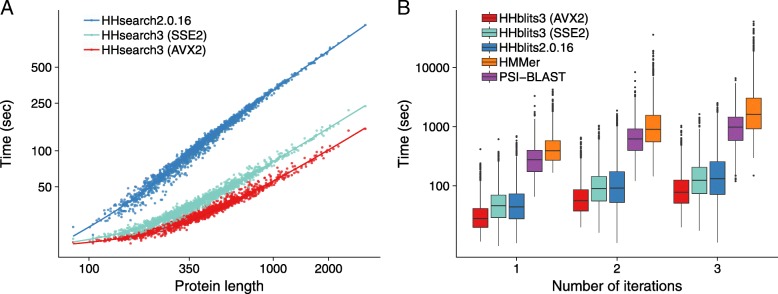
Background: HH-suite is a widely used open source software suite for sensitive sequence similarity searches and protein fold recognition. It is based on pairwise alignment of profile Hidden Markov models (HMMs), which represent multiple sequence alignments of homologous proteins. Results: We developed a single-instruction multiple-data (SIMD) vectorized implementation of the Viterbi algorithm for profile HMM alignment and introduced various other speed-ups. These accelerated the search methods HHsearch by a factor 4 and HHblits by a factor 2 over the previous version 2.0.16. HHblits3 is ∼10× faster than PSI-BLAST and ∼20× faster than HMMER3. Jobs to perform HHsearch and HHblits searches with many query profile HMMs can be parallelized over cores and over cluster servers using OpenMP and message passing interface (MPI). The free, open-source, GPLv3-licensed software is available at https://github.com/soedinglab/hh-suite . Conclusion: The added functionalities and increased speed of HHsearch and HHblits should facilitate their use in large-scale protein structure and function prediction, e.g. in metagenomics and genomics projects.
Overview
The claims and statistics of this paper haven’t been checked yet.
Free: it reads the open-access text and checks the first 5 claims that cite a source we can check. Create a free account to check every claim.
Integrity signals
Registry
Cites
Statistics
Figures
Verification
Claims the paper makes
The claims and statistics of this paper haven’t been checked yet.
Free: it reads the open-access text and checks the first 5 claims that cite a source we can check. Create a free account to check every claim.
Claims other papers make about this one
Each is checked against this paper’s own text: does it say what the citing paper says it does?
The cited source says what the claim attributes to it.
In the citing paper
“Although some advanced sequence-based methods can already assist in this task39–41, the availability of predicted structures may help identify meaningful evolutionary relationships.”
From Clustering predicted structures at the scale of the known protein universe (2023) · cites this paper as [39]
The cited source says what the claim attributes to it.
In the citing paper
“Amino acid sequence analysis27 also detects the previously observed lipase sequence motifs HG and GXSXG (where X is a wildcard) from Mycoplasma mycoides subsp. mycoides LC.70”
From Toward the Complete Functional Characterization of a Minimal Bacterial Proteome (2022) · cites this paper as [27]
The check wasn’t confident either way, so it gives no verdict — never disputed.
In the citing paper
“Two methods were used to identify non-interacting proteins, first a set of proteins with no reported interaction signal in Yeast Two-Hybrid Experiments41 and secondly complexes whose individual proteins were found in different APMS benchmark complexes42. This dataset contains in total 3989 non-interacting pairs.”
From Improved prediction of protein-protein interactions using AlphaFold2 (2021) · cites this paper as [41]
Experimental — accuracy not yet measuredThe check wasn’t confident either way, so it gives no verdict — never disputed.
In the citing paper
“Fortunately, the Continuous Automated Model Evaluation (CAMEO) experiment (7) tests structure prediction servers blindly on protein structures as they are submitted to the PDB.”
From Accurate prediction of protein structures and interactions using a 3-track network (2021) · cites this paper as [7]
Experimental — accuracy not yet measured
Self-check
Percentages, sums and reported differences re-computed from the paper’s own numbers.
The self-check needs the paper’s full text.
Citations
Cites
Gapped BLAST and PSI-BLAST: a new generation of protein database search programs
Altschul, S. (1997) · Nucleic Acids Research · doi:10.1093/nar/25.17.3389 · Cited by 73,302
Berman, H. M. (2000) · Nucleic Acids Research · doi:10.1093/nar/28.1.235 · Cited by 40,196 · cited 2×
“The PDB70 contains profile HMMs for a representative set of sequences from the PDB [22], filtered with a maximum pairwise sequence identity of 70%.”
MethodSearch and clustering orders of magnitude faster than BLAST
Edgar, R. C. (2010) · Bioinformatics · doi:10.1093/bioinformatics/btq461 · Cited by 20,826
Kabsch, W., & Sander, C. (1983) · Biopolymers · doi:10.1002/bip.360221211 · Cited by 15,320 · cited 3×
“pl, and we added structurally defined secondary structure states from DSSP [36] using addss.”
MethodInfluentialFast and sensitive protein alignment using DIAMOND
Buchfink, B., Xie, C., & Huson, D. H. (2015) · Nature Methods · doi:10.1038/nmeth.3176 · Cited by 14,201 · cited 1×
“In recent years, various sequence search tools have been developed that are up to four orders of magnitude faster than BLAST [15–18].”
MethodAccelerated Profile HMM Searches
Eddy, S. R. (2011) · PLoS Computational Biology · doi:10.1371/journal.pcbi.1002195 · Cited by 6,975
Eddy, S. R. (1998) · Bioinformatics · doi:10.1093/bioinformatics/14.9.755 · Cited by 5,515
MMseqs2 enables sensitive protein sequence searching for the analysis of massive data sets
Steinegger, M., & Söding, J. (2017) · Nature Biotechnology · doi:10.1038/nbt.3988 · Cited by 4,840
Self-citationSWISS-MODEL: modelling protein tertiary and quaternary structure using evolutionary information
Biasini, M., Bienert, S., Waterhouse, A., Arnold, K., Studer, G., Schmidt, T., Kiefer, F., Cassarino, T. G., Bertoni, M., Bordoli, L., et al. (2014) · Nucleic Acids Research · doi:10.1093/nar/gku340 · Cited by 4,632
The Pfam protein families database in 2019
El-Gebali, S., Mistry, J., Bateman, A., Eddy, S. R., Luciani, A., Potter, S. C., Qureshi, M., Richardson, L. J., Salazar, G. A., Smart, A., et al. (2019) · Nucleic Acids Research · doi:10.1093/nar/gky995 · Cited by 4,602
Cited by
Items 501–600 of 1,067
Brewery: deep learning and deeper profiles for the prediction of 1D protein structure annotations
Torrisi, M., & Pollastri, G. (2020) · Bioinformatics · doi:10.1093/bioinformatics/btaa204 · Cited by 13
Practical Considerations for Atomistic Structure Modeling with Cryo-EM Maps
Kim, D. N., Gront, D., & Sanbonmatsu, K. Y. (2020) · Journal of Chemical Information and Modeling · doi:10.1021/acs.jcim.0c00090 · Cited by 14
Arthropod Ectoparasites Have Potential to Bind SARS-CoV-2 via ACE
Lam, S. D., Ashford, P., Sanchez, S. D., Villar, M., Gortázar, C., de la Fuente, J., & Orengo, C. A. (2021) · Viruses · doi:10.3390/v13040708 · Cited by 13
“Models were built by generating query–template alignments using HH-suite version 3 [39], which were then used as input to the MODELLER v.”
MethodTwinCons: Conservation score for uncovering deep sequence similarity and divergence
Penev, P. I., Álvarez-Carreño, C., Smith, E., Petrov, A. S., & Williams, L. D. (2021) · PLoS Computational Biology · doi:10.1371/journal.pcbi.1009541 · Cited by 13
“HHalign from the HH-suite [31] can compute an optimal pairwise alignment between HMM profiles generated from two alignments [30,87].”
MethodHigh-Performance Deep Learning Toolbox for Genome-Scale Prediction of Protein Structure and Function
Gao, M., Lund-Andersen, P. K., Morehead, A., Mahmud, S., Chen, C., Chen, X., Giri, N., Roy, R. S., Quadir, F., Effler, T. C., et al. (2021) · Workshop on Machine Learning in HPC Environments · doi:10.1109/mlhpc54614.2021.00010 · Cited by 18
“DIPS-Plus’ curation required the use of 16 data processing nodes on Andes running in parallel for multiple sequence alignment (MSA) generation using HH-suite3 [61].”
MethodGouveia, S., Vázquez-Mosquera, M. E., González‐Vioque, E., Ameijeiras, Á. H., López-Valverde, L., Armstrong, J., Fons‐Estupina, M. D. C., Wintjes, L. T., Kappen, A., Rodenburg, R. J., et al. (2021) · International Journal of Molecular Sciences · doi:10.3390/ijms222413484 · Cited by 13
“The SWISS-MODEL template library (SMTL version 202110-06, PDB release 2021-10-01) was searched with BLAST (Basic Local Alignment Search Tool) [42] and HHBlits (hidden Markov model (HMMs)-based lightning-fast iterative sequence search) [43] for evolutionary-related structures matching the target sequence.”
MethodHemagglutinin Gene Variation Rate of H9N2 Avian Influenza Virus by Vaccine Intervention in China
Cao, Y., Liu, H., Liu, D., Liu, W., Luo, T., & Li, J. (2022) · Viruses · doi:10.3390/v14051043 · Cited by 13
“Its score is expressed as a number between 0 and 1, reflecting the expected accuracy and target coverage of a model constructed using alignment and templates, and the higher the number, the higher the reliability [18].”
BackgroundDMFpred: Predicting protein disorder molecular functions based on protein cubic language model
Pang, Y., & Liu, B. (2022) · PLoS Computational Biology · doi:10.1371/journal.pcbi.1010668 · Cited by 13
“where XL×40 is the combination of PSSM and HMM matrix generated by PSI-BLAST [39] and HH-suits [41] respectively, and L is the length of the sequence.”
MethodImproving protein structure prediction using templates and sequence embedding
Wu, F., Jing, X., Luo, X., & Xu, J. (2022) · Bioinformatics · doi:10.1093/bioinformatics/btac723 · Cited by 16
Al-Soudy, A.-S., Maselli, V., Galdiero, S., Kuba, M. J., Polese, G., & Cosmo, A. D. (2021) · Biology · doi:10.3390/biology10090936 · Cited by 14
ContactPFP: Protein Function Prediction Using Predicted Contact Information
Kagaya, Y., Flannery, S. T., Jain, A., & Kihara, D. (2022) · Frontiers in Bioinformatics · doi:10.3389/fbinf.2022.896295 · Cited by 13
“For a query protein sequence, ContactPFP constructs a multiple sequence alignment (MSA) using HHblits (Steinegger et al., 2019), that is, run against the Uniclust30 database (Mirdita et al., 2017) with a parameter set FIGURE 1 | Overview of ContactPFP.”
MethodMartín, S., Lesny, P., Glenner, H., Hecht, J., Vilcinskas, A., Bartolomaeus, T., & Podsiadłowski, L. (2022) · Genome Biology and Evolution · doi:10.1093/gbe/evac149 · Cited by 13
Lam, S. D., Bordin, N., Waman, V., Scholes, H. M., Ashford, P., Sen, N., van Dorp, L., Rauer, C., Dawson, N. L., Pang, C., et al. (2020) · bioRxiv (Cold Spring Harbor Laboratory) · doi:10.1101/2020.05.01.072371 · Cited by 16
Learning sequence, structure, and function representations of proteins with language modelsPreprint
Hamamsy, T., Barot, M., Morton, J. T., Steinegger, M., Bonneau, R., & Cho, K. (2023) · bioRxiv (Cold Spring Harbor Laboratory) · doi:10.1101/2023.11.26.568742 · Cited by 19
“For EC classification, while there have been many computational tools developed to characterize enzyme function [5, 13, 34, 35, 36, 37], a recent study found that approximately 40% of computationally annotated enzymes are incorrectly annotated [19].”
BackgroundSelf-citationMechanism of DNA capture by the MukBEF SMC complex and its inhibition by a viral DNA mimic
Bürmann, F., Clifton, B., Koekemoer, S., Wilkinson, O. J., Kimanius, D., Dillingham, M. S., & Löwe, J. (2025) · Cell · doi:10.1016/j.cell.2025.02.032 · Cited by 12
“82 We performed six iterations of search, operon inference and profile refinement, and discarded operons that were less than two genes away from the end of a contig to ensure that only fully sequenced operons were retained.”
Enhancing protein structure predictions: DeepSHAP as a tool for understanding AlphaFold2
Sibli, S. A., Panagiotou, V. P., & Makris, C. H. (2025) · Expert Systems with Applications · doi:10.1016/j.eswa.2025.127853 · Cited by 12
Viral NblA proteins negatively affect oceanic cyanobacterial photosynthesis
Nadel, O., Hanna, R., Rozenberg, A., Shitrit, D., Tahan, R., Pekarski, I., Béjà, O., Kleifeld, O., & Lindell, D. (2025) · Nature · doi:10.1038/s41586-025-09656-x · Cited by 12
“The fasta file was converted to A3M format (matching columns with 50% gaps) and secondary structure predictions were added with tools from HH-suite (v.3.3.0) 64 .”
InfluentialEnhancing functional proteins through multimodal inverse folding with ABACUS-T
Liu, Y., Wu, R., Wang, X., Wang, S., Chen, L.-H., Li, F., Chen, Q., & Liu, H. (2025) · Nature Communications · doi:10.1038/s41467-025-65175-3 · Cited by 17
Structural Model of a Porphyromonas gingivalis type IX Secretion System Shuttle Complex
Dorgan, B., Liu, Y., Wang, S., Aduse‐Opoku, J., Whittaker, S. B. ‐., Roberts, M. A. J., Lorenz, C. D., Curtis, M. A., & Garnett, J. A. (2022) · Journal of Molecular Biology · doi:10.1016/j.jmb.2022.167871 · Cited by 12
Tubiana, J., Lifshits, L. A., Nissan, M., Gabay, M., Sher, I., Sova, M., Wolfson, H. J., & Gal, M. (2023) · PLoS Computational Biology · doi:10.1371/journal.pcbi.1010874 · Cited by 12
“Next, for each Cn domain and SP, additional homologs were searched over the UniClust30 database (time stamp: 2018/06) using HHblits 3 (4 iterations, default values of other parameters) [77].”
Li, F., Guo, X., Bi, Y., Jia, R., Pitt, M. E., Pan, S., Li, S., Gasser, R. B., Coin, L., & Song, J. (2023) · Computers in Biology and Medicine · doi:10.1016/j.compbiomed.2023.107155 · Cited by 13
Diversity of RNA viruses in the cosmopolitan monoxenous trypanosomatid Leptomonas pyrrhocoris
Macedo, D. H., Grybchuk, D., Režnarová, J., Votýpka, J., Klocek, D., Yurchenko, T., Ševčík, J., Magri, A., Dolinská, M. U., Záhonová, K., et al. (2023) · BMC Biology · doi:10.1186/s12915-023-01687-y · Cited by 12
“Nucleocap-sid proteins of divergent leishbuviruses were found by HHblits search [63] against a custom-built sequence profile of nucleocapsids from Leishbuviridae and Phenuiviri-dae.”
MethodCuturello, F., Celoria, M., Ansuini, A., & Cazzaniga, A. (2024) · Bioinformatics · doi:10.1093/bioinformatics/btae447 · Cited by 13
“The MSA Hidden Markov Model (HMM) profiles of the 171 pairs, selected among all train/test datasets under consideration, are aligned using HHalign from the HHsuite3 package (Steinegger et al. 2019).”
A New Approach for Phage Cocktail Design in the Example of Anti-Mastitis Solution
Królikowska, D., Szymańska, M., Krzyżaniak, M., Guziński, A., Matusiak, R., Kajdanek, A., Kaczorek‐Łukowska, E., Maszewska, A., Wójcik, E. A., & Dastych, J. (2024) · Pathogens · doi:10.3390/pathogens13100839 · Cited by 14
“3.0 [28] for detection of native oligomeric state by homology analysis of proteins with a known native oligomeric state deposited in the Protein Data Bank (online access: 14 January–11 November 2022).”
BackgroundInfluentialLAMPA, LArge Multidomain Protein Annotator, and its application to RNA virus polyproteins
Gulyaeva, A. A., Sigorskikh, A. I., Ocheredko, E. S., Samborskiy, D. V., & Gorbalenya, A. E. (2020) · Bioinformatics · doi:10.1093/bioinformatics/btaa065 · Cited by 12
“Secondary structures (SS) of query sequences, regardless of their length, were derived from the predictions made for the respective entire polyproteins by script addss.pl from HH-suite 3.0.0 (15 March 2015) (Steinegger et al., 2019) , which used PSIPRED 3.5 tool (Jones, 1999) .”
MethodInfluentialTan, S. M., Ismail, M. H., & Cao, B. (2021) · Environmental Research · doi:10.1016/j.envres.2021.110714 · Cited by 15
Iris domestica (iso)flavone 7- and 3′-O-Glycosyltransferases Can Be Induced by CuCl2
Zhang, X., Zhu, Y., Ye, J., Ye, Z., Zhu, R., Xie, G., Zhao, Y., & Qin, M. (2021) · Frontiers in Plant Science · doi:10.3389/fpls.2021.632557 · Cited by 13
de Sousa, J. A. M., Pfeifer, E., Touchon, M., & Rocha, E. P. C. (2020) · bioRxiv (Cold Spring Harbor Laboratory) · doi:10.1101/2020.04.14.041137 · Cited by 12
Neural Potts ModelPreprint
Sercu, T., Verkuil, R., Meier, J., Amos, B., Lin, Z., Chen, C., Liu, J. J., LeCun, Y., & Rives, A. W. (2021) · bioRxiv (Cold Spring Harbor Laboratory) · doi:10.1101/2021.04.08.439084 · Cited by 14
Mechanism of DNA entrapment by the MukBEF SMC complex and its inhibition by a viral DNA mimic
(2024) · doi:10.1101/2024.10.02.616235 · Cited by 12
(2024) · doi:10.1038/s41598-024-60991-x · Cited by 11
“The DPAM probability was calculated based on sequence and structure similarities evaluated by HHsuite and Dali and the consensus between them.”
MethodLentini, L., Perriera, R., Corrao, F., Melfi, R., Tutone, M., Carollo, P. S., Fiduccia, I., Pace, A., Ricci, D., Genovese, F., et al. (2025) · Molecular Therapy · doi:10.1016/j.ymthe.2025.03.045 · Cited by 11
Genome-resolved biogeography of Phaeocystales, cosmopolitan bloom-forming algae
Füssy, Z., Lampe, R. H., Arrigo, K. R., Barry, K., Brisbin, M. M., Brussaard, C. P. D., Decelle, J., de Vargas, C., DiTullio, G. R., Elbourne, L. D. H., et al. (2025) · Nature Communications · doi:10.1038/s41467-025-63565-1 · Cited by 12
Sleutel, M., Sonani, R. R., Miller, J., Wang, F., Socorro, A. G., Chen, Y., Martin, R., Demeler, B., Rudolph, M. J., Alva, V., et al. (2025) · Nature Communications · doi:10.1038/s41467-025-64120-8 · Cited by 11
“6a), we constructed MSAs by running three iterations of HHblits 105 against the UniClust30 database 106 .”
Structural Studies of the Phage G Tail Demonstrate an Atypical Tail Contraction
González, B., Li, D., Li, K., Wright, E. T., Hardies, S. C., Thomas, J. A., Serwer, P., & Jiang, W. (2021) · Viruses · doi:10.3390/v13102094 · Cited by 11
“The quality of alignment across two of the most divergent lineages (T4 to Bxz1, and Bxz1 to phage G) was checked by HMM–HMM comparison using HHpred [27]; this resulted in limiting the final tree to the region corresponding to residues 357–655 of T4 gp18, and in the removal of sequences with large numbers of gap charac…”
MethodInfluentialMolecular determinants of acrylamide neurotoxicity through covalent docking
Mueller, N. P. F., Carloni, P., & Alfonso‐Prieto, M. (2023) · Frontiers in Pharmacology · doi:10.3389/fphar.2023.1125871 · Cited by 12
“, 2009) or HHblits (Steinegger et al., 2019), as implemented in the SWISS-MODEL webserver.”
MethodLysine deserts prevent adventitious ubiquitylation of ubiquitin-proteasome components
Kampmeyer, C., Grønbæk-Thygesen, M., Oelerich, N., Tatham, M., Cagiada, M., Lindorff-Larsen, K., Boomsma, W., Hofmann, K., & Hartmann-Petersen, R. (2023) · bioRxiv · doi:10.1007/s00018-023-04782-z · Cited by 12
“We started with the generation of multiple sequence alignments (MSAs) with the HHblits suite [79, 80], using standard parameters and an E-value threshold of 10–20.”
MethodCôco, L. Z., Aires, R., Carvalho, G. R., Belisário, E. D. S., Yap, M. K. K., Amorim, F. G., Conde, J., Nogueira, B. V., Vasquez, E. C., Pereira, T. D. M. C., et al. (2023) · Cells · doi:10.3390/cells12242799 · Cited by 11
“An initial HHblits profile was constructed following the procedure outlined in [54], involving 1 iteration of HHblits against Uniclust30 [55].”
MethodGenomic analysis of hyperparasitic viruses associated with entomopoxviruses
Barth, Z. K., Hicklin, I. K., Thézé, J., Takatsuka, J., Nakai, M., Herniou, E. A., Brown, A. M., & Aylward, F. O. (2024) · Virus Evolution · doi:10.1093/ve/veae051 · Cited by 12
“While HHpred was not able to detect a primase domain for these genes, we hypothesize that they are primase-helicases with a primase-polymerase domain, as this arrangement is common in PLV genomes (Yutin et al. 2015), and a primase-polymerase domain would presumably be necessary to support replication.”
MethodInfluentialWoodard, J. C., Zheng, W. H., & Zhang, Y. (2021) · PLoS Computational Biology · doi:10.1371/journal.pcbi.1009370 · Cited by 12
“In Stage 2 and 3 of dMSA, homologs identified by Jackhmmer and HMMsearch, respectively, were gathered into a custom HHblits format database, which would be searched by HHblits2 using the MSA input from the previous stage to generate new MSAs.”
MethodInfluentialEnhancing protein inter-residue real distance prediction by scrutinising deep learning models
Rahman, J., Newton, M. A. H., Islam, M. K. B., & Sattar, A. (2022) · Scientific Reports · doi:10.1038/s41598-021-04441-y · Cited by 11
Prediction, validation, and analysis of protein structures: A beginner’s guide
Sasidharan, S., & Saudagar, P. (2022) · Elsevier eBooks · doi:10.1016/b978-0-323-90264-9.00023-4 · Cited by 15
Makkay, A. M., Louyakis, A. S., Ram-Mohan, N., Gophna, U., Gogarten, J. P., & Papke, R. T. (2020) · Scientific Reports · doi:10.1038/s41598-020-79296-w · Cited by 12
Multi-task learning to leverage partially annotated data for PPI interface prediction
Capel, H., Feenstra, K. A., & Abeln, S. (2022) · Scientific Reports · doi:10.1038/s41598-022-13951-2 · Cited by 13
“1.0) 46 and the Uniclust30 database 47 .”
InfluentialPetabase-Scale Homology Search for Structure Prediction
Lee, S., Kim, G., Karin, E. L., Mirdita, M., Park, S., Chikhi, R., Babaian, A., Kryshtafovych, A., & Steinegger, M. (2024) · Cold Spring Harbor Perspectives in Biology · doi:10.1101/cshperspect.a041465 · Cited by 13
Self-citationSemantic search using protein large language models detects class II microcins in bacterial genomes
Kulikova, A. V., Parker, J. K., Davies, B. W., & Wilke, C. O. (2024) · mSystems · doi:10.1128/msystems.01044-24 · Cited by 10
Shinde, S. S., Sharma, S., Teekas, L., Sharma, A., & Vijay, N. (2021) · Scientific Reports · doi:10.1038/s41598-021-04077-y · Cited by 10
Johnson, S. R., Weigele, P. R., Fomenkov, A., Ge, A., Vincze, A., Eaglesham, J. B., Roberts, R. J., & Sun, Z. (2025) · Nucleic Acids Research · doi:10.1093/nar/gkae1175 · Cited by 10
Kahle, M., Appelgren, S., Elofsson, A., Carroni, M., & Ädelroth, P. (2023) · BMC Biology · doi:10.1186/s12915-023-01546-w · Cited by 10
“2018_12 (66) with jackHMMER (67) and using Hhblits (68) to search the Big 726 Fantastic Database (69) and uniclust30_2018_08 (70).”
MethodLizana, P., Godoy, R., Martínez, F., Wicher, D., Kaltofen, S., Guzmán, L., Ramírez-Molina, O., Cifuentes, D. L., Mutis, A., & Venthur, H. (2023) · Insect Biochemistry and Molecular Biology · doi:10.1016/j.ibmb.2023.104031 · Cited by 10
Cutting-edge deep-learning based tools for metagenomic research
Karin, E. L., & Steinegger, M. (2025) · National Science Review · doi:10.1093/nsr/nwaf056 · Cited by 12
“The candidate homologs in Archaea were identified by constructing and applying a pipeline of sequence-based tools (e.g. HHblits [34 ,35 ]) to several databases, including Metaclust of 1.59 bi l lion clustered proteins from metagenomic and metatranscriptomic studies.”
InfluentialSelf-citationCell-Free Reaction System for ATP Regeneration from d -Fructose
Kraußer, F., Rabe, K., Topham, C. M., Voland, J., Lilienthal, L., Kundoch, J.-O., Ohde, D., Liese, A., & Walther, T. (2025) · ACS Synthetic Biology · doi:10.1021/acssynbio.4c00877 · Cited by 10
Pan, Y., He, Y., Liu, Y.-Q., Shan, Y., Liu, S., Ma, J.-H., Liu, X., Pan, X., Bai, Y., Xu, Z., et al. (2026) · National Science Review · doi:10.1093/nsr/nwag376 · Cited by 12
Functional diversity of phage sponge proteins that sequester host immune signals
Hadary, R., Chang, R. B., Béchon, N., Tal, N., Osterman, I. А., Yirmiya, E., Garb, J., Rivera, M. L., Amitai, G., Kranzusch, P. J., et al. (2026) · Nature Microbiology · doi:10.1038/s41564-026-02352-0 · Cited by 10
“Next, each protein sequence from the selected clusters was further analysed individually using HHblits and HHsearch 44 with default parameters using databases pfam35 (refs.”
AlphaSync is an enhanced AlphaFold structure database synchronized with UniProt
Lang, B., Mészáros, B., Sejdiu, B. I., Patel, J. N., & Babu, M. M. (2025) · Nature Structural & Molecular Biology · doi:10.1038/s41594-025-01719-x · Cited by 10
Mirzakhanyan, Y., & Gershon, P. D. (2020) · Journal of Virology · doi:10.1128/jvi.00854-20 · Cited by 10
Analysis of Effector and Immunity Proteins of the GA2 Type VI Secretion Systems of Gut Bacteroidales
Bao, H., Coyne, M. J., García-Bayona, L., & Comstock, L. E. (2022) · Journal of Bacteriology · doi:10.1128/jb.00122-22 · Cited by 10
“0) (16) against the PDB70, Pfam35, SCOPe95, and the UniRef100 libraries provided with the HH-Suite of programs (34).”
MethodFogarty, C. E., Phan, P., Duke, M., McManus, D. P., Wyeth, R. C., Cummins, S. F., & Wang, T. (2022) · Frontiers in Immunology · doi:10.3389/fimmu.2022.954282 · Cited by 10
“An initial HHblits profile was built (58), then models were built based on the target-template alignment using ProMod3 (59).”
MethodFunctional biology and biotechnology of thermophilic viruses
Doss, R., Palmer, M., Mead, D. A., & Hedlund, B. P. (2023) · Essays in Biochemistry · doi:10.1042/ebc20220209 · Cited by 10
Prokaryotic membrane coat - like proteins: An update
Ferrelli, M. L., Pidre, M. L., García-Domínguez, R., Alberca, L. N., Saz-Navarro, D. M., Santana‐Molina, C., & Devos, D. P. (2023) · Journal of Structural Biology · doi:10.1016/j.jsb.2023.107987 · Cited by 10
“1a. Fold assignments were performed with HHblits (Steinegger et al., 2019): in a first round we used all 7231 proteins of the G. obscuriglobus proteome as queries against the Uniclust30 database (version 2018_08) (Mirdita et al., 2017) (1) and obtained multiple alignments (2) that were used as queries in the second ro…”
InfluentialBenchmarking TriadAb using targets from the second antibody modeling assessment
Lee, F. S., Anderson, A. G., & Olafson, B. D. (2023) · Protein Engineering Design and Selection · doi:10.1093/protein/gzad013 · Cited by 11
A lineage-specific protein network at the trypanosome nuclear envelope
Butterfield, E. R., Obado, S. O., Scutts, S. R., Zhang, W., Chait, B. T., Rout, M. P., & Field, M. C. (2024) · Nucleus · doi:10.1080/19491034.2024.2310452 · Cited by 10
“For HHPred [38,39], sequences were searched against the PDB70 [43] and PFAM-A [44] databases.”
MethodBałdysz, S., Nawrot, R., & Barylski, J. (2024) · Applied and Environmental Microbiology · doi:10.1128/aem.02361-23 · Cited by 12
“The second network connected models with HMM-HMM alignments from the HHblits tool (with a maximal e -value of 1 e −5 and at least 75% template coverage) (51).”
MethodInfluentialPseudomonas Phage Lydia and the Evolution of the Mesyanzhinovviridae Family
Troshin, K. S., Sykilinda, N. N., Shuraleva, S. A., Tokmakova, A. D., Tkachenko, N., Kurochkina, L. P., Анатольевич, М. К., Сузина, Н. Е., Анатольевна, Б. Е., Petrova, K., et al. (2025) · Viruses · doi:10.3390/v17030369 · Cited by 11
The Phylogeny of Class B Flavoprotein Monooxygenases and the Origin of the YUCCA Protein Family
Turnaev, I. I., Владимирович, Г. К., Suslov, V. V., Akberdin, I. R., Kolchanov, N. A., & Afonnikov, D. A. (2020) · Plants · doi:10.3390/plants9091092 · Cited by 10
“Additionally, we used the hhblits tool from the HH-suite3 package [80] for searching protein domains from the Pfam database [81].”
MethodDong, Z., Olofsson, K., Linares‐Pastén, J. A., & Karlsson, E. N. (2022) · International Journal of Molecular Sciences · doi:10.3390/ijms23137072 · Cited by 10
Raza, M. A., Farwa, U., Ishaque, F., & Al-Sehemi, A. G. (2023) · Computational Biology and Chemistry · doi:10.1016/j.compbiolchem.2023.107827 · Cited by 12
Ma, R., Li, Y., Zhang, M., & Xu, F. (2023) · Systems Microbiology and Biomanufacturing · doi:10.1007/s43393-023-00179-y · Cited by 10
“An MSA of the query sequence was built using of HHblits over UniRef30 [41, 42].”
MethodHow do I get the most out of my protein sequence using bioinformatics tools?
Pereira, J., & Alva, V. (2021) · Acta Crystallographica Section D Structural Biology · doi:10.1107/s2059798321007907 · Cited by 10
“…to as a profile, with a sequence database, (iii) HMMER (Prakash et al., 2017; Potter et al., 2018), which compares a profile hidden Markov model (HMM) with a sequence database, and (iv) HHsearch (Steinegger et al., 2019; Söding, 2005), which compares a profile HMM with a profile HMM database.”
MethodInsertions in the SARS-CoV-2 Spike N-Terminal Domain May Aid COVID-19 TransmissionPreprint
Lam, S. D., Waman, V., Orengo, C. A., & Lees, J. (2021) · bioRxiv (Cold Spring Harbor Laboratory) · doi:10.1101/2021.12.06.471394 · Cited by 10
“FunMOD generated query–template alignments using HH-suite version 3 (Steinegger et al., 2019), which were then used as input to the MODELLER v.”
MethodInfluentialIllig, A.-M., Siedhoff, N. E., Schwaneberg, U., & Davari, M. D. (2022) · bioRxiv (Cold Spring Harbor Laboratory) · doi:10.1101/2022.06.07.495081 · Cited by 10
“We set up files required for running ECNet as described in the respective GitHub repository available at https://github.com/luoyunan/ECNet and generated local features (coupling files) using HHblits [54] for sequence alignment and CCMPred [55] for computing the coupling terms.”
MethodLikelihood-based Fine-tuning of Protein Language Models for Few-shot Fitness Prediction and DesignPreprint
Hawkins‐Hooker, A., Surana, S., Simons, J., Kmec, J., Bent, O., & Duckworth, P. (2024) · bioRxiv (Cold Spring Harbor Laboratory) · doi:10.1101/2024.05.28.596156 · Cited by 16
“We provide per-landscape plots at the end of the Appendix.”
Tan, Y., Wang, C., Schneider, T., Li, H., de Souza, R. F., Tang, X., Swisher Grimm, K. D., Hsieh, T.-F., Wang, X., Li, X., et al. (2021) · Microbiology Spectrum · doi:10.1128/spectrum.00509-21 · Cited by 10
“Protein clusters were further annotated with the conserved domains which are identified by the hmmscan program searching against Pfam (91, 95) and our own curated domain profiles.”
MethodInfluentialProtein Language Model Identifies Disordered, Conserved Motifs Implicated in Phase Separation
Zhang, Y., Zheng, J., & Zhang, B. (2024) · doi:10.1101/2024.12.12.628175 · Cited by 10
Kahle, M., Appelgren, S., Elofsson, A., Carroni, M., & Ädelroth, P. (2022) · doi:10.1101/2022.11.16.516607 · Cited by 10
Integrase-associated niche differentiation of endogenous large DNA viruses in crustaceans
Kawato, S., Nozaki, R., Kondo, H., & Hirono, I. (2024) · Microbiology Spectrum · doi:10.1128/spectrum.00559-23 · Cited by 9
An automated pipeline integrating AlphaFold 2 and MODELLER for protein structure prediction
Zuluaga, F. H. G., D’Arminio, N., Bardozzo, F., Tagliaferri, R., & Marabotti, A. (2023) · Computational and Structural Biotechnology Journal · doi:10.1016/j.csbj.2023.10.056 · Cited by 9
“Furthermore, the template search was done with HHSearch [30] on PDB70.”
MethodData-driven revolution of enzyme catalysis from the perspective of reactions, pathways, and enzymes
Liu, T., Zhai, S., Zhan, X., & Siu, S. W. I. (2025) · Cell Reports Physical Science · doi:10.1016/j.xcrp.2025.102466 · Cited by 11
A conserved mechanism of membrane fusion in nuclear pore complex assembly
Fischer, J. S., Wojtynek, M., Kumar, A., Baird, H., Radilová, K., Maslennikova, D., Ramachandran, K., Becker, A. N., Agote‐Arán, A., Loffreda, A., et al. (2026) · Molecular Cell · doi:10.1016/j.molcel.2026.06.023 · Cited by 9
Large protein databases reveal structural complementarity and functional locality
Szczerbiak, P., Szydlowski, L. M., Wydmański, W., Renfrew, P. D., Leman, J. K., & Kościółek, T. (2025) · Nature Communications · doi:10.1038/s41467-025-63250-3 · Cited by 10
“Thanks to decades of work on protein sequences in the field, efficient methods to store, search, cluster or annotate sequences exist and are well-documented [1–6].”
Generating Dynamic Structures Through Physics‐Based Sampling of Predicted Inter‐Residue Geometries
Xiang, C., Wang, W., Peng, Z., & Yang, J. (2026) · Advanced Science · doi:10.1002/advs.202518469 · Cited by 11
“Inspired by findings that shallow MSAs may induce multi-conformational signals in AF2 [ 15, 16 ], we filter each MSA using HHfilter [ 36, 37 ] to retain only 10 representative sequences.”
Comparative analysis of mitochondrial proteomes across the tree of life
Chen, M. Z., Stefely, J. A., Bardon, E. G., Aphasizhev, R., Aphasizheva, I., Betsinger, C. N., Carr, S. A., Chao, L. H., Deng, F. G., Duraisingh, M. T., et al. (2026) · Cell · doi:10.1016/j.cell.2026.08.029 · Cited by 10
Searching similar local 3D micro-environments in protein structure databases with MicroMiner
Sieg, J., & Rarey, M. (2023) · Briefings in Bioinformatics · doi:10.1093/bib/bbad357 · Cited by 9
Diversity of sugar-diphospholipid-utilizing glycosyltransferase families
Meitil, I. K. S., Gippert, G. P., Barrett, K., Hunt, C. J., & Henrissat, B. (2024) · Communications Biology · doi:10.1038/s42003-024-05930-2 · Cited by 9
“HMMs were then built for each SSN cluster using hmmbuild of HMMER 3.3.2, and the HMMs were compared using HHblits 3.3.0 54 .”
InfluentialEvolution, diversity, and function of the disease susceptibility gene Snn1 in wheat
Seneviratne, S., Shi, G., Szabó-Hevér, Á., Zhang, Z., Haugrud, A. R. P., Running, K. L. D., Singh, G., Nandety, R. S., Fiedler, J. D., McClean, P. E., et al. (2024) · The Plant Journal · doi:10.1111/tpj.16879 · Cited by 9
Anderson, T., & Wheeler, T. J. (2024) · BMC Bioinformatics · doi:10.1186/s12859-024-05879-3 · Cited by 10
Wang, W., Shuai, Y., Li, Y., Zeng, M., & Li, M. (2025) · IEEE Transactions on Computational Biology and Bioinformatics · doi:10.1109/tcbbio.2025.3529301 · Cited by 9
“Firstly, sequence profiles that contain co-evolution information play a vital role in protein function prediction [21], which are generated by BLAST [13] or HHsuite [27].”
Arsın, H., Jasilionis, A., Dahle, H., Sandaa, R., Stokke, R., Karlsson, E. N., & Steen, I. H. (2021) · Viruses · doi:10.3390/v13071215 · Cited by 9
Margolin, E., Allen, J. D., Verbeek, M., Chapman, R. E., Meyers, A. E., van Diepen, M. T., Ximba, P., Motlou, T. P., Moore, P. L., Woodward, J. D., et al. (2022) · Biotechnology and Bioengineering · doi:10.1002/bit.28169 · Cited by 9
“An initial HHblits profile has been built using the procedure outlined in (Steinegger et al., 2019), followed by 1 iteration of HHblits against Uniclust30 (Mirdita et al., 2017).”
MethodPacheco‐García, J. L., Cagiada, M., Tienne-Matos, K., SALIDO, E. C., Lindorff‐Larsen, K., & Pey, A. L. (2022) · Frontiers in Molecular Biosciences · doi:10.3389/fmolb.2022.1063620 · Cited by 9
“We used HHblits (34,35) to generate a multiple sequence alignment (MSA) using UniClust30 as sequence database and an E-value threshold of 10−10.”
MethodSharma, S. P., Gupta, D. N., Kushwah, A. S., Sharma, A. K., & Prasad, R. (2023) · Gene · doi:10.1016/j.gene.2023.147654 · Cited by 9
Muzyukina, P., Shkaruta, A., Guzman, N. M., Andréani, J., Borges, A. L., Bondy‐Denomy, J., Maikova, A., Semenova, E., Severinov, K., & Soutourina, O. A. (2023) · mSphere · doi:10.1128/msphere.00401-23 · Cited by 10
“This MSA was filtered with HHfilter using the parameters “id” = 100, “qid” = 25, and “cov” = 50, resulting in 68 homologous sequences, then full-length sequences were retrieved and realigned with MAFFT (54) using the default FFT-NS-2 protocol.”
MethodCen, L., Ng, T. K., Ji, J., Lin, J., Yao, Y., Yang, R., Dong, G., Cao, Y., Chen, C., Yao, S., et al. (2023) · Database · doi:10.1093/database/baad083 · Cited by 10
“Regardless of the nature of these residues within the active site of complex, they were a Numbers of gene sequence wild type and mutant are less than the sum of different disease types, because some genes with multiple signs are repeatedly counted. structurally stable (17).”
BackgroundCOMER2: GPU-accelerated sensitive and specific homology searches
Margelevičius, M. (2020) · Bioinformatics · doi:10.1093/bioinformatics/btaa185 · Cited by 9
“pl program from the HH-suite3 software package (Steinegger et al., 2019).”
MethodImproving sequence-based modeling of protein families using secondary-structure quality assessment
Malbranke, C., Bikard, D., Cocco, S., & Monasson, R. (2021) · Bioinformatics · doi:10.1093/bioinformatics/btab442 · Cited by 10
“Both models relied on HMM profiles built through HHsuite (Steinegger et al. , 2019).”
Kyndt, J. A., Robertson, S., Shoffstall, I. B., Ramaley, R. F., & Meyer, T. E. (2022) · Microorganisms · doi:10.3390/microorganisms10061169 · Cited by 9
“An initial HHblits profile was built using the procedure outlined in [47], followed by 1 iteration of HHblits against Uniclust30 [48].”
MethodREALDIST: Real-valued protein distance predictionPreprint
Adhikari, B. (2020) · bioRxiv (Cold Spring Harbor Laboratory) · doi:10.1101/2020.11.28.402214 · Cited by 10
“For the chains in our development set, we generated multiple sequence alignments (MSAs) using the ‘HHBlits’ program in the HHSearch package [23] with the ‘Uniclust30’ sequence database [24] released in October, 2017 (e-value = 0.”
MethodfastMSA: Accelerating Multiple Sequence Alignment with Dense Retrieval on Protein LanguagePreprint
Hong, L., Sun, S., Zheng, L., Tan, Q., & Li, Y. (2021) · bioRxiv (Cold Spring Harbor Laboratory) · doi:10.1101/2021.12.20.473431 · Cited by 11
“Steinegger et al. design a single-instruction multiple-data vectorized implementation version of Viterbi algorithm to align protein sequences, which accelerates the search methods HHsearch and HHblits [41].”
BackgroundMethodWu, T., Liu, J., Guo, Z., Hou, J., & Cheng, J. (2021) · Research Square · doi:10.21203/rs.3.rs-339464/v1 · Cited by 9
Bryant, P., & Noé, F. (2023) · bioRxiv (Cold Spring Harbor Laboratory) · doi:10.1101/2023.04.15.536993 · Cited by 9
“To speed this process up, we search only Uniclust30[16] with HHblits from HHsuite 3.3.0 [17]) for every single chain.”
MethodInfluential
Metadata
- Authors
- Steinegger, M., Meier, M., Mirdita, M., Vöhringer, H., Haunsberger, S. J., & Söding, J.
- Affiliations
- Johns Hopkins University (US)
- Max Planck Institute for Biophysical Chemistry (DE)
- European Bioinformatics Institute (GB)
- Royal College of Surgeons in Ireland (IE)
- Corresponding author
- Söding, Johannes
- Venue
- BMC Bioinformatics
- Published
- 2019-09-14
- Volume
- 20
- Issue
- 1
- Pages
- 473-473
- ISSN
- 1471-2105 (ISSN-L)
- PMC
- PMC6744700
- OpenAlex
- W2972411752
- Cited by
- 1,145
- References
- 38
- Citations by year
- 2026: 106 · 2025: 167 · 2024: 208 · 2023: 248 · 2022: 168 · 2021: 176 · 2020: 63 · 2019: 7
- FWCI
- 35.23
- Type
- journal article
- Language
- en
- Open access
- gold
- doi.org
- Licence
- cc-by
- creativecommons.org/licenses/by/4.0/ (tdm)
- creativecommons.org/licenses/by/4.0/ (vor)
- Locations
- BMC Bioinformatics (publishedVersion, cc-by)
- bioRxiv (Cold Spring Harbor Laboratory) (acceptedVersion, cc-by-nc-nd)
- PubMed Central (publishedVersion, cc-by)
- PubMed (publishedVersion)
- DOAJ (DOAJ: Directory of Open Access Journals) (submittedVersion)
- Figshare (submittedVersion, cc-by)
- GoeScholar The Publication Server of the Georg-August-Universität Göttingen (Georg-August-Universität Göttingen) (submittedVersion, cc-by)
- MPG.PuRe (Max Planck Society) (submittedVersion, other-oa)
- Seoul National University Open Repository (Seoul National University) (submittedVersion)
- Funders
- Horizon 2020 (685778)
- Topics
- Life Sciences › Biochemistry, Genetics and Molecular Biology › Molecular Biology › Genomics and Phylogenetic Studies
- Life Sciences › Biochemistry, Genetics and Molecular Biology › Molecular Biology › Protein Structure and Dynamics
- Life Sciences › Biochemistry, Genetics and Molecular Biology › Molecular Biology › Machine Learning in Bioinformatics
- Keywords
- profile hidden Markov models, Viterbi algorithm, SIMD vectorization, remote homology detection, protein fold recognition, protein annotation, sequence similarity search, parallel computing, protein structure prediction, metagenomics
- MeSH terms
- Algorithms, Markov Chains, Software, Sequence Alignment, Sequence Analysis, Protein, Molecular Sequence Annotation
About these checks
Registry, retraction, Cites and statistics results are computed, not judged, with one exception: a printed reference that no index lists is read once by a model before it counts as a citation error. Claims are extracted by a model and kept only when their quote appears verbatim in the text; each cited source is then checked, with a model’s help, for whether it says what the claim relies on. Those verdicts can be wrong — read the claim’s quote and the cited source before relying on one.
Statistics and arithmetic are recomputed, not judged.
Confidence bands are shown only for fields calibrated on our annotated test set. None is calibrated yet, so no band is shown.
What counts as a claim ›How we measure confidence ›How we check this ›
Are you an author, or do you see a problem with this page? Request a review
Data sources
Bibliographic data: Semantic Scholar, OpenAlex, Crossref.
Contains information from the Semantic Scholar Academic Graph Datasets, made available under the ODC Attribution License (ODC-BY 1.0).
Semantic Scholar’s data is described in: Kinney, R., et al. (2023). The Semantic Scholar Open Data Platform. arXiv:2301.10140.
