

HH-suite3 for fast remote homology detection and deep protein annotation
Open accessPublished version of a preprint
The DOI matches its Crossref record; 38 of the 38 references it cites were found in a registry or an index.
Abstract
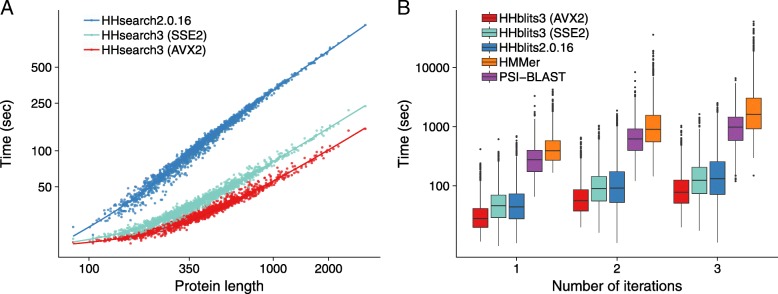
Background: HH-suite is a widely used open source software suite for sensitive sequence similarity searches and protein fold recognition. It is based on pairwise alignment of profile Hidden Markov models (HMMs), which represent multiple sequence alignments of homologous proteins. Results: We developed a single-instruction multiple-data (SIMD) vectorized implementation of the Viterbi algorithm for profile HMM alignment and introduced various other speed-ups. These accelerated the search methods HHsearch by a factor 4 and HHblits by a factor 2 over the previous version 2.0.16. HHblits3 is ∼10× faster than PSI-BLAST and ∼20× faster than HMMER3. Jobs to perform HHsearch and HHblits searches with many query profile HMMs can be parallelized over cores and over cluster servers using OpenMP and message passing interface (MPI). The free, open-source, GPLv3-licensed software is available at https://github.com/soedinglab/hh-suite . Conclusion: The added functionalities and increased speed of HHsearch and HHblits should facilitate their use in large-scale protein structure and function prediction, e.g. in metagenomics and genomics projects.
Overview
The claims and statistics of this paper haven’t been checked yet.
Free: it reads the open-access text and checks the first 5 claims that cite a source we can check. Create a free account to check every claim.
Integrity signals
Registry
Cites
Statistics
Figures
Verification
Claims the paper makes
The claims and statistics of this paper haven’t been checked yet.
Free: it reads the open-access text and checks the first 5 claims that cite a source we can check. Create a free account to check every claim.
Claims other papers make about this one
Each is checked against this paper’s own text: does it say what the citing paper says it does?
The cited source says what the claim attributes to it.
In the citing paper
“Although some advanced sequence-based methods can already assist in this task39–41, the availability of predicted structures may help identify meaningful evolutionary relationships.”
From Clustering predicted structures at the scale of the known protein universe (2023) · cites this paper as [39]
The cited source says what the claim attributes to it.
In the citing paper
“Amino acid sequence analysis27 also detects the previously observed lipase sequence motifs HG and GXSXG (where X is a wildcard) from Mycoplasma mycoides subsp. mycoides LC.70”
From Toward the Complete Functional Characterization of a Minimal Bacterial Proteome (2022) · cites this paper as [27]
The check wasn’t confident either way, so it gives no verdict — never disputed.
In the citing paper
“Two methods were used to identify non-interacting proteins, first a set of proteins with no reported interaction signal in Yeast Two-Hybrid Experiments41 and secondly complexes whose individual proteins were found in different APMS benchmark complexes42. This dataset contains in total 3989 non-interacting pairs.”
From Improved prediction of protein-protein interactions using AlphaFold2 (2021) · cites this paper as [41]
Experimental — accuracy not yet measuredThe check wasn’t confident either way, so it gives no verdict — never disputed.
In the citing paper
“Fortunately, the Continuous Automated Model Evaluation (CAMEO) experiment (7) tests structure prediction servers blindly on protein structures as they are submitted to the PDB.”
From Accurate prediction of protein structures and interactions using a 3-track network (2021) · cites this paper as [7]
Experimental — accuracy not yet measured
Self-check
Percentages, sums and reported differences re-computed from the paper’s own numbers.
The self-check needs the paper’s full text.
Citations
Cites
Gapped BLAST and PSI-BLAST: a new generation of protein database search programs
Altschul, S. (1997) · Nucleic Acids Research · doi:10.1093/nar/25.17.3389 · Cited by 73,302
Berman, H. M. (2000) · Nucleic Acids Research · doi:10.1093/nar/28.1.235 · Cited by 40,196 · cited 2×
“The PDB70 contains profile HMMs for a representative set of sequences from the PDB [22], filtered with a maximum pairwise sequence identity of 70%.”
MethodSearch and clustering orders of magnitude faster than BLAST
Edgar, R. C. (2010) · Bioinformatics · doi:10.1093/bioinformatics/btq461 · Cited by 20,826
Kabsch, W., & Sander, C. (1983) · Biopolymers · doi:10.1002/bip.360221211 · Cited by 15,320 · cited 3×
“pl, and we added structurally defined secondary structure states from DSSP [36] using addss.”
MethodInfluentialFast and sensitive protein alignment using DIAMOND
Buchfink, B., Xie, C., & Huson, D. H. (2015) · Nature Methods · doi:10.1038/nmeth.3176 · Cited by 14,201 · cited 1×
“In recent years, various sequence search tools have been developed that are up to four orders of magnitude faster than BLAST [15–18].”
MethodAccelerated Profile HMM Searches
Eddy, S. R. (2011) · PLoS Computational Biology · doi:10.1371/journal.pcbi.1002195 · Cited by 6,975
Eddy, S. R. (1998) · Bioinformatics · doi:10.1093/bioinformatics/14.9.755 · Cited by 5,515
MMseqs2 enables sensitive protein sequence searching for the analysis of massive data sets
Steinegger, M., & Söding, J. (2017) · Nature Biotechnology · doi:10.1038/nbt.3988 · Cited by 4,840
Self-citationSWISS-MODEL: modelling protein tertiary and quaternary structure using evolutionary information
Biasini, M., Bienert, S., Waterhouse, A., Arnold, K., Studer, G., Schmidt, T., Kiefer, F., Cassarino, T. G., Bertoni, M., Bordoli, L., et al. (2014) · Nucleic Acids Research · doi:10.1093/nar/gku340 · Cited by 4,632
The Pfam protein families database in 2019
El-Gebali, S., Mistry, J., Bateman, A., Eddy, S. R., Luciani, A., Potter, S. C., Qureshi, M., Richardson, L. J., Salazar, G. A., Smart, A., et al. (2019) · Nucleic Acids Research · doi:10.1093/nar/gky995 · Cited by 4,602
Cited by
Items 201–300 of 1,067
DPAM : A domain parser for AlphaFold models
(2022) · doi:10.1002/pro.4548 · Cited by 49
DPAM: A Domain Parser for AlphaFold Models
Zhang, J., Schaeffer, R. D., Durham, J., Cong, Q., & Grishin, N. V. (2022) · doi:10.1101/2022.09.22.509116 · Cited by 49
Merizo: a rapid and accurate protein domain segmentation method using invariant point attention
Lau, A. M., Kandathil, S. M., & Jones, D. T. (2023) · Nature Communications · doi:10.1038/s41467-023-43934-4 · Cited by 48
Zhao, B., Gao, S., Zhao, M., Lv, H., Song, J., Wang, H., Zeng, Q., & Liu, J. (2022) · BMC Genomics · doi:10.1186/s12864-022-08940-8 · Cited by 48
“30 [37] referring to a previous study [38].”
BackgroundZhao, K., Xia, Y., Zhang, F., Zhou, X., Li, S. Z., & Zhang, G. (2023) · Communications Biology · doi:10.1038/s42003-023-04605-8 · Cited by 48
“Most pro fi le-based alignment methods use sequential information, including sequence pro fi le, secondary structure, solvent accessibility and torsion angles to build scoring functions, such as HHsearch 18 , SPARKS-X 29 and MUSTER 30 .”
BackgroundMethodXia, Y., Zhao, K., Liu, D., Zhou, X., & Zhang, G. (2023) · Communications Biology · doi:10.1038/s42003-023-05610-7 · Cited by 47
“Next, the structural model of each domain is generated using an extended version of AlphaFold2 updated by replacing the template search component (HHsearch 46 ) of AlphaFold2 with PAthreader.”
Ferriol-González, C., Concha-Eloko, R., Bernabéu-Gimeno, M., Fernández-Cuenca, F., Cañada-García, J. E., García-Cobos, S., Sanjuán, R., & Domingo‐Calap, P. (2024) · Microbiology Spectrum · doi:10.1128/spectrum.00254-24 · Cited by 55
“Although genetic annotations were carried out using the remote homology search tool, HMMer, in conjunction with the PHROG database (43–45), a large fraction of genes remained with an unknown function (Table S2).”
MethodReprogrammable RNA-targeting CRISPR systems evolved from RNA toxin-antitoxins
Zilberzwige‐Tal, S., Altae-Tran, H., Kannan, S., Wilkinson, M. E., Vo, C.-D.-T., Strebinger, D., Edmonds, K. K., Yao, C.-C. J., Mears, K. S., Shmakov, S., et al. (2025) · Cell · doi:10.1016/j.cell.2025.01.034 · Cited by 50
The hidden bacterial microproteome
Fesenko, I. A., Sahakyan, H., Dhyani, R., Shabalina, S. A., Storz, G., & Koonin, E. V. (2025) · Molecular Cell · doi:10.1016/j.molcel.2025.01.025 · Cited by 49
Nallapareddy, V., Bordin, N., Sillitoe, I., Heinzinger, M., Littmann, M., Waman, V. P., Sen, N., Rost, B., & Orengo, C. (2023) · Bioinformatics · doi:10.1093/bioinformatics/btad029 · Cited by 47
Jalal, A. S. B., Tran, N. T., Stevenson, C. E. M., Chan, E. W., Lo, R., Tan, X., Noy, A., Lawson, D. M., & Le, T. B. K. (2020) · Cell Reports · doi:10.1016/j.celrep.2020.107928 · Cited by 50
(2022) · doi:10.1101/2022.03.10.483805 · Cited by 47
Early computational detection of potential high-risk SARS-CoV-2 variants
(2023) · doi:10.1016/j.compbiomed.2023.106618 · Cited by 46
“The semantic change score was calculated using language models (see Materials and Methods: Semantic change score), which capture the biological properties of proteins through unsupervised learning on large amounts of biological data [13,14,27].”
MethodAn analysis of protein language model embeddings for fold prediction
Villegas-Morcillo, A., Gomez, A. M., & Sanchez, V. (2022) · Briefings in Bioinformatics · doi:10.1093/bib/bbac142 · Cited by 46
Khandelwal, N. K., Millan, C. R., Zangari, S. I., Avila, S., Williams, D., Thaker, T. M., & Tomasiak, T. M. (2022) · Nature Communications · doi:10.1038/s41467-022-28811-w · Cited by 45
Audagnotto, M., Czechtizky, W., Maria, L. D., Käck, H., Papoian, G. A., Tornberg, L., Tyrchan, C., & Ulander, J. (2022) · Scientific Reports · doi:10.1038/s41598-022-13714-z · Cited by 50
“…the MSA profile with: (i) the default trRosetta MSA pipeline 24 , (ii) the default DeepMSA pipeline and (iii) HHblits by iteratively scanning three times (− n 3) the Uniref30 database 33 for homologous sequence with a minimum master sequence coverage (-cov) of 75% and default e-value cutoff.”
MethodEarly Computational Detection of Potential High Risk SARS-CoV-2 Variants
Beguir, K., Skwark, M. J., Fu, Y., Pierrot, T., Carranza, N. L., Laterre, A., Kadri, I., Korched, A., Lowegard, A. U., Lui, B. G., et al. (2021) · doi:10.1101/2021.12.24.474095 · Cited by 46
Wehrspan, Z. J., McDonnell, R. T., & Elcock, A. H. (2022) · Journal of Molecular Biology · doi:10.1016/j.jmb.2021.167377 · Cited by 45
Discovery of archaeal fusexins homologous to eukaryotic HAP2/GCS1 gamete fusion proteins
(2022) · doi:10.1038/s41467-022-31564-1 · Cited by 45
Antibacterial T6SS effectors with a VRR-Nuc domain are structure-specific nucleases
Hespanhol, J. T., Sanchez-Limache, D. E., Nicastro, G. G., Mead, L., Llontop, E. E., Chagas-Santos, G., Farah, C. S., de Souza, R. F., Galhardo, R. D. S., Lovering, A. L., et al. (2022) · eLife · doi:10.7554/elife.82437 · Cited by 45
“HMM models were produced for each sequence alignment and compared against each other with the HHsuite package (RRID:SCR_016133) (Steinegger et al., 2019).”
MethodMetagenomic discovery of novel CRISPR-Cas13 systems
Hu, Y., Chen, Y., Xu, J., Wang, X., Luo, S., Mao, B., Zhou, Q., & Li, W. (2022) · Cell Discovery · doi:10.1038/s41421-022-00464-5 · Cited by 50
Zero‐shot mutation effect prediction on protein stability and function using RoseTTAFold
Mansoor, S., Baek, M., Juergens, D., Watson, J. L., & Baker, D. (2023) · Protein Science · doi:10.1002/pro.4780 · Cited by 40
Seasonal dynamics and diversity of Antarctic marine viruses reveal a novel viral seascape
Piedade, G. J., Schön, M. E., Lood, C., Fofanov, M. V., Wesdorp, E. M., Biggs, T. E. G., Wu, L., Bolhuis, H., Fischer, M., Yutin, N., et al. (2024) · Nature Communications · doi:10.1038/s41467-024-53317-y · Cited by 48
Computational Tools for the Analysis of Uncultivated Phage Genomes
Andrade-Martínez, J. S., Valera, L. C. C., Cárdenas, L. A. C., Junco, L. M. F., López-Leal, G., Moreno-Gallego, J. L., Piñeros, G. A. R., & Reyes, A. (2022) · Microbiology and Molecular Biology Reviews · doi:10.1128/mmbr.00004-21 · Cited by 49
“Multiple pro fi le HMM databases can be used conjointly with HMMER or HH-suite (Table 2).”
MethodInfluentialButković, A., Kraberger, S. J., Smeele, Z. E., Martin, D. P., Schmidlin, K., Fontenele, R. S., Shero, M. R., Beltran, R. S., Kirkham, A. L., Aleamotu’a, M., et al. (2023) · Virus Evolution · doi:10.1093/ve/vead035 · Cited by 45
“The protein sequences representing each anellovirus genus were used as queries in profile–profile comparisons with HHsearch (Steinegger et al. 2019) against the PDB70 and viral protein (UniProt-SwissProt-viral70_3_Nov_2021) profile databases (Gabler et al. 2020).”
MethodInfluentialPlant virus movement proteins originated from jelly-roll capsid proteins
Butković, A., Dolja, V. V., Koonin, E. V., & Krupovìč, M. (2023) · PLoS Biology · doi:10.1371/journal.pbio.3002157 · Cited by 46
Ernits, K., Saha, C. K., Brodiazhenko, T., Chouhan, B., Shenoy, A., Buttress, J. A., Duque-Pedraza, J. J., Bojar, V., Nakamoto, J. A., Kurata, T., et al. (2023) · Proceedings of the National Academy of Sciences · doi:10.1073/pnas.2305393120 · Cited by 45
“HHPred (34) indicates the RloB domain is also related to OLD_TOPRIM domains.”
DepoScope: Accurate phage depolymerase annotation and domain delineation using large language models
Concha-Eloko, R., Stock, M., Baets, B. D., Briers, Y., Sanjuán, R., Domingo‐Calap, P., & Boeckaerts, D. (2024) · PLoS Computational Biology · doi:10.1371/journal.pcbi.1011831 · Cited by 48
“A multiple sequence alignment (MSA) was generated for each cluster with FAMSA [28], and these alignments were filtered at 95% identity using the HHfilter command from HH-suite3 software [29].”
Jin, S., Zeng, Z., Xiong, X., Huang, B., Tang, L., Wang, H., Ma, X., Tang, X., Shao, G., Huang, X., et al. (2025) · Communications Biology · doi:10.1038/s42003-025-08282-7 · Cited by 50
“For each sequence in the AMP dataset, we generated an MSA by searching the UniClust30 database with HHblits 23 .”
Mantis: flexible and consensus-driven genome annotation
Queirós, P., Delogu, F., Hickl, O., May, P., & Wilmes, P. (2021) · GigaScience · doi:10.1093/gigascience/giab042 · Cited by 48
“Different approaches may be used, the most common being to compare an unknown protein sequence to a reference database composed of well-studied and annotated proteins (homology-based methods) [71, 79, 10, 70, 65, 30, 7]; other methods may infer function through the use of machine learning [71, 63], protein networks [8…”
Superimmunity by pan-sarbecovirus nanobodies
Xiang, Y., Huang, W., Liu, H., Sang, Z., Nambulli, S., Tubiana, J., Williams, K. L., Duprex, W. P., Schneidman‐Duhovny, D., Wilson, I. A., et al. (2022) · Cell Reports · doi:10.1016/j.celrep.2022.111004 · Cited by 46
“Calculation of antigen conservation and epitope propensity For each representative antigen chain, a multiple sequence alignment was constructed by homology search on the UniRef30_2020_06 sequence database using HHBlits (4 iterations, default parameters).”
InfluentialDeep structured learning for variant prioritization in Mendelian diseases
(2023) · doi:10.1038/s41467-023-39306-7 · Cited by 43
Updated Virophage Taxonomy and Distinction from Polinton-like Viruses
Roux, S., Fischer, M., Hackl, T., Katz, L. A., Schulz, F., & Yutin, N. (2023) · Biomolecules · doi:10.3390/biom13020204 · Cited by 44
“0 [47] with the options -M 50 and -add_cons.”
BackgroundInfluentialADOPT: intrinsic protein disorder prediction through deep bidirectional transformers
Redl, I., Fisicaro, C., Dutton, O., Hoffmann, F., Henderson, L., Owens, B. M. J., Heberling, M., Paci, E., & Tamiola, K. (2023) · NAR Genomics and Bioinformatics · doi:10.1093/nargab/lqad041 · Cited by 42
Assessment of protein–ligand complexes in CASP15
Robin, X., Studer, G., Durairaj, J., Eberhardt, J., Schwede, T., & Walters, W. P. (2023) · Proteins: Structure, Function, and Bioinformatics · doi:10.1002/prot.26601 · Cited by 42
Differential performance of RoseTTAFold in antibody modeling
Liang, T., Jiang, C., Yuan, J., Othman, Y., Xie, X., & Feng, Z. (2022) · Briefings in Bioinformatics · doi:10.1093/bib/bbac152 · Cited by 46
Diverse viruses of marine archaea discovered using metagenomics
Zhou, Y., Zhou, L., Yan, S., Chen, L., Krupovìč, M., & Wang, Y. (2022) · Environmental Microbiology · doi:10.1111/1462-2920.16287 · Cited by 43
E. coli prophages encode an arsenal of defense systems to protect against temperate phages
Brenes, L. R., & Laub, M. T. (2025) · Cell Host & Microbe · doi:10.1016/j.chom.2025.04.021 · Cited by 46
Diamond, S., Lavy, A., Crits‐Christoph, A., Carnevali, P. B. M., Sharrar, A. M., Williams, K. H., & Banfield, J. F. (2022) · The ISME Journal · doi:10.1038/s41396-021-01177-5 · Cited by 45
“0 [73] software package) using default options.”
Lee, S., Kim, S., Lee, G. R., Kwon, S., Woo, H., Seok, C., & Park, H. (2023) · Computational and Structural Biotechnology Journal · doi:10.1016/j.csbj.2022.11.057 · Cited by 42
“Templates were searched from PDB70 (version Apr 2020) using the HHsearch tool in HH-suite 3 [33], but only with the entries deposited before the query.”
MethodEvolutionary selection of proteins with two folds
(2023) · doi:10.1038/s41467-023-41237-2 · Cited by 41
“To generate subfamily MSAs, distantly related sequences were pruned from deep superfamily MSAs using hh fi lter 73 .”
Figueroa, J. L., Dhungel, E., Bellanger, M., Brouwer, C., & White, R. A., III (2024) · Bioinformatics · doi:10.1093/bioinformatics/btae119 · Cited by 43
“HMMs provide greater sensitivity to elucidate and discover relationships between query and database based on ontology and protein domain-centric (Steinegger et al. 2019, Cantalapiedra et al. 2021).”
BackgroundInsights into animal septins using recombinant human septin octamers with distinct SEPT9 isoforms
Iv, F., Martins, C. S., Castro-Linares, G., Taveneau, C., Barbier, P., Verdier‐Pinard, P., Camoin, L., Audebert, S., Tsai, F., Ramond, L., et al. (2021) · Journal of Cell Science · doi:10.1242/jcs.258484 · Cited by 47
Lin, P., Yan, Y., & Huang, S.-Y. (2023) · Briefings in Bioinformatics · doi:10.1093/bib/bbac499 · Cited by 40
Yeung, W., Zhou, Z., Li, S., & Kannan, N. (2023) · Briefings in Bioinformatics · doi:10.1093/bib/bbac599 · Cited by 43
“Then we reduced redundancy by filtering each alignment at 70% similarity using hhfilter [14] and removing sequences which contained more than 30% gaps.”
Drug–target affinity prediction with extended graph learning-convolutional networks
Qi, H., Yu, T., Yu, W., & Liu, C. (2024) · BMC Bioinformatics · doi:10.1186/s12859-024-05698-6 · Cited by 47
“To enhance computation speed, HHblits [60] is employed for the protein sequence alignment.”
MethodMembraneless channels sieve cations in ammonia-oxidizing marine archaea
von Kügelgen, A., Cassidy, C. K., van Dorst, S., Pagani, L. L., Batters, C., Ford, Z., Löwe, J., Alva, V., Stansfeld, P. J., & Bharat, T. A. M. (2024) · Nature · doi:10.1038/s41586-024-07462-5 · Cited by 44
Peptide binder design with inverse folding and protein structure prediction
Bryant, P., & Elofsson, A. (2023) · Communications Chemistry · doi:10.1038/s42004-023-01029-7 · Cited by 49
Okawa, F., Hama, Y., Zhang, S., Morishita, H., Yamamoto, H., Levine, T. P., & Mizushima, N. (2021) · Journal of Cell Science · doi:10.1242/jcs.255877 · Cited by 35
Repurposing of synaptonemal complex proteins for kinetochores in Kinetoplastida
Tromer, E. C., Wemyss, T. A., Ludzia, P., Waller, R. F., & Akiyoshi, B. (2021) · Open Biology · doi:10.1098/rsob.210049 · Cited by 39
Seth, R., Maritim, T. K., Parmar, R., & Sharma, R. K. (2021) · Horticulture Research · doi:10.1038/s41438-021-00532-z · Cited by 41
Li, M., Kang, L., Xiong, Y., Wang, Y. G., Fan, G., Tan, P., & Hong, L. (2023) · Journal of Cheminformatics · doi:10.1186/s13321-023-00688-x · Cited by 35
de Visser, S. P., Wong, H. P. H., Zhang, Y., Yadav, R., & Sastri, C. V. (2024) · Chemistry - A European Journal · doi:10.1002/chem.202402468 · Cited by 38
Rolland, C., Andréani, J., Sahmi-Bounsiar, D., Krupovìč, M., Scola, B. L., & Levasseur, A. (2021) · Frontiers in Microbiology · doi:10.3389/fmicb.2021.715608 · Cited by 39
“In addition, sensitive profile-profile comparisons were performed using HHsearch against the pfam, CDD and COG databases (Steinegger et al., 2019).”
MethodMartín-Alonso, M., Iqbal, S., Vornewald, P. M., Lindholm, H. T., Damen, M. J. A., Martínez, F., Hoel, S., Díez-Sánchez, A., Altelaar, M. A. F., Katajisto, P., et al. (2021) · Nature Communications · doi:10.1038/s41467-021-26904-6 · Cited by 42
Identification and classification of papain-like cysteine proteinases
Ozhelvaci, F., & Steczkiewicz, K. (2023) · Journal of Biological Chemistry · doi:10.1016/j.jbc.2023.104801 · Cited by 37
“Known papain-like cysteine peptidase families and structures were collected from MEROPS, version 12.4 (223), Pfam, version 35 (224), and PDB (downloaded on January 30, 2022) (225) databases and were used as queries for further HHsearch (226) searches (HHsuite, version 3.3.0) against a local database of sequence profil…”
MethodInfluentialNew antiviral defences are genetically embedded within prokaryotic immune systemsPreprint
Payne, L. J., Hughes, T. C. D., Fineran, P. C., & Jackson, S. A. (2024) · bioRxiv (Cold Spring Harbor Laboratory) · doi:10.1101/2024.01.29.577857 · Cited by 39
“3.0 (Steinegger et al., 2019) with default parameters.”
BackgroundInfluentialRepeated co-option of HMG-box genes for sex determination in brown algae and animals
Luthringer, R., Raphalen, M., Guerra, C., Colin, S., Martinho, C., Zheng, M., Hoshino, M., Badis, Y., Lipinska, A. P., Haas, F. B., et al. (2024) · Science · doi:10.1126/science.adk5466 · Cited by 40
“To assess the domain and fold composition of HMG-sex,weranHHpred( 58 , 86 )searchesagainstthe PDB70 and ECOD70 databases and Foldseek ( 87 ) searches against the AlphaFold/UniProt50 v4 database, both with default settings.”
MethodVaccine development using artificial intelligence and machine learning: A review
Asediya, V., Anjaria, P. A., Mathakiya, R. A., KORINGA, P. G., Nayak, J. B., Bisht, D., Fulmali, D., Patel, V. A., & Desai, D. N. (2024) · International Journal of Biological Macromolecules · doi:10.1016/j.ijbiomac.2024.136643 · Cited by 41
Clustering the protein universe of life using DIAMOND DeepClust
Buchfink, B., Barbe, E., Ashkenazy, H., Reuter, K., Kennedy, J. A., & Drost, H. (2026) · Nature Methods · doi:10.1038/s41592-026-03030-z · Cited by 40
Martin, E. C., Sukarta, O. C. A., Spiridon, L. N., Grigore, L. G., Constantinescu, V., Tăcutu, R., Goverse, A., & Petrescu, A. (2020) · Genes · doi:10.3390/genes11030286 · Cited by 41
“Sequence PSSMs were computed on Uniprot20 protein sequence database, using HHblits [38,39] that is based on HMM-HMM alignments shown to improve accuracy of alignments at low sequence homology levels.”
MethodTarget highlights in CASP14 : Analysis of models by structure providers
Alexander, L. T., Lepore, R., Kryshtafovych, A., Adamopoulos, A., Alahuhta, M., Arvin, A. M., Bomble, Y. J., Böttcher, B., Breyton, C., Chiarini, V., et al. (2021) · Proteins: Structure, Function, and Bioinformatics · doi:10.1002/prot.26247 · Cited by 36
DEPhT: a novel approach for efficient prophage discovery and precise extraction
Gauthier, C. H., Abad, L., Venbakkam, A., Malnak, J., Russell, D. A., & Hatfull, G. F. (2022) · Nucleic Acids Research · doi:10.1093/nar/gkac273 · Cited by 37
“Each pham containing a consensus annotation of some variation of ‘terminase’, ‘major capsid protein’, ‘portal protein’, ‘lysin’, ‘integrase’ or ‘immunity repressor’ with five or more protein sequence members were assembled into an HMM database using a custom python package and the HHsuite3 toolkit (48).”
InfluentialArchaeal DNA-import apparatus is homologous to bacterial conjugation machinery
Beltran, L. C., Cvirkaite-Krupovic, V., Miller, J., Wang, F., Kreutzberger, M. A. B., Patkowski, J. B., Costa, T. R. D., Schouten, S., Levental, I., Conticello, V. P., et al. (2023) · Nature Communications · doi:10.1038/s41467-023-36349-8 · Cited by 36
Classification of domains in predicted structures of the human proteome
Schaeffer, R. D., Zhang, J., Kinch, L. N., Pei, J., Cong, Q., & Grishin, N. V. (2023) · Proceedings of the National Academy of Sciences · doi:10.1073/pnas.2214069120 · Cited by 36
“Finally, we evaluated the consistency between HHsuite and Dali using two parameters: (9) Cshift: the average shift in the index of aligned residue in the hit for the same query residue between HHsuite and Dali; (10) Ccov: the fraction of residues in a hit domain that both HHsuite and Dali aligned.”
MethodInfluentialFIRRM/C1orf112 is synthetic lethal with PICH and mediates RAD51 dynamics
Stok, C., Tsaridou, S., van den Tempel, N., Everts, M., Wierenga, E., Bakker, F. J., Kok, Y., Alves, I. T., Jae, L. T., Raas, M. W. D., et al. (2023) · Cell Reports · doi:10.1016/j.celrep.2023.112668 · Cited by 30
Humolli, D., Piel, D., Maffei, E., Heyer, Y., Agustoni, E., Shaidullina, A., Willi, L., Imwinkelried, P., Estermann, F., Cuénod, A., et al. (2025) · PLOS Biology · doi:10.1371/journal.pbio.3003063 · Cited by 36
Diversity, origin, and evolution of the ESCRT systems
Makarova, K. S., Tobiasson, V., Wolf, Y. I., Lu, Z., Liu, Y., Zhang, S., Krupovic, M., Li, M., & Koonin, E. V. (2024) · mBio · doi:10.1128/mbio.00335-24 · Cited by 36
Wallner, E., Mair, A., Handler, D., McWhite, C. D., Xu, S., Dolan, L., & Bergmann, D. C. (2024) · Developmental Cell · doi:10.1016/j.devcel.2024.03.001 · Cited by 39
SARS‐CoV‐2 structural coverage map reveals viral protein assembly, mimicry, and hijacking mechanisms
O’Donoghue, S. I., Schafferhans, A., Sikta, N., Stolte, C., Kaur, S., Ho, B. K., Anderson, S., Procter, J. B., Dallago, C., Bordin, N., et al. (2021) · Molecular Systems Biology · doi:10.15252/msb.202010079 · Cited by 30
“Combining breadth and depth of coverage requires modeling methods with low computational cost; here, we use only sequence profile comparisons (Steinegger et al , 2019) to align SARS-CoV-2 sequences onto experimentally derived 3D structures (O’Donoghue et al , 2015).”
MethodResultInfluentialEvolutionary diversification of the autophagy-related ubiquitin-like conjugation systems
Zhang, S., Yazaki, E., Sakamoto, H., Yamamoto, H., & Mizushima, N. (2022) · Autophagy · doi:10.1080/15548627.2022.2059168 · Cited by 37
“Finally, all annotated sequences were manually inspected following either multiple sequence alignment or alignment with HHsearch [111].”
MethodRada, P., Hrdý, I., Zdrha, A., Narayanasamy, R. K., Smutná, T., Horáčková, J., Harant, K., Beneš, V., Ong, S.-C., Tsai, C.-Y., et al. (2022) · Frontiers in Microbiology · doi:10.3389/fmicb.2022.893692 · Cited by 38
Diversity, Origin and Evolution of the ESCRT Systems
Makarova, K. S., Tobiasson, V., Wolf, Y. I., Lu, Z., Liu, Y., Zhang, S., Krupovic, M., Li, M., & Koonin, E. V. (2024) · doi:10.1101/2024.02.06.579148 · Cited by 36
(2024) · doi:10.1101/2024.09.12.612763 · Cited by 36
Fold Evolution before LUCA: Common Ancestry of SH3 Domains and OB Domains
Alvarez-Carreño, C., Penev, P. I., Petrov, A. S., & Williams, L. D. (2021) · Molecular Biology and Evolution · doi:10.1093/molbev/msab240 · Cited by 41
“The MSAs were compared by computing the HHalign probability of homology.”
MethodInfluentialSystematic in silico discovery of novel solute carrier-like proteins from proteomes
Gyimesi, G., & Hediger, M. A. (2022) · PLoS ONE · doi:10.1371/journal.pone.0271062 · Cited by 38
EvoBind: in silico directed evolution of peptide binders with AlphaFold
Bryant, P., & Elofsson, A. (2022) · bioRxiv (Cold Spring Harbor Laboratory) · doi:10.1101/2022.07.23.501214 · Cited by 29
“The MSA was constructed from a single search with HHblits[23] version 3.1.0 against uniclust30_2018_08[24] using the options: The MSA of the receptor was input together with the single sequence representation of the peptide to the AF folding pipeline, using model_1, one ensemble and between 1-10 recycles (8 were found…”
MethodInfluentialvon Kügelgen, A., van Dorst, S., Yamashita, K., Sexton, D. L., Tocheva, E. I., Murshudov, G., Alva, V., & Bharat, T. A. M. (2023) · Proceedings of the National Academy of Sciences · doi:10.1073/pnas.2215808120 · Cited by 35
“All sequence similarity searches were performed in the MPI Bioinformatics Toolkit (72) using BLAST (73) and HHpred (74).”
Methodvon Kügelgen, A., van Dorst, S., Yamashita, K., Sexton, D. L., Tocheva, E. I., Murshudov, G., Alva, V., & Bharat, T. A. M. (2022) · doi:10.1101/2022.09.15.508085 · Cited by 35
Assessment of Protein Complex Predictions in CASP16 : Are We Making Progress?
Zhang, J., Yuan, R., Kryshtafovych, A., Pei, J., Kretsch, R. C., Schaeffer, R. D., Zhou, J., Das, R., Grishin, N. V., & Cong, Q. (2025) · Proteins Structure Function and Bioinformatics · doi:10.1002/prot.70068 · Cited by 38
“For example, target T0235o, a hexamer with no detectable templates via HHblits [43], was correctly predicted by many groups.”
Luo, Y., Zheng, W., Shen, Q., Zhang, L., Tang, C., Song, R., Liu, S., Li, B., & Chen, Y. (2021) · Food Hydrocolloids · doi:10.1016/j.foodhyd.2021.106866 · Cited by 35
Quignot, C., Postic, G., Bret, H., Rey, J., Granger, P., Murail, S., Chacón, P., Andréani, J., Tufféry, P., & Guérois, R. (2021) · Nucleic Acids Research · doi:10.1093/nar/gkab358 · Cited by 35
“Despite very low mean sequence identity between human and yeast subunits (11.5% on average), HHsearch detected orthologous subunits for CENPI (13%), CENPO (13%), CENPL (11%), CENPP (11%), CENPN (10”
MethodInfluentialShen, T., Wu, J., Lan, H., Zheng, L., Pei, J., Wang, S., Liu, W., & Huang, J. (2021) · Proteins Structure Function and Bioinformatics · doi:10.1002/prot.26232 · Cited by 38
Englund, E., Schmidt, M., Nava, A. A., Lechner, A., Deng, K., Jocic, R., Lin, Y., Roberts, J. B., Benites, V. T., Kakumanu, R. D., et al. (2023) · Journal of the American Chemical Society · doi:10.1021/jacs.2c11027 · Cited by 34
Genome expansion by a CRISPR trimmer-integrase
Wang, J. Y., Tuck, O. T., Skopintsev, P., Soczek, K. M., Li, G., Al-Shayeb, B., Zhou, J., & Doudna, J. A. (2023) · Nature · doi:10.1038/s41586-023-06178-2 · Cited by 33
Protein–protein contact prediction by geometric triangle-aware protein language models
Lin, P., Tao, H., Li, H., & Huang, S. (2023) · Nature Machine Intelligence · doi:10.1038/s42256-023-00741-2 · Cited by 37
“For the internal features of the protein language model (ESM-MSA-1b), we first select the top 512 diverse sequences in each MSA using the hhfilter tool 51 and extract the ESM-MSA-1b vector embedding and row attentions for the receptor and ligand, respectively.”
MethodDougherty, P. E., Nielsen, T. K., Riber, L., Lading, H. H., Junco, L. M. F., Kot, W., Raaijmakers, J. M., & Hansen, L. H. (2023) · The ISME Journal · doi:10.1038/s41396-023-01547-1 · Cited by 33
“3.0) [48].”
InfluentialShen, J., Yu, Q., Chen, S., Tan, Q., Li, J., & Li, Y. (2023) · Nature Computational Science · doi:10.1038/s43588-023-00576-2 · Cited by 37
“To apply MSA transformer in our method, we first generated Multi-sequence alignment (MSA) for each sequence by searching updated UniClust30[63] with HHblits[64].”
Cryptic infection of a giant virus in a unicellular green alga
Erazo-Garcia, M. P., Sheyn, U., Barth, Z. K., Craig, R. J., Wessman, P., Jivaji, A. M., Ray, W. K., Svensson‐Coelho, M., Cornwallis, C. K., Rengefors, K., et al. (2025) · Science · doi:10.1126/science.ads6303 · Cited by 34
Benton, R., Dessimoz, C., & Moi, D. (2020) · eLife · doi:10.7554/elife.62507 · Cited by 36
“To further assess these candidate homologs (which we refer to as GRLs hereafter), we used their sequences to build and compare Hidden Markov Models (HMMs) using HHblits (Remmert et al., 2012), a remote homology detection tool that is more sensitive than BLAST (Steinegger et al., 2019) (see Materials and methods).”
MethodInfluentialGoing to extremes – a metagenomic journey into the dark matter of life
Aevarsson, A., Kaczorowska, A., Aðalsteinsson, B. Þ., Ahlqvist, J., Al‐Karadaghi, S., Altenbuchner, J., Arsın, H., Atlason, Ú. Á., Brandt, D., Cichowicz-Cieślak, M., et al. (2021) · FEMS Microbiology Letters · doi:10.1093/femsle/fnab067 · Cited by 35
Self-citationPhysics‐based protein structure refinement in the era of artificial intelligence
Heo, L., Janson, G., & Feig, M. (2021) · Proteins: Structure, Function, and Bioinformatics · doi:10.1002/prot.26161 · Cited by 31
“Homologous structures in the PDB were searched using HHsearch 30 with a sequence profile that was generated by sequence search against the UniClust30 database 44 using HHblits.”
BackgroundMethodInfluentialSingle Layers of Attention Suffice to Predict Protein Contacts
Bhattacharya, N., Thomas, N., Rao, R., Dauparas, J., Koo, P. K., Baker, D., Song, Y. S., & Ovchinnikov, S. (2020) · bioRxiv (Cold Spring Harbor Laboratory) · doi:10.1101/2020.12.21.423882 · Cited by 29
“Given a large database of protein sequences such as UniRef100 (Suzek et al., 2007) or BFD (Steinegger & S¨oding, 2018; Steinegger et al., 2019), these models cannot be trained until significant preprocessing has been done: clustering, dereplication of highly related sequences, and alignment to…”
BackgroundMethodGenome expansion by a CRISPR trimmer-integrase
(2023) · doi:10.1101/2023.01.23.522648 · Cited by 33
ProteinNPT: Improving Protein Property Prediction and Design with Non-Parametric Transformers
Notin, P., Weitzman, R., Marks, D. S., & Gal, Y. (2023) · neural information processing systems · doi:10.52202/075280-1458 · Cited by 24
The diversity of the glycan shield of sarbecoviruses related to SARS-CoV-2
Allen, J. D., Ivory, D. P., Song, G., He, W., Capozzola, T., Yong, P., Burton, D. R., Andrabi, R., & Crispin, M. (2023) · Cell Reports · doi:10.1016/j.celrep.2023.112307 · Cited by 35
“An initial HHblits profile was built using the procedure outlined in, 51 followed by 1 iteration of HHblits against Uniclust30.”
Viperin immunity evolved across the tree of life through serial innovations on a conserved scaffold
Shomar, H., Georjon, H., Feng, Y., Olympio, B., Guillaume, M., Tesson, F., Cury, J., Wu, F., & Bernheim, A. (2024) · Nature Ecology & Evolution · doi:10.1038/s41559-024-02463-z · Cited by 31
“Fifty-three eukaryotic viperins with length greater than 500 amino acids were analysed using the hmmsearch module of HH-Suite3 66 .”
Improving AlphaFold2-based protein tertiary structure prediction with MULTICOM in CASP15
Liu, J., Guo, Z., Wu, T., Roy, R. S., Chen, C., & Cheng, J. (2023) · Communications Chemistry · doi:10.1038/s42004-023-00991-6 · Cited by 31
Modularity and diversity of target selectors in Tn7 transposons
Faure, G., Saito, M., Benler, S., Peng, I., Wolf, Y. I., Strecker, J., Altae-Tran, H., Neumann, E. N., Li, D., Makarova, K. S., et al. (2023) · Molecular Cell · doi:10.1016/j.molcel.2023.05.013 · Cited by 32
“The dendrogram was used to guide the iterative pairwise alignment of cluster MSAs using HHalign.50,51 Clusters were discarded if they could not be aligned using this approach, leaving 6,988 sequences in the single final alignment.”
MethodInfluentialViperin immunity evolved across the tree of life through serial innovations on a conserved scaffold
Shomar, H., Georjon, H., Feng, Y., Olympio, B., Tesson, F., Cury, J., Wu, F., & Bernheim, A. (2023) · doi:10.1101/2023.09.13.557418 · Cited by 31
Metadata
- Authors
- Steinegger, M., Meier, M., Mirdita, M., Vöhringer, H., Haunsberger, S. J., & Söding, J.
- Affiliations
- Johns Hopkins University (US)
- Max Planck Institute for Biophysical Chemistry (DE)
- European Bioinformatics Institute (GB)
- Royal College of Surgeons in Ireland (IE)
- Corresponding author
- Söding, Johannes
- Venue
- BMC Bioinformatics
- Published
- 2019-09-14
- Volume
- 20
- Issue
- 1
- Pages
- 473-473
- ISSN
- 1471-2105 (ISSN-L)
- PMC
- PMC6744700
- OpenAlex
- W2972411752
- Cited by
- 1,145
- References
- 38
- Citations by year
- 2026: 106 · 2025: 167 · 2024: 208 · 2023: 248 · 2022: 168 · 2021: 176 · 2020: 63 · 2019: 7
- FWCI
- 35.23
- Type
- journal article
- Language
- en
- Open access
- gold
- doi.org
- Licence
- cc-by
- creativecommons.org/licenses/by/4.0/ (tdm)
- creativecommons.org/licenses/by/4.0/ (vor)
- Locations
- BMC Bioinformatics (publishedVersion, cc-by)
- bioRxiv (Cold Spring Harbor Laboratory) (acceptedVersion, cc-by-nc-nd)
- PubMed Central (publishedVersion, cc-by)
- PubMed (publishedVersion)
- DOAJ (DOAJ: Directory of Open Access Journals) (submittedVersion)
- Figshare (submittedVersion, cc-by)
- GoeScholar The Publication Server of the Georg-August-Universität Göttingen (Georg-August-Universität Göttingen) (submittedVersion, cc-by)
- MPG.PuRe (Max Planck Society) (submittedVersion, other-oa)
- Seoul National University Open Repository (Seoul National University) (submittedVersion)
- Funders
- Horizon 2020 (685778)
- Topics
- Life Sciences › Biochemistry, Genetics and Molecular Biology › Molecular Biology › Genomics and Phylogenetic Studies
- Life Sciences › Biochemistry, Genetics and Molecular Biology › Molecular Biology › Protein Structure and Dynamics
- Life Sciences › Biochemistry, Genetics and Molecular Biology › Molecular Biology › Machine Learning in Bioinformatics
- Keywords
- profile hidden Markov models, Viterbi algorithm, SIMD vectorization, remote homology detection, protein fold recognition, protein annotation, sequence similarity search, parallel computing, protein structure prediction, metagenomics
- MeSH terms
- Algorithms, Markov Chains, Software, Sequence Alignment, Sequence Analysis, Protein, Molecular Sequence Annotation
About these checks
Registry, retraction, Cites and statistics results are computed, not judged, with one exception: a printed reference that no index lists is read once by a model before it counts as a citation error. Claims are extracted by a model and kept only when their quote appears verbatim in the text; each cited source is then checked, with a model’s help, for whether it says what the claim relies on. Those verdicts can be wrong — read the claim’s quote and the cited source before relying on one.
Statistics and arithmetic are recomputed, not judged.
Confidence bands are shown only for fields calibrated on our annotated test set. None is calibrated yet, so no band is shown.
What counts as a claim ›How we measure confidence ›How we check this ›
Are you an author, or do you see a problem with this page? Request a review
Data sources
Bibliographic data: Semantic Scholar, OpenAlex, Crossref.
Contains information from the Semantic Scholar Academic Graph Datasets, made available under the ODC Attribution License (ODC-BY 1.0).
Semantic Scholar’s data is described in: Kinney, R., et al. (2023). The Semantic Scholar Open Data Platform. arXiv:2301.10140.
