

HH-suite3 for fast remote homology detection and deep protein annotation
Open accessPublished version of a preprint
The DOI matches its Crossref record; 38 of the 38 references it cites were found in a registry or an index.
Abstract
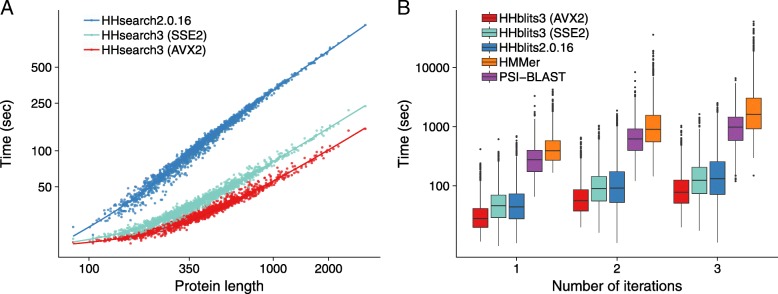
Background: HH-suite is a widely used open source software suite for sensitive sequence similarity searches and protein fold recognition. It is based on pairwise alignment of profile Hidden Markov models (HMMs), which represent multiple sequence alignments of homologous proteins. Results: We developed a single-instruction multiple-data (SIMD) vectorized implementation of the Viterbi algorithm for profile HMM alignment and introduced various other speed-ups. These accelerated the search methods HHsearch by a factor 4 and HHblits by a factor 2 over the previous version 2.0.16. HHblits3 is ∼10× faster than PSI-BLAST and ∼20× faster than HMMER3. Jobs to perform HHsearch and HHblits searches with many query profile HMMs can be parallelized over cores and over cluster servers using OpenMP and message passing interface (MPI). The free, open-source, GPLv3-licensed software is available at https://github.com/soedinglab/hh-suite . Conclusion: The added functionalities and increased speed of HHsearch and HHblits should facilitate their use in large-scale protein structure and function prediction, e.g. in metagenomics and genomics projects.
Overview
The claims and statistics of this paper haven’t been checked yet.
Free: it reads the open-access text and checks the first 5 claims that cite a source we can check. Create a free account to check every claim.
Integrity signals
Registry
Cites
Statistics
Figures
Verification
Claims the paper makes
The claims and statistics of this paper haven’t been checked yet.
Free: it reads the open-access text and checks the first 5 claims that cite a source we can check. Create a free account to check every claim.
Claims other papers make about this one
Each is checked against this paper’s own text: does it say what the citing paper says it does?
The cited source says what the claim attributes to it.
In the citing paper
“Although some advanced sequence-based methods can already assist in this task39–41, the availability of predicted structures may help identify meaningful evolutionary relationships.”
From Clustering predicted structures at the scale of the known protein universe (2023) · cites this paper as [39]
The cited source says what the claim attributes to it.
In the citing paper
“Amino acid sequence analysis27 also detects the previously observed lipase sequence motifs HG and GXSXG (where X is a wildcard) from Mycoplasma mycoides subsp. mycoides LC.70”
From Toward the Complete Functional Characterization of a Minimal Bacterial Proteome (2022) · cites this paper as [27]
The check wasn’t confident either way, so it gives no verdict — never disputed.
In the citing paper
“Two methods were used to identify non-interacting proteins, first a set of proteins with no reported interaction signal in Yeast Two-Hybrid Experiments41 and secondly complexes whose individual proteins were found in different APMS benchmark complexes42. This dataset contains in total 3989 non-interacting pairs.”
From Improved prediction of protein-protein interactions using AlphaFold2 (2021) · cites this paper as [41]
Experimental — accuracy not yet measuredThe check wasn’t confident either way, so it gives no verdict — never disputed.
In the citing paper
“Fortunately, the Continuous Automated Model Evaluation (CAMEO) experiment (7) tests structure prediction servers blindly on protein structures as they are submitted to the PDB.”
From Accurate prediction of protein structures and interactions using a 3-track network (2021) · cites this paper as [7]
Experimental — accuracy not yet measured
Self-check
Percentages, sums and reported differences re-computed from the paper’s own numbers.
The self-check needs the paper’s full text.
Citations
Cites
Gapped BLAST and PSI-BLAST: a new generation of protein database search programs
Altschul, S. (1997) · Nucleic Acids Research · doi:10.1093/nar/25.17.3389 · Cited by 73,302
Berman, H. M. (2000) · Nucleic Acids Research · doi:10.1093/nar/28.1.235 · Cited by 40,196 · cited 2×
“The PDB70 contains profile HMMs for a representative set of sequences from the PDB [22], filtered with a maximum pairwise sequence identity of 70%.”
MethodSearch and clustering orders of magnitude faster than BLAST
Edgar, R. C. (2010) · Bioinformatics · doi:10.1093/bioinformatics/btq461 · Cited by 20,826
Kabsch, W., & Sander, C. (1983) · Biopolymers · doi:10.1002/bip.360221211 · Cited by 15,320 · cited 3×
“pl, and we added structurally defined secondary structure states from DSSP [36] using addss.”
MethodInfluentialFast and sensitive protein alignment using DIAMOND
Buchfink, B., Xie, C., & Huson, D. H. (2015) · Nature Methods · doi:10.1038/nmeth.3176 · Cited by 14,201 · cited 1×
“In recent years, various sequence search tools have been developed that are up to four orders of magnitude faster than BLAST [15–18].”
MethodAccelerated Profile HMM Searches
Eddy, S. R. (2011) · PLoS Computational Biology · doi:10.1371/journal.pcbi.1002195 · Cited by 6,975
Eddy, S. R. (1998) · Bioinformatics · doi:10.1093/bioinformatics/14.9.755 · Cited by 5,515
MMseqs2 enables sensitive protein sequence searching for the analysis of massive data sets
Steinegger, M., & Söding, J. (2017) · Nature Biotechnology · doi:10.1038/nbt.3988 · Cited by 4,840
Self-citationSWISS-MODEL: modelling protein tertiary and quaternary structure using evolutionary information
Biasini, M., Bienert, S., Waterhouse, A., Arnold, K., Studer, G., Schmidt, T., Kiefer, F., Cassarino, T. G., Bertoni, M., Bordoli, L., et al. (2014) · Nucleic Acids Research · doi:10.1093/nar/gku340 · Cited by 4,632
The Pfam protein families database in 2019
El-Gebali, S., Mistry, J., Bateman, A., Eddy, S. R., Luciani, A., Potter, S. C., Qureshi, M., Richardson, L. J., Salazar, G. A., Smart, A., et al. (2019) · Nucleic Acids Research · doi:10.1093/nar/gky995 · Cited by 4,602
Cited by
Items 401–500 of 1,067
Structural determinants of cholesterol recognition in helical integral membrane proteins
Marlow, B., Kuenze, G., Li, B., Sanders, C. R., & Meiler, J. (2021) · Biophysical Journal · doi:10.1016/j.bpj.2021.02.028 · Cited by 23
Yadav, R., Chakraborty, S., & Ramakrishna, W. (2022) · Plant Cell Reports · doi:10.1007/s00299-022-02866-x · Cited by 21
“The alignment between the target and template were estimated using the Swiss Model tools (Steinegger et al. 2019) that aligned multiple sequences using an alignment algorithm (Mirdita et al.”
MethodInterpreting Potts and Transformer Protein Models Through the Lens of Simplified Attention
Bhattacharya, N., Thomas, N., Rao, R., Dauparas, J., Koo, P. K., Baker, D., Song, Y. S., & Ovchinnikov, S. (2021) · Biocomputing 2022 · doi:10.1142/9789811250477_0004 · Cited by 20
“Given a large database of protein sequences such as UniRef100 34 or BFD, 35,36 these models cannot be trained until significant preprocessing has been done: clustering, dereplication of highly related sequences, and alignment to generate an MSA for each cluster.”
A-Prot: protein structure modeling using MSA transformer
Hong, Y., Lee, J., & Ko, J. (2022) · BMC Bioinformatics · doi:10.1186/s12859-022-04628-8 · Cited by 19
“3.3.0, and HHsearch [27] together with the unicluster30_2017_10 [28] and BFD [29] databases.”
BackgroundInfluentialJing, X., & Xu, J. (2020) · Bioinformatics · doi:10.1093/bioinformatics/btaa1037 · Cited by 20
Artificial intelligence for template-free protein structure prediction: a comprehensive review
Mufassirin, M. M. M., Newton, M. A. H., & Sattar, A. (2022) · Artificial Intelligence Review · doi:10.1007/s10462-022-10350-x · Cited by 20
Villard, J., Kılıç, M., & Rothlisberger, U. (2023) · Journal of Chemical Theory and Computation · doi:10.1021/acs.jctc.2c01078 · Cited by 19
Catchpole, R. J., Barbe, V., Magdelenat, G., Marguet, E., Terns, M. P., Oberto, J., Forterre, P., & Cunha, V. D. (2023) · Nature Microbiology · doi:10.1038/s41564-023-01387-x · Cited by 19
Moreno-Manuel, A. I., Macías, Á., Cruz, F. M., Gutiérrez, L. K., Martínez, F., González-Guerra, A., Carrascoso, I., Bermúdez-Jiménez, F. J., Sánchez-Pérez, P., Vera-Pedrosa, M. L., et al. (2024) · Cardiovascular Research · doi:10.1093/cvr/cvae019 · Cited by 20
Wu, J., Liu, Y., Ge, F., & Yu, D. (2024) · Computers in Biology and Medicine · doi:10.1016/j.compbiomed.2024.108227 · Cited by 19
Pal, S., Sharma, G., & Subramanian, S. (2021) · BMC Genomics · doi:10.1186/s12864-021-07955-x · Cited by 20
“xanthus [39] and HMMprofile based searches [40].”
Systematic discovery of TIR-based immune signaling systems in bacteriaPreprint
Yirmiya, E., Leavitt, A., Hurieva, B., Falkovich, A. H., Béchon, N., Rousset, F., Osterman, I. А., & Sorek, R. (2025) · bioRxiv (Cold Spring Harbor Laboratory) · doi:10.64898/2025.12.03.692087 · Cited by 20
A novel sequence alignment algorithm based on deep learning of the protein folding code
Gao, M., & Skolnick, J. (2021) · Bioinformatics · doi:10.1093/bioinformatics/btaa810 · Cited by 18
Protein oligomer modeling guided by predicted interchain contacts in CASP14
Baek, M., Anishchenko, I., Park, H., Humphreys, I. R., & Baker, D. (2021) · Proteins: Structure, Function, and Bioinformatics · doi:10.1002/prot.26197 · Cited by 18
“For homo-oligomers, using HHsearch, up to five oligomer templates in the given oligomer state were selected according to their ranks among the top100 HHsearch hits.”
MethodInfluentialBroad functional profiling of fission yeast proteins using phenomics and machine learning
Rodríguez-López, M., Bordin, N., Lees, J., Scholes, H., Hassan, S., Saintain, Q., Kamrad, S., Orengo, C., & Bähler, J. (2023) · eLife · doi:10.7554/elife.88229.3 · Cited by 18
On the possibility of yet a third kinetochore system in the protist phylum Euglenozoa
Benz, C., Raas, M. W. D., Tripathi, P., Faktorová, D., Tromer, E. C., Akiyoshi, B., & Lukeš, J. (2024) · mBio · doi:10.1128/mbio.02936-24 · Cited by 18
van Hooff, J. J. E., Raas, M. W. D., Tromer, E. C., & Eme, L. (2025) · Cell Reports · doi:10.1016/j.celrep.2025.115855 · Cited by 18
Carbonic Anhydrase Inhibition as a Target for Antibiotic Synergy in Enterococci
Chilambi, G. S., Wang, Y., Wallace, N. R., Obiwuma, C., Evans, K. M., Li, Y., Shalaby, M.-A. W., Flaherty, D. P., Shields, R. K., Doi, Y., et al. (2023) · Microbiology Spectrum · doi:10.1128/spectrum.03963-22 · Cited by 18
“Upon submission of the target protein sequence in FASTA format, the automated pipeline employed BLAST and HHblits to identify the appropriate templates from the SWISS Model Template Library (SMTL; version 2023-03-08) (37, 38).”
MethodKalogeropoulos, K., Bohn, M., Jenkins, D. E., Ledergerber, J., Sørensen, C. V., Hofmann, N., Wade, J., Fryer, T., Nguyen, G. T. T., Keller, U. A. D., et al. (2023) · Toxicon · doi:10.1016/j.toxicon.2023.107559 · Cited by 20
Zhang, Q., Ji, X.-M., Wang, X., Wang, W., Xu, X., Zhang, Q., Xing, D., Ren, N., Lee, D., & Chen, C. (2024) · Water Research · doi:10.1016/j.watres.2024.122580 · Cited by 18
In-depth analysis of 17,115 rice transcriptomes reveals extensive viral diversity in rice plants
Zhu, Y., Raza, A., Bai, Q., Zou, C., Niu, J., Guo, Z., & Wu, Q. (2025) · Nature Communications · doi:10.1038/s41467-025-56769-y · Cited by 18
“However, these viruses generally cause non-persistent infection, thus RNA abundance remains an important indicator.”
Chimeric origins and dynamic evolution of central carbon metabolism in eukaryotes
Santana‐Molina, C., Williams, T. A., Snel, B., & Spang, A. (2025) · Nature Ecology & Evolution · doi:10.1038/s41559-025-02648-0 · Cited by 21
PUNCH2: Explore the strategy for intrinsically disordered protein predictor
Meng, D., & Pollastri, G. (2025) · PLoS ONE · doi:10.1371/journal.pone.0319208 · Cited by 20
Laveglia, V., Giachetti, A., Sala, D., Andreini, C., & Rosato, A. (2022) · Journal of Chemical Information and Modeling · doi:10.1021/acs.jcim.2c00522 · Cited by 18
“A multiple sequence alignment (MSA) was generated for each protein using HHblits v. 3 38 from the HH-suite 39 to search the UniClust30 v. 2018-8 database 40 with the parameters “ -di ff inf -id 99 -cov 50 -n 3 ” .”
Reduced B cell antigenicity of Omicron lowers host serologic response
Tubiana, J., Xiang, Y., Fan, L., Wolfson, H. J., Chen, K., Schneidman‐Duhovny, D., & Shi, Y. (2022) · Cell Reports · doi:10.1016/j.celrep.2022.111512 · Cited by 18
“:D) and constructed a structure-based multiple sequence alignment using ChimeraX (Pettersen et al., 2021), and an HMM profile model (using the hhalign utility (Steinegger et al., 2019)).”
Bioinformatics and Cheminformatics Tools in Early Drug Discovery
Parikh, P. K., Savjani, J., Gajjar, A. K., & Chhabria, M. T. (2023) · Wiley eBooks · doi:10.1002/9781119865728.ch8 · Cited by 22
NeuralPLexer3: Accurate Biomolecular Complex Structure Prediction with Flow ModelsPreprint
Qiao, Z., Ding, F., Dresselhaus, T., Rosenfeld, M. A., Han, X., Howell, O., Iyengar, A., Opalenski, S., Christensen, A. S., Sirumalla, S. K., et al. (2024) · arXiv (Cornell University) · doi:10.48550/arxiv.2412.10743 · Cited by 24
(2022) · doi:10.1371/journal.pgen.1010384 · Cited by 18
(2024) · doi:10.1101/2024.01.07.573240 · Cited by 18
Szadkowski, D., Carreira, L. A. M., & Søgaard-Andersen, L. (2022) · doi:10.1101/2022.03.17.484758 · Cited by 18
Empathi: embedding-based phage protein annotation tool by hierarchical assignment
Boulay, A., Leprince, A., Enault, F., Rousseau, E., & Galiez, C. (2025) · Nature Communications · doi:10.1038/s41467-025-64177-5 · Cited by 17
“Predictions were compared to the annotations obtained by PHROG pHMMs (HH-suite; best hit with e-value <1e − 3 ), to the predictions made by VPF-PLM using their calibrated thresholds (--efam_calibration_threshold) and to predictions made using PHOLD 34 , a structure-based annotation tool.”
InfluentialZucker, F., Bischoff, V., Ndela, É. O., Heyerhoff, B., Poehlein, A., Freese, H. M., Roux, S., Simon, M., Enault, F., & Moraru, C. (2022) · Virus Evolution · doi:10.1093/ve/veac070 · Cited by 17
Unexplored diversity and ecological functions of transposable phages
Zhang, M., Hao, Y., Yi, Y., Liu, S., Sun, Q., Tan, X., Tang, S., Xiao, X., & Jian, H. (2023) · The ISME Journal · doi:10.1038/s41396-023-01414-z · Cited by 17
Oda, T. (2023) · Proteins: Structure, Function, and Bioinformatics · doi:10.1002/prot.26551 · Cited by 17
GOPhage: protein function annotation for bacteriophages by integrating the genomic context
Guan, J., Ji, Y., Peng, C., Zou, W. H., Tang, X., Shang, J., & Sun, Y. (2024) · Briefings in Bioinformatics · doi:10.1093/bib/bbaf014 · Cited by 17
Zhou, Y., Gutiérrez‐Preciado, A., Liu, Y., Moreira, D., Yakimov, M. M., López‐García, P., & Krupovìč, M. (2025) · Nature Microbiology · doi:10.1038/s41564-025-02149-7 · Cited by 19
“Functional annotation was performed using HHsearch 71 against Pfam, Protein Data Bank (PDB), Conserved Domain Database (CDD) and viral protein sequence (uniprot_sprot_vir70) databases available from the MPI Bioinformatics Toolkit 72 .”
OPUS-Rota3: Improving Protein Side-Chain Modeling by Deep Neural Networks and Ensemble Methods
Xu, G., Wang, Q., & Ma, J. (2020) · Journal of Chemical Information and Modeling · doi:10.1021/acs.jcim.0c00951 · Cited by 18
The evolution of the huntingtin-associated protein 40 (HAP40) in conjunction with huntingtin
Seefelder, M., Alva, V., Huang, B., Engler, T., Baumeister, W. P., Guo, Q., Fernández‐Busnadiego, R., Lupas, A. N., & Kochanek, S. (2020) · BMC Evolutionary Biology · doi:10.1186/s12862-020-01705-5 · Cited by 18
Fuchs, F. B., Wagstaff, E., Dauparas, J., & Posner, I. (2021) · Lecture notes in computer science · doi:10.1007/978-3-030-80209-7_63 · Cited by 25
3DFI: a pipeline to infer protein function using structural homology
Julian, A. T., dos Santos, A. C. M., & Pombert, J. (2021) · Bioinformatics Advances · doi:10.1093/bioadv/vbab030 · Cited by 17
End-to-end multitask learning, from protein language to protein features without alignmentsPreprint
Elnaggar, A., Heinzinger, M., Dallago, C., & Rost, B. (2019) · bioRxiv (Cold Spring Harbor Laboratory) · doi:10.1101/864405 · Cited by 17
Unifying the known and unknown microbial coding sequence spacePreprint
Vanni, C., Schechter, M. S., Acinas, S. G., Barberán, A., Buttigieg, P. L., Casamayor, E. O., Delmont, T. O., Duarte, C. M., Eren, A. M., Finn, R. D., et al. (2020) · bioRxiv (Cold Spring Harbor Laboratory) · doi:10.1101/2020.06.30.180448 · Cited by 22
Self-citationAncient RNA expression profiles from the extinct woolly mammoth
Mármol‐Sánchez, E., Fromm, B., Oskolkov, N., Pochon, Z., Dehasque, M., Aslanzadeh, M., Bozlak, E., Brown, K., van der Valk, T., Kalogeropoulos, P., et al. (2025) · Cell · doi:10.1016/j.cell.2025.10.025 · Cited by 17
Expanding the scope of protein language modeling to protein-protein interactions with MSA Pairformer
Akiyama, Y., Zhang, Z., Tang, O., Kim, S., Mirdita, M., Steinegger, M., & Ovchinnikov, S. (2026) · Cell · doi:10.1016/j.cell.2026.06.029 · Cited by 19
Self-citationPande, M., Kundu, D., & Srivastava, R. (2021) · Heliyon · doi:10.1016/j.heliyon.2021.e07803 · Cited by 16
In silico comprehensive analysis of coding and non-coding SNPs in human mTOR protein
Yasmin, T. (2022) · PLoS ONE · doi:10.1371/journal.pone.0270919 · Cited by 16
“The automatic mode identifies suitable templates based on BLAST [51], and HHblits [52].”
MethodRamp, P., Pfleger, C., Dittrich, J., Mack, C., Gohlke, H., & Bott, M. H. (2022) · Microbiology Spectrum · doi:10.1128/spectrum.01950-22 · Cited by 16
“An initial HHblits pro fi le was built using the procedure outlined in reference 73, followed by one iteration of HHblits against Uniclust30 (74).”
Zha, Y., Chen, C., Jiao, Q., Zeng, X., Cui, X., & Ning, K. (2024) · The Innovation Life · doi:10.59717/j.xinn-life.2024.100054 · Cited by 16
Sorgenfrei, F. A., Sloan, J. J., Weißensteiner, F., Zechner, M., Mehner, N. A., Ellinghaus, T. L., Schachtschabel, D., Seemayer, S., & Kroutil, W. (2024) · Nature Communications · doi:10.1038/s41467-024-49774-0 · Cited by 16
Bhattacharya, S., & Bhattacharya, D. (2020) · Scientific Reports · doi:10.1038/s41598-020-59834-2 · Cited by 17
Farrell, D. P., Anishchenko, I. V., Shakeel, S., Lauko, A., Passmore, L. A., Baker, D. A., & DiMaio, F. (2020) · IUCrJ · doi:10.1107/s2052252520009306 · Cited by 17
“In the first stage, four rounds of iterative HHblits (Steinegger et al., 2019) (version 3.0.3) searches against the Uniclust30 database (Aug 2018 version) with gradually relaxed e-value cutoffs (10−80, 10−70, 10−60, 10−40, 10−20) were used to generate an initial alignment.”
BackgroundMethodInfluentialMutational spectrum of BRAF gene in colorectal cancer patients in Saudi Arabia
Rasool, M., Pushparaj, P. N., Buhmeida, A. S., & Karim, S. (2021) · Saudi Journal of Biological Sciences · doi:10.1016/j.sjbs.2021.06.048 · Cited by 16
“An initial HHblits profile was built (Steinegger et al., 2019) and was searched against all profiles of the SMTL.”
MethodParvez, M. K., Al-Dosari, M. S., Rehman, M. T., Al‐Rehaily, A. J., Alqahtani, A. S., & Alajmi, M. F. (2022) · Saudi Pharmaceutical Journal · doi:10.1016/j.jsps.2022.02.001 · Cited by 16
“, 2009) and HHblits (Steinegger et al., 2019) to identify evolutionary related structures.”
The heterogenous and diverse population of prophages in Mycobacterium genomes
Abad, L., Gauthier, C. H., Florian, I., Jacobs‐Sera, D., & Hatfull, G. F. (2023) · mSystems · doi:10.1128/msystems.00446-23 · Cited by 17
“These sequence phamilies identified were used in an HMM-HMM profile search using HH suite (62) against all phams in identified prophages to find PEST cassettes components that are distinct but similar in sequence.”
MethodUPP2: fast and accurate alignment of datasets with fragmentary sequences
Park, M., Ivanovic, S. S., Chu, G., Shen, C., & Warnow, T. J. (2023) · Bioinformatics · doi:10.1093/bioinformatics/btad007 · Cited by 16
(2022) · doi:10.1002/pro.4541 · Cited by 16
Derry, A., & Altman, R. B. (2022) · doi:10.1101/2022.07.20.500713 · Cited by 16
DisCovER : distance‐ and orientation‐based covariational threading for weakly homologous proteins
Bhattacharya, S., Roche, R., Moussad, B., & Bhattacharya, D. (2022) · Proteins: Structure, Function, and Bioinformatics · doi:10.1002/prot.26254 · Cited by 15
“Since AlphaFold2 is an end-to-end deep learning-based ab initio protein structure prediction system that also incorporates templates information from the profile-based threading method HHsearch, 3,46 easy, and 7D8B_B is officially classified as medium by CAMEO.”
AlphaPulldown2—a general pipeline for high-throughput structural modeling
Molodenskiy, D., Maurer, V. J., Yu, D., Chojnowski, G., Bienert, S., Tauriello, G., Gilep, K., Schwede, T., & Kosinski, J. (2025) · Bioinformatics · doi:10.1093/bioinformatics/btaf115 · Cited by 15
“Users can also choose be-tween different template search methods, like the faster HMMER (Finn et al. 2015) or the more accurate HHsearch (Steinegger et al. 2019).”
High-accuracy protein complex structure modeling based on sequence-derived structure complementarity
Hou, M., Xia, Y., Wang, P., Lv, Z., Hou, D., Zhou, X., Zeng, J., & Zhang, G. (2025) · Nature Communications · doi:10.1038/s41467-025-65090-7 · Cited by 16
“However, key methodological details are missing, and several important evaluations and comparisons are lacking.”
Evolutionary Context-Integrated Deep Sequence Modeling for Protein Engineering
Luo, Y., Vo, L. T., Ding, H., Su, Y., Liu, Y., Qian, W. W., Zhao, H., & Peng, J. (2020) · Lecture notes in computer science · doi:10.1007/978-3-030-45257-5_30 · Cited by 18
Numan, M., Bukhari, S. A., Rehman, M., Mustafa, G., & Sadia, B. (2021) · PLoS ONE · doi:10.1371/journal.pone.0257392 · Cited by 15
“SWISS-Model used BLAST [34] and HHblits [35] to align the target sequence with previously characterized sequences and searches for the best template(s).”
MethodMunoz, M. A., Skinner, O. P., Masle‐Farquhar, E., Jurczyluk, J., Xiao, Y., Fletcher, E. K., Kristianto, E., Hodson, M. P., O’Donoghue, S. I., Kaur, S., et al. (2022) · Journal of Clinical Investigation · doi:10.1172/jci160929 · Cited by 18
“to-structure alignments generated by HHblits (41).”
InfluentialA structural classification of the variant surface glycoproteins of the African trypanosome
Đaković, S., Zeelen, J., Gkeka, A., Chandra, M., van Straaten, M., Foti, K., Zhong, J., Vlachou, E. P., Aresta‐Branco, F., Verdi, J., et al. (2023) · PLoS neglected tropical diseases · doi:10.1371/journal.pntd.0011621 · Cited by 17
Bai, H., Lewitus, É., Li, Y., Thomas, P. V., Zemil, M., Merbah, M., Peterson, C. E., Thuraisamy, T., Rees, P. A., Hajduczki, A., et al. (2024) · Nature Communications · doi:10.1038/s41467-024-48139-x · Cited by 15
Gao, Y., Zhong, Z., Zhang, D., Zhang, J., & Li, Y. (2024) · Microbiome · doi:10.1186/s40168-024-01807-y · Cited by 17
“3.0) [100, 120–126].”
InfluentialMachine learning for predicting protein properties: A comprehensive review
Wang, Y., Zhang, Y., Zhan, X., He, Y., Yang, Y., Cheng, L., & Alghazzawi, D. (2024) · Neurocomputing · doi:10.1016/j.neucom.2024.128103 · Cited by 18
Liu, H., Lee, G., & Sang, H. (2024) · Pest Management Science · doi:10.1002/ps.8328 · Cited by 15
Zhang, L., Pang, H., Zhang, C., Li, S., Tan, Y., Jiang, F., Li, M., Yu, Y., Zhou, Z., Wu, B., et al. (2025) · Acta Pharmaceutica Sinica B · doi:10.1016/j.apsb.2025.03.028 · Cited by 20
“The MSAs generated by ColabFold in a3m format were converted to a2m format using the reformat.pl script from HH-suite3 25 to accommodate the input requirements of various prediction models.”
Construction of a Deep Neural Network Energy Function for Protein Physics
Yang, H., Xiong, Z., & Zonta, F. (2022) · Journal of Chemical Theory and Computation · doi:10.1021/acs.jctc.2c00069 · Cited by 16
D’Rose, V., & Bhat, S. G. (2023) · Gene · doi:10.1016/j.gene.2023.147305 · Cited by 17
Carreira, L. A. M., Szadkowski, D., Lometto, S., Hochberg, G. K. A., & Søgaard‐Andersen, L. (2023) · Nature Communications · doi:10.1038/s41467-023-39773-y · Cited by 17
“ColabFold was executed with default settings where multiple sequence alignments were generated with MMseqs2 68 and HHsearch 69 .”
ApHMM: Accelerating Profile Hidden Markov Models for Fast and Energy-efficient Genome Analysis
Fırtına, C., Pillai, K., Kalsi, G. S., Suresh, B., Cali, D. S., Kim, J. S., Shahroodi, T., Cavlak, M. B., Lindegger, J., Alser, M., et al. (2023) · ACM Transactions on Architecture and Code Optimization · doi:10.1145/3632950 · Cited by 15
“Many applications use either the entire or parts of the BaumWelch algorithm for training the probabilities of HMMs and pHMMs [4, 10, 13, 16, 20, 25, 29, 33, 34, 36, 52, 58, 97, 100, 102, 107, 113, 138].”
BackgroundMethodWaksman, T., Astin, E., Fisher, S. R., Hunter, W. N., & Bos, J. I. B. (2024) · Molecular Plant-Microbe Interactions · doi:10.1094/mpmi-10-23-0154-fi · Cited by 15
Santagata, S. (2020) · Journal of Experimental Zoology Part B Molecular and Developmental Evolution · doi:10.1002/jez.b.22975 · Cited by 15
Assessing conservation of alternative splicing with evolutionary splicing graphs
Zea, D. J., Laskina, S., Baudin, A., Richard, H., & Laine, É. (2021) · Genome Research · doi:10.1101/gr.274696.120 · Cited by 17
The SLC-ome of membrane transport: from molecular discovery to physiology and clinical applications
Gyimesi, G., Tweedie, S., Bruford, E. A., & Hediger, M. A. (2025) · Physiological Reviews · doi:10.1152/physrev.00001.2024 · Cited by 15
Challenging AlphaFold in predicting proteins with large-scale allosteric transitions
Perkins-Jechow, B. H., Ahualli, J. P. I., Nhu, H. T., Omidi, A., Li, C., Holguin-Cruz, J. A., Cho, D., Na, D., Malhis, N., Bui, J. M., et al. (2025) · Communications Chemistry · doi:10.1038/s42004-025-01763-0 · Cited by 18
“For CFold predictions, we fi rst generatedMSAs using HHblits 49 , based on the protein sequences from the RCSB, following the approach described in ref.”
Mufassirin, M. M. M., Newton, M. A. H., Rahman, J., & Sattar, A. (2023) · IEEE Access · doi:10.1109/access.2023.3282702 · Cited by 14
“Each HMM profile was generated by HHBlits [63]”
MethodStructural determinants for activation of the Tau kinase CDK5 by the serotonin receptor 5-HT7R
Ackmann, J., Brüge, A., Gotina, L., Lim, S., Jahreis, K., Vollbrecht, A.-L., Kim, Y. K., Pae, A. N., Labus, J., & Ponimaskin, E. G. (2024) · Cell Communication and Signaling · doi:10.1186/s12964-024-01612-y · Cited by 14
“5.2 [19], which replaces the homology detection and MSA pairing of AlphaFold2 [20, 21] with MMseqs2 [22–24].”
BackgroundInfluentialRehman, S., Antonovic, A. K., McIntire, I. E., Zheng, H., Cleaver, L. M., Baczynska, M., Adams, C. O., Portlock, T., Richardson, K. H., Shaw, R., et al. (2024) · Nature Communications · doi:10.1038/s41467-024-49255-4 · Cited by 14
“Sequence alignments and templates were generated through MMseqs2 67 and HHsearch 68 , and run through the ColabFold notebook 69 .”
Biomolecular Interaction Prediction: The Era of AI
Wang, H., Meng, X., & Zhang, Y. (2025) · Advanced Science · doi:10.1002/advs.202509501 · Cited by 18
PYTHIA: Deep Learning Approach for Local Protein Conformation Prediction
Cretin, G., Galochkina, T. V., de Brevern, A. G., & Gelly, J. (2021) · International Journal of Molecular Sciences · doi:10.3390/ijms22168831 · Cited by 14
“To obtain PSSM profiles, we performed a homologous search using HHblits [38] on the Uniclust database (version 09_2016) in three iterations with a 75% minimal coverage of the initial sequence, the E-value cut-off of 0.0001, and the maximal number of hits equal to 10,000.”
MethodInfluentialJones, D., Moolhuijzen, P., & Hane, J. K. (2021) · Microbial Genomics · doi:10.1099/mgen.0.000637 · Cited by 16
“Enriched multiple sequence alignments from level 1 clusters (used to form HMMs) were combined using a progressive algorithm, guided by the maximum spanning tree of the subgraph containing the clusters of interest, where MSAs were pairwise aligned using hhalign [72].”
InfluentialHadley, R. C., Zhitnitsky, D., Livnat‐Levanon, N., Masrati, G., Vigonsky, E., Rose, J., Ben‐Tal, N., Rosenzweig, A. C., & Lewinson, O. (2021) · Journal of Biological Chemistry · doi:10.1016/j.jbc.2021.101445 · Cited by 14
“Next, each of the template MSAs was aligned to the MSA of YobA using HHalign (61).”
MethodChmiel, J. A., Carr, C., Stuivenberg, G. A., Venema, R., Chanyi, R. M., Al, K. F., Giguere, D. J., Say, H., Akouris, P. P., Romero, S. A. D., et al. (2022) · Frontiers in Microbiology · doi:10.3389/fmicb.2022.1011102 · Cited by 16
KinFams: De-Novo Classification of Protein Kinases Using CATH Functional Units
Adeyelu, T., Bordin, N., Waman, V. P., Sadlej, M., Sillitoe, I., Moya-Garcia, A. A., & Orengo, C. A. (2023) · Biomolecules · doi:10.3390/biom13020277 · Cited by 16
“HHsuite is used to generate HMMs for each S90 cluster [35].”
MethodCerrudo, C. S., Motta, L. F., Warlet, F. U. C., Lassalle, F. M., Simonin, J. A., & Belaich, M. N. (2023) · Viruses · doi:10.3390/v15051091 · Cited by 16
“After these homology pool enrichment steps, MSAs and HMMs were performed again for each, and HMMs were then compared against each other (pairwise) with HHalign [29].”
MethodResultInfluentialKryshtafovych, A., & Rigden, D. J. (2023) · Proteins Structure Function and Bioinformatics · doi:10.1002/prot.26533 · Cited by 14
Replitrons: A major group of eukaryotic transposons encoding HUH endonuclease
Craig, R. J. (2023) · Proceedings of the National Academy of Sciences · doi:10.1073/pnas.2301424120 · Cited by 14
“I passed a preliminary alignment of the putative Replitron-1 transposase and these associated proteins to the highly sensitive HHpred tool (20), which detected distant homology to the Reps of several circular Rep-encoding single-stranded (CRESS) DNA viruses, with the best hit to Rep of porcine…”
Tietcheu, B. R. G., Owona, V. B. A., Temdie, R. J. G., Metzger, K., Amougou, M. A., Chuisseu, P. D. D., Kouam, A. F., Ngounoue, M. D., Aliouat‐Denis, C., Cocquerel, L., et al. (2021) · In Silico Pharmacology · doi:10.1007/s40203-021-00093-y · Cited by 14
Zeeshan, M., Pandey, R., Ferguson, D. J. P., Tromer, E. C., Márkus, R., Abel, S., Brady, D., Daniel, E., Limenitakis, R., Bottrill, A. R., et al. (2019) · bioRxiv (Cold Spring Harbor Laboratory) · doi:10.1101/767830 · Cited by 15
The Ceratodon purpureus genome uncovers structurally complex, gene rich sex chromosomesPreprint
Carey, S. B., Jenkins, J. W., Lovell, J. T., Maumus, F., Sreedasyam, A., Payton, A. C., Shu, S., Tiley, G. P., Fernández‐Pozo, N., Barry, K., et al. (2020) · bioRxiv (Cold Spring Harbor Laboratory) · doi:10.1101/2020.07.03.163634 · Cited by 14
Petascale Homology Search for Structure Prediction
Lee, S., Kim, G., Karin, E. L., Mirdita, M., Park, S., Chikhi, R., Babaian, A., Kryshtafovych, A., & Steinegger, M. (2023) · bioRxiv (Cold Spring Harbor Laboratory) · doi:10.1101/2023.07.10.548308 · Cited by 15
“We used HHmake (Steinegger et al. 2019a) to compute the number of effective sequences (N eff ), where higher values indicate less similarity between the sequences and more diverse MSAs.”
MethodSelf-citationA cold‐active esterase enhances mesophilic properties through Mn 2+ binding
Marchetti, A., Orlando, M., Mangiagalli, M., & Lotti, M. (2022) · FEBS Journal · doi:10.1111/febs.16661 · Cited by 13
A Point Cloud Graph Neural Network for Protein–Ligand Binding Site Prediction
Zhao, Y., He, S., Xing, Y., Li, M., Cao, Y., Wang, X., Zhao, D., & Bo, X. (2024) · International Journal of Molecular Sciences · doi:10.3390/ijms25179280 · Cited by 13
“The latter includes the frequency of amino acids observed in homologous sequences, with commonly used features such as position-specific scoring matrix (PSSM) [22] and hidden Markov models matrix (HMM) [23].”
MethodKeegan, R. M., Simpkin, A. J., & Rigden, D. J. (2024) · Acta Crystallographica Section D Structural Biology · doi:10.1107/s2059798324009380 · Cited by 15
A specialized TFIIB is required for transcription of transposon-targeting noncoding RNAs
Cai, X., Zhai, Z., Noto, T., Dong, G., Wang, X., Liucong, M., Liu, Y., Agreiter, C., Loidl, J., Mochizuki, K., et al. (2025) · Nucleic Acids Research · doi:10.1093/nar/gkaf427 · Cited by 13
“Remote homologs of cluster 1 and 3 proteins were determined by searching against the PDB database (pdb70_from_mmcif, version 2022-03-19) using HH-suite3 (version 3.3.0) [ 48 ].”
InfluentialUnlocking data in Klebsiella lysogens to predict capsular type-specificity of phage depolymerases
Concha-Eloko, R., Beamud, B., Domingo‐Calap, P., & Sanjuán, R. (2025) · Nature Communications · doi:10.1038/s41467-025-63861-w · Cited by 14
“The resulting MSAs were then scanned against the HMM pro fi les of the PD domains using the HHsearch 75 .”
Diverse bacterial pattern recognition receptors sense the core phage proteome
Lee, H., Luengo-Woods, S., Zhang, J., Makarova, K. S., Wolf, Y. I., Chiu, C., Evans, S. A., Chen, J., Xiao, H., Feng, L., et al. (2026) · Nature · doi:10.1038/s41586-026-10852-6 · Cited by 14
Metadata
- Authors
- Steinegger, M., Meier, M., Mirdita, M., Vöhringer, H., Haunsberger, S. J., & Söding, J.
- Affiliations
- Johns Hopkins University (US)
- Max Planck Institute for Biophysical Chemistry (DE)
- European Bioinformatics Institute (GB)
- Royal College of Surgeons in Ireland (IE)
- Corresponding author
- Söding, Johannes
- Venue
- BMC Bioinformatics
- Published
- 2019-09-14
- Volume
- 20
- Issue
- 1
- Pages
- 473-473
- ISSN
- 1471-2105 (ISSN-L)
- PMC
- PMC6744700
- OpenAlex
- W2972411752
- Cited by
- 1,145
- References
- 38
- Citations by year
- 2026: 106 · 2025: 167 · 2024: 208 · 2023: 248 · 2022: 168 · 2021: 176 · 2020: 63 · 2019: 7
- FWCI
- 35.23
- Type
- journal article
- Language
- en
- Open access
- gold
- doi.org
- Licence
- cc-by
- creativecommons.org/licenses/by/4.0/ (tdm)
- creativecommons.org/licenses/by/4.0/ (vor)
- Locations
- BMC Bioinformatics (publishedVersion, cc-by)
- bioRxiv (Cold Spring Harbor Laboratory) (acceptedVersion, cc-by-nc-nd)
- PubMed Central (publishedVersion, cc-by)
- PubMed (publishedVersion)
- DOAJ (DOAJ: Directory of Open Access Journals) (submittedVersion)
- Figshare (submittedVersion, cc-by)
- GoeScholar The Publication Server of the Georg-August-Universität Göttingen (Georg-August-Universität Göttingen) (submittedVersion, cc-by)
- MPG.PuRe (Max Planck Society) (submittedVersion, other-oa)
- Seoul National University Open Repository (Seoul National University) (submittedVersion)
- Funders
- Horizon 2020 (685778)
- Topics
- Life Sciences › Biochemistry, Genetics and Molecular Biology › Molecular Biology › Genomics and Phylogenetic Studies
- Life Sciences › Biochemistry, Genetics and Molecular Biology › Molecular Biology › Protein Structure and Dynamics
- Life Sciences › Biochemistry, Genetics and Molecular Biology › Molecular Biology › Machine Learning in Bioinformatics
- Keywords
- profile hidden Markov models, Viterbi algorithm, SIMD vectorization, remote homology detection, protein fold recognition, protein annotation, sequence similarity search, parallel computing, protein structure prediction, metagenomics
- MeSH terms
- Algorithms, Markov Chains, Software, Sequence Alignment, Sequence Analysis, Protein, Molecular Sequence Annotation
About these checks
Registry, retraction, Cites and statistics results are computed, not judged, with one exception: a printed reference that no index lists is read once by a model before it counts as a citation error. Claims are extracted by a model and kept only when their quote appears verbatim in the text; each cited source is then checked, with a model’s help, for whether it says what the claim relies on. Those verdicts can be wrong — read the claim’s quote and the cited source before relying on one.
Statistics and arithmetic are recomputed, not judged.
Confidence bands are shown only for fields calibrated on our annotated test set. None is calibrated yet, so no band is shown.
What counts as a claim ›How we measure confidence ›How we check this ›
Are you an author, or do you see a problem with this page? Request a review
Data sources
Bibliographic data: Semantic Scholar, OpenAlex, Crossref.
Contains information from the Semantic Scholar Academic Graph Datasets, made available under the ODC Attribution License (ODC-BY 1.0).
Semantic Scholar’s data is described in: Kinney, R., et al. (2023). The Semantic Scholar Open Data Platform. arXiv:2301.10140.
