

HH-suite3 for fast remote homology detection and deep protein annotation
Open accessPublished version of a preprint
The DOI matches its Crossref record; 38 of the 38 references it cites were found in a registry or an index.
Abstract
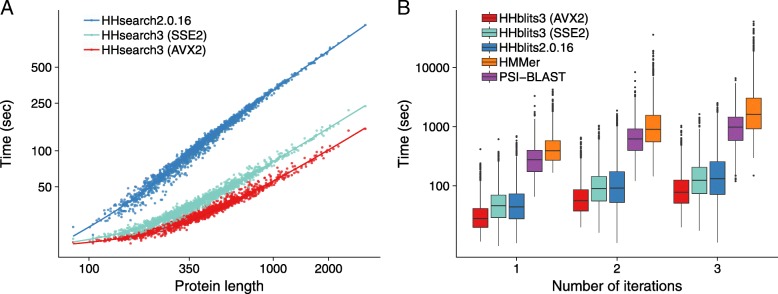
Background: HH-suite is a widely used open source software suite for sensitive sequence similarity searches and protein fold recognition. It is based on pairwise alignment of profile Hidden Markov models (HMMs), which represent multiple sequence alignments of homologous proteins. Results: We developed a single-instruction multiple-data (SIMD) vectorized implementation of the Viterbi algorithm for profile HMM alignment and introduced various other speed-ups. These accelerated the search methods HHsearch by a factor 4 and HHblits by a factor 2 over the previous version 2.0.16. HHblits3 is ∼10× faster than PSI-BLAST and ∼20× faster than HMMER3. Jobs to perform HHsearch and HHblits searches with many query profile HMMs can be parallelized over cores and over cluster servers using OpenMP and message passing interface (MPI). The free, open-source, GPLv3-licensed software is available at https://github.com/soedinglab/hh-suite . Conclusion: The added functionalities and increased speed of HHsearch and HHblits should facilitate their use in large-scale protein structure and function prediction, e.g. in metagenomics and genomics projects.
Overview
The claims and statistics of this paper haven’t been checked yet.
Free: it reads the open-access text and checks the first 5 claims that cite a source we can check. Create a free account to check every claim.
Integrity signals
Registry
Cites
Statistics
Figures
Verification
Claims the paper makes
The claims and statistics of this paper haven’t been checked yet.
Free: it reads the open-access text and checks the first 5 claims that cite a source we can check. Create a free account to check every claim.
Claims other papers make about this one
Each is checked against this paper’s own text: does it say what the citing paper says it does?
The cited source says what the claim attributes to it.
In the citing paper
“Although some advanced sequence-based methods can already assist in this task39–41, the availability of predicted structures may help identify meaningful evolutionary relationships.”
From Clustering predicted structures at the scale of the known protein universe (2023) · cites this paper as [39]
The cited source says what the claim attributes to it.
In the citing paper
“Amino acid sequence analysis27 also detects the previously observed lipase sequence motifs HG and GXSXG (where X is a wildcard) from Mycoplasma mycoides subsp. mycoides LC.70”
From Toward the Complete Functional Characterization of a Minimal Bacterial Proteome (2022) · cites this paper as [27]
The check wasn’t confident either way, so it gives no verdict — never disputed.
In the citing paper
“Two methods were used to identify non-interacting proteins, first a set of proteins with no reported interaction signal in Yeast Two-Hybrid Experiments41 and secondly complexes whose individual proteins were found in different APMS benchmark complexes42. This dataset contains in total 3989 non-interacting pairs.”
From Improved prediction of protein-protein interactions using AlphaFold2 (2021) · cites this paper as [41]
Experimental — accuracy not yet measuredThe check wasn’t confident either way, so it gives no verdict — never disputed.
In the citing paper
“Fortunately, the Continuous Automated Model Evaluation (CAMEO) experiment (7) tests structure prediction servers blindly on protein structures as they are submitted to the PDB.”
From Accurate prediction of protein structures and interactions using a 3-track network (2021) · cites this paper as [7]
Experimental — accuracy not yet measured
Self-check
Percentages, sums and reported differences re-computed from the paper’s own numbers.
The self-check needs the paper’s full text.
Citations
Cites
Gapped BLAST and PSI-BLAST: a new generation of protein database search programs
Altschul, S. (1997) · Nucleic Acids Research · doi:10.1093/nar/25.17.3389 · Cited by 73,302
Berman, H. M. (2000) · Nucleic Acids Research · doi:10.1093/nar/28.1.235 · Cited by 40,196 · cited 2×
“The PDB70 contains profile HMMs for a representative set of sequences from the PDB [22], filtered with a maximum pairwise sequence identity of 70%.”
MethodSearch and clustering orders of magnitude faster than BLAST
Edgar, R. C. (2010) · Bioinformatics · doi:10.1093/bioinformatics/btq461 · Cited by 20,826
Kabsch, W., & Sander, C. (1983) · Biopolymers · doi:10.1002/bip.360221211 · Cited by 15,320 · cited 3×
“pl, and we added structurally defined secondary structure states from DSSP [36] using addss.”
MethodInfluentialFast and sensitive protein alignment using DIAMOND
Buchfink, B., Xie, C., & Huson, D. H. (2015) · Nature Methods · doi:10.1038/nmeth.3176 · Cited by 14,201 · cited 1×
“In recent years, various sequence search tools have been developed that are up to four orders of magnitude faster than BLAST [15–18].”
MethodAccelerated Profile HMM Searches
Eddy, S. R. (2011) · PLoS Computational Biology · doi:10.1371/journal.pcbi.1002195 · Cited by 6,975
Eddy, S. R. (1998) · Bioinformatics · doi:10.1093/bioinformatics/14.9.755 · Cited by 5,515
MMseqs2 enables sensitive protein sequence searching for the analysis of massive data sets
Steinegger, M., & Söding, J. (2017) · Nature Biotechnology · doi:10.1038/nbt.3988 · Cited by 4,840
Self-citationSWISS-MODEL: modelling protein tertiary and quaternary structure using evolutionary information
Biasini, M., Bienert, S., Waterhouse, A., Arnold, K., Studer, G., Schmidt, T., Kiefer, F., Cassarino, T. G., Bertoni, M., Bordoli, L., et al. (2014) · Nucleic Acids Research · doi:10.1093/nar/gku340 · Cited by 4,632
The Pfam protein families database in 2019
El-Gebali, S., Mistry, J., Bateman, A., Eddy, S. R., Luciani, A., Potter, S. C., Qureshi, M., Richardson, L. J., Salazar, G. A., Smart, A., et al. (2019) · Nucleic Acids Research · doi:10.1093/nar/gky995 · Cited by 4,602
Cited by
Items 701–800 of 1,067
Qu, F., Zhao, Y., Huang, T., Wang, X., Zhang, J., & Chen, J. (2025) · IEEE Transactions on Computational Biology and Bioinformatics · doi:10.1109/tcbbio.2025.3604441 · Cited by 5
“For example, some methods such as Smith-Waterman [8] and BLAST [9] harness traditional pair-wise sequence alignment to detect homology, while HHblits [10] and HMMER [11] identify protein homology by constructing Hidden Markov Models (HMM) profile alignments against a specific database.”
Exploring the protein universe with distant similarity detection methods
Sahakyan, H., Mutz, P., Tobiasson, V., & Koonin, E. V. (2025) · Protein Science · doi:10.1002/pro.70397 · Cited by 5
AggrescanAI: Prediction of Aggregation-Prone Regions Using Contextualized Embeddings
Navarro, A. M., Palacios, S., Galmarini, T., Bárcenas, O., Ventura, S., & Marino‐Buslje, C. (2026) · Journal of Molecular Biology · doi:10.1016/j.jmb.2026.169643 · Cited by 5
Biological use of molybdenum and tungsten stems back to 3.4 billion years ago
Klos, A. S., Sobol, M. S., Boden, J. S., Stüeken, E. E., Anderson, R. E., Konhauser, K. O., & Kaçar, B. (2026) · Nature Communications · doi:10.1038/s41467-026-72133-0 · Cited by 8
“23 – 68).”
Association of a Novel Homozygous Variant in ABCA1 Gene with Tangier Disease
Gouveia, S., Fernández-Crespo, S., Lázare‐Iglesias, H., González‐Quintela, A., Vázquez-Agra, N., & Ameijeiras, Á. H. (2023) · Journal of Clinical Medicine · doi:10.3390/jcm12072596 · Cited by 7
“The SWISS-MODEL template library (SMTL version 28 February 2022, PDB released 28 February 2022 [29]) was searched with BLAST (Basic Local Alignment Search Tool) [30] and HHBlits (hidden Markov model (HMMs)-based lightning-fast iterative sequence search) [31] for evolutionary-related structures matching the target sequ…”
MethodRNA threading with secondary structure and sequence profile
Du, Z., Peng, Z., & Yang, J. (2024) · Bioinformatics · doi:10.1093/bioinformatics/btae080 · Cited by 5
“Given that the MSA may contain redundant sequences, we use HHfilter (Steinegger et al. 2019) to remove sequences sharing > 80% sequence identity or < 75% coverage with the query sequence.”
Jagadeesh, J., & Vembar, S. S. (2024) · Scientific Reports · doi:10.1038/s41598-024-79937-4 · Cited by 7
In silico development of a broad-spectrum vaccine against ESKAPE pathogens
González-Cruz, M., Reyes-Gastellou, A., Castelán-Vega, J. A., Monterrubio-López, G. P., Jiménez-Alberto, A., Aparicio‐Ozores, G., & Ribas‐Aparicio, R. M. (2025) · Journal of Molecular Graphics and Modelling · doi:10.1016/j.jmgm.2025.109120 · Cited by 5
Pramanik, K., & Mandal, N. C. (2022) · Journal of Genetic Engineering and Biotechnology · doi:10.1186/s43141-021-00294-0 · Cited by 5
Liu, Z., & Yu, D. (2022) · International Journal of Molecular Sciences · doi:10.3390/ijms23158459 · Cited by 5
“cpxDeepMSA Pipeline for MSA Construction Figure 4 shows a complex pipeline that can be divided into three stages, which correspond to searching two protein sequence databases, Uniclust30 [30] and STRING [31], combining the HH-suite [19] program, and through three matching databases, ENA [32], Taxonomy [33], and STRING…”
MethodMoudgil, P., Kumar, R., Jangir, B. L., Gupta, R., Vaishali, & Jindal, N. (2022) · Research in Veterinary Science · doi:10.1016/j.rvsc.2022.08.013 · Cited by 5
Lam, S. D., Waman, V., Fraternali, F., Orengo, C. A., & Lees, J. (2022) · Computational and Structural Biotechnology Journal · doi:10.1016/j.csbj.2022.11.004 · Cited by 7
“Using HH-suite version 3 [49], FunMOD produced query–template alignments that were then fed into the MODELLER v.9.23 program [46].”
InfluentialPavlik, P., Jost, P., Řehulka, P., Vozandychova, V., Link, M., & Špidlová, P. (2023) · Microbial Pathogenesis · doi:10.1016/j.micpath.2023.105999 · Cited by 5
A benchmark study of protein folding algorithms on nanobodies
Liang, S., Liang, Z., Wu, Z., Huang, F., Wang, X., Tan, Z., He, R., Lu, Z., Cai, Y., Huang, B., et al. (2023) · International Conference on Communications, Computing and Artificial Intelligence (CCCAI) · doi:10.1109/cccai59026.2023.00025 · Cited by 6
Tütüncü, H. E., İşleyen, N. D., & Sürmeli, Y. (2024) · 3 Biotech · doi:10.1007/s13205-024-04023-5 · Cited by 5
“The figure was created utilizing ESPript (Gouet et al. 2003; Robert and Gouet 2014) software in the SWISS-MODEL server (Mirdita et al. 2017; Steinegger et al. 2019; Studer et al. 2020, 2021).”
Mojica, M. F., Nukaga, M., Becka, S. A., Zeiser, E. T., Hoshino, T., LiPuma, J. J., & Papp‐Wallace, K. M. (2024) · ACS Infectious Diseases · doi:10.1021/acsinfecdis.4c00330 · Cited by 5
Gulyaeva, A. A., Liu, L., Garmaeva, S., Kruk, M., Weersma, R. K., Harmsen, H. J. M., & Zhernakova, A. (2024) · Microbiology Spectrum · doi:10.1128/spectrum.01066-24 · Cited by 6
“Sequences of DGR target proteins were compared to each other using the HH-Suite 3.3.0 command hhalign with the “-alt 100 -norealign” parameters (56) and to the databases PDB_mmCIF70_24_Dec and Pfam-A_v36 using the HHpred tool with default parameters on the MPI Bioinformatics Toolkit website (4…”
InfluentialVarsani, A., Custer, J. M., Cobb, I. N., Harding, C., Collins, C. L., Suazo, C., Schreck, J., Fontenele, R. S., Stainton, D., Dayaram, A., et al. (2025) · Journal of General Virology · doi:10.1099/jgv.0.002084 · Cited by 5
“The expanded bacilladnavirus genome diversity prompted us to reassess the functional annotation of hypothetical ORFs using sensitive profile–profile comparisons with HHsearch [27].”
Diverse novel RNA viruses in the cryosphere of the Tibetan Plateau
Liu, Y., Zhang, Z., Jiao, N., Zhu, Y., Zhang, R., Domínguez‐Huerta, G., Wang, H., Feng, M., Wen, R., Ji, M., et al. (2025) · National Science Review · doi:10.1093/nsr/nwaf361 · Cited by 6
Single-shot design of a cyclic peptide inhibitor of HIV membrane fusion
Daumiller, D., Giammarino, F., Li, Q., Sönnerborg, A. B., Diez, R. C., & Bryant, P. (2025) · Antiviral Research · doi:10.1016/j.antiviral.2025.106336 · Cited by 5
Non-adaptive Evolution of Trimeric Autotransporters in Brucellaceae
Rahbar, M. R., Zarei, M., Jahangiri, A., Khalili, S., Nezafat, N., Negahdaripour, M., Fattahian, Y., Savardashtaki, A., & Ghasemi, Y. (2020) · Frontiers in Microbiology · doi:10.3389/fmicb.2020.560667 · Cited by 5
Selected abstracts of Bioinformatics: from Algorithms to Applications 2021 Conference
(2021) · BMC Bioinformatics · doi:10.1186/s12859-021-04475-z · Cited by 6
EsigGOBP1: The Key Protein Binding Alpha-Phellandrene in Endoclita signifer Larvae
Hu, P., Hao, E., Yang, Z., Qiu, Z., Fu, H., Lu, J., He, Z., & Huang, Y. (2022) · International Journal of Molecular Sciences · doi:10.3390/ijms23169269 · Cited by 5
“HHBlits [65] with default parameters was performed for evolutionary related structures matching EsigGOBP1.”
MethodThe COMER web server for protein analysis by homology
Dapkūnas, J., & Margelevičius, M. (2022) · Bioinformatics · doi:10.1093/bioinformatics/btac807 · Cited by 5
Fan, P. T., Yang, K., Han, B., Kong, D., Yin, W., Li, J., Yang, Z., Niu, L.-L., Fu, C.-S., Rong, C.-Z., et al. (2023) · Pediatric Research · doi:10.1038/s41390-023-02515-3 · Cited by 5
Truong, A., Myerscough, D., Campbell, I. J., Atkinson, J. T., & Silberg, J. J. (2023) · Protein Science · doi:10.1002/pro.4746 · Cited by 6
“Templates were included from the PDB70 version 13Mar22 (Berman et al., 2000; Steinegger et al., 2019).”
Rules for designing protein fold switches and their implications for the folding codePreprint
Chen, Y., He, Y., Ruan, B., Choi, E. J., Chen, Y., Motabar, D., Solomon, T. L., Simmerman, R. F., Kauffman, T., Gallagher, D. T., et al. (2021) · bioRxiv (Cold Spring Harbor Laboratory) · doi:10.1101/2021.05.18.444643 · Cited by 5
“For example, automated alignment can thread the shorter sequence through the larger structure and calculate the energy of hypothetical structures in every register (34).”
BackgroundEstimating the Designability of Protein StructuresPreprint
Pan, F., Zhang, Y., Liu, X., & Zhang, J. (2021) · bioRxiv (Cold Spring Harbor Laboratory) · doi:10.1101/2021.11.03.467111 · Cited by 5
“wild sequence from HHsuite[43], we constrained the prediction probabilities of top 20 residues with high aligned MSA scores.”
MethodIMPROVING ALPHAFOLD2 PERFORMANCE WITH A GLOBAL METAGENOMIC & BIOLOGICAL DATA SUPPLY CHAINPreprint
Munsamy, G., Bohnuud, T., & Lorenz, P. (2024) · bioRxiv (Cold Spring Harbor Laboratory) · doi:10.1101/2024.03.06.583325 · Cited by 5
Jaeger: an accurate and fast deep-learning tool to detect bacteriophage sequencesPreprint
Wijesekara, Y., Wu, L., Beeloo, R., Rozwalak, P., Hauptfeld, E., Doijad, S. P., Dutilh, B. E., & Kaderali, L. (2024) · bioRxiv (Cold Spring Harbor Laboratory) · doi:10.1101/2024.09.24.612722 · Cited by 5
“To address this limitation, Hidden Markov Model (HMM) databases of phage protein families, paired with tools like HHSuite 27 or HMMER 28 , have been employed due to their high sensitivity.”
MethodPre-Cambrian origin of envelope -carrying retrotransposons in metazoans
Chary, S., & Hayashi, R. (2023) · doi:10.1101/2023.10.26.564294 · Cited by 5
Construct a variable-length fragment library for de novo protein structure prediction
(2022) · doi:10.1101/2022.01.03.474755 · Cited by 5
Bouderka, F., López-García, P., Deschamps, P., Zhou, Y., Krupovic, M., Gutiérrez-Preciado, A., Ciobanu, M., Bertolino, P., David, G., Moreira, D., et al. (2024) · doi:10.1101/2024.03.08.584096 · Cited by 5
Protein language model identifies disordered, conserved motifs implicated in phase separation
Zhang, Y., Zheng, J., & Zhang, B. (2025) · eLife · doi:10.7554/elife.105309 · Cited by 4
“We performed MSA analysis using HHblits from the HH-suite3 software suite ( Suzek et al., 2007 ; Suzek et al., 2015 ; Remmert et al., 2012 ; Steinegger et al., 2019 ), a widely used open-source toolkit known for its sensitivity in detecting sequence similarities and identifying protein folds.”
Dalia, T. N., Machouri, M., Lacrouts, C., Fauconnet, Y., Guerois, R., Andreani, J., Radicella, J. P., & Dalia, A. B. (2025) · Proceedings of the National Academy of Sciences · doi:10.1073/pnas.2421764122 · Cited by 4
Structural evolution of nitrogenase over 3 billion years
Cuevas Zuviría, B., Detemple, F., Amritkar, K., Garcia, A. K., Seefeldt, L., Einsle, O., & Kaçar, B. (2025) · eLife · doi:10.7554/elife.105613 · Cited by 4
“Previous conversions from A3M to FASTA format were carried out using HH-suite convert. pl script ( Steinegger et al., 2019 ).”
Guiding discovery of protein sequence-structure-function modeling
(2024) · doi:10.1093/bioinformatics/btae002 · Cited by 4
“The MSA of the top 10000 hits was used with HHsearch on the PDB70 database (Steinegger et al. 2019) to find templates with AF2’s template featurizer.”
Defects in Glabrous 3 ( GL3 ) functionality underlie the absence of trichomes in Brassica napus
Heydarian, Z., Harrington, M., & Hegedus, D. D. (2024) · The Plant Journal · doi:10.1111/tpj.16878 · Cited by 4
Liu, W., Wang, Z., You, R., Xie, C., Wei, H., Xiong, Y., Yang, J., & Zhu, S. (2025) · Methods in molecular biology · doi:10.1007/978-1-0716-4623-6_14 · Cited by 4
Decoding the human PBMC isonome: isoform-level resolution with single-cell long-read transcriptomics
Doyle, P. H., Page, M. L., Brandon, J. A., Heberle, B. A., White, B. J., Stowe, A. M., & Ebbert, M. (2026) · Frontiers in Genetics · doi:10.3389/fgene.2026.1782221 · Cited by 4
“The results of DeepTMHMM detailed each residue from the protein structure and the location within the cell (e.g., signal peptide, inside cell, alpha membrane, periplasm, outside cell).”
Karamycheva, S. A., Wolf, Y. I., Koonin, E. V., & Makarova, K. S. (2025) · mBio · doi:10.1128/mbio.03127-25 · Cited by 4
“Clusters of alignments were merged using HHALIGN (104).”
Structure-guided discovery of protein functions in plants
Chen, J., Feng, Y., Zhang, Y., Gao, J., Ou, J., Wu, W., Li, C., Song, S., Tai, L., Rifat, M. H., et al. (2026) · The Plant Cell · doi:10.1093/plcell/koag022 · Cited by 4
Disentangling coevolutionary constraints for modeling protein conformational heterogeneity
Li, S., Zhang, C., Kong, L., Xue, Y., Liu, S., & Gao, Y. Q. (2026) · Communications Chemistry · doi:10.1038/s42004-026-01940-9 · Cited by 4
“The HH fi lter 67 tool was used to fi lter out distantly related sequences by increasing the QID (minimum sequence identity with the query).”
Tao, D., Xu, B., Li, S., 刘海龙, Wei, Y., Cao, X., Shi, S., Wang, Y., Jiang, R., Zhang, Y., et al. (2026) · Molecular Therapy · doi:10.1016/j.ymthe.2026.03.011 · Cited by 4
“43 hhblits 44 was first used to search against the UniRef30 database; significant matches were then queried against the Pfam database via hhsearch.”
Domain classification of archaeal proteomes reveals conserved fold repertoire
Schaeffer, R. D., Pei, J., Guo, R., Zhang, J., Medvedev, K. E., Cong, Q., & Grishin, N. V. (2026) · PLoS Computational Biology · doi:10.1371/journal.pcbi.1014188 · Cited by 4
Simpson, G. A., Rezende, I. F., Peixoto, A. D. S., Soares, I. B. D. O., Barbosa, J. A. R. G., de Freitas, S. M., & Valadares, N. F. (2023) · Biochimica et Biophysica Acta (BBA) - Proteins and Proteomics · doi:10.1016/j.bbapap.2023.140975 · Cited by 4
PyCoM: a python library for large-scale analysis of residue–residue coevolution data
Glass, P. E., Alibai, S., Pandini, A., & Dantu, S. C. (2024) · Bioinformatics · doi:10.1093/bioinformatics/btae166 · Cited by 4
“Coevolution matrices were computed for each unique protein sequence based on the protocol from Kamisetty et al. 2013 using HH-suite3 package (Steinegger et al. 2019) for homology search and sequence alignment and CCMpred (Seemayer et al. 2014) for calculation of pairwise coevolution scores (full…”
Huang, Y., Sun, Y., Li, H., Li, H., & Pang, H. (2024) · Molecular Biology and Evolution · doi:10.1093/molbev/msae150 · Cited by 4
“Faster sequence search tools (e.g. DIAMOND [Buchfink et al. 2021], MMseqs2 [Steinegger and Söding 2017], and HH-suite [Steinegger et al. 2019]) could also be a candidate to be integrated into PhyloAln as an option and evaluated against HMMER3 to devise a recommended selection strategy in the future.”
MethodGouri, V., Roy, G., Kanojia, A., Singh, S. R., Muthuswami, R., & Samant, M. (2024) · 3 Biotech · doi:10.1007/s13205-024-04183-4 · Cited by 4
“The Swiss Model Template Library was searched in parallel both with BLAST, a basic local alignment search tool (Camacho et al. 2009), and HHblits, a protein sequence search tool (Steinegger et al. 2019) to identify templates and obtain target-template alignments.”
Okazaki, Y., Nishikawa, Y., Wagatsuma, R., Takeyama, H., & Nakano, S. (2025) · ISME Communications · doi:10.1093/ismeco/ycaf086 · Cited by 4
“0 database [52].”
metagRoot: a comprehensive database of protein families associated with plant root microbiomes
Chasapi, M. N., Chasapi, I. N., Aplakidou, E., Baltoumas, F. A., Karatzas, E., Iliopoulos, I., Stravopodis, D. J., Emiris, I. Z., Buluç, A., Georgakopoulos‐Soares, I., et al. (2025) · Nucleic Acids Research · doi:10.1093/nar/gkaf862 · Cited by 4
“After aligning the sequences, the hhfilter [ 28 ] was employed to reduce redundancy within each family by applying a 95% sequence identity threshold and a 70% coverage criterion.”
Kim, M., Bae, H., Jo, G., Kim, K.-W., Lee, S. J., Yoo, J., & Joo, K. (2025) · Bioinformatics · doi:10.1093/bioinformatics/btaf579 · Cited by 4
“2) Template utilization : Structural templates from the PDB70 database are selected using HHsearch (Steinegger et al. 2019), providing spatial constraints to refine predicted structures, especially in conserved domains (Fig.”
Extensive cultivation of human gut phages revealing undescribed Bacteroidaceae phages
Liu, Z., Yang, Y., Mao, S., Wang, Z., Zhu, Q., Yuan, Y., & Xiang, Y. (2025) · Gut Microbes · doi:10.1080/19490976.2025.2597614 · Cited by 4
“82 Additionally, we used hhsearch_omp of the hhsuite 89 package to compare all the ORF sequences against the PHROGs HMM profiles for additional informative annotations.”
Efficient detection and typing of phage-plasmids
Ilchenko, K., Bonnin, R. A., Rocha, E. P. C., & Pfeifer, E. (2026) · mBio · doi:10.1128/mbio.03000-25 · Cited by 4
Huang, C., Luo, H., Zeng, B., Feng, C., Chen, J., Yuan, H., Huang, S., Yang, B., Zou, Y., & Liu, Y. (2023) · Frontiers in Genetics · doi:10.3389/fgene.2023.1290949 · Cited by 4
Kwansa, A. L., Singh, A., Williams, J. T., Haigler, C. H., Roberts, A. W., & Yingling, Y. G. (2024) · Cellulose · doi:10.1007/s10570-023-05691-x · Cited by 4
“The target-template alignment for this homology model was obtained via the HMM-HMM-based lightning-fast iterative sequence search (HHblits) tool that uses hidden Markov models (HMMs) (Steinegger et al. 2019).”
Edsinger, E., & Moroz, L. L. (2024) · Frontiers in Marine Science · doi:10.3389/fmars.2024.1434130 · Cited by 5
Liang, H., Luo, Y., & van der Donk, W. A. (2024) · Biochemistry · doi:10.1021/acs.biochem.4c00150 · Cited by 4
BEAN and HABAS : Polyphyletic insertions in the DNA ‐directed RNA polymerase
Álvarez-Carreño, C., Huynh, A. T., Petrov, A. S., Orengo, C. A., & Williams, L. D. (2024) · Protein Science · doi:10.1002/pro.5194 · Cited by 4
Decoding Solubility Signatures from Amyloid Monomer Energy Landscapes
Wesołowski, P. A., Yang, B., Davolio, A. J., Woods, E. J., Pracht, P., Bojarski, K. K., Wierbiłowicz, K., Payne, M. C., & Wales, D. J. (2025) · Journal of Chemical Theory and Computation · doi:10.1021/acs.jctc.4c01623 · Cited by 4
Highly Optimized Simulation of Atomic Resolution Cell-Like Protein Environment
Tytarenko, A. M., Singh, A., Ambati, V. K., Copeland, M. M., Kundrotas, P. J., Halfmann, R., Kasyanov, P. O., Feinberg, E. A., & Vakser, I. A. (2025) · The Journal of Physical Chemistry B · doi:10.1021/acs.jpcb.4c07769 · Cited by 4
Li, J., Chen, X., Huang, H., Zeng, M., Yu, J., Gong, X., & Ye, Q. (2025) · Briefings in Bioinformatics · doi:10.1093/bib/bbaf120 · Cited by 5
Brown, K. A., & Firth, A. E. (2025) · Virus Evolution · doi:10.1093/ve/veaf074 · Cited by 4
“Pfam profiles are based on alignments extracted from the HHsuite-3 pfamA 35.0 database (Steinegger et al. 2019) (accessed 2023-02-17, 2021-11-23 release), for 22 Pfam families identified as RNA viral RdRp, these are listed in the Supplementary Data.”
InfluentialDarrouzet, É., Rinaldi, C., Zambelli, B., Ciurli, S., & Cavazza, C. (2021) · Journal of Inorganic Biochemistry · doi:10.1016/j.jinorgbio.2021.111588 · Cited by 4
Navigating the amino acid sequence space between functional proteins using a deep learning framework
Bitard‐Feildel, T. (2021) · PeerJ Computer Science · doi:10.7717/peerj-cs.684 · Cited by 4
Lueder, M. R., Cer, R. Z., Patrick, M., Voegtly, L. J., Long, K. A., Rice, G. K., & Bishop‐Lilly, K. A. (2021) · BMC Genomics · doi:10.1186/s12864-021-08029-8 · Cited by 4
Methods for discovering catalytic activities for pseudokinases
Black, M. H., Gradowski, M., Pawłowski, K., & Tagliabracci, V. S. (2022) · Methods in enzymology on CD-ROM/Methods in enzymology · doi:10.1016/bs.mie.2022.03.047 · Cited by 8
Ahmed, I., & Gomaa, M. (2022) · Cereal Research Communications · doi:10.1007/s42976-022-00264-3 · Cited by 4
Verdonk, C. J., Marshall, A. C., Ramsay, J. P., & Bond, C. S. (2022) · Acta Crystallographica Section D Structural Biology · doi:10.1107/s2059798322008579 · Cited by 4
Crystal structure of DNA polymerase I from Thermus phage G20c
Ahlqvist, J., Linares‐Pastén, J. A., Jasilionis, A., Welin, M., Håkansson, M., Svensson, L. A., Wang, L., Watzlawick, H., Aevarsson, A., Friðjónsson, Ó. H., et al. (2022) · Acta Crystallographica Section D Structural Biology · doi:10.1107/s2059798322009895 · Cited by 4
pyGOMoDo: GPCRs modeling and docking with python
Ribeiro, R. P., & Giorgetti, A. (2023) · Bioinformatics · doi:10.1093/bioinformatics/btad294 · Cited by 4
“The modeling module follows the same framework pipeline as the original web server: protein sequence alignment and hidden Markov model profile generation with the hh-suite (Steinegger et al. 2019), and homology modeling with the Modeller software (Webb and Sali 2016).”
MethodBalupuri, A., Kim, J., Choi, K.-E., No, J. S., Kim, I., Rhee, J. E., Kim, E., & Kang, N. S. (2023) · International Journal of Molecular Sciences · doi:10.3390/ijms242216069 · Cited by 4
“The automatic pipeline performs sequence alignment between the target protein and the template using BLAST [58] and HHblits algorithms [59].”
MethodA sequence-based evolutionary distance method for Phylogenetic analysis of highly divergent proteins
Cao, W., Wu, L.-Y., Xia, X.-Y., Chen, X., Wang, Z., & Pan, X. (2023) · Scientific Reports · doi:10.1038/s41598-023-47496-9 · Cited by 7
YidC from Escherichia coli Forms an Ion-Conducting Pore upon Activation by Ribosomes
Knyazev, D. G., Winter, L., Vogt, A., Posch, S., Öztürk, Y., Siligan, C., Goessweiner‐Mohr, N., Hagleitner-Ertuğrul, N., Koch, H., & Pohl, P. (2023) · Biomolecules · doi:10.3390/biom13121774 · Cited by 4
Singh, J., Litfin, T., Singh, J., Paliwal, K. K., & Zhou, Y. (2021) · bioRxiv (Cold Spring Harbor Laboratory) · doi:10.1101/2021.06.19.449089 · Cited by 6
“…sequences, we removed any potential homologs in the training set to the test data by comparing the Hidden Markov Models of all post-2018 proteins to the Hidden Markov Models of all pre-2018 proteins using the HHblits tool at an e-value cut-off of less than 0.1 (Steinegger et al. , 2019a).”
MethodInfluentialRefinement of AlphaFold-Multimer structures with single sequence inputPreprint
Oda, T. (2022) · bioRxiv (Cold Spring Harbor Laboratory) · doi:10.1101/2022.12.27.521991 · Cited by 4
Yuan, L., Chen, L.-X., Yu, H., Zhou, J. Z., Sun, R., & Ju, F. (2024) · bioRxiv (Cold Spring Harbor Laboratory) · doi:10.1101/2024.03.12.584551 · Cited by 4
The Human Blood Harbors a Phageome Which Differs in Crohn's DiseasePreprint
Lamy-Besnier, Q., Theodorou, I., Billaud, M., Zhang, H., Brot, L., Culot, A., Abriat, G., Sokol, H., Paepe, M. D., Petit, M., et al. (2024) · SSRN Electronic Journal · doi:10.1101/2024.06.04.597176 · Cited by 5
Improving AlphaFold3 by Engineering MSA and Template InputsPreprint
Neupane, P., Liu, J., & Cheng, J. (2026) · bioRxiv (Cold Spring Harbor Laboratory) · doi:10.64898/2026.04.22.720119 · Cited by 4
“Templates are identified at the subunit level using HHsearch [41] search against three template libraries: PDB70, pdb_complex [17], and pdb_sort90 [18].”
ProtGPT3: an Open-source family of Promptable and Aligned Protein Language ModelsPreprint
Garibbo, M., Corominas, G. B., Stocco, F., Illanes, R., Middendorf, L., & Ferruz, N. (2026) · bioRxiv (Cold Spring Harbor Laboratory) · doi:10.64898/2026.06.04.730041 · Cited by 4
“Second, we build two HMM profiles using the HH-suite [48].”
Autonomous AI agents discover reverse transcriptases with tandem repeat arraysPreprint
Yoon, P. H., Athukoralage, J. S., Ameisen, E., Kauderer-Abrams, E., Perry, N. T., & Durrant, M. G. (2026) · bioRxiv (Cold Spring Harbor Laboratory) · doi:10.64898/2026.10.05.755809 · Cited by 9
(2024) · doi:10.1101/2024.10.21.619469 · Cited by 4
Helsem, S. A., Alfsnes, K., Frye, S. A., Hesselberg Løvestad, A., & Ambur, O. H. (2025) · PLOS One · doi:10.1371/journal.pone.0315160 · Cited by 3
“These MSAs were generated using HHblits v. 3.0.0 [30] to search the Big Fantastic Data-base (BFD) [31–33] and Uniref30 [34] databases for ComP MSAs, using the same HHblits parameters as in RF2NA.”
Influential(2024) · doi:10.7554/elife.91415.3 · Cited by 3
“Popular approaches for higher sensitivity sequence searches involve using sequence profiles, for example with PSI-BLAST ( Altschul et al., 1997 ), HMMER3 ( Eddy, 2011 ), HH-suite3 ( Steinegger et al., 2019 ), or MMseqs2 ( Steinegger and Söding, 2017 ).”
BackgroundMethodOuasti, F., Audin, M., Fréon, K., Quivy, J.-P., Tachekort, M., Cesard, E., Thureau, A., Ropars, V., Fernández Varela, P., Moal, G., et al. (2024) · eLife · doi:10.7554/elife.91461.3 · Cited by 3
“The resulting alignments were filtered using hhfilter ( Steinegger et al., 2019 ) using parameters (‘id’=100, ‘qid’=25, ‘cov’=50) and the taxonomy assigned to every sequence keeping only one sequence per species.”
The chordata olfactory receptor database
Han, W., Bao, S., Liu, J., Wu, Y., Zeng, L., Zhang, T., Chen, N., Yao, K., Fan, S., Huang, A., et al. (2024) · Protein & Cell · doi:10.1093/procel/pwae050 · Cited by 4
“Following this, we used the HHalign tool in the HHsuite3 toolkit to convert the alignment results from FASTA format to A3M format, meeting the input requirements of OpenFold (Steinegger et al., 2019).”
InfluentialCesaro, S., Orlando, M., Bettin, I., Longo, C., Spagnoli, G., de Laureto, P. P., Molla, G., & Bertoldi, M. (2024) · Protein Science · doi:10.1002/pro.70024 · Cited by 3
“HHblits 3.3.0 (Steinegger et al. 2019) was used to build an alignment of homologous sequences with at least 45% identity and 90% coverage to the centroid sequence of each SSADH family.”
InfluentialZhang, Z., Luo, G., Ma, Y., Wu, Z., Peng, S. J., Chen, S., & Wu, Y. (2025) · Molecular Diversity · doi:10.1007/s11030-024-11065-7 · Cited by 4
“First, amino acid sequence alignment is performed using HHblits [16], and the results are input into the Pconsc4 model to obtain contact probabilities between different residues.”
Sondervorst, K., Nešporová, K., Herdman, M., Steemans, B., Rosseels, J., & Govers, S. K. (2025) · mSystems · doi:10.1128/msystems.00206-25 · Cited by 4
“Sequence similarity searches and homology detections were performed with the MPI Bioinformatics Toolkit (92), using HHpred (93, 94) comparison methods and the y-gene protein sequences provided by UniProt.”
Duan, Z., Liang, Y., Zhang, J., Chen, Z., Gu, L., & Xue, W. (2025) · Briefings in Bioinformatics · doi:10.1093/bib/bbaf573 · Cited by 3
“Traditional search tools like BLAST [14] operate primarily at the sequence level [15,16],identifyinghomologous proteins or regions with sequence similarity.”
Rakesh, S., & Krishnan, A. (2026) · Nucleic Acids Research · doi:10.1093/nar/gkag035 · Cited by 5
“Multiple sequence alignments (MSAs) for HHpred were generated using HHblits [ 30 , 31 ] against the UniRef30 database, with default parameters.”
Bacterial defense via RES-mediated NAD+ depletion is countered by phage phosphatases
Osterman, I. А., Hurieva, B., Yirmiya, E., Leavitt, A., Hochhauser, D., Itkin, M., Malitsky, S., & Sorek, R. (2026) · Cell Host & Microbe · doi:10.1016/j.chom.2026.05.004 · Cited by 3
NeuralPLexer3: Accurate Biomolecular Complex Structure Prediction with Flow Models
Qiao, J. Z., Ding, F., Dresselhaus, T., Rosenfeld, M., Han, X., Howell, O. L., Iyengar, A., Opalenski, S., Christensen, A. S., Sirumalla, S. K., et al. (2025) · neural information processing systems · doi:10.52202/085713-0001 · Cited by 12
Efficient Protein Structure Prediction from Desktop to Datacenter with OpenFold-TRT
Didi, K., Sohani, P., Berressem, F., Nesterovskiy, A., Fomitchev, B., Ohannessian, R. J., Elbalkini, M., Cogan, J., Costa, A., Vahdat, A., et al. (2026) · Computational and Structural Biotechnology Journal · doi:10.34133/csbj.0242 · Cited by 3
Self-citationIbrahim, Z. Y., Uzairu, A., Shallangwa, G. A., Abechi, S. E., & Isyaku, S. (2023) · Journal of Taibah University Medical Sciences · doi:10.1016/j.jtumed.2023.04.005 · Cited by 3
“In order to find evolutionary related structures that matched the target sequence, the SWISS-MODEL template library was searched with the previously stated BLAST (near homologs) and HHBlits (distant homologs).(33) The search outcomes showed that the nearest template was the dihydrofolate reductase-thymidylate synthase…”
MethodPredicted structural proteome of Sphagnum divinum and proteome-scale annotation
Davidson, R. B., Coletti, M. A., Gao, M., Piatkowski, B. T., Sreedasyam, A., Quadir, F., Weston, D. J., Schmutz, J., Cheng, J., Skolnick, J., et al. (2023) · Bioinformatics · doi:10.1093/bioinformatics/btad511 · Cited by 3
“Structures corresponding to PDB accession and chain IDs listed in the PDB70 sequence database (dated 13 March 2022) (Steinegger et al. 2019) were used for creating the annotated structural library, totaling 91,032 single-chain protein structures.”
AlphaFold for a medicinal chemist: tool or toy?
Ivanenkov, Y. A., Evteev, S. A., Малышев, А. В., Terentiev, V. A., Bezrukov, D. S., Ereshchenko, A., Korzhenevskaya, A. A., Zagribelnyy, B. A., Шегай, П. В., & Каприн, А. Д. (2024) · Russian Chemical Reviews · doi:10.59761/rcr5107 · Cited by 3
Improved prediction of site‐rates from structure with averaging across homologs
Norn, C., Oliveira, F., & André, I. (2024) · Protein Science · doi:10.1002/pro.5086 · Cited by 3
DPAM-AI: a domain parser for AlphaFold models powered by artificial intelligence
Durham, J., Zhang, J., Schaeffer, R. D., & Cong, Q. (2024) · Bioinformatics · doi:10.1093/bioinformatics/btae740 · Cited by 5
Feng, X., Shan, C.-B., Ma, J., Ma, Y., Li, N., Zhang, D., Lu, Z., & Ma, C. (2025) · Molecules · doi:10.3390/molecules30030631 · Cited by 3
“Protein structures were predicted using AlphaFold2 reported by Jumper et al. [36], with homologous sequence alignments generated through MMseqs2 [37,38].”
Metadata
- Authors
- Steinegger, M., Meier, M., Mirdita, M., Vöhringer, H., Haunsberger, S. J., & Söding, J.
- Affiliations
- Johns Hopkins University (US)
- Max Planck Institute for Biophysical Chemistry (DE)
- European Bioinformatics Institute (GB)
- Royal College of Surgeons in Ireland (IE)
- Corresponding author
- Söding, Johannes
- Venue
- BMC Bioinformatics
- Published
- 2019-09-14
- Volume
- 20
- Issue
- 1
- Pages
- 473-473
- ISSN
- 1471-2105 (ISSN-L)
- PMC
- PMC6744700
- OpenAlex
- W2972411752
- Cited by
- 1,145
- References
- 38
- Citations by year
- 2026: 106 · 2025: 167 · 2024: 208 · 2023: 248 · 2022: 168 · 2021: 176 · 2020: 63 · 2019: 7
- FWCI
- 35.23
- Type
- journal article
- Language
- en
- Open access
- gold
- doi.org
- Licence
- cc-by
- creativecommons.org/licenses/by/4.0/ (tdm)
- creativecommons.org/licenses/by/4.0/ (vor)
- Locations
- BMC Bioinformatics (publishedVersion, cc-by)
- bioRxiv (Cold Spring Harbor Laboratory) (acceptedVersion, cc-by-nc-nd)
- PubMed Central (publishedVersion, cc-by)
- PubMed (publishedVersion)
- DOAJ (DOAJ: Directory of Open Access Journals) (submittedVersion)
- Figshare (submittedVersion, cc-by)
- GoeScholar The Publication Server of the Georg-August-Universität Göttingen (Georg-August-Universität Göttingen) (submittedVersion, cc-by)
- MPG.PuRe (Max Planck Society) (submittedVersion, other-oa)
- Seoul National University Open Repository (Seoul National University) (submittedVersion)
- Funders
- Horizon 2020 (685778)
- Topics
- Life Sciences › Biochemistry, Genetics and Molecular Biology › Molecular Biology › Genomics and Phylogenetic Studies
- Life Sciences › Biochemistry, Genetics and Molecular Biology › Molecular Biology › Protein Structure and Dynamics
- Life Sciences › Biochemistry, Genetics and Molecular Biology › Molecular Biology › Machine Learning in Bioinformatics
- Keywords
- profile hidden Markov models, Viterbi algorithm, SIMD vectorization, remote homology detection, protein fold recognition, protein annotation, sequence similarity search, parallel computing, protein structure prediction, metagenomics
- MeSH terms
- Algorithms, Markov Chains, Software, Sequence Alignment, Sequence Analysis, Protein, Molecular Sequence Annotation
About these checks
Registry, retraction, Cites and statistics results are computed, not judged, with one exception: a printed reference that no index lists is read once by a model before it counts as a citation error. Claims are extracted by a model and kept only when their quote appears verbatim in the text; each cited source is then checked, with a model’s help, for whether it says what the claim relies on. Those verdicts can be wrong — read the claim’s quote and the cited source before relying on one.
Statistics and arithmetic are recomputed, not judged.
Confidence bands are shown only for fields calibrated on our annotated test set. None is calibrated yet, so no band is shown.
What counts as a claim ›How we measure confidence ›How we check this ›
Are you an author, or do you see a problem with this page? Request a review
Data sources
Bibliographic data: Semantic Scholar, OpenAlex, Crossref.
Contains information from the Semantic Scholar Academic Graph Datasets, made available under the ODC Attribution License (ODC-BY 1.0).
Semantic Scholar’s data is described in: Kinney, R., et al. (2023). The Semantic Scholar Open Data Platform. arXiv:2301.10140.
