

HH-suite3 for fast remote homology detection and deep protein annotation
Open accessPublished version of a preprint
The DOI matches its Crossref record; 38 of the 38 references it cites were found in a registry or an index.
Abstract
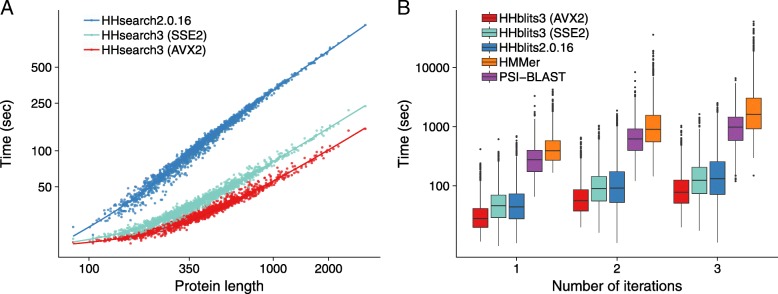
Background: HH-suite is a widely used open source software suite for sensitive sequence similarity searches and protein fold recognition. It is based on pairwise alignment of profile Hidden Markov models (HMMs), which represent multiple sequence alignments of homologous proteins. Results: We developed a single-instruction multiple-data (SIMD) vectorized implementation of the Viterbi algorithm for profile HMM alignment and introduced various other speed-ups. These accelerated the search methods HHsearch by a factor 4 and HHblits by a factor 2 over the previous version 2.0.16. HHblits3 is ∼10× faster than PSI-BLAST and ∼20× faster than HMMER3. Jobs to perform HHsearch and HHblits searches with many query profile HMMs can be parallelized over cores and over cluster servers using OpenMP and message passing interface (MPI). The free, open-source, GPLv3-licensed software is available at https://github.com/soedinglab/hh-suite . Conclusion: The added functionalities and increased speed of HHsearch and HHblits should facilitate their use in large-scale protein structure and function prediction, e.g. in metagenomics and genomics projects.
Overview
The claims and statistics of this paper haven’t been checked yet.
Free: it reads the open-access text and checks the first 5 claims that cite a source we can check. Create a free account to check every claim.
Integrity signals
Registry
Cites
Statistics
Figures
Verification
Claims the paper makes
The claims and statistics of this paper haven’t been checked yet.
Free: it reads the open-access text and checks the first 5 claims that cite a source we can check. Create a free account to check every claim.
Claims other papers make about this one
Each is checked against this paper’s own text: does it say what the citing paper says it does?
The cited source says what the claim attributes to it.
In the citing paper
“Although some advanced sequence-based methods can already assist in this task39–41, the availability of predicted structures may help identify meaningful evolutionary relationships.”
From Clustering predicted structures at the scale of the known protein universe (2023) · cites this paper as [39]
The cited source says what the claim attributes to it.
In the citing paper
“Amino acid sequence analysis27 also detects the previously observed lipase sequence motifs HG and GXSXG (where X is a wildcard) from Mycoplasma mycoides subsp. mycoides LC.70”
From Toward the Complete Functional Characterization of a Minimal Bacterial Proteome (2022) · cites this paper as [27]
The check wasn’t confident either way, so it gives no verdict — never disputed.
In the citing paper
“Two methods were used to identify non-interacting proteins, first a set of proteins with no reported interaction signal in Yeast Two-Hybrid Experiments41 and secondly complexes whose individual proteins were found in different APMS benchmark complexes42. This dataset contains in total 3989 non-interacting pairs.”
From Improved prediction of protein-protein interactions using AlphaFold2 (2021) · cites this paper as [41]
Experimental — accuracy not yet measuredThe check wasn’t confident either way, so it gives no verdict — never disputed.
In the citing paper
“Fortunately, the Continuous Automated Model Evaluation (CAMEO) experiment (7) tests structure prediction servers blindly on protein structures as they are submitted to the PDB.”
From Accurate prediction of protein structures and interactions using a 3-track network (2021) · cites this paper as [7]
Experimental — accuracy not yet measured
Self-check
Percentages, sums and reported differences re-computed from the paper’s own numbers.
The self-check needs the paper’s full text.
Citations
Cites
Gapped BLAST and PSI-BLAST: a new generation of protein database search programs
Altschul, S. (1997) · Nucleic Acids Research · doi:10.1093/nar/25.17.3389 · Cited by 73,302
Berman, H. M. (2000) · Nucleic Acids Research · doi:10.1093/nar/28.1.235 · Cited by 40,196 · cited 2×
“The PDB70 contains profile HMMs for a representative set of sequences from the PDB [22], filtered with a maximum pairwise sequence identity of 70%.”
MethodSearch and clustering orders of magnitude faster than BLAST
Edgar, R. C. (2010) · Bioinformatics · doi:10.1093/bioinformatics/btq461 · Cited by 20,826
Kabsch, W., & Sander, C. (1983) · Biopolymers · doi:10.1002/bip.360221211 · Cited by 15,320 · cited 3×
“pl, and we added structurally defined secondary structure states from DSSP [36] using addss.”
MethodInfluentialFast and sensitive protein alignment using DIAMOND
Buchfink, B., Xie, C., & Huson, D. H. (2015) · Nature Methods · doi:10.1038/nmeth.3176 · Cited by 14,201 · cited 1×
“In recent years, various sequence search tools have been developed that are up to four orders of magnitude faster than BLAST [15–18].”
MethodAccelerated Profile HMM Searches
Eddy, S. R. (2011) · PLoS Computational Biology · doi:10.1371/journal.pcbi.1002195 · Cited by 6,975
Eddy, S. R. (1998) · Bioinformatics · doi:10.1093/bioinformatics/14.9.755 · Cited by 5,515
MMseqs2 enables sensitive protein sequence searching for the analysis of massive data sets
Steinegger, M., & Söding, J. (2017) · Nature Biotechnology · doi:10.1038/nbt.3988 · Cited by 4,840
Self-citationSWISS-MODEL: modelling protein tertiary and quaternary structure using evolutionary information
Biasini, M., Bienert, S., Waterhouse, A., Arnold, K., Studer, G., Schmidt, T., Kiefer, F., Cassarino, T. G., Bertoni, M., Bordoli, L., et al. (2014) · Nucleic Acids Research · doi:10.1093/nar/gku340 · Cited by 4,632
The Pfam protein families database in 2019
El-Gebali, S., Mistry, J., Bateman, A., Eddy, S. R., Luciani, A., Potter, S. C., Qureshi, M., Richardson, L. J., Salazar, G. A., Smart, A., et al. (2019) · Nucleic Acids Research · doi:10.1093/nar/gky995 · Cited by 4,602
Cited by
Items 101–200 of 1,067
Diversity and evolution of B-family DNA polymerases
Kazlauskas, D., Krupovic, M., Guglielmini, J., Forterre, P., & Venclovas, Č. (2020) · Nucleic Acids Research · doi:10.1093/nar/gkaa760 · Cited by 86
“Next, sequence regions located both N and C terminally from the identified DNA polymerase domain were extracted and subjected to profile searches using HHsuite (43) or HHpred server (44) against PDB and Pfam 32.”
MethodInfluentialProgress at protein structure prediction, as seen in CASP15
Elofsson, A. (2023) · Current Opinion in Structural Biology · doi:10.1016/j.sbi.2023.102594 · Cited by 92
PLMSearch: Protein language model powers accurate and fast sequence search for remote homology
Liu, W., Wang, Z., You, R., Xie, C., Wei, H., Xiong, Y., Yang, J., & Zhu, S. (2024) · Nature Communications · doi:10.1038/s41467-024-46808-5 · Cited by 96
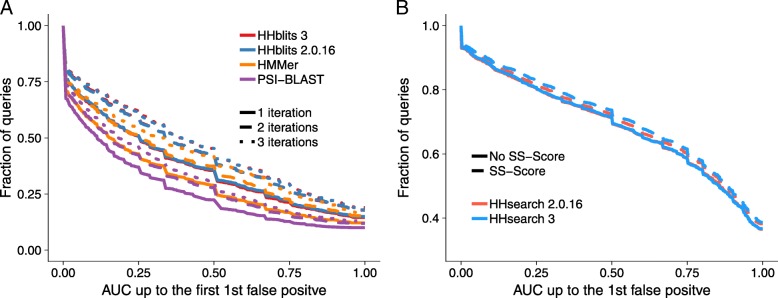
“After sorting the search resultof each query according to similarity (described in Supplementary Table 17), we calculated the sensitivity as the fraction of TPs in the sorted list up to the fi rst FP to better re fl ect the requirements for low false discovery rates in automatic searches.”
MethodFei, H., Li, Y., Liu, Y., Wei, J., Chen, A. A., & Gao, C. (2025) · Cell · doi:10.1016/j.cell.2025.06.014 · Cited by 106
Li, Y., Zhang, C., Bell, E. W., Yu, D., & Zhang, Y. (2019) · Proteins: Structure, Function, and Bioinformatics · doi:10.1002/prot.25798 · Cited by 94
Gene-rich UV sex chromosomes harbor conserved regulators of sexual development
Carey, S. B., Jenkins, J. W., Lovell, J. T., Maumus, F., Sreedasyam, A., Payton, A. C., Shu, S., Tiley, G. P., Fernández‐Pozo, N., Healey, A. L., et al. (2021) · Science Advances · doi:10.1126/sciadv.abh2488 · Cited by 99
A conserved family of immune effectors cleaves cellular ATP upon viral infection
(2023) · doi:10.1016/j.cell.2023.07.020 · Cited by 93
Large language models improve annotation of prokaryotic viral proteins
Flamholz, Z. N., Biller, S. J., & Kelly, L. (2024) · Nature Microbiology · doi:10.1038/s41564-023-01584-8 · Cited by 92
“PHROG VPF similarity was measured using HHsearch 52 for each family against an HMM database of all families in a category, and the average score was collected for each VPF. Category HMM databases were constructed by converting all category families’ multiple sequence files downloaded from PHROGs to a3m format and then…”
InfluentialExtracellular cytochrome nanowires appear to be ubiquitous in prokaryotes
Baquero, D. P., Cvirkaitė‐Krupovič, V., Hu, S. S., Fields, J. L., Liu, X., Rensing, C., Egelman, E. H., Krupovìč, M., & Wang, F. (2023) · Cell · doi:10.1016/j.cell.2023.05.012 · Cited by 95
Kaminski, K., Ludwiczak, J., Pawlicki, K., Alva, V., & Dunin-Horkawicz, S. (2023) · Bioinformatics · doi:10.1093/bioinformatics/btad579 · Cited by 83
“…the “hard” set, the sequences of all ECOD domains (version 20220912), excluding nested domains, with a length of 50–600 amino acids were obtained using the localpdb ECOD plugin (Ludwiczak et al. 2022) and clustered using MMSeqs2 with a sequence identity cutoff of 30% (Steinegger and So¨ding 2017).”
MethodNovel integrative elements and genomic plasticity in ocean ecosystems
Hackl, T., Laurenceau, R., Ankenbrand, M. J., Bliem, C., Cariani, Z., Thomas, E., Dooley, K. D., Arellano, A. A., Hogle, S. L., Berube, P., et al. (2023) · Cell · doi:10.1016/j.cell.2022.12.006 · Cited by 86
Cheng, J., Bendjama, K., Rittner, K., & Malone, B. (2021) · Bioinformatics · doi:10.1093/bioinformatics/btab422 · Cited by 84
Predicting protein-protein interactions in the human proteome
Zhang, J., Humphreys, I. R., Pei, J., Kim, J., Choi, C., Yuan, R., Durham, J., Liu, S., Choi, H.-J., Baek, M., et al. (2025) · Science · doi:10.1126/science.adt1630 · Cited by 87
“The first is HHblits ( 26 ) against UniRef, a widely used approach to prepare MSA inputs for RF and AF.”
Critical assessment of protein intrinsic disorder prediction ( CAID ) ‐ Results of round 2
Conte, A. D., Mehdiabadi, M., Bouhraoua, A., Miguel Monzon, A., Tosatto, S. C. E., & Piovesan, D. (2023) · Proteins: Structure, Function, and Bioinformatics · doi:10.1002/prot.26582 · Cited by 86
Ligand cross-feeding resolves bacterial vitamin B12 auxotrophies
Wienhausen, G., Moraru, C., Bruns, S., Tran, D. Q., Sultana, S., Wilkes, H., Dlugosch, L., Azam, F., & Simon, M. (2024) · Nature · doi:10.1038/s41586-024-07396-y · Cited by 87
High‐accuracy protein structures by combining machine‐learning with physics‐based refinement
Heo, L., & Feig, M. (2020) · Proteins: Structure, Function, and Bioinformatics · doi:10.1002/prot.25847 · Cited by 75
Lateral Gene Transfer of Anion-Conducting Channelrhodopsins Between Green Algae and Giant Viruses
Rozenberg, A., Oppermann, J., Wietek, J., Lahore, R. G. F., Sandaa, R., Bratbak, G., Hegemann, P., & Béjà, O. (2020) · Current Biology · doi:10.1016/j.cub.2020.09.056 · Cited by 89
Diversity, evolution, and classification of the RNA-guided nucleases TnpB and Cas12
Altae-Tran, H., Shmakov, S. A., Makarova, K. S., Wolf, Y. I., Kannan, S., Zhang, F., & Koonin, E. V. (2023) · Proceedings of the National Academy of Sciences · doi:10.1073/pnas.2308224120 · Cited by 77
“These aligned regions were converted into two TnpB HMM profiles for HMMER and HHSearch (50–52).”
Mapping glycoprotein structure reveals Flaviviridae evolutionary history
Mifsud, J. C. O., Lytras, S., Oliver, M. R., Toon, K., Costa, V. A., Holmes, E. C., & Grove, J. (2024) · Nature · doi:10.1038/s41586-024-07899-8 · Cited by 65
Ecology and molecular targets of hypermutation in the global microbiome
Roux, S., Paul, B. G., Bagby, S. C., Nayfach, S., Allen, M. A., Attwood, G., Cavicchioli, R., Chistoserdova, L., Gruninger, R. J., Hallam, S. J., et al. (2021) · Nature Communications · doi:10.1038/s41467-021-23402-7 · Cited by 79
MEDUSA: Prediction of Protein Flexibility from Sequence
Vander Meersche, Y., Cretin, G., de Brevern, A. G., Gelly, J.-C., & Galochkina, T. (2021) · Journal of Molecular Biology · doi:10.1016/j.jmb.2021.166882 · Cited by 71
Mitochondrial genomes revisited: why do different lineages retain different genes?
Butenko, A., Lukeš, J., Speijer, D., & Wideman, J. G. (2024) · BMC Biology · doi:10.1186/s12915-024-01824-1 · Cited by 82
“Obtained HMMs were searched against predicted mitochondrial proteins, and the annotation of the hits was verified using HH-suite3 v.3.3.0 (with PDB70 and Pfam databases) and/or Swiss-Model web server [111] (https:// swiss model. expasy. org/).”
MethodInfluentialBat genomes illuminate adaptations to viral tolerance and disease resistance
Morales, A. E., Dong, Y., Brown, T., Baid, K., Kontopoulos, D. G., Gonzalez, V., Huang, Z., Ahmed, A.-W., Bhuinya, A., Hilgers, L., et al. (2025) · Nature · doi:10.1038/s41586-024-08471-0 · Cited by 78
TCR signaling induces STAT3 phosphorylation to promote TH17 cell differentiation
Qin, Z., Wang, R., Hou, P., Zhang, Y., Yuan, Q., Wang, Y., Yang, Y., & Xu, T. (2024) · The Journal of Experimental Medicine · doi:10.1084/jem.20230683 · Cited by 78
“…2019b), Mgnify (Mitchell et al., 2020), UniProt (UniPort Consortium, 2021), UniRef90 (Suzek et al., 2007), Uniclust30 (Mirdita et al., 2017), PDB70 (Steinegger et al., 2019a), PDB seqres (Berman et al., 2000), and PDB (Berman et al., 2000) to implement AlphaFold-Multimer (Evans et al., 2021,…”
Robin, X., Haas, J., Gumienny, R., Smolinski, A., Tauriello, G., & Schwede, T. (2021) · Proteins: Structure, Function, and Bioinformatics · doi:10.1002/prot.26213 · Cited by 73
“0 (Steinegger et al. 2019) against Uniclust30 (2018_08) (Mirdita et al.”
γ-Linolenic acid in maternal milk drives cardiac metabolic maturation
Paredes, A. L., Justo‐Méndez, R., Jiménez-Blasco, D., Núñez, V., Calero, I., Villalba‐Orero, M., Alegre‐Martí, A., Fischer, T., Gradillas, A., Sant’Anna, V. A. R., et al. (2023) · Nature · doi:10.1038/s41586-023-06068-7 · Cited by 79
Structure prediction of protein-ligand complexes from sequence information with Umol
Bryant, P., Kelkar, A., Guljas, A., Clementi, C., & Noé, F. (2024) · Nature Communications · doi:10.1038/s41467-024-48837-6 · Cited by 75
“Otherwise, the networks are identical allowingforinferencewiththesamecodebutdifferentsetsofnetwork weights.”
Zhang, J., Chen, Q., & Liu, B. (2020) · Journal of Molecular Biology · doi:10.1016/j.jmb.2020.09.008 · Cited by 78
TIGR-Tas: A family of modular RNA-guided DNA-targeting systems in prokaryotes and their viruses
Faure, G., Saito, M., Wilkinson, M. E., Quinones‐Olvera, N., Xu, P., Flam-Shepherd, D., Kim, S. S., Reddy, N. R., Zhu, S., Evgeniou, L., et al. (2025) · Science · doi:10.1126/science.adv9789 · Cited by 79
Self-play reinforcement learning guides protein engineering
Wang, Y., Tang, H., Huang, L., Pan, L., Yang, L., Yang, H., Mu, F., & Yang, M. (2023) · Nature Machine Intelligence · doi:10.1038/s42256-023-00691-9 · Cited by 104
“We retrieve the sequences of the receptor and peptide from the SEQRES lines of the PDB files 54,59 , and then search for the receptor MSA using HHblits 82 .”
MethodMoraru, C. (2023) · Viruses · doi:10.3390/v15041007 · Cited by 85
“…Virus Orthologous Groups (pVOGs) database [28], the Virus Orthol-ogous Group database (VOGDB, https://vogdb.csb.univie.ac.at (accessed on 2 August 2021), [29]), and the Prokaryotic Virus Remote Homologous Groups (PHROG) database [30] are searched using hhsearch [31] (“-id 100 -diff 0 -p 50 -z 1 -”
MethodProgress and opportunities of foundation models in bioinformatics
Li, Q., Hu, Z., Wang, Y., Li, L., Fan, Y., King, I., Jia, G., Wang, S., Song, L., & Li, Y. (2024) · Briefings in Bioinformatics · doi:10.1093/bib/bbae548 · Cited by 91
“For sequence analysis, besides traditional sequence alignment analysis [52], homology detection [53], and molecular evolutionary genetics analysis tasks [54], there are promoter interaction prediction, enhancer–promoter interaction prediction, variant identification, variant effect prediction,…”
MethodGPU-accelerated homology search with MMseqs2
(2025) · doi:10.1038/s41592-025-02819-8 · Cited by 71
“4 ), and DI-AMOND (3) incorporate filtering techniques to prune the majority of dissimilar sequences before executing the computationally expensive gapped computation.”
Self-citationProtein structure-informed bacteriophage genome annotation with Phold
Bouras, G., Grigson, S. R., Mirdita, M., Heinzinger, M., Papudeshi, B., Mallawaarachchi, V., Green, R., Kim, R. S., Mihalia, V., Psaltis, A. J., et al. (2026) · Nucleic Acids Research · doi:10.1093/nar/gkaf1448 · Cited by 71
“3.0) [ 48 ] implemented using the same methods as in the enVhog manuscript was conducted us-ing an E -value of 0.001.”
InfluentialSelf-citationDDGun: an untrained predictor of protein stability changes upon amino acid variants
Montanucci, L., Capriotti, E., Birolo, G., Benevenuta, S., Pancotti, C., Lal, D., & Fariselli, P. (2022) · Nucleic Acids Research · doi:10.1093/nar/gkac325 · Cited by 68
“1 - ac) where ac is the relative solvent accessibility of the residue computed through the DSSP program (22,23).”
Metagenome-derived virus-microbe ratios across ecosystems
López‐García, P., Gutiérrez‐Preciado, A., Krupovìč, M., Ciobanu, M., Deschamps, P., Jardillier, L. E., López‐Pérez, M., Rodríguez‐Valera, F., & Moreira, D. (2023) · The ISME Journal · doi:10.1038/s41396-023-01431-y · Cited by 76
Protein Structure Informed Bacteriophage Genome Annotation with Phold
Bouras, G., Grigson, S. R., Mirdita, M., Heinzinger, M., Papudeshi, B., Mallawaarachchi, V., Green, R., Kim, R. S., Mihalia, V., Psaltis, A. J., et al. (2025) · doi:10.1101/2025.08.05.668817 · Cited by 71
Self-citationSharma, R., Shrivastava, S., Singh, S. K., Kumar, A., Saxena, S., & Singh, R. K. (2021) · Briefings in Bioinformatics · doi:10.1093/bib/bbab422 · Cited by 74
Medvedeva, S., Borrel, G., Krupovìč, M., & Gribaldo, S. (2023) · Nature Microbiology · doi:10.1038/s41564-023-01485-w · Cited by 72
“109 .”
Visualizing metagenomic and metatranscriptomic data: A comprehensive review
Aplakidou, E., Vergoulidis, N., Chasapi, M. N., Venetsianou, N. K., Kokoli, M., Panagiotopoulou, E., Iliopoulos, I., Karatzas, E., Pafilis, E., Georgakopoulos‐Soares, I., et al. (2024) · Computational and Structural Biotechnology Journal · doi:10.1016/j.csbj.2024.04.060 · Cited by 74
“…performed by searching the predicted genes against reference databases (e.g., RefSeq [15], UniRef90 [63], UniProtKB [16], Pfam [64], InterPro [65]) with pairwise alignments (e.g., BLAST [66], DIAMOND [67], MMseqs2 [68]) or Hidden Markov Model (HMM) - based methods (e.g., HMMER [69], HH-suite [70]).”
MethodEvolutionary diversification of methanotrophic ANME-1 archaea and their expansive virome
Laso-Pérez, R., Wu, F., Crémière, A., Speth, D. R., Magyar, J. S., Zhao, K., Krupovic, M., & Orphan, V. J. (2023) · Nature Microbiology · doi:10.1038/s41564-022-01297-4 · Cited by 68
NCBRPred: predicting nucleic acid binding residues in proteins based on multilabel learning
Zhang, J., Chen, Q., & Liu, B. (2021) · Briefings in Bioinformatics · doi:10.1093/bib/bbaa397 · Cited by 68
Mestre, M. R., Gao, L. A., Shah, S. A., López-Beltrán, A., González-Delgado, A., Martínez‐Abarca, F., Iranzo, J., Redrejo‐Rodríguez, M., Zhang, F., & Toro, N. (2022) · Nucleic Acids Research · doi:10.1093/nar/gkac467 · Cited by 72
“Domain annotation of protein clusters was done using HHsearch against the hh-formatted PFAM (37), CDD (38), COG (39), ECOD (40), and pdb30 databases jointly distributed with HH-suite (41) (Supplementary Table S2).”
MethodLaso-Pérez, R., Wu, F., Crémière, A., Speth, D. R., Magyar, J. S., Krupovic, M., & Orphan, V. J. (2022) · doi:10.1101/2022.07.04.498658 · Cited by 68
Deep graph learning of inter-protein contacts
Xie, Z., & Xu, J. (2022) · Bioinformatics · doi:10.1093/bioinformatics/btab761 · Cited by 67
Deep graph learning of inter-protein contacts
Xie, Z., & Xu, J. (2021) · doi:10.1101/2021.08.14.456342 · Cited by 67
Boeckaerts, D., Stock, M., De Baets, B., & Briers, Y. (2022) · Viruses · doi:10.3390/v14061329 · Cited by 58
Hummer, A. M., Schneider, C., Chinery, L., & Deane, C. M. (2025) · Nature Computational Science · doi:10.1038/s43588-025-00823-8 · Cited by 52
Cluster learning-assisted directed evolution
Qiu, Y., Hu, J., & Wei, G.-W. (2021) · Nature Computational Science · doi:10.1038/s43588-021-00168-y · Cited by 61
Polymerization in the actin ATPase clan regulates hexokinase activity in yeast
Stoddard, P. R., Lynch, E. M., Farrell, D. P., Dosey, A. M., DiMaio, F., Williams, T. A., Kollman, J. M., Murray, A. W., & Garner, E. C. (2020) · Science · doi:10.1126/science.aay5359 · Cited by 59
Benler, S., Faure, G., Altae-Tran, H., Shmakov, S., Zhang, F., & Koonin, E. (2021) · mBio · doi:10.1128/mbio.02938-21 · Cited by 58
“The secondary cluster members were aligned using MUSCLE (107) and compared to one another using HHSearch (108).”
BackgroundMethodInfluentialAccurate Prediction of Enzyme Thermostabilization with Rosetta Using AlphaFold Ensembles
Peccati, F., Alunno-Rufini, S., & Jiménez-Osés, G. (2023) · Journal of Chemical Information and Modeling · doi:10.1021/acs.jcim.2c01083 · Cited by 61
Conte, A. D., Bouhraoua, K. E. A., Mehdiabadi, M., Clementel, D., Monzón, A. M., predictors, C., Holehouse, A. S., Griffith, D., Emenecker, R. J., Patil, A., et al. (2023) · Nucleic Acids Research · doi:10.1093/nar/gkad430 · Cited by 64
Bédard, C., Pageau, A., Fijarczyk, A., Mendoza-Salido, D., Alcañiz, A. J., Després, P. C., Durand, R., Plante, S., Alexander, E. M. M., Rouleau, F. D., et al. (2025) · Nature Microbiology · doi:10.1038/s41564-025-02084-7 · Cited by 67
“58) with each sequence as a query to create MSAs representative of the orthologue diversity.”
Dynamic Profiling of β-Coronavirus 3CL M pro Protease Ligand-Binding Sites
Cho, E., Rosa, M., Anjum, R., Mehmood, S., Soban, M., Mujtaba, M., Bux, K., Moin, S. T., Tanweer, M., Dantu, S. C., et al. (2021) · Journal of Chemical Information and Modeling · doi:10.1021/acs.jcim.1c00449 · Cited by 64
Transmission of SARS-CoV-2 from humans to animals and potential host adaptation
Tan, C. C. S., Lam, S. D., Richard, D., Owen, C., Berchtold, D., Orengo, C., Nair, M. S., Kuchipudi, S. V., Kapur, V., van Dorp, L., et al. (2020) · bioRxiv (Cold Spring Harbor Laboratory) · doi:10.1101/2020.11.16.384743 · Cited by 60
VOGDB—Database of Virus Orthologous Groups
(2024) · doi:10.3390/v16081191 · Cited by 61
“The alignment is achieved using the hhalign function from HH-Suite [28].”
MethodLiao, J., Chen, H., Wei, L., & Wei, L. (2022) · Computers in Biology and Medicine · doi:10.1016/j.compbiomed.2022.106145 · Cited by 67
Large-scale invasion of unicellular eukaryotic genomes by integrating DNA viruses
Bellas, C. M., Hackl, T., Plakolb, M.-S., Koslová, A., Fischer, M., & Sommaruga, R. (2023) · Proceedings of the National Academy of Sciences · doi:10.1073/pnas.2300465120 · Cited by 60
“Functional annotations for each cluster were propagated based on either members with known functions or hits among clusters based on remote homology detection with HHsearch (56) combined with manual curation based on comparisons of multiple sequence alignments.”
DefensePredictor: A machine learning model to discover prokaryotic immune systems
DeWeirdt, P. C., Mahoney, E. M., & Laub, M. T. (2026) · Science · doi:10.1126/science.adv7924 · Cited by 62
Computational design of sequence-specific DNA-binding proteins
Glasscock, C. J., Pecoraro, R. J., McHugh, R., Doyle, L. A., Chen, W., Boivin, O., Lonnquist, B., Na, E., Politanska, Y., Haddox, H. K., et al. (2025) · Nature Structural & Molecular Biology · doi:10.1038/s41594-025-01669-4 · Cited by 58
Smug, B. J., Szczepaniak, K., Rocha, E. P. C., Dunin-Horkawicz, S., & Mostowy, R. J. (2023) · Nature Communications · doi:10.1038/s41467-023-43236-9 · Cited by 48
“To gauge the potential extent of such bias, we carried out the all-against-all comparison of 134k rHMMs using hhblits 40 and investigated the relationshipbetweentheirsequencesimilarityandcoverageofallpairs (see Supplementary Fig.”
(2023) · doi:10.1038/s41467-023-40949-9 · Cited by 57
Three families of Asgard archaeal viruses identified in metagenome-assembled genomes
Medvedeva, S., Sun, J., Yutin, N., Koonin, E. V., Nunoura, T., Rinke, C., & Krupovìč, M. (2022) · Nature Microbiology · doi:10.1038/s41564-022-01144-6 · Cited by 60
Derbyshire, M. C., & Raffaele, S. (2023) · doi:10.1101/2023.01.06.522876 · Cited by 57
Isolation and infection cycle of a polinton-like virus virophage in an abundant marine alga
(2023) · doi:10.1038/s41564-022-01305-7 · Cited by 55
Pantolini, L., Studer, G., Pereira, J., Durairaj, J., Tauriello, G., & Schwede, T. (2024) · Bioinformatics · doi:10.1093/bioinformatics/btad786 · Cited by 55
A comprehensive map of human glucokinase variant activity
Gersing, S., Cagiada, M., Gebbia, M., Gjesing, A. P., Coté, A. G., Seesankar, G., Li, R., Tabet, D., Weile, J., Stein, A., et al. (2023) · Genome Biology · doi:10.1186/s13059-023-02935-8 · Cited by 55
Co-evolution-based prediction of metal-binding sites in proteomes by machine learning
Cheng, Y., Wang, H., Xu, H., Liu, Y., Ma, B., Chen, X., Zeng, X., Wang, X., Wang, B., Shiau, C., et al. (2023) · Nature Chemical Biology · doi:10.1038/s41589-022-01223-z · Cited by 60
End-to-end learning of multiple sequence alignments with differentiable Smith–Waterman
Petti, S., Bhattacharya, N., Rao, R., Dauparas, J., Thomas, N., Zhou, J., Rush, A. M., Koo, P., & Ovchinnikov, S. (2023) · Bioinformatics · doi:10.1093/bioinformatics/btac724 · Cited by 54
“Standard approaches use heuristics for penalizing substitutions and gaps and do not take into account the effects of contextual interactions [41].”
Influential(2021) · doi:10.1371/journal.pone.0259871 · Cited by 54
Mycobacterium abscessus pathogenesis identified by phenogenomic analyses
Boeck, L., Burbaud, S., Skwark, M. J., Pearson, W. H., Sangen, J., Wüest, A., Marshall, E. K. P., Weimann, A., Everall, I., Bryant, J. M., et al. (2022) · Nature Microbiology · doi:10.1038/s41564-022-01204-x · Cited by 59
Identification of RNA Virus–Derived RdRp Sequences in Publicly Available Transcriptomic Data Sets
Olendraitė, I., Brown, K., & Firth, A. E. (2023) · Molecular Biology and Evolution · doi:10.1093/molbev/msad060 · Cited by 61
“3.0; Steinegger et al. 2019) was used to compare our set of putative viral ORFs to the Pfam database (Finn et al. 2014).”
Influential3DLigandSite: structure-based prediction of protein–ligand binding sites
McGreig, J. E., Uri, H., Antczak, M., Sternberg, M. J. E., Michaelis, M., & Wass, M. N. (2022) · Nucleic Acids Research · doi:10.1093/nar/gkac250 · Cited by 58
“An HHSearch [49] sequence database was built from the representative sequences for searching user-submitted protein sequences against.”
Wheeler, R. J. (2021) · doi:10.1101/2021.09.02.458674 · Cited by 54
(2023) · doi:10.1126/sciadv.abo5128 · Cited by 53
Improved protein complex prediction with AlphaFold-multimer by denoising the MSA profile
Bryant, P., & Noé, F. (2024) · PLOS Computational Biology · doi:10.1371/journal.pcbi.1012253 · Cited by 53
LZerD Protein-Protein Docking Webserver Enhanced With de novo Structure Prediction
Christoffer, C. W., Bharadwaj, V., Luu, R., & Kihara, D. (2021) · Frontiers in Molecular Biosciences · doi:10.3389/fmolb.2021.724947 · Cited by 54
“…alignments (MSAs) with E-value cutoffs of 0.001, 0.1, 1, and 10 are generated using the DeepMSA (Zhang et al., 2020) method, which uses HH-suite (Steinegger et al., 2019) and HMMER (Johnson et al., 2010) to generate MSAs from the UniClust30 (Mirdita et al., 2017), UniRef90 (Suzek et al.,…”
MethodInfluentialComplete atomic structure of a native archaeal cell surface
von Kügelgen, A., Alva, V., & Bharat, T. A. M. (2021) · Cell Reports · doi:10.1016/j.celrep.2021.110052 · Cited by 53
Platt, R. N., Clecʼh, W. L., Chevalier, F. D., McDew‐White, M., LoVerde, P. T., de Assis, R. R., Oliveira, G., Kinung’hi, S., Djirmay, A. G., Steinauer, M. L., et al. (2022) · Molecular Ecology · doi:10.1111/mec.16395 · Cited by 55
“Gene names and putative functions were taken from UniProtKB (release 2020_06) or HHsearch (Steinegger et al., 2019) annotations from Le Clec’h et al. (2021).”
MethodInfection cycle and phylogeny of the Polinton-like virus Phaeocystis globosa virus virophage-14T
Roitman, S., Rozenberg, A., Lavy, T., Brussaard, C. P. D., Kleifeld, O., & Béjà, O. (2022) · doi:10.1101/2022.07.28.501842 · Cited by 53
Zhao, Y., He, B., Li, C., Xu, Z., Su, X., Rossjohn, J., Song, J., & Yao, J. (2022) · doi:10.1101/2022.09.30.510251 · Cited by 53
Rapid directed evolution guided by protein language models and epistatic interactions
Tran, V. Q., Nemeth, M., Bartie, L. J., Chandrasekaran, S. S., Fanton, A., Moon, H. C., Hie, B., Konermann, S., & Hsu, P. D. (2026) · Science · doi:10.1126/science.aea1820 · Cited by 65
Protein tertiary structure prediction and refinement using deep learning and Rosetta in CASP14
Anishchenko, I., Baek, M., Park, H., Hiranuma, N., Kim, D. E., Dauparas, J., Mansoor, S., Humphreys, I. R., & Baker, D. (2021) · Proteins: Structure, Function, and Bioinformatics · doi:10.1002/prot.26194 · Cited by 50
Improved protein complex prediction with AlphaFold-multimer by denoising the MSA profile
Bryant, P., & Noé, F. (2023) · doi:10.1101/2023.07.04.547638 · Cited by 52
A closed Candidatus Odinarchaeum chromosome exposes Asgard archaeal viruses
Tamarit, D., Caceres, E. F., Krupovic, M., Nijland, R., Eme, L., Robinson, N. P., & Ettema, T. J. G. (2022) · Nature Microbiology · doi:10.1038/s41564-022-01122-y · Cited by 47
A comprehensive survey on protein-ligand binding site prediction
Xia, Y., Pan, X., & Shen, H. (2024) · Current Opinion in Structural Biology · doi:10.1016/j.sbi.2024.102793 · Cited by 56
Wu, L., Pappas, N., Wijesekara, Y., Piedade, G. J., Brussaard, C. P. D., & Dutilh, B. E. (2024) · Genome biology · doi:10.1186/s13059-024-03236-4 · Cited by 57
“Gene annotation plots were created by a custom python script, after searching the translated amino acid sequences against the PHROG (v4) [96] HMM profile database using hhsearch from the HH-suite (v.3.3.0) [97].”
MethodInfluentialDesign of linear and cyclic peptide binders from protein sequence information
Li, Q., Vlachos, E. N., & Bryant, P. (2025) · Communications Chemistry · doi:10.1038/s42004-025-01601-3 · Cited by 59
Singh, J., Litfin, T., Singh, J., Paliwal, K., & Zhou, Y. (2022) · Bioinformatics · doi:10.1093/bioinformatics/btac053 · Cited by 52
Rhodopsin-bestrophin fusion proteins from unicellular algae form gigantic pentameric ion channels
Rozenberg, A., Kaczmarczyk, I., Matzov, D., Vierock, J., Nagata, T., Sugiura, M., Katayama, K., Kawasaki, Y., Konno, M., Nagasaka, Y., et al. (2022) · Nature Structural & Molecular Biology · doi:10.1038/s41594-022-00783-x · Cited by 53
Zeeshan, M., Pandey, R., Ferguson, D. J. P., Tromer, E. C., Márkus, R., Abel, S., Brady, D., Daniel, E., Limenitakis, R., Bottrill, A. R., et al. (2020) · Journal of Cell Science · doi:10.1242/jcs.245753 · Cited by 53
“SPC24 orthologues in Coccidia and Hematozoa were detected by comparing our custom-made eukaryote-wide HMMs with HMM profiles of automatically defined orthologous groups (OrthoFinder; Emms and Kelly, 2019), using the secondary structure aware HMM versus HMM search algorithm HHsearch (Steinegger et al., 2019).”
Association of virome dynamics with mosquito species and environmental factors
Liu, Q., Cui, F., Liu, X., Fu, Y., Fang, W., Kang, X., Lu, H., Li, S., Liu, B., Guo, W., et al. (2023) · Microbiome · doi:10.1186/s40168-023-01556-4 · Cited by 53
“All RdRp ORFs, including those downloaded from Genebank 8/18/2021 and those from newly identified viruses in this study, clustered into divergent virus OTUs on the basis of a protein identity of 90%.”
MethodInfluentialdbAPIS: a database of anti-prokaryotic immune system genes
Yan, Y., Zheng, J., Zhang, X., & Yin, Y. (2023) · Nucleic Acids Research · doi:10.1093/nar/gkad932 · Cited by 51
Li, M., Wang, H., Yang, Z., Zhang, L., & Zhu, Y. (2023) · Computational and Structural Biotechnology Journal · doi:10.1016/j.csbj.2023.11.006 · Cited by 53
“In this experiment, we employed the HHblits [47] program to perform searches in the Uni-clust30_2020_06 [48] database, generating HMM profiles in bulk.”
MethodPang, Y., & Liu, B. (2024) · BMC Biology · doi:10.1186/s12915-023-01803-y · Cited by 51
“Specifically, for each sequence in the DP93 dataset, we employed the HHblits [80] tools to conduct homology searches against the UniProt database and grouped the sequences according to the number of rows in the MSA search results.”
MethodDominant contribution of Asgard archaea to eukaryogenesis
Tobiasson, V., Luo, J., Wolf, Y. I., & Koonin, E. V. (2026) · Nature · doi:10.1038/s41586-025-09960-6 · Cited by 49
“The resulting eukaryotic HMMs were queried against the prokaryotic dataset using HHblits 43 to identify sets of homologous protein sequences.”
InfluentialXu, G., Wang, Q., & Ma, J. (2020) · Bioinformatics · doi:10.1093/bioinformatics/btaa629 · Cited by 53
Akere, A. M., Chen, S. H., Liu, X., Chen, Y., Dantu, S. C., Pandini, A., Bhowmik, D., & Haider, S. M. (2020) · Biochemical Journal · doi:10.1042/bcj20200477 · Cited by 51
Singh, J., Litfin, T., Paliwal, K., Singh, J., Hanumanthappa, A. K., & Zhou, Y. (2021) · Bioinformatics · doi:10.1093/bioinformatics/btab316 · Cited by 48
Metadata
- Authors
- Steinegger, M., Meier, M., Mirdita, M., Vöhringer, H., Haunsberger, S. J., & Söding, J.
- Affiliations
- Johns Hopkins University (US)
- Max Planck Institute for Biophysical Chemistry (DE)
- European Bioinformatics Institute (GB)
- Royal College of Surgeons in Ireland (IE)
- Corresponding author
- Söding, Johannes
- Venue
- BMC Bioinformatics
- Published
- 2019-09-14
- Volume
- 20
- Issue
- 1
- Pages
- 473-473
- ISSN
- 1471-2105 (ISSN-L)
- PMC
- PMC6744700
- OpenAlex
- W2972411752
- Cited by
- 1,145
- References
- 38
- Citations by year
- 2026: 106 · 2025: 167 · 2024: 208 · 2023: 248 · 2022: 168 · 2021: 176 · 2020: 63 · 2019: 7
- FWCI
- 35.23
- Type
- journal article
- Language
- en
- Open access
- gold
- doi.org
- Licence
- cc-by
- creativecommons.org/licenses/by/4.0/ (tdm)
- creativecommons.org/licenses/by/4.0/ (vor)
- Locations
- BMC Bioinformatics (publishedVersion, cc-by)
- bioRxiv (Cold Spring Harbor Laboratory) (acceptedVersion, cc-by-nc-nd)
- PubMed Central (publishedVersion, cc-by)
- PubMed (publishedVersion)
- DOAJ (DOAJ: Directory of Open Access Journals) (submittedVersion)
- Figshare (submittedVersion, cc-by)
- GoeScholar The Publication Server of the Georg-August-Universität Göttingen (Georg-August-Universität Göttingen) (submittedVersion, cc-by)
- MPG.PuRe (Max Planck Society) (submittedVersion, other-oa)
- Seoul National University Open Repository (Seoul National University) (submittedVersion)
- Funders
- Horizon 2020 (685778)
- Topics
- Life Sciences › Biochemistry, Genetics and Molecular Biology › Molecular Biology › Genomics and Phylogenetic Studies
- Life Sciences › Biochemistry, Genetics and Molecular Biology › Molecular Biology › Protein Structure and Dynamics
- Life Sciences › Biochemistry, Genetics and Molecular Biology › Molecular Biology › Machine Learning in Bioinformatics
- Keywords
- profile hidden Markov models, Viterbi algorithm, SIMD vectorization, remote homology detection, protein fold recognition, protein annotation, sequence similarity search, parallel computing, protein structure prediction, metagenomics
- MeSH terms
- Algorithms, Markov Chains, Software, Sequence Alignment, Sequence Analysis, Protein, Molecular Sequence Annotation
About these checks
Registry, retraction, Cites and statistics results are computed, not judged, with one exception: a printed reference that no index lists is read once by a model before it counts as a citation error. Claims are extracted by a model and kept only when their quote appears verbatim in the text; each cited source is then checked, with a model’s help, for whether it says what the claim relies on. Those verdicts can be wrong — read the claim’s quote and the cited source before relying on one.
Statistics and arithmetic are recomputed, not judged.
Confidence bands are shown only for fields calibrated on our annotated test set. None is calibrated yet, so no band is shown.
What counts as a claim ›How we measure confidence ›How we check this ›
Are you an author, or do you see a problem with this page? Request a review
Data sources
Bibliographic data: Semantic Scholar, OpenAlex, Crossref.
Contains information from the Semantic Scholar Academic Graph Datasets, made available under the ODC Attribution License (ODC-BY 1.0).
Semantic Scholar’s data is described in: Kinney, R., et al. (2023). The Semantic Scholar Open Data Platform. arXiv:2301.10140.
