

HH-suite3 for fast remote homology detection and deep protein annotation
Open accessPublished version of a preprint
The DOI matches its Crossref record; 38 of the 38 references it cites were found in a registry or an index.
Abstract
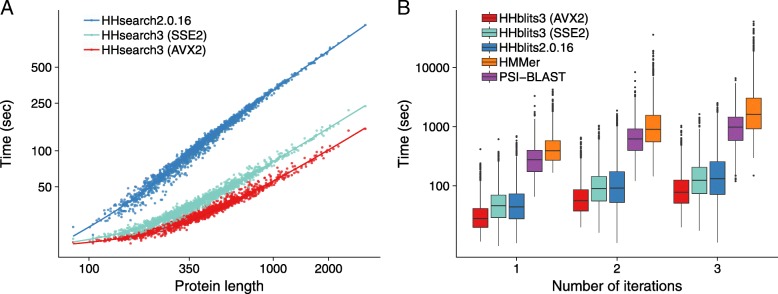
Background: HH-suite is a widely used open source software suite for sensitive sequence similarity searches and protein fold recognition. It is based on pairwise alignment of profile Hidden Markov models (HMMs), which represent multiple sequence alignments of homologous proteins. Results: We developed a single-instruction multiple-data (SIMD) vectorized implementation of the Viterbi algorithm for profile HMM alignment and introduced various other speed-ups. These accelerated the search methods HHsearch by a factor 4 and HHblits by a factor 2 over the previous version 2.0.16. HHblits3 is ∼10× faster than PSI-BLAST and ∼20× faster than HMMER3. Jobs to perform HHsearch and HHblits searches with many query profile HMMs can be parallelized over cores and over cluster servers using OpenMP and message passing interface (MPI). The free, open-source, GPLv3-licensed software is available at https://github.com/soedinglab/hh-suite . Conclusion: The added functionalities and increased speed of HHsearch and HHblits should facilitate their use in large-scale protein structure and function prediction, e.g. in metagenomics and genomics projects.
Overview
The claims and statistics of this paper haven’t been checked yet.
Free: it reads the open-access text and checks the first 5 claims that cite a source we can check. Create a free account to check every claim.
Integrity signals
Registry
Cites
Statistics
Figures
Verification
Claims the paper makes
The claims and statistics of this paper haven’t been checked yet.
Free: it reads the open-access text and checks the first 5 claims that cite a source we can check. Create a free account to check every claim.
Claims other papers make about this one
Each is checked against this paper’s own text: does it say what the citing paper says it does?
The cited source says what the claim attributes to it.
In the citing paper
“Although some advanced sequence-based methods can already assist in this task39–41, the availability of predicted structures may help identify meaningful evolutionary relationships.”
From Clustering predicted structures at the scale of the known protein universe (2023) · cites this paper as [39]
The cited source says what the claim attributes to it.
In the citing paper
“Amino acid sequence analysis27 also detects the previously observed lipase sequence motifs HG and GXSXG (where X is a wildcard) from Mycoplasma mycoides subsp. mycoides LC.70”
From Toward the Complete Functional Characterization of a Minimal Bacterial Proteome (2022) · cites this paper as [27]
The check wasn’t confident either way, so it gives no verdict — never disputed.
In the citing paper
“Two methods were used to identify non-interacting proteins, first a set of proteins with no reported interaction signal in Yeast Two-Hybrid Experiments41 and secondly complexes whose individual proteins were found in different APMS benchmark complexes42. This dataset contains in total 3989 non-interacting pairs.”
From Improved prediction of protein-protein interactions using AlphaFold2 (2021) · cites this paper as [41]
Experimental — accuracy not yet measuredThe check wasn’t confident either way, so it gives no verdict — never disputed.
In the citing paper
“Fortunately, the Continuous Automated Model Evaluation (CAMEO) experiment (7) tests structure prediction servers blindly on protein structures as they are submitted to the PDB.”
From Accurate prediction of protein structures and interactions using a 3-track network (2021) · cites this paper as [7]
Experimental — accuracy not yet measured
Self-check
Percentages, sums and reported differences re-computed from the paper’s own numbers.
The self-check needs the paper’s full text.
Citations
Cites
Gapped BLAST and PSI-BLAST: a new generation of protein database search programs
Altschul, S. (1997) · Nucleic Acids Research · doi:10.1093/nar/25.17.3389 · Cited by 73,302
Berman, H. M. (2000) · Nucleic Acids Research · doi:10.1093/nar/28.1.235 · Cited by 40,196 · cited 2×
“The PDB70 contains profile HMMs for a representative set of sequences from the PDB [22], filtered with a maximum pairwise sequence identity of 70%.”
MethodSearch and clustering orders of magnitude faster than BLAST
Edgar, R. C. (2010) · Bioinformatics · doi:10.1093/bioinformatics/btq461 · Cited by 20,826
Kabsch, W., & Sander, C. (1983) · Biopolymers · doi:10.1002/bip.360221211 · Cited by 15,320 · cited 3×
“pl, and we added structurally defined secondary structure states from DSSP [36] using addss.”
MethodInfluentialFast and sensitive protein alignment using DIAMOND
Buchfink, B., Xie, C., & Huson, D. H. (2015) · Nature Methods · doi:10.1038/nmeth.3176 · Cited by 14,201 · cited 1×
“In recent years, various sequence search tools have been developed that are up to four orders of magnitude faster than BLAST [15–18].”
MethodAccelerated Profile HMM Searches
Eddy, S. R. (2011) · PLoS Computational Biology · doi:10.1371/journal.pcbi.1002195 · Cited by 6,975
Eddy, S. R. (1998) · Bioinformatics · doi:10.1093/bioinformatics/14.9.755 · Cited by 5,515
MMseqs2 enables sensitive protein sequence searching for the analysis of massive data sets
Steinegger, M., & Söding, J. (2017) · Nature Biotechnology · doi:10.1038/nbt.3988 · Cited by 4,840
Self-citationSWISS-MODEL: modelling protein tertiary and quaternary structure using evolutionary information
Biasini, M., Bienert, S., Waterhouse, A., Arnold, K., Studer, G., Schmidt, T., Kiefer, F., Cassarino, T. G., Bertoni, M., Bordoli, L., et al. (2014) · Nucleic Acids Research · doi:10.1093/nar/gku340 · Cited by 4,632
The Pfam protein families database in 2019
El-Gebali, S., Mistry, J., Bateman, A., Eddy, S. R., Luciani, A., Potter, S. C., Qureshi, M., Richardson, L. J., Salazar, G. A., Smart, A., et al. (2019) · Nucleic Acids Research · doi:10.1093/nar/gky995 · Cited by 4,602
Cited by
Items 301–400 of 1,067
Next Generation Protein Structure Predictions and Genetic Variant Interpretation
Diwan, G. D., Gonzalez-Sanchez, J. C., Apic, G., & Russell, R. B. (2021) · Journal of Molecular Biology · doi:10.1016/j.jmb.2021.167180 · Cited by 30
Gulyaeva, A. A., Garmaeva, S., Kurilshikov, A., Vila, A. V., Riksen, N. P., Netea, M. G., Weersma, R. K., Fu, J., & Zhernakova, A. (2022) · Viruses · doi:10.3390/v14102305 · Cited by 32
“pl [51] to first combine TerL alignment VOG00461 from VOG 207 [39] and the alignment of 5130 TerL sequences from [37], and then added the alignment of 823 TerL sequences from [38] to the MSA.”
MethodMetagenome Mining Reveals Hidden Genomic Diversity of Pelagimyophages in Aquatic Environments
Zaragoza-Solas, A., Rodríguez‐Valera, F., & López‐Pérez, M. (2020) · mSystems · doi:10.1128/msystems.00905-19 · Cited by 32
Abdullahi, M., Adeniji, S. E., Arthur, D. E., & Haruna, A. (2021) · Journal of Genetic Engineering and Biotechnology · doi:10.1186/s43141-020-00102-1 · Cited by 35
Jain, A., Terashi, G., Kagaya, Y., Maddhuri Venkata Subramaniya, S. R., Christoffer, C., & Kihara, D. (2021) · Scientific Reports · doi:10.1038/s41598-021-87204-z · Cited by 29
Geometric Transformers for Protein Interface Contact PredictionPreprint
Morehead, A., Chen, C., & Cheng, J. (2021) · arXiv (Cornell University) · doi:10.48550/arxiv.2110.02423 · Cited by 33
A genomic atlas of the human gut virome elucidates genetic factors shaping host interactionsPreprint
Camargo, A. P., Baltoumas, F. A., Ndela, É. O., Fiamenghi, M. B., Merrill, B. D., Carter, M. M., Pinto, Y., Chakraborty, M., Andreeva, A. E., Ghiotto, G., et al. (2025) · bioRxiv (Cold Spring Harbor Laboratory) · doi:10.1101/2025.11.01.686033 · Cited by 34
Varadi, M., Bordin, N., Orengo, C., & Velankar, S. (2023) · Current Opinion in Structural Biology · doi:10.1016/j.sbi.2023.102543 · Cited by 29
“…of uncharacterized domains before the early 2020s relied on local alignment tools such as BLAST [35], searches against HMM libraries such as HMMER3 [36] and HHsuite [37] if only the sequences were available, or using accurate but very slow structural aligners like DALI, SSAP, TMalign, CE [38 e 41].”
Zhang, C., Wang, Q., Li, Y., Teng, A., Hu, G., Wuyun, Q., & Zheng, W. H. (2024) · Biomolecules · doi:10.3390/biom14121531 · Cited by 40
Ngashangva, N., Mukherjee, P. K., Sharma, K., Kalita, M. C., & Indira, S. (2021) · Frontiers in Microbiology · doi:10.3389/fmicb.2021.656896 · Cited by 30
Computational analysis and prediction of PE_PGRS proteins using machine learning
Li, F., Guo, X., Xiang, D., Pitt, M. E., Bainomugisa, A., & Coin, L. (2022) · Computational and Structural Biotechnology Journal · doi:10.1016/j.csbj.2022.01.019 · Cited by 29
“3 with two state-of-the-art alignment-based approaches, including BLASTP [15] and PHMMER [16], and three remote homology detection tools, including HHsuite [18], ProtDec-BLSTM [19], and ProtDet-”
MethodInfluentialvon Kügelgen, A., van Dorst, S., Alva, V., & Bharat, T. A. M. (2022) · Proceedings of the National Academy of Sciences · doi:10.1073/pnas.2203156119 · Cited by 31
OpenProteinSet: Training data for structural biology at scale
Ahdritz, G., Bouatta, N., Kadyan, S., Jarosch, L., Berenberg, D., Fisk, I., Watkins, A. M., Ra, S., Bonneau, R., & AlQuraishi, M. (2023) · arXiv (Cornell University) · doi:10.48550/arxiv.2308.05326 · Cited by 14
“To compute templates, we used PDB70 downloaded on December 19, 2021.”
MethodInfluentialRannon, E., Shaashua, S., & Burstein, D. E. (2025) · Microbiome · doi:10.1186/s40168-025-02055-4 · Cited by 29
“However, the percentage of unknown proteins increased in each step of the pipeline, reaching 55.9% representing 213 unannotated proteins in the final step (HH-suite remote homology search [38]).”
InfluentialCASP16 Protein Monomer Structure Prediction Assessment
Yuan, R., Zhang, J., Kryshtafovych, A., Schaeffer, R. D., Zhou, J., Cong, Q., & Grishin, N. V. (2025) · Proteins Structure Function and Bioinformatics · doi:10.1002/prot.70031 · Cited by 30
“We noticed that there was no significant correlation between the availability of PDB templates (found by HHsuite [74]) and model quality (supplemental Figure S7).”
Clustering FunFams using sequence embeddings improves EC purity
Littmann, M., Bordin, N., Heinzinger, M., Schütze, K., Dallago, C., Orengo, C., & Rost, B. (2021) · Bioinformatics · doi:10.1093/bioinformatics/btab371 · Cited by 26
“Subsequently, 28 CATH-FunFHMMer [7] is applied to transverse the tree and GroupSim [25] conservation 29 patterns are employed to merge or cut the tree branches to obtain the largest possible 30 alignment that is functionally pure.”
Creative destruction: New protein folds from old
Álvarez-Carreño, C., Gupta, R. J., Petrov, A. S., & Williams, L. D. (2022) · Proceedings of the National Academy of Sciences · doi:10.1073/pnas.2207897119 · Cited by 28
“The MSAs for ribosomal protein domains (deposited in FigShare, DOI 10.6084/m9.figshare.19412180, as Files 2–6 (81)) were transformed to profile hidden Markov models using the HHsuite version 3.3.0 (82).”
InfluentialDIPS-Plus: The enhanced database of interacting protein structures for interface prediction
Morehead, A., Chen, C., Sedova, A., & Cheng, J. (2023) · Scientific Data · doi:10.1038/s41597-023-02409-3 · Cited by 28
“As such, to gather sequence profile features for DIPS-Plus 10 , profile HMMs were derived for each structure’s residues using HH-suite3 by first generating MSAs using HHblits followed by taking the output of HHblits to create profile HMMs using HHmake.”
BackgroundMethodInfluentialCaspase-1 activates gasdermin A in non-mammals
(2024) · doi:10.7554/elife.92362.4 · Cited by 27
Approaches to increase the validity of gene family identification using manual homology search tools
Nestor, B. J., Bayer, P. E., Fernandez, C. G. T., Edwards, D., & Finnegan, P. M. (2023) · Genetica · doi:10.1007/s10709-023-00196-8 · Cited by 30
“…a large amount of bioinformatic user-skill, computational power, and in-depth knowledge of tool usage to achieve precise identification of all gene family members without inclusion of members in other gene families (Steinegger et al. 2019; de Boissier and Habermann 2020; Nevers et al. 2020).”
BackgroundImproved Sampling Strategies for Protein Model Refinement Based on Molecular Dynamics Simulation
Heo, L., Arbour, C. F., Janson, G., & Feig, M. (2021) · Journal of Chemical Theory and Computation · doi:10.1021/acs.jctc.0c01238 · Cited by 27
Phylogenetic profiling resolves early emergence of PRC2 and illuminates its functional core
Sharaf, A., Vijayanathan, M., Oborník, M., & Mozgová, I. (2022) · Life Science Alliance · doi:10.26508/lsa.202101271 · Cited by 33
Best templates outperform homology models in predicting the impact of mutations on protein stability
Pak, M. A., & Ivankov, D. N. (2022) · Bioinformatics · doi:10.1093/bioinformatics/btac515 · Cited by 26
Cha, J. H., Kim, N., Ma, J., Lee, S.-H., Koh, G., Yang, S., Beck, S., Byeon, I., Lee, B., & Lee, I. (2025) · Cell Host & Microbe · doi:10.1016/j.chom.2025.10.001 · Cited by 29
Genomic analysis reveals cryptic diversity in aphelids and sheds light on the emergence of Fungi
Mikhailov, K. V., Karpov, S. A., Letcher, P. M., Lee, P. A., Logacheva, M. D., Penin, A. A., Nesterenko, M. A., Pozdnyakov, I. R., Potapenko, E. V., Sherbakov, D. Y., et al. (2022) · Current Biology · doi:10.1016/j.cub.2022.08.071 · Cited by 41
Homma, M., Wakabayashi, T., Moriwaki, Y., Shiotani, N., Shigeta, T., Isobe, K., Okazawa, A., Ohta, D., Terada, T., Shimizu, K., et al. (2024) · Proceedings of the National Academy of Sciences · doi:10.1073/pnas.2313683121 · Cited by 27
Hu, W., & Ohue, M. (2025) · Computational and Structural Biotechnology Journal · doi:10.1016/j.csbj.2025.01.022 · Cited by 26
Liu, J., Zhao, K., & Zhang, G. (2023) · Briefings in Bioinformatics · doi:10.1093/bib/bbac507 · Cited by 25
Si, Y., & Yan, C. (2023) · Briefings in Bioinformatics · doi:10.1093/bib/bbad039 · Cited by 25
Sen, N., Anishchenko, I., Bordin, N., Sillitoe, I., Velankar, S., Baker, D., & Orengo, C. (2022) · Briefings in Bioinformatics · doi:10.1093/bib/bbac187 · Cited by 25
“The resulting seed alignments were enriched with additional homologs by performing iterative sequence hhblits [102] searches against uniclust30 (version UniRef30_2020_01) [103] and BFD [104, 105] databases as outlined by Anishchenko and colleagues [106] (details in Supplementary Text 12 available…”
Pennica, C., Hanna, G., Islam, S. A., Sternberg, M. J. E., & David, A. (2023) · Journal of Molecular Biology · doi:10.1016/j.jmb.2023.168060 · Cited by 25
“To avoid an overlap of homologous proteins between the training and testing sets, homology between proteins was assessed using the HH-suite, 32 as detailed in Supplementary Data (Suppl Material and Figure S1).”
α/β Hydrolases: Toward Unraveling Entangled Classification
Ozhelvaci, F., & Steczkiewicz, K. (2024) · Proteins Structure Function and Bioinformatics · doi:10.1002/prot.26776 · Cited by 25
“HHSEARCH, a part of HHSUITE package [102], is a remote homology detection program which, instead of seeking for similarities between raw sequences, or even sequence profiles, boosts its sensitivity and specificity by comparing meta-profiles—statistical objects encoding information about residue…”
Building blocks and blueprints for bacterial autolysins
Mitchell, S. J., Verma, D., Griswold, K. E., & Bailey‐Kellogg, C. (2021) · PLoS Computational Biology · doi:10.1371/journal.pcbi.1008889 · Cited by 26
“To go further in attempting to infer functional roles for these regions, we could more generally search for remote homologs in the broader genomic database [62], employ a specially-trained predictor of lytic function [63], or see if predicted structures [64] provide any insights.”
BackgroundNovel Paju Apodemus paramyxovirus 1 and 2, harbored by Apodemus agrarius in the Republic of Korea
Lee, S., No, J. S., Kim, K., Budhathoki, S., Park, K., Lee, G., Cho, S., Choi, H. S., Kim, B.-H., Cho, S., et al. (2021) · Virology · doi:10.1016/j.virol.2021.06.011 · Cited by 32
Hmila, I., Vaikath, N. N., Majbour, N. K., Erskine, D., Sudhakaran, I. P., Gupta, V. R., Ghanem, S. S., Islam, Z., Emara, M. M., Abdesselem, H., et al. (2022) · FEBS Journal · doi:10.1111/febs.16376 · Cited by 28
Reversible modification of mitochondrial ADP/ATP translocases by paired Legionella effector proteins
Kubori, T., Lee, J., Kim, H., Yamazaki, K., Nishikawa, M., Kitao, T., Oh, B., & Nagai, H. (2022) · Proceedings of the National Academy of Sciences · doi:10.1073/pnas.2122872119 · Cited by 25
“An HHsearch (32) conducted against a PDB70 database revealed that three L. pneumophila proteins, namely, Lpg0080 (Ceg3), Lpg0181 (Lart1), and Lpg2523 (Lem26), are putative ARTs, as they can be aligned with bacterial toxins (Fig.”
MethodRibosomal stalk-captured CARF-RelE ribonuclease inhibits translation following CRISPR signaling
Mogila, I., Tamulaitienė, G., Keda, K., Timinskas, A., Rukšėnaitė, A., Sasnauskas, G., Venclovas, Č., Šikšnys, V., & Tamulaitis, G. (2023) · Science · doi:10.1126/science.adj2107 · Cited by 25
Liu, Z., Gong, Y., Bao, Y., Guo, Y., Wang, H., & Lin, G. N. (2021) · Frontiers in Bioengineering and Biotechnology · doi:10.3389/fbioe.2020.629937 · Cited by 25
Modeling SARS‐CoV‐2 proteins in the CASP‐commons experiment
Kryshtafovych, A., Moult, J., Billings, W. M., Corte, D. D., Fidelis, K. A., Kwon, S., Olechnovič, K., Seok, C., Venclovas, Č., Won, J., et al. (2021) · Proteins Structure Function and Bioinformatics · doi:10.1002/prot.26231 · Cited by 27
Petrenko, V. A., Gillespie, J. W., Plano, L. M. D., & Shokhen, M. (2022) · Viruses · doi:10.3390/v14020384 · Cited by 25
“The 3D structure of 1FDM, from the PDB, was identified as a template by a search performed against the SWISS-MODEL template library with BLAST [63] and HHBlits [64].”
MethodSen, N., Anishchenko, I., Bordin, N., Sillitoe, I., Velankar, S., Baker, D., & Orengo, C. (2021) · doi:10.1101/2021.11.17.468998 · Cited by 25
Yang, Y., Jerger, A., Feng, S., Wang, Z., Brasfield, C., Cheung, M. S., Zucker, J., & Guan, Q. (2024) · Communications Biology · doi:10.1038/s42003-024-07359-z · Cited by 24
AlphaFold2 in biomedical research: facilitating the development of diagnostic strategies for disease
Zhang, H., Lan, J., Wang, H., Lu, R., Zhang, N., He, X., Yang, J., & Chen, L. (2024) · Frontiers in Molecular Biosciences · doi:10.3389/fmolb.2024.1414916 · Cited by 25
Zero-shot transfer of protein sequence likelihood models to thermostability prediction
Reeves, S., & Kalyaanamoorthy, S. (2024) · Nature Machine Intelligence · doi:10.1038/s42256-024-00887-7 · Cited by 25
Cenote-Taker 3 for fast and accurate virus discovery and annotation of the virome
Tisza, M. J., Varsani, A., Petrosino, J. F., & Cregeen, S. J. (2026) · Peer Community Journal · doi:10.24072/pcjournal.706 · Cited by 24
Li, Y., Zhang, C., Zheng, W. H., Zhou, X., Bell, E. W., Yu, D., & Zhang, Y. (2021) · Proteins Structure Function and Bioinformatics · doi:10.1002/prot.26211 · Cited by 27
“HMM profile features (30 descriptors for each position) are also considered as the third component by building a profile hidden Markov models from the input alignment using the hhmake program in the hhsuite package.(39) The last feature encodes the categorical target sequence with one-hot-encoding.”
MethodNgo, V. Q. H., Enault, F., Midoux, C., Mariadassou, M., Chapleur, O., Mazéas, L., Loux, V., Bouchez, T., Krupovìč, M., & Bize, A. (2022) · Environmental Microbiology · doi:10.1111/1462-2920.16120 · Cited by 27
“The predicted genes were further analysed by using HHsuite (Steinegger et al., 2019) against PHROGs (Terzian et al.”
MethodManfredi, M., Savojardo, C., Martelli, P. L., & Casadio, R. (2023) · Journal of Molecular Biology · doi:10.1016/j.jmb.2023.167963 · Cited by 19
Deep transfer learning for inter-chain contact predictions of transmembrane protein complexes
Lin, P., Yan, Y., Tao, H., & Huang, S. (2023) · Nature Communications · doi:10.1038/s41467-023-40426-3 · Cited by 29
“Finally, we used the hh fi lter 54 to select the most diverse sequence with the diff 512 option for the MSA.”
MethodSubramaniya, S. R. M. V., Terashi, G., Jain, A., Kagaya, Y., & Kihara, D. (2021) · Bioinformatics · doi:10.1093/bioinformatics/btab220 · Cited by 27
Atomic resolution ensembles of intrinsically disordered proteins with Alphafold
Schnapka, V., Morozova, T. I., Sen, S., & Bonomi, M. (2026) · Nature Communications · doi:10.1038/s41467-026-69172-y · Cited by 23
“MSAs were performed on Uniref90 69 and MGnify 70 and template search was performed on the pdb70 71 with HHsearch 71 and HHblits 72 .”
Rapid and accurate prediction of protein homo-oligomer symmetry using Seq2Symm
Kshirsagar, M., Meller, A., Humphreys, I. R., Sledzieski, S., Xu, Y., Dodhia, R., Horvitz, E., Berger, B., Bowman, G. R., Ferres, J. L., et al. (2025) · Nature Communications · doi:10.1038/s41467-025-57148-3 · Cited by 23
“…15 (Evolutionary Scale Modeling 2) and RoseTTAFold2 21 (RF2) against a template-based method, HHSearch 7 , using metrics suited for class-imbalanced datasets and multi-label classi fi cation: Area Under Precision-Recall Curve (AUC-PR), confusion…”
Diversification of molecular pattern recognition in bacterial NLR-like proteins
(2024) · doi:10.1038/s41467-024-54214-0 · Cited by 23
Discovery of archaeal Fusexins homologous to eukaryotic HAP2/GCS1 gamete fusion proteins
Moi, D., Nishio, S., Li, X., Valansi, C., Langleib, M., Brukman, N. G., Flyak, K., Dessimoz, C., de Sanctis, D., Tunyasuvunakool, K., et al. (2021) · doi:10.1101/2021.10.13.464100 · Cited by 23
Prediction of eukaryotic cellular complexity in Asgard archaea using structural modelling
Köstlbacher, S., van Hooff, J. J. E., Panagiotou, K., Tamarit, D., Anda, V. D., Appler, K. E., Baker, B. J., & Ettema, T. J. G. (2026) · Nature Microbiology · doi:10.1038/s41564-026-02273-y · Cited by 23
Homology and Modular Evolution of CATCHR at the Origin of the Eukaryotic Endomembrane System
Santana‐Molina, C., Gutierrez, F., & Devos, D. P. (2021) · Genome Biology and Evolution · doi:10.1093/gbe/evab125 · Cited by 24
“…is known to form different complexes which participate in vesicle trafficking (Dsl1-Tip20Sec20-Sec39 in S. cerevisiae and Zw10-Rint1-Nag [NRZ] in H. sapiens which are Dsl1, Tip20, and Sec39 orthologs, respectively) as well as in the kinetochore (Rod-Zwilch-Zw10, RZZ complex; Tagaya et al. 2014).”
BackgroundCLADE 2.0: Evolution-Driven Cluster Learning-Assisted Directed Evolution
Qiu, Y., & Wei, G. (2022) · Journal of Chemical Information and Modeling · doi:10.1021/acs.jcim.2c01046 · Cited by 27
PITHIA: Protein Interaction Site Prediction Using Multiple Sequence Alignments and Attention
Hosseini, S., & Ilie, L. (2022) · International Journal of Molecular Sciences · doi:10.3390/ijms232112814 · Cited by 24
“The multiple sequence alignments are computed using HHblits [40] on the UniRef-50 database [41] dated 2020-03.”
MethodComparative Genomics for Evolutionary Cell Biology Using AMOEBAE: Understanding the Golgi and Beyond
Barlow, L. D., Maciejowski, W. J., More, K. J., Terry, K., Vargová, R., Záhonová, K., & Dacks, J. B. (2022) · Methods in molecular biology · doi:10.1007/978-1-0716-2639-9_26 · Cited by 29
Grasekamp, K. P., Beaud, B., Taïb, N., Audrain, B., Bardiaux, B., Rossez, Y., Izadi‐Pruneyre, N., Lejeune, M., Trivelli, X., Chouit, Z., et al. (2023) · Nature Communications · doi:10.1038/s41467-023-43411-y · Cited by 23
“3 parameters with templates found in the PDB70 database 58 and ranked by multimer score 30 .”
Szczerbiec, D., Bednarska, K., & Torzewska, A. (2024) · Scientific Reports · doi:10.1038/s41598-024-51323-0 · Cited by 25
“The crystallographic structure of Jack bean ( Canavalia ensiformis ) urease was identified as the best-matching template based on HHBlits 32 .”
MethodProtein functional site annotation using local structure embeddings
Derry, A., Tartici, A., & Altman, R. B. (2025) · Proceedings of the National Academy of Sciences · doi:10.1073/pnas.2513219122 · Cited by 26
Airs, P. M., Vaccaro, K., Gallo, K. J., Dinguirard, N., Heimark, Z. W., Wheeler, N. J., He, J., Weiss, K. R., Schroeder, N. E., Huisken, J., et al. (2022) · PLoS Pathogens · doi:10.1371/journal.ppat.1010399 · Cited by 25
“malayi cys-loop ligand gated ion channels (LGICs) were identified using a reciprocal blastp [85] and profile HMM [86] approach using a database of known C.”
MethodAtomic resolution ensembles of intrinsically disordered proteins with Alphafold
Schnapka, V., Morozova, T. I., Sen, S., & Bonomi, M. (2025) · doi:10.1101/2025.06.18.660298 · Cited by 23
Toward the Complete Functional Characterization of a Minimal Bacterial Proteome
Bianchi, D. M., Pelletier, J. F., Hutchison, C. A., Glass, J. I., & Luthey-Schulten, Z. (2022) · The Journal of Physical Chemistry B · doi:10.1021/acs.jpcb.2c04188 · Cited by 22
ECOD domain classification of 48 whole proteomes from AlphaFold Structure Database using DPAM2
Schaeffer, R. D., Zhang, J., Medvedev, K. E., Kinch, L. N., Cong, Q., & Grishin, N. V. (2024) · PLOS Computational Biology · doi:10.1371/journal.pcbi.1011586 · Cited by 22
“Using a combination of sequence [51] and structural aligners [52], as well as consideration of residue-wise segment.”
MethodLam, S. D., Bordin, N., Waman, V., Scholes, H., Ashford, P., Sen, N., van Dorp, L., Rauer, C., Dawson, N., Pang, C., et al. (2020) · UCL Discovery (University College London) · Cited by 23
DeepREx-WS: A web server for characterising protein–solvent interaction starting from sequence
Manfredi, M., Savojardo, C., Martelli, P. L., & Casadio, R. (2021) · Computational and Structural Biotechnology Journal · doi:10.1016/j.csbj.2021.10.016 · Cited by 23
“MSA for each sequence in our dataset is generated with HHblits version 3 [35], setting two iterations and default parameters.”
MethodEvolutionary balance between foldability and functionality of a glucose transporter
Choi, H.-K., Kang, H., Lee, C., Kim, H. G., Phillips, B. P., Park, S., Tumescheit, C., Kim, S. A., Lee, H., Roh, S., et al. (2022) · Nature Chemical Biology · doi:10.1038/s41589-022-01002-w · Cited by 24
Self-citationStructure prediction of the entire proteome of monkeypox variants
Zheng, L., Meng, J., Lin, M., Lv, R., Cheng, H., Zou, L., Sun, J., Li, L. X., Ren, R., & Wang, S. (2022) · Acta Materia Medica · doi:10.15212/amm-2022-0017 · Cited by 22
“To better study the conserved characteristics of monkeypox proteins, we generated structural alignments against a subset of the Protein Data Bank database (PDB70) [14] for each monkeypox protein, thus obtaining lists of proteins with similar structures (Figure 1H).”
MethodNdela, É. O., Roux, S., Henke, C., Sczyrba, A., Sime‐Ngando, T., Varsani, A., & Enault, F. (2022) · Virus Evolution · doi:10.1093/ve/veac123 · Cited by 24
Lessons from the deep: mechanisms behind diversification of eukaryotic protein complexes
Prokopchuk, G., Butenko, A., Dacks, J. B., Speijer, D., Field, M. C., & Lukeš, J. (2023) · Biological reviews/Biological reviews of the Cambridge Philosophical Society · doi:10.1111/brv.12988 · Cited by 24
Nuclease genes occupy boundaries of genetic exchange between bacteriophages
Barth, Z. K., Dunham, D. T., & Seed, K. D. (2023) · NAR Genomics and Bioinformatics · doi:10.1093/nargab/lqad076 · Cited by 22
Bollinger, K. W., Müh, U., Ocius, K. L., Apostolos, A. J., Pires, M. M., Helm, R. F., Popham, D. L., Weiss, D. S., & Ellermeier, C. D. (2024) · Proceedings of the National Academy of Sciences · doi:10.1073/pnas.2408540121 · Cited by 22
“Indeed, VanW domains appear to represent a novel fold, as searches to detect related structures using Foldseek ( 39 ) or remote homologs using HHsearch ( 47 ) did not return any statistically significant matches.”
ECOD domain classification of 48 whole proteomes from AlphaFold Structure Database using DPAM
(2023) · doi:10.1101/2023.10.10.561815 · Cited by 22
Rapid and accurate prediction of protein homo-oligomer symmetry with Seq2Symm
Kshirsagar, M., Meller, A., Humphreys, I., Sledzieski, S., Xu, Y., Dodhia, R., Horvitz, E., Berger, B., Bowman, G., Ferres, J. L., et al. (2024) · doi:10.21203/rs.3.rs-4215086/v1 · Cited by 22
Structural analogue-based protein structure domain assembly assisted by deep learning
Peng, C.-X., Zhou, X.-G., Xia, Y.-H., Liu, J., Hou, M.-H., & Zhang, G.-J. (2022) · Bioinformatics · doi:10.1093/bioinformatics/btac553 · Cited by 21
Baltoumas, F. A., Karatzas, E., Páez-Espino, D., Venetsianou, N. K., Aplakidou, E., Oulas, A., Finn, R. D., Ovchinnikov, S., Pafilis, E., Kyrpides, N. C., et al. (2023) · Frontiers in Bioinformatics · doi:10.3389/fbinf.2023.1157956 · Cited by 25
“However, in addition to sequence-HMM queries, HH-suite also allows performing pro fi le-pro fi le alignments, enabling even more sensitive sequence searches.”
MethodInfluentialThe protein structurome of Orthornavirae and its dark matter
Mutz, P., Camargo, A. P., Sahakyan, H., Neri, U., Butković, A., Wolf, Y. I., Krupovìč, M., Dolja, V. V., & Koonin, E. V. (2024) · mBio · doi:10.1128/mbio.03200-24 · Cited by 22
A chemical radar allows bacteria to detect and kill predators
Zhang, S., Schlabach, K., Carrillo, V. H. P., Ibrahim, A., Nayem, S., Komor, A. J., Mukherji, R., Chowdhury, S. P., Reimer, L., Trottmann, F., et al. (2025) · Cell · doi:10.1016/j.cell.2025.02.033 · Cited by 22
“First, the CraR structure was predicted using AlphaFold2, 74,75 the ligand geometries were optimized using Spartan’20 and Gaussian 16 with B3LYP-D3(BJ)/6-31G(d) method.”
Genetic architecture of transmission stage production and virulence in schistosome parasites
Clecʼh, W. L., Chevalier, F. D., McDew‐White, M., Menon, V., Arya, G.-A., & Anderson, T. J. C. (2021) · Virulence · doi:10.1080/21505594.2021.1932183 · Cited by 22
“3.0-0) (Steinegger et al., 2019) on each predicted protein sequences.”
InfluentialThibau, A., Hipp, K., Vaca, D. J., Chowdhury, S., Malmström, J. A., Saragliadis, A., Ballhorn, W., Linke, D., & Kempf, V. A. J. (2022) · Frontiers in Microbiology · doi:10.3389/fmicb.2022.838267 · Cited by 23
Deep learning geometrical potential for high-accuracy ab initio protein structure prediction
Li, Y., Zhang, C., Yu, D., & Zhang, Y. (2022) · iScience · doi:10.1016/j.isci.2022.104425 · Cited by 22
“HH-suite Steinegger et al., 2019a https://github.com/soedinglab/hh-suite HMMER Eddy, 1998 http://hmmer.org TM-score Zhang and Skolnick, 2004b https://zhanggroup.org/TM-score CCMPred Seemayer et al., 2014 https://github.com/soedinglab/CCMpred TripletRes Li et al., 2021a https://zhanggroup.org/TripletRes CD-HIT Fu et al…”
BackgroundMethodInfluentialThe SWISS‐MODEL Repository of 3D Protein Structures and Models
Robin, X., Waterhouse, A. M., Bienert, S., Studer, G., Alexander, L. T., Tauriello, G., Schwede, T. F., & Pereira, J. (2023) · Methods and principles in medicinal chemistry · doi:10.1002/9783527830497.ch6 · Cited by 26
Charon, J., Olendraitė, I., Forgia, M., Chong, L. C., Hillary, L. S., Roux, S., Kupczok, A., Debat, H., Sakaguchi, S., Tahzima, R., et al. (2024) · Frontiers in Virology · doi:10.3389/fviro.2024.1371958 · Cited by 25
The parasitic lifestyle of an archaeal symbiont
Hamm, J. N., Liao, Y., von Kügelgen, A., Dombrowski, N., Landers, E., Brownlee, C., Johansson, E. M. V., Whan, R. M., Baker, M. A. B., Baum, B., et al. (2024) · Nature Communications · doi:10.1038/s41467-024-49962-y · Cited by 26
Tan, Y., Aravind, L., & Zhang, D. (2024) · Genome Biology and Evolution · doi:10.1093/gbe/evae171 · Cited by 21
“Each cluster and its corresponding proteins were annotated with their domain architectures using the HMMSCAN program (Steinegger et al. 2019), which was run against the Pfam database (Mistry et al. 2021), as well as our curated domain profiles.”
MethodActionable Cytopathogenic Host Responses of Human Alveolar Type 2 Cells to SARS-CoV-2
Hekman, R. M., Hume, A. J., Goel, R. K., Abo, K. M., Huang, J., Blum, B. C., Werder, R. B., Suder, E. L., Paul, I., Phanse, S., et al. (2021) · Molecular Cell · doi:10.1016/j.molcel.2020.12.028 · Cited by 21
“Sequence alignments between target and template sequences were done with HHsuite (Steinegger et al., 2019), andMODELERwas used to build the final homology model.”
Marabini, R., Condezo, G. N., Krupovìč, M., Menéndez-Conejero, R., Gómez-Blanco, J., & Martín, C. S. (2021) · Science Advances · doi:10.1126/sciadv.abe6008 · Cited by 21
Distinguishing features of fold‐switching proteins
Chakravarty, D., Schafer, J. W., & Porter, L. L. (2023) · Protein Science · doi:10.1002/pro.4596 · Cited by 20
PLK1 regulates CtIP and DNA2 interplay in long-range DNA end resection
Ceppi, I., Cannavò, E., Bret, H., Camarillo, R., Vivalda, F., Thakur, R. S., Romero-Franco, A., Sartori, A. A., Huertas, P., Guérois, R., et al. (2023) · Genes & Development · doi:10.1101/gad.349981.122 · Cited by 21
“Sequence analysis and modeling of the interaction between human DNA2 and CtIP Orthologs ofDNA2 andCtIPwere retrieved using three iterations of HHblits (Steinegger et al. 2019) on the UniProt30 database (Mirdita et al. 2017).”
MethodFast, accurate ranking of engineered proteins by target-binding propensity using structure modeling
Ding, X., Chen, X., Sullivan, E. E., Shay, T. F., & Gradinaru, V. (2024) · Molecular Therapy · doi:10.1016/j.ymthe.2024.04.003 · Cited by 20
Persistent virulent phages exist across bacterial isolates
Dougherty, P. E., Bernard, C., Carstens, A. B., Bumunang, E. W., Gerovac, M., Müsken, M., Stanford, K., McAllister, T. A., Rocha, E. P. C., & Hansen, L. H. (2025) · Nature Microbiology · doi:10.1038/s41564-025-02207-0 · Cited by 23
Rahimi, Y., Ingvarsson, P. K., Bihamta, M. R., Alipour, H., Taleei, A., & Abadi, S. K. J. (2021) · Frontiers in Plant Science · doi:10.3389/fpls.2021.710867 · Cited by 21
“The SWISS-MODEL template library was searched with BLAST and HHblits for evolutionary related structures matching the target sequences of key proteins involved in PPIs.”
BackgroundNMPFamsDB: a database of novel protein families from microbial metagenomes and metatranscriptomes
Baltoumas, F. A., Karatzas, E., Liu, S., Ovchinnikov, S., Sofianatos, Y., Chen, I.-M. A., Kyrpides, N. C., & Pavlopoulos, G. A. (2023) · Nucleic Acids Research · doi:10.1093/nar/gkad800 · Cited by 22
Mushroom Tyrosinase: Six Isoenzymes Catalyzing Distinct Reactions
Pretzler, M., & Rompel, A. (2024) · ChemBioChem · doi:10.1002/cbic.202400050 · Cited by 20
Elisée, E., Ducrot, L., Méheust, R., Bastard, K., Fossey‐Jouenne, A., Grogan, G., Pelletier, É., Petit, J., Stam, M. R., de Berardinis, V., et al. (2024) · Nature Communications · doi:10.1038/s41467-024-49009-2 · Cited by 20
“One strategy to collect remote homologs is to screen HMM signatures against other HMM signatures 36 .”
Draizen, E. J., Veretnik, S., Mura, C., & Bourne, P. E. (2024) · Nature Communications · doi:10.1038/s41467-024-52020-2 · Cited by 22
“Two state-of-the-art, evolution-based fragment libraries that are currently available, namely ‘ primordial peptides ’ [2] and ‘ themes ’ [27], involved creation of a set of common short peptide fragments based on HHsearch [28] profiles for proteins in SCOP and ECOD, respectively.”
Wu, Z., Liu, S., & Ni, J. (2024) · Nature Microbiology · doi:10.1038/s41564-024-01839-y · Cited by 23
Liu, J., Neupane, P., & Cheng, J. (2025) · Proteins Structure Function and Bioinformatics · doi:10.1002/prot.26850 · Cited by 22
“Structural templates for each subunit of a protein complex are separately identified from PDB70, pdb_complex [5], and pdb_ sort90 [6] using HHsearch [30].”
Metadata
- Authors
- Steinegger, M., Meier, M., Mirdita, M., Vöhringer, H., Haunsberger, S. J., & Söding, J.
- Affiliations
- Johns Hopkins University (US)
- Max Planck Institute for Biophysical Chemistry (DE)
- European Bioinformatics Institute (GB)
- Royal College of Surgeons in Ireland (IE)
- Corresponding author
- Söding, Johannes
- Venue
- BMC Bioinformatics
- Published
- 2019-09-14
- Volume
- 20
- Issue
- 1
- Pages
- 473-473
- ISSN
- 1471-2105 (ISSN-L)
- PMC
- PMC6744700
- OpenAlex
- W2972411752
- Cited by
- 1,145
- References
- 38
- Citations by year
- 2026: 106 · 2025: 167 · 2024: 208 · 2023: 248 · 2022: 168 · 2021: 176 · 2020: 63 · 2019: 7
- FWCI
- 35.23
- Type
- journal article
- Language
- en
- Open access
- gold
- doi.org
- Licence
- cc-by
- creativecommons.org/licenses/by/4.0/ (tdm)
- creativecommons.org/licenses/by/4.0/ (vor)
- Locations
- BMC Bioinformatics (publishedVersion, cc-by)
- bioRxiv (Cold Spring Harbor Laboratory) (acceptedVersion, cc-by-nc-nd)
- PubMed Central (publishedVersion, cc-by)
- PubMed (publishedVersion)
- DOAJ (DOAJ: Directory of Open Access Journals) (submittedVersion)
- Figshare (submittedVersion, cc-by)
- GoeScholar The Publication Server of the Georg-August-Universität Göttingen (Georg-August-Universität Göttingen) (submittedVersion, cc-by)
- MPG.PuRe (Max Planck Society) (submittedVersion, other-oa)
- Seoul National University Open Repository (Seoul National University) (submittedVersion)
- Funders
- Horizon 2020 (685778)
- Topics
- Life Sciences › Biochemistry, Genetics and Molecular Biology › Molecular Biology › Genomics and Phylogenetic Studies
- Life Sciences › Biochemistry, Genetics and Molecular Biology › Molecular Biology › Protein Structure and Dynamics
- Life Sciences › Biochemistry, Genetics and Molecular Biology › Molecular Biology › Machine Learning in Bioinformatics
- Keywords
- profile hidden Markov models, Viterbi algorithm, SIMD vectorization, remote homology detection, protein fold recognition, protein annotation, sequence similarity search, parallel computing, protein structure prediction, metagenomics
- MeSH terms
- Algorithms, Markov Chains, Software, Sequence Alignment, Sequence Analysis, Protein, Molecular Sequence Annotation
About these checks
Registry, retraction, Cites and statistics results are computed, not judged, with one exception: a printed reference that no index lists is read once by a model before it counts as a citation error. Claims are extracted by a model and kept only when their quote appears verbatim in the text; each cited source is then checked, with a model’s help, for whether it says what the claim relies on. Those verdicts can be wrong — read the claim’s quote and the cited source before relying on one.
Statistics and arithmetic are recomputed, not judged.
Confidence bands are shown only for fields calibrated on our annotated test set. None is calibrated yet, so no band is shown.
What counts as a claim ›How we measure confidence ›How we check this ›
Are you an author, or do you see a problem with this page? Request a review
Data sources
Bibliographic data: Semantic Scholar, OpenAlex, Crossref.
Contains information from the Semantic Scholar Academic Graph Datasets, made available under the ODC Attribution License (ODC-BY 1.0).
Semantic Scholar’s data is described in: Kinney, R., et al. (2023). The Semantic Scholar Open Data Platform. arXiv:2301.10140.
