

HH-suite3 for fast remote homology detection and deep protein annotation
Open accessPublished version of a preprint
The DOI matches its Crossref record; 38 of the 38 references it cites were found in a registry or an index.
Abstract
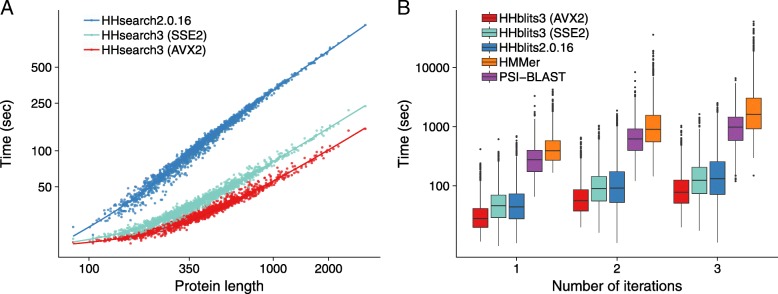
Background: HH-suite is a widely used open source software suite for sensitive sequence similarity searches and protein fold recognition. It is based on pairwise alignment of profile Hidden Markov models (HMMs), which represent multiple sequence alignments of homologous proteins. Results: We developed a single-instruction multiple-data (SIMD) vectorized implementation of the Viterbi algorithm for profile HMM alignment and introduced various other speed-ups. These accelerated the search methods HHsearch by a factor 4 and HHblits by a factor 2 over the previous version 2.0.16. HHblits3 is ∼10× faster than PSI-BLAST and ∼20× faster than HMMER3. Jobs to perform HHsearch and HHblits searches with many query profile HMMs can be parallelized over cores and over cluster servers using OpenMP and message passing interface (MPI). The free, open-source, GPLv3-licensed software is available at https://github.com/soedinglab/hh-suite . Conclusion: The added functionalities and increased speed of HHsearch and HHblits should facilitate their use in large-scale protein structure and function prediction, e.g. in metagenomics and genomics projects.
Overview
The claims and statistics of this paper haven’t been checked yet.
Free: it reads the open-access text and checks the first 5 claims that cite a source we can check. Create a free account to check every claim.
Integrity signals
Registry
Cites
Statistics
Figures
Verification
Claims the paper makes
The claims and statistics of this paper haven’t been checked yet.
Free: it reads the open-access text and checks the first 5 claims that cite a source we can check. Create a free account to check every claim.
Claims other papers make about this one
Each is checked against this paper’s own text: does it say what the citing paper says it does?
The cited source says what the claim attributes to it.
In the citing paper
“Although some advanced sequence-based methods can already assist in this task39–41, the availability of predicted structures may help identify meaningful evolutionary relationships.”
From Clustering predicted structures at the scale of the known protein universe (2023) · cites this paper as [39]
The cited source says what the claim attributes to it.
In the citing paper
“Amino acid sequence analysis27 also detects the previously observed lipase sequence motifs HG and GXSXG (where X is a wildcard) from Mycoplasma mycoides subsp. mycoides LC.70”
From Toward the Complete Functional Characterization of a Minimal Bacterial Proteome (2022) · cites this paper as [27]
The check wasn’t confident either way, so it gives no verdict — never disputed.
In the citing paper
“Two methods were used to identify non-interacting proteins, first a set of proteins with no reported interaction signal in Yeast Two-Hybrid Experiments41 and secondly complexes whose individual proteins were found in different APMS benchmark complexes42. This dataset contains in total 3989 non-interacting pairs.”
From Improved prediction of protein-protein interactions using AlphaFold2 (2021) · cites this paper as [41]
Experimental — accuracy not yet measuredThe check wasn’t confident either way, so it gives no verdict — never disputed.
In the citing paper
“Fortunately, the Continuous Automated Model Evaluation (CAMEO) experiment (7) tests structure prediction servers blindly on protein structures as they are submitted to the PDB.”
From Accurate prediction of protein structures and interactions using a 3-track network (2021) · cites this paper as [7]
Experimental — accuracy not yet measured
Self-check
Percentages, sums and reported differences re-computed from the paper’s own numbers.
The self-check needs the paper’s full text.
Citations
Cites
Gapped BLAST and PSI-BLAST: a new generation of protein database search programs
Altschul, S. (1997) · Nucleic Acids Research · doi:10.1093/nar/25.17.3389 · Cited by 73,302
Berman, H. M. (2000) · Nucleic Acids Research · doi:10.1093/nar/28.1.235 · Cited by 40,196 · cited 2×
“The PDB70 contains profile HMMs for a representative set of sequences from the PDB [22], filtered with a maximum pairwise sequence identity of 70%.”
MethodSearch and clustering orders of magnitude faster than BLAST
Edgar, R. C. (2010) · Bioinformatics · doi:10.1093/bioinformatics/btq461 · Cited by 20,826
Kabsch, W., & Sander, C. (1983) · Biopolymers · doi:10.1002/bip.360221211 · Cited by 15,320 · cited 3×
“pl, and we added structurally defined secondary structure states from DSSP [36] using addss.”
MethodInfluentialFast and sensitive protein alignment using DIAMOND
Buchfink, B., Xie, C., & Huson, D. H. (2015) · Nature Methods · doi:10.1038/nmeth.3176 · Cited by 14,201 · cited 1×
“In recent years, various sequence search tools have been developed that are up to four orders of magnitude faster than BLAST [15–18].”
MethodAccelerated Profile HMM Searches
Eddy, S. R. (2011) · PLoS Computational Biology · doi:10.1371/journal.pcbi.1002195 · Cited by 6,975
Eddy, S. R. (1998) · Bioinformatics · doi:10.1093/bioinformatics/14.9.755 · Cited by 5,515
MMseqs2 enables sensitive protein sequence searching for the analysis of massive data sets
Steinegger, M., & Söding, J. (2017) · Nature Biotechnology · doi:10.1038/nbt.3988 · Cited by 4,840
Self-citationSWISS-MODEL: modelling protein tertiary and quaternary structure using evolutionary information
Biasini, M., Bienert, S., Waterhouse, A., Arnold, K., Studer, G., Schmidt, T., Kiefer, F., Cassarino, T. G., Bertoni, M., Bordoli, L., et al. (2014) · Nucleic Acids Research · doi:10.1093/nar/gku340 · Cited by 4,632
The Pfam protein families database in 2019
El-Gebali, S., Mistry, J., Bateman, A., Eddy, S. R., Luciani, A., Potter, S. C., Qureshi, M., Richardson, L. J., Salazar, G. A., Smart, A., et al. (2019) · Nucleic Acids Research · doi:10.1093/nar/gky995 · Cited by 4,602
Cited by
Items 801–900 of 1,067
Biased regulation of protein synthesis and hypoxic death by a conditional raptor mutation
Sun, C., Xu, C., Itani, O. A., Christensen, E. L., Vijay, H., Ho, J. Q., Correa-Medina, A., Klingler, C. B., Mathew, N. D., Flibotte, S., et al. (2025) · Current Biology · doi:10.1016/j.cub.2025.04.040 · Cited by 3
A large C-terminal Rad52 segment acts as a chaperone to Form and Stabilize Rad51 Filaments
Ma, É., Lakhal, F., Litsardaki, E., Ruault, M., Audin, M., Levrier, N., Navarro, E., Garnier, M., Maloisel, L., Dépagne, J., et al. (2025) · Nature Communications · doi:10.1038/s41467-025-60664-x · Cited by 4
“The resulting alignments were fi ltered using hh fi lter 96 using parameters ( ‘ id ’ =100, ‘ qid ’ =25, ‘ cov ’ =50) and the taxonomy assigned to every sequence keeping only one sequence per species.”
Yoshida, M., Medvedeva, S., Fukudome, A., Wolf, Y. I., Urayama, S., Nishimura, Y., Takaki, Y., Koonin, E. V., Krupovìč, M., & Nunoura, T. (2025) · The ISME Journal · doi:10.1093/ismejo/wraf139 · Cited by 3
Complete genome of five Acinetobacter baumannii phages
Scarrone, M., Turner, D., Wittmann, J., Rohde, C., Labrie, S. J., Tremblay, D. M., & Moineau, S. (2025) · Microbiology Resource Announcements · doi:10.1128/mra.00463-25 · Cited by 3
Lucas, A., Schäffer, D. E., Wickramasinghe, J. M., & Auslander, N. (2025) · PLoS Computational Biology · doi:10.1371/journal.pcbi.1013470 · Cited by 3
Decomposing Structural Response Due to Sequence Changes in Protein Domains with Machine Learning
Bryant, P., & Elofsson, A. (2020) · Journal of Molecular Biology · doi:10.1016/j.jmb.2020.05.021 · Cited by 3
Zimin, A. A., Karmanova, A. N., & Lü, Y. (2021) · E3S Web of Conferences · doi:10.1051/e3sconf/202126504010 · Cited by 3
Exploiting protein family and protein network data to identify novel drug targets for bladder cancer
Adeyelu, T. T., Moya‐García, A. A., & Orengo, C. A. (2022) · Oncotarget · doi:10.18632/oncotarget.28175 · Cited by 3
“Sequence profiles (HMMs) are generated for each cluster using HMMer3 [40] and all against all HMM-HMM comparisons performed using HHsuite [41] followed by merging of the highest scoring cluster pairs.”
MethodSergeeva, O., Zhang, Y., Julian, W., Sasikumar, A., Awadallah, A., Kenyon, J. D., Shi, W., Sergeev, M. E., Huang, S. S.-L., Sexton, S., et al. (2022) · Gastro Hep Advances · doi:10.1016/j.gastha.2022.04.014 · Cited by 3
“The automatic pipeline identi fi ed a list of suitable templates based on Basic Local Alignment Search Tool and HHblits 34 to generate a 3D protein structure of woodchuck PSMA.”
Shiono, D., & Yoshidome, T. (2022) · Journal of the Physical Society of Japan · doi:10.7566/jpsj.91.064804 · Cited by 3
Naseer, M. I., Abdulkareem, A. A., Pushparaj, P. N., Saharti, S. N., & Muthaffar, O. Y. (2022) · Frontiers in Pediatrics · doi:10.3389/fped.2022.862722 · Cited by 3
“The target sequence was aligned to the primary amino acid sequence included in the SMTL, and an initial HHblit profile was generated (21, 22) and aligned with all profiles in the SMTL.”
MethodZhu, J., Zou, J., Li, F., Gao, Y., Wang, L., Sun, Y. E., Zhu, J., Zhang, X., Xue, K., Li, G., et al. (2022) · MedComm – Future Medicine · doi:10.1002/mef2.15 · Cited by 4
Oliveira, L. S., Reyes, A., Dutilh, B. E., & Gruber, A. (2023) · Viruses · doi:10.3390/v15020519 · Cited by 5
“Similarity searches using profile HMMs can be performed with different software packages such as HMMER [21] for searching profile HMMs versus biological sequences and HH-suite3 for profile-to-profile searches [42].”
MethodAhmed, J., Walker, A. A., Perdomo, H. D., Guo, S., Nixon, S. A., Vetter, I., Okoh, H. I., Shehu, D. M., Shuaibu, M. N., Ndams, I. S., et al. (2023) · Toxins · doi:10.3390/toxins15070418 · Cited by 3
“Templates were searched using target sequence with the aid of BLAST [63] and HHBlits [64] against the SWISS-MODEL template library (SMTL).”
MethodYazıcı, Y. Y., Belkaya, S., & Timuçin, E. (2023) · Computational and Structural Biotechnology Journal · doi:10.1016/j.csbj.2023.06.021 · Cited by 3
Hille, F., Gieschler, S., Brinks, E., & Franz, C. M. A. P. (2023) · Viruses · doi:10.3390/v15091781 · Cited by 3
“Gene function was predicted using the HHsuite pipeline [19] (for alignment results, see Supplementary Table S3).”
AttCON: With better MSAs and attention mechanism for accurate protein contact map prediction
Zhao, C., & Wang, S. (2023) · Computers in Biology and Medicine · doi:10.1016/j.compbiomed.2023.107822 · Cited by 3
Investigation of protein family relationships with deep learning
Ponamareva, I., Andreeva, A. E., Bileschi, M. L., Colwell, L. J., & Bateman, A. G. (2024) · Bioinformatics Advances · doi:10.1093/bioadv/vbae132 · Cited by 3
“To compare the ability of ProtCNNSim to identify pairwise family relationships, we compare it to an existing method for family similarity prediction, the profile-profile comparison tool HHsearch from the HH-suite3 package (Steinegger et al. 2019).”
MethodPersello, A., Tadini, L., Rotasperti, L., Ballabio, F., Tagliani, A., Torricella, V., Jahns, P., Dalal, A., Moshelion, M., Camilloni, C., et al. (2024) · Plant Cell Reports · doi:10.1007/s00299-024-03328-2 · Cited by 3
“The homo-hexameric ring model of the barley Hv CHLI ATPase subunit of Mg-chelatase was generated using version 3 of Multimer from DeepMind Alphafold2 (Evans et al. 2022), allowing for template search with HH-suite (Steinegger et al. 2019).”
MethodCui, X., Xia, Y., Hou, M., Zhao, X., Wang, S., & Zhang, G. (2025) · BMC Bioinformatics · doi:10.1186/s12859-025-06131-2 · Cited by 3
“Based on the input sequence, the MSA feature is obtained by searching Uniclust30 [26] and BFD [27] databases through HHblits [28], the template feature is searched PDB database using HHsearch [28], and the inter-domain feature is extracted through our previously proposed DomBpred [25].”
Qiu, K., Lupas, A. N., & Dunin-Horkawicz, S. (2026) · Protein Science · doi:10.1002/pro.70541 · Cited by 4
Estimating local protein model quality: prospects for molecular replacement
Wallner, B. (2020) · Acta Crystallographica Section D Structural Biology · doi:10.1107/s2059798320000972 · Cited by 3
“The two HMMs for targets and template were then aligned using HHalign (Steinegger et al., 2019) with default settings.”
MethodComPotts: Optimal alignment of coevolutionary models for protein sequencesPreprint
Talibart, H., & Coste, F. (2020) · bioRxiv (Cold Spring Harbor Laboratory) · doi:10.1101/2020.06.12.147702 · Cited by 3
Alignment-free Phylogenetic Placement and its Applications
Blanke, M. (2023) · eDiss (Georg-August-Universität Göttingen) · doi:10.53846/goediss-9762 · Cited by 3
OpenProteinSet: Training data for structural biology at scale.Preprint
Ahdritz, G., Bouatta, N., Kadyan, S., Jarosch, L., Berenberg, D., Fisk, I., Watkins, A. M., Ra, S., Bonneau, R., & AlQuraishi, M. (2023) · PubMed Central · Cited by 4
Protein sequence domain annotation using a language modelPreprint
Sarkar, A., Krishnan, K., & Eddy, S. R. (2024) · bioRxiv (Cold Spring Harbor Laboratory) · doi:10.1101/2024.06.04.596712 · Cited by 3
“The state of the art in protein domain sequence annotation uses profile hidden Markov models (profile HMMs) to detect domains [4] and profile/profile comparison to identify homologous domains [5].”
A replication-centered phylogeny illuminates the evolutionary landscape of bacterial plasmidsPreprint
Nishimura, Y., Kaneko, K., Kamijo, T., Isogai, N., Tokuda, M., Xie, H., Tsuda, Y., Hirabayashi, A., Moriuchi, R., Dohra, H., et al. (2024) · bioRxiv (Cold Spring Harbor Laboratory) · doi:10.1101/2024.09.03.610885 · Cited by 3
Nitrogenase structural evolution across Earth’s historyPreprint
Cuevas-Zuviría, B., Detemple, F., Amritkar, K., Garcia, A. K., Seefeldt, L. C., Einsle, O., & Kaçar, B. (2025) · eLife · doi:10.7554/elife.105613.1 · Cited by 4
WAChRs are excitatory opsins sensitive to indoor lightingPreprint
Tose, A. J., Nava, A. A., McGrath, S. N., Mardinly, A. R., & Naka, A. (2025) · bioRxiv (Cold Spring Harbor Laboratory) · doi:10.1101/2025.09.12.675947 · Cited by 3
Modeling the structure-conditioned sequence landscape for large-scale protein design with TriFlowPreprint
Srinivasan, H., Yuan, R., Zhang, J., Cong, Q., & Zhou, J. (2025) · bioRxiv (Cold Spring Harbor Laboratory) · doi:10.64898/2025.11.30.691458 · Cited by 3
“The resulting MSAs were filtered with HHfilter 38,39 to remove highly similar sequences (identity > 98”
Improved prediction of site-rates from structure with averaging across homologs
Norn, C., Oliveira, F., & André, I. (2024) · doi:10.1101/2024.02.27.582061 · Cited by 3
Helsem, S. A., Alfsnes, K., Frye, S. A., Hesselberg Løvestad, A., & Ambur, O. H. (2024) · doi:10.1101/2024.11.23.625027 · Cited by 3
Xia, Y., Pu, Y., Wang, S., Zhuang, J., Liu, D., Hou, M., & Zhang, G. (2025) · Journal of Molecular Biology · doi:10.1016/j.jmb.2025.169128 · Cited by 2
Johnson, S. R., Peshwa, M., & Sun, Z. (2024) · doi:10.7554/elife.91415.2 · Cited by 2
Kalidas, N., Peddada, N., Pandey, K., & Ashish (2026) · Journal of Biomolecular Structure and Dynamics · doi:10.1080/07391102.2025.2475244 · Cited by 2
“First, the SWISS-MODEL server was considered, where HHblits protocol suggested 3APX as the best template for AGP (Steinegger et al., 2019).”
Burroughs, A. M., Nicastro, G. G., & Aravind, L. (2025) · eLife · doi:10.7554/elife.108061 · Cited by 2
“The HHalign program ( Steinegger et al., 2019 ) was used to perform profile-profile comparisons, with the resulting p-value and e-value scores serving as edges for constructing a superfamily relationship network.”
Piecing Together the History of Protein Folds From a Fragmented Evolutionary Record
Álvarez-Carreño, C. (2025) · Genome Biology and Evolution · doi:10.1093/gbe/evaf148 · Cited by 3
Onyśk, A., Steczkiewicz, K., Radkiewicz, M., Link‐Lenczowski, P., Surowiecki, P., Sztompka, K., Grabińska, K. A., Nowak, J., & Surmacz, L. (2025) · FEBS Journal · doi:10.1111/febs.70237 · Cited by 2
“However, the remote homology detection method, HHSEARCH [37], which is based on comparisons of sequence meta-profiles, yielded a previously uncharacterized protein (PTET.51.1.”
InfluentialMahanta, U., & Sharma, G. (2025) · NAR Genomics and Bioinformatics · doi:10.1093/nargab/lqaf112 · Cited by 2
“SitA contains a signal peptide with N-terminal lipoprotein and has a C-terminal nuclease domain which was detected using SignalP6 [ 24 ] and HHpred 3.3.0 [ 25 ] search against PDB [ 26 ], Pfam [ 27 ], and NCBI CDD [ 28 ] databases respectively using default parameters.”
InfluentialLi, J., Chen, K., Chen, X., Zheng, K., Sun, S., Yu, H., Dong, Y., Wang, Z., Xu, Y., McMinn, A., et al. (2026) · Virologica Sinica · doi:10.1016/j.virs.2026.05.009 · Cited by 2
“0.0. beta3) ’ s hhmake (Steinegger et al., 2019), performed HMM – HMM comparisons with hhalign, and converted scores to distances (dAB = – ln [SAB/min(SAA, SBB)]) to produce a 29 × 29 distance matrix.”
InfluentialChanteau, A., Quilleré, S., Crouset, A., Allipra, S., Tuquoi, U., Perroud, P., Miron, S. M., Dupaigne, P., Zinn‐Justin, S., Nogué, F., et al. (2025) · Nucleic Acids Research · doi:10.1093/nar/gkaf856 · Cited by 4
“We employed a more sensitive sequence search method, HHpred, to detect remote homology based on the comparison of profile hidden Markov models [ 52 ].”
Lemay-St-Denis, C., Cellier-Goetghebeur, S., St-Aubin, M., Ide, K., Copp, J. N., Tsuda, S., Ben‐Tal, N., Kolodny, R., & Pelletier, J. N. (2025) · Molecular Biology and Evolution · doi:10.1093/molbev/msaf215 · Cited by 2
Probe-based identification of metal-binding sites using deep learning representations
Xu, S., & Onoda, A. (2026) · Nature Communications · doi:10.1038/s41467-026-74657-x · Cited by 2
“MetalNet was obtained from https://github.com/ wangchulab/MetalNet, with multiple sequence alignments constructed using hhblits from HH-suite3 [69] and the Uniclust30 [70] (version: 2023 02), excuted with the command hhblits -i <query.fasta> -d -d <Uniclust30 database> -oa3m <output.a3m> -n -n 3…”
Evseev, P. V., Podoprigora, I. V., Chaplin, A. V., Суликоевич, Х. З., Malkov, A. A., Kafarskaia, L. I., Shagin, D. A., Urban, Y. N., Борисова, О. Ю., & Efimov, B. A. (2025) · International Journal of Molecular Sciences · doi:10.3390/ijms27010448 · Cited by 2
“…in the NCBI databases (https://blast.ncbi.nlm.nih.gov, accessed 20 August 2025) [103], searches with InterPro [104], HHpred [105] searches against the databases PDBmmCIF70, NCBI_conserved_domains, Pfam-A, and UniProt_Swiss_Prot_viral70 [105], as well as HH-suite version 3.3.0 searches [106].”
InfluentialVorobeva, A. A., Vorobev, A. M., Evseev, P. V., Mekhtiev, E. R., Chaplin, A. V., Pasivkina, М. А., Zubkova, E. S., Bochkareva, S. S., Yaitsky, M. A., Nikitin, N. A., et al. (2026) · Viruses · doi:10.3390/v18020214 · Cited by 2
“3.0 [57] with default parameters against the databases pdb70_from_mmcif, pfama-v35, and uniprot_sprot_vir70, followed by a targeted keyword search for “excisionase”, “integrase”, “recombinase”, and “repressor” and subsequent manual verification of candidate hits.”
InfluentialDiscovery of an evolutionarily distinct evasin with dual CC and CXC chemokine inhibitory activity
Kunwar, S., Devkota, S. R., Ang, C., Aryal, P., Gai, W., Pokhrel, R., So, S. S., Jiao, W., Payne, R. J., Robert, R., et al. (2026) · Structure · doi:10.1016/j.str.2026.02.001 · Cited by 3
Structural and functional diversity of toxin-antitoxin-chaperone systems
Nakamoto, J. A., Odai, R., Mets, T., Tenson, T., Kurata, T., Hauryliuk, V., & Atkinson, G. C. (2026) · Cell Reports · doi:10.1016/j.celrep.2026.117024 · Cited by 2
Zhang, J. D. (2026) · Protein Science · doi:10.1002/pro.70551 · Cited by 2
“I removed redundancy from the paired MSAs by filtering at 95% sequence identity by HHfilter (hhfilter -i95) (Steinegger et al. 2019).”
Hamm, J. N., Dombrowski, N., Valentin-Alvarado, L. E., Greening, C., Williams, T. A., & Spang, A. (2026) · Molecular Biology and Evolution · doi:10.1093/molbev/msag091 · Cited by 3
Singh, S., Singh, R., & Sharma, S. (2026) · BioData Mining · doi:10.1186/s13040-026-00577-7 · Cited by 3
“Starting from a protein sequence (UniProt ID), multiple sequence alignments (MSAs) and template searches are performed using tools such as HH-suite [108] and PSI-BLAST [109].”
TEDLH: domain HMMs for sensitive detection of remote homologues
Álvarez-Carreño, C., Petrov, A. S., Waman, V., Sillitoe, I., & Orengo, C. A. (2026) · Bioinformatics · doi:10.1093/bioinformatics/btag470 · Cited by 3
“Multiple sequence alignments (MSAs) were converted into individual HMMs using hhmake from HH-suite3 version 3.3.0 (Steinegger et al. 2019).”
InfluentialBlack, J. J., Burroughs, A. M., Rashan, E. H., Nosal, C. R., Romanov, K. A., Catipovic, M. A., Valadez, C., Aravind, L., Hicks, K. B., Meyers, C. L. F., et al. (2026) · Molecular Cell · doi:10.1016/j.molcel.2026.07.007 · Cited by 2
Accurate Annotation of Microbial Metagenomic Genes and Identification of Core Sets
Vanni, C. (2021) · Methods in molecular biology · doi:10.1007/978-1-0716-1099-2_8 · Cited by 2
In silico prediction of B-cell and T-cell epitope of Ves g 5 and Vesp m 5 allergens
Puri, A., Sinha, S., Singh, K., & Khandagale, T. (2021) · Indian Journal of Allergy Asthma and Immunology · doi:10.4103/ijaai.ijaai_3_22 · Cited by 2
Jackson, S. A., Duan, M., Zhang, P., Ihua, M. W., Stengel, D. B., Duan, D., & Dobson, A. D. W. (2022) · Frontiers in Microbiology · doi:10.3389/fmicb.2022.1000634 · Cited by 2
“The SWISS-MODEL template library (SMTL version2022-0629, PDB release 2022-06-24) was searched with BLAST (Camacho et al., 2009) and HHBlits (Steinegger et al., 2019) for evolutionaryrelated structures matching the target sequence.”
BackgroundPrediction of protein structure and intrinsic disorder in the era of deep learning
Erdős, G., & Dosztányi, Z. (2022) · Elsevier eBooks · doi:10.1016/b978-0-323-99533-7.00007-8 · Cited by 2
Jamil, A., Bakar, A. R. A., & Khairuddin, N. H. (2023) · Journal of Advanced Research in Applied Sciences and Engineering Technology · doi:10.37934/araset.30.1.132144 · Cited by 2
Guerler, A., Baker, D., van den Beek, M., Gruening, B., Bouvier, D., Coraor, N., Shank, S. D., Zehr, J. D., Schatz, M. C., & Nekrutenko, A. (2023) · BMC Bioinformatics · doi:10.1186/s12859-023-05389-8 · Cited by 2
“Given a set of query sequences and a list of known protein structures, the pipeline employs SPRING with HHsearch (Steinegger, 2019), and TMalign (Zhang, 2005) to detect and structurally model protein-protein interactions.”
MethodInfluentialvan Strien, J., Evers, F., Lutikurti, M., Berendsen, S. L., Garanto, A., van Gemert, G., Cabrera‐Orefice, A., Rodenburg, R. J., Brandt, U., Kooij, T. W. A., et al. (2023) · PLoS Computational Biology · doi:10.1371/journal.pcbi.1011090 · Cited by 2
“Any proteins that did not have a significant (Evalue 0.001) hit, were subsequently searched using hhsearch from the hhsuite toolkit using default parameters [60].”
Influentialvon Beck, T. A., Navarrete, K., Arce, N. A., Gao, M., Dale, G. A., Davis-Gardner, M. E., Floyd, K. A., Hernandez, L. M., Mullick, N., Vanderheiden, A., et al. (2023) · Scientific Reports · doi:10.1038/s41598-023-41850-7 · Cited by 2
“For this analysis, classic sequence search tools such as PSI-BLAST 34 and more sensitive HHsearch 35 yield a very small number of hits and do not find any hit related to the proteins of SARS-CoV-2.”
MethodPreHom-PCLM: protein remote homology detection by combing motifs and protein cubic language model
Shao, J., Zhang, Q., Yan, K., & Liu, B. (2023) · Briefings in Bioinformatics · doi:10.1093/bib/bbad347 · Cited by 2
Shallangwa, G. A., Mahmud, A. W., Uzairu, A., & Ibrahim, M. T. (2023) · Journal of Taibah University Medical Sciences · doi:10.1016/j.jtumed.2023.11.006 · Cited by 2
“22,23 The3D structure of Pf eEF2 was built with the highest ranked target-template alignment in ProMod3 version 3.2.1.”
BackgroundInfluentialUp-to-Date Developments in Homology Modeling
Muhammed, M. T., & Aki, E. (2023) · BENTHAM SCIENCE PUBLISHERS eBooks · doi:10.2174/9789815179934123010006 · Cited by 2
AI ‐Based Protein Structure Predictions and Their Implications in Drug Discovery
Kellici, T. F., Hristozov, D., & Morao, I. (2024) · Wiley eBooks · doi:10.1002/9783527840748.ch10 · Cited by 2
Zhang, F., Li, Z., Zhao, K., Zhao, P., & Zhang, G. (2024) · IEEE Transactions on Computational Biology and Bioinformatics · doi:10.1109/tcbb.2024.3411825 · Cited by 2
Actomyosin organelle functions of SPIRE actin nucleators precede animal evolution
Kollmar, M., Welz, T., Ravi, A., Kaufmann, T., Alzahofi, N., Hatje, K., Alghamdi, A., Kim, J., Briggs, D. A., Samol-Wolf, A., et al. (2024) · Communications Biology · doi:10.1038/s42003-024-06458-1 · Cited by 2
“To ensure that we did not miss any sequences beyond the detection limit of TBLASTN 52 , we performed searches in the SwissProt database 96 using HMMER 97 and HHBlits 98 .”
MethodAhmad, N., Khan, K. A., Khan, S. W., Rashid, H. U., Irum, Zahoor, M., Umar, M. N., Ullah, R., & Ali, E. A. (2024) · Open Chemistry · doi:10.1515/chem-2024-0069 · Cited by 2
Wang, J., Liu, Y., Zhang, Y., Qin, P., Li, J., Xia, J., Zhang, Y., & Chu, D. (2024) · Journal of Pest Science · doi:10.1007/s10340-024-01814-w · Cited by 2
“Finally, to predict the 3D structure of OBP-17 and CSP-1, the SWISS-MODEL template library (SMTL version 2022–05-18, PDB release 2022–05-13) was searched using BLAST (Camacho et al. 2009; Steinegger et al. 2019) for evolution-related structures matching the target sequence.”
Parallel Convolutional Contrastive Learning Method for Enzyme Function Prediction
Yu, X., Zhou, S., Zang, M., Wang, Q., Liu, C., & Liu, T. (2024) · IEEE Transactions on Computational Biology and Bioinformatics · doi:10.1109/tcbb.2024.3447037 · Cited by 2
Spica, V. R., Volpini, V., Valeriani, F., Carotenuto, G., Arcieri, M., Platania, S., Castrignanò, T., Clementi, M. E., & Michetti, F. (2024) · International Journal of Molecular Sciences · doi:10.3390/ijms25189813 · Cited by 2
“The alignments required for this procedure were generated using MMseqs2 (version 2) [51] and HHsearch (version 1.12) [52] software, which allowed us to obtain detailed sequence relations between the proteins of interest.”
MethodInfluentialDorfner, M., Klein, J., Senkleiter, K., Lanig, H., Kreis, W., & Munkert, J. (2024) · Molecules · doi:10.3390/molecules29235788 · Cited by 2
“The sequences of the target protein were generated using the web service SWISS-Model [32] via alignment using BLAST [44] and HHBlits [45] as algorithms (Table S4).”
Lee, J.-C., Bang, D., & Kim, S. (2024) · Journal of Chemical Information and Modeling · doi:10.1021/acs.jcim.4c01255 · Cited by 2
Network-Based Prediction of Novel CRISPR-Associated Genes in Metagenomes
Weissman, J., & Johnson, P. L. F. (2020) · mSystems · doi:10.1128/msystems.00752-19 · Cited by 2
“and hmmer software packages to perform sensitive profile-profile or profile-sequence searches for distant protein homology (19, 29).”
MethodAssessing Protein Function Through Structural Similarities with CATH
Dawson, N. L., Orengo, C. A., & Gáspári, Z. (2020) · Methods in molecular biology · doi:10.1007/978-1-0716-0270-6_4 · Cited by 2
Functional Characterisation of Bile Metagenome: Study of Metagenomic Dark Matter
Sabater, C., Molinero, N., Ferrer, M., Bernardo, C. M. G., Delgado, S., & Margollés, A. (2021) · Microorganisms · doi:10.3390/microorganisms9112201 · Cited by 2
Kumar, G., Srinivasan, N., & Sandhya, S. (2022) · Methods in molecular biology · doi:10.1007/978-1-0716-2095-3_5 · Cited by 2
Creating De Novo Overlapped Genes
Logel, D. Y., & Jaschke, P. R. (2022) · Methods in molecular biology · doi:10.1007/978-1-0716-2617-7_6 · Cited by 2
Paul, S. K., Metu, C. L. N., Sutihar, S. K., Saddam, M., Paul, B., Kabir, M. L., & Helal, M. M. U. (2023) · Journal of Cellular Signaling · doi:10.33696/signaling.4.089 · Cited by 2
Shih, C.-Y., Chin, C., Chen, S.-Y., Hsu, C.-R., Kan, L.-K., & Tzou, W. (2023) · Journal of marine science and technology · doi:10.51400/2709-6998.2726 · Cited by 2
Simpson, J., & Kasson, P. M. (2025) · PLoS Computational Biology · doi:10.1371/journal.pcbi.1012812 · Cited by 2
“Databases passed to AlphaFold modules for generation of multiple sequence alignments were as follows: the Hhblits [58] module used reduced BFD [59], hmmsearch [60] used the PDB SEQRES database [61], and JackHMMer [60] used UniProt [62].”
Liu, X., Jin, L., Gao, S., & Zhao, S. (2021) · bioRxiv (Cold Spring Harbor Laboratory) · doi:10.1101/2021.05.12.443740 · Cited by 3
Streamlined use of protein structures in variant analysisPreprint
Kaur, S., Sikta, N., Schafferhans, A., Bordin, N., Cowley, M. J., Thomas, D. M., Ballinger, M. L., & O’Donoghue, S. I. (2021) · bioRxiv (Cold Spring Harbor Laboratory) · doi:10.1101/2021.09.10.459756 · Cited by 2
“For each protein sequence, Aquaria uses HHblits (Steinegger et al. 2019) to pre-calculate alignments onto all available 3D structures.”
MethodCAMEO - Perspectives on the future of fully automated evaluation of structure prediction methodsPreprint
Robin, X., Haas, J., Gumienny, R., Tauriello, G., & Schwede, T. F. (2021) · Authorea · doi:10.22541/au.162255861.14583323/v1 · Cited by 2
Geller, A. M., Zlotkin, D., Shalom, M., Blum, N., & Levy, A. (2023) · bioRxiv (Cold Spring Harbor Laboratory) · doi:10.1101/2023.03.26.534264 · Cited by 2
Zheng, L., Li, B., Xu, S., Chen, J., & Liang, G. (2024) · bioRxiv (Cold Spring Harbor Laboratory) · doi:10.1101/2024.08.12.604109 · Cited by 3
Comprehensive Mutational Landscape Analysis of Monkeypox Virus ProteomePreprint
Özaktaş, T., Dizkırıcı, A., Carbone, A., & Tekpinar, M. (2024) · bioRxiv (Cold Spring Harbor Laboratory) · doi:10.1101/2024.09.19.613877 · Cited by 2
Expanding the CRISPR toolbox by engineering Cas12a orthologs of metagenomic discoveryPreprint
Tao, D., Xu, B., Li, S., Liu, H., Shi, S., Wang, Y., Zhao, C., Ruan, J., Fu, L., Huang, X., et al. (2024) · bioRxiv (Cold Spring Harbor Laboratory) · doi:10.1101/2024.09.27.615316 · Cited by 3
Structural evolution of nitrogenase enzymes over geologic timePreprint
Cuevas-Zuviría, B., Detemple, F., Amritkar, K., Garcia, A. K., Seefeldt, L. C., Einsle, O., & Kaçar, B. (2025) · eLife · doi:10.7554/elife.105613.3 · Cited by 3
Liu, Q., Peng, C., Zheng, W. H., Zhang, C., & Freddolino, L. (2025) · Research Square · doi:10.1101/2025.10.20.683515 · Cited by 2
“In the absence of experimental data, the inference of stoichiometry often relies on homology-based template searches against known assemblies, utilizing tools such as HMMER [16], MMseqs [17], and HH-suite [18].”
Zhang, Z., Akiyama, Y., Cho, Y., Jajoo, S., & Ovchinnikov, S. (2025) · bioRxiv (Cold Spring Harbor Laboratory) · doi:10.1101/2025.11.16.688745 · Cited by 3
Zhang, Z., Wu, Y., Lee, Y., Nicastro, G. G., Chakravarti, A., Fang, H., Taverner, D., Weigele, P., Aravind, L., Patel, D. J., et al. (2026) · bioRxiv (Cold Spring Harbor Laboratory) · doi:10.64898/2026.01.15.699771 · Cited by 2
The Human Bindome: A Proteome-scale Atlas of Designed Binder CandidatesPreprint
Wenckstern, J., Díaz-Rovira, A. M., Kuhn, J., Ban, A., Hamdani, R., Pruano-Milla, R., Elizarova, E., Georgeon, S., Thompson, K., Hinterndorfer, M., et al. (2026) · bioRxiv (Cold Spring Harbor Laboratory) · doi:10.64898/2026.07.30.741542 · Cited by 2
“For each target, an MSA was retrieved from the AFDB (v6) MSA endpoint and converted to a flat FASTA alignment with HH-suite 53 (v3.”
Fast remote nucleotide sequence alignment with RiboseekPreprint
Park, S., Didi, K., Favor, A., Bushuiev, A., Kim, S., Mirdita, M., & Steinegger, M. (2026) · bioRxiv (Cold Spring Harbor Laboratory) · doi:10.64898/2026.07.31.741718 · Cited by 2
Self-citationBFVD v3–UniProt-complete, improved viral protein structure predictionsPreprint
Kim, S., Pimenova, O., Karin, E. L., Mirdita, M., & Steinegger, M. (2026) · bioRxiv (Cold Spring Harbor Laboratory) · doi:10.64898/2026.09.16.752260 · Cited by 2
“For each of the base-and Logan50-MSA, we computed the effective number of sequences ( N eff ) using hhmake [21] (version 3.3.0).”
InfluentialSelf-citationEvolutionary selection of proteins with two folds
Schafer, J. W., & Porter, L. L. (2023) · doi:10.1101/2023.01.18.524637 · Cited by 2
Broad functional profiling of fission yeast proteins using phenomics and machine learning
Rodríguez-López, M., Bordin, N., Lees, J., Scholes, H., Hassan, S., Saintain, Q., Kamrad, S., Orengo, C., & Bähler, J. (2023) · doi:10.1101/2023.04.05.535764 · Cited by 2
Xia, Y., Pu, Y., Wang, S., Zhuang, J., Liu, D., Hou, M., & Zhang, G. (2024) · doi:10.1101/2024.11.22.624951 · Cited by 2
Kalidas, N., Peddada, N., Pandey, K., & Ashish (2024) · doi:10.1101/2024.02.01.578488 · Cited by 2
CATHe2: Enhanced CATH superfamily detection using ProstT5 and structural alphabets
(2025) · doi:10.1093/biomethods/bpaf080 · Cited by 1
“While standard sequence profile and Hidden Markov Model (HMM)-based alignment tools such as MMSeqs2 [18] and HH-suite [19, 20] have been successful, they reach their limits in the twilight or midnight zones of sequence similarity.”
Caspase-1 activates gasdermin A in non-mammals
Billman, Z. P., Kovacs, S. B., Wei, B., Kang, K., Cissé, O. H., & Miao, E. A. (2024) · doi:10.7554/elife.92362.3 · Cited by 1
Metadata
- Authors
- Steinegger, M., Meier, M., Mirdita, M., Vöhringer, H., Haunsberger, S. J., & Söding, J.
- Affiliations
- Johns Hopkins University (US)
- Max Planck Institute for Biophysical Chemistry (DE)
- European Bioinformatics Institute (GB)
- Royal College of Surgeons in Ireland (IE)
- Corresponding author
- Söding, Johannes
- Venue
- BMC Bioinformatics
- Published
- 2019-09-14
- Volume
- 20
- Issue
- 1
- Pages
- 473-473
- ISSN
- 1471-2105 (ISSN-L)
- PMC
- PMC6744700
- OpenAlex
- W2972411752
- Cited by
- 1,145
- References
- 38
- Citations by year
- 2026: 106 · 2025: 167 · 2024: 208 · 2023: 248 · 2022: 168 · 2021: 176 · 2020: 63 · 2019: 7
- FWCI
- 35.23
- Type
- journal article
- Language
- en
- Open access
- gold
- doi.org
- Licence
- cc-by
- creativecommons.org/licenses/by/4.0/ (tdm)
- creativecommons.org/licenses/by/4.0/ (vor)
- Locations
- BMC Bioinformatics (publishedVersion, cc-by)
- bioRxiv (Cold Spring Harbor Laboratory) (acceptedVersion, cc-by-nc-nd)
- PubMed Central (publishedVersion, cc-by)
- PubMed (publishedVersion)
- DOAJ (DOAJ: Directory of Open Access Journals) (submittedVersion)
- Figshare (submittedVersion, cc-by)
- GoeScholar The Publication Server of the Georg-August-Universität Göttingen (Georg-August-Universität Göttingen) (submittedVersion, cc-by)
- MPG.PuRe (Max Planck Society) (submittedVersion, other-oa)
- Seoul National University Open Repository (Seoul National University) (submittedVersion)
- Funders
- Horizon 2020 (685778)
- Topics
- Life Sciences › Biochemistry, Genetics and Molecular Biology › Molecular Biology › Genomics and Phylogenetic Studies
- Life Sciences › Biochemistry, Genetics and Molecular Biology › Molecular Biology › Protein Structure and Dynamics
- Life Sciences › Biochemistry, Genetics and Molecular Biology › Molecular Biology › Machine Learning in Bioinformatics
- Keywords
- profile hidden Markov models, Viterbi algorithm, SIMD vectorization, remote homology detection, protein fold recognition, protein annotation, sequence similarity search, parallel computing, protein structure prediction, metagenomics
- MeSH terms
- Algorithms, Markov Chains, Software, Sequence Alignment, Sequence Analysis, Protein, Molecular Sequence Annotation
About these checks
Registry, retraction, Cites and statistics results are computed, not judged, with one exception: a printed reference that no index lists is read once by a model before it counts as a citation error. Claims are extracted by a model and kept only when their quote appears verbatim in the text; each cited source is then checked, with a model’s help, for whether it says what the claim relies on. Those verdicts can be wrong — read the claim’s quote and the cited source before relying on one.
Statistics and arithmetic are recomputed, not judged.
Confidence bands are shown only for fields calibrated on our annotated test set. None is calibrated yet, so no band is shown.
What counts as a claim ›How we measure confidence ›How we check this ›
Are you an author, or do you see a problem with this page? Request a review
Data sources
Bibliographic data: Semantic Scholar, OpenAlex, Crossref.
Contains information from the Semantic Scholar Academic Graph Datasets, made available under the ODC Attribution License (ODC-BY 1.0).
Semantic Scholar’s data is described in: Kinney, R., et al. (2023). The Semantic Scholar Open Data Platform. arXiv:2301.10140.
