

HH-suite3 for fast remote homology detection and deep protein annotation
Open accessPublished version of a preprint
The DOI matches its Crossref record; 38 of the 38 references it cites were found in a registry or an index.
Abstract
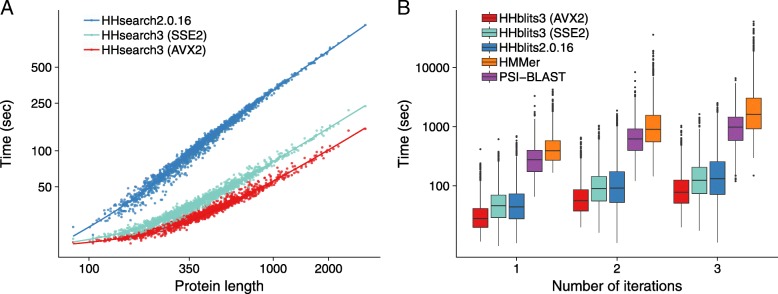
Background: HH-suite is a widely used open source software suite for sensitive sequence similarity searches and protein fold recognition. It is based on pairwise alignment of profile Hidden Markov models (HMMs), which represent multiple sequence alignments of homologous proteins. Results: We developed a single-instruction multiple-data (SIMD) vectorized implementation of the Viterbi algorithm for profile HMM alignment and introduced various other speed-ups. These accelerated the search methods HHsearch by a factor 4 and HHblits by a factor 2 over the previous version 2.0.16. HHblits3 is ∼10× faster than PSI-BLAST and ∼20× faster than HMMER3. Jobs to perform HHsearch and HHblits searches with many query profile HMMs can be parallelized over cores and over cluster servers using OpenMP and message passing interface (MPI). The free, open-source, GPLv3-licensed software is available at https://github.com/soedinglab/hh-suite . Conclusion: The added functionalities and increased speed of HHsearch and HHblits should facilitate their use in large-scale protein structure and function prediction, e.g. in metagenomics and genomics projects.
Overview
The claims and statistics of this paper haven’t been checked yet.
Free: it reads the open-access text and checks the first 5 claims that cite a source we can check. Create a free account to check every claim.
Integrity signals
Registry
Cites
Statistics
Figures
Verification
Claims the paper makes
The claims and statistics of this paper haven’t been checked yet.
Free: it reads the open-access text and checks the first 5 claims that cite a source we can check. Create a free account to check every claim.
Claims other papers make about this one
Each is checked against this paper’s own text: does it say what the citing paper says it does?
The cited source says what the claim attributes to it.
In the citing paper
“Although some advanced sequence-based methods can already assist in this task39–41, the availability of predicted structures may help identify meaningful evolutionary relationships.”
From Clustering predicted structures at the scale of the known protein universe (2023) · cites this paper as [39]
The cited source says what the claim attributes to it.
In the citing paper
“Amino acid sequence analysis27 also detects the previously observed lipase sequence motifs HG and GXSXG (where X is a wildcard) from Mycoplasma mycoides subsp. mycoides LC.70”
From Toward the Complete Functional Characterization of a Minimal Bacterial Proteome (2022) · cites this paper as [27]
The check wasn’t confident either way, so it gives no verdict — never disputed.
In the citing paper
“Two methods were used to identify non-interacting proteins, first a set of proteins with no reported interaction signal in Yeast Two-Hybrid Experiments41 and secondly complexes whose individual proteins were found in different APMS benchmark complexes42. This dataset contains in total 3989 non-interacting pairs.”
From Improved prediction of protein-protein interactions using AlphaFold2 (2021) · cites this paper as [41]
Experimental — accuracy not yet measuredThe check wasn’t confident either way, so it gives no verdict — never disputed.
In the citing paper
“Fortunately, the Continuous Automated Model Evaluation (CAMEO) experiment (7) tests structure prediction servers blindly on protein structures as they are submitted to the PDB.”
From Accurate prediction of protein structures and interactions using a 3-track network (2021) · cites this paper as [7]
Experimental — accuracy not yet measured
Self-check
Percentages, sums and reported differences re-computed from the paper’s own numbers.
The self-check needs the paper’s full text.
Citations
Cites
Gapped BLAST and PSI-BLAST: a new generation of protein database search programs
Altschul, S. (1997) · Nucleic Acids Research · doi:10.1093/nar/25.17.3389 · Cited by 73,302
Berman, H. M. (2000) · Nucleic Acids Research · doi:10.1093/nar/28.1.235 · Cited by 40,196 · cited 2×
“The PDB70 contains profile HMMs for a representative set of sequences from the PDB [22], filtered with a maximum pairwise sequence identity of 70%.”
MethodSearch and clustering orders of magnitude faster than BLAST
Edgar, R. C. (2010) · Bioinformatics · doi:10.1093/bioinformatics/btq461 · Cited by 20,826
Kabsch, W., & Sander, C. (1983) · Biopolymers · doi:10.1002/bip.360221211 · Cited by 15,320 · cited 3×
“pl, and we added structurally defined secondary structure states from DSSP [36] using addss.”
MethodInfluentialFast and sensitive protein alignment using DIAMOND
Buchfink, B., Xie, C., & Huson, D. H. (2015) · Nature Methods · doi:10.1038/nmeth.3176 · Cited by 14,201 · cited 1×
“In recent years, various sequence search tools have been developed that are up to four orders of magnitude faster than BLAST [15–18].”
MethodAccelerated Profile HMM Searches
Eddy, S. R. (2011) · PLoS Computational Biology · doi:10.1371/journal.pcbi.1002195 · Cited by 6,975
Eddy, S. R. (1998) · Bioinformatics · doi:10.1093/bioinformatics/14.9.755 · Cited by 5,515
MMseqs2 enables sensitive protein sequence searching for the analysis of massive data sets
Steinegger, M., & Söding, J. (2017) · Nature Biotechnology · doi:10.1038/nbt.3988 · Cited by 4,840
Self-citationSWISS-MODEL: modelling protein tertiary and quaternary structure using evolutionary information
Biasini, M., Bienert, S., Waterhouse, A., Arnold, K., Studer, G., Schmidt, T., Kiefer, F., Cassarino, T. G., Bertoni, M., Bordoli, L., et al. (2014) · Nucleic Acids Research · doi:10.1093/nar/gku340 · Cited by 4,632
The Pfam protein families database in 2019
El-Gebali, S., Mistry, J., Bateman, A., Eddy, S. R., Luciani, A., Potter, S. C., Qureshi, M., Richardson, L. J., Salazar, G. A., Smart, A., et al. (2019) · Nucleic Acids Research · doi:10.1093/nar/gky995 · Cited by 4,602
Cited by
Highly accurate protein structure prediction with AlphaFold
Jumper, J., Evans, R., Pritzel, A., Green, T., Figurnov, M., Ronneberger, O., Tunyasuvunakool, K., Bates, R., Žídek, A., Potapenko, A., et al. (2021) · Nature · doi:10.1038/s41586-021-03819-2 · Cited by 43,764
Self-citationColabFold - Making protein folding accessible to all
Mirdita, M., Schütze, K., Moriwaki, Y., Heo, L., Ovchinnikov, S., & Steinegger, M. (2021) · doi:10.1101/2021.08.15.456425 · Cited by 9,391
Self-citationAccurate prediction of protein structures and interactions using a 3-track network
Baek, M., DiMaio, F., Anishchenko, I., Dauparas, J., Ovchinnikov, S., Lee, G. R., Wang, J., Cong, Q., Kinch, L. N., Schaeffer, R. D., et al. (2021) · doi:10.1101/2021.06.14.448402 · Cited by 5,549
Rives, A., Meier, J., Sercu, T., Goyal, S., Lin, Z., Liu, J., Guo, D., Ott, M., Zitnick, C. L., Ma, J., et al. (2021) · Proceedings of the National Academy of Sciences · doi:10.1073/pnas.2016239118 · Cited by 3,286
Fast and accurate protein structure search with Foldseek
van Kempen, M., Kim, S. S., Tumescheit, C., Mirdita, M., Lee, J., Gilchrist, C. L. M., Söding, J., & Steinegger, M. (2022) · doi:10.1101/2022.02.07.479398 · Cited by 2,598
Self-citationFast and accurate protein structure search with Foldseek
van Kempen, M., Kim, S. S., Tumescheit, C., Mirdita, M., Lee, J., Gilchrist, C. L. M., Söding, J., & Steinegger, M. (2024) · Nature Biotechnology · doi:10.1038/s41587-023-01773-0 · Cited by 2,596
Self-citationAccurate proteome-wide missense variant effect prediction with AlphaMissense
Cheng, J., Novati, G., Pan, J., Bycroft, C., Žemgulytė, A., Applebaum, T., Pritzel, A., Wong, L. H., Zielinski, M., Sargeant, T., et al. (2023) · Science · doi:10.1126/science.adg7492 · Cited by 2,163
A guide to machine learning for biologists
Greener, J. G., Kandathil, S. M., Moffat, L., & Jones, D. T. (2022) · Nature Reviews Molecular Cell Biology · doi:10.1038/s41580-021-00407-0 · Cited by 2,127
VirSorter2: a multi-classifier, expert-guided approach to detect diverse DNA and RNA viruses
Guo, J., Bolduc, B., Zayed, A. A., Varsani, A., Dominguez-Huerta, G., Delmont, T. O., Pratama, A. A., Gazitúa, M. C., Vik, D., Sullivan, M. B., et al. (2021) · Microbiome · doi:10.1186/s40168-020-00990-y · Cited by 1,279
Improved prediction of protein-protein interactions using AlphaFold2
Bryant, P., Pozzati, G., & Elofsson, A. (2021) · doi:10.1101/2021.09.15.460468 · Cited by 1,022
“For the mammalian proteins from Negatome, seven out of 1733 single chains were redundant according to Uniprot (C4ZQ83, I0LJR4, I0LL25, K4CRX6, P62988, Q8NI70, Q8T3B2), 34 had no matching species in the MSA pairing, 106 produced out of memory exceptions during prediction using a GPU with 40 Gb RAM, 35 gave a tensor res…”
MethodGeneralized biomolecular modeling and design with RoseTTAFold All-Atom
Krishna, R., Wang, J., Ahern, W., Sturmfels, P., Venkatesh, P., Kalvet, I., Lee, G. R., Morey-Burrows, F. S., Anishchenko, I., Humphreys, I. R., et al. (2024) · Science · doi:10.1126/science.adl2528 · Cited by 978
Dali server: structural unification of protein families
Holm, L. (2022) · Nucleic Acids Research · doi:10.1093/nar/gkac387 · Cited by 935
Macromolecular modeling and design in Rosetta: recent methods and frameworks
Leman, J. K., Weitzner, B. D., Lewis, S. M., Adolf-Bryfogle, J., Alam, N., Alford, R. F., Aprahamian, M., Baker, D., Barlow, K. A., Barth, P., et al. (2020) · Nature Methods · doi:10.1038/s41592-020-0848-2 · Cited by 888
Protein Sequence Analysis Using the MPI Bioinformatics Toolkit
Gabler, F., Nam, S., Till, S., Mirdita, M., Steinegger, M., Söding, J., Lupas, A. N., & Alva, V. (2020) · Current Protocols in Bioinformatics · doi:10.1002/cpbi.108 · Cited by 831
“In many such cases, the more sensitive sequence search method HHpred (Steinegger et al., 2019), which is based on the comparison of profile hidden Markov models (HMMs), is able to establish connections to remotely homologous, characterized proteins.”
MethodSelf-citationDALI shines a light on remote homologs: One hundred discoveries
Holm, L., Laiho, A., Törönen, P., & Salgado, M. (2023) · Protein Science · doi:10.1002/pro.4519 · Cited by 696
“To address this question, we performed hhblits (Steinegger et al., 2019) comparisons of Pfam.35 profiles against the subset PDB70, whose data were downloaded from the hhsuite in March 2022.”
MethodAlphaFold2 and its applications in the fields of biology and medicine
Yang, Z., Zeng, X., Zhao, Y., & Chen, R. (2023) · Signal Transduction and Targeted Therapy · doi:10.1038/s41392-023-01381-z · Cited by 577
Modeling the language of life – Deep Learning Protein Sequences
Heinzinger, M., Elnaggar, A., Wang, Y., Dallago, C., Nechaev, D., Matthes, F., & Rost, B. (2019) · doi:10.1101/614313 · Cited by 606
“Performance values for the same data set exist also for other recent methods such as Spider3 [30], RaptorX [31, 32] and JPred4 [33].”
BackgroundMethodModeling aspects of the language of life through transfer-learning protein sequences
Heinzinger, M., Elnaggar, A., Wang, Y., Dallago, C., Nechaev, D., Matthes, F., & Rost, B. (2019) · BMC Bioinformatics · doi:10.1186/s12859-019-3220-8 · Cited by 606
“Analyzing data sets involving millions of proteins, i.e. samples of the human gut microbiota or metagenomic samples, have already become a major challenge [35].”
BackgroundZheng, W., Zhang, C., Li, Y., Pearce, R., Bell, E. W., & Zhang, Y. (2021) · Cell Reports Methods · doi:10.1016/j.crmeth.2021.100014 · Cited by 569
“, 2012) from the HH-suite package (Steinegger et al., 2019) is used to search against the UniClust30 database (Mirdita et al.”
MethodClades of huge phages from across Earth’s ecosystems
Al-Shayeb, B., Sachdeva, R., Chen, L.-X., Ward, F., Munk, P., Devoto, A., Castelle, C. J., Olm, M. R., Bouma-Gregson, K., Amano, Y., et al. (2020) · Nature · doi:10.1038/s41586-020-2007-4 · Cited by 504
Enzyme function prediction using contrastive learning
Yu, T., Cui, H., Li, J. C., Luo, Y., Jiang, G., & Zhao, H. (2023) · Science · doi:10.1126/science.adf2465 · Cited by 440
PHROG: families of prokaryotic virus proteins clustered using remote homology
Terzian, P., Olo Ndela, E., Galiez, C., Lossouarn, J., Pérez Bucio, R. E., Mom, R., Toussaint, A., Petit, M.-A., & Enault, F. (2021) · NAR Genomics and Bioinformatics · doi:10.1093/nargab/lqab067 · Cited by 410
“Recent developments in remote homology detection software (14,15) coupled to the great wealth of genomic sequences could help tackle the problem of distant homology of viral proteins, yet to our knowledge, no clustering method uses remote homology detection in an automatic way for viral proteins.”
BackgroundAn expanded arsenal of immune systems that protect bacteria from phages
Millman, A., Melamed, S., Leavitt, A., Doron, S., Bernheim, A., Hör, J., Garb, J., Bechon, N., Brandis, A., Lopatina, A., et al. (2022) · Cell Host & Microbe · doi:10.1016/j.chom.2022.09.017 · Cited by 428
“To predict the domain organization of the systems, all proteins were scanned with HHpred (Zimmermann et al., 2018) against the PDB, COG, and Pfam databases.”
InfluentialColabFold - Making protein folding accessible to all
Ovchinnikov, S., Steinegger, M., Mirdita, M., konsti, Moriwaki, Y., Kim, R. S., Wang, P., Kosinski, J., Tadej Satler, P., Cha, S., et al. (2021) · bioRxiv (Cold Spring Harbor Laboratory) · doi:10.5281/zenodo.5123296 · Cited by 425
Self-citationApplying and improving AlphaFold at CASP14
Jumper, J., Evans, R., Pritzel, A., Green, T., Figurnov, M., Ronneberger, O., Tunyasuvunakool, K., Bates, R., Žídek, A., Potapenko, A., et al. (2021) · Proteins: Structure, Function, and Bioinformatics · doi:10.1002/prot.26257 · Cited by 395
Self-citationThe widespread IS200/IS605 transposon family encodes diverse programmable RNA-guided endonucleases
Altae-Tran, H., Kannan, S., Demircioglu, F. E., Oshiro, R., Nety, S. P., McKay, L. J., Dlakić, M., Inskeep, W. P., Makarova, K. S., Macrae, R. K., et al. (2021) · Science · doi:10.1126/science.abj6856 · Cited by 407
Rives, A., Meier, J., Sercu, T., Goyal, S., Lin, Z., Liu, J., Guo, D., Ott, M., Zitnick, C. L., Ma, J., et al. (2019) · doi:10.1101/622803 · Cited by 3,280
High-resolution de novo structure prediction from primary sequence
Wu, R., Ding, F., Wang, R., Shen, R., Zhang, X., Luo, S., Su, C., Wu, Z., Xie, Q., Berger, B., et al. (2022) · doi:10.1101/2022.07.21.500999 · Cited by 392
Drug–target affinity prediction using graph neural network and contact maps
Jiang, M., Li, Z., Zhang, S., Wang, S., Wang, X., Yuan, Q., & Wei, Z. (2020) · RSC Advances · doi:10.1039/d0ra02297g · Cited by 372
AlphaFold2 and the future of structural biology
Cramer, P. (2021) · Nature Structural & Molecular Biology · doi:10.1038/s41594-021-00650-1 · Cited by 364
Clustering predicted structures at the scale of the known protein universe
Barrio-Hernandez, I., Yeo, J., Jänes, J., Mirdita, M., Gilchrist, C. L. M., Wein, T., Varadi, M., Velankar, S., Beltrao, P., & Steinegger, M. (2023) · Nature · doi:10.1038/s41586-023-06510-w · Cited by 362
Self-citationRao, R., Liu, J., Verkuil, R., Meier, J., Canny, J. F., Abbeel, P., Sercu, T., & Rives, A. (2021) · doi:10.1101/2021.02.12.430858 · Cited by 350
Phages and their satellites encode hotspots of antiviral systems
Rousset, F., Depardieu, F., Miele, S., Dowding, J., Laval, A.-L., Lieberman, E., Garry, D., Rocha, E. P. C., Bernheim, A., & Bikard, D. (2022) · Cell Host & Microbe · doi:10.1016/j.chom.2022.02.018 · Cited by 344
ProMod3—A versatile homology modelling toolbox
Studer, G., Tauriello, G., Bienert, S., Biasini, M., Johner, N., & Schwede, T. (2021) · PLOS Computational Biology · doi:10.1371/journal.pcbi.1008667 · Cited by 294
Expansion of the global RNA virome reveals diverse clades of bacteriophages
Neri, U., Wolf, Y. I., Roux, S., Camargo, A. P., Lee, B., Kazlauskas, D., Chen, I. M., Ivanova, N., Zeigler Allen, L., Paez-Espino, D., et al. (2022) · Cell · doi:10.1016/j.cell.2022.08.023 · Cited by 286
“5), alignment (MUSCLE5) (Edgar, 2021) and profile-profile comparison (HHsearch) (Steinegger et al., 2019), as described below.”
BackgroundDeep learning methods in protein structure prediction
Torrisi, M., Pollastri, G., & Le, Q. (2020) · Computational and Structural Biotechnology Journal · doi:10.1016/j.csbj.2019.12.011 · Cited by 284
“The latest version of Porter (v5) is composed by an ensemble of 7 models with 40,000–60,000 free parameters each, using multiple methods to mine evolutionary information [31,76].”
BackgroundMethodInfluentialMachine learning in protein structure prediction
AlQuraishi, M. (2021) · Current Opinion in Chemical Biology · doi:10.1016/j.cbpa.2021.04.005 · Cited by 252
Diversity and classification of cyclic-oligonucleotide-based anti-phage signalling systems
Millman, A., Melamed, S., Amitai, G., & Sorek, R. (2020) · Nature Microbiology · doi:10.1038/s41564-020-0777-y · Cited by 266
Payne, L. J., Todeschini, T. C., Wu, Y., Perry, B. J., Ronson, C. W., Fineran, P. C., Nobrega, F. L., & Jackson, S. A. (2021) · Nucleic Acids Research · doi:10.1093/nar/gkab883 · Cited by 230
“0 (45) with cut-offs of 95% probability and 75% pairwise alignment coverage.”
BackgroundUnraveling the functional dark matter through global metagenomics
Pavlopoulos, G. A., Baltoumas, F. A., Liu, S., Selvitopi, O., Camargo, A. P., Nayfach, S., Azad, A., Roux, S., Call, L., Ivanova, N. N., et al. (2023) · Nature · doi:10.1038/s41586-023-06583-7 · Cited by 206
Prokaryotic innate immunity through pattern recognition of conserved viral proteins
Gao, L. A., Wilkinson, M. E., Strecker, J., Makarova, K. S., Macrae, R. K., Koonin, E. V., & Zhang, F. (2022) · Science · doi:10.1126/science.abm4096 · Cited by 229
“At the second step, cluster-to-cluster similarity scores were obtained using HHSEARCH (53) (including trivial clusters consisting of a single sequence each) and normalized by the minimum of the self-scores.”
MethodCryptic and abundant marine viruses at the evolutionary origins of Earth’s RNA virome
Zayed, A. A., Wainaina, J. M., Dominguez-Huerta, G., Pelletier, E., Guo, J., Mohssen, M., Tian, F., Pratama, A. A., Bolduc, B., Zablocki, O., et al. (2022) · Science · doi:10.1126/science.abm5847 · Cited by 236
Predicting the structure of large protein complexes using AlphaFold and Monte Carlo tree search
(2022) · doi:10.1038/s41467-022-33729-4 · Cited by 226
“This protocol creates two MSAs constructed from a single search with HHblits[38] version 3.”
BackgroundMethodMulti‐state modeling of G‐protein coupled receptors at experimental accuracy
Heo, L., & Feig, M. (2022) · Proteins: Structure, Function, and Bioinformatics · doi:10.1002/prot.26382 · Cited by 215
“Protein structure prediction for a state was guided by the input database for the state, as a replacement of the PDB70 database.(30) Databases were used in two ways.”
MethodPrediction of effector protein structures from fungal phytopathogens enables evolutionary analyses
(2023) · doi:10.1038/s41564-022-01287-6 · Cited by 215
Multi-State Modeling of G-protein Coupled Receptors at Experimental Accuracy
Heo, L., & Feig, M. (2021) · doi:10.1101/2021.11.26.470086 · Cited by 215
Han, R., Yoon, H., Kim, G., Lee, H., & Lee, Y. (2023) · Pharmaceuticals · doi:10.3390/ph16091259 · Cited by 176
“HMMs are critical in protein homology They fi nd extensive applications in ( detection, efficiently identifying and or processing proven to be an invaluable tool in drug discovery, primarily due to their prowess classifying protein families within sequences [41,42].”
BackgroundType IV CRISPR–Cas systems are highly diverse and involved in competition between plasmids
Pinilla-Redondo, R., Mayo-Muñoz, D., Russel, J., Garrett, R. A., Randau, L., Sørensen, S. J., & Shah, S. A. (2020) · Nucleic Acids Research · doi:10.1093/nar/gkz1197 · Cited by 202
“The gene neighbourhoods of these representatives were explored systematically and annotated manually via PSIBLAST (15) searches, protein clustering (38) and profileprofile alignments (38, 39).”
MethodA Structural Model of the Endogenous Human BAF Complex Informs Disease Mechanisms
Mashtalir, N., Suzuki, H., Farrell, D. P., Sankar, A., Luo, J., Filipovski, M., D’Avino, A. R., St. Pierre, R., Valencia, A. M., Onikubo, T., et al. (2020) · Cell · doi:10.1016/j.cell.2020.09.051 · Cited by 198
“HH-suite was also used for homology detection and annotation (Steinegger et al., 2019).”
Accurate prediction of protein structures and interactions using a three-track neural network
M, B., F, D., I, A., J, D., S, O., GR, L., J, W., Q, C., LN, K., RD, S., et al. (2022) · Yearbook of Paediatric Endocrinology · doi:10.1530/ey.19.15.15 · Cited by 144
Thousands of previously unknown phages discovered in whole-community human gut metagenomes
Benler, S., Yutin, N., Antipov, D., Rayko, M., Shmakov, S., Gussow, A. B., Pevzner, P., & Koonin, E. V. (2021) · Microbiome · doi:10.1186/s40168-021-01017-w · Cited by 194
ProteInfer, deep neural networks for protein functional inference
Sanderson, T., Bileschi, M. L., Belanger, D., & Colwell, L. J. (2023) · eLife · doi:10.7554/elife.80942 · Cited by 195
“Subsequent refinements have made these techniques more sensitive and computationally efficient (Altschul et al., 1997; Eddy, 2011; Bateman et al., 2019; Söding, 2005; Steinegger et al., 2019), while their availability as web tools allows practitioners to easily incorporate them into workflows (Johnson et al.”
MethodEasy and accurate protein structure prediction using ColabFold
Kim, G., Lee, S., Levy Karin, E., Kim, H., Moriwaki, Y., Ovchinnikov, S., Steinegger, M., & Mirdita, M. (2025) · Nature Protocols · doi:10.1038/s41596-024-01060-5 · Cited by 164
Self-citationThe landscape of tolerated genetic variation in humans and primates
(2023) · doi:10.1126/science.abn8197 · Cited by 182
Zhang, C., Zheng, W., Mortuza, S. M., Li, Y., & Zhang, Y. (2020) · Bioinformatics · doi:10.1093/bioinformatics/btz863 · Cited by 182
Compact RNA editors with small Cas13 proteins
Kannan, S., Altae-Tran, H., Jin, X., Madigan, V. J., Oshiro, R., Makarova, K. S., Koonin, E. V., & Zhang, F. (2022) · Nature Biotechnology · doi:10.1038/s41587-021-01030-2 · Cited by 176
ECNet is an evolutionary context-integrated deep learning framework for protein engineering
Luo, Y., Jiang, G., Yu, T., Liu, Y., Vo, L., Ding, H., Su, Y., Qian, W. W., Zhao, H., & Peng, J. (2021) · Nature Communications · doi:10.1038/s41467-021-25976-8 · Cited by 173
Phyre2.2: A Community Resource for Template-based Protein Structure Prediction
Powell, H. R., Islam, S. A., David, A., & Sternberg, M. J. E. (2025) · Journal of Molecular Biology · doi:10.1016/j.jmb.2025.168960 · Cited by 175
Savojardo, C., Manfredi, M., Martelli, P. L., & Casadio, R. (2021) · Frontiers in Molecular Biosciences · doi:10.3389/fmolb.2020.626363 · Cited by 162
Efficient and accurate prediction of protein structure using RoseTTAFold2
Baek, M., Anishchenko, I., Humphreys, I. R., Cong, Q., Baker, D., & DiMaio, F. (2023) · bioRxiv (Cold Spring Harbor Laboratory) · doi:10.1101/2023.05.24.542179 · Cited by 155
Using artificial intelligence to document the hidden RNA virosphere
Hou, X., He, Y., Fang, P., Mei, S.-Q., Xu, Z., Wu, W.-C., Tian, J.-H., Zhang, S., Zeng, Z.-Y., Gou, Q.-Y., et al. (2024) · Cell · doi:10.1016/j.cell.2024.09.027 · Cited by 162
Protein remote homology detection and structural alignment using deep learning
Hamamsy, T., Morton, J. T., Blackwell, R., Berenberg, D., Carriero, N., Gligorijevic, V., Strauss, C. E. M., Leman, J. K., Cho, K., & Bonneau, R. (2024) · Nature Biotechnology · doi:10.1038/s41587-023-01917-2 · Cited by 143
“%) and HHBlits (49”
Transmission of SARS-CoV-2 from humans to animals and potential host adaptation
Tan, C. C. S., Lam, S. D., Richard, D., Owen, C. J., Berchtold, D., Orengo, C. A., Nair, M. S., Kuchipudi, S. V., Kapur, V., van Dorp, L., et al. (2022) · Nature Communications · doi:10.1038/s41467-022-30698-6 · Cited by 166
“We generated query – template alignments using HH-suite 80 and predicted 3D models using MODELLER v.9.24 81 .”
InfluentialExpanding known viral diversity in the healthy infant gut
Shah, S. A., Deng, L., Thorsen, J., Pedersen, A. G., Dion, M. B., Castro-Mejía, J. L., Silins, R., Romme, F. O., Sausset, R., Jessen, L. E., et al. (2023) · Nature Microbiology · doi:10.1038/s41564-023-01345-7 · Cited by 160
Lipid metabolism dysfunction induced by age-dependent DNA methylation accelerates aging
Li, X., Wang, J., Wang, L., Gao, Y., Feng, G., Li, G., Zou, J., Yu, M., Li, Y. F., Liu, C., et al. (2022) · Signal Transduction and Targeted Therapy · doi:10.1038/s41392-022-00964-6 · Cited by 153
Lai, B., & Xu, J. (2022) · Briefings in Bioinformatics · doi:10.1093/bib/bbab502 · Cited by 130
RaFAH: Host prediction for viruses of Bacteria and Archaea based on protein content
Coutinho, F. H., Zaragoza-Solas, A., López-Pérez, M., Barylski, J., Zielezinski, A., Dutilh, B. E., Edwards, R., & Rodriguez-Valera, F. (2021) · Patterns · doi:10.1016/j.patter.2021.100274 · Cited by 133
Protein language model embeddings for fast, accurate, alignment-free protein structure prediction
Weissenow, K., Heinzinger, M., & Rost, B. (2021) · doi:10.1101/2021.07.31.454572 · Cited by 139
(2022) · doi:10.1016/j.str.2022.05.001 · Cited by 139
AlphaFold2-aware protein–DNA binding site prediction using graph transformer
Yuan, Q., Chen, S., Rao, J., Zheng, S., Zhao, H., & Yang, Y. (2022) · Briefings in Bioinformatics · doi:10.1093/bib/bbab564 · Cited by 137
“Following the tutorial at https://github.com/deepmind/alphafold, we downloaded the model parameters and genetic databases including UniRef90 [46], MGnify [47], BFD [48], Uniclust30 [49], PDB70 [50] and PDB [44] to implement AlphaFold2 in the Tianhe-2 supercomputer.”
MethodEvolution of Plasmid Mobility: Origin and Fate of Conjugative and Nonconjugative Plasmids
Coluzzi, C., Garcillán-Barcia, M. P., de la Cruz, F., & Rocha, E. P. C. (2022) · Molecular Biology and Evolution · doi:10.1093/molbev/msac115 · Cited by 148
“0 program v.3.3.0 (Steinegger et al. 2019).”
InfluentialUnifying the known and unknown microbial coding sequence space
Vanni, C., Schechter, M. S., Acinas, S. G., Barberán, A., Buttigieg, P. L., Casamayor, E. O., Delmont, T. O., Duarte, C. M., Eren, A. M., Finn, R. D., et al. (2022) · eLife · doi:10.7554/elife.67667 · Cited by 134
“For each GC, we also offer several products that can be used for analytical purposes like improved representative sequences, consensus sequences, sequence profiles for MMseqs2 (Steinegger and Söding, 2017) and HHblits (Steinegger et al., 2019a), or the GC members as a sequence similarity network (Methods).”
MethodInfluentialSelf-citationBirth of protein folds and functions in the virome
Nomburg, J., Doherty, E. E., Price, N., Bellieny-Rabelo, D., Zhu, Y. K., & Doudna, J. A. (2024) · Nature · doi:10.1038/s41586-024-07809-y · Cited by 109
Undinarchaeota illuminate DPANN phylogeny and the impact of gene transfer on archaeal evolution
Dombrowski, N., Williams, T. A., Sun, J., Woodcroft, B. J., Lee, J.-H., Minh, B. Q., Rinke, C., & Spang, A. (2020) · Nature Communications · doi:10.1038/s41467-020-17408-w · Cited by 124
Nishijima, S., Nagata, N., Kiguchi, Y., Kojima, Y., Miyoshi‐Akiyama, T., Kimura, M., Ohsugi, M., Ueki, K., Oka, S., Mizokami, M., et al. (2022) · Nature Communications · doi:10.1038/s41467-022-32832-w · Cited by 137
NetSolP: predicting protein solubility in Escherichia coli using language models
Thumuluri, V., Martiny, H.-M., Almagro Armenteros, J. J., Salomon, J., Nielsen, H., & Johansen, A. R. (2022) · Bioinformatics · doi:10.1093/bioinformatics/btab801 · Cited by 115
de Sousa, J. A. M., Pfeifer, E., Touchon, M., & Rocha, E. P. C. (2021) · Molecular Biology and Evolution · doi:10.1093/molbev/msab044 · Cited by 124
“In order to minimize the number of bactNOG entries that derive from prophages in bacterial genomes, we used hhsearch (HHSuite version 3.2; Steinegger et al. 2019) to remove from bactNOG the profiles matching pVOG profiles.”
MethodInfluentialNotin, P., Dias, M., Frazer, J., Marchena-Hurtado, J., Gomez, A., Marks, D. S., & Gal, Y. (2022) · arXiv · doi:10.48550/arxiv.2205.13760 · Cited by 118
“For MSA transformer, we follow (Meier et al., 2021) and first filter sequences in the input MSA with HHFilter (Steinegger et al., 2019) to ensure minimum coverage of 75% and maximum sequence identity of 90%, and then sample 384 sequences (with the weights discussed above).”
MethodMultiple protein structure alignment at scale with FoldMason
Gilchrist, C. L. M., Mirdita, M., & Steinegger, M. (2026) · Science · doi:10.1126/science.ads6733 · Cited by 117
Self-citationActionable Cytopathogenic Host Responses of Human Alveolar Type 2 Cells to SARS-CoV-2
Hekman, R. M., Hume, A. J., Goel, R. K., Abo, K. M., Huang, J., Blum, B. C., Werder, R. B., Suder, E. L., Paul, I., Phanse, S., et al. (2020) · Molecular Cell · doi:10.1016/j.molcel.2020.11.028 · Cited by 119
Høie, M. H., Cagiada, M., Beck Frederiksen, A. H., Stein, A., & Lindorff-Larsen, K. (2022) · Cell Reports · doi:10.1016/j.celrep.2021.110207 · Cited by 121
Leuzzi, G., Vasciaveo, A., Taglialatela, A., Chen, X., Firestone, T. M., Hickman, A. R., Mao, W., Thakar, T., Vaitsiankova, A., Huang, J., et al. (2024) · Cell · doi:10.1016/j.cell.2024.01.008 · Cited by 116
Genetic determinants of host tropism in Klebsiella phages
Beamud, B., García-González, N., Gómez-Ortega, M., González-Candelas, F., Domingo-Calap, P., & Sanjuan, R. (2023) · Cell Reports · doi:10.1016/j.celrep.2023.112048 · Cited by 113
“Then, hhblits (PDB70) (Steinegger et al., 2019), InterProScan5 (Jones et al., 2014) and Phyre2 (Kelley et al., 2015) were used to verify the presence of the enzymatic domain.”
MethodMultiple sequence alignment-based RNA language model and its application to structural inference
Zhang, Y., Lang, M., Jiang, J., Gao, Z., Xu, F., Litfin, T., Chen, K., Singh, J., Huang, X., Song, G., et al. (2024) · Nucleic Acids Research · doi:10.1093/nar/gkad1031 · Cited by 112
“During the inference, we employ the hhfilter ( 49 ) to sample the RNA sequences in the maximum diversity manner, as the number of RNA sequences in some MSAs is huge.”
MethodTiming the origin of eukaryotic cellular complexity with ancient duplications
Vosseberg, J., van Hooff, J. J. E., Marcet-Houben, M., van Vlimmeren, A., van Wijk, L. M., Gabaldón, T., & Snel, B. (2020) · Nature Ecology & Evolution · doi:10.1038/s41559-020-01320-z · Cited by 110
Lam, S. D., Bordin, N., Waman, V. P., Scholes, H. M., Ashford, P., Sen, N., van Dorp, L., Rauer, C., Dawson, N. L., Pang, C. S. M., et al. (2020) · Scientific Reports · doi:10.1038/s41598-020-71936-5 · Cited by 113
Learned Embeddings from Deep Learning to Visualize and Predict Protein Sets
Dallago, C., Schütze, K., Heinzinger, M., Olenyi, T., Littmann, M., Lu, A. X., Yang, K. K., Min, S., Yoon, S., Morton, J. T., et al. (2021) · Current Protocols · doi:10.1002/cpz1.113 · Cited by 104
“To address the latter, you might want to discuss solutions with your local research computing facilities or try an online service (see “Internet Resources”).”
BackgroundMethodInfluentialNishimura, Y., & Yoshizawa, S. (2022) · Scientific Data · doi:10.1038/s41597-022-01392-5 · Cited by 111
Mirusviruses link herpesviruses to giant viruses
Gaïa, M., Meng, L., Pelletier, E., Forterre, P., Vanni, C., Fernandez-Guerra, A., Jaillon, O., Wincker, P., Ogata, H., Krupovic, M., et al. (2023) · Nature · doi:10.1038/s41586-023-05962-4 · Cited by 108
“The putative MCP of mirusvirus and the other morphogenetic module proteins were identified with the guidance of AGNOSTOS results, using HHsearch against the publicly available Pfam v35, PDB70 and UniProt/Swiss-Prot viral protein databases 64,65 .”
Hasan, M. R., Alsaiari, A. A., Fakhurji, B., Molla, M. H. R., Asseri, A. H., Sumon, M. A. A., Park, M. N., Ahammad, F., & Kim, B. (2022) · Molecules · doi:10.3390/molecules27134169 · Cited by 106
Structure prediction of alternative protein conformations
Bryant, P., & Noé, F. (2024) · Nature Communications · doi:10.1038/s41467-024-51507-2 · Cited by 105
“Approximately 5%of thesequencesand structural clusters were used for validation and testing and 90% for training.”
From interaction networks to interfaces, scanning intrinsically disordered regions using AlphaFold2
Bret, H., Gao, J., Zea, D. J., Andreani, J., & Guerois, R. (2024) · Nature Communications · doi:10.1038/s41467-023-44288-7 · Cited by 103
“The resulting alignments were fi ltered using hh fi lter 62 using parameters ( ‘ id ’ =100, ‘ qid ’ =25, ‘ cov ’ =50) and the taxonomy assigned to every sequence keeping only one sequence per species.”
From interaction networks to interfaces: Scanning intrinsically disordered regions using AlphaFold2
Bret, H., Andreani, J., & Guerois, R. (2023) · doi:10.1101/2023.05.25.542287 · Cited by 103
Diversity and evolution of B-family DNA polymerases
Kazlauskas, D., Krupovic, M., Guglielmini, J., Forterre, P., & Venclovas, Č. (2020) · Nucleic Acids Research · doi:10.1093/nar/gkaa760 · Cited by 86
“Next, sequence regions located both N and C terminally from the identified DNA polymerase domain were extracted and subjected to profile searches using HHsuite (43) or HHpred server (44) against PDB and Pfam 32.”
MethodInfluentialProgress at protein structure prediction, as seen in CASP15
Elofsson, A. (2023) · Current Opinion in Structural Biology · doi:10.1016/j.sbi.2023.102594 · Cited by 92
PLMSearch: Protein language model powers accurate and fast sequence search for remote homology
Liu, W., Wang, Z., You, R., Xie, C., Wei, H., Xiong, Y., Yang, J., & Zhu, S. (2024) · Nature Communications · doi:10.1038/s41467-024-46808-5 · Cited by 96
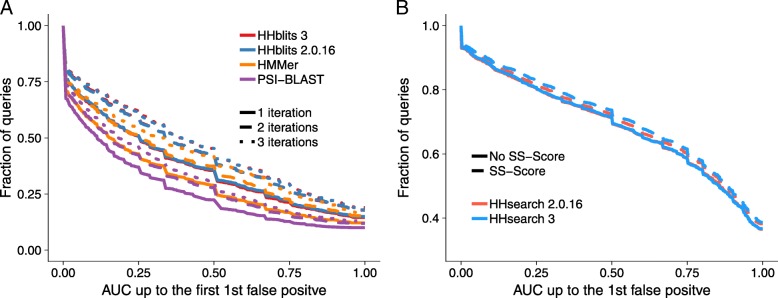
“After sorting the search resultof each query according to similarity (described in Supplementary Table 17), we calculated the sensitivity as the fraction of TPs in the sorted list up to the fi rst FP to better re fl ect the requirements for low false discovery rates in automatic searches.”
MethodFei, H., Li, Y., Liu, Y., Wei, J., Chen, A. A., & Gao, C. (2025) · Cell · doi:10.1016/j.cell.2025.06.014 · Cited by 105
Li, Y., Zhang, C., Bell, E. W., Yu, D., & Zhang, Y. (2019) · Proteins: Structure, Function, and Bioinformatics · doi:10.1002/prot.25798 · Cited by 94
Gene-rich UV sex chromosomes harbor conserved regulators of sexual development
Carey, S. B., Jenkins, J. W., Lovell, J. T., Maumus, F., Sreedasyam, A., Payton, A. C., Shu, S., Tiley, G. P., Fernández‐Pozo, N., Healey, A. L., et al. (2021) · Science Advances · doi:10.1126/sciadv.abh2488 · Cited by 99
A conserved family of immune effectors cleaves cellular ATP upon viral infection
(2023) · doi:10.1016/j.cell.2023.07.020 · Cited by 93
Metadata
- Authors
- Steinegger, M., Meier, M., Mirdita, M., Vöhringer, H., Haunsberger, S. J., & Söding, J.
- Affiliations
- Johns Hopkins University (US)
- Max Planck Institute for Biophysical Chemistry (DE)
- European Bioinformatics Institute (GB)
- Royal College of Surgeons in Ireland (IE)
- Corresponding author
- Söding, Johannes
- Venue
- BMC Bioinformatics
- Published
- 2019-09-14
- Volume
- 20
- Issue
- 1
- Pages
- 473-473
- ISSN
- 1471-2105 (ISSN-L)
- PMC
- PMC6744700
- OpenAlex
- W2972411752
- Cited by
- 1,145
- References
- 38
- Citations by year
- 2026: 106 · 2025: 167 · 2024: 208 · 2023: 248 · 2022: 168 · 2021: 176 · 2020: 63 · 2019: 7
- FWCI
- 35.23
- Type
- journal article
- Language
- en
- Open access
- gold
- doi.org
- Licence
- cc-by
- creativecommons.org/licenses/by/4.0/ (tdm)
- creativecommons.org/licenses/by/4.0/ (vor)
- Locations
- BMC Bioinformatics (publishedVersion, cc-by)
- bioRxiv (Cold Spring Harbor Laboratory) (acceptedVersion, cc-by-nc-nd)
- PubMed Central (publishedVersion, cc-by)
- PubMed (publishedVersion)
- DOAJ (DOAJ: Directory of Open Access Journals) (submittedVersion)
- Figshare (submittedVersion, cc-by)
- GoeScholar The Publication Server of the Georg-August-Universität Göttingen (Georg-August-Universität Göttingen) (submittedVersion, cc-by)
- MPG.PuRe (Max Planck Society) (submittedVersion, other-oa)
- Seoul National University Open Repository (Seoul National University) (submittedVersion)
- Funders
- Horizon 2020 (685778)
- Topics
- Life Sciences › Biochemistry, Genetics and Molecular Biology › Molecular Biology › Genomics and Phylogenetic Studies
- Life Sciences › Biochemistry, Genetics and Molecular Biology › Molecular Biology › Protein Structure and Dynamics
- Life Sciences › Biochemistry, Genetics and Molecular Biology › Molecular Biology › Machine Learning in Bioinformatics
- Keywords
- profile hidden Markov models, Viterbi algorithm, SIMD vectorization, remote homology detection, protein fold recognition, protein annotation, sequence similarity search, parallel computing, protein structure prediction, metagenomics
- MeSH terms
- Algorithms, Markov Chains, Software, Sequence Alignment, Sequence Analysis, Protein, Molecular Sequence Annotation
About these checks
Registry, retraction, Cites and statistics results are computed, not judged, with one exception: a printed reference that no index lists is read once by a model before it counts as a citation error. Claims are extracted by a model and kept only when their quote appears verbatim in the text; each cited source is then checked, with a model’s help, for whether it says what the claim relies on. Those verdicts can be wrong — read the claim’s quote and the cited source before relying on one.
Statistics and arithmetic are recomputed, not judged.
Confidence bands are shown only for fields calibrated on our annotated test set. None is calibrated yet, so no band is shown.
What counts as a claim ›How we measure confidence ›How we check this ›
Are you an author, or do you see a problem with this page? Request a review
Data sources
Bibliographic data: Semantic Scholar, OpenAlex, Crossref.
Contains information from the Semantic Scholar Academic Graph Datasets, made available under the ODC Attribution License (ODC-BY 1.0).
Semantic Scholar’s data is described in: Kinney, R., et al. (2023). The Semantic Scholar Open Data Platform. arXiv:2301.10140.
