

The DOI matches its Crossref record; 67 of the 67 references it cites were found in a registry or an index.
Aging progression of human gut microbiota
Open accessAbstract
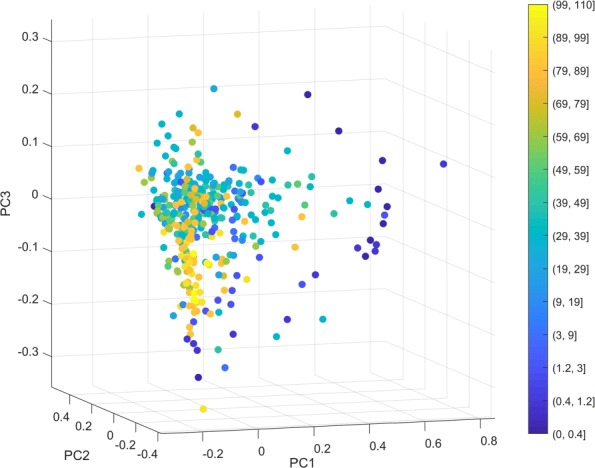
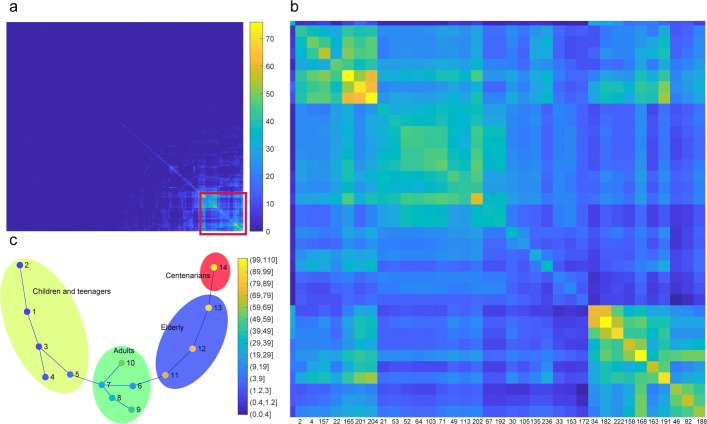
Background: Human gut microbiota are important for human health and have been regarded as a “forgotten organ”, whose variation is closely linked with various factors, such as host genetics, diet, pathological conditions and external environment. The diversity of human gut microbiota has been correlated with aging, which was characterized by different abundance of bacteria in various age groups. In the literature, most of the previous studies of age-related gut microbiota changes focused on individual species in the gut community with supervised methods. Here, we aimed to examine the underlying aging progression of the human gut microbial community from an unsupervised perspective. Results: We obtained raw 16S rRNA sequencing data of subjects ranging from newborns to centenarians from a previous study, and summarized the data into a relative abundance matrix of genera in all the samples. Without using the age information of samples, we applied an unsupervised algorithm to recapitulate the underlying aging progression of microbial community from hosts in different age groups and identify genera associated to this progression. Literature review of these identified genera indicated that for individuals with advanced ages, some beneficial genera are lost while some genera related with inflammation and cancer increase. Conclusions: The multivariate unsupervised analysis here revealed the existence of a continuous aging progression of human gut microbiota along with the host aging process. The identified genera associated to this aging process are meaningful for designing probiotics to maintain the gut microbiota to resemble a young age, which hopefully will lead to positive impact on human health, especially for individuals in advanced age groups.
Overview
The claims and statistics of this paper haven’t been checked yet.
Run the check — free, no account needed. It reads the open-access text and checks the sources it cites.
Integrity signals
Registry
Cites
Statistics
Figures
Verification
Claims the paper makes
The claims and statistics of this paper haven’t been checked yet.
Run the check — free, no account needed. It reads the open-access text and checks the sources it cites.
Claims other papers make about this one
Each is checked against this paper’s own text: does it say what the citing paper says it does?
In the citing paper
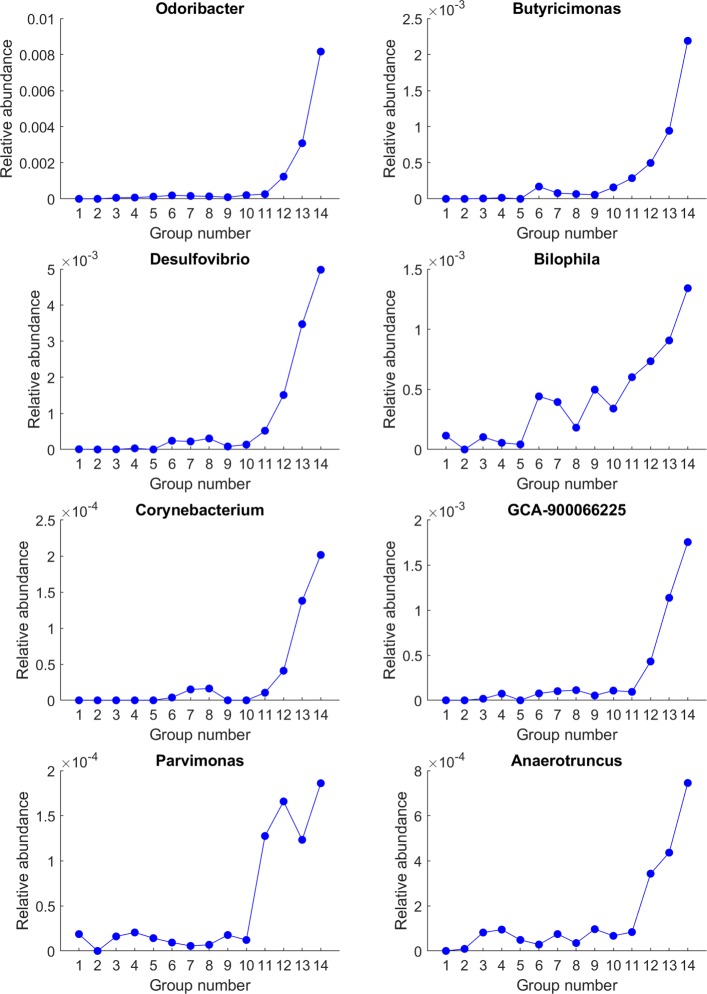
“Desulfovibrio, one of the main H2S-producing gut bacteria [59], is known to be associated with PD due to its elevated abundance [60].”
From Healthy Human Fecal Microbiota Transplantation into Mice Attenuates MPTP-Induced Neurotoxicity via AMPK/SOD2 Pathway (2023) · cites this paper as [59]
In the citing paper
“The aging process of the host parallels a continuous aging progression of the GM (90).”
From Signalling cognition: The gut microbiota and hypothalamic-pituitary-adrenal axis (2023) · cites this paper as [90]
Self-check
Percentages, sums and reported differences re-computed from the paper’s own numbers.
The self-check needs the paper’s full text.
Citations
Cites
The SILVA ribosomal RNA gene database project: improved data processing and web-based tools
Quast, C., Pruesse, E., Yilmaz, P., Gerken, J., Schweer, T., Yarza, P., Peplies, J., & Glöckner, F. O. (2012) · Nucleic Acids Research · doi:10.1093/nar/gks1219 · Cited by 33,055
Schloss, P. D., Westcott, S. L., Ryabin, T., Hall, J. R., Hartmann, M., Hollister, E. B., Lesniewski, R. A., Oakley, B. B., Parks, D. H., Robinson, C. J., et al. (2009) · Applied and Environmental Microbiology · doi:10.1128/aem.01541-09 · Cited by 19,549
Structure, function and diversity of the healthy human microbiome
The Human Microbiome Project Consortium (2012) · Nature · doi:10.1038/nature11234 · Cited by 11,726
Human gut microbiome viewed across age and geography
Yatsunenko, T., Rey, F. E., Manary, M. J., Trehan, I., Dominguez-Bello, M. G., Contreras, M., Magris, M., Hidalgo, G., Baldassano, R. N., Anokhin, A. P., et al. (2012) · Nature · doi:10.1038/nature11053 · Cited by 7,815
Trapnell, C., Cacchiarelli, D., Grimsby, J., Pokharel, P., Li, S., Morse, M., Lennon, N. J., Livak, K. J., Mikkelsen, T. S., & Rinn, J. L. (2014) · Nature Biotechnology · doi:10.1038/nbt.2859 · Cited by 7,314
A metagenome-wide association study of gut microbiota in type 2 diabetes
Qin, J., Li, Y., Cai, Z., Li, S., Zhu, J., Zhang, F., Liang, S., Zhang, W., Guan, Y., Shen, D., et al. (2012) · Nature · doi:10.1038/nature11450 · Cited by 6,762
Richness of human gut microbiome correlates with metabolic markers
Le Chatelier, E., Nielsen, T., Qin, J., Prifti, E., Hildebrand, F., Falony, G., Almeida, M., Arumugam, M., Batto, J.-M., Kennedy, S., et al. (2013) · Nature · doi:10.1038/nature12506 · Cited by 4,662
Human Genetics Shape the Gut Microbiome
Goodrich, J. K., Waters, J. L., Poole, A. C., Sutter, J. L., Koren, O., Blekhman, R., Beaumont, M., Van Treuren, W., Knight, R., Bell, J. T., et al. (2014) · Cell · doi:10.1016/j.cell.2014.09.053 · Cited by 3,164
Gut metagenome in European women with normal, impaired and diabetic glucose control
Karlsson, F. H., Tremaroli, V., Nookaew, I., Bergström, G., Behre, C. J., Fagerberg, B., Nielsen, J., & Bäckhed, F. (2013) · Nature · doi:10.1038/nature12198 · Cited by 3,115
The gut flora as a forgotten organ
O'Hara, A. M., & Shanahan, F. (2006) · The EMBO Reports · doi:10.1038/sj.embor.7400731 · Cited by 2,791
Alterations of the human gut microbiome in liver cirrhosis
Qin, N., Yang, F., Li, A., Prifti, E., Chen, Y., Shao, L., Guo, J., Le Chatelier, E., Yao, J., Wu, L., et al. (2014) · Nature · doi:10.1038/nature13568 · Cited by 2,177
Temporal development of the gut microbiome in early childhood from the TEDDY study
Stewart, C. J., Ajami, N. J., O’Brien, J. L., Hutchinson, D. S., Smith, D. P., Wong, M. C., Ross, M. C., Lloyd, R. E., Doddapaneni, H., Metcalf, G., et al. (2018) · Nature · doi:10.1038/s41586-018-0617-x · Cited by 2,055
Dietary-fat-induced taurocholic acid promotes pathobiont expansion and colitis in Il10-/- mice
Devkota, S., Wang, Y., Musch, M. W., Leone, V., Fehlner-Peach, H., Nadimpalli, A., Antonopoulos, D. A., Jabri, B., & Chang, E. B. (2012) · Nature · doi:10.1038/nature11225 · Cited by 1,904
Odamaki, T., Kato, K., Sugahara, H., Hashikura, N., Takahashi, S., Xiao, J.-Z., Abe, F., & Osawa, R. (2016) · BMC Microbiology · doi:10.1186/s12866-016-0708-5 · Cited by 1,521
Permutation tests for univariate or multivariate analysis of variance and regression
Anderson, M. J. (2001) · Canadian Journal of Fisheries and Aquatic Sciences · doi:10.1139/f01-004 · Cited by 1,483
Symptomatic atherosclerosis is associated with an altered gut metagenome
Karlsson, F. H., Fåk, F., Nookaew, I., Tremaroli, V., Fagerberg, B., Petranovic, D., Bäckhed, F., & Nielsen, J. (2012) · Nature Communications · doi:10.1038/ncomms2266 · Cited by 1,371
MetaHIT Consortium, Nielsen, H. B., Almeida, M., Juncker, A. S., Rasmussen, S., Li, J., Sunagawa, S., Plichta, D. R., Gautier, L., Pedersen, A. G., et al. (2014) · Nature Biotechnology · doi:10.1038/nbt.2939 · Cited by 1,184
Bifidobacteria and Their Role as Members of the Human Gut Microbiota
O’Callaghan, A. A., & van Sinderen, D. (2016) · Frontiers in Microbiology · doi:10.3389/fmicb.2016.00925 · Cited by 1,160
Unger, M. M., Spiegel, J., Dillmann, K.-U., Grundmann, D., Philippeit, H., Bürmann, J., Faßbender, K., Schwiertz, A., & Schäfer, K.-H. (2016) · Parkinsonism & Related Disorders · doi:10.1016/j.parkreldis.2016.08.019 · Cited by 1,159
Human Intestinal Lumen and Mucosa-Associated Microbiota in Patients with Colorectal Cancer
Chen, W., Liu, F., Ling, Z., Tong, X., & Xiang, C. (2012) · PLoS ONE · doi:10.1371/journal.pone.0039743 · Cited by 1,054
New evidences on the altered gut microbiota in autism spectrum disorders
Strati, F., Cavalieri, D., Albanese, D., De Felice, C., Donati, C., Hayek, J., Jousson, O., Leoncini, S., Renzi, D., Calabrò, A., et al. (2017) · Microbiome · doi:10.1186/s40168-017-0242-1 · Cited by 1,040
Phylogenetic Relationships of Butyrate-Producing Bacteria from the Human Gut
Barcenilla, A., Pryde, S. E., Martin, J. C., Duncan, S. H., Stewart, C. S., Henderson, C., & Flint, H. J. (2000) · Applied and Environmental Microbiology · doi:10.1128/aem.66.4.1654-1661.2000 · Cited by 996
Extracting a cellular hierarchy from high-dimensional cytometry data with SPADE
Qiu, P., Simonds, E. F., Bendall, S. C., Gibbs, K. D., Bruggner, R. V., Linderman, M. D., Sachs, K., Nolan, G. P., & Plevritis, S. K. (2011) · Nature Biotechnology · doi:10.1038/nbt.1991 · Cited by 956
Self-citationThe human gut microbiome in early-onset type 1 diabetes from the TEDDY study
Vatanen, T., Franzosa, E. A., Schwager, R., Tripathi, S. M., Arthur, T. D., Vehik, K., Lernmark, Å., Hagopian, W., Rewers, M., She, J., et al. (2018) · Nature · doi:10.1038/s41586-018-0620-2 · Cited by 926
Mechanisms of inflammation-driven bacterial dysbiosis in the gut
Zeng, M. Y., Inohara, N., & Núñez, G. (2016) · Mucosal Immunology · doi:10.1038/mi.2016.75 · Cited by 896
Guinane, C. M., & Cotter, P. D. (2013) · Therapeutic Advances in Gastroenterology · doi:10.1177/1756283x13482996 · Cited by 884
Lewis, J. D., Chen, E. Z., Baldassano, R. N., Otley, A. R., Griffiths, A. M., Lee, D., Bittinger, K., Bailey, A., Friedman, E. S., Hoffmann, C., et al. (2015) · Cell Host & Microbe · doi:10.1016/j.chom.2015.09.008 · Cited by 823
Tumour-associated and non-tumour-associated microbiota in colorectal cancer
Flemer, B., Lynch, D. B., Brown, J. M. R., Jeffery, I. B., Ryan, F. J., Claesson, M. J., O'Riordain, M., Shanahan, F., & O'Toole, P. W. (2017) · Gut · doi:10.1136/gutjnl-2015-309595 · Cited by 804
Walter, J. (2008) · Applied and Environmental Microbiology · doi:10.1128/aem.00753-08 · Cited by 756
Gut mucosal microbiome across stages of colorectal carcinogenesis
Nakatsu, G., Li, X., Zhou, H., Sheng, J., Wong, S. H., Wu, W. K. K., Ng, S. C., Tsoi, H., Dong, Y., Zhang, N., et al. (2015) · Nature Communications · doi:10.1038/ncomms9727 · Cited by 701
Siervo, M., Lara, J., Chowdhury, S., Ashor, A., Oggioni, C., & Mathers, J. C. (2015) · British Journal of Nutrition · doi:10.1017/s0007114514003341 · Cited by 656
The Gut Microbiome Modulates Colon Tumorigenesis
Zackular, J. P., Baxter, N. T., Iverson, K. D., Sadler, W. D., Petrosino, J. F., Chen, G. Y., & Schloss, P. D. (2013) · mBio · doi:10.1128/mbio.00692-13 · Cited by 629
Verdam, F. J., Fuentes, S., de Jonge, C., Zoetendal, E. G., Erbil, R., Greve, J. W., Buurman, W. A., de Vos, W. M., & Rensen, S. S. (2013) · Obesity · doi:10.1002/oby.20466 · Cited by 587
Hopkins, M. J., Sharp, R., & Macfarlane, G. T. (2001) · Gut · doi:10.1136/gut.48.2.198 · Cited by 577
Gophna, U., Sommerfeld, K., Gophna, S., Doolittle, W. F., & van Zanten, S. J. O. V. (2006) · Journal of Clinical Microbiology · doi:10.1128/jcm.01004-06 · Cited by 570
Dietary effects on human gut microbiome diversity
Xu, Z., & Knight, R. (2015) · British Journal Of Nutrition · doi:10.1017/s0007114514004127 · Cited by 456
Age- and Sex-Dependent Patterns of Gut Microbial Diversity in Human Adults
de la Cuesta‐Zuluaga, J., Kelley, S. T., Chen, Y., Escobar, J. S., Mueller, N. T., Ley, R. E., McDonald, D. T., Huang, S. W., Swafford, A. D.-E., Knight, R. D., et al. (2019) · mSystems · doi:10.1128/msystems.00261-19 · Cited by 413
(Dis)Trust your gut: the gut microbiome in age-related inflammation, health, and disease
Buford, T. W. (2017) · Microbiome · doi:10.1186/s40168-017-0296-0 · Cited by 409
Sulfate-reducing bacteria in human feces and their association with inflammatory bowel diseases
Loubinoux, J., Bronowicki, J., Pereira, I. A. C., Mougenel, J.-L., & Faou, A. L. (2002) · FEMS Microbiology Ecology · doi:10.1111/j.1574-6941.2002.tb00942.x · Cited by 404
Microbiota conservation and BMI signatures in adult monozygotic twins
Tims, S., Derom, C., Jonkers, D. M., Vlietinck, R., Saris, W. H., Kleerebezem, M., de Vos, W. M., & Zoetendal, E. G. (2013) · The ISME Journal · doi:10.1038/ismej.2012.146 · Cited by 367
Morganella morganii, a non-negligent opportunistic pathogen
Liu, H., Zhu, J., Hu, Q., & Rao, X. (2016) · International Journal of Infectious Diseases · doi:10.1016/j.ijid.2016.07.006 · Cited by 311
Dysbiosis of gut microbiota in promoting the development of colorectal cancer
Zou, S., Fang, L., & Lee, M. (2017) · Gastroenterology report · doi:10.1093/gastro/gox031 · Cited by 283
Kohl, K. D., Amaya, J., Passement, C. A., Dearing, M. D., & McCue, M. D. (2014) · FEMS Microbiology Ecology · doi:10.1111/1574-6941.12442 · Cited by 249
Sovran, B., Hugenholtz, F., Elderman, M. E., van Beek, A. A., Graversen, K., Huijskes, M., Boekschoten, M. V., Savelkoul, H. F. J., de Vos, P., Dekker, J. P., et al. (2019) · Scientific Reports · doi:10.1038/s41598-018-35228-3 · Cited by 242
The gut microbiota of Colombians differs from that of Americans, Europeans and Asians
Escobar, J. S., Klotz, B., Valdés-Duque, B. E., & Agudelo, G. M. (2014) · BMC Microbiology · doi:10.1186/s12866-014-0311-6 · Cited by 232
Zinkernagel, M. S., Zysset-Burri, D. C., Keller, I., Berger, L. E., Leichtle, A. B., Largiadèr, C. R., Fiedler, G. M., & Wolf, S. (2017) · Scientific Reports · doi:10.1038/srep40826 · Cited by 229
Proteus spp. as Putative Gastrointestinal Pathogens
Hamilton, A. L., Kamm, M. A., Ng, S. C., & Morrison, M. (2018) · Clinical Microbiology Reviews · doi:10.1128/cmr.00085-17 · Cited by 227
Biological aging and the human gut microbiota
Maffei, V. J., Kim, S., Blanchard, E., Luo, M., Jazwinski, S. M., Taylor, C. M., & Welsh, D. A. (2017) · The Journals of Gerontology Series A · doi:10.1093/gerona/glx042 · Cited by 219
The microbial basis of inflammatory bowel diseases
Dalal, S. R., & Chang, E. B. (2014) · Journal of Clinical Investigation · doi:10.1172/jci72330 · Cited by 202
Oxalobacter formigenes and Its Potential Role in Human Health
Duncan, S. H., Richardson, A. J., Kaul, P., Holmes, R. P., Allison, M. J., & Stewart, C. S. (2002) · Applied and Environmental Microbiology · doi:10.1128/aem.68.8.3841-3847.2002 · Cited by 188
The Gut Microbiota of Healthy Aged Chinese Is Similar to That of the Healthy Young
Bian, G., Gloor, G. B., Gong, A., Jia, C., Zhang, W., Hu, J., Zhang, H., Zhang, Y., Zhou, Z., Zhang, J., et al. (2017) · mSphere · doi:10.1128/msphere.00327-17 · Cited by 188
Zhou, F., Long, W., Hao, B., Ding, D., Ma, X., Zhao, L., & Pang, X. (2017) · Gut Pathogens · doi:10.1186/s13099-017-0208-7 · Cited by 178
Griffin, N. W., Ahern, P. P., Cheng, J., Heath, A. C., Ilkayeva, O., Newgard, C. B., Fontana, L., & Gordon, J. I. (2017) · Cell Host & Microbe · doi:10.1016/j.chom.2016.12.006 · Cited by 164
The Neglected Organ: Bacterial Flora Has a Crucial Immunostimulatory Role
Bocci, V. A. (1992) · Perspectives in biology and medicine · doi:10.1353/pbm.1992.0004 · Cited by 163
Age related changes in gut physiology and nutritional status.
Lovat, L. B. (1996) · Gut · doi:10.1136/gut.38.3.306 · Cited by 136
Tuikhar, N., Keisam, S., Labala, R. K., Imrat, Ramakrishnan, P., Arunkumar, M. C., Ahmed, G., Biagi, E., & Jeyaram, K. (2019) · Mechanisms of Ageing and Development · doi:10.1016/j.mad.2019.02.001 · Cited by 103 · cited 2×
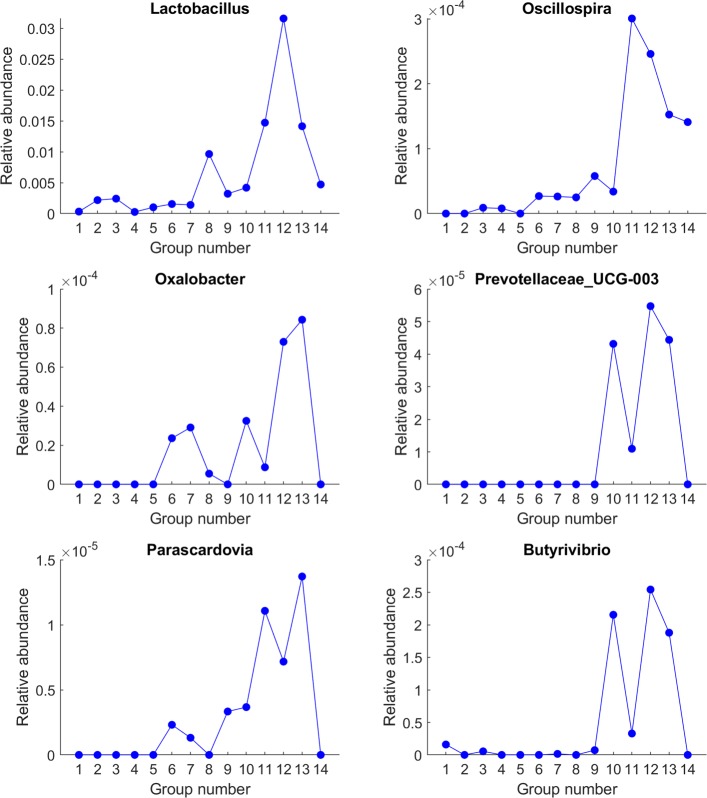
“Among the remaining 24 genera detected by SPD only, a few were previously implicated in the literature, such as Oxalobacter, Butyrivibrio, Lactobacillus which have been experimentally demonstrated to be associated with aging [24–26], as well as Prevotellaceae which has been highlighted with lower presence in the gut m…”
BackgroundVemuri, R., Shinde, T., Gundamaraju, R., Gondalia, S. V., Karpe, A. V., Beale, D. J., Martoni, C., & Eri, R. D. (2018) · Nutrients · doi:10.3390/nu10091255 · Cited by 78
Shin, J., Sim, M., Lee, J., & Shin, D. (2016) · Journal of PHYSIOLOGICAL ANTHROPOLOGY · doi:10.1186/s40101-016-0121-7 · Cited by 75
Feeney, A., Kropp, K. A., O’Connor, R., & Sleator, R. D. (2014) · Gut Microbes · doi:10.4161/19490976.2014.983774 · Cited by 66
Selecting age-related functional characteristics in the human gut microbiome
Lan, Y., Kriete, A., & ROSEN, G. L. (2013) · Microbiome · doi:10.1186/2049-2618-1-2 · Cited by 61
Li, S., Wang, Z., Yang, Y. K., Yang, S., Yao, C., Liu, K., Cui, S., Zou, Q., Sun, H., & Guo, G. (2017) · AMB Express · doi:10.1186/s13568-017-0383-4 · Cited by 56
Discovering Biological Progression Underlying Microarray Samples
Qiu, P., Gentles, A. J., & Plevritis, S. K. (2011) · PLoS Computational Biology · doi:10.1371/journal.pcbi.1001123 · Cited by 53
Self-citationLobatón, T., Hoffman, I. E. A., Vermeire, S., Ferrante, M., Verhaegen, J., & Assche, G. V. (2014) · Inflammatory Bowel Diseases · doi:10.1097/mib.0000000000000247 · Cited by 37
Genome sequence and description of Corynebacterium ihumii sp. nov.
Padmanabhan, R., Dubourg, G., Lagier, J., Couderc, C., Michelle, C., Raoult, D., & Fournier, P. (2014) · Standards in Genomic Sciences · doi:10.4056/sigs.5149006 · Cited by 16
Bacterial Faecal Flora in Healthy Women of Different Ages
Minelli, E. B., Benini, A., Beghini, A. M., Cerutti, R., & Nardo, G. (1993) · Microbial Ecology in Health and Disease · doi:10.3109/08910609309141561 · Cited by 13
Peng, W. (2011) · Nature Biotechnology · doi:10.1038/nbt.1999 · Cited by 3
Research works printed but not linked: 2
- Padmanabhan R, Dubourg G, Lagier J-C, Couderc C, Michelle C, Raoult D, Fournier P-E. Genome sequence and description of corynebacterium ihumii sp. nov. Stand Genomic Sci. 2014; 9(3):1128. https://doi.org/10.4056/sigs.5149006. · DOI
- Anderson MJ. Permutation tests for univariate or multivariate analysis of variance and regression. Can J Fish Aquat Sci. 2001; 58(3):626–39. https://doi.org/10.1139/cjfas-58-3-626. · DOI
Cited by
Sorted by citations
The gut microbiome as a modulator of healthy ageing
Ghosh, T. S., Shanahan, F., & O’Toole, P. W. (2022) · Nature Reviews Gastroenterology & Hepatology · doi:10.1038/s41575-022-00605-x · Cited by 817
Chronic inflammation and the hallmarks of aging
Baechle, J. J., Chen, N., Makhijani, P., Winer, S., Furman, D., & Winer, D. A. (2023) · Molecular Metabolism · doi:10.1016/j.molmet.2023.101755 · Cited by 471
The aging gut microbiome and its impact on host immunity
Bosco, N., & Noti, M. (2021) · Genes and Immunity · doi:10.1038/s41435-021-00126-8 · Cited by 435
Signalling cognition: The gut microbiota and hypothalamic-pituitary-adrenal axis
Rusch, J. A., Layden, B. T., & Dugas, L. R. (2023) · Frontiers in Endocrinology · doi:10.3389/fendo.2023.1130689 · Cited by 415
Gut microbiota as the key controllers of 'healthy' aging of elderly people
Ragonnaud, E., & Biragyn, A. (2021) · Immunity & Ageing · doi:10.1186/s12979-020-00213-w · Cited by 383
Metadata
- Authors
- Xu, C., Zhu, H., & Qiu, P.
- Affiliations
- Georgia Institute of Technology (US)
- Peking University (CN)
- Corresponding author
- Qiu, Peng
- Venue
- BMC Microbiology
- Published
- 2019-10-28
- Volume
- 19
- Issue
- 1
- Pages
- 236-236
- ISSN
- 1471-2180 (ISSN-L)
- PMC
- PMC6819604
- OpenAlex
- W2982520321
- Cited by
- 258
- References
- 67
- Citations by year
- 2026: 21 · 2025: 26 · 2024: 52 · 2023: 39 · 2022: 50 · 2021: 43 · 2020: 27
- FWCI
- 9.92
- Type
- journal article
- Language
- en
- Update notices
- correction (2021-04-28)
- Open access
- gold
- doi.org
- Locations
- BMC Microbiology (publishedVersion, cc-by)
- PubMed Central (publishedVersion, cc-by)
- PubMed (publishedVersion)
- DOAJ (DOAJ: Directory of Open Access Journals) (submittedVersion, cc-by-sa)
- Funders
- National Science Foundation (1552784)
- Georgia Institute of Technology
- China Scholarship Council
- Topics
- Life Sciences › Biochemistry, Genetics and Molecular Biology › Molecular Biology › Gut microbiota and health
- Health Sciences › Dentistry › Periodontics › Oral microbiology and periodontitis research
- Life Sciences › Agricultural and Biological Sciences › Food Science › Probiotics and Fermented Foods
- Keywords
- gut microbiota, aging, age-related microbial changes, 16S rRNA gene sequencing, unsupervised clustering, microbial genera, probiotics, centenarians, inflammation, tumor-associated bacteria
- MeSH terms
- Gastrointestinal Microbiome, Unsupervised Machine Learning, Adolescent, Adult, Age Factors, Aged, Aged, 80 and over, Aging, Bacteria, Child, Child, Preschool, DNA, Bacterial, DNA, Ribosomal, Female, Humans, Infant, Infant, Newborn, Male, Middle Aged, Phylogeny, RNA, Ribosomal, 16S, Sequence Analysis, DNA, Young Adult
About these checks
Registry, retraction, Cites and statistics results are computed, not judged, with one exception: a printed reference that no index lists is read once by a model before it counts as a citation error. Claims are extracted by a model and kept only when their quote appears verbatim in the text; each cited source is then checked, with a model’s help, for whether it says what the claim relies on. Those verdicts can be wrong — read the claim’s quote and the cited source before relying on one.
Statistics and arithmetic are recomputed, not judged.
Confidence bands are shown only for fields calibrated on our annotated test set. None is calibrated yet, so no band is shown.
What counts as a claim ›How we measure confidence ›How we check this ›
Are you an author, or do you see a problem with this page? Request a review
