

Development and evaluation of culturally sensitive psychosocial interventions for under-served people in primary care
Open accessThe DOI matches its Crossref record; 55 of the 56 references it cites were found in a registry or an index; 21 of the 45 sources its claims cite were checked for support.
Abstract
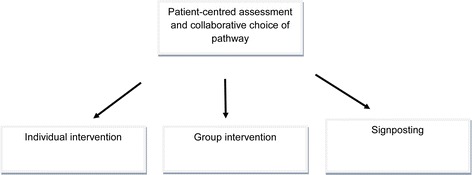
Background: Psychological therapy is effective for symptoms of mental distress, but many groups with high levels of mental distress face significant barriers in terms of access to care, as current interventions may not be sensitive to their needs or their understanding of mental health. There is a need to develop forms of psychological therapy that are acceptable to these groups, feasible to deliver in routine settings, and clinically and cost effective. Methods: We developed a culturally sensitive wellbeing intervention with individual, group and sign-posting elements, and tested its feasibility and acceptability for patients from ethnic minorities and older people in an exploratory randomised trial.Results: We recruited 57 patients (57% of our target) from 4 disadvantaged localities in the NW of England. The results of the exploratory trial suggest that the group receiving the wellbeing interventions improved compared to the group receiving usual care. For elders, the largest effects were on CORE-OM and PHQ-9. For ethnic minority patients, the largest effect was on PHQ-9. Qualitative data suggested that patients found the intervention acceptable, both in terms of content and delivery. Conclusions: This exploratory trial provides some evidence of the efficacy and acceptability of a wellbeing intervention for older and ethnic minority groups experiencing anxiety and depression, although challenges in recruitment and engagement remain. Evidence from our exploratory study of wellbeing interventions should inform new substantive trial designs.Trial registration: Current controlled trials ISRCTN68572159. © 2014 Lovell et al., licensee BioMed Central Ltd.
Overview
CoChat Summary
## TL;DR
This exploratory randomized trial developed and tested a culturally sensitive “wellbeing intervention” for older people and ethnic minority patients with anxiety/depression in primary care. The intervention was generally acceptable and showed preliminary benefits over usual care, but recruitment was difficult and the study remained small.
## Key findings
- The trial recruited 57 patients total, which was 57% of the target; recruitment failed to meet the target of 100.
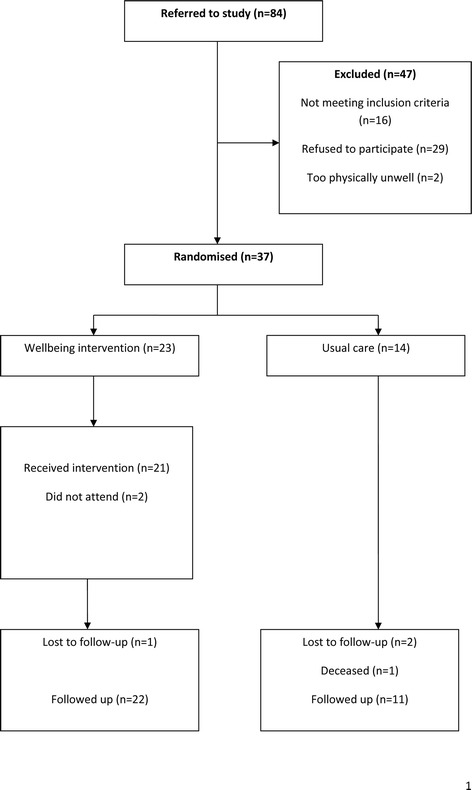
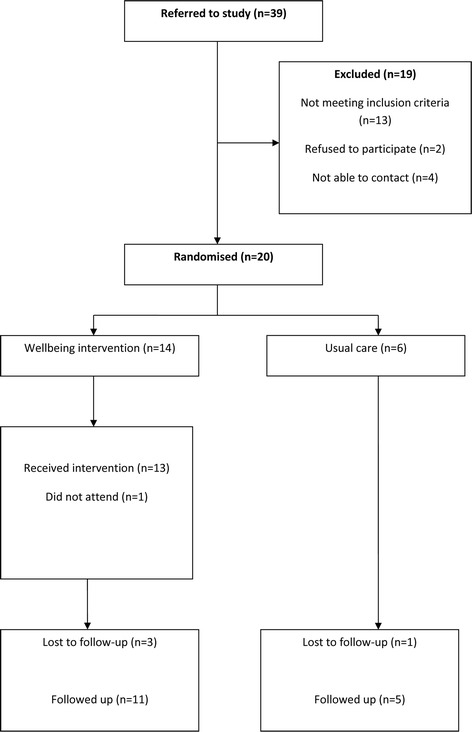
- In the elders sample, 84 patients were referred, 37 (44%) were eligible and randomized, and 33 (89%) completed 20-week follow-up; in the ethnic minority sample, 39 were referred, 20 (51%) were randomized, and 16 (80%) completed follow-up.
- Among the 37 participants allocated to the intervention, 3 attended no sessions; among the 34 who received it, the mean number of sessions attended was 6.3 and the mean total time was 326 minutes.
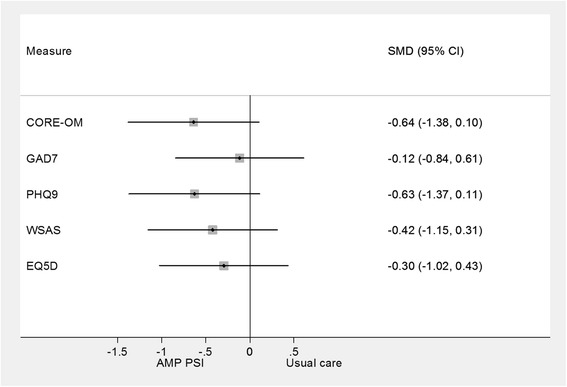
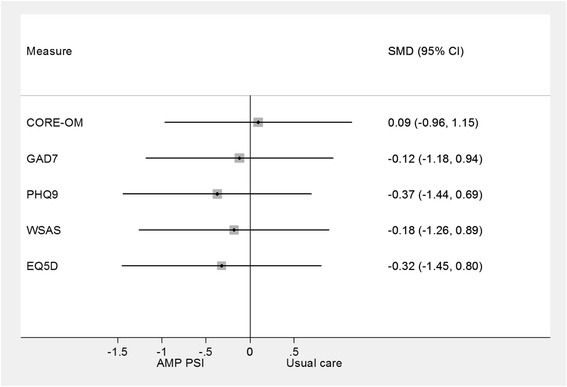
- The paper reports that the intervention group improved more than usual care, with the largest effects in elders on CORE-OM and PHQ-9, and in ethnic minority patients on PHQ-9; qualitative data suggested the intervention was acceptable in both content and delivery.
## Methods
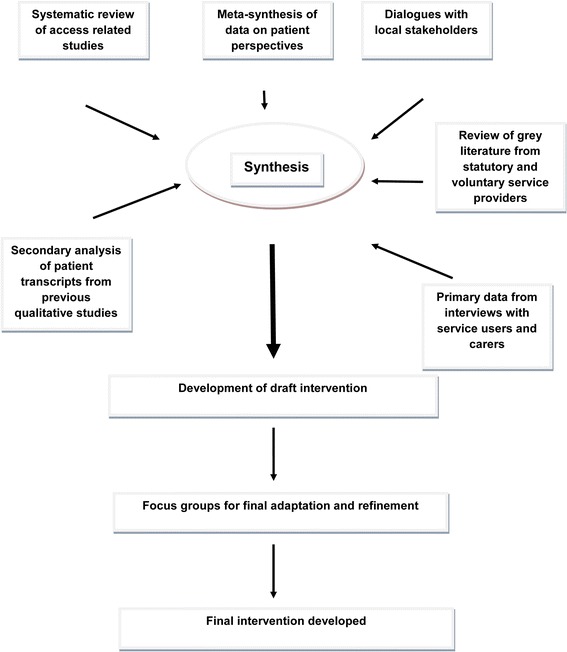
- The study was a two-phase program: phase 1 developed the intervention using 6 sources of evidence plus 11 focus groups with 117 service users, community members, and service providers; phase 2 evaluated it in an exploratory randomized controlled trial with a linked qualitative study.
- Participants were older adults (50+) and ethnic minority participants (South Asian or Somali, age 18+) from two Primary Care Trusts in Northwest England; eligibility required PHQ-9 and/or GAD-7 scores of 10 or more.
- Randomization was 2:1 intervention to control; quantitative analysis was intention-to-treat with descriptive comparisons and standardised mean differences, and qualitative interviews were analysed using a Framework Approach.
## Limitations
- The paper states that recruitment and engagement remained challenging, and that the study was an exploratory trial with small numbers, limiting precision and preventing statistical significance testing.
- The paper notes that outcome measures may be less valid for some ethnic minority groups because the scales were “generally not been developed for, or extensively validated with ethnic minority populations”.
- Evident from the text: the sample was very small and uneven across groups, including only 1 Somali participant, which limits generalisability and transferability beyond the study localities.
Model-written summary. Check it against the paper before relying on it.
Integrity signals
Registry
Cites
Statistics
Figures
Verification
Claims the paper makes
15 Valid · 2 Not valid · 11 Not checked · 96 Own results and interpretations
At least one cited source doesn’t support this claim or points to a different paper, and none confirmed it — see the verdicts below.
In the paper
“but the magnitude is fairly substantial compared to other psychosocial interventions in primary care [28].”
§ Development and evaluation of culturally sensitive psychosocial interventions for under-served people in primary care > Results > Outcomes
What the sources say
- Disputedcites [28] Lovell K Bower P Richards D Barkham M Sibbald B Roberts C Davies L Rogers A Gellatly J Hennessy S Developing guided self-help for depression using the medical research council complex interventions framework: a description of the modelling phase and results of an exploratory randomised controlled trial BMC Psychiatry 2008 8 91 10.1186/1471-244X-8-91 19025646 PMC2596776 sourceExperimental — accuracy not yet measured
The Phase 2 Effectiveness section describes the trial’s effects as small, with no significant benefit on primary or secondary outcomes; adjusted effect sizes were smaller still. It compares the effects with previous guided self-help studies, but does not report a substantial effect in an elder sample. (LLM, conf=0.88)
Checked by a reasoning model — may be wrong.
plain- Asserted: passes — The authors put it forward as true.
- Checkable: passes — It can be checked against evidence.
- Load-bearing: unclear — It is unclear whether the paper’s conclusions depend on it.
- Based: passes — The paper gives a reason why it holds.
- Disputed
Every source the paper cites for this claim was checked and supports it.
In the paper
“While evidence-based culturally adapted treatments have been available for some time, US experience suggests they remain ‘largely unused in usual care settings’ [13].”
§ Development and evaluation of culturally sensitive psychosocial interventions for under-served people in primary care > Background
What the sources say
- Supportedcites [13] Cabassa LJ Baumann AA A two-way street: bridging implementation science and cultural adaptations of mental health treatments Implement Sci 2013 8 1 1 10.1186/1748-5908-8-90 23958445 PMC3765289 source
The Introduction states that, in the U.S., culturally adapted treatments remain largely unused in usual care settings. This directly supports the attributed claim. (LLM, conf=0.95)
hedged- Asserted: passes — The authors put it forward as true.
- Checkable: passes — It can be checked against evidence.
- Load-bearing: passes — The paper’s conclusions depend on it.
- Based: passes — The paper gives a reason why it holds.
- Supported
The cited sources support only part of this claim — read each source’s verdict below.
In the paper
“Designing specific interventions for different under-represented groups through a common framework may improve the subsequent uptake in services [14].”
§ Development and evaluation of culturally sensitive psychosocial interventions for under-served people in primary care > Background
What the sources say
- Partly supportedcites [14] May CR Finch T Mair F Ballini L Dowrick CF Eccles M Gask L Macfarlane A Murray E Rapley T Rogers A Treweek S Wallace P Anderson G Burns J Heaven B Understanding the implementation of complex interventions in health care: the normalization process model BMC Health Serv Res 2007 7 148 10.1186/1472-6963-7-148 17880693 PMC2089069 sourceExperimental — accuracy not yet measured
The Background (page not provided) describes a common framework for identifying factors that promote or inhibit implementation and for assessing whether an intervention will become routine in health care practice. It does not address designing interventions for different under-represented groups or show that doing so improves service uptake. (LLM, conf=0.84)
hedgedstates a possible cause- Asserted: passes — The authors put it forward as true.
- Checkable: passes — It can be checked against evidence.
- Load-bearing: passes — The paper’s conclusions depend on it.
- Based: passes — The paper gives a reason why it holds.
- Partly supported
The sources with a verdict support this claim; the rest weren’t checked yet, have no full text we could read, or their verdicts aren’t rated yet.
In the paper
“The emerging evidence-base accordingly emphasises delivery adaptations (practitioner skills, characteristics and flexible patient centred approaches) over cultural adaptation of underlying principles of therapies [10-12].”
§ Development and evaluation of culturally sensitive psychosocial interventions for under-served people in primary care > Background
What the sources say
- Supportedcites [10] Chowdhary N Jotheeswaran AT Nadkarni A Hollon SD King M Jordans MJD Rahman A Verdeli H Araya R Patel V The methods and outcomes of cultural adaptations of psychological treatments for depressive disorders: a systematic review Psychol Med 2013 44 1 16 23866176 PMC3943384 source
The Discussion states that most adaptations concerned delivery rather than treatment content, while fidelity to the original treatment was maintained. The Results describe therapist skills and patient-centred flexibility, including cultural-competence training and flexible scheduling. (LLM, conf=0.94)
- Not checked — no full text of the sourcecites [11] van Loon A van Schaik A Dekker J Beekman A Review: Bridging the gap for ethnic minority adult outpatients with depression and anxiety disorders by culturally adapted treatments J Affect Disord 2013 147 9 16 10.1016/j.jad.2012.12.014 23351566 source
- Not checked — no full text of the sourcecites [12] Griner D Smith TB Culturally adapted mental health intervention: A meta-analytic review Psychother Theory Res Pract Train 2006 43 531 548 10.1037/0033-3204.43.4.531 22122142 source
plain- Asserted: passes — The authors put it forward as true.
- Checkable: passes — It can be checked against evidence.
- Load-bearing: passes — The paper’s conclusions depend on it.
- Based: passes — The paper gives a reason why it holds.
- Supported
The cited sources support only part of this claim — read each source’s verdict below.
In the paper
“A marked difference between groups included meeting the language needs of some minority patients, however deep rooted communication issues such as differential mental health models [21], perceived candidacy for treatment [22] and recursivity in cultural expectations of treatment [23] exist in both groups [8].”
§ Development and evaluation of culturally sensitive psychosocial interventions for under-served people in primary care > Background
What the sources say
- Partly supportedcites [21] Chew-Graham C Kovandzic M Gask L Burroughs H Clarke P Sanderson H Dowrick C Why may older people with depression not present to primary care? Messages from secondary analysis of qualitative data Health Soc Care Community 2011 20 52 60 10.1111/j.1365-2524.2011.01015.x 21749528 sourceExperimental — accuracy not yet measured
The Conclusions (page unavailable) discuss older patients’ perceived candidacy for help, how prior encounters affect future help-seeking, and mismatches between anticipated care and what patients think would help. The Use of secondary analysis section (page unavailable) reports similar concerns about the legitimacy of seeking care and service receptivity across the older-person data and the larger hard-to-reach-groups study. It does not establish that all three specified communication issues, particularly differential mental-health models and cultural expectations of treatment, exist in both groups. (LLM, conf=0.82)
- Not matchedcites [22] Woods MD Kirk D Agarwal S Annandale E Arthur T Harvey J Hsu R Katbamna S Olsen R Smith L Vulnerable groups and access to health care: a critical interpretive review National Coordinating Centre NHS Service Delivery Organ R D (NCCSDO) Retrieved May 2005 27 2012
Its entry has no title and year that we can search by.
- Not checked — no full text of the sourcecites [23] Rogers A Kennedy A Nelson E Robinson A Uncovering the limits of patient-centeredness: implementing a self-management trial for chronic illness Qual Health Res 2005 15 224 239 10.1177/1049732304272048 15611205 source
plain- Asserted: passes — The authors put it forward as true.
- Checkable: passes — It can be checked against evidence.
- Load-bearing: passes — The paper’s conclusions depend on it.
- Based: passes — The paper gives a reason why it holds.
- Partly supported
44 more claims · 2 with their cited sources checked
Create a free account to see all 124 claims and to verify the 3 references still open.
- It may state two separate claims as one. 45
- Probably not a substantial claim. 43
Claims other papers make about this one
Each is checked against this paper’s own text: does it say what the citing paper says it does?
The cited source says what the claim attributes to it.
In the citing paper
“In the Improving Access to Mental Health in Primary Care (AMP) Programme [39] psychological well-being practitioners (seconded from local Improving Access to Psychological Therapies (IAPT) services) delivered a brief psychosocial intervention to older people, who found this intervention acceptable [40].”
From Can support workers from AgeUK deliver an intervention to support older people with anxiety and depression? A qualitative evaluation (2019) · cites this paper as [40]
Citations
Cites
The PHQ-9: Validity of a brief depression severity measure
Kroenke, K., Spitzer, R. L., & Williams, J. B. W. (2001) · Journal of General Internal Medicine · doi:10.1046/j.1525-1497.2001.016009606.x · Cited by 44,910
A Brief Measure for Assessing Generalized Anxiety Disorder: The GAD-7
Spitzer, R. L., Kroenke, K., Williams, J. B. W., & Löwe, B. (2006) · Archives of Internal Medicine · doi:10.1001/archinte.166.10.1092 · Cited by 31,765 · cited 2×
“These included measures of depression (Patient Health Questionnaire - PHQ-9) [33]: anxiety (Generalised Anxiety Disorder Assessment - GAD-7) [34]: functioning (Work and Social Adjustment Scale - WSAS) [35], and health related quality of life (EQ-5D) [36] plus a brief demographics form.”
MethodEuroQol: a new facility for the measurement of health-related quality of life
(1990) · Health Policy · doi:10.1016/0168-8510(90)90421-9 · Cited by 15,736
Qualitative research in health care: Analysing qualitative data
Pope, C. (2000) · BMJ · doi:10.1136/bmj.320.7227.114 · Cited by 8,131
Qualitative data analysis for applied policy research
(2002) · Analyzing Qualitative Data · doi:10.4324/9780203413081-14 · Cited by 4,964 · cited 1×
“Interviews were transcribed verbatim, and analysed using a Framework Approach [38] by familiarisation, indexing, charting and interpreting the data as a team.”
MethodThe Work and Social Adjustment Scale: a simple measure of impairment in functioning
Mundt, J. C., Marks, I. M., Shear, M. K., & Greist, J. M. (2002) · British Journal of Psychiatry · doi:10.1192/bjp.180.5.461 · Cited by 2,515 · cited 1×
“These included measures of depression (Patient Health Questionnaire - PHQ-9) [33]: anxiety (Generalised Anxiety Disorder Assessment - GAD-7) [34]: functioning (Work and Social Adjustment Scale - WSAS) [35], and health related quality of life (EQ-5D) [36] plus a brief demographics form.”
MethodImplementing, Embedding, and Integrating Practices: An Outline of Normalization Process Theory
May, C., & Finch, T. (2009) · Sociology · doi:10.1177/0038038509103208 · Cited by 2,115 · cited 1×
“Various interventions [1], collaborative care [2], self-management [3,4], and social and community initiatives [5] have shown preliminary evidence of effectiveness in trials in improving outcomes for people experiencing depression and anxiety who may not readily access timely or appropriately targeted care.”
BackgroundCulturally adapted mental health intervention: a meta-analytic review
Griner, D., & Smith, T. B. (2006) · Psychotherapy: Theory, Research, Practice, Training · doi:10.1037/0033-3204.43.4.531 · Cited by 1,236 · cited 1×
“The emerging evidence-base accordingly emphasises delivery adaptations (practitioner skills, characteristics and flexible patient centred approaches) over cultural adaptation of underlying principles of therapies [10-12].”
BackgroundTowards a standardised brief outcome measure: Psychometric properties and utility of the CORE–OM
Evans, C., Connell, J., Barkham, M., Margison, F., McGrath, G., Mellor-Clark, J., & Audin, K. (2002) · British Journal of Psychiatry · doi:10.1192/bjp.180.1.51 · Cited by 934 · cited 1×
“The CORE-OM has published evidence of reliability and validity [29,30] and has been used in previous UK mental health trials [31].”
MethodMay, C., Finch, T., Mair, F., Ballini, L., Dowrick, C., Eccles, M., Gask, L., MacFarlane, A., Murray, E., Rapley, T., et al. (2007) · BMC Health Services Research · doi:10.1186/1472-6963-7-148 · Cited by 768 · cited 1×
“Designing specific interventions for different under-represented groups through a common framework may improve the subsequent uptake in services [14].”
Self-citationGilbody, S., Whitty, P., Grimshaw, J., & Thomas, R. (2003) · JAMA · doi:10.1001/jama.289.23.3145 · Cited by 749 · cited 1×
“Various interventions [1], collaborative care [2], self-management [3,4], and social and community initiatives [5] have shown preliminary evidence of effectiveness in trials in improving outcomes for people experiencing depression and anxiety who may not readily access timely or appropriately targeted care.”
BackgroundImproving access to psychological therapy: initial evaluation of two UK demonstration sites
Clark, D. M., Layard, R., Smithies, R., Richards, D. A., Suckling, R., & Wright, B. (2009) · Behaviour Research and Therapy · doi:10.1016/j.brat.2009.07.010 · Cited by 599
Barkham, M., Margison, F., Leach, C., Lucock, M., Mellor-Clark, J., Evans, C., Benson, L., Connell, J., Audin, K., & McGrath, G. (2001) · Journal of Consulting and Clinical Psychology · doi:10.1037/0022-006x.69.2.184 · Cited by 532
Araya, R., Rojas, G., Fritsch, R., Gaete, J., Rojas, M., Simon, G., & Peters, T. J. (2003) · The Lancet · doi:10.1016/s0140-6736(03)12825-5 · Cited by 450 · cited 1×
“Various interventions [1], collaborative care [2], self-management [3,4], and social and community initiatives [5] have shown preliminary evidence of effectiveness in trials in improving outcomes for people experiencing depression and anxiety who may not readily access timely or appropriately targeted care.”
De Las Nueces, D., Hacker, K., DiGirolamo, A., & Hicks, L. S. (2012) · Health Services Research · doi:10.1111/j.1475-6773.2012.01386.x · Cited by 400 · cited 1×
“That community engagement would be more important in ethnic minority recruitment, and less so in older peoples recruitment, is anticipated by the literature [44,46,47], We address these issues in more detail elsewhere [7].”
BackgroundStrategies to improve recruitment to randomised controlled trials
Treweek, S., Mitchell, E., Pitkethly, M., Cook, J., Kjeldstrøm, M., Johansen, M., Taskila, T. K., Sullivan, F., Wilson, S., Jackson, C., et al. (2010) · Cochrane Database of Systematic Reviews · doi:10.1002/14651858.mr000013.pub5 · Cited by 378 · cited 2×
“That community engagement would be more important in ethnic minority recruitment, and less so in older peoples recruitment, is anticipated by the literature [44,46,47], We address these issues in more detail elsewhere [7].”
BackgroundPai, M., Lloyd, N. S., Cheng, J., Thabane, L., Spencer, F. A., Cook, D. J., Haynes, R. B., Schünemann, H. J., & Douketis, J. D. (2013) · Implementation Science · doi:10.1186/1748-5908-8-1 · Cited by 376
Chowdhary, N., Jotheeswaran, A. T., Nadkarni, A., Hollon, S. D., King, M., Jordans, M. J. D., Rahman, A., Verdeli, H., Araya, R., & Patel, V. (2014) · Psychological Medicine · doi:10.1017/s0033291713001785 · Cited by 349 · cited 1×
“The emerging evidence-base accordingly emphasises delivery adaptations (practitioner skills, characteristics and flexible patient centred approaches) over cultural adaptation of underlying principles of therapies [10-12].”
BackgroundCabassa, L. J., & Baumann, A. A. (2013) · Implementation Science · doi:10.1186/1748-5908-8-90 · Cited by 290 · cited 1×
“While evidencebased culturally adapted treatments have been available for some time, US experience suggests they remain ‘largely unused in usual care settings’ [13].”
BackgroundGreaves, C. J., & Farbus, L. (2006) · Journal of the Royal Society for the Promotion of Health · doi:10.1177/1466424006064303 · Cited by 284 · cited 1×
“For example older people were offered a Creative Activities group in order to avoid the stigma of mental health terminology [25].”
BackgroundSelf-rated health in multimorbid older general practice patients: a cross-sectional study in Germany
Nützel, A., Dahlhaus, A., Fuchs, A., Gensichen, J., König, H.-H., Riedel-Heller, S., Maier, W., Schäfer, I., Schön, G., Weyerer, S., et al. (2014) · BMC Family Practice · doi:10.1186/1471-2296-15-1 · Cited by 200
Gilbert, P., Gilbert, J., & Sanghera, J. (2004) · Mental Health, Religion & Culture · doi:10.1080/13674670310001602418 · Cited by 183 · cited 1×
“South Asian participants were offered a group session on intergenerational conflicts, such conflicts were mainly focussed on living with in-laws [26,27].”
BackgroundKovandžić, M., Chew-Graham, C., Reeve, J., Edwards, S., Peters, S., Edge, D., Aseem, S., Gask, L., & Dowrick, C. (2011) · Social Science & Medicine · doi:10.1016/j.socscimed.2010.11.027 · Cited by 168 · cited 1×
“We drew on six sources of evidence: a systematic review of access studies, a meta-synthesis of data on patient perspectives, dialogues with local stakeholders, a review of grey literature from statutory and voluntary service providers, secondary analysis of patient transcripts from previous qualitative studies [21,24]…”
MethodSelf-citationCollaborative care for depression in UK primary care: a randomized controlled trial
Richards, D. A., Lovell, K., Gilbody, S., Gask, L., Torgerson, D., Barkham, M., Bland, M., Bower, P., Lankshear, A. J., Simpson, A., et al. (2008) · Psychological Medicine · doi:10.1017/s0033291707001365 · Cited by 165
Self-citationKendler, K. S., & Campbell, J. (2014) · Psychological Medicine · doi:10.1017/s0033291712003030 · Cited by 163
Rogers, A., Kennedy, A., Nelson, E., & Robinson, A. (2005) · Qualitative Health Research · doi:10.1177/1049732304272048 · Cited by 162 · cited 1×
“A marked difference between groups included meeting the language needs of some minority patients, however deep rooted communication issues such as differential mental health models [21], perceived candidacy for treatment [22] and recursivity in cultural expectations of treatment [23] exist in both groups [8].”
BackgroundAn Exploration of Psychological Well-being with Young Somali Refugee and Asylum-seeker Women
Whittaker, S., Hardy, G., Lewis, K., & Buchan, L. (2005) · Clinical Child Psychology and Psychiatry · doi:10.1177/1359104505051210 · Cited by 159 · cited 1×
“The additional complexities of pre and post migration stressors experienced by the Somali community as a less established community, seeking asylum in the UK arguably add to the difficulties of recruitment and of designing acceptable and accessible interventions [48-50].”
BackgroundWarfa, N., Bhui, K., Craig, T., Curtis, S., Mohamud, S., Stansfeld, S., McCrone, P., & Thornicroft, G. (2006) · Health & Place · doi:10.1016/j.healthplace.2005.08.016 · Cited by 151 · cited 1×
“The additional complexities of pre and post migration stressors experienced by the Somali community as a less established community, seeking asylum in the UK arguably add to the difficulties of recruitment and of designing acceptable and accessible interventions [48-50].”
BackgroundRandomised clinical trials in general practice: lessons from a failure.
Tognoni, G., Alli, C., Avanzini, F., Bettelli, G., Colombo, F., Corso, R., Marchioli, R., & Zussino, A. (1991) · BMJ · doi:10.1136/bmj.303.6808.969 · Cited by 139
Closing the Gap: Priorities for Essential Change in Mental Health
Social Care, L. G. A. C. P. D. (2014) · PsycEXTRA Dataset · doi:10.1037/e503762014-001 · Cited by 127
South Asian women, psychological distress and self-harm: lessons for primary care trusts
Chew-Graham, C., Bashir, C., Chantler, K., Burman, E., & Batsleer, J. (2002) · Health & Social Care in the Community · doi:10.1046/j.1365-2524.2002.00382.x · Cited by 122
Self-citation(2003) · PubMed · Cited by 115
Self-citationLamb, J., Bower, P., Rogers, A., Dowrick, C., & Gask, L. (2012) · Health: An Interdisciplinary Journal for the Social Study of Health, Illness and Medicine · doi:10.1177/1363459311403945 · Cited by 101
Self-citation(2004) · Flinders Academic Commons (Flinders University) · Cited by 96
Chew-Graham, C., Kovandžić, M., Gask, L., Burroughs, H., Clarke, P., Sanderson, H., & Dowrick, C. (2012) · Health & Social Care in the Community · doi:10.1111/j.1365-2524.2011.01015.x · Cited by 88 · cited 2×
“We drew on six sources of evidence: a systematic review of access studies, a meta-synthesis of data on patient perspectives, dialogues with local stakeholders, a review of grey literature from statutory and voluntary service providers, secondary analysis of patient transcripts from previous qualitative studies [21,24]…”
BackgroundMethodSelf-citation(2003) · PubMed Central · Cited by 84
Researching Mental Health in Minority Ethnic Communities: Reflections on Recruitment
Rugkåsa, J., & Canvin, K. (2011) · Qualitative Health Research · doi:10.1177/1049732310379115 · Cited by 74 · cited 1×
“That community engagement would be more important in ethnic minority recruitment, and less so in older peoples recruitment, is anticipated by the literature [44,46,47], We address these issues in more detail elsewhere [7].”
BackgroundLovell, K., Bower, P., Richards, D., Barkham, M., Sibbald, B., Roberts, C., Davies, L., Rogers, A., Gellatly, J., & Hennessy, S. (2008) · BMC Psychiatry · doi:10.1186/1471-244x-8-91 · Cited by 73 · cited 6×
“The CORE-OM has published evidence of reliability and validity [29,30] and has been used in previous UK mental health trials [31].”
BackgroundResultInfluentialSelf-citationvan Loon, A., van Schaik, A., Dekker, J., & Beekman, A. (2013) · Journal of Affective Disorders · doi:10.1016/j.jad.2012.12.014 · Cited by 73 · cited 1×
“The emerging evidence-base accordingly emphasises delivery adaptations (practitioner skills, characteristics and flexible patient centred approaches) over cultural adaptation of underlying principles of therapies [10-12].”
BackgroundSelf-harm in British South Asian women: psychosocial correlates and strategies for prevention
Husain, M., Waheed, W., & Husain, N. (2006) · Annals of General Psychiatry · doi:10.1186/1744-859x-5-7 · Cited by 70
Self-citationResearching the mental health needs of hard-to-reach groups: managing multiple sources of evidence
Dowrick, C., Gask, L., Edwards, S., Aseem, S., Bower, P., Burroughs, H., Catlin, A., Chew-Graham, C., Clarke, P., Gabbay, M., et al. (2009) · BMC Health Services Research · doi:10.1186/1472-6963-9-226 · Cited by 70
Self-citationHorrell, L., Goldsmith, K. A., Tylee, A. T., Schmidt, U. H., Murphy, C. L., Bonin, E.-M., Beecham, J., Kelly, J., Raikundalia, S., & Brown, J. S. L. (2014) · British Journal of Psychiatry · doi:10.1192/bjp.bp.112.121855 · Cited by 68
Treating depression in later life
Chew-Graham, C., Baldwin, R., & Burns, A. (2004) · BMJ · doi:10.1136/bmj.329.7459.181 · Cited by 62 · cited 1×
“Depression is common in older people, particularly those with chronic physical illness, but tends to be under-diagnosed and inadequately managed [18,19].”
BackgroundSelf-citationGask, L., Bower, P., Lamb, J., Burroughs, H., Chew-Graham, C., Edwards, S., Hibbert, D., Kovandžić, M., Lovell, K., Rogers, A., et al. (2012) · BMC Health Services Research · doi:10.1186/1472-6963-12-249 · Cited by 61
Self-citationDepressive symptoms in the very old living alone: prevalence, incidence and risk factors
Wilson, K., Mottram, P., & Sixsmith, A. (2007) · International Journal of Geriatric Psychiatry · doi:10.1002/gps.1682 · Cited by 60 · cited 1×
“Depression is common in older people, particularly those with chronic physical illness, but tends to be under-diagnosed and inadequately managed [18,19].”
BackgroundLamb, J., Dowrick, C., Burroughs, H., Beatty, S., Edwards, S., Bristow, K., Clarke, P., Hammond, J., Waheed, W., Gabbay, M., et al. (2015) · Health Expectations · doi:10.1111/hex.12272 · Cited by 48
Self-citationDo doctors know best? Comments on a failed trial
Hunt, C. J., Andrews, G., & Shepherd, L. M. (2001) · Medical Journal of Australia · doi:10.5694/j.1326-5377.2001.tb143189.x · Cited by 48 · cited 1×
“Recruitment to primary care trials in the United Kingdom is routinely problematic and particularly difficult in trials of mental health [41-43].”
BackgroundRichards, D. A., Hughes-Morley, A., Hayes, R. A., Araya, R., Barkham, M., Bland, J. M., Bower, P., Cape, J., Chew-Graham, C. A., Gask, L., et al. (2009) · BMC Health Services Research · doi:10.1186/1472-6963-9-188 · Cited by 42 · cited 1×
“In other mental health trials we have found that successful recruitment has been achieved by mass screening lists of registered primary care patients [45], which results in large numbers of recruits, although the overall response rate tends to be low.”
BackgroundSelf-citationHetherton, J., Matheson, A., & Robson, M. (2004) · Primary Health Care Research and Development · doi:10.1191/1463423604pc168oa · Cited by 34 · cited 1×
“Recruitment to primary care trials in the United Kingdom is routinely problematic and particularly difficult in trials of mental health [41-43].”
BackgroundVeal, A. J., & Darcy, S. (2014) · Routledge eBooks · doi:10.4324/9781315776668-18 · Cited by 31
Grant, K., McMeekin, E., Jamieson, R., Fairfull, A., Miller, C., & White, J. (2012) · Behavioural and Cognitive Psychotherapy · doi:10.1017/s1352465811000476 · Cited by 30 · cited 1×
“It should be noted that attrition rates at the first follow up were not unusually high, despite the difficulties engaging these groups and others living in deprived localities [51].”
BackgroundDowrick, C., Chew-Graham, C., Lovell, K., Lamb, J., Aseem, S., Beatty, S., Bower, P., Burroughs, H., Clarke, P., Edwards, S., et al. (2013) · Programme Grants for Applied Research · doi:10.3310/pgfar01020 · Cited by 27
Self-citationChew-Graham, C. A., Burroughs, H., Hibbert, D., Gask, L., Beatty, S., Gravenhorst, K. C., Waheed, W., Kovandzic, M., Gabbay, M., & Dowrick, C. F. (2014) · BMC Family Practice · doi:10.1186/1471-2296-15-68 · Cited by 23 · cited 1×
“These community [15] and systems [16] interventions, engaged the public, NGOs and health professionals in developing and disseminating materials addressing health literacy and cultural competence and provided information and feedback to allow for tailoring and publicising the psychosocial interventions.”
BackgroundSelf-citationWhite, J., Joice, A., Petrie, S., Johnston, S., Gilroy, D., Hutton, P., & Hynes, N. (2008) · Journal of Public Mental Health · doi:10.1108/17465729200800007 · Cited by 8 · cited 1×
“The alternative of developing specialist teams to deliver targeted interventions may provide greater benefits in areas with sufficient need [52].”
BackgroundClark, J. (1995) · Primary Health Care · doi:10.7748/phc.5.7.5.s10 · Cited by 1
Research works printed but not linked: 1
- Woods MD Kirk D Agarwal S Annandale E Arthur T Harvey J Hsu R Katbamna S Olsen R Smith L Vulnerable groups and access to health care: a critical interpretive review National Coordinating Centre NHS Service Delivery Organ R D (NCCSDO) Retrieved May 2005 27 2012
Cited by
Mercer, S. W., Fitzpatrick, B., Guthrie, B., Fenwick, E. A. L., Grieve, E., Lawson, K. D., Boyer, N., McConnachie, A., Lloyd, S. M., O’Brien, R., et al. (2016) · BMC Medicine · doi:10.1186/s12916-016-0634-2 · Cited by 154
“A recent pilot study of a culturally sensitive well-being intervention for underserved patients in primary care showed some evidence of acceptability and efficacy but had major problems with recruitment and engagement [33].”
BackgroundArundell, L.-L., Barnett, P., Buckman, J. E. J., Saunders, R., & Pilling, S. (2021) · Clinical Psychology Review · doi:10.1016/j.cpr.2021.102063 · Cited by 134
Arundell, L.-L., Greenwood, H., Baldwin, H., Kotas, E., Smith, S., Trojanowska, K., & Cooper, C. (2020) · Systematic Reviews · doi:10.1186/s13643-020-01333-6 · Cited by 53
Böge, K., Karnouk, C., Hahn, E. W., Schneider, F. W., Habel, U., Banaschewski, T., Meyer‐Lindenberg, A., Salize, H. J., Kamp‐Becker, I., Padberg, F., et al. (2019) · European Archives of Psychiatry and Clinical Neuroscience · doi:10.1007/s00406-019-00991-5 · Cited by 64
Baskin, C., Zijlstra, G., McGrath, M., Lee, C. Y., Duncan, F. H., Oliver, E. J., Osborn, D., Dykxhoorn, J. L., Kaner, E., Lafortune, L., et al. (2021) · BMJ Open · doi:10.1136/bmjopen-2020-041102 · Cited by 67
Metadata
- Authors
- Lovell, K., Lamb, J., Gask, L., Bower, P., Waheed, W., Chew-Graham, C., Lamb, J., Aseem, S., Beatty, S., Burroughs, H., Clarke, P., Dowrick, A., Edwards, S., Gabbay, M., Lloyd-Williams, M., & Dowrick, C.
- Affiliations
- University of Manchester (GB)
- Manchester Academic Health Science Centre (GB)
- University of Liverpool (GB)
- Corresponding author
- Lovell, Karina
- ORCID
- Venue
- BMC Psychiatry
- Published
- 2014-08-01
- Volume
- 14
- Issue
- 1
- Pages
- 217-217
- ISSN
- 1471-244X (ISSN-L)
- PMC
- PMC4149271
- OpenAlex
- W2110062283
- Cited by
- 53
- References
- 56
- Citations by year
- 2025: 5 · 2024: 6 · 2023: 15 · 2022: 9 · 2021: 3 · 2020: 2 · 2019: 4 · 2018: 2 · 2017: 2 · 2016: 4 · 2015: 1
- FWCI
- 3.46
- Type
- journal article
- Language
- en
- Open access
- gold
- doi.org
- Locations
- BMC Psychiatry (publishedVersion, cc-by)
- Europe PMC (PubMed Central) (publishedVersion, cc-by)
- PubMed Central (publishedVersion, cc-by)
- PubMed (publishedVersion)
- Research Explorer (The University of Manchester) (submittedVersion)
- Funders
- National Institute for Health and Care Research (WMCLAHRC-2014-1, RP-PG-0606-1071)
- Topics
- Health Sciences › Medicine › Psychiatry and Mental health › Mental Health Treatment and Access
- Health Sciences › Medicine › Public Health, Environmental and Occupational Health › Cultural Competency in Health Care
- Social Sciences › Psychology › Clinical Psychology › Migration, Health and Trauma
- Keywords
- culturally sensitive interventions, psychosocial interventions, well-being interventions, ethnic minorities, older adults, depression, anxiety, primary care, access to mental health care, treatment acceptability, feasibility, CORE-OM, PHQ-9
- MeSH terms
- Aged, Aged, 80 and over, Anxiety, Cost-Benefit Analysis, Cross-Cultural Comparison, Depression, England, Female, Humans, Male, Mental Health, Middle Aged, Primary Health Care, Psychotherapy, Vulnerable Populations
About these checks
Registry, retraction, Cites and statistics results are computed, not judged, with one exception: a printed reference that no index lists is read once by a model before it counts as a citation error. Claims are extracted by a model and kept only when their quote appears verbatim in the text; each cited source is then checked, with a model’s help, for whether it says what the claim relies on. Those verdicts can be wrong — read the claim’s quote and the cited source before relying on one.
The claim verdicts this report counts are experimental: their accuracy is not yet measured.
A language model drew the claims from the paper on 2026-10-11, under version 3 of the claim definition (model deepseek-v4.1-flash, prompt extract-v3).
A second model labelled each claim on 2026-10-11 (model jev-1.13-20260917, definition revision gold-guideline-v0.2).
Cited sources are checked with a language model’s help (gpt-6-sol).
Statistics and arithmetic are recomputed, not judged.
Confidence bands are shown only for fields calibrated on our annotated test set. None is calibrated yet, so no band is shown.
What counts as a claim ›How we measure confidence ›How we check this ›
Are you an author, or do you see a problem with this page? Request a review
Data sources
Bibliographic data: Semantic Scholar, OpenAlex, Crossref.
Contains information from the Semantic Scholar Academic Graph Datasets, made available under the ODC Attribution License (ODC-BY 1.0).
Semantic Scholar’s data is described in: Kinney, R., et al. (2023). The Semantic Scholar Open Data Platform. arXiv:2301.10140.
