

Patients’ and professionals’ views related to ethical issues in precision medicine: a mixed research synthesis
Open accessThe DOI matches its Crossref record; 128 of the 130 references it cites were found in a registry or an index; 106 of the 236 sources its claims cite were checked for support.
Abstract
Background Precision medicine development is driven by the possibilities of next generation sequencing, information technology and artificial intelligence and thus, raises a number of ethical questions.
Overview
CoChat Summary
TL;DR
This mixed research synthesis of 92 empirical studies finds that patients and professionals generally expect high benefits from precision medicine but share ethical concerns about evidence, informed consent, access, data misuse, discrimination, incidental findings, the doctor-patient relationship, and pressure to self-optimize. It concludes that justice, autonomy, nonmaleficence, and further research on cost-effectiveness and quality of life require more attention.
Key findings
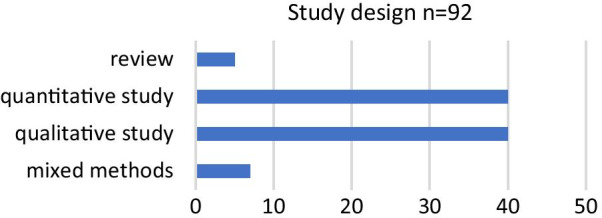
- The review included 92 publications: 62 studies investigated professionals’ perceptions and 45 reported patients’ views; 13 ethically relevant topics were identified and mapped to Beauchamp and Childress’ principles of beneficence, nonmaleficence, autonomy, and justice.
- Commonly perceived risks included lack of evidence for test accuracy and treatment efficacy; limited patient knowledge complicating informed consent; possible unavailability of access for underprivileged people and ethnic minorities; misuse of data by insurance companies and employers; racial stigmatization from genetic information; unwanted incidental findings; changes in the doctor-patient relationship through focusing on data; and pressure on patients to optimize their health.
- Reported numbers include: 85% of patients felt well informed after their doctor’s explanation versus 23% of doctors agreeing patients were well informed; 84.8% of Korean participants (n = 542) were concerned PM would increase public health disparity; 27.8% of Saudi physicians (n = 126) doubted easy patient access; 78% of US patients, HCPs, and patient representatives (n = 72) were concerned about difficulty helping patients gain access; only 38.5% of US doctors (n = 104) believed PM was available to all ethnic groups; and 82.5% of 126 South Arabian physicians had poor knowledge of PM in diabetes management.
- Patients and professionals were generally positive about PM, and patients showed high willingness to donate data and biospecimens, though fewer supported smartphone apps for lifestyle tracking; concerns included high costs, insurance coverage, and compensation if pharmaceutical companies profit from patient donations.
Methods
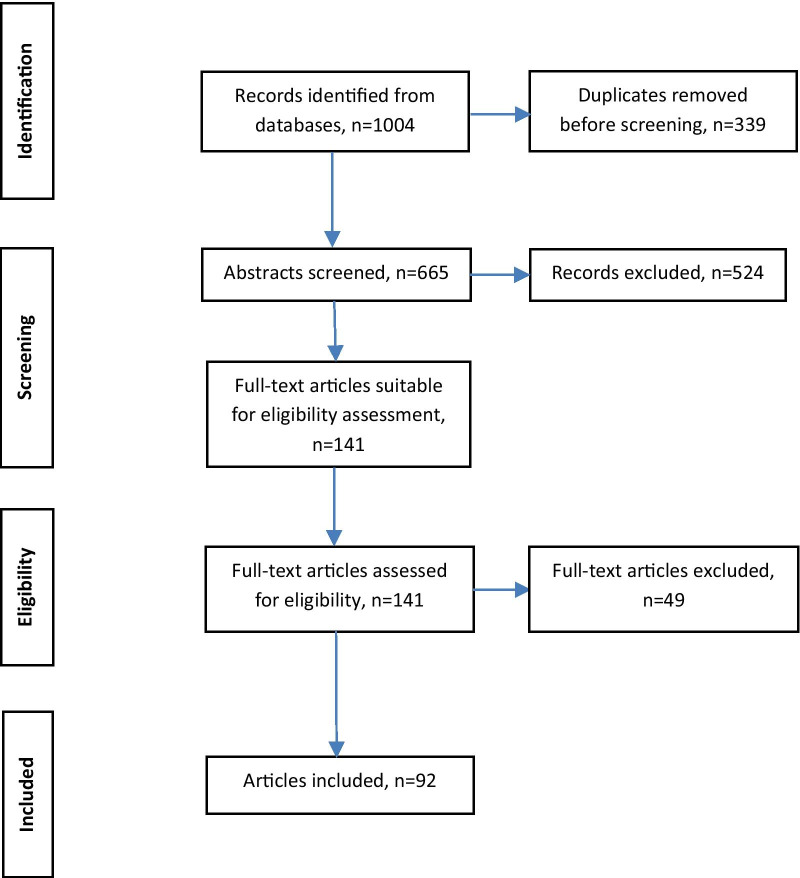
- Mixed Research Synthesis integrating quantitative and qualitative studies, mainly using a qualitizing approach; a systematic search in five databases yielded 1004 records, reduced to 665 after duplicates, then 141 full-texts screened, 49 excluded, and 92 publications included.
- Inclusion criteria covered empirical studies and reviews on patients’ and professionals’ expectations, concerns, values, and attitudes toward PM; patients were people with diseases or disabilities or patient-organization representatives, and professionals were physicians, other HCPs, and researchers; languages were German and English, with no year limit and worldwide origin.
- Data were extracted into a spreadsheet, themes were identified and assigned to 13 topics related to Beauchamp and Childress’ four principles, and findings were summarized and discussed iteratively.
Limitations
- Stated: the search strategy was limited to three title terms—precision medicine, personalized medicine, and genomic medicine—omitting individualized medicine and systems medicine, which likely missed relevant studies.
- Stated: screening and eligibility assessment were performed by only one researcher; a second person would have increased reliability.
- Evident in the text: included studies are heavily concentrated in oncology, which may limit the generalizability of the synthesized perspectives to other medical fields.
Model-written summary. Check it against the paper before relying on it.
Integrity signals
Registry
Cites
Statistics
Figures
Verification
Claims the paper makes
67 Valid · 5 Not valid · 47 Not checked · 38 Own results and interpretations
The cited sources support only part of this claim — read each source’s verdict below.
In the paper
“Various studies reveal that the majority of professionals have a positive attitude towards PM in general or towards interventions, which are mentioned under the label of PM [27, 34, 43, 45, 47, 50, 79–83].”
§ Patients’ and professionals’ views related to ethical issues in precision medicine: a mixed research synthesis > Results > Benefits of precision medicine
What the sources say
- Supportedcites [27] Bonter K Desjardins C Currier N Pun J Ashbury FD Personalised medicine in Canada: a survey of adoption and practice in oncology, cardiology and family medicine BMJ Open 2011 1 1 e000110 10.1136/bmjopen-2011-000110 PMC3191410 22021765 source
The Discussion (Attitudes, impacts and benefits; page not supplied) says Canadian physicians responding to the survey were optimistic about personalised medicine and open to its use. It reports that majorities believed genetic testing as a component of personalised medicine could influence treatment plans (83%) and improve outcomes (70%). (LLM, conf=0.91)
- Supportedcites [34] Dion-Labrie M Fortin MC Hebert MJ Doucet H The use of personalized medicine for patient selection for renal transplantation: physicians' views on the clinical and ethical implications BMC Med Ethics 2010 11 5 10.1186/1472-6939-11-5 20380726 PMC2859770 source
The Conclusions state that a majority of the participating physicians favoured the personalized-medicine approach studied for renal transplantation. This supports the citing sentence’s intervention-specific alternative, not a claim about professionals’ attitudes toward precision medicine in general. (LLM, conf=0.91)
- Partly supportedcites [43] Malentacchi F Mancini I Brandslund I Vermeersch P Schwab M Marc J Is laboratory medicine ready for the era of personalized medicine? A survey addressed to laboratory directors of hospitals/academic schools of medicine in Europe Clin Chem Lab Med 2015 53 7 981 988 10.1515/cclm-2015-0171 25995323 sourceExperimental — accuracy not yet measured
The survey supports a majority positive stance, but only within its own sample: Questionnaire part 1 (question 6) states that 'the majority of laboratories agreed about the importance of this new discipline to improve the European patients' conditions', the 87% majority on question 7 (cooperation/collaboration to consolidate a PM approach), and the Abstract/Conclusions say the participating laboratory medicine professionals see PM as 'a new and promising health model' and are 'willing and able to participate actively in this evolution'. That covers professionals in laboratory medicine in Europe, not 'professionals' in general as the citing sentence asserts, and the paper reports agreement on the importance of PM as a discipline rather than attitudes toward specific interventions labelled as PM. The second limb of the claim ('interventions mentioned under the label of PM') is therefore not attributable to this source. (LLM, conf=0.72)
- Not checked — no full text of the sourcecites [45] Schwartz EJ Issa AM The role of hospital pharmacists in the adoption and use of pharmacogenomics and precision medicine Per Med 2017 14 1 27 35 10.2217/pme-2016-0063 29749827 source
- Supportedcites [47] Cho H Shin SY Hwangbo B Chang YJ Cho J Kong SY Views on precision medicine among health professionals in korea: a mixed methods study Yonsei Med J 2020 61 2 192 197 10.3349/ymj.2020.61.2.192 31997629 PMC6992457 source
The study reports positive attitudes toward precision medicine among the surveyed health professionals in Korea: about 95–96% expected it to improve treatment and diagnosis. This supports the cited paper as one example behind the sentence’s statement about a majority of professionals. (LLM, conf=0.93)
- Not checked — no full text of the sourcecites [50] Suther SG Goodson P Texas physicians' perceptions of genomic medicine as an innovation Clin Genet 2004 65 5 368 377 10.1111/j.0009-9163.2004.00253.x 15099343 source
- Partly supportedcites [79] Di Paolo A Sarkozy F Ryll B Siebert U Personalized medicine in Europe: not yet personal enough? BMC Health Serv Res 2017 17 9 10.1186/s12913-017-2205-4 28424057 PMC5395930 sourceExperimental — accuracy not yet measured
The Expert interviews section reports that 70% of experts who answered a question about patient segmentation associated it with improved outcomes, and 55% with better side-effect profiles. This supports a favorable view of potential benefits, but the paper does not establish that a majority of professionals had a positive attitude toward precision medicine generally or toward interventions labeled as such. (LLM, conf=0.78)
- Not checked — no full text of the sourcecites [80] Gingras I Sonnenblick A Dolci S de Azambuja E Paesmans M Delaloge S The role of precision medicine in "real-life" management of breast cancer patients: a survey assessing the current use and attitudes towards tumor molecular sequencing in clinical practice Cancer Res 2016 76 2 source
- Supportedcites [81] Obeng AO Fei KZ Levy KD Elsey AR Pollin TI Ramirez AH Physician-reported benefits and barriers to clinical implementation of genomic medicine: a multi-site IGNITE-network survey J Pers Med 2018 8 3 13 PMC6163471 30042363 source
The Results (§4.3; page not provided) report that two thirds of surveyed physicians considered genetic or pharmacogenetic testing relevant to their clinical practice. The Abstract identifies genetic medicine as a component of personalized medicine and says the majority believed genetic testing was clinically useful. This supports the claim for an intervention under the precision-medicine label, rather than for precision medicine in general. (LLM, conf=0.89)
- Supportedcites [82] Alharbi AA Shaqran TM Eltobgy AAE Albalawi AR Alnawmasi WS Physicians' perspective on diabetes mellitus management within the context of personalized medicine Era in Tabuk Governorate, Saudi Arabia Open Access Maced J Med Sci 2019 7 10 1706 1711 10.3889/oamjms.2019.322 31210827 PMC6560294 source
The Results (Table 3) report that 72 of 126 physicians (57.1%) had favourable overall attitudes toward personalized diabetes management. This supports the citing sentence’s characterization of this study as finding a majority positive toward an intervention under the personalized-medicine label. (LLM, conf=0.91)
plain- Asserted: passes — The authors put it forward as true.
- Checkable: passes — It can be checked against evidence.
- Load-bearing: unclear — It is unclear whether the paper’s conclusions depend on it.
- Based: passes — The paper gives a reason why it holds.
- Supported
The cited sources support only part of this claim — read each source’s verdict below.
In the paper
“However, as other studies have demonstrated, many patients generally have a limited knowledge about PM [65, 71, 99–102], genetic testing [62, 69, 95] and pharmacogenomics [73, 101] and also express difficulties in understanding [51].”
§ Patients’ and professionals’ views related to ethical issues in precision medicine: a mixed research synthesis > Results > Patients’ understanding and knowledge
What the sources say
- Not checked — no full text of the sourcecites [65] Howe R Miron-Shatz T Hanoch Y Omer Z O'Donoghue C Ozanne E Personalized medicine through SNP testing for breast cancer risk: clinical implementation J Genet Couns 2015 24 5 744 751 10.1007/s10897-014-9803-7 25519004 source
- Not checked — no full text of the sourcecites [71] Choukour M Kivits J Baker A Baumann C Guillemin F Peyrin-Biroulet L Personalised medicine in inflammatory bowel diseases: a patient survey Scand J Gastroenterol 2019 54 1 135 10.1080/00365521.2018.1555280 30663451 source
- Not checked yetcites [99] Giusti K Young AQ Winget M Lehrhaupt K Understanding differences in critical decisions in the multiple myeloma patient journey in the era of precision medicine Am J Hematol-Oncol 2017 13 3 26 37
- Partly supportedcites [100] McFarland DC Hamilton JG Fox R Holland J Putting the "person" in personalized cancer medicine: a systematic review of psychological aspects of targeted therapy Pers Med Oncol 2014 3 8 438 447 32457974 PMC7250392Experimental — accuracy not yet measured
Our copy supports the personalized/precision-medicine and somatic-genetic-testing parts of the claim: the Discussion (passage 5) states 'the term "personalized medicine" is poorly understood by patients. They do not relate molecular medicine to personalization,' and the section on patient understanding (passage 3) reports a qualitative study in which patients 'did not understand somatic genetic testing and were not aware of or harbored misunderstandings about the term "personalized medicine"' (echoed in the Results, passage 8, as 'lack of patient understanding and awareness'). Two parts are not supported: pharmacogenomics is not addressed anywhere in our copy (searched via the indexed passages on genetic testing/pharmacogenomics; no passage mentions it), and the paper frames its evidence narrowly — only 10 relevant citations, 3 of which evaluated patient perception, with the Discussion noting 'few studies examined this issue' — so it does not warrant the claim's 'many patients generally' scope; the reported population is cancer patients (metastatic lung, breast, colorectal) rather than patients in general. Note also that the review reports these findings from Gray et al. (reference 7), i.e., it is a secondary reporter, which is acceptable for a review but the underlying studies are its own citations. (LLM, conf=0.78)
- Supportedcites [101] Williams JR Yeh VM Bruce MA Szetela C Ukoli F Wilkins CH Precision medicine: familiarity, perceived health drivers, and genetic testing considerations across health literacy levels in a diverse sample J Genet Couns 2019 28 1 59 69 10.1007/s10897-018-0291-z PMC6374217 30105426 source
The Results section, “Familiarity with precision medicine terms” (page not provided), reports that only 23.8% of participants were moderately or extremely familiar with “precision medicine” and 19.0% were familiar with “pharmacogenomics.” The cited paper thus supports the limited-familiarity point for those two topics. The citing sentence attaches a separate set of citations to genetic testing. (LLM, conf=0.88)
- Not checked — no full text of the sourcecites [102] McCarty CA Nair A Austin DM Giampietro PF Informed consent and subject motivation to participate in a large, population-based genomics study: the Marshfield Clinic Personalized Medicine Research Project Community Genet 2007 10 1 2 9 10.1159/000096274 17167244 source
- Not checked — no full text of the sourcecites [62] Giusti K Young AQ Lehrhaupt K Closing knowledge gaps to optimize patient outcomes and advance precision medicine Cancer J 2018 24 3 144 151 10.1097/PPO.0000000000000319 29794540 source
- Not matchedcites [69] Sommer M Nielsen MM Vesteghem C Bogsted M Dybkjaer K Johnsen HE Hämatological cancer patients' position on precision medicine—a questionnaire survey Basic Clin Pharmacol Toxicol 2018 123 4
Its entry has no title and year that we can search by.
- Not checked yetcites [95] De Marco M Cykert S Coad N Doost K Schaal J White B Views on personalized medicine: do the attitudes of African American and white prescription drug consumers differ? Pub Health Genom 2010 13 5 276 283 10.1159/000242199 PMC2914357 19776555 source
Checked before — its earlier verdict is held back until a new check runs.
- Not checked — no full text of the sourcecites [73] Issa AM Tufail W Hutchinson J Tenorio J Baliga MP Assessing patient readiness for the clinical adoption of personalized medicine Pub Health Genom 2009 12 3 163 169 10.1159/000189629 19204419 source
boosted- Asserted: passes — The authors put it forward as true.
- Checkable: passes — It can be checked against evidence.
- Load-bearing: unclear — It is unclear whether the paper’s conclusions depend on it.
- Based: passes — The paper gives a reason why it holds.
The cited sources support only part of this claim — read each source’s verdict below.
In the paper
“Apart from these positive assessments, studies also demonstrate that some professionals are uncertain about the value of genetic testing [51, 90] and doubt that all patients will benefit significantly from PM [30, 31, 42, 49, 54, 57].”
§ Patients’ and professionals’ views related to ethical issues in precision medicine: a mixed research synthesis > Results > Benefits of precision medicine
What the sources say
- Not checked — no full text of the sourcecites [30] McCarthy MC De Abreu LR McMillan LJ Meshcheriakova E Cao A Gillam L Finding out what matters in decision-making related to genomics and personalized medicine in pediatric oncology: developing attributes to include in a discrete choice experiment Patient 2020 10.1007/s40271-020-00411-0 32037479 source
- Not checked yetcites [31] McGill BC Wakefield CE Hetherington K Munro LJ Warby M Lau L "Balancing expectations with actual realities": conversations with clinicians and scientists in the first year of a high-risk childhood cancer precision medicine trial J Pers Med 2020 10.3390/jpm10010009(9) PMC7151613 32075154 doi:10.3390/jpm10010009(9
- Partly supportedcites [42] Ormondroyd E Mackley MP Blair E Craft J Knight JC Taylor JC "Not pathogenic until proven otherwise": perspectives of UK clinical genomics professionals toward secondary findings in context of a Genomic Medicine Multidisciplinary Team and the 100,000 Genomes Project Genet Med 2018 20 3 320 328 10.1038/gim.2017.157 29261176 PMC5880578 sourceExperimental — accuracy not yet measured
The Abstract’s Results (page unavailable) report that some professionals questioned genome screening because evidence of clinical utility was lacking. The Results on informed consent also say some thought participants overestimated the yield and value of secondary findings. These concerns support doubt about benefit in that specific setting, but not the broader claim about whether all patients benefit significantly from precision medicine. (LLM, conf=0.85)
- Not checked — no full text of the sourcecites [49] Carroll JC Makuwaza T Manca DP Sopcak N Permaul JA O'Brien MA Primary care providers' experiences with and perceptions of personalized genomic medicine Can Fam Physician 2016 62 10 e626 e635 27737998 PMC5063789
- Supportedcites [54] Schleidgen S Marckmann G Re-focusing the ethical discourse on personalized medicine: a qualitative interview study with stakeholders in the German healthcare system BMC Med Ethics 2013 14 1 20 10.1186/1472-6939-14-20 23705623 PMC3681604 source
In Results > Current state of PM (page not provided), the authors report that some stakeholders considered the added therapeutic benefit of personalized measures small compared with standard interventions. A respondent says that, in many cases, modern cancer therapies differ from classical chemotherapy by only a few months of survival. This supports the paraphrase that some professionals doubt PM will significantly benefit all patients. (LLM, conf=0.88)
- Supportedcites [57] Beskow LM Hammack CM Brelsford KM Thought leader perspectives on benefits and harms in precision medicine research PLoS ONE 2018 13 11 e0207842 10.1371/journal.pone.0207842 30475858 PMC6258115 source
In Results > Individual benefits, a thought leader says that a potentially life-saving result may not occur for everyone, ‘probably not even to most people.’ The Discussion likewise says that direct benefit from precision medicine research results would accrue to only a small fraction of participants. (LLM, conf=0.90)
boosted- Asserted: passes — The authors put it forward as true.
- Checkable: passes — It can be checked against evidence.
- Load-bearing: unclear — It is unclear whether the paper’s conclusions depend on it.
- Based: passes — The paper gives a reason why it holds.
The sources with a verdict support this claim; the rest weren’t checked yet, have no full text we could read, or their verdicts aren’t rated yet.
In the paper
“Professionals also describe a lack in their own knowledge or a limited understanding, as quantitative studies demonstrate [36, 37, 44, 81, 82, 92, 103, 104].”
§ Patients’ and professionals’ views related to ethical issues in precision medicine: a mixed research synthesis > Results > Professionals’ knowledge and competence
What the sources say
- Could not verifycites [36] Al Bakir I Sebepos-Rogers GM Burton H Monahan KJ Genomic medicine in gastroenterology, present and future: a nationwide survey of higher speciality trainees Gut 2018 67 A271-A 10.1136/gutjnl-2016-313316 PMC6830597 31640999 sourceExperimental — accuracy not yet measured
The Introduction and Discussion address dietary inulin-type fructans and endothelial dysfunction in mice, not professionals’ understanding of precision medicine. Searches for professionals’ knowledge, precision medicine, and related survey findings found no passage addressing the claim; page numbers were not available in our copy. (LLM, conf=0.78)
- Supportedcites [37] Al Bakir I Sebepos-Rogers GM Burton H Monahan KJ Mainstreaming of genomic medicine in gastroenterology, present and future: a nationwide survey of UK gastroenterology trainees BMJ Open 2019 9 10 e030505 10.1136/bmjopen-2019-030505 PMC6830597 31640999 source
The Results section reports that fewer than one-quarter of surveyed UK gastroenterology trainees felt they understood what mainstreaming genomic practice entails. The Discussion also describes respondents’ concern about their knowledge base. These findings support the claim for the professionals surveyed, rather than professionals generally. (LLM, conf=0.92)
- Supportedcites [44] Alexander KM Divine HS Hanna CR Gokun Y Freeman PR Implementation of personalized medicine services in community pharmacies: perceptions of independent community pharmacists J Am Pharm Assoc 2014 54 5 510 517 10.1331/JAPhA.2014.13041 PMC9226962 25148656 source
The Results (page not provided) report that 38% of surveyed pharmacists had no existing knowledge of personalized medicine. The Discussion (page not provided) also reports that 55% felt they lacked knowledge about genetic polymorphisms, supporting the claim about professionals’ self-described knowledge gaps. (LLM, conf=0.93)
- Supportedcites [81] Obeng AO Fei KZ Levy KD Elsey AR Pollin TI Ramirez AH Physician-reported benefits and barriers to clinical implementation of genomic medicine: a multi-site IGNITE-network survey J Pers Med 2018 8 3 13 PMC6163471 30042363 source
The Discussion reports that physicians in this survey perceived their training as inadequate and lacked confidence using genomic information. Results §4.4 supports this with survey responses: only one third felt their training prepared them to work with genetically high-risk patients, and 15% felt confident using genetic results in practice. (LLM, conf=0.93)
- Supportedcites [82] Alharbi AA Shaqran TM Eltobgy AAE Albalawi AR Alnawmasi WS Physicians' perspective on diabetes mellitus management within the context of personalized medicine Era in Tabuk Governorate, Saudi Arabia Open Access Maced J Med Sci 2019 7 10 1706 1711 10.3889/oamjms.2019.322 31210827 PMC6560294 source
The Abstract (Results) says that 82.54% of surveyed physicians expressed unsatisfactory knowledge of personalised diabetes management. The Results also report that 82.5% had a poor level of knowledge about its personalised-medicine elements, supporting the claim about limited understanding in this quantitative study. (LLM, conf=0.91)
- Not checked — no full text of the sourcecites [92] Scheuner MT Sieverding P Shekelle PG Delivery of genomic medicine for common chronic adult diseases: a systematic review JAMA 2008 299 11 1320 1334 10.1001/jama.299.11.1320 18349093 source
- Not checked — no full text of the sourcecites [103] Petersen KE Prows CA Martin LJ Maglo KN Personalized medicine, availability, and group disparity: an inquiry into how physicians perceive and rate the elements and barriers of personalized medicine Pub Health Genom 2014 17 4 209 220 10.1159/000362359 24852571 source
- Supportedcites [104] Vorderstrasse A Katsanis SH Minear MA Yang N Rakhra-Burris T Reeves JW Perceptions of personalized medicine in an academic health system: educational findings J Contemp Med Educ 2015 3 1 14 19 10.5455/jcme.20150408050414 26236542 PMC4520318 source
The Abstract Results report that providers felt ill-equipped to implement personalized medicine. The Discussion says providers acknowledged a need for continuing education in personalized and precision medicine, supporting the claim as a description of their self-reported knowledge needs rather than an objective test of understanding. (LLM, conf=0.86)
boosted- Asserted: passes — The authors put it forward as true.
- Checkable: passes — It can be checked against evidence.
- Load-bearing: passes — The paper’s conclusions depend on it.
- Based: passes — The paper gives a reason why it holds.
- Could not verify
Every source the paper cites for this claim was checked and supports it.
In the paper
“For example, in Saudi Arabia, where healthcare is predominantly taxpayer-funded [109], 27.8% of physicians surveyed (n = 126) doubted that patients would have easy access to PM [82].”
§ Patients’ and professionals’ views related to ethical issues in precision medicine: a mixed research synthesis > Results > Access to precision medicine
What the sources say
- Supportedcites [82] Alharbi AA Shaqran TM Eltobgy AAE Albalawi AR Alnawmasi WS Physicians' perspective on diabetes mellitus management within the context of personalized medicine Era in Tabuk Governorate, Saudi Arabia Open Access Maced J Med Sci 2019 7 10 1706 1711 10.3889/oamjms.2019.322 31210827 PMC6560294 source
The Results (Table 3) report that 35 of 126 physicians (27.78%) had an unfavourable attitude toward 'Easy Patients’ Accessibility' to personalized diabetes medicine. Rounded to 27.8%, this supports the claim about the physicians surveyed in Tabuk, Saudi Arabia. (LLM, conf=0.94)
plainn = 126- Asserted: passes — The authors put it forward as true.
- Checkable: passes — It can be checked against evidence.
- Load-bearing: unclear — It is unclear whether the paper’s conclusions depend on it.
- Based: passes — The paper gives a reason why it holds.
- Supported
55 more claims · 24 with their cited sources checked
Create a free account to see all 157 claims and to verify the 50 references still open.
- Probably not a substantial claim. 70
- It may state two separate claims as one. 46
Self-check
Percentages, sums and reported differences re-computed from the paper’s own numbers.
Each contradiction between two passages listed here was confirmed by an independent check.
Rated minor: it would not touch a result — a value no result rests on, a p-value that stays on the same side of the significance level, or a conflict that is clerical, resolved elsewhere in the paper, or outside its own findings.
In the paper
§ Patients’ and professionals’ views related to ethical issues in precision medicine: a mixed research synthesis > Results > Patients’ data provision and health-related work
“The willingness to participate in research and to provide genetic information, lifestyle, environmental or medical data was examined in a Korean study with 526 participants.”
§ Patients’ and professionals’ views related to ethical issues in precision medicine: a mixed research synthesis > Results > Access to precision medicine
“84.8% of the participants (n = 542) were concerned that this would increase disparity in public health [47].”
Citations
Cites
Principles of Biomedical Ethics
(2012) · Thieves of Virtue · doi:10.7551/mitpress/9079.003.0009 · Cited by 13,453
Principles of biomedical ethics
Horton, J. (2002) · Transactions of the Royal Society of Tropical Medicine and Hygiene · doi:10.1016/s0035-9203(02)90265-8 · Cited by 4,377
Frontiers of justice: disability, nationality, species membership
(2006) · Choice Reviews Online · doi:10.5860/choice.44-2056 · Cited by 3,802
Ashley, E. A. (2016) · Nature Reviews Genetics · doi:10.1038/nrg.2016.86 · Cited by 1,116
Healthcare Data Breaches: Insights and Implications
Seh, A. H., Zarour, M., Alenezi, M., Sarkar, A. K., Agrawal, A., Kumar, R., & Ahmad Khan, R. (2020) · Healthcare · doi:10.3390/healthcare8020133 · Cited by 600 · cited 1×
“For use in healthcare, genetic information needs to be integrated into electronic health records and these are increasingly becoming a target for attacks by cybercriminals [127].”
Background(2006) · PubMed · Cited by 485
Delivery of Genomic Medicine for Common Chronic Adult Diseases: A Systematic Review
Scheuner, M. T., Sieverding, P., & Shekelle, P. G. (2008) · JAMA · doi:10.1001/jama.299.11.1320 · Cited by 305 · cited 5×
“Discrimination and stigmatization In addition to possible disparities in access to PM, professionals and patients fear discrimination based on the results of genetic testing [27, 79, 92, 97], particularly by”
BackgroundInfluentialKraft, S. A., Cho, M. K., Gillespie, K., Halley, M., Varsava, N., Ormond, K. E., Luft, H. S., Wilfond, B. S., & Lee, S. S.-J. (2018) · The American Journal of Bioethics · doi:10.1080/15265161.2018.1431322 · Cited by 271 · cited 1×
“(2018) drew attention to the inability of US immigrants to navigate the healthcare system which can result in a lack of trust in the healthcare system [114].”
BackgroundCatry, E., Bindels, L. B., Tailleux, A., Lestavel, S., Neyrinck, A. M., Goossens, J.-F., Lobysheva, I., Plovier, H., Essaghir, A., Demoulin, J.-B., et al. (2018) · Gut · doi:10.1136/gutjnl-2016-313316 · Cited by 194
Attitudes of Patients With Cancer About Personalized Medicine and Somatic Genetic Testing
Gray, S. W., Hicks-Courant, K., Lathan, C. S., Garraway, L., Park, E. R., & Weeks, J. C. (2012) · Journal of Oncology Practice · doi:10.1200/jop.2012.000626 · Cited by 139 · cited 5×
“For example, professionals [45, 120], patients and representatives from patient organizations are concerned about whether health insurance companies will cover the costs [51, 63, 76] or patients can pay for them [61, 95, 96].”
BackgroundInfluentialOwusu Obeng, A., Fei, K., Levy, K. D., Elsey, A. R., Pollin, T. I., Ramirez, A. H., Weitzel, K. W., & Horowitz, C. R. (2018) · Journal of Personalized Medicine · doi:10.3390/jpm8030024 · Cited by 131 · cited 2×
“These and other studies [37, 44–47, 58, 86, 105–108] reveal the need for further education of many health care providers, however, this requirement may vary between professionals in different fields [53, 81].”
BackgroundResultLee, S. S.-J., Cho, M. K., Kraft, S. A., Varsava, N., Gillespie, K., Ormond, K. E., Wilfond, B. S., & Magnus, D. (2019) · Genetics in Medicine · doi:10.1038/s41436-018-0032-6 · Cited by 129 · cited 4×
“Some participants would like to have separate consent for biospecimens and EHR data, as they see a risk for misuse of DNA in future research [115].”
BackgroundInfluentialPrimary care providers' experiences with and perceptions of personalized genomic medicine.
(2016) · PubMed Central · Cited by 118
Day, S., Coombes, R. C., McGrath‐Lone, L., Schoenborn, C., & Ward, H. (2017) · Sociology of Health & Illness · doi:10.1111/1467-9566.12457 · Cited by 117
Miller, F. A., Hayeems, R. Z., Bytautas, J. P., Bedard, P. L., Ernst, S., Hirte, H., Hotte, S., Oza, A., Razak, A., Welch, S., et al. (2014) · European Journal of Human Genetics · doi:10.1038/ejhg.2013.158 · Cited by 116 · cited 2×
“These burdens are factors that determine whether patients have PM tests or treatments performed [61, 67].”
BackgroundCost-effectiveness of precision medicine: a scoping review
Kasztura, M., Richard, A., Bempong, N.-E., Loncar, D., & Flahault, A. (2019) · International Journal of Public Health · doi:10.1007/s00038-019-01298-x · Cited by 112
Bonter, K., Desjardins, C., Currier, N., Pun, J., & Ashbury, F. D. (2011) · BMJ Open · doi:10.1136/bmjopen-2011-000110 · Cited by 111 · cited 8×
“Discrimination and stigmatization In addition to possible disparities in access to PM, professionals and patients fear discrimination based on the results of genetic testing [27, 79, 92, 97], particularly by”
BackgroundInfluentialCarroll, J. C., Allanson, J. E., Morrison, S., Miller, F. A., Wilson, B. J., Permaul, J., & Telner, D. (2019) · Frontiers in Genetics · doi:10.3389/fgene.2019.01189 · Cited by 94
An Index of Barriers for the Implementation of Personalised Medicine and Pharmacogenomics in Europe
Horgan, D., Jansen, M., Leyens, L., Lal, J. A., Sudbrak, R., Hackenitz, E., Bußhoff, U., Ballensiefen, W., & Brand, A. (2014) · Public Health Genomics · doi:10.1159/000368034 · Cited by 91 · cited 6×
“laboratory scientists [31], experts from genome research [32, 57] and, in general terms, representatives from basic [54, 58] and translational research [58].”
BackgroundInfluentialPrecision medicine in inflammatory bowel disease: concept, progress and challenges
Borg-Bartolo, S. P., Boyapati, R. K., Satsangi, J., & Kalla, R. (2020) · F1000Research · doi:10.12688/f1000research.20928.1 · Cited by 90
McClaren, B. J., Crellin, E., Janinski, M., Nisselle, A. E., Ng, L., Metcalfe, S. A., & Gaff, C. L. (2020) · Frontiers in Genetics · doi:10.3389/fgene.2020.00151 · Cited by 89
McCarty, C. A., Nair, A., Austin, D. M., & Giampietro, P. F. (2007) · Public Health Genomics · doi:10.1159/000096274 · Cited by 87
Fiore, R. N., & Goodman, K. W. (2015) · Current Opinion in Oncology · doi:10.1097/cco.0000000000000247 · Cited by 79
Barriers to the Use of Personalized Medicine in Breast Cancer
Weldon, C. B., Trosman, J. R., Gradishar, W. J., Benson, A. B., & Schink, J. C. (2012) · Journal of Oncology Practice · doi:10.1200/jop.2011.000448 · Cited by 76 · cited 1×
“For example, professionals [45, 120], patients and representatives from patient organizations are concerned about whether health insurance companies will cover the costs [51, 63, 76] or patients can pay for them [61, 95, 96].”
BackgroundKumar, M., Garand, M., & Al Khodor, S. (2019) · Journal of Translational Medicine · doi:10.1186/s12967-019-02174-1 · Cited by 75
Genomic Medicine, Precision Medicine, Personalized Medicine: What’s in a Name?
Roden, D. M., & Tyndale, R. F. (2013) · Clinical Pharmacology & Therapeutics · doi:10.1038/clpt.2013.101 · Cited by 72
Ormondroyd, E., Mackley, M. P., Blair, E., Craft, J., Knight, J. C., Taylor, J. C., Taylor, J., & Watkins, H. (2018) · Genetics in Medicine · doi:10.1038/gim.2017.157 · Cited by 70 · cited 5×
“In many studies, researchers [42, 47, 53] were also represented.”
BackgroundInfluentialPersonalised Medicine, Individual Choice and the Common Good
van Beers, B. C., Dickenson, D. L., & Sterckx, S. (2018) · Cambridge University Press eBooks · doi:10.1017/9781108590600 · Cited by 64
Halverson, C. M. E., Clift, K. E., & McCormick, J. B. (2016) · Journal of Community Genetics · doi:10.1007/s12687-016-0260-x · Cited by 61
Alexander, K. M., Divine, H. S., Hanna, C. R., Gokun, Y., & Freeman, P. R. (2014) · Journal of the American Pharmacists Association · doi:10.1331/japha.2014.13041 · Cited by 59 · cited 2×
“Among the HCPs, many oncologists [24–32] participated in the included studies, but also other medical specialists are represented: nephrologists [33, 34], cardiologists [27], infectiologists [24], psychiatrists and clinical psychologists [35], pathologists [31, 32], gastroenterology specialty trainees [36, 37], geneti…”
BackgroundPersonalized Medicine: Empowered Patients in the 21st Century?
(2017) · doi:10.18574/9781479838943 · Cited by 59
Disability inclusion in precision medicine research: a first national survey
Sabatello, M., Chen, Y., Zhang, Y., & Appelbaum, P. S. (2019) · Genetics in Medicine · doi:10.1038/s41436-019-0486-1 · Cited by 58 · cited 2×
“Among patients there is also a high readiness to participate in trials and donate data or biospecimens [62, 70, 72, 76, 77, 98, 99], but trust in professionals [98, 101], costs, receiving counseling about test results and privacy [101], as well as the donor’s religion and culture [98] seem to be important for the deci…”
BackgroundWilliams, J. R., Yeh, V. M., Bruce, M. A., Szetela, C., Ukoli, F., Wilkins, C. H., & Kripalani, S. (2019) · Journal of Genetic Counseling · doi:10.1007/s10897-018-0291-z · Cited by 58 · cited 3×
“However, as other studies have demonstrated, many patients generally have a limited knowledge about PM [65, 71, 99–102], genetic testing [62, 69, 95] and pharmacogenomics [73, 101] and also express difficulties in understanding [51].”
BackgroundResultImplementing Precision Medicine: The Ethical Challenges
Korngiebel, D. M., Thummel, K. E., & Burke, W. (2017) · Trends in Pharmacological Sciences · doi:10.1016/j.tips.2016.11.007 · Cited by 58
Personalized medicine in Europe: not yet personal enough?
Di Paolo, A., Sarkozy, F., Ryll, B., & Siebert, U. (2017) · BMC Health Services Research · doi:10.1186/s12913-017-2205-4 · Cited by 54
Ciardiello, F., Adams, R., Tabernero, J., Seufferlein, T., Taieb, J., Moiseyenko, V., Ma, B., Lopez, G., Vansteenkiste, J. F., Esser, R., et al. (2016) · The Oncologist · doi:10.1634/theoncologist.2015-0279 · Cited by 53
Assessing Patient Readiness for the Clinical Adoption of Personalized Medicine
Issa, A. M., Tufail, W., Hutchinson, J., Tenorio, J., & Baliga, M. P. (2009) · Public Health Genomics · doi:10.1159/000189629 · Cited by 52 · cited 8×
“Inability to pay out of pocket [90] [73, 97]”
BackgroundResultInfluential(2017) · PubMed · Cited by 51
Obligations of the “Gift”: Reciprocity and Responsibility in Precision Medicine
Lee, S. S.-J. (2021) · The American Journal of Bioethics · doi:10.1080/15265161.2020.1851813 · Cited by 51
Systems Biology, Systems Medicine, Systems Pharmacology: The What and The Why
Stéphanou, A., Fanchon, E., Innominato, P. F., & Ballesta, A. (2018) · Acta Biotheoretica · doi:10.1007/s10441-018-9330-2 · Cited by 50 · cited 2×
“Compared to the words we have used in our search, the term individualized medicine seemed to be too unspecific and the term systems medicine seemed to be less common [5].”
BackgroundNisselle, A., Macciocca, I., McKenzie, F., Vuong, H., Dunlop, K., McClaren, B., Metcalfe, S., Gaff, C., & for the Australian Genomics Workforce & Education Working Group (2019) · Journal of Genetic Counseling · doi:10.1002/jgc4.1101 · Cited by 50
Callier, S. L., Abudu, R., Mehlman, M. J., Singer, M. E., Neuhauser, D., Caga‐Anan, C., & Wiesner, G. L. (2016) · Bioethics · doi:10.1111/bioe.12285 · Cited by 50
Perspectives on Genetic Discrimination
Lemke, T. (2013) · doi:10.4324/9780203526118 · Cited by 46
Dheensa, S., Fenwick, A., & Lucassen, A. (2017) · BMJ Open · doi:10.1136/bmjopen-2016-012443 · Cited by 45 · cited 2×
“This “familial approach to confidentiality” [117] is conceptualized in UK genetic guidelines.”
BackgroundResearch Ethics in the Era of Personalized Medicine: Updating Science’s Contract with Society
Meslin, E. M., & Cho, M. K. (2010) · Public Health Genomics · doi:10.1159/000319473 · Cited by 41
Bombard, Y., Rozmovits, L., Trudeau, M., Leighl, N. B., Deal, K., & Marshall, D. A. (2015) · The Oncologist · doi:10.1634/theoncologist.2014-0268 · Cited by 40
McClaren, B., King, E. A., Crellin, E., Gaff, C., Metcalfe, S. A., & Nisselle, A. E. (2020) · Frontiers in Genetics · doi:10.3389/fgene.2020.00059 · Cited by 39
Challenging the Bioethical Application of the Autonomy Principle within Multicultural Societies
Fagan, A. (2004) · Journal of Applied Philosophy · doi:10.1111/j.0264-3758.2004.00260.x · Cited by 36
Kichko, K., Marschall, P., & Flessa, S. (2016) · Journal of Personalized Medicine · doi:10.3390/jpm6020015 · Cited by 36 · cited 4×
“differences with different health care systems, a different culture and history [88].”
BackgroundInfluentialRacial Differences in Attitudes toward Personalized Medicine
Diaz, V. A., Mainous III, A. G., Gavin, J. K., & Wilson, D. (2014) · Public Health Genomics · doi:10.1159/000354785 · Cited by 36 · cited 7×
“Inability to pay out of pocket [90] [73, 97]”
BackgroundInfluentialThe Ethics of Personalised Medicine: Critical Perspectives
(2016) · doi:10.1093/medlaw/fww010 · Cited by 33
McGill, B. C., Wakefield, C. E., Hetherington, K., Munro, L. J., Warby, M., Lau, L. M. S., Tyrrell, V. J., Ziegler, D. S., O'Brien, T. A., Marshall, G. M., et al. (2020) · Journal of Personalized Medicine · doi:10.3390/jpm10010009 · Cited by 33
Pearce, C., Goettke, E., Hallowell, N., McCormack, P., Flinter, F., & McKevitt, C. (2019) · Genetics in Medicine · doi:10.1038/s41436-019-0579-x · Cited by 33 · cited 8×
“Inability to pay out of pocket [90] [73, 97]”
BackgroundInfluentialPatient and interest organizations’ views on personalized medicine: a qualitative study
Budin-Ljøsne, I., & Harris, J. R. (2016) · BMC Medical Ethics · doi:10.1186/s12910-016-0111-7 · Cited by 32 · cited 8×
“For example, professionals [45, 120], patients and representatives from patient organizations are concerned about whether health insurance companies will cover the costs [51, 63, 76] or patients can pay for them [61, 95, 96].”
BackgroundInfluentialMusschenga, B. (2009) · Ethik in der Medizin · doi:10.1007/s00481-009-0025-8 · Cited by 32
Puryear, L., Downs, N., Nevedal, A., Lewis, E. T., Ormond, K. E., Bregendahl, M., Suarez, C. J., David, S. P., Charlap, S., Chu, I., et al. (2018) · Journal of Community Genetics · doi:10.1007/s12687-017-0349-x · Cited by 31
Bombard, Y., Rozmovits, L., Trudeau, M., Leighl, N. B., Deal, K., & Marshall, D. A. (2014) · Current Oncology · doi:10.3747/co.21.1782 · Cited by 30
The Role of Hospital Pharmacists in the Adoption and Use of Pharmacogenomics and Precision Medicine
Schwartz, E. J., & Issa, A. M. (2017) · Personalized Medicine · doi:10.2217/pme-2016-0063 · Cited by 29 · cited 3×
“For example, professionals [45, 120], patients and representatives from patient organizations are concerned about whether health insurance companies will cover the costs [51, 63, 76] or patients can pay for them [61, 95, 96].”
BackgroundSabatello, M., Blake, L. A., Chao, A., Silverman, A., Ovadia Mazzoni, R., Zhang, Y., Chen, Y., & Appelbaum, P. S. (2019) · Genetics in Medicine · doi:10.1038/s41436-019-0533-y · Cited by 29 · cited 4×
“For example, professionals [45, 120], patients and representatives from patient organizations are concerned about whether health insurance companies will cover the costs [51, 63, 76] or patients can pay for them [61, 95, 96].”
BackgroundInfluentialDe Marco, M. (2010) · Public Health Genomics · doi:10.1159/000242199 · Cited by 28
Hunt, L. M., & Kreiner, M. J. (2012) · Culture Medicine and Psychiatry · doi:10.1007/s11013-012-9303-x · Cited by 27
Das Gesundheitswesen im internationalen Vergleich
(2017) · doi:10.32745/9783954663354 · Cited by 26
Vetsch, J., Wakefield, C. E., Warby, M., Tucker, K., Patterson, P., McGill, B. C., Metcalfe, A., Cohn, R. J., & Fardell, J. E. (2018) · Journal of Adolescent and Young Adult Oncology · doi:10.1089/jayao.2017.0102 · Cited by 26
Personalized Medicine Through SNP Testing for Breast Cancer Risk: Clinical Implementation
Howe, R., Miron‐Shatz, T., Hanoch, Y., Omer, Z. B., O'Donoghue, C., & Ozanne, E. M. (2015) · Journal of Genetic Counseling · doi:10.1007/s10897-014-9803-7 · Cited by 26
Texas physicians' perceptions of genomic medicine as an innovation
Suther, S., & Goodson, P. (2004) · Clinical Genetics · doi:10.1111/j.0009-9163.2004.00253.x · Cited by 26
Petersen, K. E., Prows, C. A., Martin, L. J., & Maglo, K. N. (2014) · Public Health Genomics · doi:10.1159/000362359 · Cited by 26
Sabatello, M., Zhang, Y., Chen, Y., & Appelbaum, P. S. (2020) · Public Health Genomics · doi:10.1159/000506599 · Cited by 25 · cited 1×
“Several quantitative studies indicate that patients want to be fully informed about tests [71], the results [51, 71, 72, 78] and treatment options [29].”
BackgroundAl Bakir, I., Sebepos-Rogers, G. M., Burton, H., & Monahan, K. J. (2019) · BMJ Open · doi:10.1136/bmjopen-2019-030505 · Cited by 24 · cited 3×
“For example, in a study with 100 UK gastroenterology trainees, most of them believed that their training had not prepared them for practicing PM [36, 37].”
BackgroundMcCarthy, M. C., De Abreu Lourenco, R., McMillan, L. J., Meshcheriakova, E., Cao, A., & Gillam, L. (2020) · The Patient - Patient-Centered Outcomes Research · doi:10.1007/s40271-020-00411-0 · Cited by 24
Deist, M. S., Gallardo, R. A., Dekkers, J. C. M., Zhou, H., & Lamont, S. J. (2020) · Frontiers in Genetics · doi:10.3389/fgene.2020.00011 · Cited by 23
Malentacchi, F., Mancini, I., Brandslund, I., Vermeersch, P., Schwab, M. G., Marc, J., van Schaik, R. H. N., Siest, G., Theodorsson, E., Pazzagli, M., et al. (2015) · Drug Metabolism and Personalized Therapy · doi:10.1515/dmdi-2015-0012 · Cited by 22
Thought leader perspectives on benefits and harms in precision medicine research
Beskow, L. M., Hammack, C. M., & Brelsford, K. M. (2018) · PLOS ONE · doi:10.1371/journal.pone.0207842 · Cited by 22 · cited 4×
“Apart from these positive assessments, studies also demonstrate that some professionals are uncertain about the value of genetic testing [51, 90] and doubt that all patients will benefit significantly from PM [30, 31, 42, 49, 54, 57].”
BackgroundInfluentialThought Leader Perspectives on Participant Protections in Precision Medicine Research
Hammack, C. M., Brelsford, K. M., & Beskow, L. M. (2019) · Journal of Law, Medicine & Ethics · doi:10.1177/1073110519840493 · Cited by 21 · cited 3×
“Furthermore, as one study reveals, human error represents an additional risk [116].”
BackgroundDion-Labrie, M., Fortin, M.-C., Hébert, M.-J., & Doucet, H. (2010) · BMC Medical Ethics · doi:10.1186/1472-6939-11-5 · Cited by 21
The Fuzzy World of Precision Medicine: Deliberations of a Precision Medicine Tumor Board
McGraw, S. A., Garber, J., Jänne, P. A., Lindeman, N., Oliver, N., Sholl, L. M., Van Allen, E. M., Wagle, N., Garraway, L. A., Joffe, S., et al. (2017) · Personalized Medicine · doi:10.2217/pme-2016-0074 · Cited by 20
When Personal Feels Invasive: Foreseeing Challenges in Precision Medicine Communication
Ratcliff, C. L., Kaphingst, K. A., & Jensen, J. D. (2018) · Journal of Health Communication · doi:10.1080/10810730.2017.1417514 · Cited by 20 · cited 5×
“Ethnic minorities and individuals with lower socioeconomic status seem to be less aware of technologies and less likely to use them [113].”
BackgroundInfluentialEthical considerations of neuro-oncology trial design in the era of precision medicine
Gupta, S., Smith, T. R., & Broekman, M. L. (2017) · Journal of Neuro-Oncology · doi:10.1007/s11060-017-2502-0 · Cited by 19
Issa, A. M., Tufail, W., Atehortua, N., & McKeever, J. (2013) · Personalized Medicine · doi:10.2217/pme.13.17 · Cited by 19
Perceptions of Personalized Medicine in an Academic Health System: Educational Findings
Vorderstrasse, A., Katsanis, S., Minear, M., Yang, N., RakhraBurris, T., Reeves, J., CookDeegan, R., Ginsburg, G., & Simmons, L. (2015) · Journal of Contemporary Medical Education · doi:10.5455/jcme.20150408050414 · Cited by 18 · cited 1×
“Professionals’ knowledge and competence Professionals also describe a lack in their own knowledge or a limited understanding, as quantitative studies demonstrate [36, 37, 44, 81, 82, 92, 103, 104].”
BackgroundImplementation of a Renal Precision Medicine Program: Clinician Attitudes and Acceptance
Spiech, K. M., Tripathy, P. R., Woodcock, A. M., et al. (2020) · Life · doi:10.3390/life10040032 · Cited by 17
Patient safety in genomic medicine: an exploratory study
Korngiebel, D. M., Fullerton, S. M., & Burke, W. (2016) · Genetics in Medicine · doi:10.1038/gim.2016.16 · Cited by 17
Personalized Medicine in Practice: Postgenomics from Multiplicity to Immutability
Chorev, N. E. (2019) · Body & Society · doi:10.1177/1357034x19886925 · Cited by 16
Malentacchi, F., Mancini, I., Brandslund, I., Vermeersch, P., Schwab, M., Marc, J., van Schaik, R. H. N., Siest, G., Theodorsson, E., Pazzagli, M., et al. (2015) · Clinical Chemistry and Laboratory Medicine (CCLM) · doi:10.1515/cclm-2015-0171 · Cited by 16 · cited 2×
“Among the HCPs, many oncologists [24–32] participated in the included studies, but also other medical specialists are represented: nephrologists [33, 34], cardiologists [27], infectiologists [24], psychiatrists and clinical psychologists [35], pathologists [31, 32], gastroenterology specialty trainees [36, 37], geneti…”
Schleidgen, S., & Marckmann, G. (2013) · BMC Medical Ethics · doi:10.1186/1472-6939-14-20 · Cited by 15 · cited 6×
“In addition, age [54, 79], the availability of tests [29, 80], the clinic or hospital location, patient attitudes, norms and education, as well as social factors like discouragement by significant others are identified as barriers for PM [90].”
BackgroundInfluentialAssessing patient readiness for personalized genomic medicine
Frost, C. J., Andrulis, I. L., Buys, S. S., Hopper, J. L., John, E. M., Terry, M. B., Bradbury, A., Chung, W. K., Colbath, K., Quintana, N., et al. (2019) · Journal of Community Genetics · doi:10.1007/s12687-018-0365-5 · Cited by 14
DeLuca, J. P., Selig, D. J., Poon, L., et al. (2019) · Military Medicine · doi:10.1093/milmed/usz419 · Cited by 14
Finlay, T. M. D. (2017) · New Genetics and Society · doi:10.1080/14636778.2017.1351873 · Cited by 13
Participant views on consent in cancer genetics research: preparing for the precision medicine era
Edwards, K. L., Korngiebel, D. M., Pfeifer, L., Goodman, D., Renz, A., Wenzel, L., Bowen, D. J., & Condit, C. M. (2016) · Journal of Community Genetics · doi:10.1007/s12687-015-0259-8 · Cited by 13
Misra, S. C., & Bisui, S. (2018) · Engineering Science and Technology an International Journal · doi:10.1016/j.jestch.2018.04.011 · Cited by 12
Perceptions of genetic testing and genomic medicine among drug users
Perlman, D. C., Gelpí-Acosta, C., Friedman, S. R., Jordan, A. E., & Hagan, H. (2015) · International Journal of Drug Policy · doi:10.1016/j.drugpo.2014.06.013 · Cited by 12
“Now Is a Time for Optimism”: The Politics of Personalized Medicine in Mental Health Research
Rüppel, J. (2019) · Science, Technology, & Human Values · doi:10.1177/0162243919845049 · Cited by 12 · cited 2×
“Many clinicians and researchers are well aware of the limited [27, 30, 31, 35, 42, 79, 84] or ambiguous evidence [32] for the meaning of test results and possible treatment outcomes and regard the lack of practice guidelines as a barrier for the implementation of tests [27, 79].”
BackgroundCooke Bailey, J. N., Crawford, D. C., Goldenberg, A., Slaven, A., Pencak, J., Schachere, M., Bush, W. S., Sedor, J. R., & O’Toole, J. F. (2018) · Journal of Personalized Medicine · doi:10.3390/jpm8030021 · Cited by 11 · cited 4×
“Several quantitative studies indicate that patients want to be fully informed about tests [71], the results [51, 71, 72, 78] and treatment options [29].”
BackgroundInfluentialArar, N., Seo, J., Abboud, H. E., Parchman, M., & Noel, P. (2010) · Personalized Medicine · doi:10.2217/pme.10.47 · Cited by 11 · cited 2×
“Besides these adverse events, professionals and patients in some studies report psychological implications from knowing [31, 32, 46, 51, 63, 113] or while waiting for the test results [26].”
Background(2017) · PubMed · Cited by 10
The Functional Effects of Key Driver KRAS Mutations on Gene Expression in Lung Cancer
Zhang, J., Hu, H., Xu, S., Jiang, H., Zhu, J., Qin, E., He, Z., & Chen, E. (2020) · Frontiers in Genetics · doi:10.3389/fgene.2020.00017 · Cited by 10
Why precision medicine is not the best route to a healthier world
Rey-López, J. P., Sá, T. H. D., & Rezende, L. F. M. D. (2018) · Revista de Saúde Pública · doi:10.11606/s1518-8787.2018052000209 · Cited by 10 · cited 1×
“Rather, the required behavioral changes could be achieved by addressing social, cultural, economic and environmental circumstances [124].”
BackgroundAli‐Khan, S. E., Black, L. J., Palmour, N., et al. (2015) · International Journal of Technology Assessment in Health Care · doi:10.1017/s0266462315000082 · Cited by 9
Feasibility of Large Scale Implementation of Personalized Medicine in the Current Scenario
Misra, S. C., & Bisui, S. (2016) · International Journal of E-Health and Medical Communications · doi:10.4018/ijehmc.2016040103 · Cited by 9 · cited 2×
“Some of the respondents believe that data confidentiality is secured by advances in technology, while others are suspicious of whether the person entrusted with confidentiality can guarantee data security [105].”
BackgroundViews on Precision Medicine among Health Professionals in Korea: A Mixed Methods Study
Cho, H. N., Shin, S.-Y., Hwangbo, B., Chang, Y. J., Cho, J., Kong, S.-Y., Choi, K. S., & Lee, E. S. (2020) · Yonsei Medical Journal · doi:10.3349/ymj.2020.61.2.192 · Cited by 8 · cited 8×
“In many studies, researchers [42, 47, 53] were also represented.”
BackgroundInfluential(2014) · PubMed · Cited by 8
Hyams, T., Bowen, D. J., Condit, C., Grossman, J., Fitzmaurice, M., Goodman, D., Wenzel, L., & Edwards, K. L. (2016) · Public Health Genomics · doi:10.1159/000448277 · Cited by 8
Hellwig, L. D., Turner, C., & O’Neill, S. C. (2019) · Journal of Genetic Counseling · doi:10.1002/jgc4.1144 · Cited by 8
Wäscher, S., Schildmann, J., Brall, C., & Vollmann, J. (2013) · Ethik in der Medizin · doi:10.1007/s00481-013-0268-2 · Cited by 8
IGNITE network: Response of patients to genomic medicine interventions
Orlando, L. A., Voils, C., Horowitz, C. R., Myers, R. A., Arwood, M. J., Cicali, E. J., McDonough, C. W., Pollin, T. I., Guan, Y., Levy, K. D., et al. (2019) · Molecular Genetics & Genomic Medicine · doi:10.1002/mgg3.636 · Cited by 7
Genomic Medicine Practice Among Physicians in Taiwan
Chen, L., Chang, F.-W., Kim, M., Talwar, D., & Zhao, S. (2017) · Personalized Medicine · doi:10.2217/pme-2016-0067 · Cited by 7
Qian, E., Thong, M., Flodman, P. L., & Gargus, J. J. (2018) · Journal of Community Genetics · doi:10.1007/s12687-018-0399-8 · Cited by 7
Closing Knowledge Gaps to Optimize Patient Outcomes and Advance Precision Medicine
Giusti, K., Young, A. Q., & Lehrhaupt, K. (2018) · The Cancer Journal · doi:10.1097/ppo.0000000000000319 · Cited by 6 · cited 2×
“However, as other studies have demonstrated, many patients generally have a limited knowledge about PM [65, 71, 99–102], genetic testing [62, 69, 95] and pharmacogenomics [73, 101] and also express difficulties in understanding [51].”
BackgroundResultAlharbi, A. A., Shaqran, T. M., Eltobgy, A. A. E., Albalawi, A. R., & Alnawmasi, W. S. (2019) · Open Access Macedonian Journal of Medical Sciences · doi:10.3889/oamjms.2019.322 · Cited by 5 · cited 4×
“5% of the participants had poor knowledge in this area [82].”
BackgroundInfluentialInformation needs on precision medicine: a survey of Italian health care professionals.
Addis, A., Trotta, F., Tafuri, G., & Fiore, L. D. (2018) · Annali dell Istituto Superiore di Sanità · doi:10.4415/ann_18_04_08 · Cited by 5
(2010) · doi:10.1159/000319910 · Cited by 5
Hendricks‐Sturrup, R., Edgar, L. M., Johnson-Glover, T., & Lu, C. Y. (2020) · SAGE Open Medicine · doi:10.1177/2050312120901740 · Cited by 5
Dion-Labrie, M., Fortin, M.-C., Hébert, M.-J., & Doucet, H. (2009) · Personalized Medicine · doi:10.2217/pme.09.43 · Cited by 4 · cited 3×
“Be helpful for the explanation of risks and therapy options [33]”
BackgroundWöhlke, S., Heßling, A., & Schicktanz, S. (2013) · Ethik in der Medizin · doi:10.1007/s00481-013-0263-7 · Cited by 4
Personalised medicine in inflammatory bowel diseases: a patient survey
Choukour, M., Kivits, J., Baker, A., Baumann, C., Guillemin, F., & Peyrin-Biroulet, L. (2019) · Scandinavian Journal of Gastroenterology · doi:10.1080/00365521.2018.1555280 · Cited by 4
Tejpar, S., Teague, T., Lake, J., Tabernero, J., Vansteenkiste, J. F., Vlassak, S., & Ciardiello, F. (2012) · Annals of Oncology · doi:10.1016/s0923-7534(20)33930-2 · Cited by 2
An Assessment of Clinician and Researcher Needs for Support in the Era of Genomic Medicine
Savage, S. K., Ziniel, S. I., Stoler, J. M., et al. (2014) · Personalized Medicine · doi:10.2217/pme.14.48 · Cited by 2
Gingras, I., Sonnenblick, A., Dolci, S., de Azambuja, E., Paesmans, M., Delaloge, S., Piccart, M., Sotiriou, C., Michail, I., & Azim, H. (2016) · Cancer Research · doi:10.1158/1538-7445.sabcs15-p6-04-13 · Cited by 1
(2019) · PubMed · Cited by 1
(2012) · doi:10.1097/01.ccm.0000424826.29608.58 · Cited by 1
Wäscher, S., Schildmann, J., & Vollmann, J. (2016) · Der Onkologe · doi:10.1007/s00761-016-0119-0 · Cited by 1
(2017) · American Journal of Hematology / Oncology®
Research works printed but not linked: 8
- Maio G Chancen und Grenzen der personalisierten Medizin - eine ethische Betrachtung Gesundheit und Gesellschaft - Wissenschaft 2012 12 1 15 19
- Sen A The idea of justice 2010 London Penguin
- Maio G Mittelpunkt Mensch: Ethik in der Medizin 2012 Frankfurt am Main Schattauer
- Al Bakir I Sebepos-Rogers GM Burton H Monahan KJ Mainstreaming of genomic medicine in gastroenterology, present and future: a nationwide survey of UK gastroenterology trainees BMJ Open 2019 9 10 e030505 10.1136/bmjopen-2019-030505 PMC6830597 31640999 · DOI · Paper page
- Burke R Iverson E Armenta A Shehane E Nyc M Harrison R A qualitative study of provider knowledge, attitudes and perceptions about personalized medicine in pediatric critical care: implications for medical education and development Crit Care Med 2012 40 12 U168-U
- Miller AM Garfield S Woodman RC Patient and provider readiness for personalized medicine Pers Med Oncol 2016 5 4 158 167
- Sommer M Nielsen MM Vesteghem C Bogsted M Dybkjaer K Johnsen HE Hämatological cancer patients' position on precision medicine—a questionnaire survey Basic Clin Pharmacol Toxicol 2018 123 4
- Kraft SA Cho MK Gillespie K Beyond consent: building trusting relationships with diverse populations in precision medicine research Am J Bioeth 2018 18 4 3 20 10.1080/15265161.2018.1431322 PMC6173191 29621457 · DOI · Paper page
Cited by
Exploring the gut microbiota: lifestyle choices, disease associations, and personal genomics
Matute, S. P., & Iyavoo, S. (2023) · Frontiers in Nutrition · doi:10.3389/fnut.2023.1225120 · Cited by 155
Precision oncology: transforming cancer care through personalized medicine
Rituraj, Pal, R. S., Wahlang, J., Pal, Y., Chaitanya, M., & Saxena, S. (2025) · Medical Oncology · doi:10.1007/s12032-025-02817-y · Cited by 74
Xu, S., Wang, Q., & Ma, W. (2024) · Cytokine & Growth Factor Reviews · doi:10.1016/j.cytogfr.2024.02.003 · Cited by 56
Windolf, H., Chamberlain, R., & Quodbach, J. (2022) · International Journal of Pharmaceutics · doi:10.1016/j.ijpharm.2022.121555 · Cited by 40
Genetic/genomic testing: defining the parameters for ethical, legal and social implications (ELSI)
Ascencio-Carbajal, T., Zavala, G. S., Navarro‐García, F., & Frixione, E. (2021) · BMC Medical Ethics · doi:10.1186/s12910-021-00720-5 · Cited by 41
Metadata
- Authors
- Erdmann, A., Rehmann-Sutter, C., & Bozzaro, C.
- Affiliations
- Christian-Albrechts-Universität zu Kiel (DE)
- Corresponding author
- Erdmann, Anke
- Venue
- BMC Medical Ethics
- Published
- 2021-08-31
- Volume
- 22
- Issue
- 1
- Pages
- 116-116
- ISSN
- 1472-6939 (ISSN-L)
- PMC
- PMC8406914
- OpenAlex
- W3197057224
- Cited by
- 86
- References
- 130
- Citations by year
- 2026: 12 · 2025: 26 · 2024: 22 · 2023: 14 · 2022: 9 · 2021: 3
- FWCI
- 2.14
- Type
- journal article
- Language
- en
- Open access
- gold
- doi.org
- Licence
- cc-by
- creativecommons.org/licenses/by/4.0 (tdm)
- creativecommons.org/licenses/by/4.0 (vor)
- Locations
- BMC Medical Ethics (publishedVersion, cc-by)
- PubMed Central (publishedVersion, cc-by)
- PubMed (publishedVersion)
- DOAJ (DOAJ: Directory of Open Access Journals) (submittedVersion, cc-by-sa)
- Multimedialen Archiv und Publikationsserver der Christian-Albrechts-Universität zu Kiel (Christian-Albrechts-Universität zu Kiel) (submittedVersion, cc-by)
- Funders
- Deutsche Forschungsgemeinschaft (F381 434.)
- Universitätsklinikum Schleswig-Holstein - Campus Kiel
- Topics
- Health Sciences › Medicine › Public Health, Environmental and Occupational Health › Ethics and bioethics in healthcare
- Health Sciences › Medicine › Public Health, Environmental and Occupational Health › Ethics in Clinical Research
- Social Sciences › Law › Medical and Health Sciences Research
- Keywords
- precision medicine, bioethics, patient attitudes, healthcare professionals' perspectives, informed consent, incidental finding, genetic discrimination, justice, autonomy, data security, physician-patient relationship, cost-effectiveness, genetic testing
- MeSH terms
- Artificial Intelligence, Humans, Informed Consent, Physician-Patient Relations, Quality of Life, Precision Medicine
About these checks
Registry, retraction, Cites and statistics results are computed, not judged, with one exception: a printed reference that no index lists is read once by a model before it counts as a citation error. Claims are extracted by a model and kept only when their quote appears verbatim in the text; each cited source is then checked, with a model’s help, for whether it says what the claim relies on. Those verdicts can be wrong — read the claim’s quote and the cited source before relying on one.
The claim verdicts this report counts are experimental: their accuracy is not yet measured.
A language model drew the claims from the paper on 2026-10-10, under version 3 of the claim definition (model deepseek-v4.1-flash, prompt extract-v3).
A second model labelled each claim on 2026-10-10 (model jev-1.13-20260917, definition revision gold-guideline-v0.2).
Cited sources are checked with a language model’s help (gpt-6-sol and qwen3.8-omni-flash).
Statistics and arithmetic are recomputed, not judged.
Confidence bands are shown only for fields calibrated on our annotated test set. None is calibrated yet, so no band is shown.
What counts as a claim ›How we measure confidence ›How we check this ›
Are you an author, or do you see a problem with this page? Request a review
Data sources
Bibliographic data: Semantic Scholar, OpenAlex, Crossref.
Contains information from the Semantic Scholar Academic Graph Datasets, made available under the ODC Attribution License (ODC-BY 1.0).
Semantic Scholar’s data is described in: Kinney, R., et al. (2023). The Semantic Scholar Open Data Platform. arXiv:2301.10140.
