

The role of m6A RNA methylation in human cancer
The DOI matches its Crossref record; 88 of the 88 references it cites were found in a registry or an index.
Abstract
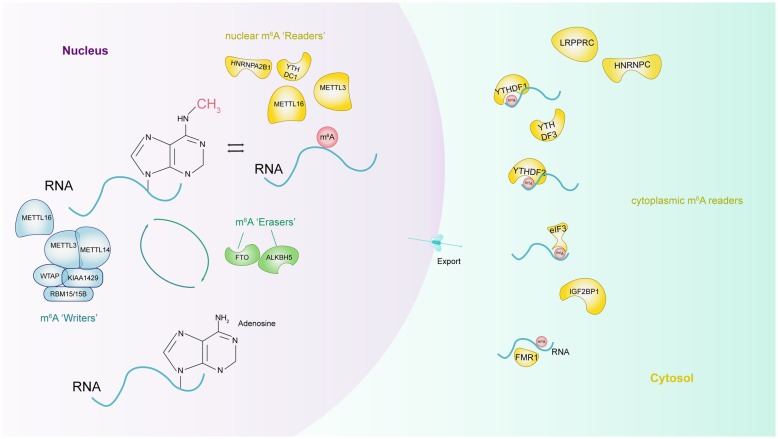
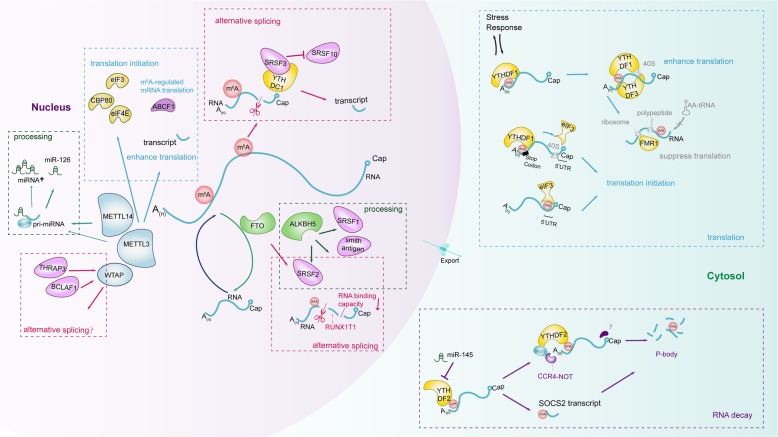
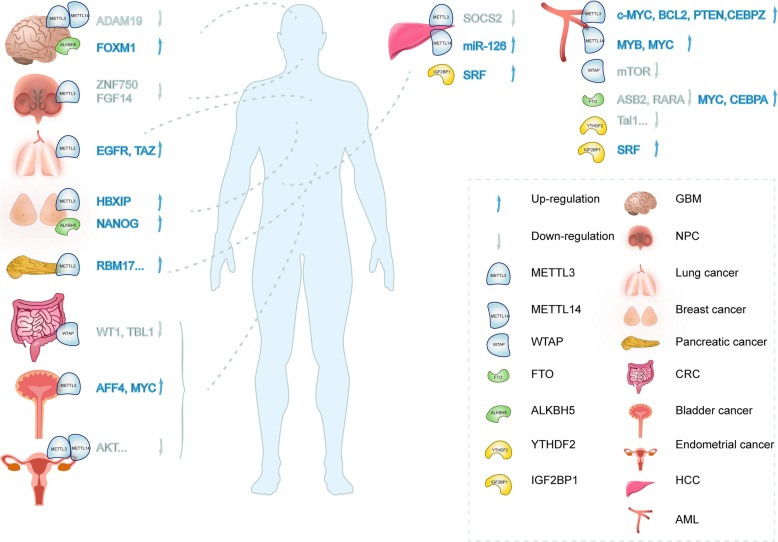
N 6 -methyladenosine (m 6 A) is identified as the most common, abundant and conserved internal transcriptional modification, especially within eukaryotic messenger RNAs (mRNAs). M 6 A modification is installed by the m 6 A methyltransferases (METTL3/14, WTAP, RBM15/15B and KIAA1429, termed as “writers”), reverted by the demethylases (FTO and ALKBH5, termed as “erasers”) and recognized by m 6 A binding proteins (YTHDF1/2/3, IGF2BP1 and HNRNPA2B1, termed as “readers”). Acumulating evidence shows that, m 6 A RNA methylation has an outsize effect on RNA production/metabolism and participates in the pathogenesis of multiple diseases including cancers. Until now, the molecular mechanisms underlying m 6 A RNA methylation in various tumors have not been comprehensively clarified. In this review, we mainly summarize the recent advances in biological function of m 6 A modifications in human cancer and discuss the potential therapeutic strategies.
Overview
The claims and statistics of this paper haven’t been checked yet.
Free: it reads the open-access text and checks the first 5 claims that cite a source we can check. Create a free account to check every claim.
Integrity signals
Registry
Cites
Statistics
Figures
Verification
Claims the paper makes
The claims and statistics of this paper haven’t been checked yet.
Free: it reads the open-access text and checks the first 5 claims that cite a source we can check. Create a free account to check every claim.
Claims other papers make about this one
Each is checked against this paper’s own text: does it say what the citing paper says it does?
In the citing paper
“The association of m6A with disease is well-studied in the oncology literature, but has been investigated minimally in neurodegeneration”
From Interaction of tau with HNRNPA2B1 and N6-methyladenosine RNA mediates the progression of tauopathy (2021) · cites this paper as Chen et al., 2019
In the citing paper
“HNRNPA2B1 is known to act as a reader of m6A in the nucleus, where it regulates chromatin state and transcription”
From Interaction of tau with HNRNPA2B1 and N6-methyladenosine RNA mediates the progression of tauopathy (2021) · cites this paper as Chen et al., 2019
Self-check
Percentages, sums and reported differences re-computed from the paper’s own numbers.
The self-check needs the paper’s full text.
Citations
Cites
Topology of the human and mouse m6A RNA methylomes revealed by m6A-seq
Dominissini, D., Moshitch-Moshkovitz, S., Schwartz, S., Salmon-Divon, M., Ungar, L., Osenberg, S., Cesarkas, K., Jacob-Hirsch, J., Amariglio, N., Kupiec, M., et al. (2012) · Nature · doi:10.1038/nature11112 · Cited by 4,884
N6-methyladenosine-dependent regulation of messenger RNA stability
Wang, X., Lu, Z., Gomez, A., Hon, G. C., Yue, Y., Han, D., Fu, Y., Parisien, M., Dai, Q., Jia, G., et al. (2014) · Nature · doi:10.1038/nature12730 · Cited by 4,558
Comprehensive Analysis of mRNA Methylation Reveals Enrichment in 3′ UTRs and near Stop Codons
Meyer, K. D., Saletore, Y., Zumbo, P., Elemento, O., Mason, C. E., & Jaffrey, S. R. (2012) · Cell · doi:10.1016/j.cell.2012.05.003 · Cited by 4,223
N6-Methyladenosine in nuclear RNA is a major substrate of the obesity-associated FTO
Jia, G., Fu, Y., Zhao, X., Dai, Q., Zheng, G., Yang, Y., Yi, C., Lindahl, T., Pan, T., Yang, Y.-G., et al. (2011) · Nature Chemical Biology · doi:10.1038/nchembio.687 · Cited by 4,106
ALKBH5 Is a Mammalian RNA Demethylase that Impacts RNA Metabolism and Mouse Fertility
Zheng, G., Dahl, J. A., Niu, Y., Fedorcsak, P., Huang, C.-M., Li, C. J., Vågbø, C. B., Shi, Y., Wang, W.-L., Song, S.-H., et al. (2013) · Molecular Cell · doi:10.1016/j.molcel.2012.10.015 · Cited by 3,550
N6-methyladenosine Modulates Messenger RNA Translation Efficiency
Wang, X., Zhao, B. S., Roundtree, I. A., Lu, Z., Han, D., Ma, H., Weng, X., Chen, K., Shi, H., & He, C. (2015) · Cell · doi:10.1016/j.cell.2015.05.014 · Cited by 3,483
A METTL3–METTL14 complex mediates mammalian nuclear RNA N6-adenosine methylation
Liu, J., Yue, Y., Han, D., Wang, X., Fu, Y., Zhang, L., Jia, G., Yu, M., Lu, Z., Deng, X., et al. (2014) · Nature Chemical Biology · doi:10.1038/nchembio.1432 · Cited by 3,433
Post-transcriptional gene regulation by mRNA modifications
Zhao, B. S., Roundtree, I. A., & He, C. (2017) · Nature Reviews Molecular Cell Biology · doi:10.1038/nrm.2016.132 · Cited by 2,420
Mammalian WTAP is a regulatory subunit of the RNA N6-methyladenosine methyltransferase
Ping, X.-L., Sun, B.-F., Wang, L., Xiao, W., Yang, X., Wang, W.-J., Adhikari, S., Shi, Y., Lv, Y., Chen, Y.-S., et al. (2014) · Cell Research · doi:10.1038/cr.2014.3 · Cited by 2,375
Extensive translation of circular RNAs driven by N6-methyladenosine
Yang, Y., Fan, X., Mao, M., Song, X., Wu, P., Zhang, Y., Jin, Y., Yang, Y., Chen, L.-L., Wang, Y., et al. (2017) · Cell Research · doi:10.1038/cr.2017.31 · Cited by 1,855
YTHDF3 facilitates translation and decay of N6-methyladenosine-modified RNA
Shi, H., Wang, X., Lu, Z., Zhao, B. S., Ma, H., Hsu, P. J., Liu, C., & He, C. (2017) · Cell Research · doi:10.1038/cr.2017.15 · Cited by 1,815
5′ UTR m6A Promotes Cap-Independent Translation
Meyer, K. D., Patil, D. P., Zhou, J., Zinoviev, A., Skabkin, M. A., Elemento, O., Pestova, T. V., Qian, S.-B., & Jaffrey, S. R. (2015) · Cell · doi:10.1016/j.cell.2015.10.012 · Cited by 1,806
MODOMICS: a database of RNA modification pathways. 2017 update
Boccaletto, P., Machnicka, M. A., Purta, E., Piątkowski, P., Bagiński, B., Wirecki, T. K., de Crécy-Lagard, V., Ross, R., Limbach, P. A., Kotter, A., et al. (2018) · Nucleic Acids Research · doi:10.1093/nar/gkx1030 · Cited by 1,782
Identification of Methylated Nucleosides in Messenger RNA from Novikoff Hepatoma Cells
Desrosiers, R., Friderici, K., & Rottman, F. (1974) · Proceedings of the National Academy of Sciences · doi:10.1073/pnas.71.10.3971 · Cited by 1,757
m6A RNA methylation promotes XIST-mediated transcriptional repression
Patil, D. P., Chen, C.-K., Pickering, B. F., Chow, A., Jackson, C., Guttman, M., & Jaffrey, S. R. (2016) · Nature · doi:10.1038/nature19342 · Cited by 1,747
m 6 A mRNA methylation facilitates resolution of naïve pluripotency toward differentiation
Geula, S., Moshitch-Moshkovitz, S., Dominissini, D., Mansour, A. A., Kol, N., Salmon-Divon, M., Hershkovitz, V., Peer, E., Mor, N., Manor, Y. S., et al. (2015) · Science · doi:10.1126/science.1261417 · Cited by 1,533
The m(6)A Methyltransferase METTL3 Promotes Translation in Human Cancer Cells
Lin, S., Choe, J., Du, P., Triboulet, R., & Gregory, R. I. (2016) · Molecular Cell · doi:10.1016/j.molcel.2016.03.021 · Cited by 1,531
FTO Plays an Oncogenic Role in Acute Myeloid Leukemia as a N 6 -Methyladenosine RNA Demethylase
Li, Z., Weng, H., Su, R., Weng, X., Zuo, Z., Li, C., Huang, H., Nachtergaele, S., Dong, L., Hu, C., et al. (2017) · Cancer Cell · doi:10.1016/j.ccell.2016.11.017 · Cited by 1,508
Du, H., Zhao, Y., He, J., Zhang, Y., Xi, H., Liu, M., Ma, J., & Wu, L. (2016) · Nature Communications · doi:10.1038/ncomms12626 · Cited by 1,463
Zhang, S., Zhao, B. S., Zhou, A., Lin, K., Zheng, S., Lu, Z., Chen, Y., Sulman, E. P., Xie, K., Bögler, O., et al. (2017) · Cancer Cell · doi:10.1016/j.ccell.2017.02.013 · Cited by 1,459
Chen, M., Wei, L., Law, C., Tsang, F. H., Shen, J., Cheng, C. L., Tsang, L., Ho, D. W., Chiu, D. K., Lee, J. M., et al. (2018) · Hepatology · doi:10.1002/hep.29683 · Cited by 1,376
N6-methyladenosine marks primary microRNAs for processing
Alarcón, C. R., Lee, H., Goodarzi, H., Halberg, N., & Tavazoie, S. F. (2015) · Nature · doi:10.1038/nature14281 · Cited by 1,315
m6A RNA Methylation Regulates the Self-Renewal and Tumorigenesis of Glioblastoma Stem Cells
Cui, Q., Shi, H., Ye, P., Li, L., Qu, Q., Sun, G., Sun, G., Lu, Z., Huang, Y., Yang, C.-G., et al. (2017) · Cell Reports · doi:10.1016/j.celrep.2017.02.059 · Cited by 1,252
Vu, L. P., Pickering, B. F., Cheng, Y., Zaccara, S., Nguyen, D., Minuesa, G., Chou, T., Chow, A., Saletore, Y., MacKay, M., et al. (2017) · Nature Medicine · doi:10.1038/nm.4416 · Cited by 1,237
Schwartz, S., Mumbach, M. R., Jovanovic, M., Wang, T., Maciag, K., Bushkin, G. G., Mertins, P., Ter-Ovanesyan, D., Habib, N., Cacchiarelli, D., et al. (2014) · Cell Reports · doi:10.1016/j.celrep.2014.05.048 · Cited by 1,216
Zhao, X., Yang, Y., Sun, B.-F., Shi, Y., Yang, X., Xiao, W., Hao, Y.-J., Ping, X.-L., Chen, Y.-S., Wang, W.-J., et al. (2014) · Cell Research · doi:10.1038/cr.2014.151 · Cited by 1,187
Rethinking m6A Readers, Writers, and Erasers
Meyer, K. D., & Jaffrey, S. R. (2017) · Annual Review of Cell and Developmental Biology · doi:10.1146/annurev-cellbio-100616-060758 · Cited by 1,150
R-2HG Exhibits Anti-tumor Activity by Targeting FTO/m6A/MYC/CEBPA Signaling
Su, R., Dong, L., Li, C., Nachtergaele, S., Wunderlich, M., Qing, Y., Deng, X., Wang, Y., Weng, X., Hu, C., et al. (2018) · Cell · doi:10.1016/j.cell.2017.11.031 · Cited by 1,137
Promoter-bound METTL3 maintains myeloid leukaemia by m6A-dependent translation control
Barbieri, I., Tzelepis, K., Pandolfini, L., Shi, J., Millán-Zambrano, G., Robson, S. C., Aspris, D., Migliori, V., Bannister, A. J., Han, N., et al. (2017) · Nature · doi:10.1038/nature24678 · Cited by 1,086
The U6 snRNA m 6 A Methyltransferase METTL16 Regulates SAM Synthetase Intron Retention
Pendleton, K. E., Chen, B., Liu, K., Hunter, O. V., Xie, Y., Tu, B. P., & Conrad, N. K. (2017) · Cell · doi:10.1016/j.cell.2017.05.003 · Cited by 1,085
Ythdc2 is an N6-methyladenosine binding protein that regulates mammalian spermatogenesis
Hsu, P. J., Zhu, Y., Ma, H., Guo, Y., Shi, X., Liu, Y., Qi, M., Lu, Z., Shi, H., Wang, J., et al. (2017) · Cell Research · doi:10.1038/cr.2017.99 · Cited by 1,005
m6A mRNA methylation controls T cell homeostasis by targeting the IL-7/STAT5/SOCS pathways
Li, H.-B., Tong, J., Zhu, S., Batista, P. J., Duffy, E. E., Zhao, J., Bailis, W., Cao, G., Kroehling, L., Chen, Y., et al. (2017) · Nature · doi:10.1038/nature23450 · Cited by 977
Zhang, C., Samanta, D., Lu, H., Bullen, J. W., Zhang, H., Chen, I., He, X., & Semenza, G. L. (2016) · Proceedings of the National Academy of Sciences · doi:10.1073/pnas.1602883113 · Cited by 971
Weng, H., Huang, H., Wu, H., Qin, X., Zhao, B. S., Dong, L., Shi, H., Skibbe, J., Shen, C., Hu, C., et al. (2018) · Cell Stem Cell · doi:10.1016/j.stem.2017.11.016 · Cited by 968
Ma, J., Yang, F., Zhou, C., Liu, F., Yuan, J., Wang, F., Wang, T., Xu, Q., Zhou, W., & Sun, S. (2017) · Hepatology · doi:10.1002/hep.28885 · Cited by 912
RNA m6A methylation regulates the ultraviolet-induced DNA damage response
Xiang, Y., Laurent, B., Hsu, C.-H., Nachtergaele, S., Lu, Z., Sheng, W., Xu, C., Chen, H., Ouyang, J., Wang, S., et al. (2017) · Nature · doi:10.1038/nature21671 · Cited by 911
Small-Molecule Targeting of Oncogenic FTO Demethylase in Acute Myeloid Leukemia
Huang, Y., Su, R., Sheng, Y., Dong, L., Dong, Z., Xu, H., Ni, T., Zhang, Z. S., Zhang, T., Li, C., et al. (2019) · Cancer Cell · doi:10.1016/j.ccell.2019.03.006 · Cited by 877
A majority of m6A residues are in the last exons, allowing the potential for 3′ UTR regulation
Ke, S., Alemu, E. A., Mertens, C., Gantman, E. C., Fak, J. J., Mele, A., Haripal, B., Zucker-Scharff, I., Moore, M. J., Park, C. Y., et al. (2015) · Genes & Development · doi:10.1101/gad.269415.115 · Cited by 812
Obesity and diabetes: the increased risk of cancer and cancer-related mortality
Gallagher, E. J., & LeRoith, D. (2015) · Physiological Reviews · doi:10.1152/physrev.00030.2014 · Cited by 806
Liu, J., Eckert, M. A., Harada, B. T., Liu, S.-M., Lu, Z., Yu, K., Tienda, S. M., Chryplewicz, A., Zhu, A. C., Yang, Y., et al. (2018) · Nature Cell Biology · doi:10.1038/s41556-018-0174-4 · Cited by 778
Temporal Control of Mammalian Cortical Neurogenesis by m6A Methylation
Yoon, K.-J., Ringeling, F. R., Vissers, C., Jacob, F., Pokrass, M., Jimenez-Cyrus, D., Su, Y., Kim, N.-S., Zhu, Y., Zheng, L., et al. (2017) · Cell · doi:10.1016/j.cell.2017.09.003 · Cited by 749
Overexpression of Fto leads to increased food intake and results in obesity
Church, C., Moir, L., McMurray, F., Girard, C., Banks, G. T., Teboul, L., Wells, S., Brüning, J. C., Nolan, P. M., Ashcroft, F. M., et al. (2010) · Nature Genetics · doi:10.1038/ng.713 · Cited by 721
Meclofenamic acid selectively inhibits FTO demethylation of m6A over ALKBH5
Huang, Y., Yan, J., Li, Q., Li, J., Gong, S., Zhou, H., Gan, J., Jiang, H., Jia, G.-F., Luo, C., et al. (2015) · Nucleic Acids Research · doi:10.1093/nar/gku1276 · Cited by 662
m6A potentiates Sxl alternative pre-mRNA splicing for robust Drosophila sex determination
Haussmann, I. U., Bodi, Z., Sanchez-Moran, E., Mongan, N. P., Archer, N., Fray, R. G., & Soller, M. (2016) · Nature · doi:10.1038/nature20577 · Cited by 605
N6-methyladenosine (m6A) recruits and repels proteins to regulate mRNA homeostasis
Edupuganti, R. R., Geiger, S., Lindeboom, R. G. H., Shi, H., Hsu, P. J., Lu, Z., Wang, S.-Y., Baltissen, M. P. A., Jansen, P. W. T. C., Rossa, M., et al. (2017) · Nature Structural & Molecular Biology · doi:10.1038/nsmb.3462 · Cited by 556
Kasowitz, S. D., Ma, J., Anderson, S. J., Leu, N. A., Xu, Y., Gregory, B. D., Schultz, R. M., & Wang, P. J. (2018) · PLOS Genetics · doi:10.1371/journal.pgen.1007412 · Cited by 550
Ke, S., Pandya-Jones, A., Saito, Y., Fak, J. J., Vågbø, C. B., Geula, S., Hanna, J. H., Black, D. L., Darnell, J. E., & Darnell, R. B. (2017) · Genes & Development · doi:10.1101/gad.301036.117 · Cited by 542
N6 -Methyladenosine in Flaviviridae Viral RNA Genomes Regulates Infection
Gokhale, N. S., McIntyre, A. B. R., McFadden, M. J., Roder, A. E., Kennedy, E. M., Gandara, J. A., Hopcraft, S. E., Quicke, K. M., Vazquez, C., Willer, J., et al. (2016) · Cell Host & Microbe · doi:10.1016/j.chom.2016.09.015 · Cited by 477
Cai, X., Wang, X., Cao, C., Gao, Y., Zhang, S., Yang, Z., Liu, Y., Zhang, X., Zhang, W., & Ye, L. (2018) · Cancer Letters · doi:10.1016/j.canlet.2017.11.018 · Cited by 472
Wang, Y., Li, Y., Yue, M., Wang, J., Kumar, S., Wechsler-Reya, R. J., Zhang, Z., Ogawa, Y., Kellis, M., Duester, G., et al. (2018) · Nature Neuroscience · doi:10.1038/s41593-017-0057-1 · Cited by 438
Bartosovic, M., Molares, H. C., Gregorova, P., Hrossova, D., Kudla, G., & Vanacova, S. (2017) · Nucleic Acids Research · doi:10.1093/nar/gkx778 · Cited by 434
Fedeles, B. I., Singh, V., Delaney, J. C., Li, D., & Essigmann, J. M. (2015) · Journal of Biological Chemistry · doi:10.1074/jbc.r115.656462 · Cited by 416
Dynamics of Human and Viral RNA Methylation during Zika Virus Infection
Lichinchi, G., Zhao, B. S., Wu, Y., Lu, Z., Qin, Y., He, C., & Rana, T. M. (2016) · Cell Host & Microbe · doi:10.1016/j.chom.2016.10.002 · Cited by 405
Cheng, M., Sheng, L., Gao, Q., Xiong, Q., Zhang, H., Wu, M., Liang, Y., Zhu, F., Zhang, Y., Zhang, X., et al. (2019) · Oncogene · doi:10.1038/s41388-019-0683-z · Cited by 403
Boissel, S., Reish, O., Proulx, K., Kawagoe-Takaki, H., Sedgwick, B., Yeo, G. S. H., Meyre, D., Golzio, C., Molinari, F., Kadhom, N., et al. (2009) · The American Journal of Human Genetics · doi:10.1016/j.ajhg.2009.06.002 · Cited by 396
Ivanova, I., Much, C., Di Giacomo, M., Azzi, C., Morgan, M., Moreira, P. N., Monahan, J., Carrieri, C., Enright, A. J., & O’Carroll, D. (2017) · Molecular Cell · doi:10.1016/j.molcel.2017.08.003 · Cited by 392
Chiba, T., Marusawa, H., & Ushijima, T. (2012) · Gastroenterology · doi:10.1053/j.gastro.2012.07.009 · Cited by 381
IGF2BP1 promotes SRF-dependent transcription in cancer in a m6A- and miRNA-dependent manner
Müller, S., Glaß, M., Singh, A. K., Haase, J., Bley, N., Fuchs, T., Lederer, M., Dahl, A., Huang, H., Chen, J., et al. (2019) · Nucleic Acids Research · doi:10.1093/nar/gky1012 · Cited by 379
Posttranscriptional m6A Editing of HIV-1 mRNAs Enhances Viral Gene Expression
Kennedy, E. M., Bogerd, H. P., Kornepati, A. V. R., Kang, D., Ghoshal, D., Marshall, J. B., Poling, B. C., Tsai, K., Gokhale, N. S., Horner, S. M., et al. (2016) · Cell Host & Microbe · doi:10.1016/j.chom.2016.04.002 · Cited by 378
Horiuchi, K., Kawamura, T., Iwanari, H., Ohashi, R., Naito, M., Kodama, T., & Hamakubo, T. (2013) · Journal of Biological Chemistry · doi:10.1074/jbc.m113.500397 · Cited by 353
Xu, C., Liu, K., Ahmed, H., Loppnau, P., Schapira, M., & Min, J. (2015) · Journal of Biological Chemistry · doi:10.1074/jbc.m115.680389 · Cited by 320
Peng, S., Xiao, W., Ju, D., Sun, B., Hou, N., Liu, Q., Wang, Y., Zhao, H., Gao, C., Zhang, S., et al. (2019) · Science Translational Medicine · doi:10.1126/scitranslmed.aau7116 · Cited by 312
SUMOylation of the m6A-RNA methyltransferase METTL3 modulates its function
Du, Y., Hou, G., Zhang, H., Dou, J., He, J., Guo, Y., Li, L., Chen, R., Wang, Y., Deng, R., et al. (2018) · Nucleic Acids Research · doi:10.1093/nar/gky156 · Cited by 312
Yang, Z., Li, J., Feng, G., Gao, S., Wang, Y., Zhang, S., Liu, Y., Ye, L., Li, Y., & Zhang, X. (2017) · Journal of Biological Chemistry · doi:10.1074/jbc.m116.749689 · Cited by 272
Suppression of m6A reader Ythdf2 promotes hematopoietic stem cell expansion
Li, Z., Qian, P., Shao, W., Shi, H., He, X. C., Gogol, M., Yu, Z., Wang, Y., Qi, M., Zhu, Y., et al. (2018) · Cell Research · doi:10.1038/s41422-018-0072-0 · Cited by 257
RNA Chemical Proteomics Reveals the N6-Methyladenosine (m6A)-Regulated Protein–RNA Interactome
Arguello, A. E., DeLiberto, A. N., & Kleiner, R. E. (2017) · Journal of the American Chemical Society · doi:10.1021/jacs.7b09213 · Cited by 254
m6A Facilitates eIF4F-Independent mRNA Translation
Coots, R. A., Liu, X.-M., Mao, Y., Dong, L., Zhou, J., Wan, J., Zhang, X., & Qian, S.-B. (2017) · Molecular Cell · doi:10.1016/j.molcel.2017.10.002 · Cited by 252
Maity, A., & Das, B. (2016) · The FEBS Journal · doi:10.1111/febs.13614 · Cited by 250
Liu, J., Ren, D., Du, Z., Wang, H., Zhang, H., & Jin, Y. (2018) · Biochemical and Biophysical Research Communications · doi:10.1016/j.bbrc.2018.05.175 · Cited by 249
WTAP is a novel oncogenic protein in acute myeloid leukemia
Bansal, H., Yihua, Q., Iyer, S. P., Ganapathy, S., Proia, D., Penalva, L. O., Uren, P. J., Suresh, U., Carew, J. S., Karnad, A. B., et al. (2014) · Leukemia · doi:10.1038/leu.2014.16 · Cited by 243
Roles of RNA methylation by means of N6-methyladenosine (m6A) in human cancers
Wang, S., Sun, C., Li, J., Zhang, E., Ma, Z., Xu, W., Li, H., Qiu, M., Xu, Y., Xia, W., et al. (2017) · Cancer Letters · doi:10.1016/j.canlet.2017.08.030 · Cited by 227
Regulatory Role of N6-methyladenosine (m6A) Methylation in RNA Processing and Human Diseases
Wei, W., Ji, X., Guo, X., & Ji, S. (2017) · Journal of Cellular Biochemistry · doi:10.1002/jcb.25967 · Cited by 168
Dynamic RNA Modifications in Posttranscriptional Regulation
Wang, X., & He, C. (2014) · Molecular Cell · doi:10.1016/j.molcel.2014.09.001 · Cited by 162
Zhang, J., Tsoi, H., Li, X., Wang, H., Gao, J., Wang, K., Go, M. Y., Ng, S. C., Chan, F. K., Sung, J. J., et al. (2016) · Gut · doi:10.1136/gutjnl-2014-308614 · Cited by 160
Self-citationWang, H., Zuo, H., Liu, J., Wen, F., Gao, Y., Zhu, X., Liu, B., Xiao, F., Wang, W., Huang, G., et al. (2018) · Cell Research · doi:10.1038/s41422-018-0082-y · Cited by 137
FTO: linking m6A demethylation to adipogenesis
Ben-Haim, M. S., Moshitch-Moshkovitz, S., & Rechavi, G. (2014) · Cell Research · doi:10.1038/cr.2014.162 · Cited by 125
Bader, J. P., Brown, N. R., Chiang, P. K., & Cantoni, G. L. (1978) · Virology · doi:10.1016/0042-6822(78)90191-5 · Cited by 119
S-Adenosylhomocysteine hydrolase as a target for intracellular adenosine action
Kloor, D., & Oßwald, H. (2004) · Trends in Pharmacological Sciences · doi:10.1016/j.tips.2004.04.004 · Cited by 112
m6A-mediated ZNF750 repression facilitates nasopharyngeal carcinoma progression
Zhang, P., He, Q., Lei, Y., Li, Y., Wen, X., Hong, M., Zhang, J., Ren, X., Wang, Y., Yang, X., et al. (2018) · Cell Death and Disease · doi:10.1038/s41419-018-1224-3 · Cited by 108
Self-citationD2HGDH regulates alpha-ketoglutarate levels and dioxygenase function by modulating IDH2
Lin, A.-P., Abbas, S., Kim, S.-W., Ortega, M., Bouamar, H., Escobedo, Y., Varadarajan, P., Qin, Y., Sudderth, J., Schulz, E., et al. (2015) · Nature Communications · doi:10.1038/ncomms8768 · Cited by 86
Gordon, R. K., Ginalski, K., Rudnicki, W. R., Rychlewski, L., Pankaskie, M. C., Bujnicki, J. M., & Chiang, P. K. (2003) · European Journal of Biochemistry · doi:10.1046/j.1432-1033.2003.03726.x · Cited by 69
Mayers, D. L., Mikovits, J. A., Joshi, B. H., HEWLETT, I. K., Estrada, J. S., Wolfe, A. D., Garcia, G. E., Doctor, B. P., Burke, D. S., & Gordon, R. K. (1995) · Proceedings of the National Academy of Sciences · doi:10.1073/pnas.92.1.215 · Cited by 69
Modulation of FoxO1 Expression by miR-21 to Promote Growth of Pancreatic Ductal Adenocarcinoma
Song, W., Li, Q., Wang, L., & Wang, L. (2015) · Cellular Physiology and Biochemistry · doi:10.1159/000369686 · Cited by 66
METTL3 Gains R/W Access to the Epitranscriptome
Schümann, U., Shafik, A. M., & Preiß, T. (2016) · Molecular Cell · doi:10.1016/j.molcel.2016.04.024 · Cited by 62
Benitez, C. M., Qu, K., Sugiyama, T., Pauerstein, P. T., Liu, Y., Tsai, J., Gu, X., Ghodasara, A., Arda, H. E., Zhang, J., et al. (2014) · PLoS Genetics · doi:10.1371/journal.pgen.1004645 · Cited by 56
Self-citationEpimetronomics: m6A Marks the Tempo of Corticogenesis
Boles, N. C., & Temple, S. (2017) · Neuron · doi:10.1016/j.neuron.2017.11.002 · Cited by 24
Settling the m6A debate: methylation of mature mRNA is not dynamic but accelerates turnover
Rosa-Mercado, N. A., Withers, J. B., & STEITZ, J. A. (2017) · Genes & Development · doi:10.1101/gad.302695.117
Yang, B., Thrift, A. P., Figueiredo, J. C., Jenkins, M. A., Schumacher, F. R., Conti, D. V., Lin, Y., Win, A. K., Limburg, P. J., Berndt, S. I., et al. (2016) · Cancer Epidemiology · doi:10.1016/j.canep.2016.07.003
Research works printed but not linked: 2
- Taketo K Konno M Asai A Koseki J Toratani M Satoh T The epitranscriptome m6A writer METTL3 promotes chemo- and radioresistance in pancreatic cancer cells Int J Oncol 2018 52 2 621 629 29345285
- Xiao S Zeng X Fan Y Su Y Ma Q Zhu J Gene polymorphism association with type 2 diabetes and related Gene-gene and Gene-environment interactions in a Uyghur population Med Sci Monit Int Med J Exp Clin Res 2016 22 474 487 PMC4755665 26873362
Cited by
The role of m6A modification in the biological functions and diseases
Jiang, X., Liu, B., Nie, Z., Duan, L., Xiong, Q., Jin, Z., Yang, C., & Chen, Y. (2021) · Signal Transduction and Targeted Therapy · doi:10.1038/s41392-020-00450-x · Cited by 2,335
Functions of N6-methyladenosine and its role in cancer
He, L., Li, H., Wu, A., Peng, Y., Shu, G., & Yin, G. (2019) · Molecular Cancer · doi:10.1186/s12943-019-1109-9 · Cited by 1,397
Zhang, B., Wu, Q., Li, B., Wang, D., Wang, L., & Zhou, Y. L. (2020) · Molecular Cancer · doi:10.1186/s12943-020-01170-0 · Cited by 943
The interplay between m6A RNA methylation and noncoding RNA in cancer
Ma, S., Chen, C., Ji, X., Liu, J., Zhou, Q., Wang, G., Yuan, W., Kan, Q., & Sun, Z. (2019) · Journal of Hematology & Oncology · doi:10.1186/s13045-019-0805-7 · Cited by 632
The emerging role of RNA modifications in the regulation of mRNA stability
Boo, S. H., & Kim, Y. K. (2020) · Experimental & Molecular Medicine · doi:10.1038/s12276-020-0407-z · Cited by 581
Metadata
- Authors
- Chen, X.-Y., Zhang, J., & Zhu, J.-S.
- ORCID
- Zhu, Jin-Shui
- Venue
- Molecular Cancer
- Published
- 2019-05-29
- Volume
- 18
- Issue
- 1
- ISSN
- 1476-4598
- PMC
- PMC6540575
- Semantic Scholar
- fc4256fc403b03bb162edea2614735b4ebdb5a28
- Cited by
- 884
- References
- 88
- Language
- en
- Licence
- creativecommons.org/licenses/by/4.0/ (tdm)
- creativecommons.org/licenses/by/4.0/ (vor)
- Funders
- National Natural Science Foundation of China (81873143, 81573747)
- Science and Technology Commission of Shanghai Municipality (17411966500)
About these checks
Registry, retraction, Cites and statistics results are computed, not judged, with one exception: a printed reference that no index lists is read once by a model before it counts as a citation error. Claims are extracted by a model and kept only when their quote appears verbatim in the text; each cited source is then checked, with a model’s help, for whether it says what the claim relies on. Those verdicts can be wrong — read the claim’s quote and the cited source before relying on one.
Statistics and arithmetic are recomputed, not judged.
Confidence bands are shown only for fields calibrated on our annotated test set. None is calibrated yet, so no band is shown.
What counts as a claim ›How we measure confidence ›How we check this ›
Are you an author, or do you see a problem with this page? Request a review
Data sources
Bibliographic data: Semantic Scholar, OpenAlex, Crossref.
Contains information from the Semantic Scholar Academic Graph Datasets, made available under the ODC Attribution License (ODC-BY 1.0).
Semantic Scholar’s data is described in: Kinney, R., et al. (2023). The Semantic Scholar Open Data Platform. arXiv:2301.10140.
