

Barriers and facilitators to diet, physical activity and lifestyle behavior intervention adherence: a qualitative systematic review of the literature
Open accessThe DOI matches its Crossref record; 96 of the 100 references it cites were found in a registry or an index; 82 of the 145 sources its claims cite were checked for support.
Abstract
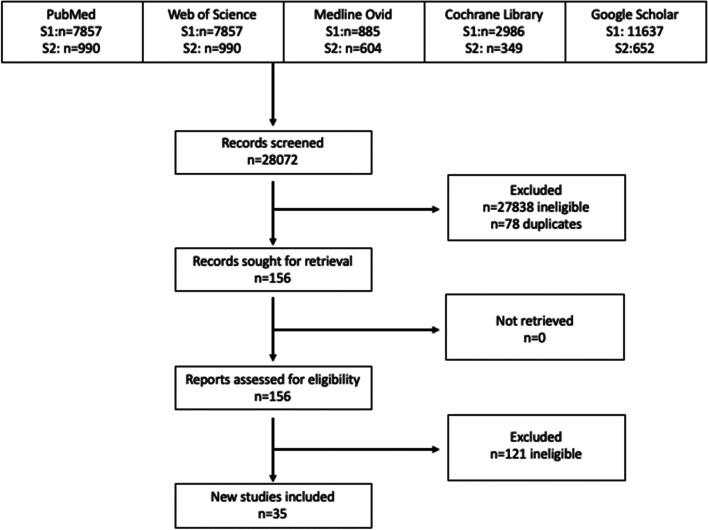
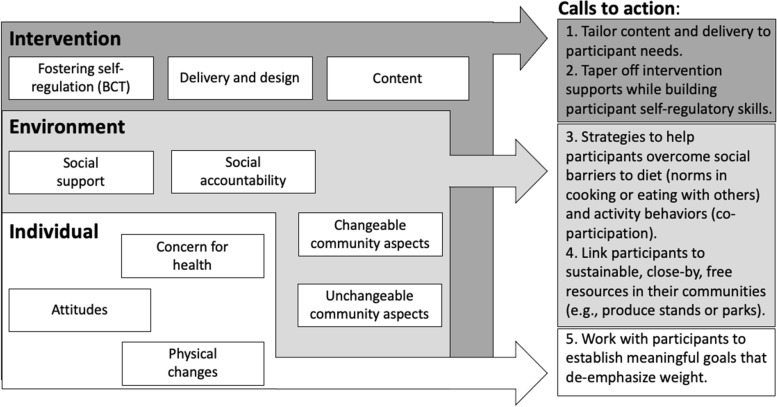
BACKGROUND: Consuming a balanced diet and regular activity have health benefits. However, many adults have a difficult time adhering to diet and activity recommendations, especially in lifestyle interventions. Adherence to recommendations could be improved if common facilitators and barriers are accounted for in intervention design. The aim of this systematic review was to understand perceived barriers and facilitators to lifestyle (diet and/or activity) intervention guidelines. METHODS: This review follows the Preferred Reporting Items for Systematic Reviews and Meta-Analysis guidelines. Studies included relied on qualitative methods to explore the barriers and facilitators healthy adults ([Formula: see text] 18 years) experienced in lifestyle interventions. Google Scholar, Cochrane Reviews, Medline, PubMed, and Web of Science were searched from January 2005 to October 2021. Main themes from each paper were thematically analyzed and reported as a barrier or facilitator to adherence at the individual, environment or intervention level using inductively derived themes. Study quality was assessed using the Critical Appraisal Skills Programme. RESULTS: Thirty-five papers were included. Of these, 46% were conducted in North America and the majority had more female participants (86% in mixed-sex studies, 26% females only). Similar themes emerged across all three levels as facilitators and barriers. At the individual level, attitudes, concern for health and physical changes. At the environmental level, social support, social accountability, changeable and unchangeable aspects of the community. Finally, delivery and design and content at the intervention level. An additional facilitator at the intervention level included fostering self-regulation through Behavior Change Taxonomies (BCT). CONCLUSIONS: Lifestyle interventions that foster self-regulatory skills, opportunities for social engagement and personalization of goals may improve behaviour adherence. This can be achieved through inclusion of BCT, tapering off of intervention supports, identification of meaningful goals and anticipated barriers with participants.
Overview
CoChat Summary
TL;DR
This qualitative systematic review synthesized 35 studies to identify perceived barriers and facilitators to adherence in adult diet and/or physical activity lifestyle interventions. It found recurring themes across individual, environmental, and intervention levels, with self-regulation, social support, personalization, and tapering of support suggested as ways to improve adherence.
Key findings
- Thirty-five papers were included; 46% were conducted in North America, 74% included both males and females, and 26% recruited only females. Sample sizes ranged from 6 to 117 participants (mean 28.1).
- Facilitators and barriers often mirrored each other across three levels: individual (attitudes, concern for health, physical changes), environmental (social support, social accountability, changeable and unchangeable community aspects), and intervention (delivery and design, content).
- An additional intervention-level facilitator was “fostering self-regulation through Behavior Change Taxonomies (BCT),” including feedback and monitoring, goal setting, planning ahead, demonstrations, forming habits, and tangible rewards.
- Common barriers included competing priorities/time constraints, negative self-perception, lack of social support, opposing social norms, cost, weather, far-away sites, rigid “one size fits all” delivery, intervention reliance, and lack of support after the intervention ended.
Methods
- PRISMA-guided qualitative systematic review registered in PROSPERO (CRD42021262918); searched MEDLINE Ovid, PubMed, Web of Science, Cochrane Library, and Google Scholar from January 2005 to October 2021.
- Included qualitative studies of adults (18–65 years) reporting perceived barriers or facilitators to adherence in diet and/or physical activity lifestyle interventions; excluded dementia, cognitive impairment, physical disability, arthritis, HIV, cancer treatment, and pregnant women.
- Main themes were thematically analyzed and categorized inductively into individual, environment, and intervention levels using an adapted Socio-Ecological Model; quality was assessed with the Critical Appraisal Skills Programme (CASP), with scores ranging from 5.5 to 9.5.
Limitations
- The authors state the search strategy did not include targeted MeSH terms, which may have missed some indexed studies.
- Full-text review was led by a single researcher in consultation with a second, rather than by two independent reviewers for all texts.
- The authors caution that findings largely represent females over age 40 from North America; many studies scored low on recruitment quality and did not report saturation, and the mutually exclusive categorization of factors into one SEM level may oversimplify intertwined influences.
Model-written summary. Check it against the paper before relying on it.
Integrity signals
Registry
Cites
Statistics
Figures
Verification
Claims the paper makes
29 Valid · 3 Not valid · 82 Not checked · 82 Own results and interpretations
Some cited sources support this claim and some don’t — read each source’s verdict below.
In the paper
“The built environment, including infrastructure, access to active spaces, healthy food and cost were common barriers across interventions [27, 31, 37, 40, 41, 44, 45, 57, 58, 61].”
§ Barriers and facilitators to diet, physical activity and lifestyle behavior intervention adherence: a qualitative systematic review of the literature > Discussion > Environmental level
What the sources say
- Not checked — no full text of the sourcecites [27] Abbott P Davison J Moore L Rubinstein R Barriers and enhancers to dietary behaviour change for Aboriginal people attending a diabetes cooking course Health Promot J Aust Off J Aust Assoc Health Promot Prof 2010 21 1 33 38 10.1071/HE10033 20406150 source
- Partly supportedcites [31] Hammarström A Wiklund AF Lindahl B Larsson C Ahlgren C Experiences of barriers and facilitators to weight-loss in a diet intervention - a qualitative study of women in northern Sweden BMC Womens Health 2014 16 14 59 10.1186/1472-6874-14-59 PMC3998240 24739099 sourceExperimental — accuracy not yet measured
The Results (‘Category: struggling with implementing’; page unavailable) identify the cost of vegetables and proteins as a barrier and report higher costs for rural participants without a nearby large supermarket. The paper does not identify infrastructure or access to active spaces as barriers in its own intervention, nor can this single intervention establish that these barriers were common across interventions. (LLM, conf=0.88)
- Disputedcites [37] Camhi SM Debordes-Jackson G Andrews J Wright J Lindsay AC Troped PJ Socioecological Factors Associated with an Urban Exercise Prescription Program for Under-Resourced Women: A Mixed Methods Community-Engaged Research Project Int J Environ Res Public Health 2021 18 16 8726 10.3390/ijerph18168726 34444473 PMC8394072 sourceExperimental — accuracy not yet measured
The Environmental Level results (section 3.3.2; page unavailable) identify the center’s location, parking and proximity to a healthy grocery store as facilitators, not barriers. The Discussion (section 4; page unavailable) says the program was free, so cost was not prohibitive; it identifies competing priorities and mismatched expectations as barriers in this study. The paper discusses one intervention rather than establishing which barriers were common across interventions. (LLM, conf=0.86)
Checked by a reasoning model — may be wrong.
- Not checked — no full text of the sourcecites [40] Gallegos-Carrillo K Reyes-Morales H Pelcastre-Villafuerte B García-Peña C Lobelo F Salmeron J Understanding adherence of hypertensive patients in Mexico to an exercise-referral scheme for increasing physical activity Health Promot Int 2021 36 4 952 963 10.1093/heapro/daaa110 33270847 source
- Partly supportedcites [41] McCormack GR McFadden K McHugh TLF Spence JC Mummery K Barriers and facilitators impacting the experiences of adults participating in an internet-facilitated pedometer intervention Psychol Sport Exerc 2019 1 45 101549 10.1016/j.psychsport.2019.101549 sourceExperimental — accuracy not yet measured
The Discussion and section 3.4 identify walking paths, recreation facilities and green space as built-environment features that can facilitate or hinder activity in the pedometer intervention. Section 3.3 also identifies distance from stores as a barrier to walking, but does not assess access to healthy food. The paper does not establish cost as a barrier or show that these barriers were common across interventions. (LLM, conf=0.86)
- Partly supportedcites [44] Kinnafick FE Thøgersen-Ntoumani C Shepherd SO Wilson OJ Wagenmakers AJM Shaw CS In It Together: A Qualitative Evaluation of Participant Experiences of a 10-Week, Group-Based, Workplace HIIT Program for Insufficiently Active Adults J Sport Exerc Psychol 2018 40 1 10 19 10.1123/jsep.2017-0306 29521569 sourceExperimental — accuracy not yet measured
The Introduction identifies unsuitable physical environments as a barrier to exercise, and ‘Assessing Intervention Context’ reports that proximity to work made the HIIT sessions easier to attend. The paper does not establish that infrastructure, access to active spaces, healthy food, and cost were common barriers across interventions; it evaluates one workplace program. The supplied copy gives no page number for those sections. (LLM, conf=0.84)
- Disputedcites [45] Korkiakangas EE Alahuhta MA Husman PM Keinänen-Kiukaanniemi S Taanila AM Laitinen JH Motivators and barriers to exercise among adults with a high risk of type 2 diabetes–a qualitative study Scand J Caring Sci 2011 25 1 62 69 10.1111/j.1471-6712.2010.00791.x 20384973 sourceExperimental — accuracy not yet measured
The Results list weather, health problems, work-related factors and lack of interest as barriers among adults at high risk of type 2 diabetes. Table 1 instead lists facilities in participants’ residential environments as a motivator. This study does not present infrastructure, access to active spaces, healthy food or cost as common barriers across interventions. (LLM, conf=0.83)
Checked by a reasoning model — may be wrong.
- Not checked — no full text of the sourcecites [57] Lieffers JRL Quintanilha M Trottier CF Johnson ST Mota JF Prado CM Experiences with and Perception of a Web-Based Mindfulness, Nutrition, and Fitness Platform Reported by First-Year University Students: A Qualitative Study J Acad Nutr Diet 2021 121 12 2409 2418.e3 10.1016/j.jand.2021.04.019 34119458 source
- Partly supportedcites [58] Penn L Dombrowski SU Sniehotta FF White M Participants’ perspectives on making and maintaining behavioural changes in a lifestyle intervention for type 2 diabetes prevention: a qualitative study using the theory domain framework BMJ Open 2013 3 6 e002949 10.1136/bmjopen-2013-002949 23811173 PMC3696871 sourceExperimental — accuracy not yet measured
The Results section (‘Environmental context and resources’; page unavailable) identifies gym-access costs and concerns about walking safely in the local area as barriers to maintaining physical activity. It does not establish barriers involving healthy-food access or infrastructure, or show that these barriers were common across interventions; the study examines one intervention. (LLM, conf=0.86)
- Not checked — no full text of the sourcecites [61] Wycherley TP Mohr P Noakes M Clifton PM Brinkworth GD Self-reported facilitators of, and impediments to maintenance of healthy lifestyle behaviours following a supervised research-based lifestyle intervention programme in patients with type 2 diabetes Diabet Med J Br Diabet Assoc 2012 29 5 632 639 10.1111/j.1464-5491.2011.03451.x 21916973 source
plainstates an association- Asserted: passes — The authors put it forward as true.
- Checkable: passes — It can be checked against evidence.
- Load-bearing: passes — The paper’s conclusions depend on it.
- Based: passes — The paper gives a reason why it holds.
The cited sources support only part of this claim — read each source’s verdict below.
In the paper
“Lifestyle interventions can be rooted in a variety of frameworks and methods [14, 15], making it difficult to determine what components or ‘active ingredients’ [14–16] within interventions offer merit for behavior outcomes [17–19].”
§ Barriers and facilitators to diet, physical activity and lifestyle behavior intervention adherence: a qualitative systematic review of the literature > Background
What the sources say
- Partly supportedcites [14] Michie S West R Finnerty AN Norris E Wright AJ Marques MM Representation of behaviour change interventions and their evaluation: Development of the Upper Level of the Behaviour Change Intervention Ontology Wellcome Open Res 2020 5 123 10.12688/wellcomeopenres.15902.1 33614976 PMC7868854 sourceExperimental — accuracy not yet measured
The paper’s Expert feedback section describes varied behaviour-change intervention techniques, including problem solving and self-monitoring. Its section on initially drafting the causal model says the authors drew on theories and three frameworks to develop the ontology, not that lifestyle interventions themselves are rooted in those frameworks. The broader point about varied intervention methods is supported, but the claim’s specific framing about lifestyle interventions and frameworks is not established. (LLM, conf=0.78)
- Partly supportedcites [15] Cooper J Murphy J Woods C Van Nassau F McGrath A Callaghan D Barriers and facilitators to implementing community-based physical activity interventions: a qualitative systematic review Int J Behav Nutr Phys Act. 2021 18 1 118 10.1186/s12966-021-01177-w 34493306 PMC8422651 sourceExperimental — accuracy not yet measured
The Results describe 11 different community-based physical activity interventions, some addressing healthy eating or smoking cessation alongside activity. The Introduction and Discussion discuss several frameworks and strategies for studying or implementing interventions, but do not establish that lifestyle interventions themselves are rooted in a variety of frameworks and methods. Page numbers are unavailable in our copy. (LLM, conf=0.76)
plain- Asserted: passes — The authors put it forward as true.
- Checkable: passes — It can be checked against evidence.
- Load-bearing: passes — The paper’s conclusions depend on it.
- Based: passes — The paper gives a reason why it holds.
- Partly supported
Every source the paper cites for this claim was checked and supports it.
In the paper
“Interventions targeting behavior change do not act in isolation. Instead, they overlap with participant’s personal characteristics and structures in place surrounding a participant [15].”
§ Barriers and facilitators to diet, physical activity and lifestyle behavior intervention adherence: a qualitative systematic review of the literature > Background
What the sources say
- Supportedcites [15] Cooper J Murphy J Woods C Van Nassau F McGrath A Callaghan D Barriers and facilitators to implementing community-based physical activity interventions: a qualitative systematic review Int J Behav Nutr Phys Act. 2021 18 1 118 10.1186/s12966-021-01177-w 34493306 PMC8422651 source
The Results (Intervention characteristics) say interventions fit participants’ lifestyles and must be tailored to the target population and local cultural, social, and environmental context. The Results (Individual characteristics) also identify participant attitudes as relevant to implementation. Together, these passages support the claim that interventions interact with personal and surrounding factors rather than acting in isolation. (LLM, conf=0.87)
plainstates an association- Asserted: passes — The authors put it forward as true.
- Checkable: passes — It can be checked against evidence.
- Load-bearing: passes — The paper’s conclusions depend on it.
- Based: passes — The paper gives a reason why it holds.
- Supported
The cited sources support only part of this claim — read each source’s verdict below.
In the paper
“Lifestyle interventions can be rooted in a variety of frameworks and methods [14, 15], making it difficult to determine what components or ‘active ingredients’ [14–16] within interventions offer merit for behavior outcomes [17–19].”
§ Barriers and facilitators to diet, physical activity and lifestyle behavior intervention adherence: a qualitative systematic review of the literature > Background
What the sources say
- Supportedcites [14] Michie S West R Finnerty AN Norris E Wright AJ Marques MM Representation of behaviour change interventions and their evaluation: Development of the Upper Level of the Behaviour Change Intervention Ontology Wellcome Open Res 2020 5 123 10.12688/wellcomeopenres.15902.1 33614976 PMC7868854 source
The Introduction says that heterogeneity in behaviour change interventions can obscure evidence of what works. The Discussions and conclusions section adds that identifying the real drivers of intervention success or failure may be possible only partially because many factors affect outcomes. This supports the cited point about difficulty identifying effective components, though the paper discusses behaviour change interventions generally rather than lifestyle interventions specifically. (LLM, conf=0.87)
- Could not verifycites [15] Cooper J Murphy J Woods C Van Nassau F McGrath A Callaghan D Barriers and facilitators to implementing community-based physical activity interventions: a qualitative systematic review Int J Behav Nutr Phys Act. 2021 18 1 118 10.1186/s12966-021-01177-w 34493306 PMC8422651 sourceExperimental — accuracy not yet measured
The Results (Intervention characteristics; page unavailable) discuss retaining core components during adaptation and balancing tailoring against fidelity and intervention effect. The Discussion addresses selecting implementation strategies. Neither passage says it is difficult to determine which intervention components or ‘active ingredients’ improve behavioral outcomes; searches for those terms and for identifying effective components found no such passage. (LLM, conf=0.72)
- Not checked — no full text of the sourcecites [16] Czajkowski SM Hunter CM From ideas to interventions: A review and comparison of frameworks used in early phase behavioral translation research Health Psychol 2021 40 12 829 844 10.1037/hea0001095 34990185 source
- Not checked — no full text of the sourcecites [17] Gourlan M Bernard P Bortolon C Romain Aj Lareyre O Carayol M Efficacy of theory-based interventions to promote physical activity. A meta-analysis of randomised controlled trials Health Psychol Rev. 2016 10 1 50 66 10.1080/17437199.2014.981777 25402606 source
- Partly supportedcites [18] Ashton LM Sharkey T Whatnall MC Williams RL Bezzina A Aguiar EJ Effectiveness of Interventions and Behaviour Change Techniques for Improving Dietary Intake in Young Adults: A Systematic Review and Meta-Analysis of RCTs Nutrients 2019 11 4 E825 10.3390/nu11040825 PMC6520715 30979065 sourceExperimental — accuracy not yet measured
The Conclusions say the review could not determine which behaviour change techniques were essential to success, and the Discussion (§4.3) says inconsistent reporting made intervention components difficult to code. This supports the difficulty described, but the review concerns dietary outcomes in young adults, not behaviour outcomes generally. (LLM, conf=0.84)
- Partly supportedcites [19] Sremanakova J Sowerbutts AM Todd C Cooke R Burden S Systematic Review of Behaviour Change Theories Implementation in Dietary Interventions for People Who Have Survived Cancer Nutrients 2021 13 2 612 10.3390/nu13020612 33668596 PMC7917689 sourceExperimental — accuracy not yet measured
The Results (§3.5) say the reviewed studies could not determine which theoretical aspects were positively related to behaviour change and outcomes. The Discussion (§4.4) likewise says it remains unclear which constructs influence behaviour, but this finding concerns dietary interventions for cancer survivors, not lifestyle interventions generally. (LLM, conf=0.84)
plain- Asserted: passes — The authors put it forward as true.
- Checkable: passes — It can be checked against evidence.
- Load-bearing: passes — The paper’s conclusions depend on it.
- Based: passes — The paper gives a reason why it holds.
- Supported
The cited sources support only part of this claim — read each source’s verdict below.
In the paper
“However, many adults do not meet dietary [5–7] or activity [8–10] guidelines.”
§ Barriers and facilitators to diet, physical activity and lifestyle behavior intervention adherence: a qualitative systematic review of the literature > Background
What the sources say
- Supportedcites [5] Kalmpourtzidou A Eilander A Talsma EF Global Vegetable Intake and Supply Compared to Recommendations: A Systematic Review Nutrients 2020 12 6 1558 10.3390/nu12061558 32471188 PMC7352906 source
The citation is attached to the dietary-guidelines portion of the sentence, not the activity-guidelines portion. The Results (§3.2; page not provided) report vegetable intake below recommendations in 119 of 136 countries, supporting the claim that many adults do not meet dietary guidelines. (LLM, conf=0.91)
- Supportedcites [6] Tugault-Lafleur CN Black JL Differences in the Quantity and Types of Foods and Beverages Consumed by Canadians between 2004 and 2015 Nutrients 2019 11 3 526 10.3390/nu11030526 30823448 PMC6471131 source
The Introduction reports large gaps between Canadians’ dietary intakes and national recommendations: only 26% of people aged 2 and older met the recommended minimum servings of vegetables and fruit in 2004. The Discussion specifically reports that a large proportion of Canadians did not meet recommended servings for milk and alternatives. This source supports the dietary portion of the sentence; the activity portion is attributed to other citations. (LLM, conf=0.90)
- Not matchedcites [7] Noncommunicable diseases: Risk factors [Internet]. World Health Organization. 2022 [cited 2022 Apr 4]. Available from: https://www.who.int/data/gho/data/themes/topics/topic-details/GHO/ncd-risk-factors.
We searched by its title and found no matching paper.
- Not matchedcites [8] World Health Organization. Global action plan on physical activity 2018–2030: more active people for a healthier world [Internet]. World Health Organization; 2018 [cited 2022 Apr 4]. 101 p. Available from: https://apps.who.int/iris/handle/10665/272722.
We searched by its title and found no matching paper.
- Supportedcites [9] Loyen A Clarke-Cornwell AM Anderssen SA Hagströmer M Sardinha LB Sundquist K Sedentary Time and Physical Activity Surveillance Through Accelerometer Pooling in Four European Countries Sports Med Auckl NZ 2017 47 7 1421 1435 10.1007/s40279-016-0658-y PMC5488150 27943147 source
The citation supports the activity-guidelines part of the sentence; dietary guidelines are attributed to separate citations. The Key Points report that 72% of adults in four European countries did not meet physical activity recommendations, and the Discussion explains that this estimate uses activity bouts of at least 10 minutes. (LLM, conf=0.94)
- Supportedcites [10] Guthold R Stevens GA Riley LM Bull FC Worldwide trends in insufficient physical activity from 2001 to 2016: a pooled analysis of 358 population-based surveys with 1·9 million participants Lancet Glob Health 2018 6 10 e1077 e1086 10.1016/S2214-109X(18)30357-7 30193830 source
The citation is attached to the activity-guidelines part of the sentence, not the dietary part. Study design defines insufficient activity as not meeting WHO recommendations, and Results reports that 27.5% of adults worldwide were insufficiently active in 2016. Page numbers are not provided in the supplied passages. (LLM, conf=0.94)
plain- Asserted: passes — The authors put it forward as true.
- Checkable: passes — It can be checked against evidence.
- Load-bearing: passes — The paper’s conclusions depend on it.
- Based: passes — The paper gives a reason why it holds.
- Supported
116 more claims · 10 with their cited sources checked
Create a free account to see all 196 claims and to verify the 4 references still open.
- Probably not a substantial claim. 57
- It may state two separate claims as one. 27
- The quote only partly states this claim. 1
Claims other papers make about this one
Each is checked against this paper’s own text: does it say what the citing paper says it does?
The source backs part of the claim, not all of it — or backs it for a different population, condition or comparison.
In the citing paper
“Behavioral therapies for weight management require high levels of personal agency and cognitive resources, and it is this demand that typically reduces adherence.112”
From The societal implications of using glucagon-like peptide-1 receptor agonists for the treatment of obesity (2025) · cites this paper as [112]
Experimental — accuracy not yet measuredIn the citing paper
“Barriers to adherence also included the cost of food, product availability, and time required for meal preparation [113].”
From Dietary and Behavioral Strategies for Weight Loss and Weight Loss Maintenance: A Narrative Review (2025) · cites this paper as [113]
Self-check
Percentages, sums and reported differences re-computed from the paper’s own numbers.
Each contradiction between two passages listed here was confirmed by an independent check.
Rated minor: it would not touch a result — a value no result rests on, a p-value that stays on the same side of the significance level, or a conflict that is clerical, resolved elsewhere in the paper, or outside its own findings.
In the paper
§ Barriers and facilitators to diet, physical activity and lifestyle behavior intervention adherence: a qualitative systematic review of the literature > Results > Study populations
“On average, ages in activity interventions were higher (diet: 22.3 years, activity: 35.1 years, and mixed: 24.6 years).”
§ Barriers and facilitators to diet, physical activity and lifestyle behavior intervention adherence: a qualitative systematic review of the literature > Results > Study populations
“Ages of included participants varied from 17 to 82 with an overall mean age of 49.7 years (diet: 50.9 years, activity: 49.1 years and mixed: 49.9 years) in 30 studies.”
Rated minor: it would not touch a result — a value no result rests on, a p-value that stays on the same side of the significance level, or a conflict that is clerical, resolved elsewhere in the paper, or outside its own findings.
In the paper
§ Barriers and facilitators to diet, physical activity and lifestyle behavior intervention adherence: a qualitative systematic review of the literature > Methods > Inclusion and exclusion criteria
“All studies were conducted among adults (18–65 years).”
§ Barriers and facilitators to diet, physical activity and lifestyle behavior intervention adherence: a qualitative systematic review of the literature > Methods > Review section and data extraction
“n = 32 first year university students (72% female) aged 17–30 years”
Rated minor: it would not touch a result — a value no result rests on, a p-value that stays on the same side of the significance level, or a conflict that is clerical, resolved elsewhere in the paper, or outside its own findings.
In the paper
§ Barriers and facilitators to diet, physical activity and lifestyle behavior intervention adherence: a qualitative systematic review of the literature > Results > Intervention level
“Comments surrounding inclusive spaces and opportunities for stigma was mentioned in a single diet focused study [54].”
§ Barriers and facilitators to diet, physical activity and lifestyle behavior intervention adherence: a qualitative systematic review of the literature > Results
“Eleven studies reported barriers and facilitators in mixed interventions [51–61].”
Rated minor: it would not touch a result — a value no result rests on, a p-value that stays on the same side of the significance level, or a conflict that is clerical, resolved elsewhere in the paper, or outside its own findings.
In the paper
“Seventy-four percent of studies (n = 26) included both males and females [27–30, 32, 33, 35, 38–42, 44, 45, 48, 49, 51–53, 55–61]. Of these, only 14% (n = 5) had more male participants than female”
§ Barriers and facilitators to diet, physical activity and lifestyle behavior intervention adherence: a qualitative systematic review of the literature > Results > Study populations
Reported 14 · recomputed 19.230769
Citations
Cites
Ryan, R. M., & Deci, E. L. (2000) · American Psychologist · doi:10.1037//0003-066x.55.1.68 · Cited by 54,599 · cited 1×
“Helping participants identify solo activities that they enjoy is also likely important to prevent intervention reliance [76].”
BackgroundLiberati, A., Altman, D. G., Tetzlaff, J., Mulrow, C., Gotzsche, P. C., Ioannidis, J. P. A., Clarke, M., Devereaux, P. J., Kleijnen, J., & Moher, D. (2009) · BMJ · doi:10.1136/bmj.b2700 · Cited by 17,648
Hoffmann, T. C., Glasziou, P. P., Boutron, I., Milne, R., Perera, R., Moher, D., Altman, D. G., Barbour, V., Macdonald, H., Johnston, M., et al. (2014) · BMJ · doi:10.1136/bmj.g1687 · Cited by 10,548 · cited 2×
“, motivation, knowledge, attitudes) [11] and definitions of what and how components of interventions [20].”
BackgroundBuilding a practically useful theory of goal setting and task motivation: A 35-year odyssey.
Locke, E. A., & Latham, G. P. (2002) · American Psychologist · doi:10.1037/0003-066x.57.9.705 · Cited by 7,766 · cited 1×
“Unrealistic expectations surrounding weight changes can lead to discouragement [67].”
BackgroundMichie, S., Richardson, M., Johnston, M., Abraham, C., Francis, J., Hardeman, W., Eccles, M. P., Cane, J., & Wood, C. E. (2013) · Annals of Behavioral Medicine · doi:10.1007/s12160-013-9486-6 · Cited by 7,629 · cited 1×
“using terminology from behavior change taxonomies (BCTs) [62], behavior change theories (e.”
MethodGuthold, R., Stevens, G. A., Riley, L. M., & Bull, F. C. (2018) · The Lancet Global Health · doi:10.1016/s2214-109x(18)30357-7 · Cited by 4,819 · cited 2×
“The discrepancy between ‘ideal’ practice of health behaviors and reality suggests a need for more effective strategies to support the practice of beneficial diet and activity behaviors [5, 10].”
BackgroundMoral Identity and Developmental Theory
Lapsley, D. (2015) · Human Development · doi:10.1159/000435926 · Cited by 3,819
Social support and patient adherence to medical treatment: a meta-analysis.
DiMatteo, M. R. (2004) · Health Psychology · doi:10.1037/0278-6133.23.2.207 · Cited by 2,107
Golden, S. D., & Earp, J. A. L. (2012) · Health Education & Behavior · doi:10.1177/1090198111418634 · Cited by 1,394 · cited 7×
“Though broader factors, such as the “policy level” also play a role, they are often viewed as outside of an intervention or an individual’s control [12].”
BackgroundMethodInfluentialMind-sets matter: A meta-analytic review of implicit theories and self-regulation.
Burnette, J. L., O'Boyle, E. H., VanEpps, E. M., Pollack, J. M., & Finkel, E. J. (2013) · Psychological Bulletin · doi:10.1037/a0029531 · Cited by 1,367
From ideas to efficacy: The ORBIT model for developing behavioral treatments for chronic diseases
Czajkowski, S. M., Powell, L. H., Adler, N., Naar-King, S., Reynolds, K. D., Hunter, C. M., Laraia, B., Olster, D. H., Perna, F. M., Peterson, J. C., et al. (2015) · Health Psychology · doi:10.1037/hea0000161 · Cited by 1,161 · cited 1×
“As a result we opted to rooted our analysis in behavioural science terminology as other work has suggested that this approach can help facilitate relevant understanding and application within the field of behavioural science [63].”
Long, H. A., French, D. P., & Brooks, J. M. (2020) · Research Methods in Medicine & Health Sciences · doi:10.1177/2632084320947559 · Cited by 1,112 · cited 2×
“Quality assessment The methodological quality of all papers was assessed using the Critical Appraisal Skills Programme (CASP) checklist for qualitative research [64, 65].”
BackgroundMethodMethods to Improve the Selection and Tailoring of Implementation Strategies
Powell, B. J., Beidas, R. S., Lewis, C. C., Aarons, G. A., McMillen, J. C., Proctor, E. K., & Mandell, D. S. (2017) · The Journal of Behavioral Health Services & Research · doi:10.1007/s11414-015-9475-6 · Cited by 967 · cited 1×
“Creating an ‘implementation plan’ may help reveal barriers at the community level that could hinder intervention implementation or adherence by participants [15, 77].”
BackgroundSchoeppe, S., Alley, S., Van Lippevelde, W., Bray, N. A., Williams, S. L., Duncan, M. J., & Vandelanotte, C. (2016) · International Journal of Behavioral Nutrition and Physical Activity · doi:10.1186/s12966-016-0454-y · Cited by 949
Teixeira, P. J., Carraça, E. V., Marques, M. M., Rutter, H., Oppert, J.-M., De Bourdeaudhuij, I., Lakerveld, J., & Brug, J. (2015) · BMC Medicine · doi:10.1186/s12916-015-0323-6 · Cited by 711 · cited 1×
“This supports findings from a 2015 systematic review suggesting that psychological or self-regulatory skills and body image act as effective mediators of behavior change in lifestyle interventions [66].”
Improving dietary behavior: the effectiveness of tailored messages in primary care settings.
Campbell, M. K., DeVellis, B. M., Strecher, V. J., Ammerman, A. S., DeVellis, R. F., & Sandler, R. S. (1994) · American Journal of Public Health · doi:10.2105/ajph.84.5.783 · Cited by 666
Can Mobile Phone Apps Influence People’s Health Behavior Change? An Evidence Review
Zhao, J., Freeman, B., & Li, M. (2016) · Journal of Medical Internet Research · doi:10.2196/jmir.5692 · Cited by 618
Goal Setting as a Strategy for Health Behavior Change
Strecher, V. J., Seijts, G. H., Kok, G. J., Latham, G. P., Glasgow, R., DeVellis, B., Meertens, R. M., & Bulger, D. W. (1995) · Health Education Quarterly · doi:10.1177/109019819502200207 · Cited by 445
Family Support, Medication Adherence, and Glycemic Control Among Adults With Type 2 Diabetes
Mayberry, L. S., & Osborn, C. Y. (2012) · Diabetes Care · doi:10.2337/dc11-2103 · Cited by 441
Importance of family/social support and impact on adherence to diabetic therapy
Miller, T., & DiMatteo, R. (2013) · Diabetes, Metabolic Syndrome and Obesity: Targets and Therapy · doi:10.2147/dmso.s36368 · Cited by 437
Shilts, M. K., Horowitz, M., & Townsend, M. S. (2004) · American Journal of Health Promotion · doi:10.4278/0890-1171-19.2.81 · Cited by 378
Turner-McGrievy, G. M., Beets, M. W., Moore, J. B., Kaczynski, A. T., Barr-Anderson, D. J., & Tate, D. F. (2013) · Journal of the American Medical Informatics Association · doi:10.1136/amiajnl-2012-001510 · Cited by 373
Gourlan, M., Bernard, P., Bortolon, C., Romain, A. J., Lareyre, O., Carayol, M., Ninot, G., & Boiché, J. (2016) · Health Psychology Review · doi:10.1080/17437199.2014.981777 · Cited by 353
Burke, L. E., Conroy, M. B., Sereika, S. M., Elci, O. U., Styn, M. A., Acharya, S. D., Sevick, M. A., Ewing, L. J., & Glanz, K. (2011) · Obesity · doi:10.1038/oby.2010.208 · Cited by 329
Physical activity and anxiety: A perspective from the World Health Survey
Stubbs, B., Koyanagi, A., Hallgren, M., Firth, J., Richards, J., Schuch, F., Rosenbaum, S., Mugisha, J., Veronese, N., Lahti, J., et al. (2017) · Journal of Affective Disorders · doi:10.1016/j.jad.2016.10.028 · Cited by 324
Goal-setting for behavior change in primary care: An exploration and status report
Bodenheimer, T., & Handley, M. A. (2009) · Patient Education and Counseling · doi:10.1016/j.pec.2009.06.001 · Cited by 286
Sleep, circadian rhythms and health
Foster, R. G. (2020) · Interface Focus · doi:10.1098/rsfs.2019.0098 · Cited by 286 · cited 1×
“Historically, these interventions have tended to focus on diet or activity related practices, though it is recognized that sleep and sedentary habits are also important [7, 13].”
BackgroundMaintenance of physical activity following an individualized motivationally tailored intervention
Bock, B. C., Marcus, B. H., Pinto, B. M., & Forsyth, L. H. (2001) · Annals of Behavioral Medicine · doi:10.1207/s15324796abm2302_2 · Cited by 275
Ravasco, P., Monteiro-Grillo, I., & Camilo, M. (2012) · The American Journal of Clinical Nutrition · doi:10.3945/ajcn.111.018838 · Cited by 251
Global Vegetable Intake and Supply Compared to Recommendations: A Systematic Review
Kalmpourtzidou, A., Eilander, A., & Talsma, E. F. (2020) · Nutrients · doi:10.3390/nu12061558 · Cited by 233 · cited 2×
“The discrepancy between ‘ideal’ practice of health behaviors and reality suggests a need for more effective strategies to support the practice of beneficial diet and activity behaviors [5, 10].”
BackgroundAssociations between physical activity and perceived stress/hassles in college students
Nguyen‐Michel, S. T., Unger, J. B., Hamilton, J., & Spruijt‐Metz, D. (2006) · Stress and Health · doi:10.1002/smi.1094 · Cited by 208
Loyen, A., Clarke-Cornwell, A. M., Anderssen, S. A., Hagströmer, M., Sardinha, L. B., Sundquist, K., Ekelund, U., Steene-Johannessen, J., Baptista, F., Hansen, B. H., et al. (2017) · Sports Medicine · doi:10.1007/s40279-016-0658-y · Cited by 182
Rock, C. L., Flatt, S. W., Sherwood, N. E., Karanja, N., Pakiz, B., & Thomson, C. A. (2010) · JAMA · doi:10.1001/jama.2010.1503 · Cited by 173
Adolescent Health Interventions: Conclusions, Evidence Gaps, and Research Priorities
Salam, R. A., Das, J. K., Lassi, Z. S., & Bhutta, Z. A. (2016) · Journal of Adolescent Health · doi:10.1016/j.jadohealth.2016.05.006 · Cited by 154 · cited 1×
“We chose to focus on adult populations as youth are often still confined to parental control over their behaviours, creating a situation where adherence is reliant on a third party [26].”
BackgroundExperiences of Self-Monitoring: Successes and Struggles During Treatment for Weight Loss
Burke, L. E., Swigart, V., Warziski Turk, M., Derro, N., & Ewing, L. J. (2009) · Qualitative Health Research · doi:10.1177/1049732309335395 · Cited by 153 · cited 10×
“This included ‘feedback and monitoring’ through self-monitoring [29, 30, 32, 35, 39, 41, 42, 45, 49, 53, 57, 58] (e.”
BackgroundInfluentialFacilitators and barriers to weight loss and weight loss maintenance: a qualitative exploration
Metzgar, C. J., Preston, A. G., Miller, D. L., & Nickols‐Richardson, S. M. (2015) · Journal of Human Nutrition and Dietetics · doi:10.1111/jhn.12273 · Cited by 141 · cited 10×
“, with participants) and ‘intervention reliance’ [29, 34, 38, 39, 47, 51, 55, 60, 61] (e.”
BackgroundInfluentialSchmidt, S. K., Hemmestad, L., MacDonald, C. S., Langberg, H., & Valentiner, L. S. (2020) · International Journal of Environmental Research and Public Health · doi:10.3390/ijerph17207454 · Cited by 140 · cited 7×
“, with participants) and ‘intervention reliance’ [29, 34, 38, 39, 47, 51, 55, 60, 61] (e.”
BackgroundInfluentialAshton, L. M., Sharkey, T., Whatnall, M. C., Williams, R. L., Bezzina, A., Aguiar, E. J., Collins, C. E., & Hutchesson, M. J. (2019) · Nutrients · doi:10.3390/nu11040825 · Cited by 134
Carels, R. A., Darby, L. A., Rydin, S., Douglass, O. M., Cacciapaglia, H. M., & O'Brien, W. H. (2005) · Annals of Behavioral Medicine · doi:10.1207/s15324796abm3003_2 · Cited by 129
Michie, S., West, R., Finnerty, A. N., Norris, E., Wright, A. J., Marques, M. M., Johnston, M., Kelly, M. P., Thomas, J., & Hastings, J. (2021) · Wellcome Open Research · doi:10.12688/wellcomeopenres.15902.2 · Cited by 129 · cited 2×
“Lifestyle interventions can be rooted in a variety of frameworks and methods [14, 15], making it difficult to determine what components or ‘active ingredients’ [14–16] within interventions offer merit for behavior outcomes [17–19].”
BackgroundGorin, A. A., Raynor, H. A., Fava, J., Maguire, K., Robichaud, E., Trautvetter, J., Crane, M., & Wing, R. R. (2013) · Health Psychology · doi:10.1037/a0026959 · Cited by 121
Explaining Long-Term Exercise Adherence in Women Who Complete a Structured Exercise Program
Huberty, J. L., Ransdell, L. B., Sidman, C., Flohr, J. A., Shultz, B., Grosshans, O., & Durrant, L. (2008) · Research Quarterly for Exercise and Sport · doi:10.1080/02701367.2008.10599501 · Cited by 117 · cited 10×
“In activity interventions having a pet or someone to by active with [41, 43, 45, 49] (e.”
BackgroundInfluentialCasey, D., De Civita, M., & Dasgupta, K. (2010) · Diabetic Medicine · doi:10.1111/j.1464-5491.2009.02873.x · Cited by 114 · cited 9×
“, with participants) and ‘intervention reliance’ [29, 34, 38, 39, 47, 51, 55, 60, 61] (e.”
BackgroundInfluentialCooper, J., Murphy, J., Woods, C., Van Nassau, F., McGrath, A., Callaghan, D., Carroll, P., Kelly, P., Murphy, N., Murphy, M., et al. (2021) · International Journal of Behavioral Nutrition and Physical Activity · doi:10.1186/s12966-021-01177-w · Cited by 114 · cited 9×
“Creating an ‘implementation plan’ may help reveal barriers at the community level that could hinder intervention implementation or adherence by participants [15, 77].”
BackgroundInfluentialHealthy eating strategies in the workplace
Quintiliani, L. M., Poulsen, S., & Sorensen, G. (2010) · International Journal of Workplace Health Management · doi:10.1108/17538351011078929 · Cited by 114 · cited 1×
“Diet interventions could focus on breaking down discomfort opposing norms in eating with other people [74] or when cooking for others [75].”
BackgroundRise, M. B., Pellerud, A., Rygg, L. Ø., & Steinsbekk, A. (2013) · PLoS ONE · doi:10.1371/journal.pone.0064009 · Cited by 104 · cited 3×
“Other interventions within this review support this approach as changes in energy [35, 38, 42, 44, 45, 48, 50, 55, 59], confidence [30, 33–35, 40–43, 47, 52, 55, 56, 58, 60, 61], physical abilities [40, 42, 43, 45, 48, 55, 58, 60] or general health [38, 39, 44, 45, 50] acted as facilitators.”
Challenges and Opportunities of eHealth Research
Ahern, D. K. (2007) · American Journal of Preventive Medicine · doi:10.1016/j.amepre.2007.01.016 · Cited by 103
Byrne, M. (2019) · Health Psychology · doi:10.1037/hea0000723 · Cited by 103 · cited 1×
“Furthermore, community engagement strategies like those used by Bryne (2019) may provide one approach to better understand participant goals of a target group from the start to help shape outcomes in intervention design phases [69].”
MethodFactors Related to Physical Activity Adherence in Women: Review and Suggestions for Future Research
White, J. L., Randsdell, L. B., Vener, J., & Flohr, J. A. (2005) · Women & Health · doi:10.1300/j013v41n04_07 · Cited by 95 · cited 2×
“First, a greater understanding of participants personal goals prior to intervention onset and second, increasing participants’ understanding that changes beyond weight are valuable [47, 68].”
BackgroundHardcastle, S., & Hagger, M. S. (2011) · Psychology of Sport and Exercise · doi:10.1016/j.psychsport.2011.01.001 · Cited by 89 · cited 8×
“For example, not having a companion for exercise [34, 43, 46, 47, 53, 56].”
BackgroundMethodInfluentialCampbell, K. L., Van Patten, C. L., Neil, S. E., Kirkham, A. A., Gotay, C. C., Gelmon, K. A., & McKenzie, D. C. (2012) · Journal of the Academy of Nutrition and Dietetics · doi:10.1016/j.jada.2011.10.022 · Cited by 88
Korkiakangas, E. E., Alahuhta, M. A., Husman, P. M., Keinänen‐Kiukaanniemi, S., Taanila, A. M., & Laitinen, J. H. (2011) · Scandinavian Journal of Caring Sciences · doi:10.1111/j.1471-6712.2010.00791.x · Cited by 81 · cited 9×
“This included ‘feedback and monitoring’ through self-monitoring [29, 30, 32, 35, 39, 41, 42, 45, 49, 53, 57, 58] (e.”
BackgroundInfluentialHammarström, A., Wiklund, A. F., Lindahl, B., Larsson, C., & Ahlgren, C. (2014) · BMC Women's Health · doi:10.1186/1472-6874-14-59 · Cited by 78 · cited 10×
“, rigid structure or timing of sessions), ‘limited social engagement’ [31, 47] (e.”
BackgroundInfluentialMichie, S., West, R., Finnerty, A. N., Norris, E., Wright, A. J., Marques, M. M., Johnston, M., Kelly, M. P., Thomas, J., & Hastings, J. (2020) · Wellcome Open Research · doi:10.12688/wellcomeopenres.15902.1 · Cited by 76
Tugault-Lafleur, C. N., & Black, J. L. (2019) · Nutrients · doi:10.3390/nu11030526 · Cited by 75
Tulloch, H., Sweet, S. N., Fortier, M., Capstick, G., Kenny, G. P., & Sigal, R. J. (2013) · Canadian Journal of Diabetes · doi:10.1016/j.jcjd.2013.09.002 · Cited by 74 · cited 9×
“Other competing priorities common across all intervention types included ‘work outside of the home’ [29, 33, 38, 40, 44, 48, 52, 54, 55, 60], ‘work inside the home’ [27, 29, 33, 34, 38, 43, 46–49, 55] (e.”
BackgroundInfluentialBaumann, F. T., Bieck, O., Oberste, M., Kuhn, R., Schmitt, J., Wentrock, S., Zopf, E., Bloch, W., Schüle, K., & Reuss-Borst, M. (2017) · Supportive Care in Cancer · doi:10.1007/s00520-016-3490-x · Cited by 60
Reeves, M., Winkler, E., Mccarthy, N., Lawler, S., Terranova, C., Hayes, S., Janda, M., Demark-Wahnefried, W., & Eakin, E. (2017) · Asia-Pacific Journal of Clinical Oncology · doi:10.1111/ajco.12629 · Cited by 58
Penn, L., Dombrowski, S. U., Sniehotta, F. F., & White, M. (2013) · BMJ Open · doi:10.1136/bmjopen-2013-002949 · Cited by 55 · cited 10×
“, stigma free), ‘flexible delivery routes’ [30, 33, 44, 50, 55, 58, 59] (e.”
BackgroundInfluentialAbbott, P., Davison, J., Moore, L., & Rubinstein, R. (2010) · Health Promotion Journal of Australia · doi:10.1071/he10033 · Cited by 51 · cited 10×
“Forty-six percent of studies were conducted in North America, four diet [29, 30, 34, 36], eight activity [37–41, 43, 47, 48] and four mixed [53–55, 57]; 31% in Europe, three diet [28, 31, 35], four activity [42, 44, 45, 49] and four mixed [51, 58–60]; 9% Australia, two diet focused [27, 32] and one mixed [61]; 9% East…”
BackgroundInfluentialGorin, A. A., Raynor, H. A., Niemeier, H. M., & Wing, R. R. (2007) · International Journal of Behavioral Nutrition and Physical Activity · doi:10.1186/1479-5868-4-58 · Cited by 49
Brandt, C. J., Clemensen, J., Nielsen, J. B., & Søndergaard, J. (2018) · BMJ Open · doi:10.1136/bmjopen-2017-017466 · Cited by 46 · cited 9×
“, with participants) and ‘intervention reliance’ [29, 34, 38, 39, 47, 51, 55, 60, 61] (e.”
BackgroundMethodInfluentialParticipant experiences in the Diabetes REmission Clinical Trial (DiRECT)
Rehackova, L., Rodrigues, A. M., Thom, G., Brosnahan, N., Barnes, A. C., McCombie, L., Leslie, W. S., Zhyzhneuskaya, S., Peters, C., Adamson, A. J., et al. (2022) · Diabetic Medicine · doi:10.1111/dme.14689 · Cited by 46 · cited 10×
“This included ‘feedback and monitoring’ through self-monitoring [29, 30, 32, 35, 39, 41, 42, 45, 49, 53, 57, 58] (e.”
BackgroundInfluentialCzajkowski, S. M., & Hunter, C. M. (2021) · Health Psychology · doi:10.1037/hea0001095 · Cited by 42
Kinnafick, F.-E., Thøgersen-Ntoumani, C., Shepherd, S. O., Wilson, O. J., Wagenmakers, A. J. M., & Shaw, C. S. (2018) · Journal of Sport and Exercise Psychology · doi:10.1123/jsep.2017-0306 · Cited by 40 · cited 9×
“, stigma free), ‘flexible delivery routes’ [30, 33, 44, 50, 55, 58, 59] (e.”
BackgroundInfluentialWycherley, T. P., Mohr, P., Noakes, M., Clifton, P. M., & Brinkworth, G. D. (2012) · Diabetic Medicine · doi:10.1111/j.1464-5491.2011.03451.x · Cited by 38
Hannum, S. M., Carson, L. A., Evans, E. M., Petr, E. L., Wharton, C. M., Bui, L., & Erdman, J. W. (2006) · Diabetes, Obesity and Metabolism · doi:10.1111/j.1463-1326.2005.00493.x · Cited by 38
Harrison, C. R., Phimphasone-Brady, P., DiOrio, B., Raghuanath, S. G., Bright, R., Ritchie, N. D., & Sauder, K. A. (2020) · The Diabetes Educator · doi:10.1177/0145721720920252 · Cited by 35 · cited 7×
“Other competing priorities common across all intervention types included ‘work outside of the home’ [29, 33, 38, 40, 44, 48, 52, 54, 55, 60], ‘work inside the home’ [27, 29, 33, 34, 38, 43, 46–49, 55] (e.”
BackgroundInfluentialO'Donnell, S., Greene, G. W., & Blissmer, B. (2014) · Journal of Nutrition Education and Behavior · doi:10.1016/j.jneb.2014.03.005 · Cited by 34
Robb, K. A., Power, E., Kralj-Hans, I., Atkin, W. S., & Wardle, J. (2010) · Preventive Medicine · doi:10.1016/j.ypmed.2010.10.002 · Cited by 31
Astbury, N. M., Albury, C., Nourse, R., & Jebb, S. A. (2020) · PLOS ONE · doi:10.1371/journal.pone.0238645 · Cited by 30 · cited 6×
“, using pedometers, diaries) and professional monitoring [28, 34, 49, 51, 53, 56, 58, 61] (e.”
BackgroundMethodInfluentialBarriers and Motivators for Strength Training Among Women of Color and Caucasian Women
O'Dougherty, M., Dallman, A., Turcotte, L., Patterson, J., Napolitano, M. A., & Schmitz, K. H. (2008) · Women & Health · doi:10.1080/03630240802092241 · Cited by 28 · cited 10×
“, rigid structure or timing of sessions), ‘limited social engagement’ [31, 47] (e.”
BackgroundResultInfluentialEynon, M. J., O’Donnell, C., & Williams, L. (2018) · Journal of Health Psychology · doi:10.1177/1359105316656233 · Cited by 26 · cited 5×
“This included ‘feedback and monitoring’ through self-monitoring [29, 30, 32, 35, 39, 41, 42, 45, 49, 53, 57, 58] (e.”
BackgroundInfluentialViljoen, J. E., & Christie, C. J.-A. (2015) · BMC Public Health · doi:10.1186/s12889-015-1543-6 · Cited by 25 · cited 8×
“, stigma free), ‘flexible delivery routes’ [30, 33, 44, 50, 55, 58, 59] (e.”
BackgroundInfluentialSremanakova, J., Sowerbutts, A. M., Todd, C., Cooke, R., & Burden, S. (2021) · Nutrients · doi:10.3390/nu13020612 · Cited by 21
Clients’ Experiences of a Community Based Lifestyle Modification Program: A Qualitative Study
Chan, R. S. M., Lok, K. Y. W., Sea, M. M. M., & Woo, J. (2009) · International Journal of Environmental Research and Public Health · doi:10.3390/ijerph6102608 · Cited by 20 · cited 9×
“Forty-six percent of studies were conducted in North America, four diet [29, 30, 34, 36], eight activity [37–41, 43, 47, 48] and four mixed [53–55, 57]; 31% in Europe, three diet [28, 31, 35], four activity [42, 44, 45, 49] and four mixed [51, 58–60]; 9% Australia, two diet focused [27, 32] and one mixed [61]; 9% East…”
BackgroundInfluentialA randomized controlled trial of two mail-based lifestyle interventions for breast cancer survivors
Park, C. L., Cho, D., Salner, A. L., & Dornelas, E. (2016) · Supportive Care in Cancer · doi:10.1007/s00520-016-3129-y · Cited by 19
Leung, A. W. Y., Chan, R. S. M., Sea, M. M. M., & Woo, J. (2020) · Nutrients · doi:10.3390/nu12051379 · Cited by 19
Beckenstein, H., Slim, M., Kim, H., Plourde, H., Kilgour, R., & Cohen, T. R. (2021) · Cancer Reports · doi:10.1002/cnr2.1337 · Cited by 19 · cited 1×
“This has proven to be beneficial for compliance and consequently in improvement of intervention outcomes in low sodium diet [78–82] and activity interventions [83].”
BackgroundSelf-citationKleine, H. D., McCormack, L. A., Drooger, A., & Meendering, J. R. (2019) · Journal of Primary Care & Community Health · doi:10.1177/2150132719851643 · Cited by 17 · cited 8×
“, stigma free), ‘flexible delivery routes’ [30, 33, 44, 50, 55, 58, 59] (e.”
BackgroundInfluentialBarriers to Performing Stretching Exercises Among Korean‐Chinese Female Migrant Workers in Korea
Lee, H., Wilbur, J., Chae, D., Lee, K., & Lee, M. (2015) · Public Health Nursing · doi:10.1111/phn.12105 · Cited by 15 · cited 4×
“Forty-six percent of studies were conducted in North America, four diet [29, 30, 34, 36], eight activity [37–41, 43, 47, 48] and four mixed [53–55, 57]; 31% in Europe, three diet [28, 31, 35], four activity [42, 44, 45, 49] and four mixed [51, 58–60]; 9% Australia, two diet focused [27, 32] and one mixed [61]; 9% East…”
BackgroundInfluentialCooke, A. B., Pace, R., Chan, D., Rosenberg, E., Dasgupta, K., & Daskalopoulou, S. S. (2018) · Diabetes Research and Clinical Practice · doi:10.1016/j.diabres.2018.03.008 · Cited by 14 · cited 8×
“This included ‘feedback and monitoring’ through self-monitoring [29, 30, 32, 35, 39, 41, 42, 45, 49, 53, 57, 58] (e.”
BackgroundInfluentialMcCormack, G. R., McFadden, K., McHugh, T.-L. F., Spence, J. C., & Mummery, K. (2019) · Psychology of Sport and Exercise · doi:10.1016/j.psychsport.2019.101549 · Cited by 14 · cited 8×
“This included ‘feedback and monitoring’ through self-monitoring [29, 30, 32, 35, 39, 41, 42, 45, 49, 53, 57, 58] (e.”
BackgroundInfluentialMendonça, R. D. D., Guimarães, L. M. F., Mingoti, S. A., Magalhães, K. A., & Lopes, A. C. S. (2019) · Nutrition · doi:10.1016/j.nut.2019.110568 · Cited by 14 · cited 7×
“, stigma free), ‘flexible delivery routes’ [30, 33, 44, 50, 55, 58, 59] (e.”
BackgroundInfluentialMaston, G., Franklin, J., Hocking, S., Swinbourne, J., Gibson, A., Manson, E., Sainsbury, A., & Markovic, T. (2021) · PLOS ONE · doi:10.1371/journal.pone.0253127 · Cited by 14 · cited 6×
“This included ‘feedback and monitoring’ through self-monitoring [29, 30, 32, 35, 39, 41, 42, 45, 49, 53, 57, 58] (e.”
BackgroundInfluentialWhite, J. L., & Ransdell, L. B. (2003) · Perceptual and Motor Skills · doi:10.2466/pms.2003.97.2.461 · Cited by 13
Lieffers, J. R. L., Quintanilha, M., Trottier, C. F., Johnson, S. T., Mota, J. F., & Prado, C. M. (2021) · Journal of the Academy of Nutrition and Dietetics · doi:10.1016/j.jand.2021.04.019 · Cited by 13 · cited 7×
“This included ‘feedback and monitoring’ through self-monitoring [29, 30, 32, 35, 39, 41, 42, 45, 49, 53, 57, 58] (e.”
BackgroundInfluentialCamhi, S. M., Debordes-Jackson, G., Andrews, J., Wright, J., Lindsay, A. C., Troped, P. J., & Hayman, L. L. (2021) · International Journal of Environmental Research and Public Health · doi:10.3390/ijerph18168726 · Cited by 12 · cited 5×
“The built environment, including infrastructure, access to active spaces, healthy food and cost were common barriers across interventions [27, 31, 37, 40, 41, 44, 45, 57, 58, 61].”
BackgroundInfluentialDasgupta, K., Jarvandi, S., De Civita, M., Pillay, S., Hajna, S., Gougeon, R., Bader, A., & Da Costa, D. (2014) · PLoS ONE · doi:10.1371/journal.pone.0114620 · Cited by 10 · cited 10×
“, stigma free), ‘flexible delivery routes’ [30, 33, 44, 50, 55, 58, 59] (e.”
BackgroundInfluentialVetrovsky, T., Vetrovska, K., & Bunc, V. (2019) · Acta Gymnica · doi:10.5507/ag.2019.005 · Cited by 7 · cited 10×
“This included ‘feedback and monitoring’ through self-monitoring [29, 30, 32, 35, 39, 41, 42, 45, 49, 53, 57, 58] (e.”
BackgroundMethodInfluentialTheories and Interventions in Health Behavior Change
Michie, S., Marques, M. M., Norris, E., & Johnston, M. (2018) · Handbook of Health Psychology · doi:10.4324/9781315167534-6 · Cited by 6 · cited 2×
“, motivation, knowledge, attitudes) [11] and definitions of what and how components of interventions [20].”
BackgroundGallegos-Carrillo, K., Reyes-Morales, H., Pelcastre-Villafuerte, B., García-Peña, C., Lobelo, F., Salmeron, J., & Salgado-de-Snyder, N. (2021) · Health Promotion International · doi:10.1093/heapro/daaa110 · Cited by 6 · cited 8×
“Other competing priorities common across all intervention types included ‘work outside of the home’ [29, 33, 38, 40, 44, 48, 52, 54, 55, 60], ‘work inside the home’ [27, 29, 33, 34, 38, 43, 46–49, 55] (e.”
BackgroundInfluentialPerceived Barriers to and Ideas for Weight Control Interventions in Malay Homemakers
Ng, L. W. C., Malhotra, R., Lai, D., et al. (2013) · Asia Pacific Journal of Public Health · doi:10.1177/1010539513479966 · Cited by 4
(2020) · doi:10.1037/e305512003-001 · Cited by 2
Rodriguez, R., & Quintanilla, C. (2020) · Health Marketing Quarterly · doi:10.1080/07359683.2020.1805892 · Cited by 1 · cited 3×
“Forty-six percent of studies were conducted in North America, four diet [29, 30, 34, 36], eight activity [37–41, 43, 47, 48] and four mixed [53–55, 57]; 31% in Europe, three diet [28, 31, 35], four activity [42, 44, 45, 49] and four mixed [51, 58–60]; 9% Australia, two diet focused [27, 32] and one mixed [61]; 9% East…”
Background
Research works printed but not linked: 1
- CASP Qualitative Studies Checklist [Internet]. Critical Appraisal Skills Programme part of Oxford Centre for Triple Value Healthcare; 2019 [cited 2021 Jun 23]. Available from: https://casp-uk.b-cdn.net/wp-content/uploads/2018/03/CASP-Qualitative-Checklist-2018_fillable_form.pdf.
Cited by
Singh, B., Ahmed, M., Staiano, A. E., Gough, C., Petersen, J., Vandelanotte, C., Kracht, C., Huong, C., Yin, Z., Vasiloglou, M. F., et al. (2024) · npj Digital Medicine · doi:10.1038/s41746-024-01172-y · Cited by 115
Peres, M., Costa, H. S., Silva, M. A., & Albuquerque, T. G. (2023) · Nutrients · doi:10.3390/nu15245060 · Cited by 69
“Implementing strategies, especially within long-term trials, to increase adherence is crucial [52], such as providing study foods to participants [53].”
BackgroundCavallo, M., Morgana, G., Dozzani, I., Gatti, A., Vandoni, M., Pippi, R., Pucci, G., Vaudo, G., & Fanelli, C. G. (2023) · Nutrients · doi:10.3390/nu15153473 · Cited by 49
“However, it is equally well known that many barriers prevent the general population from achieving constant adherence to healthy nutritional and PA habits [6] and that the main barriers encountered are those of an organizational, economic, and/or psychological nature [7].”
BackgroundLifestyle interventions for cardiometabolic health
Rutters, F., den Braver, N. R., Lakerveld, J., Mackenbach, J. D., van der Ploeg, H. P., Griffin, S. J., Elders, P. J. M., & Beulens, J. W. J. (2024) · Nature Medicine · doi:10.1038/s41591-024-03373-0 · Cited by 50
“First, intervention delivery should be better tailored to personal circumstances and context, as these provide the most important reasons for reduced effectiveness 84 .”
Domosławska-Żylińska, K., Łopatek, M., Krysińska-Pisarek, M., & Sugay, L. (2023) · Journal of Clinical Medicine · doi:10.3390/jcm13010022 · Cited by 47
“Due to the complexity of the topic, the scientific literature discusses potential factors—individual, environmental, and economic—that may hinder healthy behaviours, possibly contributing to the observed discrepancies [13].”
BackgroundInfluential
Metadata
- Authors
- Deslippe, A. L., Soanes, A., Bouchaud, C. C., Beckenstein, H., Slim, M., Plourde, H., & Cohen, T. R.
- Affiliations
- University of British Columbia (CA)
- University of Victoria (CA)
- Concordia University (CA)
- McGill University (CA)
- Corresponding author
- Cohen, Tamara R.
- Venue
- International Journal of Behavioral Nutrition and Physical Activity
- Published
- 2023-02-14
- Volume
- 20
- Issue
- 1
- Pages
- 14-14
- ISSN
- 1479-5868 (ISSN-L)
- PMC
- PMC9925368
- OpenAlex
- W4320709050
- Cited by
- 241
- References
- 100
- Citations by year
- 2026: 101 · 2025: 89 · 2024: 30 · 2023: 21
- FWCI
- 8.07
- Type
- journal article
- Language
- en
- Open access
- gold
- doi.org
- Licence
- cc-by
- creativecommons.org/licenses/by/4.0 (tdm)
- creativecommons.org/licenses/by/4.0 (vor)
- Locations
- International Journal of Behavioral Nutrition and Physical Activity (publishedVersion, cc-by)
- PubMed Central (publishedVersion, cc-by)
- PubMed (publishedVersion)
- DOAJ (DOAJ: Directory of Open Access Journals) (submittedVersion, cc-by-sa)
- Topics
- Social Sciences › Psychology › Applied Psychology › Behavioral Health and Interventions
- Health Sciences › Medicine › Public Health, Environmental and Occupational Health › Physical Activity and Health
- Health Sciences › Medicine › Public Health, Environmental and Occupational Health › Health and Lifestyle Studies
- Keywords
- lifestyle intervention, dietary adherence, physical activity adherence, barriers and facilitators, behaviour change techniques, self-regulation, social support, intervention design, healthy adults
- MeSH terms
- Adult, Diet, Female, Humans, Life Style, Male, Social Support, Exercise
About these checks
Registry, retraction, Cites and statistics results are computed, not judged, with one exception: a printed reference that no index lists is read once by a model before it counts as a citation error. Claims are extracted by a model and kept only when their quote appears verbatim in the text; each cited source is then checked, with a model’s help, for whether it says what the claim relies on. Those verdicts can be wrong — read the claim’s quote and the cited source before relying on one.
The claim verdicts this report counts are experimental: their accuracy is not yet measured.
A language model drew the claims from the paper on 2026-10-10, under version 3 of the claim definition (model deepseek-v4.1-flash, prompt extract-v3).
A second model labelled each claim on 2026-10-10 (model jev-1.13-20260917, definition revision gold-guideline-v0.2).
Cited sources are checked with a language model’s help (gpt-6-sol).
Statistics and arithmetic are recomputed, not judged.
Confidence bands are shown only for fields calibrated on our annotated test set. None is calibrated yet, so no band is shown.
What counts as a claim ›How we measure confidence ›How we check this ›
Are you an author, or do you see a problem with this page? Request a review
Data sources
Bibliographic data: Semantic Scholar, OpenAlex, Crossref.
Contains information from the Semantic Scholar Academic Graph Datasets, made available under the ODC Attribution License (ODC-BY 1.0).
Semantic Scholar’s data is described in: Kinney, R., et al. (2023). The Semantic Scholar Open Data Platform. arXiv:2301.10140.
