

The DOI matches its Crossref record; 23 of the 23 references it cites were found in a registry or an index.
A high protein diet (3.4 g/kg/d) combined with a heavy resistance training program improves body composition in healthy trained men and women – a follow-up investigation
Open accessAbstract
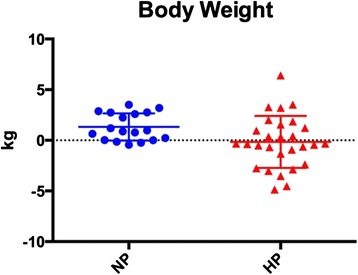
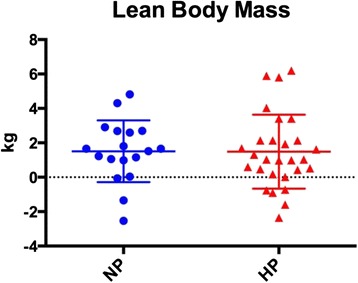
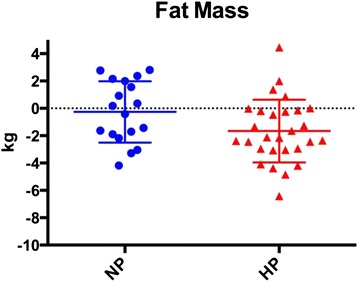
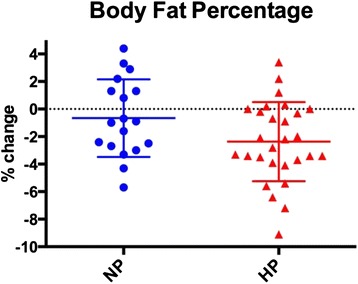
BACKGROUND: The consumption of a high protein diet (>4 g/kg/d) in trained men and women who did not alter their exercise program has been previously shown to have no significant effect on body composition. Thus, the purpose of this investigation was to determine if a high protein diet in conjunction with a periodized heavy resistance training program would affect indices of body composition, performance and health. METHODS: Forty-eight healthy resistance-trained men and women completed this study (mean ± SD; Normal Protein group [NP n = 17, four female and 13 male]: 24.8 ± 6.9 yr; 174.0 ± 9.5 cm height; 74.7 ± 9.6 kg body weight; 2.4 ± 1.7 yr of training; High Protein group [HP n = 31, seven female and 24 male]: 22.9 ± 3.1 yr; 172.3 ± 7.7 cm; 74.3 ± 12.4 kg; 4.9 ± 4.1 yr of training). Moreover, all subjects participated in a split-routine, periodized heavy resistance-training program. Training and daily diet logs were kept by each subject. Subjects in the NP and HP groups were instructed to consume their baseline (~2 g/kg/d) and >3 g/kg/d of dietary protein, respectively. RESULTS: Subjects in the NP and HP groups consumed 2.3 and 3.4 g/kg/day of dietary protein during the treatment period. The NP group consumed significantly (p < 0.05) more protein during the treatment period compared to their baseline intake. The HP group consumed more (p < 0.05) total energy and protein during the treatment period compared to their baseline intake. Furthermore, the HP group consumed significantly more (p < 0.05) total calories and protein compared to the NP group. There were significant time by group (p ≤ 0.05) changes in body weight (change: +1.3 ± 1.3 kg NP, -0.1 ± 2.5 HP), fat mass (change: -0.3 ± 2.2 kg NP, -1.7 ± 2.3 HP), and % body fat (change: -0.7 ± 2.8 NP, -2.4 ± 2.9 HP). The NP group gained significantly more body weight than the HP group; however, the HP group experienced a greater decrease in fat mass and % body fat. There was a significant time effect for FFM; however, there was a non-significant time by group effect for FFM (change: +1.5 ± 1.8 NP, +1.5 ± 2.2 HP). Furthermore, a significant time effect (p ≤ 0.05) was seen in both groups vis a vis improvements in maximal strength (i.e., 1-RM squat and bench) vertical jump and pull-ups; however, there were no significant time by group effects (p ≥ 0.05) for all exercise performance measures. Additionally, there were no changes in any of the blood parameters (i.e., basic metabolic panel). CONCLUSION: Consuming a high protein diet (3.4 g/kg/d) in conjunction with a heavy resistance-training program may confer benefits with regards to body composition. Furthermore, there is no evidence that consuming a high protein diet has any deleterious effects.
Overview
The claims and statistics of this paper haven’t been checked yet.
Run the check — free, no account needed. It reads the open-access text and checks the sources it cites.
Integrity signals
Registry
Cites
Statistics
Figures
Verification
Claims the paper makes
The claims and statistics of this paper haven’t been checked yet.
Run the check — free, no account needed. It reads the open-access text and checks the sources it cites.
Claims other papers make about this one
Each is checked against this paper’s own text: does it say what the citing paper says it does?
The source backs part of the claim, not all of it — or backs it for a different population, condition or comparison.
In the citing paper
“A series of controlled investigations spanning up to one year in duration utilizing protein intakes of up to 2.5–3.3 g/kg/day in healthy resistance-trained individuals consistently indicate that increased intakes of protein exert no harmful effect on blood lipids or markers of kidney and liver function.”
From International Society of Sports Nutrition Position Stand: protein and exercise (2017) · cites this paper as [220]
Experimental — accuracy not yet measuredThe source backs part of the claim, not all of it — or backs it for a different population, condition or comparison.
In the citing paper
“A follow-up investigation [220] required participants to ingest up to 3.4 g/kg/day of protein for eight weeks while following a prescribed resistance training program and reported no changes in any of the blood parameters commonly used to assess clinical health (e.g., there was no effect on kidney or liver function).”
From International Society of Sports Nutrition Position Stand: protein and exercise (2017) · cites this paper as [220]
Experimental — accuracy not yet measuredThe source backs part of the claim, not all of it — or backs it for a different population, condition or comparison.
In the citing paper
“High protein diets (>2.2 g·kg−1·day−1) have not resulted in any adverse effects to bone mineral density or kidney function in healthy women [238,239].”
From International society of sports nutrition position stand: nutritional concerns of the female athlete (2023) · cites this paper as [238]
Experimental — accuracy not yet measuredThe cited source says what the claim attributes to it.
In the citing paper
“Both groups gained 1.5 kg of lean mass, but the high-protein group lost more fat mass (1.6 vs 0.3 kg in the control group).”
From International Society of Sports Nutrition position stand: diets for body weight reduction (2026) · cites this paper as [118]
The cited source says what the claim attributes to it.
In the citing paper
“A salient example of apparently protein-driven recomposition was by Antonio et al. [118], who compared the effects of normal/habitual protein intake (2.3 g/kg) versus high protein intake (3.4 g/kg) on body composition and performance in resistance-trained subjects. The 8-week trial involved a periodized, progressive resistance training program with sessions occurring 5 days/week. Despite the”
From International Society of Sports Nutrition position stand: diets for body weight reduction (2026) · cites this paper as [118]
The cited source says what the claim attributes to it.
In the citing paper
“Strength and exercise performance improved in both groups, with no statistically significant differences between the groups.”
From International Society of Sports Nutrition position stand: diets for body weight reduction (2026) · cites this paper as [118]
Self-check
Percentages, sums and reported differences re-computed from the paper’s own numbers.
The self-check needs the paper’s full text.
Citations
Cites
Moore, D. R., Robinson, M. J., Fry, J. L., Tang, J. E., Glover, E. I., Wilkinson, S. B., Prior, T., Tarnopolsky, M. A., & Phillips, S. M. (2009) · The American Journal of Clinical Nutrition · doi:10.3945/ajcn.2008.26401 · Cited by 973
International Society of Sports Nutrition position stand: protein and exercise
Campbell, B., Kreider, R. B., Ziegenfuss, T., La Bounty, P., Roberts, M., Burke, D., Landis, J., Lopez, H., & Antonio, J. (2007) · Journal of the International Society of Sports Nutrition · doi:10.1186/1550-2783-4-8 · Cited by 716
Self-citationTurner-McGrievy, G. M., Beets, M. W., Moore, J. B., Kaczynski, A. T., Barr-Anderson, D. J., & Tate, D. F. (2013) · Journal of the American Medical Informatics Association · doi:10.1136/amiajnl-2012-001510 · Cited by 373
(2005) · PubMed · Cited by 354
Variability in Muscle Size and Strength Gain After Unilateral Resistance Training
Shrier, I. (2006) · Yearbook of Sports Medicine · doi:10.1016/s0162-0908(08)70354-4 · Cited by 349
The use of unequal randomisation ratios in clinical trials: A review
Dumville, J. C., Hahn, S., Miles, J. N. V., & Torgerson, D. J. (2005) · Contemporary Clinical Trials · doi:10.1016/j.cct.2005.08.003 · Cited by 330
Protein requirements and supplementation in strength sports
Phillips, S. M. (2004) · Nutrition · doi:10.1016/j.nut.2004.04.009 · Cited by 320
Non-Exercise Activity Thermogenesis
Levine, J. A., Weg, M. W. V., Hill, J. O., & Klesges, R. C. (2006) · Arteriosclerosis Thrombosis and Vascular Biology · doi:10.1161/01.atv.0000205848.83210.73 · Cited by 226
Daly, R. M., O’Connell, S. L., Mundell, N. L., Grimes, C. A., Dunstan, D. W., & Nowson, C. A. (2014) · American Journal of Clinical Nutrition · doi:10.3945/ajcn.113.064154 · Cited by 215
Mitchell, C. J., Churchward-Venne, T. A., Parise, G., Bellamy, L., Baker, S. K., Smith, K., Atherton, P. J., & Phillips, S. M. (2014) · PLoS ONE · doi:10.1371/journal.pone.0089431 · Cited by 212
Research works printed but not linked: 1
- Mitchell CJ, 2014, PLoS One, 9
Cited by
Sorted by citations
Morton, R. W., Murphy, K. T., McKellar, S. R., Schoenfeld, B. J., Henselmans, M., Helms, E., Aragon, A. A., Devries, M. C., Banfield, L., Krieger, J. W., et al. (2018) · British Journal of Sports Medicine · doi:10.1136/bjsports-2017-097608 · Cited by 1,269
International Society of Sports Nutrition Position Stand: protein and exercise
Jäger, R., Kerksick, C. M., Campbell, B. I., Cribb, P. J., Wells, S. D., Skwiat, T. M., Purpura, M., Ziegenfuss, T. N., Ferrando, A. A., Arent, S. M., et al. (2017) · Journal of the International Society of Sports Nutrition · doi:10.1186/s12970-017-0177-8 · Cited by 873
“A follow-up investigation [220] required participants to ingest up to 3.”
BackgroundInternational society of sports nutrition position stand: diets and body composition
Aragon, A. A., Schoenfeld, B. J., Wildman, R., Kleiner, S., VanDusseldorp, T., Taylor, L., Earnest, C. P., Arciero, P. J., Wilborn, C., Kalman, D. S., et al. (2017) · Journal of the International Society of Sports Nutrition · doi:10.1186/s12970-017-0174-y · Cited by 301
Nunes, E. A., Colenso‐Semple, L., McKellar, S. R., Yau, T., Ali, M. U., Fitzpatrick‐Lewis, D., Sherifali, D., Gaudichon, C., Tomé, D., Atherton, P. J., et al. (2022) · Journal of Cachexia, Sarcopenia and Muscle · doi:10.1002/jcsm.12922 · Cited by 280
The Health Benefits of Egg Protein
Puglisi, M. J., & Fernández, M. L. (2022) · Nutrients · doi:10.3390/nu14142904 · Cited by 177
Agostini, D., Donati Zeppa, S., Lucertini, F., Annibalini, G., Gervasi, M., Ferri Marini, C., Piccoli, G., Stocchi, V., Barbieri, E., & Sestili, P. (2018) · Nutrients · doi:10.3390/nu10081103 · Cited by 151
Mobley, C. B., Haun, C. T., Roberson, P. A., Mumford, P. W., Kephart, W. C., Romero, M. A., Osburn, S. C., Vann, C. G., Young, K. C., Beck, D. T., et al. (2018) · PLOS ONE · doi:10.1371/journal.pone.0195203 · Cited by 112
Ketogenic diets, physical activity and body composition: a review
Ashtary‐Larky, D., Bagheri, R., Bavi, H., Baker, J. S., Moro, T., Mancin, L., & Paoli, A. (2021) · British Journal Of Nutrition · doi:10.1017/s0007114521002609 · Cited by 120
Kephart, W., Pledge, C., Roberson, P., Mumford, P., Romero, M., Mobley, C., Martin, J., Young, K., Lowery, R., Wilson, J., et al. (2018) · Sports · doi:10.3390/sports6010001 · Cited by 107
Antonio, J., Kenyon, M., Ellerbroek, A., Carson, C., Burgess, V., Tyler-Palmer, D., Mike, J., Roberts, J., Angeli, G., & Peacock, C. (2019) · Journal of Functional Morphology and Kinesiology · doi:10.3390/jfmk4020023 · Cited by 106
Self-citationA High Protein Diet Has No Harmful Effects: A One-Year Crossover Study in Resistance-Trained Males
Antonio, J., Ellerbroek, A., Silver, T., Vargas, L., Tamayo, A., Buehn, R., & Peacock, C. A. (2016) · Journal of Nutrition and Metabolism · doi:10.1155/2016/9104792 · Cited by 106
Self-citationMobley, C., Haun, C., Roberson, P., Mumford, P., Romero, M., Kephart, W., Anderson, R., Vann, C., Osburn, S., Pledge, C., et al. (2017) · Nutrients · doi:10.3390/nu9090972 · Cited by 103
International society of sports nutrition position stand: nutritional concerns of the female athlete
Sims, S. T., Kerksick, C. M., Smith-Ryan, A. E., Janse de Jonge, X. A. K., Hirsch, K. R., Arent, S. M., Hewlings, S. J., Kleiner, S. M., Bustillo, E., Tartar, J. L., et al. (2023) · Journal of the International Society of Sports Nutrition · doi:10.1080/15502783.2023.2204066 · Cited by 129
“2 g·kg·day) have not resulted in any adverse effects to bone mineral density or kidney function in healthy women [238,239].”
BackgroundSlater, G. J., Dieter, B. P., Marsh, D. J., Helms, E. R., Shaw, G., & Iraki, J. (2019) · Frontiers in Nutrition · doi:10.3389/fnut.2019.00131 · Cited by 88
Antonio, J., Ellerbroek, A., Silver, T., Vargas, L., & Peacock, C. (2016) · Journal of the International Society of Sports Nutrition · doi:10.1186/s12970-016-0114-2 · Cited by 81
Self-citationZanella, P. B., & Macedo, R. C. O. (2020) · Critical Reviews in Food Science and Nutrition · doi:10.1080/10408398.2020.1756216 · Cited by 85
Nutrition recommendations for bodybuilders in the off-season: a narrative review
Iraki, J., Fitschen, P., Espinar, S., & Helms, E. (2019) · Sports · doi:10.3390/sports7070154 · Cited by 67
The mythologization of protein: a Multimodal Critical Discourse Analysis of snacks packaging
Chen, A., & Eriksson, G. (2019) · Food, Culture, and Society: an international journal of multidisciplinary research · doi:10.1080/15528014.2019.1620586 · Cited by 59
The effects of whey protein with or without carbohydrates on resistance training adaptations
Hulmi, J. J., Laakso, M., Mero, A. A., Häkkinen, K., Ahtiainen, J. P., & Peltonen, H. (2015) · Journal of the International Society of Sports Nutrition · doi:10.1186/s12970-015-0109-4 · Cited by 61
Body recomposition: can trained individuals build muscle and lose fat at the same time?
Barakat, C., Pearson, J., Escalante, G., Campbell, B., & De Souza, E. O. (2020) · Strength & Conditioning Journal · doi:10.1519/ssc.0000000000000584 · Cited by 50
Campbell, B. I., Aguilar, D., Conlin, L., Vargas, A., Schoenfeld, B. J., Corson, A., Gai, C., Best, S., Galvan, E., & Couvillion, K. (2018) · International Journal of Sport Nutrition and Exercise Metabolism · doi:10.1123/ijsnem.2017-0389 · Cited by 55
Ashtary-Larky, D., Bagheri, R., Asbaghi, O., Tinsley, G. M., Kooti, W., Abbasnezhad, A., Afrisham, R., & Wong, A. (2022) · Critical Reviews in Food Science and Nutrition · doi:10.1080/10408398.2021.1890689 · Cited by 50
Cholewa, J. M., Dardevet, D. P., Lima‐Soares, F., Pessôa, K. D. A., Oliveira, P. H., Pinho, J. R. D. S., Nicastro, H., Xia, Z., Cabido, C. E. T., & Zanchi, N. E. (2017) · Amino Acids · doi:10.1007/s00726-017-2390-9 · Cited by 55
Effects of Graded Whey Supplementation During Extreme-Volume Resistance Training
Haun, C. T., Vann, C. G., Mobley, C. B., Roberson, P. A., Osburn, S. C., Holmes, H. M., Mumford, P. W., Romero, M. A., Young, K. C., Moon, J. R., et al. (2018) · Frontiers in Nutrition · doi:10.3389/fnut.2018.00084 · Cited by 48
Leaf, A., & António, J. (2017) · International journal of exercise science · doi:10.70252/hppf5281 · Cited by 43
Roberts, J., Willmott, A. G. B., Beasley, L., Boal, M., Davies, R., Martin, L., Chichger, H., Gautam, L., & Coso, J. D. (2021) · Nutrients · doi:10.3390/nu13030764 · Cited by 42
Morales, F. E., Tinsley, G. M., & Gordon, P. M. (2017) · Journal of the American College of Nutrition · doi:10.1080/07315724.2016.1274691 · Cited by 40
Dietary Fuels in Athletic Performance
Fritzen, A. M., Lundsgaard, A., & Kiens, B. (2019) · Annual Review of Nutrition · doi:10.1146/annurev-nutr-082018-124337 · Cited by 42
Mohr, A. E., Mach, N., Pugh, J. N., Grosicki, G. J., Allen, J. M., Karl, J. P., & Whisner, C. M. (2025) · FEMS Microbiology Reviews · doi:10.1093/femsre/fuaf037 · Cited by 37
The Top 5 Can’t-Miss Sport Supplements
António, J., Pereira, F., Curtis, J., Rojas, J., & Evans, C. (2024) · Nutrients · doi:10.3390/nu16193247 · Cited by 46
Metabolic Adaptations to Weight Loss: A Brief Review
Martínez-Gómez, M. G., & Roberts, B. M. (2022) · Journal of Strength & Conditioning Research · doi:10.1519/jsc.0000000000003991 · Cited by 32
Roberts, J., Zinchenko, A., Suckling, C. A., Smith, L., Johnstone, J., & Henselmans, M. (2017) · Journal of the International Society of Sports Nutrition · doi:10.1186/s12970-017-0201-z · Cited by 37
Dietary Strategies of Modern Bodybuilders During Different Phases of the Competitive Cycle
Lenzi, J. L., Teixeira, E. L., de Jesus, G., Schoenfeld, B. J., & Painelli, V. D. S. (2019) · The Journal of Strength and Conditioning Research · doi:10.1519/jsc.0000000000003169 · Cited by 32
Premature Death in Bodybuilders: What Do We Know?
Smoliga, J. M., Wilber, Z. T., & Robinson, B. T. (2023) · Sports Medicine · doi:10.1007/s40279-022-01801-0 · Cited by 33
Dietary Acid-Base Balance in High-Performance Athletes
Baranauskas, M., Jablonskienė, V., Abaravičius, J. A., Samsonienė, L., & Stukas, R. (2020) · International Journal of Environmental Research and Public Health · doi:10.3390/ijerph17155332 · Cited by 32
Protein intake for athletes and active adults: Current concepts and controversies
Egan, B. (2016) · Nutrition Bulletin · doi:10.1111/nbu.12215 · Cited by 38
António, J., Evans, C., Ferrando, A. A., Stout, J. R., Antonio, B. B., Cintineo, H. P., Harty, P. S., Arent, S. M., Candow, D. G., Forbes, S. C., et al. (2024) · Journal of the International Society of Sports Nutrition · doi:10.1080/15502783.2024.2341903 · Cited by 35
Arciero, P., Ives, S., Norton, C., Escudero, D., Minicucci, O., O’Brien, G., Paul, M., Ormsbee, M., Miller, V., Sheridan, C., et al. (2016) · Nutrients · doi:10.3390/nu8060332 · Cited by 26
High protein consumption in trained women: bad to the bone?
Antonio, J., Ellerbroek, A., Evans, C., Silver, T., & Peacock, C. A. (2018) · Journal of the International Society of Sports Nutrition · doi:10.1186/s12970-018-0210-6 · Cited by 26
Self-citationFoscolou, A., Magriplis, E., Tyrovolas, S., Chrysohoou, C. A., Sidossis, L. S., Matalas, A., Rallidis, L. S., & Panagiotakos, D. B. (2018) · European Journal of Nutrition · doi:10.1007/s00394-018-1693-2 · Cited by 26
Casein Protein Supplementation in Trained Men and Women: Morning versus Evening
Antonio, J. (2017) · International Journal of Exercise Science · doi:10.70252/qwha8703 · Cited by 25
Janiczak, A., Alcock, R., Forsyth, A. K., & Trakman, G. (2023) · British Journal Of Nutrition · doi:10.1017/s0007114523001769 · Cited by 28
Effects of Dietary Protein on Body Composition in Exercising Individuals
António, J., Candow, D. G., Forbes, S. C., Ormsbee, M. J., Saracino, P. G., & Roberts, J. (2020) · Nutrients · doi:10.3390/nu12061890 · Cited by 33
Bagheri, R., Kargarfard, M., Sadeghi, R., Scott, D. S., & CAMERA, D. M. (2023) · Journal of the International Society of Sports Nutrition · doi:10.1080/15502783.2023.2236053 · Cited by 35
Morgan, P. T., Witard, O. C., Højfeldt, G. W., Church, D. D., & Breen, L. (2023) · Proceedings of The Nutrition Society · doi:10.1017/s0029665123003750 · Cited by 29
Teixeira, F. J., Matias, C. N., Faleiro, J., Giro, R., Pires, J., Figueiredo, H., Carvalhinho, R., Monteiro, C. P., Reis, J. F., Valamatos, M. J., et al. (2022) · Frontiers in Nutrition · doi:10.3389/fnut.2022.934438 · Cited by 26
Gentil, P. (2015) · Journal of the International Society of Sports Nutrition · doi:10.1186/s12970-015-0111-x · Cited by 22
Nutritional Periodization: Applications for the Strength Athlete
Mota, J. A., Nuckols, G., & Smith‐Ryan, A. E. (2019) · Strength and conditioning journal · doi:10.1519/ssc.0000000000000488 · Cited by 23
Ribeiro, A. S., Nunes, J. P., Schoenfeld, B. J., Aguiar, A. F., & Cyrino, E. S. (2019) · Journal of Human Kinetics · doi:10.2478/hukin-2019-0038 · Cited by 24
Ives, S. J., Norton, C., Miller, V., Minicucci, O., Robinson, J., O'Brien, G., Escudero, D., Paul, M., Sheridan, C., Curran, K., et al. (2017) · Growth Hormone & IGF Research · doi:10.1016/j.ghir.2016.10.002 · Cited by 18
Fu, T., Liu, H., Shi, C., Zhao, H., Liu, F., & Xia, Y. (2024) · Journal of Health Population and Nutrition · doi:10.1186/s41043-024-00638-9 · Cited by 22
High-protein diets in trained individuals
Antonio, J. (2019) · Research in Sports Medicine · doi:10.1080/15438627.2018.1523167 · Cited by 17
Hwang, P. S., André, T., McKinley-Barnard, S. K., Marroquín, F. E. M., Gann, J. J., Song, J. J., & Willoughby, D. S. (2017) · The Journal of Strength and Conditioning Research · doi:10.1519/jsc.0000000000001807 · Cited by 17
Akehurst, E., Scott, D. S., Rodriguez, J. P., Gonzalez, C. A., Murphy, J., McCarthy, H., Dorgo, S., & Hayes, A. (2021) · BMC Geriatrics · doi:10.1186/s12877-021-02212-y · Cited by 16
The Mediterranean Athlete’s Nutrition: Are Protein Supplements Necessary?
Passariello, C. L., Marchionni, S., Carcuro, M., Casali, G., della Pasqua, A., Hrelia, S., Malaguti, M., & Lorenzini, A. (2020) · Nutrients · doi:10.3390/nu12123681 · Cited by 16
de Lorenzo, A., Bomback, A. S., & Mihic, N. (2024) · Sports Medicine · doi:10.1007/s40279-024-02086-1 · Cited by 17
Optimizing Dietary Protein for Lifelong Bone Health
Wallace, T. C. (2019) · Nutrition Today · doi:10.1097/nt.0000000000000340 · Cited by 14
High-protein diets and testosterone
Whittaker, J. (2022) · Nutrition and Health · doi:10.1177/02601060221132922 · Cited by 14
Higher-protein intake improves body composition index in female collegiate dancers
Brown, A. F., Welsh, T., Panton, L. B., Moffatt, R. J., & Ormsbee, M. J. (2019) · Applied Physiology, Nutrition, and Metabolism · doi:10.1139/apnm-2019-0517 · Cited by 14
Aragon, A. A., & Schoenfeld, B. J. (2020) · Strength and conditioning journal · doi:10.1519/ssc.0000000000000539 · Cited by 15
Satiating Effect of High Protein Diets on Resistance-Trained Individuals in Energy Deficit
Roberts, J., Zinchenko, A., Mahbubani, K. T. A., Johnstone, J., Smith, L., Merzbach, V., Blacutt, M. E., Banderas, O., Villasenor, L., Vårvik, F. T., et al. (2018) · Nutrients · doi:10.3390/nu11010056 · Cited by 15
McGinnis, K. D., McAdam, J. S., Lockwood, C. M., Young, K. C., Roberts, M. D., & Sefton, J. M. (2018) · Nutrients · doi:10.3390/nu10121938 · Cited by 11
Ribeiro, A. S., PEREIRA, L. C., Schoenfeld, B. J., Nunes, J. P., Kassiano, W., Nabuco, H. C. G., Sugihara, P., Fernandes, R. R., Antunes, M., Aguiar, A. F., et al. (2022) · Medicine & Science in Sports & Exercise · doi:10.1249/mss.0000000000002855 · Cited by 11
Should Competitive Bodybuilders Ingest More Protein than Current Evidence-Based Recommendations?
Ribeiro, A. S., Nunes, J. P., & Schoenfeld, B. J. (2019) · Sports Medicine · doi:10.1007/s40279-019-01111-y · Cited by 12
Nutritional Supplements for Muscle Hypertrophy: Mechanisms and Morphology—Focused Evidence
Mănescu, A. M., Hangu, S. Ș., & Mănescu, D. C. (2025) · Nutrients · doi:10.3390/nu17223603 · Cited by 18
Brown, A. F., Brooks, S. J., Smith, S. R., Stephens, J. M., Lotstein, A. K., Skiles, C. M., Alfiero, C. J., & Meenan, M. J. (2020) · Journal of Functional Morphology and Kinesiology · doi:10.3390/jfmk5010017 · Cited by 10
Nutrition knowledge and dietary intake of hurlers
Murphy, J. M., & O’Reilly, J. (2020) · International Journal of Sports Science & Coaching · doi:10.1177/1747954120972841 · Cited by 11
Lak, M., Bagheri, R., Ghobadi, H., Campbell, B. I., Wong, A., Shahrbaf, A., Shariatzadeh, M., & Dutheil, F. (2024) · Frontiers in Nutrition · doi:10.3389/fnut.2024.1397090 · Cited by 9
Pelc, A., Fic, W., Typrowicz, T., & Polak-Szczybyło, E. (2025) · Current Issues in Molecular Biology · doi:10.3390/cimb47080637 · Cited by 12
Liver and kidney function markers among gym users: the role of dietary supplement usage
Schlickmann, D. D. S., Molz, P., Brand, C., dos Santos, C., da Silva, T. G., Rieger, A., Benito, P. J., Reuter, C. P., Renner, J. D. P., & Franke, S. I. R. (2021) · British Journal Of Nutrition · doi:10.1017/s0007114521003652 · Cited by 9
Requirements of Proteins, Carbohydrates, and Fats for Athletes
Kerksick, C. M. (2018) · Elsevier eBooks · doi:10.1016/b978-0-12-813922-6.00038-2 · Cited by 18
Medeiros, C. S. D. A., Neto, I. V. D. S., Silva, K. K. S., Cantuária, A. P. D. C., Rezende, T. M. B., Franco, O. L., Marqueti, R. D. C., Freitas‐Lima, L. C., Araújo, R. C., Yildirim, A. N., et al. (2021) · Nutrients · doi:10.3390/nu13061969 · Cited by 10
Duarte, N., Cruz, A., Silva, D. C. F., & Cruz, G. M. (2020) · The Journal of Sports Medicine and Physical Fitness · doi:10.23736/s0022-4707.19.09741-x · Cited by 10
Resistance exercise protects mice from protein-induced fat accretion
Trautman, M. E., Braucher, L. N., Elliehausen, C., Zhu, W. G., Zelenovskiy, E., Green, M., Sonsalla, M. M., Yeh, C.-Y., Hornberger, T. A., Konopka, A. R., et al. (2023) · eLife · doi:10.7554/elife.91007 · Cited by 8
Do the high‐protein recommendations for athletes set some on a path to kidney injury and dialysis?
Marinaro, M., Alexander, D. S., & de Waal, D. (2021) · Seminars in Dialysis · doi:10.1111/sdi.13046 · Cited by 8
Forbes, S. C., & Bell, G. J. (2020) · The Journal of Sports Medicine and Physical Fitness · doi:10.23736/s0022-4707.20.10314-1 · Cited by 9
SMITH, R. W., Harty, P. S., Stratton, M. T., Rafi, Z., Rodriguez, C., Dellinger, J. R., Benavides, M. L., Johnson, B. A., White, S. J., Williams, A. D., et al. (2021) · Journal of Functional Morphology and Kinesiology · doi:10.3390/jfmk6020036 · Cited by 11
Schalla, J., Frommelt, S., Geisler, S., & Isenmann, E. (2024) · Frontiers in Sports and Active Living · doi:10.3389/fspor.2024.1346637 · Cited by 7
Mursu, J., Ristimäki, M., Malinen, I., Petäjä, P., Isola, V., Ahtiainen, J. P., & Hulmi, J. J. (2023) · Nutrients · doi:10.3390/nu15020382 · Cited by 9
António, J., Ellerbroek, A., & Carson, C. (2018) · Journal of Functional Morphology and Kinesiology · doi:10.3390/jfmk3040062 · Cited by 8
Self-citationNogueira, M. E., Neto, I. V. D. S., Motta‐Santos, D., Cantuária, A. P. D. C., Lima, S. M. D. F., Rezende, T. M. B., Santana, H. A. D. P., Petriz, B. A., Marqueti, R. D. C., & de Almeida, J. A. (2020) · Archives of Physiology and Biochemistry · doi:10.1080/13813455.2020.1787456 · Cited by 7
Blake, D. T., Hamane, C., Pacheco, C., Henselmans, M., Tinsley, G. M., Costa, P. B., Coburn, J. W., Campidell, T., & Galpin, A. J. (2025) · Journal of the International Society of Sports Nutrition · doi:10.1080/15502783.2025.2492184 · Cited by 6
Jiménez, M. D. A. (2019) · Nefrología · doi:10.1016/j.nefro.2018.10.004 · Cited by 5
Body Recomposition: would it be possible to induce fat loss and muscle hypertrophy at the same time?
Vecchio, F. B. D. (2022) · Brazilian Journal of Kinanthropometry and Human Performance · doi:10.1590/1980-0037.2022v24e86265 · Cited by 5
Bagheri, R., Karimi, Z., CAMERA, D. M., Scott, D. S., Bashirzad, M. Z., Sadeghi, R., Kargarfard, M., & Dutheil, F. (2024) · Frontiers in Nutrition · doi:10.3389/fnut.2024.1439037 · Cited by 8
Namboonlue, C., Namboonlue, S., Sriwiset, P., Jaisuk, J., Buttichak, A., Muangritdech, N., & Saengjan, W. (2023) · Physical Education Theory and Methodology · doi:10.17309/tmfv.2023.3.11 · Cited by 9
The Effect of Peanut Butter Overfeeding in Trained Men and Women: A Pilot Trial
António, J., Axelrod, C. H., Ellerbroek, A., Evans, C., Burgess, V., Silver, T. A., & Peacock, C. A. (2018) · Journal of Exercise and Nutrition · Cited by 4
Self-citationCan Dietary Supplements Support Muscle Function and Physical Activity? A Narrative Review
Brough, L., Rees, G., Drummond‐Clarke, L., McCallum, J. E., Taylor, E., Kozhevnikov, O., & Walker, S. (2025) · Nutrients · doi:10.3390/nu17213495 · Cited by 5
Sultan, Z. H., & Speelman, D. L. (2025) · Cureus · doi:10.7759/cureus.79166 · Cited by 5
High protein diet: benefits and risks
Altashina, M. V., Иванникова, Е. В., & Troshina, E. A. (2020) · Obesity and metabolism · doi:10.14341/omet12662 · Cited by 3
Zhang, X., Moran, C. N., Wang, R., Zhou, Y., & Brooks, N. E. (2023) · Genes & Genomics · doi:10.1007/s13258-023-01381-x · Cited by 3
Zilova, I. S., & Ēn, T. (2023) · Voprosy Pitaniya · doi:10.33029/0042-8833-2023-92-4-114-124 · Cited by 5
Yuan, B., Liu, Y., Wan, N., Liu, D., Zhao, Y., Tian, C., Huppertz, T., & Zhou, P. (2025) · Food Research International · doi:10.1016/j.foodres.2025.118299 · Cited by 2
Molz, P., Brand, C., Schlickmann, D. D. S., Steffens, J. P., Pohl, H. H., Renner, J. D. P., & Franke, S. I. R. (2022) · Environmental Toxicology and Pharmacology · doi:10.1016/j.etap.2022.104009 · Cited by 2
Ribeiro, A. S., Quintilhano, K., Kassiano, W., Nunes, J. P., Avelar, A., Trindade, M. C. D. C., Aguiar, A. F., Schoenfeld, B. J., & Cyrino, E. S. (2023) · International journal of exercise science · doi:10.70252/ymux1745 · Cited by 2
Impact of Eggs Protein on Musculoskeletal Health
Prajapati, B. G. (2023) · Novel Techniques in Nutrition & Food Science · doi:10.31031/ntnf.2023.07.000654 · Cited by 3
Managing Fatigue in Team Sports: A Brief Review of Concurrent Training Effects Within the Microcycle
Γραμμένου, Μ., & Nulty, C. D. (2025) · Strength and conditioning journal · doi:10.1519/ssc.0000000000000903 · Cited by 2
Xu, S., Zhang, J., Dong, Y., Chen, R., Xu, W., Tan, Z., Gao, L., & Shang, L. (2020) · Trials · doi:10.1186/s13063-019-3954-7 · Cited by 3
Korosteleva, M. M., Kobelkova, I. V., & Khanferyan, R. A. (2020) · Sports medicine research and practice · doi:10.47529/2223-2524.2020.3.18 · Cited by 2
Jiménez, M. D. A. (2019) · Nefrología (English Edition) · doi:10.1016/j.nefroe.2018.10.007 · Cited by 2
Metadata
- Authors
- Antonio, J., Ellerbroek, A., Silver, T., Orris, S., Scheiner, M., Gonzalez, A., & Peacock, C. A.
- Affiliations
- Exercise and Sports SciencesNova Southeastern University 3532 S. University Drive, University Park Plaza Suite 3532 33314 Davie FL USA
- Nova Southeastern University (US)
- ORCID
- Peacock, Corey A
- Venue
- Journal of the International Society of Sports Nutrition
- Publisher
- Informa UK Limited
- Published
- 2015-10-20
- Volume
- 12
- Issue
- 1
- Pages
- 39-39
- ISSN
- 1550-2783 (ISSN-L)
- PMC
- PMC4617900
- OpenAlex
- W2154555111
- Cited by
- 140
- References
- 23
- Citations by year
- 2026: 11 · 2025: 13 · 2024: 12 · 2023: 17 · 2022: 10 · 2021: 14 · 2020: 15 · 2019: 15 · 2018: 15 · 2017: 10 · 2016: 5 · 2015: 3
- FWCI
- 5.86
- Type
- journal article
- Language
- en
- Open access
- gold
- doi.org
- Licence
- Locations
- Journal of the International Society of Sports Nutrition (publishedVersion, cc-by)
- Europe PMC (PubMed Central) (publishedVersion, cc-by)
- PubMed Central (publishedVersion, cc-by)
- PubMed (publishedVersion)
- NSUWorks (Nova Southeastern University) (submittedVersion)
- Funders
- This study was unfunded
- Topics
- Health Sciences › Nursing › Nutrition and Dietetics › Muscle metabolism and nutrition
- Health Sciences › Medicine › Orthopedics and Sports Medicine › Sports Performance and Training
- Health Sciences › Medicine › Physiology (medical) › Body Composition Measurement Techniques
- Keywords
- high-protein diet, resistance training, body composition, fat mass, body fat percentage, training periodization, resistance-trained individuals, protein intake, energy intake, body weight, exercise performance, fat-free mass, trained women, trained men, follow-up study, weight loss, muscle hypertrophy, fat loss, muscular endurance, muscle power
- MeSH terms
- Adipose Tissue, Adolescent, Adult, Body Composition, Body Weight, Energy Intake, Dietary Proteins, Female, Follow-Up Studies, Humans, Male, Resistance Training, Young Adult
About these checks
Registry, retraction, Cites and statistics results are computed, not judged, with one exception: a printed reference that no index lists is read once by a model before it counts as a citation error. Claims are extracted by a model and kept only when their quote appears verbatim in the text; each cited source is then checked, with a model’s help, for whether it says what the claim relies on. Those verdicts can be wrong — read the claim’s quote and the cited source before relying on one.
Statistics and arithmetic are recomputed, not judged.
Confidence bands are shown only for fields calibrated on our annotated test set. None is calibrated yet, so no band is shown.
What counts as a claim ›How we measure confidence ›How we check this ›
Are you an author, or do you see a problem with this page? Request a review
